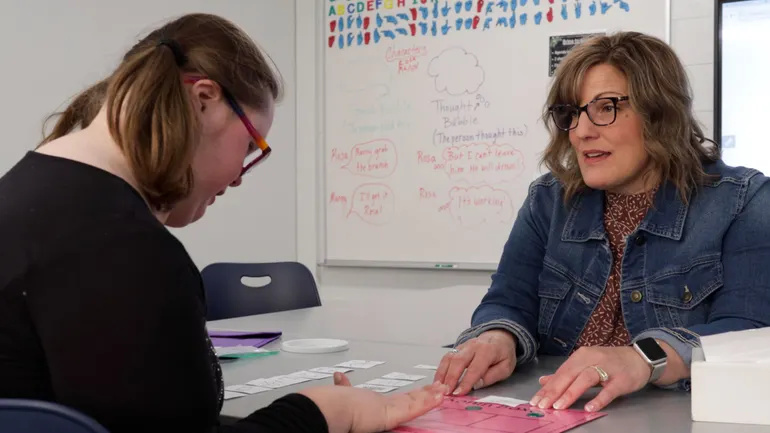
North Carolina’s Advanced Teaching Roles program, which allows highly effective teachers to receive salary supplements for teaching additional students or supporting other teachers, is having positive effects on math and science test scores, according to an evaluation presented by NC State University’s Friday Institute for Educational Innovation at the State Board of Education meeting last week.
Since 2016, the ATR initiative has allowed districts to create new career pathways and provide salary supplements for highly effective teachers — or Advanced Teachers — who mentor and support other educators while still teaching part of the day. Their roles include Adult Leadership teachers, who lead small teams and receive at least $10,000 supplements, and Classroom Excellence teachers, who take on larger student loads and receive a minimum of $3,000 supplements.
Those in adult leadership roles teach for at least 30% of the day, lead a team of 3-8 classroom teachers, and share responsibility for the performance of all those teachers’ students. Classroom excellence teachers are responsible for at least 20% more students than before they enter the role.
“Our ATR program was designed to allow highly effective classroom educators to reach more students and to support the professional growth of educators,” said Dr. Callie Edwards, the program’s lead evaluator, at the State Board of Education meeting last Wednesday. “ATR aims to improve the quality of classroom instruction, the recruitment and retention of teachers, as well as ultimately impact student academic achievement.”
In the 2024-25 school year, 26 districts operated ATR programs across 400 schools — 56% of which were elementary schools — employing 1,494 Advanced Teachers who supported nearly 4,000 classroom teachers statewide, according to the evaluation. Edwards said that 88% of Adult Leadership teachers received at least $10,000, and 85% of Classroom Excellence teachers received $3,000 or more.
Statistical analysis of the 2023-24 school year’s data found that students in ATR schools outperformed their peers in non-ATR schools in math and science, showing statistically significant learning gains.
“Across the various programs I’ve evaluated, these are positive results — especially in math and science — where the impact of ATR is equivalent to about a month of extra learning for students,” said Dr. Lam Pham, the leading quantitative evaluator. “The results in ELA are positive but not statistically significant, which has been consistent for the last three years,” Pham said, referring to English Language Arts.
These effects on math and science grow over time, according to the evaluation. Math scores improved throughout schools’ first six years of ATR implementation — though they are no longer significant by the seventh year of implementation, according to the presentation. For science scores, statistically significant gains began in the fifth year after schools began implementing ATR.
Additionally, math teachers in ATR schools reported higher EVAAS growth scores than their peers in comparable schools.
Teachers in ATR schools also reported feeling like they have more time to do their work compared to teachers in non-ATR schools.
This year’s report featured data on teachers supported by ATR teachers for the first time. The evaluation found no positive effects on test scores for students taught by supported teachers compared to students taught by teachers who are not in the program. The researchers also found no effect on turnover levels for teachers supported by Advanced Teachers. However, the report says additional years of data will be necessary to verify if those effects appear over time.
The evaluation recommended that principals in ATR schools should foster collaboration and communicate strategically about the program with staff, beginning during Advanced Teachers’ hiring and onboarding.
“It’s important to integrate ATR into those processes,” Edwards told the Board. “That means introducing Advanced Teachers to new staff and making collaboration, especially mentoring and coaching, a structured part of the day.”
Edwards said these practices have been adopted in some schools, but principals reported needing more time and support to build collaboration opportunities into the school schedule.
The report also urges district administrators to coordinate with Beginning Teacher (BT) programs, advertise ATR in recruitment materials, and improve their data collection practices. It also calls on state leaders to standardize the program to ensure consistency across participating districts.
“Districts need standardized messaging, professional learning opportunities, and technical assistance to support implementation,” Edwards said. “The state can also create more opportunities for districts to share what’s working with one another and expand the evaluation beyond test scores to capture things like classroom engagement, social, emotional development, and feedback from teachers and principals.”
The evaluators also said “there’s more to do” to expand the program in western North Carolina after Board members raised concerns about uneven participation across the state’s regions.
Tomberlin said DPI received 15 proposals representing 22 districts. These proposals have been evaluated by seven independent evaluators, Tomberlin said. The Board had to choose the program’s next participants by Oct. 15 to comply with a legislative requirement.
The state can only allocate $911,349 for new implementation grants in 2026-27 — less than one-sixth of the funding required to fund all applications. That level of funding is “very low” compared to previous years, Tomberlin said. In the 2023-25 state budget, the General Assembly appropriated $10.9 million in recurring funds for these supplements in each year of the biennium.
Tomberlin recommended that the Board approve the three highest-scoring proposals for the 2026-27 fiscal year, and fund these districts at 85% of their request. If the Board approves this recommendation, the state would still have $37,981 in planning funds left over for districts approved during the 2026 proposal cycle.
Tomberlin said districts are already struggling to pay for the program’s salary supplements. The Friday Institute’s report showed that, despite the high median supplements, some districts are offering supplements as little as $1,000.
“Some districts are not able to pay the full $10,000 because they have more ATR teachers than the funding that we can give them in terms of those allotments,” Tomberlin said. “And we had requested the General Assembly, I think, an additional $14 million to cover those supplements, and we didn’t get any.”
This week, I got to welcome Clarissa (Rissa) Sorensen-Unrue back to Teaching in Higher Ed. She’s been on a few times in the past, exploring critical pedagogy; intersectionality, power, and pedagogy; and about the wonderful learning made possible through the MYFest community. This time, Rissa was joined by her sister, Christy Albright. They both shared about their unique (and some shared) experiences with grief and how it has shaped and formed them.
Grief can be such a lonely experience. Yet there are opportunities to feel less alone through the power of community. I’ve witnessed the ways that networks have helped people with disabilities navigating difficulties with access or inclusion, grieving parents who have lost a child, and connecting those who are looking to advocate for chance in higher education. Harold Jarche quotes Ronald Burt, author of Neighbor Networks: Competitive Advantage Local and Personal, in this week’s reading:
It is not being in the know, but rather having to translate between different groups so that you develop gifts of analogy, metaphor, and communicating between people who have difficulty communicating to each other.
Getting Started with Mastodon
Jarche then invites us to set up and share our Mastodon profile, which we will be using throughout the workshop. I already had one set up on Mastodon.Social (a larger instance of Mastodon): bonni208, as usual, so this was relatively easy for me. Originally, Dave had set us up on a unique Mastodon instance. Ultimately, we decided that it wasn’t worth the expense for us to do so and now we’re both on a larger instance.
I’m still mourning the loss of community I used to experience on Twitter. First, I went radio silent and ultimately decided to delete my entire account. When discussing communities, that’s one of the things we’re warned against. If we put our metaphorical eggs in one basket and something happens to that basket, there’s no putting Humpty Dumpty back together again. I was able to move some the people I followed over to other platforms, but it isn’t at all the same as it once was.
Many people find themselves on newsletter and social media platforms that are misaligned with their values. Then, there’s all the work with how to navigate that cognitive dissonance. This is messy business. I would advocate holding yourself to high standards as you’re making decisions about where to farm and nurture your communities, but to be gentle with others who are in the process of making their own decisions about where to engage.
I know Harold and plenty of others aren’t a fan of Bluesky, for reasons of replicating the issues many of us faced when investing so much on Twitter back in the day. However, that’s been the closest experience I’ve had to some aspects of community I used to get to enjoy. I like that they have starter kits (thank you for all the bird starter kits, people of the internet) and that my feed has a mix of hard-to-read-yet-important stories, satire and humorous posts, and then there are the birds. Many, many birds.
Speaking of birds, when I was talking with Rissa and Christy, I mentioned something about not having fact checked an Instagram post, but enjoying the idea of when we listen to bird song, that the experience can be associated with positive health benefits. Before finishing the show notes for that episode, I figured I had better do my due diligence and assess the veracity of that claim. Using Mike Caulfield’s Deep Background: Fact Checks and Context GPT,
In the first round of fact checking, the GPT stated that a fact checker might say that this statement is “mostly true.”
Strong evidence shows short-term relaxation and mood benefits from hearing birdsong, including reduced anxiety/paranoia versus urban noise. Broader or lasting “health benefits” (physiological and clinical) are plausible but less well established for birdsong specifically and should be qualified.
Another Round
When I followed Caulfield’s advice and typed: “another round” in the text box, more nuance emerged. Note the parentheses in the following text, which indicates what is new in this follow up query:
What’s new here is marked (NEW).
What changed / what we learned this round
We found a credible conflicting lab study (Hedblom 2019) reporting no significant physiological stress-recovery benefit from bird-song masking in a traffic-noise context—suggesting that some of the stronger “health” claims (physiology) don’t always replicate when visuals and context are controlled.
Two different angles refine the claim: (1) not all birds are equal—e.g., crow calls lower restorativeness scores relative to other species; (2) the mix with urban noise matters—bird/stream sounds may reduce annoyance only when traffic noise isn’t perceptually dominant. These both caution against blanket statements and point to designable soundscapes (what species? what mix?).
Net effect: support for short-term mood/annoyance relief remains strong (Urban Mind; Stobbe; Buxton), but broad physiological or long-term clinical benefits from listening to birdsong alone remain unproven or context-dependent, and species/mixture effects are meaningful.
Pattern to note
Higher-quality, controlled lab studies split: some show physiological recovery with general nature sounds (often water + birds), while others show null effects for birdsong specifically—especially when traffic noise is present or visuals drive recovery. Reviews also warn about conflating “birdsong” with “being in nature.” This pattern suggests the moderate claim is well supported, while the strong claim needs tighter, preregistered trials parsing species, diversity, and noise context.
Context Report
Finally, I followed Caulfield’s guidance to type “context report” for a summary and can share the following results.
Core Context
The claim is often presented as “listening to birdsong relaxes people and produces other health benefits,” which can imply broad, causal, even physiological effects; reviews caution that many studies are short, context-dependent, or conflate “birdsong” with being in nature generally.
In real-time diary research using the Urban Mind app, moments when participants reported seeing or hearing birds were associated with higher mental wellbeing, with benefits persisting to the next check-in; this is strong evidence of association but not proof of causation.
A randomized online experiment (~6 minutes of audio) found that birdsong reduced anxiety and paranoia relative to traffic noise; depression decreased only with a higher-diversity birdsong track, and there were no cognitive gains—supporting short-term mood benefits rather than sweeping health effects.
Evidence syntheses indicate natural sounds overall improve affect and reduce stress/annoyance, with birdsong showing particularly strong links to stress/annoyance relief; these findings speak to psychological states more than durable clinical outcomes.
Not all studies find physiological benefits from birdsong: in a controlled lab study, masking traffic with birdsong did not improve physiological stress recovery versus traffic or silence, suggesting context and modalities matter.
Species and soundscape context shape effects: crow calls score low on perceived restorativeness, and the ability of birdsong to temper annoyance depends on how dominant traffic noise is in the mix—underscoring that “birdsong” is not a single, uniform stimulus.
I felt that note about crow calls hard. Real hard. 😅
Dr. Ludmila Praslova holds a copy of her book: The Canary Code
Until next time…
…and here’s a long list of sources, which I thought seemed appropriate, given what we’re fact checking in this post.
Bibliography
Alvarsson, J. J., Wiens, S., & Nilsson, M. E. (2010). Stress recovery during exposure to nature sound and environmental noise. International Journal of Environmental Research and Public Health, 7(3), 1036–1046. https://doi.org/10.3390/ijerph7031036
Annerstedt, M., Jönsson, P., Wallergård, M., Johansson, G., Karlson, B., Grahn, P., Hansen, Å. M., & Währborg, P. (2013). Inducing physiological stress recovery with sounds of nature in a virtual reality forest—Results from a pilot study. Physiology & Behavior, 118, 240–250. https://doi.org/10.1016/j.physbeh.2013.05.023
Buxton, R. T., Pearson, A. L., Allou, C., Fristrup, K., & Wittemyer, G. (2021). A synthesis of health benefits of natural sounds and their distribution in national parks. Proceedings of the National Academy of Sciences, 118(14), e2013097118. https://doi.org/10.1073/pnas.2013097118
Hammoud, R., Tognin, S., Burgess, L., Bergou, N., Smythe, M., Gibbons, J., Davidson, N., Afifi, A., Bakolis, I., & Mechelli, A. (2022). Smartphone-based ecological momentary assessment reveals mental health benefits of birdlife. Scientific Reports, 12, 17589. https://doi.org/10.1038/s41598-022-20207-6
Hedblom, M., Gunnarsson, B., Schaefer, M., Knez, I., Thorsson, P., & Lundström, J. N. (2019). Sounds of nature in the city: No evidence of bird song improving stress recovery. International Journal of Environmental Research and Public Health, 16(8), 1390. https://doi.org/10.3390/ijerph16081390
Methorst, J., Rehdanz, K., Mueller, T., Hansjürgens, B., Bonn, A., & Böhning-Gaese, K. (2021). The importance of species diversity for human well-being in Europe. Ecological Economics, 181, 106917. https://doi.org/10.1016/j.ecolecon.2020.106917
National Geographic. (2025, May 14). Listening to birds sing really does soothe your brain. Here’s how. National Geographic. https://www.nationalgeographic.com/health/article/birds-sing-brain-mental-health
Praslova, L. N. (2024). The canary code: A guide to neurodiversity, dignity, and intersectional belonging at work (1st ed.). Berrett-Koehler Publishers. https://www.oreilly.com/library/view/-/9781523005864/
Ratcliffe, E. (2021). Sound and soundscape in restorative natural environments: A narrative literature review. Frontiers in Psychology, 12, 570563. https://doi.org/10.3389/fpsyg.2021.570563
Stobbe, E., Sundermann, J. M., Ascone, L., & Kühn, S. (2022). Birdsongs alleviate anxiety and paranoia in healthy participants. Scientific Reports, 12. https://doi.org/10.1038/s41598-022-20841-0
Zhao, W., Li, H., Zhu, X., & Ge, T. (2020). Effect of birdsong soundscape on perceived restorativeness in an urban park. International Journal of Environmental Research and Public Health, 17(16), 5659. https://doi.org/10.3390/ijerph17165659
In the lead up to her son’s birth, Jacqueline made plans to call 911 for an ambulance to pick her up from her North Florida home and transport her to a hospital about an hour away.
The second-time mom and Guatemalan immigrant, who has lived in the country for a decade, would have relied on her husband to drive her to the hospital. But a few months ago he was deported, leaving Jacqueline and her daughter without the family’s primary source of income, transportation and support.
One morning in March, Jacqueline said, her partner was pulled over on his way to work when law enforcement officials discovered he didn’t have a valid driver’s license. Jacqueline’s pregnancy was in its early stages. Her husband fought his case from detention for three months before U.S. Immigration and Customs Enforcement (ICE) removed him to Guatemala.
“He was deported and I was left behind, thinking, ‘What am I going to do?’” said Jacqueline, who requested that her last name not be published because she lacks permanent legal status. The couple shares an 8-year-old daughter who was born in, and is a citizen of, the United States.
This summer, as she entered the later stages of this pregnancy amid the Trump administration’s turbocharged immigration enforcement, Jacqueline found herself so fearful of being detained that she avoided leaving her home. Her husband’s car sits in the driveway, but there are no signs of him in the small room Jacqueline shares with her daughter. His belongings — tools, clothes, even personal photos — are with him in Guatemala. The only family pictures Jacqueline has are on her phone.
Her partner was the family’s main provider, rotating between picking strawberries or watermelon and packing pine needles for mulch, depending on the season.
Jacqueline struggled to get the most basic items to welcome a baby: Someone gifted her a used carseat and crib, which sit in the packed room along with onesies and other clothing items she’s collected inside a large plastic bag. She’s hoping that a federal assistance program will cover the cost of formula. A baby tub is still on her list.
Medical care in her rural area has been possible only because a small nonprofit organization nearby that provides prenatal care services offered to pay for Ubers so she could continue regular check-ups. Even if she wasn’t behind the wheel, Jacqueline says that just the act of leaving her home feels risky since her husband’s deportation.
“Things got really complicated. He paid our rent — he paid for everything,” she said. “Now, I’m always worried.”
At her home in North Florida, Jacqueline looks at a photo of her husband and daughter on her phone. The only family pictures she has are on her phone; her husband’s belongings — tools, clothes, even personal photos — are with him in Guatemala. (Michelle Bruzzese for The 19th)
Medical care and support essential to a healthy pregnancy have become harder for people like Jacqueline to obtain following President Donald Trump’s inauguration. Many patients — nervous about encountering immigration officials if they leave their homes, drive on public roads or visit a medical clinic — are skipping virtually all of their pregnancy-related health care. Some are opting to give birth at home with the help of midwives because of the possible presence of ICE at hospitals.
Across the country, medical providers who serve immigrant communities said fewer patients are coming in for prenatal or other pregnancy-related care. As a result, patients are experiencing dangerous complications, advocates and health care providers told The 19th.
“Fear of ICE is pushing my patients and their families away from the very systems meant to protect their health and their pregnancies,” said Dr. Josie Urbina, an OB-GYN in San Francisco.
In January, Trump rescinded a federal policy that protected designated areas including hospitals, health clinics and doctors’ offices from immigration raids. ICE has recently targeted patients in hospital maternity wards and on their way home from prenatal visits.
A majority of Americans believe ICE should not be carrying out immigration enforcement at health centers. A new poll from The 19th and SurveyMonkey conducted in mid-September found that most Americans don’t think ICE should be allowed to detain immigrants at hospitals, their workplace, domestic violence shelters, schools or churches.
Women are more likely to oppose enforcement in these spaces than men. More than two-thirds of women said ICE shouldn’t be allowed to detain immigrants in hospital settings.
Enforcement is only expected to grow as the administration works to meet its ambitious deportation goals. The federal government is pouring more than $170 billion over the next four years into expanding immigration enforcement, the result of Trump’s signature tax-and-spending bill. About $45 billion has been directed to expanding detention facilities; $29.9 billion is to increase ICE activity.
That expansion could put even more births at risk. Approximately 250,000 babies are born every year to immigrants without permanent legal status. Already, research has shown these immigrants, who have higher uninsured rates, are less likely to seek prenatal care and are at risk of worse birth outcomes.
Major medical groups, including the American College of Obstetrics and Gynecologists, World Health Organization and the Centers for Disease Control and Prevention (CDC) recommend regular prenatal and postpartum care as a key tool to combat pregnancy-related death and infant mortality.
According to the federal Office of Women’s Health, infants born to parents who received no prenatal care are three times more likely to have a low birth weight and five times more likely to die than those born to parents who received regular care.
A CDC analysis published last year found infant mortality rates went up the later families began prenatal care: 4.54 deaths per 100,000 live births for families whose prenatal care began in the first trimester, compared with 10.75 in families whose prenatal care began in the third trimester or who did not receive any at all.
“A lot of patients aren’t going to get help,” said Yenny James, the founder and CEO of Paradigm Doulas in the Dallas-Fort Worth metro.
After her husband’s deportation, Jacqueline became so fearful of being detained that she avoided leaving her home. “He was deported and I was left behind, thinking, ‘What am I going to do?’” she said. (Michelle Bruzzese for The 19th)
James said she’s seeing an increasing number of emergency cesarean sections because of untreated gestational diabetes, or preeclampsia — a deadly pregnancy complication — that went unnoticed because of lacking prenatal care.
In Denver, OB-GYN Dr. Rebecca Cohen has delivered multiple babies this year for women who have told her that, because they fear endangering themselves or their families, they have received no prenatal care. Several have given birth to babies with fatal fetal anomalies that were never diagnosed because the women did not receive prenatal ultrasounds.
“They were willing to forgo care — their own health care — but to find out that something was devastatingly wrong with their child is when they feel like maybe they should have risked it,” Cohen said. “There’s a sound of a mother’s wail that anybody who has worked labor and delivery has known, and it will haunt you for the rest of your life. To hear that when it could have been prevented, it is just absolutely devastating.”
Early in her pregnancy, Jacqueline received free care at a local clinic. Shortly after her husband’s detention, she called the office to let them know she likely wouldn’t make her next appointment.
“I told them that I probably wouldn’t be able to make my appointments anymore, well, because I’m really afraid given what happened to my husband. And they offered to help,” she said.
Jacqueline and the nonprofit clinic worked out an arrangement: The day of her appointments, someone at the clinic called an Uber to her home, paid for by the clinic, and let her know when it would arrive so she could be ready.
Many people in her small town have come to rely on a single person who does have a valid driver’s license for transportation. That driver recently brought Jacqueline to an appointment with the local office that manages the Special Supplemental Nutrition Program for Women, Infants and Children (WIC), which she is relying on for baby formula and food. There were no guarantees that this driver would be available to take her in whenever she goes into labor.
The Biden administration directed ICE not to detain, arrest or take into custody pregnant, postpartum or breastfeeding people simply for breaking immigration laws, except under “exceptional circumstances.” The Trump administration has not formally reversed that policy. But despite the directive, reports from across the country confirm that ICE has detained numerous pregnant immigrants since Trump took office.
James said that until the Biden guidance is formally rescinded, she will continue to encourage pregnant immigrants to print it out and carry it with them.
“I told my doulas — have them print out this ICE directive, have them keep it with them, so that they know and these agents know that we know our rights, our clients know their rights,” James said.
Jacqueline prepares for the birth of her second child in the room she shares with her daughter. Someone gifted her a used car seat and crib, which sit among the few items she’s collected inside a plastic bag to welcome the baby. (Michelle Bruzzese for The 19th)
It’s unclear exactly how many pregnant immigrants are being detained by ICE, or have been arrested by the agency. A May report from the office of Democratic Sen. Dick Durbin found 14 pregnant women in a single Louisiana detention facility at the time of staff’s visit.
Another report out of the office of Democratic Sen. Jon Ossoff published in late July found 14 credible reports of mistreatment of pregnant women in immigrant detention. The report cited an anonymous agency official who said they saw pregnant women sleeping on floors in overcrowded intake cells. The partner of a pregnant woman in federal custody said that she bled for days before she was taken to a hospital, where she miscarried alone. A pregnant detainee who spoke to Ossoff’s office said she repeatedly asked for medical attention and was told to “just drink water.” The office received several reports of clients waiting weeks to see a doctor, and that sometimes scheduled appointments were canceled. ICE has disputed the report.
“Pregnant women receive regular prenatal visits, mental health services, nutritional support, and accommodations aligned with community standards of care. Detention of pregnant women is rare and has elevated oversight and review. No pregnant woman has been forced to sleep on the floor,” ICE said in a statement posted on their website.
ICE did not respond to a request for comment.
Fear of being detained is a major contributor of stress for pregnant immigrants. Research shows that even when pregnant patients do receive medical care, prenatal stress puts many at greater risk of complicated births and poor outcomes, including premature birth and low infant birth weight. Babies born after an immigration raid are at a 24 percent higher risk of low birth weight, according to one study.
Monica, 38, is expecting her fourth child in November. The Tucson resident, who requested that her last name not be published out of fear of being detained, has lived in the United States for two decades but has no legal immigration status.
This pregnancy has been unlike the others, she said: While Monica has continued with her prenatal care appointments, her anxiety levels about her immigration situation have colored her experience. Her other children, who are in their teens, are U.S. citizens but grappling with the stress of their parents’ situation. Her husband also doesn’t have authorization to live in the country.
“We try to be out and about much less, and to take precautions,” she said. “Whenever we do leave the house, we have it in the back of our minds.”
Monica said she has seen reports of ICE being allowed inside hospitals, and she is worried about facing immigration officers while or following her birth. Her plan is to have her partner and a group of friends at the hospital to make sure she’s never alone.
“My biggest fear is going to the hospital,” she said.
Stress like Monica’s makes pregnancy more dangerous.
Jacqueline holds a bottle of prenatal vitamins at her home in North Florida. A small nonprofit clinic nearby has been paying for Ubers so she can continue her prenatal check-ups. (Michelle Bruzzese for The 19th)
“In our hospital, every doctor I’ve talked to — and these are doctors that have been there 20 years — all are saying these past six months they’ve seen worse obstetrics outcomes than ever in their career,” Dr. Parker Duncan Diaz, a family physician in Santa Rosa, California, whose clinic mostly cares for Latinx patients. That’s included more preterm labor and more pregnant patients with severe hypertension.
“I don’t know what’s causing it, but my bias is that it is the impact of this horribly toxic stress environment,” he added, specifically noting the stress caused by the threat of immigration enforcement.
In recent months, Dr. Caitlin Bernard, an Indiana-based OB-GYN, has seen a number of pregnant patients seeking emergency attention who have not received any prenatal health care. One was 31 weeks, approaching the end of her pregnancy. Another was more than 20 weeks pregnant when she came to Bernard’s office, having developed complications from a molar pregnancy — a rare condition that means a healthy birth is impossible and that without early treatment can result in vaginal bleeding, thyroid problems and even cancer.
“Anytime you’re not able to access that early prenatal care, we do see complications with that,” she said. “And many of these things can absolutely be life-threatening for both the moms and the babies.”
Dr. Daisy Leon-Martinez, a maternal-fetal medicine specialist in San Francisco, said she now regularly cares for patients in her labor and delivery ward who have been transferred to her hospital because of newly developed pregnancy complications. These are often their first doctors’ visits since becoming pregnant. Many of those patients have told her that they did not want to seek prenatal care for fear of encountering immigration officials.
During regular visits, she added, she has advised people with pregnancy complications that they would be best served by a hospital stay — only to be told that her patients no longer feel safe going to the hospital.
The current enforcement environment is challenging immigrant advocates, who are continuing to encourage immigrants to seek appropriate medical care while acknowledging that doing so is increasingly risky.
Lupe Rodríguez, the executive director of the National Latina Institute for Reproductive Justice, said her organization is urging pregnant immigrants to seek the health care that they need, and to be proactive about making plans for themselves and their families in the event that they are detained.
“We can’t know for certain about any given [health care center] whether or not it’s going to be safe. One of the things that we’ve been seeing is leadership at some of these health centers — big hospitals and clinics — have said that they will provide the kind of protection that folks need, that they don’t want folks to be afraid of care,” Rodriguez said.
While those statements signal the intentions of a hospital’s leadership, Rodriguez said, “we still know that there are individuals within some of those care centers that are part of the reporting mechanism or are intimidating people.”
Outside her home in North Florida, Jacqueline sits in a red chair as a chicken wanders nearby. (Michelle Bruzzese for The 19th)
Jacqueline approached the last days of her pregnancy hopeful that the place she had chosen — a large university hospital that workers at her local clinic recommended — would be a safe place for her to give birth.
One night at the end of September, when labor pains grew too intense, she called for an ambulance and made it to the hospital. When she got there, she asked her providers if there were any ICE agents near the building. She had heard of a man at a local hospital being detained after having surgery. They told her there were none they were aware of.
She went on to deliver her baby under general anesthesia after a long, difficult labor. “I didn’t even hear him cry when they pulled him out,” she said. Her only relative left in the area was taking care of her daughter, so she recovered alone at the hospital for five days before heading home in an Uber that a social worker procured for her and her son.
“If my husband was here, he would have been there with me at the hospital,” Jacqueline said while recovering at home. “He would be here taking care of me, of us. I wouldn’t be worried about the things I still want to get for the baby.”
This story was originally reported by Mel Leonor Barclay and Shefali Luthra of The 19th. Meet Mel and Shefali and read more of their reporting on gender, politics and policy.
This week, FIRE wrote to California Governor Gavin Newsom, urging him to veto SB 771, a bill that would allow users and government enforcers to sue large social media platforms for enormous sums if their algorithms relay user-generated content that contributes to violation of certain civil rights laws.
Obviously, platforms are going to have a difficult time knowing if any given post might later be alleged to have violated a civil rights law. So to avoid the risk of huge penalties, they will simply suppress any content (and user) that is hateful or controversial — even when it is fully protected by the First Amendment.
And that’s exactly what the California legislature wants. In its bill analysis, the staff of the Senate Judiciary Committee chair made clear that their goal was not just to target unlawful speech, but to make platforms wary of hosting “hate speech” more generally:
This cause of action is intended to impose meaningful consequences on social media platforms that continue to push hate speech . . . to provide a meaningful incentive for social media platforms to pay more attention to hate speech . . . and to be more diligent about not serving such content.
Supporters have tried to evade SB 771’s First Amendment and Section 230 concerns, largely by obfuscating what the bill actually does. To hear them tell it, SB 711 doesn’t create any new liability, it just holds social media companies responsible if their algorithms aid and abet a violation of civil rights law, which is already illegal.
But if you look just a little bit closer, that explanation doesn’t quite hold up. To understand why, it’s important to clarify what “aiding and abetting” liability is. Fortunately, the Supreme Court explained this just recently — and in a case also about social media algorithms to boot.
In Twitter v. Taamneh, the plaintiffs claimed that social media platforms had aided and abetted acts of terrorism by algorithmically arranging, promoting, and connecting users to ISIS content, and by failing to prevent ISIS from using their services after being made aware of the unlawful use.
The Supreme Court ruled that they had not successfully made out a claim. Because aiding and abetting requires not just awareness of the wrongful goals, but also a “conscious intent to participate in, and actively further, the specific wrongful act.” All the social media platforms had done was create a communications infrastructure, which treated ISIS content just like any other content — and that is not enough.
California law also requires knowledge, intent, and active assistance to be liable for aiding. But nobody really thinks the platforms have designed their algorithms to facilitate civil rights violations. So SB 771 has a problem. Under the existing standard, it’s never going to do anything, which is obviously not what its supporters intend. Therefore, they hope to create a new form of liability — recklessly aiding and abetting — for when platforms know there’s a serious risk of harm and choose to ignore it.
But wait, there’s more.
SB 771 also says that, by law, platforms are considered to have actual knowledge of how their algorithms interact with every user, including why every single piece of content will or will not be shown to them. This is just another way of saying that every platform knows there’s a chance users will be exposed to harmful content. All that’s left is for users to show that a platform consciously ignored that risk.
That will be trivially easy. Here’s the argument: the platform knew of the risk and still deployed the algorithm instead of trying to make it “safer.”
Soon, social media platforms will be liable solely for using an “unsafe” algorithm, even if they were entirely unaware of the offending content, let alone have any reason to think it’s unlawful.
But the First Amendment requires that any liability for distributing speech must require the distributor to have knowledge of the expression’s nature and character. Otherwise, nobody would be able to distribute expression they haven’t inspected, which would “would tend to restrict the public’s access to [expression] the State could not constitutionally suppress directly.” Unfortunately for California, the very goal they want SB 771 to accomplish is what makes it unconstitutional.
And this liability is not restricted to content recommendation algorithms (though it would still be unconstitutional if it were). SB 771 doesn’t define “algorithm” beyond the function of “relay[ing] content to users.” But every piece of content on social media, whether in a chronological or recommendation-based feed, is displayed to users using an algorithm. So SB 771 will impose liability every time any piece of content is shown on social media to any user.
This is where Section 230 also has something to say. One of the most consequential laws governing the internet, Section 230 states, “No provider or user of an interactive computer service shall be treated as the publisher or speaker of any information provided by another information content provider,” and prohibits states from imposing any liability inconsistent with it. In other words, the creator of the unlawful content is responsible for it, not the service they used to do so. Section 230 has been critical to the internet’s speech-enabling character. Without it, hosting the speech of others at any meaningful scale would be far too risky.
SB 771 tries to make an end-run around Section 230 by providing that “deploying an algorithm that relays content to users may be considered to be an act of the platform independent from the message of the content relayed.” In other words, California is trying to redefine the liability: “we’re not treating you as the publisher of that speech, we’re just holding you liable for what your algorithm does.”
But there can be no liability without the content relayed by the algorithm. By itself, the algorithm does not cause any harm recognized by law. It’s the user-generated content that causes the ostensible civil rights violation.
And that’s not to mention the fact that because all social media content is relayed by algorithm, it would effectively nullify Section 230 by imposing liability on all content. California cannot evade federal law by waving a magic wand and declaring the thing Section 230 protects to be something else.
Newsom has until October 13 to make a decision. If signed, the law takes effect on Jan. 1, 2027, and in the interim, other states will likely follow suit. The result will be a less free Internet, and less free speech — until the courts inevitably strike down SB 771 after costly, wasteful litigation. Newsom must not let it come to that. The best time to avoid violating the First Amendment is now.
Manning Hall at University of North Carolina Chapel HillUNCThe University of North Carolina at Chapel Hill announced last week that it will merge the School of Information and Library Science and the School of Data Science and Society into a single, yet-to-be-named institution focused on applied technology, information science and artificial intelligence.
The merger, announced in a joint letter from Chancellor Lee H. Roberts and Interim Executive Vice Chancellor and Provost James W. Dean Jr., represents what administrators called “a bold step forward” in positioning Carolina as a national leader in data and AI education.
Dr. Stanley Ahalt, current dean of the School of Data Science and Society, will serve as inaugural dean of the new school. Dr. Jeffrey Bardzell, dean of the School of Information and Library Science, will continue leading SILS through the transition while also assuming a newly created secondary appointment as Chief Artificial Intelligence Officer and Vice Provost for AI.
“Information technologies, especially generative AI, are having a transformational impact,” the letter stated. “This new school is a bold step forward in our commitment to preparing students for a world increasingly shaped by data, information and artificial intelligence.”
The AI vice provost position, which will become full-time once the new school is operational, will coordinate the university’s response to artificial intelligence across all campus units.
“Dean Bardzell has been a key voice informing our thinking about AI campuswide,” Roberts and Dean wrote. “We are grateful to have his experience in the classroom, administration and research guiding our efforts.”
The announcement comes as universities nationwide grapple with integrating AI into curriculum and operations. UNC joins a growing number of institutions restructuring academic units to address what administrators describe as rapid technological change.
While the decision to merge has been finalized, administrators said that implementation plans remain under development. The university will establish a task force, advisory committee and multiple working groups to determine operational details.
“Faculty, staff and students will be engaged throughout,” the announcement stated. Both schools will maintain current academic programs during the transition, with administrators expressing hope the merger will support enrollment growth and expanded impact.
SILS, established in 1931, has approximately 600 students across bachelor’s, master’s and doctoral programs, with strengths in information ethics, library science and human-centered information design.
SDSS, founded in 2019, has grown to roughly 400 students and focuses on computational methods, statistical analysis and data science applications across disciplines.
“Both SILS and SDSS bring distinct strengths and areas of excellence to Carolina — technical expertise, humanistic inquiry and a deep understanding of the societal implications of emerging technologies,” administrators wrote.
The letter noted that the merger is “driven by long-term possibilities” rather than budget constraints, with a focus on growth and expanding both schools’ “powerhouse academic programs.”
University officials did not provide a timeline for completing the merger or naming the new school. They also did not specify budget details or projected enrollment targets.
The announcement marks the latest in a series of administrative restructuring efforts at UNC-Chapel Hill, which has seen several organizational changes in recent years as it responds to shifting academic priorities and funding models.
At 9:30 p.m., when most working mothers are winding down for the day, Kioshana LaCount Burrell is just getting started. After putting her three children to bed in their Columbus, Ohio home, the 38-year-old Ph.D. student settles into what she calls “The Quiet Hour Critiques” — her dedicated time for scholarship that has earned her recognition as a Rising Graduate Scholar.
“I get up in the morning, get the kids ready for school, go to work all day, or go to class,” Burrell explains. “Then I come home, I do mom things until about 9 or 9:30, and then once the kids go to sleep, I’m able to focus on scholarship and my studies.”
This demanding schedule reflects the determination that has defined Burrell’s journey from a small town in Northeast Alabama to the halls of The Ohio State University, where she’s pursuing a doctorate in workforce development with a focus that could reshape how America serves its most vulnerable populations.
Growing up biracial in Gadsden, Alabama — located in a county of 30,000 people — Burrell witnessed inequality firsthand within her own family. As the oldest of four children with a white mother and Black father, she observed how her grandparents “came from similar backgrounds, but their socioeconomic outcomes were markedly different for what appeared to be no other reason than race.”
These early observations planted seeds that would later bloom into a career dedicated to dismantling systemic barriers. After completing her undergraduate degree at Alabama State University and earning her MBA at Faulkner University, Burrell entered the workforce development field in 2014, eventually landing in Columbus through federal contract work.
“I’ve been a career coach or doing career development stuff for about 15 years,” she says. But it was her experience working at the Gadsden Job Corps Center—her very first professional role—that crystallized her understanding of systemic inequity.
Over her 15 years in workforce development, Burrell has traveled the country and encountered the same troubling pattern: programs inadequately modified for neurodivergent participants. This frustration led Burrell to pursue a Ph.D., recognizing that academic credentials would provide the platform and credibility needed to drive systemic change.
“Some people listen to you a little bit differently when you can show that, no, actually, I am a subject matter expert in this,” she notes pragmatically.
Her research focuses particularly on neurodivergent individuals of color — a population facing compounded challenges.
“We know that in all populations, Black kids and brown kids tend to get the short end of the stick. And when it is compounded by them also having an intellectual cognitive disability or just being different, the outcomes and the numbers are even worse,” she adds.
Dr. Donna Y. Ford, a renowned expert in gifted education and multicultural issues and a distinguished professor of education at The Ohio State University, has become a key mentor in Burrell’s academic journey. The two connected when Burrell took Ford’s anti-racist education course last spring.
“Kio is a very motivated and impressive student who is dedicated to having a positive impact on those she works with,” Ford observes. “Her commitment reminds me of my own—devoted to equity and justice for all, but especially individuals who have been marginalized.”
Under Ford’s mentorship, Burrell is working on groundbreaking research that applies Ford’s Bloom-Banks matrix for multicultural education to special education contexts — an application that hasn’t been explored before. “I’m really excited to get to look at her work in a new and different way, and she’s been just super supportive,” Burrell says.
Pursuing a Ph.D. while working full-time and raising three children requires careful orchestration. Burrell works for Ohio State University — a strategic choice that provides both tuition benefits and the health insurance her family needs. Living with Crohn’s disease adds another layer of complexity to her already demanding schedule.
Despite starting her Ph.D. program just last year, Burrell is already making impressive progress. She’s on track to finish her coursework within the next year and has already written three chapters of her dissertation — a remarkable pace that speaks to both her dedication and the clarity of her vision.
Burrell’s post-graduation plans reflect her commitment to institutional change rather than traditional academic paths alone. While she’d “love to be in a classroom” and “really flourish in an educational environment,” her sights are set on administrative roles that could reshape how higher education approaches workforce development.
“I really feel there’s a lot of opportunity for institutions of higher education to make a pivot towards a more intentional way of pursuing workforce development,” she explains. Whether as a director of workforce development programs or working within student disability services, her goal is to “figure out how to better incorporate individuals who have cognitive disabilities or intellectual disabilities into the mainstream classroom.”
For others considering graduate school while juggling family and career responsibilities, Burrell’s advice is characteristically direct: “Just do the thing.”
Her approach centers on backward planning from a clear vision.
“I want you to think about what kind of life you want five years from now, ten years from now,” she tells the students she coaches. “Figure out what it is that you want to do, and then once you have that clear thing in mind, it is easier to figure out the path to get there.”
This audio is auto-generated. Please let us know if you have feedback.
WASHINGTON — In Illinois’ Lake Forest School Districts 67 and 115, educators are incorporating real-life skills — such as adaptability, critical thinking, communication and other 21st century competencies — into their curricula in efforts to help students succeed in K-12 and beyond.
The work is emphasized through activities like a blog for families and educators on resilience and growth mindset and a Portrait of a Learner construct that describes the competencies students need to demonstrate in addition to academic excellence.
These real-life skills are “not nice to haves. They are musts,” said Matthew Montgomery, who is superintendent of both districts.“They are as important as a rich foundational experience of mathematics or the classics in literature. We cannot treat them as soft skills anymore.”
Montgomery, along with about 150 other district leaders, educators, researchers and neuroscientists gathered last week at a Real Skills for Real Life Summit to discuss what host AASA, The School Superintendent Association called the “new basics for learning.”
Speakers told the summit attendees that incorporating development of these skills into the school day must be intentional, collaborative and driven by student input. The work is rooted in building a sense of belonging and compassion, as well as encouraging students to take safe risks, they said.
“Kids want to be listened to and they want to be heard. They want to be respected, connected, and they want to feel cared for. They want to have fun,” said Ryan Rydzewski, communications officer at The Grable Foundation, a nonprofit focused on children’s successful development.
Speakers and attendees offered practical ways schools can hone real-life skills in students, including:
Add joy and laughter into learning moments.
Model and normalize making mistakes.
Offer students choice in how they engage in learning and how they demonstrate their knowledge.
Help teachers understand their own executive functioning skills and growth mindsets.
Guide students through holding themselves accountable for their choices.
Mary Helen Immordino-Yang, a professor of education, psychology and neuroscience at the University of Southern California, said real-life skills like self awareness, curiosity, executive functioning, agency and relationship-building are critical to a student’s learning process.
“We in education systems traditionally think of academic knowledge and scholarly knowledge as being separate from the experience of being a person — and psychologically and, it turns out, neurologically, that is not correct,” Immordino-Yang said.
Rydzewski acknowledged that the work to build real-life skills can be hard and complex. Montgomery agreed, saying the Portrait of a Learner used in the Lake Forest districts is consistently being reexamined and improved upon based on student needs. The districts’ partnerships with students, families, educators, board members and others are imperative to this work, he said.
“We do not have it figured out,” Montgomery said. “I actually hope I never have it figured out, because that means there’s no work to do, but we are getting closer to defining what we are trying to work on and what matters to us.”
This audio is auto-generated. Please let us know if you have feedback.
Dive Brief:
Qualifying high school seniors in California will be automatically admitted to a California State University campus beginning with the 2026-27 academic year under a bill Gov. Gavin Newsomsigned into law this week.
Under the program, eligible students will automatically receive letters notifying them that they have been directly admitted to Cal State campuses with enrollment capacity based on their academic records.
The program expands a pilot announced last year limited to high school students in California’s Riverside County. Out of 17,000 students who received admission offers to Cal State for the fall 2025 term, 13,200 completed the required paperwork, according to state Sen. Christopher Cabaldon, who co-sponsored the bill.
Dive Insight:
California’s new legislation, called SB 640, aims to boost college access and help reverse enrollment declines at some of Cal State’s 23 campuses.
“Direct admission removes the applications hurdle that stops some students from going to college, and relieves the fear that they won’t get in anywhere,” Cabaldon said after SB 640 cleared California’s Legislature last month.
The lawmaker cited a 2022 academic study of Idaho’s direct admissions program, implemented in 2015, that found the initiative increased first-time undergraduate enrollments by 4% to 8% — an average increase of 50 to 100 students per campus. It also boosted in-state enrollment levels by approximately 8% to 15%, the study found.
Enrollment gains from the direct admissions program were concentrated mainly in community colleges, though it had “minimal-to-no impacts” on the enrollment of Pell Grant-eligible students, according to the study. At the time of publication, one of the researchers noted the lack of change was not surprising, given that the program did not focus on any particular student group.
Meanwhile, a 2023 study of 33,000 students found a Common App direct admissions initiative geared toward marginalized student groups increased applications among Black, Latinx, multiracial, first-generation and low-income students.
California joins a growing number of states incorporating direct admissions into the acceptance process for their public colleges.That list includes North Carolina, which this year offered 62,000 public high school students admissions into one of dozens of institutions through the NC College Connect Program, an expansion of a pilot launched last year.
“The process of applying to college, transferring between institutions, and navigating the maze of financial aid feels like an insurmountable series of hurdles,” Shun Robertson, the University of North Carolina’s senior vice president for strategy and policy, told Higher Ed Dive earlier this fall. “Eliminating these barriers has been a high priority.”
Arkansas is trying to save one of the most extreme book censorship laws in recent memory, one that would allow jailing librarians and booksellers for keeping materials on their shelves that fall under the statute’s broad definition of “harmful to minors.”
The state’s Act 372 not only makes it possible for librarians to be jailed for providing teenagers with Romeo and Juliet, but also allows anyone to “challenge the appropriateness” of any book in a library.
After the law passed, a coalition of booksellers, librarians, libraries, library patrons, and professional associations persuaded a federal judge to stop the law from taking effect in Fayetteville Public Library v. Crawford County. But the state appealed. FIRE in turn submitted a friend-of-the-court brief urging the U.S. Court of Appeals for the Eighth Circuit to affirm the permanent injunction against Act 372.
How Act 372 operates
Arkansas’s law compels public libraries to adopt policies allowing “any person affected” by a book to challenge its “appropriateness,” forcing libraries to remove or sequester the book in an area “not accessible to minors” if the challenge succeeds. The law provides no definitions for crucial terms like “appropriateness” or “accessible,” leaving librarians to guess how to comply and inviting challenges based on personal or political objections.
Worse still, the process creates a one-way ratchet in favor of censorship by granting challengers the right to appeal decisions to keep a book in place while having no appeal procedure when a book is removed or segregated. FIRE advocates for a fair system — call it “due process for books” — where libraries use an impartial and objective process for reviewing challenged books’ educational value and age appropriateness. And a system that permits only one side to appeal a ruling while denying appeals by the other is inherently unfair, as we’ve noted in campus Title IX hearings. Act 372’s unbalanced system empowers hecklers to reshape public collections according to their tastes, undermining libraries’ historic role as repositories of diverse ideas and viewpoints.
These issues are worsened by a broad and unconstitutional definition of “harmful to minors.” That section threatens librarians and booksellers with up to a year in jail if they furnish, present, provide, make available, give, lend, show, advertise, or distribute to a minor any material considered harmful—without distinguishing between materials inappropriate for young children and those suitable for older teens. By grouping all minors into one category and failing to define key terms, Act 372 effectively criminalizes access to classic and educational works that may include mature themes.
Why Act 372 is unconstitutional
FIRE has consistently stated it’s entirely proper for public school libraries to consider whether books are age-appropriate for their collections based on various factors. But Act 372 falls far short of that commonsense standard by employing a broad definition that applies to all public libraries, as well as private bookstores, and by treating all minors the same, from first graders to high school seniors.
To understand why Act 372’s “harmful to minors” definition does not meet constitutional standards, one must consider the Supreme Court’s precedents in this area. For decades, the Court has been cautious to ensure that merely labeling sexually suggestive materials as obscene does not give the government blanket authority to censor speech. That’s because works that are obscene are considered unprotected speech—for both adults and minors—and essentially freely regulable or sanctionable. But what about sexually explicit material that is not obscene and thus protected?
In Ginsberg v. New York, the Court recognized the state’s limited power to restrict minors’ access to sexually explicit content, while emphasizing it remains constitutionally protected for adults. In Miller v. California, the Court formulated a rigorous test for obscenity that ensured works with serious literary, artistic, political, or scientific value would not meet the test simply because they involve sex. Taken together, Ginsberg, Miller, and cases flowing from them acknowledge that states may use a variable obscenity test based on the viewer’s age, while ensuring that adults can access non-obscene materials.
The Supreme Court further clarified the issue in Virginia v. American Booksellers Association, where it cautioned against laws that aim to protect minors but could potentially limit free speech. The law in question survived only after the Virginia Supreme Court narrowed its definition of “harmful to juveniles” to cover works judged as harmful to older teens, and only when someone knowingly put that material where kids could easily see it. Without this clarification, the law would have been unconstitutionally overbroad and vague.
The standard for obscene-for-minors or “harmful to minors” material has thus generally coalesced around a version of the Miller obscenity test tailored to the underaged to require that: the material taken as a whole must appeal primarily to a prurient interest in sex as to minors; it must portray hardcore sexual conduct in a manner patently offensive to the average adult under contemporary community standards for minors; and it must lack serious literary, artistic, political or scientific value for minors.
Unlike the Virginia Supreme Court, the Arkansas Supreme Court adopted a much broader interpretation of “harmful to minors” that treats all minors under 18 the same. As a result, libraries and local bookstores could be penalized simply for providing older minors with access to books that would be objectionable only to the youngest children. In other words, books older minors have a right to read under the First Amendment.
This would require librarians to put classics like Romeo and Juliet or Catcher in the Rye behind adults-only walls. Further, Act 372’s challenge system also subjects the availability of library books to a “heckler’sveto” by anyone who objects to the material. But the very purpose of public libraries is to provide everyone access to a broad marketplace of ideas. If Act 372 stands, librarians will be forced to choose between their professional duty to provide the community with a wide range of books and the threat of imprisonment if any of those books might be inappropriate for a 5-year-old.
What’s at stake
FIRE is asking the Eighth Circuit to affirm the district court’s ruling striking down Arkansas’s Act 372, because if the state can jail librarians for letting kids read books, it won’t stop at Arkansas. The First Amendment doesn’t allow governments to censor ideas under the guise of “protecting children,” and we’re fighting to make sure it never does.
As of Friday afternoon, it remained unclear how many staff members would be affected.
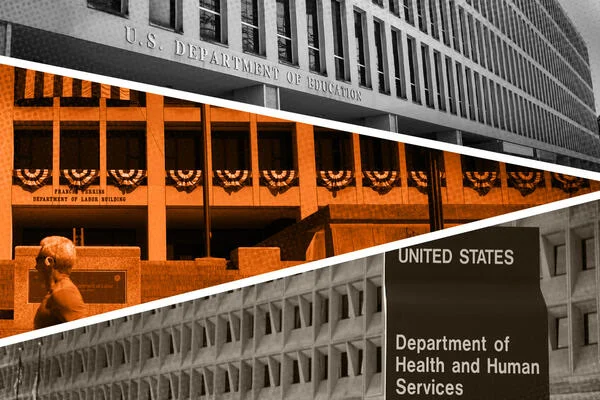
Photo illustration by Justin Morrison/Inside Higher Ed | Tierney L. Cross/Getty Images | BraunS and Prostock-Studio/iStock/Getty Images
Staff members at the Department of Education will be affected by the mass layoffs taking place across the federal government, a spokesperson said Friday.
Russell Vought, director of the Office of Management and Budget, has threatened the layoffs for weeks, citing the government shutdown. Vought wrote on social media Friday that his promised reduction in force had begun.
A department spokesperson then confirmed in an email to Inside Higher Ed that “ED employees will be impacted by the RIF.” The spokesperson did not clarify how many employees will be affected or in which offices. Other sources say no one who works in the Office of Federal Student Aid will be laid off.
Trump administration officials said in a court filing that an estimated 466 employees were given reduction-in-force notices. About 1,100 to 1,200 employees at the Department of Health and Human Services also got laid off. Overall, more than 4,200 workers across eight agencies were fired.
At the Education Department, the estimated layoffs will leave the department with just over 2,001 employees. The agency, which President Trump wants to close, already lost nearly half its career staff members during a first round of mass layoffs in March. In the wake of those layoffs, former staffers warned that the cuts would lead to technical mishaps, gaps in oversight and a loss of institutional knowledge. College administrators have also reported delays and issues in getting communications and updates from the department, though agency officials say critical services have continued.
The federal workers’ union and multiple outside education advocacy groups challenged the first round of layoffs in court. Lower courts blocked the RIF, but the Supreme Court overturned those rulings in July. Affected staff members officially left the department in August.
Another lawsuit challenged this latest round when Vought threatened the layoffs – before the pink slips had even been distributed today. It was filed at the end of September.
The union representing Education Department employees as well as sources with connections to staffers who were still working at the department as of Friday morning said that the latest round of cuts will at least affect staff members from the offices of elementary and secondary education and communications and outreach. A union representative added that all of the employees in the communications office’s state and local engagement division were laid off.
A senior department leader, who spoke on condition of anonymity, told Inside Higher Ed that the layoffs were directed by OMB and came as a surprise.
“Last week the [education] secretary’s office had said no RIFs at all,” the senior leader explained. “We heard on Tuesday that OMB sent over a list of people for ED to RIF … ED apparently edited it and sent it back.”
In neither case were cuts planned for the Office of Federal Student Aid, which manages the Pell Grant and student loans, the senior leader added.
Rachel Gittleman, president of the union that represents Education Department employees, promised in a statement to fight the layoffs.
“This administration continues to use every opportunity to illegally dismantle the Department of Education against congressional intent,” Gittleman said. “They are using the same playbook to cut staff without regard for the impacts to students and families in communities across the country … Dismantling the government through mass firings, especially at the ED, is not the solution to our problems as a country.”
Through late September and into the first 10 days of the shutdown, both Vought and President Trump used the threat of further RIFs to try to convince Democrats in the Senate to acquiesce and sign the Republicans’ budget stopgap bill. But Democrats have stood firm, refusing to sign the bill unless the GOP meets their demands and extends an expiring tax credit for health insurance.
Health and Human Services Department spokesperson Andrew G. Nixon wrote in an email to Inside Higher Ed earlier on Friday that “HHS employees across multiple divisions” received layoff notices. But he didn’t provide an interview or answer written questions about whether the layoffs include employees at the National Institutes of Health, a major funder of university research.
Nixon wrote that “HHS under the Biden administration became a bloated bureaucracy” and “all HHS employees receiving reduction-in-force notices were designated non-essential by their respective divisions. HHS continues to close wasteful and duplicative entities, including those that are at odds with the Trump administration’s Make America Healthy Again agenda.”
Democrats and some Republicans have warned against the layoffs. Sen. Susan Collins, a Maine Republican who chairs the powerful appropriations committee, opposed the layoffs in a statement while also blaming Democrats in the shutdown.
“Arbitrary layoffs result in a lack of sufficient personnel needed to conduct the mission of the agency and to deliver essential programs, and cause harm to families in Maine and throughout our country,” she said.
But Democrats in particular have argued that firing federal workers during a shutdown is unconstitutional.
“No one is making Trump and Vought hurt American workers—they just want to,” Sen. Patty Murray, a Washington State Democrat and vice chair of the appropriations committee, said in a statement Friday afternoon. “A shutdown does not give Trump or Vought new, special powers to cause more chaos or permanently weaken more basic services for the American people … This is nothing new, and no one should be intimidated by these crooks.”
Rep. Bobby Scott, a Virginia democrat and ranking member of the House Education and Workforce Committee, pointed out in a statement that the administration has had to rehire employees who were fired earlier this year.
“In addition to wasting millions of taxpayer dollars to fire and rehire government employees, arbitrarily firing government employees means there are fewer people to help administer essential programs,” he said. “Moreover, I fear the lasting impact of mass firings will be an incredible loss of invaluable institutional knowledge. Furthermore, random and chaotic layoffs will make it difficult to recruit qualified employees in the future.”