Blog

  • The surprising pragmatism of Reform UK voters towards international education

    The surprising pragmatism of Reform UK voters towards international education

    In polls and focus groups across the country, Reform voters have been singing from the same hymn sheet. They share a deep sense of national and local decline. They view the country through a lens of crumbling high streets, strained public services, and an economy seemingly trapped in a doom loop.

    In this environment, they have developed a corrosive scepticism towards the modern university model, judging it a failed investment that saddles their children with debt for a degree that is only good for getting through graduate recruiters’ first sift of CVs. They demand contraction, utility, and accountability for a system they believe serves neither the student nor the economy.

    To delve into these views, Public First conducted focus groups with those who currently intend to vote Reform UK in university towns in England. This revealed a surprising chink of light in an otherwise very gloomy outlook on universities: focus group participants were broadly very positive about international students.

    Foreign subsidy as necessary evil

    This needs to come with a heavy caveat: when we polled Reform voters, we found that 63 per cent agree that the UK government should restrict international student numbers in order to cut net migration. Cutting net migration remains a top priority for these voters, and for many, it appears that this should be done by any means necessary.

    However, when confronted with the economics, Reform voters we have spoken to reveal a sophisticated and transactional view of international student recruitment. For them, students from overseas are not a problem to be solved, but a “great business.”

    As polling has consistently demonstrated, the typical Reform voter is highly sceptical of mass, unmanaged immigration. Yet, when asked about foreign students, the response of those who live in university towns was not hostility, but economic pragmatism.

    They see international recruitment as a clear, contained, and mutually beneficial transaction: the UK offers a world-class education (a product) and, in return, receives a higher rate of tuition fee (a profitable revenue stream). The students come to study, they contribute economically, and then – the crucial expectation – they either contribute to the UK economy or they leave.

    This isn’t merely tolerance; it’s a qualified acceptance rooted in financial necessity. In these voters’ minds, these lucrative international fees act as the foreign subsidy that keeps the entire system afloat. As one participant noted, “If universities can’t stay open because they haven’t got any foreign students, then that is a detriment to UK students.” The implication is clear: to maintain a domestic higher education offering, the international revenue stream must be protected.

    The conditions for goodwill

    This surprising goodwill, however, is fragile and rests on extremely strict conditions. Voters grant the sector a licence to recruit internationally only as long as two core boundaries are strictly maintained.

    No back doors: The arrangement must remain a transactional exchange, not a migration loophole. Support instantly evaporates when student visas are perceived as a “back door” into the country, particularly when students bring dependents or “disappear” into the country during the degree programme, or after graduation. The transaction is valid only if the purpose is learning, not permanent residency. “If you’re coming to learn, then you come to learn. You don’t bring your family, your dog, your cat and your goldfish,” argued one voter.

    No crowding out: Crucially, if voters feel that their children are being denied places in favour of higher-paying overseas customers, the economic argument collapses under the weight of perceived injustice.

    Despite the conditional acceptance of international fees, the core challenge for universities remains their perceived lack of utility to their students, and in their local communities. While Reform voters are pragmatic about international revenue streams, they are profoundly sceptical about the value of many domestic degrees that this income subsidises, and they see very little economic spillover in their towns: “…the areas outside of the city centre, I can’t see what benefit [universities] have.”

    The sector cannot win over these key voters – and thus cannot escape the threat of cuts from political parties who want their support – by simply defending the status quo. Making the case to this influential group of voters requires clearly showing how international students are paying for local resources and subsidising domestic places, while demonstrating robust checks that ensure the system is not abused.

    More widely, universities need to move beyond abstract civic rhetoric and show tangible value, taking concerted action to ensure and evidence that all degree courses benefit the student, the community and/or the country at large.

    The support for international students presents a unique opportunity. It is the one pillar of the current HE model that Reform voters’ economic logic allows them to broadly accept, even if this acceptance is currently secondary to the desire to cut net migration.

    The sector must leverage this pragmatic lifeline to pave the way to a secure future, while not telling but showing voters that their domestic offering is part of the solution to the UK’s economic doom loop.
    Source link

  • Academics showcase alternative plan for ANU – Campus Review

    Academics showcase alternative plan for ANU – Campus Review

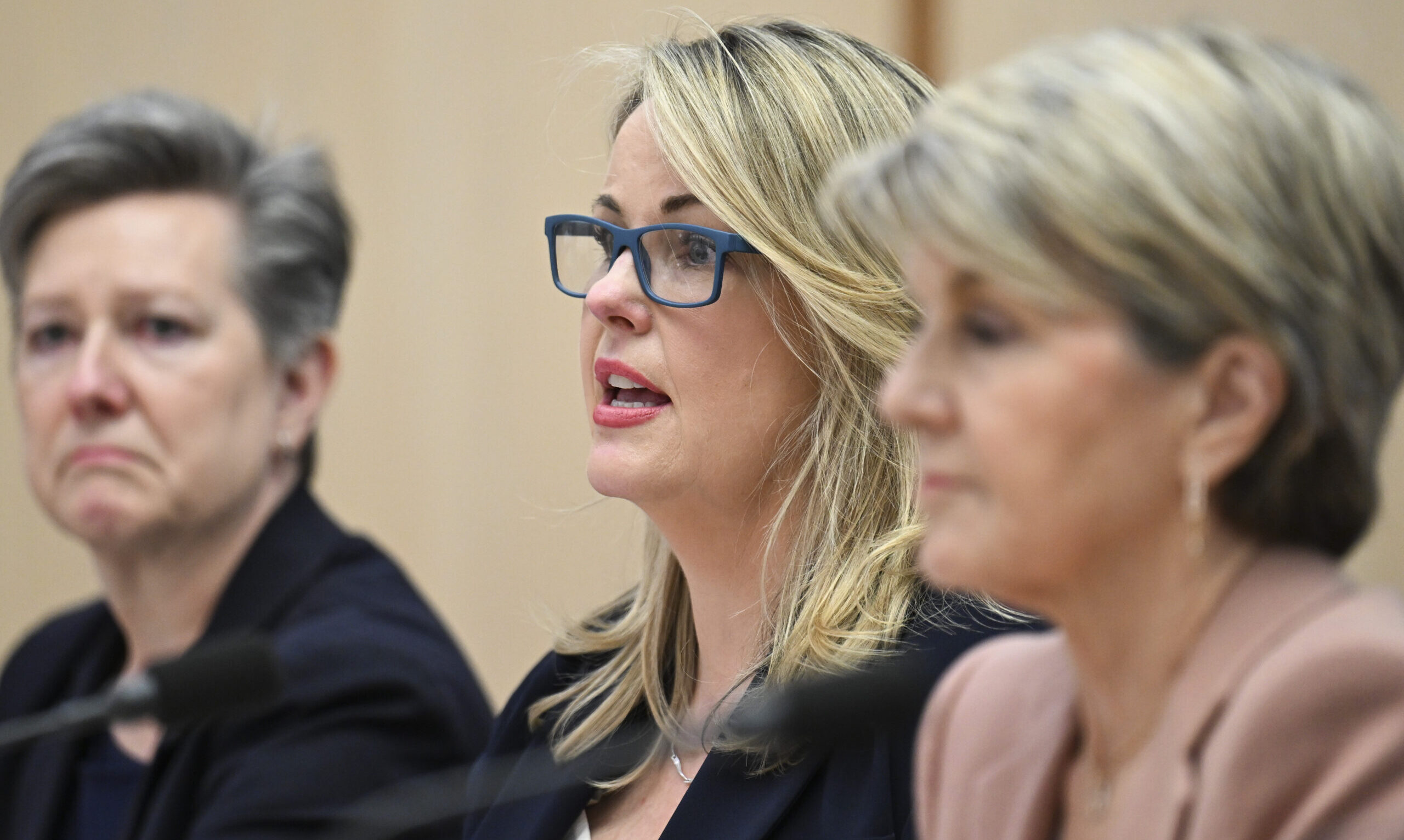
    Australian National University (ANU) staff feel “fundamentally disconnected” from the university’s leadership, a group of academics told a federal governance inquiry on Wednesday.

    Please login below to view content or subscribe now.

    Membership Login

    Source link

  • Consultant spend ‘relatively small,’ inquiry hears – Campus Review

    Consultant spend ‘relatively small,’ inquiry hears – Campus Review

    The head of consultant firm Nous Group told a federal inquiry into university governance that most institutions have hired his firm, spending just under $40 million total.

    Please login below to view content or subscribe now.

    Membership Login

    Source link

  • How degrees got so expensive – Campus Review

    How degrees got so expensive – Campus Review

    Australians think students are being asked to pay far too much for their degrees.

    Please login below to view content or subscribe now.

    Membership Login

    Source link

  • The political centre of gravity continues to shift towards higher education sceptics

    The political centre of gravity continues to shift towards higher education sceptics

    Declining trust in institutions is a defining trend of our times. Universities are certainly not immune to it, with the idea of the deteriorating “social licence to operate” of the university now a common item of discussion.

    Some point to the negative press coverage universities have faced in recent years. However, our recent report by UCL Policy Lab and More in Common highlights that something more fundamental is going on in our politics that universities must grapple with: the political centre of gravity has moved towards voters who are more sceptical of universities.

    Since 2016 it is well understood that political attention has shifted towards working class or “left-behind” voters (depending on your preferred characterisation) and to seats in the Midlands and northern England. These voters tend to be non-graduates and are now more commonly those seeing Reform as a potential answer to their frustrations. What our analysis found was a striking gap between how they view universities compared to the remainder of the country.

    Gap analysis

    Graduates are overwhelmingly positive about universities – 81 per cent say universities have a positive impact on the nation. Among non-graduates, that figure drops to just 55 per cent. This is reflected in the wider set of concerns non-graduates have about higher education. Non-graduates are more likely to believe universities only benefit those who attend them and that the system is rigged in favour of the rich and powerful. They are also less convinced that universities have become more accessible to working-class students over the past 30 years.

    It is their concerns that are driving the fact that a majority of voters emphasise the importance of vocational education over degrees and are worried about there being too many “Mickey Mouse” courses (although even graduates agree on that later point). Fewer than half are even fully aware that universities conduct research.

    The graduate gap is in part what creates the more direct political challenge universities face. Reform voters are markedly more sceptical of universities than any other voter group. Less than half believe universities are good for the country. More than a third think they only benefit attendees, and nearly one in ten believe they benefit no one at all. Reform voters overwhelmingly did not go to university. If a key battleground of British politics over the next four years is to be Labour vs Reform, universities will need to engage with these voters’ concerns if they going to find their place in the conversation.

    Reaching the sceptics

    This challenge is not insurmountable. There is as much to be positive about as concerned. Our polling showed the clear majority, 61 per cent, see universities as a positive influence, both nationally and locally and the cynicism regarding some aspects of what universities are delivering is not as dire as that faced by many other institutions. Despite their relative scepticism, 45 per cent of Reform voters still see universities as benefiting the country.

    Those we spoke to in focus groups were not unpersuadable. We found some scepticism, but not hostility. Another recent report by More in Common and the UCL Policy Lab ranked universities as “medium-high” in terms of how trusted they are by voters. In the turbulent times we are in, that is not a bad position.

    As well as outlining where the challenges lie, our report shows how universities might go about maintaining trust and reaching more sceptical voters. Three lessons stood out.

    The first is addressing the sense that universities are not supporting the skills needs of the country. The biggest concern we found about universities is the declining perception of the value of a degree. Focus groups bore out what this meant – degrees not resulting in a good job. There are two arguments which played out in focus groups that might help convince sceptics. Either that more degrees have a clear path, like those for teachers, lawyers and doctors, or by explaining the value of a degree in broadening minds and “opening doors” – that is, leading to a good job that may not relate to the content studied. Regardless, the public want confidence that universities are training the next generation of skilled professionals.

    The second is by demonstrating the value of research, and the innovation and civic engagement it allows, to those who do not attend university. On this point there is much potential. When asked, the public are highly supportive of universities’ role in R&D and see it as a core purpose. In focus group discussions, a sense emerged of the benefits of university research – seen as carried out with a long term and neutral perspective. Yet few raise research unprompted, and less than half of non-graduates in our poll were even fully aware that universities do research. Articulating this role and how it benefits lives is a clear imperative.

    Third is the local role. We found many see universities as a source of local pride, with the idea that universities support local business – and make their areas more vibrant – resonating. At the same time there are concerns, for example around housing and anti-social behaviour. A focus on enhancing the former and acting as a good neighbour on the latter would therefore be advisable.

    All this sits in a wider context of how the public sees universities, which was at the core of what we found. In the public imagination, universities are national institutions with clear responsibilities. Indeed, Reform voters are the most likely to say that universities should focus on their national responsibilities as opposed to their international connections. Showing how these responsibilities are being met – for the whole country, not just those who study for a degree – is how the sector can maintain public trust, and meet the political challenge it faces.

    Source link

  • In Los Angeles, 45 Elementary Schools Beat the Odds in Teaching Kids to Read – The 74

    In Los Angeles, 45 Elementary Schools Beat the Odds in Teaching Kids to Read – The 74

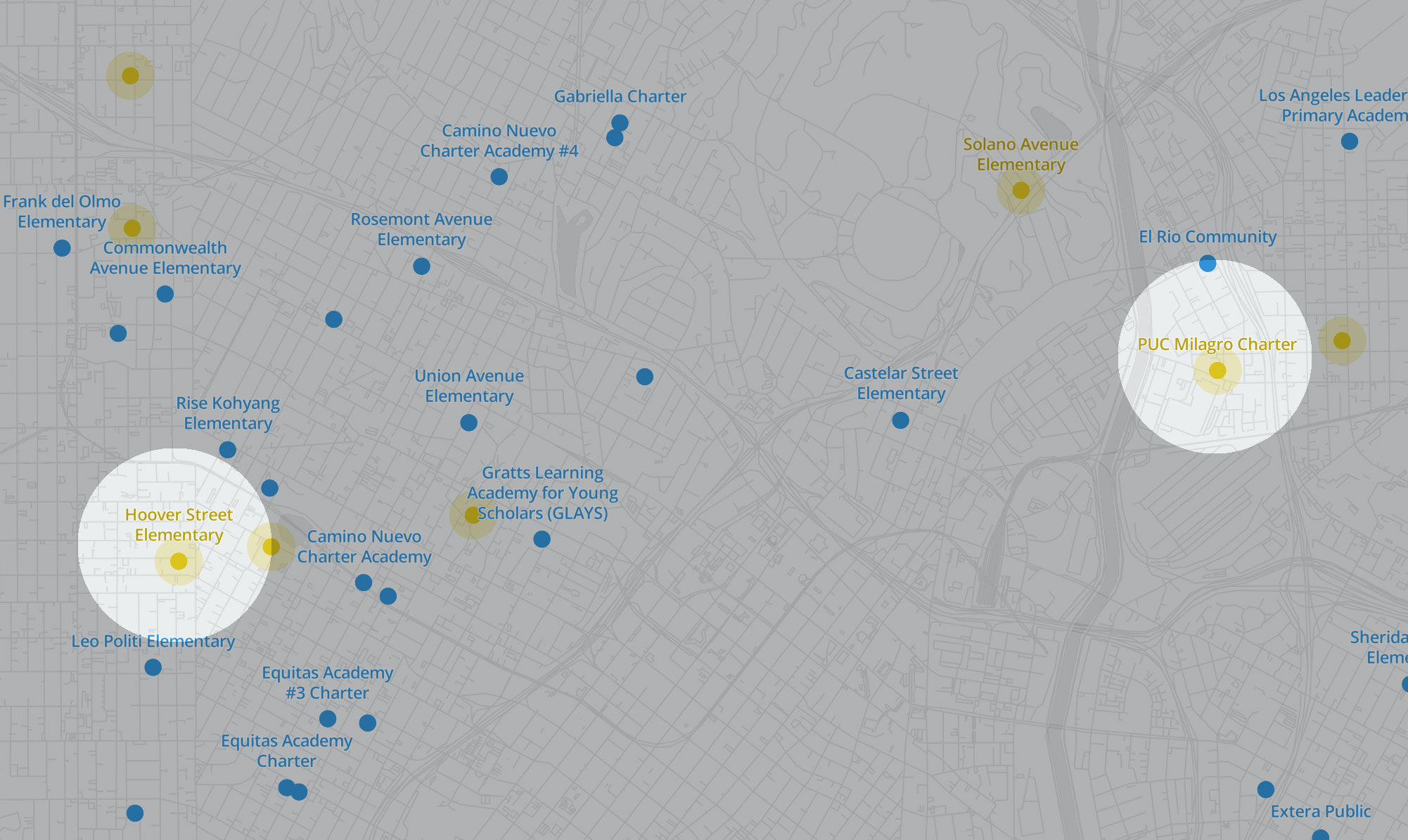
    This article is part of Bright Spots, a series highlighting schools where every child learns to read, no matter their zip code. Explore the Bright Spots map to find out which schools are beating the odds in terms of literacy versus poverty rates.

    This story is part of The 74’s special coverage marking the 65th anniversary of the Los Angeles Unified School District. Read all our stories here.

    When The 74 started looking for schools that were doing a good job teaching kids to read, we began with the data. We crunched the numbers for nearly 42,000 schools across all 50 states and Washington, D.C. and identified 2,158 that were beating the odds by significantly outperforming what would be expected given their student demographics. 

    Seeing all that data was interesting. But they were just numbers in a spreadsheet until we decided to map out the results. And that geographic analysis revealed some surprising findings. 

    For example, we found that, based on our metrics, two of the three highest-performing schools in California happened to be less than 5 miles apart from each other in Los Angeles. 

    The PUC Milagro Charter School came out No. 1 in the state of California. With 91% of its students in poverty, our calculations projected it would have a third grade reading rate of 27%. Instead, 92% of its students scored proficient or above. Despite serving a high-poverty student population, the school’s literacy scores were practically off the charts.  

    PUC Milagro is a charter school, and charters tended to do well in our rankings. Nationally, they made up 7% of all schools in our sample but 11% of those that we identified as exceptional. 

    But some district schools are also beating the odds. Just miles away from PUC Milagro is our No. 3-rated school in California, Hoover Street Elementary. It is a traditional public school run by the Los Angeles Unified School District. With 92% of its students qualifying for free- or reduced-price lunch, our calculations suggest that only 23% of its third graders would likely be proficient in reading. Instead, its actual score was 78%. 

    For this project, we used data from 2024, and Hoover Street didn’t do quite as well in 2025. (Milagro continued to perform admirably.)

    Still, as Linda Jacobson reported last month, the district as a whole has been making impressive gains in reading and math over the last few years. In 2025, it reported its highest-ever performance on California’s state test. Moreover, those gains were broadly shared across the district’s most challenging, high-poverty schools. 

    Our data showed that the district as a whole slightly overperformed expectations, based purely on the economic challenges of its students. We also found that, while Los Angeles is a large, high-poverty school district, it had a disproportionately large share of what we identified as the state’s “bright spot” schools. L.A. accounted for 8% of all California schools in our sample but 16% of those that are the most exceptional. 

    All told, we found 45 L.A. district schools that were beating the odds and helping low-income students read proficiently. Some of these were selective magnet schools, but many were not. 

    Map of Los Angeles Area Bright Spots

    Some of the schools on the map may not meet most people’s definition of a good school, let alone a great one. For example, at Stanford Avenue Elementary, 47% of its third graders scored proficient in reading in 2024. That may not sound like very many, but 97% of its students are low-income, and yet it still managed to outperform the rest of the state by 4 percentage points. (It did even a bit better in 2025.)

    Schools like Stanford Avenue Elementary don’t have the highest scores in California. On the surface, they don’t look like they’re doing anything special. But that’s why it’s important for analyses like ours to consider a school’s demographics. High-poverty elementary schools that are doing a good job of helping their students learn to read deserve to be celebrated for their results.


    Did you use this article in your work?

    We’d love to hear how The 74’s reporting is helping educators, researchers, and policymakers. Tell us how


    Source link

  • Epstein, Dershowitz, Summers, and the Long Arc of Elite Impunity

    Epstein, Dershowitz, Summers, and the Long Arc of Elite Impunity

    For many observers, Jeffrey Epstein, Alan Dershowitz, and Larry Summers appear as separate figures orbiting the world of elite academia, finance, and politics. But together—and through the long lens of history—they represent something far more revealing: the modern expression of a centuries-old system in which elite institutions protect powerful men while sacrificing the vulnerable.

    The Epstein-Dershowitz-Summers triangle is not a scandal of individuals gone astray. It is the predictable result of structures that make such abuses almost inevitable.

    The Modern Version of an Old System

    Jeffrey Epstein built his influence not through scholarship or scientific discovery—he had no advanced degrees—but by inserting himself into the financial bloodstream of the Ivy League. Harvard and MIT accepted his money, his introductions, and his promises of access to ultra-wealthy networks. Epstein did not need credibility; he purchased it.

    Larry Summers, as president of Harvard from 2001 to 2006, continued to engage with Epstein after the financier’s first arrest and plea deal. Summers’ administration accepted substantial Epstein donations, including funds channeled into the Program for Evolutionary Dynamics. Summers and his wife dined at Epstein’s Manhattan home. After leaving Harvard, Summers stayed in touch with Epstein even as the financier’s abuses became increasingly public. Summers used the same revolving door that has long connected elite universities, Wall Street, and presidential administrations—moving freely and comfortably across all three.

    Alan Dershowitz, Epstein’s close associate and legal strategist, exemplifies another pillar of this system: elite legal protection. Dershowitz defended Epstein vigorously, attacked survivors publicly, and remains embroiled in litigation connected to the case. Whether one believes Dershowitz’s claims of innocence is secondary to the structural fact: elite institutions reliably shield their own.

    Together, Epstein offered money and connections; Summers offered institutional prestige and political access; Dershowitz offered legal insulation. Harvard, meanwhile, offered a platform through which all three profited.

    Knowledge as a Shield—Not a Light

    For centuries, elite universities have served as both engines of knowledge and fortresses of power. They are not neutral institutions.

    They defended slavery and eugenics, supplying “scientific” justification for racial hierarchies.

    They exploited labor—from enslaved workers who built campuses to adjuncts living in poverty today.

    They marginalized survivors of sexual violence while protecting benefactors and faculty.

    They accepted fortunes derived from war profiteering, colonial extraction, hedge-fund predation, and private-equity devastation.

    Epstein did not invent the model of the toxic patron. He merely perfected it in the neoliberal era.

    A Four-Step Pattern of Elite Impunity

    The scandal surrounding Epstein, Dershowitz, and Summers follows a trajectory that dates back centuries:

    1. Wealth accumulation through exploitation

      From slave plantations to private equity, concentrated wealth is generated through systems that harm the many to benefit the few.

    2. The purchase of academic legitimacy

      Endowed chairs, laboratories, fellowships, and advisory roles allow dubious benefactors to launder reputations through universities.

    3. Legal and cultural shielding

      Elite lawyers, confidential settlements, non-disclosure agreements, and institutional silence create protective armor.

    4. Silencing of survivors and critics

      Reputational attacks, threats of litigation, and internal pressure discourage transparency and accountability.

    Epstein operated within this system. Dershowitz defended it. Summers benefited from it. Harvard reinforced it.

    Larry Summers: An Anatomy of Power

    Summers’ career illuminates the deeper structure behind the scandal. His trajectory—Harvard president, U.S. Treasury Secretary, World Bank chief economist, adviser to hedge funds, consultant to Big Tech—mirrors the seamless circulation of elite power between universities, finance, and government.

    During his presidency, Harvard publicly embraced Epstein’s donations. After Epstein’s first sex-offense conviction, Summers continued to meet with him socially and professionally. Summers leveraged networks that Epstein also sought to cultivate. And even after the Epstein scandal fully broke open, Summers faced no meaningful institutional repercussions.

    The message was clear: individual wrongdoing matters less than maintaining elite continuity.

    Higher Education’s Structural Complicity

    Elite universities were not “duped.” They were beneficiaries.

    Harvard returned only a fraction of Epstein’s donations, and only after the press exposed the relationship. MIT hid Epstein’s gifts behind false donor names. Faculty traveled to his island and penthouse without demanding transparency.

    Meanwhile:

    Adjuncts qualify for food assistance

    Students carry life-crippling debt

    Administrators earn CEO-level pay

    Donors dictate priorities behind closed doors

    This is not hypocrisy—it is hierarchy. A system built to serve wealth does exactly that.

    A Timeline Much Longer Than Epstein

    To understand the present, we must zoom out:

    Oxford and Cambridge accepted slave-trade wealth as institutional lifeblood.

    Gilded Age robber barons endowed libraries while crushing labor movements.

    Cold War intelligence agencies quietly funded research centers.

    Today’s oligarchs, tech billionaires, and private-equity titans buy influence through endowments and think tanks.

    The tools change. The pattern does not.

    Universities help legitimate the powerful—even when those powerful figures harm the public.

    Why This Still Matters

    The Epstein scandal is not resolved. Court documents continue to emerge. Survivors continue to speak. Elite institutions continue to stall and deflect. Harvard still resists meaningful transparency, even as its endowment approaches national GDP levels.

    The danger is not simply that another Epstein will emerge. It is that elite universities will continue to provide the conditions that make another Epstein inevitable.

    What Breaking the Pattern Requires

    Ending this system demands more than symbolic gestures or public-relations apologies. Real reform requires:

    Radical donor transparency—with all gifts, advisory roles, and meetings disclosed

    Worker and student representation on governing boards

    Strong whistleblower protections and the abolition of secret NDAs

    Robust public funding to reduce reliance on elite philanthropy

    Independent journalism committed to exposing institutional power

    Ida B. Wells, Jessica Mitford, Upton Sinclair, and other muckrakers understood what universities still deny: scandals are symptoms. The disease is structural.

    Epstein was not an anomaly.

    Dershowitz is not an anomaly.

    Summers is not an anomaly.

    They are products of a system in which universities serve power first—and truth, only if convenient.

    If higher education wants to reclaim public trust, it must finally decide which side of history it is on.

    Source link

  • Finally Learned My Limits (Heidi Weber)

    Finally Learned My Limits (Heidi Weber)

    [Editors note: “No Stop” Heidi Weber has been a hero of ours for several years. Her courage fighting corruption at Globe University was documented on an episode of

    First, I would like to thank Dahn, and all the other truth tellers who work tirelessly every day and sacrifice so much to elevate truth. Without them, any whistleblower efforts would not have half the positive impact that they do.

    For years, I really struggled with the title of whistleblower. I thought if I could distance myself from it, all the resulting traumas would just disappear, and life would be “normal” again.

    However, I underestimated how much a landmark whistleblower case, especially in higher education, would affect and continually haunt me. I’m glad now, that it did, because it forced me to see how much of an impact it has had on an entire for-profit sector. I learned it’s ok to allow myself to feel a sense of pride. After all, it was the most painful, stressful thing I imagined I’d ever go through.

    Unfortunately, life didn’t get that memo and still had lessons for me about the depth of pain adversity, and struggle, in ways that I never imagined.

    In the middle of the pandemic, my husband’s sudden unexpected stroke forced us into a reality we weren’t prepared for. Overnight, I became his nurse, advocate, cheerleader, and his sole rehabilitation task master, simultaneously trying to maintain and hold our home together and make ends meet.

    At the same time, our once close, beautiful, adult daughters estranged from us without explanation, treating us as if we do not exist, and are of no value to them… *

    All I knew, was that it resulted in leaving a pain and heartache so profound that has reshaped the way I understand love, loss, and resilience.

    In the midst of these personal storms, I rediscovered a purpose in educating and helping others as an advocate. So, I added two post graduate certificates and learned how to support and even the field for families who feel powerless in a biased system financially incentivized to separate families and little accountability or oversight.

    Injustice and unfairness still stir a fire in me, just as it had when I made that fateful decision to become a whistleblower, and it still inspires me to be relentless in seeking truth and fairness.

    Only now, I have the unique experience and knowledge to inspire/teach others.

    Currently, I’ve been writing curricula and developing an online training program for a Certificate as a Justice Support Advocate. It focuses on some basic foundations of civics, (no longer taught in school), finding your own resilience and purpose, the various types of advocates, incorporating it into your personal and professional life, and protecting yourself and the public at the same time.

    My wish is for learners to find their own fire and realize that courage is easier found when you are fighting for what you know is true and just for everyone, no matter what that is.

    I’ve also been doing family advocacy consulting work, as an affordable option for parents, alone or as a partner to their attorney to provide non legal support, evaluation, investigation, and provide fair, logical solutions:

    1. For parents facing or concerned about unethical practices in the Child Protective Services (CPS) system to audit, teach and ensure that parents are being portrayed truthfully with reasonable realistic goals to reunite the family, if indicated.

    2. In high conflict custody, providing evaluation and screening for signs of parental alienation, and support, education, and resources (to both parents) on how to navigate being a divorced family, as well as providing recommendations to the Court (if indicated) centered around the best interests of the child and importance of both parents to healthy development.

    If you would like to discuss either of those services or more info on the advocacy certificate course, please contact me at [email protected]. I’m shooting for February or March 2026 to have the website, and course available online.

    These years have been painful, transformative, and defining, but with pain comes growth and wisdom. Life still had more lessons…. to show me there is no limit to how much I can carry and keep positively moving forward.

    *Adult children from “normal” average parents have become an almost celebrated (unhealthy) trend over the last ten years especially, for many adult children who have been influenced, poisoned, or alienated against one or both parents by undertrained therapists, peers, and social media influencers, allowing avoidance of responsibility, self-discipline, or concern for others.

    Source link

  • The Shutdown Is Over, But Thousands of Kids Are Still Locked Out of Head Start – The 74

    The Shutdown Is Over, But Thousands of Kids Are Still Locked Out of Head Start – The 74


    Get stories like this delivered straight to your inbox. Sign up for The 74 Newsletter

    Nearly 9,000 children across 16 states and Puerto Rico remained locked out of Head Start programming as of Friday evening, according to the National Head Start Association, despite the federal government’s reopening on Wednesday night.

    For some programs, the promise of incoming funding will be enough to restart operations. But many won’t be able to open their doors until they receive their federal dollars, which could take up to two weeks, said Tommy Sheridan, deputy director at the NHSA. 

    Sheridan said the Trump administration understands the urgency and is “moving as fast as they possibly can.”

    That said, this interruption had an opportunity cost, and it’s led to instability for families and providers, he said, adding that the shutdown caused staff to focus on issues they “should not be worried about,” such as fundraising and contingency planning.

    Some providers fear greater delays since the Trump administration shuttered half of the Head Start regional offices earlier this year. 

    “They’re going to be working as hard as they can, but they’re going to be doing it with half the capacity,” said Katie Hamm, former deputy assistant secretary for early childhood development under President Joe Biden.

    And even once the funding comes through, closed centers will need to go through a series of logistical hurdles, including reaching out to families who may have found alternative child care arrangements and calling back furloughed staff, some of whom have found employment elsewhere. 

    “Head Start is not a light switch,” Hamm said. “You can’t just turn it back on.”

    This interruption has also further eroded trust between grantees and the federal government that was already shaky, she added.

    The Administration for Children and Families did not respond to a request for comment on when programs can anticipate communication from the office or their funding.

    Since Nov. 1, approximately 65,000 kids and their families — close to 10% of all of those served by Head Start — have been at risk of losing their seats because their programs had not received their awarded funding during the longest government shutdown in history. The early care and education program delivers a range of resources to low-income families including medical screenings, parenting courses and connections to community resources for job, food and housing assistance. 

    At the peak of the Head Start closures, roughly 10,000 kids across 22 programs lost access to services, according to Sheridan. A number of the remaining programs were able to stay open through private donations, loans, alternative funding streams and staff’s willingness to go without pay.

    Valerie Williams, who runs a Head Start program with two facilities in Appalachian Ohio, was excited to tell parents that classrooms would be reopening soon. Her centers have been closed since Nov. 3, impacting 177 kids and 45 staff, many of whom already live paycheck to paycheck, she said.

    Valerie Williams runs two Head Start centers in Appalachian Ohio, serving 177 kids. (Valerie Williams)

    A number of families were doubly impacted, losing access to Head Start’s resources as well as the Supplemental Nutrition Assistance Program, also known as SNAP, simultaneously. In the days leading up to the closure, Williams and her staff prepared families as best they could, sharing information about resources for food, assistance for utilities and heating and guidance on child care options. 

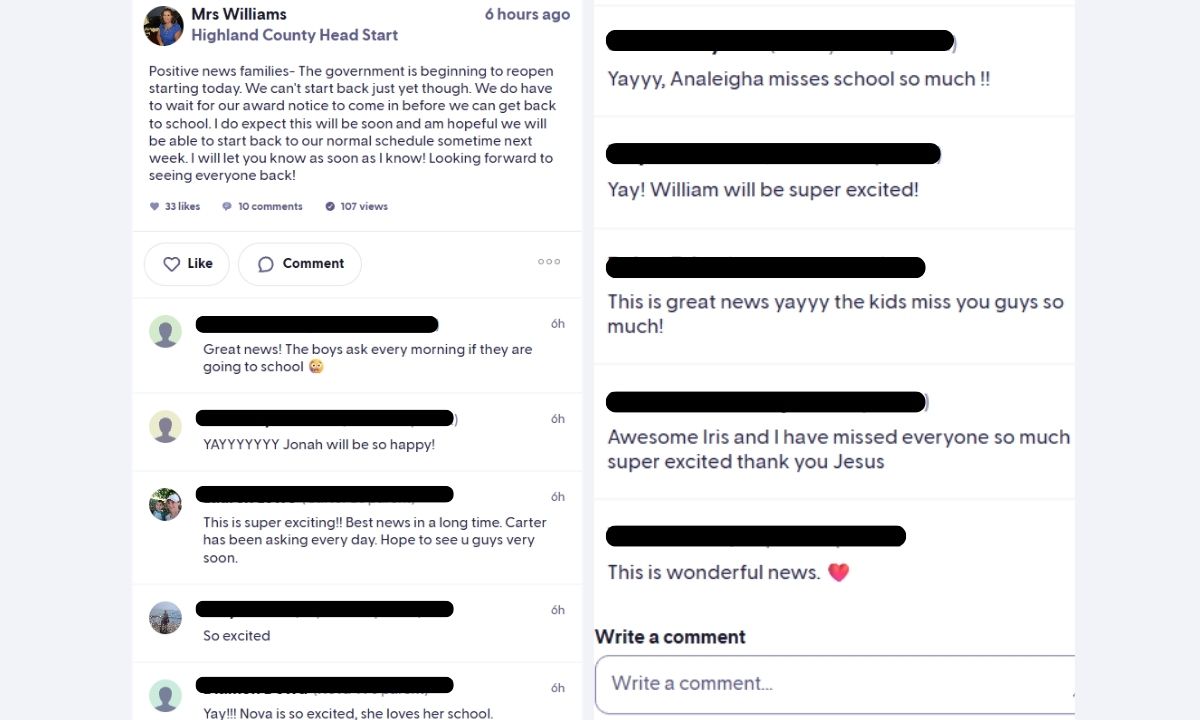
    On Thursday, Williams wrote to parents via an online portal that she hopes to restart the normal school schedule sometime next week. The post was quickly flooded with comments. 

    “This is super exciting!!” wrote one parent. “Best news in a long time. Carter has been asking every day. Hope to see u guys very soon.”

    “Yayyy,” wrote another. “The kids miss you guys so much!”

    Valerie Williams, who runs a Head Start program in Appalachian Ohio, was excited to tell parents that classrooms would be reopening soon. (Valerie Williams)

    Still, Williams knows reopening won’t be seamless. Along with program leaders across the country, she’ll need to call back furloughed staff, place food orders and handle a number of other operational challenges.

    And despite the excitement, the transition back may also prove tricky for some kids.

    “I do think that it will feel like starting school again for a lot of our classrooms,” Williams said. “They’ve been out for two weeks … You’re going to work on separation anxiety issues, you’re going to have to get into that routine again and the structure of a classroom environment. So I think that will be a big issue for a lot of our teachers.” 

    As of Friday afternoon, Williams was still awaiting communication from the federal Office of Head Start with information about the anticipated timeline for next steps. 

    “As soon as we get that notice of award, [I want to] start our staff and kids back immediately,” she said. “The very next day.”

    Now that the shutdown has ended, what’s next for Head Start?

    Funding for Head Start is complex. Some 80% comes from federal grants that are released to local providers on a staggered schedule throughout the year. This year, grant recipients with funding deadlines on the first of October and November were left scrambling, as the federal shutdown dragged on.

    The government began to resume operations late Wednesday night after President Donald Trump signed a bill, funding most federal agencies through Jan. 30 and allowing programs that didn’t receive their funding on time, including Head Start, to use forthcoming dollars to backpay expenses incurred over the past month and a half.

    Here’s what Hamm predicts will happen next: The Office of Head Start will recall all staff to resume, including those who were furloughed during the shutdown. The employees will review grant applications, a process which now requires them to flag any language that might be reflective of diversity, equity and inclusion practices. Next, money will be sent along to the remaining regional offices, and eventually dispersed to individual grantees. The NHSA is hopeful that this process will be completed by Thanksgiving for all grantees.

    There are two things the federal government can do to help centers open faster, according to Hamm. First, they could waive a typical protocol that leads to a period of seven days between when a member of Congress is notified that their state will be receiving funding and when the funding actually goes out, Hamm explained. 

    Officials could also notify grantees, in writing, about how much money they’ll get and when it’s expected to come through, so they can begin planning. 

    Unlike SNAP, which received guaranteed funding through the budget year, money for Head Start remains uncertain beyond Jan. 30. While the fear of another shutdown has caused “quite a bit of worry” among the Head Start community, Sheridan said it would likely lead to fewer program disruptions, since it wouldn’t fall at the start of the fiscal year.

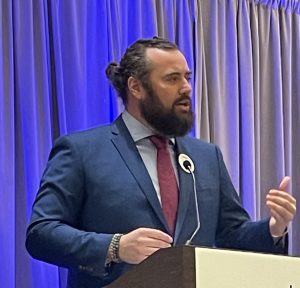
    Tommy Sheridan, deputy director of the National Head Start Association. (Tommy Sheridan)

    To prevent similar chaos moving forward, Democratic Sen. Tammy Baldwin of Wisconsin introduced a bill in the final days of the shutdown that would guarantee uninterrupted service for fiscal year 2026. 

    “The 750,000 children and their families who use Head Start shouldn’t pay the price for Washington dysfunction,” Baldwin, the ranking member of the Senate Appropriations Subcommittee for Labor, Health and Human Services, Education, and Related Agencies, wrote in a statement to The 74.

    Multiple funding threats and deep staffing cuts by the Trump administration over the past year have plunged programs across the country into uncertainty. In the wake of that recent upheaval, a leadership change is also underway. The acting director of the Office of Head Start, Tala Hooban, accepted a new role within the Office of Administration for Children and Families and will be replaced by political appointee Laurie Todd-Smith, according to an email statement from ACF. Todd-Smith currently leads the Office of Early Childhood Development, which oversees the Office of Head Start. 

    Sheridan described this move as anticipated and not particularly concerning, though others were less sure. Joel Ryan, the executive director of the Washington State Association of Head Start, noted that Hooban was a longtime civil servant and strong supporter of the Head Start program. Without her, he fears “there’s nobody internally with any kind of power that will push back,” on future threats to the program.

    Another worry plaguing providers: current funding for Head Start has remained stagnant since the end of 2024, meaning that through at least Jan. 30, programs will be operating under the same budget amid rising costs across the board.

    In previous years, the program’s grant recipients typically got a cost-of-living adjustment, such as the 2.35% bump ($275 million) for fiscal year 2024. In May, a group of almost 200 members of Congress signed a letter to a House Appropriations subcommittee, requesting an adjustment of 3.2% for 2026. A recent statement from NHSA suggested that instead, the proposed Senate bill for next year includes a jump of just 0.6%, or $77 million.

    “If we don’t see a funding increase in line with inflation, that means that Head Start will be facing a cut of that degree,” said Sheridan. “It’s just kind of a quiet cut, or a silent cut.”

    “I think what will end up happening,” said Ryan, “is you’ll end up seeing a massive reduction in the number of kids being served.”


    Did you use this article in your work?

    We’d love to hear how The 74’s reporting is helping educators, researchers, and policymakers. Tell us how

    Source link

  • Trump Can’t “Blanket” Deny UC Grants or Demand Payout

    Trump Can’t “Blanket” Deny UC Grants or Demand Payout

    A judge ordered federal agencies Friday to end their “blanket policy of denying any future grants” to the University of California, Los Angeles, and further ruled that the Trump administration can’t seek payouts from any UC campus “in connection with any civil rights investigation” under Titles VI or IX of federal law.

    The ruling also prohibits the Department of Justice and federal funding agencies from withholding funds, “or threatening to do so, to coerce the UC in violation of the First Amendment or Tenth Amendment.” In all, the order, if not overturned on appeal, stops the administration’s attempt to pressure UCLA to pay $1.2 billion and make multiple other concessions, including to stop enrolling “foreign students likely to engage in anti-Western, anti-American, or antisemitic disruptions or harassment” and stop “performing hormonal interventions and ‘transgender’ surgeries” on anyone under 18 at its medical school and affiliated hospitals.

    The administration’s targeting of the UC system came to the fore on July 29. That’s when the DOJ said its months-long investigations across the system had so far concluded that UCLA violated the equal protection clause of the 14th Amendment and Title VI of the Civil Rights Act of 1964 in its response to alleged antisemitism at a spring 2024 pro-Palestinian protest encampment.

    Federal agencies—including the National Institutes of Health, National Science Foundation and Department of Energy—quickly began freezing funding; UC estimated it lost $584 million. But UC researchers sued and, even before Friday’s ruling, U.S. District Court judge Rita F. Lin of the Northern District of California ordered the restoration of almost all of the frozen funding.

    Friday’s ruling came in a case filed this fall by the American Association of University Professors, the affiliated American Federation of Teachers and other unions. Lin again was the judge.

    “Defendants did not engage in the required notice and hearing processes under Title VI for cutting off funds for alleged discrimination,” she wrote.

    “With every day that passes, UCLA continues to be denied the chance to win new grants, ratchetting [sic] up Defendants’ pressure campaign,” she wrote. “And numerous UC faculty and staff have submitted declarations describing how Defendants’ actions have already chilled speech throughout the UC system. They describe how they have stopped teaching or researching topics they are afraid are too ‘left’ or ‘woke,’ in order to avoid triggering further funding cancellations by Defendants. They also give examples of projects the UC has stopped due to fear of the same reprisals. These are classic, predictable First Amendment harms, and exactly what Defendants publicly said that they intended.”

    Source link