Blog

  • What does the UK’s Autumn budget mean for international higher education?

    What does the UK’s Autumn budget mean for international higher education?


    Nicholas Cuthbert

    Nick began his career with Nottingham Trent University in the UK working in international student recruitment, before going on to a wide range of leadership and consultancy roles in the private sector. He joined The PIE in 2021 and is a key commentator on the current trends in the global higher education industry. He curates content for our PIE Live conferences and is the co-host of the Tales from the Departure Lounge podcast. Get in touch with Nick at [email protected]


    View all articles by Nicholas

    Source link

  • What the NAEP Proficient Score Really Means for Learning – The 74

    What the NAEP Proficient Score Really Means for Learning – The 74


    Get stories like this delivered straight to your inbox. Sign up for The 74 Newsletter

    In September, The 74 published Robert Pondiscio’s opinion piece discussing how people without strong reading skills lack what it takes “to effectively weigh competing claims” and “can’t reconcile conflicts, judge evidence or detect bias.” He adds, “They may read the words, but they can’t test the arguments.”

    To make his case, Pondiscio relies on the skill level needed to achieve a proficient score or better on National Assessment of Educational Progress, a level that only 30% of tested students reached on 2024’s Grade 8 reading exam. Only 16% of Black students and 19% of Hispanics were proficient or more.

    Yet naysayers argue that the NAEP standard is simply set too high and that NAEP’s sobering messages are inaccurate. There is no crisis, according to these naysayers.

    So, who is right?

    Well, research on testing performance of eighth graders from Kentucky indicates that it’s Pondiscio, not the naysayers, who has the right message about the NAEP proficiency score. And, Kentucky’s data show this holds true not just for NAEP reading, but for NAEP math, as well.

    Kentucky offered a unique study opportunity. Starting in 2006, the Bluegrass State began testing all students in several grades with exams developed by the ACT, Inc. These tests include the ACT college entrance exam, which was administered to all 11th grade public school students, and the EXPLORE test, which was given to all of Kentucky’s public school eighth graders.

    Both the ACT and EXPLORE featured something unusual: “Readiness Benchmark” scores which ACT, Inc. developed by comparing its test scores to actual college freshman grades years later. Students reaching the benchmark scores for reading or math had at least a 75% chance to later earn a “C” or better in related college freshman courses.

    So, how did the comparisons between Kentucky’s benchmark score performance and the NAEP work out?

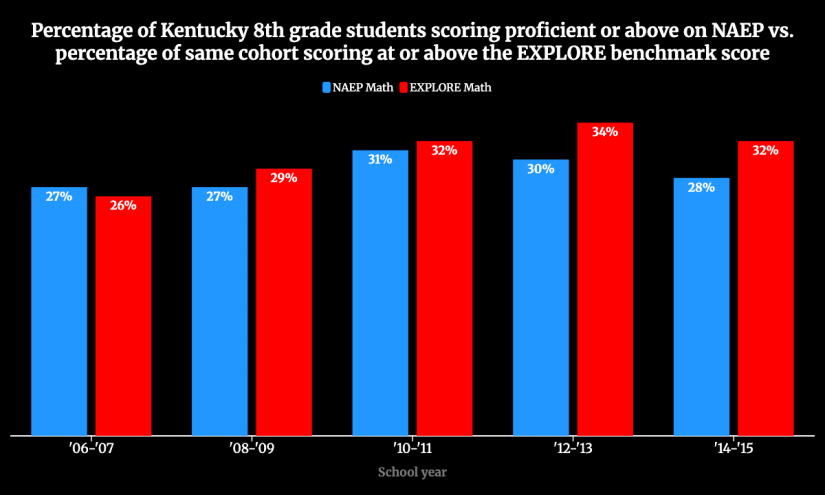
     Analysis found close agreement between the NAEP proficiency rates and the share of the same cohorts of students reaching EXPLORE’s readiness benchmarks. ​

    For example, in Grade 8 reading, EXPLORE benchmark performance and NAEP proficiency rates for the same cohorts of students never varied by more than four percentage points for testing in 2008-09, 2010-11, 2012-13 or 2014-15.

    The same, close agreement was found in the comparison of NAEP grade 8 math proficiency rates to the EXPLORE math benchmark percentages. 

    EXPLORE to NAEP results were also examined separately for white, Black and learning-disabled students. Regardless of the student group, the EXPLORE’s readiness benchmark percentages and NAEP’s proficient or above statistics agreed closely.

    Doing an analysis with Kentucky’s ACT college entrance results test was a bit more challenging because NAEP doesn’t provide state test data for high school grades. However, it is possible to compare each student cohort’s Grade 8 NAEP performance to that cohort’s ACT benchmark score results posted four years later when they graduated from high school. Data for graduating classes in 2017, 2019 and 2021 uniformly show close agreement for overall average scores, as well as for separate student group scores.

    It’s worth noting that all NAEP scores have statistical sampling errors. After those plus and minus errors are considered, the agreements between the NAEP and the EXPLORE and ACT test results look even better.

    The bottom line is: Close agreement between NAEP proficiency rates and ACT benchmark score results for Kentucky suggests that NAEP proficiency levels are highly relevant indicators of critical educational performance. ​Those claiming NAEP’s proficiency standard is set too high are incorrect.

    That leaves us with the realization that overall performance of public school students in Kentucky and nationwide is very concerning. Many students do not have the reading and math skills needed to navigate modern life. Instead of simply rejecting the troubling results of the latest round of NAEP, education leaders need to double down on building key skills among all students.


    Did you use this article in your work?

    We’d love to hear how The 74’s reporting is helping educators, researchers, and policymakers. Tell us how

    Source link

  • When the clock ticks

    When the clock ticks

    I always respond the same: Give me a deadline you feel you can comfortably meet and then I can put it on our publishing calendar. What I don’t want is for the person to give me an early date and then not be able to meet it.

    So, how does a reporter writing a story for News Decoder come up with that deadline? It comes down to “doability”. That means what it says: what you can do, what is feasible. In determining doability, it helps to look at the opposite: Something that isn’t doable.

    Some things are difficult.

    What makes something not doable? The idea for the story is great, but realistically you won’t be able to interview anyone for it. Wouldn’t it be great to do a story on Russian hackers? But do you know any Russian hackers or anyone who knows Russian hackers? What about a story on the wealthy people giving money to political campaigns? Again, do you know anyone or can you realistically reach anyone who would give you information about that?

    In assessing the doability of a story, the first question to ask, then, is where your information will come from. You might not need to know key sources personally, but you need a way to be able to reach them and a reason to feel confident that they will talk to you.

    The second criteria is your financial wherewithal. To find the information, will you need to travel to get it? Do you have the money and time to do that?

    Third, if the subject deals with an uncomfortable subject — sexual assault, race, abortion, religion or suicide, for example — do you have the emotional resolve to be able to ask people difficult questions about their experiences? Not everyone can do that. You need to be honest with yourself about your willingness to tackle such topics.

    Last, what other responsibilities do you have that might interfere? How much time do you have to work on the story? If you have classes to attend or a job, will you only have a few hours here and there? That needs to be part of your calculation on how long it will take you to do the story.

    Many editors want to see these criteria explained when you pitch the story. They want to know that you have a solid plan for getting the information you need and the interviews to humanize the story. They want to know that you also have the wherewithal to do it.

    Be conservative. That means never overpromise. If you think it will take 20 hours to do the story, allow for 30. If you think you will need to spend $100 on travel costs, budget twice that. If you think you can turn in a story by Friday, promise it for the following Wednesday.

    No reporter was ever fired for turning in a solid story early. But if you want more story assignments you need to always, always turn them in when you promise them.


    Questions to consider:

    1. Why are deadlines so important in journalism?

    2. What is one piece of advice the author provides for meeting deadlines?

    3. Did you ever have a deadline that was difficult to meet? How did you handle it?


    Source link

  • Trump vows to “permanently pause” migration from “third world countries”

    Trump vows to “permanently pause” migration from “third world countries”

    The President made the statement in a Thanksgiving post on Truth Social, in which he said the measures would allow the “US system to fully recover”, while vowing to remove anyone who is not an “asset” to the country. 

    Trump said he would end all federal benefits and subsidies to “noncitizens” in the US and deport any foreign national deemed a security risk or deemed to be “non-compatible with Western Civilisation”. 

    His remarks follow the shooting of two National Guard members in Washington DC on November 26, one of whom died the following day. The suspect in the shooting is an Afghan national who is said to have arrived in the US in September 2021. 

    Officials say the accused came to the country legally, under a program that offered immigration protections to Afghanistan nationals who worked with US forces and feared retribution from the Taliban.  

    No details of Trump’s immigration suspension plan or what would be considered a “third world” country have been released, and the State Department did not immediately respond to The PIE News’ request for comment. 

    Trump previously said after Wednesday’s shooting that the attack constituted an “act of terror”, and vowed to remove people “from any country who doesn’t belong here”. 

    Only REVERSE MIGRATION can fully cure this situation

    Donald Trump, US President

    As announced by USCIS director Joseph Edlow on Thursday: “Effective immediately, processing of all immigration requests relating to Afghan nationals is stopped indefinitely pending further review of security and vetting protocols.” 

    In June 2025, the Trump administration imposed an all-out travel ban on 12 nations including Afghanistan, and a partial ban on a further seven, barring the entry of international scholars and students. Only Afghan nationals holding Special Immigration Visas were among the few exceptions to the policy.

    Those holding valid visas before the ban was announced were allowed to remain in the US, and in 2024/25 there were a total of 712 Afghan students studying at US institutions, according to Open Doors data.

    The countries currently impacted by the ban are Afghanistan, Burma, Chad, Republic of the Congo, Equatorial Guinea, Eritrea, Haiti, Iran, Libya, Somalia, Sudan, and Yemen, whose nationals are obstructed from all types of travel to the US including immigrant and nonimmigrant visas.  

    Nationals of Burundi, Cuba, Laos, Sierra Leone, Togo, Turkmenistan, and Venezuela are subject to partial restrictions. 

    “Only REVERSE MIGRATION can fully cure this situation”, Trump continued on Truth Social.  

    His presidency has seen a widespread crackdown on immigration, including the revocation of 80,000 non-immigrant visas, 10% of which were for international students.  

    The administration’s arrests, detentions and attempted deportations of international students for their pro-Palestinian advocacy have drawn widespread condemnation from within the US and globally, with a court ruling them illegal last month.  

    Source link

  • a different vision of TNE

    a different vision of TNE

    Across the UK, universities are scrambling to expand their transnational education (TNE) footprints. In the wake of declining international student enrolments at home and a domestic funding model under acute strain, offshore delivery has re-emerged as a strategic hedge.

    New projects are announced almost weekly, typically centred on business, computing, and other classroom-based disciplines with low capital requirements and modest regulatory complexity. Much of this expansion is pragmatic, responsive, and seen as necessary by its proponents.

    But the speed and shape of this growth obscures an uncomfortable truth: the UK has mainly defaulted to a narrow model of TNE, one optimised for rapid expansion rather than academic depth, high stakes provision or long-term national capacity building. As a result, the sector’s diversification strategies increasingly look alike – thinly spread, opportunistic, and largely confined to low-risk subject areas.

    A recent visit to Bahrain has reminded me that international higher education can look very different. Just over an hour’s flight from London, the Royal College of Surgeons in Ireland (RCSI) has developed a form of TNE that stands in almost complete contrast to the dominant UK: high investment, clinically intensive, deeply embedded in national systems, and aligned to strategic workforce needs.

    RCSI Bahrain opened in 2004 and is now a fully-fledged medical university with purpose-built clinical and educational facilities, deep partnerships across Bahrain’s health system, and a student and graduate community that plays a meaningful role in the country’s healthcare workforce. This is not a flying-faculty project, not a joint diploma model, and not an exercise in offshore classroom leasing. It is an institution.

    A global footprint with real depth

    What struck me is how long RCSI has been doing this, and how quietly. While most UK universities are only now building or acquiring capacity for offshore growth, RCSI has been operating overseas for nearly three decades. Its Malaysia campus, originally Penang Medical College, dates back to 1996. Postgraduate leadership and healthcare management education has been delivered in Dubai since 2005.

    More recently, new activity has emerged in Saudi Arabia. These ventures are not opportunistic or defensive responses to market turbulence; they form part of a long-term strategy grounded in health-system needs and in a clear institutional mission.

    Importantly, all of this activity sits within the high-stakes world of medical and clinical education, probably the most heavily regulated and risk-sensitive domain in the entire global HE landscape. Where many institutions are pursuing TNE in the subjects that are cheapest to deliver and fastest to scale, RCSI operates in the areas that are most demanding to deliver offshore. That difference matters.

    An unexpectedly diverse and high-calibre student body

    But the real revelation in Bahrain was the students. The academic calibre is extremely high, and the student body is more diverse than I had assumed. The majority come from Bahrain and the wider Gulf region, with many drawn by the RCSI brand, its teaching hospitals, and its international pathways. What surprised me is that almost 10% of the cohort is North American.

    For students from the United States and Canada, choosing to study medicine in Bahrain is a bold step. Yet the rationale is compelling: a prestigious medical qualification that is portable, internationally recognised, and delivered to global standards but without the enormous financial and time of the traditional US route into medicine.

    The real revelation in Bahrain was the students. The academic calibre is extremely high, and the student body is more diverse than I had assumed

    In North America, students must complete a four-year bachelor’s degree before being eligible to enter medical school. This adds both significant direct cost and four additional years of living expenses and lost earning potential. Only then do they begin a four-year MD program, with total medical-school tuition routinely exceeding US $300,000 – and that’s before accommodation, insurance or clinical fees.

    RCSI Bahrain, by contrast, follows the Irish and British model of direct entry from high school, enabling students to start medical training immediately and progress through a continuous five- or six-year program. This eliminates the cost of a prior undergraduate degree and reduces opportunity cost by allowing students to enter clinical practice years earlier.

    The result is a stark difference in the total cost of becoming a doctor. RCSI Bahrain offers a rigorous medical program with strong clinical exposure, international accreditation pathways and a clear route back into North American licensing systems at a significantly lower overall cost. For many families, it represents a rational and high-value alternative to the US model, not a compromise.

    The TNE contrast: scale vs substance

    Set against this, the current UK TNE boom looks very different. Offshore campuses and partnerships are proliferating rapidly, but they overwhelmingly target business and management programs – disciplines with low regulatory barriers, minimal specialised infrastructure needs, and high domestic and international demand.

    There is nothing inherently wrong with this; diversification is essential, and partnering overseas can strengthen institutional resilience and relevance. But it does highlight a structural truth: most TNE models are designed for scale, not depth. They minimise risk by limiting investment, and they expand access by lowering the cost base.

    By contrast, RCSI Bahrain shows what international engagement can look like when it is mission-driven, academically demanding, and built over decades. It demonstrates that global footprints do not need to be thin, transactional, or opportunistic. They can be embedded, trusted, and strategically aligned with national health-workforce needs.

    A reminder for the sector

    RCSI Bahrain is not a model that every university can or should replicate. Offshore medical education requires capital, regulatory alignment, institutional patience and mission clarity. But it is a powerful counterexample at a moment when the UK is thinking urgently, and sometimes narrowly, about what TNE is for.

    The sector conversation about TNE often focuses on volume, compliance, and partnership mechanics

    If our offshore activity is driven primarily by income diversification and speed to market, we risk building global footprints that are wide but shallow. The sector conversation about TNE often focuses on volume, compliance, and partnership mechanics. What is missing is a discussion about purpose, discipline mix, national contribution, and the kinds of international engagement that strengthen institutional identity rather than dilute it.

    RCSI Bahrain shows that TNE can be academically demanding, strategically aligned and socially impactful. It demonstrates that an overseas campus can contribute to national capacity building, not just institutional revenue; that clinical programs can be delivered to global standards offshore; and that international students, including those from North America, will travel for quality and value.

    As the UK sector rethinks its international strategies, we would do well to look beyond the models that are easiest to scale, and towards those, like RCSI’s, that are deepest, most durable, and most aligned to mission.

    Source link

  • Rethinking icebreakers in professional learning

    Rethinking icebreakers in professional learning

    Key points:

    I was once asked during an icebreaker in a professional learning session to share a story about my last name. What I thought would be a light moment quickly became emotional. My grandfather borrowed another name to come to America, but his attempt was not successful, and yet our family remained with it. Being asked to share that story on the spot caught me off guard. It was personal, it was heavy, and it was rushed into the open by an activity intended to be lighthearted.

    That highlights the problem with many icebreakers. Facilitators often ask for vulnerability without context, pushing people into performances disconnected from the session’s purpose. For some educators, especially those from historically marginalized backgrounds, being asked to disclose personal details without trust can feel unsafe. I have both delivered and received professional learning where icebreakers were the first order of business, and they often felt irrelevant. I have had to supply “fun facts” I had not thought about in years or invent something just to move the activity along.

    And inevitably, somewhere later in the day, the facilitator says, “We are running out of time” or “We do not have time to discuss this in depth.” The irony is sharp: Meaningful discussion gets cut short while minutes were spent on activities that added little value.

    Why icebreakers persist

    Why do icebreakers persist despite their limitations? Part of it is tradition. They are familiar, and many facilitators replicate what they have experienced in their own professional learning. Another reason is belief in their power to foster collaboration or energize a room. Research suggests there is some basis for this. Chlup and Collins (2010) found that icebreakers and “re-energizers” can, when used thoughtfully, improve motivation, encourage interaction, and create a sense of safety for adult learners. These potential benefits help explain why facilitators continue to use them.

    But the promise is rarely matched by practice. Too often, icebreakers are poorly designed fillers, disconnected from learning goals, or stretched too long, leaving participants disengaged rather than energized.

    The costs of misuse

    Even outside education, icebreakers have a negative reputation. As Kirsch (2025) noted in The New York Times, many professionals “hate them,” questioning their relevance and treating them with suspicion. Leaders in other fields rarely tolerate activities that feel disconnected from their core work, and teachers should not be expected to, either.

    Research on professional development supports this skepticism. Guskey (2003) found that professional learning only matters when it is carefully structured and purposefully directed. Simply gathering people together does not guarantee effectiveness. The most valued feature of professional development is deepening educators’ content and pedagogical knowledge in ways that improve student learning–something icebreakers rarely achieve.

    School leaders are also raising the same concerns. Jared Lamb, head of BASIS Baton Rouge Mattera Charter School in Louisiana and known for his viral leadership videos on social media, argues that principals and teachers have better uses of their time. “We do not ask surgeons to play two truths and a lie before surgery,” he remarked, “so why subject our educators to the same?” His critique may sound extreme, but it reflects a broader frustration with how professional learning time is spent.

    I would not go that far. While I agree with Lamb that educators’ time must be honored, the solution is not to eliminate icebreakers entirely, but to plan them with intention. When designed thoughtfully, they can help establish norms, foster trust, and build connection. The key is ensuring they are tied to the goals of the session and respect the professionalism of participants.

    Toward more authentic connection

    The most effective way to build community in professional learning is through purposeful engagement. Facilitators can co-create norms, clarify shared goals, or invite participants to reflect on meaningful moments from their teaching or leadership journeys. Aguilar (2022), in Arise, reminds us that authentic connections and peer groups sustain teachers far more effectively than manufactured activities. Professional trust grows not from gimmicks but from structures that honor educators’ humanity and expertise.

    Practical alternatives to icebreakers include:

    • Norm setting with purpose: Co-create group norms or commitments that establish shared expectations and respect.
    • Instructional entry points: Use a short analysis of student work, a case study, or a data snapshot to ground the session in instructional practice immediately.
    • Structured reflection: Invite participants to share a meaningful moment from their teaching or leadership journey using protocols like the Four A’s. These provide choice and safety while deepening professional dialogue.
    • Collaborative problem-solving: Begin with a design challenge or pressing instructional issue that requires participants to work together immediately.

    These approaches avoid the pitfalls of forced vulnerability. They also account for equity by ensuring participation is based on professional engagement, not personal disclosures.

    Closing reflections

    Professional learning should honor educators’ time and expertise. Under the right conditions, icebreakers can enhance learning, but more often, they create discomfort, waste minutes, and fail to build trust.

    I still remember being asked to tell my last name story. What emerged was a family history rooted in migration, struggle, and survival, not a “fun fact.” That moment reminds me: when we ask educators to share, we must do so with care, with planning, and with purpose.

    If we model superficial activities for teachers, we risk signaling that superficial activities are acceptable for students. School leaders and facilitators must design professional learning that is purposeful, respectful, and relevant. When every activity ties to practice and trust, participants leave not only connected but also better equipped to serve their students. That is the kind of professional learning worth everyone’s time.

    References

    Aguilar, E. (2022). Arise: The art of transformative leadership in schools. Jossey-Bass.

    Chlup, D. T., & Collins, T. E. (2010). Breaking the ice: Using ice-breakers and re-energizers with adult learners. Adult Learning, 21(3–4), 34–39. https://doi.org/10.1177/104515951002100305

    Guskey, T. R. (2003). What makes professional development effective? Phi Delta Kappan, 48(10), 748–750.

    Kirsch, M. (2025, March 29). Breaking through. The New York Times. https://www.nytimes.com/2025/03/29/briefing/breaking-through.html

    Latest posts by eSchool Media Contributors (see all)

    Source link

  • Higher Education Inquirer : American Christmas 2025

    Higher Education Inquirer : American Christmas 2025

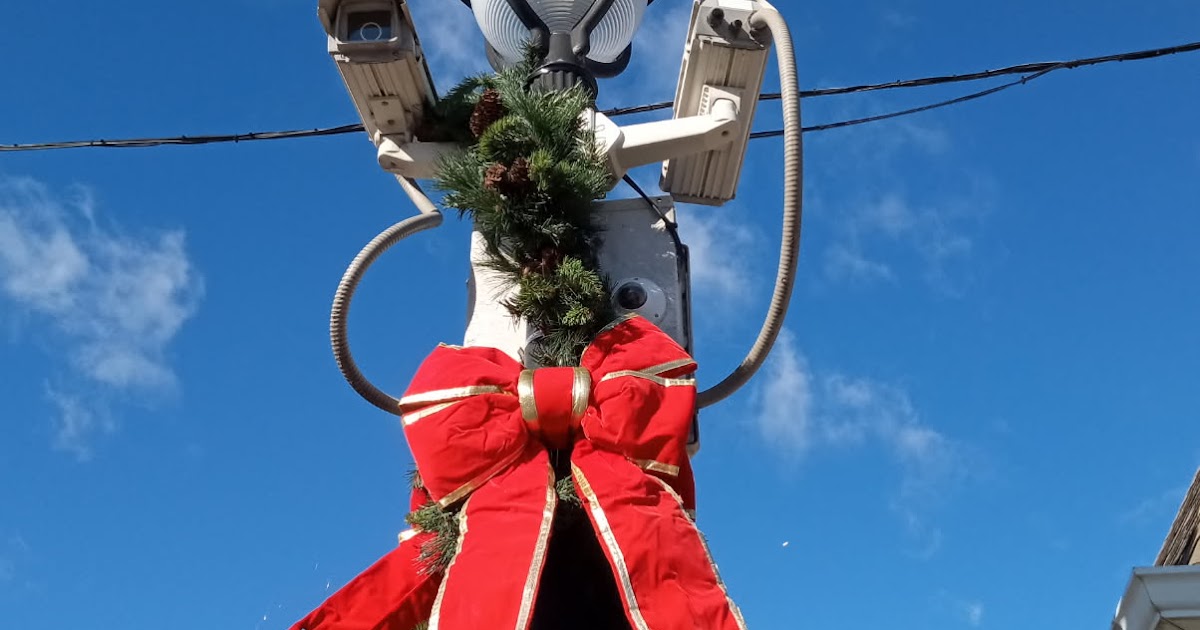
    Mass surveillance is no longer a marginal concern in American life. It is the silent architecture of a society managed from above and distrusted from below. The cameras aimed at students, workers, and the precarious class reflect a deeper spiritual, political, and moral crisis among the elites who designed the systems now monitoring the rest of us.

    Universities, corporations, city governments, and federal agencies increasingly rely on surveillance tools to manage populations whose economic security has been gutted by the same leaders who now demand behavioral compliance. Cameras proliferate, keystrokes are tracked, movement is logged, and predictive algorithms follow people across campuses, workplaces, and public spaces. Yet those responsible for creating the conditions that justify surveillance—politicians, corporate boards, university trustees, executive donors, and policy consultants—operate in near total opacity. Their meetings take place behind closed doors, their decisions shielded from public scrutiny, their influence networks essentially invisible.

    This is not a coincidence. It is the logical extension of a neoliberal elite culture that elevates market logic above moral obligation. As the Higher Education Inquirer documented in “How Educated Neoliberals Built the Homelessness Crisis,” the architects of modern austerity—professionalized, credentialed, and trained in elite universities—constructed social systems that demand accountability from the poor while providing impunity for the powerful. Their policy models treat human beings as units to be managed, scored, nudged, and surveilled. Surveillance fits seamlessly into this worldview. It is the managerial substitute for solidarity.

    The moral void of this elite class is perhaps most visible in the realm of healthcare. The Affordable Care Act, whatever its limitations, represented a modest attempt to affirm that healthcare is a public good and that access should not depend entirely on wealth. But the undermining of Obamacare under Donald Trump laid bare how deeply the nation’s policy culture had descended into nihilism. Trump’s efforts to gut the ACA were not about ideology or fiscal prudence; they were an expression of power for its own sake. Funding for enrollment outreach was slashed. Navigator programs were dismantled. Work requirements for Medicaid were encouraged, despite overwhelming evidence that they punished the sick and disabled. The administration promoted junk insurance plans that offered no real protection, while lawsuits were advanced to overturn the ACA entirely, even if doing so meant millions would lose coverage.

    This assault revealed the moral collapse of a political and economic elite that had grown comfortable with cruelty. It was cruelty performed as policy, sanctioned by corporate donors, embraced by right-wing media, and tolerated by the broader professional class that rarely speaks out unless its own interests are threatened. Even many of the centrist neoliberal policymakers who originally shaped the ACA’s cost-sharing structure responded with timidity, reluctant to confront the underlying truth: that the American healthcare system had become an arena where profit mattered more than survival, and where surveillance of the poor replaced accountability for the rich.

    As traditional moral frameworks lose their authority—whether organized religion, civic duty, or shared ethical narratives—many Americans have drifted into agnosticism or atheism not enriched by humanist values, but hollowed out by a sense of futility. Without a shared moral anchor, people retreat into private meaning or abandon meaning altogether. In this void, conspiracy theories flourish. People know they are lied to. They sense power operating behind closed doors. They see elite institutions fail repeatedly without consequence. When institutions offer no transparency, alternatives emerge in the shadows.

    The elite response is predictable: condemn conspiracies, scold the public for irrationality, invoke the language of “misinformation.” But this reaction deepens the divide. The same elites who created opaque systems—financial, academic, political, and technological—now fault ordinary people for trying to make sense of the opacity. In a society where truth is managed, measured, branded, and optimized, conspiracy becomes a form of folk epistemology. It is not always correct, but it is often understandable.

    Mass surveillance is therefore not the root of the crisis but its mirror. It reflects a ruling class that no longer commands moral authority and a public that no longer trusts the institutions governing it. It reflects a society that treats the vulnerable as suspects and the powerful as untouchable. It reflects a political order in which the dismantling of healthcare protections is permissible while the monitoring of poor people’s bodies, behaviors, and spending is normalized.

    If the United States is to escape this downward spiral, the cameras must eventually be turned upward. Transparency must apply not only to individuals but to corporations, boards, agencies, foundations, and the political donors who shape public life. Higher education must cease functioning as a credentialing arm of elite impunity and reclaim its role as a defender of democratic inquiry and human dignity. Public institutions must anchor themselves in ethical commitments that do not depend on religious dogma but arise from the basic principle that every human being deserves respect, security, and care.

    Until that reconstruction begins, the nation will remain trapped. The elites will continue to rule through metrics and surveillance rather than legitimacy. The public will continue to oscillate between nihilism and suspicion. And the moral void at the center of American life will continue to widen, one camera at a time.


    Sources

    Shoshana Zuboff, The Age of Surveillance Capitalism

    David Lyon, Surveillance Studies

    Higher Education Inquirer, How Educated Neoliberals Built the Homelessness Crisis

    Wendy Brown, Undoing the Demos

    Christopher Lasch, The Revolt of the Elites

    Sarah Brayne, Predict and Surveil

    Elisabeth Rosenthal, An American Sickness

    Source link

  • Study visa applications to NZ dip, approval rate jumps nearly 7%

    Study visa applications to NZ dip, approval rate jumps nearly 7%

    According to data highlighted by Immigration New Zealand (INZ), the government agency responsible for managing the country’s immigration system, the first 10 months of 2025 saw 55,251 study visa applications, down from 58,361 in the same period last year.

    However, approval rates have risen sharply. In 2024, INZ approved 42,724 of 58,361 applications (81.5%) and declined 9,161 (17.5%). Meanwhile, in 2025, despite fewer applications at 55,251, approvals rose to 43,203 (88.2%) with 5,317 declined (10.9%).

    NZ sets itself apart from other key study destinations

    Even as major anglophone study destinations take a cautious approach to international education policy, New Zealand is aiming to be an outlier in the market.

    The country is looking to boost international student enrolments from 83,700 to 119,000 by 2034 and double the sector’s value to NZD$7.2 billion (GBP £3.2bn) under the recently launched International Education Going for Growth plan.

    This month, new rules came into effect allowing eligible international tertiary and secondary students with visas from November 3 to work up to 25 hours a week, up from 20, while a new short-term work visa for some vocational graduates is also expected to be introduced soon.

    “As part of the International Education Going for Growth Plan, changes were announced to immigration settings to support sustainable growth and enhance New Zealand’s appeal as a study destination. These changes aim to maintain education quality while managing immigration risk,” Celia Coombes, director of visas for INZ, told The PIE.

    “Immigration New Zealand (INZ) and Education New Zealand (ENZ) work in close partnership to achieve these goals.”

    We have more students applying for Pathway Visas year on year, which means more visas granted for longer periods, and less ‘year by year’ applications
    Celia Coombes, Immigration New Zealand

    Why the drop in study visa applications?

    While study visa approval rates have skyrocketed over the past year — a stark contrast to the Covid period, when universities across New Zealand faced massive revenue losses owing to declining numbers — stakeholders point to a mix of factors behind the drop in new applications.

    “There has been an increase in approvals, but overall, a slight decrease in the number of students applying for a visa. However, interest in New Zealand continues to grow,” stated Coombes, who added that the number of individuals holding a valid study visa rose to 58,192 in August 2025, up from 45,512 a year earlier.

    “We have more students applying for Pathway Visas year on year, which means more visas granted for longer periods, and less ‘year by year’ applications.”

    While multi-year pathway visas can cover a full planned study path, reducing the need for repeated applications, Richard Kensington, an NZ-based international education consultant, says refinements could make the route more effective in attracting international students.

    “The Pathway Visa, introduced nearly a decade ago as a trial, has never been fully expanded. Although reviews are complete and the scheme is set to become permanent, no additional providers have been given access,” stated Kensington.

    “Simple refinements — such as allowing pathways to a broad university degree rather than a specific named programme — would encourage more students to utilise this route.”

    The drop could also be linked to the underdeveloped school sector and the slower recovery of New Zealand’s vocational education sector, as noted by Kensington.

    “The school sector remains one of New Zealand’s most untapped international education markets. Demand is growing, especially from families where a parent wishes to accompany the student. The Guardian Parent Visa makes that a viable option,” stated Kensington.

    “Vocational education hasn’t rebounded in the same way. The loss of work rights for sub-degree diplomas has significantly reduced demand from traditional migration markets.”

    New Zealand’s vocational education woes

    Just this year, the New Zealand government announced the disestablishment of Te Pūkenga, the country’s largest vocational education provider, formed through the merger of 16 Institutes of Technology and Polytechnics.

    It is being replaced by 10 standalone polytechnics, following concerns that the model had become too costly and centralised.

    “Te Pūkenga’s rise and fall created real confusion offshore. With standalone polytechnics returning, we should see greater stability from 2026 onwards,” Kensington added.

    “Many polytechnics are now relying on degree and master’s programmes, putting them in more direct competition with universities.”

    Applications fall in China, climb in India

    As per data shared by INZ on decided applications across both 2024 and 2025 — including on ones submitted in earlier years — countries like India (+2.7%), Nepal (+26.8%), Germany (+5.2%), and the Philippines (+7.8%) have seen growth in the number of study visas approved.

    Meanwhile, many East and Southeast Asian markets have recorded year-on-year declines, most notably the largest sending market, China, which dropped by 9.9%.

    The data shows that while 16,568 study visas were approved for China in January–October 2024, this fell to 14,929 in 2025 though it remains the largest source country.

    Other markets such as Japan (-9.7%), South Korea ( -24.8%), and Thailand (-33.7%) also saw significant declines.

    According to Frank Xing, director of marketing and operations at Novo Education Consulting, the slowdown from China is clear, with weaker student interest reflected in both their enquiries and feedback from partners, and echoed by some New Zealand institutions.

    “It’s a mixed picture — a few schools, particularly in the secondary sector, are still doing well, but many providers are starting to feel the impact,” stated Xing, who believes several factors are driving the slowdown.

    “The first is the weaker Chinese economy — many families have been affected by job losses or lower business income. In the past, property assets often helped families fund overseas study, but the real estate downturn has reduced that flexibility,” he added, also noting New Zealand’s own unemployment challenges and competition from lower-cost destinations.

    “We’ve actually seen some students abandon their New Zealand study plans or switch to more affordable destinations such as Malaysia or parts of Europe.”

    According to Xing, while China remains one of New Zealand schools’ strongest markets, this could change as Chinese families place greater emphasis on career outcomes — an area where New Zealand’s slower job market remains a challenge.

    He added that New Zealand’s role as the 2025 Country of Honour at China’s premier education expo could help raise awareness among prospective students.

    False applications remain a major concern

    For Education New Zealand and INZ, the more immediate challenge now lies in addressing fraudulent applications, according to Coombes.

    “New Zealand sees a lot of false financial documents. To address this and help ensure students have the money they need to live and study in New Zealand, we are improving processes to maintain integrity and streamline processing,” stated Coombes.

    “This includes expanding the Funds Transfer Scheme, where students deposit their living costs in New Zealand, and they are released monthly.”

    According to Kensington, some agencies across South Asia and likely parts of Africa, where New Zealand has limited representation may not meet required standards, creating challenges. However, he believes improved processing is reducing the impact.

    “INZ only accepts financial evidence from specific banks in some jurisdictions. Student loans must be secured; unsecured loans aren’t accepted even from major banks,” stated Kensington.

    “It’s hard to say whether fraud is increasing, but the rise in high-quality applications means INZ can process many files quickly and devote more time to forensic checks where needed.”


    Source link

  • Bridging further education and higher education: A practical agenda for the post-16 reforms

    Bridging further education and higher education: A practical agenda for the post-16 reforms

    Author:
    Imran Mir

    Published:

    Join HEPI for a webinar on Thursday 11 December 2025 from 10am to 11am to discuss how universities can strengthen the student voice in governance to mark the launch of our upcoming report, Rethinking the Student Voice. Sign up now to hear our speakers explore the key questions.

    This guest blog was kindly authored by Imran Mir, Campus Head and Programme Lead at Apex College Leicester.

    The embedding of the further education and higher education sectors has been a longstanding policy goal, but recent reforms have caused an urgent need than ever. The UK government has set the ambitious goal of having at least two-thirds of young people go on to higher-level learning by age 25, with at least 10% of them pursuing higher technical education or apprenticeships. While such targets can be seen as overly ambitious, they will only come to fruition if the gap between further education and higher education is efficiently bridged. Without this, there is a risk of losing students during the transition from one educational stage to the next. These government ambitions highlight why bridging further education and higher education is so important. Aligning both sectors is essential to turning these national policy goals into real progress for learners.

    The persistent progression problem

    Although there has been some growth in participation in higher education, disparities remain. Students who come from disadvantaged backgrounds are four times less likely to have access to high-tariff universities. Whilst UCAS data for 2024 has shown growth in learner acceptances, this is largely down to an increase in the number of 18-year-olds, rather than a reduction in gaps between the most and least advantaged students. Further education is vital for social mobility; however, too many learners face major barriers when trying to transition into the higher education institutions of their choice.

    Five key levers to improve bridging

    1. Align curriculum and assessment
      When transitioning from further education to higher education, students will face a contrast in learning expectations. In the former, through A-Levels and vocational qualifications, assessments are exam-focused and often high-stakes. In comparison, higher education has a variety of assessment types, including coursework, presentations, and exams. These assessments are often less frequent, and a student’s grade is not as reliant on a single, high-stakes exam. To make this transition process smoother, higher education providers and further education providers should collaborate to co-design first-year assessments that look to integrate a blend of authentic tasks, ranging from portfolios to presentations. This would allow better preparation for students to progress into higher education while aligning expectations between further and higher education. This approach is supported by the Foundation Year Fee Cap Guidance, which explains the importance of curricula that support progression into higher-level study while avoiding the repetition of Level 3 content.
    2. Use admissions to recognise potential
      A large number of further education students, particularly those without access to enrichment activities, find it difficult to reach their potential, something which is not always recognised in higher education admissions. Many of these learners focus on technical or applied qualifications such as T Levels and Higher Technical Qualifications (HTQs), which develop valuable practical and professional skills. However, because these programmes may not include the same kinds of enrichment activities often valued in traditional academic routes, their achievements are sometimes overlooked in admissions decisions. Universities should value T Levels, Higher Technical Qualifications (HTQs), and other applied learning pathways. These routes must be recognised by universities. They must provide clear pathways showing how credits earned in further education can be transferred to the Lifelong Learning Entitlement (LLE). This would result in the system being more inclusive for students who come from non-traditional routes into higher education..
    3. Share data and pastoral insight
      The lack of continued student support is another barrier. Colleges and universities must work together in creating a standardised set of transition data that includes information on curriculum, assessment types, and available support measures. For example, shared data could help universities identify where incoming students may need additional academic or well-being support. To enable a smooth transition, both sectors need to agree on how to share this information. The OfS Regulatory Framework promotes transparency in data sharing to ensure positive student outcomes.
    4. Co-deliver first-year teaching
      In certain subjects, co-delivering first-year content between FE and HE providers could help students with transitioning from further education. Modules on study skills, digital literacy, and professional competencies could be delivered jointly; this approach would particularly benefit students who work or commute. This method aligns with the OfS Strategy 2025–2030 Guide, which clearly stresses student success and sector resilience as a major priority.  
    5. Make the LLE a ladder, not a maze
      The LLE offers an opportunity for modular, credit-bearing study across a lifetime. For this vision to come to fruition, higher education institutions must look to implement clear credit transfer rules, transparent pricing, and clear pathways for learners to progress from Level 4 to full degrees. By having routes which are clearly mapped out, students will be better able to understand how to continue their education without getting lost in a complex system. The House of Commons Library LLE Briefing outlines how this could be achieved.

    Reflecting on the recent Post-16 Education and Skills White Paper (DfE, 2025), there is clear intent to have a more connected tertiary system through plans such as the Lifelong Learning Entitlement and stronger employer-education partnerships. The proposal clearly acknowledges many of the issues outlined above, especially the need for smoother progression routes and credit transfer between further and higher education. However, questions will remain on how effectively these ambitions are going to be implemented. Without unified collaboration from both sides, clear accountability, and investment in teaching capacity and resources across both sectors, the reforms risk reinforcing the existing divides rather than bridging the gap.

    The prize

    For the government to achieve its goal of equity, further education students must not just enter higher education but also succeed once there. The reforms present an opportunity; they must be matched with the practical changes in how we align assessment, recognise technical routes in admissions, share data, work together where possible, and make the LLE more navigable. By taking these actions, policy ambitions can be translated into real-world success for students.   

    Source link

  • Student engagement does not work if institutions are stuck in survival mode

    Student engagement does not work if institutions are stuck in survival mode

    The current state of UK higher education in 2025 is marked by an existential crisis, rather than merely a series of difficult challenges.

    This crisis comes from the inherent tension of attempting to operate a 20th century institutional model within the complex realities of the 21st century. This strain is exacerbated by complex socio-economic difficulties facing students, coupled with the immense pressures experienced by staff.

    A city under siege

    Conceptualising UK HE as a “city”, it becomes evident that while valuable as centres of learning, community and potential, this “city” is currently under siege and there is a “dragon at the gates”. The “dragon” represents a multifaceted array of contemporary pressures. These include, but are not limited to, funding reductions, evolving regulatory demands and the escalating cost-of-living crisis. Empirical research indicates that the cost-of-living crisis profoundly impacts students’ capacity for engagement.

    Furthermore, this “dragon” is continuously evolving. With the rapid ascent of artificial intelligence (AI) and the distinct characteristics of Gen Z learners representing two of its newest and most salient “heads”. While AI offers opportunities for personalised learning, simultaneously, it presents substantial challenges to academic integrity and carries the risk of augmenting student isolation if not balanced with human connection. Concurrently, Gen Z learners have learned a state of “continuous partial attention” through constant exposure to multiple information streams. This poses a unique challenge to pedagogical design.

    Defence, survival and the limits of future-proofing

    In response to these multifaceted challenges, the prevalent institutional instinct is to defend the city. This typically involves retreating behind existing structures, consolidating operations, centralising processes, tightening policies and intensifying reliance on familiar metrics such as Key Performance Indicators (KPIs), National Student Survey (NSS) action plans, attendance rates and overall survey scores.

    However, survival mode often means the sacrifice of genuine student engagement. This refers not to the easily quantifiable forms of engagement, but the relational, human dimension, wherein students develop a sense of belonging, perceive their contributions as meaningful and feel integrated into a valuable community. Research consistently demonstrates that this sense of belonging is paramount for psychological engagement and overall student success. Consequently, an exclusive focus on defending established practices, reliant on systemically imposed metrics, risks reinforcing barriers that actually impede connection, wellbeing and the institutional resilience that is critically needed.

    While the concept of “future-proofing” is often invoked, it is imperative to question the feasibility of achieving perfect preparedness against unknowable future contingencies.

    Attack strategies

    Given the limitations of a purely defensive stance, a different strategic orientation is warranted: a proactive “attack” on the challenges confronting HE. Genuine engagement should be reconceptualised not merely as a student characteristic, but as an institutional design choice. Institutions cannot expect students to arrive with pre-existing engagement; rather, they must actively design for it.

    This proactive engagement strategy aligns precisely with the University of Cumbria’s commitment to people, place, and partnerships. These themes are woven through the university’s new learning, teaching and assessment plan, providing a framework for institutional pedagogic transformation.

    Relationships as the bedrock of community

    The “citizens” of our HE “city” – students and staff – constitute its absolute bedrock. Strong relationships between these stakeholders are fundamental to fostering a resilient academic community. A critical institutional challenge lies in ensuring that existing systems, policies and workload models adequately support these vital connections. It is imperative to grant staff the requisite time, flexibility and recognition for their crucial relational work. This represents a shift in focus from a transactional interaction to a relationship-centric approach.

    Understanding the distinct experiences of diverse groups of students (e.g. apprentices, online learners and commuter students) is of critical importance for building meaningful and authentic engagement. Fundamentally, ensuring that students feel “seen, heard and valued” is a key determinant of psychological engagement and a prerequisite for all other forms of learning to take root.

    Designing for inclusive environments

    The concept of “place” encompasses the entire physical and digital environment of the HE institution. Belonging, rather than being an abstract sentiment, possesses a strong spatial and environmental dimension. For institutions like the University of Cumbria, intentional design of consistent environments that cultivate a sense of “This is my place” is paramount. An important tactic in this regard is to build belonging by design, particularly at critical transition points such as induction.

    This notion of “place” is particularly vital for commuter students, who often lack the built-in community afforded by residential halls. For this cohort, the physical campus serves as the primary site of their university experience. A critical assessment of their campus experience between scheduled classes is needed. Are institutional spaces designed to encourage students to remain, study and connect? When students choose to utilise them, these spaces facilitate spontaneous conversations, the formation of friendships, and the organic development of belonging.

    This kind of intentionality is required for digital learning environments. Are virtual learning environments (VLEs) merely content repositories, or are they designed as welcoming community hubs? The creation of inclusive, supportive environments – both physical and virtual – where students feel genuinely connected, is absolutely fundamental to effective engagement. Moreover, clear opportunities exist to strengthen recognition of how an individual’s sense of place can positively impact learning experiences primarily delivered online.

    Partnerships in fostering genuine student experiences

    The final pillar, “partnerships,” refers to the cultivation of alliances within the HE “city”. While “student voice” is frequently championed, research strongly indicates a necessity to move beyond mere collection of voice towards fostering genuine student influence and co-creation. The distinction is crucial: “student voice” may involve an end-of-module survey, whereas “student influence” entails inviting students to co-design assessment questions for subsequent iterations of that module.

    The University of Cumbria’s recent consistent module evaluation approach serves as an exemplary model. Achieving a 34.2% response rate in the first semester of 2024/25, which exceeds sector averages, and, critically, delivering 100% “closing the loop” reports to students, demonstrates a commitment to acknowledging and acting upon all feedback. This provides a concrete illustration of making student influence visible.

    From strategy to action

    This approach is a fundamental paradigm shift: from a reactive, defensive posture focused on metrics to a proactive engagement strategy. This “attack” on the challenges, framed by the University of Cumbria’s distinctive strategic approach, is predicated on three core actions: prioritising People by enabling relational work, designing a sense of Place to foster belonging, and building authentic Partnerships that transform student voice into visible influence. Translating this strategy into actionable practice does not necessitate additional burdens, but rather the integration of five practical tactics into existing workflows:

    1. Rethink what you measure and why: Transition from a “data-led” to a “data-informed” approach. This involves utilising data for meaningful reflection and making deliberate choices to enhance the student experience, rather than reacting defensively to metrics such as KPIs, NSS scores and attendance data.
    2. Build belonging at transitions: Recognising belonging as a critical component of psychological engagement and overall student success, this tactic underscores the importance of intentionally designing key junctures in the student journey, such as induction and progression points, to be inherently inclusive.
    3. Enable relational work: Acknowledging that strong student-staff relationships form the “bedrock” of a resilient academic community, and that staff often face conflicts between fostering these connections and workload pressures, this tactic advocates for formally enabling “relational work”.
    4. Turn voice into influence: Meaningful partnership necessitates moving beyond mere collection of student “voice” to cultivating their genuine “influence”. The critical determinant is not simply whether the institution is listening, but whether substantive changes are being implemented based on student feedback. This can be achieved through the establishment of “visible feedback loops” that demonstrate the impact of student input and leveraging technology to complement, rather than replace, human interaction.
    5. Partnership by design: This final tactic advocates for embedding co-creation with students as an intrinsic element from the initial stages. Rather than being an occasional or supplementary activity, authentic partnership should be structurally integrated, with students actively involved in key decision-making processes.

    The fundamental question facing HE in 2025 – “What is a university for?” – is increasingly met with the unsettling realisation that conventional answers no longer suffice. However, a cautiously optimistic outlook prevails. The answer to this pivotal question lies not in defending existing paradigms, but in actively and courageously constructing a new institutional reality.

    This article has been adapted from a keynote address delivered by Dr Helena Lim at the University of Cumbria Learning and Teaching Conference on 18 June 2025, and has been jointly authored with Dr Jonathan Eaton, Pro Vice Chancellor (Learning & Teaching) at the University of Cumbria.

    For further insights into the research underpinning these arguments, the “Future-proofing student engagement” report is available here.

    Source link