Blog

  • In defense of fiery words

    In defense of fiery words

    Consensus is growing around the idea that words beget violence. Consider some of the things America’s political leaders have said in the wake of Charlie Kirk’s assassination last week at Utah Valley University:

    “This kind of rhetoric is directly responsible for the terrorism we’re seeing in our country today.” 

    “He actively fans the flames of division . . . regularly advocates violence for political retribution, and in more than one case, declares we are at war, not with a foreign adversary, but with each other.”

    “There are some deranged people in society, and when they see leaders using that kind of language so often now increasingly, it spurs them on to action.” 

    “They need to turn down the rhetoric.” 

    That is, in order, President Donald Trump, Democratic Illinois Gov. JB Pritzker on Trump’s response to political violence, Republican Speaker of the House Mike Johnson, and Democratic Massachusetts Rep. Seth Moulton on Republican leaders.

    Throughout American history, especially during times of civil unrest, the government used the power of the state to criminalize what it perceived as advocacy of violence. For example, in 1927, the Supreme Court upheld Charlotte Whitney’s conviction for joining a socialist convention that advocated the overthrow of the government (Whitney v. California). 

    The Court reasoned that advocating violence could present “danger to the public peace and security,” and that the exercise of the state’s police powers therefore carries “great weight” in such instances. Similarly, Attorney General Pam Bondi recently suggested the federal government might bring “incitement” prosecutions of people who celebrate Charlie Kirk’s assassination.

    As the potential for  political violence increases, what prevents the government from taking us back to 1927? What prevents the authorities from taking advantage of our fears and criminalizing advocacy of violence or even fiery rhetoric?

    BRANDENBURG v. OHIO

    The Supreme Court held the government cannot punish incendiary speech unless the intent and likely outcome is to cause “imminent lawless action”.


    Read More

    Enter Brandenburg v. Ohio (1969)the landmark Supreme Court ruling on incitement. The state convicted a Ku Klux Klan leader for a speech saying, “it’s possible that there might have to be some revengeance taken” against the government if it continued to “suppress the white, Caucasian race.” The Supreme Court reversed the conviction, holding the First Amendment protects advocacy of violence unless it is “directed to inciting or producing imminent lawless action and is likely to incite or produce such action.

    Even if one assumes Brandenburg’s words called for violence, for the Supreme Court, his advocacy was too amorphous and the possibility of violence too remote for his prosecution to stay within constitutional bounds. 

    Similarly, in Hess v. Indiana (1973), the Court reversed an anti-Vietnam War demonstrator’s conviction stemming from his promise to “take the fucking street later” in connection with his arrest at a protest. The Court held these words fell well below the high Brandenburg standard. Hess did not direct his words toward anyone in particular, nor did they suggest a threat of immediate violence. In establishing this high bar, the Court rejected Whitney’s formulation that advocacy of violence “at some indefinite future time” is punishable on grounds it might ultimately lead to violence. 

    The Court instead highlighted the difference between “mere abstract teaching of the moral propriety or even moral necessity for a resort to force” and actual preparation for violent action. Thomas Jefferson once said that “a little rebellion now and then is a good thing, and as necessary in the political world as storms in the physical.” Without the Brandenburg distinction, a speaker emulating Jefferson could face jail for recognizing a moral necessity for the resort to force. 

    Brandenburg’s brilliance is its recognition that political discourse is messy.

    Without this distinction, Democratic states could criminalize calling pro-abortion politicians “murderers” on grounds such speech incites violence against those politicians. Republican states could criminalize calling President Trump a “Nazi” on the same grounds. Giving the government the power to lump such heated rhetoric together with speech advocating immediate lawlessness would grant it a cudgel against any speech it saw as threatening its own power — with free and passionate discourse becoming the ultimate victim. Brandenburg therefore allows breathing room necessary for robust public debate.

    The Supreme Court made clear in NAACP v. Claiborne Hardware (1982) that “strong and effective rhetoric cannot be nicely channeled in purely dulcet phrases. An advocate must be free to stimulate his audience with spontaneous and emotional appeals for unity and action in a common cause.” In other words, it should not be up to the government to decide when rhetoric has gone too far. Brandenburg’s brilliance is its recognition that political discourse is messy: tone and language are deliberate choices integral to a speaker’s message. 

    Political leaders and citizens have every right to call out rhetoric that they believe is damaging to our public discourse. Brandenburg — and countless other First Amendment precedents — recognize that these calls, rather than the power of the state, are the most effective antidote to speech we find dangerous or offensive.

    Source link

  • ED Wants Grants to Advance “Patriotic Education”

    ED Wants Grants to Advance “Patriotic Education”

    The Trump administration has made another move that historians say is an attempt to sanitize American history, but one the administration argued is necessary to ensure students have respect for the country.

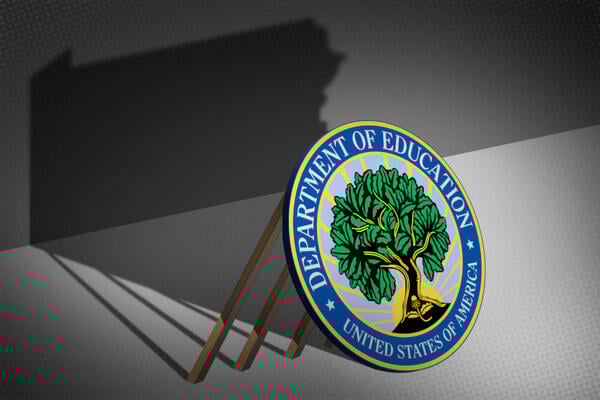
    On Wednesday, Education Secretary Linda McMahon outlined a new plan for how her department would promote “patriotic education” by adding it to the list of priorities that can drive decisions for discretionary grants, including those that support programs at colleges and universities.

    “It is imperative to promote an education system that teaches future generations honestly about America’s Founding principles, political institutions, and rich history,” McMahon said in a statement about the new proposal. “To truly understand American values, the tireless work it has taken to live up to them, and this country’s exceptional place in world history is the best way to inspire an informed patriotism and love of country.”

    According to the proposal, which is open for public comment until Oct. 17, “patriotic education” refers to “a presentation of the history of America grounded in an accurate, honest, unifying, inspiring, and ennobling characterization of the American founding and foundational principles”; examines “how the United States has admirably grown closer to its noble principles throughout its history”; and advances the “concept that commitment to America’s aspirations is beneficial and justified.”

    McMahon’s other priorities for grant funding include evidence-based literacy, expanding education choice, returning education to the states and advancing AI in education.

    With this latest proposal, the department wants to focus “grant funds on programs that promote a patriotic education that cultivates citizen competency and informed patriotism among and communicates the American political tradition to students at all levels.” That could include projects geared toward helping students understand the “founding documents and primary sources of the American political tradition, in a manner consistent with the principles of a patriotic education,” according to the proposal.

    ‘Narrow Conception of Patriotism’

    However, professional historians who have read the proposal told Inside Higher Ed that the department’s patriotic education push is a politically motivated power grab.

    “I agree that American history should be presented with accuracy and honesty, based on solid historical evidence, and doing so does inspire people,” said Sarah Weicksel, executive director of the American Historical Association. “But the department’s priority statement has a narrow conception of patriotism and patriotic education.”

    She said that’s especially evident given the Trump administration’s numerous other policy changes aimed at presenting a version of American history that downplays or ignores the darkest parts of the country’s past, such as race-based slavery, the disenfranchisement of women and African Americans, and codified racial segregation.

    “That context tells us that the administration is interested in telling an uncomplicated celebration of American greatness,” Weicksel said. “Doing that flattens the past into a set of platitudes that are not rooted in the broader historical context, conflicts, contingencies and change over time that are central to historical thinking.”

    In March, Trump issued an executive order entitled “Restoring Truth and Sanity to American History,” prohibiting federal funding for exhibits or programs that “degrade shared American values, divide Americans based on race, or promote programs or ideologies inconsistent with Federal law and policy.” That prompted a review of all exhibits hosted by the Smithsonian Institution and the National Park Service, both of which have since removed multiple artifacts that don’t support Trump’s patriotic history push, including several that underscore the brutality of slavery.

    And as the 250th anniversary of the nation’s founding approaches, the government is in the process of planning commemorative civic education initiatives that advance its definition of patriotic history. To make that happen, it’s largely drawing on the input and expertise of conservative scholars and groups.

    The Education Department recently awarded $160 million in American history and civics grants for seminars for K–12 educators and students related to the Declaration of Independence anniversary next year. The agency didn’t specify which institutions got the money but previously said it would give priority to colleges and universities with “independent academic units dedicated to civic thought, constitutional studies, American history, leadership, and economic liberty,” which critics describe as conservative centers.

    In remarks at an event hosted by the Federalist Society and the Defense of Freedom Institute on Wednesday, McMahon criticized the state of civics education for students, citing a statistic that only 41 percent of young people say they love America.

    “That means the balance doesn’t love America,” she said. “Why don’t they love America? Why aren’t they proud to be Americans? It’s because they don’t know America. They don’t know the foundations, they don’t know the real history of our country … It’s really important that we teach respect for our flag, that we teach respect for our country.”

    While she did acknowledge that the Education Department can’t directly control curriculum, she noted that the department can use funding to encourage the types of education or programs it wants to see.

    The Education Department also announced Wednesday that it’s launching a coalition of 40 groups—including the conservative Heritage Foundation, Turning Point USA, Hillsdale College and the American First Policy Institute—to spearhead the America 250 Civics Education Coalition, which is “dedicated to renewing patriotism.” (McMahon chaired the American First Policy Institute before she became secretary.)

    “We celebrate Lincoln for his greatness in recalling the nation to the principles of its birth, the principles of the Declaration of Independence, the most beautiful political document in history,” Hillsdale president Larry Arnn said in a statement about the coalition. “It is time to repeat his work and the work of Jefferson and the Founders. We will work together to learn those principles, and for the love of them we will have a grand celebration.”

    ‘Pure Politics’

    But Weicksel with AHA said the government’s directives to omit parts of American history in classrooms, museums and other public spaces will undermine the public’s agency. “If citizens don’t have access to a historically accurate understanding of the past, how will they use that past to chart a new path for the future?”

    David Blight, a professor of history and Black studies at Yale University, said he interprets the department’s emphasis on patriotic education as “pure politics.”

    “It’s the politics of trying to use history to control people, including children, young people, the people who teach it, the people who write curriculum and the state legislatures that will design this stuff,” he said. “The government is trying to be a truth ministry.”

    While there have been other movements to control how the country remembers its history—including by U.S. senator Joseph McCarthy in the 1950s and the United Daughters of the Confederacy in the late 19th and early 20th centuries—Blight said these moves by the Trump administration are more powerful.

    “We’ve never had this come right from the White House, with the power of the executive branch and their control over so much money,” he said, urging educators to voice their opposition. “When federal money depends on pure ideology, we’re in very deep trouble, and that’s what they’re saying. That’s not even close to a democratic society.”

    Source link

  • Saudi and Australia forge new paths in education and research

    Saudi and Australia forge new paths in education and research

    During the visit, Al-Benyan met with Australia’s minister of education, Jason Clare, where discussions focused on expanding ties in higher education, scientific research, and innovation, with emphasis on joint university initiatives, including twinning programs and faculty and student exchanges designed to build stronger academic links between the two countries.

    The research collaboration was prominently featured on the agenda, with both sides highlighting opportunities in fields such as artificial intelligence, cybersecurity, renewable energy, and health sciences. The minister also discussed investment opportunities in Saudi Arabia’s evolving education sector under Vision 2030, with a view to establishing local branches and research centers.

    Australia’s expertise in technical and vocational training was another focal point, as Saudi looks to enhance human capital development and equip its young population with the skills needed to succeed in the future labor market. Both ministers underlined the importance of supporting Saudi students in Australia by strengthening academic pathways and ensuring a welcoming educational and social environment.

    As well as his meeting with Clare, Al-Benyan held talks with professor Phil Lambert, a leading Australian authority on curriculum development. Their discussions centered on collaboration with Saudi Arabia’s National Curriculum Centre to develop learning programs that promote critical thinking, creativity, and innovation.

    The meeting reviewed best practices in student assessment, teacher training, and professional certification, aligning with global standards. Opportunities for joint research on performance evaluation and digital education methods were also explored with the aim of integrating advanced technologies into classrooms.

    Al-Benyan also took part in the Saudi-Australian Business Council meeting in Sydney, where he highlighted investment opportunities in the Kindgdom’s education sector in line with Vision 2030.

    Education is a key pillar globally and a central focus of Saudi Arabia’s Vision 2030, which aims to create a world class education system that nurtures innovation and drives future ready skills
    Sam Jamsheedi, president and chairman of the Australian Saudi Business Forum

    Conversations covered the launching of scholarship and exchange programs, advancing educational infrastructure and technologies, and promoting joint research in priority fields such as health, energy, and artificial intelligence, underscoring the importance of developing programs to enhance academic qualifications and support initiatives for persons with disabilities, while reaffirming Saudi Arabia’s commitment to supporting investors through regulatory incentives and strategic backing.

    “It was a pleasure to welcome the Minister of Education, His Excellency Yousef Al Benyan, as part of the official Ministry of Education, Saudi Arabia delegation from the Kingdom of Saudi Arabia to Australia,” said Sam Jamsheedi, president and chairman of the Australian Saudi Business Forum.

    “Education is a key pillar globally and a central focus of Saudi Arabia’s Vision 2030, which aims to create a world class education system that nurtures innovation and drives future ready skills.”

    “Our Council was proud to host a roundtable with leading Australian universities and training providers, giving Ministerial attendees first hand insights into Australia’s capabilities across higher education, vocational training, and research collaboration.”

    “Australian education already has a strong presence in the Kingdom, with a growing number of partnerships across early childhood education, schooling, technical training & university programs,” he added.

    Source link

  • Rethinking the OPM Model: Shifting from Outsourcing to Enablement

    Rethinking the OPM Model: Shifting from Outsourcing to Enablement

    Higher education is rapidly evolving, and so are institutional approaches to online program growth. We’re consistently finding that schools are no longer interested in handing over full control to third-party vendors. Rather, they want to build and enhance the internal capabilities of their teams, maintain ownership over their data and brand, and deliver a student experience uniquely aligned with their mission.

    This approach requires a flexible partner that’s focused on enablement vs. the traditional black-box outsource model.

    The traditional OPM model is flawed

    In my conversations with institutional leaders across the country, a common theme that keeps emerging is the frustration with traditional OPMs and the diminishing viability of this model. Leaders feel boxed in by long-term contracts, inequitable financial terms, a lack of visibility into performance data, and limited control over the student experience.

    What many institutions seek is a partner who will deeply integrate with their teams, augmenting their talent and resource gaps. An ideal partner will enhance the institution’s strengths, not replace them. In many cases, schools have ambitions to in-source certain areas of expertise over time and need support, guidance, and best practices to achieve this.

    More simply stated, many schools are seeking an enablement partner.

    What is enablement?

    At Collegis, we define enablement as helping institutions build their own internal strengths. It’s about equipping campus teams with the data, technology, and operational expertise they need to grow. This sets them up to thrive long after our work is done.

    Instead of taking the reins, we help institutions empower themselves to take ownership and control of their future over time. That distinction matters.

    Our model is intentionally modular and tech-agnostic, allowing partners to engage only the services they need, when they need them. There are no bundles to untangle or one-size-fits-all solutions to force-fit. In practice, we integrate ourselves in lockstep with the institutional teams and work alongside them as trusted collaborators. This contrasts with other models where external vendors operate in a black box.

    For us, enablement is about delivering lasting value, strengthening internal capacity, and helping institutions move forward and own their futures.

    A real-world example of enablement in action

    When institutions embrace this model, the outcomes are real and measurable.

    One example comes from a public institution that was working with an OPM on some of its online programs. They brought Collegis in to help build a foundation they could truly own, starting with data strategy and enrollment support tailored to their internal goals.

    Throughout our partnership, we’ve worked closely with their teams to refine processes, optimize student experience, openly share best practices, and enhance internal capabilities. The outcome? A 59% year-over-year increase in new online enrollments in the programs we support.

    It’s a powerful reminder of what institutions can achieve when they choose a partner who builds alongside them, not in place of them.

    Why ownership matters

    When institutions retain ownership of their tech stack, data, and student experience, they stay agile and in control. They’re able to pivot when needed, maintain high standards for compliance and privacy, and continuously improve outcomes across the student lifecycle.

    Our job at Collegis is to make that ownership attainable. We integrate with existing systems, design transparent reporting, and support processes that campus teams can run and refine on their own. True enablement means recommending and implementing sustainable practices that align with the mission and objectives of the institution.

    Redefining “partnership” in a new digital era

    Partnership today should mean transparency, collaboration, and shared purpose. And it should be built on trust.

    When institutions evaluate potential partners, I encourage them to ask:

    • Will we retain control of our data and decisions?
    • Is this a flexible relationship or a one-size-fits-all model?
    • Does this partner strengthen our internal teams?
    • How will this approach improve and enhance the impact of our staff?
    • Will this partnership contribute to the betterment of our student experience?

    Let’s build something that lasts

    Your institution shouldn’t have to choose between doing it all alone or giving it all away. There’s a better way forward that can empower your team, adapt to changing needs, and help you thrive in a competitive, fast-moving environment.

    You deserve a partner who helps you lead on your terms with clarity, control, and confidence. That’s the path Collegis is committed to support.

    Innovation Starts Here

    Higher ed is evolving — don’t get left behind. Explore how Collegis can help your institution thrive.


    Source link

  • Kimberly Harvey | The EDU Ledger

    Kimberly Harvey | The EDU Ledger

    Dr. Kimberly HarveyKimberly Harvey has been named Alfred University’s new vice president for Student Experience. Harvey will begin her duties Jan. 5, 2026.

    Harvey comes to Alfred from Nazareth University, where she spent more than five years leading efforts to strengthen the student experience through cross-campus collaboration focused on student well-being and belonging. Harvey began her tenure at Nazareth as Assistant Vice President for Student Engagement (2019-21) before serving three years as Associate Vice President for Student & Campus Life and Dean of Students. In March 2024 she was promoted to Associate Provost for Student Experience and Dean of Students.

    Harvey has a bachelor’s degree in mathematics from SUNY Fredonia, a master’s degree in college student personnel administration from Canisius University, and a Doctor of Education degree in educational leadership from the University of Rochester.

    Source link

  • US takes the lead on student satisfaction, survey finds

    US takes the lead on student satisfaction, survey finds

    Global student satisfaction has remained steady in 2025, but pressures on inclusivity, affordability and the quality of student life are beginning to show, according to the Global Student Satisfaction Awards: Summary Report 2025.

    Studyportals’ 2025 Student Satisfaction survey tracked responses from over 102,000 students around the world, with the US, Belgium and Austria leading the charge in overall satisfaction, ranked at 4.32, 4.29 and 4.28 stars out of five respectively.

    The biannual survey looked at reviews from students of 180 nationalities studying at institutions in 124 countries, recording an average satisfaction score of 4.18 out of 5. While stable compared to 2023 (when the last survey was published), this represents a slight dip of 0.71%.

    Meanwhile Pakistan, France, Ireland and Türkiye saw some of the steepest declines in satisfaction. The UK and India bucked the trend with improved scores, both climbing above the global average.

    Pakistan recorded the most significant drop since 2023’s survey (-11.3%), moving significantly further below the global benchmark. France also fell by -3.2%, Ireland by -2.4%, and Türkiye by -1.2%.

    By contrast, Finland (+3.3%) and the Netherlands (+0.2%) registered modest improvements, though both remain below the global average. The report warns that unless these downward trends are addressed, strong challengers like India and the UK could capture greater student interest.

    Students are more confident about career prospects, but increasingly concerned about diversity and their quality of life
    Edwin van Rest, Studyportals

    The report also tracked other factors such as admissions processes, career development, student diversity and student life.

    Winners were honoured across seven categories at an awards ceremony hosted by Studyportals in collaboration with Uni-Life and IELTS at a fringe event during last week’s European Association for International Education (EAIE) conference in Gothenburg.

    Key indicators revealed a mixed picture. Student diversity (-5.03%) and student life (-4.39%) suffered the largest declines, reflecting growing concerns around integration, housing shortages and rising costs in popular destinations. Admissions processes also weakened (-3.85%), with students calling for clearer communication, smoother transitions and more user-friendly digital systems.

    On the positive side, career development (+1.23%) recorded notable gains, with the US, India and Switzerland leading thanks to stronger links with employers, internships and industry engagement. Online classroom experience, long the weakest category, also improved modestly (+1.30%), particularly in the US, India and South Africa.

    Studyportals said the findings underline shifting student priorities. Employability outcomes and structured cross-cultural experiences are increasingly valued, while inclusivity and transparency remain pressing challenges.

    “These results show where universities are winning student trust, and where they risk losing it,” noted Edwin van Rest, CEO & co-founder of Studyportals. “Students are more confident about career prospects, but increasingly concerned about diversity and their quality of life.”

    Source link

  • Beech-side views: shuffling the decks

    Beech-side views: shuffling the decks

    No sooner had the UK government returned from its summer recess than a political scandal – culminating in the resignation of Housing Secretary Angela Rayner on 5 September – prompted Prime Minister Keir Starmer to initiate a significant ministerial reshuffle. As universities begin the new academic year, then, the sector is left wondering what this refreshed ministerial line-up means for higher education – and whether it signals a shift in policy direction, particularly around international student migration.

    “Phase two” begins

    Downing Street is already branding the reshuffle as the start of “phase two” of this government: a transition from a period of consultation and policy design to one of delivery and implementation. The new cabinet appointments also suggest a more strategic and coordinated approach to immigration enforcement and foreign policy – two areas that directly intersect with international education.

    Notably, Yvette Cooper moves from the Home Office to head the Foreign, Commonwealth & Development Office (FCDO), while Shabana Mahmood steps up from Justice to become Home Secretary. Together, these appointments point to a government intent on aligning domestic control with global influence, potentially reshaping the UK’s international education offer in the process.

    After all, the new Foreign Secretary brings to her role a clear understanding of the vulnerabilities in the immigration system and is unlikely to shy away from using the soft power of international education – while also guarding against its misuse. Meanwhile, the new Home Secretary’s track record of delivery and reform suggests a more assertive stance on migration control lies ahead, which could have direct implications for universities’ overseas recruitment prospects.

    Toughening up?

    Following a summer of public concern over rising immigration figures and asylum claims, the government is under pressure to act decisively. With Reform UK gaining traction in the polls ahead of next year’s local, Welsh and Scottish elections, the political stakes are high.

    Even before the reshuffle, international students were caught in the crossfire of media narratives linking student visas to fraudulent asylum claims, undermining public trust in institutional recruitment. Universities involved in overseas recruitment should brace themselves for increased scrutiny, with tighter monitoring of attendance, progression and sponsorship duties on the horizon, which could well pave the way for tougher sanctions on non-compliance.

    Robust compliance and risk management will be essential for institutions to maintain credibility – not just with government, but with the wider public. The Graduate Route, for instance, remains vulnerable to reform, whether through reduced duration, higher salary thresholds or even potential abolition.

    Lowering our ambitions?

    Although Bridget Phillipson remains as Education Secretary, the reshuffle suggests it won’t be business as usual at the Department for Education either, which is preparing to publish a new and updated version of the UK international education strategy. While last summer’s welcoming messages for international students raised hopes of renewed ambition in the international education arena, recent immigration concerns and political repositioning are likely to temper any growth targets that might have been in the offing.

    Instead of expansion, the new strategy may prioritise control, reflecting broader concerns about immigration and public confidence. This recalibration could also see a move away from bold recruitment targets toward a more cautious, compliance-driven approach.

    Seizing the moment

    Despite domestic pressures, the UK must not lose sight of its competitive edge in the global education market. As Canada and Australia tighten restrictions on international student recruitment – and the US grapples with visa delays and political uncertainty – the UK has a unique opportunity to position itself as a stable and attractive destination for global talent.

    Now is therefore the time for UK universities to take control of the narrative. The immigration debate must not be reduced to numbers alone, but we should make clear it is about reputation, research collaboration and global competitiveness. By maintaining a clear, credible and welcoming offer – underpinned by demonstrable quality and compliance – the UK can still thrive in a shifting international landscape.

    It’s in our gift to ensure the forthcoming international education strategy balances domestic concerns with international ambition, keeping the UK open to the world even as it inevitably tightens its borders.

    A reality check

    As the government enters its delivery phase, universities must remain alert to shifting political headwinds. International education may still be valued as a soft power asset, but its future depends on how well the sector navigates the tension between openness and oversight.

    The next international education strategy may not aim for new heights in student recruitment, but it’s in the sector’s interest to ensure the UK holds its ground in an increasingly precarious political world.

    The post Beech-side views: shuffling the decks appeared first on The PIE News.

    Source link

  • Why have someone edit your story?

    Why have someone edit your story?

    Redundancy: Did you repeat anything unnecessarily?

    Accuracy: Did you make any factual mistakes or is anything misleading and can be read in a number of different ways?

    Sourcing: Were you able to show where your information came from and did you get the information from credible sources?

    Balance: Did you recognize multiple and opposing viewpoints or is the story one-sided and preachy?

    Organization: Did you bury the most interesting or important thing way down into your story? Did you wait too long to quote someone?

    Paragraphing: Are your paragraphs way too long? Long paragraphs are daunting to read, so try breaking them up. A paragraph can be a single sentence.

    Language: Is the story full of jargon normal people wouldn’t understand or long words only highly-educated people would know?

    Complexity: Is your story bogged down by too much information that isn’t really necessary?

    Clarity: Can a normal person understand the story on a quick read or is it confusing in any way?

    The editor’s role

    Ultimately the editor’s job is to make the story clear and readable. And both those things are hard to spot when you are the writer.

    Sometimes reporter balk at the suggestions editors make or the changes they insist must be done. When you have taken a lot of time and effort to report a story and have carefully worded and reworded your article it hurts to learn that it isn’t finished or that the editor thinks there are problems with it.

    But journalism is a collaborative process. It’s your story but it is also the editors story and the publication’s story. Your name will be on it — we call that the byline — but it will affect the publication’s reputation and that of the editor. Editors can find themselves fired or suspended if they publish a story that should not have been published. That’s the negative side of it.

    On the positive side, most editors genuinely want to make the story better — clearer, more powerful, a better overall read. And isn’t that what you want too? Over the course of my career, editors have saved me time and again by spotting mistakes I had inadvertently made. They have strengthened my writing and made me a better writer.

    Now if an editor suggests or insists on a change you really think isn’t necessary or will harm your story then fight against that. But do so respectfully and professionally.

    Ultimately the process isn’t meant to be fair. The editor has the final say. But if you can make a strong case and if you can show your editors why you care so much, chances are they will yield. Often this becomes a negotiation to find a way to word the material that satisfies both of you. But pick your battles carefully. No editor wants to work with a writer who fights every change or suggestion.

    A good partnership between a journalist and editor will help you write a great story and help ensure it stands up to the scrutiny of your audience.


    QUESTIONS TO CONSIDER:

    1. What is one way an editor can improve your story?

    2. If an editor wants change a story in a way you don’t like, what should you do?

    3. What traits do you have that would make you a good editor?


    Source link

  • The Fifteen: September 19, 2025

    The Fifteen: September 19, 2025

    Welcome to The Fifteen, a global round-up of the stories animating higher education institutions and systems around the globe. Let’s get to it.

    1. Iran’s intelligence ministry has issued an order banning universities from accepting any students of the Baha’i faith on the grounds that they are a security risk. The Iranian/Persian state has a record of discrimination against Baha’is going back over 150 years.
    1. How sustained high levels of graduate unemployment have changed Chinese youth culture.
    1. Two very different universities in the UK are planning to merge: the University of Kent, in the country’s southeast, and the University of Greenwich in Greater London.  Some are saying this is less a merger than a take-over, with Greenwich in the driver’s seat. These are two  institutions with quite different profiles and ways-of-being; the literature on university mergers is not very encouraging about how this will turn out.  
    1. Australia’s longest-running institutional crisis seems to have come to an end as vice-chancellor Genevieve Bell has finally resigned. Bell surely mis-stepped (several times), but as many have pointed out not everything she was blamed for was her fault, and there are more general governance issues at play as well.
    1. The Government of China released a three-year program to shift more educational programs to better suit the country’s high-tech ambitions. A key element of the measure is not just to make one-time adjustments, but to give institutions more freedom to respond to changing market/technological opportunities on their own.
    1. Graduate unemployment is also stalking South Korea. In response, some institutions are striking deals with corporations and creating “employment conditioned contract departments” where institutions agree to teach an enterprise customized curriculum to a group of students, and the company agrees to hire all the graduates. These, it turns out, are quite popular.
    1. The UK’s famously over-developed periodic research assessment exercise was given a brief pause by Research England as the research councils responsible re-think some of the exercise’s basic principles. One matter under consideration is whether or not all institutions require the same level of scrutiny, regardless of research-intensity. Coincidentally even the head of Universities UK is now calling for more institutional specialization in research or rather less “unfunded hobbyist research” in the face of widespread research funding shortages.
    1. Hong Kong’s universities have been rising in popularity among globally-mobile students lately. The Hong Kong government would now like to expand the number of “non-local” (which includes the PC) university spots to 50% of the total, but claiming these new seats will all be new and no local student will be pushed out. Not everyone is convinced.   
    1. A similar story in Malaysia: as we saw two weeks ago, the Malaysian Chinese Association, which has been arguing that the increase in international students has come chiefly at the expense of Chinese students, is continuing to push for reforms to the admissions system. The latest push is being fueled by a story about a Chinese student with near-perfect grades being denied entry to any of the country’s top university accounting programs.
    1. Student housing crises are everywhere. Here are stories from Ireland, Italy, Spain, Turkey, Greece, Kazakhstan. The question is: if it’s a crisis absolutely everywhere, can we still call it a crisis?
    1. The OECD’s Annual Education at a Glance publication came out last week, producing a host of stories around the world. In the UK and France, there was shock over PIAAC results (not released at the time PIAAC came out last December) that university graduates in their countries had deeply sub-par language skills. In Belgium, the hand-wringing was mostly about low completion rates and long times-to-completion.
    1. In Canada, the Mastercard Foundation unveiled a $235 million set of grants to institutions to recognize strides made towards Reconciliation with Indigenous Peoples.  This is a big deal.
    1. Kenyan universities are starting to come to grips with how a tuition fee cut in the middle of a huge financial crisis is going to impact them.  The government claims research commercialization can turn it all around.
    1. In India, results from the annual government-run National Institutional Rankings Framework came out on September 4th and it’s basically all anyone has been able to talk about since. Some notes on the new methodology can be found here.  
    1. The Moroccan government has adopted a new law on higher education, one which is comprehensive, wide-ranging and modernizing. But neither the national faculty union nor the national student union are impressed (the envisaged expansion of private higher education is the main bone of contention, but the big issue seems to be mostly a lack of consultation). Is a national strike in the offing? We’ll see.

    See you back here in two weeks!

    The post The Fifteen: September 19, 2025 appeared first on HESA.

    Source link

  • Texas A&M President Steps Down After Political Campaign Targets Academic Freedom

    Texas A&M President Steps Down After Political Campaign Targets Academic Freedom

    Texas A&M University President Dr. Mark A. Welsh III announced his resignation Thursday following intense political pressure from state Republican leaders over a viral confrontation involving gender content in a children’s literature course—the latest in a series of incidents that underscore the mounting challenges facing academic freedom and diversity efforts at public universities across Texas.

    Welsh’s departure came just over a week after state Rep. Brian Harrison amplified a video on social media showing a student confronting Professor Melissa McCoul about course content. Despite initially defending McCoul’s academic freedom, Welsh terminated the professor the following day under pressure from Harrison and Lt. Gov. Dan Patrick.

    The incident represents part of a broader Republican-led campaign to exert political control over university curricula, faculty hiring, and campus speech—efforts that education advocates warn are undermining the foundational principles of higher education.

    Welsh’s tenure, which began in 2023, was marked by repeated clashes with state political leaders over diversity and inclusion initiatives. In January, Gov. Greg Abbott threatened Welsh’s position after the university’s business school planned to participate in a conference aimed at recruiting Black, Hispanic, and Indigenous graduate students. Under pressure, Welsh withdrew the university from the conference entirely.

    The pattern reflects what faculty and higher education experts describe as an escalating assault on academic autonomy.

    Despite strong support from faculty and students, Welsh’s position became untenable under sustained political attack. On last Wednesday, the university’s Executive Committee of Distinguished Professors—composed of 12 faculty members holding the institution’s highest academic honor—sent a letter urging regents to retain Welsh.

    “All members of this Committee write this letter collectively to strongly urge you to retain President Mark Welsh in the wake of recent events,” the faculty letter stated.

    Student leaders also rallied behind Welsh, with dozens of current and former student government representatives praising his “steadfast love and stewardship for our University” and expressing “faith and confidence in his leadership.”

    However, these expressions of campus support proved insufficient against external political pressure.

    Welch’s predecessor, M. Katherine Banks, had resigned following the botched hiring of journalism professor Kathleen McElroy, whose employment offer was undermined after regents expressed concerns about her work on diversity, equity, and inclusion.


    Source link