Blog

  • Why Satire, Journalism, and Marches Are Not Enough

    Why Satire, Journalism, and Marches Are Not Enough

    In moments of democratic crisis, societies often turn to familiar tools: satire, journalism, and public demonstrations. Today—amid intensifying authoritarian rhetoric, rising political violence, and fraying institutions—forms of dissent like South Park, The New York Times, and the No Kings marches reflect a country struggling to assert democratic values.

    These efforts matter. But they are not enough.

    If democracy is to endure, millions—not just artists, reporters, or marchers—must engage in coordinated, creative, nonviolent resistance. And they must do so in solidarity.


    Satire as Resistance: When South Park Breaks the Spell

    For decades, South Park has peeled back the layers of American political absurdity. In the Trump era, its depictions of autocratic posturing and the cult of personality have helped audiences see through the spectacle.

    But satire remains commentary, not coordination. It can spark awareness, but it cannot restrain authoritarian power on its own.


    Journalistic Resistance: The New York Times and the Weight of Truth

    The New York Times has played a crucial role in exposing corruption, extremism, disinformation networks, and democratic backsliding. Its reporters have often faced harassment and threats simply for revealing the truth.

    Yet journalism cannot mobilize the public by itself. Facts require action—and action requires organization.


    Street Resistance: The No Kings Marches and Public Defiance

    The No Kings marches—an umbrella for decentralized, anti-authoritarian street demonstrations—represent a powerful expression of nonviolent public resistance. Emerging across cities and campuses, these marches assert a simple moral principle: no leader, party, or faction is entitled to unchecked power.

    Their message is clear:

    • Democracy requires constraints.

    • Political leaders are not royalty.

    • The people, not a single figure, hold ultimate sovereignty.

    The No Kings marches reclaim public space from fear and resignation. They remind communities that resistance does not require weapons—only bodies, voices, and courage.

    But marches alone cannot build the long-term structures needed to protect democracy. They ignite momentum; they do not sustain it without broader collective support.


    Universities Have Failed to Defend Democratic Dissent

    Historically, universities were vital sites of moral courage and mass mobilization. Today, however, university presidents have aggressively squelched campus protests—through police intervention, restrictive rules, suspensions, and pressure from wealthy donors.

    This chilling effect has not recovered. Student activism remains suppressed at the very moment when democratic engagement is most essential.


    The Growing Possibility of a General Strike

    As institutional stability deteriorates, Americans increasingly discuss the possibility of a General Strike—a nationwide, multi-sector refusal to work until political abuses are addressed. General strikes have played decisive roles in democratic movements around the world.

    A U.S. General Strike could:

    • Halt the economic machinery that enables authoritarian governance

    • Force political leaders to negotiate rather than intimidate

    • Demonstrate the nonviolent power of ordinary workers

    The concept is no longer fringe. It is a rational response to a political system in crisis.


    Another Government Shutdown: A Flashpoint for Resistance

    The threat of another federal government shutdown exposes a political class willing to damage the public in pursuit of ideological power. Shutdowns harm millions of workers, families, and communities.

    But they also clarify a crucial truth:

    the government depends entirely on ordinary people showing up.

    If a shutdown occurs, it could accelerate conversations about coordinated nonviolent resistance—boycotts, demonstrations, strikes—and push more Americans to see the system’s fragility and their own collective power.


    Nonviolent Resistance Must Be Mass-Based and Rooted in Solidarity

    Satire, journalism, and street marches each contribute to political consciousness. But democratic survival requires:

    • Coordinated labor action, including sector-wide strikes

    • Mass protests, sit-ins, and civil disobedience

    • Boycotts and divestment aimed at authoritarian enablers

    • Digital resistance against disinformation

    • Local mutual aid networks and coalition-building

    • Cross-racial, cross-class, and interfaith solidarity

    Democracy is not self-sustaining. It requires collective, creative noncooperation with authoritarian drift.


    Solidarity Is the Strategy

    Authoritarianism thrives on isolation and fear.

    Nonviolent movements thrive on courage and connection.

    Satire can puncture illusions.

    Journalism can expose wrongdoing.

    The No Kings marches can reclaim public space.

    Students can still spark moral clarity—if administrators allow it.

    Workers can stop the machine entirely.

    But only mass, sustained, nonviolent solidarity can protect democracy now.

    And the moment to act is now.


    Sources on Nonviolent Movements and Civil Resistance

    Books & Academic Works

    • Gene Sharp, The Politics of Nonviolent Action

    • Erica Chenoweth & Maria J. Stephan, Why Civil Resistance Works

    • Jonathan Pinckney, From Dissent to Democracy

    • Jamila Raqib & Gene Sharp, Self-Liberation

    • Srdja Popović, Blueprint for Revolution

    • Peter Ackerman & Jack DuVall, A Force More Powerful

    Research Centers & Reports

    • International Center on Nonviolent Conflict (ICNC)

    • Albert Einstein Institution

    • U.S. Institute of Peace publications on civil resistance

    • Freedom House reports on democratic erosion

    Historical Case Studies

    • U.S. Civil Rights Movement

    • Solidarity Movement (Poland)

    • People Power Revolution (Philippines)

    • Anti-Apartheid Struggle (South Africa)

    • Selected Arab Spring movements

    Source link

  • How to Write Your Dissertation Without the All-Nighters

    How to Write Your Dissertation Without the All-Nighters

    Build Your Dissertation Like a Building

    Let’s move on to structuring your work. Dr Derya Turkkorkmaz from the European School of Economics uses a brilliant metaphor: think of your dissertation as constructing a building.

    Start with the main structure, then design the rooms, and finally move on to the decoration. When you approach your work this way, you’ll find yourself working faster and staying more focused.

    Here’s how this works in practice:

    First, establish your main structure. Identify your key chapters and what each one needs to accomplish. Don’t worry about perfection at this stage, you’re laying foundations.

    Next, design your rooms. Cluster your research materials into thematic groups. You’ve probably collected dozens of articles, studies, and sources. Group them by topic or theme. You don’t have to decide immediately how much of each you’ll use, that refinement comes later.

    Then, create your framework. Write down your main headings first, then draft an introductory paragraph under each one. Suddenly, you’ve got a clear skeleton, a structured dissertation with its main framework already in place.

    Finally, add the decoration. Return to your clustered materials, review the articles in each group, and start weaving your findings together with your own interpretations.

    This method tackles one of the biggest productivity killers: perfectionism. When you’re trying to perfect each sentence as you write it, you’re constantly switching between creative and critical thinking modes. It’s exhausting and inefficient. The building approach lets you work in stages, each with its own clear purpose.

    Source link

  • Notes on the Complete College America Conference

    Notes on the Complete College America Conference

    Having returned to the community college world after a two-year sojourn, I wasn’t sure what to expect at my first large-scale higher ed–themed conference. That was especially true given that the conference in question, Complete College America’s Next, was new to me and included both two-year and four-year schools. It was in Baltimore, so it wasn’t a rough drive.

    It was gratifying to see that I hadn’t been entirely forgotten. Thanks to everyone who took a moment to yell “Matt!” from behind as I wandered the hallways. I needed that.

    I attended as part of a delegation from Westmoreland, which is in its second year with CCA. In that role, I tried to glean whatever insights I could to bring back to campus. Some highlights:

    • At a panel on using course scheduling as a retention tool, I came away with one insight, one statistic and one phrase. The insight was that schedule optimization works best at scale; the smaller the scale, the less room to move. That’s especially true at multicampus or multilocation institutions. As the rep from Ad Astra put it, “It’s not helpful to offer things partway.”

    That’s a real challenge when you’re trying to be within driving distance of a lot of people in a sparsely populated area. The statistic was that the major jump in retention occurs among students who take at least 18 credits per year. Lower than that and retention drops precipitously; higher than that and the gains are incremental. Eighteen seems to be the magic number. Finally, someone (my notes fail me) termed some students whose courses were at inaccessible times or locations “unintentionally part-time.” I think the same could be said of many workers; there’s something there.

    • A panel on the impact of academic policies on student retention brought home to me how much context matters. The presenters, Daphne Holland and Debbie Connor, were both from Coastal Carolina University. As they tell it, CCU is a four-year public institution that’s mostly residential, rapidly growing and chock-full of full-time, out-of-state students. I stayed anyway, on the theory that students are students and the struggles are largely the same everywhere.

    And that seemed true at first; they mentioned that the most common reason for students leaving is finances. From there, they outlined changes to their academic probation policy, including an intermediate status called “academic advisory” for students who are passing, but not by much. (Students on advisory are required to check in with success coaches a few times per semester.) When I asked how changes to an academic policy would affect finances, they responded that the finances in question were HOPE scholarships that would be lost below a certain GPA. Alas, though interesting, it wasn’t as relevant to my world as I had hoped.

    • Naturally, I attended the panel on higher ed reporters. That one was more of a personal interest. It was great to finally meet Scott Carlson from The Chronicle and Johanna Alonso from IHE. I hadn’t known of Kirk Carapezza, who hosts the College Uncovered podcast, but immediately added it to my podcast feed.
    • Chike Aguh gave the afternoon keynote, focusing on higher ed and the future of work. The talk was largely about AI and the need to prepare students for the world as it’s taking shape. (The theme of “AI is changing everything, get over it” pervaded the conference—AI skepticism was regarded as passé, if not self-indulgent.)

    He noted that in America, “we treat college like marriage,” acting as if the initial choice is irrevocable and life-determining. That’s not true in the community college world, but I have seen 17-year-olds look at a college decision that way. Instead, he proposed a “war college of technology,” in which professionals would take an education break every five years or so to get up to speed on the latest technology. Politically, I suspect that’s dead on arrival, but a version of that could be a useful way to package continuing ed.

    • I was much more engaged by the panel on Scalable Student Success Strategies in a Shifting Political Landscape. Carrie Hodge, from CCA, and Julia Raufman, from the Community College Research Center, led a delicate but necessary discussion on ways to improve student success when certain words, resources and tactics have been ruled out of bounds by the current political climate. I’ll respect the sensitivity of the discussion by leaving it at that, other than to thank Hodge and Raufman for a badly needed conversation.
    • Finally, the panel on workforce pathways in Texas had a similar alternate-universe feel to the earlier CCU panel. In the case of Texas, Daniel Perez and Shawnda Floyd reported that the performance funding system to which community colleges are subjected is not zero-sum. In other words, if everybody does better, everybody gets more funding. The colleges aren’t competing with each other, so they don’t have to divert resources to competing with each other.

    You could hear gasps in the room, including my own. Floyd, from Dallas College, reported that they use philanthropic funding to cover the cost of tests for industry certifications for both students and instructors, which struck me as an excellent idea. In response to a question about reducing the benefits of higher education to income, Perez agreed that they go far beyond that but cautioned against “going down the rabbit hole of positive externalities” with legislators. In the short term, he’s obviously right about that, but it’s still disheartening.

    Of course, as with many conferences, many of the highlights came from hallway conversations. Reconnecting with old friends and former colleagues is good for the soul.

    Even when my immediate reaction to hearing about programs in some places was a variation on “must be nice …” it’s still useful to be reminded that some of the dilemmas we face aren’t inevitable. If 2025 has taught us anything, it’s that the old adage about change happening first slowly and then all at once is true. The key is to push the change in the right direction. Kudos to CCA for doing exactly that.

    Source link

  • Student Voting Advocates Say 2025 Brought “Trepidation”

    Student Voting Advocates Say 2025 Brought “Trepidation”

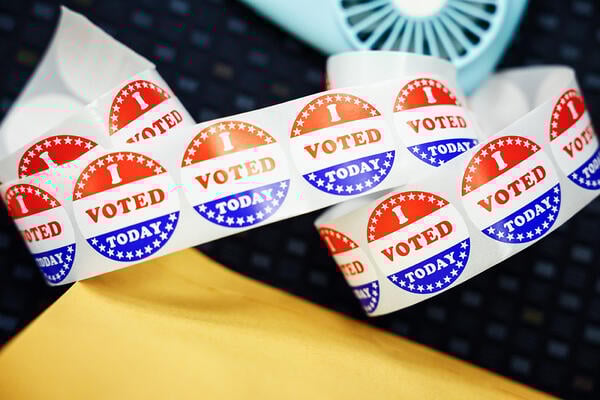
    Though 2025 featured few major elections, campus voter outreach organizations were still hard at work getting students interested in the electoral process and, in some cases, making them aware of local races. But some student voting advocates said that an increasingly fraught political environment and attacks on diversity, equity and inclusion have made campus outreach especially challenging this year.

    Clarissa Unger, co-founder and executive director of the Students Learn Students Vote Coalition, said in an interview that those challenges were a key theme of the annual National Student Vote Summit, held earlier this month at the University of Maryland.

    As part of the coalition’s goal of engaging 100 percent of student voters, SLSV and its campus partners have historically targeted specific demographic groups to ensure that their voter outreach message extends to all communities. But some organizations, including SLSV, have reported that the closure of campus diversity offices and crackdowns on cultural events and student organizations have made achieving that goal increasingly difficult.

    “If our partners are on campuses that have had restrictions around DEI activities, we’ve been just trying to support them in different ways that allow them to reach all students on their campuses,” said Unger. “In some cases, that might mean switching from working with some specific campus groups to trying to integrate voter registration into class registration processes or things like that.”

    These new challenges didn’t come out of nowhere. In some states, DEI offices, which sometimes partner with voter outreach organizations, have been under attack for multiple years now. Beyond that, some states have passed restrictive voting laws in recent years that could negatively impact college students; they include legislation that limits where and when individuals can vote, adds new identification requirements, restricts voter registration organizations, and more.

    The Trump administration added yet another roadblock for student voter outreach this summer when it announced, just weeks before the fall semester began for most institutions, that work-study funds could not be put toward jobs involving “partisan or nonpartisan voter registration, voter assistance at a polling place or through a voter hotline, or serving as a poll worker.” The move disrupted civic engagement offices on numerous campuses that rely on work-study students.

    These changes concern student voting advocates, who argue not only that it’s important for every citizen to exercise their right to vote, but also that voting in college is vital because it helps get students in the habit of voting for the rest of their lives.

    Wariness of Civic Engagement

    Sudhanshu Kaushik, executive director of the North American Association of Indian Students, has advocated for “cultural microtargeting” as a strategy for voter engagement, which he defined in a blog post as “the use of knowledge of cultural identities and culture-specific values, traditions, references, and language to tailor public messaging and boost civic engagement.” In the run-up to the 2024 election, that included tabling at a Diwali celebration and providing voting information in seven different languages.

    This year, though, he said this work was significantly more difficult because leaders of affinity groups are nervous about hosting cultural events, often out of fear that their institutions may face backlash from lawmakers and lose funding.

    “All identity-focused groups have been really, really wary about what they can and can’t be celebrating. ‘Can I celebrate Diwali? Can I celebrate Holi?’” he said. “I don’t think state governments or the federal government is out to stop Diwali celebrations; that’s not at all what the intent is. But I think when you’re a student, when you’re in a club, and you’re doing this—a lot of these people are careful in terms of what the impact might be.”

    That chilling effect is being felt by LGBTQ+ students as well, according to Isaac James, founder of the LGBTQ+ youth voter outreach organization OutVote. OutVote worked to mobilize LGBTQ+ voters in both Virginia and New Jersey during their recent gubernatorial elections.

    “There were multiple different communities … who expressed concern, fear and trepidation around engaging in the democratic process because of the anti-LGBTQ rhetoric that is being passed down through the federal government and state governments across the country,” he said. He cited anti-transgender advertisements from candidates in both states that “contributed to a culture of fear around the civic activity of young LGBTQ voters who felt directly targeted by that rhetoric, specifically young trans voters.”

    Naomi Barbour, vice chair and LGBTQIA+ representative for the student advisory board of the Campus Vote Project, the student voting arm of the voting rights nonprofit the Fair Elections Center, also noted that voter ID laws can negatively impact trans student voters, who might feel uneasy presenting an ID that lists a gender that doesn’t reflect how they identify.

    Some international students, alarmed by the Trump administration’s attacks on them, have also become wary of interacting with student voter outreach organizations, noted Kaushik, who presented on cultural microtargeting at the student voting summit. Historically, voter outreach organizations have tried to include those who can’t vote in their work in other ways, such as teaching them about the political processes in the U.S. or inviting them to do outreach work themselves.

    Alicia Vallette, the chair of the student advisory board for the Campus Vote Project, said that she sees that fear not as a simple side effect of today’s hostile political environment, but rather as a goal.

    “We’ve heard that students are wary of getting involved in nonpartisan political work and civic engagement work based on the current environment. A lot of this charged rhetoric is designed to foster fear and apprehension and to try to foster disengagement in the system itself,” she said.

    That’s why the Campus Vote Project and other voter outreach organizations now must work harder than ever to ensure students aren’t afraid to vote and engage in politics, she said. At the SLSV conference, Campus Vote Project advisory board members led an exercise to help other student organizers figure out how to reach students who aren’t already civically engaged; the organization is also advocating against the SAVE Act, federal legislation that aims to require proof of citizenship to vote. As the countdown to the 2026 midterms begins, student voting advocates continue to brainstorm ways to “combat apprehension and disengagement on campus,” Vallette said.

    Source link

  • FAU Reinstates 2 Faculty on Leave for Charlie Kirk Comments

    FAU Reinstates 2 Faculty on Leave for Charlie Kirk Comments

    Sandi Smolker/Getty images

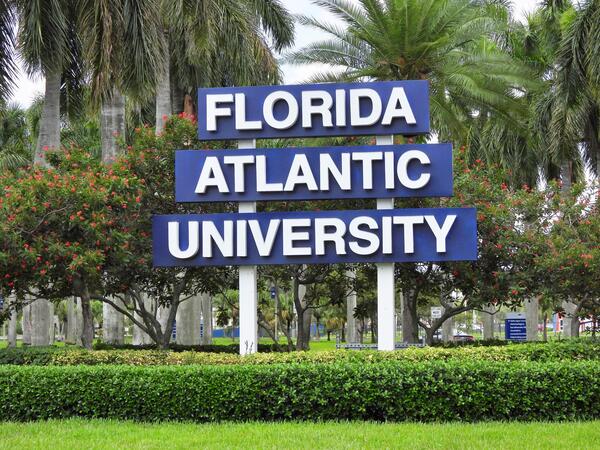
    Two professors at Florida Atlantic University are back at work after the university placed them on administrative leave for making comments related to Charlie Kirk’s death, The South Florida Sun Sentinel reported Wednesday

    After the right-wing activist was shot and killed Sept. 10 during an event at Utah Valley University, President Donald Trump and his allies sought to punish anyone who made public comments about Kirk that could be perceived as critical. Numerous universities fired or suspended professors, including three at FAU: Karen Leader, an associate professor of art history; Kate Polak, an English professor; and Rebel Cole, a finance professor. 

    While Leader’s and Polak’s comments criticized Kirk, Cole’s comments were directed at Kirk’s opponents. “We are going to hunt you down. We are going to identify you,” he wrote on social media, according to the Sun Sentinel. “Then we are going to make you radioactive to polite society. And we will make you both unemployed and unemployable.”

    While the three professors were on administrative leave, the university hired Alan Lawson, a former Florida Supreme Court justice, to investigate their comments. Lawson has since concluded that Cole’s and Leader’s comments were protected by the First Amendment and recommended they both be reinstated. 

    “The findings reflect that each professor’s social-media statements, though provocative to varying degrees, were authored in a personal capacity on matters of public concern,” Lawson wrote. Although both the FAU Faculty Senate and Cole himself objected to the investigation—Cole sued the university over an alleged First Amendment violation—Lawson’s report said the university “preserved constitutional rights while upholding its responsibility to ensure professionalism, civility, and safety within its academic community.”  

    Polak remains on leave while Lawson continues to investigate her comments.

    Source link

  • Nearby ICE Raids Stoke Fear on North Carolina Campuses

    Nearby ICE Raids Stoke Fear on North Carolina Campuses

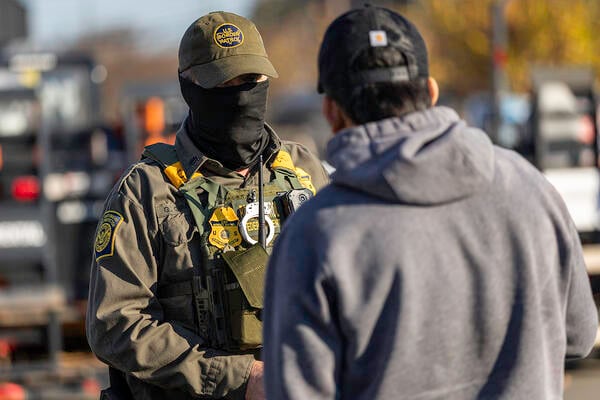
    North Carolina campus leaders are urging international students and staff to take precautions and promising to protect student privacy amid a surge of Immigration and Customs Enforcement raids in the Raleigh, Durham and Charlotte areas. But some students and employees fear campuses aren’t doing enough to protect them after the U.S. Department of Homeland Security boasted upwards of 250 arrests in and around Charlotte on Wednesday.

    North Carolina State University’s executive vice chancellor and provost, Warwick Arden, sent a memo to deans and department heads on Tuesday, offering guidance on how to handle any brushes with federal and state agents in Raleigh.

    He stressed that the university follows all federal laws—including the Family Educational Rights and Privacy Act, so administrators shouldn’t release information about students or staff without consulting the Office of General Counsel. He also advised all international students, faculty and staff to “carry evidence of their immigration status with them at all times,” including their passports if they leave the Raleigh area.

    “I want to assure you that we are closely monitoring developments that may impact our community,” Arden wrote in the memo.

    Duke University administrators sent a similar message to students and staff on Wednesday, recommending that international students and employees carry travel documents “at all times” and promising to safeguard student privacy in accordance with federal law. They also told employees to call Duke police if federal agents requested information or sought to enter nonpublic areas.

    Sharon L. Gaber, chancellor of the University of North Carolina at Charlotte, released a memo on Monday, which was updated Thursday, reminding students and employees of the university’s protocols if they encounter anyone who identifies themselves as federal law enforcement. She urged them to call campus police, who “will work with the Office of Legal Affairs to review and verify any subpoenas or warrants that may be presented.”

    The University of North Carolina at Chapel Hill’s interim executive vice chancellor and provost, James W. Dean Jr., also put out a message to students and staff on Tuesday, acknowledging “anxiety” caused by the presence of ICE officials and encouraging students and employees “to learn more about their rights and available resources.”

    Dean emphasized that the university “complies with all federal and state laws and guidance”; ICE has the right to approach individuals in public spaces, he said, but they need a warrant to access classrooms, offices or dorms.

    He also said that while FERPA prevents the university from sharing a student’s class schedule and immigration status, their name, address and phone number are public information unless a student previously told the registrar not to share such details. He directed concerned students to the dean of students for “individual supports and services.”

    Fears and Concerns

    Nearby raids have heightened fear and anxiety among students.

    Rumors have been swirling on social media about U.S. Customs and Border Protection agents and vehicles sighted near North Carolina State and UNC Charlotte, with students and nearby residents alerting each other about unrecognized cars near campus. Ojo Obrero, an ICE activity tracker created by the Latino and immigrant advocacy organization Siembra NC, showed several sightings of CBP agents and vehicles reported within two miles of UNC Charlotte.

    “The University has been monitoring available information since Customs and Border Protection arrived in Charlotte and had no confirmed reports of CBP on campus; however, they have been in the area,” Christy Jackson, deputy chief communications officer at UNC Charlotte, said in a statement to Inside Higher Ed.

    North Carolina State Police have likewise found “no credible sightings of federal agents on campus” at North Carolina State, Mick Kulikowski, the university’s director of strategic communications and media relations, wrote to Inside Higher Ed.

    Despite memos and reassurances, students and staff expressed frustration that campus leaders’ statements didn’t make a stronger commitment to resisting federal immigration enforcement efforts.

    A joint statement from the American Association of University Professors chapter at UNC Chapel Hill, UE Local 150 and the student organization transparUNCy slammed their administration’s response as “tepid” and “inadequate to meet the moment of fear and uncertainty.” The groups called on university leaders to “do all in their power to deny CBP access to our community,” because “example after example has shown that CBP is acting above the law.”

    Administrators have “instead taken the cowardly approach of saying they’re just going to follow the law,” said Michael Palm, president of the UNC Chapel Hill AAUP chapter. “Everyone that I know who works or studies at UNC understands that we have to protect ourselves, because no one in the administration will help with that.”

    Palm said he and other faculty members are allowing fearful students to attend class remotely after some of his colleagues found them “afraid to come to class, afraid to leave home, if they’re on campus, afraid to leave their dorms.”

    “There has been a real network effort of mutual care to make sure that those students are not just not punished for missing class or excluded from class but also to make sure that they’re getting food, medicine and other supplies,” he said, “and human contact and support so they don’t feel even more isolated and afraid than they already, understandably, do.”

    Source link

  • Public Universities Don’t Want to Discuss the Compact

    Public Universities Don’t Want to Discuss the Compact

    As the stated deadline to sign the “Compact for Academic Excellence in Higher Education” arrived Friday, multiple universities have already rejected the deal while only a few institutions have expressed interest.

    But among the public universities that were either formally invited to sign the compact or that participated in a call with the White House to provide feedback on higher education issues, none are willing to discuss their deliberations about the proposal or interactions with federal officials.

    Last month, Inside Higher Ed sent public records requests to Arizona State University, the University of Arizona, the University of Kansas, the University of Texas at Austin and the University of Virginia, seeking emails, text messages, internal presentations and other documents related to how presidents, trustees and other officials discussed the compact.

    As of Friday, none had provided those records. Only the University of Kansas indicated a willingness to do so, but it requested an up-front $100 fee for staff time to conduct the search. However, officials said they could not guarantee the requested records would be provided.

    Texas, meanwhile, has appealed to the state attorney general to avoid releasing the requested records. Now uncertainty abounds about what UT Austin will do on the day of the initial deadline, though conservative media has reported the Trump administration could push that date back (which officials did not confirm Thursday) as it struggles to find signatories.

    Texas

    Some public universities, such as Arizona and Virginia, have rejected the compact outright, but others, like Arizona State, have noted they never received a formal invitation to join and therefore they have nothing to decline. But UT Austin has remained silent about whether it will sign the compact.

    Although University of Texas system Board of Regents chairman Kevin P. Eltife issued an early statement saying that he welcomed the “the new opportunity presented to us and we look forward to working with the Trump Administration on it,” officials have said little since then.

    In response to an Oct. 22 public records request from Inside Higher Ed, UT Austin shared only the initial emails exchanged by federal and university officials inviting the university to consider the compact, a copy of the proposal itself, and Eltife’s statement. The rest it wants to keep private.

    UT system officials argued in a letter sent Tuesday to the attorney general’s office that the requested records are protected by attorney-client privilege and should not be disclosed.

    “In the information at issue, University and UT System attorneys are providing legal counsel, gathering information in order to provide legal counsel, or their clients are seeking legal advice from the attorneys and include the necessary background information so that counsel will be able to render an opinion on a given situation,” UT system attorney Jennifer Burnett wrote in the letter. “From the text of the communications, it is evident that the University and UT System attorneys for were [sic] involved in providing legal counsel to employees of the University.”

    Now the attorney general’s office has 10 business days to make a determination on the request.

    Gunita Singh, a staff attorney for the Reporters Committee for Freedom of the Press, told Inside Higher Ed by email that the university “is within its rights to argue that the records are privileged but they need to make a particularized showing that that is the case,” proving the requested documents “pertain to the provision of legal advice” and have been confidential at all times.

    Virginia

    The University of Virginia has yet to provide documents requested Oct. 22 in what appears to be a pattern of delayed responses, according to others who sought records from the public university in recent months.

    UVA’s student newspaper, The Cavalier Daily, reported that it has submitted 25 public records requests to the university, but UVA officials have reportedly not provided records since July 1. Other journalists across the commonwealth have taken to social media to note that they have struggled to get information on athletic staffing and internal communications.

    State Senator Creigh Deeds, a Democrat who has represented the Charlottesville area for more than two decades, also struggled to get public records out of the university related to the resignation of former UVA president Jim Ryan, who stepped down in June under federal pressure. Deeds initially reached out to the university Aug. 1 seeking information, which he only obtained after submitting a public records request and paying $4,500 for the documents.

    Chris Seaman, a law professor at Washington and Lee University, requested public records related to costs for outside legal counsel on July 2. But Seaman still has not “received a substantive response from UVA regarding my FOIA request,” he told Inside Higher Ed by email. In an August email exchange shared by Seaman, a UVA official noted a delay in processing his request and wrote that “in the last few weeks, our office has received an unusually large volume of requests with limited staff to process them.” They also promised to “expedite handling” of his request, but more than three months later, Seaman said, he is still awaiting those documents.

    UVA spokesperson Brian Coy did not address the pattern of delays in a response to Inside Higher Ed, writing that the university “has received this request and is processing it in accordance with Virginia law” and is “preparing an estimate of anticipated costs” for review.

    Arizona and Arizona State

    Public records requests at Arizona State and the University of Arizona also remain unfulfilled after 30 days.

    Arizona State spokesperson Jerry Gonzalez said that he would check on the state of the request but noted that ASU was not invited to sign the compact, and so “there is nothing for the university to accept, reject, or negotiate.” (However, President Michael Crow has said he’s had discussions with Education Secretary Linda McMahon and other officials about higher education issues.)

    University of Arizona spokesperson Mitch Zak said that Inside Higher Ed’s public records request “remains in process” and “response time varies.” He noted that factors such as “the specificity of the request, the volume of requests received, and the time required to locate, review, and redact materials subject to disclosure” all shape public records response times.

    Arizona law does not specify how long public entities have to hand over documents but instructs that they do so “promptly.” Singh, the RCFP attorney, pointed to past legal cases in which Arizona courts found that 24 business days “satisfied the promptness standard” but that “a delay of 49 days, or 34 working days, did not meet the promptness standard” outlined in state law.

    Currently, she said, Arizona and Arizona State are “inching toward noncompliance territory.”

    Source link

  • St. Augustine’s Offers to Help Shape Trump’s Compact

    St. Augustine’s Offers to Help Shape Trump’s Compact

    Saint Augustine’s University

    Saint Augustine’s University, a historically Black college in North Carolina, has expressed interest in signing the Trump administration’s higher ed compact, Fox News reported, joining New College of Florida and Valley Forge Military College.

    However, Verjanis Peoples, the interim president of Saint Augustine’s University, and board chair Sophie Gibson wrote in a letter to the Education Department that several provisions of the proposed compact are not “compatible with the statutory mission and federal mandate under which HBCUs operate.” Those include restrictions on the use of race in admissions or for financial support. 

    “As noted in our institutional analysis, such provisions would unintentionally force HBCUs to choose between compliance and survival, a position that is neither feasible nor consistent with congressional intent,” wrote Peoples and Gibson in a letter posted by Fox News. 

    Other requirements that raise concerns include a cap on international students and a five-year tuition freeze. “Without mission-sensitive accommodations, these sections risk unintended consequences that would impede our ability to serve students effectively,” they added.

    Saint Augustine’s has struggled in recent years amid declining enrollment and financial challenges. The university had 175 students as of October 2024; more recent enrollment figures aren’t available. Late last year, Saint Augustine’s lost its accreditation, though a federal court overturned that decision. Classes were held online this fall. 

    The 158-year-old university is the first HBCU to show interest in the compact, which would require colleges to make a number of changes to their policies and practices in exchange for potential benefits such as an edge in federal grant competitions. The Trump administration first invited nine universities to give feedback on the document, and none in the group decided to sign on. Since the proposal was made public in early October, several universities have rejected it, arguing the federal funding should be based on merit—not adherence to a president’s priorities.

    The administration has initially aimed to finalize the compact by Nov. 21, but that deadline has reportedly been extended.

    Peoples and Gibson wrote that they support the compact’s goal to strengthen academic excellence, accountability and transparency in higher ed, and they see alignment between Saint Augustine’s historic mission and the administration’s proposal.

    Despite their other reservations, “Saint Augustine’s University remains eager to participate as a constructive partner and early-engagement institution,” they wrote. They asked the department to work with HBCUs to shape a final agreement that upholds “both the letter and spirit of the Compact while safeguarding our statutory purpose.”

    Source link

  • Total NSF, NIH Funding Didn’t Plunge in Fiscal 2025

    Total NSF, NIH Funding Didn’t Plunge in Fiscal 2025

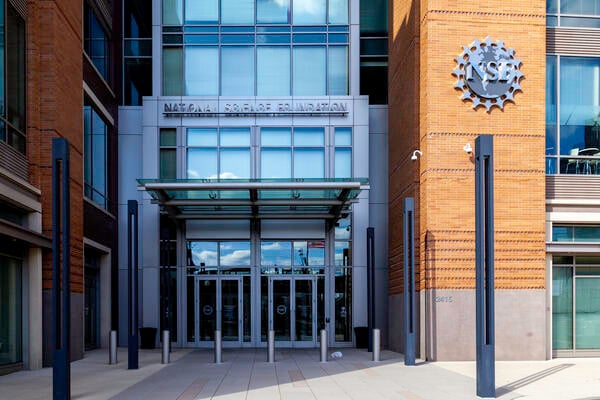
    The National Science Foundation and National Institutes of Health doled out about as much total grant funding in the recently ended fiscal year as they did the year before, despite the Trump administration’s “unprecedented” earlier slowdown of federal science funding, Science reported Wednesday.

    According to the journal’s analysis, “NSF committed approximately $8.17 billion to grants, fellowships, and other funding mechanisms in the 2025 fiscal year”—which ended Sept. 30—“about the same as in 2024.” It found that NIH spending also remained level.

    But both federal research funding agencies still reduced the number of new grants they awarded, Science reported. It wrote that NSF funded about 8,800 new research project grants, down from 11,000 in 2024, adding that an anonymous NSF staffer said this “was one of several changes designed to reduce the agency’s future financial obligations, in case Trump’s proposed budget cut is realized.” The analysis also found that the agency reduced from 2,600 to 1,100 “the number of new continuing grants, and ‘forward funded’ a number of existing continuing grants.”

    NSF declined to confirm or deny Science’s figures. NIH spokespeople didn’t return Inside Higher Ed’s requests for comment Thursday.

    Congress has yet to decide how much to fund NSF in the current fiscal year; most of the federal government is currently funded by a continuing resolution that expires Jan. 30, and the government could shut down again if lawmakers don’t pass appropriations bills by then. But Republicans from both chambers have indicated they don’t plan to cut $5 billion from NSF, as Trump has requested; in July, Senate appropriators put forth a cut of only $16 million, while the suggestion in the House was to slash the NSF budget by $2 billion.

    Source link

  • DEI Orthodoxy Doesn’t Belong in NACE Competencies (opinion)

    DEI Orthodoxy Doesn’t Belong in NACE Competencies (opinion)

    If you’re not a supporter of the progressive DEI agenda, you’re not career ready. That’s one of the messages that the National Association of Colleges and Employers, America’s leading professional association for career placement, is sending to students.

    First established in 1956, NACE boasts a current membership of more than 17,000 dues-paying career services and recruitment professionals. Career counselors and others in higher education often cite NACE’s eight career readiness competencies to help students prepare for the job market and workplace.

    I was planning to use the NACE competencies this semester in a class on how liberal arts education equips students for the professional world and was dismayed to find that partisan criteria had crept into this valuable resource. The list includes—alongside things like teamwork, effective communication and technological proficiency—a competency called Equity & Inclusion. According to NACE, this means that a prospective professional will “engage in anti-oppressive practices that actively challenge the systems, structures, and policies of racism and inequity.”

    If you’re fully career ready, the group says, you will not merely “keep an open mind to diverse ideas and new ways of thinking.” You will also “advocate for inclusion, equitable practices, justice, and empowerment for historically marginalized communities” and will “address systems of privilege that limit opportunities” for members of those communities. In other words, you will subscribe to the view that American society is characterized by systemic racism and will work to break down America’s allegedly racist structure.

    NACE defines “equity” in this light: “Whereas equality means providing the same to all, equity means recognizing that we do not all start from the same place and must acknowledge and make adjustments to imbalances.”

    While these beliefs and attitudes might make someone a good fit at one of a diminishing number of “woke” corporations, they have little to do with career readiness in the ordinary sense of the term. Rather, the language NACE employs in its official materials implies a commitment to an ideological agenda that the organization has mixed into its definition of professional competence. NACE could be teaching students how to navigate the political diversity that characterizes most workplaces. Instead, through its influence in the college career counseling world, it is teaching them that acceptance of progressive orthodoxy on disputed questions of racial justice is a prerequisite for professional employment.

    NACE also does a disservice to students by signaling that workplace political engagement is universally valued by employers. In fact, many companies discourage it, and with good reason. In most work environments, political advocacy is more likely to cause tension and division than it is to foster cooperation and trust.

    As a college teacher and administrator, I’m especially troubled by the fact that NACE is conveying to students that their education should lead them to adopt a certain viewpoint on some of the most contentious political issues. The relationship between equity and equality, for example, is something that should be studied, discussed and debated in college, not taught as authoritative moral and political dogma.

    More generally, the way NACE talks about diversity, equity and inclusion ignores—or perhaps disdains—the political disagreement that is a normal and natural part of life in a democratic society, including the workplace. The organization undermines its professed commitment to open-mindedness when it implies that all open-minded people must be capital-P Progressives on issues such as systemic racism and equitable hiring practices. Like many institutions in recent years, NACE appears to have given in to pressure from activist members and embraced the “antiracist” worldview, sidelining the principles of openness and neutrality that are, or ought to be, hallmarks of professionalism.

    Notably, NACE indicates on its website that its equity and inclusion standard is under review. The organization cites recent “federal Executive Orders and subsequent guidance, as well as court decisions and regulatory changes, [that] may create legal risks that either preclude or discourage campuses and employers from using it.” This is encouraging. Better still would be for NACE to free itself from the ideological commitments that make its materials legally and politically risky in the first place. Let’s hope this venerable organization will get out of the business of DEI advocacy and focus on its core purposes of connecting students with employers and preparing students for professional life.

    Andrew J. Bove is the associate director for academic advising in the College of Liberal Arts and Sciences at Villanova University.

    Source link