Blog

  • Inside Schools’ Teen Nicotine Crackdown – The 74

    Inside Schools’ Teen Nicotine Crackdown – The 74

    School (in)Security is our biweekly briefing on the latest school safety news, vetted by Mark KeierleberSubscribe here.

    It was in physical education class when Laila Gutierrez swapped out self-harm for a new vice: Vaping.

    Like students across the country, Gutierrez got dragged into a nicotine-fueled war between vape manufacturers, who used celebrity marketing and fruity flavors to hook kids on e-cigarettes, and educators, who’ve turned to surveillance tools and discipline to crack down on the youngest users. Gutierrez was suspended for a week after she was nabbed vaping in a crowded school bathroom during her lunch hour. 

    In my latest investigative deep dive, co-published this week with WIRED, I reveal how school districts across the country have spent millions to install vape-detecting sensors in school bathrooms — once considered a digital surveillance no-go. The devices prioritize punishment to combat student nicotine addiction.

    Eamonn Fitzmaurice/The 74

    My analysis of public records obtained from Minneapolis Public Schools reveals the sensors inundated administrators with alerts — about one per minute during a typical school day, on average. Their presence brought a spike in school discipline, records show, with suspensions dwarfing treatment services and younger middle school students facing the harshest consequences. 

    The sheer volume of alerts, more than 45,000 over seven months across four schools, raises questions about whether they’re an effective way to get kids to give up their vape pens. And some students voiced privacy concerns about the sensors, the most high tech of which can now reportedly detect keywords, how many young people are in the bathroom at one time and for how long. 

    “Surveillance is only a diagnosis,” Texas student activist Cameron Samuels told me. “It only recognizes symptoms of a failed system.”  


    In the news

    Charlotte, North Carolina, school officials reported more than 30,000 students absent on Monday, two days after federal immigration agents arrested 130 people there in their latest sweep. That more recent data point underscores the 81,000 school days missed by more than 100,000 students in California’s Central Valley after immigration raids earlier this year, according to a newly peer reviewed Stanford University study. | The 74

    • Los Angeles schools have lost thousands of immigrant students — from 157,619 in the 2018-19 school year to just 62,000 this year — because of the city’s rising prices and falling birth rates. Now, that trend has intensified after the “chilling effect” of recent federal immigration raids, district officials said. | The 74
    • Student enrollment is dropping in school districts across the country amid President Donald Trump’s immigration crackdown. In Miami, for example, the number of new immigrant students has decreased by more than 10,000 compared to last year. | The Associated Press

    Ten Commandments: Siding with the families of students who argued they infringed on their religious freedom, a federal judge on Tuesday ordered some Texas public school districts to remove Ten Commandment displays from their classroom walls by next month. | The New York Times

    • 28 Bills, Ten Commandments and 1 Source: A Christian Right ‘Bill Mill’. | The 74

    Online gaming platform Roblox announced it will block children from interacting with teens and adults in the wake of lawsuits alleging the platform has been used by predators to groom young people. | The Guardian

    Furry and freaky: “Kumma,” a Chinese-made teddy bear with artificial intelligence capabilities and marketed toward children, is being pulled from shelves after researchers found it could teach its users how to light matches and about sexual kinks. | Futurism

    A teenage girl from New York reported to a police officer at school that her adoptive father had been raping her at home for years. The officer, who didn’t believe her, bungled the case — and she was abused again. | New York Focus

    ‘Brazen cruelty’: A federal judge has ordered the release of a 16-year-old Bronx high schooler who has spent nearly a month in federal immigration custody despite having a protective status reserved for immigrant youth who were abused, neglected or abandoned by a parent. | amNewYork

    Sign-up for the School (in)Security newsletter.

    Get the most critical news and information about students’ rights, safety and well-being delivered straight to your inbox.

    Civil rights groups have decried proposed federal changes to the Education Department’s data collection on racial disparities in special education that could make it more difficult to identify and address service gaps. | K-12 Dive

    ‘Dead-naming’ enforced: A Texas law now requires school employees to use names and pronouns that conform to students’ sex at birth. Several transgender students whose schools are complying say it has transformed school from a place of support to one that rejects who they are. | The Texas Tribune.


    ICYMI @The74
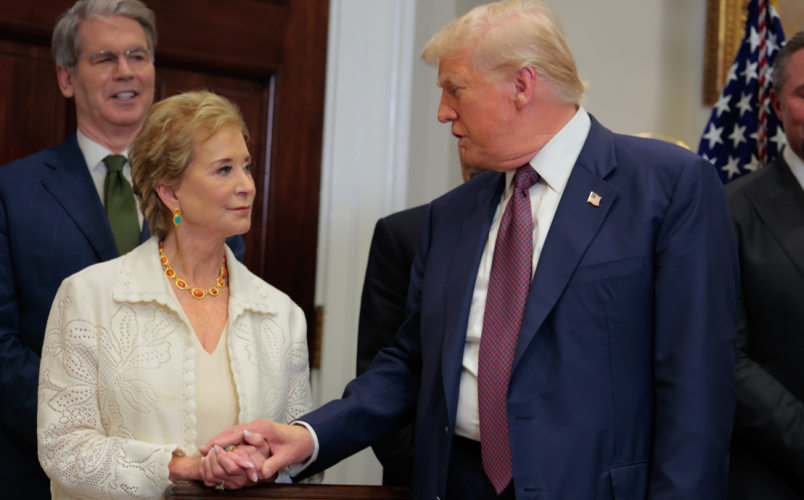
    Education Secretary Linda McMahon has signed agreements with other agencies to take over major K-12 and higher education programs in keeping with President Donald Trump’s effort to shut down the Department of Education. (Anna Moneymaker/Getty Images)

    Emotional Support

    “Let’s circle back in 2026.”

    -Taittinger, already


    Did you use this article in your work?

    We’d love to hear how The 74’s reporting is helping educators, researchers, and policymakers. Tell us how

    Source link

  • How U.S. Higher Education Helped Create Nick Fuentes

    How U.S. Higher Education Helped Create Nick Fuentes

    In the aftermath of each new outrage involving Nick Fuentes, pundits scramble to explain how a 20-something suburban Catholic kid became one of the most influential white supremacists in America. Many insist Fuentes is an anomaly, a glitch, a fringe figure who somehow slipped through the cracks of democracy and decency. But this narrative is both comforting and false.

    Fuentes is not an anomaly. He is the logical product of the systems that shaped him—especially American higher education.

    While institutions obsess over rankings, fundraising, and branding campaigns, they have quietly abandoned entire generations of young people to debt, alienation, status anxiety, and a digital culture that preys on male insecurity. In this vacuum, extremist networks thrive, incubating figures like Fuentes long before the public notices.

    HEI warned about this trend years ago. Since 2016, the publication tracked the rise of Charlie Kirk and Turning Point USA, noting how TPUSA used campus culture wars to radicalize disaffected young men. HEI saw that for-profit-style marketing, donor-driven politics, and relentless culture-war agitation were creating an ecosystem where reactionaries could build both influence and profit. Fuentes did not arise outside that ecosystem—he evolved from it, even as he later turned on Kirk as insufficiently extreme.

    What fuels this pipeline? A generation of young men raised on the promise of meritocracy but delivered a reality of spiraling costs, precarious futures, and institutional betrayal. Many arrive at college campuses burdened by debt, anxious about their place in an unforgiving economy, and deeply online. They bear the psychological bruises of a culture that has replaced community with competition and replaced meaning with metrics.

    This is also the demographic most vulnerable to incel ideology, a misogynistic worldview built around grievance, rejection, humiliation, and resentment. Incel communities overlap heavily with the digital spaces where Fuentes built his early audience. The mix is combustible: sexually frustrated young men who feel mocked by mainstream culture, priced out of adulthood, and invisible to institutions that once guided them. The result is a fusion of white nationalism, male resentment, Christian nationalism, ironic fascism, and livestream entertainment—perfectly tailored to a generation raised on Twitch and YouTube.

    And yet the higher-education establishment insisted for years that white supremacists were primarily rural “rednecks”—poor, uneducated, easily dismissed. This stereotype blinded journalists, academics, and administrators to the reality developing right in front of them. Higher Education Inquirer knew better because we corresponded for years with Peter Simi, one of the country’s leading scholars of extremism. Simi’s research demonstrated clearly that white supremacists were not confined to rural backwaters. They were suburban, middle-class, sometimes college-educated, often tech-savvy, and deeply embedded in mainstream institutions.

    Simi’s work showed that white supremacist movements have always thrived among people with something to lose, people who feel their status slipping. They recruit in fraternities, gaming communities, campus political groups, military circles, and online spaces where young men spend their most lonely hours. They build identities around grievance and belonging—needs that universities once helped students navigate but now too often ignore.

    This is the world that produced Nick Fuentes.

    Fuentes entered higher education during a moment of fragmentation and distrust. Tuition was skyrocketing. Campuses were polarizing. Students were increasingly treated as revenue streams rather than whole human beings. Administrators were more focused on donor relations and culture-war optics than on the psychological welfare of their students. And universities outsourced so many vital functions—to police, to lobbyists, to tech platforms—that they ceded responsibility for the very students they claimed to educate.

    Into that void stepped extremist influencers who offered simple answers to complex problems, validation for resentment, and a community that cared—if only in the performative, transactional sense of internet politics.

    The tragedy is not simply that Fuentes emerged. The tragedy is that the conditions to generate many more like him remain firmly in place.

    American higher education created the environment: hyper-competition, abandonment of the humanities, the collapse of community, the normalization of precarity, and a relentless emphasis on personal failure over systemic dysfunction. It created the audience: anxious, isolated, indebted young men looking for meaning. And it created the blind spot: a refusal to take extremism seriously until it reaches mainstream visibility.

    Fuentes is not a glitch in the system. He is the system’s mirror held up to itself.

    Unless universities confront their complicity in this radicalization pipeline—economically, culturally, and psychologically—the next Nick Fuentes is already in a dorm room somewhere, streaming at 2 a.m., finding thousands of followers who feel just as betrayed as he does.


    Sources

    Angela Nagle, Kill All Normies: Online Culture Wars from 4chan and Tumblr to Trump and the Alt-Right (2017).

    Peter Simi & Robert Futrell, American Swastika: Inside the White Power Movement’s Hidden Spaces of Hate (2010, updated 2015).

    Kathleen Belew, Bring the War Home: The White Power Movement and Paramilitary America (2018).

    Joan Donovan & danah boyd, “Stop the Presses? The Crisis of Misinformation” (Harvard Kennedy School).

    Cynthia Miller-Idriss, Hate in the Homeland: The New Global Far Right (2020).

    Michael Kimmel, Healing from Hate: How Young Men Get Into—and Out of—Violent Extremism (2018).

    Whitney Phillips, “The Oxygen of Amplification: Better Practices for Reporting on Extremists.”

    Brian Hughes & Cynthia Miller-Idriss, “Youth Radicalization in Digital Spaces.”

    David Futrelle, We Hunted the Mammoth archive on incel ideology.

    Higher Education Inquirer (2016–2024 coverage of TPUSA, Charlie Kirk, and campus extremism).

    Source link

  • WEEKEND READING: The teacher training placement crisis

    WEEKEND READING: The teacher training placement crisis

    This blog was kindly authored by Juliette Claro, Lecturer in Education St Mary’s University Twickenham.

    Initial Teacher Education (ITE) providers across England are facing an escalating crisis: a growing inability to secure sufficient school placements for trainee teachers. With an average of 20 to 25% of unplaced trainee teachers, September 2025 has been challenging for universities and ITE providers. Despite policy ambitions to strengthen teacher supply, the reality on the ground is that many trainees’ hopes to start their first school placement in September were shattered due to a lack of school placements, especially in the secondary routes. This bottleneck threatens not only the future workforce but also the integrity of teacher training itself.

    A system under strain

    According to the Teacher Labour Market in England Annual Report 2025 by the National Foundation for Educational Research, recruitment into ITE remains persistently below target, with secondary subjects like Physics and Modern Foreign Languages (MFL) facing the most acute shortages. In 2024/25, Physics recruitment reached just 17% of its target, while MFL hovered at 33%. These figures reflect a long-standing trend, exacerbated by declining interest in teaching and competition from other professions.

    But even when trainees are recruited, sometimes through international routes at considerable expense, placing them in schools has become increasingly difficult. The Department for Education’s Initial Teacher Education Thematic Monitoring Visits Overview Report (2025) highlights that many providers struggle to find schools with sufficient mentor capacity and subject expertise. The report reinforced the point that mentoring pre-service teachers in schools often relies on the goodwill of teachers, and when too many providers operate in one local area, competition becomes unsustainable. This is particularly problematic in shortage subjects, where schools may lack qualified specialists to support trainees effectively, for example, in Physics or Languages.      

    Mentoring is a cornerstone of effective teacher training. Yet research in 2024 from the National Institute of Teaching (reveals that mentors are often overstretched, under-recognised, and inadequately supported. Many people report sacrificing their own planning time or juggling mentoring duties alongside full teaching loads. As a result, there may be a rise in reluctance among teachers to take on mentoring roles, especially in high-pressure environments.

    The government offers funding that aims to support mentor training and leadership, including grants for lead mentors, mentors and intensive training. However, these are often paid in arrears and come with complex conditions, making them less accessible to schools already grappling with budget constraints. Moreover, the funding does not always reflect the true cost of releasing staff from teaching duties to support trainees in schools.

    Routes into teaching: a fragmented landscape?

    The diversity of routes into teaching (School Direct, university-led PGCEs, Teach First, apprenticeships was designed to offer flexibility. But for ITE providers, it has created logistical headaches. Each route comes with its own placement requirements, mentor expectation, and funding mechanisms. Coordinating placements across this fragmented landscape is time-consuming and often leads to duplication or competition for limited school capacity.

    As universities continue to battle through their own funding crises, competition for recruitment and placements clash with other local providers and alliances of School- Centred Initial Teacher Training (SCITT), resulting in a lot of demands but not enough offers for placements.

    The 2024 ITE market reforms, which led to the de-accreditation of 68 providers, further destabilised the system. While many have partnered with accredited institutions to continue offering courses, the disruption has strained relationships between providers and with placement schools, resulting in reducing the overall number of placements available, where too many ITE providers end up saturating the same local areas for school placements.

    The subject specialist shortages

    The shortage of subject specialists is not just a recruitment issue: it is also a placement issue. In their 2025 report and recommendations for recruitment, retention and retraining the Institute of Physics (IoP)  revealed that 58% of GCSE lessons in England are taught by non-Physics specialists.

    When 25% of secondary schools do not have a Physics specialist teacher in-house and 63% of schools struggle to recruit specialist MFL teachers (British Council Language Trends 2025), it is no surprise that priorities for some school leaders is on the teaching of their students and not the mentoring trainee teachers. In many schools, Biology or Chemistry teachers cover Physics content, making it difficult to offer meaningful placements for Physics trainees. The same applies to Modern Foreign Languages, where schools often lack the breadth of language expertise needed to support trainees effectively. As non-core subjects may suffer from reduced curriculum time, finding enough teaching hours to allocate to a trainee teacher can become another challenge for some schools. Finally, as the recruitment crisis becomes more acute in more deprived areas, finding suitable mentors for trainee teachers in these areas become increasingly complex.

    Without subject specialists, trainees may be placed in environments where they cannot observe or practise high-quality teaching in their discipline. This undermines the quality of training and risks having Early Career Teachers feeling ill-prepared for the classroom.

    Teacher workload: the silent barrier

    Teacher workload remains one of the most significant barriers to placement availability. The Working Lives of Teachers and Leaders Wave 3 Report (DfE, 2025) found that 90% of teachers considering leaving the profession cited high workload as a key factor. With rising demands around behaviour management, curriculum delivery and accountability, many teachers simply do not have the bandwidth to mentor trainees. Reduced school funding, less staff and more demands on schoolteachers has meant that it is not uncommon to have weekly meetings between teachers and trainees organised out of school hours, at 8am or at 5pm, after school meetings. This is particularly acute in schools serving disadvantaged communities, where staffing pressures are greatest and the need for high-quality teaching is most urgent. Ironically, these are often the schools where trainees could have the most impact, if only they could be placed there.

    The perfect storm

    As ITE providers navigate the currents and the storms of recruiting and placing trainee teachers into schools, the strain on school funding directly impacts the recruitment of future teachers. If ITE providers cannot provide school placements, teachers and schools cannot recruit. Is it, therefore, time to reconsider and revalue the mentors in schools who are the running engine of the training process whilst on school placement? 

    New for school mentors could include:

    • Streamlining mentor funding to recognise fully and value the time spent by mentors to fulfil their role in supporting with lesson planning, giving feedback to lessons, meeting the trainee weekly and supporting international trainee teachers adapting to new curricula where necessary.
    • Invest in subject specialist development, particularly in Physics and MFL.
    • Reduce teacher workload through policy reform and flexible working arrangements where mentors can co-share the responsibility with colleagues.
    • Clarify and coordinate training routes to ease the burden on providers and schools.
    • Elevate the status of mentoring through formal recognition, qualifications, and career pathways.

    The future of teacher supply depends not just on recruitment, but on the ability to train teachers well. Without sufficient placements and adequate training, we risk building a pipeline that leaks before it flows. It is time for policymakers to recognise the strains on a suffocating system if recruitment targets are to be met.

    Source link

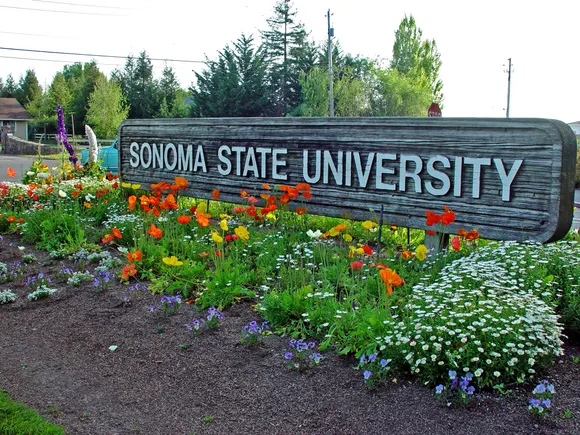
  • Sonoma State University gets new leader after turbulent year of cuts

    Sonoma State University gets new leader after turbulent year of cuts

    Dive Brief:

    • Sonoma State University will have a new president in January as the public institution weathers continued enrollment declines and tries to pull off a financial turnaround after announcing massive budget cuts this year. 
    • The California State University system’s governing board on Wednesday named Michael Spagna as the new permanent leader of Sonoma State. Spagna currently serves as interim president of California State Polytechnic University, Humboldt. 
    • When he takes office on Jan. 20, Spagna will have to grapple with the institution’s financial challenges and continued enrollment declines — with its fall headcount down over 13% from last year.

    Dive Insight:

    Sonoma State has been without a permanent leader since former President Mike Lee resigned last spring after Cal State officials said he forged an agreement with pro-Palestinian protesters without proper approvals and put him on leave. 

    In Spagna, Sonoma State will get a veteran leader of the Cal State system, with years of experience as a provost at CSU Dominguez Hills and as a dean at CSU Northridge, among other positions. 

    “Sonoma State’s success is critically important to the CSU, and the committee was confident that Dr. Spagna possesses the experiences and qualities to lead the university at this consequential moment in its history,” Mark Ghilarducci, a Cal State trustee and chair of the presidential search committee, said in a statement Wednesday. 

    The enrollment declines of recent years have taken their toll on the institution. Early this year, Sonoma State’s current interim leader, Emily Cutrer, described “sobering news” as she confronted the depth of the university’s budget hole, with what was then a larger-than-expected deficit of nearly $24 million. 

    In January, Cutrer announced broad-based cuts to staff jobs and faculty contracts, and further planned to axe around two dozen academic programs and Sonoma State’s NCAA Division II athletic department.

    The cuts drew angry protests on campus, a rebuke from the university’s academic senate and a lawsuit over the elimination of sports.

    A turnaround plan the university released in the spring called for boosting enrollment, shaving costs, and creating new programs and career pathways for students. Specifically, Sonoma State is looking to increase enrollment 20% in five to seven years, to the equivalent of 6,800 full-time students. 

    In June, the state gave a one-time infusion of $45 million to the university to stabilize its finances, launch new programs in high-demand areas such as data science, and undo some of the cuts to jobs and programs. A portion of the funds will also support the continuation of NCAA athletics over three years. 

    For now, enrollment is still falling at Sonoma State. The university’s fall headcount fell to 5,000 students, down 13.2% from last year and down 30.2% from 2021, according to an October presentation from the university. But in the presentation officials also pointed to “silver linings” in the university’s targeted enrollment efforts. 

    Bright spots included increased enrollment from community college students and from smaller high school districts the university focused on. The university also saw the highest application levels in five years from larger cities, including Oakland and Sacramento.

    The university’s total fall head count also beat its budgeted headcount by 125 students.

    Source link

  • DOJ targets college access for undocumented students in 6th lawsuit

    DOJ targets college access for undocumented students in 6th lawsuit

    This audio is auto-generated. Please let us know if you have feedback.

    Dive Brief:

    • The U.S. Department of Justice has sued six states over laws that allow in-state tuition rates and scholarships for students regardless of their immigration status. The latest legal challenge was filed Thursday against California for its “California Dream Act.”
    • The lawsuit seeks to enjoin California laws that allow state residents to receive in-state tuition regardless of immigration status. The lawsuits — also filed against Minnesota, Texas, Kentucky, Illinois and Oklahoma — could impact tuition for dual enrollment, adult education, and career and technical education training programs. 
    • “Federal law prohibits aliens illegally present in the United States from receiving in-state tuition benefits that are denied to out-of-state U.S. citizens,” the Justice Department said in its lawsuit, which is challenging the states under the supremacy clause. “There are no exceptions.” 

    Dive Insight:

    The lawsuits come in light of a February executive order prohibiting federal resources for undocumented immigrants and as the U.S. Department of Education has implemented the order to restrict education-related programs

    As part of those restrictions, which were part of a coordinated effort across agencies, students could be required to undergo a citizenship and immigration status check to qualify for tuition for dual enrollment and similar early college programs for high-schoolers. 

    According to the Trump administration, that’s “because those programs provide individualized payments or assistance beyond that of a basic public education.” 

    The administration’s implementation of the executive order also restricted Head Start, the federal early childhood education program meant to level the playing field for low-income families, to “American citizens.” That policy change was successfully challenged in court in multiple lawsuits and is currently on pause in states that sued the government.

    However, other program areas impacted by the Education Department’s enforcement of the order are still in effect in some places, including high school students’ eligibility for college-level and career courses.

    “California is illegally discriminating against American students and families by offering exclusive tuition benefits for non-citizens,” said U.S. Attorney General Pamela Bondi in a Thursday statement, adding that her department “will continue bringing litigation against California until the state ceases its flagrant disregard for federal law.”

    California Gov. Gavin Newsom’s office, however, called the DOJ’s efforts “meritless, politically motivated lawsuits.” 

    “Good luck, Trump,” said Marissa Saldivar, Newsom’s spokesperson, in an email to K-12 Dive. “We’ll see you in court.”

    The office maintains that its tuition exemption applies to all residents who meet the criteria, regardless of where they were born, and it is not discriminating against U.S. citizens. 

    Out of the states sued so far, Texas and Oklahoma have complied, with Texas suddenly ending a 24-year-old law within hours of the Justice Department filing a lawsuit in June. 

    Prior to the Justice Department’s lawsuits, 25 states and the District of Columbia allowed in-state tuition for undocumented students, according to the Higher Ed Immigration Portal, which tracks the issue. That number has fallen to 22 in addition to Washington, D.C.

    There are an estimated 620,000 undocumented K-12 students in the United States, with most states home to thousands of such students, according to 2021 data from Fwd.us. 

    According to federal data, nearly 2.5 million high school students were enrolled in at least one dual enrollment course from a college or university in 2022-23.

    Source link

  • More Work-Life Balance in Academe Would Help Reduce the Fear of Retirement

    More Work-Life Balance in Academe Would Help Reduce the Fear of Retirement

    To the editor:

    I’m not quite sure why you felt the need to publish the self-indulgent “Teaching as a Sacred Life” by Joe P. Dunn (Nov. 19, 2025).

    It’s great that Joe is inspired by his teaching and is so passionate about it. Of course, most faculty who chose teaching are (or were) so inspired. So what merits the article? I guess that Joe is still teaching at age 80.

    Yes, some people view retirement as a goal because they don’t like their jobs. But many faculty view their profession as a vocation, so why would they retire? One reason is because of diminished effectiveness. Ossified approaches, diminished cognitive capacity and so on are the unhappy, but inevitable, results of aging. The person experiencing these declines is generally not the best at noticing them, as they creep in so slowly that they’re most visible to outsiders or when accurately comparing to yourself from long ago. (A septuagenarian Galileo, when completing Two New Sciences, his seminal 1638 work in mechanics, was disheartened to find that it was hard for him to follow his own notes and thoughts from several decades earlier.)

    Another reason to retire is to give the next generation a chance. Joe talks about the plentiful faculty jobs when he was young. There are many reasons why they’re no longer plentiful, but one of them is that there is no longer a mandatory retirement age. It was legal until 1993 for there to be a mandatory retirement age for tenured faculty (later than the general 1986 ban on mandatory retirement because lawmakers felt there were several valid arguments for a mandatory retirement age for tenured professors).

    Many academics pour so much into their work that they don’t develop a strong identity outside of their job. They end up like Joe, not sure what they would even do in retirement. A broader push for a better work-life balance in higher education could go a long way toward helping people develop their complete selves, and would reduce the fear of retirement among academics. Plus, there are always positions emeriti that allow you to keep your hand in the intellectual world of higher ed without continuing to draw a paycheck that you no longer need and someone else does.

    Speaking of viewing teaching as sacred, clergy retire. Heck, we’ve even had a pope retire. Faculty can figure it out too.

    David Syphers is a physics professor at Eastern Washington University. He is writing in a personal capacity.

    Source link

  • FIRE warnings confirmed again | The Foundation for Individual Rights and Expression

    FIRE warnings confirmed again | The Foundation for Individual Rights and Expression

    A federal court has once again vindicated FIRE’s longstanding concerns with the Trump administration’s unlawful and unconstitutional approach to enforcing Title VI — including combatting antisemitism — in higher education. This time, the smackdown came in a ruling for plaintiffs at the University of California. 

    In a blistering opinion, the court found that the Trump administration has weaponized federal funding and “flouted the requirements of Title VI and Title IX,” all with the goal of “bringing universities to their knees and forcing them to change their ideological tune.”

    In light of this and a similar victory for Harvard in federal court, universities should take note: if they stand up for themselves, their students, and their faculty in court, there’s a strong pathway to victory.

    To avoid future losses in court, the Trump administration must cease its pressure campaign and follow the congressionally mandated procedure for enforcing federal civil rights laws. Failure to do so will only hurt students who have actually experienced discriminatory hostile environments and need serious, lawful federal oversight. The federal government should seek to get things right the first time and not let procedural infirmities and unlawful demands delay civil rights enforcement.

    Unlike the Harvard case, which was brought by university leaders alongside other stakeholders, this suit was filed by associations and labor unions that represent over 100,000 UC employees, faculty, and students. They brought their case after the administration fined the University of California, Los Angeles $1.2 billion and froze further research funding, asserting that UCLA violated the Equal Protection Clause and Title VI.

    UCLA may well have failed to protect some of its Jewish students from unlawful discrimination, and the federal government should ensure that the university is now complying with Title VI. But the court found that the administration’s goals go far beyond the issue of antisemitism, explaining:

    The record shows that Defendants engaged in a concerted policy to use allegations of antisemitism to justify funding cancellations, when their intent is to coerce universities into purging disfavored “left” and “woke” viewpoints from their campuses and replace them with views that the Administration favors.

    This, of course, violates the First Amendment. And the court notes that even if the administration were solely focused on combatting antisemitism, it could not “accomplish that goal by coercing the UC into adopting practices with widespread chilling effects on constitutionally protected speech.”

    Accordingly, the court’s preliminary injunction prohibits federal agencies from withholding funds, “or threatening to do so, to coerce the UC in violation of the First Amendment.” And just to ensure its message is clear, the court provided examples of funding conditions that would violate the plaintiff’s First Amendment rights, including:

    • Requiring the UC to make hiring, firing, or funding decisions on the basis of Plaintiffs’ members’ protected speech or freedom of assembly.
    • Requiring the UC to restrict its curriculum, scholarship, or research based on the Defendants’ preferred viewpoints. 
    • Requiring the UC to screen international students based on “anti-Western” or “anti-American” views and/or “socialize” international students to favored “norms.”

    Beyond the First Amendment, the court also found that the administration failed to “follow longstanding, legally-required process that is intended to safeguard against coercive or retaliatory government actions under Title VI and IX.” These procedural failures include denying UCLA a hearing and the opportunity to voluntarily remedy alleged violations, failing to provide a written report to Congress, and failing to limit the scope of funding suspensions to noncompliant entities.

    The federal government has a legal and moral obligation to ensure that schools are protecting students from discrimination, including antisemitism. But it must meet that obligation in ways that uphold the law and the Constitution. Unfortunately, the administration’s strategy has so far failed on both fronts. And ultimately, those hurt most by this failure will be students in need of lawful civil rights enforcement.

    Source link

  • Houston, We Have A Problem* (Actually, no, Houston is one of a few places at least trying dramatic reform). – Eduwonk

    Houston, We Have A Problem* (Actually, no, Houston is one of a few places at least trying dramatic reform). – Eduwonk

    ICYMI – I wrote about Virginia ed politics here. About this week’s interagency agreements here. Nat Malkus, Rick Hess, and I discuss the goings on here on The Report Card.

    I was at a gathering recently, and a Silicon Valley person who had transitioned into education was talking about how he approaches personnel decisions—basically using data: replacing lowest-performers each year. Essentially, the idea is that it’s a coin flip, but if your selection process is genuinely reliable, the odds will be in your favor.

    A more traditional education person in the conversation had a host of questions—about support, counseling, and various other things.

    The exchange was fascinating to watch because they were talking past each other and quite literally didn’t understand one another or what was being said. It was a real Mars–Venus culture clash.

    We have to figure out how to talk the same language because we’re staring down a serious problem. The past few days have seen a flurry of articles from writers who are not traditional characters on the education beat. And they point up a culture clash that isn’t R and D, left or right—it’s more about who thinks we have a serious problem and who thinks the erosion of standards isn’t a big deal, or is acceptable in service of other goals.

    What these three recent stories have in common is stark takes calling attention to an issue that doesn’t get enough attention: it’s not only poor, Black, or Hispanic students struggling in schools. Subpar learning is widespread.

    Andrew Rice wrote about the situation in tony Montclair, New Jersey, for New York Magazine.

    Via New York Magazine

    At The Argument Kelsey Piper dug into the UCSD math issue, which is hardly only a problem at UCSD or in California.

    Via The Argument

    She followed it up with a look at what this is actually about and why, despite howls of protest from people who are OK with the status quo, no one is saying everyone will be an engineer, we’re talking about pretty low-level skills that can be universal. And what no one seems to be talking about is the skilled part of skilled trades, you have to be able to do math to be successful if you chose to do something besides college. Actually more. Technical jobs require more math than sociology.

    Want Eduwonk.com in your inbox via Substack?   Sign up for free here.

    This is the kind of math we’re talking about at the 8th-grade level. If you’re not able to do this you’re going to struggle in the skilled trades or higher education.

    Via NAGB

    Where does it all lead? Rose Horowitch dug into that for The Atlantic.

    All three articles are worth reading, and all three point up a real problem whether you approach it from the vantage point of personal agency, freedom, and choice—or American competitiveness.

    The only thing missing? Political traction to address it in too many places. As Tom Kane notes in the New York Magazine article:

    What’s stunning is just how much professionals tolerate—and, in some cases, contribute to—obfuscation as a matter of course. We’ve discredited measurement, transparency, and the idea that performance matters, and we’ve baked it into the political price.

    Perhaps that’s why political traction for such an obvious, and real, problem is so elusive?

    *That’s a misquote. The actual statement from the damaged Apollo 13 was, “we’ve had a problem.” You can listen here.

    Friday Fish Porn

    Here’s Bellwether’s managing partner Rebecca Goldberg with a nice one in the Roaring Fork Valley of Colorado (from a few weeks ago when it was warmer, if you missed the context clues). Good time to point you toward Bellwether’s new strategic plan for the next several years, learn more here.

    This picture is part of this one of a kind archive with hundreds of pictures of education types and their relatives with fish from rivers, lakes, and streams all over the world. Send me yours.

    Want Eduwonk.com in your inbox via Substack?   Sign up for free here.

    Source link

  • DOJ sues California over in-state tuition for undocumented students

    DOJ sues California over in-state tuition for undocumented students

    Dive Brief:

    • The U.S. Department of Justice is suing California over its laws allowing certain undocumented college students to pay in-state tuition rates at public colleges and receive state-administered scholarships.
    • In a Thursday court filing, the agency argued that in-state tuition rates for undocumented students illegally provide benefits not offered to all U.S. citizens and asked a federal judge to rule California’s laws unconstitutional.
    • The lawsuit, which also names as defendants Gov. Gavin Newsom and the governing boards of California’s three public college systems, marks the sixth the DOJ has brought against states with in-state tuition policies for certain undocumented students.

    Dive Insight:

    California is home to roughly 103,000 undocumented residents enrolled in higher education — accounting for about a fifth of some 510,000 undocumented students in the U.S. — according to the Higher Ed Immigration Portal.

    Since 2001, a California law known as AB 540 has allowed students to pay in-state tuition at its three public higher ed systems if they attended a state high school for at least three years and earned their high school diploma or equivalent in California. Undocumented students must also sign an affidavit saying they have either filed an application to gain legal status or plan to once they are eligible.

    A 2017 law broadened that eligibility and permits students to reach the three-year attendance threshold by combining any time spent at a California high school, community college, adult school or carceral education program.

    It also allows students who completed at least three years full-time high school coursework anywhere to qualify for the waiver if they attended at least three years of their K-12 education in California.

    Leaders from the state’s public college systems — the University of California, California State University, and California Community Colleges — supported the expansion of the in-state tuition policy.

    Both laws apply to both U.S. citizens and immigrants without legal status.

    But U.S. Attorney General Pamela Bondi said in a Thursday statement that policies are “illegally discriminating against American students and families” and that California is demonstrating “flagrant disregard for federal law.”

    Since 1998, U.S. law has prohibited immigrants without legal status from receiving any higher education benefit based on their residency, “unless a citizen or national of the United States is eligible for such a benefit … without regard to whether the citizen or national is such a resident.”

    The agency’s lawsuit is not the first time California’s in-state tuition law has faced legal opposition. One challenge to AB 540 that similarly argued the policy violated federal law made it to the California Supreme Court in 2010.

    However, the court upheld AB 540, ruling it did not violate federal law because students seeking in-state tuition status did not need to be California residents.

    The DOJ argued Thursday that this decision was incorrect and that federal courts should reject it. 

    “Allocating lower tuition rates on the basis of high school attendance is a proxy for residence,” running afoul of federal law, the agency said.

    Using the same argument, the DOJ lawsuit also targets a 2011 law permitting AB 540-eligible undocumented students to receive state-administered scholarships and aid and a law passed in 2014 establishing a student loan program for them.

    Gaining an in-state tuition waiver for California can have big cost implications for prospective students, as the state’s public colleges charge some of the highest out-of-state tuition premiums in the U.S., according to the College Board.

    The University of California published tuition and fees for out-of-state students who started in 2025-26 were $37,602 more a year than for their in-state counterparts.

    At the University of California, Berkeley, that means out-of-state, full-time undergraduates who first enrolled this fall would pay $55,080 if they did not receive financial aid or scholarships — more than double the $17,478 their in-state counterparts would pay sans aid.

    Even with aid and institutional scholarships, out-of-state students saw a stark difference. U.S. News & World Report estimated that the average total cost of attendance at UC Berkeley for those receiving need-based aid was $16,636 for in-state students and $66,625 for those from outside of California.

    The Cal State system’s published tuition and fees for out-of-state are also higher than for in-state students. Its 23 campuses charge a base rate of $6,450 for in-state undergraduate tuition and fees for the 2025-26 academic year. This year, out-of-state students pay at least $444 more per credit.

    Source link