Blog

  • Why the current campaign on student loan interest may be misguided, misunderstood and misdirected

    Why the current campaign on student loan interest may be misguided, misunderstood and misdirected

    Author:
    Nick Hillman

    Published:

    HEPI Director Nick Hillman takes a look at the campaign to write off some outstanding student debt.

    There has been a spate of media stories this week about student loans. In essence, people who went to university in the years after higher tuition fees began in 2012 are now getting on in their careers only to find a big chunk of their salary disappearing at source.

    Their anger has focused especially on the real interest rate applied to the debts of higher earners (currently 3.2% to cover [RPI] inflation plus another 3% on top). This interest rate means you can be making material student loan repayments while not materially reducing the face value of your outstanding student loan.

    Such anger was always going to happen. In 2014, I wrote a piece for the Guardian entitled ‘Today’s students aren’t an electoral force, but wait until debts bite’. This predicted ‘the debts today’s students are accruing’ would eventually ‘cause a political ruckus’:

    come with me to the election of 2030. Those who began university when fees went up to £9,000 in 2012 will be in their mid-thirties by then. That is the average age of a first-time homebuyer and the typical age for female graduates to have their first child. By then, there will be millions of voters who owe large sums to the Student Loans Company but who need money for nappies and toys, not to mention childcare and mortgages. So, however reasonable student loans look on paper now, the graduates of tomorrow could end up a powerful electoral force.

    It is easy now, as it was easy then, to see how promising to reduce these graduates’ student debts would be popular, at least with them. At the 2005 New Zealand general election, Labour promised to abolish student loan interest in ‘a blatant, unapologetic pitch for the middle class vote – and it probably worked’. A later New Zealand Prime Minister remarked: ‘it’s not politically sustainable to put interest back on student loans. It may not be great economics, but it’s great politics.’ 

    Of course no one likes facing having high debts or seeing big deductions from their salaries to repay those debts. Plus, it is a very hard time to be a young graduate, with high housing costs, a tough graduate labour market and endless obstacles against settling down. (Is it possible, perhaps, that the current campaign has found such a sympathetic hearing among older voters and older journalists because it feels easier to support reducing younger graduates’ student debts than to support other changes that could help younger workers more, such as lots of new housebuilding?)

    But as the arguments rage, let’s not pretend the new campaign is anything other than what it is: an attack on the most progressive feature of England’s (old) student loan system by those whose degrees have helped them on to higher-than-average wages.

    As Lord Willetts told a parliamentary committee in 2017:

    the interest rates were [originally] brought in to make the system a bit more progressive – [to] collect rather more from high‑paid graduates – but I am afraid that the lesson, surely, from interest rates is that progressive policies are not always politically popular.

    The current complaints from young professionals are also an outstandingly clear example of the old idea that entering work and settling down pushes people from left to right politically. Remember, the real interest rate on student loans is the single most progressive feature of the student loan system: it is the bit that ensures better-off graduates do not extinguish their loan swiftly and instead go on paying back for longer. Getting rid of it would therefore be regressive.

    I can’t help feeling that today’s angry middle-income graduates resemble no one so much as those who voted for Margaret Thatcher’s tax cuts in the 1980s. (Indeed, if I were Kemi Badenoch, I would be asking whether this group might offer a path back to power for the centre right.) 

    So much is being missed in the current campaign that I feel duty bound to flag the 10 points below:

    1. The original proposal in the Browne report of 2010 to charge a real interest rate was to ensure that graduates covered the government’s cost of borrowing – at that time, this was thought to be 2.2 per cent (but it is higher today), though the Coalition Government went for a slightly higher 3 per cent maximum to make the system as progressive as possible. Today, the UK Government owes nearly £3 trillion and annual interest on that debt is around £100 billion. It would feel great if we did not have to pay that interest each year, but we do. 
    2. The real interest rate no longer exists for new students in England (as it was abolished in 2023). Much of the media coverage in the last few days has seemed irresponsible because it implies to people currently holding offers from universities that higher education is not worth it. This morning, for example, BBC Radio 4’s flagship Today programme (1’53” on) featured a cosy interview of two graduates, one an MP, that talked about the costs of repaying a student loan but which ignored the enormous (on average) personal financial and non-financial benefits of getting a degree – which remain substantial even after taking the loan repayments into account.
    3. One of the graduates interviewed on the Today programme called his 51% marginal deduction rate (40% income tax, 2% National Insurance and 9% student loan repayments) ‘highly disincentivising’. Taking home less than half your pay is indeed painful (just as is losing more than half your benefits for every extra £1 earned). By inclination, I rather favour a smaller state myself. But the graduate said, as a consequence of this 51% rate, that he is ‘trying to reduce my hours’. This seems an unusual response, given it’s surely better to receive 49p in each extra £1 earned than not to earn that £1 at all and given that reducing his hours will mean his student loan debt ends up growing even faster as his repayments fall. Many of the older journalists encouraging unhappy graduates to make these arguments will be facing a marginal tax rate of around (sometimes above) 50% themselves, yet it does not seem to have made them less ambitious. (Paging Arthur Laffer.)
    4. It is the interest rate that, in part, pays for the insurance features of student loans, such as the write-offs for those whose higher education did not work out so well financially. If you never hold down well-paid work for whatever reason, you do not have to pay back your loan. The student loan system has a lot in common with taxation and that is how taxation works too: those with more pay for those with less. So it was particularly odd, I thought, to hear the Labour MP for Milton Keynes North, say on Radio 4 that other debts might be better than student loans ‘because of the high interest rates’. Save the Student (‘the student money site’) rightly responded by saying: ‘The suggestion from Chris Curtis that it may sometimes be better to take out a private loan was astonishing (not to mention unrealistic and dangerous).’ Could it have been better to focus on the continuing campaign to get Milton Keynes a regular university or on the delays in the opening of East/West rail, which is currently being held up by a petty dispute over who should open the train doors, thereby hindering the development of the Oxford-Cambridge Arc?
    5. The interest rate in question is tapered. I wish I had a pound for every time the interest rate on student loans is written about as if it is fixed. In fact, the cohort of graduates facing real interest rates do not face a real interest rate if they earn below £28,470 and they only face the full whack if they earn at least £51,245 a year – significantly higher than the average graduate salary let alone the average salary for the working population as whole. The interest rate these graduates face is also capped at certain times. In the sober official language: ‘during some periods we may apply an interest cap to ensure you’re not being charged a higher interest rate than comparable rates found in the commercial market.’
    6. A really detailed look at the whole issue of interest on student loans was made by the Augar panel at the end of the last decade. They concluded abolishing interest (which has of course now happened for those going to university from 2023) would be deeply unfair and damage other parts of education: ‘Some of our respondents argued that student loans should never attract real interest – not even for borrowers who have left education and begun earning. We do not accept this view: a level of real interest should continue to be charged on the grounds that it would be imprudent and wasteful for government to provide entirely costless finance. It is worth reiterating the point that the variable interest rate mechanism protects low earners from high real interest rates, while increasing the contribution from higher earners. The provision of loans at zero real interest throughout the whole loan period could encourage almost all students to take out loans (as opposed to paying fees with their own funds) and to continue to hold this ‘debt’ throughout the contribution period as it may eventually be written off. This would be at considerable additional cost to government at the expense of investment elsewhere in tertiary education.’
    7. The real interest rate was abolished by a centre-right government in England from 2023 but it was kept in Wales by a centre-left government, which likes its progressive nature. (Scotland does not have a real rate of interest, which is part of the general SNP approach of seeming progressive while in practice protecting middle-class finances at the price of restricting places and underfunding universities.) The new campaign seems to have emerged from a left-of-centre place (judging for example, by the MPs speaking out) but eradicating interest is not really a left-of-centre idea at all: it takes weight off the shoulders of the best performing graduates and applies it to others, whether they are less highly-performing graduates or non-graduates. That is why, since the real interest rate was abolished for new students in England from 2023, many organisations favouring greater redistribution and regarded as being on the left have called for the real interest rate to return. Last year, Times Higher Education reported that the National Union of Students wanted to reintroduce ‘real interest rates of up to 2 per cent for higher earners’.
    8. Perhaps the most important point of all, however, is that today’s campaigners should be careful what they wish for. A judicious campaign may get them what they want, as in New Zealand. But whenever in the past people here have said students loans are not being paid down quickly enough, the policymakers’ response has tended to be the opposite: in other words, toughening up the repayment rules, for example by reducing the salary threshold at which the loans start to be repaid, leaving people with less – not more – cash in their pockets. Another favoured policy has been to increase the student loan repayment term, to ensure more graduates pay back the entirety of their debts.
    9. If there is a case for writing off some or all of anyone’s outstanding student loans and if the country were rich enough to do this (I fear it is not, just look at the deficit / debt), then surely the cohort to start with would be the COVID generation, whose higher education was so badly disrupted. They are generally a different group to the early late 20somethings and early 30somethings now doing well in their careers who are behind the new campaign.
    10. Finally, it is worth recalling the story of the world’s first modern income-contingent student loan system, the Yale University’s Tuition Postponement Option (TPO) from the 1970s. The progressive features of this scheme became unpopular among Yale’s wealthy graduates who disliked paying to cover the costs of other graduates who had done less well financially. The TPO was eventually wound up in 2001 after an aeroplane salesman set up a ‘TPO Blues’ campaign for rich alumni. The scheme’s demise might have been popular, but no one should pretend it was progressive.


    Source link

  • Podcast: International, UCAS data, student finance

    Podcast: International, UCAS data, student finance

    This week on the podcast the government has finally unveiled its new International Education Strategy – but with no headline target for international student numbers and a clear shift towards education exports, what does it mean for the sector?

    Plus the latest UCAS end of cycle data and what it reveals about entry qualifications at high tariff providers, and a new NUS campaign on student maintenance that’s turning the spotlight on parents.

    With Mike Ratcliffe, Senior Advisor at UWE Bristol, Richard Brabner, Visiting Professor of Civic Engagement at Newcastle University, Jen Summerton, Operations Director at Wonkhe and presented by Jim Dickinson, Associate Editor at Wonkhe.

    You can subscribe to the podcast on Apple Podcasts, YouTube Music, Spotify, Acast, Amazon Music, Deezer, RadioPublic, Podchaser, Castbox, Player FM, Stitcher, TuneIn, Luminary or via your favourite app with the RSS feed.

    On the site

    UCAS End of Cycle, 2025: access and participation

    UCAS End of Cycle, 2025: provider recruitment strategies

    Graduates are paying more and getting less

    A new international education strategy

    Transcript (auto generated)

    It’s the Wonkhe Show. The long-awaited international education strategy finally lands, but where’s the numbers target? There’s UCAS data out, latest on who’s doing the hoovering, and NUS launches a new campaign aimed at mum and dad. It’s all coming up.

    “Yes, we think this is important, but this is definitely framed as the solution to your financial worries is to not bring more international students into this country. But it is still framed as international students are being valuable, what they bring, the globalisation. And then I thought that I’m annoyed that soft power boils down to how many presidents and prime ministers we have.”

    Welcome back to the Wonky Show, your weekly roundup of higher education news, policy and analysis. I’m your host, Jim Dickinson, and I’m here to help us make sense of it all. As usual, three excellent guests.

    In Oxford, Mike Bratcliffe is Senior Advisor at UWE Bristol. Mike, your highlight of the week, please.

    “It’s starting block. So we’ve got students back. They’re doing their programme-level induction, which is lovely. Having students run a campus game is particularly lovely because it means that catering feel confident enough to reopen the salad bar.”

    And in Newcastle this week, Richard Brabner is visiting Professor of Civic Engagement at Newcastle and LPD Place Fellow at the University of Birmingham. Richard, your highlight of the week, please.

    “Thanks, Jim. Well, I’ve actually based in South East London in Bromley, but my highlight of the week was actually going up to Newcastle on Monday and Tuesday, the first time in my visiting role, to talk to the senior team and various colleagues up there about our Civic 2.0 campaign, which is looking at the next steps for the civic university movement and how we can have more of an impact on policy and the incentives in the system. So that was all very fun and very exciting.”

    Lovely stuff. And near Loughborough this week, Jen Summerton is Operations Director at Wonky. Jen, your highlight of the week, please.

    “Thanks, Jen. My highlight of the week, workwise, is launching the Secret Life of Students programme yesterday because I’m really excited. We’ve got some great content in there. I’ve just got to cheekily add another one, which is that yesterday was my birthday and my daughter made me some chocolate covered strawberry demi-gorgons which were absolutely delicious.”

    Oh that reminds me, someone gave me some chocolate at Student Governors yesterday. I think that’s melted in my pocket anyway.

    So yes, we’ll start this week with international education. This week the government published a long-awaited refresh of its strategy. Jen, what is in it and perhaps what isn’t in it?

    “Yes, so I think we were told in autumn 2024 that we were due for a refresh of this, so it is long-awaited. Tuesday. Unsurprisingly, though, missing our headline target numbers on international students, which turned out to be a bit of a hot potato last time. I think in 2019 we had a 600,000 international student target.

    “So what we do have this time is a £40 billion target on education exports by 2030. And that’s up from 35 billion in the last strategy, although perhaps worth mentioning that the methodology has changed and obviously inflation’s in quite a bit since then. I think really the focus this time is on exports, and transnational education gets plenty of warm words.

    “There’s also a slight difference in terms of the strategy being co-owned by the Foreign, Commonwealth and Development Office and the Department for Business and Trade along with the DfE. So the reference to education as a soft power tool, lots about influencing. And there’s a focus on student experience and support for international students as well, infrastructure, housing, that kind of thing.”

    Well, this is interesting now. Richard, on LBC this week, actually in written form, despite the fact that it was on LBC’s website, Jackie Smith said, “If they are to survive, universities must maximise the opportunities and expand abroad.” That’s a signal of intent, isn’t it?

    “Absolutely. I think whether it’s the correct signal of intent will be depending on your perspective on these sort of things. I think this document reflects political reality and it’s essentially quite a small-c conservative document in a way. I personally think its pragmatism should be welcomed in the sense that it’s not telling the sector something it might want to hear but isn’t able to deliver on.

    “There’s clearly been some mixed reaction. I think there are some organisations that have clearly been involved in shaping this strategy, have really warmly welcomed it. But you’ve seen various other commentary from people, particularly from the international student recruitment market, that are more negative towards it because I don’t think it’s ambitious enough.

    “The shift in emphasis towards TNE is really interesting. It reminds me of the coalition government, where international students were included in the net migration target, but there wasn’t a cap on numbers. There were mixed messages, but they did shift emphasis towards TNE thinking it could be the answer to all our prayers.

    “But what’s challenging for Jackie Smith, and why the £40 billion target is arguably quite ambitious, is that it doesn’t really reflect the internal challenges universities are under at the moment. Are they really able to capitalise on this moving forward? We know some really positive examples of TNE overseas and they’ve highlighted that in the strategy, particularly in relation to India and so on.

    “But how difficult it is not just to build campuses but deliver effective partnerships when you’re restructuring your institution internally and investing overseas when there’s so much challenging change at home, I think is quite difficult. So perhaps it won’t be institution-led. It’ll be tech and other innovation in the system that might lead this.”

    Now, Mike, when I was planning the study tour this year, I was thrilled to be reminded that Premier Inn operated in Germany. When we got there, without going into detail, I think it’s fair to say they’re struggling to maintain quality. If there’s a massive expansion in TNE, there’s actually not been much regulatory attention on it. Are there a set of quality risks?

    “Well, there are. I think there’s a lot of scope to think about TNE and its opportunities. If you go back to a UUKi report last month, it shows how much growth we’ve had. But it also makes the point that there’s a distinction between TNE actually delivered in country and TNE done by distance and other flexible means.

    “There’s an artefact in the report, that picture of them all in India with the Prime Minister, and you think, well, that’s a big ‘let’s build a campus’ kind of TNE. That’s the big slow burn stuff.

    “We don’t know. OfS continue to threaten English providers with expanding the scope of what they’re going to do and then going quiet on it again. What would be really good is some kind of backup that says, this is the kind of thing we’re going to be doing over the next three to four years, so institutions know they don’t go and set up provision and then fall foul of some new rule applied to people in a completely different country, which no one knew was coming.

    “The report talks about taking out red tape. If we’re going to start to put more red tape onto TNE, that’s not going to work.”

    Well, that’s interesting, isn’t it? Look, Jen, one of the things that strikes me is the Foreign Office’s logo is on this time, but the Home Office’s logo isn’t. We still have this split between immigration policy and what amounts to an export policy. How much joint government is going on here?

    “I mean, it’s an interesting one because in a sense, the new strategy is seeking cross-government commitment. We’ve got the Foreign Office and we’ve got the trade and business side involved. That’s quite a big ask.

    “In one way, Jackie Smith is saying if they are to survive, universities must maximise opportunities. Actually, she’s also saying it has to be done meaningfully and with purpose. Doing all of this in the right way at the same time as universities facing the financial constraints they’re under is a hugely ambitious task and it will be a lot easier for some institutions than others.

    “We need to be careful that the sector can support all institutions to do this in the right way and with purpose. And thinking about home students as well, how do we create opportunities overseas that benefit students in the UK? How can we make this across the board beneficial and valuable for everybody and greater than the sum of its parts?”

    Back on the main international recruitment stuff, Richard. A lot of other countries have national-level initiatives around experience, mental health, emergency financial support, housing, and so on. There’s very little here that moves the dial beyond warm words on urging institutions to offer the best experience.

    “Yeah. I think it does mention infrastructure and housing, which I’m not sure it did previously. Small steps forward, you could argue.

    “There are two things I’d pick up on. Firstly, it says it supports the sector-led agent quality framework, which is welcome, but I personally don’t think it goes far enough in protecting students from bad practice. There’s plenty of that out there, and it presents a reputational risk. It could be strengthened, perhaps through a co-regulatory approach with government and sector together.

    “Secondly, there’s a cursory mention of outcomes, but in a limited way. When we ran the Student Futures Commission a few years ago, there was a sub-commission looking at the international student experience. Graduate outcomes and employability were a major theme. The UK sector needs to get better at facilitating opportunities not just in the UK but also in the countries students come from and may return to.

    “I think there might be a role for government, not necessarily funding lots of things, but facilitating pooling resources and knowledge-sharing, particularly around graduate opportunities overseas.

    “And from a civic lens, another missing piece is utilising international students intentionally to support economic and social growth in towns and cities beyond their spending power. How could we facilitate their expertise and knowledge with small businesses that want to grow export-led approaches overseas, including in their own countries? That could support graduate outcomes and business in this country.”

    But Mike, this is part of the problem, isn’t it? When you’ve got a strategy separated from the trade-offs the Home Office has to make on immigration policy, you end up with an international education strategy that doesn’t really rehearse whether we want international graduates, whether we need immigration, ageing population, sustainable migration. That framing ends up missing and it reads like export promotion.

    “I suppose that framing of ‘we support the sustainable recruitment of high quality international students’ is sat there on the face of the thing, which is fine. There are clearly paragraphs there to show the sector they’re paying attention. That framing of genuine students, that’s a concern because the Home Office is sitting on a lot of casework suggesting it is concerned that some people who come here are not genuine students.

    “There’s something weird in how the Home Office, on the one hand, is activist in this area, but on the other hand it hasn’t used the CAS system where it allocates the number of students a place can recruit. It’s not done anything to deal with what sometimes looks like boom and bust in recruitment.

    “So that’s the tension. Yes, we think this is important, but this is definitely framed as the solution to your financial worries is to not bring more international students into this country. But it is still framed as international students are very valuable, what they bring, the globalisation.

    “And then I thought I’m annoyed that soft power boils down to how many presidents and prime ministers we have. Wouldn’t it be marvellous to have procurement managers spread across the world with British degrees? Because that would be far better for an industry than the occasional president, who is subject to international whim.

    “What could we do to say that’s where we get value by having a lot of people who have an experience of British education? But also, increasingly, we come back to the TNE thing, a British education that they haven’t had to fly halfway around the world in order to get.”

    I mean, on the target thing, Jen, we should note there isn’t an explicit numbers target, but there also isn’t a cap or a cut of the sort being played with now in Canada and Australia.

    “Yeah, and to be honest, it doesn’t take people in the sector who know how to do these calculations to work that up into a numbers target if they want to. Individual institutions will be required to do that. They have to plan what proportion will be overseas, what will be TNE, what might be English language, whatever, and diversify it.

    “And obviously the majority will still be international students coming to the UK. They have to decide where they want to prioritise efforts and finances. We’re hearing this from government all the time. They’re putting the onus back on institutions to be creative about how they can make more money and diversify their offer.

    “If we don’t do it, other countries will do it. So we have to be in it to win it.”

    I was at student governance yesterday and ended up talking with four of them from a particular part of the country who said they don’t think their own university could sustain a campus abroad, but the four of them could probably collaborate on a multidisciplinary degree abroad. Are there opportunities for collaboration in the TNE space that aren’t being taken?

    “Yeah, I’m sure there must be. If institutions are going to be creative and innovative in this space, you’d think so. And that’s where there could be a role for government in developing this strategy, whether nationally or regionally, easing out tensions and creating partnerships that could be effective abroad.”

    And finally, Mike, one of the things that strikes me is there often doesn’t seem to be much interaction between students studying similar subjects on a TNE campus and back home. Academics fly backwards and forwards. Is there more opportunity for internationalisation at home, maybe a semester at the TNE campus, or mixing without requiring someone to spend years abroad?

    “Yeah, we’ve definitely seen that with places with fixed scale campuses abroad. The opportunity to continue your course but do it in China or Malaysia is part of the offer.

    “There are American universities that bring their students here for a semester and get an experience but stay on course, and have the opportunity to mix with different people.

    “What will be interesting is whether you can do that with technology. If you’ve got your VLE set up and you’re teaching the module, what opportunities are there to make that module available to people in two or three other countries at the same time as people are doing it in the UK? Opportunities for group work, sharing resources, getting global perspective without anyone moving an inch. There’s lots more we could develop. There are good examples already of how people are making their TNE enrich the experience of UK students.”

    Well, fascinating. Now, let’s see who’s been blogging for us this week.

    “Hi, I’m Common Miles and this week on Wonky I’ll be writing about why universities struggle to act on early warning data from their analytics systems. Many of us have seen this, universities investing heavily in learning analytics. The OfS sets clear continuation thresholds, yet when dashboards flag at risk students, institutions often can’t respond effectively.

    “My article explores why this is an organisational challenge rather than a technology problem. The issue is that universities are structured for retrospective quality assurance, not proactive support. When analytics identifies a struggling student in week three, most institutions lack clear protocols for who should act and how.

    “Successful institutions solve this by building explicit governance frameworks and creating tiered response systems that bridge the gap between regulatory requirements and teacher judgment. You can read the full piece on Wonky.”

    Now, next up, UCAS has released provider-level end-of-cycle data for 2025, and it’s thrown up some interesting patterns, Mike.


    Source link

  • How a California district embraces student-centered counseling

    How a California district embraces student-centered counseling

    This audio is auto-generated. Please let us know if you have feedback.

    Sustained, comprehensive investments in school counseling can greatly improve school climate and academic and behavioral outcomes — especially for students in historically underserved areas, according to a recently released study from the University of California, Los Angeles Center for the Transformation of Schools.

    The study focused on Livingston Union School District in California’s Central Valley, which serves a rural, predominantly Hispanic and socioeconomically challenged student population. Due to metrics such as below-state-average chronic absenteeism rates, LUSD has been recognized as a “bright spot” by the California Collaborative for Educational Excellence, AttendanceWorks, and the University of California, Davis.

    The four-school, transitional kindergarten to 8th grade district’s success is credited to its use of a student-centered, data-driven model based on an American School Counseling Association framework.

    Prior to the COVID-19 pandemic, the district had a 4.9% chronic absenteeism rate, which spiked to 18.3% in 2023 before falling to 14.2% in spring 2024, and a 1.9% suspension rate, which rose to 3.4% in 2022 before falling to 2.8% in 2023.

    Too often, the roles of school counselors have become “over-expanded” to the point where they can’t serve students as well as they could, said Adriana Jaramillo Castillo, research analyst at the UCLA center and lead researcher, who suggests that Livingston USD’s ASCA-based model is one that other districts should consider replicating. 

    Among the key facets are lowering the student-to-counselor ratio from above 400:1 — the national average — to more like 200:1 or 250:1, which is “more feasible and provides more personal interactions between counselors and students,” she said. “The model also nuances a lot of the roles of the counselor away from administrative tasks,” based on the ASCA’s recommendation that at least 80% of counselors’ time be spent in services provided to students.

    School counseling is not required by state law in California, but Livingston Union has been providing it since Alma Lopez, school counselor coordinator, was hired in 2006, Lopez said. 

    Counselors are “in the classroom leading instruction, in small groups in our office based on what our data says is needed, and with crisis counseling support as needed,” she said. “We have a pretty highly structured program.”

    The counseling department meets before the school year to plan its rounds, with counselors visiting each classroom six times per school year: twice to talk about academic achievement and the importance of attending school; twice to cover college and career readiness, sometimes with university partners; and twice to discuss social and emotional topics, Lopez said.

    “There’s a high emphasis on that mental health space, understanding that school counselors are part of the mental health team at schools along with psychologists and social workers,” she said. “It is preventative in nature, and proactive.”

    School counselors play a key role in both academics and student well-being, particularly in districts with disadvantaged demographics, Castillo said. 

    “That’s not to say this counseling model would not work in an urban or suburban educational setting,” she said. “Livingston Union was recognized as a bright spot because of all the good work they have been doing, and their expansive knowledge of using data-driven and evidence-based practices.”

    When Joseph Bishop co-founded the UCLA Center for the Transformation of Schools eight years ago and began surveying how need-based funding from the state is operationalized at the local level, Livingston Union kept coming to his attention. Bishop, the center’s executive director, believes stability in leadership of the district — starting with Superintendent Andres Zamora — as well as doubling down on the counseling program have led to the positive results.

    Source link

  • As student enrollment declines, a look at public school closures

    As student enrollment declines, a look at public school closures

    With public school enrollment declining nationwide, districts are facing the budget constraints that come with losses in per-pupil funding. 

    Enrollment has dropped at state and district levels in recent years — due primarily to declining birthrates, but also to increased competition for students brought on by an expansion of school choice laws. Some districts, including the Los Angeles Unified School District, have also cited heightened federal immigration enforcement under the Trump administration as a factor draining enrollment.

    These enrollment declines and the resulting budget pressures are forcing more districts to consider — and approve — school closure and consolidation plans. And with researchers projecting continued enrollment woes in the near future, additional closures and consolidations are likely to follow. 

    As school districts grapple with this financial challenge, K-12 Dive is tracking key district-approved school closures and consolidations. If you know of other such developments we should include, contact us here.

    Source link

  • University of Pennsylvania rebuffs EEOC demand for employee records

    University of Pennsylvania rebuffs EEOC demand for employee records

    This audio is auto-generated. Please let us know if you have feedback.

    Dive Brief: 

    • The University of Pennsylvania has rebuffed the U.S. Equal Employment Opportunity Commission’s demands for detailed employee records as part of its investigation into whether the institution has a hostile work environment for Jewish employees. 
    • Penn said it has provided nearly 900 pages of information to the EEOC, including employee complaints of antisemitism, according to Tuesday court documents. However, the Ivy League institution has refused to produce lists of employees that would “reveal their Jewish faith or ancestry” or their participation in Jewish organizations. 
    • The EEOC and other agencies have launched similar probes against other high-profile universities. California State University system leaders complied with a similar record request from the EEOC by handing over contact information for 2,600 employees at the system’s Los Angeles campus — a move that drew a lawsuit and fierce backlash

    Dive Insight: 

    Penn has requested that the federal judge overseeing the case deny the EEOC’s request to enforce its subpoena for the employee records and other information. 

    The EEOC has requested that Penn turn over the names of employees who have filed complaints about antisemitism and the membership rosters of the university’s Jewish organizations. 

    The agency has also demanded the names and personal contact information of employees who work in the Jewish Studies Program, along with the staff and faculty who participated in anonymous listening sessions and a survey conducted by the university’s antisemitism task force. The EEOC additionally requested notes from the listening sessions and de-anonymized responses from the survey. 

    “The EEOC insists that Penn produce this information without the consent — and indeed, over the objections — of the employees impacted while entirely disregarding the frightening and well-documented history of governmental entities that undertook efforts to identify and assemble information regarding persons of Jewish ancestry,” the university said in the court documents. 

    Penn said it has already given the EEOC information about employee complaints about antisemitism, but it did not hand over the names of the workers who made those complaints and objected to their information being disclosed. 

    The university also gave the agency a list of Jewish organizations, a public directory of employees in the Jewish Studies Program and an anonymized analysis of the feedback from the antisemitism task force’s listening sessions and survey. 

    Additionally, Penn proposed sending a notice to all of its employees about the EEOC’s desire to hear about their experiences with antisemitism and information about how to contact the agency directly. 

    “That comprehensive offer eliminates any possible justification for mandating compilation of the requested lists,” Penn said. “Indeed, it reflects the obvious fact that even employees who are not Jewish may nonetheless have information about acts of antisemitism.”

    In late September, the EEOC moved to enforce the subpoena just hours after the university made that proposal in a meeting with an agency official to enforce the subpoena, according to Tuesday’s court filing. 

    The investigation was opened into Penn in December 2023, during the Biden administration. At the time, Commissioner Andrea Lucas, who was appointed under the first Trump administration, filed a charge and cited a “reason to believe” that Penn had engaged in “a pattern or practice” of harassment against Jewish employees. 

    The Trump administration has continued the investigation. However, Penn said in Tuesday’s court documents that the EEOC hasn’t made a specific allegation against the university about workplace antisemitism. 

    “Rather, premised on the unspecified suspicions of a single Commissioner, it asserts a hostile work environment for Jewish employees based only on unidentified news reports and claims of students about their experiences as students,” the university said. 

    The EEOC, meanwhile, argued in court documents Tuesday that it must work with Penn to gain the contact information of “likely victims and witnesses” and that its subpoena for employee records is no different than the information it demands in other investigations. 

    “Penn refuses to respond, thereby stalling the EEOC’s investigation,” the agency said. 

    It added that the university’s “proposal to inject itself as a filter between Penn employees and the EEOC” would result in the institution being aware of which workers were participating in the investigation and risk retaliation. 

    Several higher education and campus groups – including the American Association of University Professors and Penn’s local AAUP chapter, as well as the American Academy for Jewish Research and the Penn Association of Senior and Emeritus Faculty —  have filed court documents to oppose the subpoena’s enforcement. 

    In filings Tuesday, they suggested that the EEOC could take Penn up on the offer to send a notice to all employees along with EEOC contact information. The agency could also invite submissions through a hotline or “rely on the extensive information Penn already has produced,” they said. 

    They further expressed alarm at the EEOC’s demand for information like the home addresses of members of Jewish campus groups. 

    “Singling out organizations and individuals for such an invasion of privacy based on their actual or presumed religious affiliation would be deeply troubling under any circumstances,” they said. “It is particularly chilling in light of the persecution that often has followed the compilation of lists of Jews in particular.”

    Source link

  • Measuring student global competency learning using direct peer connections

    Measuring student global competency learning using direct peer connections

    Key points:

    Our students are coming of age in a world that demands global competency. From economic interdependence to the accelerating effects of climate change and mass migration, students need to develop the knowledge and skills to engage and succeed in this diverse and interconnected world. Consequently, the need for global competency education is more important than ever.

    “Being born into a global world does not make people global citizens,” Andreas Schleicher of the Organization for Economic Cooperation and Development (OECD) has said. “We must deliberately and systematically educate our children in global competence.” 

    Here at Global Cities, we regularly talk with educators eager to bring global competency into their classrooms in ways that engage and excite students to learn. Educators recognize the need, but ask a vital question: How do we teach something we can’t measure?

    It’s clear that in today’s competitive and data-driven education environment, we need to expand and evaluate what students need to know to be globally competent adults. Global competency education requires evaluation tools to determine what and whether students are learning.

    The good news is that two recent independent research studies found that educators can use a new tool, the Global Cities’ Codebook for Global Student Learning Outcomesto identify what global competency learning looks like and to assess whether students are learning by examining student writing. The research successfully used the evaluation tool for global competency programs with different models and curricula and across different student populations.

    Global Cities developed the Codebook to help researchers, program designers, and educators identify, teach, and measure global competency in their own classrooms. Created in partnership with Harvard Graduate School of Education’s The Open Canopy, the Codebook captures 55 observable indicators across four core global learning outcomes: Appreciation for Diversity, Cultural Understanding, Global Knowledge, and Global Engagement. The Codebook was developed using data from our own Global Scholars virtual exchange program, which since 2014 has connected more than 139,000 students in 126 cities worldwide to teach global competency.

    In Global Scholars, we’ve seen firsthand the excitement of directly connecting students with their international peers and sparking meaningful discussions about culture, community, and shared challenges. We know how teachers can effectively use the Codebook and how Global Cities workshops extend the reach of this approach to a larger audience of K-12 teachers. This research was designed to determine whether the same tool could be used to assess global competency learning in other virtual exchange programsnot only Global Cities’ Global Scholars program.

    These studies make clear that the Codebook can reliably identify global learning in diverse contexts and help educators see where and how their students are developing global competency skills in virtual exchange curricula. You can examine the tool (the Codebook) here. You can explore the full research findings here.

    The first study looked at two AFS Intercultural Programs curricula, Global You Changemaker and Global Up Teen. The second study analyzed student work from The Open Canopy‘s Planetary Health and Remembering the Past learning journeys.

    In the AFS Intercultural Programs data, researchers found clear examples of students from across the globe showing Appreciation for Diversity and Cultural Understanding. In these AFS online discussion boards, students showed evidence they were learning about their own and other cultures, expressed positive attitudes about one another’s cultures, and demonstrated tolerance for different backgrounds and points of view. Additionally, the discussion boards offered opportunities for students to interact with each other virtually, and there were many examples of students from different parts of the world listening to one another and interacting in positive and respectful ways. When the curriculum invited students to design projects addressing community or global issues, they demonstrated strong evidence of Global Engagement as well.

    Students in The Open Canopy program demonstrated the three most prevalent indicators of global learning that reflect core skills essential to effective virtual exchange: listening to others and discussing issues in a respectful and unbiased way; interacting with people of different backgrounds positively and respectfully; and using digital tools to learn from and communicate with peers around the world. Many of the Remembering the Past posts were especially rich and coded for multiple indicators of global learning.

    Together, these studies show that global competency can be taught–and measured. They also highlight simple, but powerful strategies educators everywhere can use:

    • Structured opportunities for exchange help students listen and interact respectfully with one another
    • Virtual exchange prompts students to share their cultures and experiences across lines of difference in positive, curious ways
    • Assignments that include reflection questions–why something matters, not just what it is–help students think critically about culture and global issues
    • Opportunities for students to give their opinion and to decide to take action, even hypothetically, builds their sense of agency in addressing global challenges

    The Codebook is available free to all educators, along with hands-on professional development workshops that guide teachers in using the tool to design curriculum, teach intentionally, and assess learning. Its comprehensive set of indicators gives educators and curriculum designers a menu of options–some they might not have initially considered–that can enrich students’ global learning experiences.

    Our message to educators is simple: A community of educators (Global Ed Lab), a research-supported framework, and practical tools can help you teach students global competency and evaluate their work.

    The question is no longer whether we need more global competency education. We clearly do. Now with the Codebook and the Global Ed Lab, teachers can learn how to teach this subject matter effectively and use tools to assess student learning.

    Latest posts by eSchool Media Contributors (see all)

    Source link

  • High-Stakes Policy Talks Shed Light on ED’s Playbook

    High-Stakes Policy Talks Shed Light on ED’s Playbook

    The Department of Education has had a successful few months when it comes to advancing policies that could dramatically reshape federal student aid. But officials’ tactics for doing so have raised concern among many of higher ed’s top leaders and policy analysts.

    Over the course of the last four months, Under Secretary Nicholas Kent and his staff secured unanimous support from a variety of college leaders, state officials and student advocates on plans that cap graduate student loans, expand the Pell Grant to short-term job training programs and establish a new accountability measure for all colleges and universities—an outcome that defied initial expectations and one Kent touted.

    “Here’s the reality: When you come to the table prepared with smart and dedicated people that are focused on a clear goal, you can move quickly and intentionally without sacrificing the thoroughness and the careful deliberation that this process deserves,” he said in December. “We have proven that speed and quality are not mutually exclusive.”

    Kent went on to tell Inside Higher Ed this month that in order to implement the policies under a tight July 1 deadline set by Congress, he needed to finalize his proposals and do it fast. The key to doing so, he said, was using open dialogue and compromise to reach consensus—even as the department held fast to its core principles. He also believed that unanimous agreement could put an end to years of back-and-forth over higher ed policy and provide clarity for the institutions and students it would affect.

    Nicholas Kent

    But some involved in the negotiations as well as outside policy analysts say the department “strong-armed” committee members into agreement by threatening them with what could happen if they voted no—if the committee didn’t reach consensus, department officials could scrap any compromises made and rewrite the proposal as they saw fit.

    Antoinette Flores, a higher ed policy expert who led similar negotiation sessions under the Biden administration and now works at a left-leaning think tank, said the committee members were repeatedly called into private meetings with Kent and department staff in which there was “heavy political pressure” to agree to the department’s proposal.

    “They were leveraging the power of consensus with a little bit of fear,” she said.

    Other observers, however, viewed the department’s tactics as nothing more than part of good dealmaking—a typical aspect of the rule-making process.

    Either way, the talks shed light on how determined department negotiators can control the direction and outcome of the discussion, in part by coming to the table with explicit priorities and refusing to give much ground, according to more than half a dozen committee members and outside experts.

    We were very honest throughout the process that this was a give-and-take. And we reminded people what was at stake and what the regulatory community could gain and lose.”

    —Under Secretary Nicholas Kent.

    Those interviewed cautioned that these talks aren’t necessarily a blueprint for future negotiations because they were largely driven by the One Big Beautiful Bill Act, which gave the department little wiggle room. Still, the rounds of negotiations revealed more about Kent’s playbook and how this Trump administration is more prepared to leverage the complicated policymaking process and advance the president’s priorities.

    And the department’s policy agenda for 2026 suggests that there are still many negotiations to come as officials plan to rework the rules for accreditation, civil rights investigations and foreign gifts.

    “Everybody should buckle up,” Kent said. “We’ve got a lot of work to do here.”

    Setting the Tone

    Before department staff reached the negotiating table, they knew what a tight timeline they’d be operating under. So with their eyes set on consensus, they worked to be “more prepared than [they] ever had been,” said Kent, who was hands-on during the talks and at one point made the unprecedented move to join the negotiating table.

    The department conducted listening sessions with multiple constituency groups to get a sense of the challenges and opportunities they may face, and officials then released drafts of their proposals ahead of the meetings, coming armed with data presentations to back up their policy changes.

    In two of the three rule-making sessions, Kent opted to condense negotiations that usually took place over the course of months down to one week. Public comment for all three was limited to one session held before any of the discussions began.

    The threats were not thinly veiled. They were very bold.”

    —Former Biden official

    Noting that the department dealt with some of the topics for many years, Kent said, “There’s no reason that we needed to come and ask people very philosophical questions at the beginning.”

    But coming in with detailed plans to kick off the talks also gave the department an upper hand. It narrowed the scope of debate and placed the burden on committee members to argue why and how any changes should be made, policy experts explained.

    “Twenty years ago when you did neg reg, the department would [merely] have ideas about what it wanted to workshop with the negotiators,” said Aaron Lacey, a higher education lawyer who negotiated the policies for Workforce Pell and new accountability measures. But that’s not the case anymore. “It also puts a much greater burden on the negotiators. You’re just working around the clock, drafting, reviewing and justifying proposals. Whereas in years past, it was four o’clock and you were done until the next day started. It’s just a totally different exercise.”

    To Lacey, the department was essentially working to “orchestrat[e] a consensus vote” on their plans.

    “I don’t know how I feel about that,” he said. “But I have to acknowledge that that’s what they’re doing, and they seem to be doing it very well.”

    Drawing Hard Lines

    Another, more direct way, that the department pushed for unanimous agreement, policy analysts said, was by limiting the changes it would consider and making clear that there would be consequences if consensus wasn’t reached.

    During the first negotiation over student loan caps in early fall, the department publicly dug its heels in over what programs could qualify for higher borrowing limits. And while ED made a few small concessions, multiple sources told Inside Higher Ed that those changes were used as bait to compel them to vote yes, even as they didn’t agree with other key issues in the department’s final proposal.

    They could have just treated neg reg as a formality, failed [to reach consensus] and then written the rule that they wanted to in the first place.”

    —Preston Cooper, senior fellow at the American Enterprise Institute

    In a series of private caucuses with negotiators, department officials conveyed that if committee members didn’t vote in favor, they would not only drop their small concession on loan caps but void other changes in the loan-repayment regulations, which were also part of the negotiations.

    “The threats were not thinly veiled,” one former Biden appointee said on the condition of anonymity due to conflict with their current job. “They were very bold.”

    Then, in January, as the committee negotiated accountability measures, department officials made a similar move, telling some committee members that they would scrap a rule aimed at holding nondegree programs and for-profit colleges accountable. At the time, the department was seeking to water down the rule known as gainful employment in order to match it with a new one for all other college programs.

    Although the department’s threats once again worked, one negotiator spoke up about the tactics at the meeting.

    In her closing remarks, Tamar Hoffman, a consumer rights attorney who had represented the higher ed legal aid groups on both committees, said she wanted to vote no but was choosing to abstain from the vote—a move that didn’t block consensus.

    The students covered by gainful employment were “just too important for me to take that risk,” she said.

    Lacey, the committee member representing nonprofit institutions, later told Inside Higher Ed that the department suggested to him they could leave gainful employment and its higher standards if the institutional representatives didn’t vote yes.

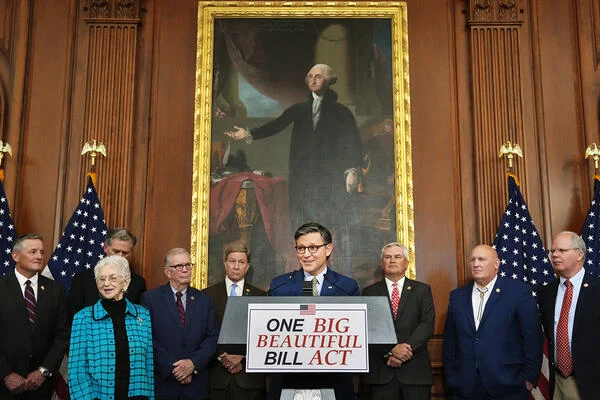
    A group of Republican members of the House of Representatives, standing in front of a painting of George Washington and behind a podium that says "One Big Beautiful Bill Act."

    Congress passed a slew of higher education policy changes in the One Big Beautiful Bill Act.

    Kevin Dietsch/Getty Images

    To Kent and some negotiators, reminding committee members what was at stake was just the art of the deal.

    “We were very honest throughout the process that this was a give-and-take. And we reminded people what was at stake and what the regulatory community could gain and lose,” Kent said. “The department was very clear in the caucuses that we were not threatening, that we were not strong-arming, but that we were simply reminding people what’s at stake.”

    Preston Cooper, a senior fellow at a right-leaning think tank who represented taxpayers in the negotiation, said the department’s actions were a reasonable use of its upper hand in the rule-making process. Like Hoffman, he wanted to keep gainful employment, but he knew that ED didn’t have to try for consensus at all. In fact, he noted, that’s what previous administrations have done, so, in his eyes, Kent wasn’t twisting negotiators’ arms. Instead, he was invested in creating long-lasting solutions.

    “They could have just treated neg reg as a formality, failed [to reach consensus] and then written the rule that they wanted to in the first place,” he said.

    Will Consensus Last?

    At most, consensus on the policies will last until the department receives public comment. At that point, the department has to review and respond to those comments and can make changes to the regulations.

    “Consensus doesn’t get you that much. The department could, and has in the past, completely backtracked,” a former Biden official said. “So it will be very telling whether the administration is simply trying to stick with its consensus agreements, or whether the administration is trying to be responsive to the comments they get and set in place rules that are legally defensible, politically sustainable and that will let them implement these rules quickly.”

    Beyond the immediate rule-making process, not everyone is as convinced as Kent that these consensus votes are enough to end the game of higher ed policy ping-pong that’s played out over the last 10 years.

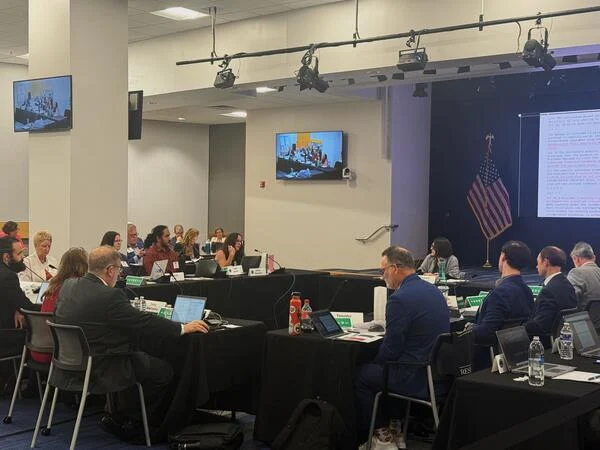
    Committee members seated at four rectangular tables arranged in a square, covered with black tablecloths. Most have laptops in front of them.

    The Education Department held three rounds of rule-making sessions over the last four months.

    Jessica Blake/Inside Higher Ed

    Flores, another former Biden appointee who is now at New America, isn’t so sure that the department would have achieved consensus if they hadn’t used such a “fear-based approach.” As a result, she said, it makes the legitimacy of the agreement “somewhat surface level.”

    If these regulations do last, she believes it will be because they are rooted in legislation.

    “It won’t be a consensus, per se, that leads to ending the whiplash. It is that we have big legislative changes and those things are hard to change overnight,” Flores explained.

    But even then, she noted, the legislation was passed on a rushed schedule through an atypical budget bill without bipartisan support. If Democrats win back power on the Hill, there could be future legislation to tweak the reforms. In the meantime, she said, the department’s approach, which included little opportunity or consideration for public feedback, could lead to legal challenges.

    A group of bipartisan lawmakers has already introduced legislation that would adjust the programs eligible for loan caps, following significant pushback from nurses and other health-care professionals who were not deemed professional and placed in the lower bracket.

    “I’d expect a legal challenge on the professional definition as soon as the rule is finalized, which will lead these questions to kind of linger and might delay implementation down the line,” Flores said.

    Source link

  • ED Drops Appeal of Order Blocking Anti-DEI Guidance

    ED Drops Appeal of Order Blocking Anti-DEI Guidance

    Celal Gunes/Anadolu/Getty Images

    Education Secretary Linda McMahon and her legal team have dropped their appeal of a federal court ruling that blocked the department from requiring colleges to eradicate all race-based curriculum, financial aid and student services or lose federal funding.

    The motion to dismiss was jointly approved by both parties in the case Wednesday, ending a nearly yearlong court battle over the department’s Feb. 14 Dear Colleague letter that declared race-based programming and policies illegal. If institutions didn’t comply within two weeks, department officials threatened to open investigations and rescind federal funding.

    In response, colleges closed offices related to diversity, equity and inclusion; scrubbed websites; and cut other programming.

    First Amendment advocacy groups and the DEI leaders who remain in higher ed declared it a major victory for public education. Democracy Forward, the legal group that represented educators in the case, went as far as to say that it marks the “final defeat” of Trump’s effort to censor lessons and scrub student support programs.

    Skye Perryman, president of Democracy Forward, said it should encourage those affected by the Trump administration’s “unlawful crusade against civil rights” to keep fighting back.

    “Today’s dismissal confirms what the data shows: government attorneys are having an increasingly difficult time defending the lawlessness of the president and his cabinet,” she said in a news release about the court filing. “When people show up and resist, they win.”

    The court filing did not explain why the department chose to abandon the case, and Ellen Keast, a department spokesperson, declined to provide any further comment.

    Trump officials had argued that they were merely enforcing existing federal civil rights laws and the 2023 Supreme Court ruling that struck down affirmative action. They claimed race-based programming constitutes discrimination.

    But 10 days later, a coalition of education unions, a national association and a public school district challenged the letter in court, arguing it violated administrative procedure law and institutions’ First Amendment rights. Then, in August, federal district Judge Stephanie Gallagher struck down the department’s guidance, arguing it “ran afoul” of procedural requirements and that “the regulation of speech cannot be done casually.”

    Colleges and universities aren’t entirely in the clear, though. Just days before the Maryland District Court issued its ruling on the ED letter, the Department of Justice released its own nine-page memo on DEI.

    That guidance, which went even further than ED’s guidance, said that basing services on stand-ins for race—like “lived experience,” “cultural competence” and living in a minority-heavy geographic area—could also violate federal civil rights laws. In response, colleges have closed campus centers and publications cater to certain racial or ethnic groups.

    Still, many educators see this as a significant step forward.

    “When you fight you don’t always win, but you never win without a fight,” said Randi Weingarten, president of the American Federation of Teachers, one of the cases’ plaintiffs, in a news release. “We are proud that this case has once again halted the administration’s pattern of using executive fiat to undermine America’s laws that enshrine justice and opportunity for all.”

    Source link

  • NYU and SUNY Debut Higher Ed Design Lab

    NYU and SUNY Debut Higher Ed Design Lab

    As colleges roll out a wave of new programs to prepare students for an AI-driven workforce, a new partnership between New York University and the State University of New York is trying to answer an increasingly urgent question: Which of these efforts actually work?

    This month, NYU and SUNY launched the Higher Education Design Lab, a joint effort to evaluate which higher education programs are most effective at preparing students for a workforce reshaped by AI and other technological and cultural changes.

    The lab will study new and established initiatives on NYU’s and SUNY’s own campuses, starting with programs that teach civic engagement, career readiness, first-year programming and innovation to understand their real impact on student learning.

    “We’re bringing together two really significant and very diverse institutions, and it’s a big-scale operation, so we’ll be able to look at a lot of things across a lot of different environments,” said Mindy Tarlow, senior fellow and professor at NYU’s Marron Institute of Urban Management, where the lab will initially be housed.

    The partnership appears timely; Inside Higher Ed’s latest Student Voice survey of more than 5,000 two- and four-year undergraduates found that about 40 percent of respondents think professors could better connect classroom lessons to issues outside class or to students’ career interests.

    A separate Student Voice survey of more than 1,000 two- and four-year undergraduates found that nearly 50 percent of students want their colleges to offer training on how to use AI tools ethically in their careers. By contrast, only 16 percent said preparing them for a future shaped by generative AI should be left to individual professors or departments, and just 5 percent said colleges do not need to take any action at all—underscoring the demand for a coordinated, institutionwide response.

    “This is a research partnership,” said Elise Cappella, vice provost for universitywide initiatives at NYU. “This lab is not about creating a lot of new things. It’s about studying what we already have and making sure we’re reaching the students we need to reach.”

    The approach: The Higher Education Design Lab will examine a broad range of programs and practices designed to strengthen student learning. Its initial focus includes initiatives aimed at fostering dialogue—including university speaker series, co-curricular training and exposure to diverse perspectives—to better understand how these experiences shape engagement, collaboration, critical thinking and confidence in discourse.

    The lab will also study career-readiness programs, evaluating which approaches, such as employer partnerships, provide the strongest outcomes for both students and employers.

    First-year and orientation experiences, including civics and community-building modules, will be analyzed to see how required versus optional participation affects leadership skills, critical discourse and student well-being.

    Teaching and learning innovations, from faculty development programs to instructional tool kits, will be assessed for their impact on classroom and campus learning.

    Finally, the lab will explore experiential and community-based learning, including service learning and study away programs, to determine how high-impact practices cultivate skills for navigating diverse perspectives and preparing students for leadership opportunities.

    Tarlow said the lab will rely on both qualitative and quantitative data to understand not just whether programs work, but under what conditions and for which students.

    The qualitative and quantitative data “often play off each other in really interesting ways,” she said. “We keep coming back to the same core question: What works best, in what conditions and for whom? And depending on what we’re studying, we’ll use the methodology that best helps us answer that, because not everybody responds the same way to the same things.”

    What’s next: The Higher Education Design Lab will have an advisory board of higher education leaders and other institutions, including the City University of New York, and intends to invite additional universities, research centers and government partners to participate over time.

    Tarlow said the lab’s first year will focus on identifying the pilot projects and specific parts of campus life the team wants to study most closely.

    Early work will center on evaluating efforts already underway to foster dialogue and civic engagement, beginning with SUNY’s Civil Discourse and Civic Education & Engagement programming and the Constructive Dialogue Institute’s Perspectives Program.

    “There is already a lot of knowledge and good work happening in all of our institutions,” Cappella said. “What is new and exciting about this particular initiative is that we’re really dedicating time and attention internally and across institutions to doing this more collaboratively and more intentionally.”

    Get more content like this directly to your inbox. Subscribe here.

    Source link

  • Empowered Virginia Democrats Move Fast to Reshape Higher Ed

    Empowered Virginia Democrats Move Fast to Reshape Higher Ed

    When Virginia’s new Democratic leaders took control of the governor’s office and attorney general position last week, they wasted no time overhauling higher ed.

    Abigail Spanberger, the new governor, immediately appointed more than two dozen members to the governing boards of the Virginia Military Institute, George Mason University and the University of Virginia, meaning she’s already appointed the majority of members on the George Mason and UVA boards. Her Republican predecessor, Glenn Youngkin, stocked university boards with conservatives who cracked down on diversity, equity and inclusion initiatives. UVA went through high-profile controversies under its Youngkin-era board, including the resignation of former president Jim Ryan under pressure.

    Now, Spanberger’s appointees—at least 13 of whom donated to her gubernatorial campaign—are expected to lead universities in a different direction. Spanberger also signed an executive order Saturday directing her education secretary to assess the board member appointment process and recommend legislative changes, including possible modifications to term lengths, term starts and reappointments. In the order, Spanberger wrote that the Trump administration’s actions necessitate this review.

    “Virginia colleges and universities have faced unprecedented challenges from shifts in federal policy to attacks on institutional autonomy and mission,” Spanberger said. “These pressures underscore the urgent need for the Commonwealth to reevaluate how governing boards are appointed, ensuring they are composed of individuals dedicated to upholding the quality, independence, and reputation of our institutions.”

    The new attorney general, Jay Jones, also moved swiftly. He fired GMU’s university counsel K. Anne Gambrill Gentry and associate counsel Eli Schlam, leaving the institution with two remaining in-house lawyers, the university said. Jones also ousted VMI general counsel Patrick O’Leary; a spokesperson for the institution said O’Leary “notified us that he received a letter late last week informing him that his services were no longer required.”

    Furthermore, on Tuesday, Jones’s office withdrew his Republican predecessor’s agreement with the Justice Department to disregard a state law that provides in-state tuition rates to undocumented students. The department sued the state Dec. 29, seeking to invalidate the law, and the next day—on his way out of office—former Virginia attorney general Jason Miyares concurred in a court filing that the law was unconstitutional.

    In a news release on the reversal, Jones said, “On day one, I promised Virginians I would fight back against the Trump Administration’s attacks on our Commonwealth, our institutions of higher education, and most importantly—our students.”

    And Democrat General Assembly members—who control both legislative chambers, including a supermajority in the House for the first time since the 1980s—have already expressed interest in higher ed changes. Senate Majority Leader Scott Surovell filed a bill in the current legislative session that would, among other things, lengthen governing board members’ terms from four to six years and add one faculty, one staff and one student voting member to each board.

    Furthermore, House member Dan Helmer filed a resolution to create a task force to determine whether VMI—where the Youngkin-era board last year rejected a contract extension for the university’s top leader—should no longer be a public university that receives public funding. If the resolution passes, the task force will explore “expanding programs at other public institutions of higher education to replace the role of VMI” in training commissioned military officers.

    Among other things, the resolution calls for the group to audit whether the university responded to a report to the 2021 State Council of Higher Education for Virginia detailing discrimination by initiating “any substantial changes” to “reduce acts within their student body that could be perceived or classified as racist, sexist, or misogynistic or as an act of sexual harassment or sexual assault,” and whether the university “possesses the capacity as an institution to end celebration of the Confederacy.”

    In an email to Inside Higher Ed, a VMI spokesperson said, “We are reviewing many pieces of legislation, including Del. Helmer’s, and plan to work with our elected officials to demonstrate VMI’s progress.”

    Altogether, the moves show state Democrats’ willingness to act quickly to counteract the rapid changes to higher ed that Republicans—at both the state and federal level—rushed into place last year. Democratic leaders don’t appear afraid of attracting the ire of the Trump administration after its interventions in 2025, including the Justice Department’s demand that Ryan step down from leading UVA and Justice and Education Department investigations into George Mason that observers feared would oust the president there.

    But Surovell’s bill, and Spanberger’s recent statements to the General Assembly, also suggest that Democrats are seeking more than to bask in their newfound, but likely fleeting, power; they’re aiming to insulate higher ed decision-making from future political turnovers.

    “Virginia has some of the finest colleges and universities in the world,” Spanberger told lawmakers in a Monday address. “And yet, news story after news story isn’t about their successes—it’s about them becoming political battlegrounds.”

    She touted her review of the appointments process but added that she “will also work with this General Assembly to pursue reforms that prevent any future governor—Democrat or Republican—from imposing an ideological agenda on our universities. As governor, I have and will appoint serious, mission-driven individuals to our Boards of Visitors—people whose allegiance is to the institutions they serve, not to any political agenda.”

    The state’s Republican Party didn’t respond to requests for comment Wednesday.

    A Question of Stability

    Walt Heinecke, past president of UVA’s American Association of University Professors chapter and a current member of the Virginia state AAUP conference’s executive committee, opposed Ryan’s ouster from UVA and the Youngkin-era board’s appointment of a new president on their way out the door.

    “This has just been a mess for a year, and it’s important for us to clean house,” Heinecke said.

    He said Democrats “realized that, since last January, there’s been an attempt to basically take over universities with the Trump agenda, and I think they’re sick and tired of the moves that have been made.”

    Jon Becker, a tenured associate professor of educational leadership at Virginia Commonwealth University, said the speed with which Spanberger moved to appoint new board members was “no surprise.” Starting last year, Democrats blocked several of Youngkin’s board appointments, and those boards needed people.

    “At UVA, they were effectively without a board,” Becker said, adding that George Mason’s board similarly lacked the required number of members to conduct business. He said it was “fairly urgent” for Spanberger to appoint members to allow those boards to function again.

    Going forward, Becker said, “I would expect the focus on board reform to continue.”

    “A good, thorough review would show that there are practices in other states that might bring better governance to higher education in Virginia,” he said, such as requiring geographic diversity on boards and other ways of making them more representative of the state. He said, “Board members are mostly … kind of wealthier people, and they really should be more representative of the citizens.”

    But he also sees the Democratic moves as an attempt to tell the federal government to keep its hands off the state’s universities. And he said he thinks Virginia is indicative of what other states will do regarding higher ed when a single party takes control and realizes it needs to move fast to make change.

    Alex Keena, a tenured associate professor of political science at Virginia Commonwealth, said, “I think what we’ve seen here in Virginia is a reflection of national trends, where national party politics is starting to influence how things are done at the state level.”

    “You have positions in government that used to be insulated from partisan politics that are now like the latest battlegrounds,” Keena said. In certain cases, he said, Youngkin’s board appointments were “antagonistic to the whole project” of higher ed, or “had very extreme ideas about the future of higher ed.”

    Now, Keena said, Democrats seem to be reacting to what the Youngkin and Trump administrations did last year, “which is this politicization of these boards that we really hadn’t seen in Virginia.” While Democrats will probably offer some stability for universities, he said, “it doesn’t really change the big picture—that you have this very hostile approach from the federal government.”

    Keena said he wonders how Spanberger will respond to attacks from the Trump administration.

    “How will she deal with that friction?” he said. “It’s a lot of uncertainty.”

    Source link