Blog

  • To Reach Students, College Marketers Prioritize AI Visibility

    To Reach Students, College Marketers Prioritize AI Visibility

    When Abby Isle’s daughter, now a senior in high school, began looking into colleges in late 2024, she had no dearth of information; she had toured colleges across America and Isle had bought her all the requisite guides.

    But parsing that information was difficult. Isle, who has worked in technology for nearly three decades, decided to turn to ChatGPT for advice, telling the artificial intelligence tool what her daughter had liked and disliked about different institutions and the “vibe” she was looking for in her future college.

    “The AI tools were able to help us say, ‘If those are your priorities … here are the schools that best fit that,’” Isle said. Most of the colleges her daughter was looking at were highly selective; ChatGPT helped direct the family toward schools with higher admit rates that still matched her criteria.

    Her daughter ultimately got into Northwestern University, where she had applied early decision—in part, Isle said, at ChatGPT’s encouragement.

    It was only a matter of time before large language models began serving as a college adviser. AI has become central to many young people’s search habits; a survey by the software company Adobe found that 28 percent of Gen Z users launch a search for information by prompting an AI chatbot like ChatGPT. Unsurprisingly, that includes turning to such platforms to ask questions about the college search process; a forthcoming survey from the education consulting firm EAB conducted last November shows that almost half of high school students said they were using AI in their college search process.

    Optimizing for AI

    The way users engage with AI is significantly different from how they use search engines. For one thing, they are likely to ask longer and more specific questions of an AI bot than they would type into a search engine.

    EAB’s report found that students tend to ask AI to make lists (such as a list of nursing programs in California, for example), to help them manage deadlines and application requirements, and to help them compare different schools. Users on social media have also described asking AI to evaluate their chances of getting into specific selective colleges.

    And while the end goal of a Google search is to get a user to click on a relevant link, AI platforms strive to keep the user on the site and engaging with the bot.

    “There are no blue links. They’re not clicking onto websites and finding discovery elsewhere. It’s all happening with just conversations within the LLM,” said Alexa Poulin, chief digital officer at Carnegie Higher Education, a consulting firm. “That’s a massive shift, both in the information that students can gather and how they’re gathering, but also in behavior … they’re relying on AI to surface those answers versus doing their own discovery of going to multiple websites.”

    Poulin said it’s imperative that colleges and universities work to ensure their information is easily and accurately pulled up by AI tools—a practice known as answer engine optimization (AEO) or generative engine optimization (GEO)—which is similar to yet distinct from search engine optimization, or SEO.

    One important element of AEO is ensuring that the content available on a university’s website is up-to-date and accurate; AI can pull from old webpages that students probably wouldn’t find if they were doing their own searches, said Michael Koppenheffer, vice president of marketing, analytics and AI strategy for EAB’s Enroll360 division. Comprehensive and clear information is important, too, because AI tends to hallucinate when it needs to make inferences or fill in blanks. And institutions can also employ strategies to “tell the chatbots where to look and what information is more important,” he said.

    Consultancies and educational technology firms are latching onto universities’ need for AI-optimized websites, with many now advertising AEO services. Still, it’s an imprecise science, and the same inquiry might bring up different results at different moments. Each response from generative AI is crafted in real time and therefore is influenced by a variety of factors.

    “AIs are basically giant probability machines; you never know for sure what they’re going to say, and none of us can completely control what ChatGPT will say in response to a question,” Koppenheffer said. “That is both great in some perspectives, that you’re always going to get a certain amount of free agency, but also a little scary. But [there’s] nothing we can do about that. That is kind of a starting premise.”

    Student Inquiries

    The questions students ask of AI range widely, from broad inquiries about where they should go to college to hyperspecific questions about the financial aid, programs or campus of a specific institution.

    That means colleges aren’t focused solely on ensuring the information that comes up about their institution is accurate; they also must strive for “AI visibility,” a term that refers to how likely it is that a particular brand or organization will appear in AI searches.

    Chris Gage, Belmont University’s vice president for enrollment services, said Belmont hopes to reach students looking for Christian colleges in the South. But when Inside Higher Ed assumed the persona of a prospective student and asked ChatGPT to recommend such colleges, the AI didn’t recommend Belmont—even when the “student” clarified they wanted to study music business, Belmont’s top major.

    “That’s a surprise,” Gage said. “If you’re the prospective student searching for music business, then hopefully … Belmont would certainly come up. It’s our largest academic program.”

    However, Belmont’s marketing team has gotten better results in its own experiments with the tool, Gage noted. And when Inside Higher Ed posed the same question to Claude, another generative AI tool, it asked follow-up questions about major, institution size and Christian denomination. Inside Higher Ed selected answers that fit Belmont’s profile, and Claude suggested Belmont as one of a handful of options.

    Gage noted that the university’s marketing team has identified a number of deficits in its AI visibility, such as the fact that its materials use the terms “Christian” and “Christ-centered” interchangeably. That may make it less likely to appear in a search where a student uses just one of those two terms.

    Rebecca Shineman, executive director of marketing at York College in Pennsylvania, said that her institution—which is also a midsize private college—is trying to take a realistic approach to AI visibility. Institutional leaders know York can’t appear in every search, but they hope it will pop up in searches by students who are looking for the affordability and strong job outcomes that the college “is proud to excel at,” she said.

    “We want to make sure from a strategy standpoint that when they’re asking these questions, we’re able to surface and ultimately that our value and story come through clearly and accurately,” she said.

    When the AI was asked specific questions about Belmont, including what the “vibe” of the campus is like and what scholarships are available to music business majors, it returned responses that were accurate and comprehensive, Gage said. He was not bothered by an answer drawn from a Reddit post about how Belmont is “not a big party school,” he said.

    “I think there’s always a space for a student’s authentic voice online; we want students to know the authentic Belmont, so certainly there are missional initiatives for the university that we’re going to communicate … but there’s also the lived experience for roughly 9,000 students, and that’s going to be 9,000 unique stories,” he said.

    Despite the accuracy of the answers in this trial, critics note that the information coming from generative AI tools is often incorrect. Research released last fall by the European Broadcasting Union and the BBC found that AI tools made significant errors in 45 percent of responses.

    ‘A Little Bit of Tension’

    College access leaders see both pros and cons to students using generative AI in the college search process.

    Bill DeBaun, senior director of data and strategic initiatives with the National College Attainment Network, which represents college access organizations, said “there is a little bit of tension” in students using AI to stand in for college advisers, “because the college access field is deeply interpersonal. The bedrock of what NCAN members have historically done with students is asking students and families to put their trust in advisers and college access programs to provide reliable information and to help navigate a process that is difficult, foreign, uncertain for a lot of students and families.”

    Keeping that interpersonal element alive in the age of AI is crucial, DeBaun said. At the same time, he can see AI being useful to college advisers and prospective students for its ability to parse large datasets quickly, meaning the tools can lead students to institutions or scholarships a given adviser may not be familiar with.

    One college access organization, College Possible, is already utilizing AI in this way. The nonprofit developed its own AI tool—trained on an internal database rather than pulling from across the internet—that can answer student questions when a counselor is not available.

    Shineman of York College said that she sees it as inevitable that students will use AI in the college search process, so colleges are responsible for accommodating that as best they can.

    “We always talk a lot about meeting our students where they are. That can take shape in a lot of different ways,” she said. “I think today, that means including AI-powered search.”

    Isle said that while she sees the benefit of college counselors, parents are best equipped to help their children with the college decision-making process because they know them best. As she sees it, AI is one way to ensure parents have enough information to then guide their children through the college search.

    “I don’t have all the background on all of this, but my advantage [in] helping my kids with this stuff is I know my kid,” she said. “It helps me do the research to have a more informed opinion.”

    (This story has been updated to correct York’s name to York College, not University.)

    Source link

  • Don’t Record What You Don’t Want to Have to Watch

    Don’t Record What You Don’t Want to Have to Watch

    So the leadership of the University of North Carolina at Chapel Hill has decided that it can record any professor’s class at any time for any reason, or no reason, as long as the provost and general counsel sign off on it. 

    It’s a spectacularly bad idea, and not only for the obvious reasons.

    I assume that it’s intended to provide ammunition to go after disfavored faculty and/or to instill such a chill on campus that nobody would dare to say anything provocative in the first place. Whether those motivations are locally held or are meant to keep the university below the radar of certain culture warriors, I don’t know. The effects are the same either way, and they’re devastating to the mission of a university. Any professor who teaches anything that makes someone uncomfortable will have a sword of Damocles hanging over them.

    That’s (what should be) the obvious part.

    The less obvious part is the sudden explosion of the scope of conduct for which administrators have to answer. They’ve put themselves on the hook for every statement in every class on campus.

    The campus may have hundreds or thousands of cameras and classes, but very few provosts. Leaving aside the moral and legal issues, there’s an effort issue. Playing Big Brother would get tiring quickly. Any provost with enough time to review the videos of hundreds of classes isn’t doing their job.

    Lacking the capacity—whether technical or legal—to monitor everything gets you off the hook for monitoring everything. This is not to be taken lightly.

    One of the seldom-noted benefits of a high-trust environment is that it allows leaders to focus on structural issues, rather than trying to micromanage every little interaction. High trust is an enormous time saver, and it does wonders for performance. Anyone who has worked under a micromanager knows how quickly acts of subtle sabotage—such as malicious compliance—become appealing. Heaven help the college in which malicious compliance becomes a cultural norm.

    Trust isn’t a blank check, of course, and it isn’t only violated from above. Every so often over the course of my career, I’ve received credible reports of deeply disturbing performance or conduct. There are processes for addressing those. Sometimes they have even involved off-cycle class observations. But those observations were not secret, and they had legible prompts. They were in response to specific, credible, relevant information about specific people, and they were confined to those specific people. For example, many years ago at a prior institution, I got reports of a professor showing up to class drunk. The reports turned out to be true. That led to one of the more memorable confrontations of my career, but it had to be done. I didn’t, and don’t, consider that a violation of academic freedom.

    When classes go well, professors establish climates of trust with their students. Comments that make sense within that climate may seem upsetting out of context. A brief clip of role-play offered without explanation could be deeply misleading. I’m particularly aware of that as someone who has taught courses on the history of political thought. To make different schools of thought intelligible to students, I’ve role-played monarchists, Platonists, Hobbesians, libertarians, fascists, Marxists, liberals, anarchists and conservatives, among others. (I never made a convincing fascist, which I think is to my credit.) It’s a useful teaching technique. If you just took a clip of a few minutes of one of those, you could draw all manner of false conclusions about both me and my class.

    More basically, you never know what’s going to offend someone. If any offended person is capable of forcing review of hours of video, there will be no end to it. I’ve had students offended by Swift’s “Modest Proposal” because they didn’t grasp the concept of satire. And some students actually enjoy claiming offense, whether to forward a political agenda or just to watch chaos unfold. Encouraging that behavior, and chilling honest inquiry, is likely to set off a downward spiral.

    The provost at UNC Chapel Hill has put himself on the hook to answer to everyone who claims offense at anything on campus. That’s an untenable position. There’s a reason that a century’s worth of jurisprudence rejected the “heckler’s veto” standard of free speech, and it was right to do so. Academic freedom protects the students and faculty, yes, but it also protects the administration from falling into a death spiral of surveillance, distrust and paranoia. My free advice to a colleague from afar: Don’t do it. It will not end well.

    Source link

  • Some Unbelievable Higher Ed News

    Some Unbelievable Higher Ed News

    Back in December, I wrote a post titled “What Are We Even Doing Here?” in which I discussed some of the head-scratching moves among some higher ed institutions, moves that seemed so at odds with the purported mission of higher ed that you couldn’t help but wonder if these schools were just planning on punting on the mission altogether.

    I didn’t plan on this being a series, but in perusing Inside Higher Ed’s news stories on a daily basis—as I do—my frequent reaction to some of these stories is, “That’s nuts!”

    “Nuts” as in cuckoo, bonkers, batshit, the kind of thing that if we pause and think for even a moment is entirely inconsistent with colleges and universities doing the work most of us believe they’re meant to do.

    The sheer number of these insults to common sense has the potential to numb us to how nuts these things are, but I’m here to say, this stuff is nuts!

    Let’s not lose sight of this fact.

    “Florida Introduces ‘Sanitized’ Sociology Textbook,” by Kathryn Palmer

    As part of Ron DeSantis’s war on diversity, faculty at Florida International University are required to adopt an open-source textbook that “now makes only cursory mentions of important sociological concepts regarding race, gender, sexuality and other topics that have drawn Republican ire.”

    The textbook is the by-product of a process that involved faculty from across different public institutions in Florida as part of a “working group” tasked to create a textbook that would pass political muster and prevent the deletion of sociology as a core general education requirement. I understand why faculty may have thought this was a needle they could thread, but the end result is disastrous and shows how accommodating fanatics means you’re never going to run out of inches (or feet or miles) that they insist you have to give.

    How nuts is this? Extremely, extremely nuts. This is often framed as part of a culture war battle—e.g., DeSantis’s “war on woke”—but that is not what is happening here. A partisan project to direct the course materials that are allowed to be used is not just a violation of academic freedom rights, but an assault on core democratic values.

    “Tenure Eliminated at Oklahoma Colleges,” by Emma Whitford

    Via executive order, Oklahoma governor Kevin Stitt “decreed the end of tenure” for faculty at regional public and community colleges.

    This is a kind of kill strike for what was previously a slow death through increased adjunctification over time. It’s a declaration that precariously employed, vulnerable faculty are meant to be controlled, rather than being given the freedom to do their jobs to the best of their ability. It is a dark vision for how education works and how people are incentivized to do their best work.

    It’s pretty darn nuts, but it’s a kind of nuttiness that we’ve almost become inured to because it’s so pervasive.

    To fully appreciate how nuts this is, I’ll point you to the work of my Center for the Defense of Academic Freedom colleague Isaac Kamola, who did an annotation of Governor Stitt’s executive order, identifying the doublespeak at work.

    “‘A Barrage of Bills’ Would Overhaul Higher Ed in Iowa—If They Actually Pass,” by Ryan Quinn

    The degree of bonkersness is contingent on whether or not these bills pass, but if they do, whoa, nelly … totally nuts!

    I encourage you to read the article to appreciate the full scope of what’s happening here, but in essence it is an attempt to reorder higher education in the state through legislative fiat by taking wild swings at adopting pet initiatives that will be both unworkable, and, if implemented, will hamstring institutions in ways that will ultimately punish students.

    Perhaps this is the goal, but consider just one bill from the long list: “Make universities liable for 10 percent of students’ defaulted loans.” This so-called accountability measure is, in reality, a short route to ceasing to admit low-income students who are at much higher financial risk over all.

    State legislatures have an important role to play in creating the conditions that allow public institutions to thrive. Iowa’s Legislature is taking that responsibility and substituting half-baked YOLO schemes for what needs to be thoughtful oversight.

    Nuts!

    “Texas A&M Closes Women’s and Gender Studies Programs,” by Kathryn Palmer, and “Plato Censored as Texas A&M Carries Out Course Review,” by Emma Whitford

    These are just the latest incidents at Texas A&M, following last semester’s firing of instructor Melissa McCoul for the sin of doing her job, an incident that also took out the university president. Texas A&M has become something other than a university as we traditionally consider the category.

    The people in charge there, including the state’s politicians who are hell-bent on destroying the prestige of their existing universities, have gone completely nuts.

    “UNC Administrators Can Now Secretly Record Faculty,” by Emma Whitford

    I can’t think of a more conducive atmosphere for intellectual exchange than knowing that at any time your administration can be taping you without your knowledge or permission, can you?

    The guideline that this can be done for “any lawful purpose” essentially allows any surveillance outside of the campus bathrooms.

    This is part of a larger program of signaling that professors are to mind their p’s and q’s, as a previous decision declared that course syllabi will be considered public records and a revision to UNC’s own guidelines for academic freedom now says that material “clearly unrelated to the course description” is prohibited.

    My guess is that many will resign themselves to this new reality and try to keep their heads down so they can continue to do some semblance of their work, but we should not lose sight of how nuts this is.

    These events, as well as the ones I rounded up in the previous post, point to a reality I think we’re going to have to deal with—that there is no past version of public higher education to go back to should we break the fever of Trump and the state-level versions like Greg Abbott in Texas and Ron DeSantis in Florida.

    In truth, that past some believe we should return to never existed, or if it did, it’s been hollowed out for many years. These folks have just come around to raze the empty structures.

    Fortunately, there are groups forming that are starting to organize around the challenges we’re facing. I like to think one I’m involved with as a fellow, the Center for the Defense of Academic Freedom, is operating in this spirit. If you’re interested in this work, CDAF is currently soliciting applications for its next group of fellows.

    There’s additional good news on this front following the announcement of the launch for the Alliance for Higher Education, a national coalition organized to protect essential freedoms from government interference.

    We don’t have to let the bonkers stuff keep happening. There is a future where we have the freedoms and support we need for higher ed institutions, and the people who intersect with them, to thrive.

    Part of securing that future is maintaining the ability to say loudly and clearly when something is nuts.

    Source link

  • Autism, Equity and the Faculty Hiring Process (opinion)

    Autism, Equity and the Faculty Hiring Process (opinion)

    In the academic job market, campus visits are framed as opportunities to showcase scholarship, teaching and collegiality. In practice, however, they often function as multiday social auditions where candidates are expected to move seamlessly from formal presentations to dinners, hallway conversations and spontaneous small talk, all while conveying confidence and intellectual brilliance. For most, these rituals are exhausting but manageable. For autistic scholars, they can be insurmountable barriers.

    As an autistic academic, I have experienced firsthand how hiring practices tend to conflate intellectual ability with social performance. What is measured in these high-stakes encounters is not only one’s capacity to research, teach or mentor, but also one’s ability to follow unspoken social rules and perform normative versions of likability. However, there are strategies and accommodations that universities could put in place to ensure a more equitable process for neurodivergent candidates.

    The Campus Visit as a Social Test

    In general, autistic candidates are disadvantaged by standard interview formats, which, as Christopher E. Whelpley and Cynthia P. May write, tend to “focus on interview skills, appearance, and social interactions rather than on the skills needed for a given position.” Since autistic people’s social abilities and conversational patterns do not align with neurotypical criteria, they can seem rude or uninterested during conversations even when they are focused and engaged. Socialization can be extremely difficult for autistic people, from finding the right way to express their ideas to understanding when it is their turn to speak.

    Campus visits often resemble extended job interviews in which everything is subject to evaluation. From the formal job talk to the casual coffee chat, candidates are expected to embody a polished, spontaneous professionalism. Yet these situations privilege people who excel at social presentation and penalize those for whom such constant interaction is arduous and draining.

    Research confirms this. Sandra C. Jones notes that autistic academics often struggle with the hidden social demands of professional life: “Understanding and following social rules, interpreting others’ actions and reactions, masking autistic behaviors, and combining ‘professional’ and ‘personal’ interactions are effortful activities for many autistic people.” In hiring contexts, where competition is fierce, these challenges become magnified.

    Should I stop talking or should I keep going? Have I really answered this committee member’s question? Am I making too much eye contact, which could be seen as intimidating, or too little, which could come across as rude? These are the questions that I obsessed over during my first campus visit, since the “natural” flow of neurotypical conversations was a mystery to me (and still is to this day).

    “Fitting in” for people whose natural tendencies differ from social norms requires strong impression-management skills, which most autistic people lack. Therefore, we usually tend to mask. We try to mimic nonautistic people’s behaviors and speech patterns, but this is both exhausting and, more often than not, unconvincing. In such conditions, it is not the quality of the candidate’s research or teaching that is being assessed, but their ability to decode invisible rules and follow them under pressure.

    The Importance of Self-Narration

    Academic interviews almost always include open-ended questions with little to no structure, such as “Tell us about yourself,” “What are your greatest strengths and weaknesses?” or “What can you bring to our department?” Neurotypical candidates usually know how to use these questions as a chance to sell themselves; as Katie Maras, et al. write, “Autistic candidates, however, find it difficult to interpret these sorts of questions, hindering their ability to formulate and recall a relevant and appropriately detailed response that conveys their best attributes and most relevant experience.”

    The struggle that autistic people encounter when trying to narrate their own lived experiences is well documented. As Tilait Tanweer et al. put it, “Children and adults with autism have difficulties in recalling events and facts from their personal life,” and, when they do, their storytelling is seen as less coherent and less captivating. The requirement to be able to organize information that is already present in the candidate’s application materials on the spot seems redundant and does not serve any purpose other than, again, forcing the person to conform to neurotypical conversational standards.

    For allistic candidates, vague and open-ended prompts are opportunities to shine. They instinctively know that they are an invitation to employ impression-management tactics that cast them in the best possible light. When asked to talk about themselves, they will try to strike a balance between objective facts and the strategic framing of their professional experiences. They will naturally know what information is relevant and what details could bore their listeners. On the contrary, autistic candidates may find these questions intimidating, because being too concise can seem underwhelming, while too much detail can make one appear boring or arrogant.

    The candidate’s experiences and achievements are already there, in the curriculum vitae and the dossier, so there is technically no reason to ask them to repeat this information. Refraining from asking questions that simply ask candidates to restate facts in the dossier, or making sure that this type of question is formulated in a way that indicates the specific nature of the information being sought, would allow autistic scholars to develop their thought in a way that is appropriate and satisfactory, thus lessening the perceived qualitative and quantitative gap between neurotypical candidates’ answers and theirs.

    In Defense of Written Formats

    From articles to book proposals and grant applications, scholars are constantly required to express their thoughts, ideas and results in written form. However, despite the centrality of writing in academic life, campus visits are almost entirely oral and conversational.

    The job talk or presentation must be done in person and synchronously. The interview portion is done orally and requires candidates to talk about themselves and their research in a natural and relatively informal manner. The various lunches, dinners and spontaneous exchanges with potential colleagues and students are all designed to test the collegiality and sociability of candidates in contexts that range from very formal to casual. Yet the teaching demonstration is probably the only portion of campus visits where oral expression is justified and indispensable.

    In a study conducted by Philippa L. Howard and Felicity Sedgewick on autistic people’s preferred modes of communication, they found that “many participants said they had difficulties with the speed of verbal communication, and so using the written form gave them ‘time to process’ what was said to them, their reaction and their response.” This aligns with previous research, which has constantly shown that autistic people tend to prefer written communication to verbal modes of interaction. Personally, I know I can write a compelling grant proposal, but in a 20-minute Q&A, my answers may come across as flat or convoluted.

    Not only do written formats give autistic people the time to think about their answers and the tone that they want to adopt, but they also reduce “the difficulties autistic people may face in interpreting verbal and non-verbal cues during interactions,” as Órla Walsh et al. put it. The asynchronous and mediated nature of written communication makes it less likely that autistic candidates will be deemed unlikable, rude or awkward by hiring committees. Candidates can focus on clarity, accuracy and substance, qualities that should matter most in academic evaluation.

    Given that application materials already provide hiring committees with detailed insights into a candidate’s skills, the additional demand of a marathon interview seems less like a fair assessment than an unnecessary social filter. In a study of autistic candidates’ experiences of job interviews by Mikaela Finn et al., “Participants suggested changes to the interview structure, including providing the questions … or information on structure … beforehand and being able to ‘write down the answers’ to questions rather than ‘verbalizing’ information.” This type of accommodation could make hiring practices in academia much more equitable without compromising their integrity.

    What Inclusion Could Look Like

    Hiring committees often justify the social intensity of campus visits as a way to assess fit. But fit often functions as a proxy for personality, likability or sociability, which are all qualities that are defined according to neurotypical norms. If universities are serious about equity, they need to rethink what they are measuring. Concrete steps could include providing interview questions in advance, allowing written or asynchronous responses, and reducing the emphasis on social events during campus visits.

    Academic hiring, as it stands, is not a neutral process. It is a social test designed by and for neurotypical people, which systematically disadvantages autistic candidates. By conflating sociability with hireability, committees risk excluding brilliant scholars whose only failing is not knowing how to play by unwritten rules. As I see it, the academy should be in the business of hiring those who can research, teach and think in transformative ways, whether they have mastered small talk and eye contact or not.

    Gabriel Proulx is an assistant professor of French at Athabasca University in Alberta, Canada.

    Source link

  • Who is stifling whose free speech here?

    Who is stifling whose free speech here?

    This blog was kindly authored by Rose Stephenson, Director of Policy and Strategy at the Higher Education Policy Institute.

    If you haven’t heard the latest in the free speech wars, let me give you the lowdown. Sarah Pochin, Reform MP for Runcorn and Helsby and Jack Anderton, a Reform Party Advisor, requested that the Debating and Political Society at the University of Bangor host them for a question-and-answer session as part of Anderton’s ‘New Dawn Tour’.

    The Debating Society turned them down – more on that in a moment. First, in true debating style, let’s have a Point of Order.

    Pochin and Anderton were not ‘banned’ or ‘no-platformed’. They had asked a society to host them, and the society said no. I could email all the university debating societies in the UK and request that they host me to give a Q&A on whatever particular soapbox I am standing on that week (I have many). They are not violating my right to free speech by turning me down; they might simply have more interesting things to do than to listen to me.

    However, as a result, the Telegraph quotes Pochin as saying: ‘So much for Free Speech. How can Bangor University’s debating society be afraid of debate?’ and Anderton as stating that the society was not ‘interested in debating’.

    I had a look at the Debating Society’s website to see if they are indeed not interested in debating. Debates from the last semester include the following:

    • this house would stop apologising for colonialism;
    • this house would abolish the Human Rights Act;
    • this house believes the Tradwife is feminism’s final boss (fascinating!); and
    • this house believes the government has no right to censor pornography.

    This seems like a fairly robust interest across several complex topics.

    Where this becomes a free speech issue is that the Debating Society put out a rather strong statement turning down the request from Anderton and Pochin, which said:

    The Debating & Political Society received a request from Jack Anderton and Sarah Pochin MP of Reform UK to attend Bangor University and give a Q&A to students. In line with our values, this request was refused. We stand by this decision as a committee. We have zero tolerance for any form of racism, transphobia, or homophobia displayed by the members of Reform UK. Their approach to the lives of others is antithetical to the values of welcoming and fair debate that our society has upheld for 177 years. We are proud to be the first of the debating unions to take a stand against Reform UK. We strongly implore our fellow societies to join us in keeping hate out of our universities.

    So, they didn’t turn Reform down simply because they weren’t interested; they turned them down due to a clash of values. Let’s remember that this is the debating society’s committee, likely a handful of students, who set out their strong feelings about Reform on Instagram.

    Zia Yusuf, Reform’s Head of Policy responded by writing on X:

    Bangor University* have banned Reform and called us racist, transphobic and homophobic. Bangor receives £30 million in state funding a year, much of which comes from Reform-voting taxpayers. I am sure they won’t mind losing every penny of state funding under a Reform government. After all, they wouldn’t want a racist’s money, would they?

    *it wasn’t the university, it was the committee of one society of the students’ union.

    Perhaps I am being naive here. But, if Reform really, really, really believed in promoting free speech at universities, they might have replied to state that their offer continues to stand to the Debating Society and that they hope to engage in the future. Instead, they threatened to withdraw public funding from the only university in north-west Wales and one of the region’s biggest employers.

    Yes, the students have a strong opinion here. But surely that opinion itself should be protected as a form of free speech? If public figures have the right to say offensive and harmful things, surely people listening have the right to state that they find these to be offensive and harmful. Instead of taking an approach to work with the society, Reform has dropped an anvil of a threat on the heads of a handful of students.

    Pochin continues to have a significant national platform, and Anderton is on tour and according to his website will be visiting The University of Edinburgh , Lancaster University, The University of Cambridge , The University of Exeter, Durham University, and the University of York.

    To be clear, when I visit and speak to universities, I am advocating, in the strongest possible terms, that colleagues engage with their local Reform party members and councillors. Further, I explain that they must consider the 27% of the population who hold a medium-level qualification (A-Level or equivalent) and voted for Reform in the last election. To what extent does this group of voters feel like university is a place for them?

    I’ve also written extensively on the topic of free speech in universities, and you can find my blogs here. In particular, I have written about the role universities have in promoting free speech:

    If we truly want to promote free speech, we have to teach the skills of unlearning: curiosity, open-mindedness, resilience and tolerance. This isn’t to say that all students should change their minds or perceptions. This might happen, but what we also need to develop is the curiosity to understand why someone thinks or believes differently from us. What led them to this belief? Why is it important to them? And, in turn, why do we hold the belief that we do? What led us to that viewpoint and why is it important to us?

    And yes, there may well be a place for this at Bangor University. However, I will continue to defend the students’ right to say that something is racist if they believe that this is the case.

    So, in this latest episode of the culture wars, there are three important takeaways for me:

    1. You have the right to free speech, but you don’t have the right to force people to listen.
    2. You have the right to free speech (within the law) that may be offensive and harmful, and others have the equivalent right to speak out against this. Free speech is a two-way street.
    3. There is plenty of work to be done in universities to develop curiosity and open engagement with challenging ideas. Perhaps it would be helpful if our politicians also demonstrated these attributes.

    Source link

  • Discovering the Continuum of Active Learning through Junior Faculty Group Research Pilot Study – Faculty Focus

    Discovering the Continuum of Active Learning through Junior Faculty Group Research Pilot Study – Faculty Focus

    Source link

  • Discovering the Continuum of Active Learning through Junior Faculty Group Research Pilot Study – Faculty Focus

    Discovering the Continuum of Active Learning through Junior Faculty Group Research Pilot Study – Faculty Focus

    Source link

  • Higher education postcard: UCL, the early years

    Higher education postcard: UCL, the early years

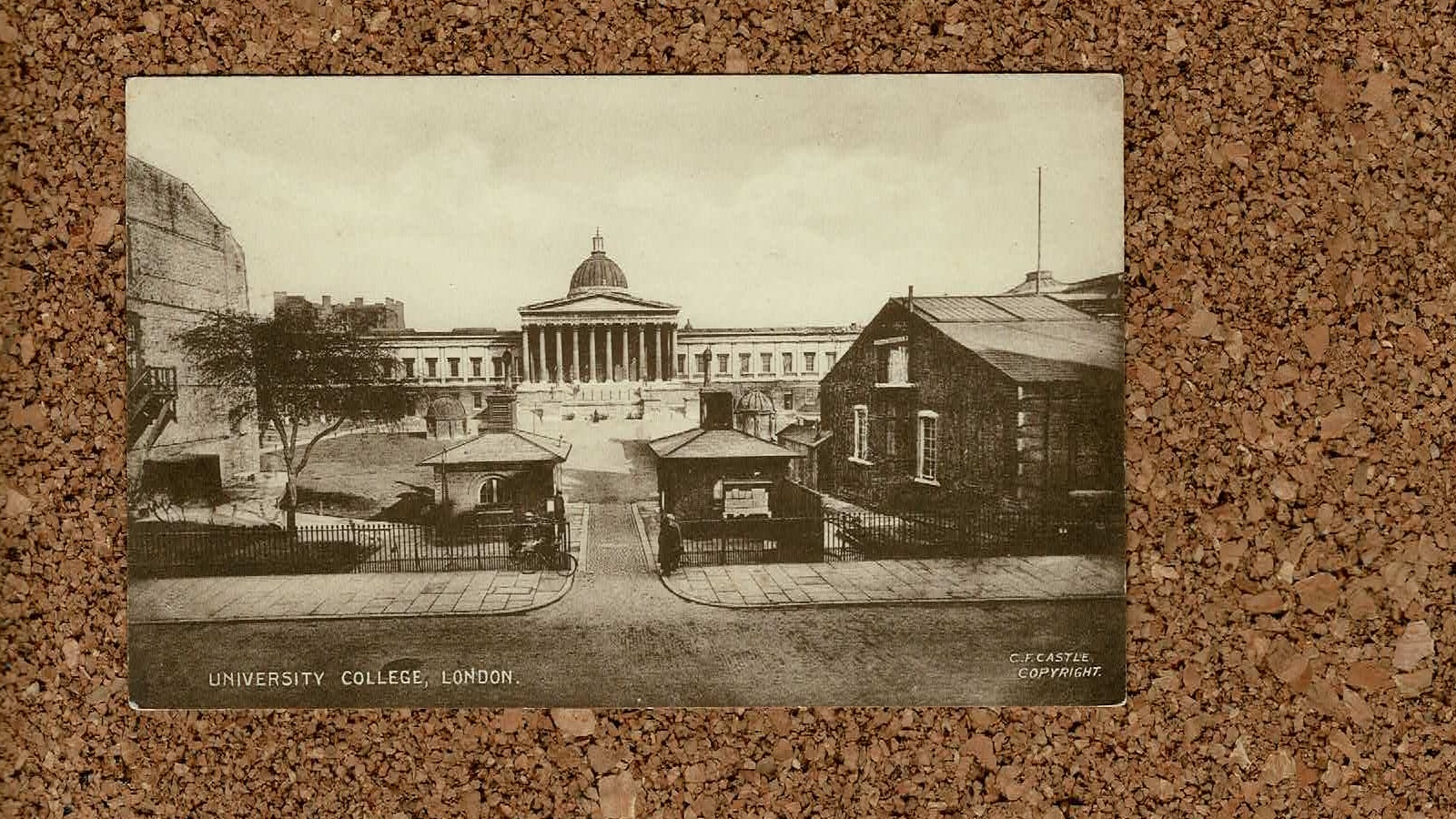
    Two hundred years and two days ago (at least if this is published on 13 February 2026, as I expect, and if my counting is right, which I hope it is), the first governing council of what became UCL was established. We’ve visited UCL before, for an Esperanto conference, but in commemoration of its bicentennial, let’s have a closer look at the early years.

    I’m drawing on the very thorough and much-less-dry-than-you’d-expect University College London 1826–1926, by Hugh Hale Bellot, professor of American history at the University of London from 1930 and its vice chancellor between 1951 and 1953. He was also played a leading role in the Institute of Historical Research: here’s a short obituary and note of appreciation published in the institute’s journal.

    Poet’s corner

    There’s obviously an awful lot to cover here, so I’m just going to pick out a few aspects. And I think we have to start with Thomas Campbell. He’s a Scottish poet who I confess I hadn’t heard of, but who appears to have been significant in the romantic movement. He was also – and perhaps necessarily – a man of ideas: “a dreamer of dreams”, as Hale Bellot remarks, but “dependent upon others for the realisation of his plans.” Inspired by the newly founded Rhein-Universität Bonn, and no doubt by the contrast in culture between Oxbridge and the Scottish ancient universities, Campbell wrote an open letter to Henry Brougham in February 1825 proposing the creation of a metropolitan university. He followed this up shortly after with a longer piece, reproduced here, which sought to flesh out the idea somewhat.

    Essentially, his argument was this: Oxbridge was expensive to attend; inaccessible to many, because of religious tests; and also did not provide a useful education. There was room, therefore, for a university in London, which addressed sciences, law and other subjects beyond the classics of Oxford and Cambridge, and which would be funded by fees. The argument found favour – Hale Bellot notes that there was a ferment of progressive ideas about education at that time, but no effective vehicles for change – and soon subscriptions were invited for shares in a company to establish this university. The hope was to raise about £150,000: this would pay for the buildings, and provide working capital for the new university (it’s equivalent to about £12.3m in today’s money).

    Fairly obviously, most poets would find it difficult on their own to raise funds like that for a university, and let’s not forget – again in Hale Bellot’s words – that Campbell “had no capacity for that sustained attention to detail which is necessary to the translation of an idea into an institution.” So we need now to turn to the person to whom Campbell addressed his letter: Henry Brougham.

    The committee

    Brougham was clearly an ambitious man with connections. In part due to his influence a provisional committee was established, which arranged a share offer, debated policies, arranged for legal steps to be taken, and generally drove the matter forward. In September 1825 land was brought in anticipation, and later transferred to the company. This was a plot in what was then the suburbs of London, bought for £30,000 from a developer who had bought it at auction less than a year previously, and made £7,950 profit from the exchange.

    The first council had Whig politicians; dissenters and Catholics who were prevented from attending Oxbridge; educational radicals such as George Birkbeck; utilitarian philosophers; and protestant evangelicals. It was a coalition of very different interests, and there was a lot of arguing.

    Gods and monsters

    UCL was famously called the godless institution on Gower Street. This referred to the lack of a religious test: at Oxford and Cambridge students were required to affirm, before they could graduate, that they subscribed to the core beliefs of the Church of England. This meant that those following other religious beliefs (such as Methodists, Baptists and other dissenters, Catholics and, presumably, followers of non-Christian religions too) were, effectively, barred from those universities. (The religious requirements were not removed from Oxford, Cambridge or Durham until 1871, with the passing of the Universities Tests Act.)

    But do not be deceived into thinking that UCL was an atheist creation. Some of the proponents no doubt were religious freethinkers, but many were deeply religious. The argument about whether to provide for religious worship at UCL, and whether to teach divinity, occupied a lot of time. Eventually, the decision was made that the new university would not teach any religion, nor would it provide directly for any form of worship, via a chapel or similar. This was facilitated by, or perhaps required, that the new university didn’t provide any residential accommodation for students. (This was also a cost factor, so to my mind it is about arrangements that supported each other rather than the religious issue being the dominant factor.)

    The end result was a radical position: religious observance was, so far as the new university was concerned, a private matter not a public matter. Students were not required to make any profession of any creed as part of their studies. Staff were not teaching divinity, and therefore no question of the superiority of one set of religious beliefs over another could arise as part of the curriculum. And the university would not directly provide facilities for any religion. But equally some sects provided for churches and chapels nearby, and arranged for services for students who wanted to join in, away from the university’s premises. The “godless” institution was areligious not irreligious.

    The funds raised by February 1825 amounted to £156,749. And spending on the buildings, on furniture, apparatus and the library, amounted to £143,323. Which didn’t leave a lot of working capital. When the college admitted the first students in autumn 1828 the new university was – like many in higher education today – managing on fee income directly, and, it seems making guarantees to professors of future income rather than paying them directly. (A note to any vice chancellors reading this today and thinking that they could pay staff by IOU. No. This is not a good way to do things. I’m no lawyer but I bet it counts as breach of contract. Do not even think of it.)

    And here’s a plan of the original building from 1828, and as it changed over the fifty years or so. I haven’t been able to track down much on the fire of 1836 – maybe that’s for another blog – but note that there was a school as well as the university. If you’re familiar with UCL, how much of this do you recognise? Is the semi-circular lecture theatre top right on the first floor what is now the Gustave Tuck theatre?

    Degrees of success

    Finally, we need to look at how the joint stock company called the University of London became University College London; and how a University of London came to be given a charter. There’s a lot of moving parts here, and it’s a topic on which much history has been written. So this summary will undoubtedly gloss over some important things, but I will do my best.

    Firstly, we need to look at the broader environment. In England and Wales, in 1825, only Oxford and Cambridge universities could award degrees. (In Scotland there were four universities; in Ireland, which at that time was wholly part of the British Empire, Trinity College Dublin was the ancient university.) Medical education was on the way to being regularised, but was still very much the concern of the Royal Colleges.

    But things were changing. Durham University was established in 1832 and chartered in 1837; and it was very much cast from the same mould as Oxford and Cambridge: collegiate, establishment, church. St David’s Lampeter was established in 1828 and given a charter, to train ministers for the church. And King’s College London was founded as a counterbalance to the new University of London: and like Durham it was establishment and church. Given all of this, it was hard to ignore the claims of the new university of Gower Street. But Oxbridge opposed the granting of degree awarding powers to a London institution, especially one like the radical new university. And the medical establishment wasn’t keen either.

    Being aware of this, the new university, in petitioning for a charter or act of parliament to give it a more solid legal basis as a corporation, had been clear that it did not want degree awarding powers. But this was a tricky argument to make: was a degree not an important thing to recognise students’ knowledge and achievement? And wouldn’t the absence of degree awards act as a disincentive to students?

    A change in government – and a Whig premiership – made it possible to move the matter forward, but again it took much deliberation. The solution agreed upon was indeed to create a University of London which could award degrees. But it wasn’t to be based upon the institution founded in Gower Street. And so, on 28 November 1836, a charter was granted to University College London, as the institution now became named. And the following day a charter was granted establishing a University of London, which would examine students of University College London, King’s College London and other institutions, and award degrees to those who passed the examinations.

    And that’s how we got from a poet’s agitation for a new approach to university education in London, to an actual university in London, with actual colleges, and a structure unique for the time. Even though the first ten years were eventful, and its name as UCL dates from 1836, UCL dates its establishment from the establishment of the Council of the University of London in 1826. And I think, for what it is worth, that this is very justifiable.

    And so happy anniversary, UCL. Here’s to the next 200 years!

    As always, here’s a jigsaw of the postcard. The card hasn’t been posted, so I can’t date it for sure, but I would guess its from the first decade of the twentieth century.

    It’s not only UCL which is 200 today – this is also the two hundredth higher education postcard blog on Wonkhe. I’m very grateful to the very fine folk at Wonkhe for enabling me to share these postcards and stories with you. And I’m even more grateful to you for reading and commenting. There’s stacks more postcards and universities I haven’t done yet, so I’ll be here for a while yet, as long as I’m welcome.

    Source link

  • Tax rules are penalising some external examiners

    Tax rules are penalising some external examiners

    Pathway programmes and English for Academic Purposes (EAP) provision play a critical role in UK higher education, particularly in supporting international students’ access to and progression into degree study. Yet this work often sits at the edges of institutional structures: essential to quality assurance and progression outcomes, but administratively misaligned and easily overlooked.

    This marginalisation is not incidental. My doctoral research into EAP practitioner career trajectories and professional identity has repeatedly highlighted this pattern. Across institutions, pathway and language-based provision is frequently treated as peripheral, even as universities become increasingly reliant on it. That marginal positioning is reflected in the frameworks used to govern and resource this work, which have not kept pace with the scale or significance of this part of the sector.

    Last autumn, I found myself trying to untangle a familiar but increasingly unmanageable example of that gap: how external examiner payment is interpreted, administered and taxed across different parts of the sector. I hold examining roles across several pathway and EAP programmes, and the inconsistencies between them have become so stark that they now raise a genuine question about the sustainability of this work.

    Inconsistent and contradictory

    The immediate catalyst was a major pathway provider informing me that all external examiner payments must now be processed through PAYE. The reasoning given was that “HMRC requires it”, despite the fact that HMRC has issued no sector-wide instruction of this kind. For those of us with an existing university salary, the impact is straightforward: if a provider uses a D0 tax code and does not adjust fees, the net pay for a full day of examining can fall to a level that no longer reflects the time, expertise or responsibility involved.

    The wider issue, however, is not whether PAYE is inherently right or wrong. It is the absence of a coherent, sector-appropriate category for pathway and EAP examining within HMRC’s guidance. The current rules draw a distinction between undergraduate examining (usually PAYE) and postgraduate thesis/viva work (usually treated as self-employment), but pathway and language-based progression programmes fit neither model. They involve sustained moderation, alignment with degree-entry standards, and high-stakes progression decisions across large and internationally diverse cohorts, yet they sit in a policy space that was never designed with them in mind. With no clear HMRC category to fall into, providers are left to interpret the rules in their own way.

    As a result, this creates inconsistent and sometimes contradictory practices. One of my roles, delivered through a university-provider partnership, has always been paid via the university’s payroll. The fee is set at a level that makes PAYE workable, even if not ideal. By contrast, provider-operated centres pay significantly lower fees but have now imposed PAYE without adjusting those rates. The result is that identical work, requiring comparable expertise and responsibility, can produce completely different financial outcomes depending solely on which administrative route happens to be used.

    All of this is happening at a time when pathway and language-based progression programmes have become integral to the international recruitment strategies of many universities. Decisions made within these programmes shape progression, retention and institutional risk at scale.

    Yet the systems that underpin their quality assurance structures have not kept pace with that responsibility. The mismatch between the operational importance of this provision and the legacy tax categories governing external examining only widens the gap between how the sector now functions and how it continues to be administratively regulated.

    Clarity is needed

    These inconsistencies are more than an irritation. They have real consequences for the external examining workforce in areas of provision that are already structurally undervalued. Pathway and EAP programmes rely heavily on examiners with specialist knowledge: language assessment, curriculum alignment, transnational learning contexts, and the academic transition needs of international students. These are not incidental skills, and they are not easily replaced.

    If providers adopt a risk-averse interpretation of HMRC guidance and move to PAYE without adjusting fees, it will increasingly become unviable for experienced examiners, particularly those in higher-rate tax bands, to continue taking on these roles. For colleagues on fractional or fixed-term contracts, the impact may be even more significant. The sector cannot assume that goodwill alone will sustain a system where the financial model no longer bears any relationship to the labour required.

    There are some practical steps that would bring much-needed clarity. First, HMRC needs to update its guidance to reflect the types of examining now common in international pathway and EAP provision. Second, providers need to recognise that if they choose (or feel obliged) to adopt PAYE, the associated fees must be set at a level that reflects the tax consequences for examiners. Finally, organisations like BALEAP, QAA and UUKi are well positioned to lead a sector-wide conversation about a clearer and more consistent approach, rather than leaving each provider to interpret the rules alone.

    At a time when international recruitment is critical to institutional sustainability, and when progression standards are under increasing scrutiny, the external examining system cannot depend on inconsistent interpretations of outdated tax categories. The work is too important, and the stakes too high, to leave it in a policy gap that undermines both fairness and quality assurance.

    Source link

  • It’s time to respond to UCAS

    It’s time to respond to UCAS

    UCAS may only have been in existence in its current form since 1993 but, as it plays such a central part in most people’s first and formative experience of university, it feels like a permanent fixture.

    As such, it is surprisingly easy to forget how often the process of applying to university has changed over time.

    For instance, until 2008, applicants had a maximum of six choices: not five. Until 2025, applicants submitted a single “personal statement” rather than responding to three questions as currently. And “adjustment”, a process that used to allow applicants who had exceeded their firm offer conditions to hold on to their original offer while searching for other places, ended in 2022.

    UCAS spends a lot of time thinking, and gathering evidence, about how it can change or improve what it does to best serve the needs of applicants, those who support them, and the providers (or employers – apprenticeships have been on UCAS since 2024) who offer them places. And the current consultation – which focuses on dates, deadlines, and choices – is the latest evidence of that.

    Stage two

    If you work in admissions you will know that the first stage of this consultation started back in the autumn of 2025. There were 554 participants in workshops – spanning schools and colleges, providers, and policy stakeholders – and a further 351 who fed in via advisory groups and forums. It’s this early input that has been used to develop the proposals put forward in this wider exercise – and that explains why so many of the recommendations are against making changes to existing approaches.

    Responses here will go to the UCAS board: if changes are needed these will be implemented no sooner than the 2028 entry cycle. And a summary of responses – which should be made by 22 April – will be available in the summer of this year.

    A number of choices

    How many courses should an applicant be able to apply to initially? The current answer is five, but opinions on how suitable this is vary according to who you are.

    If you are a current, potential, or recent applicant it is very likely that you value this opportunity to apply to a range of providers and courses. It may be that you are not yet settled on your preferred subject of study, or that you want a variety of options that could meet either your likely grades, or that you are not sure whether you will be able to afford to live away from home. Polling suggests that around two thirds of students feel that five is about the right number of choices at that stage: and 75 per cent of the general public, 70 per cent of parents, and 81 per cent of teachers agree.

    The picture among higher education providers is more variable. For those who run high volume selective courses a reduction in choices would help reduce the number of applications each cycle to a more manageable level. Others feel that reducing the number of available choices would limit prospective students’ chance to change their intentions as the cycle progresses. And there is a sense that less choices would make the recruitment landscape more challenging for providers who are facing financial instability.

    As against that, there is some evidence that around a third of applicants who used all five choices included a course that they had no intention of studying at: but the proportion of applicants who end up at one of their initial choices has increased year on year. Overall, the average applicant applies to 4.5 courses through the main scheme: with 80 per cent of all applicants, and 90 per cent of UK 18 year old applicants using all five.

    Based on these findings UCAS is proposing that the use of five initial choices is retained, and also commits to working with the sector to make dealing with applications more efficient and a better informed process.

    Firm and insurance

    As applications are seen by providers, and become offers, applicants are able to designate a “firm” and “insurance” choice. The “firm” option is the preferred destination, while the “insurance” choice is seen as an alternative for those who do not meet their firm conditions. Some 6.6 per cent of main scheme applicants end up at their insurance choice, a number that has risen slightly over the past two years.

    From an applicant perspective, making an early commitment to one of two courses allows more time to explore accommodation and transport options, and the “insurance” choice acts as a kind of psychological safety net. Conversely, the existence of a number of applicants who must be accepted if they choose to be but are more likely to end up somewhere else makes it difficult for providers to plan and resource provision.

    UCAS recommends that it maintains the “insurance” choice – but with a number of tweaks to help the process run more smoothly. It is proposed that “decline my place” is made available for the insurance choice (as currently exists for the firm choice) to allow potential students to be clear earlier on that they no longer want to accept that offer. There will also be further consideration on the terminology – with UCAS-specific terms like “firm”, “insurance”, “Extra”, and “Clearing” potentially becoming more applicant friendly. As many people talk about a first or second choice already, and as Clearing has particular historic connotations, this could help make navigating the application process easier for young people and those who support them.

    There is also the matter of “Extra” – this little known option allows applicants who do not hold an offer following their first five choices can use this route to apply elsewhere. Only 37 per cent of applicants were aware of this option, and only 4,525 used it during the last cycle. There are no proposals made in this consultation about “Extra”, but we are told that further engagement may be coming.

    It is surprisingly complicated stuff – and UCAS has published a couple of research reports on the impact of potential acceptance routes on applicant choices that are well worth a read.

    Dates and times

    Currently UCAS operates a range of key dates and deadlines to help orient applicants and meet the needs of providers. The equal consideration deadline for medicine, dentistry, veterinary courses, the University of Oxford, and the University of Cambridge is 15 October – while for other universities and courses it was 14 January. UCAS Extra opens on 26 February, while applications received after 30 June go directly to Clearing, which opens on 2 July.

    Providers have other key dates: most (things are different for conservatoires) need to make decisions by the Reject By Default date (in 2026 this is 13 May), and most will have an eye on the Decline By Default date of 6 May – which is the last date an applicant can accept an offer as a firm or insurance choice. There is also a target decision date of 31 March (the March advisory date), by which time providers are generally expected to have made a decision on all applications received by the January deadline.

    UCAS recommends that most of this should remain as currently, though there is a keenness to ensure that the Decline by Default date does not fall during the main level 3 assessment period and it is intended that a “more sophisticated approach” be taken to the March advisory date – there’s thoughts of allowing universities to state an “expected turnaround time” for applications, and for applicants to be alerted when action is required of them.

    This is all backed up by polling – although nearly a third of prospective students feel that the January deadline is too early, though this may have been because it has been a bit later in recent years. The evidence is that applicants are very much driven by the deadline, with the majority getting their choices in early January or late December.

    Have you ever wondered why only certain courses and providers use the early deadline? In general it is where additional assessment practices – tests or exams, interviews – are used for highly competitive courses with many applicants. The consultation notes that given the general trend towards applying to higher tariff providers, increased numbers of applications have been generating some pressures elsewhere in the sector – and a few other providers have been asking about using the October deadline to take the pressure off.

    There were wide ranging concerns about the impact on access and participation related to any potential inclusion of additional providers in the October deadline, and many others were concerned about a destabilising effect on the sector (even the government has informally expressed some concerns here). There’s not currently a formal request process – but should anyone make formal representations the UCAS board would consult widely about the coverage of courses that should be included, the impact on the sector and on access, and whether institutions should be subject to additional rules (like the current arrangements where you can only apply to Oxford or Cambridge)

    Source link