Blog

  • Virginia lawmakers threaten state funding consequences if UVA signs Trump compact

    Virginia lawmakers threaten state funding consequences if UVA signs Trump compact

    This audio is auto-generated. Please let us know if you have feedback.

    Dive Brief:

    • Three leading Virginia state senators this week urged University of Virginia’s top officials to immediately reject the Trump administration’s proposed higher education compact and threatened the institution’s state funding if they signed on.
    • In an Oct. 7 letter to UVA leaders, Democratic state Sens. Scott Surovell, L. Louise Lucas and Mamie Locke called the federal government’s conditions “an unprecedented federal intrusion into institutional autonomy and academic freedom.” 
    • Agreeing to those terms would invite further federal interference at the university, the trio said, citing the Trump administration’s recent ouster of UVA’s president. If UVA agrees to the compact, they warned, the institution will face “significant consequences in future Virginia budget cycles.”

    Dive Insight:

    The Trump administration’s compact would offer UVA, along with eight other research universities, preferential access to federal research funding if they agree to its wide-ranging and unprecedented conditions. 

    Some of those terms are straightforward, such as a five-year tuition freeze, a standardized testing requirement for admissions and a 15% cap on international students’ share of undergraduate enrollment.

    Others are less clear cut, including required public audits of the viewpoints of employees and students, institutional neutrality on most political and social events, and a commitment to changing — or ending — institutional units that purposefully “punish” or “belittle” conservative ideas.

    All of the proposed conditions of the agreement “are fundamentally incompatible with the mission and values of a premier public research university,” the lawmakers told UVA Interim President Paul Mahoney and Rachel Sheridan, head of the institution’s governing board. 

    For instance, the state senators raised alarms about one element of the compact that would bar signatories with large endowments from charging tuition for students enrolled in “hard science programs.”

    That would force students in humanities and social sciences “to subsidize” those enrolled in STEM programs, representing “a bizarre federal intrusion into institutional financial planning that devalues essential fields of study,” they wrote. 

    “This is not a partnership,” the lawmakers said. “It is, as other university leaders have aptly described, political extortion.”

    Surovell, Lucas and Locke wield significant legislative power as the state Senate majority leader, president pro tempore and chair of the Senate Democratic Caucus, respectively. They underlined this influence in their letter, vowing “to ensure that the Commonwealth does not subsidize an institution that has ceded its independence to federal political control.”

    The three senators pointed specifically to the forced departure of former UVA President Jim Ryan, who abruptly resigned in June amid federal pressure to step down over the university’s diversity efforts during his seven-year tenure. 

    In his announcement, Ryan said he wouldn’t fight back against the Trump administration and attempt to keep his job because staying would cost UVA research funding and student aid and hurt its international students.

    Federal officials ousted Ryan, the state senators said, “not for any failure of leadership, but because they disagreed with the University’s approach to diversity and inclusion.” They categorized Ryan as a successful leader who was made into a political sacrifice — one that didn’t stave off further interference.

    “President Ryan’s resignation was meant to spare the University from federal retaliation, yet here we are again, facing even more aggressive demands on institutional autonomy,” they told UVA leaders. “The lesson is unmistakable — appeasing this Administration only emboldens further encroachment.”

    UVA faculty similarly called for institutional leaders to rebuke the compact. In a 60-2 vote, the university’s faculty senate approved a resolution on Oct. 3 whose preamble called the proposal dangerous to UVA and a likely violation of state and federal law.

    The Trump administration gave the nine universities until Oct. 20 to offer feedback on the compact and until Nov. 21 to sign the agreement.

    Source link

  • You have a story idea. Now what?

    You have a story idea. Now what?

    If you have already eaten a lot of cake another piece will make you sick. Maybe you are trying to stay healthy and sugary foods aren’t healthy. But maybe you have eaten healthy all week and deserve a treat. Or it is a new cake recipe your friend came up with. Or it’s your birthday. All those are great reasons to have that piece of cake now.

    Identify a “news angle”

    The achievement of your healthy diet, or the new recipe or your birthday are like news angles. They are the reason you will eat cake now. They also answer the question: What’s so special about this piece of cake?

    If you think of a story topic like this cake, the angle will define which direction the topic will take.

    You could tell your editor that your angle is that the carbon tax is new and experts think it might not be as effective in cutting emissions as politicians promise. Or the carbon tax is the latest in a series of taxes imposed by the government and people are so sick of taxes, they might vote in an anti-tax political party in the next election. Or maybe next week is a big anniversary for the environmental group that pushed for the tax in the first place — it’s kind of like their birthday.

    If your pitch was basically, “I think the carbon tax would make a great story,” your editors would likely pass on it. But maybe these pitches would catch their attention: 

    • A carbon tax just passed in Denmark marks a new way of lowering carbon emissions and other governments and political parties are watching to see if it works. If it doesn’t, it could set back the push for clean energy not only in Denmark, but across Europe.
    • The carbon tax in Denmark is a gamble on the part of the country’s environmental advocates. Increasing numbers of voters believe they are already overtaxed. If it isn’t as effective as promised it could push people to vote for conservative, anti-tax politicians.
    • Next month is the twentieth anniversary of Denmark’s Green Party. But amid the celebrations is some real concern. The environmental movement has placed a big bet on the new carbon tax — which has garnered significant opposition. 

    If it’s difficult to find an angle for your topic, start telling people around you about your topic and about what you’ve discovered through your research. What kinds of questions do they ask about it? What do they seem to be interested in? Do they ask you something that makes you think, hmm, that’s a good question! If so, then you’ve found your angle. 

    Narrow your focus

    There might be so many angles you end up all over the place. Editors won’t okay a story that they think will come in as a confusing mess. So it is also important to narrow your focus. In telling stories we are often tempted to tell people everything, but listeners and readers have short attention spans and limited appetites. How much cake can you eat in one sitting? 

    So think about what you want the focus of your story to be. It’s about a carbon tax. But is your focus on the effectiveness of it in lowering emissions? In that case you want to interview climate scientists. Is the focus about the politics of the tax? Then you want to talk to political experts. Maybe the story is about the cost of the tax on the economy. Then you will want to talk to economists and everyday taxpayers. 

    Before pitching the story, consider the one thing the story will be about, how you will focus on it and why that is important or interesting or relevant to the audience of the publication or show.

    Don’t worry that your focus is too narrow. You can use something small happening in a small place to tell a big story.

    What happens in Denmark could be emblematic of what is happening elsewhere or will likely happen elsewhere. The effects of one tax in one place could help explain the challenges of funding climate solutions in general. 

    Identify the problem and who it affects.

    The smaller the story, the easier it is for people to consume it and understand it and that is what your editors will look for in a pitch. 

    It is important to identify what is at stake and who will be affected by the problem at the heart of your story – the “stakeholders”. In a story about a carbon tax, are the people most affect the companies who pollute? Is it the taxpayers? Is it the environmentalists frustrated by the lack of action on climate change? Is it the politicians who risk losing the next election or the opposition candidates who might win office?

    Finally, do some initial research so you can present to the editors some information that shows the importance of the story and come up with a plan for how you will report it. Before an editor okays a story they want to be confident you can actually do it. 

    Here is how to construct a strong pitch:

    1. State what the problem is and why this is an important story now.: Remember to narrow your focus. Editors won’t likely okay pitches that are too vague or broad. 
    2. State how you plan to find a possible solution
    3. State the main data and the important context – What it is that makes this story important or particularly interesting or relevant to the audience.
    4. Who the problem affects.
    5. The news angle: Why is it relevant now
    6. How you plan to go about reporting the story– the data or reports you will seek the people you plan to interview.
    7. The big question your story will answer.

    Be concise

    Here is the real challenge: You have to keep it all short. Your pitch needs to show your editor that you don’t waste words and that you won’t turn in a story that’s a long, tedious, confusing read. Try to keep it to less than 300 words. 

    Be clear. Say only what you need to say. Don’t make your pitch flowery or use exclamation points. Keep to facts and keep out assumptions or biases. Don’t try too hard to convince. If the story idea is a good one it should convince on its own. 

    Finally, let’s give you an example. Imagine you are my editor and I am pitching a story about how to pitch a story. Here is my pitch. It is 194 words. 

    Young people around the world are itching to tell stories about the problems they see around them. But they find the pitching process intimidating. They’ve got big ideas but don’t know how to come up with an idea out of those big ideas that would grab the attention of an editor. Their story pitches end up too broad, vague and with too many angles.

    The result is that important stories don’t get told. I plan to talk to editors about the pitching process and identify the elements that make a strong pitch and the common problems they see in weak pitches. I will also rely on information put together by News Decoder’s Engaging Youth in Environmental Storytelling (EYES) project. 

    The story is timely because 19 October is World Mental Health Day and reporting and telling non-fiction stories is a great way for young people to think through the big problems they face and that they see in the world around them and to talk to experts who can help them put it all into context. 

    Ultimately, my story will answer this question: Why do some stories get published but other, equally important stories don’t?


    Source link

  • Learn SPSS Online for MBA Projects: Free Resources Inside

    Learn SPSS Online for MBA Projects: Free Resources Inside

    How to do regression analysis in spss

    Regression Analysis is a analysis process where the relationship between one dependent variable is evaluated with one or more independent variables. Regression Analysis are mainly used for prediction and forecasting. To define as an example, a doctor can quantify how much each factor will contribute to the overall risk of patients.

    Regression Analysis is a analysis process where the relationship between one dependent variable is evaluated with one or more independent variables. 

    Types of Regression Analysis

    1. Simple Linear Regression: Used for evaluating the relationship of one dependent variable with one independent variable.

    Formula: Y=a+bX+

    Where:

    Y=Dependent Variable (Outcome)

    X=Independent variable (Predictor)

    a= Intercept (Value of Y when X=0)

    b=Slope (how much Y changes for a one unit increase in X)

    = Error Term.

    1. Multiple Linear Regression: It is used for evaluating two or more independent variable to predict a dependent variable.

    Formula:Y=a+b_1 X_1+b_2 X_2+⋯+b_n X_n+ϵ

    Performing Regression Analysis in SPSS

    In SPSS performing regression analysis is extremely easy as it used a menu driven interface which allows user to perform the analysis in a few clicks. Once the dataset is imported in the system the user has to select the dependent and independent variables. The software will immediately calculate regression coefficient, R-squared values and the model fit statistics.

    Source link

  • Which Higher Ed Cases Will SCOTUS Take On?

    Which Higher Ed Cases Will SCOTUS Take On?

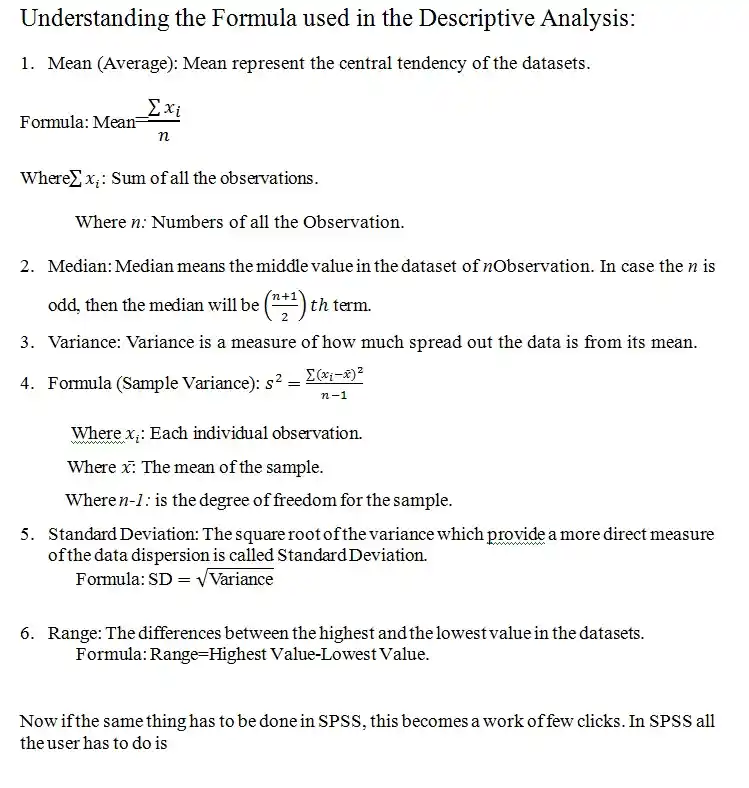
    As the Supreme Court begins its new term this week, legal experts predict that higher education will be a frequent subject for the justices. Yet only two college-related cases—both of which center on transgender rights—are currently listed on the main docket.

    That’s in large part because of a less formal but increasingly popular second list of cases known as the shadow docket.

    Historically, the shadow docket, also called the emergency docket, was used on rare occasions for just that—emergencies. In situations when the lack of a ruling from the highest court could lead to immediate, irreversible consequences, this alternate route allowed the justices to move quickly and issue an interim decision without going through traditional processes such as briefings, oral arguments or written opinions. But over the course of the past three administrations, use of this secondary docket has skyrocketed, creating a lack of predictability and an immense sense of uncertainty for the public.

    Normally, it can take months for a case’s petition to be processed, and then once a case is on the docket it can take even longer for it to be heard and ruled upon. This leaves the parties directly involved—and all who may be affected by the decision—time to prepare and create contingency plans for the potential outcomes. But when the shadow docket is used, cases can be introduced and receive a ruling in a matter of weeks, if not days, often without any explanation.

    Higher education institutions have already seen the repercussions this can have: Using the shadow-docket process, SCOTUS has overturned lower-court rulings on critical issues including the continuation of federal research funding and major cuts to staffing at the Department of Education.

    “Some of these are existential issues about whether universities can continue to function in the way in which they functioned for the past half century,” said former Brandeis University president Fred Lawrence, a higher education legal expert and distinguished lecturer at Georgetown Law. “If erring on the side of caution means shutting down your research operation, then you are unrecognizable to yourself. So it creates a very, very difficult situation for higher education to function.”

    While it remains unclear how and when various cases will reach the Supreme Court, Lawrence and others say they have a fairly good idea of what those cases will likely concern. Issues including visa policies for international students and scholars, First Amendment rights, academic freedom, and federal funding are likely to be on the line.

    Here’s a quick summary of the cases—on and off the main docket—that experts say colleges and universities should keep a close eye on.

    Transgender Athletes

    On the first day of his second term in office, President Donald Trump signed an executive order banning “gender ideology” and declaring that the government would only recognize two sexes, male and female. Less than a month later, he signed a second order banning transgender women from participating in women’s sports.

    For now, both declarations—and their implications for collegiate sports—are up for consideration by the highest court through two cases, West Virginia v. B.P.J and Little v. Hecox.

    Though the former concerns a transgender girl in high school and the latter a transgender woman at Boise State University, the cases are otherwise largely the same. Both involve runners who attempted to participate in track and cross-country but were barred from doing so by state law. And up until a little over a month ago, both were set to be heard before the court at some point this term.

    But on Sept. 2 Hecox filed a motion urging the Supreme Court to dismiss her case. In the six-page filing, Hecox’s lawyers explained that due to illness, her father’s recent passing and the “negative public scrutiny” stemming from the litigation, she no longer wished to participate in women’s sports, rendering the case moot.

    Still, given the court’s conservative supermajority and their penchant for siding with the Trump administration, some wonder if Hecox’s plea to the court is an attempt to avoid an unfavorable final decision. (Hecox won her case at both the district and circuit court levels.)

    Jill Siegelbaum, a former assistant general counsel at the Department of Education and now a partner at Sligo Law Group, said that she understands both the theoretical idea that Hecox could be fearing a loss and the more personal rationale for dismissing the case.

    “Every single attorney involved in that case is well aware of who is sitting on the court and the decisions that the court has recently made in the area of transgender rights,” she said. “But I can also say that on its own, simply the fear for her emotional, physical and mental health that would come from further publicity about this case … would certainly be, in my opinion, a reasonable basis for withdrawing.”

    So far, it’s unclear whether the court will respect Hecox’s request. But even if the case were dismissed, Siegelbaum and others said, West Virginia v. B.P.J., will almost certainly remain, eventually leading to a ruling on the same overarching issue—interpreting Title IX’s equal protection clause.

    Sarah Hartley, a partner and co-chair of the higher education team at BCLP, a law firm headquartered in St. Louis, stressed that regardless of the outcome, the ruling’s implications for colleges and universities could be influenced by what questions the justices ask and how they write their opinions.

    “Depending on how the decision is worded, it could have broader impacts than just sport. It could address bathrooms, locker rooms—any number of different things that Title IX and other antidiscrimination laws historically have protected,” she said.

    Hartley added that in her view, lack of access to even recreational activities could be a major blow to the mental health of an already “highly marginalized community.”

    “Imagine it affecting your club sports at universities or in high schools, or in gym class when there’s any sex segregation,” she said. “As someone who’s particularly concerned with the access to sport because of all the positive impacts it can have, I think the trickle-down effect … will be a big deal.”

    Shadow Docket

    Higher education legal experts are also keeping a close eye on the shadow docket, as well as on cases that were already addressed on the emergency docket, were sent back to the lower court and now are steadily working their way back up to the Supreme Court for a final merit ruling.

    Jessica Ellsworth, a partner at Hogan Lovells and adviser for the American Council on Education, said she thinks the shadow docket cases are the ones that have a “real impact” on higher education.

    She added that multiple stays have already been granted on issues like Trump’s ability to terminate congressionally appropriated funds, slash government agencies’ staffs and tighten immigration policies that affect college enrollment. In doing so, the Supreme Court blocked injunctions from the lower courts, allowing the Trump administration to carry out policies before the justices have fully analyzed the facts of the case, considered friend-of-the-court briefs or heard the arguments of each party.

    Moving forward, “I suspect that we will see First Amendment challenges make their way to the court related to ongoing efforts by the administration to force changes across universities and use threats of cutting off funding to compel those changes,” Ellsworth said. “As a result, it’s important for higher education to keep an eye on both the merits and emergency docket for the foreseeable future.”

    Hartley from BCLP noted that transgender rights issues are also on the shadow docket through the case Trump v. Orr, which weighs a transgender or nonbinary individual’s ability to obtain a passport that matches their gender identity. If this ruling is interpreted to extend to IDs beyond passports, it could lead to all kinds of inconsistency between gender presentation and government identification, creating significant hurdles for many university operations, she said.

    “You could see complaints that a student who’s male presenting is living in a female dorm, which could then give rise to invasive investigations and force a student to disclose things that they might want to make otherwise private,” she explained.

    And while any number of these cases could eventually make it back to the Supreme Court for a final ruling, Lawrence from Georgetown said it’s too soon to predict what will make the cut; just a week into the new term, “the Supreme Court has barely put together its docket for the year,” he said.

    But even if these issues do make it back for a full merit review, he added, it may be too late. So far, the Supreme Court has struck down the injunctions blocking Trump from carrying out his policies on every higher ed case that has reached the shadow docket. And in many cases, he said, doing that is like allowing a development company to tear down a historic home before a court has ruled on whether it sits on protected land. Even if the court eventually rules that the property should have been shielded, once the house is gone, it will be impossible to restore.

    “If you don’t provide that temporary remedy, then there may be no point to a remedy at all,” Lawrence explained.

    Source link

  • Trump Targets Nevada at Reno’s Undocumented Student Supports

    Trump Targets Nevada at Reno’s Undocumented Student Supports

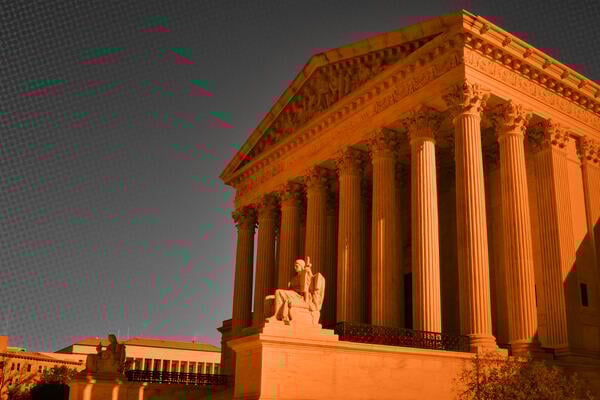
    Photo illustration by Justin Morrison/Inside Higher Ed | Cheriss May/NurPhoto/Getty Images | Brycia James/iStock/Getty Images 

    Centers and programs for undocumented students are caught in a politically precarious moment after the Department of Justice called for an investigation of the University of Nevada at Reno’s undocumented student services. Immigrant students’ advocates say the move marks an escalation in the Trump administration’s ongoing crackdown on higher ed benefits for these students. And they worry campus programs supporting undocumented students might pre-emptively scale back or close altogether.

    In a letter late last month, DOJ officials directed Education Secretary Linda McMahon to investigate the Nevada university over UndocuPack, its support program for undocumented students.

    According to the letter, the DOJ had received reports of the university’s “efforts to assist illegal immigrants” by providing referrals to on- and off-campus resources, student aid, and academic and career support, including helping students find “career opportunities that do not require applicants to provide a Social Security Number.”

    “We are referring this matter to the Department of Education to investigate whether UNR is using taxpayer funds [to] subsidize or promote illegal immigration,” the letter read.

    The U.S. Department of Education did not respond to a request for comment; Inside Higher Ed received an automatic out-of-office message citing the government shutdown.

    But UNR is pushing back. Brian Sandoval, a former Republican governor of Nevada and the university’s first Hispanic president, responded with a forceful defense of the program.

    He stressed to students and staff that the UndocuPack program offers supports to all students, regardless of citizenship status, and uses no federal funds. He also emphasized that several state-funded scholarships don’t take immigration or residency status into account; the university doesn’t dole out state or federal aid to anyone ineligible.

    “The University has remained in compliance with federal and state law, as well as the Nevada and United States Constitutions regarding adherence to federal and state eligibility requirements for undocumented students for federal aid and scholarships,” Sandoval wrote. “In addition, we have made good, and will continue to make good on our commitment in ensuring a respectful, supportive, and welcoming environment on our campus where all our students have access to the tools they need for success.”

    He said the university plans to respond to the proposed investigation “through the appropriate legal channels.”

    A ‘Test Case’

    The threat to UNR brings fresh worries for undocumented students’ advocates, who say it’s the latest in a string of federal efforts to curb public higher ed benefits for such students.

    The Justice Department has already sued five states over policies allowing undocumented students to pay in-state tuition, successfully quashing state laws in Texas and Oklahoma after their attorneys general swiftly sided with the federal government. Over the summer, the Education Department announced it would investigate five universities for offering scholarships intended for undocumented students, claiming such programs violated civil rights law. The department also ended Clinton-era guidance that allowed undocumented students to participate in adult and career and technical education programs in response to Trump’s February executive order demanding that “no taxpayer-funded benefits go to unqualified aliens.”

    Diego Sánchez, director of policy and strategy at the Presidents’ Alliance on Higher Education and Immigration, said going after UNR’s UndocuPack program is “part of a broader effort by the administration to intimidate colleges and universities that seek to serve undocumented students.” But it also takes the campaign a step further, “targeting any form of campus support for undocumented students,” including academic and career services. “It’s definitely a pattern of escalating attacks via different avenues of law.”

    The DOJ’s letter cites the Personal Responsibility and Work Opportunity Reconciliation Act of 1996, which bars undocumented immigrants from many public benefits, but Sánchez maintains that “no court has ever interpreted PRWORA to bar universities from offering support offices, mentoring resource centers for undocumented students.”

    Those kinds of supports for undocumented students exist at colleges and universities across the country. A 2020 study found at least 59 undocumented student resource centers on campuses nationwide, mostly in California but also in other states including Arizona, Colorado, Florida, New Jersey, Oregon, Texas, Utah and Washington.

    Sánchez worries that colleges and universities could modify or scrap perfectly lawful programs out of fear after seeing the DOJ chide UNR for such common supports. He also expects the Trump administration to target more programs like UndocuPack.

    UNR feels like “a test case,” he said.

    Gaby Pacheco, president and CEO of TheDream.US, a scholarship provider for undocumented students, said other colleges and universities with undocumented student supports are already weighing what to do in response to the developments in Nevada.

    “Do we duck and hide and lay low so that we don’t get picked on, or do we stand together with others and potentially become a target of this? It’s a question that a lot of people and institutions … are asking themselves,” Pacheco said.

    She worries canceling or minimizing undocumented student support programs will send those students a message—“that they don’t belong.” And she doesn’t believe trying to lie low or scale back programs will deflect federal attention.

    “This is just month nine into this administration. We still have a full three more years to go,” she said. And the administration seems like it plans to “continue full force until, in essence, there are no policies left where undocumented students have access to higher education.”

    Source link

  • Changing the Default Setting

    Changing the Default Setting

    Earlier this week the presidents of three of the formerly regional accreditors—Middle States, SACSCOC and WASC—hosted a webinar on AI and transfer credit. I watched, as did several colleagues; both topics are important, and since we’re covered by Middle States, it’s useful to know where its policies and expectations are heading. Credit loss upon transfer is a chronic issue on which accreditors have historically been muted; serious attention would be welcome.

    It was … frustrating My colleagues and I tried afterward to isolate actual concrete changes and came away befuddled. It reminded me a bit of “strategic plans” that say things like, “We will achieve excellence.” OK, but that’s neither a strategy nor a plan. At best, it’s an intention.

    Heather Perfetti, the president of MSCHE, stated that she doesn’t want accreditors to be seen as barriers to credit transfer; if anything, they’re urging a shift in the burden of proof for credit transfer from yes to no. That’s good, as far as it goes, but the key word is “urging.” Urging is not requiring. Kay McClenney famously noted that “students don’t do optional.” I’ve seen too many cases of universities not doing optional when it comes to accepting credits in transfer.

    The stated reason is usually something about standards; the real reason is economic self-interest. Departments don’t want to “give away” any more credits than they have to, so they don’t. That changes only when orders come down from above—say, from a provost’s office because the college is desperate for enrollment, or from a State Legislature that got sick of shenanigans and passed a law, like MassTransfer in Massachusetts. Accreditors could conceivably play that role—it would be naïve to think that outcomes assessment would have gained the momentum it did without pressure from accreditors—but they’d have to put some force behind it. I didn’t catch any mention of that.

    To be fair to the accreditors, that’s much harder now that they’ve lost their de facto regional monopolies. The regional accreditors are membership-driven organizations whose imprimatur opens up access to federal financial aid. Membership-driven organizations aren’t normally tough on their members, but the unusual combination of regional monopoly and access to federal financial aid gave them the leverage to push their members harder than they otherwise could. That didn’t always work out ideally—some colleges went bankrupt having recently satisfied accreditors that they were financially sound—but the structure made it at least possible for the accreditors to carry real weight.

    The first Trump administration broke the regional monopolies and opened the door to alternative accreditors. Now there’s an entirely new body emerging in SACS’s territory, and colleges are empowered to shop around. When members can shop around for more lenient or ideologically aligned accreditors, it becomes more difficult for the legacy accreditors to issue mandates.

    The new preference—I can’t call it a mandate or a policy—seems to mean that colleges should “default to yes” on credit transfer, in the absence of evidence that they shouldn’t. It wasn’t immediately clear what would constitute evidence that they shouldn’t. Lack of regional accreditation isn’t supposed to be dispositive in itself. Over time, a college could track success rates of students in Calc II who transferred in Calc I from College X, and if the rate were low enough, they could cite that. But that would require first allowing everything in for several years to build a track record; after that, the politics of saying no would be more complicated.

    The connection to AI, as near as I could tell, was that it would allow colleges to assess transcripts and issue transfer decisions much more quickly at scale. That would actually help. As one of the presidents put it—I should have written it down, but alas—the current system works like trading in a car for a new one but not being told the value of your trade-in until you’ve had the new one for a few months. It’s not consumer-friendly at all. If transfer credit decisions could be issued at the same time as admission and financial aid decisions, students would be much more able to make informed decisions. I have concerns about AI hallucinations in this context (and many others), but if defaulting to yes is built in, it might work at least as well as the current system.

    So, I’ll give this shift a cheer and a half out of three. The direction is positive; I just hope they can find a way to move from an intention to a plan.

    Source link

  • Improving Academic Supports for Incarcerated Students

    Improving Academic Supports for Incarcerated Students

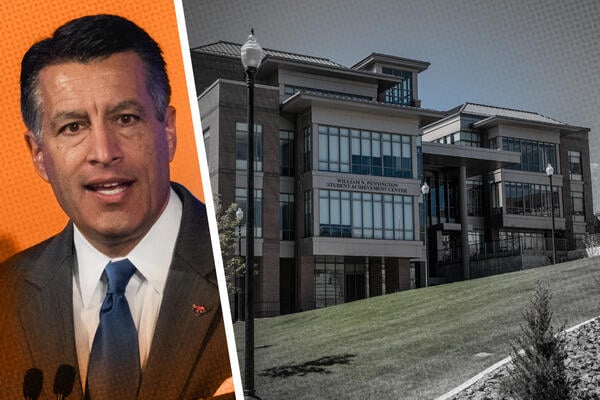
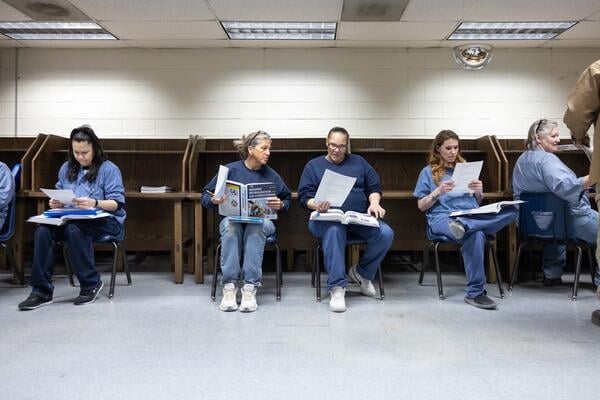
    In 2023, Congress reinstated use of Pell Grants for students in prison, expanding their access to higher education.

    One of the stipulations was that colleges would provide them with the same access to resources that on-campus students have, including academic supports, career advising, tutoring, mental health resources and study halls. However, a recently published report from the University of Puget Sound finds that this provision has been difficult to fulfill, in part because of prison systems, but also because of the overly bureaucratic processes at higher ed institutions themselves.

    The report identifies existing barriers, as well as opportunities to better serve incarcerated students.

    What’s the need: Higher education programs in prisons can help incarcerated individuals improve their educational attainment and career opportunities upon release, as well as increase socioeconomic mobility for affected individuals and their families.

    Providing education to incarcerated individuals, however, can be a challenge due to their lack of access to technology and learning materials, restrictions on when they can participate and policies like lockdowns that impede learning opportunities.

    “Prison rules and staff often limit the ability to study, work together, possess books and supplies in cells, and meet outside the classroom,” according to the report. Students can also lack access to faculty outside of the classroom.

    Students often are unaware of or unable to access traditional campus resources such as research databases, learning management systems, disability and mental health resources, and tutoring.

    The findings: Puget Sound’s report includes survey data from alumni of higher education in prison (HEP) programs and faculty. Researchers also relied on in-depth interviews with 25 stakeholders involved in such programs, as well as any affiliated teaching and learning center staff members. Interviews were conducted between August and November 2024.

    In conversations with faculty, researchers learned that silos often exist between teaching and learning centers and HEP programs, which can leave professors without sufficient resources or supports to be effective instructors. Even at the national level, pedagogical or student success–oriented conversations often don’t take into account incarcerated students.

    For instructors, working with incarcerated students can be demanding because it’s not part of their regular teaching load, they have long commutes or they have to adapt their materials and syllabi to a low- or no-tech teaching environment, according to the report. Some professors reported feeling isolated from peers or unable to share or receive feedback about their teaching.

    Keep Reading

    The University of Puget Sound compiled resources from higher education in prison programs to improve teaching and learning, including trainings, sample faculty and student handbooks, models for mental health support, and more.

    See the full guide here.

    What can help: The researchers identified a variety of innovative programs to enhance incarcerated students’ learning and educational outcomes.

    Some HEP programs, including those at Rutgers University and Scripps College, established peer tutoring opportunities among incarcerated students, in which graduates provide feedback on writing, research, time management and study skills.

    “The implementation of peer-to-peer tutoring does not just help the students receiving support. It builds professional development skills, volunteer or employment histories, and confidence for the tutors themselves as they continue their learning journeys,” the report says.

    The University of Utah Prison Education Program pays incarcerated students about $600 per month to provide peer support in a one-stop location. Student employees offer homework assistance, help organize events and educate their peers on health and wellness topics.

    The report also advocates for developing college prep and student success courses for incoming incarcerated students to help them get familiar with resources and technology that they may not know about. Tufts University Prison Initiative of Tisch College offers a two-semester foundation of academic success course, for example.

    Incarcerated students may also have mental health needs or disabilities that require extra intervention from the institution. Loyola University in Chicago’s HEP program employs a social worker who meets with students individually to understand their needs and connect them with support.

    Administrators can also institutionalize support for instructors of these programs by counting teaching in prison settings as a part of a regular course load or providing training for such programs during new faculty orientations. Learning communities, course development stipends and certifications can also incentivize effective teaching practices among instructors who teach in prisons.

    Connecting campus staff, particularly those in teaching and learning centers, with HEP faculty and students can also break down silos between campus and incarcerated students and ensure learners are being best served, according to the report.

    In the future, researchers hope to establish a national learning community for pedagogy in prison and a convening of stakeholders in this space to share resources.

    Source link

  • “New Collaborations Needed” as U.S. Cuts Global Health Funds

    “New Collaborations Needed” as U.S. Cuts Global Health Funds

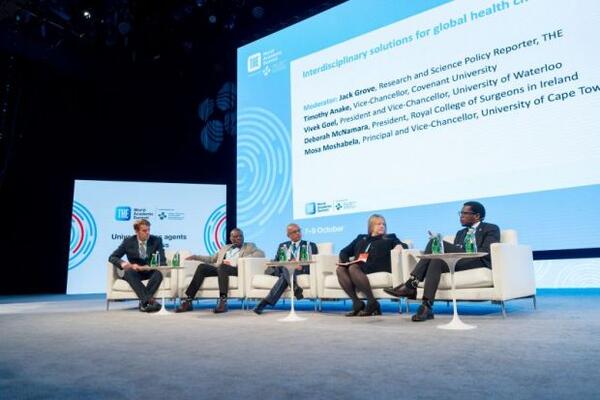
    Universities focused on global health will have to collaborate more with each other and with industry and philanthropic organizations in the face of the Trump administration’s multibillion-dollar aid cuts, according to academic leaders from around the world.

    Funding covering projects tackling conditions such as AIDS, tuberculosis and Ebola has been upended since Donald Trump returned to power in January, and speakers at Times Higher Education’s World Academic Summit said that it would be impossible to replace the lost dollars overnight.

    Mosa Moshabela, vice chancellor of the University of Cape Town, said that his institution had been one of the largest recipients of National Institutes of Health funding outside the U.S., supporting projects in areas such as HIV and tuberculosis prevention, and that his institution had been “impacted a lot” by the White House’s decisions.

    “We realize the danger of having placed all our eggs in one basket, pretty much,” said Moshabela, himself a leading public health researcher.

    “We know that, in terms of scale of funding, we’re not necessarily going to have one source that can replace the amount [we received] from the NIH, but by spreading our partnerships we can still achieve similar results—and we are strengthening our partnerships in the Middle East, in Asia, across the globe, and also looking at new donors that are coming through.”

    Moshabela said that Cape Town was also putting pressure on the South African government to increase research spending, highlighting that it currently spent only 0.6 percent of gross domestic product in this area, despite a long-standing target for the outlay to reach a minimum of 1.5 percent.

    “Even between universities, we are adopting the principle of cooperation over competition,” Moshabela continued.

    “For a long time, we were competing for the same sources of funding, but now what we’re trying to do as a strategy is to cooperate more rather than compete over sources of funding.”

    Vivek Goel, vice chancellor of Canada’s University of Waterloo, agreed that it would take time to fill the funding gap left by U.S. cuts.

    “I don’t think it’s realistic to expect that overnight we are going to fill those gaps,” he said. “I think we became very reliant on a certain model … I think in collaboration between governments, philanthropy, industry and our institutions we can come up with new ways of working that can replace that work [on global health, but] not necessarily all of that funding.”

    Goel, another public health researcher, highlighted that it was not just U.S. funding that was being lost, pointing to research that was funded by Canadian sources or philanthropic organizations but that depended on clinics or infrastructure operated by the United States Agency for International Development. Researchers may also lose access to Centers for Disease Control data, he warned.

    Drawing down funding for global health research in the future will require a change of mindset, Moshabela argued, such as focusing on solutions with wider commercial benefit to attract the support of pharmaceutical companies and working to develop broader ecosystems and not just clinical interventions to win funding from philanthropists.

    Deborah McNamara, president of RCSI University of Medicine and Health Sciences, said that Western universities should approach the funding challenges “with humility.”

    “Our partners in the Global South have been doing more with less for a very, very long time,” she noted.

    “I think we’ve all observed over time waste in development funding, and in the surgical arena certainly we often discover [that] at hospitals that we work with they have large amounts of donated equipment that perhaps can’t be maintained, can’t be run, [and] isn’t operational.

    “By listening more we can reduce the waste that happens and direct [funding] more effectively.”

    Source link

  • College Degree Aspirations on the Decline

    College Degree Aspirations on the Decline

    As public skepticism about the value of a college degree persists, the number of students who expect to earn one is also on the decline. 

    Between 2002 and 2022, the percentage of students surveyed who said they expected to earn a bachelor’s degree or higher fell from 72 percent to 44 percent, according to a research brief the Pell Institute for the Study of Opportunity in Education published Tuesday. 

    During the same time frame, the percentage of first-generation students who aspired to earn a degree fell from 60 percent to 33 percent; among students with at least one college-educated parent, degree aspirations dropped from 83 percent to 53 percent. 

    “The decline in college aspirations among first-generation students is deeply concerning,” Kimberly Jones, president of the Council for Opportunity in Education, which oversees the Pell Institute, said in a news release. “These students have long faced systemic barriers to higher education, and this data underscores the urgent need for renewed investment in outreach, support, and affordability—including through programs like TRIO and the Pell Grant.”

    But in his quest to shrink the size of the federal government, President Donald Trump has proposed cutting funding for TRIO—a set of federally funded programs that support low-income, first-generation college students and students with disabilities as they navigate academic life. 

    Major cuts to the federal government also mean it will be harder to produce reports like the one the Pell Institute released this week. That’s because such studies rely on data from now-discontinued longitudinal surveys that were administered by the National Center for Education Statistics; the Trump administration fired all but a handful of NCES employees earlier this year. 

    “Without the continuation of these programs, it will be much harder to track the progress of high school, first-generation, and college students and to learn how to improve education outcomes,” Sean Simone, vice president of research at COE, said in the news release. 

    Source link

  • Institutions, Over Peers and Tribes, Bolster Indigenous Student Belonging

    Institutions, Over Peers and Tribes, Bolster Indigenous Student Belonging

    Daniel de la Hoz/iStock/Getty Images Plus

    A new study from the American Indian College Fund and National Native Scholarship Providers found that Indigenous students report a stronger sense of belonging on campus when their college provides “perceptions of a sense of acceptance, inclusion and identity.”

    They call this “institutional support,” and it’s the primary predictor of belonging, trailed by peer support, campus climate and tribal support, the study showed. 

    The “Power in Culture Report,” released Wednesday, examined Indigenous students’ sense of belonging at the institutional and state level. NNSP surveyed more than 560 students enrolled at 184 institutions across multiple sectors, including tribal colleges and universities, predominantly white institutions, Hispanic-serving institutions, and other minority-serving institutions. The survey was conducted between March and April of 2024. 

    Unsurprisingly, tribal colleges foster a greater sense of institutional belonging among Indigenous students than other institution types. At nontribal institutions, Indigenous students must create belonging via “informal networks and cultural resilience amid institutional neglect or performative inclusion.” Indigenous students at nontribal campuses also report experiencing more microaggressions and cultural isolation. Students at institutions with larger populations of Indigenous students report a 14 percent higher sense of belonging than those at schools with fewer Native peers. 

    When looking at Indigenous student belonging at the state level, students attending college in states with larger tribal populations actually report a lower sense of belonging and say they feel less supported than students in states with smaller tribal populations, “suggesting that population size alone does not equate to meaningful support,” the study noted. Students in states with a tribal college or university reported an 18 percent lower sense of belonging than students in states without a tribal institution. 

    At all institution types, students living off-campus reported a 16 percent higher sense of belonging than those living on-campus. 

    The report includes several policy recommendations to bolster Indigenous student belonging, including recruiting Indigenous faculty and staff, funding Native language revitalization courses, and establishing meaningful relationships with local tribal nations.

    Source link