For the first time in more than a decade, interest rates across the world are rising from what some say were their lowest levels in 5,000 years.
You heard that right. The idea of lending money — and charging a fee for doing so — is as old as civilisation. Central banks, the institutions now responsible for guiding a country’s rates, are much more recent. Sweden’s Riksbank, in 1668, was the first, closely followed by the Bank of England in 1694.
Don’t worry. This spin through history is meant only to show that interest rates have a long, if not always respected, past.
In our drama-filled present, the world is watching — with interest — where they will go from here.
So why do interest rates matter? And why now, in particular?
Why do interest rates matter?
To vastly oversimplify the argument: lending rates matter because prices matter. And interest rates are the most tried-and-tested tool for keeping prices under control.
Even those who prefer getting their financial advice from TikTok and YouTube, rather than consulting traditional financial institutions, would be hard-pressed to miss the fact that prices for essentials such as food, fuel and cooking oil are rising faster across the industrialized world than they have in decades.
This can be particularly hard for those starting their working lives. Nearly half the Generation Zs and Millennials in a 46-country Deloitte poll said they live paycheque to paycheque. Of the thousands surveyed, nearly one-third (29% of Gen Zs and 36% of Millennials) said inflation was their most pressing worry right now.
The global rise in prices is the result of a perfect storm of factors: among others, a food shortage caused by Russia’s blockade of Ukraine’s ports, soaring energy costs and the effects of droughts, heatwaves and other climate-linked extreme weather on agriculture; a resurgence in consumer buying deferred during COVID-19 lockdowns; and a surge in demand for workers.
And while wages are also rising after years of near dormancy, they are not increasing fast enough to keep pace with prices. So even the most carefully managed household budget is facing new strains.
That’s where interest rates come in.
Slowing inflation without stalling economies
Central banks hope that by making it more expensive to borrow, they can slow the pace of inflation. That they have been able to keep rates at or near zero for so long is because the world was in an extraordinary period of extended price stability.
There is little that even the cleverest economic steward can do to fix the external factors affecting inflation — Ukraine, droughts, labour shortages — but they can try to put the brakes on internal drivers such as consumer demand.
So that’s why rates are increasing in most major economies faster than they have since the latter part of the last century.
The U.S. Federal Reserve, arguably the world’s most powerful central bank, has raised rates three times this year and is expected to increase them again this week. Peers such as the European Central Bank and the Bank of England are following suit, although some are taking a cautious approach because they want to slow their economies without stalling them completely.
The question is: How far will rates rise and how will that affect a global economy that has been buffeted in the past few years by a pandemic, geopolitical turmoil and a supply chain crisis?
Consider hypothetical futures.
Economists say a few possible paths lie before us.
The best-case scenario is what they call a “soft landing”: interest-rate rises could put a quick end to the price spiral without causing a halt or, worse, a reversal in economic growth. When prices stop rising, rates do too.
There are potential pluses for the young in this brightest of hypothetical futures. It could allow wages to catch up with costs, boosting buying power. And if there is a halt or reversal in property prices, they could at last have a chance to buy without having to face cripplingly high mortgage rates.
The second-best scenario is a brief recession that ends quickly and brings with it tamer prices and stable or lower lending rates. See above for benefits.
“I am not confident in the soft-landing scenario,” said Greg McBride, Chief Financial Analyst at Bankrate.com. “A recession is very likely the price to be paid for getting inflation under control. And painful as recessions are — even mild recessions are not fun for anybody — that is medicine we are better off taking now in an effort to get back to price stability.”
If interest rates rise too slowly or not enough, this opens the door to the worst of all possible worlds — a phenomenon known as stagflation.
Stagflation is an ugly thing. Prices soar, economic growth slows and it becomes harder and harder to make ends meet. The fact is that economic growth will slow as rates rise, even in the best of our possible outcomes. But as long as prices follow, we will escape the economic purgatory that big economies faced in the 1970s.
Now is the time for smart financial management.
Whatever future lies ahead, McBride said, the best way to ride it out is to practice sound financial management. That applies whether you are a student, just joining the job market or starting your own business.
“The fundamentals are critically important,” he said. “That is: invest in yourself and your future earning power; watch your expenses; live beneath your means; save and invest the difference; and don’t rely on debt to support your lifestyle if your income cannot.”
This last is particularly important in a time of rising rates.
“There are points in life where you need debt,” he said. “You may need to borrow to get through school. You’re probably going to have to borrow to buy a house.”
But you must never lose sight of “the end game” of paying that debt off, particularly if, as with most credit cards, it carries high or variable interest rates. And don’t borrow for non-essentials.
McBride said: “Leaning against debt, like a crutch to support a lifestyle your income cannot, doesn’t lead anywhere good.”
QUESTIONS TO CONSIDER
1. What is stagflation and why is it the worst-case scenario?
2. How can policymakers tame inflation?
3. How have the prices for food, fuel and other goods changed where you live?
News of the policies comes after a Texas bill was signed into a law that prohibits people from using bathrooms that differ from their sex assigned at birth in state buildings.
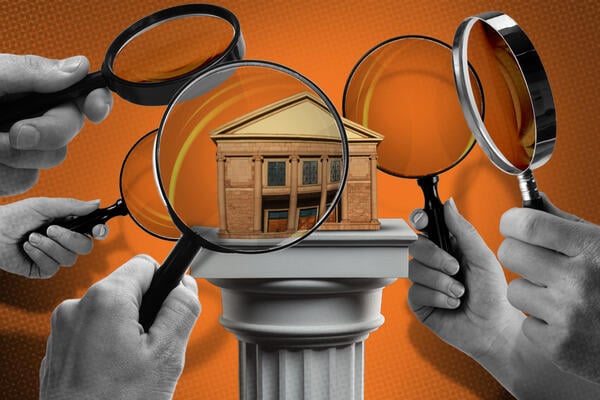
Photo illustration by Justin Morrison/Inside Higher Ed | rustamank/iStock/Getty Images
Employees at Angelo State University in Texas could be fired for displaying a pride flag or discussing any topic that suggests there are more gender identities than male and female.
Spokespeople for Angelo State have not confirmed or denied details of the policies reportedly discussed at meetings Monday between faculty, staff and institutional leaders. But, local news magazine the Concho Observer reported that the policies would ban discussion of transgender topics or any topics that suggest there are more than two genders.
The policies would also require instructors to remove information about transgender topics on syllabi and refer to students by their given names only, not any alternative names. Safe space stickers and LGBTQ+ flags would be banned and employees wouldn’t be allowed to include their pronouns in their email signatures.
News of the policies comes just as Gov. Greg Abbott signed a bill on Monday that prohibits people from using the bathroom that differs from their sex assigned at birth in state buildings, including public universities, NBC reported. Institutions that violate this law face fines of up to $125,000.
The Angelo State policies are the latest in a string of attacks on academic freedom at Texas public universities in recent weeks. Texas A&M University officials terminated a professor, demoted two other faculty members and, as of Thursday, accepted the president’s resignation in response to a viral video that showed a student challenging a professor in class for teaching about gender identity.
“What is happening at ASU is part of a larger assault on higher education and marginalized communities across Texas and the nation,” Brian Evans, president of the Texas Conference of the American Association of University Professors, said in a statement. “Moreover, it is an overt attempt to erase individuals of diverse backgrounds and experiences by limiting not only what can be taught but also what ideas students can explore. These policies and this extremist push to censor open inquiry, debate, and discovery is an affront to the U.S. and Texas Constitutions and an assault on the very foundations of our colleges and universities.”
It is unclear exactly whom the new policies at Angelo State will apply to, and whether there are exceptions, particularly for displays and conversations held in private offices or for conversations outside of the classroom.
Angelo State spokespeople did not answer any of the questions Inside Higher Ed asked about the new policies, and instead provided the following statement: “Angelo State University is a public institute of higher education and is therefore subject to both state and federal law, executive orders and directives from the President of the United States, and executive orders and directives from the Governor of Texas,” spokesperson Brittney Miller wrote. “As such, Angelo State fully complies with the letter of the law.”
Miller also sent a link to a Jan. 30 letter from Abbott that said, “All Texas agencies must ensure that agency rules, internal policies, employment practices, and other actions comply with the law and the biological reality that there are only two sexes—male and female,” as well as President Donald Trump’s Jan. 20 executive order stating that the United States only recognizes two genders, male and female.
What type of legal case faculty could bring in response—and whether they may have a case at all—will depend largely on the policy details, said Eugene Volokh, a professor of law emeritus at the University of California, Los Angeles, School of Law.
There are no Texas state laws that explicitly prohibit faculty members from discussing LGBTQ+ topics in classrooms. Even Brian Harrison, the Texas state representative who is largely responsible for making the Texas A&M video go viral, said as much during an interview Sept. 13 on a conservative radio show.
“The governor and lieutenant governor and speaker have been telling everybody for two years now that we passed bans on DEI and transgender indoctrination in public universities,” Harrison said. “The only little problem with that? It’s a complete lie. The bill that was passed to ban DEI explicitly authorizes DEI in the classroom—same thing with transgender indoctrination.” Harrison has introduced several bills to ban these topics, but so far none have been passed.
The legislation Harrison referred to is Texas Senate Bill 17, which bans diversity, equity and inclusion efforts by public institutions. It was signed into law in 2023 and includes carve-outs for academic instruction, scholarly research and campus guest speakers. Meanwhile, House Bill 229 took effect on Sept. 1 and specifies that the state recognizes two genders. It applies to data collection by government entities only and does not restrict academic instruction or speech.
Public employers, because they only speak through their employees, can generally tell people what to say as part of their job, Volokh said. “A police department may order police officers to talk in certain ways to their citizens and to not talk in other ways to citizens, right? In fact, we expect the police department to do that,” he said. “The question is whether there’s a specific, special rule that protects the rights of college or university professors.”
The courts are largely undecided on that, he added. “It’s being litigated right now in other federal courts. It’s been raised in past cases, and there isn’t really a clear answer,” he said.
“It’s certainly possible that [professors] may have First Amendment rights to choose to teach what they want to teach, but it’s also possible that boards will also say, ‘No, when you’re on the job and talking to a captive audience of students that the university provided for you … we, the university, get to tell you what to teach.’”
Other state university systems have implemented similar policies with the opposite effect. For example, the University of California system requires university-issued documents to offer three gender identity options—male, female and nonbinary—and for all university documents and IT systems to include an individual’s “lived name” instead of their legal name. If an individual’s lived name is different from their legal name, their legal name must be kept confidential.
This article has been updated to correct the Texas Senate bill number.
A former provost at the University of North Carolina at Chapel Hill accused the Board of Trustees of systematically violating open records and meetings laws on multiple occasions, including to retaliate against him, according to a lawsuit filed earlier this week.
At the heart of the lawsuit from Chris Clemens, who resigned in April, is a delayed tenure vote.
In March, the UNC Board of Trustees postponed a vote to grant tenure to 33 faculty members. At that meeting, held March 20, the board moved into closed session, with Clemens present, apparently to discuss individual tenure cases. Instead, trustees launched into a debate over the value of tenure, with some voicing their philosophical opposition to the practice and others arguing that they should delay such approvals for financial reasons, according to the lawsuit.
The board eventually approved tenure for all 33 candidates in June via an email vote.
According to the lawsuit, Clemens shared details from the meeting with other academic leaders, noting that no tenure decisions were made or individual candidates considered and that the board instead “engaged in a sweeping policy discussion about tenure’s institutional value and global costs.” Following that briefing, the Board of Trustees allegedly communicated through Signal, a private messaging application that includes a feature to automatically delete messages after they are read, to call for a vote of no confidence in Clemens. UNC leadership asked Clemens to step down shortly thereafter, according to the lawsuit.
But even if Clemens’s suit is successful and the violations are proven to be true, the board will likely face few repercussions given past precedent.
A Systemic Pattern
Clemens’s lawsuit also accused Jed Atkins, director and dean of the School for Civic Life and Leadership, of relaying the former provost’s briefing to then–board chair John Preyer via Signal. (Clemens had taken issue with the hiring practices at the civic life school before stepping down.)
The lawsuit alleges that Atkins “requires that his leadership team subscribe to a Signal group and conducts a substantial portion of official communications via Signal with auto-delete enabled not only in exchanges with trustees but as a routine practice,” in violation of state law. Atkins did not respond to a request for comment from Inside Higher Ed.
Beyond the tenure flap, Clemens has accused the board of defying state open meetings laws on multiple occasions in an effort to “hide policy debates from public view,” according to his lawsuit.
“Over the past four years, the Board has engaged in a pattern and practice of systematically violating the Open Meetings Law by improperly invoking closed session exemptions to shield policy and budget deliberations from public scrutiny,” the former provost alleged.
Contacted by Inside Higher Ed, Clemens declined to comment.
In his legal filing, Clemens cited three specific examples beyond the March tenure discussion in which he alleged the board violated open meetings laws. He specifically pointed to a closed session discussion in November 2023, when UNC discussed athletic conference realignment; further secret deliberations over athletics in May 2024 involving both conference realignment and finances; and an “emergency meeting” in December 2024 to hire a head football coach. At the December meeting, UNC Chapel Hill hired NFL legend Bill Belichick on a $10 million annual contract.
(Responding to a separate legal complaint over the May 2024 meeting, trustees previously agreed to reaffirm their commitment to open meetings laws and pay $25,000 in attorneys’ fees.)
“Each episode follows the same pattern: the Board invokes a statutory exemption, enters closed session, then discusses broad policy or budget matters that must be debated publicly,” the lawsuit states.
Despite being allegedly pressured to step down, Clemens isn’t seeking a payout or his job back. Instead, he’s asking the court to prevent the board from continuing its alleged defiance of open meetings laws, to produce minutes or a transcript of the March 20 closed session and to mandate that trustees participate in training on state open meetings and public records laws.
Responses
Contacted by Inside Higher Ed, UNC Chapel Hill spokesperson Kevin Best wrote by email, “We’re aware of the litigation and are reviewing it closely,” but he declined to comment further given the pending nature of the case.
The Board of Trustees released a more forceful statement Wednesday.
“The former Provost’s baseless assault on this volunteer Board and how it conducts its business stands in stark contrast to the widely recognized excellence the University has achieved under this Board’s leadership,” chair Malcom Turner said. “His allegations are disappointing and inaccurate, not to mention a waste of taxpayer dollars, for which this former officer of the University shows no regard. His claims will not withstand scrutiny.”
Most of the individuals named in the lawsuit either declined to comment or did not respond to media inquiries. Multiple faculty and staff members at the School of Civic Life and Leadership (none of whom are defendants in the lawsuit) also did not respond to requests for comment.
However, one source alleged that the former provost instructed employees to use Signal and that he also used it for university business, which Inside Higher Ed confirmed via screenshots.
Allegations that Clemens used Signal come amid an opaque investigation by outside counsel into the School of Civic Life and Leadership that was announced earlier this month. While Chapel Hill leadership has said little about the investigation, it comes after multiple resignations from faculty members in the school, some of whom have alleged it has “lost sight of its mission.”
Dustin Sebell, a School of Civic Life and Leadership professor, told Inside Higher Ed via text message that Clemens “habitually used Signal for university business” and encouraged others to do so. To Sebell, the lawsuit seems like an effort by Clemens to sidestep the investigation.
“By hastily filing a hypocritical lawsuit, Chris is trying to avoid investigators’ questions about his misconduct as Provost by claiming privilege pending ongoing litigation,” Sebell wrote.
But some faculty members, such as Michael Palm—president of the UNC Chapel Hill chapter of the American Association of University Professors—expressed concern about political influence on the board.
“Open meetings laws are important for public universities. Unfortunately, right now we don’t need them to know that the UNC [Board of Trustees] considers UNC faculty to be their enemy,” Palm wrote to Inside Higher Ed via email. “The crisis we’re in is political, not procedural.”
Although North Carolina has historically been considered a swing state, the UNC Chapel Hill board appears to be overwhelmingly comprised of Republicans. Some have previously worked for Republican officials, while others have donated heavily to GOP candidates and causes.
Of 14 voting members on the UNC Chapel Hill board, at least 10 have donated to conservative politicians and organizations, some contributing tens of thousands of dollars, according to a review by Inside Higher Ed. Several others have direct GOP connections, including Preyer, who previously worked for former senator Lauch Faircloth. Three other trustees previously held state office: Robert Bryan III, James Blaine II and Patrick Ballantine. All were elected as Republicans.
Potential Consequences
Should the allegations in the lawsuit be proven true, consequences will likely be fairly light—at least, that has been the outcome in other cases where boards allegedly violated sunshine laws.
The Pennsylvania State Board of Trustees, for example, was required to complete training on the state’s Sunshine Act recently as part of a settlement with the news organization Spotlight PA over alleged violations of opening meetings laws related to secretive practices by the board.
But in other cases, universities have largely escaped consequences for clandestine actions.
Kentucky attorney general Russell Coleman has found that multiple state institutions have violated open records laws, adding up to 10 times this year alone. Coleman found that the University of Kentucky violated open records law four times and had four partial violations, while Northern Kentucky University had one violation and the University of Louisville had a partial violation. However, none of those violations resulted in punitive actions from the state.
Last year Indiana’s public access counselor found that Indiana University’s Board of Trustees violated open meetings laws when members claimed that they were holding a private meeting to discuss litigation. But trustees also discussed IU president Pamela Whitten’s performance and a campus climate review, expanding the private meeting beyond its stated aims. A complaint from a news organization prompted scrutiny from state officials, but no punitive or corrective actions.
UNC Chapel Hill was also previously accused of violating state open meetings laws, including in 2021 when it hired Clemens as provost, choosing to approve “Action 1” on its agenda with a vague reference to personnel matters, raising concerns that trustees violated state law via a secretive vote. Board leadership defended the vote and Clemens remained in place until April.
This story has been updated with a statement from the UNC Chapel Hill Board of Trustees.
In June, in an escalation of the Trump administration’s pressure on Harvard University to bow to its demands, a federal Office for Civil Rights announced that the institution was violating federal law.
The office released a nearly 60-page report accusing Harvard of “deliberate indifference” to ongoing discrimination against Jewish and Israeli students, which is illegal under Title VI of the Civil Rights Act of 1964. “OCR’s findings document that a hostile environment existed, and continues to exist, at Harvard,” the office said in an accompanying news release.
But this wasn’t the Education Department’s Office for Civil Rights. It was an office of the same name within the Health and Human Services Department that’s been playing a more public role as part of Trump’s crackdown on higher ed. Officials who served in previous administrations said agencies used to generally defer to the Education Department when it came to civil rights issues in higher ed. But since Trump retook office, colleges and universities are facing increased pressure from probes by HHS and other agencies enforcing the new administration’s right-wing interpretation of civil rights.
HHS OCR said it began its Harvard investigation in February by looking into the university’s medical school, after alleged antisemitism during the May 2024 graduation ceremony. But, in April, it widened its probe to “include Harvard University as a whole and to extend the timeframe of review to include events and information from October 7, 2023, through the present.” (The HHS OCR has jurisdiction over institutions that accept HHS funding, including National Institutes of Health research grants and Medicaid dollars.)
And this wasn’t the HHS OCR’s only investigation into parts of Harvard that didn’t appear related to health or medicine. The news release noted the “findings released today do not address OCR’s ongoing investigation under Title VI into suspected race-based discrimination permeating the operations of the Harvard Law Review journal.” And Harvard is just one of several universities that this non–Education Department OCR has targeted since Trump retook the White House in January.
Civil rights advocates say the HHS OCR has become just one more pawn in Trump’s strategy to target universities and end protections and programs that aid minority groups. For universities, Trump’s HHS OCR represents a new threat to their funding if they’re accused of promoting diversity, equity and inclusion; fostering antisemitism; or letting transgender women play on women’s sports teams.
It’s unnecessary to do what the administration is doing now, unless one is operating like a mob boss.”
—Catherine Lhamon, former head of OCR at the Education Department
The office’s investigations and public denunciations add to the work of the ED OCR, which the Trump administration has also shifted to focus on the same issues. The two OCRs announced a joint finding of violations against Columbia University, but they’ve also trumpeted independent probes into other institutions.
“As we feared, the Trump administration is abusing civil rights tools to advance a radical and divisive agenda that aggressively hoards access to education, living wage jobs, and so much more,” the NAACP Legal Defense Fund said in a statement. “Unfortunately, HHS and many other federal agencies are being used as one of the vehicles to carry out that agenda.”
The Legal Defense Fund said, “Colleges and universities are being targeted precisely because of the critical role they play in opening the doors of opportunity and preparing the next generation to lead our multi-racial democracy. By attacking institutions that help level the playing field for Black students and other students of color, the Trump administration is ultimately weakening our democracy and our economy as a whole.”
Former officials at the Justice Department, to which HHS OCR can forward cases if the targets of investigations don’t comply, told Inside Higher Ed that HHS OCR historically deferred probes into universities to the Education Department.
Catherine Lhamon, former director of the Education Department’s OCR under Presidents Biden and Obama, said, “There are 13 federal agencies with external civil rights enforcement, of which HHS is one, and it’s relatively large.” She said they’re pieces of Trump’s broader strategy.
“The administration has used every agency in a contemporaneous, simultaneous assault on universities,” Lhamon said, multiplying the amount of federal funding it can threaten.
The HHS OCR’s announced investigations under Trump show it’s investigating similar issues to the Education Department OCR—or what’s left of that office after the administration’s cuts. Lhamon said the practice for decades has been for the agency with principal expertise over an area to investigate that area—hence why universities were mostly investigated by the Education Department OCR.
“It’s unnecessary to do what the administration is doing now, unless one is operating like a mob boss,” Lhamon said.
An HHS spokesperson said, “We’re leading implementation of the president’s bold civil rights agenda,” which includes four focuses: upholding religious conscience rights, fighting antisemitism, ending race-based discrimination embedded in DEI programs and “defending biological truth” in sex-discrimination enforcement. She also said that fighting antisemitism, for instance, is a priority across the whole administration, “so our office is going to be a part of that and going to participate to the fullest extent that we can.”
It remains unclear how much of the HHS OCR’s daily workload is now devoted to Trump’s targeting of higher ed. HHS OCR did investigate higher ed institutions even before Trump took office, the HHS spokesperson said.
“We may be being more public about it now,” the spokesperson said, “particularly because that’s where the issue areas with respect to this administration are.”
She said the office also continues to investigate non–higher ed–related medical providers and non–civil rights issues that it has responsibility for despite the office’s name—such as information privacy under the Health Insurance Portability and Accountability Act.
The spokesperson said the HHS OCR news releases don’t tell the full story of what the office is currently investigating because—out of the roughly more than 40,000 complaints it receives annually—it doesn’t normally disclose which complaints lead to probes “to protect the integrity of the investigation.” The office also launches some investigations without receiving complaints, she said.
“In the past we’ve not announced through press releases that we’ve opened major investigations,” she said.
She didn’t provide Inside Higher Ed a list of the office’s current investigations. She also didn’t say how many employees HHS OCR has. HHS’s fiscal year 2026 budget request said that “in FY 2010, there were 111 investigators onboard, and in FY 2022, this number fell to 60, while simultaneously HHS received the highest number of complaints in its history (51,788).” (For comparison, the ED OCR, in a FY 2024 report, said it had received its highest-ever volume of complaints, but the number was only 22,687.)
Since taking power, the Trump administration has been slashing the federal workforce—the administration laid off nearly half of the Education Department’s OCR staff in March. It’s unclear how much HHS OCR has been cut. The FY 2026 budget request said the HHS OCR “has faced a continually growing number of cases in their backlog, rising to 6,532 cases by the end of FY 2024.” And that was before the office launched these new probes based on Trump’s priorities.
The HHS OCR receives roughly more than 40,000 complaints annually, a spokesperson said.
Kayla Bartkowski/Getty Images
A String of Investigations
Since Trump’s Jan. 20 inauguration, HHS OCR has announced a spate of higher ed investigations, mostly without naming the institutions. The spokesperson said most are ongoing.
In early February, it announced investigations of four unnamed medical schools, also citing reports of antisemitism during their 2024 commencements. (That was the same month the Harvard investigation began, HHS OCR later said, so Harvard was likely among the four.)
On Feb. 21, Trump told Maine governor Janet Mills during a televised White House event that her state must bar transgender women from women’s sports or lose federal funding, to which Mills replied, “See you in court.” In response to this, the HHS OCR issued a news release that same day announcing an investigation into “the Maine Department of Education, including the University of Maine System,” due to reports that the “state will continue to allow biological males to compete in women’s sports.” (The HHS spokesperson said the investigation eventually found that the most relevant issues were unrelated to higher ed.)
In March, the office announced investigations into four unnamed “medical schools and hospitals” over “allegations and information” concerning medical education or scholarships “that discriminate on the basis of race, color, national origin, or sex.” The news release didn’t have much further detail but referenced a Trump executive order targeting “illegal” diversity, equity and inclusion programs. Later that month—again citing the anti-DEI order—it announced it was investigating “a major medical school in California” over whether it “gives unlawful preference to applicants based on their race, color, or national origin.”
In April, it announced it was investigating an “HHS-funded organization” over whether it excludes “certain races” from a “health services research scholarship program.” Later in April, it launched an “online portal where whistleblowers can submit a tip or complaint regarding the chemical and surgical mutilation of children”—the Trump administration’s phrase for gender-affirming care. Simultaneously, it announced it’s investigating “a major pediatric teaching hospital” for allegedly firing a whistleblower nurse who “requested a religious accommodation to avoid administering puberty blockers and cross-sex hormones to children.” (The HHS spokesperson said the first Trump administration brought a focus on religious conscience rights to the office that disappeared under Biden but has now returned.)
Also in April, it announced a second Harvard probe: a joint investigation with the Education Department’s OCR into both Harvard and the Harvard Law Review “based on reports of race-based discrimination permeating the operations of the journal.” The HHS OCR news release said an editor of the law journal “reportedly wrote that it was ‘concerning’ that ‘[f]our of the five people’ who wanted to reply to an article about police reform ‘are white men.’” The office also raised concern about another editor allegedly suggesting expedited review for an article because the author was a minority.
In May, the HHS OCR announced it’s investigating a “prestigious Midwest university” over alleged discrimination against Jewish students. Later that month came its announcement of its joint finding with the Education Department OCR that Columbia University violated Title VI through “deliberate indifference towards student-on-student harassment of Jewish students.” (This was part of the administration’s pressure campaign on Columbia that culminated with a controversial July settlement.)
In June came the HHS OCR’s Title VI finding against Harvard in the investigation of alleged antisemitism. Then, in July, HHS OCR said it was investigating “allegations of systemic racial discrimination permeating the operations of Duke University School of Medicine and other components of Duke Health,” which includes “other Duke health professions schools” and “health research programs across Duke University.” In a statement alongside that announcement, HHS secretary Robert F. Kennedy Jr. said, “Federal funding must support excellence—not race—in medical education, research, and training.”
And last week, after months of silence on new higher ed–related investigations, the HHS OCR announced an investigation into the legal scholarship of an HHS-funded “national organization,” over allegations that it “preferences applicants of certain races and national origin groups.”
Lhamon, the former Education Department OCR head, said what the administration has called civil rights investigations into Harvard, Columbia and other universities aren’t really investigations. She noted the administration has used a “mob theory” by going ahead and pulling HHS and other funding from multiple institutions before the investigations are over.
Instead, she said, this is “an assault on universities, which is a very different thing from ensuring compliance with the civil rights laws as Congress has enacted them.”
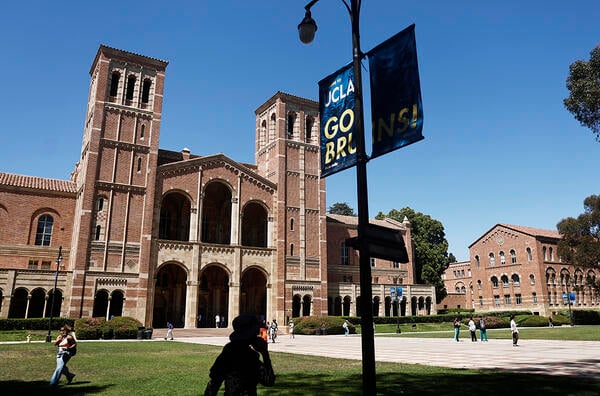
A federal court order issued late Monday evening provides significant financial relief to the University of California, Los Angeles, restoring about $500 million in federal research grants amid an ongoing lawsuit with the Trump administration over alleged instances of antisemitism on campus.
The preliminary injunction, first reported by CalMatters and Politico, is temporary. But for now it reinstates more than 500 grants from the National Institutes of Health, the Department of Defense and the Department of Labor, allowing hundreds, if not thousands, of university researchers to resume their work. That’s on top of a previous order in August from the same court that unfroze about 300 grants from the National Science Foundation.
Between the two rulings, almost all of UCLA’s federal research grants have been restored.
The funds were first withheld in late July, less than a week after the Justice Department accused the university of tolerating discrimination against Jewish students, faculty members and staff, in violation of federal civil rights law. The Trump administration later said UCLA could resolve the situation by paying $1.2 billion and agreeing to lengthy list of policy changes.
But university researchers pushed back, using an existing broader lawsuit and injunction to challenge the grant freeze.
In the end, District Judge Rita F. Lin, a Biden appointee, ruled in favor of the faculty members, saying the indefinite suspensions of grants was “likely arbitrary,” “capricious” and a violation of the Administrative Procedure Act.
University of Southern California professor Helen Choi had a pretty basic assignment for her students this fall: Read a book.
To be sure, Choi’s pedagogical choice isn’t novel for many faculty; 71 percent of professors use print materials in some capacity in their classroom, a Bay View Analytics survey found.
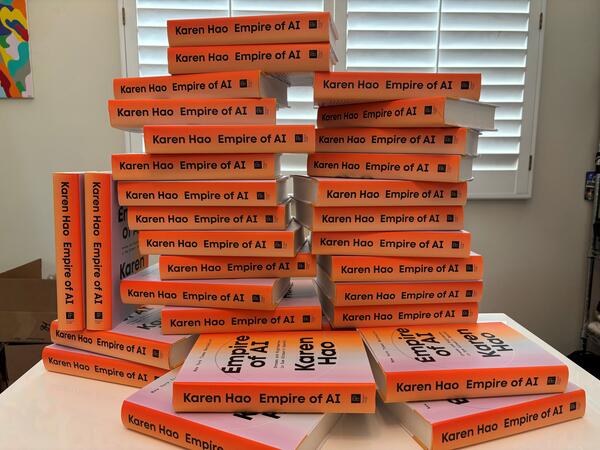
But Choi teaches Advanced Writing for Engineers, a course focused on teaching STEM students how to write across disciplines. Many of them “think nothing of shoveling a writer’s work into a chatbot for a summary,” Choi said. So this fall, Choi is encouraging students to close their laptops and spend time with Karen Hao’s book Empire of AI, about the evolution and tech behind AI.
Choi chronicled her decision in a Substack article titled, “I’m Making My Students Read a Book!” The post caught the attention of some faculty on Bluesky, including Vance Ricks, a Northeastern computer science and philosophy professor. Ricks had similarly selected Empire of AI for his master’s-level students to read this term.
Both Choi and Ricks hope to encourage their students to relearn how to read critically and engage in robust conversations with their peers. And after finishing the books, Choi and Ricks’s students will get the chance to reflect together on the book during a virtual meeting, where they will discuss the role of AI in their lives.
What’s the need: In the past, Choi would assign short online articles for students to inform their writing responses. “The questions I was getting from students indicated to me that the engagement with the underlying materials wasn’t as deep as I wanted,” Choi said. “Sometimes it was just straight up reading comprehension.”
In 2024, only 34 percent of students were considered proficient, which NAEP classifies as connecting key details within and across texts and drawing complex inferences about the author’s purpose, tone or word choice. Thirty-two percent of 12th graders ranked below “basic,” unable to locate and identify relevant details in the text to support literal comprehension.
In addition to helping students apply deeper learning and thinking skills, Choi hopes having print material will allow them to step away from their laptops and connect with peers in a more meaningful way.
In the classroom: Choi and Ricks have assigned the 482-page book to be read over four to five weeks, with students responsible for annotating and reflecting on the assigned sections on a weekly basis. Neither assigns content-based quizzes or reviews, relying on student discussions to reveal participation with the text.
At the start of the term, both Choi and Ricks said they spent time in class discussing why they were requiring a physical book, and specifically Hao’s book.
“You have to justify why you’re doing this abnormal thing,” Choi said.
Students seemed to get it and were excited about the opportunity, both professors said.
“They’re genuinely eager to have those conversations and engage in that sort of reflection,” Ricks said.
The assignment has, however, required some additional attention and time on their part to help students grasp reading.
“I’ve spent more time than I had anticipated literally walking around the book and saying, like, ‘This is an epigraph; why are the quotes here? What’s a prologue? What’s the index?’ Things like that,” Choi said.
Both professors said they’ve had to adjust their expectations for how quickly students would be able to complete the text. The book itself also proved more difficult than anticipated for students who speak English as a second language, so Choi and Ricks are considering ways to better support these students in the future.
The impact: “So far, students have shared that they are enjoying Hao’s book because it is relevant to their fields and lives outside of school,” Choi said. Their written responses to the reflection prompts also show improvement in clarity and organized reasoning.
In Ricks’s class, the print format has proven a fruitful learning experience in and of itself. “Just hearing from students about how they are engaging physically with the book, tactilely, in terms of the smell of the pages or the sound of turning the pages—all of those things, let alone the material that the book is about,” Ricks said.
The two classes will meet over Zoom on Sept. 26 for a student-led discussion on the book’s materials and themes.
While the overall goal is to promote better reading and writing for her students, Choi said the exercise has also been a bright spot in her courses.
“It’s really fun for me to teaching reading as part of writing,” she said. “It’s about the students, but I think having a joyful teaching experience is important for the classroom experience. Every day I’m pretty excited about having this book, and seeing the students with books makes me super happy.”
This September when classes started, it wasn’t the first time I had met with the students who walked through the door. That’s because during the week before they arrived on campus, I had conducted online group interviews with students who expressed an interest in taking my courses. All the students had to do was show up at one of the times I had set aside to meet with them.
The interviews are a tradition at Sarah Lawrence College, where I teach, and they are designed to let students get to know more about us as individual faculty in order for them to see if they want to take one of our courses. It’s a practice other colleges should try.
The interviews, which typically last about 30 minutes, are not a substitute for the descriptions of my courses or the syllabi I post. They are best described as the academic equivalent of a movie trailer.
The difference in this case is that the students, unlike moviegoers, are not asked to sit quietly in their seats. They are invited to ask questions after I have conducted a short presentation of what I hope will happen in my class. In these precourse interviews the students are the ones with the decision-making power. When an interview ends, they can simply decide my class is not for them and go off to another interview.
Some of the questions I get are of the nuts-and-bolts variety. How much reading do I assign a week? How many papers do I require over a term? But many of the questions are substantive. Why Book X rather than Book Y? What was the most interesting essay I got back last year?
If there is enough time, I will ask the students interviewing me to say why my course might interest them and how it fits in with the other courses they are contemplating. Students are welcome to stay after the group interview is formally over and have a one-on-one conversation.
During the interviews, I also try to explain my thinking about teaching. I don’t, for example, subscribe to the tonnage theory of assigned reading. A course in which a student races through 500 pages a week is not, I believe, better than a course in which a student closely reads 200 pages a week.
Equally important, I don’t think students should be strictly on their own when it comes to writing their papers. In the so-called real world, my editors don’t wait until I have published a book or an essay to offer up their advice. They do it before I publish, and I try to apply that practice in my classes. I see myself as my students’ editor before I ever become their judge and jury.
When it comes to AI and ChatGPT, I don’t have a lot to say these days. I think the subject has been talked to death. I tell my students to stay away from AI and ChatGPT as much as possible. Why, I ask, pay good money for an education, then turn to software that limits your critical thinking and research? The writing assignments I give are, I hope, sufficiently thoughtful that AI and ChatGPT can only be of minimal value. When it comes to long-form essays, I want my students to think about the material they are analyzing with a depth that is impossible on a timed test.
Looking back on a week of interviews, I often worry that I have imposed too much of myself on students. But in the end that is, I think, a risk worth taking. What precourse interviews offer is a chance for students to see that a course is more than a rote plan. It’s an undertaking that depends on mutual engagement that resists easy prediction.
Nicolaus Mills is chair of the literature department at Sarah Lawrence College and author of Winning the Peace: The Marshall Plan and America’s Coming of Age as a Superpower (John Wiley & Sons, 2008).
This HEPI blog was kindly authored by Rupert Houghton, a Student at Magdalen College School.
Loneliness is a fundamental part of being human, and it occurs as a part of everyone’s life at some point. But today’s world, and the changes in the way we all interact mean that loneliness has found new, easier ways to enter the lives of many people, and particularly, younger people. The statistics on this are clear:
10.3% of British secondary school students feel ‘often or always’ lonely (ONS)
43% of 16 to 24-year-olds in the UK would feel uncomfortable about admissions that they feel lonely (YouGov)
Loneliness is clearly a big issue for those in higher education and for those about to enter it. There are some schemes and policies to attempt to counteract this, but what is often not considered when it comes to policymaking is that loneliness is a physical condition, not just one based on feelings. How, then, should loneliness be thought of differently?
An important fact to remember when dealing with loneliness is that humans are not merely social out of choice, but out of evolutionary necessity. Pre-agrarian humans (before the Agricultural Revolution 7000 years ago) operated in groups, and they depended on each other to fulfil different roles for the group’s overall survival. As a result, humans evolved to seek out positive social relationships as working with others was crucial to our survival.
Loneliness is used to signal to the brain that a person’s social inclusion, and therefore survival, is at risk, and the brain therefore starts fighting for survival. Social rejection uses the same neural networks as physical pain, and causes a minor stress response in the brain. Loneliness is merely the prolonged and sustained activation of this stress response and so puts physical stress on the mechanisms within the brain that cause it.
When this response is elicited, the brain starts to transition itself into a socially hyper-alert state, as it attempts to preserve existing positive relationships, and minimise the number of negative interactions experienced. Studies have shown that the brain changes its own structure to accommodate this and changes the way facial expressions are read. Lonely individuals show a heightened sensitivity to negative social stimuli, including negative facial expressions, words, phrases, or pictures. They were shown to more quickly and accurately spot negative social cues but were also seen to mislabel neutral and even positive social cues as negative more often than their non-lonely counterparts.
In a pre-agrarian human social structure, this problem would have been resolved relatively quickly. It was necessary to work together in groups to survive, which would force a degree of socialisation. To avoid social rejection, an individual would perhaps change some aspects of their own behaviour and be able to pick up on the reaction of their peers, and so change to be better accepted into the group, which would enforce more positive social relationships.
Nowadays, however, it is harder for this process to take place. Instead, it is far easier for people to spend more time alone or reduce the time they spend socialising. The changes in neural pathways therefore start to have a different effect on a lonely person’s behaviour. As they become more sensitive to negative social stimuli, their brain can view them as ‘threatening’, and attempts to prevent exposure to them, causing them to self-isolate. This, rather than fixing the problem only exacerbates the perception of low social standing, increasing the feeling of loneliness.
The main physical impacts of loneliness come from its effects on the hormones secreted by glands within the brain. One of these hormones is cortisol, often called the ‘stress hormone’. Loneliness has been shown to make the brain overwork and produce more cortisol than it would ordinarily. This leads to a number of detrimental health effects: high levels of cortisol have been linked to chronic inflammation, disrupted sleep cycles in young adults, and raised blood pressure.
Loneliness is clearly becoming an endemic problem, particularly in secondary and higher education and is having a very real effect on students’ health. Loneliness is a self-perpetuating condition and something that easily becomes chronic, so it is therefore best to prevent it before it begins. The policy focus must be placed on making students aware of loneliness before it can start to impact on people’s education and wellbeing. Whether that be through making universities give more open information on loneliness, how to keep social, or ensuring that students are informed about how the choices made could affect their risk of loneliness, starting a conversation about it before it becomes a problem should be a priority.
If that question immediately makes your heart race, muscles tense, or your face do an unflattering cringe type of expression, you’re not alone. This question used to immediately spike my blood pressure too, until I realized I wasn’t actually frustrated with the question itself or even the student who asked it, but I was frustrated with the culture we have created in education that influences this type of behavior.
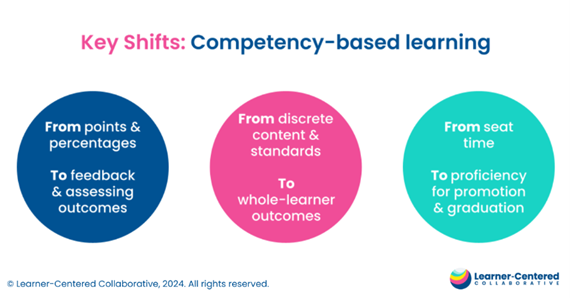
Many students approach their education with a narrow goal: study hard, ace the exam, and get an A in the class. It can feel disappointing when students seem to only care about what will be on the test or how they can bargain to bump up their grades, compared to learning and applying new knowledge to real-world experiences. Traditional grading systems tend to highlight performance above progress and prioritize short-term achievements over long-term growth. This approach not only confines deeper learning but also limits students’ understanding of what success in education truly means. Alternative grading methods that support critical thinking and meaningful reflection, like competency-based grading, can effectively promote student learning and enhance engagement.
Point-Chasing vs. Progress-Making: When Learning Takes the Lead
Traditional grading systems often:
Emphasize point accumulation rather than true comprehension
Include punitive consequences for errors without offering a chance to revisit/improve early coursework
Encourage a focus on “final” grades instead of continuous learning and growth
Traditional grading can also be inconsistent (“Traditional Grading Systems vs. Standards-Based Grading Systems” 2023). A student who only partially understands the content might pass with the application of extra credit or a grading curve, while another student who makes significant progress over time may still fail simply due to early struggles that cannot be counterbalanced. As educators in higher education, we recognize that learning isn’t always linear; so why do our grading practices assume it is?
Meeting Students Where They Are: What is Competency-Based Grading?
Competency-based grading promotes multiple opportunities for students to demonstrate proficiency in specific skills or learning outcomes instead of assigning a single score or high-stakes pass/fail grade to an assignment (Townsley and Schmid 2020). In addition to knowledge, this framework assesses expected student attitudes and skills in a progressive design that holds students accountable. It is important to define clear learning outcomes along with a constructive feedback process to guide future development toward mastery. Naturally, this approach shifts the focus from a final judgment to ongoing growth and improvement. If a student does not meet expectations for a certain skill, they aren’t faced with a permanent loss of points but instead could remediate and try again. (Hanson n.d.)
Putting Mastery into Motion: Strategies to Get Started
Transitioning from a traditional grading system can be a daunting task. Here are six helpful strategies to get started:
Start small. Unless the program is completing a comprehensive curriculum redesign, reworking your entire course all at once is not recommended and would likely overwhelm you and the students alike. Pilot competency-based grading by applying it to a single assignment or unit taught within the course.
Define clear learning outcomes. Identify the specific skills and competencies all students should be able to demonstrate. Ensure outcomes are specific, measurable, and student-centered. For example, “will demonstrate proper hand hygiene using aseptic technique” is preferable to “will understand proper hygiene practices”.
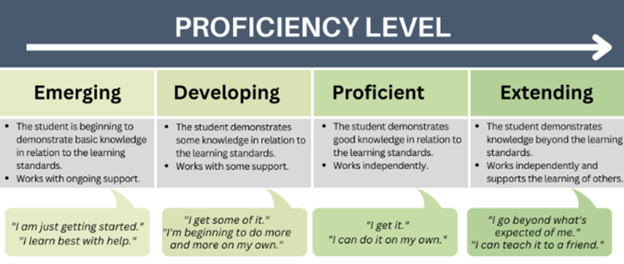
Use outcome-driven rubrics. Competency-based education closely aligns with backward design, so use the determined learning outcomes to build directly correlated rubrics. Focus on mastery, not points. Allow students to access the rubrics in advance. Describe what “competent” looks like by providing specific criteria with behavioral statements for different levels of achievement and provide routine formative feedback on how students can improve if they do not meet expectations. Some of the same assignments can be used, but the method of assessment changes.
Use a 4-point scale (or similar) to assess student progress. Competency-based grading focuses on students demonstrating mastery of specific learning objectives rather than accumulating points. (“Extending Our View of Extending” 2022)
Plan for remediation activities. Incorporate opportunities for revision/resubmission attempts or re-demonstrations into the course schedule. For feasibility, set limits on the total number of resubmissions/re-demonstrations allowed or set a specific timeframe such as within one week of receiving faculty feedback.
Focus your feedback. Avoid commenting on everything and instead, try to highlight one or two priority areas to guide students toward targeted improvement and maintain a manageable workload. Offer timely individualized support and feedback based on each student’s needs. (Farah 2021; Townsley and Schmid 2020)
Troubleshooting the Transition
Challenges are expected to accompany any change but can usually be mitigated with some thoughtful planning. Although higher education seems to collectively be moving toward competency-based grading, some faculty may experience resistance from their faculty peers and learners. Being transparent by sharing the reason behind the change and how it will benefit students can help increase understanding and engagement from both parties. Providing real-world examples in this area and the powerful impact competency-based education has already had on learning is an influential bonus! Faculty may express valid concerns centered around the increased workload related to time and additional resource demands necessary for success. Since remediation takes time and effort from students and faculty alike, be sure to set clear limits on remediation assignments and the process for completion. Be the example you set for others by utilizing available resources and seeking out professional development opportunities to increase your knowledge. Several online tools, including assessment builders, feedback templates, and progress-tracking programs, can assist faculty in maintaining consistency and efficiency in competency-based grading implementation.
What You Gain When You Grade for Growth
After making the transition and offering a more personalized and reflective learning experience, students focus more attention on what they are learning as opposed to what grade they are getting. Their confidence and willingness to take academic risks increases while anxiety decreases without the fear of irreversible grade penalties taking up real estate in their mind. Instead of asking “How many points did I lose?”, students start asking “How can I improve or make that better?” – which is inspiring! Grading for growth isn’t about lowering academic standards. It’s about redefining meaningful learning and reshaping expectations. Minor changes can lead to major transformation. Take the first step and be prepared to marvel at what happens when students are empowered with the tools and encouragement to grow.
Lisa Pitzer, DNP, MSN, RN, CNE, CNE-cl, serves as an Assistant Professor of Nursing at Saint Francis Medical Center College of Nursing in Peoria, Illinois. In this role, she oversees the Nursing Resource Center Simulation Laboratory and provides instruction in fundamentals and medical-surgical nursing. Dr. Pitzer is a Certified Nurse Educator and Certified Academic Clinical Nurse Educator whose scholarly interests focus on simulation-based pedagogy, curricular innovation, and advancing student success in nursing education. She is an active member of the National League for Nursing, the American Association of Colleges of Nursing, and Sigma Theta Tau International Honor Society of Nursing.
Townsley, Matt and Deron Schmid. “Alternative Grading Practices: An Entry Point for Faculty in Competency-Based Education.” The Journal of Competency-Based Education 5, no. 3 (2020): 1–5. https://doi.org/10.1002/cbe2.1219.