
BRANDENBURG v. OHIO
The Supreme Court held the government cannot punish incendiary speech unless the intent and likely outcome is to cause “imminent lawless action”.

Delays in the distribution of federal grants for undergraduates involved with TRIO, a series of college-access programs, combined with an ongoing lawsuit have raised concerns among proponents for the McNair Postbaccalaureate Achievement Program—a TRIO grant designed specifically for those pursuing graduate school.
Legally, grants don’t have to be awarded for either the TRIO undergraduate programs or McNair until the end of the fiscal year, Sept. 30. But in most years prior, the Department of Education has notified institutions about the status of awards in late August or mid-September.
That has not been the case so far this year.
Award notifications started to trickle out after Sept. 15 for the undergraduate programs that started Sept. 1, but according to a TRIO advocacy group, most of the college staff members who lead McNair are still waiting to hear from the department, though at least one program got approval Friday.
As with the other TRIO programs, the Education Department says it will issue notices by the end of the month. But with a lawsuit filed last year arguing McNair is discriminatory and President Trump calling to slash TRIO altogether in his recent budget proposal, uncertainty remains rampant.
“All of a sudden, we’re in sort of this panic mode,” one assistant program director said on condition of anonymity, fearing that speaking out could harm the students she serves. “That stress and panic has certainly been building since January, but this definitely accelerated it.”
And while the anonymous director said her program has yet to receive a status update, for some the fear of cancellation has already become a reality.
So far, the Council for Opportunity in Education, a TRIO advocacy group, has tallied 18 grant cancellations out of the more than 200 McNair programs. Collectively, McNair serves more than 6,000 first-generation, low-income and underrepresented students each year.
ED deputy press secretary Ellen Keast said in a statement, “The department plans to issue continuation awards for the McNair Scholars program by the end of the fiscal year,” while also continuing to “evaluate the underlying legal issues raised in litigation.” In an email obtained by Inside Higher Ed, a legislative affairs officer at the department reinforced this statement to a staffer on Capitol Hill, saying that any grantees facing a cancellation would have been notified by Sept. 16.
Still, the director said she is scrambling to devise a backup plan.
“We have less than three weeks to figure out what’s going on, talk to our institutions and make a plan,” she said. “Jobs are going to be lost and students aren’t going to have services.”
Worries about McNair have existed for months, but they kicked into a higher gear at a COE conference earlier this month.
The program director and COE president Kimberly Jones, both of whom attended the conference, say that Christopher McCaghren, ED’s deputy assistant secretary for higher education programs, spoke about the future of McNair on Sept. 10. And according to both of their recollections, when the secretary was asked if and when grant awards would be allocated, he said the department needed to wait on further rulings from the court before it could administer this year’s awards. (Jones noted that the session was not recorded, at the request of the department.)
Keast said the account of McCaghren’s comments was “unsubstantiated fake news” and reinforced that the department is committed to issuing McNair awards by Sept. 30. She declined, however, to provide a transcript or recording of his remarks.
The lawsuit McCaghren was likely referring to was filed last year by the Young America’s Foundation, a national conservative student group. It alleged the criteria for McNair eligibility was race-based and argued that in order to be constitutional, the program should be open to all students. The case was dismissed by a federal district court, but the plaintiffs have since appealed.
If the government is delaying grant allocation because of the lawsuit, Jones said, it would be an “absolutely unacceptable” practice.
“If the government couldn’t move on something every time they were sued, then they wouldn’t do anything,” she added. “I believe that this is an opportunity they’re taking advantage of to undermine the program and attempt to eliminate it.”
Amanda Fuchs Miller, the Biden administration appointee who previously filled McCaghren’s role, made similar comments.
“Just because there’s pending litigation doesn’t mean that you don’t fund a program that Congress has authorized and appropriated funds for,” she said. “That’s not the role of the executive branch.”
Both Jones and Fuchs Miller pointed to the department’s recent decision to end funding for grant programs that support minority-serving institutions as another reason they are worried about McNair’s future.
The MSI decision stemmed from a similar lawsuit that argued the criteria for Hispanic-serving institutions was illegal. And while no court ruling had been issued, a Justice Department official agreed with the plaintiffs and so did Education Secretary Linda McMahon, who expanded the determination to include similar grant programs.
Named after Ronald McNair, a first-generation college student and astrophysicist who died during the launch of NASA’s space shuttle Challenger in 1986, the McNair Scholars program started in 1989 and receives about $60 million per year from Congress.
As with other TRIO programs, at least two-thirds of the students served under McNair must be first-generation and low-income. But what has sparked the legal scrutiny of the graduate program is a provision that allows up to one-third of the participating students to be admitted because they are “a member of a group that is underrepresented.”
Proponents for McNair say that this may include characteristics like race or sexuality, but aspects like gender and field of study often play a role as well. In many instances a student will tick all three boxes—first-gen, low-income and underrepresented—at once.
“There’s a perspective that McNair is only for students of color, which it is not,” said Jones. “It particularly looks for a demographic that is not usually sought after in postgraduate education … We’re tapping into talent that we would not have otherwise.”
For example, a white woman from a low-income household who is pursuing a career in STEM could be a prime candidate under the current regulatory statute.
But advocates worry that because of current political tensions, many eligible students of all races could lose access to this critical service.
The program leader who spoke with Inside Higher Ed said that until grant awards are sent out, her rural institution will lack $278,000. As a result, she will likely have to tell 27 students that the classes they have already signed up for, the workshops they were promised and the conferences they planned to attend will not be possible.
“This is the semester that our seniors’ grad applications are due, so to just yank the rug out from underneath them and say, ‘You’re on your own’ in this critical time is just cruel,” she said. “It’s also, in my opinion, a really shortsighted way of the administration understanding national security and participating in the global economy.”
Tara Ruttley, a McNair alumna who studied neuroscience and now works in the space industry, always knew she wanted a Ph.D. but wasn’t sure how to get there before she saw a poster advertising the grant program at Colorado State University. Through McNair she was able to pursue a paid research internship, present her findings at conferences, receive guidance on application essays and then give back to younger students. If funding were to be cut, Ruttley said, other aspiring graduate students won’t be so lucky.
“I’m kind of a scrapper, so I might have figured it out, but it definitely would have been delayed. The entire package wouldn’t have been as strong and it probably would have taken me a lot longer to get to where I was going,” she explained. “There’s a whole generation of scientists we may never see from varied backgrounds across the country.”
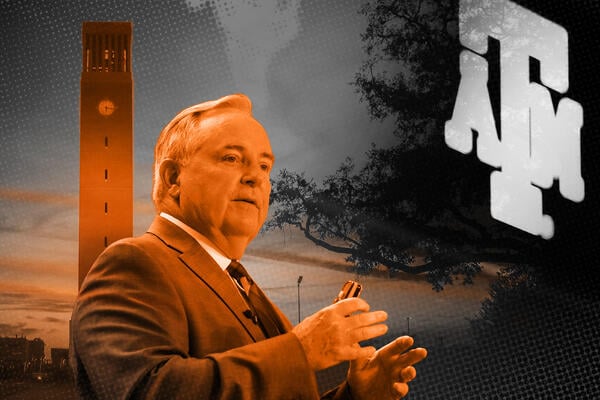
When Texas A&M University president Mark Welsh resigned amid an academic freedom controversy last week, he became the institution’s second leader to step down due to scandal in two years.
Unlike his predecessor, Kathy Banks, who retired in 2023 after she was caught lying about a hiring scandal, Welsh remained popular on campus; faculty sent the Board of Regents letters of support last week following a controversy that prompted him to fire an instructor, and students rallied on his behalf. But he seemed to lose the support of the deep-red Texas Legislature: Several Republican lawmakers called for his dismissal after a discussion over gender identity between a student and a professor in a children’s literature class was captured on video and quickly went viral.
In the short video, which has racked up more than five million views, a student questions whether an instructor is legally allowed to teach that there is more than one gender, which she suggests is “against our president’s laws.” Welsh initially defended the professor but quickly folded under considerable pressure from lawmakers, firing her and removing two administrators from their duties because they “approved plans to continue teaching course content that was not consistent” with the course’s description, he said in a Sept. 9 statement.
Amid the fallout, the American Association of University Professors and free speech groups accused Texas A&M of stifling academic freedom and bending to conservative political pressure. (Welsh countered that the case wasn’t about academic freedom but “academic responsibility.”)
But the incident also raises questions about what comes next for Texas A&M after legislators accused Welsh—a retired four-star general and former chief of staff of the U.S. Air Force—of spreading “leftist [diversity, equity and inclusion] and transgender indoctrination.”
Welsh largely skirted the controversy in a statement released Friday, his last day on the job.
“When I was first appointed as President of Texas A&M University, I told then Chancellor John Sharp and our Board of Regents that I would serve as well as I possibly could until it was time for someone else to take over,” he wrote. “Over the past few days, it’s become clear that now is that time.”
He added that serving as president for two years had been “an incredible privilege” and a “remarkable gift” and praised Texas A&M faculty, staff and students in his parting statement. On campus Friday, hundreds of supporters greeted Welsh outside an administrative building, according to social media and local coverage. The Texas A&M Student Government Association encouraged students and others to gather to “express gratitude” for Welsh’s service.
While Welsh’s parting remarks were restrained, state legislators and faculty members have been more passionate—and outraged—as both groups look ahead to the coming presidential search.
Leonard Bright, interim president of the Texas A&M AAUP chapter, told Inside Higher Ed that many faculty members had mixed feelings about Welsh. On the one hand, many professors viewed him as a stable leader who had served the university well since his time as dean of the Bush School of Government and Public Service, which he led from 2016 until he was appointed interim president in July 2023, before being given the permanent job later that year.
On the other hand, Welsh’s dismissal of English instructor Melissa McCoul, the professor caught up in the gender ideology flap, raised questions about whether he would protect academic freedom. As Bright sees it, when Welsh’s job was threatened, he failed to stand up for academic freedom.
Bright added that he was somewhat surprised by Welsh’s resignation, arguing that “as horrible” as the president’s recent actions were, he thought they had appeased the conservative critics and that “the board did not want to create further upheaval” given recent turnover at the top.
But ultimately, only Welsh’s resignation would satisfy his fiercest critics.
Brian Harrison, a Republican lawmaker and Texas A&M graduate, noted in posts on X following Welsh’s resignation that he had been calling for the board to fire the president for nine months.
“Proud and honored to be the voice for millions of Texans who are fed up with being taxed out of their homes so their government can weaponize their money against them, their values, and their children by funding DEI and transgender indoctrination,” Harrison wrote on X on Friday.
Like all institutions in the state, Texas A&M has backed away from DEI as instructed by state law. But Welsh’s removal of McCoul for discussing gender identity in class is part of a broader retreat by Texas A&M from LGBTQ+ topics. That effort dates back to at least 2021, according to one anonymous source who previously told Inside Higher Ed they were discouraged from promoting LGBTQ+ materials in the university library’s collection when Banks was president.
Last year Texas A&M cut its LGBTQ studies minor, alongside other low-enrollment programs, after Harrison led a charge against the program, calling it “liberal indoctrination.”
Both the flagship and the Texas A&M system have also taken aim at drag shows.
Texas A&M defunded an annual student drag show without explanation in 2022. West Texas A&M University president Walter Wendler canceled a student drag show in 2023, claiming it was demeaning to women. Earlier this year, the Texas A&M University system Board of Regents passed a resolution banning drag shows across all 11 campuses, only to get hit with a First Amendment lawsuit; a judge ruled against the system in March on free speech grounds.
(Neither Texas A&M University or system officials responded to a request for comment.)
With Welsh out of office, Texas A&M will soon begin a search for its next president. Chancellor Glenn Hegar announced Friday that an interim president will be named shortly, and in the meantime, James Hallmark, vice chancellor for academic affairs, will serve as acting president.
Hegar, who has only been on the job since July, is a former Republican politician, one of several hired to lead a Texas system or university in recent months in what is shaping up to be a trend.
Elsewhere in the state, the Texas Tech University system named Republican lawmaker Brandon Creighton as the sole finalist for the chancellor position. During his time in the Legislature, Creighton championed bills to crack down on DEI, restrict free speech at public institutions by banning expressive activities at night and undercut the power of faculty senates.
The University of Texas at Austin also opted for a politico, hiring as president Jim Davis, former Texas deputy attorney general, who had worked in UT Austin’s legal division since 2018. Davis was promoted to the top job after a stint as interim president, a role he had held since February. Similarly, the UT system tapped former GOP lawmaker John Zerwas as its next chancellor.
Recent hiring trends in Texas are beginning to mirror Florida, which has hired multiple former Republican lawmakers and other political figures with connections to Governor Ron DeSantis.
As Texas A&M prepares to launch its search, faculty are calling for an open process.
“The search should be transparent. It shouldn’t be primarily behind closed doors,” Bright said. “The faculty need to be involved. This is academia—this is about teaching, research and service.”

“Vaccination is one of the greatest public health achievements in American history,” the statement from NASN and FASN said. “It has eradicated or dramatically reduced the spread of numerous deadly and debilitating diseases. Thanks to vaccines, countless children — and vulnerable populations such as immunocompromised individuals and older adults — have been protected from preventable illnesses.”
The NASN and FASN statement points to the rise in measles cases across several states earlier this year as a warning of what can happen when vaccination rates decline.
In Florida, the elimination of vaccine mandates would occur through policy changes and legislation, Ladapo said. Earlier this month, Ladapo said Florida would be the first state to not require vaccinations, but the timeline for this is unclear.
Currently, the state requires a variety of immunizations for participation in preschool and K-12, according to the Florida Department of Health.
While the CDC recommends childhood vaccination schedules, school immunization requirements are typically set at the state level. However, many states use recommendations from CDC’s Advisory Committee on Immunization Practices to set school vaccine policies.
According to the CDC, vaccination participation among kindergarteners in the U.S. decreased for all reported vaccines in the 2024-25 school year, compared to the previous school year.
Data from the National Conference of State Legislatures shows all 50 states and Washington, D.C., require certain vaccinations for school attendance. Most states also give exemptions for religious or personal reasons. Only four states — California, Connecticut, Maine, and New York — allow only medical exemptions.
According to a Sept. 12 paper from KFF, exemptions from school vaccination requirements, particularly non-medical exemptions, have increased in recent years. That coincides with shifts in attitudes about childhood vaccinations, which are likely fueled in part by vaccine misinformation, KFF said.
At least 10 states this year have enacted legislation that could reduce childhood vaccination rates in those states. And at least one state — Colorado — made changes that could maintain or increase childhood vaccine rates, according to KFF.
As vaccine skepticism seems to be increasing, polling shows reduced levels of support for school vaccine requirements. Just over half — 52% — of U.S. adults support their state requiring vaccinations as a condition of public or private school attendance, according to a report released in January by the Annenberg Public Policy Center at the University of Pennsylvania. That’s down from 71% in 2019.
About 1,077 U.S. adults were polled by Annenberg Public Policy Center for the 2025 survey.
Harvard had a financial responsibility score of 2.8, well over the passing 1.5 required by the Education Department, in fiscal year 2023.
John Tlumacki/The Boston Globe/Getty Images
The Education Department announced Friday that it placed Harvard University on heightened cash monitoring, a designation that allows greater federal oversight of institutional finances and is typically reserved for colleges in dire financial straits.
By all accounts, Harvard, with its $53 billion endowment, is not.
“It’s harassment,” said Jon Fansmith, senior vice president for government relations and national engagement at the American Council on Education. “Harvard has the money, yes, but it is adding a headache. It’s adding staff. It’s interfering with students’ ability to access federal financial aid … The government’s making it harder for Harvard to support low-income students, which speaks to exactly what the administration’s goals are here—they’re not to help students, they’re not to improve education, they’re not even to address what they see as concerns at Harvard—they’re just to attack Harvard.”
Institutions placed on heightened cash monitoring are asked to put up a letter of credit that serves as collateral for the Education Department if the institution closes, or to award federal financial aid from their own coffers before being reimbursed by the department, explained Robert Kelchen, head of the Department of Educational Leadership and Policy Studies at the University of Tennessee at Knoxville. Harvard has been asked to do both.
According to a Friday news release from the Education Department, Harvard must put up a $36 million irrevocable letter of credit or “provide other financial protection that is acceptable to the Department,” department officials wrote.
“Students will continue to have access to federal funding, but Harvard will be required to cover the initial disbursements as a guardrail to ensure Harvard is spending taxpayer funds responsibly,” officials wrote.
The federal government froze $2.7 billion in federal grants for Harvard after the university rejected its sweeping demands in April. Harvard sued, and a judge ruled earlier this month that the freeze was illegal. The university has reportedly received some of the frozen funds, but the Trump administration says it’s still hoping to cut a deal with Harvard.
The release says three events triggered Harvard’s heightened cash monitoring designation: a determination by the Department of Health and Human Services that Harvard violated Title IV of the Civil Rights Act of 1964 by allegedly allowing antisemitism on campus, accusations that the university isn’t complying with an ongoing investigation by the Office for Civil Rights, and the $1 billion in bonds Harvard has issued to make up for pulled federal funding. Harvard did not respond to Inside Higher Ed’s request for comment Friday.
“Today’s actions follow Harvard’s own admission that there are material concerns about its financial health. As a result, Harvard must now seek reimbursement after distributing federal student aid and post financial protection so that the Department can ensure taxpayer funds are not at risk,” Education Secretary Linda McMahon said in a statement. “While Harvard remains eligible to participate in the federal student aid program for now, these actions are necessary to protect taxpayers.”
The department also pointed to layoffs at Harvard and a hiring freeze instituted in the spring. Several other wealthy colleges have frozen hiring and shed staff this year, in part because of the administration’s actions related to federal funding. A few other universities have either issued bonds or taken out loans to get immediate cash. But so far, the department has made no public mention about putting those colleges on heightened cash monitoring.
As of June 1, 538 colleges and universities were on heightened cash monitoring, federal data showed. About one-third of those colleges are private nonprofits, while about 42 percent are for-profit institutions. Most of the institutions—464 of them—are based in the U.S.
Many on the list are private institutions that have low financial responsibility composite scores, Kelchen said. This test assigns institutions a score between -1.0 and 3.0 based on the institution’s primary reserve ratio, equity ratio and net income ratio. To be considered financially responsible, an institution must score at least a 1.5, which Harvard does.
During fiscal year 2023, the latest for which data is publicly available, Harvard’s financial responsibility composite score was 2.8. Harvard’s estimated primary reserve ratio in fiscal year 2023 was 7.6, meaning that the university could operate for about seven and a half years by spending only its existing assets. By comparison, Hampshire College, another private, nonprofit college placed on heightened cash monitoring with a financial responsibility composite score of 0.6, had an estimated primary reserve ratio of 0.3, meaning it could continue operations for about four months before running out of expendable assets. Drew University, another institution on heightened cash monitoring and also with a financial responsibility composite score of 0.6, has a primary reserve ratio of -1.06.
But beyond the financial responsibility score, there are plenty of reasons an institution can end up on heightened cash monitoring. Some institutions, including Hampshire and Arkansas Baptist College, were put on the list due to a late or missing compliance audit. Others have been put on the list while the department reviews their programs, or because their accreditation was revoked. But, “the department can also just specify that an institution is not financially responsible,” Kelchen said.
The political motivation behind the move is clear, Fansmith said.
“To the extent that there is a problem—and to be clear, there are real problems—it’s not Harvard’s ability to pay their bills or meet their obligations. That’s a problem this administration has created,” he said. “They caused a situation, and then they are blaming Harvard for taking reasonable steps to address that situation. It’s also ironic when they send letters to Harvard using terms like ‘enormous’ and ‘massive’ and ‘colossal’ to describe Harvard’s endowment, and now they’re suddenly determining that they’re worried that Harvard is at financial risk … It is absolutely Orwellian.”

Consensus is growing around the idea that words beget violence. Consider some of the things America’s political leaders have said in the wake of Charlie Kirk’s assassination last week at Utah Valley University:
“This kind of rhetoric is directly responsible for the terrorism we’re seeing in our country today.”
“He actively fans the flames of division . . . regularly advocates violence for political retribution, and in more than one case, declares we are at war, not with a foreign adversary, but with each other.”
“There are some deranged people in society, and when they see leaders using that kind of language so often now increasingly, it spurs them on to action.”
“They need to turn down the rhetoric.”
That is, in order, President Donald Trump, Democratic Illinois Gov. JB Pritzker on Trump’s response to political violence, Republican Speaker of the House Mike Johnson, and Democratic Massachusetts Rep. Seth Moulton on Republican leaders.
Throughout American history, especially during times of civil unrest, the government used the power of the state to criminalize what it perceived as advocacy of violence. For example, in 1927, the Supreme Court upheld Charlotte Whitney’s conviction for joining a socialist convention that advocated the overthrow of the government (Whitney v. California).
The Court reasoned that advocating violence could present “danger to the public peace and security,” and that the exercise of the state’s police powers therefore carries “great weight” in such instances. Similarly, Attorney General Pam Bondi recently suggested the federal government might bring “incitement” prosecutions of people who celebrate Charlie Kirk’s assassination.
As the potential for political violence increases, what prevents the government from taking us back to 1927? What prevents the authorities from taking advantage of our fears and criminalizing advocacy of violence or even fiery rhetoric?
The Supreme Court held the government cannot punish incendiary speech unless the intent and likely outcome is to cause “imminent lawless action”.
Enter Brandenburg v. Ohio (1969), the landmark Supreme Court ruling on incitement. The state convicted a Ku Klux Klan leader for a speech saying, “it’s possible that there might have to be some revengeance taken” against the government if it continued to “suppress the white, Caucasian race.” The Supreme Court reversed the conviction, holding the First Amendment protects advocacy of violence unless it is “directed to inciting or producing imminent lawless action and is likely to incite or produce such action.”
Even if one assumes Brandenburg’s words called for violence, for the Supreme Court, his advocacy was too amorphous and the possibility of violence too remote for his prosecution to stay within constitutional bounds.
Similarly, in Hess v. Indiana (1973), the Court reversed an anti-Vietnam War demonstrator’s conviction stemming from his promise to “take the fucking street later” in connection with his arrest at a protest. The Court held these words fell well below the high Brandenburg standard. Hess did not direct his words toward anyone in particular, nor did they suggest a threat of immediate violence. In establishing this high bar, the Court rejected Whitney’s formulation that advocacy of violence “at some indefinite future time” is punishable on grounds it might ultimately lead to violence.
The Court instead highlighted the difference between “mere abstract teaching of the moral propriety or even moral necessity for a resort to force” and actual preparation for violent action. Thomas Jefferson once said that “a little rebellion now and then is a good thing, and as necessary in the political world as storms in the physical.” Without the Brandenburg distinction, a speaker emulating Jefferson could face jail for recognizing a moral necessity for the resort to force.
Brandenburg’s brilliance is its recognition that political discourse is messy.
Without this distinction, Democratic states could criminalize calling pro-abortion politicians “murderers” on grounds such speech incites violence against those politicians. Republican states could criminalize calling President Trump a “Nazi” on the same grounds. Giving the government the power to lump such heated rhetoric together with speech advocating immediate lawlessness would grant it a cudgel against any speech it saw as threatening its own power — with free and passionate discourse becoming the ultimate victim. Brandenburg therefore allows breathing room necessary for robust public debate.
The Supreme Court made clear in NAACP v. Claiborne Hardware (1982) that “strong and effective rhetoric cannot be nicely channeled in purely dulcet phrases. An advocate must be free to stimulate his audience with spontaneous and emotional appeals for unity and action in a common cause.” In other words, it should not be up to the government to decide when rhetoric has gone too far. Brandenburg’s brilliance is its recognition that political discourse is messy: tone and language are deliberate choices integral to a speaker’s message.
Political leaders and citizens have every right to call out rhetoric that they believe is damaging to our public discourse. Brandenburg — and countless other First Amendment precedents — recognize that these calls, rather than the power of the state, are the most effective antidote to speech we find dangerous or offensive.

The Trump administration has made another move that historians say is an attempt to sanitize American history, but one the administration argued is necessary to ensure students have respect for the country.
On Wednesday, Education Secretary Linda McMahon outlined a new plan for how her department would promote “patriotic education” by adding it to the list of priorities that can drive decisions for discretionary grants, including those that support programs at colleges and universities.
“It is imperative to promote an education system that teaches future generations honestly about America’s Founding principles, political institutions, and rich history,” McMahon said in a statement about the new proposal. “To truly understand American values, the tireless work it has taken to live up to them, and this country’s exceptional place in world history is the best way to inspire an informed patriotism and love of country.”
According to the proposal, which is open for public comment until Oct. 17, “patriotic education” refers to “a presentation of the history of America grounded in an accurate, honest, unifying, inspiring, and ennobling characterization of the American founding and foundational principles”; examines “how the United States has admirably grown closer to its noble principles throughout its history”; and advances the “concept that commitment to America’s aspirations is beneficial and justified.”
McMahon’s other priorities for grant funding include evidence-based literacy, expanding education choice, returning education to the states and advancing AI in education.
With this latest proposal, the department wants to focus “grant funds on programs that promote a patriotic education that cultivates citizen competency and informed patriotism among and communicates the American political tradition to students at all levels.” That could include projects geared toward helping students understand the “founding documents and primary sources of the American political tradition, in a manner consistent with the principles of a patriotic education,” according to the proposal.
However, professional historians who have read the proposal told Inside Higher Ed that the department’s patriotic education push is a politically motivated power grab.
“I agree that American history should be presented with accuracy and honesty, based on solid historical evidence, and doing so does inspire people,” said Sarah Weicksel, executive director of the American Historical Association. “But the department’s priority statement has a narrow conception of patriotism and patriotic education.”
She said that’s especially evident given the Trump administration’s numerous other policy changes aimed at presenting a version of American history that downplays or ignores the darkest parts of the country’s past, such as race-based slavery, the disenfranchisement of women and African Americans, and codified racial segregation.
“That context tells us that the administration is interested in telling an uncomplicated celebration of American greatness,” Weicksel said. “Doing that flattens the past into a set of platitudes that are not rooted in the broader historical context, conflicts, contingencies and change over time that are central to historical thinking.”
In March, Trump issued an executive order entitled “Restoring Truth and Sanity to American History,” prohibiting federal funding for exhibits or programs that “degrade shared American values, divide Americans based on race, or promote programs or ideologies inconsistent with Federal law and policy.” That prompted a review of all exhibits hosted by the Smithsonian Institution and the National Park Service, both of which have since removed multiple artifacts that don’t support Trump’s patriotic history push, including several that underscore the brutality of slavery.
And as the 250th anniversary of the nation’s founding approaches, the government is in the process of planning commemorative civic education initiatives that advance its definition of patriotic history. To make that happen, it’s largely drawing on the input and expertise of conservative scholars and groups.
The Education Department recently awarded $160 million in American history and civics grants for seminars for K–12 educators and students related to the Declaration of Independence anniversary next year. The agency didn’t specify which institutions got the money but previously said it would give priority to colleges and universities with “independent academic units dedicated to civic thought, constitutional studies, American history, leadership, and economic liberty,” which critics describe as conservative centers.
In remarks at an event hosted by the Federalist Society and the Defense of Freedom Institute on Wednesday, McMahon criticized the state of civics education for students, citing a statistic that only 41 percent of young people say they love America.
“That means the balance doesn’t love America,” she said. “Why don’t they love America? Why aren’t they proud to be Americans? It’s because they don’t know America. They don’t know the foundations, they don’t know the real history of our country … It’s really important that we teach respect for our flag, that we teach respect for our country.”
While she did acknowledge that the Education Department can’t directly control curriculum, she noted that the department can use funding to encourage the types of education or programs it wants to see.
The Education Department also announced Wednesday that it’s launching a coalition of 40 groups—including the conservative Heritage Foundation, Turning Point USA, Hillsdale College and the American First Policy Institute—to spearhead the America 250 Civics Education Coalition, which is “dedicated to renewing patriotism.” (McMahon chaired the American First Policy Institute before she became secretary.)
“We celebrate Lincoln for his greatness in recalling the nation to the principles of its birth, the principles of the Declaration of Independence, the most beautiful political document in history,” Hillsdale president Larry Arnn said in a statement about the coalition. “It is time to repeat his work and the work of Jefferson and the Founders. We will work together to learn those principles, and for the love of them we will have a grand celebration.”
But Weicksel with AHA said the government’s directives to omit parts of American history in classrooms, museums and other public spaces will undermine the public’s agency. “If citizens don’t have access to a historically accurate understanding of the past, how will they use that past to chart a new path for the future?”
David Blight, a professor of history and Black studies at Yale University, said he interprets the department’s emphasis on patriotic education as “pure politics.”
“It’s the politics of trying to use history to control people, including children, young people, the people who teach it, the people who write curriculum and the state legislatures that will design this stuff,” he said. “The government is trying to be a truth ministry.”
While there have been other movements to control how the country remembers its history—including by U.S. senator Joseph McCarthy in the 1950s and the United Daughters of the Confederacy in the late 19th and early 20th centuries—Blight said these moves by the Trump administration are more powerful.
“We’ve never had this come right from the White House, with the power of the executive branch and their control over so much money,” he said, urging educators to voice their opposition. “When federal money depends on pure ideology, we’re in very deep trouble, and that’s what they’re saying. That’s not even close to a democratic society.”

During the visit, Al-Benyan met with Australia’s minister of education, Jason Clare, where discussions focused on expanding ties in higher education, scientific research, and innovation, with emphasis on joint university initiatives, including twinning programs and faculty and student exchanges designed to build stronger academic links between the two countries.
The research collaboration was prominently featured on the agenda, with both sides highlighting opportunities in fields such as artificial intelligence, cybersecurity, renewable energy, and health sciences. The minister also discussed investment opportunities in Saudi Arabia’s evolving education sector under Vision 2030, with a view to establishing local branches and research centers.
Australia’s expertise in technical and vocational training was another focal point, as Saudi looks to enhance human capital development and equip its young population with the skills needed to succeed in the future labor market. Both ministers underlined the importance of supporting Saudi students in Australia by strengthening academic pathways and ensuring a welcoming educational and social environment.
As well as his meeting with Clare, Al-Benyan held talks with professor Phil Lambert, a leading Australian authority on curriculum development. Their discussions centered on collaboration with Saudi Arabia’s National Curriculum Centre to develop learning programs that promote critical thinking, creativity, and innovation.
The meeting reviewed best practices in student assessment, teacher training, and professional certification, aligning with global standards. Opportunities for joint research on performance evaluation and digital education methods were also explored with the aim of integrating advanced technologies into classrooms.
Al-Benyan also took part in the Saudi-Australian Business Council meeting in Sydney, where he highlighted investment opportunities in the Kindgdom’s education sector in line with Vision 2030.
Education is a key pillar globally and a central focus of Saudi Arabia’s Vision 2030, which aims to create a world class education system that nurtures innovation and drives future ready skills
Sam Jamsheedi, president and chairman of the Australian Saudi Business Forum
Conversations covered the launching of scholarship and exchange programs, advancing educational infrastructure and technologies, and promoting joint research in priority fields such as health, energy, and artificial intelligence, underscoring the importance of developing programs to enhance academic qualifications and support initiatives for persons with disabilities, while reaffirming Saudi Arabia’s commitment to supporting investors through regulatory incentives and strategic backing.
“It was a pleasure to welcome the Minister of Education, His Excellency Yousef Al Benyan, as part of the official Ministry of Education, Saudi Arabia delegation from the Kingdom of Saudi Arabia to Australia,” said Sam Jamsheedi, president and chairman of the Australian Saudi Business Forum.
“Education is a key pillar globally and a central focus of Saudi Arabia’s Vision 2030, which aims to create a world class education system that nurtures innovation and drives future ready skills.”
“Our Council was proud to host a roundtable with leading Australian universities and training providers, giving Ministerial attendees first hand insights into Australia’s capabilities across higher education, vocational training, and research collaboration.”
“Australian education already has a strong presence in the Kingdom, with a growing number of partnerships across early childhood education, schooling, technical training & university programs,” he added.

Higher education is rapidly evolving, and so are institutional approaches to online program growth. We’re consistently finding that schools are no longer interested in handing over full control to third-party vendors. Rather, they want to build and enhance the internal capabilities of their teams, maintain ownership over their data and brand, and deliver a student experience uniquely aligned with their mission.
This approach requires a flexible partner that’s focused on enablement vs. the traditional black-box outsource model.
In my conversations with institutional leaders across the country, a common theme that keeps emerging is the frustration with traditional OPMs and the diminishing viability of this model. Leaders feel boxed in by long-term contracts, inequitable financial terms, a lack of visibility into performance data, and limited control over the student experience.
What many institutions seek is a partner who will deeply integrate with their teams, augmenting their talent and resource gaps. An ideal partner will enhance the institution’s strengths, not replace them. In many cases, schools have ambitions to in-source certain areas of expertise over time and need support, guidance, and best practices to achieve this.
More simply stated, many schools are seeking an enablement partner.
At Collegis, we define enablement as helping institutions build their own internal strengths. It’s about equipping campus teams with the data, technology, and operational expertise they need to grow. This sets them up to thrive long after our work is done.
Instead of taking the reins, we help institutions empower themselves to take ownership and control of their future over time. That distinction matters.
Our model is intentionally modular and tech-agnostic, allowing partners to engage only the services they need, when they need them. There are no bundles to untangle or one-size-fits-all solutions to force-fit. In practice, we integrate ourselves in lockstep with the institutional teams and work alongside them as trusted collaborators. This contrasts with other models where external vendors operate in a black box.
For us, enablement is about delivering lasting value, strengthening internal capacity, and helping institutions move forward and own their futures.
When institutions embrace this model, the outcomes are real and measurable.
One example comes from a public institution that was working with an OPM on some of its online programs. They brought Collegis in to help build a foundation they could truly own, starting with data strategy and enrollment support tailored to their internal goals.
Throughout our partnership, we’ve worked closely with their teams to refine processes, optimize student experience, openly share best practices, and enhance internal capabilities. The outcome? A 59% year-over-year increase in new online enrollments in the programs we support.
It’s a powerful reminder of what institutions can achieve when they choose a partner who builds alongside them, not in place of them.
When institutions retain ownership of their tech stack, data, and student experience, they stay agile and in control. They’re able to pivot when needed, maintain high standards for compliance and privacy, and continuously improve outcomes across the student lifecycle.
Our job at Collegis is to make that ownership attainable. We integrate with existing systems, design transparent reporting, and support processes that campus teams can run and refine on their own. True enablement means recommending and implementing sustainable practices that align with the mission and objectives of the institution.
Partnership today should mean transparency, collaboration, and shared purpose. And it should be built on trust.
When institutions evaluate potential partners, I encourage them to ask:
Your institution shouldn’t have to choose between doing it all alone or giving it all away. There’s a better way forward that can empower your team, adapt to changing needs, and help you thrive in a competitive, fast-moving environment.
You deserve a partner who helps you lead on your terms with clarity, control, and confidence. That’s the path Collegis is committed to support.
Higher ed is evolving — don’t get left behind. Explore how Collegis can help your institution thrive.
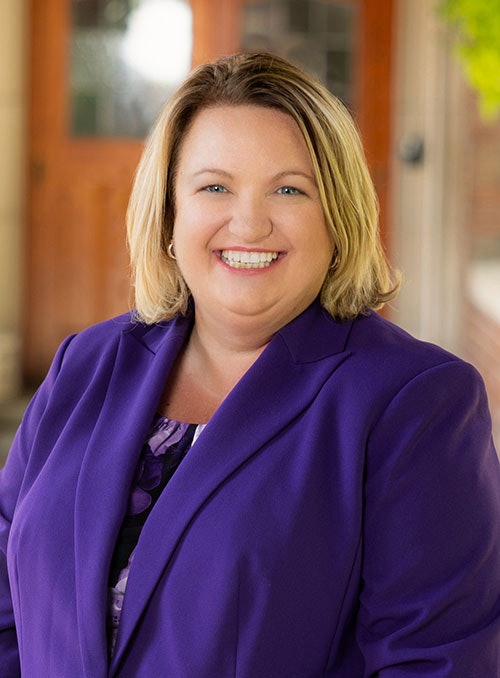
Harvey comes to Alfred from Nazareth University, where she spent more than five years leading efforts to strengthen the student experience through cross-campus collaboration focused on student well-being and belonging. Harvey began her tenure at Nazareth as Assistant Vice President for Student Engagement (2019-21) before serving three years as Associate Vice President for Student & Campus Life and Dean of Students. In March 2024 she was promoted to Associate Provost for Student Experience and Dean of Students.
Harvey has a bachelor’s degree in mathematics from SUNY Fredonia, a master’s degree in college student personnel administration from Canisius University, and a Doctor of Education degree in educational leadership from the University of Rochester.