Blog

  • Can robot therapists really help you sort out your problems?

    Can robot therapists really help you sort out your problems?

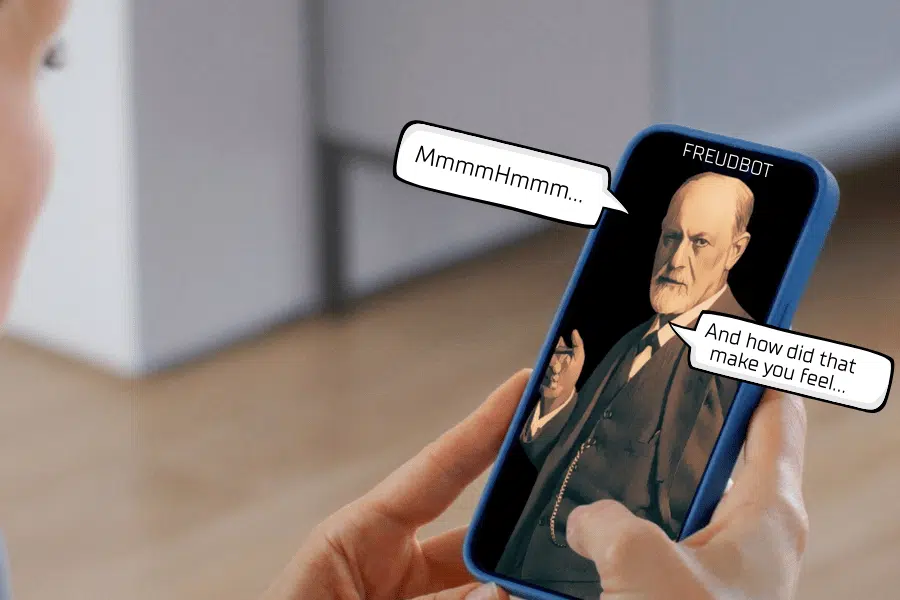
    Young people are turning to AI-based chatbots for immediate and inconspicuous support for mental health challenges. But its use for therapy is fraught with ethical and regulatory conundrums.

    Dr. Fan Yang, assistant professor in the School of Social Work at the University of Illinois Urbana-Champaign said that AI can be very efficient. “It’s available anytime,” Yang said. “It can let people talk with the machine without thinking about stigma.”

    In one ongoing project, the Addictions and Concurrent Disorders Research Group at the University of British Columbia surveyed 423 university-aged recent ChatGPT users. Rishika Daswani, clinical research assistant for the study, said that they found that just over half had used the app for mental health support.

    “When comparing it to traditional support, a lot of our respondents said that it was actually similar, and a small but significant portion of people noted its superiority,” Daswani said.

    In the wake of financial barriers and long waitlists for in-person care, AI-based mental health apps and chatbots are well-intentioned to provide interim support during this gap, said Dr. Bryanna Moore, assistant professor in the Department of Health Humanities and Bioethics at the University of Rochester.

    There’s an app for that.

    Still, a study led by Yang and colleagues in the Journal of Medical Internet Research mHealth and uHealth showed that high-quality apps still carried financial barriers to access through subscription or one-time fees.

    “In the future, we need to be careful about the word ‘availability’,” Yang said. “We can distinguish technological availability versus financial availability.”

    Daswani said the most common drawback of AI use for therapy identified by participants in the group’s study was that AI lacked emotional tone and depth. While a therapist might challenge one’s thoughts and help them reflect critically, chatbots tend to regurgitate information and act as echo chambers to reinforce pre-existing beliefs, Daswani said.

    Moore described AI therapy as sycophantic. “They are designed to draw you in to keep you clicking and engaged for as long as possible,” Moore said. “The responses they give are meant to make you feel good or seen or validated.”

    Loneliness and social isolation are among the root causes of many mental health issues for which young people use chatbots for support.

    “I don’t think it’s a leap to say that for some people connecting with a therapy bot or an online persona, [it could] promote the development of coping skills, but for others, it could really erode that,” Moore said.

    When children turn to AI therapists

    While most of the discussion around AI use for therapy has been centered around adults, Moore said specific considerations need to be taken into account for young children and adolescents.

    “Children are developmentally, morally, socially and legally distinct from adults,” Moore said. “The use of AI-based apps for mental health care by children and adolescents might impact their social and cognitive development in ways that it doesn’t for adults.”

    Childhood and adolescence are pivotal times for cementing how someone understands what it means to have friendships or relationships and learns to pick up on social and emotional cues. Chatbots often fail to fully understand a child within the context of this environment, Moore said.

    “Especially when it comes to things like mental health care, the environmental stressors on the child are central to understanding how their symptoms are presenting and identifying effective avenues of intervention,” Moore said.

    Therapeutic interventions usually involve shared decision-making with the child, caregiver and clinician to fully explore the benefits, risks and alternatives of each option. However, mental health apps can short-circuit these essential conversations, Moore said.

    Putting trust in technology

    In their survey of 27 mental health apps, Yang and colleagues identified several user design concerns for a youth target audience.

    Many apps featured dark colors and attained low readability scores, with an average sixth-grade reading level for in-app content and ninth-grade reading level for app store descriptions. While all apps were based on text, Yang said including non-text formats would make the apps more youth-friendly, especially for non-English speakers.

    Daswani cautioned that while AI may seem to have lowered the barrier for access to mental health care, it may be slow to gain acceptance in communities with low institutional trust in technology and authority.

    “Western language has specific emotional frameworks which may not fully capture other cultures’ ways of expressing distress,” Daswani said. “If AI tools don’t recognize these culturally encoded expressions, then you have a risk of misunderstanding and your needs not being met.”

    Moore and other experts worry that the reliance on AI for mental health support could perpetuate the pervasive notion that mental illness is something one deals with on their own.

    “If it’s as simple as downloading and jumping on an app once a day or once a week, there’s this idea that the barriers to having good mental health are gone,” Moore said.

    The value of human interaction

    The reliance could normalize turning to technology as the best, easiest and most appropriate avenue for support when someone is struggling. “I don’t think there’s anything inherently good or bad about the technology,” Moore said. “My big worry is, will it become a substitute for also seeking out meaningful human interactions and developing those skills and coping mechanisms?”

    If these chatbots are truly treatments, they must be subject to the same regulations that other treatments are subject to, said Moore, but for now, there is a lack of regulations and clear guidelines about who is responsible for assuming the risks involved in using AI for therapy.

    “It’s just such an unregulated space, and I think placing the responsibility on children, adolescents, parents and caregivers, and even individual clinicians to navigate this quagmire is really unfair,” Moore said.

    In the study by Yang and colleagues, many of the apps lacked detailed privacy policies, aside from the baseline information provided on the app store. How the apps handle personal data and information about traumatic experiences was not explicitly stated.

    It is also currently unclear how best to integrate these apps into clinical practice. Moore said a logical starting point is for clinicians to ask patients about their digital intake and understand how much time they are spending on these apps.

    Daswani said that integrating AI literacy into mental health education can help people understand the benefits and limitations of these apps. “We’re not saying that it’s to replace a therapist,” Daswani said. “But that doesn’t mean that we want to discredit it completely.”

    What’s needed now, Yang said, is to improve the quality of the apps. “So hopefully one day we can have human-centered treatment plans for people, with AI being some supplemental treatment support,” Yang said.


    Questions to consider:

    1. What is an advantage of a therapy app?

    2. What are some concerns health professionals have about children relying on AI therapy?

    3. Why might you feel more comfortable talking to a digital tool than a human?

    Source link

  • There are three ways to tackle the student loan crisis: one is unwise, one is unaffordable and one is unpalatable. All are unfair.

    There are three ways to tackle the student loan crisis: one is unwise, one is unaffordable and one is unpalatable. All are unfair.

    Author:
    Nick Hillman

    Published:

    HEPI Director Nick Hillman takes a look at the continuing row over whether student loans are turning out to be fair for graduates.

    The weekend media were full (yet again) of the perceived unfairness of Plan 2 student loans. These are the loans taken out by undergraduate students who started their studies in England between 2012 and 2022. They cover both tuition fees and maintenance costs.

    Graduates with Plan 2 loans face a high-ish variable interest rate (6.2% if they are on a salary comfortably over £50,000) and a 30-year payback period before the loans are written off. Plan 2 remains the norm in Wales, where Labour chose not to copy England’s shift to Plan 5 loans (which have no real rate of interest but a 40-year repayment term).

    The first students who took out Plan 2 loans are now graduates in positions of influence, including in Parliament and in the media. They are using this influence to complain about how much money they are having to pay to the Government through income tax, National Insurance and student loan repayments combined – often 51% of salary.

    Many people will feel sympathy for them, both for the large debts detailed on their student loan statements and for the wider ‘failure to launch’ challenges faced by younger people, given the ups and downs of the graduate labour market and high housing costs. But much of the rhetoric on Plan 2 is overblown.

    Some – I stress not all – of the complaints are nothing more than successful graduates wanting someone else to cover their own debts. Intriguingly, given how progressive the loans are, the loudest complaints come from the left – for example, from Oli Dugmore of the New Statesman, Zarah Sultana MP, Nadia Whittome MP and Chris Curtis MP.

    What is to be done? Policymakers tend to work by the rule of three, meaning a tricky policy challenge may only have three possible big solutions. The Pensions Commission, for example, responded to the pensions crisis of the early 2000 by claiming the only options were: later retirement; higher taxes; or more saving.

    The same goes for Plan 2 student loans. There are just three options for tackling the perceived problems, and each is as unattractive as those three pension options. Yet we don’t know which one the complainants would prefer. In other words, those unhappy about Plan 2 loans need clearer answers on how they think the system should be fixed.

    1. One option is to hide the issue by no longer giving access to student loan balances. New graduates don’t worry they will pay hundreds of thousands of pounds in income tax over their careers, as no one ever rolls the total number up. Yet they do worry about comparable student loan payments. We’ve had stealth taxes; in this scenario, student debt would become stealth loans.
    2. Another option would be to reduce student debts. By tweaking the features of Plan 2 loans, such as the repayment thresholds or the interest rate, policymakers could reduce current monthly repayments and / or cut outstanding balances. But someone would have to pick up the tab, including – presumably – those who have not benefited from higher education.
    3. A third option, and the one that has been favoured by policymakers in the past, is to hit graduates harder, so the loans get paid down faster. While comparisons are not always easy, it is thought other countries with student loans have typically had lower repayment thresholds (see page 31). But if you currently dislike watching your total debt grow despite making repayments, you might really hate the larger payments necessary to reduce the total debt even more.

    If policymakers are to fix the supposed problems faced by those with Plan 2 loans, they will have to choose one of these options or a mix of them (or something like them). To me, the first option seems unwise, the second seems unaffordable and the third seems unpalatable. All three seem unfair. It is time for the campaigners to say which they prefer.

    To return to pensions, the Plan 2 protests resemble the failing WASPI campaign by those who say the equalisation of State Pension Ages was so badly communicated that billions in compensation should now be paid. Whether it is WASPI or Plan 2 student loans, people are trying to unwind policies that were specifically designed to aid the bulk of taxpayers.

    Nick Hillman’s previous blog on the row about Plan 2 loans can be read here: Why the current campaign on student loan interest may be misguided, misunderstood and misdirected

    Source link

  • When the Spanish flu upended universities, students paid the price

    When the Spanish flu upended universities, students paid the price

    by Jill Barshay, The Hechinger Report
    February 2, 2026

    In the fall of 1918, Edward Kidder Graham, the president of the University of North Carolina, tried to reassure anxious parents. The Spanish flu was spreading rapidly, but Graham insisted the university was doing all it could to keep students safe. Weeks later, Graham himself contracted the virus and died. His successor, Marvin Hendrix Stacy, promptly succumbed to the epidemic two months later.

    Many universities endured similar chaos during the Spanish flu, as I learned from reading a chapter in a forthcoming book on higher education, “From Upheaval to Action: What Works in Changing Higher Ed,” by sociologist and Brandeis University President Arthur Levine and University of Pennsylvania administrator Scott Van Pelt. (Disclosure: Levine was the president of Teachers College, Columbia University from 1994 to 2006, during which he launched The Hechinger Institute, the precursor to The Hechinger Report.)

    Related: Our free weekly newsletter alerts you to what research says about schools and classrooms.

    But what really struck me was how many colleges’ experiences resembled those of the Covid-19 era. 

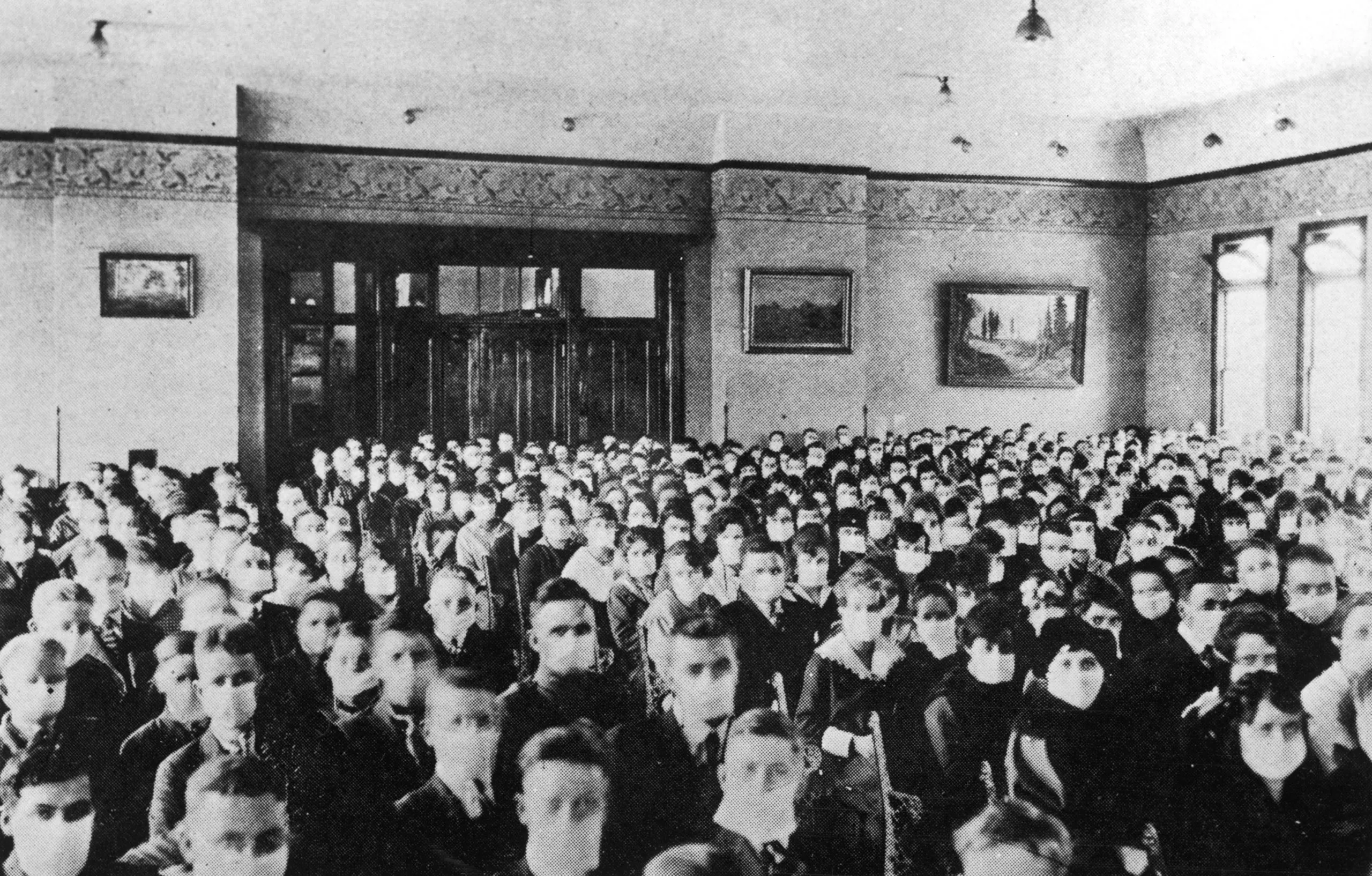
    During the 1918 pandemic, Harvard canceled lectures with more than 50 students. Yale shut down its campus after partial measures failed to contain the spread. Many urban colleges closed temporarily. Orientations, commencements and large public gatherings were canceled or postponed. At Iowa State University, gymnasiums were converted into makeshift hospitals as cases surged. At the University of Michigan, dormitories transformed into quarantine facilities after infirmaries overflowed.

    And then came a second wave — deadlier than the first.

    The Spanish flu ultimately killed about 675,000 Americans at a time when the U.S. population was roughly 100 million — nearly twice the proportional death rate of Covid-19, which has claimed about 1.2 million lives in a country more than three times as large. Unlike Covid, the Spanish flu struck hardest at young adults in their 20s and 30s, the very ages colleges relied on to fill their classrooms and new faculty seats. Yet, Levine argues, higher education never managed to help that generation recover — academically, socially or psychologically.

    Instead, institutions moved on.

    “We essentially aged out of it,” said Levine, speaking at the American Enterprise Institute in January about higher education’s challenges. “Pretty soon the people who were home weren’t in college anymore. It’s a relatively short number of years.”

    There were innovations. In what we would now call remote learning, colleges expanded correspondence courses. In 1922, Penn State became the first institution to use radio for instruction. Female enrollment grew, particularly in nursing. 

    Related: Most college kids are taking at least one class online, even long after campuses reopened

    But there was little evidence of repair or recovery. Students who had seen their education disrupted by both World War I and the pandemic were depleted in number and altered in outlook. They would come to be known as the lost generation: disillusioned, cynical, psychologically scarred and searching for meaning in a world that had failed to make sense.

    What prevented this loss from registering as a lasting crisis was scale. In the late 1910s and early 1920s, only about 5 percent of young Americans attended college. There were far fewer colleges and universities. And higher education was not yet central to economic and social life in the way it is today. When one cohort faltered, institutions simply admitted the next. Replacement took the place of recovery.

    Still, the cultural effects were visible. Writers like Ernest Hemingway, Gertrude Stein and F. Scott Fitzgerald chronicled the lingering disillusionment of a generation shaped by war and disease. The Roaring Twenties, Levine argues, were less a sign of healing than a counterreaction that would be followed, a decade later, by the Great Depression.

    Levine doesn’t romanticize the past. “Everything I’ve read makes it sound like the Spanish flu combined with World War I may have been a harder slog,” he said in an interview. “So many lives were lost — not only students but faculty and staff. Mental health resources were primitive.”

    The parallels to the present are unsettling, but the differences may matter even more. Today, well over 60 percent of young adults attend college immediately or shortly after high school. Higher education has become a mass institution, deeply intertwined with economic mobility and social identity. And Covid did not just disrupt schooling; it imposed prolonged social isolation at a formative stage of development for teens and young adults. Levine notes that it is impossible to disentangle the effects of the pandemic from the rise of smartphones and social media, which were already reshaping how young people relate to one another.

    Enrollment declines following Covid echo those of the Spanish flu era. But replacement may no longer be a viable strategy. When higher education serves a small elite, institutions can absorb loss quietly. When it serves a majority, the consequences of disruption are broader, more visible, and harder to outrun.

    The lesson of the Spanish flu is not that young people inevitably bounce back. It is that institutions endured by waiting. A century ago, that carried limited cost. Today, with a far larger and more psychologically vulnerable young adult population, the price may be far higher.

    Contact staff writer Jill Barshay at 212-678-3595, jillbarshay.35 on Signal, or [email protected].

    This story about how the Spanish flu affected universities was produced by The Hechinger Report, a nonprofit, independent news organization focused on inequality and innovation in education. Sign up for Proof Points and other Hechinger newsletters.

    This <a target=”_blank” href=”https://hechingerreport.org/proof-points-spanish-flu-universities/”>article</a> first appeared on <a target=”_blank” href=”https://hechingerreport.org”>The Hechinger Report</a> and is republished here under a <a target=”_blank” href=”https://creativecommons.org/licenses/by-nc-nd/4.0/”>Creative Commons Attribution-NonCommercial-NoDerivatives 4.0 International License</a>.<img src=”https://i0.wp.com/hechingerreport.org/wp-content/uploads/2018/06/cropped-favicon.jpg?fit=150%2C150&amp;ssl=1″ style=”width:1em;height:1em;margin-left:10px;”>

    <img id=”republication-tracker-tool-source” src=”https://hechingerreport.org/?republication-pixel=true&post=114590&amp;ga4=G-03KPHXDF3H” style=”width:1px;height:1px;”><script> PARSELY = { autotrack: false, onload: function() { PARSELY.beacon.trackPageView({ url: “https://hechingerreport.org/proof-points-spanish-flu-universities/”, urlref: window.location.href }); } } </script> <script id=”parsely-cfg” src=”//cdn.parsely.com/keys/hechingerreport.org/p.js”></script>

    Source link

  • Despite platform fatigue, educators use AI to bridge resource gaps

    Despite platform fatigue, educators use AI to bridge resource gaps

    Key points:

    Sixty-five percent of educators use AI to bridge resource gaps, even as platform fatigue and a lack of system integration threaten productivity, according to Jotform‘s EdTech Trends 2026 report.

    Based on a survey of 50 K-12 and higher education professionals, the report reveals a resilient workforce looking for ways to combat the effects of significant budget cuts and burnout. The respondents were teachers, instructors, and professors split about equally between higher education and K-12.

    While 56 percent of educators are “very concerned” over recent cuts to U.S. education infrastructure, 65 percent are now actively using AI. Of those using AI, nearly half (48 percent) use it for both student learning and administrative tasks, such as summarizing long documents and automating feedback.

    “We conducted this survey to better understand the pain points educators have with technology,” says Lainie Johnson, director of enterprise marketing at Jotform. “We were surprised that our respondents like their tech tools so much. Because while the tools themselves are great, their inability to work together causes a problem.”

    Key findings from the EdTech Trends 2026 report include:

    The integration gap: Although 77 percent of educators say their current digital tools work well, 73 percent cite a “lack of integration between systems” as their primary difficulty. “The No. 1 thing I would like for my digital tools to do is to talk to each other,” one respondent noted. “I feel like often we have to jump from one platform to another just to get work done.”

    Platform fatigue: Educators are managing an average of eight different digital tools, with 50 percent reporting they are overwhelmed by “too many platforms.”

    The burden of manual tasks: Despite the many digital tools they use, educators spend an average of seven hours per week on manual tasks.

    AI for productivity: Fifty-eight percent of respondents use AI most frequently as a productivity tool for research, brainstorming, and writing.

    Data security and ethics: Ethical implications and data security are the top concerns for educators when implementing AI.

    This press release originally appeared online.

    eSchool News Staff
    Latest posts by eSchool News Staff (see all)

    Source link

  • NCAN Report Shows Dramatic Increase in Pell Eligibility Rates

    NCAN Report Shows Dramatic Increase in Pell Eligibility Rates

    Richard Stephen/iStock/Getty Images Plus

    More than 1.5 million additional students were eligible to receive the maximum Pell Grant this academic year compared to the award cycle before the Free Application for Federal Student Aid simplification process was completed, a recent report from the National College Attainment Network (NCAN) shows. That’s a 27 percent jump over the course of two years.

    NCAN contends that the data, which it collected from the Office for Federal Student Aid, proves that despite a difficult launch, FAFSA simplification is paying off. Combined with this year’s increased FAFSA application and college enrollment numbers, it counters the narrative that students and families no longer trust in the value of a college degree, the organization says.

    “Students are showing they value college by their choices. When we reduce barriers to college access and affordability, more students will apply, enroll, and succeed,” Eddy Conroy, NCAN’s senior communications director, told Inside Higher Ed. “We are seeing the promise of FAFSA Simplification made real with increased enrollment, increasing FAFSA completion rates, and more students than ever eligible for Pell Grants.”

    The report also shows that the number of students eligible for the minimum Pell Grant jumped from 18,453 students in 2023–24 to 326,441 in 2025–26. Overall, the number of Pell eligible students went up by about 418,000, or roughly 4 percent.

    Based on strong numbers so far in the 2026–27 college application cycle, NCAN says the nation is on pace for a record application rate among high school seniors. But worries about the future remain.

    Many have voiced concerns that funding for the Pell Grant program—which is likely to remain level for fiscal year 2026—could run out. Even if it doesn’t this year, NCAN warns that overall college prices are rising and, for many students, the current award isn’t enough.

    “A third year of level funding at $7,395 effectively erodes the grant’s value for students,” Louisa Woodhouse NCAN’s senior associate for policy and advocacy said in the report.

    Source link

  • Data Offers Nuanced Portrait of Self-Supported Transfer Students

    Data Offers Nuanced Portrait of Self-Supported Transfer Students

    rudi_suardi/E+/Getty Images

    New data offers a nuanced profile of students paying their own way through college—and the contextual barriers they face during the transfer process.

    Compared to their younger, financially dependent peers, financially independent transfer applicants were more likely to be first-generation college students, and have greater financial need and more complex academic backgrounds, according to a report published Thursday by the Common App, an online platform through which students can submit applications to more than 1,100 higher ed institutions.

    Using Common App data, researchers analyzed the behaviors and characteristics of three subgroups of students who meet one of the criteria that the Free Application for Federal Student Aid uses to deem an applicant financially independent: being 24 years of age or older, being a veteran or active-duty service member, or having a dependent. (Common App only began collecting data on applicants’ parenting status during the 2024–25 academic year.)

    “Independent students may begin at community colleges close to home or have a need to stop out and then re-enroll in college, and transferring between institutions is essential for facilitating their educational attainment,” the report reads. “Understanding independent applicants’ backgrounds, academic profiles, and application patterns will add important context and insights for policymakers and practitioners supporting these students.”

    And that’s especially important because transfer students make up a growing share of college students, according to both the report and other recent data.

    In 2025, the National Student Clearinghouse Research Center reported that the number of transfer students increased by 4.4 percent between 2023 and 2024. And according to Common App’s new data, financially independent students are driving some of that overall increase. Between the 2021–22 and 2024–25 academic years, the number of transfer applicants who were either 23 or older (24 by the time they enrolled) or military-affiliated jumped 65 percentage points. And last academic year, financially independent applicants accounted for 22 percent of transfer applications submitted through Common App.

    But when financially independent students apply to transfer, their academic backgrounds, resource levels and application patterns often look different from those of their dependent peers, with “parenting applicants as an extreme case in almost all analyses,” Rodney Hughes, co-author of the Common App report, said at a media briefing Thursday afternoon.

    For example, while independent students across all subgroups were more likely to identify as first-generation compared to other transfer applicants, parenting applicants were 2.1 times as likely to identify as first-generation and applicants 23 or older were 1.7 times as likely. Independent transfer applicants were also 1.5 to 1.7 times more likely than dependents to live in lower income ZIP codes and 1.4 to 1.7 times as likely to qualify for Common App fee waivers; parenting applicants have the highest incidence of both income indicators.

    “Supports already in place for first-generation students in areas like course scheduling, academic advising, and career services may be just as relevant for incoming independent transfer students,” the report reads. “Incoming independent students may also have needs specific to their own contexts, such as needs for affordable child care and flexible course scheduling.”

    In addition, independent transfer applicants are typically more experienced students.

    According to the report, they are between 1.5 (military-affiliated) to 1.9 (age 23 or older) times as likely to have completed 60 or more prior credits compared to students outside of those categories. At the same time, independent students—37.3 percent of military-affiliated and 45.9 percent of parenting applicants—are more likely to apply for transfer after not being enrolled the previous academic year, compared to only 3.6 percent of transfer applicants outside the three independent subgroups.

    And the majority of independent students are transferring from community colleges, according to the report.

    Compared to 34.9 percent of students outside of the independent subgroups, 52.9 percent of parenting applicants and 51.2 percent of applicants age 23 or older most recently attended an institution that grants associate degrees.

    As the number of independent transfer applicants continues to climb, universities should make sure they’re well-equipped to help them adjust to a new environment, Hughes said.

    For example, “They may have now had a Promise Scholarship to cover much of their tuition and fees at the two-year institution, and maybe they go to a four-year institution that’s not [covered under] the Promise program. And now they’re paying for college for the first time and taking out loans for the first time,” he said. “They have some college experience, but that may be a new part of the experience. [The university needs to offer] intake counseling and student loan counseling for that transfer population.”

    Source link

  • Sisters Drop Sponsorship of Benedictine College

    Sisters Drop Sponsorship of Benedictine College

    The sisters of Mount St. Scholastica, the religious order affiliated with Benedictine College, is cutting ties with the institution, KCTV reported.

    “After much prayer and consideration, we have discerned it is time to discontinue active sponsorship of Benedictine College,” Sister Mary Elizabeth Schweiger, the Prioress of the Mount, said in a video statement. “Today, we believe God continues to call us to educate, to offer spiritual enrichment and to serve and advocate for the poor, particularly women.”

    The nuns nonetheless promised to continue collaborating on college activities and programs and maintain relationships with students, faculty and staff.

    The order, which has 78 members remaining, founded Mount St. Scholastica College; it merged with St. Benedict’s College in 1971 to create the institution that exists today.

    The sisters’ relationship with the college has had ups and downs. Notably, the nuns publicly slammed a controversial commencement speech given by Kansas City Chiefs kicker Harrison Butker in 2024, which praised women wanting to become homemakers and mothers.

    “It is with heavy hearts but with grateful understanding, that we accept the decision of the Sisters of Mount St. Scholastica Monastery to withdraw from the governing responsibilities related to sponsorship of Benedictine College,” read a joint statement from the St. Benedict’s Abbey and Benedictine College. “While the formal, juridical connection between us will end, our close relationship and our friendship in Christ will not.”

    The move represents a trend in Catholic higher education as sponsoring religious orders pull away from the colleges and universities they founded because of limited membership and governance capacity.

    Source link

  • A Conversation With Dr. Brian K. Bridges

    A Conversation With Dr. Brian K. Bridges

    Nearly three decades ago, I went to graduate school at Indiana University with many brilliant people who have remained amazing friends. We motivated each other then and have consistently reciprocated inspiration along our professional paths. These dear friends are now in high-impact roles in our field. 

    For example, one is vice president for student life at the University of Oregon. Another is an education school dean. Two are provosts at historically black universities. And then there is my bestie, who is a tenured full professor with an endowed chair at the University of California Los Angeles; she also was the first Black woman elected president of the Association for the Study of Higher Education and is a National Academy of Education inductee. I always knew these IU alumni, like so many others who came before and after us, would be extraordinarily successful. I am proud of them.

    Brian K. Bridges is one of those friends and colleagues. In my early 20s, I looked up to him, somewhat like a big, but only slightly older brother. I have continued to be in awe and inspired by his character, achievements and enormous contributions to higher education. After earning our doctorates in 2003, Brian went on to a fantastic trio of administrative roles at the American Council on Education, Ohio University (where he was vice provost) and the United Negro College Fund (UNCF) (where he served as Vice President). He also has taught at George Washington University.

    Here, I engage with Brian about his most recent role as New Jersey Secretary of Higher Education.

    Resident Scholar: When you were 18-years-old, what did you think you’d be when you grew up?

    Brian K. Bridges

    Brian K. Bridges: You’re taking me back 40 years, so I had to think about this a bit! I remember telling people I would become a lawyer without fully knowing what that entailed. I knew I had to go to law school, but beyond that I didn’t have a clue about the breadth and scope of what it meant to be a lawyer. I think I chose that because it was one of the popular, high-profile professions that was regularly on TV. However, I didn’t have a clear plan for what type of attorney I would be.

    RS: When we left IU, looking 20–25 years ahead into your professional future, where did you think your career would take you?

    BKB: After completing my doctorate at IU, I remained in Bloomington for a couple years working at the National Survey of Student Engagement [NSSE]. That’s an important distinction because when I finished my dissertation, I thought I would work on campuses the rest of my life, culminating as a college president somewhere. However, during those two additional years that I worked at NSSE, I got exposure to the scope of career possibilities in higher education, particularly in the association, advocacy and philanthropic worlds. After that exposure, I wasn’t wedded to being solely on a campus the rest of my career. So, I left Bloomington thinking all possibilities within higher ed and adjacent were on the table.

    RS: What about your career surprises you?

    BKB: If anything comes close to surprising me, it’s my most recent role as secretary of higher education for New Jersey. I had entertained the idea of working for the federal government, but never thought about being employed by a state to oversee its higher ed sector. So, that comes closest to being surprising. I’ve always been attracted to work that I find interesting. Working in a state is one context that is different from a campus or association.

    RS: Reflecting on your five years as New Jersey’s top higher education leader, what is the one accomplishment of which you are most proud?

    BKB: I’m really proud of a number of accomplishments that include re-enrolling almost 15,000 stopped-out learners, implementing a telehealth platform that is serving over 20,000 college students across the state, and distributing over $700 million in capital improvement bonds to colleges and universities across New Jersey, among other wins. However, I’m most proud of the internal work within the Office of the Secretary of Higher Education. We more than doubled the number of staff lines, significantly improved salaries and created a culture of collegiality that enhanced the working experience and output of the staff. That’s what I think of first when I reflect on my time as New Jersey’s top higher ed leader.

    RS: What advice would you offer a brand new state higher education executive officer [SHEEO]?

    BKB: Learn the particular politics of your state and who the power brokers are, whether they’re in the governor’s office, in the legislature, in unions, or in local advocacy organizations. Every policy proposal will have supporters and opponents—understanding why certain individuals and groups will fall on one side or the other can be the difference between success and failure. Also, make certain that you surround yourself with an effective team of people who are as invested in your success as they are in that of the agency.

    RS: Not many professionals of color have served as state higher education executive officers. How can greater racial diversity be achieved in these positions, especially in this anti-DEI political climate?

    BKB: SHEEO roles are tricky because they tend to go to people who are state-based and who are known by or connected to political movers and shakers in those state contexts. So building a national pipeline is difficult and the current anti-DEI climate makes diversifying these positions even more challenging. I would encourage people who might be interested in serving as a future SHEEO to seek out roles in their current SHEEO office or within their governor’s office to gain exposure to the issues, understand how politics work at that level, and strategically position themselves for consideration as potential future candidates. Working high-level on a campaign is another way to gain visibility, but you want to hedge your bets to work with a successful campaign. Of course, the requisite experience and sector knowledge is necessary, but the credibility as a valued commodity who delivers results in a policy context cannot be underestimated.

    RS: Who are your top five favorite rappers?

    BKB: Not necessarily in order: Rakim, The Notorious B.I.G., A Tribe Called Quest, De La Soul and Mobb Deep (I know the last three are groups, but I’d rather listen to them than any other single artist.)

    ——————————

    Nothing about Secretary Bridges’ career surprises me. I could have easily predicted in 1998, the first year we met at IU, that he would ascend to huge, high-impact roles in higher education. It has been wonderful to see the secretary lead so magnificently in New Jersey. As the state’s newly elected governor took office last month, Brian transitioned out of the role. I am excited to see what my big brother does next.

    Shaun Harper is University Professor and Provost Professor of Education, Public Policy and Business at the University of Southern California, where he holds the Clifford and Betty Allen Chair in Urban Leadership. His most recent book is titled Let’s Talk About DEI: Productive Disagreements About America’s Most Polarizing Topics.

    Source link

  • UCSD Can Live Without the SAT (opinion)

    UCSD Can Live Without the SAT (opinion)

    Should colleges and universities require the SAT/ACT again? More than 2,000 colleges and universities remain test-optional or test-free. The debate on testing continues to evolve as new data points emerge.

    One recent controversy is the rise of students needing remedial math at the University of California, San Diego (UCSD), as documented in a report from the UCSD Academic Senate. The UC system has used test-free admissions since 2020. Some think the UC admissions policy is setting students up to fail. They argue that without required testing, the UC system lacks the tools that it needs to keep these students out.

    As an expert on college admissions and testing policy, I’m well-acquainted with these arguments. They’re basically a rehash of the old mismatch hypothesis, which contends that some students of color are better off attending a “slower track school,” to quote the late Supreme Court Justice Antonin Scalia.

    The argument that the UC system is setting students up to fail might be more compelling if it were true. However, analysis of data from the Integrated Postsecondary Education Data System indicates that first-to-second year retention at UCSD stayed consistent after the adoption of test-free admissions in 2020. In 2018, when the UC system still required tests, the retention rate was at 94 percent. Ditto for 2023 and 2024. These numbers are notably stable.

    Retention is just one data point, and math remediation is another. As noted in the UCSD math report, the number of students needing developmental math rose from less than 1 percent of the first-year class in 2020 to 11.8 percent in 2025. Current UCSD students experienced online learning during a crucial time in their math development. There are other reasons why students fall behind in math. Math proficiency is cumulative, so gaps in skill development can have negative repercussions down the line. Wealthier parents will schlep their kids to Kumon to address the holes. Guess who gets left behind?

    It’s counterintuitive, but students with gaps in academic preparation can still succeed at an institution like UCSD. As explained by Princeton University economist Zachary Bleemer: “There’s no advantage to the student to being pushed into a less selective university. Instead, you’re just taking away the advantages that a school like UC San Diego offers them.” Studying the UCs, Bleemer found that students from historically under-resourced backgrounds, including those with lower test scores, experienced better outcomes when they attended more selective institutions. His work and that of others debunk the mismatch hypothesis.

    More UCSD students need support in math, so it’s a good thing they’re attending one of the nation’s best-resourced institutions. Indeed, UCSD’s math department mapped out a plan of attack on how they can target students for earlier intervention and support.

    Federick Ngo, an associate professor at the University of Nevada, Las Vegas and an expert on developmental education, commented, in regards to UCSD, “The pain points that inevitably come with reform are an opportunity for campus leaders, faculty and staff to come together and devise new ways to support today’s college students.” The UCSD math report reflects pain points in the UC system’s evolution, but they also represent an opportunity to help UCSD grow as an institution.

    Unfortunately, not everyone sees it that way. Spurred by the report, U.S. Senator Bill Cassidy announced plans to investigate math instruction at selective institutions. He needs to understand that UCSD is a bad test case for a national referendum on standardized tests or even math placement, given the complex dynamics affecting math instruction at the institution.

    Yes, there are many challenges with K-12 math preparation. Accordingly, university departments need to rework their practices to support students, and they should receive the necessary resources. Still, it’s hard to see what returning to required standardized testing would bring. If the goal is to exclude students who still have a very high chance of graduating, then perhaps it’s the right approach. However, if the goal is to advance both excellence and social mobility, the test-free experiment at the UCs actually seems to be going pretty well. Maybe not if you own a test prep company, but that’s another story.

    Source link

  • College Board Prohibits Wearing Smart Glasses During SAT

    College Board Prohibits Wearing Smart Glasses During SAT

    Photo illustration by Justin Morrison/Inside Higher Ed | Izusek and Spiderplay/E+/Getty Images

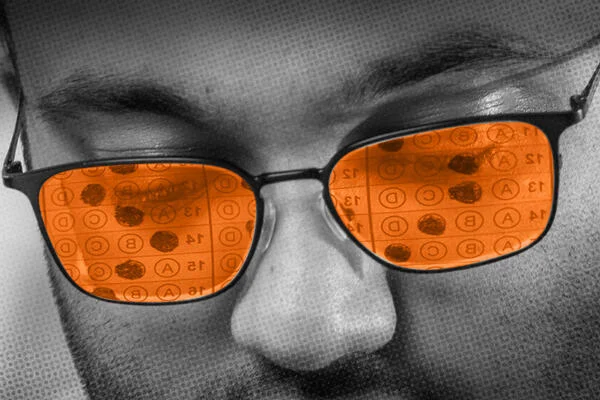
    The College Board will prohibit students from wearing smart glasses—wearable, internet-connected computers that allow users to see a computer display in the lenses—while taking the SAT, starting in March 2026.

    The organization has long banned any wearable electronics, such as Apple AirPods and Apple Watches, said Priscilla Rodriguez, senior vice president of college readiness assessments at the College Board. Such devices, as well as students’ phones, are taken away by the test’s proctor before the test begins; the rule outlawing smart glasses is just an extension of that existing policy.

    Although the first smart glasses emerged in the early 2010s, the technology has risen to prominence in recent years, especially as companies such as Meta and Google have debuted artificial intelligence–enabled versions of the product. As they’ve become more common, professors have also raised alarm bells about whether they will be used for cheating; they fear that students will use them to scan tests and get fed the answers by AI in real time without detection.

    At least one documented example exists of a student using smart glasses to cheat; a student in Tokyo was caught using his spectacles to post questions from a college entrance exam on the social media site X and received answers from other social media users.

    An op-ed by professors at the University of Victoria in Canada also warned that the threat of smart glasses in the classroom goes beyond cheating. They also discussed them as a threat to academic freedom; the glasses could allow students to record their professors without their professors knowing they’re being filmed, allowing them to leak lectures or even create deepfakes, the professors said.

    Outside of higher education, they have been criticized for violating people’s privacy as it has become increasingly common for social media content creators to secretly record their conversations with strangers via smart glasses and post those videos online.

    SAT proctors are now trained to spot and take away students’ smart glasses if they spot them. Although the glasses look similar to a regular pair of spectacles, Rodriguez said most mainstream smart glasses brands have a distinctive look with thick, black rims, and when they’re in use, the camera on the front lights up.

    “It’s a noticeable light, so if someone were taking a video, a photo, having someone talk to them through the glasses, etc., the light shines and that’s kind of like the dead giveaway,” she said.

    Students will not be allowed to wear the devices even if they are prescription glasses, she noted. If students are unable to take the test without their smart glasses, they will be asked to return on a different day to take the test with a regular pair of glasses.

    So far, Rodriguez said, she is unaware of any instances where students have been caught cheating with smart glasses in the SAT, but the step to ban the devices was taken preemptively.

    “We have a really robust test security team here at College Board, coupled with, really, an industry-leading technology team. So, between those two, they’re always looking out to say, ‘what could be next? What’s the next frontier if you’re trying to gain an advantage on this test?’” she said. “They were monitoring the pre-launch announcements of these kinds of glasses and gadgets well before they hit the market, so we were ready.”

    Source link