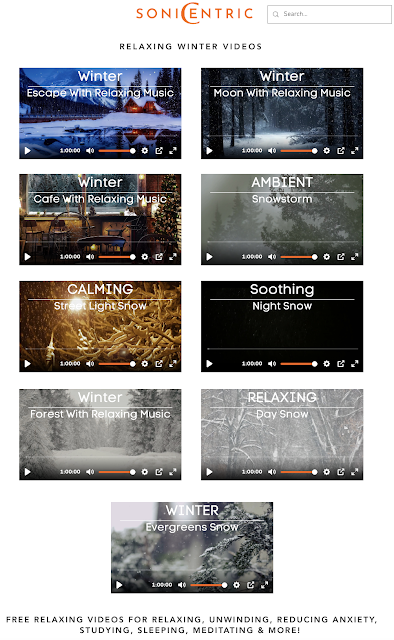
Have you ever used YouTube to pull up relaxing videos such as a crackling fireplace or snowfall to project while your students work quietly? There are so many different kinds of calm and tranquil videos available on YouTube but searching for them can take time. However, this new collection called Sonicentric created by Joey Edwin is going to save you so much time and give you a huge bank of videos to pull quickly.
This one stop shop isfree but ad supported. You can access it from Sonicentric.com, as an app for Apple or Android, as well as streaming on Samsung, Vizio, Roku, Tubi and many more. I love how organized and simplistic this collection appears and the themed videos are adorable. Students will love all of these!
As mentioned above, this resource is ad supported. Sonicentric used Google Ad Partners so there should never be any kind of alcohol, gambling or inappropriate content displayed 🤞. Each video usually starts with a 15-30 second ad. Half way through the videos another 15-30 second ad may pop up and there could be another at the end.
You and your students can enjoy relaxing and holiday themed background videos all in one place. Your classroom will definitely transform into a serene learning environment! Just project and turn the volume up.
Checkout my quick explanation and demonstration on YouTube:
Here is the Job Satisfaction Questionnaire for mba project to give you an idea how to frame your project questionnaire for data analysis and help you to get top grade in your project. You must remember that the questions you are choosing should be unique and should fulfil the objective of the project. The goal should be to find the solution of the problem you are trying to solve.
Questionnaire
Please share the following details:
NAME: ………………………………………….
DESIGNATION: ……………………………….
COMPANY: …………………………………….
I am often stressed out at work.
I you’ve been passed over for promotions multiple times in last two years.
I spend parts of my daydreaming about a superior job.
I find much of my job repetitive and boring.
I am Mentally and emotionally exhausted at the end of a day at work.
I feel that my job has little impact on the achievement of the company.
I have an increasingly awful attitude toward my job, supervisor, and managers .
I am no longer given the working environments I need to successfully do my job.
I am not being used to my full potential of my skills.
I have received no better than unbiased evaluation and impartial evaluations recently.
I feel as though my boss and colleagues have let me down at office time.
I often feel sense of anxiety at workplace.
I live for weekends away from the job.
I find myself negatively comparing my situation to my peers.
I feel my bad days at work outweigh the good ones.
I often experience a sensation of time standing still when I am at work.
I have been told that I am becoming a more cynical person.
I feel as though my company have broken trust and commitment about my future with the workplace.
I have lost my career goals.
I no longer feel appreciated for my work.
Tick the Answer
Strongly Agree
Agree
Neither Agree nor Disagree
Disagree
Strongly Disagree
Conclusion
Here in this content I have tried to solve all the Job Satisfaction Questionnaire For Mba Project related query which student need to prepare for mba project in hr. These are all close end questionnaire which you can prepare the data analysis using statistical tool and find the outcome of the report based on the report. If you need more in-depth Questionnaire feel free to get in touch with our academic writing team to help you prepare your Job Satisfaction Questionnaire as per university guidelines.
Questionnaire to measure job pleasure,u00a0 work atmosphere, remuneration, and personal fulfillment.”}},{“@type”:”Question”,”name”:”What are the 5 keys to job satisfaction?”,”acceptedAnswer”:{“@type”:”Answer”,”text”:”
Respect , Job Security, Recognition, Engagement, Pay and benefits”}},{“@type”:”Question”,”name”:”What are the 5 keys to job satisfaction?”,”acceptedAnswer”:{“@type”:”Answer”,”text”:”
Today’s Genz looks for Respect, Job Security, Recognition, Engagement, Pay and benefits in companies”}},{“@type”:”Question”,”name”:”What is the purpose of job satisfaction survey?”,”acceptedAnswer”:{“@type”:”Answer”,”text”:”
It’s au00a0 Smart Tool that finds employees opinions and experiences in workplace and happiness index.”}}]}
My name is Joanne Henry and started Go Higher in 2018 as a mature student. I left school with no formal qualifications and since then had always worked in the retail sector. I always looked back and wished I had done better at school, but truth be told, whilst suffering the bereavement of my mother whilst still young at age 13 so unexpectedly, I had experienced some mental health difficulties and had lost all interest in doing well on my exams.
Later in life, I become dissatisfied with how my life/career was progressing and applied for college to complete my level 2 in English and Maths. However, before being accepted, I had to sit an exam and was advised after this that unfortunately, it was believed I was not capable of sitting my level 2 in both subjects and that they could not accept me at the time. I found this extremely upsetting but accepted it and went back to my everyday employment within retail.
It was a year after this that a friend had recommended Go Higher to me, at first, I didn’t quite believe that with no formal qualifications I could attend any university never mind one as prestigious as the University of Liverpool. My friend encouraged me to apply like she had, so I did. Shortly after, I received a letter inviting me for an interview and a test, I was filled with sheer dread after my last experience! On the day I contemplated not attending and ringing with some excuse due to my fear of being rejected, but I decided to go along and see what happened…
That was when I met with a tutor from Go Higher for my interview who was warm, friendly and welcoming. My immediate dread subsided, and I was put at ease. I explained the reasoning for leaving school with no formal qualifications and I was given a big hug. I was then asked to sit the test. I did what I could and thought, well, it is what it is, if it is meant to be it will be.
To my sheer astonishment, I received an acceptance letter. I was so proud of myself. I started the course which is and was life changing, the tutors, the course content, the lovely cohort I was with, it was all thoroughly enjoyable. The year went so quickly and after completing Go Higher, I started to believe in my own ability and my confidence had increased drastically. I then applied for a degree in mental health nursing, something which I felt passionate about, helping others who experience mental illness. I was surprised when I received the acceptance letter and commenced my 3-year journey to become a registered mental health nurse. I finished with a first-class honours degree and began my career in the NHS helping others.
Go Higher provided me with the self-belief and confidence which I believe I would never have gained if I wasn’t for the lovely people who took a chance on me that day. I owe so much to Go Higher, and I hand on heart, encourage anyone who is considering starting higher education as a mature student not to hesitate, apply it’s never too late!
On August 6, National Labor Relations Board (NLRB) General Counsel Jennifer Abruzzo issued a memo, “Clarifying Universities’ and Colleges’ Disclosure Obligations under the National Labor Relations Act and the Family Educational Rights and Privacy Act.” The memo was issued to all NLRB regional offices and is meant to provide guidance to institutions of higher education clarifying their obligations “in cases involving the duty to furnish information where both statutes may be implicated.”
The memorandum outlines how institutions can comply with requests by unions representing their student workers for information that may be covered under FERPA, the federal law that protects students’ privacy in relation to their education records and applies to institutions that receive federal education funds. Under the NLRA, employers are required to provide certain information to unions that may be relevant to their representational and collective bargaining obligations, but this requirement can come into conflict with institutions’ obligations under FERPA.
In situations where the employer believes certain records requested by the union may be confidential and covered under FERPA, the memo outlines the steps institutions must take to comply with their disclosure obligations.
“The institution must determine whether the request seeks education records or personally identifiable information contained therein.”
Institutions must be prepared to “explain why and substantiate with documentary evidence, if available, that the student-employee is employed as a result of their status as a student to the union,” as opposed to a traditional employee whose records are not protected by FERPA. The memo specifies that, if the union’s request includes some documents not covered by FERPA, the employer must provide those documents to the union “without delay, even if FERPA applies to other parts of the request.”
“If a request seeks information protected by FERPA, the institution must offer a reasonable accommodation in a timely manner and bargain in good faith with the union toward a resolution of the matter.”
The memo puts the burden to offer an alternative on the employer. The employer cannot “simply refuse to furnish the requested information,” but it must offer a “reasonable accommodation and bargain in good faith toward an agreement that addresses both parties’ interests.”
“If the parties reach an agreement over an accommodation, the institution must abide by that agreement and furnish the records.”
If an agreement is not reached, the memo specifies that the union can file an unfair labor practice charge against the institution. The memo then gives the NLRB the authority to find an appropriate accommodation “in light of the parties’ bargaining proposals.”
Abruzzo also provided a “FERPA consent template” that she advocates institutions provide to student-employees during the onboarding process. The template, if signed by the student employee, “would permit an institution covered by FERPA to disclose to a union, consistent with FERPA, any employment-related records of a student that are relevant and reasonably necessary for each stage of the representation process.” Abruzzo argues the template would help “reduce delay and obviate the need to seek students’ consent at the time a union seeks to represent employees or submits an information request to carry out its representative functions.”
CUPA-HR will keep members apprised of updates following this guidance and other updates from the NLRB.
A full picture of neurodiversity in the workplace includes understanding how gender shapes employees’ experiences of neurodevelopmental disorders. Although they’re diagnosed at roughly the same rates as men, women with ADHD may be overlooked in conversations about attention-deficit/hyperactivity disorder. Until fairly recently, ADHD was seen as primarily affecting children, with the typical view of someone with the disorder as a restless or hyperactive boy.
Awareness about how ADHD can manifest differently in women — and how gender stereotypes play a significant role in diagnosis and treatment — can help foster a culture that uplifts neurodiversity and the skills that neurodiverse employees can offer an organization. Employees with ADHD bring unique strengths and perspective to their work, such as creativity, courage and hyperfocus.
Here’s what HR needs to know about ADHD and how it can be different for women.
Misconceptions About ADHD
Rather than a set of behaviors, ADHD is a neurodevelopmental condition affecting about 2% to 5% of adults, and falls under the same broad umbrella as autism spectrum disorder and dyslexia. A stereotypical picture of someone with ADHD is “a boy who can’t sit still and is disruptive in class,” according to Dr. Deepti Anbarasan, a clinical associate professor of psychiatry at New York University.
Women who receive ADHD diagnoses in adulthood may have struggled with inattention and executive functioning for much of their lives. Because girls and women with ADHD often present as inattentive rather than hyperactive, and because women often develop coping skills that mask ADHD, women often receive late-in-life diagnoses. By the time women reach adulthood, however, the rates of diagnosis are close to those seen in men.
ADHD in women often presents as challenges with executive functioning, which can include difficulties with attention and focus, as well as emotional dysregulation, trouble with finishing tasks or juggling multiple tasks, and absentmindedness. Women with ADHD might also suffer from anxiety and depression, and even suicide attempts and self-harm. Some people with ADHD compensate by working extra hours during their personal time to keep up with their day-to-day work, causing added stress.
A Strengths-Based Approach
Though ADHD can pose real challenges at work, a strengths-based approach highlights the advantages that employees with ADHD bring to their jobs. In a recent study, for example, 50 adults with ADHD identified the positive aspects of living with the condition, including energy and drive, a high degree of creativity, an ability to hyperfocus, and traits such as resilience, curiosity, and empathy. The same study emphasizes that experiencing ADHD as challenging or beneficial depends on the context and sociocultural environment that a person is in.
HR as a Leader in Neurodiversity
Given how much context and sociocultural environment matters, creating a campus climate that supports neurodiversity is critical. HR can champion neurodiversity through awareness and well-being programs. Because ADHD often occurs alongside depression and anxiety, a holistic approach to well-being is recommended. (Learn how the University of Texas Health Science Center at San Antonio gained traction with their mental health awareness campaign.)
HR can also advocate for accommodations to support neurodivergent employees. For example, task separation is a common management strategy to help employees set their work priorities. In emails and written communication this might look like establishing clear parameters, breaking requests down into bulleted lists, and clearly spelling out instructions like “two-minute ask” or “response requested.” (For many more suggestions on how to uplift neurodiversity on campus, including practical tips for accommodations, read Neurodiversity in the Higher Ed Workplace.)
There’s a business case to be made for a robust attention to neurodiversity: increased retention and productivity, reduced absenteeism, and developing employees’ strengths. Supporting neurodiversity also builds an appealing workplace culture, one that signals to employees that their whole person is valued.
I am thrilled to share my heartfelt gratitude to the University of Liverpool for offering the Diploma for Go Higher Programme – a remarkable initiative designed to open doors and beacon of hope for those who, due to various reasons, have been unable to pursue their educational goals and have had to suppress their ambitions.
My name is Gary Singh, and I want to share my journey with you, a journey that has been filled with challenges, resilience, and hope. In 2004, my plans to become a solicitor were shattered by the sudden passing of my father. I had to start working, and unfortunately, I faced exploitation by corrupt politicians in India, making it nearly impossible to chase my dreams. Every attempt to resume my education was met with rejection due to the gap in my studies. After seeking asylum in the UK, I reached out to the University of Liverpool, hoping to enroll in a degree program because of the plenty of time available to me. Unfortunately, again, I was told that the gap in my education prevented direct entry into a degree course. However, Go Higher Team introduced me to the Go Higher Diploma program, a pathway that would enable me to pursue a degree. This news reignited my optimism and belief that I could achieve my dream of becoming a solicitor to serve society, just as I had hoped for as a teenager.
I was fortunate enough to receive scholarships from the University of Liverpool, which were specifically designed for destitute students like myself, as I am not permitted to work as an asylum seeker. Even as a mature student, I found the friendly, multicultural atmosphere at the University of Liverpool very welcoming. My classmates, both younger and older, were incredibly supportive. Despite English being my second language and the initial challenge of understanding new accents, I can comprehend about 80% of my tutor’s lectures and make up the rest by utilizing lecture slides and class recordings available on the Canvas site. I started my first assignment with marks well above passing, and with unimaginable support from my tutors, I received an A grade on my last assignment. The dedication of my mentors—James Bainbridge, David Ellis, Barbara Milne, Julia, Sharon Connor, Darryn Nyatanga, Claire Jones, Stephen Kearns, Debbie Hart, and Matthew—along with additional English classes by Will, has been invaluable.
I have encountered challenges on the path to success, but determination and hard work have allowed me to conquer every obstacle. On the day of the Go Higher celebration, something incredible occurred. I was honored with a personal achievement award, which came as a pleasant surprise. Furthermore, I was accepted into the Law with Business program at the University of Liverpool. This achievement has filled me with excitement and hope as I strive to complete my degree and make a positive impact on society. My aspiration is to become so capable and competent that I can assist those in need.
Go Higher education means more to me than just personal advancement; it’s a way to think critically for the betterment of society and individuals. Through my Go higher studies, I learned to see society from a different perspective and took the first step toward progress in civilized society. My message to everyone is this: Don’t let your ambitions die in your heart. Give it a try! If your intentions are good, you will find many opportunities, mentors, and friends who are ready to help you. Believe in yourself and take the first step. The journey may be challenging, but the rewards are immeasurable.
On August 1, the Biden administration’s Title IX final rule goes into effect, implementing new requirements for compliance with Title IX for institutions of higher education. However, ongoing legal challenges have blocked the rule from taking effect in 26 states, as well as at certain institutions in states that have not sued the Department of Education (ED).
Background
On April 19, ED released the text of the highly anticipated Title IX final rule. The final rule expands protections against sex-based discrimination to cover sexual orientation, gender identity, and pregnancy or related conditions, and it implements new training requirements for employees and grievance procedures for handling reported cases of sex-based discrimination, including sexual harassment. To provide members with an overview of the final rule, CUPA-HR held a webinar in April, which was recorded and can be accessed for free.
Lawsuits
Shortly after the rule was published, over 20 Republican-led states and advocacy groups filed lawsuits challenging the final rule. The lawsuits sought to block ED from implementing and enforcing the final rule, though most of them homed in on concerns with expanding Title IX protections to transgender individuals through the expanded protections against discrimination based on an individual’s gender identity.
From mid-June through the end of July, federal judges across the country granted preliminary injunctions to the states and advocacy groups challenging the rule, meaning the Department of Education is blocked from enforcing the new Title IX rule on the August 1 effective date. All 26 states that sued ED for the Title IX rule were ultimately granted injunctive relief. Additionally, a decision from the U.S. District Court of Kansas expanded the preliminary injunction to include schools attended by members of the Young America’s Foundation, Female Athletes United, and Moms for Liberty. This means that ED cannot enforce the new Title IX rule at certain schools in the 24 states that didn’t challenge the rule, as well as Washington, D.C., and Puerto Rico.
The Biden administration has appealed to the Supreme Court on the decisions granting the preliminary injunctions. In its emergency request, the administration is asking the court to limit the scope of the preliminary injunction to only block provisions related to gender identity. It argued that the lower court’s decisions to grant preliminary injunctions were based on concerns with the expanded protections for transgender students, and it hopes that other provisions like the new grievance procedures and training requirements can go into effect. A decision from the Supreme Court on the emergency request has not yet been issued.
Looking Ahead
Though ED is blocked from enforcing the new Title IX rule in 26 states, litigation continues in the lower courts where decisions have been issued on whether to strike down the rule. If the rule is struck down, the Biden administration is likely to appeal the decision, though it is unknown whether a decision will be released before the election and potential change in administration. CUPA-HR will keep members apprised of additional updates to the legal challenges against the Title IX final rule.
The road home may have been a bit bumpy (thanks, CrowdStrike), but the two days CUPA-HR leaders spent in Kansas City at the annual Association Leadership Program (ALP) were packed with opportunities to smooth the way for higher ed HR in the year ahead.
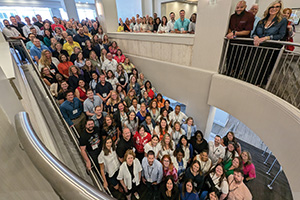
On July 18-19, leaders from CUPA-HR’s national, region and chapter boards; cohorts from the Ignite and Emerging CUPA-HR Leaders programs; team members from the CUPA-HR national office; and key corporate partners gathered to discuss higher ed HR challenges, share successes, learn from one another, and build relationships. Here are some of the takeaways from this year’s event:
To be relevant and effective, higher education HR leaders must partner with their presidents and other campus leaders to connect their work to the institution’s mission and priorities and to understand current and emerging challenges for higher education.
The key to creating and sustaining inclusive campus communities is to focus on processes, policies, and learning opportunities that mitigate bias and promote belonging and civil discourse for all. CUPA-HR resources are available to support this work!
Gender gaps in leadership positionspersist. To expand the pipeline for leadership positions to include more women, start by reviewing promotion processes and criteria to mitigate bias and by training decision makers to recognize bias.
CUPA-HR higher ed workforce data is second to none, and the Research Center is an excellent source of high-level data to support workforce planning.
To promote civility and build authentic relationships in the workplace, speaker Alonzo Kelly emphasized the importance of:
Entering conversations with humility
Keeping in mind that your information may not be wrong, but may be incomplete
Being direct and kind
“A mistake repeated is a decision.”
CUPA-HR leaderslead because they are drawn to service, they are lifelong learners, and they value the friendships they’ve formed and the support they receive from the CUPA-HR community.
You can take CUPA-HR with you wherever you go — especially if you have a Roamin’ Robyn to keep you company. Think “Flat Stanley,” but featuring CUPA-HR’s board chair, Robyn Salvo! (Thanks to Joanne Santarelli for the awesome photo!)
Interested in Taking Your Professional Development Further?
CUPA-HR’s volunteer leaders have committed to advancing the profession and the mission of CUPA-HR. They understand the complexities of higher ed HR, and they want to enhance the knowledge and skills they need to lead their institutions into the future.
Are you ready to take that next step in developing your leadership skills, shaping the profession, and gaining one-of-a-kind access to successful practices and HR professionals from across the country? Then CUPA-HR leadership — in a chapter, at the region level, or even on the national board of directors — might be right for you. Learn more about how you can get involved.
During the summer break, it can be difficult to gauge what you should do next. I’ve put together a few tips on ways to get prepared for students who are looking to go to university for the first time or for those who are coming back!
Organise your academic materials
Before the semester begins, take some time to organize your notes, textbooks, and other academic materials. Most courses will provide a list of resources that will be used during your studies— you don’t have to buy every textbook but do read through to get a gauge for the materials you’ll need to use. You may be able to find second-hand copies or more affordable cheaper PDF versions.
If you’ve studied the subject before, it can also be helpful to review your notes and identify any gaps in your understanding. This will help you refresh your memory and get ready for more advanced study.
Plan your schedule
A well-planned schedule can make a significant difference in managing your time effectively. Start by reviewing the course catalogue and selecting your classes for the upcoming semester. Having a schedule ahead of time will make things easier over the next months and help you feel more comfortable in the busy environment of academia.
I would recommend using an online calendar (or physical one) to help span out how the months will be going ahead of time. Allocate specific times for studying, attending classes, and extracurricular activities. Remember to also leave room for socialising!
Set academic and personal goals
Setting goals can give you a clear sense of direction and motivation. Your goals should be specific, measurable, achievable, relevant, and time-bound. In other words, don’t expect too much or too little! Give yourself plenty of room to breathe and relax.
For academic goals, one of my tips would be to aim for a specific grade boundary. Assess the marks you would need to obtain through your assessments and have a clear understanding of what you would like to achieve and how to do so.
For personal goals, it can be incredibly beneficial mentally and physically to join a club, improve on your fitness or learn a new skill. It’s important to keep your mind active outside of academic studies and embrace the new, exciting environment you’ll be in.
Develop good study habits
Good study habits are crucial for academic success. Use the summer to evaluate and improve your study techniques. This can be from finding an ideal study environment to practising active learning techniques.
One of my tips would be to look back on your previous academic achievements, gauge your understanding of how you could improve and what are your strongest skills when it comes to assignments.
Familiarise yourself with campus resources
Universities offer a wealth of resources to support students. Familiarise yourself with what’s available and how to access these services. This can include using tutoring services for difficult subjects, navigating the university’s libraries, as well as research databases and study spaces.
I would recommend meeting with a Programme Advisor to discuss your course plan and career goals if you are confused over the summer about where you should be taking your career.
Budget and financial planning
Financial stability is important for reducing stress and focusing on your studies. It’s incredibly beneficial to create a budget to manage your expenses throughout the semester.
You could use a budgeting app or spreadsheet to monitor your income and expenses. This can help provide a clear view of your expectations of money and clear anxieties about the unknown.
Set up a savings account and set aside a portion of your budget for unexpected expenses. It’s impossible to see into the future and plan for every possible scenario, however with a savings account you could gain some interest on your savings and prepare for the inevitable.
Finally, I would recommend that you explore financial aid. Look into scholarships, grants, and part-time job opportunities to support your education in the summer so that when the year finally rolls around, you’re prepared and well-resourced.
Stay healthy and active
Your physical and mental health significantly impact your academic performance. Develop healthy habits over the summer to maintain your well-being during the school year.
I would recommend exercising regularly by incorporating some kind of physical activity into your everyday or weekly routine. This can be going to the gym, jogging in the mornings or practising a soothing yoga session in your room.
Eating nutritiously is also incredibly important. By focusing on a balanced diet that includes plenty of fruits, vegetables, and whole grains, you can support your body and your mind.
Finally, I would also recommend aiming for 7-9 hours of sleep per night to ensure you’re well-rested and alert.
Build a support network
Having a strong support network can help you navigate the challenges of university life. Connect with family, friends, and fellow students over the summer to ensure that your well-formed social groups are still thriving.
My tips for this would be to maintain regular contact with loved ones to keep your support network strong, either through texts, calls or hanging out face-to-face.
I would also recommend joining online communities by participating in social media groups related to your university or field of study. This can help better your understanding of the social circle you’ll be expected to join when the year starts as well as helping you meet new people.
To conclude, preparing for the academic year during the summer break can help you start the semester with confidence and a clear plan. By organizing your materials, planning your schedule, setting goals, developing study habits, familiarizing yourself with campus resources, budgeting, maintaining your health, and building a support network, you’ll be well-equipped to tackle the challenges and make the most of your university experience. Enjoy your summer, and here’s to a successful academic year ahead!
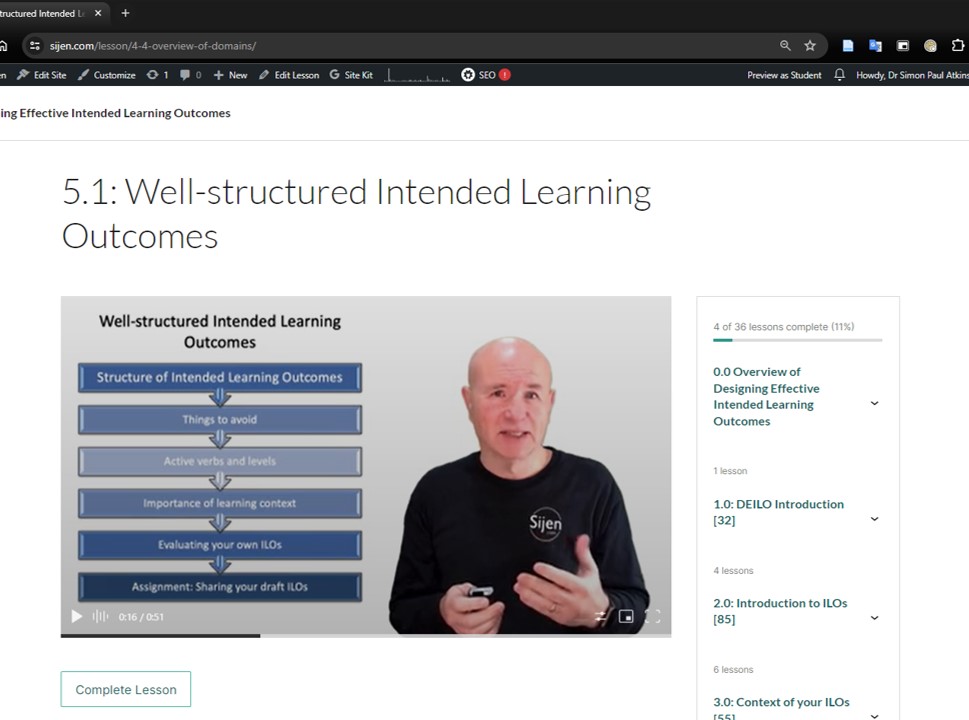
I am delighted to release a version of the DEILO: Designing Effective Intended Learning Outcomes on the SenseiLMS platform for individuals self-study, self-paced, learning at USD139.00. The course takes between 3 and 10 hours depending on the depth of engagement. You also have the opportunity, entirely optional, to engage with me virtually by submtting draft ILOs for my review and feedback. The course also allows for a certificate (again totally optional) to be triggered on succesfull completion of the course and a final assessement.
Please note that individual registration requires an individual’s email rather than a shared email. If you want to review the course with a view to programme, departmental or institutional licensing just drop me an email at [email protected]. Course overview is available here.













 You can take CUPA-HR with you wherever you go — especially if you have a Roamin’ Robyn to keep you company. Think “