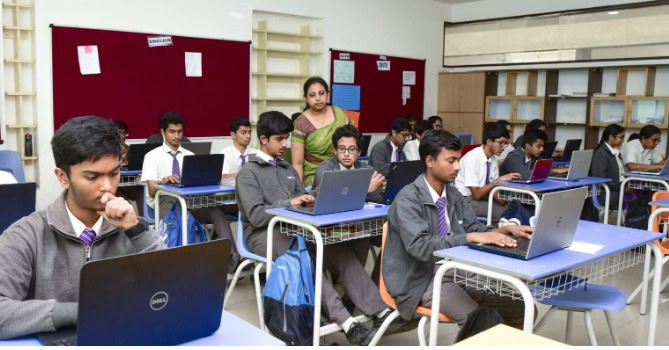
Families across urban and developing towns are going beyond conventional definition of education, facilitating change in the Indian education system. The focus has shifted from academic success to quality education, international exposure, and overall growth that prepare the future generation for a globally interconnected world.
A few decades ago, families were typically larger; with primary focus was on basic education and job security. With a progressive mindset, today’s nuclear families are engaged investing in premium schooling, digital learning, and global opportunities that enhance their children’s competitiveness.
This transformation signifies a profound mindset. Today’s students and parents both think beyond geographical boundaries and basic qualifications. They meticulously evaluate international opportunities that enhance academic excellence, long-term career goals, and global relevance.
Dining table conversations revolve around questions such as:
Which destination offers the best return on educational investment?
What scholarship or post-study work opportunities are available?
Which academic pathway leads to sustainable and globally recognised careers?
Studying abroad have risen because of limited domestic seats, global exposure and highly paid career prospects. However, rising costs, currency risks and stricter visa rules of some countries are shifting preferences toward value destinations – Europe and Asia. Intellectual families now prioritise financial planning, ROI and strong support systems.
Today’s students and parents both think beyond geographical boundaries and basic qualifications
With these rapidly growing aspirations, need for reliable, ethical, and expert guidance has become paramount. This is an area where Landmark Global Learning Limited has established a distinct reputation. With extensive experience and deep understanding of international education system, Landmark provides transparent, personalised, and result-oriented guidance tailored for every candidate. The services range from course selection and financial planning to visa support, and pre-departure orientation ensures students received quality education and long-term success.
Simultaneously, India’s international education and recruitment landscape is also witnessing a paradigm shift. The focus has moved beyond volume-driven enrolments to meaningful outcomes and majorly student well-being. Both universities and agencies emphasise authenticity, transparency, and tailored support. Indian students are exploring the UK, Canada, and Australia to emerging hubs across Europe and Asia.
As global connections strengthen, this shift is vital to understand. India’s growing middle class, wider digital access, and strong respect for education are transforming how international institutions connect with and respond to Indian students. In recent years, more Indian students are choosing to study overseas. As per the Ministry of External Affairs, over 1.8 million Indian students are abroad in 2025, compared to around 1.3 million just two years earlier.
Nowadays, students are not only pursuing degrees, but they are also cultivating skills and mindsets that align with a rapidly changing borderless world. In such moments, trusted partners such as Landmark Global Learning Limited are instrumental in making a difference.
By providing organised support, genuine mentorship, and a transparent path to quality international education, Landmark connects aspirations with guidance. For thousands of young Indians, it represents more than overseas study; it signifies assurance, opportunity, and the conviction that global education is not a privilege but an achievable goal.
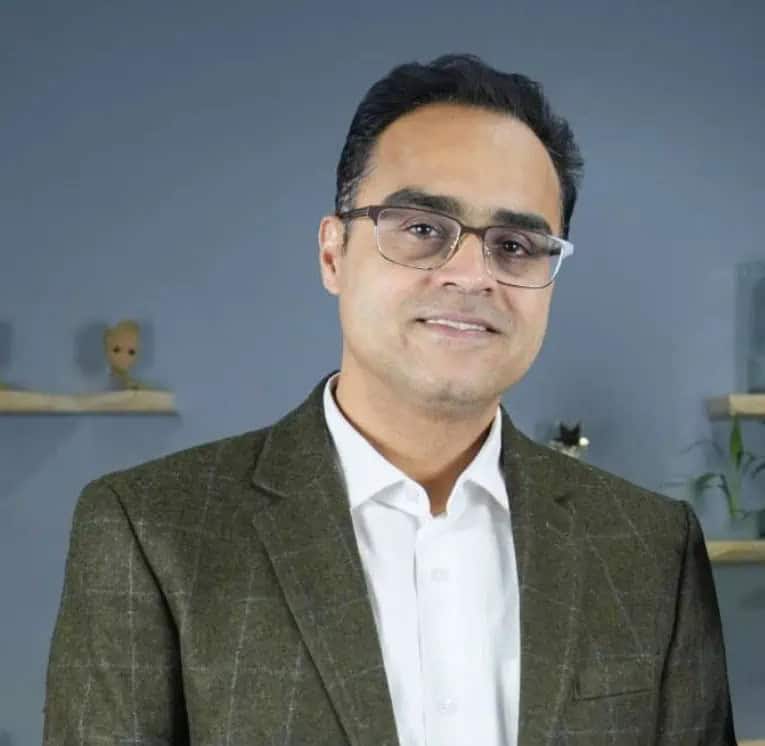
About the author: Jasmeet Singh Bhatia is the founder and director of Landmark Immigration, with over 18 years of experience in international education and immigration consulting. A trusted study visa expert and PR strategist, he has mentored thousands of students in achieving their academic and career goals abroad. Known for his principle-based approach and strong industry partnerships, he continues to shape global futures through personalised guidance and strategic insight.
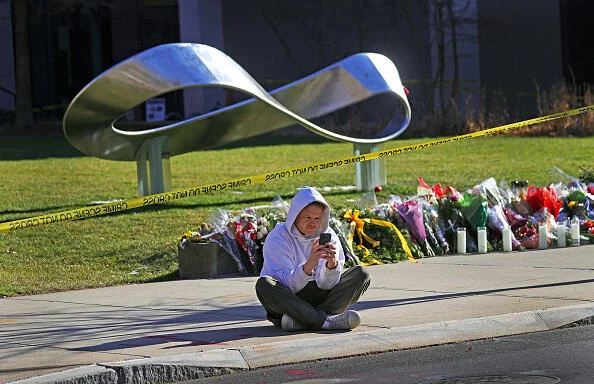
The suspect wanted in connection to a mass shooting at Brown University that killed two students and injured nine was found dead in a storage unit in Salem, N.H., authorities said at a news conference Thursday night.
They identified Claudio Manuel Neves Valente, 48, a former Brown student and Portuguese national, as the man they say barged into an engineering classroom at Brown last Saturday and opened fire on students attending a review session. Valente died from a self-inflicted gunshot wound.
“We are 100 percent confident that this is our target and that this case is closed from a perspective of pursuing people involved,” Rhode Island attorney general Peter Nerhona said.
Officials said they believed Valente was also connected to the murder of MIT nuclear physicist Nuno Loureiro earlier in the week. The same rental car had been spotted near Brown and outside Loureiro’s home, authorities said.
Loureiro was shot at his home Monday night and died at the hospital the next day. His home in Brookline, Mass., is about 50 miles from Brown. Authorities said that in the 1990s, Valente had attended the same university in Lisbon as Loureiro.
Brown President Christina Paxson said at the press conference that Valente had been a student at Brown in the early 2000s but withdrew. She noted that he was a physics student and had likely spent a lot of time in the Barus and Holley science building, where Saturday’s shooting took place.
Paxson wrote in an update Friday that the students injured Saturday were all improving; three had been released from the hospital and six remained in stable condition.
Officials said Valente entered the U.S. in 2000 on a student visa; he became a lawful permanent resident in 2017.
On Friday, the Trump administration announced it was suspending the green card lottery program through which Valente entered the country in 2017. The Diversity Immigrant Visa program, or DV1, allows some 50,000 people a year from low-immigration countries to participate in a random selection process for entry to the U.S.
Valente “entered the United States through the diversity lottery immigrant visa program (DV1) in 2017 and was granted a green card,” Secretary of Homeland Security Kristi Noem wrote on X. “This heinous individual should never have been allowed in our country. … At President Trump’s direction, I am immediately directing [United States Citizenship and Immigration Services] to pause the DV1 program to ensure no more Americans are harmed by this disastrous program.”
This story was updated 12/19 with news about the condition of the injured Brown students and the Trump administration’s pause on a visa lottery program.
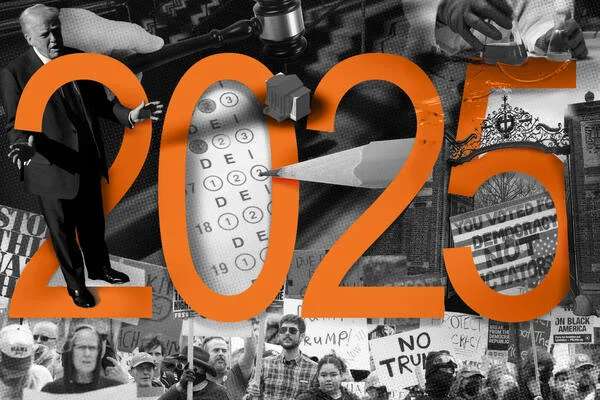
Ask just about any federally funded researcher to describe 2025, and they use words like chaotic, demoralizing, confusing, destabilizing and transformational.
“It’s been a very destabilizing year [that’s made] people question the nation’s commitment to research,” Heather Pierce, senior director for science policy at the Association of American Medical Colleges, told Inside Higher Ed.
She expects 2026 to be a year of rebuilding and standard setting.
Speaking of the National Institutes of Health, which calls itself the world’s largest public biomedical research funder, Pierce said the research community is expecting more major regulation and written policy changes in 2026, which will shed more light on how grants will be funded, how much the federal government will invest in the research enterprise and what priorities will emerge from this administration.
If the administration’s attacks on federally funded research in 2025 are any indication, the federal government of 2026 will likely be just as willing to advance its conservative ideological agenda by controlling universities through the nation’s research enterprise. And while the administration may not let up in the new year, courts stymied some of its most sweeping changes in 2025 and may continue to be an obstacle in the new year.
Soon after President Donald Trump started his second term in January, the National Institutes of Health, National Science Foundation, Department of Education and numerous other federal agencies that collectively send billions in research dollars to universities, began freezing and terminating hundreds of grants. Many of the targeted grants—including projects focused on vaccines, climate change, and health and education disparities among women, LGBTQ+ and minority communities—were caught in the crossfire of Trump’s war against diversity, equity and inclusion initiatives and so-called woke gender ideology.
Not only would the terminations lead to the loss of jobs, staff and income, a lawsuit filed by a group of NIH-funded researchers in April predicted that “scientific advancement will be delayed, treatments will go undiscovered, human health will be compromised, and lives will be lost.”
The true damage comes from the betrayal, the sense of uncertainty and the loss of trust researchers have—or had—vis-à-vis with the federal government. That’s really hard to quantify.”
Scott Delaney, cofounder of Grant Witness
Terminated federal grants encompassed a wide range of research projects. Some of the casualties included funding to study the erosion of democracy, the effectiveness of work study, dementia, COVID-19, cancer and misinformation. Others supported teacher-training programs and initiatives designed to attract more underrepresented students into STEM fields.
“The premise of this award is incompatible with agency priorities,” read a letter the NIH sent to numerous researchers back in March, terminating their active grants. “[R]esearch programs based primarily on artificial and nonscientific categories, including amorphous equity objectives, are antithetical to the scientific inquiry, do nothing to expand our knowledge of living systems, provide low returns on investment, and ultimately do not enhance health, lengthen life, or reduce illness.”
But it didn’t stop there.
The Trump administration also temporarily froze billions more dollars in federal research grants at a handful of the nation’s wealthiest, most selective institutions, including Harvard University, Columbia University and the University of California at Los Angeles, for allegedly failing to address antisemitism on campus and ignoring the Supreme Court’s ban on affirmative action, among other allegations. (Most of the universities got their money back after cutting deals with the administration or via court orders.)
Faculty in the University of California system successfully fought the administration’s funding cuts, winning court orders to restore the money.
Justin Sullivan/AFP/Getty Images
And because the NIH, NSF, ED and several other federal agencies also laid off thousands of workers, researchers with questions had far fewer resources to help them navigate changes to application and award processes.
By some estimates, the government disrupted upward of $17 billion in NIH grants alone this year, according to Scott Delaney, a former lawyer and Harvard University epidemiologist who the university laid off as a result of grant terminations.
Earlier this year, he cofounded Grant Witness, a website that has been tracking grant cancellations at the NIH, NSF and the Environmental Protection Agency. While both the NIH and NSF have since restored thousands of grants, Delaney said those and other restorations won’t be enough to repair the now-fractured relationship between faculty and federal funding agencies.
“The true damage comes from the betrayal, the sense of uncertainty and the loss of trust researchers have—or had—vis-à-vis with the federal government. That’s really hard to quantify,” he told Inside Higher Ed this month. “In the years ahead, there will be folks who don’t want to plan long-term research projects because they don’t know if their funds are going to get summarily yanked out from underneath them; folks who don’t want to continue their careers in academic research or train in academic research; trainees who would have had training grant support who don’t now and go do something else. And some researchers will just leave the country.”
In addition, some of the Trump administration’s research funding proposals have stoked worry this year about the long-term sustainability of the nation’s academic research enterprise.
Numerous agencies—including NIH, NSF and Department of Energy—have attempted to cut university reimbursement rates for indirect research costs. Higher education and science advocates characterized such policies as “shortsighted and dangerous,” and said it would hamper university budgets, hurt the economy and stymie scientific progress. Although federal courts have since blocked the rate caps, the mere anticipation of such policy changes led some universities—including the Massachusetts Institute of Technology and Northwestern University—to freeze hiring and, in some cases, graduate admissions.
But by September, the NIH said it was on track to spend its full $47 billion budget by the end of the fiscal year that month.
However, the NIH awarded 3,500 fewer competitive grants this year with the biggest declines at the Institutes of minority health, nursing, human genome, alcohol abuse and alcoholism and mental health, according to The New York Times. Those changes are part of the White House’s plan to streamline scientific funding by eliminating wasteful spending and cutting “woke programs” that “poison the minds of Americans.”
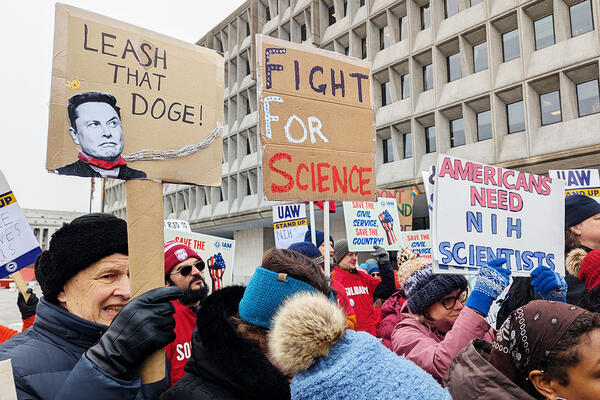
The cuts to federal agencies and research spurred protests in the spring.
As 2025 fades into 2026, the federal research funding picture isn’t looking as bleak—at least not on the surface.
A flurry of litigation from universities, individual researchers, trade associations and labor unions prompted several federal agencies to reinstate some research grants.
All things considered, 2025 “could have been worse, but it was still awful,” Delaney said, noting that there are still thousands of grants in limbo at the NSF, DOE and numerous other agencies beyond the NIH.
“So many people fought so hard—some of them sacrificed their jobs inside these federal agencies—and they succeeded in many ways. To tell a story that doesn’t include both their sacrifice and their success discredits what was a Herculean and heroic effort for scientists, many who have never spoken up in a political way before this year,” he added. “But it’s also important to emphasize that this fight isn’t over, and we need to keep fighting. It can get worse.”
‘Not Insulated From Politics’
Katie Edwards, a social work professor at the University of Michigan, is one of the researchers who sued the NIH. In March, the agency canceled six grants she was using to research mental health and violence prevention among marginalized young people, including Indigenous and LGBTQ+ youth. Valued at $10 million, the grants supported roughly 50 staff, community collaborators and trainees and put them all at risk of losing their jobs.
“For many trainees—especially those who are LGBTQ+ or people of color—the message they internalized was painful: that research on their communities is ‘ideological’ or expendable,” Edwards wrote in an email to Inside Higher Ed. “The emotional toll of fighting for and protecting staff, reassuring community partners, and trying to navigate a constantly shifting federal landscape has been immense.”
Fighting for Public Health Research
April: A group of NIH researchers, a public health advocacy organization and a union representing more than 120,000 higher education workers sued the NIH for terminating more than $2.4 billion in grants.
August: The U.S. Supreme Court ruled by a vote of 5 to 4 that any legal challenges to the grant terminations should be litigated in the Court of Federal Claims, not the federal district court system they’ve been moving through for months.
Edwards
University of Michigan
Although her grants have since been reinstated—albeit some with reduced dollar amounts, administrative delays and anti-DEI language in the notice of award—and her team has resumed their work, this year has forever changed her perspective on research.
“This year made clear that science is not insulated from politics—and that researchers must be prepared to defend not only their projects, but the people those projects exist to serve,” Edwards said. “Federally funded research with marginalized communities requires constant vigilance, strong partnerships, and collective resistance. We cannot simply adjust our science to political winds when real communities rely on this work.”
But not every researcher who appealed a grant termination got their money back.
In March, the Education Department informed Judith Scott-Clayton, a professor of economics and education at Teachers College, Columbia University, that it was cancelling her six-year grant to examine the impact of receiving federal work-study funding on enrollment and persistence among low-income students four and a half years into the grant.
Teachers College appealed the decision in April, but the government rejected it in September, stating that Education Department grants were specifically excluded from Columbia University’s settlement with the Trump administration. Support from a private foundation allowed Scott-Clayton and her team to resume their research this November, but she told Inside Higher Ed that the disruptions to research have been “extremely unsettling and demoralizing.”
And she’s not certain that 2026 will be any better.
“Even though I believe in the value of what I do, self-doubt can flare up when an authority as significant as the federal government formally declares your work to be a waste of resources,” she said. “I am not sure what the future of our field looks like if our federal government no longer values research evidence. And I am not sure what our society looks like if the federal government can make decisions so arbitrarily without any consequences or constraints.”
New Year, Old Concerns
This year is ending with unresolved questions about what the Trump administration’s research policies will ultimately be, and how much the federal government will fund research. Pierce at the Association of American Medical Colleges said she expects next year will provide answers.
Joanne Padrón Carney, chief government relations officer for the American Association for the Advancement of Science (AAAS), said “I think the [the Energy Department’s] Genesis mission and the prioritization of artificial intelligence and emerging technologies is going to be a key driver in—I guess you could say—filling in the cracks of the foundation of the research enterprise that has been kind of hit by this earthquake in the past year.”
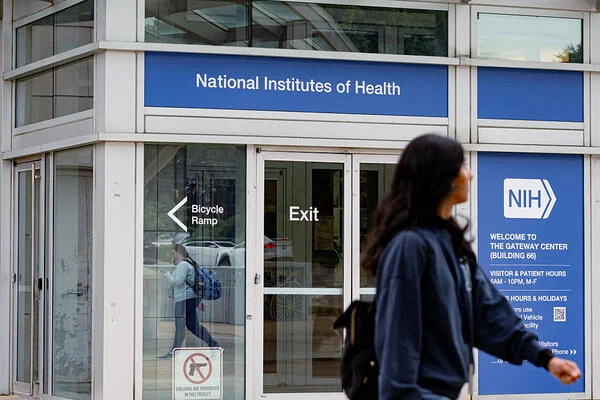
The National Institutes of Health has cut staff and is eyeing other changes to how it funds research.
Wesley Lapointe/The Washington Post via Getty Images
The continuing resolution that ended the historically long federal government shutdown in November expires Jan. 30, and Congress is leaving town for the holidays without passing funding bills for some major science funding agencies, including the NIH, NSF and Energy.
Trump proposed slashing about $5.2 billion from the NSF. But House appropriators have suggested cutting $2.1 billion, while senators only put forth axing $60 million, according to an appropriations debate tracker from the AAAS. And while the president proposed cutting nearly 40 percent from the NIH—$18.1 billion—the House and Senate have instead suggested increasing its funding by roughly $1 billion, the tracker shows. That pushback from Congress is promising, advocates say.
And colleges and universities are still waiting for federal research funding agencies to set indirect cost reimbursement caps, after litigation blocked their plans to set the limit at 15 percent. The forthcoming OMB guidance setting those caps is also supposed to help agencies implement Trump’s controversial August executive order directing “senior appointees” to take charge of awarding, denying, reviewing and terminating new and already awarded grants. Among other changes, that order also said grants can’t “promote” racial preferences or “the notion that sex is a chosen or mutable characteristic,” and that they “should be given to a broad range of recipients rather than to a select group of repeat players.”
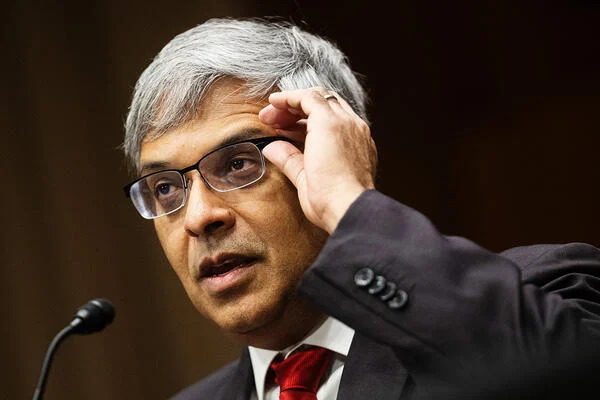
Dr. Jayanta Bhattacharya took over the National Institutes of Health and has pledged to support what the administration calls “gold standard science.” He’s become a vocal supporter of the Make America Healthy Again agenda, which focuses more on chronic diseases.
Jim Watson/AFP/Getty Images
Further, the NIH is eyeing ways to reduce how much of its grant dollars researchers can use to pay scientific journals to publish their work. The proposed options ranged from limiting how much could be spent per publication or capping the percentage of a grant that can go toward publishing fees overall, to no longer funding publication costs whatsoever. The NIH said in the summer that it planned to make whatever policy it chose effective early next year, but it only recently released the public comments, and an agency spokesperson said he couldn’t provide a definitive implementation timeline.
Just this week, Science published a memo showing that NSF is scaling back its reviews of grant proposals, citing its “significantly reduced” workforce and a need to expedite approvals and denials to address a “significant backlog of unreviewed proposals and canceled review panels” from the government shutdown. The memo also said NSF program officers are “expected to maximize their use of available automated merit review tools, especially tools that identify proposals that should be returned without review.”
And the NIH ordered staff last Friday to start using a “computational text analysis tool” to scan current and new grants for words and phrases that may mean they’re misaligned with NIH priorities. Staff were told to look out for terms such as “health equity” and “structural racism.” How this and the NSF policy changes will work in practice remains to be seen.
The educational improvement research field also awaits word on the future of the congressionally required Institute of Education Sciences (IES), which the administration gutted early this year amid its ongoing push to dismantle the larger Education Department. IES is the federal government’s central education data collection and research funding agency. Education secretary Linda McMahon hired a special adviser to “re-envision” it, but the plan hasn’t been released.
Overall, Pierce said 2026 “will continue to be a challenging year, especially for those researchers, institutions and trainees that have seen their grants terminated.” But she noted medical research is marked by passion for improving the nation’s health.
We’re approaching the end of a year that was at various times frightening, difficult and downright ridiculous. We hope that, despite the struggles higher education faced this year, you can still find something to be thankful for this holiday season, whether it’s generous donors making big differences for small campuses, colleges striving to improve cost transparency, or institutions supporting their communities through tough times.
If not, maybe you can take some inspiration from the videos below.
Here are Inside Higher Ed’s favorite holiday greetings, from the wacky to the artsy to the classy, showcasing the talents and holiday spirit of students, staff and faculty across the country.
Quinnipiac University, Hamden, Conn.
This slapstick sketch depicts Quinnipiac’s mascot, Boomer the Bobcat, messily preparing to welcome community members to his abode for Christmas dinner. Despite mishaps like spilling a bowl of assorted vegetables all over the floor and whisking what looks like mashed potatoes so feverishly they go flying, Boomer ends up putting out a beautiful spread—roast turkey, green beans, deviled eggs and more—for his delighted guests.
University of Louisiana at Monroe
The ULM Chamber Singers bring us a stirring adaptation of the 12 Days of Christmas entitled, no surprise, the 12 Days of Finals. Among the listed gifts is “ten paddlers paddling,” referring to the campus’s unique access to Bayou DeSiard, where students can borrow a kayak for free and paddle around to their heart’s delight.
Salt Lake Community College, Salt Lake City, Utah
Salt Lake Community College brings us another musical video, this time in the form of a tribute to Mister Rogers’ Neighborhood. President Greg Peterson takes on the titular role, singing: “We’ve made the most of this beautiful year, full of big hopes and holiday cheer. It’s education for you—it’s SLCC.edu. Will you join us next year?” Fuzzy video filters take the viewer back to old-school PBS, making the homage all the more nostalgic.
The University of Texas, Dallas’s Harry W. Bass Jr. School of Arts, Humanities, and Technology
This video highlights an annual tradition in an animation business development course at UT Dallas. The students are asked to design a holiday card and their peers then vote on the 10 best cards in the class. The winners’ cards are then printed and sold to fundraise for the school’s Student Emergency Fund. “I’m glad that our class is helping people have the reassurance that they need that they’re safe on campus and that somebody’s looking out for them if something does happen,” one of this year’s participants said.
Gonzaga University, Spokane, Wash.
College holiday greetings love to get a little bit meta. In this greeting, Gonzaga president Katia Passerini realizes she has forgotten to write a poem for this year’s holiday video. Luckily, student Alexis Sandoval just so happens to have a Christmas poem prepared, saving the day. Different members from the campus community, from a security leader to the university chaplain, recite the poem, bidding viewers to “rejoice in faith, carry peace and love into a happy New Year.”
Moraine Valley Community College, Palos Hills, Ill.
In this feel-good sketch, President Pamela Haney tries to bake a sweet treat for the college’s leadership team, but is missing a few key ingredients, including kindness and dedication. Luckily, teams from across the campus come to the rescue, bringing Haney everything she needs to finish making the cake. As one administrator says, “it’s amazing what we can do when we all work together.”
Wellesley College, Wellesley, Mass.
This year, the women’s liberal arts college celebrated 150 years since it welcomed its first class in 1875. As part of that celebration, the holiday video this year compiled archival footage and images submitted by alumni of winters on campus over the past century-and-a-half. The video, which features students sledding, ice skating, skiing and playing in the snow, is set over a song composed for the Class of 1948’s junior class show, which bemoans leaving Wellesley’s campus behind.
Community College of Philadelphia
“My Favorite Things” from The Sound of Music is everyone’s favorite non-Christmas Christmas song. Why has it entered the holiday songs zeitgeist? Who can say for sure, but I think we’re all glad it has. This particular rendition by CCP students and faculty sets the classic tune against a hip-hop beat and features a sick guitar solo.
University of Alabama, Tuscaloosa, Ala.
Uh-oh—President Peter Mohler is supposed to be helping write Christmas cards, but he’s nowhere to be found! This cheeky sketch shows that he’s shirking his responsibilities to do much cooler and more fun things, like play video games with students or shoot hoops with Big Al, the institution’s elephant mascot. Luckily, when his colleagues finally find him, he’s already finished the holiday cards. Crisis averted!
Tulane University, New Orleans, Louisiana
“What’s one Tulane memory you hope never melts away?” this video asks a gaggle of sweater-clad Tulane students. More than one note a once-in-a-lifetime Gulf Coast blizzard that shocked and delighted Tulane students this past January, with one saying it was “like a dream.” Others mention friends, sports championships and exploring the city of New Orleans.
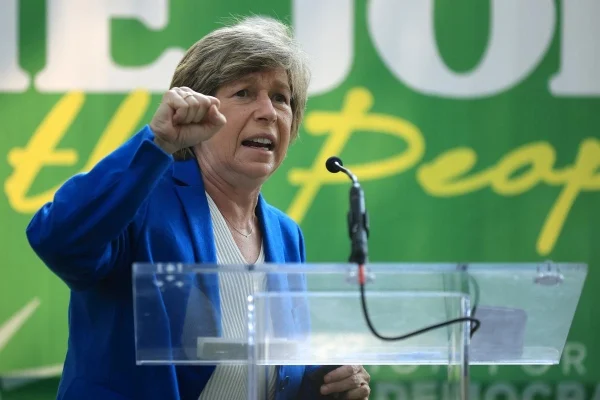
AFT President Randi Weingarten has been a loud advocate for protecting borrowers’ rights to loan repayment programs.
Chip Somodevilla/Getty Images
The Department of Education has accumulated a backlog of more than 800,000 applications for income-driven loan repayments (IDR) as of Dec. 15, according to the most recent status report in a lawsuit filed by the American Federation of Teachers (AFT).
The union originally sued the department in March for pausing all applications to IDR plans, loan consolidation and the Public Service Loan Forgiveness program, but the case was quickly settled as the department reopened the application portal and committed to providing regular status updates.
For five months, the status reports carried on and the case remained quiet. But then, in September, AFT filed an amended class action complaint and motion for preliminary injunction, arguing that just because the portal is open doesn’t mean it is working properly. Tens of thousands of applications were going untouched, violating the rights of the borrowers who submitted them.
In October, the department again reached a settlement with the plaintiffs, committing to process applications, and the motion was stayed. But now, with the latest status report released, AFT argues that the department isn’t holding up its end of the deal.
“The problem is they don’t appear to have kept their word,” Randi Weingarten said in a news release Wednesday. “The borrower backlog remains eye-popping, and Education Secretary Linda McMahon clearly has no idea how to manage this process.”
In addition to the backlog of pending loan repayment applications, the report shows that only 170 borrowers at the end of their IDR plan and 280 borrowers who have completed their PSLF payments have received their rightful loan forgiveness.
Weingarten suggested that in addition to loan forgiveness being low on the Trump administration’s list of political priorities, much of the backlog is due to major staffing cuts.
“Perhaps [Secretary McMahon] shouldn’t have sold the Department of Education off for parts,” the union president said. “President Donald Trump and Vice President JD Vance may believe affordability is a hoax, but hundreds of thousands of Americans just trying to get ahead are bleeding—and the administration’s lack of action is rubbing salt into the wound.”
So, until the department “follows the law and processes every single outstanding application,” she added, AFT will not stop fighting its case.
The department says Palantir was involved in a portal tracking universities’ foreign gifts and contracts.
The American Association of University Professors (AAUP) is publicly expressing concern about the Education Department working with Palantir, a controversial artificial intelligence and data analysis company that serves the U.S. military and Immigration and Customs Enforcement.
The AAUP says it learned of the partnership when FedScoop reported that it noticed a message referencing Palantir on the website foreignfundinghighered.gov Dec. 4. An hour later, the website showed “a login page with the Palantir logo,” and, a couple of hours after that, “the Palantir logo was replaced with an Education Department logo,” the outlet wrote.
Foreignfundinghighered.gov tracks foreign gifts and contracts data for higher ed institutions. If a foreign source provides a college or university more than $250,000 in a year, Section 117 of the Higher Education Act of 1965 requires the institution to report the payment to the federal government.
In an email to Inside Higher Ed, the Education Department described Palantir’s involvement in the past tense. It said Palantir was involved with the foreign funding portal as a subcontractor for Monkton, a company that has long handled privacy and data issues for the Departments of Defense and Homeland Security.
“After soliciting feedback from institutions of higher education, the Trump Administration has upgraded the portal to make it easier for colleges and universities to report their foreign gifts and contracts as required,” Julie Hartman, the Education Department’s press secretary for legal affairs, said in a statement.
The AAUP held a news conference Wednesday raising concern about Palantir’s past work and about critical statements that Palantir leaders Alex Karp and Peter Thiel had made about higher ed.
“We want transparency,” AAUP president Todd Wolfson told reporters. “We want to know what Palantir is doing on this contract and we want to know how much they stand to make.” He said it “seems to be yet another front aimed at surveilling and criminalizing our colleges and universities,” and could indicate a “shift toward treating higher education not as a public good, but as a security threat to be monitored.”
The department didn’t tell Inside Higher Ed how much Palantir is being paid. Hartman said “universities’ clear disclosure and public transparency requirements have been in statute for decades,” adding that the AAUP’s “baseless assertion that the portal is a ‘politicized punitive action’ demonstrates their utter disregard for the rule of law.”
She said, “the Trump Administration is ending the secrecy surrounding foreign dollars and influence on American campuses.” Palantir spokespeople didn’t return Inside Higher Ed’s requests for comment.
A total of 14 centers and institutes will be decommissioned, according to a budget reductions presentation to the board in November.
Tar_Heel_Rob/iStock/Getty Images
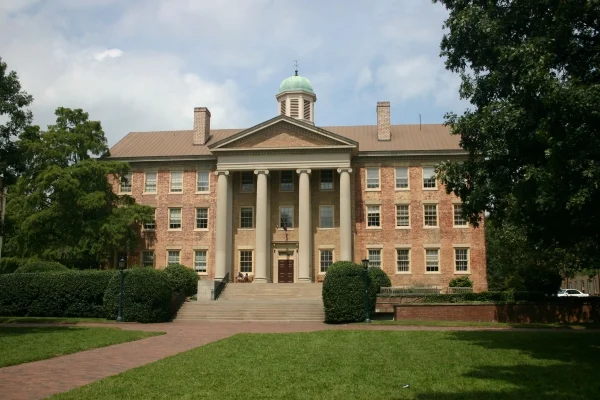
The University of North Carolina at Chapel Hill will close its area studies centers in 2026, faculty members within the centers told Inside Higher Ed.
The six centers—the Center for European Studies, the African Studies Center, the Carolina Asia Center, the Center for Middle East and Islamic Studies, the Institute for the Study of the Americas and the Center for Slavic, Eurasian and East European Studies—are all expected to close at some point next year.
“Our leadership team is taking a thoughtful and targeted approach, looking into areas that can be streamlined for greater efficiency, strengthening our operations while meeting our fiduciary responsibility to the people of North Carolina,” the UNC media relations department said in a statement. “A number of factors were taken into consideration while evaluating Centers and Institutes and some programs have been identified to be sunset [sic] in 2026. The list is not finalized at this time.”
Further updates will come after the January Board of Trustees meeting, the spokespeople said.
In a “budget reductions update” to the board’s finance and infrastructure committee in November, university officials said they planned to save $7 million in annual spending from “centers and institute reductions” made over several years, with a goal of $3 million in budget reductions before the end of this fiscal year in June 2026. A total of 14 centers and institutes will be decommissioned, according to the presentation.
The higher ed sector underwent rapid change in 2025, as leaders navigated new and evolving federal and state policy, emerging technologies and shifting employer expectations for graduates, all while responding to the diverse and pressing needs of students.
For practitioners, faculty, staff and administrators looking to impact student success in the new year, Inside Higher Ed identified 26 data points that outline the major trends of 2025 and those to watch out for in 2026.
80 percent of college students rate the quality of their education as good or excellent, up 7 percentage points from 2024.
83 percent of the class of 2023 remained enrolled for two terms and the national persistence rate rose to 77.6 percent, up from 74.8 percent in 2019.
Two-thirds of Americans say a four-year degree isn’t worth the cost because graduates leave without a specific job and with large amounts of debt.
One-third of students said they’re thriving, reporting high levels of success in relationships, self-esteem, purpose and optimism.
15 percent of colleges are using AI for student advising and support; an additional 26 percent use genAI for predictive analytics in student performance and trends.&
70 percent of Americans believe higher education is “going in the wrong direction” due to high costs, poor preparation for the job market and ineffective development of students’ life skills.
62 percent of students said they have “very high” or “somewhat high” trust in their college or university; 11 percent rate their trust as “somewhat low” or “very low.”
23 percent of stop-outs said they won’t re-enroll because they can’t afford upfront costs; 15 percent said they are already too burdened by student debt to re-enroll.
45 percent of students want colleges to encourage faculty members to limit high-stakes exams to improve their academic success; 40 percent want to see stronger connections between classroom learning and their career goals.
36 percent of students have not participated in any extracurricular or co-curricular experiences while in college; an additional 39 percent say they’re very involved in at least one activity.
71 percent of students have experienced financial trouble while enrolled in college, and 68 percent said they ran out of money at least once since the start of the year.
43 percent of students say they study in the evening, while 18 percent said they study at night.
84 percent of students say they know when and whether to use generative artificial intelligence to help with their coursework; the majority attributed this knowledge to faculty instruction or syllabi language.
71 percent of students said it was acceptable to shout down a speaker to prevent them from speaking on campus; 54 percent believe it’s acceptable to block other students from attending a campus speech.
International enrollment declined 1 percent in fall 2025, with 17 percent fewer new students coming to U.S. campuses this past fall.
As of August, 37 percent of students said federal actions to limit diversity, equity and inclusion have had no real impact on their college experience.
57 percent of students said cost of living is “a major problem,” for college students today; 55 percent said mental health issues are a major problem, as well.
59 percent of Americans are in favor of awarding green cards to foreign students who graduate from American universities so they can work in the U.S.
87 percent of Gen Z said they feel unprepared to succeed at work due to limited guidance, unclear paths to career from school and uncertainty about which skills matter most.
Only 44 percent of students say they know some information about post-graduation outcomes for alumni of their college or university; 11 percent say they’re not sure where to find this information.
67 percent of students said they don’t use AI in their job searches; 29 percent said they avoid it because they have ethical concerns about using the tool.
94 percent of employers think it’s equally important for colleges to prepare a skilled and educated workforce and to help students become informed citizens.
Colleges on the typical semester schedule often have an intersession also called a January term—that fills some of the gap between the end of the fall and the start of the spring. Intersessions typically last only a few weeks, if that, and they’re intended to allow students to pick up a single class during time they otherwise wouldn’t have any. They can be particularly helpful for student athletes whose seasons dominate one semester or the other; moving some credits to the January term can allow students to take a slightly lighter load when they’re competing.
I’ll admit that I’m a fan of intersessions. Intersession courses tend to have much higher completion rates than semester courses. Some of that may be self-selection, but I think most of it comes from a combination of single focus and a relative lack of time for life to get in the way.
When I was an undergrad, intersession courses were different from the courses offered during the semesters. They were usually interdisciplinary and often fairly idiosyncratic. They were some of the best classes I had in college.
But that was at a small liberal arts college that didn’t have to worry about its credits transferring to other places. In the community college setting, transferability matters, so the courses tend to be more compressed versions of the same courses that get taught in the long semesters. In my perfect world, we’d have the same curricular freedom that the tonier four-year places have, but that doesn’t seem to be the direction of things. Still, I have to admit that offering the plain-vanilla introductory gen eds works well for attracting “visiting” students who are matriculated elsewhere but who are home over the break. It allows them to pick up transferable credits at lower cost. If our stuff got too idiosyncratic, we might lose that market.
My current college is the first one I’ve worked at in which intersession straddles the Christmas break. Everyplace else, it started right after New Year’s, typically ending just before Martin Luther King day. I’m not sure why we straddle the break; I’ll be curious to see its effect on success rates. It seems like it would depress the enrollment of visiting students, which makes it all the more curious that we do it this way.
So, some questions for my wise and worldly readers.
Have you had an intersession success story? Alternately, did something crash and burn?
Have you noticed that certain kinds of courses fit the format better than others? If so, which?
And is there a good argument for having it straddle the break?
I’d love to hear responses via email at deandad (at) gmail (dot) com, or on Bluesky, where I’m at @deandad.bsky.social. Thanks!
It’s been a whirlwind year for higher ed—and for Inside Higher Ed. Yes, we rigorously covered President Donald Trump’s unprecedented attacks on higher education, and our readers seemed to appreciate our efforts; according to my (unscientific) analysis of our readership statistics, about 70 percent of our most-read articles this year were about the Trump administration.
But we’ve also found time, somehow, to keep up with our bread-and-butter higher education stories: how technology is changing college campuses, institutions’ financial struggles, academic freedom and free speech issues, student success, college costs and the value of a degree, the continued rise of career and technical programs, and even a few intriguing scandals.
To look back at the work we’ve done over this tumultuous year, we asked the members of our editorial team to share one of their favorite stories published this year. These are stories that may have flown under the radar, highlight a reporter’s unique strengths, or push the boundaries of what a higher ed news story can be. But most importantly, they’re stories that helped our readers make sense of the changing higher ed landscape during a year that was unlike any other.
Josh and Kathryn’s investigation into a network of fake college websites built using generative AI, to me, represents the particular strengths of the small but mighty IHE newsroom. While a couple of the faux institutions had been flagged by officials, it was Josh’s curiosity and close attention to his beat that prompted his digging, which uncovered dozens more fake schools and the fake accreditors that endorsed them. The double-byline teamwork made the depth of reporting in this story possible while the newsroom simultaneously continued to churn out the news of the day.
In this story, Johanna looked at how one of most feared, criticized and occasionally, celebrated developments to upend higher education in recent years—generative AI—is changing how faculty teach and assess students. She spoke to a number of professors who are requiring handwritten assignments to ensure that students don’t use ChatGPT or other AI tools to cheat their way through class. The story is lively, timely and illuminating; it includes the voices of an array of faculty members and experts who share nuanced perspectives about the pros and cons of reverting to traditional handwritten assessments to evaluate students in the age of AI.
One of Ryan’s many talents as a reporter is being able to take a hot topic in news coverage and deeply report on it to add layers of context, insight and inquiry that could otherwise be overlooked or misunderstood. This piece is exemplary of this type of reporting, peeling past the horror of Charlie Kirk’s murder to investigate what it means to be a figure of civil discourse.
This story cut through the well-worn conservative/liberal debates about what should be taught in higher ed and showed a truth that has been raising eyebrows across the political spectrum: New College of Florida was spending “more than 10 times per student what the other 11 members of the State University System spend, on average” and politicians were likely discussing closing it behind the scenes. The article also had great quotes, including a faculty member calling NCF’s approach to recruitment “kind of like a Ponzi scheme” and a former administrator saying “academically, Richard [Corcoran] is running a Motel 6 on a Ritz-Carlton budget.”
The editors at Inside Higher Ed have a running joke that deferred maintenance is my favorite topic because I get excited when the issue of crumbling brick facades or broken elevators comes up. I’m not a facilities nerd. I just agree with what F. King Alexander told Colleen Flaherty about deferred maintenance for this piece: “This is a huge issue that presidents have to deal with that nobody’s talking about.” The sector has rightly spent 2025 following the Trump administration, college closures and leadership controversies, but Colleen’s story is my favorite because it adds nuance to the conversations about higher ed’s financial health and is a reminder that too many colleges are one leaky roof away from closure. It’s also got a killer headline.
As the Trump Administration began revoking student visas, the indefatigable Ashley Mowreader worked to identify which institutions and how many students were affected, resulting in a widely-read map that was cited in legal filings and by numerous other publications. Inside Higher Ed tracked 1,800-plus students who lost their F-1 or J-1 status as the Trump administration cracked down on immigration. Our reporting helped contextualize the federal government’s broadside against international students and the many subsequent lawsuits via reporting that informed and illuminated and resulted in one of our (deservedly) most-read pieces of 2025.
Charlie Kirk’s killing called for a deep, nuanced look at the movement he created, and that’s exactly what Kathryn delivered in this story. The feature was beautifully written and richly detailed. It took Turning Point USA students’ grief seriously while also drawing on a range of scholarly perspectives to add balance and provide context about the movement’s present and future. The story also offered valuable framing for our ongoing coverage about the ways the aftermath of Kirk’s shooting roiled campuses in the months that followed.
This piece from Jessica helped to illuminate how another federal agency was applying pressure to colleges and universities and what’s at stake for higher ed more broadly. Her reporting came after the Department of Justice played a role in the resignation of Jim Ryan, who was president of the University of Virginia and faced questions from federal investigators about how he handled diversity, equity and inclusion efforts on campus. The timely story took readers beyond the news of the day and behind the scenes into the tactics of the second Trump administration.
Sara’s story on the effort to preserve the history of HBCUs was timely, well-reported and beautifully written. It featured so many voices and presented HBCUs as institutions that illuminate the complexities of America’s history at a time when the federal government is moving to sanitize it. Her story showed how HBCUs are integral to telling the story of Black America and why it’s an important story to preserve. The historical photos put it over the top.
No one in the history of hitting the ground running has ever hit the ground running quite like Emma Whitford did when she came on as Inside Higher Ed’s faculty reporter this past September. Since then, Emma, who had previously worked at IHE from 2019 to 2022, has covered near daily clashes between faculty and administrators with persistence, precision and clarity. This story about verbal policies banning professors from teaching about gender identity in Texas perfectly encapsulates her incredible ability to root out the truth of complex controversies. From there, she continued to follow this story for weeks as more information came out about the nature of the ban and as faculty questioned the legitimacy of the verbal policy. The saga also demonstrates conservative leaders’ continued efforts to erode academic freedom, which has been a significant theme for the past several years and will surely continue into 2026.
This was a great scoop that Josh gathered by going back to the basics of journalism and making a public records request. And as someone who completed a bachelor’s degree while working part-time for Investigative Reporters and Editors, I’m a sucker for any story rooted in FOIA. He took an event that was making headlines throughout Florida and across the country and advanced the story, giving readers a behind-the-scenes look at which universities were striking agreements with the Trump administration and how.
We were supposed to avoid federal policy pieces due to the onslaught of those this year. But assuming that guidelines are more like suggestions, I have to go with this edition of After the First 100 Days, our weekly federal policy news roundup, by singular news editor Katherine Knott. Back in April, when the newsletter was still called the First 100 Days, the White House was targeting higher ed with such speed and force that it was unnervingly unclear how far things would go. Then came Day 88—or, as Katherine wrote—what “will be remembered as the week that Harvard said no and higher ed started to fight back.” It was a crucial moment for higher ed in 2025, and Katherine’s weekly analyses have otherwise become crucial reading for me. After the 100 Days is an IHE membership perk but I promise this isn’t a sales ploy, hence the gift link!