Blog

  • Texas runs afoul of the First Amendment with new limits on faculty course materials

    Texas runs afoul of the First Amendment with new limits on faculty course materials

    In a major broadside against the First Amendment, public university systems in Texas are ordering faculty to watch what they say in the classroom, as state authorities have outlined ideas they want universities to stay away from when teaching their courses. 

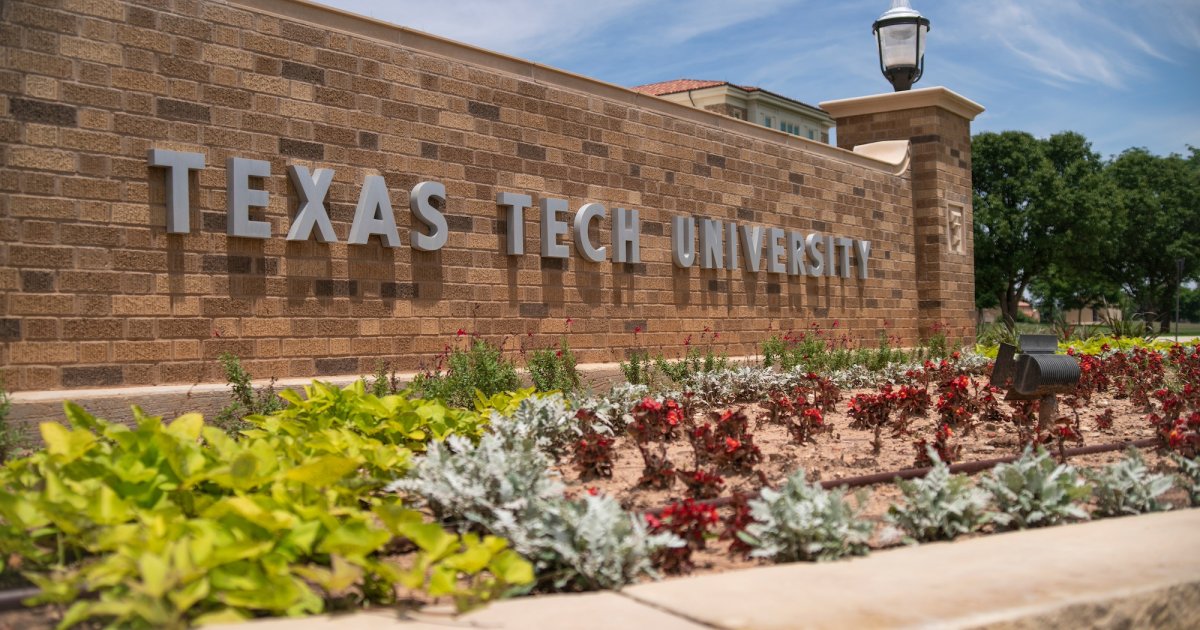
    The Texas Tech University System ordered its five member-universities to comb through faculty materials to root out any of the state’s disfavored viewpoints, and Texas A&M ordered its faculty not to “advocate” for “race or gender ideology,” or topics concerning sexual orientation or gender identity in the classroom, without getting approval for whatever they’re teaching first. 

    On Dec. 1, the Texas Tech University System issued a memo to faculty outlining the views faculty members cannot “promote or otherwise inculcate” in the classroom. Those concepts include:

    • One race or sex is inherently superior to another;
    • An individual, by virtue of race or sex, is inherently racist, sexist, or oppressive, consciously or unconsciously;
    • Any person should be discriminated against or receive adverse treatment because of race or sex;
    • Moral character or worth is determined by race or sex;
    • Individuals bear responsibility or guilt for actions of others of the same race or sex; or
    • Meritocracy or a strong work ethic are racist, sexist, or constructs of oppression.

    The memo also requires that if faculty believe that their course materials may touch on these issues, they must submit the material to the Board of Regents for review. 

    At first glance, some of these concepts may appear innocuous on the surface. The memo attempts to hedge by cabining its impacts to “advocacy or promotion,” which it defines as “presenting these beliefs as correct or required and pressuring students to affirm them, rather than analyzing or critiquing them as one viewpoint among others.” 

    Meanwhile, at Texas A&M, the Office of the Provost issued guidance prohibiting faculty from “requiring or encouraging students to hold certain beliefs, particularly regarding gender or race ideology or sexual orientation, or to feel shame for belonging to certain racial or ethnic groups.” Faculty there also have to submit their course materials for review before teaching. That guidance hedges itself by specifying that faculty may still “present concepts and theories that are contrary to what a student believes.” 

    But a significant chilling effect remains. It does not take much to envision how broad, sweeping mandates like these chill faculty instruction. The state is singling out specific viewpoints that it does not want faculty to teach their students. If faculty wanted to impose the opposite viewpoint — say, the idea that moral character or worth is not determined by race or sex, that would presumably be fine with state authorities. 

    Those authorities may not like it, but the First Amendment prohibits the singling out of specific viewpoints for disfavor. When faculty discuss these issues, they will have to walk on eggshells to ensure that they aren’t perceived as advocating for a specific viewpoint. But if they want to just stick to pressuring students to adopt the state’s pre-approved position? No problem!

    That’s viewpoint discrimination, plain and simple. Preventing faculty — or anyone else — from speaking based on the ideas they express is “censorship in its purest form.” Academic freedom protects the right of faculty to determine how best to approach potentially sensitive topics. It does not abide administrators placing their thumbs on the scale for ideas they like or dislike.  

    The language in Texas Tech’s memo echoes language in Florida’s Stop WOKE Act, which FIRE is currently challenging to prevent the law from restricting the classroom instruction of faculty at colleges and universities in Florida. That act regulates classroom instruction on eight concepts regarding “race, color, national origin, or sex.” 

    In late 2022, after FIRE sued, a federal court halted the enforcement of the act’s components implicating higher education. The court described the act’s restrictions as “positively dystopian” and rightfully recognized that the First Amendment protects professors’ in-class speech, and therefore prohibits authorities from banning teaching certain ideas in the classroom.

    Now, FIRE is writing to all of the member universities of the Texas Tech system, and publicly flagging our serious concerns with these directives from authorities. We urge universities to remain steadfast in their commitment to the First Amendment. Those well-versed in their constitutional history know that decades ago the Supreme Court warned against “laws that cast a pall of orthodoxy over the classroom,” Authorities in Texas would do well to remember this lesson.

    Source link

  • Canada launches CAD$1.7bn investment to recruit 1,000 global researchers

    Canada launches CAD$1.7bn investment to recruit 1,000 global researchers

    The Global Impact+ Research Talent Initiative will fund new research chairs, early-career posts, and infrastructure upgrades across universities to draw in leading academics from overseas and Canadian researchers currently working abroad. 

    “[The] investment is about securing Canada’s place at the forefront of discovery and innovation and leveraging our strength in science to support our future well-being and prosperity for generations to come,” said Canadian minister of industry Melanie Joly, announcing the program.  

    Through recruiting top talent, the program aims to “deliver direct economic, societal and health benefits for Canadians,” she stated.  

    The U15 group of Canada’s leading research-intensive universities welcomed the details of the investment, which was initially put forward in the government’s 2026-28 Immigration Levels Plan last month.  

    Robert Asselin, U15’s CEO, described the initiative as a “call to action” to make Canada a world-leading hub for research and innovation. 

    “This is a significant step which recognises that Canada’s security and economic success depend on supporting highly qualified talent with the ideas and expertise to deliver bold new discoveries,” he said.  

    Policymakers said the initiative was one of the largest recruitment programs of its kind in the world, with minister of health Majorie Michel emphasising the tangible benefits to Canada’s healthcare system.  

    “Better healthcare begins with better research. And in Canada, we believe in science. We value our scientists.” 

    “These investments will attract the best and brightest in the world, including Francophone researchers. This is the exact talent we need to drive better healthcare outcomes for Canadians and grow the Canadian economy,” Michel declared. 

    This is the exact talent we need to drive better healthcare outcomes for Canadians and grow the Canadian economy

    Majorie Michel, Canadian Minister of Health

    The investment will be split across four funding streams. The Canada Impact+ Research Chairs program has been allocated the bulk of the investment and is set to receive CAD$1bn over 12 years to help universities attract world-leading international researchers.  

    Meanwhile, the Canada Impact+ Emerging Leaders program will use CAD$120 million over 12 years to bring international early-career researchers to the country and expand the research talent pool with “fresh ideas and diverse perspectives”. 

    Two additional funds of CAD$400m and CAD$130m respectively, will be used to strengthen research infrastructure and provide training to support doctoral students and researchers relocating to Canada.  

    Recruitment will focus on fields such as artificial intelligence, health, clean technology, quantum science, environmental resilience, democratic resilience, manufacturing, defence, and cybersecurity. 

    Karim Bardeesy, parliamentary secretary to the minister of industry, said at the announcement: “We need to invite the best and brightest from around the world and those Canadians abroad to come and do that work here in Canada.” 

    The initiative comes as Canada plans to reduce new international study permits by more than 50% in 2026, driven by wider federal efforts to reduce Canada’s temporary resident population to less than 5% of the total by the end of 2027. 

    Delivering Canada’s 2025 budget in November, finance minister Francois-Philippe Champagne said the measures were designed to give the government greater control over the immigration system and bring immigration back to “sustainable levels”. 

    The government has said immigration measures will be targeted to specifically boost the scientific benefits for Canada, such as through increasing the country’s supply of doctors as part of a new International Talent Attraction Strategy and Action Plan. 

    Source link

  • International postgraduate enrolments continue to fall across UK universities

    International postgraduate enrolments continue to fall across UK universities

    Fresh enrolment data indicates a further fall in overseas students starting postgraduate courses in September 2025, marking another year of decline.

    Of 69 universities responding to a survey from the British Universities International Liaison Association (BUILA) in November 2025, 61% reported a decrease in postgraduate enrolments in international students in September 2025-26 compared with the previous year.

    Across all study levels, overall enrolments from overseas students are down 6%, according to the latest release from BUILA.

    Despite the drop, data shows that many institutions are seeing growth in postgraduate enrolments from the EU and the US, with average rises of 13% and 19% respectively.

    But the biggest overall enrolment drops came from China, where 80% of universities reported average declines of 17%. For India, 63% of institutions reported average drops of 9%.

    The decline is not as steep as previous years, where in November 2024, 80% of universities reported lower international postgraduate enrolments, with a 20% decrease overall, according to HESA data

    International students play a key role in UK postgraduate education, in 2023-24 making up 71% of full-time postgraduate enrolments and contributing significantly to universities’ teaching and research capacity. 

    The continued decline in international postgraduate enrolments this year is largely driven by increased competition from other global education destinations
    Andrew Bird, BUILA

    “The continued decline in international postgraduate enrolments this year is largely driven by increased competition from other global education destinations,” explained Andrew Bird, chair of BUILA.

    “With global competition intensifying, the government must act to protect the UK’s reputation as a world-leading study destination while balancing its immigration agenda.”

    The total number of study visas issued to international students fell by 19% between 2022 and 2024, as reported by The Migration Observatory at the University of Oxford

    The decline in study visas comes as universities prepare for the introduction of the international student levy, which will see English universities will charged a flat fee of £925 per international student per year from August 2028.

    Under the levy, each institution will receive an allowance covering only their first 220 students each year.

    The continued drop in international student numbers is likely to put additional financial pressure on universities, which rely heavily on fees from these students to support their budgets. 

    “With measures like the international student levy and tighter recruitment rules still to come, we urge the government to deliver a much-needed period of stability for the sector,” Bird added.

    “The budget confirmed that the levy will be introduced from 2028, so while 2026 enrolments are unlikely to be impacted, universities will be considering how to navigate the impact of this in a challenging financial environment.”

    Source link

  • AI meets the VLE: integrating an AI assistant at Saïd Business School, University of Oxford

    AI meets the VLE: integrating an AI assistant at Saïd Business School, University of Oxford

    This blog was kindly authored by Melissa Bowden, Senior Content Writer and Editor at Kortext.

    Artificial intelligence (AI) is no longer a distant concept in higher education. It’s here, and it’s already transforming the way institutions are delivering learning.

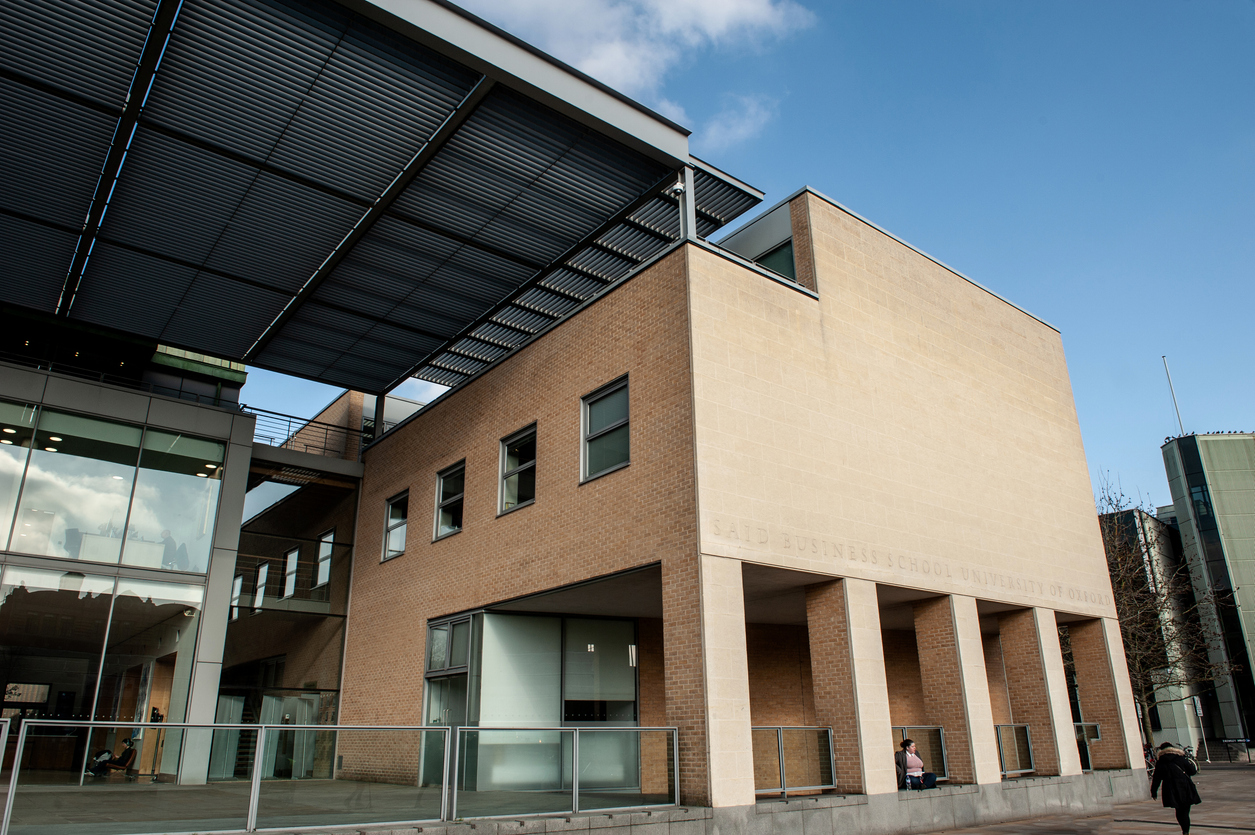
    At Oxford University’s Saïd Business School, an exciting new pilot is underway: a VLE-integrated AI assistant developed in collaboration with Kortext, Microsoft and Instructure. This initiative is more than a technology trial; it’s a strategic step towards realising Oxford’s ambitious AI vision.

    Starting the transformation journey

    The University of Oxford is a complex, devolved organisation with 26,500 students and 16,500 staff. The potential applications of AI across this ecosystem are vast – from accelerating research and processing data to enhancing student engagement and streamlining staff workflows. But with so many possibilities, the question is: where do you start?

    For Mark Bramwell, Chief Digital & Information Officer at Saïd Business School and Director of Strategic Digital Partnerships at the University of Oxford, one answer lies in the VLE. Integrating an AI assistant into their Canvas instance is a practical first step in a broader digital transformation strategy focused on agility, data and world-leading innovation.

    As Mark explains:

    AI will be core to our future. We need to equip our faculty, researchers, students and staff with the latest technologies – not just to make them more efficient today, but to also ensure they’re fully prepared with essential skills they’ll need in the workplace.

    The power of partnership

    Saïd Business School has been working in collaboration with Kortext, Microsoft and Instructure on the Canvas-integrated AI assistant pilot as part of its existing partnership.

    When establishing the pilot, there were three non-negotiables for Bramwell. The AI assistant must be seamlessly integrated into a student’s learning journey, use a ring-fenced secure data environment, and be interoperable with existing technologies at Oxford.

    With Canvas as the delivery platform, the AI assistant is available to students and faculty within their existing learning environment. All data is stored safely within the university’s domain and tenancy, complying with regulatory requirements. Finally, the pilot builds on Oxford’s long-standing strategic partnership with Microsoft as a natural evolution of its digital ecosystem.

    The pilot will span 1,200 students across all degree programmes, alongside faculty and instructional designers. For Bramwell, this project is:

    an exciting extension of our digital strategy and AI activities, leveraging the synergies that exist between our three tech collaborators.

    Data-driven insights for smarter course design

    It’s early days, but the pilot’s outcomes are greatly and positively anticipated. For Bramwell, one of the most beneficial aspects is the AI assistant’s ability to capture granular engagement data.

    Which content are students interacting with? Where are they disengaging? These insights can inform continuous improvement in course design and content strategy, enabling faculty to create responsive programmes relevant to student needs. They can also accelerate course development, with staff expertise complemented by AI-enabled tools and recommendations.

    Competitive advantage in a global market

    Higher education is an increasingly competitive sector, both in the UK and globally. Within this context, one of Saïd Business School’s ambitions is clear: to extend its reach through online learning and deliver an experience that reflects the name, brand and value of the University of Oxford.

    For Bramwell, personalised learning, enriched by data and analytics, is central to that differentiation.

    Our job is to make every learner better equipped for the world and the future of work than when they joined us.

    If we can do that, we’re doing our job.

    Looking ahead: the future of AI-enabled education

    The vision doesn’t stop there. Bramwell imagines a future where AI supports a student from ‘cradle to grave’, guiding their learning at every stage of their life.

    The possibilities are endless,but must be delivered within responsible, ethical frameworks.

    He also sees possibilities for global accessibility: ‘giving us the opportunity to take Oxford to learners, geographies and regions that may not have previously been possible’.

     By replicating faculty expertise globally, AI can help make education more inclusive and impactful than ever before.

    What happens next?

    The pilot’s impact will be measured through engagement metrics, content interaction and tangible efficiency gains for both students, instructional designers and faculty. Examples here might include learners using the AI assistant to summarise reading materials and save time, or staff asking the AI assistant for content recommendations to make the student experience more engaging.

    Bramwell is confident this is just the beginning. The next phase of AI-enabled learning at Oxford could involve developing truly personalised learning experiences, where learners construct and consume courses on their own terms – anytime, anywhere.

    A message for higher education leaders

    For other institutions, Bramwell offers a clear message:

    Don’t let governance and risk paralyse innovation. Experiment, innovate and play – but do it safely. Architect your approach within secure frameworks so you can learn without compromising data or trust.

    This is a pivotal moment for higher education. AI isn’t a future trend, it’s a present reality. The question now is whether institutions will embrace it proactively or be left behind.

    Kortext is a HEPI Partner. Mark Bramwell is speaking at Kortext LIVE on 11 February 2026 in London. Join Mark at this free event to hear more about the pilot’s progress, the long-term vision, and why Kortext was selected as a key project partner. Find out more and secure your seat here.

    Source link

  • Can we use AI intelligently?

    Can we use AI intelligently?

    Artificial intelligence apps are too useful to avoid. But can schools use them in ways that won’t harm creativity or turn students into robots?

    Source link

  • Test yourself on the past week’s K-12 news

    Test yourself on the past week’s K-12 news

    This audio is auto-generated. Please let us know if you have feedback.

    How well did you keep up with this week’s developments in K-12 education? To find out, take our five-question quiz below. Then, share your score by tagging us on social media with #K12DivePopQuiz.

    Source link

  • College costs grew 3.6% in fiscal 2025, HEPI shows

    College costs grew 3.6% in fiscal 2025, HEPI shows

    This audio is auto-generated. Please let us know if you have feedback.

    Dive Brief: 

    • College operating costs increased 3.6% in fiscal 2025, according to the latest Higher Education Price Index, which tracks the sector’s inflation.
    • “HEPI inflation rates are again elevated above what many consider the norm, set by expectations from prior decades,” according to a report from Commonfund Institute, which is responsible for the index. For the past five years, the HEPI rate has been above the prior decade’s annual average of 2.2%. 
    • HEPI’s latest inflation rate continues a period of elevated cost increases for colleges and universities that began with the COVID-19 pandemic. The latest annual price increase of 3.6% is higher than the prior year’s rate of 3.4%. However, it’s much lower than the most recent peak of 5.2% in fiscal 2022. 

    Dive Insight: 

    HEPI found cost increases for colleges outpaced those tracked by the Consumer Price Index, which showed inflation for the general public rising 2.6% in fiscal year 2025. HEPI’s inflation rate has been higher than the CPI’s in nine out of the past 11 years. 

    The cost increases are putting immense pressure on many colleges. Some institutions that have closed in recent years have even cited inflation as one of the reasons they’re shutting down. 

    For others, the price hikes mean shrinking margins and the need for budget cuts. All three major credit rating agencies issued a gloomy 2026 outlook for either nonprofit colleges or the entire higher education sector, with each citing rising costs as a factor. 

    Out of eight cost categories that the HEPI tracks, administrative salaries grew the most in fiscal 2025, increasing by 4.8%. 

    Similarly, faculty salaries rose 4.3%, the highest rate recorded since HEPI began tracking inflation in the category in 1998. Inflation in faculty salaries has only reached 4% or higher two other times — a 4% increase in 2023 and a 4.1% increase in 2008. Faculty salaries have the most impact on the index. 

    Increases for the other categories were: 

    • 4.2% for utilities.
    • 4.1% for service employees. 
    • 3.7% for miscellaneous services. 
    • 3.3% for clerical costs. 
    • 2.4% for fringe benefits. 

    Only supplies and materials saw deflation, with a 0.2% decline in costs. 

    Across institutions, two-year public colleges saw the highest overall cost increases at 4.6%. No other institution type had inflation above 4%. Part of this was due to inflation in faculty salaries at those institutions reaching 8.7% in fiscal 2025 — by far the highest out of any institution type. 

    Overall, public institutions had higher increases in faculty salaries than public colleges, 4.7% versus 3.6%. This breaks with the trend of private institutions more often seeing higher annual inflation in faculty costs, according to the Commonfund Institute report.

    Source link

  • More teens are using summer for college and career prep

    More teens are using summer for college and career prep

    Key points:

    The academic landscape has evolved dramatically, especially when it comes to summers. More students are embracing year-round learning to build strong study habits and develop the critical thinking, application, and retention skills they need for success in higher education and the workplace. They’re treating AP®, SAT®, and ACT® practice and preparation as long-term investments rather than temporary obligations where they are last-minute cramming for these high-stakes exams.

    Trends and research support this approach. The Pew Research Center found that 36.6 percent of U.S. teens had a paying job during the summer of 2021–the highest rate since 2008. According to their research, 86 percent of U.S. teens say having a job or career they enjoy is extremely or very important, and 58 percent say having a lot of money is highly important. Their drive for meaningful, financially secure careers is reshaping how they spend their time, especially during the summer.

    Beyond earning money, today’s teens are using their summers for skill development through jobs, internships, and academic prep. This dual focus on work and learning shows maturity and foresight. Students are preparing not just for the next school year but for the professional expectations they’ll face later in life.

    What the Surge Says About Student Ambition

    This rising engagement in AP coursework aligns with a broader cultural shift toward early academic specialization. Students see AP coursework as more than a way to earn college credit. It’s the first step into their intended career path.

    • Future healthcare professionals are diving into AP Biology, AP Chemistry, AP Physics 1, and AP Psychology as early tests of their aptitude for the MCAT® and various medical fields.
    • Aspiring attorneys and policymakers turn to AP Government and AP U.S. History to build knowledge of our legislative and judicial foundations, as well as analytical and writing skills.
    • Future accountants, entrepreneurs, and business people gravitate toward AP Calculus, AP Macroeconomics, and AP Statistics to develop quantitative fluency and business reasoning.

    The Associated Press-NORC Center for Public Affairs Research found that six in 10 teens say graduating from college is extremely or very important to getting a good job. Many recognize that advanced coursework in high school can make college more manageable and scholarships to their dream schools more attainable.

    The rise in AP participation isn’t just academic enthusiasm. It’s strategic planning. Students are approaching high school as a career laboratory where they can test their interests, gauge their strengths, and start aligning their goals with future opportunities.

    Summer as the new launchpad

    For this generation, the summer is a launchpad, not a pause. Teens are blending part-time work with academic enrichment, community involvement, and skill-building activities that align with their future ambitions. Many see the summer as the perfect window to study at their own pace, without the pressure of a full course load or extracurricular overload. 

    More students are using summer break strategically to strengthen their understanding and prepare for challenging AP and SAT content. This behavior echoes findings from Pew’s 2025 survey: Teens are more focused on professional and financial success than on traditional milestones such as marriage and family life. They’re motivated by the pursuit of independence, stability, and purpose, values that translate directly into how they approach school and learning.

    When I talk to students, what stands out is how intentional they are. They want to be prepared, and they want options. They see every AP class and every practice question as one step closer to a career that excites them, and a future they can control.

    From short-term learning to lifelong skills

    This trend toward early preparation also reflects a shift in how students define success. They understand that knowledge alone isn’t enough; the ability to apply, adapt, and persist will carry them through college and into their careers.

    With the research in mind, educators and edtech tools must prioritize active learning over memorization. By helping students understand the why behind each step, not just the correct answer, we build the problem-solving and analytical reasoning skills that mirror the expectations in fields more students are pursuing, including medicine, law, engineering, and business.

    The Future Belongs to the Prepared

    The surge in AP course engagement this summer isn’t an anomaly. It’s a glimpse into the future of learning, and we see that as a positive sign. Students are no longer waiting for senior year or college to take their goals seriously. They’re taking ownership of their learning, developing study skills that extend far beyond exams, and connecting their academic effort to real-world ambition. They’re not just preparing for tests; they’re preparing for life.

    High school may be where lifelong learning begins, but for this generation, it’s also where futures are built.

    Laura Ascione
    Latest posts by Laura Ascione (see all)

    Source link

  • Elite Influence and For‑Profit Exploitation in Higher Education

    Elite Influence and For‑Profit Exploitation in Higher Education

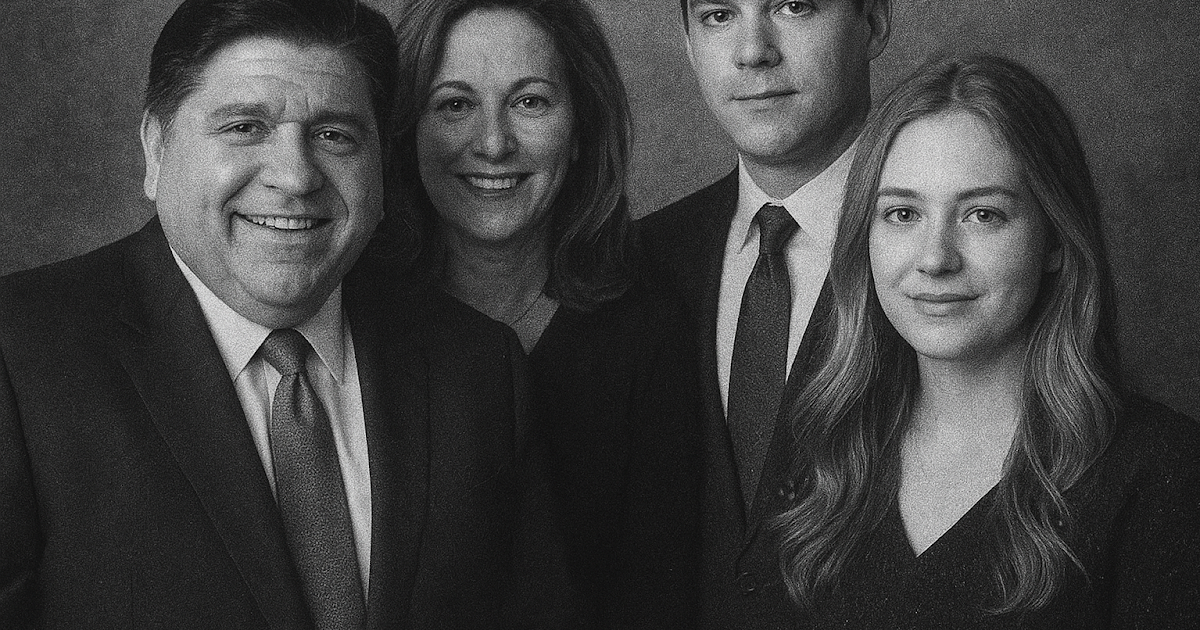
    As the 2028 presidential race accelerates, J.B. Pritzker has emerged as a favored candidate among Democratic power brokers. His public image—competent, pragmatic, socially liberal, and reliably anti-Trump—has been carefully shaped to appeal to voters exhausted by polarization and chaos. But beneath this polished surface lies a deep and troubling contradiction that the public, and especially those affected by the student-debt crisis, cannot afford to ignore. This contradiction, the Pritzker Paradox, stems from the profound dissonance between Pritzker’s public rhetoric about educational opportunity and the private capital networks that have fueled both his family’s wealth and his political ascent.

    The Pritzker family has long been intertwined with for-profit higher education and its surrounding ecosystem of lenders, service providers, and private-equity investors. These sectors have collectively played a major role in producing the contemporary student-debt crisis. While J.B. Pritzker often presents himself as a champion of equity, public investment, and educational access, his family’s financial history reveals an alignment with institutions that have extracted billions from low-income students, veterans, and Black and Latino communities through high-cost, low-value educational programs.

    This is not simply a matter of past investments. It is part of an ongoing and highly influential political economy in which wealthy Democratic donors, private-equity executives, and education “reformers” operate as a unified class. Central to that class formation is The Vistria Group, a Chicago-based private-equity firm founded by Marty Nesbitt, a close friend of Barack Obama. Vistria stands at the intersection of Democratic power and education profiteering. After the collapse of scandal-ridden chains like Corinthian Colleges and ITT Tech, Vistria did not step in to dismantle the exploitative for-profit model. Instead, it strategically acquired distressed educational assets and reconstructed them into a new generation of institutions that presented themselves as “nonprofits” while maintaining tuition-driven, debt-laden business models. Former Obama administration officials moved seamlessly into Vistria and related firms, raising serious questions about regulatory capture and revolving-door governance.

    Pritzker moves within this same Chicago-centered network. His political donors, associates, and advisers overlap significantly with the circles that built Vistria’s ascent. The structural relationships matter more than any single investment. A Pritzker administration would not exist outside this ecosystem; it would be shaped by it. The question, therefore, is not whether Pritzker personally signed a for-profit acquisition deal but whether the political world that produced him can be trusted to regulate higher education fairly and aggressively. The answer, based on the last twenty years of policy and practice, is no.

    This is especially troubling because presidents play a decisive role in higher-education oversight. Through the Department of Education, a president can strengthen or weaken borrower protections, set standards for nonprofit conversions, determine enforcement priorities, and decide whether private-equity extraction will be challenged or quietly accommodated. Millions of borrowers harmed by predatory institutions are currently awaiting relief through borrower defense, income-driven repayment audits, and Gainful Employment rules. The integrity of these processes depends on political leadership that is independent from the private-equity interests that helped create the crisis.

    Pritzker’s political style—managerial, technocratic, deeply rooted in elite networks—suggests continuity rather than challenge. The neoliberal framework he embodies does not confront structural inequalities; it manages them. It does not dismantle extractive systems; it attempts to regulate their excesses while leaving their core intact. In higher education, this approach has already failed. It is the reason the for-profit sector was allowed to expand dramatically under both Republican and Democratic administrations. It is why private-equity firms continue to control large segments of the educational marketplace through complex ownership structures and shadow nonprofits. And it is why millions of borrowers remain trapped in debts for degrees that offered little or no economic return.

    The Pritzker Paradox is therefore not a story about one wealthy governor. It is a story about the consolidation of political and economic power within a narrow elite that has profited handsomely from the financialization of education while promising, cycle after cycle, to reform the very problems it helped create. Vistria exemplifies this dynamic. The Pritzker family’s history echoes it. And a Pritzker presidency would likely entrench it further.

    America needs leadership willing to challenge private-equity influence in higher education, not leadership bound to it. The country needs a president who understands education as a public good, not a marketplace. For borrowers, students, and communities harmed by decades of predatory practices, the stakes could not be higher. The choice before the nation is not simply whether Pritzker is preferable to Trump. It is whether the country will continue to entrust its public institutions to elites who speak the language of equity while advancing the interests of the very networks that undermined educational opportunity in the first place.

    Sources
    Public reporting on Pritzker family investments in for-profit and education-related sectors; investigations by the Senate HELP Committee, GAO, and CFPB; reporting on The Vistria Group’s acquisitions and nonprofit conversions; analyses of private-equity influence in U.S. higher education; academic literature on neoliberalism and elite capture.

    Source link

  • Euro visions: Is the Georgian Dream a nightmare or saviour for HE?

    Euro visions: Is the Georgian Dream a nightmare or saviour for HE?

    Junior Eurovision has given me and my ten year-old an excuse to visit Tbilisi in Georgia this year – and he’s been thrilled to learn that it just so happens to have been a dramatic week in higher education policy news.

    If you click around on the ruling party’s Facebook page, you’ll find the face of Bidzina Ivanishvili, the party’s billionaire founder and honorary chairman, proudly proclaiming one of the headlines from his party’s reforms:

    Georgian Dream – the first government in Georgia’s history to make higher education free!

    There’s a lot more to it than that. The government has pushed through sweeping reforms to the Law on Higher Education that include an outright ban on state universities recruiting international students – all with what critics argue has been extraordinary speed and minimal consultation.

    Free education

    The current system, which has operated since the mid-2000s, allows students to take state grants based on their national exam performance to any accredited university – public or private.

    In 2025, 7,320 students received grants totalling 11 million lari (about £3m), with 66 per cent going to public universities and 34 per cent to private institutions, like the University of Buckingham accredited “British University Georgia”.

    Under the new model, the entire grant architecture will be abolished. State universities will instead receive direct government funding to provide “free” education to all admitted students at both bachelor’s and master’s levels, whilst private universities will lose all access to state support.

    The government presents it all as democratising access, but critics note that with strict quotas, “free” education may actually mean fewer available places overall. That’s a story that sounds familiar.

    The reforms go far beyond funding though. A “one city, one faculty” model means that within any given city, only one state university will be allowed to offer each academic discipline. In Tbilisi, for instance, where law faculties currently exist at Tbilisi State University, Ilia State University, and Georgian Technical University, these would be consolidated into a single faculty at one institution.

    The government will determine which programs each university will be allowed to offer, and set strict enrollment quotas based on labour market research conducted with the Ministry of Economy and Sustainable Development. That’s another story that sounds familiar, albeit ministers and regulators in England have been more prone to nudges and kite-flying than pulling levers.

    The academic structure itself is being compressed from the current 4+2 model (four-year bachelor’s, two-year master’s) to a 3+1+1 system, with three years for bachelor’s degrees in non-regulated professions, followed by one year for a master’s degree, with an optional additional year for those planning to pursue doctoral studies.

    While authorities claim this aligns Georgia with the Bologna Process – the European higher education standardisation framework – critics argue the opposite, fearing these changes will make Georgian qualifications less compatible with international systems and compromise students’ ability to pursue studies abroad. The UK seems to get away with it – and it’s part of a broader trend across Europe for governments aiming to speed up students’ entry to the Labour market.

    Serve our citizens first

    The ban on international students at state universities has generated particular confusion and concern among academic observers. Under the new legislative package, Georgia’s 19 state universities will be barred from admitting international students from next academic year, with only minimal exceptions.

    That’s an extraordinary reversal for institutions that have spent years building international partnerships, recruiting foreign students as both a source of revenue and academic diversity, and positioning themselves as regional education hubs. Tbilisi State University alone hosts hundreds of international students, particularly in English-language medical programmes that have attracted students from India, Nigeria, and the Middle East.

    Deputy Minister Zviad Gabisonia has defended the measure as a way to ensure state universities focus their resources on Georgian students, with the government arguing that making education “completely free” for domestic students requires concentrating limited state resources.

    From Georgian Dream’s perspective, the 19 state universities should serve Georgian citizens first, whilst private institutions remain free to recruit internationally. The government also says that it’s part of their labour market-focused approach – training Georgian students for Georgia’s economy rather than providing education for students who may leave after graduation.

    They’ve positioned it all alongside the broader promise of free education as evidence of prioritising ordinary Georgians over international interests – a message that resonates with some domestic audiences who’ve seen international students, particularly in medical programmes, as taking places from local applicants.

    Critics argue the international student ban exposes fundamental contradictions in the government’s rhetoric about “quality improvement” and alignment with European standards, and will create a two-tier system – isolated, government-controlled state universities for most Georgians, and expensive, internationally-connected private institutions for the wealthy.

    For them, the government’s claim that it will “raise quality” by ensuring only “highly qualified students with high scores are admitted” conflate exclusivity with excellence, and they warn that isolation from international academic networks may accelerate brain drain as ambitious Georgian students increasingly see their country’s higher education system as deliberately provincial.

    Liberal fascism

    There’s plenty of populism in here, of course. The PM’s framing for the package is that the current education system (which he blames on previous governments and Western influence) has left Georgians vulnerable to what he calls “contemporary liberal fascism” – his term for Western liberal values and influences:

    An insufficiently educated public is easily subjected to manipulation, external interference; it is easy to sow hate in such a society; it is easy to spread ideologies such as were once Bolshevism, fascism, and such is today’s contemporary liberal fascism.

    Meanwhile “deconcentration” in the reforms refers to the government’s plan for geographic redistribution of higher education away from Tbilisi, where 85 per cent of all university students are currently concentrated. The aim is to create a new university hub in Kutaisi in western Georgia, and along with the “one city, one faculty” model they argue it will help develop regions outside the capital and ensure more balanced development across the country.

    Critics counter that geographic deconcentration, combined with the concentration of academic disciplines into single institutions, may introduce infrastructure challenges and could be used to justify selling off university buildings in Tbilisi.

    The political and academic reaction has been swift and largely negative, but has all been lost a bit inside wider anti-government protests and increasing authoritarianism. Critics argue that the reforms serve multiple authoritarian purposes – centralising government control over HE, enabling purges of non-aligned academics, reducing the autonomy of institutions, and potentially decreasing overall access to higher education despite the “free” education rhetoric.

    The fear of repression is palpable – academics figure that the restructuring will be used to remove academics and professional services staff who don’t align with Georgian Dream’s increasingly anti-Western stance.

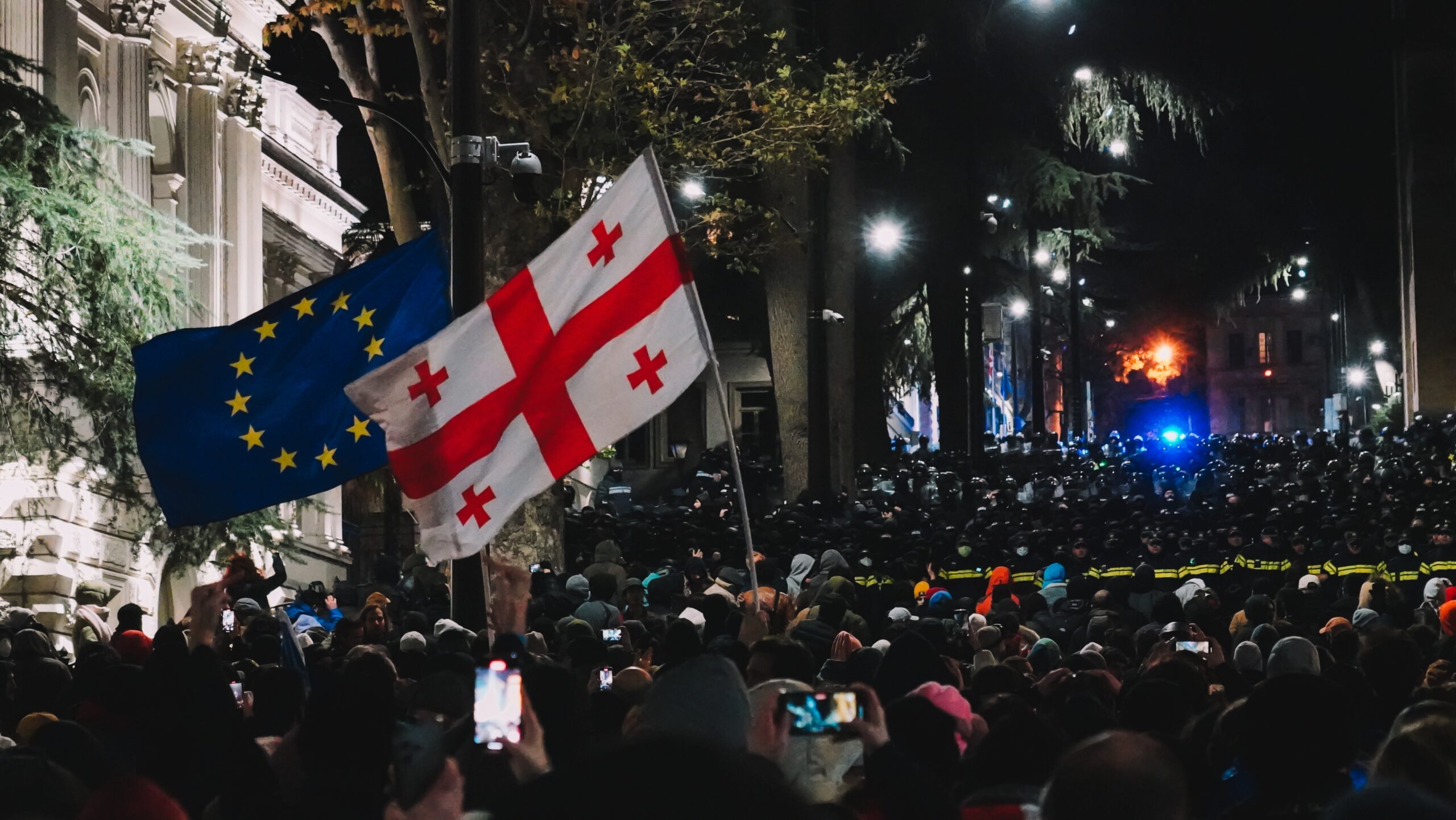
    The reforms have been pushed through parliament in the same week that legislators adopted new restrictions on protests, extending police powers to clear not just roadways but also pedestrian areas – a direct response to daily demonstrations that have continued outside parliament since Georgian Dream’s announcement at the end of November that Georgia would suspend its EU integration process until 2028.

    For the kids coming to watch JESC, there’s been a parallel bunch of reforms to schools too. Primary schools will see mandatory uniforms for grades 1-6, mobile phone bans during classes, and state-approved single textbooks for all subjects – again, critics see a systematic effort to establish state control over all levels of education, while the government argues that a 2004 document on national education goals, adopted by the formerly ruling United National Movement (UNM), was “saturated with liberal values”, and stressed that the new version approved in 2024 is based on a “patriotic spirit”.

    Capture, don’t destroy

    Allegations about universities fuse some of the conspiracy theories we’ve seen in the UK with some of Trump’s wilder allegations. In September pro-government TV channel Imedi reported that Georgia’s State Security Service is investigating “money laundering” linked to anti-government protests, claiming that foreign intelligence services are spending millions to orchestrate regime change through youth movements.

    Georgian Dream has some form on alleging foreign-orchestrated revolutionary plots – this report accused several Georgian universities, particularly the University of Georgia, Ilia State University, and Free University, of being hubs for protest training, claiming that up to 600 students “trained by foreign intelligence services” were being paid 200-300 GEL daily to protest, with funding allegedly channeled through university-linked companies and NGOs.

    More broadly, there’s a pattern to all of this both in Europe and across the West – populist governments believe that universities are too valuable to close, but too influential to leave autonomous. From Hungary’s restructuring of university governance to Poland’s attempts to control academic appointments to Turkey’s post-coup purges, the pattern is capture, don’t destroy.

    These governments understand universities as sites of ideological formation that shape future elites and national narratives. Rather than rejecting higher education, they’re trying to repurpose it – maintaining prestigious institutions and even improving facilities while systematically removing international connections, critical perspectives, and institutional autonomy.

    It often succeeds initially – because it’s wrapped in appealing promises of accessibility and national service. Who argues against “free” education or “raising standards”? But for people like Maia Chankseliani, Professor of Comparative and International Education at Oxford, they risk undoing much of the progress made by Georgian higher education over the past two decades:

    Georgia needs a university system that is open, autonomous, and globally connected, rather than one bound by rigid rules and centralised visions of conformity. Georgia’s students and academics deserve a system that is free to think and innovate.

    The thing though that’s most interesting about the debate is the extent to which those opposed seek to engage with the arguments on their own terms – will this really improve quality, will this actually improve outcomes, and so on – and those who argue that something more fundamental is being done to universities that renders constructive engagement on the detail hollow and counterproductive. That’s also a debate that’s been raging across US HE – and it’s very much coming to the UK.

    Source link