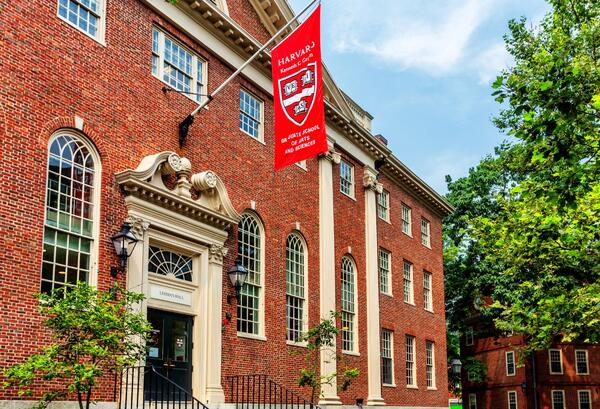
Responding to Harvard University’s defiance of the coercive and illegal demands from the Trump administration, some major donors have recently urged the university to make accommodations rather than fight. A few have withheld large gifts over the last year and a half.
Holding degrees from two of Harvard’s least wealthy schools (Divinity and Education), I have made small annual donations to my relatively impecunious alma maters for 45 years, and I offer these considerations to weigh against those of the big donors who have generally graduated from Harvard’s wealthiest, so-called major schools.
Harvard’s resistance to authoritarian overreach bolsters the entire system of U.S. higher education, which came to be regarded as the best in the world only in the 1970s, after a century of slow development. Harvard’s defiance of unlawful authoritarianism inspires universities throughout the world.
This controversy is therefore not just about Harvard, but all of higher education everywhere. If Harvard caves, then no university will dare to defy governmental overreach. If Harvard resists, then others will be inspired to do so and shamed if they do not.
The urging by major donors to strike a deal with the Trump administration may result from feeling that Harvard’s small and secretive governing board, the Corporation, has, in recent months, not listened to them and ignored “the rightward shift of the country” that prompted Trump’s demands. (Although Harvard’s “major” and wealthiest professional schools—business, law and medicine—still graduate leading financiers on Wall Street and conservative justices of the Supreme Court, notwithstanding claims about the university’s “sins” of left-wing radicalism.)
In any case, the implied threat of major donors to withhold donations is transactional, just like the demands of the Trump administration. Thus, Harvard is caught between two transactional parties. Is the defiance of coercive and illegal overreach worth the possible loss in large gifts?
And the loss could be considerable. Over the last century, the rule in higher education fundraising is that 90 percent of gifts come from the top 10 percent of donors. Big donors count. Little ones scarcely, it seems.
But there are financial counterpoints.
By adjusting the spending rule for its endowment income and by floating bonds and loans, Harvard does have the resources to supplant lost federal income until its legal challenges are litigated, notwithstanding the prospect of further demands by the Trump administration.
Indeed, the annual investment income of large endowments vastly exceeds annual fundraising. As a result, wealthy universities were already shifting their focus from “gifts to growth” of investment yield by the beginning of the 21st century. Fundraising became less important than investing endowment.
Furthermore, major alumni donors, who might fear alienating the Trump administration by donating to Harvard, could easily make donations anonymously, which has long been a tradition in higher education.
Finally, and most importantly, Harvard’s defiance has already inspired support from many alumni who may now do more, counterbalancing the support of transactional big donors who withdraw.
I know that some little donors, like me, have not included Harvard in their estate plans precisely because Harvard has seemed so rich and invulnerable. As former president Drew Gilpin Faust once observed, Harvard’s commitment to its endowment could make the university “as close to immortal as any earthly institution might be.”
Now we see that Harvard needs the support of all of its alumni in these perilous times, not only for the sake of alma mater, but all of higher education.
Bruce A. Kimball, emeritus professor at the Ohio State University, is a former Guggenheim Fellow and co-author with Sarah M. Iler of Wealth, Price and Cost in American Higher Education: A Brief History (Johns Hopkins, 2023) and co-author with Daniel R. Coquillette of the two-volume history of Harvard Law School (Harvard 2015, 2020).
The National Institutes of Health is accelerating a Biden-era plan to make its research findings freely and quickly available to the public, the agency announced Wednesday.
The 2024 Public Access Policy was set to take effect Dec. 31, 2025, but will now take effect July 1 of this year. It updates the 2008 Public Access Policy, which allowed for a 12-month delay before research articles were required to be made publicly available. The 2024 policy removed the embargo period so that researchers, students and members of the public have rapid access to these findings, according to the announcement.
NIH director Jay Bhattacharya, who took over last month, said the move is aimed at continuing “to promote maximum transparency” and rebuilding public confidence in scientists, which has waned in recent years.
“Earlier implementation of the Public Access Policy will help increase public confidence in the research we fund while also ensuring that the investments made by taxpayers produce replicable, reproducible, and generalizable results that benefit all Americans,” Bhattacharya said in the memo. “Providing speedy public access to NIH-funded results is just one of the ways we are working to earn back the trust of the American people.”
Although the scientific research community is supportive of the policy itself, some are calling on the NIH to reinstate the original implementation date to give researchers time to effectively comply with this and other new agency regulations.
“This new effective date will impose extra burdens on researchers and their institutions to meet the deadline,” Matt Owens, president of COGR, which represents research institutions, said in a statement Wednesday. “Ironically, at the same time NIH is accelerating implementation of this policy, the agency is adding new burdensome certification and financial reporting requirements for grant recipients. This runs counter to the administration’s efforts to reduce regulations.”
Brianne Dolney-Jacobs has spent the last year advising high school seniors in Bay City, Mich., on their options after graduation.
She met with 96 percent of the seniors at least once to talk about college applications, financial aid options, standardized tests and more. In doing so, she helped nearly 30 students access a countywide scholarship, up from under 10 in the previous year.
But now, she’s one of 32,000 people affected by sweeping cuts to AmeriCorps, a federal agency focused on service and volunteerism across the United States. At least 100 college-access groups, including the Michigan College Access Network, where Dolney-Jacobs works, rely on AmeriCorps funding or members to make the college application process more accessible to high school students, especially those in low-income areas and at schools with low rates of college attendance.
MCAN lost its grant funding this week and was ordered to cease all AmeriCorps work immediately, though the organization was able to use its own funds to buy staff members an extra month. Dolney-Jacobs will now wrap up her time at the high school at the end of May; she was supposed to stay on through late June.
Without someone in her position, Dolney-Jacobs told Inside Higher Ed, there is no one at her school who would have the bandwidth to meet with individual students as they navigate the college application process. Many students would never have heard about different scholarships that are available to them or know that community college—including both an associate’s degree and some trade certifications—is free for recent high school graduates in Michigan.
When her students heard that her position had been impacted, a group brought flowers to her office.
“They told me, ‘you are the Class of 2025’s hero,’” she recounted. “And I was just bawling.”
The National College Attainment Network, the association for MCAN and other similar organizations, is still taking stock of how many of its members have been impacted, said Elizabeth Morgan, NCAN’s chief external relations officer. But damage has been widespread.
“I think it’s safe to say probably our members that use AmeriCorps are serving hundreds of thousands of students across the country,” Morgan said. “They are devastated by this news for a couple of reasons: The students they are supporting right now, many are high school seniors who are just weeding through their [college] decision-making process … [and] the AmeriCorps members are being thrown out of work months early.”
A total of $400 million in AmeriCorps grants were axed, according to America’s Service Commission, a nonprofit that represents state and national service commissions, including funding for food pantries and disaster relief programs in areas impacted by recent natural disasters. The majority of AmeriCorps’ staff was also put on administrative leave in mid-April.
It’s just one of the many agencies that have faced funding cuts and grant cancellations as part of the Trump administration’s war on government spending. Its defenders say that the agency, which pays modest stipends to its members, is anything but wasteful: It provides both vital supports for American communities and professional development training to its members, all for a low price tag.
“I don’t believe Washington is really in tune to what is going on in the local communities,” said Grady Holmes, who works with a different MCAN AmeriCorps program that provides college success coaching to community college and tribal college students. “This is a program that is not government waste. It basically assists the government in making sure their productive citizens are being moved toward self-sufficiency and obtaining a college degree … When the powers that be decided this is wasteful spending—they don’t understand AmeriCorps.”
Twenty-four states sued the Trump administration over the cuts, calling the dismantling of the agency, which was created by Congress in 1993, “unauthorized.”
Advisers’ Impacts
MCAN is facing cuts to two student-facing programs: AdviseMI, which is focused on college readiness for high schoolers, and the College Completion Corps, which is geared toward students at tribal and community colleges. Both rely on AmeriCorps grants and are staffed by AmeriCorps members, who work in yearlong service positions in exchange for stipends and educational awards that can cover current educational expenses or pay off student loans. The organization employs over 100 AmeriCorps members across both programs.
Both programs have been successful, MCAN leaders say. In the 2023–24 academic year, students supported by AdviseMI advisers submitted 21,420 college applications and were awarded more than $32 million in financial aid.
The advisers “often interact with parents, as well, to help parents understand the role of FAFSA and help parents understand what’s happening with their student,” said Ryan Fewins-Bliss, the organization’s executive director. “And [they] engage the school in what we hope to be a schoolwide college-going culture … so when the juniors become seniors, they’re ready for this.”
After MCAN learned Friday night that it lost one of its AmeriCorps grants, the organization spent the weekend trying figure out how it could keep its AmeriCorps staff on board if the rest of the grants were also canceled. (In total, MCAN lost $2.1 million in AmeriCorps funds.)
Come Monday, MCAN found out its remaining grants, including funding for AdviseMI and College Completion Corps, were indeed cancelled, and that it had to stop operating those programs immediately. MCAN was able to find funding in the budget to continue those programs for an extra month, but the future beyond then is uncertain.
Other organizations had to lay off their AmeriCorps members entirely. Partnership 4 Kids, a Nebraska-based organization that works with students from prekindergarten through college, had two full-time AmeriCorps fellows working with high school seniors and three fellows working directly with college students. All five had to stop working Friday, immediately after P4K received word that its grants had been terminated.
“These two in the high schools had great relationships with their students. They were doing one-on-one case management; they were the driving force [behind] college applications, scholarship applications, helping students overcome barriers they might have, and really to get them to that finish line to graduate,” P4K president Deb Denbeck said.
This year, 97 percent of P4K’s senior cohort graduated and 80 percent of them are going to college—an impressive feat in a state where the college-going rate for high school graduates has been on the decline.
‘Brings Out the Best in People’
AmeriCorps members have worked in high schools as college advisers for at least two decades, starting with the College Advising Corps, an organization that began in Virginia and has since expanded to 15 states. It’s a model that college-access leaders say has been incredibly effective, helping thousands of students go to college and boosting the careers of the advisers.
It’s also been embraced by politicians on both sides of the aisle, according to Nicole Hurd, who founded the CAC and is now president of Lafayette College.
AmeriCorps members are a natural fit for college-readiness work, these leaders say. Because many are recent college graduates, they can remember what it was like to be in the high schoolers’ shoes, making it easy for them to empathize with and respond to the challenges their students are facing. The college adviser positions are relatively easy to train, meaning individuals from any background can take on these roles.
But perhaps most importantly, leaders of college-access nonprofits feel AmeriCorps’ long-standing ethos of volunteerism aligns perfectly with their missions to bring educational opportunity to all.
“AmeriCorps brings out the best in people, and it gives them an opportunity to learn as well—to learn how to be professionals in their field,” said Denbeck. “When you look at everything that AmeriCorps does, whether it’s working in education or mentoring or agriculture or disaster relief, they’re doing it because of their heart.”
The impacted organizations doubt they’ll be able to rely on AmeriCorps going forward. For now, they’re working to figure out how to continue their work and where they might get the funding necessary to deploy college advisers into the communities that need them most.
“In the future, it’s safe to say that there are countless students that won’t attend college because they’re not getting this kind of support,” Morgan said.
Secretary McMahon said the Dear Colleague letter will “foster a competitive marketplace” for accreditors and the institutions they oversee.
Jim Watson/AFP/Getty Images
The Department of Education intends to accelerate the process for changing accreditors, a move announced in a Dear Colleague letter that builds on other recent changes to oversight.
Last week the Trump administration released a highly anticipated executive order to overhaul accreditation. That order took aim at accreditors who have diversity, equity and inclusion in their standards, threatening to revoke their recognition, and sought to make it easier for institutions to switch from one accrediting body to another and for new accreditors to enter the marketplace.
The Department of Education cast the Dear Colleague letter as an action to comply with that executive order and announced that ED had “lifted the Biden Administration’s moratorium on accepting and reviewing applications for initial recognition of potential new accreditors.”
The Trump administration revoked guidance from the Biden administration from 2022 that exerted more scrutiny over changing accreditors, which came after Florida’s Republican-led Legislature passed a bill that year requiring its public institutions to switch accreditors regularly. (The bill came after state officials clashed with the Southern Association of Colleges and Schools Commission on Colleges, which accredited all of Florida’s public institutions, over concerns of political influence.)
“We must foster a competitive marketplace both amongst accreditors and colleges and universities in order to lower college costs and refocus postsecondary education on improving academic and workforce outcomes for students and families,” U.S. Secretary of Education Linda McMahon said in a statement about the guidance. “President Trump’s Executive Order and our actions today will ensure this Department no longer stands as a gatekeeper to block aspiring innovators from becoming new accreditors nor will this Department unnecessarily micromanage an institution’s choice of accreditor.”
Thursday’s letter, signed by Deputy Under Secretary James P. Bergeron, emphasized that the U.S. Department of Education aims to expedite the process of changing accreditors by removing what ED called “unnecessary requirements” that officials argued stifle institutional innovation.
ED will no longer scrutinize reasons for changing accreditors, according to the letter.
“The law and regulation do not dictate a robust or onerous process for receiving the Department’s approval for a change in accrediting agencies or maintaining multiple accreditation,” Bergeron wrote in the Dear Colleague letter. “Therefore, consistent with statutory and regulatory obligations, the Department will conduct expeditious reviews of applications received except in rare cases where an institution lacks a reasonable cause for making a change.”
The new guidance noted that institutions can switch to accreditors for a variety of reasons, including better alignment with their religious mission, a change mandated by state law or because an accrediting body requires a university to adopt “discriminatory” DEI principles.
Additionally, Bergeron wrote, if the department “does not approve a change in accrediting agency within 30 days of the date of its receipt of a complete notice of this change and materials demonstrating reasonable cause, approval will be deemed to have been granted, unless the change or multiple accreditation is prohibited as described” in the Dear Colleague letter.
Some accreditors offered a positive response to the change.
The Middle States Commission on Higher Education, which recently launched its own effort to streamline the process of changing accreditors, welcomed the development in a statement.
“As an accreditor with institutions that have been stalled in the process, this guidance will have a positive impact on the work we have been doing with several institutions. We look forward to helping our institutions understand what this may mean for them and for us,” MSCHE president Heather Perfetti wrote. “We appreciate that there are well-defined restrictions that will not allow for institutions to change accreditors to avoid accountability with an existing accreditor.”
Thursday’s letter also prompted celebration in some conservative quarters.
The Defense of Freedom Institute, a conservative think tank, urged ED in February to revoke the Biden administration’s guidance on switching, saying that in doing so the department would “wipe away politically motivated and patently unlawful actions of the previous administration.”
They argued that doing so would create a more effective accreditation system. Following the release of the Dear Colleague letter Thursday, the organization thanked the Trump administration in a statement.
“The Defense of Freedom Institute applauds the Trump administration for taking bold, necessary action to restore integrity, accountability, and competition to our broken accreditation system. For too long, accreditors have leveraged their Title IV gatekeeper status to stifle innovation in American higher education and to require ideological litmus tests that undermine civil rights and academic freedom on campus,” DFI president and co-founder Bob Eitel wrote.
Critics, however, argue that making it easier to switch accreditors will have negative effects.
Wesley Whistle, project director for student success and affordability in the higher education initiative at New America, a left-leaning think tank, told Inside Higher Ed that the new process amounts to a rubber stamp for changing accreditors. He argued that allowing institutions to switch accreditors more easily will likely drive them toward accreditors with lower standards.
“What this Dear Colleague letter does is dilute that requirement [to demonstrate reasonable cause to switch accreditors], and undermines a critical safeguard that’s meant to ensure that institutions don’t escape oversight just because they don’t like scrutiny,” Whistle said.
Whistle also suggested the compressed timeline for ED approval within 30 days limits any actual oversight. Timing is compounded, he added, by the lack of personnel, given the job cuts at the department.
“This guarantees there will be no meaningful review. This isn’t about streamlining, it’s surrender. It’s the Wild West here: Do whatever you want, just say ‘mission’ and you can change accreditors,” he said.
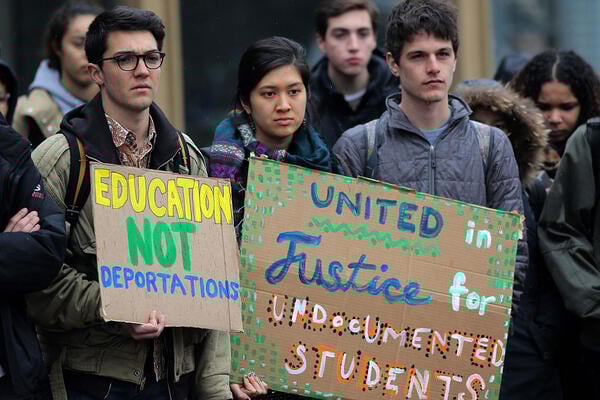
Immigrant rights advocates are urging state and higher ed leaders not to make any hasty changes to their in-state tuition policies after President Trump issued an executive order on Monday threatening to crack down on sanctuary cities and localities with laws that benefit undocumented immigrants.
The blow to undocumented students, who in nearly half the country pay in-state tuition, is tucked into an executive order focused mostly on pressuring state and local officials to abandon their cities’ sanctuary status and cooperate with federal immigration authorities. The order demands federal officials make lists of “sanctuary jurisdictions” and the federal funds that could be suspended or cut if they don’t change course. The order also commands them to take “appropriate action” to stop the enforcement of state and local laws and practices “favoring aliens over any groups of American citizens,” including in-state tuition benefits to undocumented students “but not to out-of-state Americans.”
The move has the potential to affect 24 states and Washington, D.C., which allow in-state tuition for local students with or without citizenship. (Florida previously allowed undocumented students to pay in-state tuition rates but ended its decade-old, historically bipartisan policy in February.) Undocumented students and supporters have long touted these policies as a way to make college more affordable for those who can’t access federal financial aid but who grew up in the states and plan to work in their local communities after they graduate.
“What immigrant, international and refugee students bring is needed talent, skills and contributions,” said Miriam Feldblum, executive director of the Presidents’ Alliance on Higher Education and Immigration. “In-state tuition increases the number of a state’s residents who are college educated, who are able to contribute far more to the state’s economy and to their communities than if they did not have a college education.”
Gaby Pacheco, president and CEO of TheDream.US, a scholarship provider for undocumented students, said many of these students come from low-income backgrounds and couldn’t afford college otherwise.
Her organization is currently scrambling to help undocumented students in Florida pay for the remainder of their credits and graduate before they have to pay much higher out-of-state tuition rates. In some cases, that means helping them transfer to more affordable institutions.
For many, “it’s just impossible for them to be able to come up with that money,” she said.
She’s encouraging state and institutional leaders to avoid “panicking” or “making abrupt policy changes” in response to the executive order.
Other executive orders have “created so much panic and unnecessary movement from colleges, universities, states, that it was more hurtful than anything,” she said. The administration is putting forward a “belief” that charging undocumented students in-state tuition rates is unlawful, but “that belief is legally dubious.”
Deciphering the Executive Order
Immigrants’ advocates and legal scholars say the meaning of the executive order is somewhat hazy. For example, it’s unclear what it means for federal officials to “take appropriate action” to prevent in-state tuition policies from being enforced.
The order also doesn’t directly say states or institutions with such laws will lose any federal funding, noted Ahilan Arulanantham, professor from practice at the UCLA School of Law and co-director of the law school’s Center for Immigration Law and Policy.
Still, the order’s threatening tone toward sanctuary cities’ federal funds could be “a window into where this fight could go if the federal government wants to expend significant political capital on this issue,” Arulanantham said. Congress, for example, could decide to pass a law to cut federal funds from universities that offer undocumented students in-state tuition—a proposal outlined in Project 2025. But the executive order itself doesn’t explicitly take away federal dollars from anyone or have the power to do so, he said.
“If I were a local government or state government official, I probably wouldn’t sue tomorrow over this,” Arulanantham said. “I would wait to see if this is actually going to have any teeth, or if it’s just like a press release.”
Pacheco similarly described the order as “warning” states of the administration’s posture toward these policies. At the same time, she believes it’s important to plan ahead in case Trump takes the issue further.
“They’re trying to tell states, ‘We believe that you providing certain benefits for undocumented students is against the law,’” she said. “We’ve known this forever—these states are not violating the law.”
The order suggests that in-state tuition for undocumented students “may violate” a federal statutory provision that says undocumented people can’t receive higher ed benefits unless citizens are also eligible. But in-state tuition policies are designed to serve citizens living in these states, as well. For example, under California’s Assembly Bill 540, any nonresident who spent three years in California high schools is eligible for in-state tuition. That policy also benefits citizens who grew up in the state who may have left for any reason and returned.
These types of in-state tuition policies, including California’s, have faced legal challenges in the past, “but all the challenges have failed, said Kevin Johnson, dean of the UC Davis School of Law. He described the executive order as “vaguely worded,” while the state laws, by contrast, are “very clear.”
The legal argument is that undocumented students are “just being treated equally as all other residents of the state,” he said. “The idea is that they’re residents, which means they’re taxpayers—maybe it’s sales tax, maybe state income tax, federal income tax—whatever it is, they should be treated like other residents and not discriminated against because of their immigration status.”
What Happens Next
Arulanantham worries that despite their strong legal foundation, states and higher ed institutions may rush to end in-state tuition benefits for undocumented students out of fear.
“That’s actually almost certainly the primary purpose of this order”: to spur “pre-emptive discrimination because [institutions] think they have to or they think it’s safer to,” he said.
Feldblum noted that, prior to the executive order, some state lawmakers were already starting to shift on the issue, perhaps “to align themselves with the federal government.”
While some states have recently doubled down on such policies, proposing new legislation to expand in-state tuition eligibility, others have also moved to curtail them. Following in Florida’s footsteps, lawmakers in other states, including Kansas, Kentucky and Texas, are considering legislation to prohibit in-state tuition for undocumented students. Texas was the first to allow undocumented students to pay in-state tuition rates in 2001, joined by California that same year.
“This is not coming in a vacuum … We have to take this seriously and substantively, consider the kinds of actions we need to take to defend in-state tuition—including, if needed, legal action,” Feldblum said. “And then also make sure we’re placing equal emphasis on supporting and communicating with potentially impacted students so that they know their education is important and that they’re important.”
The Trump administration issued plans earlier this week for a new policy that vastly expands federal officials’ authority to terminate students’ legal residency status, according to newly released court documents.
The policy detailed in the filings asserts that immigration officials have the “inherent authority” to terminate students’ legal residency status in the Student Exchange and Visitor Information System “as needed.” It also explicitly lays out two new justifications for SEVIS terminations: the vague “evidence of failure to comply” with nonimmigrant visa terms, and a visa revocation, which can be issued without evidence of a violation by the State Department—and which, crucially, is not subject to court challenges.
Immigration attorneys told Inside Higher Ed that if implemented, the new policy would enshrine broad permission for ICE to begin deporting students practically at will.
“This is very bad news for foreign students,” said Charles Kuck, an immigration attorney representing 133 international students in the largest lawsuit challenging recent SEVIS terminations. “Any student who’s arrested, literally for any reason, is probably going to have their status terminated going forward.”
Last Friday a U.S. attorney promised an official update to ICE policy on SEVIS terminations. On Tuesday, U.S. attorneys presented the document as evidence in a court filing in Arizona, describing it as “recently issued … policy regarding the termination of SEVIS records.”
It was the first time that details of a new SEVIS termination policy were made public, and it was not at first clear whether it reflected official federal policy. On Tuesday, U.S. attorney Johnny Walker confirmed during another hearing for a SEVIS lawsuit in D.C. that it did, though the policy had yet to be finalized. Spokespeople for ICE did not respond to multiple questions from Inside Higher Ed.
The plan comes less than a week after the administration began restoring thousands of foreign students’ SEVIS statuses after a series of court decisions overturned hundreds of status terminations. Kuck said the plan seemed to be a way for ICE to get around those rulings.
“This is basically a cover-your-ass policy,” he said. “The fact that ICE initially reinstated visas was no surprise. They probably had U.S. attorneys screaming at them, ‘What are you doing?’ Now they’re trying to retroactively develop a policy that would allow them to do what they already did.”
Immigration lawyer and Columbia University Immigrants’ Rights Clinic director Elora Mukherjee has been counseling international students across New York City for the past two months. After the visa-restoration decision last week, some students wanted to know if they were in the clear; she cautioned them against celebrating prematurely.
“Whiplash is a good way to describe it,” she said. “Students are losing sleep—not just those whose visas have been terminated but those who are worried theirs could be next any day.”
Fly-by-Night Policymaking
The updated policy was outlined in an internal Department of Homeland Security memo filed as evidence in an Arizona federal court on Wednesday, where one of more than 100 lawsuits challenging visa revocations is being litigated.
The unorthodox manner in which it was publicized has left immigration attorneys scratching their heads and international students’ advocates wondering how to respond.
It also appears to have taken some federal officials by surprise. Kuck said that when he heard about the memo and brought it before the judge in his own case in Georgia, the U.S. attorney defending the government asked if he could send him a copy.
Fanta Aw, president of NAFSA, an association of international educators, wrote in an email to Inside Higher Ed that the document “should not be relied upon as ICE’s new policy.” She also emphasized that there is no change to ICE’s visa termination policy included in the memo, only SEVIS terminations.
The document is labeled as a “broadcast message … for internal SEVP use only,” meaning it would have been sent to Designated School Officials working in colleges’ international student offices. But Aw said that’s not accurate, either, because it lacks the customary broadcast message number, and DSOs in her organization said they had not received it.
Kuck said the lack of a rule-making process for a sweeping policy change like the one outlined in the memo is most likely unlawful, and he was working on filing an amendment to challenge it on Thursday. But that doesn’t mean it should be taken lightly.
“People should view this as the future,” Kuck said. “This is clearly the power ICE wants to give itself, so they’re going to move ahead with it.”
‘A Nightmare Booby Trap’
Mukherjee said such a broad license to terminate SEVIS status would allow ICE to deport international students far more quickly and with less accountability. The new policy, if implemented and upheld by the courts, wouldn’t just revert to the status quo of the last few months, she said; it would create a landscape in which ICE could begin deportation proceedings with impunity.
“We’ve already seen many students whose SEVIS terminations led directly to removal proceedings,” Mukherjee said. “It’s terrifying.”
Kuck said it’s crucial that students understand that they’re still in danger of deportation even if their status was restored last week—and not just because of the new policy plan.
The few hundred students who won a temporary restraining order in court over the past week have had their statuses reinstated and backfilled to when they were revoked. But the status of thousands more who did not file lawsuits was only reactivated from that point onward. That means they have a gap in status for the days or weeks in between—which, according to ICE policy, is grounds for removal from the country, even if their initial SEVIS termination was accidental.
“This is a nightmare booby trap for these kids,” Kuck said.
The only way to protect them, he said, is by filing a class action lawsuit for all affected international student visa holders. Kuck said he’s working on filing an injunction for one right now, and he is acting with urgency.
In the meantime, Mukherjee said students—both those in the country and those who had planned to come in the fall—are “deeply unsettled.” She’s been asking them questions she’d never been concerned about before: whether they have any social media accounts or even tattoos.
“I’m talking to international students who are currently in the U.S., to international students who’ve been admitted to study in the U.S. starting in the fall, and they’re asking, ‘Will we be able to complete our degree program?’” she said. “The answer is that it’s unclear.”
Over half of graduating seniors feel pessimistic about entering the workforce, due in part to a competitive job market and poor outlook on the economy, according to a recent survey by Handshake.
In this episode of Voices of Student Success, host Ashley Mowreader spoke with Christine Cruzvergara to discuss Handshake’s latest survey of college seniors and how they’re feeling about entering the workforce. Later, Cruzvergara shares how higher education institutions can respond to these new challenges by pulling from existing literature regarding preventive health measures.
An edited version of the podcast appears below.
Inside Higher Ed: This is not the most fun episode, because the job market is bad right now. We are preparing a group of students to enter the workforce—or go to grad school—in a few weeks, and it is a tricky situation for them.
Handshake just released a survey, which said that 56 percent of graduating seniors feel at least somewhat pessimistic about starting their careers. How do we launch students into the workforce, given today’s context and circumstance? This is a really tough environment, and students are entering a world that is a little different than the one that they thought they might be getting. What kind of conversations are you all having or considering when we’re supporting students in this time?
Christine Cruzvergara: That is a good place to start. It’s definitely a tough market. As you said, seniors are feeling pessimistic as they think about how to get their foot in the door.
Christine Cruzvergara, chief education officer
I think it’s important to also step back and remember, though, that these go in cycles. This is not that different than the graduates who graduated into the 2008, 2009 recession, right? They also felt like, “Oh my gosh, what I went into school expecting is definitely not what I’m graduating with. And now I need to pivot. Now I need to think differently.”
So every so often we have cycles like this where, unfortunately, some of the graduating class experiences this downturn, and they have to figure out, how am I going to get creative? And I think this class in particular is doing just that. They’re trying to adapt quickly. They’re trying to pivot. They’re trying to be more flexible in the ways that they think about their careers and how they might want to get started. And I think they’re, quite frankly, not being precious about what they consider a dream job or their first job. They’re just being more practical about all of that. And I think that’s really smart.
Q: [Having a dream job] is something that Handshake surveyed students on. And I don’t know if that’s a question that you all have used in prior surveys, but this idea of a dream job has been changing for young people. Can you speak a little bit about that data and sort of the trends that you’re seeing?
A: Personally, I’m not a fan of the term “dream job.” I think for a lot of folks, it feels like too much pressure to have this so-called ideal job that exists out there that you’re always gunning for. The reality is, we did have 57 percent of the Class of 2025 who had a dream job in mind when they entered college, however they personally define dream job. Fewer than half of them have that same goal now. And I think that really speaks honestly to the grit and the resilience of this graduating class.
I like to see it from a glass-half-full perspective, in that these students have said they are exploring other industries, they have changed or added a minor to ensure that they’re even more competitive in the market. They are considering other ways that they can use the skills that they have gathered, and how to think about that in ways that they can still contribute to society. And I think that’s really fantastic, because the reality is, with the advance of technology and how quickly things are changing these days, these students are going to need to invent and reinvent themselves over and over again over the entire course of their career. And they’re essentially getting a crash course in how to do that and how to do that well, right from the get-go.
Q: That’s something we see commonly in today’s workforce. I kind of coined the phrase, “not your granddad’s career,” where you don’t start at the factory and work your way up and then maybe you’re a vice president by the time you retire. We see a lot more lateral changes today. We see more young people who might start in one field and then transition into another.
We talk a lot in higher ed about jobs of the future, and these ideas that there are going to be new industry needs and new professions and new roles for students to take on. The idea of higher education preparing students for that is great. And like you mentioned, this is a new environment for students, if we want to frame it as the silver lining for them to identify, “OK, what are those things that I really do like doing, even if it’s not my dream job, even if it’s not the career that I thought I was going to have on the way out?”
I wonder if you can speak to that dynamic of how higher ed is actually preparing students for this kind of weird uncertainty.
A: I think this is actually where a lot of our career center partners really come into play. They are at the ready to work with students to help them see, “these are the amazing skills that you’ve gained while you’ve been in college, whether that’s through your courses or through extracurriculars or through your internships. And this is how you can market that. This is how you can reinvent what your identity is or your narrative or where you want to go.”
These are professionals that know what’s happening in the job market. They know from employers what they are looking for, and they stand ready to essentially help a student make those connections and connect the dots about their own experiences.
So often, when I talk to a student, they have all the ingredients to make themselves a really wonderful candidate. What they lack is the understanding of how to put it all together. They don’t know how to talk about it. They don’t know how to translate some of those skills into language that employers want to hear. That’s exactly what our schools can be doing right now to help support students through this challenging and competitive time.
I think the other piece, and I know that many of my partners in higher ed would probably agree with this, students love to shoot off a ton of résumés. You’ve probably heard this, they’re applying to, like, hundreds of jobs, and then they complain that they’re not hearing back. And then they also complain in the very next breath how competitive everything is. We see through our data that that is true. The Class of 2025, as of this past March, has already submitted 21 percent more job applications in Handshake than the previous class. There is more competition.
But the reality is, if you are not tailoring your application, and you’re not spending time networking and actually getting to know people, your application kind of is going into a big black hole, and it’s very hard to get traction. And then it becomes this spiral, because as a student, you start to feel hopeless—“I sent out all these things. I’m not hearing back. Maybe I’m not good enough”—and you start to feel dejected when the reality is you can actually be a little bit more tailored. You can be a little bit more specific, and your institution, your career centers, can help you to actually narrow in on that. I’m not saying to only apply for like five jobs or 10 jobs. You can certainly apply to more than that, but the intentionality around what you apply to is really important.
Q: I saw that trends are up for young people graduating from college, applying for internships or nontraditional roles instead of going straight into the workforce. Graduate school applications are up, law school applications are up several hundred percent [at some institutions] year over year. We’re seeing more students pivoting or thinking of different ways that they can spend their time after graduation than just getting a job. I wonder if you can speak to that idea of students taking maybe a pause or looking at a different direction before entering the workforce, given how tough this job market has been?
A: I think any time you see a downturn like this, you tend to see an increase in grad school, for sure. That’s how the market just generally works. You do tend to see people get a little bit more creative about how they use their time. Do they take a gap year? Do they do volunteer work? Do they try and do X, Y and Z?
I think what’s important in this part of the conversation is a lot of students don’t have the luxury of being able to do that. I think if you do happen to have the safety net or the privilege to be able to take some time to do just an internship, or to do volunteer work, or to take a gap year, by all means, do that. Just make sure that you’re really documenting your learning, you’re documenting the experience and you’re thinking intentionally about how you’re going to narrate that period of time in your life.
I would say it is not surprising to me to hear that some graduating seniors are applying to internships. They want anything that will pay them. And if these are paid internships, it is worth it to go get that experience, because you could almost treat it like a mini on-the-job job interview, right? You can prove yourself. You can build relationships, and hopefully, if there is an opening afterward, they will want to offer it to you, because they now have experienced your work ethic and your work product. And I think that is smart. In the absence of full-time jobs that you are able to get or interested in, you should go to the next-best option, and you should consider those opportunities. But that does, of course, make things a little bit more competitive for some of the folks that are juniors or sophomores that are going out for those same opportunities. And that’s part of the challenge right now.
Q: We’re seeing job sectors, specifically in technology and federal hiring roles, [that] are down year over year, which, anybody who’s been reading the news is probably not surprised by that trend. But we still see that students are interested in tech jobs, and they are still interested in working for the federal government or for their state governments. I wonder if you have any insights into how we can continue to motivate students to have these kinds of jobs that they are working towards but maybe not able to land their first role right this second?
A: I think what’s really important to help students wrap their heads around is that your first job is not your last job. Your first job is literally just your first job. You can go do a number of different things, and you can gain lots of skills. Quite frankly, what’s really helpful, often, is you can gain perspective in the way another sector or another industry area tackles a similar problem, and with that, that actually becomes an amazing stepping-stone later, when you’re getting your second job or your third job, in which case, by then, the market may have changed again. Now those opportunities may be more plentiful, and so you can take that and apply it in a different way.
I think that it is important to just step back and help them see the long term. It doesn’t mean if you have to pivot from a sector that you wanted to go into, which doesn’t have as many opportunities right now, that you’re never going to be able to do that; it just means that you might take a slightly different route to get there. You’ll get there a little bit later, but now you have greater perspective.
Q: Do you think that’s messaging employers can be giving to students as well? I think sometimes, as a student, your major feels like the most important thing, or your internship feels like the most important thing. But like you mentioned, having multiple sectors of experience is valuable, and it gives you really great perspective. Who else needs to be joining that conversation for students to be able to say, “Oh, OK, that makes sense?”
A: One hundred percent, employers need to be saying this. I think lots of schools, definitely lots of career centers, have been saying it for a while. I feel like sometimes that is the equivalent to like your parents telling you [something], and you’re like, “Yeah, OK, cool, cool, cool. I’m not sure if I’m gonna really listen to that or pay attention to that.” But if you have a cool friend or somebody else tell you the same thing, all of a sudden, “Yeah, I should totally listen. I think that’s such a valuable insight.” So I think employers play that role in this conversation.
I do think media also plays a role in that conversation. I think a lot of articles that are written about college to career, about the workforce, about early talent pipeline, often centers around [the academic] major. And I think that that does perpetuate a belief or a thinking amongst students, amongst their parents, that the major is the end-all, be-all, is so, so important, and if you make a mistake around that decision, you’re never going to be able to get a job. And that’s just false. We need to be better about how we share those narratives and talk about the reality that more than 50 percent of the general workforce does something that is not directly related to their major. They might use skills and knowledge from those majors, but it’s not directly related to those majors.
So I think employers and the media in particular are two entities that I would say should be part of this conversation and can play a very, very important role in shaping people’s thinking.
Q: Those darn journalists.
You mentioned your career center can feel like Mom or Dad, where they’re a trusted source, but maybe they’re not the first one you turn to about market information. Handshake’s most recent survey pointed to that as well, where students said [their career center] was a trusted source of job market information, but they’re more likely to turn to social media, to online job boards or to career fairs and employer events. Do you think this ties back to this idea of making career services more visible, or do we need to make sure that our career services are better equipped with timely, relevant information, like a job board or social media might be?
A: It’s both. I think on one hand, there’s definitely a visibility issue. I think on too many campuses, career services is still seen as a peripheral service, that if you happen to wander into it, cool, they’ll help you, you’re going to be in good shape. But for more than 50 percent of students, they don’t wander in, and so they never end up getting that particular support. Visibility is a really important component, and I think schools and administrators can actually do a lot to really help with that, just in thinking through, how do you embed career services, whether that’s the events, the programs, an appointment, a required internship? How do you embed that into the curriculum or into the student experience, even if it’s not in the curriculum? How do you do that in a way that makes it feel as if this is just part of what it means to go to school here, that part of going to school is learning these things and preparing myself for afterward? So that’s one piece of it, the visibility.
I do think the second component, though, really varies depending on school and depending on the career center. I have some career center partners that we work with who are so on top of the data, they know exactly who the employers are that want to hire their students. They know exactly what skills those employers want. They’re serving as a really tight feedback loop to their academic partners, to their deans, and sharing that information. And then I’ve got other partners who, quite frankly, are one- or two-person shops and don’t have the bandwidth to be able to try and keep up with some of that, and there’s no way they would be able to meet with every single student on their campus.
I think the third bucket is actually just the reality of how the new generation consumes information. Let’s just be honest, every generation has consumed information slightly differently than the generation before, and Gen Z is very tied to social media. They’re tied to short tidbits of information, and that is how they like to consume information. Part of it is, don’t fight it, use it, and I think that’s exactly what we try and create on our platform is an opportunity and a way for students to learn from other students, and for students to be able to learn from both career centers and employers, but in, like, the bite-sized way that they are used to consuming in traditional social media.
Q: Embedding career services into the student experience is so critical, and we know there’s so much research out there that says that a student who engages with their career center early and often is more likely to have better outcomes. But there’s also, on the other end, if a student leaves higher education without a job, the career center can still be a resource and can still be there to support them in finding that next step, or maybe their second step. I wonder if you can just speak to the value of career services, not only as a student experience, but as that alumni experience as well.
A: For many, many schools, they will continue to support alumni for life, and if not for life, sometimes for five years, 10 years out. That can be a valuable source to go to when you’re thinking about a pivot, or, as you said, just thinking about your second or third job and what it means to now market yourself with a little bit more experience, or how to make that pivot.
I think our career center partners are really exceptional at trying to make sure that they provide not only advice and information, but that they can help you discern based on your past experiences. “OK, now you know a little more because you’ve had this first job, what you like, what you don’t like, what type of environment you can thrive in or not thrive in. Let’s take that and then let’s make sense of it and look at it against both the job market and the labor market and what’s available, so that you’re making, ideally, hopefully, a better choice in your second job or your third job.”
And then I think it’s also important, but a lot of the things that students do find value in and that they find as a trusted source—you mentioned career fairs and events, for example—the sheer majority of those are provided by the career center, and I don’t think students realize that. I think it’s also drawing that connection because they are being supported by the career center. They just maybe didn’t go into the literal career center, but they went to an event that was hosted by the career center, they went to a program that was hosted by the career center, and they got a lot out of it. And I think that’s OK, too. It’s not about the career center getting credit. It’s about the career center facilitating all the ways that a student can feel ultimately supported, and that’s true for alums as well.
Q: There’s a high likelihood that some students do not land their dream job after graduation because of whatever it might be—the sector is having a hard time hiring, the economy is not great, whatever. Sometimes that leads to people doubting the value of higher education, or thinking that college didn’t prepare that student well enough, or that they didn’t need that degree to get a job after college, or things like that. I want to set you up on a little soapbox here about why it’s still valuable for students to go to college, or how higher education does play a role in preparing students for their future, even if that first six months or that first year might be a really, really difficult environment.
A: I appreciate that. I am a huge believer that higher education is still one of the best ways that a student can change their social mobility. I think for so many students, what is really core and really key is that no one can ever take your knowledge or your education away from you once you have that. Once you’ve learned that, once you’ve consumed that, that’s yours. It’s yours to keep. It’s yours to do with. It’s yours to apply. And I think that’s really powerful, because we don’t know exactly what the future is going to hold. We don’t know exactly what types of jobs are going to exist 10, 15, 20 years from now, and we need to be able to stay adaptable and agile and resilient, and that is actually what schools teach you to do. They don’t just teach you about a content area. They teach you about how to think about the content area. They teach you about how to communicate about that, how to synthesize information, how to hear different perspectives. All of those are traits that are more needed now in our society than ever before.
So even if your first job, or even your second job, is not exactly what you want to do, it’s up to you to take what you’ve learned and to start to figure out, how are you going to apply that in a way that can start to change your career trajectory moving forward? There’s nothing better than an education that’s going to position you for that.
I will just say, lastly, we have a huge population of students, first generation, many of whom don’t come from families or communities that know other people or have connections, and going to a college or university is literally that stepping-stone to starting to meet and expand your network. It’s really hard to do that without sometimes having that experience. I think there’s also real, true value in the ability to build that network through your university or college that also isn’t often talked about or sometimes is only talked about with the most elite institutions. But this is actually still true for a public flagship, for a regional public, you’re still gaining exposure to more people, and to have that affinity that is shared that allows you to jump-start your ability to create that network.
Get more content like this directly to your inbox. Subscribe here.
Inside Higher Ed’s fourth annual Survey of Campus Chief Technology/Information Officers, conducted with Hanover Research, is out now. The survey gathered insights from 108 college and university chief technology and information officers at two- and four-year institutions across the U.S. about the following issues:
CTOs as strategic partners
IT infrastructure and investments
Artificial intelligence adoption and governance
Cybersecurity readiness and challenges
Sustainability and environmental impact of technology
Staff recruitment and retention challenges
Digital transformation priorities and barriers
Emerging technologies beyond AI
Digital learning
Data and student success
On Wednesday, June 18, at 2 p.m. Eastern, Inside Higher Ed will present a webcast with campus technology leaders who will share their perspectives on the findings. Register for that discussion here.
Read our initial reporting on the survey—on uneven student access to generative AI tools and how institutions are struggling to respond to the rise of AI amid other fundamental challenges—here and here. Download the full survey here. And check out these key findings:
While many CTOs (59 percent) do have a seat at the executive leadership table at their institution, only about half (53 percent) feel their knowledge is fully leveraged to inform strategic decisions involving technology.
Legacy infrastructure is hampering innovation, say 60 percent of CTOs, with implications for student success: Most rate their learning management systems highly (91 percent), but just a third (33 percent) believe their investments in student success technology have been highly effective.
Despite the buzz about AI, only a third of CTOs (34 percent) report that investing in generative AI is a high or essential priority for their institution, with even fewer prioritizing investment in AI agents (28 percent) or predictive AI (24 percent).
While most CTOs report effective collaboration channels between IT and academic affairs on AI policy (66 percent), only one in three (35 percent) believe their institution is handling the rise of AI adeptly. Just 11 percent indicate their institution has a comprehensive AI strategy.
Cybersecurity remains a concern, with only 31 percent of CTOs feeling very or extremely confident in their institution’s ability to prevent cyberattacks. The most common security measures taken include multifactor authentication (90 percent) and required cybersecurity training for staff (86 percent). But just a fraction (26 percent) report required cybersecurity training for students, who are important players in this space.
Technology staffing remains a significant challenge, with 70 percent of CTOs struggling to hire new technology employees and 37 percent facing retention issues. The primary factor is a usual suspect for higher education: competition from better-paying opportunities outside the sector.
Student success is driving digital transformation priorities, with 68 percent of CTOs saying leveraging data for student success is a high or essential priority, followed by teaching and learning (59 percent). The top barriers to digital transformation in 2025 are insufficient IT personnel, inadequate financial investment and data-quality issues.
Environmental sustainability is largely overlooked in technology planning, with 60 percent of CTOs reporting that their institution has no sustainability goals related to technology use, and 69 percent saying senior leaders don’t consider environmental impact in technology decisions.
A majority of institutions represented (61 percent) have not partnered with online program managers and aren’t considering it. At the same time, 59 percent of CTOs express confidence in the quality of their institution’s online and hybrid offerings in general, and half (49 percent) somewhat or strongly agree that student demand for online and/or hybrid course options has increased substantially in the last year.
While most CTOs believe their institution effectively uses data to support student success (60 percent), and nearly as many report a data function structure that supports analytics needs (52 percent), just 11 percent report having unified data models, which can reduce data siloes and improve data governance
This independent editorial project was made possible with support from Softdocs, Grammarly, Jenzabar and T-Mobile for Education.
European governments have sought to bolster their universities’ efforts to recruit international researchers, amid signs that an expected exodus in U.S.-based scholars is beginning.
On April 23, Norway’s education ministry announced the creation of a $9.6 million initiative, designed by the Research Council of Norway, to “make it easier to recruit experienced researchers from other countries.”
While the program will be open to researchers worldwide, the ministry said, research and higher education minister Sigrun Aasland suggested in a statement that the recruitment of U.S.-based scholars was of particular interest.
“Academic freedom is under pressure in the U.S., and it is an unpredictable position for many researchers in what has been the world’s leading knowledge nation for many decades,” Aasland said. “We have had close dialogue with the Norwegian knowledge communities and my Nordic colleagues about developments.
“It has been important for me to find good measures that we can put in place quickly, and therefore I have tasked the Research Council with prioritizing schemes that we can implement within a short time.”
The first call for proposals will open in May, Research Council chief executive Mari Sundli Tveit stated, with “climate, health, energy and artificial intelligence” among the fields of interest.
Last week, the French ministry of higher education and research launched the Choose France for Science platform, operated by the French National Research Agency. The platform will enable universities and research institutes to submit “projects for hosting international researchers ready to come and settle in Europe” and apply for state co-funding.
Research projects on themes including health, climate and artificial intelligence may receive state funding of “up to 50 percent of the total amount of the project,” the ministry said.
“Around the world, science and research are facing unprecedented threats. In the face of these challenges, France must uphold its position by reaching out to researchers and offering them refuge,” Education Minister Élisabeth Borne said.
The initiative follows efforts from individual French universities to recruit from the U.S.: The University of Toulouse hopes to attract scholars working in the fields of “living organisms and health, climate change [or] transport and energy,” while Paris-Saclay University intends to “launch Ph.D. contracts and fund stays of various durations for American researchers.”
Aix-Marseille University plans to host around 15 American academics through a Safe Place for Science program, announcing last week that almost 300 had applied. “The majority are ‘experienced’ profiles from various universities/institutions of origin: Johns Hopkins, University of Pennsylvania, Columbia, Yale, Stanford,” the university said.
In Spain, meanwhile, Science Minister Diana Morant announced the third round of the ATRAE international recruitment program, with a budget of $153 million, which will run from 2025 to 2027.
The plan, designed to “attract leading scientists to Spain in areas of research with a high social impact, such as climate change, AI and space technologies,” offers scholars an average of $1.13 million to conduct research at a Spanish institution. Successful applicants currently based in the U.S., meanwhile, will receive an additional $226,000 per project.
“We are not only a better country for science, for those researchers who currently reside in our country, but we are also a better country for elite researchers who seek out the productive scientific ecosystem we have in Spain,” Morant said.
The report based its findings on voluntary online surveys of at least 1,200 students across a variety of countries and more than 1,000 employers in the U.S., U.K., Brazil, France, India, Indonesia, Mexico, Saudi Arabia, Thailand and Turkey. The surveys were fielded between December 2024 and January 2025. Coursera offers a variety of microcredentials on its course-sharing platform.
The survey found that most employers, 96 percent, felt microcredentials help a candidate’s application, and 85 percent were more likely to hire a job candidate with a microcredential compared to one without. Meanwhile, 90 percent of employers were willing to offer higher starting salaries to candidates with recognized, credit-bearing microcredentials. Most employers believed microcredentials have various advantages, including employers saving on first-year training costs and hires coming in with higher proficiency in vital industry skills. Eighty-seven percent of employers hired at least one employee with a microcredential in the past year.
Learners surveyed had overwhelmingly positive feelings toward microcredentials, as well. Ninety-four percent of students felt microcredentials build essential career skills. The same percentage wanted to see microcredentials embedded in degree programs, up from 55 percent in 2023. The report says students are twice as likely to enroll in a program that includes a microcredential and 2.4 times more likely to enroll if it’s a microcredential for credit.
The report also found that entry-level employees with microcredentials felt the programs benefited their careers. Among surveyed entry-level workers with microcredentials, 28 percent reported receiving a pay raise and 21 percent received a promotion after earning a microcredential. Seventy percent felt like their productivity increased after earning a microcredential and 83 percent said microcredentials gave them confidence to adapt to new job responsibilities.
“Employer demand for skills-based hiring requires educators to prioritize skills-based learning,” Francesca Lockhart, professor and cybersecurity clinic program lead at the University of Texas at Austin, said in a blog post about the report from Coursera. “We must adapt our curricula to prepare students for a job market where desired qualifications are shifting too quickly for traditional education to keep pace.”