Tag: Career

  • Addressing Nursing Student Shortages with Precollege Support

    Addressing Nursing Student Shortages with Precollege Support

    The U.S. is expected to experience a shortage of nurses by 2030, which will only grow as older generations age and health-care needs increase, according to the American Association of Colleges of Nursing.

    One of the contributing factors to this shortfall is a disconnect between the number of students enrolling in nursing school and the projected demand for nursing services. Another is high levels of work-related stress, leading to burnout.

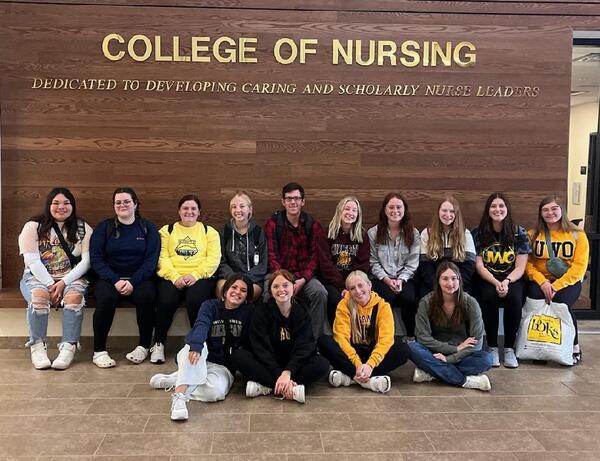
    In August 2023, the University of Wisconsin–Oshkosh launched the Pre-Nursing Pathway, a weeklong intensive precollege program that helps students prepare for the academic rigor of the nursing program and connects them with resources. In the pathway, students engage in peer interactions, mentorship and additional time with faculty and staff, allowing them to build emotional resiliency and a network of support.

    What’s the need: Staff at UW-Oshkosh noticed a decrease in qualified applicants to the nursing program and an overall decline in the matriculation of pre-nursing students, said Jessica Spanbauer, director of the center for academic resources.

    Students had large gaps in their foundational science and math concepts as well as a lack of time management and organizational skills, which could be tied in part to remote instruction due to the COVID-19 pandemic, Spanbauer said.

    The university decided to implement a pre-nursing program, in part to boost enrollment of students, but also to ensure students who do attend are successful on their career journey.

    How it works: The program is organized by the Center for Academic Resources and the College of Nursing, but is supported by admissions, the Undergraduate Advising Resource Center, the counseling center, the biology and chemistry departments, residence life, and recreation and wellness.

    Both admitted and deposited students are eligible to apply to the program, with special priority given to first-generation students.

    Selected program participants move onto campus a week before classes start for an intensive orientation experience. All students live in one wing of a residence hall together, mentored by two current nursing students, building a sense of community and peer support.

    During their week on campus, students participate in biology and chemistry labs led by professors; attend workshop presentations by advisers, counselors and academic support staff; and explore campus, familiarizing themselves with support resources. The goal is to proactively address knowledge gaps among students early on, enhancing their success and preparing them for the future demands of their profession.

    “By focusing on crucial and relevant concepts, we could ensure that students are well-equipped to excel in their nursing education,” Spanbauer said. “We could help build students’ confidence and encourage students to actively engage in shaping their academic trajectory.”

    Program participants are also offered tours of local hospitals, a Q&A session with nursing students and recent alumni, professional development workshops, and support from financial aid, dining, residence life and the Office of Accessibility.

    “We were fortunate that we had colleagues ready to enhance collaboration across units to further promote a student-focused supportive learning environment where students can thrive,” said Seon Yoon Chung, dean of the college of nursing.

    The impact: The program launched in August 2023 with 15 participants. Ninety percent of those students retained to fall 2024, and they earned an average GPA of 3.1. Eighty percent of the fall 2023 cohort are still in the pre-nursing major or accepted into the nursing program.

    An additional 12 students participated in August 2024 (100 percent of whom retained to spring 2025), and the staff hope to double participation rates this upcoming fall, Spanbauer said.

    Staff collect qualitative data about participants by using surveys and focus groups, as well as insights from faculty and other staff. In the future, longitudinal career-progression data and alumni surveys will help assess the program’s long-term impact, Spanbauer said.

    Campus leaders are also considering ways to enhance recruitment efforts and increase capacity for students through various resources, online modules and flexible scheduling to accommodate more interested students.

    Do you have an academic intervention that might help others improve student success? Tell us about it.

    This article has been updated to correct attribution of a quote to Seon Yoon Chung.

    Source link

  • Urgent Need for AI Literacy

    Urgent Need for AI Literacy

    The rapid advent of AI capabilities, coupled with the developing economic pressures worldwide, have led to a surge in employers seeking to reduce operating expenses through widespread use of generative and agentic AI to augment, and in some cases, replace, humans in their workforce. This follows last year’s warning from the World Economic Forum that said, “AI skills are becoming more important than job experience.”

    The World Economic Forum report goes on to cite the 2024 Work Trend Index Annual Report, which draws on a survey of 31,000 people across 31 countries, hiring trends from LinkedIn, Microsoft 365 productivity data and research with Fortune 500 companies: “Over the past eight years, hiring for technical AI roles was up 323%, and businesses are now turning to non-technical talent with the skills to apply generative AI tools like ChatGPT and Copilot. Two-thirds of business leaders surveyed say they wouldn’t hire a candidate without AI skills. Nearly three-quarters said they would rather hire a less experienced candidate with AI skills than a more experienced candidate without them.”

    Writing in The Chronicle of Higher Education, Beth McMurtrie defines AI literacy: “The term AI literacy can feel squishy. But the definitions circulating among campus working groups, disciplinary associations, and other organizations share several key components. To be AI literate, they agree, you must understand how generative AI works, be able to use it effectively, know how to evaluate its output, and understand its weaknesses and dangers. For AI skeptics, that last point is crucial. Too many workshops stop short, they say, focusing only on how to use AI tools.”

    In a survey conducted last November, Educause reported only 37 percent of institutions were supporting needed AI abilities by “upskilling or reskilling” faculty or staff, and just 1 percent reported hiring new AI staff. A larger percentage of faculty and staff were addressing related academic integrity and assessment issues. The Educause AI Landscape Study reported,

    “Respondents from smaller institutions are remarkably similar to respondents from larger institutions in their personal use of AI tools, their motivations for institutional use of AI, and their expectations and optimism about the future of AI.

    “Respondents from small and larger institutions differ notably, however, in the resources, capabilities, and practices they’re able to marshal for AI adoption.”

    These responses from as recently as the end of last semester show that the majority of institutions are lagging behind in preparing themselves and their graduates and certificate completers for the rapid changes that are expected to take place in workplaces around the world over the coming months. Yet, as reported in Government Technology, new laws creating frameworks in California and the European Union are leading the way in ensuring learners are well prepared for the emerging workplace:

    “Under California’s new law, AI literacy education must include understanding how AI systems are developed and trained, their potential impacts on privacy and security, and the social and ethical implications of AI use. The EU goes further, requiring companies that produce AI products to train applicable staff to have the ‘skills, knowledge and understanding that allow providers, deployers and affected persons … to make an informed deployment of AI systems, as well as to gain awareness about the opportunities and risks of AI and possible harm it can cause.’ Both frameworks emphasize that AI literacy isn’t just technical knowledge but about developing critical thinking skills to evaluate AI’s appropriate use in different contexts.”

    The American Library Association has taken a leading role in developing a draft document, “AI Competencies for Academic Library Workers,” that is currently under review based upon recommendations made by constituencies in recent weeks. The document includes two sections: “dispositions (tendencies to act or think in a particular way) and competencies (skills, knowledge, behaviors, and abilities). Dispositions are presented as a single list. Competencies are organized into four categories: Knowledge & Understanding; Analysis & Evaluation; Use & Application; and Ethical Considerations.”

    In a project backed by a $1 million grant from Google, Government Technology reports that the City University of New York is supporting 75 faculty members to develop teaching methods that support best practices in utilizing AI in higher education. The report goes on to say,

    “Such initiatives are spreading rapidly across higher education. The University of Florida aims to integrate AI into every undergraduate major and graduate program. Barnard College has created a ‘pyramid’ approach that gradually builds students’ AI literacy from basic understanding to advanced applications. At Colby College, a private liberal arts college in Maine, students are beefing up their literacy with the use of a custom portal that lets them test and compare different chatbots. Around 100 universities and community colleges have launched AI credentials, according to research from the Center for Security and Emerging Technology, with degree conferrals in AI-related fields increasing 120 percent since 2011.”

    These initiatives are exemplars of a variety of approaches that institutions might consider to respond to the urgent need to prepare learners for the workplace that is so rapidly emerging. Yet, now, as we move into the final weeks of the spring semester, it still appears that many, if not most, of the institutions of higher learning are failing their students. We are failing to fully prepare those students to enter the workforce where, as the World Economic Forum says, two-thirds of business leaders surveyed say they wouldn’t hire a candidate without AI skills and nearly three-quarters said they would rather hire a less experienced candidate with AI skills than a more experienced candidate without them.

    What is your institution doing to meet this urgent need? Who is leading a universitywide initiative to meet this need? Will your spring graduates and certificate completers be able to compete with others who have credentials that include knowledge and competencies in AI?

    Source link

  • Johns Hopkins Taps Endowment Earnings for Research Funding

    Johns Hopkins Taps Endowment Earnings for Research Funding

    Johns Hopkins University is turning to earnings on its $13.2 billion endowment to preserve research and protect researchers, trainees and staff amid drastic cuts to federal funding, The Baltimore Banner reported Monday.

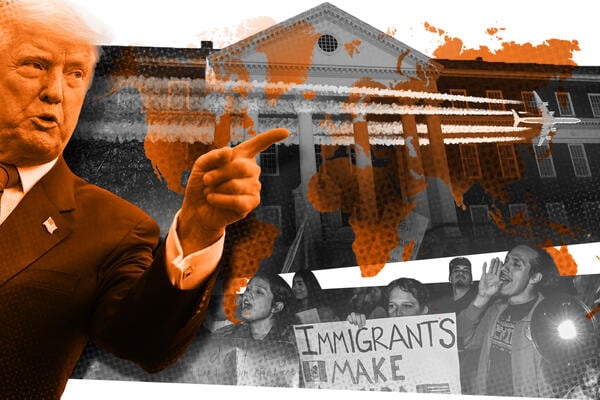
    Since President Donald Trump started his second term in January, federal agencies have terminated or stalled billions in research grants to colleges and universities in a move scientists and higher education advocates warn will decimate university budgets, slow scientific innovation and hurt local economies. Johns Hopkins estimates that it has so far lost 100 federal grants, while others remain under review by the Trump administration to ensure they align with the federal goal of rooting out diversity, equity and inclusion, among other things. As a result, the university said it’s approaching $1 billion in federal funding losses so far this year.

    While Trump and his allies have suggested universities can use their endowments to fund research, officials at Johns Hopkins—which received more funding from the National Institutes of Health in 2024 than any other university—said Monday that’s not so easy.

    “It’s a common misconception that universities can simply ‘use the endowment’ in moments like this,” university officials said in a statement. “The reality is that most of our endowment is made up of legally restricted funds designated by donors for specific purposes. The principal of the endowment must legally be preserved in perpetuity—to support Johns Hopkins’ mission now and for future generations—and cannot be drawn down like a reserve fund.

    “That said, we are using flexible resources—some of which are tied to endowment earnings—to help sustain critical research in this moment of uncertainty.”

    Johns Hopkins hasn’t disclosed how much total earnings it plans to take from its endowment to help faculty and students continue their research, according to a news release.

    But in the plan released Monday, it said individuals will receive up to $100,000 for delayed grants or $150,000 for terminated grants during a 12-month period. The university will also offer a year of support to Ph.D. students completing their dissertations and postdoctoral fellows who had been expecting support from federal grants that were terminated, as well as expand a program that offers editorial support for grant proposals and journal articles and another that enables undergraduates to work with faculty mentors on original research or projects.

    Source link

  • Harvard Eyes Changes to Address Antisemitism, Anti-Muslim Bias

    Harvard Eyes Changes to Address Antisemitism, Anti-Muslim Bias

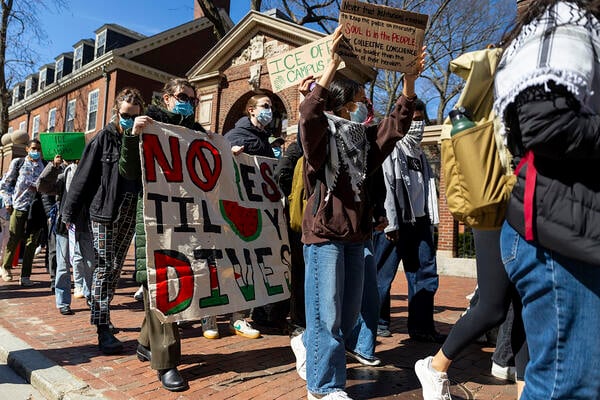
    Harvard University is introducing changes to its admissions, curriculum and orientation and other aspects of campus life as recommended by two internal task force reports on discrimination and harassment released Tuesday. The goal is to support civil discourse and address concerns raised by the two task forces, which were convened more than a year ago to review antisemitism and anti-Muslim bias at the university.

    The university also plans to initiate a research project on antisemitism and provide support for a “comprehensive historical analysis of Muslims, Arabs, and Palestinians at Harvard,” officials announced Tuesday. Harvard will also invest in Jewish studies and organize events featuring experts on the Israel-Palestine conflict. Deans will work with faculty to ensure students are treated fairly regardless of political and religious beliefs and prevent professors from taking political positions in class that create feelings of exclusion, according to the task force reports.

    A review of disciplinary policies and procedures is also planned.

    The announcement comes as the nation’s wealthiest university is locked in a standoff with the Trump administration over how officials handled pro-Palestinian campus protests last spring, which has prompted the federal government to freeze billions in research funding for Harvard and led the university to fire back with a lawsuit. Now, amid withering federal scrutiny and an ongoing Title VI investigation, Harvard has released more than 500 pages detailing the recent concerns of Jewish, Muslim, Arab and Palestinian students along with recommended improvements.

    Of the two task forces, one focused on combating antisemitism and anti-Israeli bias while the other took on anti-Muslim, anti-Arab and anti-Palestinian bias. Those task forces, launched in January 2024, were asked to examine Harvard’s recent history, identify root causes of bias, evaluate evidence on the frequency of such behaviors and recommend steps to combat bias.

    That work is now done. And the end result finds Harvard lacking—but aiming for improvement.

    Harvard president Alan Garber noted that the report “revealed aspects of a charged period in our recent history” that required addressing. While the university has already made various changes since he became president last January, he noted the work is far from finished.

    He also expressed concerns about the findings.

    “Especially disturbing is the reported willingness of some students to treat each other with disdain rather than sympathy, eager to criticize and ostracize, particularly when afforded the anonymity and distance that social media provides. Some students reported being pushed by their peers to the periphery of campus life because of who they are or what they believe, eroding our shared sense of community in the process,” Garber wrote in a Tuesday statement.

    The Findings

    The dual task force reports show a campus sharply divided in the aftermath of the deadly Hamas attack on Israel on Oct. 7, 2023, which prompted a brutal counteroffensive in Gaza and the deaths of tens of thousands of civilians, children among them. The antisemitism task force report makes clear that tensions had been building on campus since the mid-2010s as the Israel-Palestine conflict became more divisive. The report found that after Oct. 7, “our Harvard community fell apart.”

    Authors of that report noted that since the 2010s, pro-Israeli events and guests were targeted, and some Jewish students with pro-Israel views found themselves excluded socially. They also found that Jewish students and others on campus faced instances of bullying, intimidation and harassment and were shunned for expressing pro-Israel or moderate views. Students also alleged that university programming skewed in favor of Palestinian views. But then after Oct. 7, some Jewish students noticed a shift in the campus climate.

    “My experience has been different before and after October 7th,” one student wrote to the task forces. “Before October 7th, being Jewish was largely irrelevant. It was not a barrier. I was proud to be Jewish. When it came up, it was positive. After October 7th, I experienced the following in this order: first there was pressure, then there was chaos, then hostility, and in certain spaces, the normalization of subtle discrimination like, ‘We’ll welcome you in this space if you align in a certain way. If not, you can’t come here.’ This has to do with the enforcement of rules.”

    Jewish students also expressed concerns about speaking up.

    “I do not feel mentally safe on campus. Though I am not Israeli, I have openly expressed sympathy for October 7th survivors and attended events for Holocaust survivors. I have faced many social consequences for not thinking in ways my classmates would deem progressive, which I find unreasonable,” one student wrote in response to a survey by the two task forces.

    The task force exploring anti-Muslim, anti-Arab and anti-Palestinian bias yielded similar findings, with students and employees alike reporting threats and concerns related to their identities.

    “The feeling over and over again for Palestinians is that their lives don’t matter as much,” one student said. “Sometimes it’s explicit. It’s really hard when it’s your family that matters less.”

    Others expressed free speech concerns.

    “It would be close to impossible to express views at Harvard sympathizing with Palestinians,” one Harvard faculty member said, as quoted in the report. “The idea of ‘antisemitism’ has been expanded so much that anything that even remotely expresses concern about the calamity that’s facing Palestinians is prohibited at Harvard. I’m not Arab/Muslim and have no ethnic or religious affiliations with Palestinians other than having a connection as a fellow human being.”

    Both reports also expressed safety concerns regarding doxxing trucks and related online campaigns as well as about the role those outside the Harvard community had in amplifying campus divisions.

    Respondents to task force surveys also saw Harvard as complicit in failing to address concerns.

    “I’ve had positive interactions with the administration. They just don’t know what to do,” one graduate student wrote in a response. “They didn’t expect this level of anti-Zionism. [My school] didn’t expect having to draw a line between free speech and harassment. Anti-Zionism is considered an intellectual exercise and not as discrimination by some in the administration.”

    The Next Steps

    In his statement, Garber noted the university has already “made necessary changes and essential progress on many fronts” including campus protest rules and various other areas.

    But more changes are coming as a result of the task force’s recommendations. On admissions, Harvard has committed to reviewing its processes to emphasize candidates who “engage constructively with different perspectives, show empathy, and participate in civil discourse.”

    The university will also offer additional training for Office for Community Conduct staff on antisemitism and hire a staffer to oversee all antisemitism and shared-ancestry complaints. Mental health professionals at Harvard have already received cultural competency training on anti-Muslim bias and antisemitism to give them a better understanding of student needs.

    Harvard has also committed to partnering with an Israeli university.

    Additionally, deans will work with faculty “to define shared expectations for teaching excellence,” a process intended to ensure “appropriate focus on course subject matter” and to ensure “that students are treated fairly regardless of their identity or political/religious beliefs.” That effort also aims to promote “intellectual openness and respectful dialogue among students” and urges faculty members to refrain “from endorsing or advocating political positions in a manner that may cause students to feel pressure to demonstrate allegiance.” The stated aim of a related curriculum review is to uphold “standards of academic excellence and intellectual rigor.”

    The university will also host a series of events on the Israeli-Palestinian conflict.

    Harvard is further investing in Jewish studies, including hiring additional personnel. The university will make similar investments in Arabic language and cultures and Islamic and Palestinian studies.

    Harvard is also “exploring the creation of a major initiative to promote viewpoint diversity.”

    Source link

  • At Least 15 Florida Institutions Have ICE Agreements

    At Least 15 Florida Institutions Have ICE Agreements

    At least three members of the Florida College System have signed agreements with the U.S. Immigration and Customs Enforcement to allow their campus police departments to enforce immigration law, bringing the total to 15 institutions across the state.

    Florida SouthWestern State College, Northwest Florida State College and Tallahassee State College have all signed 287(g) agreements with ICE, which allows the agency to delegate immigration enforcement powers to other law enforcement agencies, such as campus police. Those three agreements have been approved by ICE, according to a federal database. Others approved as participating agencies are the police at Florida A&M University, New College of Florida, the University of Central Florida, the University of Florida and the University of West Florida.

    None of the three latest colleges responded to requests for comment from Inside Higher Ed.

    Santa Fe College also has a draft agreement in place that has not yet been signed, a spokesperson said, noting the earliest that would be done is at a May 20 board meeting. A spokesperson for Pensacola State College said its campus police are considering an application to partner with ICE.

    Other institutions that have already signed agreements with ICE are:

    • Florida A&M University
    • Florida Atlantic University
    • Florida Gulf Coast University
    • Florida International University
    • Florida Polytechnic University
    • Florida State University
    • New College of Florida
    • University of Central Florida
    • University of Florida
    • University of North Florida
    • University of South Florida
    • University of West Florida

    While all 12 institutions in the State University System have signed on with ICE, Florida SouthWestern State, Northwest Florida State and Tallahassee State appear to be the first of the 28 members in the Florida College System to enter such arrangements.

    Not all of the state colleges have campus police departments. But of those that do have campus police departments, signing on with ICE isn’t a given. For instance, Florida State College of Jacksonville and Polk State College told Inside Higher Ed that neither have a memorandum of agreement with ICE.

    Leaders Defend Agreements

    The agreements with ICE come amid an immigration crackdown driven by Gov. Ron DeSantis and Florida’s Republican-controlled Legislature. In February, DeSantis directed state law enforcement agencies to sign agreements with ICE “to execute functions of immigration enforcement within the state” to make deportations more efficient, according to a news release.

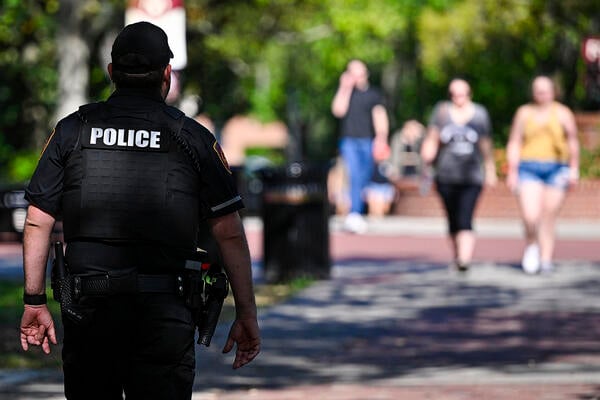
    Florida colleges and universities soon followed by signing memorandums of understanding with ICE that will deputize campus police officers to carry out immigration duties on campus. Institutions have largely declined to speak publicly about the arrangements. However, a recent Faculty Senate meeting at Florida International University with FIU chief of police Alexander Casas yielded insights into why agreements were signed but left many lingering questions.

    Casas argued at the April 18 meeting that it would be better for university police to carry out immigration enforcement duties on campus than outside agencies.

    “I can’t control what ICE does. I can’t control what a state agency does that has jurisdiction. But if I don’t enter the agreement, I don’t even have the opportunity to say, ‘Call us first, let us deal with our community.’ That’s not even an option,” Casas said. He added he wanted to be “in the driver’s seat” but “without the agreement, I’m not even in the car.”

    FIU interim president Jeanette Nuñez, the former lieutenant governor under DeSantis, also defended the deal, telling the Faculty Senate the ICE agreement follows similar arrangements “at almost all of the state universities and many other universities across the country.”

    Immigration experts have told Inside Higher Ed they are unfamiliar with such agreements at universities in other states. Only Florida institutions appear in an ICE database that tracks active and pending 287(g) agreements. (FIU did not respond to questions about Nuñez’s claims.)

    FIU Faculty Senate members, however, did not seem swayed by Casas or Nuñez. Several professors spoke about their distrust for ICE—some clearly emotional—and referenced recent questionable actions by ICE, such as the widely publicized arrest of Juan Carlos Lopez-Gomez, an American citizen who was detained earlier this month and falsely accused of illegally entering Florida as an “unauthorized alien.” Federal officials later blamed Lopez-Gomez for his arrest.

    Ultimately, the Faculty Senate approved a resolution calling for the university to withdraw from the ICE agreement, which members argued ran counter to the values of the institution.

    Statewide Concerns

    Concerns about such agreements have also emerged at universities across the state.

    Students and faculty have protested such agreements at FIU, FAU and elsewhere. United Faculty of Florida, a union that represents professors across the state, condemned the agreements with ICE as a betrayal of the core values of higher education in a recent statement.

    “Our campuses must be institutions of learning, critical inquiry, and inclusion—not instruments of surveillance and state-sponsored oppression,” United Faculty of Florida officials said in a statement last week. “The presence and involvement of ICE on our campuses sows fear among students, staff, and faculty, particularly those from immigrant, undocumented, or international communities. It undermines the very mission of our higher education system: to foster open dialogue, intellectual freedom, and the free exchange of ideas across borders and identities.”

    The agreements also prompted pushback from the Florida Advisory Council of Faculty Senates, which issued a resolution that urged universities to withdraw from existing agreements with ICE.

    “To effectively protect our universities, campus police cultivate a unique relationship with campus communities,” council members wrote in a recent resolution. “They come to know our students, our educational spaces, and our communities. They are present at peaceful protests, in classrooms, and at student events. Repurposing this unique trust for federal immigration enforcement makes our campuses less safe, puts our officers in an untenable position, and chills students’ access to the support services they critically need to succeed.”

    That resolution has already been endorsed by some faculty senates, including at FAU.

    Source link

  • AAUP Report Backs Tenured Pro-Palestine Prof. Who Was Fired

    AAUP Report Backs Tenured Pro-Palestine Prof. Who Was Fired

    A new American Association of University Professors investigative report concludes that Muhlenberg College violated the academic freedom of a tenured associate professor who said the institution fired her for pro-Palestinian speech.

    Maura Finkelstein’s situation made headlines last year as the first instance that major academic freedom advocacy groups had heard about of a tenured faculty member being fired for pro-Palestine or pro-Israel statements. Complaints against Finkelstein also became the subject of a U.S. Education Department Office for Civil Rights investigation.

    Finkelstein previously said she was fighting her May 2024 termination and was continuing to be paid during the appeals. But a college spokesperson told Inside Higher Ed this week that Finkelstein has now “resigned from the college to pursue other scholarship opportunities.” Finkelstein didn’t respond to Inside Higher Ed’s requests for comment.

    Finkelstein, who is Jewish, had said a panel of faculty and staff recommended axing her over her Instagram repost that told readers not to “normalize Zionists taking up space” and called Zionists “genocide-loving fascists” who shouldn’t be welcome “in your spaces.”

    Members of the college’s Faculty Personnel and Policies Committee later unanimously concluded that Finkelstein shouldn’t be fired, according to the AAUP report released Tuesday. The report is from a Committee of Inquiry composed of three faculty from other higher education institutions, and it’s been approved by the AAUP’s Committee A on Academic Freedom and Tenure.

    The report concludes, among other things, that “by initially dismissing Professor Finkelstein from the faculty solely because of one anti-Zionist repost on Instagram and without demonstrating—in fact, without ever seeking to demonstrate” that she was professionally unfit, “the Muhlenberg administration violated Professor Finkelstein’s academic freedom of extramural speech.” The report says the firing has “severely impaired the climate for academic freedom” at the college.

    A college spokesperson said the institution “has not been afforded the opportunity to review the amended report,” but pointed to the administration’s response to an earlier AAUP draft. That response, included in the final AAUP report, says Finkelstein “was afforded a fair and equitable process” and that “the cumulative effect of Professor Finkelstein’s conduct and post that called for the shaming of Zionists and to ‘not welcome them into your spaces,’ violated College policy.”

    Source link

  • Ex-NIH Director Says Trump Silenced Him, Others

    Ex-NIH Director Says Trump Silenced Him, Others

    A former director of the National Institutes of Health—who resigned in February—told CBS’s 60 Minutes that working at the agency became “untenable” after President Donald Trump started his second term Jan. 20. 

    Like “every other scientist, I was not allowed to speak in any kind of scientific meeting or public setting,” Francis Collins, a geneticist who had worked for the biomedical research agency since the 1990s, said during an episode that aired Sunday. He believed staying at the agency wouldn’t have helped. “I would have been pretty much in the circumstance of not being able to speak about it.”

    Over the past few months, the Trump administration has announced sweeping budget cuts and ideologically driven policy changes at numerous agencies across the federal government, including at the $47 billion NIH. The NIH is the largest funder of biomedical research in the world, sending about 80 percent of its budget to universities, medical colleges and other institutes in the form of extramural grants that support research on fatal diseases, such as cancer, Alzheimer’s and diabetes. 

    But scientists and medical research advocates say the work of the NIH—and the millions of patients it supports—is in jeopardy. 

    In late January, the NIH temporarily froze spending and communication and halted most reviews of grant applications; so far in 2025 it’s awarded about $2.8 billion less than usual at this point over the past five years. It’s also announced a plan to cap indirect research cost rates, which universities say would create gaping budget holes and slow the pace of medical breakthroughs. (A federal judge has since blocked the guidance.)

    The agency has also fired some 1,300 employees and terminated roughly $2 billion in grants—many focused on the health of women, LGBTQ+ people and racial minorities—that no longer effectuate “agency priorities.” (Researchers have since sued over the grant terminations). And earlier this month, The Washington Post reported that an internal White House budget proposal outlined plans to cut $20 billion from NIH’s annual budget and consolidate the NIH’s 27 institutes and centers into eight.

    Although research advocates have protested the cuts, the drastic changes have created an environment of fear and anxiety for both university scientists and the remaining NIH employees who support them and conduct their own medical research. 

    “I’ve never seen the morale of an institution change so abruptly to where we feel fear,” said an NIH researcher who spoke to 60 Minutes on the condition of anonymity. “You can’t run an organization as complicated as NIH without a support system … That has now been decimated … This doesn’t feel like a strategic plan to make the NIH better and more efficient. It feels like a wrecking ball.”

    Source link

  • Beware Illusions of Campus Normalcy This Spring (opinion)

    Beware Illusions of Campus Normalcy This Spring (opinion)

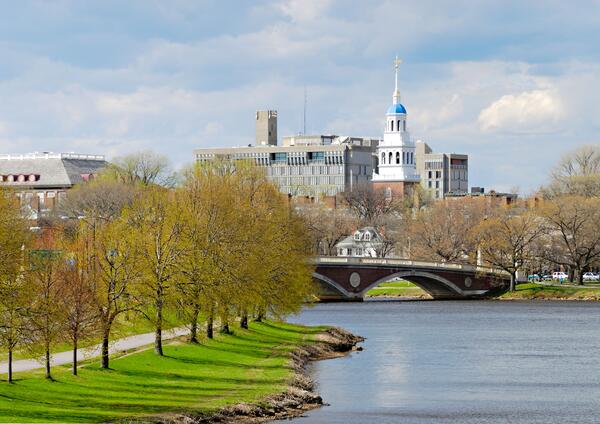
    It’s nearing the end of the academic year at Harvard University, where I teach in the Graduate School of Education. Students are preparing for final exams and finishing up capstone projects. Awards ceremonies are being held and celebrations, formal and informal, have begun. The weather has finally warmed up in Cambridge, and the outdoor tables at restaurants and coffee shops are crowded. The women’s tennis team clinched the Ivy League title.

    It all feels normal. Yet it all feels discordant, like a scene in a M. Night Shyamalan movie that infuses the quotidian with a barely detectable feeling of dread.

    This discordance is of course especially powerful at Harvard, the current epicenter of a ferocious and lawless attack on higher education that might make Viktor Orbán blush. But it is not unique to Harvard. At colleges and universities across the country, classes continue, clubs meet and Frisbees are being tossed even as the government sows fear and confusion by revoking, then restoring, then warning that it might again revoke the visa statuses of more than 1,800 international students.

    Lawyers continue to do what lawyers do, while large firms are essentially signing on to be instruments of the government, individuals are being targeted because the president of the United States holds a grudge, bigly, and court orders are being ignored.

    Doctors continue to treat patients while billions of dollars of funding for medical research and experimental trials are being withheld and the secretary of Health and Human Services is declaring that autism is preventable and the measles vaccine is maybe, sort of OK.

    We get in our cars or on our bicycles and go off to work while the government is pressing before the courts an argument that would allow it to send anyone, citizen or noncitizen, to a foreign prison without cause or legal recourse.

    When many of us think about authoritarian takeovers, we imagine military coups and declarations of martial law. But the truth is that the most powerful tool of the aspiring authoritarian is not shock, but normalcy. How bad can things be if we can still shop at Costco or take our families out for Italian food? How bad can they be if we can still download Maya Angelou onto our Kindles or watch Jimmy Kimmel Live!? How bad can they be if I can still publish a piece like this one, critical of the federal government?

    Look around not only at the campuses, but at the streets and bars and hardware stores in any city or town in America and it appears to be the same as it was last year and the year before. The NBA playoffs have begun and there’s a new film starring Michael B. Jordan. Normal.

    Except it is not, in ways of which we are vaguely aware but unable or unwilling to fully credit.

    For most people—the ones not scooped off the street by men in masks or ousted from their jobs with the federal government without cause or forced to stop their research because of the loss of National Institutes of Health funding—life feels more or less the way it did when we were a reasonably functional democracy. This is the way it works: Keep 99 percent of the lives of 99 percent of the people undisturbed for as long as possible so that they will remain unaware of or indifferent to what is happening at the margins. By the time they recognize that the edges of normalcy have drawn closer, it will be too late to do anything about it because the guardrails will have been destroyed.

    Begin with the least sympathetic targets. Who will shed tears for the fate of Venezuelan gang members (real or imagined)? Does anyone really like Big Law? Government employees are the problem, not the solution. Harvard, with its giant endowment and Ivy League arrogance, is rarely anyone’s idea of an underdog. Why should we concern ourselves with any of this on the way to McDonald’s or Starbucks? I work at Harvard and most of the time I find it difficult to take seriously the reality that the federal government is trying to destroy a private university simply to prove that it can and because its appetite for both control and chaos appears to have no limits.

    Be sure to cite rules and regulations that few people care to understand. What is 501(c)(3) status anyway? “Indirect costs” seem sort of like a scam. The “Alien Enemies Act” sounds like something pulled from the latest Marvel movie. Then cloak it all in the guise of causes to which it seems difficult to object—fighting antisemitism, because Donald Trump and the party of Marjorie Taylor Greene and the Proud Boys are the first things that come to mind when one thinks about protecting Jews. Or perhaps national security, given the threat to the republic posed by international students co-authoring op-eds for the campus newspaper.

    Above all, lie. Constantly, relentlessly, shamelessly lie. Since most people don’t spend a majority of their time lying about a majority of things, they appear to find it difficult to recognize when other people do. It’s hard to question a time-tested strategy.

    The fight against our current level of inertia is painfully difficult because the allure of the normal, the desire to believe that things are just fine, is so powerful. A tank in the street is hard to ignore. A steady eroding of legal and ethical norms just beyond the limits of our daily vision is easy to miss.

    Our greatest hope might be the tendency of authoritarians and those without any moral compass to overreach. If they can change life by 1 percent without much resistance, why not five or 10 or 20? If they can, through executive actions, free hundreds of convicted felons and strip away environmental protections, why not impose arbitrary and irrational tariffs? What made the reaction to tariffs different and what has, at least for the moment, slowed their progress is the fact that they tore a hole in the illusion of normalcy. Plummeting retirement accounts and worries about the cost of groceries will disrupt the normal in a way that canceling student visas or defunding Harvard will not. It was a mistake, and they will, out of arrogance and stupidity, make more.

    The set of demands sent to Harvard, for instance, which Harvard refused to comply with, resulting in headlines around the globe, was apparently sent in error. You could make that up, but no one would believe you.

    Meanwhile, I wonder whether we can afford to wait. Is it sufficient to hope that they will make things abnormal enough for a large enough group of people to provoke resistance, or do we have to do the difficult work of wrenching ourselves, somehow, out of the reassuring comforts of familiar routines? David Brooks, hardly a radical, has called for a “comprehensive national civic uprising” to counter the war being waged on our national civic fabric. Do people, organizations and institutions in the United States, so certain for so long about the permanence of its democracy, even have the energy or the will? Can that happen here or is it something that happens in Seoul or Istanbul and is shown on CNN?

    Meanwhile, I have laundry to do and a class to teach this week. Maybe I’ll catch something on Netflix. Pretty normal stuff.

    Brian Rosenberg is president emeritus of Macalester College, a visiting professor at Harvard Graduate School of Education and author of Whatever It Is, I’m Against It: Resistance to Change in Higher Education (Harvard Education Press, 2023).

    Source link

  • Colleges, Students Prefer Inclusive Access Models for Books

    Colleges, Students Prefer Inclusive Access Models for Books

    College affordability is one of the chief concerns of students, families, taxpayers and lawmakers in the U.S., and it extends beyond tuition prices.

    Costly course materials can impede student access and success in the classroom. Over half of college students say the high price of course materials has pushed them to enroll in fewer classes or opt out of a specific course, according to a 2023 survey.

    A new report from Tyton Partners, published today, finds that affordable-access programs that provide necessary materials can save students money and improve their outcomes. The report pulls data from surveys of students, administrators and faculty, as well as market research on the topic.

    The background: Affordable-access programs, also called inclusive-access programs, bill students directly for their textbooks as part of their tuition and fees. Through negotiations among publishers, institutions and campus bookstores, students pay a below-market rate for their course materials, which are often digital.

    This model ensures all students start the term with access to the required textbooks and course materials, allowing them to apply financial aid to textbook costs, which removes out-of-pocket expenses at the start of the term. A 2023 Student Voice survey by Inside Higher Ed found that over half of respondents have avoided buying or renting a book for class due to costs.

    The first federal regulations for affordable-access programs were set in 2015 to help cap course material costs and spur utilization of inclusive access on campuses. In 2024, the Biden administration sought to redefine inclusive access by making models opt-in to provide students with greater autonomy, but the plan was ultimately paused. Most colleges have an opt-out model of affordable-access programs, requiring students to elect to be removed, according to Tyton’s report.

    Critics of affordable-access programs argue that an across-the-board rate eliminates students’ ability to employ their own cost-saving methods, such as buying books secondhand or using open educational resources. Students often lose access to digital resources at the end of the term, limiting their ability to reuse or reference them.

    Findings from Tyton Partners’ research point to the value of day-one course materials for student success, which can be provided through opt-out inclusive-access models.

    The report: Affordable-access programs are tied to lower costs for participating students, according to the report. The average digital list price for course materials per class was $91, but the average price for course materials for students in an inclusive-access program was $58 per class. (A 2023 survey found the average student spent about $285 on course materials in the 2022–23 academic year, or roughly $33 per item.)

    Opt-out affordable-access models have also placed downward pricing pressure on the market; the compound annual growth rate of course materials declined from 6.1 percent to 0.3 percent since the 2015 ED regulations.

    A student survey by Tyton found that 61 percent of respondents favor affordable-access models compared to buying (13 percent), renting (11 percent) or borrowing (10 percent) course materials.

    Another Angle

    The Tyton Partners report identifies opt-out affordable access as one intervention that can ensure all students have access to course materials on day one, which is tied to better student outcomes.

    Open educational resources, which are not mentioned in the report, are another method of ensuring students have access to digital course materials at the start of the term at no additional cost to the student.

    Among students participating in inclusive access, 84 percent said they felt satisfied or neutral about their user experience, according to a survey by the National Association of College Stores. Students who had a positive view of inclusive access cited the convenience of not shopping for materials (80 percent), day-one access (78 percent) and knowing all their course materials are correct (71 percent) as the top benefits.

    Among colleges that do offer inclusive access, those with opt-out models see higher student participation than those with opt-in models (96 percent versus 36 percent, respectively). Administrators report that some students, especially first-year and first-generation students, are less likely to engage in opt-in models and may then struggle because they lack the required materials, which researchers argue enables gaps to persist in student outcomes.

    Researchers compared two community colleges and found that students who participated in an opt-out equitable-access program had higher course completion and lower withdrawal rates, compared to their peers who opted in. Learners from underrepresented minority backgrounds, including Black and multiracial students, saw greater gains as well.

    While a majority of students indicated a preference for inclusive-access models, it’s still paramount that institutions help students fully understand the benefits of participation and offer them seamless opportunities to opt out, according to Tyton’s report.

    After adopting inclusive access, institutions were likely to increase offerings and expand the number of courses within the model. A majority of surveyed faculty members (75 percent) said their institution should maintain or increase affordable-access model usage.

    Report authors noted a higher administrative burden in an opt-in model, because costs are applied and resources given to each individual student who opts in, rather than simply removing students who opt out. “Since no technology currently automates the opt-in process, most institutions would need to expand their academic affairs, faculty affairs and information technology teams to handle the increased workload under opt-in models,” according to the report.

    Get more content like this directly to your inbox. Subscribe here.

    Source link

  • Higher Ed Wins a SEVIS Battle, Not the Visa War

    Higher Ed Wins a SEVIS Battle, Not the Visa War

    International students, colleges and advocates caught a break Friday after weeks of confusion and disruptions. After thousands of students had learned their Student and Exchange Visitor Program (SEVIS) status was revoked, they were relieved to hear that Immigrations and Customs Enforcement was restoring students’ statuses nationwide.

    “I was in class when the news broke, and there was a sense of relief,” said Chris. R Glass, a professor at Boston University’s Center for International Higher Education. “But it’s not the kind of relief that things are getting better, just that they’re not getting worse.”

    The Trump administration’s reversal was a key win in dozens of lawsuits across the country that argued that eliminating thousands of students’ SEVIS records without notice was unconstitutional. But threats against international students still loom large, experts say. The most pressing question: will this happen again?

    In its notice to a federal judge, the administration did not say that it was finished eliminating students’ SEVIS records, just that “ICE will not modify [a] record solely based on the NCIC [National Crime Information Center] finding that resulted in the recent SEVIS record termination,” according to the court filing. And ICE is working a policy framework for terminating SEVIS records.

    Reactivating students’ records doesn’t erase questions about the genesis of “this unlawful policy,” said Miriam Feldblum, co-founder, president and CEO of the Presidents’ Alliance on Higher Education and Immigration. “We need to understand why it happened and what is the policy structure.”

    The Presidents’ Alliance filed a lawsuit Thursday night, challenging the SEVIS record terminations, arguing that students “were stripped of valid status without warning, individualized explanation, and an opportunity to respond,” and that the government’s actions harmed member institutions’ ability to attract, retain and serve international students. The Presidents’ Alliance asks the court to enjoin DHS from future terminations affecting students at member institutions.

    “We are gratified to see this change of directions to restore records,” Feldblum said. “That does not erase the need for national, systemic litigation.”

    The Trump administration’s decision to reinstate student visas also does not negate the legal grounds for cases to continue, said Elora Mukherjee, Director of the Columbia Law School Immigrant Rights Center. Federal courts have the power to enjoin the executive branch on an issue that’s capable of repetition to stop the harm from occurring in the future, which in this case would be another sweeping removal of students’ legal standings, she added.

    The Presidents’ Alliance hopes to learn more about the administration’s intentions, policy structure and plans through its lawsuit, Feldblum said.

    Advocates for international students emphasized that while students may have regained legal standing to study and work in the U.S., the change in their status can have greater effects on their immigration status.

    The federal government said it would restore terminated SEVIS records, but some students had their visas revoked, said Fanta Aw, CEO and executive director of NAFSA, the association of international educators. Students will have to visit an embassy to receive their visa, facing long wait-times, and there’s no guarantee that they’ll be able to regain it.

    For those who didn’t lose their visas, terminations can have serious implications for students’ continuity of time in the U.S., Aw said. The stated reason for SEVIS termination and notation in their records can similarly have negative long-term consequences, Feldblum said.

    On campuses, administrators and students are still confused about what comes next, but there’s a clear feeling of relief, Feldblum and Aw said.

    As of Friday, Inside Higher Ed identified over 1,840 students and recent graduates from more than 280 colleges and universities who have reported SEVIS record shifts.

    Most institutions didn’t receive notification when students’ records changed initially, and they’re not getting notice when they’re reauthorized, Aw said. Just like with revocations, staff are checking SEVIS regularly to see if there’s been a status change.

    A few colleges—including Harvard University, Rice University, Stanford University, Tufts University, the University of Nebraska-Lincoln and the University of California, Berkeley—reported that some of their impacted students have had visas or SEVIS statuses restored. Some students still have terminated records.

    The slow restoration is possibly tied to the tedious nature of the work, Aw said, as federal workers have to manually restore each student’s status.

    NAFSA is starting to track visa restorations and will report numbers on Monday, Aw said, including the number of restorations and institution type.

    The Presidents’ Alliance will be in touch with member institutions to provide updated guidance on how to proceed, Feldblum said.

    This reversal doesn’t eliminate the harm the policy caused, experts noted. Students who left the country based on communication from the Trump administration or their own colleges and universities will possibly face challenges returning. Others were told to stop attending class, working or conducting research. With restored SEVIS records, students will be able to resume those activities, but it doesn’t fix everything.

    Over the past month, international students have experienced high levels of anxiety and stress and a lack of psychological safety, which can impact their personal well-being and retention in higher education.

    “You can’t get that time back, that lack of sleep back, that anxiety back,” Aw said. “Trust is broken for students that this is a system that is fair and consistent and transparent. I don’t have to tell you how hard it is to rebuild that.”

    Tonight, at least, some students can get a good night’s sleep, Aw said.

    Source link