Tag: Career

  • UC Berkeley Faces Foreign Gifts Investigation

    UC Berkeley Faces Foreign Gifts Investigation

    The Education Department is investigating the University of California, Berkeley, regarding compliance with a federal law that requires colleges to disclose certain foreign gifts and contracts.

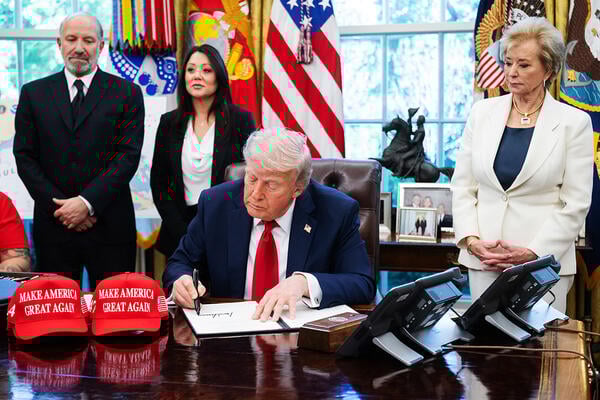
    It’s the first such review launched since President Trump signed an executive order Wednesday aimed at increasing transparency over the “foreign influence at American universities.”

    A notice of the investigation and corresponding records requests were sent to UC Berkeley on Friday morning after the department found that the university’s disclosures might be incomplete.

    “There have been widespread media reports over the last several years of Berkeley’s very substantial—in the hundreds of millions of dollars—receipt of money from foreign governments, in this case, particularly China,” a senior Education Department official said on a press call Friday. But while the development of “important technologies” has been shared with foreign nations, the funding that made it possible “has not been reported to the department, as it’s required by law,” in Section 117 of the Higher Education Act, the official added.

    Under Section 117, colleges and universities must report twice a year all grants and contracts with foreign entities that are worth more than $250,000. The department opened a similar review into Harvard last week.

    UC Berkeley administrators will have 30 days to respond with the requested records. From there, the Department of Education’s general counsel, in partnership with the Departments of Justice and Treasury, will “verify the degree to which UC Berkeley is or is not compliant.” (Unlike with Harvard, the Department of Education did not disclose the specific records it had requested from Berkeley.)

    “The Biden-Harris Administration turned a blind eye to colleges and universities’ legal obligations by deprioritizing oversight and allowing foreign gifts to pour onto American campuses,” Education Secretary Linda McMahon said in a news release. “I have great confidence in my Office of General Counsel to investigate these matters fully.”

    Trump and congressional Republicans have been trying to crack down on the enforcement of Section 117 since the first Trump administration. Already this year, House Republicans passed a bill, known as the DETERRENT Act, which would lower the general threshold required for reporting foreign donations from $250,000 to $50,000. Gifts from some countries, like China and Russia, would have to be reported no matter the value. The Senate has yet to move forward with the bill. 

    When asked how Trump’s executive order differentiates itself from the DETERRENT Act, the department official said the legislation would be “entirely consistent with the EO’s directives” and that the department is “very supportive” of congressional Republicans’ efforts.

    “The EO basically just says, enforce the law vigorously, return to enforcement of the law, stop the nonsense and work with other agencies to do it,” the official explained. “So whether the reporting requirement is for $250,000 or more per year or the lower threshold, our approach will be the same.”

    Inside Higher Ed asked the department if there would be more investigations but has not yet received a response.

    Source link

  • ICE Reverses Course on SEVIS Terminations

    ICE Reverses Course on SEVIS Terminations

    Photo illustration by Justin Morrison/Inside Higher Ed | aapsky/iStock/Getty Images | Chip Somodevilla/Getty Images

    Over the past three weeks, several thousand international students received notice that their status in the Student and Exchange Visitor Information System was changed, which threatened their legal ability to stay in the country and resulted in some students being detained or self-deporting. But as of late last night, the federal government is reversing course and reinstating students’ SEVIS records.

    Elora Mukherjee, director of the Columbia Law School Immigrant Rights Center, first heard Thursday evening that 50 percent of affected students had had their SEVIS records reinstated. At the time, immigration lawyers didn’t know if it would be a blanket reversal.

    But Friday morning, a lawyer for the government told a federal judge that Immigration and Customs Enforcement was restoring students’ SEVIS statuses nationwide while ICE develops a policy framework for record terminations. In the meantime, “ICE will not modify the record solely based on the NCIC [National Crime Information Center] finding that resulted in the recent SEVIS record termination,” according to the court filing.

    So far, both students who filed lawsuits and those who didn’t have seen records restored, Mukherjee said.

    Federal judges across the country have already ordered the government to restore some students’ records in SEVIS, a key database that tracks international students, after those students sued. The judges, for the most part, have expressed skepticism that the terminations were legal. Of the more than 100 lawsuits, judges have granted temporary restraining orders in at least 50 cases, Politico reported.

    The sudden terminations have led to widespread confusion and fear for international students. Lawyers said in court filings and interviews that students affected are afraid to leave their homes or have lost out on income because of the terminations, among other consequences.

    As of Friday morning, Inside Higher Ed has identified over 1,840 students and recent graduates from more than 280 colleges and universities who have reported SEVIS record shifts. Many institutions didn’t receive clear communication when student records were changed in the first place, making it likely that they won’t receive updates if and when records are restored.

    Two colleges have already seen the changes take place. At the University of California, Berkeley, 23 students had their SEVIS statuses changed since April 4, but overnight a dozen students regained their status without warning or explanation, the university’s student paper, The Daily Californian, reported. Stanford University said late on April 24 that one student whose visa was revoked had their record restored.

    This reversal doesn’t eliminate harm, Mukherjee noted. A few students elected to self-deport based on communication from the Trump administration or their own colleges and universities. Others were told to stop attending class or working. Among those who did continue their daily lives, a lapse in their SEVIS status could potentially cause them harm in the future, Mukherjee said.

    In the policy update shared Friday, government officials provided more clarity about what prompted the sweeping visa revocations: a search in the National Crime Information Center.

    Of students who had their SEVIS status changed, many were classified as “OTHER—Individual identified in criminal records check and/or has had their VISA revoked,” according to court filings. Students who did have criminal records were cited for a variety of reasons ranging from driving without a license and overfishing to underage drinking. Some students didn’t have a criminal record at all.

    Source link

  • We Already Have an Ethics Framework for AI (opinion)

    We Already Have an Ethics Framework for AI (opinion)

    For the third time in my career as an academic librarian, we are facing a digital revolution that is radically and rapidly transforming our information ecosystem. The first was when the internet became broadly available by virtue of browsers. The second was the emergence of Web 2.0 with mobile and social media. The third—and current—results from the increasing ubiquity of AI, especially generative AI.

    Once again, I am hearing a combination of fear-based thinking alongside a rhetoric of inevitability and scoldings directed at those critics who are portrayed as “resistant to change” by AI proponents. I wish I were hearing more voices advocating for the benefits of specific uses of AI alongside clearheaded acknowledgment of risks of AI in specific circumstances and an emphasis on risk mitigation. Academics should approach AI as a tool for specific interventions and then assess the ethics of those interventions.

    Caution is warranted. The burden of building trust should be on the AI developers and corporations. While Web 2.0 delivered on its promise of a more interactive, collaborative experience on the web that centered user-generated content, the fulfillment of that promise was not without societal costs.

    In retrospect, Web 2.0 arguably fails to meet the basic standard of beneficence. It is implicated in the global rise of authoritarianism, in the undermining of truth as a value, in promoting both polarization and extremism, in degrading the quality of our attention and thinking, in a growing and serious mental health crisis, and in the spread of an epidemic of loneliness. The information technology sector has earned our deep skepticism. We should do everything in our power to learn from the mistakes of our past and do what we can to prevent similar outcomes in the future.

    We need to develop an ethical framework for assessing uses of new information technology—and specifically AI—that can guide individuals and institutions as they consider employing, promoting and licensing these tools for various functions. There are two main factors about AI that complicate ethical analysis. The first is that an interaction with AI frequently continues past the initial user-AI transaction; information from that transaction can become part of the system’s training set. Secondly, there is often a significant lack of transparency about what the AI model is doing under the surface, making it difficult to assess. We should demand as much transparency as possible from tool providers.

    Academia already has an agreed-upon set of ethical principles and processes for assessing potential interventions. The principles in “The Belmont Report: Ethical Principles and Guidelines for the Protection of Human Subjects of Research” govern our approach to research with humans and can fruitfully be applied if we think of potential uses of AI as interventions. These principles not only benefit academia in making assessments about using AI but also provide a framework for technology developers thinking through their design requirements.

    The Belmont Report articulates three primary ethical principles:

    1. Respect for persons
    2. Beneficence
    3. Justice

    “Respect for persons,” as it’s been translated into U.S. code and practiced by IRBs, has several facets, including autonomy, informed consent and privacy. Autonomy means that individuals should have the power to control their engagement and should not be coerced to engage. Informed consent requires that people should have clear information so that they understand what they are consenting to. Privacy means a person should have control and choice about how their personal information is collected, stored, used and shared.

    Following are some questions we might ask to assess whether a particular AI intervention honors autonomy.

    • Is it obvious to users that they are interacting with AI? This becomes increasingly important as AI is integrated into other tools.
    • Is it obvious when something was generated by AI?
    • Can users control how their information is harvested by AI, or is the only option to not use the tool?
    • Can users access essential services without engaging with AI? If not, that may be coercive.
    • Can users control how information they produce is used by AI? This includes whether their content is used to train AI models.
    • Is there a risk of overreliance, especially if there are design elements that encourage psychological dependency? From an educational perspective, is using an AI tool for a particular purpose likely to prevent users from learning foundational skills so that they become dependent on the model?

    In relation to informed consent, is the information provided about what the model is doing both sufficient and in a form that a person who is neither a lawyer nor a technology developer can understand? It is imperative that users be given information about what data is going to be collected from which sources and what will happen to that data.

    Privacy infringement happens either when someone’s personal data is revealed or used in an unintended way or when information thought private is correctly inferred. When there is sufficient data and computing power, re-identification of research subjects is a danger. Given that “de-identification of data” is one of the most common strategies for risk mitigation in human subjects’ research, and there is an increasing emphasis on publishing data sets for the purposes of research reproducibility, this is an area of ethical concern that demands attention. Privacy emphasizes that individuals should have control over their private information, but how that private information is used should also be assessed in relation to the second major principle—beneficence.

    Beneficence is the general principle that says that the benefits should outweigh the risks of harm and that risks should be mitigated as much as possible. Beneficence should be assessed on multiple levels—both the individual and the systemic. The principle of beneficence demands that we pay particularly careful attention to those who are vulnerable because they lack full autonomy, such as minors.

    Even when making personal decisions, we need to think about potential systemic harms. For example, some vendors offer tools that allow researchers to share their personal information in order to generate highly personalized search results—increasing research efficiency. As the tool builds a picture of the researcher, it will presumably continue to refine results with the goal of not showing things that it does not believe are useful to the researcher. This may benefit the individual researcher. However, on a systemic level, if such practices become ubiquitous, will the boundaries between various discourses harden? Will researchers doing similar scholarship get shown an increasingly narrow view of the world, focused on research and outlooks that are similar to each other, while researchers in a different discourse are shown a separate view of the world? If so, would this disempower interdisciplinary or radically novel research or exacerbate disciplinary confirmation bias? Can such risks be mitigated? We need to develop a habit of thinking about potential impacts beyond the individual in order to create mitigations.

    There are many potential benefits to certain uses of AI. There are real possibilities it can rapidly advance medicine and science—see, for example, the stunning successes of the protein structure database AlphaFold. There are corresponding potentialities for swift advances in technology that can serve the common good, including in our fight against the climate crisis. The potential benefits are transformative, and a good ethical framework should encourage them. The principle of beneficence does not demand that there are no risks, but that we should identify uses where the benefits are significant and that we mitigate the risks, both individual and systemic. Risks can be minimized by improving the tools, such as work to prevent them from hallucinating, propagating toxic or misleading content, or delivering inappropriate advice.

    Questions of beneficence also require attention to environmental impacts of generative AI models. Because the models require vast amounts of computing power and, therefore, electricity, using them taxes our collective infrastructure and contributes to pollution. When analyzing a particular use through the ethical lens of beneficence, we should ask whether the proposed use provides enough likely benefit to justify the environmental harm. Use of AI for trivial purposes arguably fails the test for beneficence.

    The principle of justice demands that the people and populations who bear the risks should also receive the benefits. With AI, there are significant equity concerns. For example, generative AI may be trained on data that includes our biases, both current and historic. Models must be rigorously tested to see if they create prejudicial or misleading content. Similarly, AI tools should be closely interrogated to ensure that they do not work better for some groups than for others. Inequities impact the calculations of beneficence and, depending on the stakes of the use case, could make the use unethical.

    Another consideration in relation to the principle of justice and AI is the issue of fair compensation and attribution. It is important that AI does not undermine creative economies. Additionally, scholars are important content producers, and the academic coin of the realm is citations. Content creators have a right to expect that their work will be used with integrity, will be cited and that they will be remunerated appropriately. As part of autonomy, content creators should also be able to control whether their material is used in a training set, and this should, at least going forward, be part of author negotiations. Similarly, the use of AI tools in research should be cited in the scholarly product; we need to develop standards about what is appropriate to include in methodology sections and citations, and possibly when an AI model should be granted co-authorial status.

    The principles outlined above from the Belmont Report are, I believe, sufficiently flexible to allow for further and rapid developments in the field. Academia has a long history of using them as guidance to make ethical assessments. They give us a shared foundation from which we can ethically promote the use of AI to be of benefit to the world while simultaneously avoiding the types of harms that can poison the promise.

    Gwendolyn Reece is the director of research, teaching and learning at American University’s library and a former chair of American’s institutional review board.

    Source link

  • Majority of AP Tests to Be Delivered Online

    Majority of AP Tests to Be Delivered Online

    Put down your pencils: The Advanced Placement test will take place entirely online.

    Starting this May, the College Board will discontinue paper exams for 28 of the 36 AP subjects that offer end-of-year exams, reflecting a growing transition to digital testing.

    All the AP exams will be offered via Bluebook, a digital testing application that also hosts the SAT and PSAT.

    Students will take the exam completely online or with a mix of online and handwritten responses, depending on the subject matter. Essay-based exams, like AP U.S. History and AP English Language and Composition, will be fully online, while computational tests, like AP Biology and AP Statistics, will be a mix of multiple-choice online and free response on paper. The remaining paper exams are language and music exams, which require audio files.

    College Board has offered digital AP exams for select subjects since 2022, after first providing at-home online test taking for students in 2020, when the pandemic caused challenges in administering and collecting students’ tests.

    The transition to digital testing hasn’t been smooth for the College Board; thousands of students experienced difficulties completing the English and Chinese tests in 2023.

    Cheating has also hurried College Board’s digitization plans, as the organization seeks to improve security after a higher-than-normal share of student scores had to be canceled in 2024 due to alleged academic misconduct.

    Changes to the AP exam have raised doubts about the rigor of the tests and scoring methodology. College Board acknowledged an overhaul of its AP scoring system in 2024, which it claims creates a more data-informed approach to scoring, though critics argue it is boosting student scores.

    Source link

  • College Offers Free Housing, Meals for Dependents of Students

    College Offers Free Housing, Meals for Dependents of Students

    College students who live on campus are more likely to feel a sense of belonging to their institution and have better educational outcomes, but on-campus housing facilities frequently neglect parenting students, thus limiting their opportunity to be more engaged at their institution.

    Additionally, students with dependents are more likely than their nonparenting peers to experience financial hardships and lack access to basic needs, according to a 2021 survey by Trellis Strategies. Three in five student parents had experienced housing insecurity in the previous 12 months, and one in five had very low food security.

    A January brief by Generation Hope identified housing as a key area for colleges to expand support for parenting students, since a lack of secure housing can impede students’ degree progress as well as negatively impact the socioemotional development of their dependents.

    For decades, Wilson College in Pennsylvania has offered special housing to single parents enrolled at the institution, alleviating financial barriers to on-campus living and providing greater access to educational resources. The Single Parent Scholar Program has helped dozens of single parents persist and opened doors for their children to be exposed to postsecondary education in a unique way.

    “It breaks my heart to think people would ever have to choose between your child and your education, so we’re trying to take that awful choice away,” said Katie Kough, dean of students at Wilson College. “You don’t have to make that choice.”

    Paving new ground: Wilson College was founded as a women’s college in 1869 and in 1996 first started the Single Parent Scholar Program—then called the Women With Children program—as a way to serve single mothers in the area.

    Historical data shows single parents are less likely to enroll and complete a degree, which negatively affects their earning potential over time and can create generational impact on their socioeconomic situation.

    A brief by the Institute for Women’s Policy Research found that only 28 percent of single mothers who entered college between 2003 and 2009 earned a degree or certificate within six years, compared to 40 percent of married mothers and 57 percent of women without children. Single mothers are also more likely to have higher levels of debt and financial insecurity while enrolled, according to the brief.

    “I’ve always said [supporting single mothers] was the right thing to do, but it was a brave thing to do,” Kough said, noting that Wilson was one of the first colleges to do so. “There’s obviously been growing pains throughout the years, but since that time, the college has made a commitment to this population in helping them earn their degree.”

    How it works: As the name suggest, the Single Parent Scholar Program is open to unmarried students who have a dependent between the ages of 20 months and 10 years old. Wilson College has been coed since 2014, so single fathers are also eligible to participate.

    Program participants and their dependents reside in a modified student housing complex; each unit includes two bedrooms and a bathroom, and residents share a common lounge and kitchen space with their peers. The Single Parent Scholars Program can accommodate up to 12 students per year.

    The college subsidizes childcare in the local community, though the parent is responsible for providing transportation and shuttling their dependents on and off campus.

    Single parent scholars must purchase a meal plan, but their dependents eat for free at on-campus dining facilities. Many opt for the lowest-priced plan to maintain their SNAP eligibility, Kough said.

    Parents are also allowed to stay on campus during academic breaks and summer term, which helps provide some stability.

    The impact: Program eligibility is dependent on the age of the child, not the parent, so the students range in age from teens straight out of high school to those in their 20s or 30s. To date, all participants have been single mothers, which could be due in part to the type of student who seeks out Wilson, Kough said, or the small number of single fathers who enroll in higher education.

    The campus is welcoming to the parents and their dependents, offering various events and activities geared toward families, such as kid-friendly movie screenings and visits to the college farm. Many parents engage in athletics, clubs and other on-campus activities, allowing them to have the full college experience.

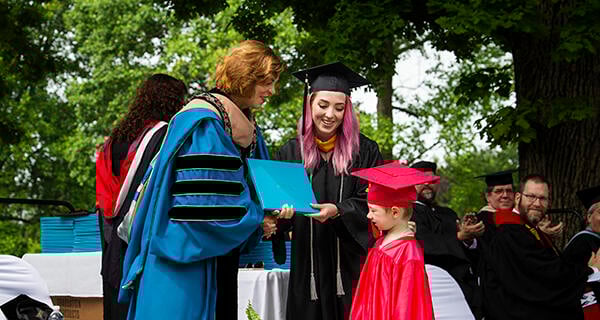
    “The kids are a blast—they’re a lot of fun and they bring a lot of joy to this campus,” Kough said. Dependents of program participants are given their own cap and gown to walk at graduation, and some children have returned to Wilson as legacies.

    Wilson College Single Parent Scholars alumnae say the program helped them achieve their dreams through providing housing and community.

    Program alumnae also note the value of living in community with other single parents who are working toward the same goal of earning a bachelor’s degree.

    “I’m proud of the women who have come in, perhaps giving up a lot. In some cases, they gave up houses and apartments and jobs with some immediate gratification of a paycheck, just putting all that aside for a dream that was down the road,” Kough said. “It’s hard to put into words but it certainly makes a lot of the struggle and the work absolutely worth it.”

    If your student success program has a unique feature or twist, we’d like to know about it. Click here to submit.

    Source link

  • Accreditors Sound Off on Executive Order

    Accreditors Sound Off on Executive Order

    President Donald Trump followed through on his campaign trail rhetoric Wednesday, taking aim at accreditors in an executive order that targets diversity, equity and inclusion standards; makes it easier for institutions to switch accrediting agencies; and opens the door for new entrants.

    In May 2023, Trump said in a campaign video that accreditors had failed “to ensure that schools are not ripping off students and taxpayers.” He promised to “fire the radical Left accreditors that have allowed our colleges to become dominated by Marxist Maniacs and lunatics,” adding that his administration would accept applications for new accreditors to “impose real standards.” Nearly two years later, he revealed his plan to “fire” accreditors in the executive order.

    The directive accused accreditors of failing to hold institutions accountable for mediocre graduation rates and for leaving students with “enormous debt.” Trump also charged accreditors with having “unlawfully discriminatory practices” related to DEI standards.

    In response, accrediting bodies have suggested that the executive order’s conclusions about their approach to DEI are sweeping and untrue, and argue that new accreditors should be held to the same standards as existing bodies. They also noted their willingness to work with the Trump administration.

    Higher education experts and support organizations were much sharper in their critiques, save for some conservative commentators who applauded the accreditation reforms as necessary.

    Accreditors Weigh In

    The Council of Regional Accrediting Commissions, which represents all major institutional accreditors, pushed back on Trump’s order in a statement Wednesday.

    “Accrediting agencies are instrumental to promoting quality assurance and protecting student and taxpayer investments in higher education,” C-RAC president Heather Perfetti, who also leads Middle States Commission on Higher Education, wrote in the statement. “While we firmly reject President Trump’s mischaracterization of accreditors’ role in the nation’s postsecondary education system, we stand ready to work with the Secretary of Education on policies that will advance our shared mission of enhancing quality, innovation, integrity, and accountability.”

    In an accompanying fact sheet, C-RAC disputed Trump’s claim that DEI standards conflict with state and federal law and that accreditors had failed to hold institutions accountable, among other allegations.

    Other accreditors released their own individual statements.

    “Contrary to claims of lax oversight, [the Accrediting Commission for Community and Junior Colleges] has taken necessary action against institutions that fail to meet ACCJC Standards and has seen continued improvements across the membership in financial stability, completion rates, and compliance with ACCJC Eligibility,” ACCJC president Mac Powell wrote on Wednesday.

    While the Higher Learning Commission quoted from the C-RAC letter, officials also emphasized in a Thursday statement that HLC’s standards “require compliance with all applicable laws.”

    “HLC’s requirements do not mandate decision making or preferences based on federally protected characteristics; prescribe any specific training or programming involving concepts related to diversity, equity or inclusion; nor require that an institution have elements as part of its curriculum involving concepts related to diversity, equity or inclusion,” agency officials wrote.

    The Northwest Commission on Colleges and Universities also emailed a statement from Interim President Jeff Fox on Thursday in which he emphasized that any changes to accreditation as proposed by the Trump administration must not weaken the core mission of accreditors.

    “Accreditation ensures institutions remain accountable to their missions and the students they serve,” Fox wrote in a statement. “NWCCU strongly supports thoughtful reform in higher education that expands access, improves outcomes, and supports all students. At the same time, such reforms must preserve the foundational safeguards of accreditation, which are critical for upholding academic quality, institutional integrity, and the responsible use of public resources.”

    The Western Association of Schools and Colleges Senior College and University Commission wrote in an emailed statement that it was assessing how the order might affect its standards.

    “WSCUC remains committed to assuring educational quality, institutional effectiveness, and the success of every student. Our Standards emphasize academic excellence and institutional integrity in service of student success and meaningful student outcomes. We are working diligently to provide clear guidance on our Standards for all accredited and candidate institutions, maintaining our focus on student success,” WSCUC officials wrote.

    (In December WSCUC rejected a proposal to drop DEI language from its standards.)

    In Trump’s Crosshairs

    The executive order also called out three organizations by name.

    The Trump administration specifically took aim at the American Bar Association’s Council of the Section of Legal Education and Admissions to the Bar, the Liaison Committee on Medical Education, and the Accreditation Council for Graduate Medical Education, over DEI standards.

    Trump accused the ABA accreditor of violating federal law by asking its members to demonstrate a commitment to diversity and inclusion, which includes efforts to recruit a diverse student body in terms of race, gender and ethnicity. (ABA, as noted in the executive order, suspended enforcement of its DEI standards in February.)

    Contacted by Inside Higher Ed, ABA declined to comment.

    Trump leveled similar criticism at LCME and ACGME, arguing that both maintained an inappropriate focus on diversity and that “standards for training tomorrow’s doctors should focus solely on providing the highest quality care, and certainly not on requiring unlawful discrimination.”

    LCME struck a conciliatory tone in an emailed statement.

    “In agreement with the Executive Order, the LCME shares the Administration’s goal that medical education programs and their graduates be of the highest caliber. In pursuit of this shared goal, the LCME will work with the Administration to provide requested information and to provide evidence of our ongoing commitment to outcomes-based evaluations of medical education program quality with the goal of producing outstanding physicians,” LCME officials wrote.

    An ACGME spokesperson wrote by email that the organization is “currently evaluating the President’s Executive Order and its implications for our accreditation standards.”

    A Range of Reactions

    Trump’s executive order spurred both positive and sharply negative reactions across the higher education sector.

    Andrew Gillen, a research fellow at the conservative Cato Institute, argued that the possible revocation of recognition of “accreditors that require their colleges to discriminate” was “on more solid ground” than “other anti-DEI initiatives from the [Trump] administration.” He also noted that the executive order directs Education Secretary Linda McMahon “to launch an experimental and voluntary quality assurance program,” arguing that “such an experiment could serve as a prototype for a much better accountability system in the future” if properly implemented.

    Career Education Colleges and Universities, a trade association for for-profit institutions, celebrated the executive order on accreditation, as well as another that landed the same day in which Trump promised federal investments in workforce development and to expand apprenticeships.

    “These long-overdue reforms will expedite America’s leadership in manufacturing and the skilled trades, greatly expanding the pipeline of qualified workers for in-demand jobs,” CECU president and CEO Jason Altmire wrote. “With these actions, President Trump has taken a significant step in providing increased opportunity for students to pursue their goals and life passions, while ensuring educational programs are held accountable for student outcomes.”

    Other groups were less sanguine.

    Officials at the Institute for College Access and Success blasted the executive order, arguing that it would open the door to accreditation shopping, allow inappropriate political pressures to seep into college classrooms and undermine data collection to improve student outcomes.

    “The federal government should not dictate what is taught in college classrooms or prevent universities from collecting data that will help them serve their students better,” TICAS president Sameer Gadkaree wrote. “Without data disaggregating performance by race, ethnicity, or sex, accreditors—along with researchers, evaluators, and policymakers—will lack the information they need to truly assess quality.”

    The American Association of University Professors also struck a sharply critical tone, casting the executive order as “yet another attempt to dictate” classroom instruction on college campuses.

    “Threats to remove accreditors from their roles are transparent attempts to consolidate more power in the hands of the Trump administration in order to stifle teaching and research. These attacks are aimed at removing educational decision-making from educators and reshaping higher education to fit an authoritarian political agenda,” AAUP officials wrote in a statement.

    The AAUP also noted the historic role of accreditors in policing predatory institutions, such as the president’s own Trump University, a for-profit institution that shut down in 2010. In 2017, a federal judge approved a $25 million settlement for 6,000-plus students who alleged they were misled by the then–real estate mogul. Trump did not admit to any wrongdoing in the settlement.

    “Accrediting agencies have protected both students and the government from wasting money on scam institutions—like Trump University—that engage in deceit and grift. Trump’s executive order makes both students and the government more vulnerable to such fraud,” AAUP officials wrote.


    Source link

  • “Inside Higher Ed” Co-Founders Win Prestigious CASE Award

    “Inside Higher Ed” Co-Founders Win Prestigious CASE Award

    The Council for Advancement and Support of Education has awarded Inside Higher Ed co-founders Scott Jaschik and Doug Lederman the 2025 James L. Fisher Award for distinguished service to education.

    The award “highlights individuals whose influence on education extends beyond a single institution.”

    Jaschik and Lederman left The Chronicle of Higher Education to launch Inside Higher Ed in 2004, turning it into “a vital resource for higher education leaders, offering insightful analysis and coverage of critical issues affecting the sector,” the award announcement said.

    “Doug and Scott’s work has increased public understanding of higher education and influenced institutional strategy and policy,” it read. “Their thoughtful reporting has made Inside Higher Ed a trusted source for higher education professionals worldwide.”

    Previous winners of the award include former CBS president Fred Friendly and Vartan Gregorian, who led both the New York Public Library and the Carnegie Corporation.

    “Scott Jaschik and Doug Lederman have provided colleges and universities with an accessible form of quality journalism, expected transparency and truth from leaders, and allowed the celebration of the impact education has on the lives of our students,” Teresa Valerio Parrot, principal of TVP Communications (and a frequent contributor to Inside Higher Ed), said in the CASE statement.

    Jaschik retired from Inside Higher Ed in 2023 and Lederman in 2024.

    The award will be presented at the CASE Summit for Leaders in Advancement in New York City in July.

    Source link

  • California State Bar Admits to Using AI for Exam Questions

    California State Bar Admits to Using AI for Exam Questions

    The State Bar of California sparked outrage after it admitted to using artificial intelligence to help craft some of its multiple-choice exam questions, the Los Angeles Times reported. The Monday announcement came after test takers complained of glitches and irregularities while taking the California bar exam in February.

    In a news release, the State Bar of California promised to petition the California Supreme Court to adjust test scores for those who took the exam in February. The release detailed that the test’s multiple-choice questions were mostly developed by the test company Kaplan, while some were recycled from the First-Year Law Students’ Exam and others were developed by ACS Ventures, the State Bar’s independent psychometrician, hired to assess questions. ACS Ventures used AI.

    But State Bar officials defended the veracity of the exam’s questions.

    “We have confidence in the validity of the MCQs to accurately and fairly assess the legal competence of test-takers,” State Bar executive director Leah Wilson said in the release. “Lessons learned are being incorporated into the July exam, and all future tests will include additional levels of independent review and validation.” 

    Test takers and law school faculty have reacted with shock.

    Katie Moran, an associate professor at the University of San Francisco School of Law who specializes in bar exam preparation, told the Los Angeles Times that the announcement was a “staggering admission.”

    “The State Bar has admitted they employed a company to have a non-lawyer use AI to draft questions that were given on the actual bar exam,” she said. “They then paid that same company to assess and ultimately approve of the questions on the exam, including the questions the company authored.”

    Source link

  • White House Partners With Hillsdale for Lecture Series

    White House Partners With Hillsdale for Lecture Series

    President Donald Trump is tapping a familiar institution, Hillsdale College, to produce a video lecture series for the U.S. sestercentennial, the administration announced on social media.

    “On July 4, 2026, we will celebrate 250 years of American Independence. The White House has partnered with @Hillsdale to tell our story of a rag-tag army defeating the world’s mightiest empire and establishing the greatest republic ever to exist,” the administration posted Tuesday.

    The first installment in the series, according to the post, was a seven-and-a-half-minute video featuring patriotic imagery and comments from Hillsdale president Larry Arnn, who emphasized the importance of knowing American history in order to commemorate the 250th anniversary. 

    In introducing the video series, Arnn cast Trump in the mold of Abraham Lincoln. 

    “Part of the purpose of this series of lectures is to remember. President Trump does this in part I think—I don’t speak for him—but the word ‘again’ is important to him. He has a famous slogan that I will not repeat here, but everybody knows what it is,” Arnn said. “He wants to do something again. Something [that’s] already been done, he wants to see it happen again.”

    Arnn argued that Trump’s campaign slogan, Make America Great Again, “places him somewhere near the politics of Abraham Lincoln,” who sought to build on the foundation laid by George Washington.

    The video focused on the Declaration of Independence and start of the Revolutionary War. The second installment in the series is about the Battles of Lexington and Concord.

    A Hillsdale spokesperson told Politico the college did not take “a dime of federal money” for the video lecture series, which it is providing in partnership with the White House and the Department of Education. (Hillsdale, a private, Christian institution in Michigan, does not accept federal financial aid.)

    The Trump administration also worked with Hillsdale at the end of the president’s first term. In early 2017, Hillsdale officials were part of a commission, chaired by Arnn, that produced the 1776 Report, a widely ridiculed document that academics dismissed as unserious scholarship. Critics argued the 1776 Report provided a whitewashed view of American history, omitted Native Americans entirely and had multiple citation issues.

    Source link

  • NSF Director Panchanathan Resigns

    NSF Director Panchanathan Resigns

    Sethuraman Panchanathan, director of the National Science Foundation, resigned Thursday after nearly five years at the helm. His resignation comes less than one week after he issued sweeping priority changes—including terminating funding for projects that focus on diversity, equity and inclusion or combating misinformation—at the independent agency that funds billions of dollars to nonmedical university research each year. 

    “I believe that I have done all I can to advance the mission of the agency and feel that it is time to pass the baton to new leadership,” Panchanathan wrote in a resignation letter, first reported by Science. “I am deeply grateful to the presidents for the opportunity to serve our nation.”

    Although it’s not immediately clear what prompted his resignation, Panchanathan is among the latest top federal officials who have resigned since President Trump started his second term in January. The administration has also fired thousands of other federal employees, including dozens at the NSF, and terminated many grants that don’t align with the agency’s new anti-DEI priorities. Additionally, Republican senator Ted Cruz of Texas has been targeting the agency for months, calling it a bastion of “a far-left ideology.”

    According to Science, even more changes are coming to the NSF. The Department of Government Efficiency reportedly told Panchanathan earlier this month to plan to fire half the NSF’s 1,700-person staff; the Office of Management and Budget reportedly told him that Trump only plans to request 55 percent of the agency’s $9 billion budget for fiscal year 2026. 

    “While NSF has always been an efficient agency,” he wrote in his resignation letter, “we still took [on] the challenge of identifying other possible efficiencies and reducing our commitments to serve the scientific community even better.”

    Trump picked Panchanathan, a computer scientist from India who previously worked as a top research administrator at Arizona State University, to run the agency during his first term in office. But soon after Panchanathan started his six-year term in 2020, voters rejected Trump’s bid for re-election, and most of Panchanathan’s work at the NSF happened under former president Joe Biden’s administration. 

    Under Panchanathan’s leadership, the NSF’s stated priorities have included increasing diversity in the STEM workforce, forming industry partnerships, job creation and broadening research opportunities for smaller universities and community colleges. In 2022, Panchanathan oversaw the creation of the NSF’s Directorate for Technology, Innovation and Partnerships, which is focused on “accelerating breakthrough technologies, transitioning these technologies to the market, and preparing Americans for better-quality, higher-wage jobs,” according to the NSF’s website

    Despite the second Trump administration’s quick and radical changes to some of those Biden-era policies, Panchanathan was seemingly adapting—up until his resignation Thursday—while many other scientists sound the alarm that Trump’s policies will hurt research and innovation. 

    In his statement on the NSF’s reoriented priorities last Friday, he said that any NSF-funded activities in support of “broadening participation” in STEM “must aim to create opportunities for all Americans everywhere” and “not preference some groups at the expense of others, or directly/indirectly exclude individuals or groups.”

    Source link