Tag: Career

  • Debt Collection on Defaulted Student Loans to Restart in May

    Debt Collection on Defaulted Student Loans to Restart in May

    J. David Ake/Getty Images

    The Education Department will resume collecting on defaulted student loans early next month, restarting a system that’s been on hold since spring 2020, the agency announced Monday.

    Starting May 5, the department will withhold tax refunds or benefits such as Social Security from borrowers who are in default. Later this summer, the department will begin garnishing the wages of defaulted borrowers, a move consumer protection advocates have criticized as out of control.

    About 38 percent of the nearly 43 million student loan borrowers are current on their payments, and a record number of borrowers are at risk of or in delinquency and default, the department said Monday. Borrowers default when they miss at least 270 days of payments.

    When the Biden administration restarted student loan payments in September 2023, it offered a one-year grace period for borrowers during which those who didn’t make payments were spared the worst financial consequences, including default.

    Research into borrowers who default and other data shows they typically fall behind on their payments because other loans take a higher priority or they can’t afford their payments, among other reasons. And borrowers in default usually don’t have the ability to repay their loans. A survey from the Pew Charitable Trusts found that unemployed borrowers were twice as likely to default compared to those who worked full-time. Additionally, borrowers who didn’t complete the education they took out loans to pay for are more likely to default than completers.

    “The folks who fall behind on their payments are those who are least well served by the higher education and repayment systems,” said Sarah Sattelmeyer, project director for education, opportunity and mobility in the higher education initiative at New America, a left-leaning think tank. “A lot of those folks did not receive a return on their higher education investment … These aren’t people who overwhelmingly do not want to pay their loans.”

    About 5.3 million borrowers have defaulted on their loans, and many have been in default for more than seven years, according to the department. Another four million borrowers are in “late-stage delinquency,” or 91 to 180 days behind on their payments. The department expects about 10 million or nearly one-quarter of borrowers to default by the fall.

    “We think that the federal student loan portfolio is headed toward a fiscal cliff if we don’t start repayment and collections,” a senior department official said on a press call Monday. “American taxpayers can no longer serve as collateral for student loans.”

    The official didn’t take questions, and a department spokesperson referred reporters to Education Secretary Linda McMahon’s recent op-ed in The Wall Street Journal. She’s also slated to appear on CNBC and Fox Business to discuss the restart in collections.

    In her public statements Monday, McMahon blamed the Biden administration and colleges for the current situation.

    “Colleges and universities call themselves nonprofits, but for years they have profited massively off the federal subsidy of loans, hiking tuition and piling up multibillion-dollar endowments while students graduate six figures in the red,” she wrote in the Journal.

    Beyond the immediate restart, the senior department official said the department is planning to work with Congress to fix the system so that students can afford their loan payments and to lower the cost of college.

    Former Biden administration officials, borrowers and debt-relief advocates have said that efforts to forgive student loans were a way to address systemic failures in the student loan system and to help vulnerable borrowers who were likely to never repay their loans.

    The department is planning a “robust communication strategy,” the senior official said, to spread the word to borrowers and share information about their options, such as enrolling in an income-driven repayment plan or loan rehabilitation.

    Currently, about 1.8 million borrowers have pending applications for an IDR plan, but the department intends to clear that backlog over the next few weeks, the official said. The department also is planning to email borrowers individually about their options. The outreach plan also includes extending the loan servicers’ call center hours on weekends and weeknights.

    Sattelmeyer, who worked in the Office of Federal Student Aid during the Biden administration, said it will be important to ensure borrowers have access to information and the tools such as IDR plans to either get out of or avoid default and then stay on track. She questioned whether the department has enough staff to restart collections effectively, given the recent mass layoffs at the agency.

    “The issue is that the system is in disarray right now and there have not been a consistent set of options available for borrowers at the same time that we’re turning back on collections,” she said. “At the end of the day, I think the most important thing is that it does not feel like we have the resources and the staffing in place to make this go smoothly and to ensure that borrowers have support and access to resources and tools.”

    Source link

  • USF Reimagines Academic Supports for Student Success

    USF Reimagines Academic Supports for Student Success

    Colleges and universities are home to an array of resources to help students thrive and succeed, but many students don’t know about them. Just over half (56 percent) of college students say they’re aware of tutoring and academic supports on campus, compared to 94 percent of college employees who say their campus offers the resources.

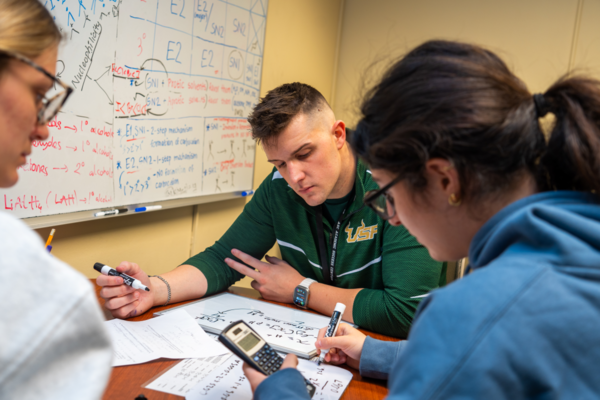
    At the University of South Florida, the Academic Success Center is a central office in the library that houses tutoring, the writing lab, peer mentoring and supplemental instruction, among other academic support offerings for undergraduates.

    Zoraya Betancourt became director of the center in 2020 during a challenging time, she said—in part because the center had to reintroduce itself to incoming students who had never been on campus and those who had their college experience disrupted by COVID-19.

    National data shows that students at large public institutions are spending less time studying outside of class now compared to during the 2018–19 academic year, and they are less likely to participate in a study group with their peers.

    “For me, it was like, OK, we are going to have to be very different. We can’t go back to who we were,” Betancourt said.

    Spurred by student data and feedback, Betancourt and her team led a remodel of the center to be more responsive to student needs and meet them where they are.

    Data-based decisions: To start, Betancourt partnered with Steve Johnson, a data scientist on the university’s Predictive Analytics Research for Student Success team, to build a dashboard of student data.

    “For many years the only data we had was how many students come and use the services how many times,” as well as some student identification data, Betancourt said. “I always thought we need more than that—we need to know more than that.”

    Now, Betancourt has access to student majors, colleges and the types of services they utilize to identify high-demand subjects and create responsive learning support schedules. The dashboard also connects the way services are tied to student retention and outcome goals.

    In addition to automating some work, the dashboard allows staff to engage students more directly. Each week, the system generates a report of new visitors to the center, which staff use to reach out and personally welcome students to the center and its services.

    A care-centered model: One trend that became clear in student interactions was the prevalence of stress in the student experience, Betancourt said. “Our tutors are coming to us and saying, ‘I have a student … and I don’t know how to help them.’”

    In response, the office adopted a care model for referrals that quickly connects support staff with other departments, reducing opportunities for students to fall through the cracks.

    “Within this referral system, we can go in and see if a student who is using our services says, ‘I really need to change my major and I don’t know what to do, I’m really stressing out over it,’” Betancourt said. “We’re able to go into the system and refer them directly to an adviser.”

    Larry Billue Jr. serves as the Academic Success Center point person for care management, guiding students to counseling support, financial aid, basic needs support and academic advisers or just sitting with the student to discuss how they’re feeling.

    Increased peer engagement: Another new feature of the ACS was supplemental instruction. While the academic intervention has been around for decades, it was new to the university and created opportunities for increased collaboration between staff and faculty to promote academic success, as well as create jobs for student employees.

    “That became more evident because we were hearing from students, ‘I need more than just tutoring. I like working with my peers,’” Betancourt said.

    At USF, supplemental instruction is called PASS, short for peer-assisted study sessions. The ACS is tracking student participation in PASS to gauge use.

    Students can also sign up to receive remote tutoring in select courses through the PORTAL (peer online resources for tutoring and learning), to supplement in-person opportunities when the office may be closed.

    The impact: Over the past year, the center has seen a 75 percent year-over-year increase in student use.

    Having a care team member on board has also been successful; Billue Jr. can physically walk a student across campus to the relevant office and make introductions as needed.

    “It’s been well received by students; they take him up on the offer and they’ll walk with him,” Betancourt said.

    The center has also expanded training for academic peer mentors to address not only study strategies and effective learning practices, but also how to make referrals to other offices.

    The biggest lesson Betancourt has learned: There are a range of opportunities to engage students and connect with them, understanding those opportunities just requires a deeper look at what students need.

    “We serve to engage students on campus, to engage students with each other, to engage students with faculty and with staff, and it’s looking at that a little bit closer to improve our services and how we can build on that,” Betancourt said.

    Do you have an academic intervention that might help others improve student success? Tell us about it.

    Source link

  • Half of Colleges Don’t Grant Students Access to Gen AI Tools

    Half of Colleges Don’t Grant Students Access to Gen AI Tools

    Transformative. Disruptive. Game-changing. That’s how many experts continue to refer, without hyperbole, to generative AI’s impact on higher education. Yet more than two years after generative AI went mainstream, half of chief technology officers report that their college or university isn’t granting students institutional access to generative AI tools, which are often gratis and more sophisticated and secure than what’s otherwise available to students. That’s according to Inside Higher Ed’s forthcoming annual Survey of Campus Chief Technology/Information Officers with Hanover Research.

    There remains some significant—and important—skepticism in academe about generative AI’s potential for pedagogical (and societal) good. But with a growing number of institutions launching key AI initiatives underpinned by student access to generative AI tools, and increasing student and employer expectations around AI literacy, student generative AI access has mounting implications for digital equity and workforce readiness. And according to Inside Higher Ed’s survey, cost is the No. 1 barrier to granting access, ahead of lack of need and even ethical concerns.

    Ravi Pendse, who reviewed the findings for Inside Higher Ed and serves as vice president for information technology and chief information officer at the University of Michigan, a leader in granting students access to generative AI tools, wasn’t surprised by the results. But he noted that AI prompting costs, typically measured in units called tokens, have fallen sharply over time. Generative AI models, including open-source large language models, have proliferated over the same period, meaning that institutions have increasing—and increasingly less expensive—options for providing students access to tools.

    ‘Paralyzed’ by Costs

    “Sometimes we get paralyzed by, ‘I don’t have resources, or there’s no way I can do this,’ and that’s where people need to just lean in,” Pendse said. “I want to implore all leaders and colleagues to step up and focus on what’s possible, and let human creativity get us there.”

    According to the survey—which asked 108 CTOs at two- and four-year colleges, public and private nonprofit, much more about AI, digital transformation, online learning and other key topics—institutional approaches to student generative AI access vary. (The full survey findings will be released next month.)

    Some 27 percent of CTOs said their college or university offers students generative AI access through an institutionwide license, with CTOs at public nonprofit institutions especially likely to say this. Another 13 percent of all CTOs reported student access to generative AI tools is limited to specific programs or departments, with this subgroup made up entirely of private nonprofit CTOs. And 5 percent of the sample reported that students at their institution have access to a custom-built generative AI tool.

    Among community college CTOs specifically (n=22), 36 percent said that students have access to generative AI tools, all through an institutionwide license.

    Roughly half of institutions represented do not offer student access to generative AI tools. Some 36 percent of CTOs reported that their college doesn’t offer access but is considering doing so, while 15 percent said that their institution doesn’t offer access and is not considering it.

    Of those CTOs who reported some kind of student access to generative AI and answered a corresponding question about how they pay for it (n=45), half said associated costs are covered by their central IT budget; most of these are public institution CTOs. Another quarter said there are no associated costs. Most of the rest of this group indicated that funding comes from individual departments. Almost no one said costs are passed on to students, such as through fees.

    Among CTOs from institutions that don’t provide student access who responded to a corresponding question about why not (n=51), the top-cited barrier from a list of possibilities was costs. Ethical concerns, such as those around potential misuse and academic integrity, factored in, as well, followed by concerns about data privacy and/or security. Fewer said there is no need or insufficient technical expertise to manage implementation.

    “I very, very strongly feel that every student that graduates from any institution of higher education must have at least one core course in AI, or significant exposure to these tools. And if we’re not doing that, I believe that we are doing a disservice to our students,” Pendse said. “As a nation we need to be prepared, which means we as educators have a responsibility. We need to step up and not get bogged down by cost, because there are always solutions available. Michigan welcomes the opportunity to partner with any institution out there and provide them guidance, all our lessons learned.”

    The Case for Institutional Access

    But do students really need their institutions to provide access to generative AI tools, given that rapid advances in AI technology also have led to fewer limitations on free, individual-level access to products such as ChatGPT, which many students have and can continue to use on their own?

    Experts such as Sidney Fernandes, vice president and CIO of the University of South Florida, which offers all students, faculty and staff access to Microsoft Copilot, say yes. One reason: privacy and security concerns. USF users of Copilot Chat use the tool in a secure, encrypted environment to maintain data privacy. And the data users share within USF’s Copilot enterprise functions—which support workflows and innovation—also remains within the institution and is not used to train AI models.

    There’s no guarantee, of course, that students with secure, institutional generative AI accounts will use only them. But at USF and beyond, account rollouts are typically accompanied by basic training efforts—another plus for AI literacy and engagement.

    “When we offer guidance on how to use the profiles, we’ve said, ‘If you’re using the commercially available chat bots, those are the equivalent of being on social media. Anything you post there could be used for whatever reason, so be very careful,” Fernandes told Inside Higher Ed.

    In Inside Higher Ed’s survey, CTOs who reported student access to generative AI tools by some means were no more likely than the group over all to feel highly confident in their institution’s cybersecurity practices—although CTOs as a group may have reason to worry about students and cybersecurity generally: Just 26 percent reported their institution requires student training in cybersecurity.

    Colleges can also grant students access to tools that are much more powerful than freely available and otherwise prompt-limited chat bots, as well as tools that are more integrated into other university platforms and resources. Michigan, for instance, offers students access to an AI assistant and another conversational AI tool, plus a separate tool that can be trained on a custom dataset. Access to a more advanced and flexible tool kit for those who require full control over their AI environments and models is available by request.

    Responsive AI and the Role of Big Tech

    Another reason for institutions to lead on student access to generative AI tools is cultural responsiveness, as AI tools reflect the data they’re trained on, and human biases often are baked into that data. Muhsinah Morris, director of Metaverse programs at Morehouse College, which has various culturally responsive AI initiatives—such as those involving AI tutors that look like professors—said it “makes a lot of sense to not put your eggs in one basket and say that basket is going to be the one that you carry … But at the end of the day, it’s all about student wellness, 24-7, personalized support, making sure that students feel seen and heard in this landscape and developing skills in real time that are going to make them better.”

    The stakes of generative AI in education, for digital equity and beyond, also implicate big tech companies whose generative AI models and bottom lines benefit from the knowledge flowing from colleges and universities. Big tech could therefore be doing much more to partner on free generative AI access with colleges and universities, and not just on the “2.0” and “3.0” models, Morris said.

    “They have a responsibility to also pour back into the world,” she added. “They are not off the hook. As a matter of fact, I’m calling them to the carpet.”

    Jenay Robert, senior researcher at Educause, noted that the organization’s 2025 AI Landscape Study: Into the Digital AI Divide found that more institutions are licensing AI tools than creating their own, across a variety of capabilities. She said digital equity is “certainly one of the biggest concerns when it comes to students’ access to generative AI tools.” Some 83 percent of respondents in that study said they were concerned about widening the digital divide as an AI-related risk. Yet most respondents were also optimistic about AI improving access to and accessibility of educational materials.

    Of course, Robert added, “AI tools won’t contribute to any of these improvements if students can’t access the tools.” Respondents to the Educause landscape study from larger institutions were more likely those from smaller ones to report that their AI-related strategic planning includes increasing access to AI tools.

    Inside Higher Ed’s survey also reveals a link between institution size and access, with student access to generative AI tools through an institutionwide license, especially, increasing with student population. But just 11 percent of CTOs reported that their institution has a comprehensive AI strategy.

    Still, Robert cautioned that “access is only part of the equation here. If we want to avoid widening the digital equity divide, we also have to help students learn how to use the tools they have access to.”

    In a telling data point from Educause’s 2025 Students and Technology Report, more than half of students reported that most or all of their instructors prohibit the use of generative AI.

    Arizona State University, like Michigan, collaborated early on with OpenAI, but it has multiple vendor partners and grants student access to generative AI tools through an institutionwide license, through certain programs and custom-built tools. ASU closely follows generative AI consumption in a way that allows it to meet varied needs across the university in a cost-effective manner, as “the cost of one [generative AI] model versus another can vary dramatically,” said Kyle Bowen, deputy CIO.

    “A large percentage of students make use of a moderate level of capability, but some students and faculty make use of more advanced capability,” he said. “So everybody having everything may not make sense. It may not be very cost-sustainable. Part of what we have to look at is what we would describe as consumption-based modeling—meaning we are putting in place the things that people need and will consume, not trying to speculate what the future will look like.”

    That’s what even institutions with established student access are “wrestling with,” Bowen continued. “How do we provide that universal level of AI capability today while recognizing that that will evolve and change, and we have to be ready to have technology for the future, as well, right?”

    Source link

  • Northwestern to Fund Research After Federal Freeze

    Northwestern to Fund Research After Federal Freeze

    Northwestern University is stepping in to fund ongoing research projects after the private institution received stop-work orders on nearly 100 federal grants, CBS News Chicago reported.

    The move comes after the Trump administration froze $790 million in federal research funding at Northwestern, which is one of multiple institutions across the U.S. hit by similar setbacks. Others include Harvard University, which had $2.2 billion frozen after it rejected changes demanded by the Trump administration in response to alleged antisemitism and harassment; Cornell University (more than $1 billion); Columbia University ($650 million); Brown University ($510 million); Princeton University ($210 million); and the University of Pennsylvania ($175 million).

    Northwestern, like others on the list, had a pro-Palestinian encampment protest on campus last spring, which prompted Congress to bring its president in for a hearing on antisemitism in May.

    Northwestern president Michael Schill and Board of Trustees chair Peter Barris told the university community in an email obtained by CBS News Chicago that the university still had not received formal notice that federal research funding had been pulled, but the university has received stop-work orders. They noted the university will continue funding on projects that received stop-work orders as well as other research threatened by the Trump administration.

    “The work we do is essential to our community, to the nation and to the world. Enabling this vital research to continue is among our most important priorities, and supporting our researchers in this moment is a responsibility we take seriously,” Schill and Barris wrote in the Thursday email.

    Northwestern is among the nation’s wealthiest universities, with an endowment recently valued at $14.2 billion. However, financial experts have cautioned against leveraging endowments to plug budget holes, prompting some wealthy institutions targeted by the administration to issue bonds or take out private loans.

    Source link

  • How Harvard Is Standing Up to Trump Means Everything

    How Harvard Is Standing Up to Trump Means Everything

    When it comes to fighting the current authoritarian threats coming out of the Trump administration, it’s important to remember that the symbol is the substance.

    Frankly, this is always true of politics generally, but it’s more true and more important than ever in this moment.

    We have an object example of this principle at work presently in the different responses from Harvard and Columbia when it comes to the threats to funding and demand for control by the Trump administration.

    Columbia appeared to capitulate, forging an “agreement” to take steps sought by Trump, ostensibly to address antisemitism on campus, but this fig leaf was unconvincing, and Trump himself quickly dropped the pretense, as we all understand he has no interest in combating antisemitism and every interest in sending signals of domination and stoking fear that turns into pre-emptive compliance from other institutions.

    Columbia looked unprincipled and weak in the face of the authoritarian threat, and the internal and external backlash against Columbia has been significant.

    In contrast, once Harvard received the Trump administration demands, it crafted a careful public response, producing multiple public-facing communications meant to speak to different audiences (press, public, students, faculty, alumni) with different needs, including a letter from Harvard president Alan Garber to the university community that invoked a shared responsibility to defend the core values of the institution specifically and higher education in general.

    To be fair, the call was much easier for Harvard than Columbia for several reasons. For one, Harvard had seen what happened to Columbia, where what looked like capitulation to outsiders still proved insufficient, because, again, Trump is interested in subservience, not reaching a mutual agreement. When Trump-world figures like JD Vance and Chris Rufo say they intend to destroy higher education, we should take them seriously.

    The Trump administration demands of Harvard were also so extreme—amounting essentially to a takeover of the university—that it had no choice but to resist and take every possible step to rally others to the fight. The public thirst for an institutional response to Trump’s lawless power grabs has been so great that even the New York Times editorial board has weighed in with its approval of Harvard’s actions and the university’s explicit pledge to stand against violations of the rule of law.

    An interesting bit of information in the form of an op-ed by Columbia history professor Matthew Connelly has come out that perhaps sheds additional light on Columbia’s actions. Writing at The New York Times, Connelly laments the hapless situation his institution finds itself in, first receiving blows from Trump and then being subjected to the “circular firing squad” of those who oppose Trump signing on to a collective boycott of Columbia.

    Connelly argues that we should not view Columbia as “capitulating” to Trump because, “In fact, many of the actions the Columbia administration announced on March 21 are similar to those originally proposed last August by more than 200 faculty members.”

    In other words, in agreeing with Trump, Columbia is only doing what it was possibly going to do anyway. Connelly goes on to argue that Columbia would never give in on key principles of institutional operations, and acting Columbia University president Claire Shipman has subsequently declared that Columbia would not sign any agreement that would “require us to relinquish our independence and autonomy as an educational institution.”

    Columbia’s actions look similar to those taken by some of the big law firms that have reached vaguely worded “agreements” with Trump that have them pledging not to do “illegal DEI hiring” and to donate tens or hundreds of millions of dollars to pro bono causes favored by Trump. At Talking Points Memo, Josh Marshall has gone digging into some of these agreements and found that there’s not much of specific substance to be found, the wording often so generalized and vague that it would be easy for firms to fulfill the agreements without doing anything beyond their usual patterns and practices.

    I’m not entirely unsympathetic to Connelly’s irritation or the decisions by the big law firms; they thought they could make Trump go away with a little performative minor supplication and get back to their substantive work.

    They’ve obviously misread the moment badly. I don’t know what more evidence we need to conclude that Trump intends to govern as an authoritarian. In both the cases of these law firms and Columbia University, the entire battle was over Trump being allowed to claim a symbolic victory over these institutions, to get them to be seen capitulating.

    It is strange to say that the symbolic fight is the genuine battle over principles, but this is obviously the case. Trump wants to make others fearful of standing up to his authoritarian aims, so he will simply defy the rule of law until someone forces the victims to fight. There is no choice but to test the administration’s resolve. Trump’s response on Truth Social following Harvard’s action shows a lot of bluster aimed at tearing down Harvard’s reputation with a lot of right-wing tropes, but the rhetoric shows how nonexistent his substantive case is.

    Any capitulation, real or even perceived, is a loss. Either choice will come with costs. Trump is going after Harvard’s funding and nonprofit status, and there will be significant turbulence for the university in the foreseeable future. But turbulence is not the same thing as a plane heading for the ground.

    Harvard had its legal strategy prepared before the fight even went public. Law and precedent appear to be on its side, though this is not a guarantee of success. Trump seems determined to hold back whatever money he can in his ongoing attempts at coercion.

    What we are learning is that there is no such thing as accommodating or reaching an agreement with an authoritarian project. Harvard’s stand is an important symbolic illustration of this, and because of the symbolism, it is proving to be hugely substantive.

    Let’s hope it’s only the first example of how to fight back.

    Source link

  • Five Ways to Use Group Work to Engage College Students (opinion)

    Five Ways to Use Group Work to Engage College Students (opinion)

    A few years ago, we hired an adjunct professor to teach a three-hour night class. After a few weeks, he came to us in frustration because he couldn’t get the students to discuss the material, and when he asked if there were any questions, they never responded.

    We probed more. Upon further discussion, we found that his course plan for each night was a three-hour lecture using PowerPoint slides; he didn’t take class planning beyond that. He felt overwhelmed by the responsibility for teaching the content of the course, but he didn’t know where to begin to get the students to contribute, ask questions and actively participate. We immediately put on our coaching hats, working to help him actively engage his class so that students had a deeper learning experience.

    We have heard about this frustration with getting students to participate actively in conversations with many other faculty members, in one-on-one coaching or during faculty development sessions. This often happens because faculty members are relying on lecture because that was the way their own professors taught and often the way they were trained to teach in their graduate programs.

    When moving into team projects, here are four key actions to take:

    1. Assign students to their teams in a way that is transparent and purposeful. Definitely don’t let students pick their own groups.
    2. Show students your grading rubric when you assign the project. We guarantee your students will be more successful when you do this.
    3. Train students on how to conduct peer evaluation, and include peer evaluations as part of the grade.
    4. Check in frequently with teams to see how they are progressing, and to answer any questions. Your students will appreciate this.

    In addition, the distractions that students face when preparing for class and during class time are increasing exponentially. Many are not doing the reading, some are on their phones, more than a few are shopping online during class and some just don’t have the bandwidth left to participate because of their very busy lives outside of school.

    How do we help these faculty members start to turn things around? In our experience as professors, group work is a great way to help instructors, new and experienced, to actively engage classes in discussions.

    The two of us have had extensive experience using in-class group work and executing in-depth team projects across many different disciplines. On most surveys, employers report that one of the top skills they want from college graduates is the ability to work in teams. Given what employers want, we’d of course like everyone to move away from lectures to engaging students with project-based teamwork. But not everyone is comfortable moving to a system that is so different from their current teaching methods.

    So how can we help our struggling adjunct faculty member, and other professors who want to more actively engage their students? Here are five quick and easy ideas to try.

    1. A think-pair-share exercise. This occurs when you pose a question, give students a brief time to reflect and think, and then ask them to turn to their neighbor and share their ideas. If you want them to develop their thoughts even more, you can ask them to turn to another pair and join them to discuss the issue (how many times you do this depends on the size of the class); you can even join up more dyads. Then ask the groups to report back with a few key points.
    2. Prepared discussion questions. Prepare a series of discussion questions based on the reading for that day or about a problem on which the class is working. Next, organize the class into four- or five-person groups. Give students a reasonable amount of time to work through the questions. While they are working, make sure to circulate through the groups, answer questions, make comments to illustrate some of the ideas and provide prompts to help them. At the conclusion of the discussion, have each group report on the highlights of their discussion and use the opportunity to give a series of mini-lectures on points they described and things they might have missed.
    3. Learning through discussion. Developed by William Fawcett Hill, this method is an even more structured approach to group work. We used this method in an upper-level theory course with excellent results. Learning through discussion puts considerable responsibility on a group leader, but if the groups rotate this leadership position across the group each week, it should even out the work (and as a bonus, it can help students develop team leadership skills). The leader synthesizes the material and initiates the discussion. The leader doesn’t teach the group but leads them through an eight-step process to identify major themes in the material and how it integrates with previous knowledge and application. Keeping students in the same groups helps them get used to working together and develop a sense of camaraderie. If you find you need to hold students accountable to help some less motivated ones prepare, you can collect their notes and have the group do quick peer evaluations.
    1. Each one, teach one. These sessions are a great way to have students cover a considerable amount of literature in what might be a psychologically safe environment for them. Divide your class into groups of four to five people. Then assign as many readings as you have members of the groups. Each person in the group completes one reading and then leads a group discussion about the article, partially teaching it to the other members of the group. You can have them accomplish all the outside readings during one week, or across multiple weeks, depending on your needs. Students learn from each other, and the one leading the discussion has to spend time learning to dissect one paper. 
    2. Team projects. Ad hoc group work as we’ve described in the first four ideas is a great way to help students to learn course material for the long haul and spark discussion. Team projects can do this even better. They do, however, take a little more work. Once you are comfortable with breaking the class into groups for ad hoc discussion, you can think about planning a team project. If you’ve never run one before, you may want to start with a small project, something short term (think three to five weeks). As you gain more experience and learn what works for you, your style, and your material, you can then move to bigger, longer projects.

    These are just a few of the ways that you can use groups, or even teams, to actively engage students in the material.

    Source link

  • Challenge of Leading Elite Institutions in Populist Age of Distrust

    Challenge of Leading Elite Institutions in Populist Age of Distrust

    In the face of the Gaza protests, presidents at the nation’s most prestigious campuses were caught between a rock and a hard place—and somehow managed to trip over both.

    Pressured on one side by students and faculty demanding moral clarity and action and on the other by donors, trustees and politicians insisting on firm leadership and institutional neutrality, they found themselves in a no-win situation.

    In attempting to balance these competing forces, they pleased no one, offering statements too vague to satisfy activists yet too equivocal to reassure their critics.

    Instead of navigating the crisis with principled leadership, many stumbled into a public relations disaster, alienating both their campus communities and external stakeholders.

    What should have been a moment for measured, thoughtful leadership instead became a showcase of hesitation, miscalculation and rhetorical gymnastics that satisfied neither moral conviction nor strategic pragmatism.

    Could Presidents Have Done Better?

    Yes, the leading university presidents could have handled the Gaza protests more effectively, but doing so would have required a combination of patience, strategic engagement and deft leadership—qualities that many struggled to summon under intense pressure.

    In his forthcoming memoir, former Harvard president Neil Rudenstine argues that navigating the crisis required time, strong relationships with key stakeholders, active faculty involvement and innovative problem-solving—qualities that were largely absent in the response.

    1. Patience: A Scarce Commodity in a Crisis

    Rudenstine’s call for patience underscores a fundamental challenge: Neither protesters nor institutional critics were willing to wait for careful deliberation. Protesters demanded immediate moral clarity and action, while external stakeholders—donors, trustees, politicians—expected firm and unequivocal leadership.

    University presidents, caught between these forces, often reacted hastily, issuing statements that satisfied neither side. A more patient approach would have required resisting the impulse to make rapid, reactive pronouncements and instead creating structured, ongoing dialogue with campus constituencies. It would have meant acknowledging the urgency of the moment while also emphasizing the need for thoughtful decision-making.

    1. Rapport With Stakeholders: The Perils of New Leadership

    Building trust with students, faculty, alumni, trustees and external critics is difficult in the best of times, and it is even harder for new university presidents who have not yet cemented their authority or personal relationships within their institutions. Many of the university leaders embroiled in the controversy were relatively new to their positions, inheriting polarized political environments without deep reservoirs of goodwill to draw from.

    In moments of crisis, long-standing relationships and credibility matter. Presidents who had not yet established rapport with key stakeholders found themselves viewed with suspicion from all sides, making it difficult to act decisively or persuasively. This underscores the importance of proactive engagement: University leaders must invest in relationship-building early, so that when crises inevitably arise, they have a foundation of trust to rely upon.

    1. Faculty Engagement: An Untapped Resource

    University faculty represent a deep well of institutional knowledge and intellectual expertise, yet in many cases, faculty were sidelined as presidents struggled to navigate the crisis.

    A more effective response would have involved drawing on faculty members—especially those with expertise in history, diplomacy, political science and conflict resolution—to help craft statements, advise on messaging and offer guidance on institutional policy.

    Faculty could have also served as intermediaries between student activists and administrators, helping to create structured conversations rather than performative clashes. By failing to engage faculty early, many presidents lost an opportunity to ground their responses in scholarly insight and institutional legitimacy.

    1. Creative Responses: Beyond the Standard Playbook

    The default approach to campus protests—issue a statement, enforce campus policies and hope the storm passes—was woefully inadequate in this case. Rudenstine’s emphasis on creativity suggests that university leaders needed to think beyond standard crisis-management tactics. Instead of simply trying to placate or rebuff different constituencies, presidents could have:

    • Convened structured debates or forums featuring scholars and public intellectuals with diverse perspectives, transforming conflict into an opportunity for rigorous academic engagement.
    • Established faculty-led committees to develop thoughtful, universitywide policies on how the institution engages with global conflicts, providing a long-term framework for future crises.
    • Created dedicated spaces for dialogue, ensuring that protesters had a platform for their voices to be heard while also setting clear boundaries on disruptions to academic life.

    The Leadership Test They Failed

    The Gaza protests revealed deep weaknesses in university leadership, exposing the inability of many presidents to navigate the complex intersections of free speech, academic integrity, donor pressure and campus activism. A better response would have required patience, trust-building, faculty engagement and creative problem-solving—qualities that were largely absent in the moment.

    The lesson for future leaders is clear: Effective university leadership is not just about managing crises when they arise but about laying the groundwork well in advance, ensuring that when the inevitable storm comes, the institution has the resilience and credibility to weather it.

    The High Cost of Leadership: Neil Rudenstine’s Harvard Presidency

    In a 2001 Harvard Crimson article entitled “The Final Word on Neil Rudenstine,” Catherine E. Shoichet, now a senior writer for CNN, offers a detailed account of that president’s tenure at Harvard—dissecting both his successes and the significant sacrifices and costs it exacted.

    Presidents are chosen to solve particular problems, and Rudenstine was tasked with two major challenges: overseeing Harvard’s first universitywide capital campaign and knitting together a sprawling, fragmented, disjointed institution. As president, he transformed the university’s financial standing—adding billions to its endowment—and initiated wide-ranging administrative reforms, including the re-establishment of the provost position.

    His most notable achievement was increasing Harvard’s endowment from roughly $4 billion to $19 billion in just 10 years, laying the financial foundation that sustains the university’s wealth today.

    However, the article also stresses the heavy personal toll these challenges took on him—a topic that Rudenstine’s own account surprisingly omits.

    Few presidents were better prepared for the job; he had been a respected faculty member, a productive scholar, a well-regarded dean of students, an effective provost and an extraordinarily hard worker. Yet his relentless focus on fundraising and institutional overhaul led to a three-month leave of absence in 1994, fueling rumors of a nervous breakdown. Remarkably, he went on to serve for another seven years after that difficult period.

    Shoichet notes that for all his accomplishments, including launching development of a new campus in Allston and revitalizing Harvard’s Afro-American Studies Department and establishing a then-novel interdisciplinary initiative in mind, brain and behavior, his presidency also resulted in a perceived disconnect between the administration and the student body—a criticism that has followed him since his Princeton days.

    His reserved public persona, which contrasted with the more overtly engaging styles of his predecessors, led to both admiration for his methodical, inclusive approach and criticism for being too detached from everyday campus life.

    The Shoichet article exposes the inherent trade-offs of his approach. Rudenstine’s intensive focus on high-stakes fundraising and administrative restructuring appears to have come at the expense of deeper engagement with the student body. His humility was confused with weakness and a lack of strong convictions. His leave of absence illustrates how the pressures of managing an institution as vast and complex as Harvard can affect even the most capable leaders.

    This duality—the balance between transformative success and the personal, institutional costs—forms the crux of Shoichet’s argument.

    Her narrative situates Rudenstine within a broader historical context. By comparing his tenure with those of former Harvard presidents such as Nathan M. Pusey and Derek Bok, Shoichet argues convincingly that the challenges Rudenstine faced were unique to a new era of higher education—one marked by rapid expansion, increased institutional complexity and a heightened focus on financial management.

    Despite his remarkable achievements, Rudenstine never garnered the same level of acclaim as his illustrious predecessors. In much the same way, many of his successors—including Lawrence Summers, Lawrence Bacow and Claudine Gay—have often been met with ambivalence or even disdain.

    The reality is that leading an institution as formidable as Harvard has become nearly impossible. It is no wonder that the average tenure of college presidents nationwide has shrunk from around eight years to just about five—hardly enough time to make a lasting impact.

    Rudenstine’s legacy, therefore, is not simply measured by his achievements but by the enduring questions it raises about the nature of leadership in a modern academic institution.

    The Daunting Realities of University Leadership: A Seat of Prestige, Not Power

    We often imagine university presidents as powerful figures—intellectual stewards shaping the future of higher education. But Rudenstine’s Our Contentious Universities flips this perception on its head. He’s not speaking truth to power; he’s speaking truth about power—revealing that university presidencies are as much about constraint as they are about command.

    The title of university president carries an air of authority, but Rudenstine’s message is clear: The power of the office is often more symbolic than substantive. Instead of wielding control, presidents juggle competing interests, manage crises and navigate the impossible demands of faculty, students, donors and politicians. The real truth? The presidency is more burden than throne.

    Holding the most prestigious seat in higher education, Rudenstine isn’t telling us how to wield power—he’s telling us how little of it university presidents actually have. His book dismantles the myth of the omnipotent academic leader and replaces it with a far grittier reality: that influence is fragmented, authority is constrained and leadership is often just crisis management in an ivory tower.

    If “speaking truth to power” is about confronting authority, Our Contentious Universities reveals an unexpected reversal: Often, those in power are the ones struggling to be heard. Rudenstine lays bare the paradox of university leadership—an office that looks commanding from the outside but feels impossibly constrained from within.

    The real work of a university president is not about wielding authority but about navigating limits, managing expectations and negotiating between forces that are often beyond their control.

    The power we imagine? It’s largely an illusion.

    Why University Presidents Have Less Power Than We Think

    Through a mix of historical analysis, personal experience and candid reflection, Rudenstine argues that the role of the modern university president is far more constrained than many outsiders assume.

    Three overarching arguments structure his book:

    1. The Paradox of Institutional Wealth and Administrative Complexity

    Elite universities have never been wealthier, yet they have become significantly more challenging to manage. The sheer scale and bureaucratic complexity of modern research institutions—coupled with the decentralized governance structures of many elite universities—make it extraordinarily difficult for a president to assert a unifying vision.

    Harvard, perhaps the most extreme case, operates under the philosophy of “every tub on its own bottom,” meaning that each of its schools, institutes and centers manages its own budget and academic affairs with substantial autonomy. Its endowment, divided into over 11,000 different funds with various restrictions, further complicates efforts to mobilize financial resources for cross-university initiatives.

    But Harvard is not unique in this regard—many elite institutions lack a clear common mission or identity beyond their reputation for excellence. As a result, university presidents often find themselves in the role of coordinators rather than decision-makers, navigating a complex web of faculty interests, donor expectations and institutional traditions.

    1. Student Protests: A Recurring but Intensifying Challenge

    Student activism has long been a defining feature of American higher education, and today’s campus protests are in many ways a continuation of past movements—whether over free speech, civil rights, the Vietnam War, South African apartheid, a living wage and labor rights, or fossil fuel divestment.

    Rudenstine reminds readers that campus unrest is not a new phenomenon and, in many cases, past protests were just as contentious as, if not more so than, those of today.

    However, he argues that contemporary campus protests present a unique set of challenges that make them especially difficult to resolve.

    First, the media and political spotlight on higher education is more intense than ever before, amplifying every controversy into a national debate. Social media accelerates and inflames conflicts, often distorting the reality of what is happening on the ground.

    Second, outside political actors—including legislators, donors and advocacy groups—now intervene more aggressively in campus affairs, using protests as flash points in larger ideological battles over academic freedom, free speech and institutional neutrality.

    Third, many of today’s most contentious issues—such as foreign conflicts, racial justice and free speech—extend far beyond the authority of any university administration. Unlike past movements that targeted specific institutional policies (e.g., divestment from apartheid South Africa), today’s protests often demand action on global or national issues that university leaders have little power to directly influence.

    1. The Constraints of the University Presidency

    While university presidents are often seen as the face of their institutions, their actual power is far more limited than public perception suggests. Much of their time is spent off campus, engaged in fundraising and alumni relations, rather than in direct governance. This distance often creates a perception—among both students and faculty—that they are out of touch with the daily realities of campus life.

    Moreover, while presidents are expected to be moral leaders, crisis managers and public intellectuals, they operate within institutional structures that limit their ability to enact significant change. The vast majority of academic decisions are made at the department and faculty level, not by the president’s office.

    Their financial resources, while seemingly vast, are often constrained by donor restrictions and endowment policies. And while they are expected to foster dialogue and intellectual engagement, they must also navigate intense political and ideological pressures that make consensus-building nearly impossible.

    The Unwinnable Presidency in a Populist Age of Distrust

    Leading an elite university in a populist era of distrust is an unwinnable job. University presidents are expected to be moral leaders, crisis managers and public intellectuals—yet they wield less power than ever before. They must balance the demands of faculty, students, donors, trustees, politicians and the public, all while navigating an institutional landscape that is more fragmented, more scrutinized and more politically charged than at any point in recent history.

    Between a rock, a hard place and a social media firestorm, university leaders face an impossible equation. Caught between student activists demanding moral clarity, faculty insisting on academic freedom, donors expecting institutional stability and politicians eager to score ideological points, they must navigate a minefield with no safe path forward.

    Every decision, no matter how carefully considered, is met with outrage from one side or another. When every choice is controversial, the safest option is still the wrong one.

    Speaking truth to power is one thing—leading an institution when you are the power, yet have none, is another. A university president’s job isn’t to lead; it’s to survive. The modern presidency is less about shaping the intellectual future of a university and more about managing crises, defusing conflicts and enduring public scrutiny.

    Part fundraiser, part diplomat, part scapegoat, today’s university leader embodies a paradox: prestigious, powerful and profoundly constrained.

    The university presidency is a job where everyone expects everything, but no one is ever satisfied. And yet, the ambitious vie for this job. The challenge for future university leaders is not just to weather the storm but to prove that, even in an era of distrust and division, higher education still has a role to play in the pursuit of truth, knowledge and the public good.

    Reclaiming the Visionary College Presidency: The Legacy of the Big Three B’s

    At a time when the university presidency has become synonymous with crisis management, political crossfire and institutional paralysis, we would do well to reclaim an older vision of academic leadership—one embodied by the Big Three B’s: Derek Bok, William Bowen and Kingman Brewster.

    These men were not just administrators; they were visionaries. They understood that a great university is not simply a collection of departments, endowments and buildings, but a living intellectual community that requires bold leadership, principled decision-making and a deep appreciation for the institution’s unique identity.

    Unlike today’s university presidents, who often appear hemmed in by competing pressures, Bok, Bowen and Brewster exuded a sense of command. They were coalition builders who understood how to navigate the tensions of their time—not by appeasement or retreat, but by articulating a clear and compelling vision for their institutions.

    They did not shy away from controversy; they faced it head-on, using their moral authority and intellectual gravitas to persuade rather than merely pacify. Their leadership was not about survival—it was about transformation.

    The Power of Institutional Identity

    One of the defining strengths of these presidents was their deep understanding of what made their universities distinctive. They did not try to turn their institutions into all-purpose, generic centers of higher learning. Instead, they leaned into their unique strengths and traditions, reinforcing the core values that defined them.

    • Kingman Brewster at Yale championed the arts and humanities, elevating Yale as a beacon of intellectual and cultural leadership. He understood that Yale’s prestige was not just in its research output, but in its commitment to a broad, humanistic education that shaped future leaders in the arts, government and public service.
    • William Bowen at Princeton preserved and reinforced the university’s distinctive commitment to undergraduate education, mentoring and close faculty-student engagement. He saw Princeton as the ideal blend of a research university and a liberal arts college, where students could experience the best of both worlds.
    • Derek Bok at Harvard expanded the university’s reach and redefined its role in shaping society. He recognized Harvard’s unique position as an institution that was not just educating students, but cultivating thought leaders in law, government, business and the sciences. Bok’s presidency was marked by efforts to bring in a broader, more diverse array of scholars and students who were shaping the world outside the academy.

    These men understood that universities are not interchangeable—they have distinctive missions, histories and cultures that must be nurtured, not diluted. They resisted the impulse to make their institutions all things to all people and instead worked to sharpen and deepen their defining strengths.

    Leadership With Gravitas and Moral Authority

    What made the Big Three B’s remarkable was not just their institutional savvy, but their personal presence and sense of moral authority. These were men who commanded respect, not because of their titles, but because they embodied the very ideals their universities stood for. They were not timid bureaucrats, nor were they detached figureheads. They were intellectuals, statesmen and educators who carried themselves with the weight of their institutions behind them.

    More importantly, they were unafraid to make tough decisions and stand firm in the face of opposition. Brewster took a bold stance in support of civil rights and coeducation and against the Vietnam War, even when it made him a target of political backlash. Bowen helped lead Princeton through transformative changes in financial aid and faculty governance, navigating opposition with both decisiveness and diplomacy. Bok spearheaded Harvard’s expansion into applied learning and professional education, while also defending the university’s core commitment to academic freedom.

    Each of these presidents had the ability to thread the needle—to stand up for their principles without alienating key constituencies. They were neither populists nor technocrats; they were strategic leaders who understood how to bring faculty, students, trustees and alumni into alignment around a shared purpose.

    Reclaiming a Lost Model of Leadership

    The contrast between the Big Three B’s and today’s university presidents is stark. Where they projected confidence and authority, many modern university leaders appear cautious and reactive. It’s quipped that their present-day counterparts can’t go to the bathroom without consulting their general counsel. Where the Big Three articulated grand visions for their institutions, many of today’s presidents are consumed by damage control. Where they commanded the respect of faculty and students, today’s leaders often seem disconnected from both.

    Of course, the world of higher education has changed. Universities are larger, more complex and more deeply entangled in political and cultural battles than ever before. But that is precisely why we need a new generation of university presidents who can reclaim the mantle of true leadership.

    The university presidency should not be reduced to a balancing act of donor relations, media messaging and political risk management. It must once again become a platform for vision, courage and institution-building.

    The lesson of the Big Three B’s is clear: Great universities do not thrive under timid leadership. They flourish when they are guided by bold, intellectually rigorous and morally grounded presidents who understand both the weight of their office and the enduring value of higher education. The future of our great universities depends on whether we can find leaders who, like Bok, Bowen and Brewster, embody the very ideals their institutions were meant to uphold.

    Steven Mintz is professor of history at the University of Texas at Austin and recipient of the AAC&U’s 2025 President’s Award for Outstanding Contributions to Liberal Education.

    Source link

  • What to Know About Trump’s Funding Threats to Colleges

    What to Know About Trump’s Funding Threats to Colleges

    Over the course of just 13 weeks, President Donald Trump has made it clear that he’ll use billions of dollars in federal grants and contracts, primarily for research, as a lever to force colleges and universities to bow to his agenda and increase the representation of conservative ideology on their campuses.

    The cuts don’t follow any typical investigative process and sometimes lack clear explanations or legal justifications. And such an aggressive ad hoc strategy is one that that many higher education lawyers, policy analysts and administrators say could reshape postsecondary education for years to come.

    “It’s certainly unprecedented and deeply disturbing,” said John King Jr., former secretary of education under President Obama and current chancellor of the State University of New York system. Trump’s actions “really threaten the long-standing partnership between the federal government and higher education in the pursuit of both innovation and economic mobility.”

    Trump and his advisers have signaled their intent to crack down on “woke” higher education but haven’t said how they will do so. Instead, a cadre of conservative policy analysts plotted how to leverage other agencies and sources of funding, beyond access to the $130 billion distributed annually in federal student loans and Pell Grants.

    “At the beginning it felt like I was the only one fighting,” Chris Rufo, an influential anti-DEI advocate and a member of the Board of Trustees at New College of Florida, said on The Daily, a New York Times podcast last week. “Now, fast-forward five years, [and] some of the ideas that I had cobbled together have suddenly become reality, they’ve become policy, they affect billions of dollars in the flow of funds.”

    But efforts to send colleges and universities into “an existential terror,” as Rufo put it, have required the Trump administration to move at a dizzying pace and leverage multiple mechanisms that most higher education lawyers, policy analysts and officials say are incredibly novel.

    To catch up, here are four things you should know about Trump’s funding threats to colleges and universities.

    Broad Scope of Attack

    A large part of what makes the Trump administration’s current push to crack down on colleges and align their actions with his agenda so unprecedented, experts say, is its sheer magnitude, from the amount of money at risk to the number of investigations involving various agencies.

    The Education Department has historically taken the lead on holding colleges accountable, leveraging institutions’ eligibility for student aid programs to force compliance. But this time around, it’s an all-hands-on-deck effort with a magazine of federal programs used as ammunition.

    At least four departments beyond Education—Justice, Defense, Energy and Health and Human Services—have also been involved, cutting off scientific research grants, which are typically considered immune from political attacks.

    James Nussbaum, who leads the higher education practice at the Indiana law firm Church Church Hittle + Antrim, said that as Trump took office he often warned clients to be aware of any contracts they held with the Department of Education. But some of the cuts caught even him by surprise.

    “People had their focus on one ball in the air and hadn’t seen that these others might be affected,” he said.

    To review federal funding for colleges that it believes have violated students’ civil rights, the Trump administration launched a federal antisemitism task force that spanned several agencies and has led some of the most public actions against colleges so far.

    The group launched reviews of Columbia and Harvard Universities, demanded sweeping changes and froze $400 million and $2.2 billion in grants and contracts, respectively. The funds at risk support a wide range of research at the universities, including on cancer, tuberculosis and the effects of environmental pollution on health. Faculty have warned of dire consequences if the freezes continue.

    In addition to Columbia and Harvard, Northwestern, Cornell, Brown and Princeton Universities have had some of their federal funds frozen, though it’s not clear why or who made that decision and under what legal authority. (The Wall Street Journal reported that White House staff were behind the Cornell funding freeze.)

    The Trump administration also froze $175 million at the University of Pennsylvania to penalize administrators for allowing a transgender athlete to swim on the women’s team three years ago.

    What the Trump administration is doing enters a “whole new territory,” Princeton president Christopher Eisgruber said in a recent interview with The New York Times.

    Starting with the freeze at Columbia, “the government was using its tremendous power over research dollars to try to control what a private university was doing in terms of matters that are generally considered part of academic freedom,” Eisgruber added. “There’s a very fundamental threat here right now … to America’s research universities that anybody who cares about the strength of this country, our economy, our prosperity, our security, our health should be worried about.”

    Colleges also face other threats from the federal government. The Department of Education has launched or actively pursued at least 97 investigations concerning alleged antisemitism and DEI programs, which could imperil those institutions’ access to federal financial aid. And the National Institutes of Health and the Department of Energy moved to cap reimbursements for costs indirectly related to research, which, if enacted, could cost colleges billions.

    Bypassing Standard Processes

    Adding to the difficulty for colleges, the Trump administration is largely ignoring regulatory standards and procedures when it cuts funding.

    For instance, cabinet members have broadly used the term “investigation” to describe the ways they are cracking down on colleges. But in most cases, the review process has lasted only a few days and resulted in little to no evidence of the alleged violation. Often, universities have been presented with a list of ultimatums or policy changes they must make in order to avoid a funding freeze or restore their funds.

    The stop-work orders that have been issued so far have been “arbitrary” and “often unsupported,” said King of SUNY. If there is rationale, it often “seems disingenuous.”

    And some universities have yet to receive a formal notification about a funding freeze. For example, Brown officials have not received any official word of a rumored $510 million cut.

    “We have nothing to actually substantiate what’s being reported,” Brian Clark, Brown’s vice president for news, told Inside Higher Ed in an email.

    For civil rights investigations, investigations typically begin when the Education Department notifies an institution of the allegations made in thorough detail, experts explained. Then, the Office for Civil Rights conducts an in-depth investigation that includes talking to students, faculty and staff and gathering documents or data regarding the allegations. That process allows colleges to voluntarily resolve the investigation and negotiate a settlement with the department. The resulting agreement usually outlines various changes that colleges must make to comply with federal law. Some conservative critics have said those settlements or resolution agreements were “toothless.”

    If the parties cannot agree or a college refuses to comply with the federal law, the department could sue a college. But that’s rare, and the Education Department has never pulled a college’s federal funding over civil rights violations—a move that’s considered a nuclear option.

    Brendan Cantwell, a higher education professor at Michigan State University, noted that despite the quick turnaround, the administration’s investigations do, at times, parallel the motivations of traditional reviews. But what makes this approach so unprecedented and unlawful, in his mind, Cantwell said, is its “unmeasured” and “blanketed” nature.

    “So while there are precedents and similar examples in the past, beyond very superficial similarities, the similarities fall apart,” he said.

    Breaking Contract Law

    The means by which Trump is terminating grants and contracts is also novel, a lawyer who specializes in government contracts told Inside Higher Ed.

    Generally, the only people who have authority to take contract-based actions on behalf of the United States are contracting officers or agreements officers, said Jayna Marie Rust, a partner at Thompson Coburn LLP. But under the Trump administration, it’s often unclear if this is the case, especially with the Department of Government Efficiency reviewing contracts and grants and touting decisions to cancel millions in agreements.

    Rust said she has not seen any of the direct communications between government agencies and universities regarding contract/grant termination that are due to the identity of the institution and therefore can’t say if the notifications come from contracting or agreements officers. But notifications coming from others is something she has seen in other terminations that schools are receiving.

    “But to the extent these communications are not coming from the agreements officers or contracting officers, that is unusual,” Rust said.

    And much like the procedure for investigating and addressing policy violations, the government is supposed to ensure due process before excluding schools from receiving federal funds, which is effectively what the terminations have done. The Trump administration has seemingly bypassed those steps. (Several faculty groups and associations have sued to restore the canceled funding.)

    Even when the administration has completed a process to determine whether an entity can be excluded from receiving federal funds, contracting and agreements officers also often conduct a risk analysis to see if the benefit of letting that entity complete a contract or grant outweighs the benefit of cutting ties (which could result in losing the benefit of work that’s already completed), Rust said. It appears that the Trump administration also hasn’t gone through that review.

    More Than Money at Stake

    As a result of the sweeping scope of Trump’s attacks and the lack of precedent, the risks for colleges and universities are more than financial, higher ed experts say.

    Yes, losing billions of dollars in federal funding is a problem, and not one that elite institutions’ endowments can solve. But more than that, what’s at risk is the core mission and ethos of American higher education, King said.

    “From the technology inside of your phone to the treatment you may receive at your doctor—all of that can be traced back to research conducted at America’s higher ed institutions. And it’s under threat,” he said.

    And though the dollar amounts of funding pulled from smaller private liberal arts institutions and state universities may be “more modest,” they’re still significant, he added. “For those researchers, it’s heartbreaking, and it will ultimately harm economic development and national security.”

    The full impact of these funding freezes is not yet clear. But until the courts weigh in, colleges are stuck between a rock and a hard place, said Nussbaum, of Church Church Hittle + Antrim.

    “Schools are trying to make that decision of how can we make decisions consistent with our mission and values in a way that’s not going to get us called out?” Nussbaum said. “I think we’ll have a little bit more certainty on where the means and bounds of the discretion of the executive agency is in the funding. But I think in the meantime, a lot of schools are trying to wait out that clock.”

    Source link

  • Welcome, WINNERS, to Prosperity U (opinion/satire)

    Welcome, WINNERS, to Prosperity U (opinion/satire)

    Dear Excepted Student,

    Congratulations on your admission to Prosperity University’s class of 2026. We’re going to get you in and out of here faster and more efficiently than any of those LOSER Colleges that look like total DUMPS. You’re going to love it here. We’ve got the Best campus, the most beautiful Campus, the likes of which you’ve never seen. People are saying it’s the most Luxurious educational facility in the history of education, maybe ever.

    Our professors? Top-notch people, very Smart people. Some of the smartest people in the world, actually. They know things other professors don’t know. They teach things other universities are afraid to teach, believe me. And guess what? Our provost is None other than Neon Mush! That’s right, the greatest BUSINESS GENIUS OF OUR TIME is running our academic operations. He’s going to send our education to Mars, LITERALLY to Mars!!!

    And let me tell you, we don’t do this Ridiculous “tenure” thing here. No way. That’s for crooked lazy professors. At Prosperity U, you perform or you’re fired! Simple as that. “Academic freedom”? Just another excuse for Woke Liberal Indoctrination!!!! OUR PROFESSORS TEACH WHAT WE TELL THEM TO TEACH and it’s beautiful, believe me.

    The curriculum at Prosperity is unlike anything you’ve ever seen before. We don’t waste time with the Boring stuff, failing subjects like “science” or “medicine” or “math.” No one reads anymore, so you don’t even Need to buy books. Useless BS. We teach our students to make money. You want art? We do the Art of the Deal. WINNING!

    And let me tell you, you know, some very good people have been so discriminated against in this country. Very Good people. It’s terrible, just Terrible!! We just pick the best students, and if they happen to be the wealthy good-looking ones with great hair from the best Richest families with very big hands, which they Usually are, then that’s just how it is. That’s just how Winning works.

    We don’t have any failing students here. Zero. If you’re not WINNING, you’re not trying. Everyone at the U of P is a winner. That I can tell you. If students don’t fit in with our values? They’re fired! We don’t need whiners. You either get with the Program or you’re out, folks. We have no tolerance for losers or troublemakers.

    Let me tell you about our athletics program—it’s huge, just TREMENDOUS. We only play AMERICAN sports here, none of that soccer nonsense from shithole countries. Our football team? Undefeated. We’re winning bigly. Other schools are Terrified to play us, believe me. Nobody kneels during our national anthem, that I can Guarantee you. And we don’t have any of these women’s sports taking resources away from real sports. Title IX? Neon Mush is taking care of that. Our cheerleaders are the most Beautiful women you’ve ever seen, the most beautiful. Many people say they could be models. They love me. They’ll let you do anything to them!

    The tuition? It’s not Cheap, folks. Quality costs Money. But it’s worth every penny, every single penny. And when you graduate—which everyone does, because we fire them if they don’t show up, or sometimes, even if they do—we have a 100% graduation rate, huge crowds, biggest crowds you’ve ever seen, it’s amazing—you’ll be so successful. SO SUCCESSFUL! You’ll be tired of success.

    The other universities? Total Disasters. Sad! They’re Jealous of us, very jealous. But that’s OK. We’re making education great again, and they can’t stand it. The American people have lost faith in these liberal indoctrination camps they call “universities.” At Prosperity University, we teach Real skills for real Americans who want to stop this country from becoming a BUNCH of losers. NO SAFE SPACES HERE! No trigger warnings. We’re not afraid to pull triggers!

    Believe me, folks. Believe me.

    Sincerely,

    THE PRESIDENT

    Prosperity University

    Rachel Toor is a professor of creative writing at Eastern Washington University in Spokane and a contributing editor at Inside Higher Ed.

    Source link

  • Mentoring in an Era of Uncertainty for Higher Education

    Mentoring in an Era of Uncertainty for Higher Education

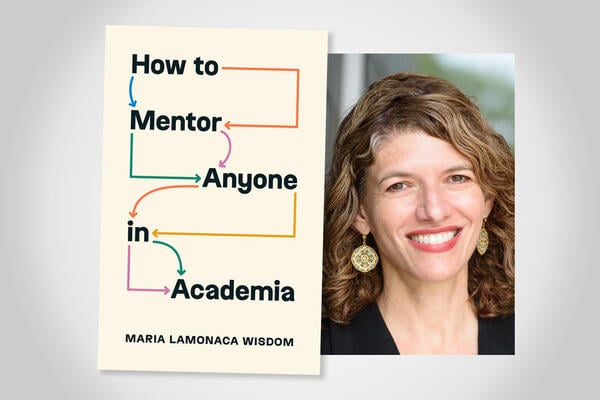
    More than half of college students believe professors should take on a mentoring role to support their career development, according to a 2024 Inside Higher Ed survey. And a 2023 report from the American Council on Education showed that informal and formal mentoring can broaden pathways to graduate education for students, particularly those from historically marginalized backgrounds.

    But few faculty members receive formal training on how to be an effective mentor while also balancing teaching, research and publishing responsibilities. That’s only getting more difficult as faculty navigate a changing—and increasingly uncertain—higher education landscape marked by intensifying political scrutiny, ever-shrinking budgets, increased workloads and fewer academic job prospects for their students.

    “The conditions for mentoring continue to deteriorate,” said Maria Wisdom, assistant vice provost for faculty advancement at Duke University. “At the same time, there’s never been a greater need for truly impactful mentoring, and I think there has never been a moment at which it’s clear that we need to learn to support people without having all the answers.”

    After a decade working as an English professor at Columbia College, Wisdom turned her focus to coaching early and midcareer faculty across disciplines. She also leads mentoring workshops for faculty looking to improve their mentorship of junior researchers, scholars and colleagues.

    Last month, she published How to Mentor Anyone in Academia (Princeton University Press), a practical guide aimed at demystifying what it means to be a mentor. Inside Higher Ed spoke with Wisdom about some of the advice she lays out in the book and how it may help mentors—and mentees—navigate the higher education sector’s uncertain future.

    This interview has been edited for length and clarity.

    Q: How did your experiences as a mentee and mentor shape your approach to mentoring?

    A: Looking back, the mentorship I received was only OK. Every now and then it was really helpful. But I can also think of multiple instances in my professional trajectory where things could have gone differently and better if I would have had more effective mentoring.

    Many years later, after I had left the professoriate, I was working at Duke—first as a graduate adviser and then as a certified coach, working first with grad students and then with faculty. It was through that professional training—which was a very different kind of training than what I received in my graduate education—that I was able to understand what it means to be a professional helper and how many different roles we can occupy when we’re professional helpers. And all of those roles overlap in some way with mentoring.

    That awareness helped me realize that the majority of faculty mentors just don’t have the time or bandwidth or resources to be thoughtful about those role distinctions and what it means to actually mentor somebody in a certain context at a certain time.

    Q: In the book you write about three different approaches to mentoring: mentoring with a heart, a backbone and like a coach. Can you describe the difference between those approaches and how mentors can employ all three?

    A: They’re all connected and they’re all important.

    All effective leaders need to have both backbone—which means firmness, rigor and consistency—and heart, which is empathy, understanding and kindness. A good leader balances these two things out at the same time, and rarely is a leader a natural in both areas.

    Maybe they aren’t good at giving feedback, don’t establish clear expectations at the outset of the relationship or don’t have a system of regular check-ins with their mentee. Those are all elements of backbone. Or maybe they’re not putting enough heart into it. They may set clear expectations and give regular feedback, but they’re kind of insensitive to the needs of the mentee, or they’re just not very empathetic, and so I think you need to have both.

    And that’s where coaching comes in. Coaching is a structured conversation, one in which you need to be fully present and empathetic. So that’s how I see coaching, marrying both aspects of backbone and heart.

    Q: What are some of the common misconceptions about what it takes to be an effective academic mentor? What does it take to be an effective mentor?

    A: There’s this prevailing assumption among many academics that mentoring is just something you naturally figure out how to do as you go along. Faculty either mentor the way they’ve been mentored, or they mentor in opposition to an ineffective way they were mentored. I also see too much of what I call mentor impostor syndrome in the academy, which is this faulty assumption that you can only mentor people in the same discipline as you or who follow the same career path as you.

    We tend to underestimate the power all of us have to be helpful to each other’s professional growth in ways that have nothing to do with disciplinary expertise. Those are things like active listening, cultivating empathy, basic coaching skills and doing more listening and active questioning than talking at somebody.

    We need to stop assuming that mentoring is something you’re born with and instead think of it as a set of skills, competencies and even an entire worldview that can help you be helpful to anyone. It’s not about pouring knowledge into an empty vessel. It’s about being a facilitator and creating the space to ask provocative questions that are going to help somebody remember just how talented and resourceful they are.

    Q: How does effective mentoring benefit students and higher education more broadly?

    A: Good mentorship is upending, to some extent, all these hierarchies we have in higher education, where professors are the fountain of all knowledge, holding all the power, and graduate students are more like apprentices or vessels to be filled with that knowledge. It’s charging mentees with a much greater responsibility for their own learning, growth and development.

    That may seem like a big burden to place on the shoulders of a mentee. But if a grad student learns during their degree program how to be reflective about their own professional needs, how to ask for help in a respectful and effective manner, and how to set clear goals and work toward them in small steps, they’re going to be set up for success for the rest of their career.

    Q: The higher education landscape is changing, with faculty jobs and funding becoming more scarce. How do these realities make mentoring more challenging?

    A: Often, people aren’t taking on mentoring roles because they simply feel like they don’t have enough time. Meetings are rushed, or maybe the mentor is distracted while mentees are in their office. And that’s just a microcosm of a larger deterioration of relationships across our society.

    Nobody in higher ed has the answers about what’s going to happen three months from now, let alone three years from now. But that doesn’t mean we just give up and stop supporting my junior faculty or my graduate students. We need to think about how we can help them learn and grow even in the midst of this type of environment. And that’s the kind of mentoring that my book is trying to encourage people to adopt.

    Q: How can mentors help students navigate the changing academic job market?

    A: In academia, we still tend to assume that not only are there academic jobs to be had, but that people will stay in the same career their entire 30- to 40-year career. For plenty of senior faculty, that has been their life experience, but we can’t assume anymore. Mentors aren’t doing their students any favors by preparing them for these linear, stable, nearly nonexistent career paths. Mentors need to think about how they can support people in being nimble and adaptable in the face of unpredictable change.

    We need to make our students comfortable with trying new things, taking risks, being proactive and building relationships. These are all things that will help them to weather change. Every now and then I’ll hear about a faculty member or adviser who didn’t want their student doing an internship because it had nothing to do with their dissertation and [would] make it take longer to finish the program; they see it as a distraction. But for some of those students, internships were the most valuable thing they did in graduate school, because it led directly to their first nonacademic job after graduation.

    Q: How can mentors support themselves and each other in trying to improve mentoring?

    A: Improving mentoring can’t just happen by improving one relationship at a time. We need to think about how to build cultures that support excellent, effective mentoring. Too often, mentoring is still practiced in isolation and faculty are shy to talk publicly about their mentoring experiences. That’s kind of silly, because I think you could have many faculty members in a single program all dealing with the same mentoring challenges. But because they never sit down to compare notes, they don’t even realize it.

    I talk in the book about the importance of chairs and associate deans normalizing conversations about faculty mentoring. Faculty members should ask themselves when the last time faculty, graduate student mentoring or new faculty mentoring was on the agenda over the past year.

    These conversations are rarely happening. There’s a need for mentoring mentors. And very often, they are your peers or somebody you consider a professional mentor. There’s a lot of strength in learning to build these informal networks of support.

    Mentor burnout is also a big problem. If you’re trying to mentor somebody and you’re showing up with dark circles under your eyes at every meeting, your mentee is going to assume that’s necessary for success in the academy. Faculty need to model wellness and self-care, not just in mentoring, but in just about every area of their lives.

    Q: Does your book offer any advice for mentees?

    A: Yes. This book actually grew out of a course that I taught for graduate students, which addressed how to get the most out of mentoring relationships.

    Most graduate students haven’t had the opportunity or the luxury to sit and think about what a good mentor is or how they’ll advocate to get better mentoring. At the end of every chapter, I have a little section called takeaways for mentees, including one section on how to accept and use feedback. There’s also another on how to build an informal mentoring network if you’re not getting enough from your formal mentors.

    I wrote this book for mentees as well as mentors.

    Source link