Tag: Career

  • DHS Threatens Harvard With Loss of International Students

    DHS Threatens Harvard With Loss of International Students

    The Department of Homeland Security canceled $2.7 million in grants going to Harvard University Wednesday night and threatened to terminate its Student and Visitor Exchange Program certification, which would bar the private Massachusetts institution from enrolling international students.

    DHS’s threats came shortly after Harvard rebuffed the Trump’s administration’s demands to overhaul governance, admissions, hiring processes and more amid allegations of antisemitism and harassment tied to pro-Palestinian protests last spring. Although the Trump administration has opened a civil rights investigation into antisemitism at Harvard, that inquiry remains in process.

    Even so, the federal government has already moved to punish the university.

    The Trump administration froze $2.2 billion in research grants after Harvard rejected its initial demands, and the Internal Revenue Service is reportedly taking aim at its tax-exempt status. Now SEVP certification appears to be in the Trump administration’s crosshairs as well.

    “Harvard bending the knee to antisemitism—driven by its spineless leadership—fuels a cesspool of extremist riots and threatens our national security,” Department of Homeland Security Secretary Kristi Noem said in a Thursday statement. “With anti-American, pro-Hamas ideology poisoning its campus and classrooms, Harvard’s position as a top institution of higher learning is a distant memory. America demands more from universities entrusted with taxpayer dollars.”

    DHS demanded the university provide “detailed records on Harvard’s foreign student visa holders’ illegal and violent activities by April 30” or lose SEVP certification. The demand comes as the federal government has revoked visas for international students across the U.S., in some cases for political speech. (Inside Higher Ed has tracked more than 1,450 visa revocations.)

    Harvard spokesperson Jason Newton emphasized the need for due process in federal actions.

    “Harvard values the rule of law and expects all members of our community to comply with University policies and applicable legal standards,” Newton wrote. “If federal action is taken against a member of our community, we expect it will be based on clear evidence, follow established legal procedures, and respect the constitutional rights afforded to all individuals.”

    Source link

  • Judge Blocks Energy Dept. Plan to Cap Indirect Cost Rates

    Judge Blocks Energy Dept. Plan to Cap Indirect Cost Rates

    A federal judge temporarily blocked the U.S. Department of Energy’s plan to cap universities’ indirect research cost reimbursement rates, pending a hearing in the ongoing lawsuit filed by several higher education associations and universities.

    Judge Allison D. Burroughs of the U.S. District Court for Massachusetts wrote in the brief Wednesday order that the plaintiffs had shown that, without a temporary restraining order, “they will sustain immediate and irreparable injury before there is an opportunity to hear from all parties.”

    Plaintiffs include the Association of American Universities, the American Council on Education, the Association of Public and Land-grant Universities and nine individual universities, including Brown, Cornell and Princeton Universities and the Universities of Michigan, Illinois and Rochester. They sued the DOE and department secretary Chris Wright on Monday, three days after the DOE announced its plan.

    Department spokespeople didn’t return Inside Higher Ed’s requests for comment Thursday afternoon.

    DOE’s plan is to cap the reimbursement rates at 15 percent. Energy grant recipients at colleges and universities currently have an average 30 percent indirect cost rate. The Trump administration has alleged that indirect costs are wasteful spending, although they are extensively audited.

    The DOE sends more than $2.5 billion a year to over 300 colleges and universities. Part of that money covers costs indirectly related to research that may support multiple grant-funded projects, including specialized nuclear-rated facilities, computer systems and administrative support costs.

    The department’s plan is nearly identical to a plan the National Institutes of Health announced in February, which a judge also blocked.

    Source link

  • Southwest Wisconsin Tech Wins Aspen Prize

    Southwest Wisconsin Tech Wins Aspen Prize

    The Aspen Institute announced Thursday that Southwest Wisconsin Technical College has won this year’s Aspen Prize for Community College Excellence, an honor bestowed on high-achieving community colleges that have made strides in their academic outcomes.

    The Aspen Institute commended the college for its high completion rates and wage outcomes. Southwest Wisconsin Tech’s 54 percent graduation rate exceeds the national average for community colleges by nearly 20 percentage points. The college also set a goal to reach 70 percent through various strategies, including creating career-aligned success plans for every student. Additionally, five years after graduation, alumni of Southwest Wisconsin Tech earn almost $14,000 more than new hires in the region on average.

    “Southwest Wisconsin Technical College inspires the field with how they connect every program to a good-paying job that regional employers need to fill,” Aspen Prize co-chair Tim O’Shaughnessy, CEO of Graham Holdings Company, said in a news release. “Their emphasis on work-based learning and hands-on training in every program shows how an engaging, high-quality education can change lives while strengthening a regional economy.”

    The college won $700,000 as a part of the prize. Two other institutions were recognized as finalists with distinction—San Jacinto College in Texas and South Puget Sound Community College in Washington State—for their transfer and workforce practices. Wallace State Community College–Hanceville in Alabama also earned Aspen’s Rising Star award for meaningful improvements in its student outcomes. These institutions will each receive $100,000.

    Source link

  • How AI Challenges Notions of Authorship (opinion)

    How AI Challenges Notions of Authorship (opinion)

    Have you seen the Apple Intelligence writing tools commercial featuring a dim-witted office drone named Warren? Tapping away on his iPhone, he writes a goofy, slangy email to his boss and then has the app transform his prose by selecting “Professional.” The manager reads the resulting concise memo and, stunned at the source, asks himself, “Warren?”

    Warren has a ghostwriter. In fact, we all do.

    I’m hardly alone in thinking AI chat bots such as ChatGPT are a lot like ghostwriting. In an Inside Higher Ed blog post, “ChatGPT: A Different Kind of Ghostwriting,” Ali Lincoln, herself a ghost, finds nothing wrong with using AI to write an outline or even a first draft. After all, she argues, “in both writing and editing, we’ve used some element of AI for many years, such as software that evaluates the readability of a written piece, programs to check writing like Grammarly, and even spell-check and autocorrect.”

    An especially intriguing piece appeared in, of all places, Annals of Surgical Oncology: A Ghostwriter for the Masses: ChatGPT and the Future of Writing.” The author, a physician, writes mostly positively of the potential uses of ChatGPT to assist in medical and scientific writing.

    Throwing this discussion into sharper relief, there is even Ghostwriter OpenAI ChatGPT, an add-in that embeds ChatGPT directly into Microsoft Office. With Ghostwriter, you simply open Word and have the chat bot on the same screen as your document—a ghost in the machine.

    These arguments and recent AI developments have caught my attention, because throughout most of my academic career I moonlighted as a corporate ghostwriter. I wrote magazine articles on scientific topics for a large technical company, articles that were published under someone else’s name, typically a scientist or engineer whom I interviewed for the piece.

    My favorite moment in that role came when I sat down with a manager who was new to the company to discuss a writing project. She handed me an offprint of an op-ed by the division vice president, accompanied by his photo.

    “Study this,” she said, a bit officiously. “Everything you need to know is in his article.”

    Maybe you see where this is going. Notwithstanding the VP’s smiling face, I’d written every word.

    Ghostwriting can lead to this sort of haziness about authorial authenticity. But is it unethical?

    Certainly, I didn’t think so. I produced what was essentially the voice of the corporation placed in the mouths of its subject matter experts (SMEs) and executives, who were either too busy or incapable of writing the articles. The company hoped readers would contact the SMEs to learn more; they weren’t interested in anyone talking to me. And I was happy to remain in the shadows (yes, with my check).

    I explained as much to students in my professional writing classes, where I focused on the business of writing, pointing out that CEOs are no more likely to write their own op-ed pieces than are U.S. presidents to write their own speeches. But they were nevertheless uneasy with the practice. They couldn’t imagine writing anything without getting a byline, even when I explained the concept of work for hire.

    Ghostwriting is a kind of imposture, presenting to the world writing that is not one’s own. Nevertheless, like the spirits for which it is named, ghostwriting exists in a shadowy realm where things are not what they seem. It inhabits an ethical twilight zone.

    Kathleen Hall Jamieson stated as much in her groundbreaking work, Eloquence in an Electronic Age: The Transformation of Political Speechmaking:

    “When students fail to acknowledge the sources from which their essays are drawn or, worse, when they expropriate the language of another, we righteously cry plagiarism and penalize them; once the student attains the status of senator, congressperson, or president, the rules change. Feigning authorship of another’s thoughts and words is then not only expected but publicly funded.”

    When Jamieson wrote those words, in 1988, she could not have foreseen how ChatGPT would make ghostwriting available to everyone, not just politicians and celebrities, making questions about its ethicality even more pressing.

    I plugged into Ghostwriter OpenAI ChatGPT and asked it to expound briefly on the ethicality of ghosting:

    “Ghostwriting is a contentious practice within the realm of ethics. On one hand, proponents argue that it is a legitimate form of collaboration, where the writer’s expertise brings another individual’s ideas to life. It allows busy or less skilled individuals to share their knowledge and experiences through the written word. However, critics argue that ghostwriting undermines authenticity and intellectual integrity.”

    This isn’t exactly an incisive analysis of the topic, but it’s not a bad start. Yes, ghostwriting is ethically contentious. However, and this is a crucial point, it allows “less skilled individuals to share their knowledge and experiences through the written word.”

    Of course, the person who turns to AI for these answers may not do any deep thinking about the topic—or any thinking, at all. And this is what we ask of writing, especially in the academic setting, that it serve as a way to wrestle with ideas and arguments, to write our way toward conclusions. Further, this is why the answer to the question “May students use ChatGPT to write essays?” must be a hard no.

    Still, we have to face the question of ghostwriting’s ethicality in other instances. When is it allowable? I think for practical, workaday writing chores, AI technology has already won out.

    When I began teaching professional writing some 40 years ago, I included instruction on putting together an effective memo. I did something similar in numerous training sessions I conducted for corporations. Today, with AI ghosts haunting every classroom and office, this sort of coaching would be like teaching a driver how to read a road map.

    Universities have long privileged writing, introducing students to the academic enterprise in freshman composition classes and making writing central to innumerable courses. Now, the primacy of writing skills is being challenged by the ghosts of AI. And not just for students: I cannot point to any data; however, my experience with colleagues suggests that faculty are using ChatGPT and other AI applications to assist in their writing. A draft journal article I reviewed recently included text stating the authors used ChatGPT to edit their manuscript.

    Kathleen Jamieson argued that the rules for authorial authenticity change when people become elected officials. Now they change when we have access to the internet.

    Ghosts are everywhere.

    Patrick M. Scanlon is a professor emeritus in the School of Communication at Rochester Institute of Technology.

    Source link

  • Five Ways to Use Group Work to Engage College Students (opinion)

    Five Ways to Use Group Work to Engage College Students (opinion)

    A few years ago, we hired an adjunct professor to teach a three-hour night class. After a few weeks, he came to us in frustration because he couldn’t get the students to discuss the material, and when he asked if there were any questions, they never responded.

    We probed more. Upon further discussion, we found that his course plan for each night was a three-hour lecture using PowerPoint slides; he didn’t take class planning beyond that. He felt overwhelmed by the responsibility for teaching the content of the course, but he didn’t know where to begin to get the students to contribute, ask questions and actively participate. We immediately put on our coaching hats, working to help him actively engage his class so that students had a deeper learning experience.

    We have heard about this frustration with getting students to participate actively in conversations with many other faculty members, in one-on-one coaching or during faculty development sessions. This often happens because faculty members are relying on lecture because that was the way their own professors taught and often the way they were trained to teach in their graduate programs.

    When moving into team projects, here are four key actions to take:

    1. Assign students to their teams in a way that is transparent and purposeful. Definitely don’t let students pick their own groups.
    2. Show students your grading rubric when you assign the project. We guarantee your students will be more successful when you do this.
    3. Train students on how to conduct peer evaluation, and include peer evaluations as part of the grade.
    4. Check in frequently with teams to see how they are progressing, and to answer any questions. Your students will appreciate this.

    In addition, the distractions that students face when preparing for class and during class time are increasing exponentially. Many are not doing the reading, some are on their phones, more than a few are shopping online during class and some just don’t have the bandwidth left to participate because of their very busy lives outside of school.

    How do we help these faculty members start to turn things around? In our experience as professors, group work is a great way to help instructors, new and experienced, to actively engage classes in discussions.

    The two of us have had extensive experience using in-class group work and executing in-depth team projects across many different disciplines. On most surveys, employers report that one of the top skills they want from college graduates is the ability to work in teams. Given what employers want, we’d of course like everyone to move away from lectures to engaging students with project-based teamwork. But not everyone is comfortable moving to a system that is so different from their current teaching methods.

    So how can we help our struggling adjunct faculty member, and other professors who want to more actively engage their students? Here are five quick and easy ideas to try.

    1. A think-pair-share exercise. This occurs when you pose a question, give students a brief time to reflect and think, and then ask them to turn to their neighbor and share their ideas. If you want them to develop their thoughts even more, you can ask them to turn to another pair and join them to discuss the issue (how many times you do this depends on the size of the class); you can even join up more dyads. Then ask the groups to report back with a few key points.
    2. Prepared discussion questions. Prepare a series of discussion questions based on the reading for that day or about a problem on which the class is working. Next, organize the class into four- or five-person groups. Give students a reasonable amount of time to work through the questions. While they are working, make sure to circulate through the groups, answer questions, make comments to illustrate some of the ideas and provide prompts to help them. At the conclusion of the discussion, have each group report on the highlights of their discussion and use the opportunity to give a series of mini-lectures on points they described and things they might have missed.
    3. Learning through discussion. Developed by William Fawcett Hill, this method is an even more structured approach to group work. We used this method in an upper-level theory course with excellent results. Learning through discussion puts considerable responsibility on a group leader, but if the groups rotate this leadership position across the group each week, it should even out the work (and as a bonus, it can help students develop team leadership skills). The leader synthesizes the material and initiates the discussion. The leader doesn’t teach the group but leads them through an eight-step process to identify major themes in the material and how it integrates with previous knowledge and application. Keeping students in the same groups helps them get used to working together and develop a sense of camaraderie. If you find you need to hold students accountable to help some less motivated ones prepare, you can collect their notes and have the group do quick peer evaluations.
    1. Each one, teach one. These sessions are a great way to have students cover a considerable amount of literature in what might be a psychologically safe environment for them. Divide your class into groups of four to five people. Then assign as many readings as you have members of the groups. Each person in the group completes one reading and then leads a group discussion about the article, partially teaching it to the other members of the group. You can have them accomplish all the outside readings during one week, or across multiple weeks, depending on your needs. Students learn from each other, and the one leading the discussion has to spend time learning to dissect one paper. 
    2. Team projects. Ad hoc group work as we’ve described in the first four ideas is a great way to help students to learn course material for the long haul and spark discussion. Team projects can do this even better. They do, however, take a little more work. Once you are comfortable with breaking the class into groups for ad hoc discussion, you can think about planning a team project. If you’ve never run one before, you may want to start with a small project, something short term (think three to five weeks). As you gain more experience and learn what works for you, your style, and your material, you can then move to bigger, longer projects.

    These are just a few of the ways that you can use groups, or even teams, to actively engage students in the material.

    Source link

  • Two Killed and Seven, Including Suspect, Injured in FSU Shooting

    Two Killed and Seven, Including Suspect, Injured in FSU Shooting

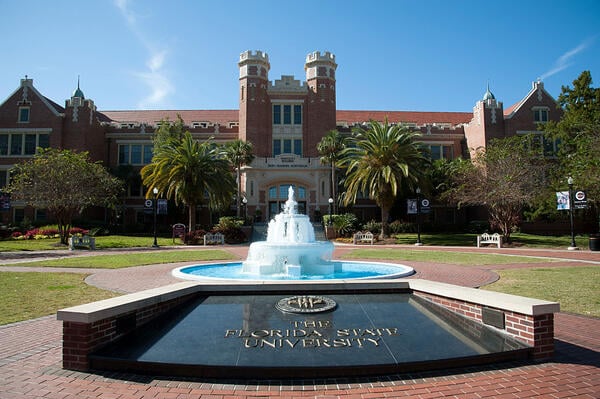
    One suspect has been taken into custody after a shooting that left two victims dead and six injured at Florida State University’s student union on Thursday, law enforcement officials said in a press briefing.

    The suspect, who was identified as Phoenix Ikner, a 20-year-old FSU student and the son of a school resource deputy with the Leon County Sheriff’s Department, has also been hospitalized. He was shot by police after he “did not comply with commands,” according to Tallahassee Police Department chief Lawrence E. Revell.

    The two deceased victims were not students, Revell said, but he couldn’t share any other information about the victims’ identities.

    FSU president Richard McCullough called this a “tragic day for Florida State University” at the briefing.

    “We’re working to support the victims, the families and everyone affected,” he said.

    FSU students and employees received an emergency notification at 12:02 p.m. to shelter in place due to an active shooter near the campus’s student union. According to Revell, FSU campus police arrived on the scene “almost immediately” after the shooting began just before noon. Other local law enforcement agencies, including the Federal Bureau of Investigation’s Jacksonville field office and its Tallahassee suboffice, were involved in the response to the shooting. The Tallahassee police will lead the investigation.

    Over three hours later, police notified the campus that they had “neutralized the threat” but asked the public to continue avoiding the student union and the surrounding area. Students were advised to remain indoors except to walk to their dorms or the designated reunification point.

    Revell said the handgun Ikner used was his mother’s former service weapon. The suspect also had a shotgun with him, Revell said, but it was unclear if he had used it. Revell said the police did not yet know of any motive for the shooting and that Ikner had invoked his right not to speak with police.

    At the press briefing, McCullough said he had just returned from visiting the victims in the hospital.

    “Right now our top priority is safety and well-being for all the people on our campus,” he said.

    One FSU junior, McKenzie Heeter, told NBC that the assailant shot at her with what she thought was a rifle as she was exiting the student union with her lunch just before noon, but he missed. He then returned to his car and retrieved a handgun and shot another individual, at which point Heeter began running away from the student union and back to her apartment.

    “It was just me and like three other people that noticed at first, but we were walking in the opposite direction away from the union, so we started running. I just told everybody that I could see, stay away from campus,” she told NBC.

    Another group of about 40 individuals avoided the shooter by locking themselves in a bowling alley in the student union’s basement, The Tallahassee Democrat reported.

    Classes at FSU are canceled through Friday, and athletic events are canceled through the end of the weekend.

    Source link

  • Governors tout career and technical education in 2025 State of States

    Governors tout career and technical education in 2025 State of States

    Dive Brief:

    • Career and technical education, teacher workforce funding and student achievement are some of the main education policy priorities for governors across the country, according to a report from the Education Commission of the States and the National Governors Association. 
    • The report tracked and analyzed 2025 State of the State addresses so far this year from 49 governors, including the U.S. Virgin Islands and Guam. The State of the State Address is an annual speech given by state governors that provides the opportunity to outline policy priorities and elevate successes. 
    • The top education policy trend this year, the report found, was workforce development opportunities for students. Thirty-three governors discussed career and technical education as an opportunity to prepare students for entering the workforce and bolster the economy.

    Dive Insight:

    The Education Commission of the States has tracked and analyzed trends in education policy accomplishments and proposals featured in governors’ State of the State addresses for the last 20 years. This is the sixth year the commission has partnered with the National Governors Association to create a special report that highlights the top education policy topics mentioned.

    The 33 governors speaking about CTE also discussed internships and apprenticeships as avenues to gain real-world skills that prepare young people for workforce demands. 

    Some states highlighted their current offerings and programs, like Tennessee’s Youth Employment Program and Wyoming’s Innovation Partnership. Others, like Delaware and Oklahoma, highlighted incoming legislative efforts to provide more workforce development opportunities.

    In previous years, K-12 funding has been a consistent priority expressed across most of the state addresses. This year, at least 32 governors addressed funding, and several highlighted historic investments in K-12 funding — like Nevada’s investment of over $2 billion in new funding for students and schools last session, which marked the largest education investment in the state’s history.

    Fiscal certainty for school districts is one of the fundamentals that can improve student success, said Oregon Gov. Tina Kotek in her address. 

    Federal funding for K-12, however, is facing some risks. While the Trump administration has promised to preserve “all statutory programs that fall under the agency’s purview,” such as funding for students with disabilities, the downsizing of the U.S. Department of Education is putting school districts at financial risk, according to Moody’s Ratings.

    Teacher workforce is another common priority among governors. At least 26 mentioned teacher recruitment and retention or teacher compensation, the report states. 

    Some states like Connecticut and Maryland are trying to create workforce programs that bring more diverse teacher demographics, while other states mentioned recent investments into teacher salaries.

    Indiana highlighted legislation that will raise the minimum salary for public school teachers by $5,000 and require that 65% of state school funding support to districts go to teacher compensation. 

    Cuts to the federal Education Department have also impacted the teacher workforce. On April 4, the U.S. Supreme Court granted the Trump administration’s emergency request to maintain a freeze on millions of dollars in federal teacher training grants.

    Additionally, at least 25 governors addressed academic achievement, including commitments to math and reading instruction. Several states created and implemented literacy and proficiency programs that have shown growth and increased scores. 

    For example, Alaska Gov. Mike Dunleavy spoke about early data from the state’s implementation of the Alaska Reads Act. In his address, Dunleavy said that the percentage of Alaskan students who met early literacy benchmarks grew from 41% to 57%. 

    According to the report, governors stressed the importance of early literacy skills for life-long achievement. Science of reading was also highlighted as a major contributor to building early literacy skills.

    Source link

  • Why Not Flexible Transfer for All, Not Just in Crisis?

    Why Not Flexible Transfer for All, Not Just in Crisis?

    Meet Estevan, featured by Texas A&M University–Corpus Christi as a Transfer Student Success Story. Estevan benefited from a high degree of personalized support—including advising on course selection and financial aid planning—that helped him identify a clear path to transfer in his major of choice. Such personalized support helped Estevan thrive and make the dean’s list after transferring.

    Estevan’s story is one of the many inspiring success stories about transfer students we hear every day, even when the odds seem stacked against them. For example, we know that 80 percent of community college students nationwide intend to complete a bachelor’s degree, yet only 31 percent transfer to a four-year institution within six years of entry. When they succeed in transferring, transfer students often outperform their peers who start and stay at the same institution. And yet, we do not make transfer easy. For one, learners face a confusing set of ever-changing rules that varies across institutions, making it difficult to know which courses are transferable and applicable to their intended program of study.

    Added to that, we know life is unpredictable and even a learner’s best-laid plans can be derailed by one lost job, one sick family member or one unexpected change in financial aid. When the unpredictable happens, can institutions better flex to meet learners where they are?

    The signs point to yes—if you look at the examples of incredible institutional flexibility in response to the recent rise in institutional closures and mergers. As reported by Inside Higher Ed, nearly 100 institutions closed in the last academic year alone due to declining enrollments and financial pressures. When institutions close, accreditors and their member institutions step up to support students through a process called teach-out. Teach-out policies, while they differ by accreditor, are generally designed to help other institutions flexibly accept and apply students’ coursework to a degree or credential in order to help affected students complete their studies in a timely fashion. In such arrangements, the expressed goal is to apply the rules in ways that help bring students in and flex those rules that would effectively leave students out.

    Teach-out policies are exactly the type of thoughtful guidance that should be in place to support students. But as we’ve described, institutional closure is not the only reason students transfer, and it is not the only crisis students face. So this leads us to ask, if institutions can be flexible when faced with one type of student transfer, can they be similarly flexible in other transfer scenarios as well?

    We are excited to share that we had the opportunity to ask that question of the members of the Middle States Commission on Higher Education (for which one of the authors, Heather Perfetti, serves as president). In fall of 2024, MSCHE, WASC Senior College and University Commission, and the Southern Association of Colleges and Schools Commission on Colleges partnered with the Beyond Transfer Policy Advisory Board and Sova to design and field the Survey on Transfer and Learning Mobility to their institutional members. The survey sought to determine members’ perspectives on student transfer and learning mobility and to discern the role of accreditors in these processes through the institutional lens.

    In one of the most striking survey results, half of MSCHE’s responding institutions said they believe that institutions should apply similar flexibility for students who transfer and/or have previous learning as they do for students in teach-out situations (138 institutions responded to the survey, with a 30 percent response rate). Members of the PAB shared this finding at MSCHE’s Annual Meeting in December 2024, and a MSCHE member voiced the following powerful reflection: “We flex that way all the time for our own self-interest when we want to close one of our own programs.”

    We share these findings not to throw open the doors on academic rigor and quality, but rather to ask the field to pause and reflect on why credit transfer policies are stringent, knowing the barriers they may pose for students. We recognize the claims that strict credit transfer policies protect student preparation and program cohesion. If that’s true, what data are used to prove that students are not well prepared if they don’t take courses in a linear sequence? What evidence is used to understand and control for program cohesion? And if it’s not true, what are the real reasons, and can we discuss them openly so that we can better serve students? We can’t identify real solutions if we’re not honest about the actual problems.

    From MSCHE’s perspective, this survey finding feels like a call to pause, reflect and inspire us into action. MSCHE is proud of its existing transfer policies, which are crafted to support students and the mobility of their learning. But MSCHE is also willing to revisit its policies and accreditation activities through the lens of how principles related to teach-out during crises, like closures, can inform transfer more generally.

    Through the Council of Regional Accrediting Commissions, in collaboration with WSCUC and SACSCOC, we’ll talk to our peer accreditation agencies as well about key questions for accreditors and how accreditors can and should:

    • Engage governing boards and member institutions about the importance of transfer and learning mobility;
    • Leverage self-study as a moment for institutions to review and revise policies that are barriers to transfer;
    • Celebrate with institutions the ways they are supporting stronger transfer policies and the awarding of credit;
    • Remind constituents that accreditors want to see and support institutional innovation to better serve students;
    • Promote what accreditation policies actually require, and bust myths around statements such as “the accreditor won’t let me do that” (because, quite frankly, those statements are rarely true);
    • Elevate how the accreditor complaint and third-party comment process can be used by students to bring institutional transfer policies, procedures and decisions to accreditor attention; and
    • Quite simply: Be student centered, all the time.

    We hope this post gives you food for thought. Through our partnership and aligned efforts such as the Learning Evaluation and Recognition for the Next Generation Commission (led by Sova and the American Association of Collegiate Registrars and Admissions Officers and on which MSCHE, WSCUC and SACSCOC all sit), we will be looking to support the field with additional thinking about strong principles for student-centered credit evaluation and transfer. In the meantime, we’ll leave you with this question: How do you flex for students?

    Source link

  • A Logical Gap Behind Attacks on the Humanities (opinion)

    A Logical Gap Behind Attacks on the Humanities (opinion)

    Researchers across the country who had been awarded prestigious grants from the National Endowment for the Humanities recently learned that their awards had been canceled. As Department of Government Efficiency reductions sweep through critical government agencies, higher education has been a clear target—not only through cuts at federal agencies like the NEH, but also through pressure levied on institutions like Columbia and Harvard Universities and, horribly, through Immigration and Customs Enforcement detainments that seem to take aim at politically engaged scholars like Rümeysa Öztürk. This targeting builds on decades of disinvestment—underfunding, fewer faculty lines and program closures—that have left humanities education fragile, and therefore vulnerable.

    But the arguments used to justify both the active dismantling and the long-term disinvestment fundamentally contradict each other. One argument imagines the humanities to be both powerful and dangerous, while the other sees humanities education as irrelevant and a waste of time. Both cannot simultaneously be true. The tension between them reveals the real driver: a pervasive fear of critical thought and the social change it may foster.

    As a humanities scholar who works with institutions nationwide to develop meaningful, equitable programs in higher education, I’ve watched countless colleges and universities grapple with the implications of this fear. Over the past decade, the claim of irrelevance has been used to justify budget cuts and program closures. Last year, Boston University suspended doctoral admissions to the humanities and social sciences. In 2023, West Virginia University eliminated numerous humanities programs and faculty lines—the cuts included all of WVU’s foreign language degree programs—with many other institutions considering similar measures.

    Those who support these actions tend to cite declining numbers of humanities majors as evidence that students don’t care about the subject matter, or that they think a humanities degree is a financial dead end. However, even the economic piece of this argument is not borne out by the data. Recent research from the American Academy of Arts and Sciences shows strong state-by-state employment trends for humanities graduates, with advanced degree holders earning a median salary of about $84,000. Their research shows that a remarkably high 87 percent of all humanities majors feel satisfied with their careers—and that percentage climbs to 91 percent for advanced degree holders.

    The rhetoric may be false, but it is nonetheless dangerous. It is true that humanities majors are trending downward—but why? We know that students do care about humanities topics. Every instructor I talk to reports high levels of student engagement in humanities courses. It’s not lack of interest, or economic realities, but intentional disinvestment that erodes the humanities and leads to program closures. That disinvestment serves as a self-fulfilling prophecy, as students invariably notice which parts of the university landscape are prioritized; it’s visible in buildings, in classroom spaces and in faculty offices. Students may hear messages from parents or from the media that nudge them in other directions. The resulting decreased enrollment fuels legislative actions and budget cuts that undermine the potential of humanistic inquiry and education.

    The other line of argument does not rest on the supposed irrelevance of the humanities, but rather their power—and in doing so, it negates the first argument. This is the logic that leads DOGE to demand that the NEH and other agencies stop funding projects that explore race and gender equity. It’s the logic that leads to the dismantling of the federal Department of Education. It’s the same logic that has led conservative groups like Moms for Liberty to try to get books about LGTBQ+ kids pulled from library shelves, that led state officials like Ron DeSantis to block the teaching of African American studies. Why bother to fight against these projects, books and courses if they don’t hold power? No: In these cases, critics know that exposure to the humanities has the potential to change our individual and collective thinking, to bring new perspectives into the light, and to loosen the hold of dominant perspectives on the social psyche. That, to many, is terrifying.

    The results of these critiques are profoundly damaging. The NEH cuts—paired with similar cuts to the Institute of Museum and Library Services, where the entire staff has been placed on leave—threaten a whole generation of research and community-engaged practice and will leave us with a diminished cultural landscape and limited possibility to interpret what’s left. The Trump administration is already trying to control what is displayed in national museums, particularly those that highlight underrepresented artists. Local libraries and state humanities councils are losing critical operating funds. As books, art and culture disappear, we need scholars trained to ask why—but with humanities programs in shambles, who will be ready to do that work?

    Our cultural heritage is our nation’s portrait; there is power in seeing oneself represented in books, art and music. This is especially true for people who are marginalized in many social structures; broadly representative books on library shelves can be a lifeline for queer kids, trans kids, immigrant kids. Kids with names that white teachers find hard to pronounce. Kids looking for affirmation that, yes, they’re OK. Removing titles because of characters that share these identities is an act of erasure, a way of saying, no, actually, you’re not welcome here. Given that trans kids already have alarming rates of suicidality, the stakes are unspeakably high.

    The far right is correct about one thing: The humanities are powerful. It is through the humanities that we are fighting tooth and nail for democracy—which is why we must defend these institutions and the people who make them work. With a news cycle that is so rapid and confusing as to cause whiplash among even the most savvy readers, historians like Heather Cox Richardson and David M. Perry provide context that extends beyond our current time and place to help us collectively understand the patterns of the present moment—and, more importantly, to envision possible paths out. Artists provide solace and catharsis through pieces that express what words cannot, such as Chavis Mármol’s “Tesla Crushed by an Olmec Head,” which is exactly what it sounds like. These interventions matter deeply when our collective sense of reality is being threatened by outright lies from people at the highest levels of leadership.

    What we’re seeing now are the results of a systematic and structural push that has been slowly unraveling the humanities ecosystem for decades. But it needs to stop. The NEH cuts, the threats to education, the book bans, the program closures—and the rhetoric that brings them about—foreclose opportunities for students and for society. We are in a moment that requires stronger nationwide investment in the humanities, not their diminishment. Former NEH chair Shelly Lowe—the first Native American to lead the organization, unceremoniously pushed out by President Trump in March—urged participants at last year’s National Humanities Conference to find hope in dark times by turning to poetry. Riffing on Seamus Heaney’s “The Cure at Troy,” she urged us to “believe that further shores exist, even if they are out of sight.” Art and culture provide avenues for expression, beauty, understanding and meaning—especially when our world feels like it’s crumbling.

    The right knows the humanities are powerful; it’s time for the left to truly believe in that power, and to call out the hypocrisy driving the right-wing attacks on our shared cultural heritage.

    Source link

  • Can Universities Still Diversify Faculty Hiring Under Trump?

    Can Universities Still Diversify Faculty Hiring Under Trump?

    Before Donald Trump retook office, advocates of a more demographically diverse U.S. professoriate were already criticizing existing hiring efforts as inadequate. One late-2022 paper in Nature Human Behaviour noted that, at recent rates, “higher education will never achieve demographic parity among tenure-track faculty.”

    One example of the disparity: As of November 2023, only 8 percent of U.S. assistant professors were Black, according to the College and University Professional Association for Human Resources. That’s significantly less than Black representation in the U.S. population, currently estimated by the Census to be 13.7 percent. And the CUPA-HR data showed that the Black share of tenure-track and tenured professors decreases as rank increases—only 5 percent of associate professors and 3.6 percent of full professors were Black. 

    Efforts that institutions have made to racially diversify their faculties drew political backlash well before Trump regained the White House, with activists, organizations and some faculty criticizing university hiring practices and state legislatures passing laws banning affirmative action and/or diversity, equity and inclusion initiatives. The goal of a more representative faculty slipped further out of reach starting on Inauguration Day, when Trump issued executive orders targeting DEI, including what he dubbed “illegal DEI discrimination.”

    His administration’s crusade has continued, including with a letter Friday demanding that Harvard University end all DEI initiatives, “implement merit-based hiring policies” and “cease all preferences based on race, color, religion, sex, or national origin throughout its hiring, promotion, compensation, and related practices.” (Harvard has refused to comply with Trump’s orders, which go far beyond hiring, and the federal government has frozen part of the university’s funding and threatened its tax-exempt status.)

    Given the current political situation—not just nationally, but also among the growing number of states with DEI and/or affirmative action restrictions—how can higher ed institutions continue to diversify their faculties?

    “I think that’s the question of the day: What’s lawful, what’s legal, what might subject an institution to investigation by the investigatory arms of the federal government?” said Paulette Granberry Russell, president and chief executive officer of the National Association of Diversity Officers in Higher Education, which is among the organizations suing over Trump’s anti-DEI executive orders.

    “Is it purposeful that this administration has chosen ambiguity?” Granberry Russell asked. “Or left [us] to guess what they intend by ‘illegal DEI’? Is diversifying our campuses on its face illegal DEI?”

    So far, the administration has not clarified where the line is. On Feb. 14, the U.S. Education Department published a Dear Colleague letter declaring that the department interprets the Supreme Court’s 2023 decision banning race-conscious admissions as applicable to other areas of higher ed, including hiring, promotion and compensation. That letter is facing legal challenges. The department later released a frequently-asked-questions document further explaining its position, but that guidance didn’t discuss hiring practices.

    In response to a request for an interview and written questions, Harrison Fields, special assistant to the president and principal deputy press secretary, wrote in an email to Inside Higher Ed, “President Trump is working to Make Higher Education Great Again by ending unchecked anti-Semitism and ensuring federal taxpayer dollars do not fund higher education institutions’ support for dangerous racial discrimination or racially motivated violence. Any institution violating Title VI is, by law, ineligible for federal funding.” (Title VI bans discrimination based on, among other things, shared ancestry, including antisemitism.)

    Madi Biedermann, deputy assistant secretary for communications at the U.S. Education Department, told Inside Higher Ed, “It is illegal to make decisions on the basis of race.”

    She said the department isn’t providing any additional guidance at this point beyond the text of the executive orders, the Dear Colleague letter, the FAQ, Title VI of the Civil Rights Act of 1964 and the 2023 Supreme Court ruling.

    Also, in an FAQ titled “What You Should Know About DEI-Related Discrimination at Work,” the U.S. Equal Employment Opportunity Commission writes that, under Title VII of the Civil Rights Act, DEI “practices may be unlawful if they involve an employer or other covered entity taking an employment action motivated—in whole or in part—by an employee’s or applicant’s race, sex, or another protected characteristic.” In addition, it says that Title VII’s protections aren’t just for minority groups.

    Adrianna Kezar, a professor of higher education and director of the Pullias Center for Higher Education at the University of Southern California, said in an email that there isn’t “universal understanding” across campuses of the current hiring rules.

    “In states like California (and others), affirmative action in hiring is illegal. In other states, it remains legal until the Trump dear colleague letter becomes the legal interpretation,” Kezar wrote. But she said some states “are already complying even though that has not become the law of the land.”

    “Right now, everything is still murky,” she added.

    Tres Cleveland, a partner at the Thompson Coburn law firm who represents higher education clients, said most of them are trying to stay “in the good graces of the Department of Education or other regulators, and it’s a challenge at this point.” Cleveland said the “rules of the road” are “changing almost daily.”

    Damani White-Lewis, an assistant professor at the University of Pennsylvania Graduate School of Education, said, “There’s genuinely no consensus” on what’s barred under the Trump administration with regard to hiring that wasn’t prohibited before.

    “I wanted to do a project of: If you asked, like, 10 different legal counsels, what sorts of answers would they come to and how did they make sense of them?” White-Lewis said. “Because that’s just how different folks are, and some are more conservative, some are a little more progressive on this issue.”

    For colleges and universities, faculty diversification isn’t just an end in itself; studies have found positive benefits for students. So, what can institutions do to continue diversifying faculties? Experts pointed to fundamentals such as active recruiting, structured hiring processes and more.

    Casting a Wide Net

    While Granberry Russell of NADOHE criticized the Trump administration’s “ambiguity,” she said that actively seeking a diverse applicant pool still seems acceptable. In recruitment, she said, “you’re not making a decision; you’re just saying, ‘Apply for this position.’”

    “There’s nothing, at least on its face, that would appear to prohibit recruitment efforts,” she said. (The Education Department has, however, targeted dozens of universities for allegedly supporting the PhD Project, which was accused of barring white or Asian prospective doctoral students from a recruitment conference.)

    Kezar, at the University of Southern California, wrote in an email that while recruitment strategies still seem to be a viable way to attract diverse candidates, “some of the approaches that people have been relying on, they don’t feel comfortable with because they are being targeted.”

    Granberry Russell echoed this concern, saying that, out of fear of investigations, “people are being very, very conservative in how they approach faculty searches.”

    Denise Sekaquaptewa, director of the University of Michigan’s ADVANCE Program, a faculty diversity initiative, wrote in an email that “approaches which may still be viable” include disseminating job announcements “to outlets where [they] may reach a wide range of excellent candidates.”

    White-Lewis, of the Penn Graduate School of Education, said there’s a “pervasive myth” that there aren’t enough graduate students of color to diversify faculties. He called it a “no-brainer” for institutions to invest in postdoctoral fellows and postdoctoral researchers—a stepping-stone to permanent faculty jobs.

    “That’s a very perceivably neutral avenue of thinking about how we can increase opportunities for postdoctoral funding—given their crucial nature within not just medicine but other STEM fields as well, where postdocs are more pervasive,” White-Lewis said. “And that gives everybody more opportunities to research, write and publish and become more competitive for faculty jobs.”

    He said he thinks postdoctoral programs “specifically devoted to minoritized hiring” will be difficult to continue. Multiple experts Inside Higher Ed interviewed suggested institutions should avoid saying in any faculty job advertisements that they’re specifically seeking to hire faculty of color or of a specific race.

    “The devil is all in the details with this,” said Scott Goldschmidt, another higher ed specialist partner at Thompson Coburn. He said institutions have to weigh the risks of litigation and administrative action, especially when it comes to public job ads.

    Goldschmidt said there are other hiring considerations that job ads could include that might lead to diverse hires, such as socioeconomic status and experience working with diverse populations. But he believes the Trump administration would also argue that such factors can’t be used as proxies for race. The hiring criteria should be narrowly tailored to the job, and the search and hiring process must be conducted in a race-neutral manner, Goldschmidt said.

    “It has to be a truly open process,” he said. “The conditions there can’t be there to kind of serve as a way to unlawfully discriminate.”

    White-Lewis suggested that faculty searches consider evaluating applicants’ experience with mentoring marginalized populations first. But that doesn’t mean their teaching and research records should be discounted.

    “It’s very difficult to be a mentor if you don’t have research funding, right?” he said. “And so these things go hand in hand. What I’m suggesting is to make the evaluation of mentoring capabilities noteworthy instead of it being subsidiary.”

    He also said that, when considering what positions to hire, administrators and faculty should think about how to align the department’s needs—in research, teaching and service—with areas where minoritized scholars are more represented.

    “It’s not always just going after Indigenous studies or ethnic studies or Africana studies, because that clumps diversity within a few departments, but psychology, English, sociology, arts, even biology in terms of health disparities,” White-Lewis said. “Health disparity searches have been the thing that have historically driven faculty diversity in the sciences, and it can still continue because health disparities still exist.”

    Some said using diversity statements in hiring is likely a no-go under the Trump administration, whose demands to Harvard included abolishing in hiring practices “all criteria, preferences, and practices” that “function as ideological litmus tests”—a common critique of diversity statements. Republican-controlled legislatures in multiple states have banned them.

    “They’re dead,” said Musa al-Gharbi, a research fellow at Heterodox Academy and an assistant professor in Stony Brook University’s School of Communication and Journalism. He noted that even the University of California system has stepped away from them.

    Furthermore, al-Gharbi said, “A lot of this stuff which is now rendered illegal … doesn’t really work well anyway. Some of the efforts that we take to promote diversity, equity and inclusion in higher ed actually create a hostile environment for the same people that we’re trying to include.”

    He said that people of color and people from lower-income backgrounds are more likely to be socially conservative and religious than people who are currently better represented in academe, adding that “some of these diversity challenges around viewpoint diversity and demographic diversity are actually intimately interrelated.”

    “But we also should nonetheless advocate for the goals of diversity and inclusion” and try to think up better alternatives, al-Gharbi said. Still, that’s hard when the Trump administration has basically “villainized,” “censored” and “demeaned” anything associated with DEI.

    “This isn’t a smart bomb,” he said. “It’s a chain saw.”

    Source link