Tag: Career

  • How to Better Support Deans (opinion)

    How to Better Support Deans (opinion)

    Being a president is hard. Seriously hard. We are watching the rapidly increasing presidential turnover rate collide with the lack of formal succession planning at a time when higher education is under significant political pressure. This is a serious problem for higher education.

    But contrary to the popular perception, the president is not the sole difference-maker to an institution’s success. Once we look outside the spotlight of the presidency, we remember the institution’s core mission: academics. Skilled, effective academic leadership is vital to the ongoing success of an institution.

    Standing at the forefront of the academic mission is the provost. In case you are wondering what a provost does, they are, on paper, the chief academic officer, responsible for the vision and oversight of all academic affairs. As important as that sounds, Larry A. Nielsen, in his book Provost: Experiences, Reflections and Advice From a Former “Number Two” on Campus, describes the provost as the university’s “stay-at-home parent.” Not so glamorous.

    It is those leaders at the next level below the provost, the deans, who have responsibility for the vision and oversight of their respective colleges or schools. It is in these units where the bulk of the work happens for the academy to accomplish its mission, in research, teaching and service.

    In the current climate for higher education, where its value is being challenged and the fight for student enrollment is running high, the provost and deans hold the key to academic transformation, as they strive to make their institution a strong destination that changes students’ lives and opens doors to new careers. Additionally, the deans and their faculty are closer to the ground in terms of understanding what students and their communities need and want. They primarily shape which courses, programs, majors and minors are offered. They do this work. Not the president.

    This raises a question: What can be done to better support the deans?

    Deans operate at a critical transition point. They serve at the discretion of the provost and president, and, as such, take direction (or sometimes lack of direction) that comes down to them. At the same time, deans are serving and representing their faculty and staff, working to support their success in doing the actual work of educating, advancing knowledge and serving the institution as good citizens and stewards. This crunch between above and below brings a lot of pressure for deans, even in the best of circumstances.

    Thus, having coached and/or consulted with close to 100 deans over the years, I offer the following strategies.

    Give Them Resources and Get Out of the Way

    Being a dean is more closely aligned in its responsibilities to a presidential role than that of a provost. The dean oversees their school, with responsibility to set vision, create strategy, raise money, build and oversee administrative teams, manage politics, and drive results.

    What a dean is not is a “stay-at-home parent.”

    For deans to be most successful, the provost needs (to the best of their abilities) to provide deans with resources, professional development, time and clear direction. The provost (and at times the president) then needs to clear roadblocks, make introductions to key donors and stakeholders, and be available to the deans, as needed. You might say that the provost could consider the deans their most important constituents. If the deans are successful, it will greatly enhance the provost’s success.

    Allow Deans to Meet Alone Regularly

    Being a dean can be lonely. There is no one in their school to whom they can express insecurities or speak candidly, especially about sensitive issues. Providing space for the deans to meet and talk openly, candidly and even vulnerably with one another builds a group of trusted peers and advisers and creates a safe space to discuss challenges and give and get feedback from colleagues who may be experiencing the same.

    This process yields tremendous benefits for a campus, where challenges and opportunities across the schools can become aligned, resulting in better institutional decision-making, accountability and communication. The provost may think they should be in the room for these conversations (to hear what’s happening for the deans, to be helpful, etc.), but their presence limits the quality and openness of the conversations. If provosts want to be helpful, sponsor a monthly breakfast or dinner for the deans to meet alone. At a large R-1 where I have co-facilitated a new department chairs program for many years, the program has become affectionately known as “chairapy.” The same support could be provided for deans (deanhabilitation? I’m still working on a name for this one).

    Build a Team of Deans

    The deanship is an isolating role. The default setting for deans is to engage in turf wars with other deans, each jockeying for the attention and resources from the president, provost and CFO. As a result, many institutions fail to recognize how to leverage the deans as a true governing body on campus. Instead, both the provost and the president would benefit from investing their time and energy in supporting a deans’ council that has (as the Center for Creative Leadership proposes) shared direction, alignment and commitment. A unified team of deans allows for better decision-making, mutual support and resource sharing, as well as more consistent communication throughout the institution. Instead of fueling the common narrative of individual fiefdoms, invest in the deans as a team and reap the rewards of a better-functioning organization.

    Provide Deans With Information

    Deans like independence, running their shops with minimal interference. However, deans also need information and from all directions: above, below, across and outside. When information is lacking, rumors fill the void. Faculty will speculate, staff will complain or withdraw, stakeholders will wonder, “What is that dean doing, anyway?”

    To mitigate these issues, stakeholders need to share information and in particular, give the why, the context and rationale behind an issue. So if anyone wants to be helpful to their deans, overinform them and always include reasons why the information is important. If too much information is being provided, let the dean set the limits. And when a dean asks about an issue, please answer them (barring legal reasons not to). Don’t withhold. A dean left in the dark is only as good as the flashlight they have.

    Be a Thought Partner

    Deans attend a relentless number of meetings. As a client of mine once shared with me, “I have more requests for standing monthly meetings than there are hours in a month.” To avoid crushing deans with ineffective usage of their time, any meeting with them should be generative, one in which problems are being solved, decisions are being made, strategies are being forged and deals are being closed. Come to deans with solutions, with innovations and with energy. As the famous line from the film Jerry Maguire goes, “Help me help you!” Offer to be the dean’s thought partner, to stand (metaphorically) shoulder to shoulder and think through an issue together.

    Get Them a Coach

    As an executive coach, I recognize this one comes with my own inherent biases. And yet, I have seen firsthand the payoffs of providing executive coaching to deans. The return on investment easily justifies the financial cost. I do not wish to oversell this service. Just know it is super helpful—some might even say vitally.

    Ask Deans What They Need

    Finally, if you are not sure how to be helpful to a dean(s), ask them. They will know. A savvy dean, given the right mix of resources, support and collaboration, can accomplish great things, ultimately guiding their school to make the lasting impacts higher education so desperately needs these days: good news stories, student successes and positive contributions to their communities and country. A dean’s success can be a great counterbalance to the political side show that distracts from what truly makes the academy invaluable.

    Rob Kramer is a special adviser to the provost at Southern Oregon University, the former senior leadership adviser at the University of North Carolina’s Institute for the Arts and Humanities, and an executive coach and consultant in higher education and academic medicine.

    Source link

  • Cash-Strapped Colleges Opt for Wellness Vending Machines

    Cash-Strapped Colleges Opt for Wellness Vending Machines

    ADragan/iStock/Getty Images Plus

    According to a May 2024 Student Voice survey, roughly one in five community college students (19 percent) believe their institution should invest in wellness facilities or services to promote well-being. A recent pilot program across the state of California seeks to remove barriers to accessing health supplies for community college students.

    The Wellness Vending Machine Pilot Program, a state-funded program established by Assembly Bill 2482, which passed in 2022, aims to make preventative care products more accessible to college students. The program provides funding for 18 colleges to address students’ physical health and overall academic success in a unique, lower-cost way: through vending machines that dispense everything from Band-Aids to birth control.

    For some institutions, like College of the Redwoods, the vending machine is the primary source of personal care products on campus.

    Community colleges in particular are often underresourced and limited in their ability to provide students with wraparound support services. A 2024 survey by the Richmond Federal Reserve of 80 community colleges in the District of Columbia, Maryland, North Carolina, South Carolina, Virginia and most of West Virginia found that only 3.8 percent of responding institutions offered on-site health services during the 2022–23 academic year. The greatest obstacle to offering such resources is funding.

    Katrina Hanson, manager of retention, basic needs and well-being for the College of the Redwoods community college district in Central California, applied for the vending machine grant in July 2023 to address a service gap on the main campus in Eureka.

    The College of the Redwoods closed its Eureka student health center in spring 2023, shifting from having a part-time nurse to instead offering tele–mental health services through TimelyCare. It also purchased three wellness vending machines: two for Eureka and one for one of its other two campuses, on the Hoopa Indian reservation.

    “It’s not a complete substitute for in-person care,” Hanson said. “But it is more equitable for our students on our Hoopa [Klamath-Trinity Instructional City] and Crescent City [Del Norte Education Center] campuses, as well as all of our online students.”

    How it works: The college set up the three wellness vending machines in August 2023, placing one in Eureka’s library and the other in a residence hall, as well as one on the Hoopa campus. The grant requires participating colleges to place vending machines in a central location that students can access at any time.

    The requirements also outline the products that should be sold, including condoms, dental dams, menstrual cups, lubricants, tampons, menstrual pads, pregnancy tests and emergency contraception pills. College staff identify and supply the machines with other popular or needed supplies.

    Eureka’s wellness vending machine is located in the library, which has the most hours of availability for students, allowing them to access it when they need various health supplies.

    Katrina Hanson/College of the Redwoods

    For example, when Eureka’s health center closed, Hanson asked which services were most popular. She learned that pregnancy tests and urinary tract infection tests were most commonly used, so she now ensures that the campus vending machines has those supplies available.

    Other popular items are Band-Aids, which are free in the machine, and Benadryl, which is discounted.

    The machines themselves are rented from a company that also handles snack machines around campus, so the college does not have to deal with maintenance or money collection. Grant funding will cover the machines for the five years of the pilot, but supplies are budgeted by the institution.

    “We are trying to get it to be at least somewhat self-sustaining by trying out different items,” Hanson said. “The sexual health and menstrual health supplies are free or discounted, per our grant agreement. The other items we can offer at regular price to try to make some money to keep the project going.”

    Survey Says

    Inside Higher Ed’s Student Voice survey of college students found that about two-thirds of respondents (n=5,025) rated the variety and quality of campus health and wellness offerings as good or average; about 5 percent indicated they had poor resources. Numbers were similar for respondents at two- and four-year institutions.

    Two birds, one machine: In addition to offering tailored health products for students, the vending machines also work as a resource hub, displaying informational posters in English and Spanish to equip learners with important information.

    Poster content includes what to know about emergency contraception, how to use the opioid overdose–reversing drug Narcan/naloxone, sexual wellness education and how to provide feedback to the college about using the machine.

    Rightsizing: Since setting up the machines, college staff have noticed that two machines (the one on the reservation campus and the one in the Eureka dorm) weren’t being used often, or students were only buying certain supplies. In the residence hall, for example, students only really wanted condoms. So campus leaders elected to downsize and just keep the one machine in the library, offering free supplies in other places instead.

    This academic year, the most purchased items have been condoms, menstrual cups, fentanyl tests, Narcan, tampons and acetaminophen. Students also frequently purchase deodorant, energy gels, LiquidIV, lip balm, ibuprofen, pregnancy tests and cough drops.

    So far, the machines haven’t been profitable, but staff pull supplies from the Basic Needs Center or local partners to keep costs low and continue to vary their offerings.

    The college is planning to reopen its student health center following construction, so the vending machines will support students in the meantime, Hanson said.

    Do you have a wellness intervention that might help others promote student success? Tell us about it.

    Source link

  • Some Rules for Campus Resistance (opinion)

    Some Rules for Campus Resistance (opinion)

    Given what’s happened at Columbia University (and what is happening now at other Ivies, and beyond), every university leader in the United States ought to be planning in advance what they will do when similar pressures are brought to bear on them. Academics ought to as well; all the citizens of our republics of learning should care about their institutions and be willing to defend them.

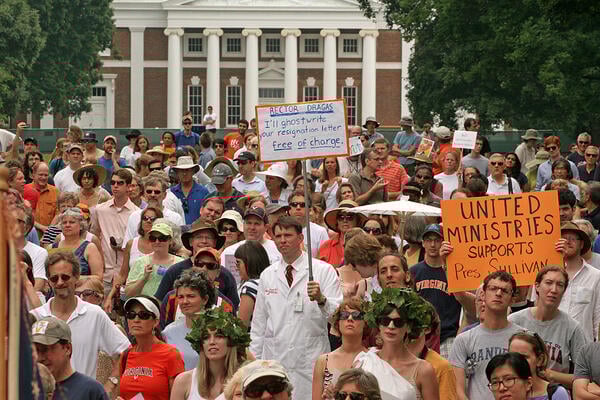
    Over a decade ago, here at the University of Virginia, we had a nasty little fight with our Board of Visitors when they tried to fire President Teresa Sullivan with little more logic or rationale than we’re currently seeing come out of Washington. (The American Association of University Professors produced a pretty good report about it, if you want to read something unsettling.)

    Our opponents in that little pas de deux had a degree of ignorance that amply matched their arrogance, but we were lucky in discovering allies far beyond Charlottesville in our alumni base and other institutions.

    At the time, I recognized that we had learned some smaller, tactical lessons in the whole shindig that might be relatively portable across different universities. I almost published them, but decided that it was better to let my university go forward without adding my two cents.

    Now, however, in our moment, these seem relevant again. So, in the wake of Columbia’s capitulation to Trump’s assault, I dusted them off and polished them up. They didn’t need much polishing, to be honest. Consider this a small pamphlet for thinking about hosting “a little rebellion now and then” on your campus, when such is needful.

    1. Don’t start the fight. Have a prompting event—even if you invite it merely by doing your job. We were lucky to have a “day of infamy” jump-start our events in 2012. It was dropped, gift wrapped, into our lap. We were, from the beginning, in the position of the victim—the one who was wronged. Being the aggrieved party from the start helps. A lot.
    1. Be a big tent, but have one common aim. Because the misdeed was so expansive in its implications, the scope of our “we” was enormously wide. The “we” who was violated included not just the president, but the administration, faculty and staff—and not just them, but the students, and the alumni, and indeed the community of Charlottesville, and possibly all those interested in the future of academia in America and beyond. And anyway, you’re not seeking consensus: You’re seeking alliance. This is hard for us academics, because we are so excellent at invidious distinctions. But remember: World War II was won by an alliance of the British empire, the anticolonialist liberal United States and the definitionally revolutionary U.S.S.R. If those three states could work together, you can say something nice about professors in the business school, or vice versa. The same goes for deans and administrators: They are not the enemy. By coordinating the most expansive community as the community to whom voice could be given, we ensured not just that numbers were on our side, but that the widest set of complaints and grievances were brought to bear on the most precise targets.
    2. Lean into shared governance. No one ever expected the UVA Faculty Senate to be consequential, least of all the Faculty Senate. It was the place where we sent junior faculty “to learn about the university”; given how much import anyone normally gives to learning about the university, that shows you what we thought of it. But, to borrow from Don Rumsfeld, you go to war with the institutions you have, not the institutions you wish you had, and now everyone knows that the Faculty Senate can matter, and matter decisively. I hope we never forget it. I hope you can learn from our example and not your own.
    3. Tenure counts. You know that thing we say about tenure mattering for free expression and for ensuring that you can speak your mind on academic matters without getting fired by administrators who don’t like what you have to say? I used to find it annoying and silly— “of course that’s not going to happen, not today,” I thought; “no one will be so dictatorial.” Well, lookie here—I was wrong. The first and consistently most vocal group in the whole UVA fracas was the faculty. The staff members were behind us (especially the women on the university’s staff, who had felt represented by Sullivan in a powerful way), but obviously they were in the most vulnerable position. And the deans and administrators were by and large ready to accept the coup as a fait accompli. (While the deans of the various schools eventually came around, it took them some time; only after they realized that almost every last one of the faculty were extraordinarily pissed, and shopping their CVs around, did they realize that they were hurting themselves more by not saying anything than they would by saying something.)
    1. “If a problem cannot be solved, enlarge it.” Dwight D. Eisenhower said that, and it’s true here. The prompting event of our crisis was of course the firing of our President Sullivan by our board rector, Helen Dragas, and a few others (let’s be honest about what it was and who did it). But it was clear from the beginning that there were larger issues here—about the disconnect between oversight, management and teachers and researchers, about the creeping “corporatization” of the board (though that does a terrible disservice to wise governance of corporations around the world, which would never be run the way most university boards try to run their institutions), about the failure of faculty to take seriously how the higher levels of the university were operating—matters far larger than simply this act. As the crisis developed, we realized we were reaping the consequences of structural contempt toward the faculty (and the rest of the university, really) by the Board of Visitors and a crisis of apathy about university governance on the part of the faculty. The problem may be larger than you first realize: Get it in focus, first and foremost.
    2. “Do you expect me to talk?” “No, Mr. Bond, I expect you to die.” The idea that disputes of these sorts are amenable most basically to conversation is mistaken. Statements were continually communicated to our Board of Visitors, but we knew almost at once that argument was not our real weapon. Once you decide to dissent, the time for talk is over, at least with opponents such as these; they will not be amenable to conversation—not without a great deal of pressure from other forces and sources. Your aim is not to convince your opponents; your aim is to beat them. To do that, you must persuade potential allies, not actual enemies. That said, it never hurts to be reasonable and produce strong arguments directed at your opponents, so long as you know those arguments are largely valuable because they are overheard by others.
    3. At no point should you demonize or vilify your opponents. It weirdly invests them with power you need not bestow. You’re in a fight with someone who’s like a toddler—do not descend to their level. Speak calmly, as to a toddler having a temper tantrum. You won’t convince them, but you will demonstrate you are not afraid. That will upset them more. If they lose, of course they will say you did demonize and belittle them; they’ll call you “so mean,” “ungracious” and “nasty in tone.” Don’t worry; everyone else knows otherwise. Saying that may be their only consolation prize. Let them have it. You’re walking out with the Benjamins. Or, in our case, the Sullivan.
    1. Time is not your friend, but nonetheless, boil the frog slowly. In a delicious irony, the coup at UVA was reversed “incrementally”—a bad word for Rector Dragas, a good word for President Sullivan. Resistance to the coup began with some immediate disquiet from the faculty and a few students on campus when it was first announced. But the faculty knew from the beginning they wouldn’t be the material cause of any change; they needed more powerful allies. The momentum built slowly, then snowballed at the end. And the momentum built both inside the institution and outside it: inside, mostly by growing outrage at the trickle of information released and the little bit we could discover (or, more properly, the media could discover) over time, and outside, by the gradual but eventually approaching exponential expansion of numbers and kinds of UVA stakeholders who expressed outrage.

    The end of the first week saw the Faculty Senate meeting where 800 faculty and others listened as our provost, John Simon, expressed real and powerful concern, and subtle outrage, over what had happened and how it had happened. By the end of the second week, we had politicians, alumni, other university faculties—and a number of major donors—speaking out in outrage. And then, too, we began to see newspaper editorial boards—and Katie Couric—condemn the firing. Had the Board of Visitors waited a bit longer to reverse its action, no doubt the United Nations, the E.U., the Nature Conservancy, the NBA, al Qaeda and Justin Bieber would have issued statements.

    The lesson here? Don’t try to get everyone on board all at once. Trust the swarm method, but go through your list of stakeholders methodically—moving from the most swayable to the least so. Rank them in their “get-ability,” and then get them, encouraging the ones you already have on your side to increase pressure on the next-most-gettable ones. On day two of a crisis, you probably won’t get The Washington Post and your institution’s major donors to sign on to calling this an outrage; but by day 10, or 14, with a little help, and momentum from other people, you may. And better still, while this is happening, your opponents probably won’t notice the pressure gradually ratcheting up, as they are simply trying to keep responding to different constituencies. By the time they realize that there are a lot of people angry at them, there’s little they can do to quell the anger, except give in.

    1. Have a lousy enemy, and let everyone see that. Maleficence is usually associated with incompetence, and in the case of this episode, that was true. We were extraordinarily fortunate in our foe. The Kremlin-like silence of the Board of Visitors as the shock and anger mounted; the Politburo-like prose when the board decided to speak; the slow uncovering of the incredibly flimsy reasoning behind the decision, revealed in emails over the previous months; the remarkable stubbornness, coupled with utterly no sense of the appearance of absurdity regarding the irrationality of the stubbornness—it’s as if we couldn’t have had a better opponent for this fight.

    But it is important that what gets publicized is your opponents’ badness, not your contempt for them. Academics are really, really skilled at expressing contempt. Few of us realize it doesn’t make us look good, either in faculty meetings or on social media. You never win an argument by judging your opponents. Instead, let your opponents be seen for who they are.

    This is mostly out of your control, but it might be possible to imagine different ways of framing your opponent, so that different profiles of them emerge. In our case it was clear early on that it would be very important not to make this about the entire Board of Visitors but to focus on a small clique inside it so that pressure could be put upon the whole in such a way that some fractures would result; we hoped that such fractures, once they appeared, would quickly cause the whole to shatter. And they did: In the end Sullivan’s reinstatement was a unanimous board decision, the unanimity induced by the fact that the Dragas faction knew they had lost and quickly crumbled.

    Anyway, these are some things I think we learned. Best of luck if you get in a position to need them. You’ll need all the luck you can get. We certainly did. But, you know, luck is what happens when preparation meets opportunity. That was on a motivational poster I saw once. Occasionally such things are useful. If you don’t know what I mean, I fear you will soon.

    Charles Mathewes is a professor of religious studies at the University of Virginia.

    Source link

  • U of Utah Urges Compliance After State Restricts Pride Flags

    U of Utah Urges Compliance After State Restricts Pride Flags

    A University of Utah lawyer last week urged faculty to comply with the state’s new prohibition on the “prominent“ display of pride flags and other flags on campus, The Salt Lake Tribune reported.

    Deputy general counsel Robert Payne urged faculty in a meeting not to “be a lightning rod to the Legislature” and said state lawmakers “have a lot of power over us,” the newspaper reported. Payne also suggested that if employees tried to get around the law by hanging pride posters instead of flags, legislators might “come back with something worse,” the Tribune reported.

    Utah’s Republican-controlled Legislature passed House Bill 77 last month, and Gov. Spencer J. Cox, a Republican, let it become law without signing or vetoing it. When it takes effect May 7, it will ban government entities, including public colleges and universities, from displaying flags on government property “in a prominent location.” Some flags are exempted, such as the U.S. flag and the prisoner of war/missing in action flags.

    Trevor Lee, a Republican Utah House member and HB 77’s chief sponsor, told Inside Higher Ed he didn’t file the legislation specifically to ban pride flags. But “that’s just been the biggest, biggest issue of any political flag,” he said. “I mean, it’s not even close.”

    Lee said the flags go beyond representing inclusivity. He said, “It’s a sex flag. It tells everyone what sexual ideology you believe in.”

    The University of Utah has released guidance online saying the law generally bans pride flags, Juneteenth flags and others from prominent locations. The guidance notes exemptions, including that students and employees can “wear or carry a flag as a personal expression of free speech,” and that employees can decorate their offices with flags “so long as they are not easily visible outside of their personal space (e.g., posted in an office window).”

    Payne said the university hasn’t yet decided how it will enforce the flag ban, according to the Tribune. The university’s guidance says, “Flags may also be used as decorations in connection with a brief cultural celebration hosted by the university within a university building,” but can’t be up for more than a week. It’s unclear whether pride will be considered a cultural celebration.

    Source link

  • Federal Grants Website Gets DOGE’d

    Federal Grants Website Gets DOGE’d

    The Department of Government Efficiency has taken control of a federal website that universities and other organizations use to find out about—and apply for—federal grant opportunities, The Washington Post reported Friday. 

    Federal officials have historically listed on Grants.gov more than $500 billion in annual federal grant opportunities from numerous agencies, including the Defense, State and Interior Departments, that fund research on a range of topics, such as cancer, cybersecurity and wastewater management. However, an engineer from DOGE—the agency run by billionaire Donald Trump donor Elon Musk—deleted, without notice, many of those officials’ permissions to post those funding opportunities.

    Agency officials have been instructed instead to send their planned grant notices to a Department of Health and Human Services email address that DOGE is monitoring. The HHS, which has long managed Grants.gov, said it’s “taking action to ensure new grant opportunities are aligned” with the Trump administration’s priorities outlined in its Make America Healthy Again agenda, according to the Post

    Now DOGE is responsible for posting grant opportunities. And if it delays them or stops posting them altogether, that “could effectively shut down federal-grant making,” an anonymous federal official told the Post.

    Source link

  • Students and Institutions in Limbo After Mass Layoffs at OCR

    Students and Institutions in Limbo After Mass Layoffs at OCR

    A month after the Department of Education closed seven of its 12 regional civil rights offices and laid off nearly half the staff in the Office for Civil Rights, there’s still uncertainty about how the agency will perform its functions with such reduced numbers.

    OCR was founded to ensure equal access to education for all students and is responsible for investigating claims that schools and institutions of higher education failed to protect their students from discrimination. But under the current administration, the office has shifted gears to focus on President Donald Trump’s top priorities: removing trans women from women’s sports teams, protecting against alleged discrimination against white students, and protecting students against alleged antisemitism.

    Back in February, the office’s acting head, Craig Trainor, told employees to pause all investigations except for a handful that aligned with those priorities, according to ProPublica. Trainor quickly told investigators they could once again begin investigating disability-related complaints, which made up the largest share of the pending complaints, but not those related to race- or sex-based discrimination.

    Tracey Vitchers, the executive director of It’s On Us, a nonprofit advocacy organization focused on combating campus sexual violence, says this harks back to the first Trump administration: At the time, a large number of complaints were “quietly ignored” by OCR, leading to a massive backlog for former president Joe Biden’s administration to handle when he came into office in 2021.

    “That was the playbook during the first administration, and it was just that they just sat on shelves, essentially—digital shelves. Those cases were put on the digital shelf, ignored, not opened, not investigated,” she said.

    When Trump took office, more than 12,000 cases were open with OCR, including over 3,000 at institutions of higher education, according to a database of open OCR cases.

    Over half of all OCR cases were being handled by a regional office that is now closed, according to a report from Sen. Bernie Sanders, a Vermont Independent who is the ranking member on the Senate Health, Education, Labor and Pensions Committee. Following the layoffs, each investigator’s caseload—which was already at an all-time high of 42 cases—is expected to skyrocket to 86 cases as a result of the cuts, significantly reducing investigators’ ability to resolve each complaint, per the report.

    The data in the report reflects concerns from former OCR staffers who warned that the layoffs would make protecting students’ civil rights more difficult.

    Experts say that OCR complaints going unresolved can be a serious impediment to a student’s ability to learn.

    “At the postsecondary level, common complaints are refusals to accommodate,” said Paul Grossman, an attorney who worked at OCR for 41 years and is now executive counsel for the Association for Higher Education and Disability. “A student wants a particular kind of accommodation, and the school says, ‘No, that’s a fundamental alteration or an undue burden,’ and the student, as a result, may get dismissed because they don’t meet the academic standards, may get dismissed because they don’t meet conduct standards, whatever the case may be. Or the student may just be unhealthy—they may not be well enough to continue, because they don’t get the accommodation.”

    The public repository of open OCR cases, which used to be updated weekly, has not been updated since Jan. 14, just before Inauguration Day. But ProPublica reported in late February that only about 20 new cases have been opened since Trump took office, whereas about 250 cases were opened in the same period last year.

    That most likely comes down to OCR’s decisions about what to investigate. But Vitchers also noted that, since even before Trump’s second term began, she hasn’t been as eager to advise students to open a case with OCR in response to their institutions mishandling Title IX complaints. After the Biden administration finalized its Title IX regulations, which offered protections to transgender students and which organizations like It’s On Us said were much more sympathetic to victims of sexual violence than Trump’s previous regulations, in the summer of 2024, numerous states sued to block the regulations. The legal tussle made for a complicated environment for students seeking justice for sexual harassment or assault through Title IX, and the Biden rule was eventually vacated just over a week before Inauguration Day.

    “Very honestly, with the back-and-forth on Title IX, and particularly once we saw the Biden rule get challenged, we sort of, somewhat quietly, encouraged students to really pause and take a hard look at, what was the outcome that they were looking for? And help them assess, is the OCR complaint going to get you the outcome that you’re actually looking for here?” she said. “If it is, then we will support you in finding an attorney and filing a case. But with so many of the students that we work with, many of them made the decision to, essentially, protect their own peace.”

    ED did not respond to a request for comment.

    Mediation, Digital Accessibility and More

    On top of concerns about the backlog of complaints going unanswered, experts are also worried about other, lesser-known functions of OCR that likely are not currently happening.

    In some cases, complainants can opt for early mediation, a type of resolution that is more informal and generally quicker than an investigation. But it is unclear if such mediations are happening currently; Grossman said he has heard one example of a planned mediation being canceled, and ED did not respond to a question from Inside Higher Ed about the issue. Grossman also noted that OCR is responsible for continuing to monitor the aftermath of investigations that have already been resolved.

    Jamie Axelrod, director of disability resources at Northern Arizona University and a past president of AHEAD, pointed out that OCR is responsible for conducting digital compliance reviews, in-depth surveys of whether a school or university’s digital resources, such as its website and learning management systems, are accessible to students with disabilities. During the previous Trump administration, Axelrod said, ED stood up a specialized team to complete these reviews and provide technical assistance to institutions to help them make their digital resources more accessible. Now, that team has been reduced significantly, according to Axelrod.

    He also noted that OCR is supposed to be a tool schools and universities can turn to in order to answer any questions about how to appropriately accommodate their students.

    “The point of that is to avoid circumstances that wind up causing discrimination against students with disabilities, and so that’s a key role,” he said. “And it’s hard to really calculate how many instances of discrimination [that prevented from] happening in the first place. It’s hard to count what you prevented, but that is an important role, and I’m sure it leads to resolution of lots of complicated circumstances.”

    The impacts of the cuts are likely to go even deeper than the individual cases that have been displaced to new investigators and the specific programs that will likely fall by the wayside.

    “Like any postsecondary educational institution, there’s a lot of institutional memory that’s developed,” Grossman said. “You have to develop connections, relationships, understandings, insights, experience, and all these people who are going out the door, you’re just lighting a match to all that expertise and experience. And to me, that’s a really sad thing.”

    Source link

  • Harvard Resists Trump’s Demands

    Harvard Resists Trump’s Demands

    Erin Clark/The Boston Globe/Getty Images

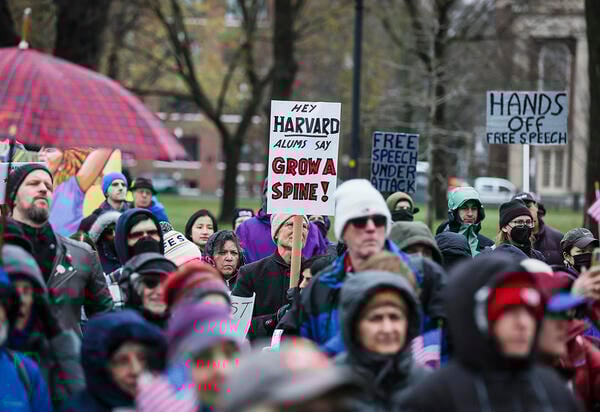
    Harvard University is pushing back on demands from the Trump administration calling for a long list of institutional reforms in response to alleged antisemitism and civil rights violations on campus.

    Nearly $9 billion in federal contracts and grants hang in the balance at the institution amid a review the administration announced last month, alleging the university has mishandled instances of antisemitic harassment on campus.

    President Alan Garber said Monday that the institution will not accept the administration’s agreement, writing that Harvard “will not surrender its independence or relinquish its constitutional rights.”

    Hours later, the Joint Task Force to Combat Anti-Semitism announced a freeze on $2.2 billion in multiyear grant funding for the institution and $60 million in multiyear contracts.

    The Trump administration presented Harvard with at least two demand letters, the first on April 3 and another on Friday. The letters call for changes to governance, hiring and admissions, a ban on masks, and more, including greater scrutiny of international applicants to exclude “students supportive of terrorism or anti-Semitism,” according to one letter.

    “Harvard has in recent years failed to live up to both the intellectual and civil rights conditions that justify federal investment. But we appreciate your expression of commitment to repairing those failures and welcome your collaboration in restoring the University to its promise,” top officials at the General Services Administration, U.S. Department of Education and the U.S. Department of Health and Human Services wrote in Friday’s letter to Harvard leadership.

    Friday’s letter also called for a mask ban; a shutdown of all diversity, equity, and inclusion initiatives; and the reformation of multiple programs “with egregious records of antisemitism or other bias.” Targets include Harvard’s Divinity School, Graduate School of Education, School of Public Health, Medical School, Center for Middle Eastern Studies, the Harvard Law School International Human Rights Clinic and several others.

    The administration also called for the university to “commission an external party, which shall satisfy the federal government as to its competence and good faith, to audit those programs and departments that most fuel antisemitic harassment or reflect ideological capture.”

    In a public letter to the Harvard community, Garber rejected the sweeping demands.

    “Late Friday night, the administration issued an updated and expanded list of demands, warning that Harvard must comply if we intend to ‘maintain [our] financial relationship with the federal government.’ It makes clear that the intention is not to work with us to address antisemitism in a cooperative and constructive manner,” Garber wrote. “Although some of the demands outlined by the government are aimed at combating antisemitism, the majority represent direct governmental regulation of the ‘intellectual conditions’ at Harvard.”

    Garber’s letter rejecting Trump’s demands also included a link to the legal response sent to the federal government, which noted changes to campus policies and “new accountability procedures” introduced at the university over the course of the last 15 months.

    “It is unfortunate, then, that your letter disregards Harvard’s efforts and instead presents demands that, in contravention of the First Amendment, invade university freedoms long recognized by the Supreme Court,” lawyers representing the university wrote in response.

    In addition to freezing more than $2 billion in federal funding, the joint task force responded to the institution’s rejection, saying, “Harvard’s statement today reinforces the troubling entitlement mindset that is endemic in our nation’s most prestigious universities and colleges—that federal investment does not come with the responsibility to uphold civil rights laws.”

    Harvard’s pushback is a rare repudiation of Trump from an individual institution. While various associations and faculty groups have spoken up on the federal government’s attacks on higher education, most college presidents have been silent, even at targeted institutions. (Only a few, such as Princeton University president Christopher Eisgruber, have publicly expressed concerns.)

    Last month Columbia University yielded to a sweeping list of similar demands, despite concerns by various legal scholars, as the Trump administration froze $400 million in federal research funding. Since then, Columbia interim president Katrina Armstrong has stepped down and the U.S. National Institutes of Health have frozen another $250 million in funding, despite the agreement. While Education Secretary Linda McMahon has said Columbia is on the “right track” to restore funding, that hasn’t happened yet, and the federal government is reportedly seeking more oversight.

    Dozens of colleges across the nation—including others in the Ivy League—are also facing investigations into alleged antisemitism and other issues, including race-based programs or scholarships and the participation of transgender athletes in intercollegiate athletics.

    Universities that have had their federal funding targeted include Cornell University (more than $1 billion), Northwestern University ($790 million), Brown University ($510 million), Princeton University ($210 million) and the University of Pennsylvania ($175 million).

    Harvard’s rebuttal to the federal government comes as the university plans to issue $750 million in bonds, which a spokesperson told Inside Higher Ed was “part of ongoing contingency planning for a range of financial circumstances.” Princeton is also issuing $320 million in bonds this spring.

    Harvard faculty have also taken legal action against the Trump administration.

    The Harvard chapter of the American Association of University Professors filed a lawsuit against the Trump administration on Friday alleging that the review of Harvard’s funds was an illegal exploitation of the Civil Rights Act and an effort to impose political views upon the institution.

    The lawsuit alleged that the Trump administration’s “unlawful actions have already caused severe and irreparable harm by halting academic research and inquiry at Harvard, including in areas that have no relation whatsoever to charges of antisemitism or other civil rights violations.”

    Harvard’s AAUP chapter also signed a lawsuit last month with other faculty groups pushing back on the Trump administration’s efforts to arrest and deport pro-Palestinian student activists.

    Source link

  • Some DEI Programs Are Vulnerable, Not Illegal (opinion)

    Some DEI Programs Are Vulnerable, Not Illegal (opinion)

    The Trump administration’s directives on diversity, equity and inclusion have wreaked havoc across the higher education landscape. Confusion persists about whether all DEI activities are forbidden or just ones that are officially illegal. To top it off, there’s much bewilderment about what exactly constitutes an “illegal DEI” activity.

    The ambiguity is a feature, not a bug. When people are confused about what’s legal or not, they’ll overcorrect out of fear. As a result, we see colleges and universities scrubbing DEI websites and cutting diversity-related programming. The outcome? A hasty, often over-the-top retreat from efforts that serve students and faculty alike.

    Critically, some of the programs deemed illegal by the Trump administration have not been ruled unlawful in the courts, such as scholarships and prizes that consider race or ethnicity in the selection process. The more accurate term to describe them is “vulnerable” rather than “illegal.” In Students for Fair Admissions v. Harvard, the Supreme Court specifically struck down a form of race-conscious admissions. While a court technically could apply SFFA in the future to render consideration of race in scholarships and recruitment efforts illegal, that day has yet to come, despite the current administration’s faulty interpretation of the ruling.

    Even Ed Blum, who organized the SFFA lawsuits, acknowledges this distinction, as reported in Inside Higher Ed: “Blum doesn’t actually believe the [SFFA] decision itself extends to those programs [e.g., race-conscious scholarships, internships or pre-college programs]. He does think they’re illegal—there just hasn’t been a successful case challenging them yet.”

    “I haven’t really made myself clear on this, which is my fault,” Blum told Inside Higher Ed in February, “but the SFFA opinion didn’t change the law for those policies.”

    So what does that mean for colleges and universities? The fuzziness over the legality of traditional race-conscious scholarships and recruitment programs will remain until the question is decided by the courts. While the majority ruling in SFFA led some to assume that all race-conscious programs will be deemed unconstitutional, the outcome is unknown. Courts could view the stakes or dynamics of nonadmissions programs (e.g., scholarships, outreach) as differing enough from the hypercompetitive context of selective college admissions to allow continued consideration of race. Institutions and organizations could also argue that race-conscious programs are needed to address specific, documented historic discrimination. This argument is different from defending race-conscious initiatives due to broad societal discrimination, as noted by the nonpartisan Congressional Research Service.

    Likely, many institutions and organizations will move away from using race/ethnicity in the selection process for scholarships and other nonadmissions programs, out of fear of litigation and threats of federal funding being withdrawn. However, they may retool selection processes to consider factors related to their missions and goals, such as prioritizing those who show a commitment to supporting historically underserved populations. Further, if the ruling in SFFA is going to be used to attack nonadmissions programs, we can’t forget that it also affirms the right of programs to consider individuals’ experiences related to race. As Chief Justice John Roberts wrote, “Nothing in this opinion should be construed as prohibiting universities from considering an applicant’s discussion of how race affected his or her life, be it through discrimination, inspiration, or otherwise.”

    The Ph.D. Project, the focus of Title VI investigations by the Department of Education, is an example of a program that was, in prior iterations, vulnerable but not necessarily illegal. The department announced last month that it had launched investigations of 45 universities over their partnerships with the Ph.D. Project, alleging that the nonprofit, which offers mentorship, networking and support for prospective Ph.D. candidates in business, “limits eligibility based on the race of participants.”

    The Ph.D. Project has already said that it changed its eligibility criteria earlier this year to be open to anyone who “is interested in helping to expand and broaden the pool of [business] talent”—so what will become of the investigations? Quite possibly, the Education Department will accuse institutions of breaking the law for partnering with an outreach program that in prior iterations considered race in its selection process—which is how the department likes to interpret SFFA, but that is still unsettled legal territory. Courts likely won’t hear a case on the Ph.D. Project because the program has already changed its selection criteria, so we still won’t know whether it’s legal or not to consider race in outreach programs. Until that question goes to court, we’ll probably have institutional decision-making driven more by the chilling effects of the Title VI investigations as opposed to actual law.

    While programs that consider race in selection criteria are vulnerable, there are plenty of diversity-related programs and initiatives that are not, or should not be as long as they are open to all students. Programs like speaker series, workshops, lunch and learns, training programs, cultural events, resource websites, racial/ethnic or culturally focused student organizations, administrative infrastructure, and task forces related to advancing a more supportive and inclusive environment—all of these can continue to play a critical part in advancing an institution’s mission and goals.

    In spite of this, the Trump administration recently proclaimed that DEI programs fuel “division and hatred” and ordered Harvard to “shutter such programs.” However, in previous communications, even the Trump administration has recognized that common DEI initiatives “do not inherently violate federal civil rights laws,” as noted by a group of leading law faculty. The directive to Harvard is serious overreach on multiple levels. We can only hope that Harvard will not capitulate to the administration’s demands and will defend its rights as an institution.

    Over all, institutions must resist panic-driven overcorrections. When vulnerable programs are threatened, institutions with the resources to do so should defend them in court. In other circumstances, retooling programs, rather than eliminating them, may be necessary. Institutions should not abandon diversity, equity and inclusion efforts out of fear; instead, they should seek to support diversity both lawfully and well.

    The Trump administration’s strategy is clear: sow doubt and encourage institutions to retreat. Instead of gutting diversity-related efforts wholesale, institutions need to take a more thoughtful approach. Our students depend on it, and so does the future of education.

    Julie J. Park is a professor of education at the University of Maryland, College Park, and served as a consulting expert on the side of Harvard College in SFFA v. Harvard. She is the author of the upcoming book Race, Class, and Affirmative Action: A New Era in College Admissions, as well as two other books on race-conscious admissions.

    Source link

  • Admissions Offices Brace for Federal Scrutiny

    Admissions Offices Brace for Federal Scrutiny

    Last month the government cut $400 million in federal funding for Columbia University and sent a list of demands the university would have to meet to get it back. Among them: “deliver a plan for comprehensive admission reform.”

    The administration sent a similar letter earlier this month to Harvard University after freezing $9 billion in funding, demanding that the university “adopt and implement merit-based admissions policies” and “cease all preferences based on race, color, ethnicity or national origin in admissions.”

    And in March the Department of Justice launched investigations into admissions practices at Stanford University and three University of California campuses, accusing them of defying the Supreme Court’s decision banning affirmative action in June 2023’s Students for Fair Admissions v. Harvard.

    Exactly what the Trump administration believes is going on behind closed doors in highly selective college admissions offices remains unclear. The University of California system has been prohibited from considering race in admissions since the state outlawed the practice in 1996, and both Harvard and Columbia have publicly documented changes to their admissions policies post-SFFA, including barring admissions officers from accessing the applicant pool’s demographic data.

    Regardless, given the DOJ investigations and demands of Columbia and Harvard—not to mention potential demands at newly targeted institutions like Princeton, Northwestern and Brown—the federal government appears set to launch a crusade against admissions offices.

    A spokesperson for the Education Department did not respond to multiple questions from Inside Higher Ed, including a request to clarify what “comprehensive admission reform” means and what evidence the administration has that admissions decisions at Columbia and Harvard are not merit-based, or that they continue to consider race even after the SFFA ruling.

    Columbia acquiesced to many of the Trump administration’s demands, but it’s not clear if admissions reform is one of those concessions. When asked, a Columbia spokesperson said that “at this moment” the university had nothing to add beyond the university’s March 21 letter to the administration.

    In that letter, Columbia officials wrote that they would “review our admissions procedures to ensure they reflect best practices,” adding that they’d “established an advisory group to analyze recent trends in enrollment and report to the President” on “concerns over discrimination against a particular group.”

    Interestingly, Columbia officials also wrote that they would investigate “a recent downturn in both Jewish and African American enrollment.”

    A Harvard spokesperson told Inside Higher Ed that the university’s “admissions practices comply with all applicable laws,” but they declined to answer additional questions about potential changes to admission policies or whether they’d received clarification from the Trump administration.

    Angel Pérez, president of the National Association for College Admission Counseling, said the vague demands on college admissions offices are intentional, and that the administration is “setting institutions up for failure.”

    “Institutions are certainly going to defend their process, but it’s going to be chaotic and it’s going to be noisy … it’s almost like we are seeing SFFA play itself out all over again,” he said. “Is there the potential that it could change some things about the [admissions] process? Absolutely. We just don’t know what that would look like.”

    Orwell in the Reading Room

    If the Trump administration’s specific grievances with selective admissions are murky, then its plan to enforce “reform” is downright opaque. However, officials have offered some hints.

    In a December op-ed in The Washington Examiner, which outlined a plan that so far reflects the Trump administration’s higher education agenda with uncanny accuracy, American Enterprise Institute fellow Max Eden suggested “a never-ending compliance review” targeting Harvard and others to enforce the SFFA ruling. In his view, admissions officers should not discuss applicants or make decisions without a federal agent present to ensure they don’t even obliquely discuss race.

    “[They] should assign Office of [sic] Civil Rights employees to the Harvard admissions office and direct the university to hold no admissions meeting without their physical presence,” Eden wrote. “The Office of Civil Rights should be copied on every email correspondence, and Harvard should be forced to provide a written rationale for every admissions decision to ensure nondiscrimination.”

    Eden now works for the Trump administration, though it’s not clear in what capacity. Inside Higher Ed located a White House email address for him, but he did not respond to several interview requests in time for publication.

    Edward Blum, the president of Students for Fair Admissions and the architect of the affirmative action ban, told Inside Higher Ed he thinks rigorous federal oversight of admissions offices is sorely needed.

    “Requiring competitive colleges and universities to disclose in granular detail their admissions practices to various federal agencies is an important and wise decision,” he wrote in an email.

    Pérez said that level of intrusion on a college admissions office’s process would effectively destroy the profession.

    “If that were to happen, I can unequivocally tell you that we are not going to have people who want to do this work,” he said. “We know how critically important it is. But how many more headwinds can they face before they begin to ask themselves, is this really worth it?”

    Crusade in Search of a Problem

    Test-optional admissions policies are likely to become a magnet for federal scrutiny. In a February Dear Colleague letter instructing colleges to eliminate all race-conscious programming, the Education Department wrote that test-optional policies could be “proxies for race” to help colleges “give preference” to certain racial groups.

    Columbia is one of the few Ivy League institutions to retain the test-optional policy it put in place during the COVID-19 pandemic; Harvard reinstated testing requirements this past application cycle.

    Personal essays may also fall under the Trump administration’s microscope. Hard-line affirmative action critics have suggested that colleges may be effectively circumventing the Supreme Court’s ban by imputing an applicant’s race from their essays. Chief Justice John Roberts’s majority opinion said that practice should be tolerated as long as an applicant’s identity is considered in the context of their personal journey. But his vaguely self-contradictory language—he added a caveat that said essays should not be used as a “proxy” for racial consideration—has engendered fierce debate over the role of the essay in applicant reviews.

    Last month the University of Austin, an unaccredited new college in Texas with ideologically conservative roots, announced it would consider only standardized test scores when admitting applicants, disregarding essays, GPA and recommendation letters.

    “Admissions at elite colleges now come down to who you know, your identity group or how well you play the game,” a university official wrote in announcing the policy. “This system rewards manipulation, not merit.”

    Blum suspects many selective colleges of disregarding the affirmative action ban and said he was especially skeptical of those that reported higher or stable enrollments of racial minorities this fall, including Yale, Duke and Princeton. In an interview with Inside Higher Ed in February, he said he expects those institutions to invoke scrutiny from the courts and the Trump administration.

    But both Columbia and Harvard reported declines in underrepresented minority enrollment last fall, especially Black students. At Harvard, Black enrollment fell by 4 percentage points, from 18 percent for the Class of 2027 to 14 percent of the Class of 2028; at Columbia Black enrollment fell by 12 points, from 20 percent to 8 percent. (This paragraph has been updated to correct Harvard’s Black enrollment figures.)

    Pérez said that colleges that reported higher underrepresented minority enrollment have a simple explanation: demographic trends.

    “The truth is that the majority of students applying to institutions right now are incredibly diverse and will only get more diverse,” he said. “You’re putting colleges in an impossible position if you’re penalizing them for having a more diverse applicant pool.”

    Eric Staab, vice president of admissions and financial aid at Lewis & Clark College in Portland, Ore., said his institution isn’t concerned about drawing the Trump administration’s ire, despite going test-blind this year and maintaining a stable level of racial diversity.

    For one, he said, he’s not sure the Office for Civil Rights will be staffed well enough to take on more than a handful of target institutions after the Education Department’s mass layoffs last month. Even if it is, Staab said he’s confident that post-SFFA, investigators wouldn’t find anything illegal or even objectionable at Lewis & Clark.

    “Admissions has always been a merit-based process … with the [SFFA decision], pretty much all of us needed to do some tweaking or major overhaul of our admissions and financial aid policies, and we did that,” he said. “I’m not worried about them sending people into reading sessions, because we have nothing to cover up.”

    But Pérez said there could be a broader chilling effect across admissions offices if the Trump administration pursues a more aggressive approach to its “admissions reform” agenda.

    “Institutions are asking questions of the DOJ and other departments to try to get clarity, but therein lies the challenge: They have not been given clarity, so they don’t know how to prepare,” he said. “That lack of clarity is causing chaos.”

    Source link

  • UNC Chapel Hill Provost Stepping Down Amid Civic Life Strife

    UNC Chapel Hill Provost Stepping Down Amid Civic Life Strife

    The University of North Carolina at Chapel Hill’s provost is stepping down next month to return to the faculty there, a development that news articles last week suggested is tied to his disagreement with hiring practices at the School of Civic Life and Leadership, or SCiLL.

    In a statement Friday to Inside Higher Ed, Chris Clemens, the outgoing provost, said, “I made the decision to step down as provost. During my time as provost, I’ve been able to address challenges I care deeply about and make meaningful progress. However, the issues that have arisen in recent days are not ones I can solve, and I don’t feel the same passion for them.”

    His statement didn’t explain what these recent issues are, and Chapel Hill spokespeople didn’t provide further information beyond campus chancellor Lee Roberts’s April 3 announcement that Clemens had decided to step down.

    Clemens will return May 16 to being the Jaroslav Folda Distinguished Professor of Physics and Astronomy, Roberts said in that announcement. Clemens has been provost since early 2022, starting under former chancellor Kevin M. Guskiewicz, who’s now president of Michigan State University. Roberts credited Clemens with, among other things, helping establish the School of Data Science and Society, the Program for Public Discourse, and SCiLL.

    SCiLL was established after Chapel Hill’s Board of Trustees passed a resolution in January 2023 asking the campus administration to “accelerate its development” of this new school. The then–board chair called SCiLL an effort to “remedy” a shortage of “right-of-center views” on campus. Controversy quickly ensued. Faculty said they didn’t know a whole school was in development.

    The Republican-controlled State Legislature then passed a law requiring Chapel Hill to establish the school and hire 10 to 20 faculty from outside the university, plus make them eligible for tenure. It became one of many civics or civil discourse centers—critics have called them conservative centers—that Republican lawmakers and higher education leaders have established at public universities in recent years.

    In January 2025, Clemens canceled the latest SCiLL tenure-track faculty searches before reversing course days later. Articles in The Assembly and the conservative Real Clear Investigations have now implied that Clemens’s departure was connected to his involvement in the disagreements over hiring within SCiLL.

    Clemens, a self-described conservative, had been an advocate for SCiLL. The Real Clear Investigations article was titled, before the headline was changed, “In North Carolina, Academic Conservatives Have Met the Enemy and It Is … Them.”

    In his Friday statement, Clemens said, “I look forward to returning to the faculty to resume work on optical design technology, with a particular focus on applications for the SOAR telescope and astronomy. This will allow me to spend more time in the classroom—an aspect of academic life I have greatly missed.”

    Source link