Tag: Career

  • The Hidden Costs of College Beyond Tuition

    The Hidden Costs of College Beyond Tuition

    College affordability conversations tend to focus on tuition. But it’s the total cost of attendance (COA) that can catch many students off guard and derail their progress toward a degree. A new deep dive report from Inside Higher Ed—Beyond Tuition: The Hidden Costs of College and Their Disproportionate Impact”—reveals how inaccurate COA disclosures and unexpected costs, from mandatory meal plans to technology fees to rising rents, can blindside students and threaten their success.

    Join the Discussion

    On Wednesday, Dec. 17, at 2 p.m. Eastern, Inside Higher Ed will host a live webcast discussion based on the report. Register for that here. Download “Beyond Tuition: The Hidden Costs of College and Their Disproportionate Impact” here.

    Drawing on data from Inside Higher Ed’s Student Voice surveys and other research, plus interviews with dozens of experts, student advocates and students themselves, the report notes that just 27 percent of undergraduates fully understand their institution’s cost of attendance—and that, for some, even an unexpected $100 expense could threaten their enrollment. Hidden costs hit lower-income, first-generation, parenting, international and other student groups especially hard, the report also finds.

    Examining efforts to improve COA accuracy and transparency, and zooming in on students and change-makers in California, New York and Texas, the report calls for colleges to provide more accurate COA data, expanded emergency aid and clearer communication to help students plan for the full cost of college, not just the tuition bill.

    “The public doesn’t think about living costs, although you have to cover them when you go to school. They also think tuition is skyrocketing when it really hasn’t,” said Robert Kelchen, professor and department head of educational leadership and policy studies at the University of Tennessee at Knoxville. “To some extent we’re focused on the wrong problem.”

    This independent editorial report is written by Melissa Ezarik, with support from the Gates Foundation. The findings and conclusions contained in the report are those of the author and do not necessarily reflect positions or policies of the Gates Foundation.

    Source link

  • Where the Ed Dept. Stands After Longest Government Shutdown

    Where the Ed Dept. Stands After Longest Government Shutdown

    The House of Representatives passed a legislative package late Wednesday evening in a 222-209 vote, putting Congress one step closer to ending the federal government’s longest shutdown in history.

    Now, the legislation, which first passed the Senate late Sunday night, heads to the White House. There, President Donald Trump is expected to sign it into law.

    One policy expert told Inside Higher Ed that he expects to see little operational change for institutions as the government reopens. But he and others will be paying close attention to whether the Trump administration follows through on one of the bill’s key compromises: reversing the most recent round of federal layoffs.

    LEAD IN

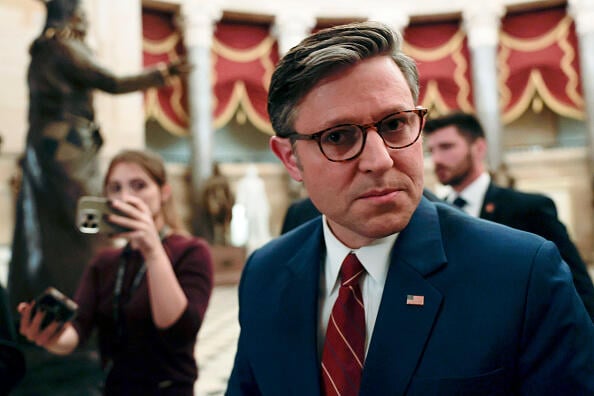
    PITHY STATEMENT FROM SPEAKER JOHNSON OR WHITE HOUSE

    Part of the package would fund the Department of Veterans Affairs, military construction, the Department of Agriculture, the Supplemental Nutrition Assistance Program and Congress through the end of the fiscal year. But it only appropriates funding for the Department of Education and most other agencies until Jan. 30, using what is known as a continuing resolution. For the most part, the CR gives agencies access to the same levels of federal funding as the last fiscal year.

    Jon Fansmith, senior vice president for government relations at the American Council on Education, said because some of the Education Department’s staff continued working throughout October and into November, not much will change for colleges and universities.

    “Financial aid was being disbursed, student loans were being serviced, all those things. So there probably won’t be an immediate significant shift,” he said. “It will, of course, be important for [grant] programs who have not been able to contact program officers with concerns or questions to have staff now available to them again. But that’s probably the biggest thing.”

    Fansmith also noted that some education benefits for military service members, which in many cases have been disrupted and backlogged due to staffing shortages, will take some time to get back up to speed.

    The 4 Parts of the Stopgap Bill

    “There are veterans who have housing benefits and education benefits and all sorts of assistance that they’re using to fund their educations that have just not been coming through over the last six weeks,” he said. “And even when they turn the government back on … that backlog has only grown in the interim. So it’s not going to be an immediate resolution.”

    Senate Democrats also negotiated with Republicans to reverse Trump’s latest round of layoffs in the stopgap bill. Theoretically, the legislation should reinstate more than 460 Department of Education employees within five days of it being enacted.

    It mandates that any employee who was subject to a reduction in force during the shutdown “shall have that notice rescinded and be returned to employment status.” (The majority of those employees were tasked with overseeing federal grant programs for both K–12 and higher education.)

    But Rachel Gittleman, president of the Education Department’s union, argues the language in the bill doesn’t do enough to protect public servants. She worries that saying staffers must be “returned to employment status” could allow Education Secretary Linda McMahon to place union members on administrative leave and not actually put them back to work.

    “The Trump administration has shown us repeatedly that they want to illegally dismantle our congressionally created federal agency,” she said. As such, “We have no confidence that the U.S. Education Department will follow the terms of the continuing resolution or allow the employees named in October firings to return—or even keep their jobs past January.”

    Fansmith is also skeptical department employees will return to their jobs.

    “[The administration hasn’t] shown much willingness to follow what the law requires. So I would absolutely assume we should expect to see efforts to further reduce staffing,” he said. “They’re not hiding the fact they’re trying to do it, and they don’t have a lot of compunction about the methods they use to do so.”

    A department spokesperson, however, told Inside Higher Ed that all employees—both those who were furloughed and those laid off during the shutdown—will return to work, as they remain employees of the department.

    The department also pointed to a ruling from the federal district court in Northern California that blocked the reduction in force in late October, saying that under that order, all employees who received a RIF notice during the shutdown remain employees of the federal government.

    Inside Higher Ed reached out to multiple Republican and Democratic lawmakers in both the House and the Senate to ask about the concerns Gittleman and Fansmith raised. None responded prior to publication.

    Source link

  • ACT and Texas Instruments Collaborate to Enhance Student Success in Mathematics

    ACT and Texas Instruments Collaborate to Enhance Student Success in Mathematics

    Iowa City, Iowa and Dallas, Texas (November 12, 2025) – ACT, a leader in college and career readiness assessment, and Texas Instruments Education Technology (TI), a division of the global semiconductor company, today announced a comprehensive partnership aimed at empowering students to achieve their best performance on the ACT mathematics test.

    This initiative brings together two education leaders to provide innovative resources and tools that maximize student potential. The partnership will start by providing:

    • A new dedicated online resource center featuring co-branded instructional videos demonstrating optimal use of TI calculators during the ACT mathematics test.
    • Additional study materials featuring TI calculators to help students build upon and apply their mathematical knowledge while maximizing their time on the ACT test.
    • Professional development programs for teachers focused on effective calculator-based testing strategies.

    “This partnership represents our commitment to providing students with the tools and resources they need to demonstrate their mathematical knowledge effectively,” said Andrew Taylor, Senior Vice President of Educational Solutions and International, ACT, “By working with Texas Instruments, we’re ensuring students have access to familiar, powerful technology tools during this important assessment.”

    “Texas Instruments is proud to partner with ACT to support student success,” said Laura Chambers, President at Texas Instruments Education Technology. “Our calculator technology, combined with targeted instructional resources, will help students showcase their true mathematical abilities during the ACT test.” 

    The new resources are available now to students and educators on the ACT website www.act.org under ACT Math Calculator Tips.

    About ACT

    ACT is transforming college and career readiness pathways so that everyone can discover and fulfill their potential. Grounded in more than 65 years of research, ACT’s learning resources, assessments, research, and work-ready credentials are trusted by students, job seekers, educators, schools, government agencies, and employers in the U.S. and around the world to help people achieve their education and career goals at every stage of life. Visit us at https://www.act.org/.  

    About Texas Instruments

    Texas Instruments Education Technology (TI) — the gold standard for excellence in math — provides exam-approved graphing calculators and interactive STEM technology. TI calculators and accessories drive student understanding and engagement without adding to online distractions. We are committed to empowering teachers, inspiring students and supporting real learning in classrooms everywhere. For more information, visit education.ti.com.

    Texas Instruments Incorporated (Nasdaq: TXN) is a global semiconductor company that designs, manufactures and sells analog and embedded processing chips for markets such as industrial, automotive, personal electronics, enterprise systems and communications equipment. At our core, we have a passion to create a better world by making electronics more affordable through semiconductors. This passion is alive today as each generation of innovation builds upon the last to make our technology more reliable, more affordable and lower power, making it possible for semiconductors to go into electronics everywhere. Learn more at TI.com.

    eSchool News Staff
    Latest posts by eSchool News Staff (see all)

    Source link

  • How CTE inspires long and fulfilling careers

    How CTE inspires long and fulfilling careers

    This post originally published on iCEV’s blog, and is republished here with permission.

    A career-centered education built on real experience

    One of the most transformative aspects of Career and Technical Education is how it connects learning to real life. When students understand that what they’re learning is preparing them for long and fulfilling careers, they engage more deeply. They build confidence, competence, and the practical skills employers seek in today’s competitive economy.

    I’ve seen that transformation firsthand, both as a teacher and someone who spent two decades outside the classroom as a financial analyst working with entrepreneurs. I began teaching Agricultural Science in 1987, but stepped away for 20 years to gain real-world experience in banking and finance. When I returned to teaching, I brought those experiences with me, and they changed the way I taught.

    Financial literacy in my Ag classes was not just another chapter in the curriculum–it became a bridge between the classroom and the real world. Students were not just completing assignments; they were developing skills that would serve them for life. And they were thriving. At Rio Rico High School in Arizona, we embed financial education directly into our Ag III and Ag IV courses. Students not only gain technical knowledge but also earn the Arizona Department of Education’s Personal Finance Diploma seal. I set a clear goal: students must complete their certifications by March of their senior year. Last year, 22 students achieved a 100% pass rate.

    Those aren’t just numbers. They’re students walking into the world with credentials, confidence, and direction. That’s the kind of outcome only CTE can deliver at scale.

    This is where curriculum systems designed around authentic, career-focused content make all the difference. With the right structure and tools, educators can consistently deliver high-impact instruction that leads to meaningful, measurable outcomes.

    CTE tools that work

    Like many teachers, I had to adapt quickly when the COVID-19 pandemic hit. I transitioned to remote instruction with document cameras, media screens, and Google Classroom. That’s when I found iCEV. I started with a 30-day free trial, and thanks to the support of their team, I was up and running fast. 

    iCEV became the adjustable wrench in my toolbox: versatile, reliable, and used every single day. It gave me structure without sacrificing flexibility. Students could access content independently, track their progress, and clearly see how their learning connected to real-world careers.

    But the most powerful lesson I have learned in CTE has nothing to do with tech or platforms. It is about trust. My advice to any educator getting started with CTE? Don’t start small. Set the bar high. Trust your students. They will rise. And when they do, you’ll see how capable they truly are.

    From classroom to career: The CTE trajectory

    CTE offers something few other educational pathways can match: a direct, skills-based progression from classroom learning to career readiness. The bridge is built through internships, industry partnerships, and work-based learning: components that do more than check a box. They shape students into adaptable, resilient professionals.

    In my program, students leave with more than knowledge. They leave with confidence, credentials, and a clear vision for their future. That’s what makes CTE different. We’re not preparing students for the next test. We’re preparing them for the next chapter of their lives.

    These opportunities give students a competitive edge. They introduce them to workplace dynamics, reinforce classroom instruction, and open doors to mentorship and advancement. They make learning feel relevant and empowering.

    As explored in the broader discussion on why the world needs CTE, the long-term impact of CTE extends far beyond individual outcomes. It supports economic mobility, fills critical workforce gaps, and ensures that learners are equipped not only for their first job, but for the evolution of work across their lifetimes.

    CTE educators as champions of opportunity

    Behind every successful student story is an educator or counselor who believed in their potential and provided the right support at the right time. As CTE educators, we’re not just instructors; we are workforce architects, building pipelines from education to employment with skill and heart.

    We guide students through certifications, licenses, career clusters, and postsecondary options. We introduce students to nontraditional career opportunities that might otherwise go unnoticed, and we ensure each learner is on a path that fits their strengths and aspirations.

    To sustain this level of mentorship and innovation, educators need access to tools that align with both classroom needs and evolving industry trends. High-quality guides provide frameworks for instruction, career planning, and student engagement, allowing us to focus on what matters most: helping every student achieve their full potential.

    Local roots, national impact

    When we talk about long and fulfilling careers, we’re also talking about the bigger picture:  stronger local economies, thriving communities, and a workforce that’s built to last.

    CTE plays a vital role at every level. It prepares students for in-demand careers that support their families, power small businesses, and fill national workforce gaps. States that invest in high-quality CTE programs consistently see the return: lower dropout rates, higher postsecondary enrollment, and greater job placement success.

    But the impact goes beyond metrics. When one student earns a certification, that success ripples outward—it lifts families, grows businesses, and builds stronger communities.

    CTE isn’t just about preparing students for jobs. It’s about giving them purpose. And when we invest in that purpose, we invest in long-term progress.

    Empowering the next generation with the right tools

    Access matters. The best ideas and strategies won’t create impact unless they are available, affordable, and actionable for the educators who need them. That’s why it’s essential for schools to explore resources that can strengthen their existing programs and help them grow.

    A free trial offers schools a way to explore these solutions without risk—experiencing firsthand how career-centered education can fit into their unique context. For those seeking deeper insights, a live demo can walk teams through the full potential of a platform built to support student success from day one.

    When programs are equipped with the right tools, they can exceed minimum standards. They can transform the educational experience into a launchpad for lifelong achievement.

    CTE is more than a pathway. It is a movement driven by student passion, educator commitment, and a collective belief in the value of hard work and practical knowledge. Every certification earned, every skill mastered, and every student empowered brings us closer to a future built on long and fulfilling careers for everyone.

    For more news on career readiness, visit eSN’s Innovative Teaching hub.

    Latest posts by eSchool Media Contributors (see all)

    Source link

  • Texas Gov. Orders Financial Investigation of Texas Southern

    Texas Gov. Orders Financial Investigation of Texas Southern

    Istockphoto.com/michelmond

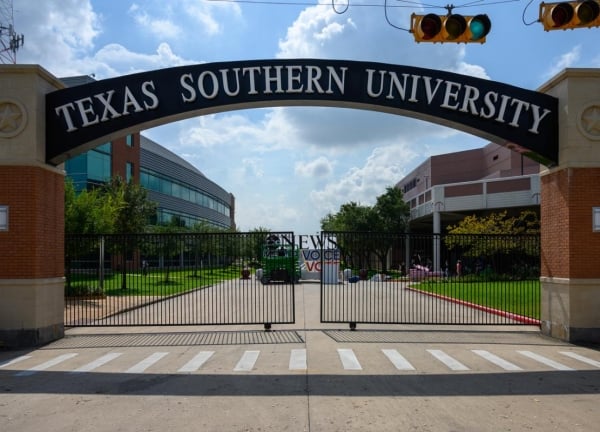
    Texas governor Greg Abbott and lieutenant governor Dan Patrick have ordered an investigation of Texas Southern University, a historically Black institution in Houston, after a state audit found evidence of financial mismanagement and bookkeeping inconsistencies, The Texas Tribune reported. Patrick also said he would look into freezing state funding to the institution.

    The audit found 700 invoices, totaling $280 million, linked to contracts that were listed as expired in the institution’s database. Another 800 invoices, worth $160 million, were dated before the purchases were approved, the Tribune reported. TSU was also months late in turning in financial statements for the past two fiscal years.

    The auditor attributed the errors to staffing vacancies, poor asset oversight and weak contracting processes.

    TSU officials said they had already fixed some of the issues outlined in the audit.

    “Texas Southern University has cooperated with the state auditor in evaluating our processes,” officials said in a statement. “The University enacted corrective measures prior to the release of the interim report, including a new procurement system. We look forward to gaining clarity and continuing to work with the state auditor to ensure transparency for all taxpayers of Texas.”

    Source link

  • Berkeley Law Dean Urges SCOTUS to Be “Guardrail” for Democracy

    Berkeley Law Dean Urges SCOTUS to Be “Guardrail” for Democracy

    Carlos Avila Gonzalez/The San Francisco Chronicle/Getty Images

    PHILADELPHIA—The final speech at the Association of Public and Land-grant Universities’ annual conference this week dissected the Trump administration’s “financial assault” on universities and urged the Supreme Court to be a check on a president whom Congress hasn’t reined in.

    Erwin Chemerinsky, dean of the University of California, Berkeley, School of Law and a constitutional scholar, also told the attendees of the APLU meeting that their institutions should be united against the administration’s attacks on higher ed.

    “The one thing we all learned on the playground is if you give in to a bully, it only makes it worse in the long term,” Chemerinsky said Tuesday, adding—to applause—that “it’s so important that institutions of higher education stand together at this moment and stand together for our shared missions.”

    The speech comes after multiple prominent universities, including a few public ones, refused to sign Trump’s proposed “Compact for Academic Excellence in Higher Education,” which asked them to give up significant autonomy in exchange for an unspecified edge in competitions for federal funds.

    It also follows legal victories against the administration’s grant cancellations. Litigation by UC researchers against Trump, the Department of Government Efficiency and other federal agencies and officials has restored more than $500 million in federal research grants, which the administration cut at UCLA after the Justice Department accused it of tolerating antisemitism during a spring 2024 pro-Palestinian protest encampment. Chemerinsky, who is Jewish, is representing the researchers in that litigation.

    Asked for comment, a White House official told Inside Higher Ed in an email, “UC Berkely clearly needs to make some changes – violence broke out on UC Berkeley’s campus just last night and they have failed to police antisemitism by tolerating an ‘unrelenting’ steam of antisemitic harassment toward Jewish students and faculty.”

    Even before the latest cuts, Chemerinsky estimated the Trump administration had already slashed close to $1 billion in funding for faculty and researchers across the UC system, a figure that he said was much higher than DOGE’s tally. The UC system didn’t confirm or deny this estimate or provide a more recent estimate Tuesday, saying the system was closed for Veterans Day.

    “I think the termination of grants that we’ve seen, whether it’s to researchers and faculty or to universities, is clearly illegal,” Chemerinsky said. But when it comes to “nonrenewal of grants in the future and funding in the future,” he added, the “government has far more discretion, and there it’s going to be much harder to bring legal challenges.”

    Chemerinsky also said federal funding cuts are just one of four financial vulnerabilities the administration has identified in universities: “they’re very dependent” on federal money, tuition, philanthropy and foreign students. Using his own institution as an example, he said Berkeley Law has an L.L.M., or master of laws, degree program that’s exclusively for foreign students and represents $20 million in its annual budget.

    He then expressed concern about how the Supreme Court has ruled on the administration’s actions, even beyond higher ed.

    “By my count, 39 matters have come to the Supreme Court since [Inauguration Day] Jan. 20, challenging actions of the Trump administration,” he said. “All are instances where the lower courts ruled against the Trump administration, and in 36 of 39, the Supreme Court has ruled in favor of the Trump administration.”

    Noting eight of the nine justices graduated from the law schools at either Harvard or Yale Universities (Amy Coney Barrett graduated from the University of Notre Dame), he said, “My optimistic self believes that the United States Supreme Court will stand up for higher education.” Chemerinsky added that since Congress hasn’t served as a check on the president, it’s up to the federal judiciary to uphold the laws and the Constitution.

    Fittingly, his speech took place at a Philadelphia hotel about a 15-minute walk from where the founders adopted the Constitution. APLU said more than 1,300 people attended this week’s three-day conference.

    “Ultimately, I believe the guardrail of our democracy has to be the courts and the Supreme Court,” Chemerinsky said. “If there is going to be a check on a president who has authoritarian impulses, it’s going to have to be from the restraints of the Constitution—and the only way we can enforce those is the courts.”

    Chemerinsky noted that “one characteristic of every authoritarian—or would-be authoritarian—rule is the way they go after universities. What we’ve seen in the last nine and a half months is unprecedented in American history.”

    He compared Trump’s actions to McCarthyism, the 1950s-era political persecution of faculty, government employees and others. But Chemerinsky pointed out that back then, “it wasn’t the president of the United States leading the attack on higher education,” and “there wasn’t the financial assault on universities.”

    “But the one thing that the McCarthy era should say to all of us is that history will judge us,” he said. “Twenty, 30, 50, 75 years from now, people will look back on us the way we look at university officials in the McCarthy era, and they will judge us as to whether we capitulated or whether we had courage.”

    Source link

  • Former Professor on How New College of Florida Lost Its Way

    Former Professor on How New College of Florida Lost Its Way

    Amy Reid spent more than 30 years at New College of Florida, where she served as a professor of French and the founder and director of the gender studies program. Her relatively secure employment as a tenured professor emboldened her to become one of the most outspoken critics of the conservative effort to transform NCF into a “Hillsdale College of the South,” led by then-interim president Richard Corcoran, who was hired by a swath of conservative trustees installed by Gov. Ron DeSantis in 2023.

    That same year, Reid was elected to serve as faculty representative on the Board of Trustees; she voted against Corcoran’s appointment to be the college’s permanent president and pushed back against numerous policies, including an effort by the administration to use the faculty to help enforce gendered bathroom laws.

    Last month, Corcoran denied a recommendation from the New College provost that Reid be granted emerita status at the college, citing Reid’s advocacy for faculty and academic freedom, which he described as “hyperbolic alarmism and needless obstruction.” In response, the New College Alumni Association Board of Directors made Reid an honorary alum.

    Since taking unpaid leave in August 2024 and then retiring a year later, Reid has brought her talents and penchant for advocacy to PEN America, a nonprofit focused on fighting education censorship and protecting press freedom.

    Inside Higher Ed spoke with Reid over Zoom about her experience as the faculty representative on the New College Board of Trustees, the transformation of the public liberal arts college and expanding efforts by Florida conservatives to censor faculty speech.

    The interview has been edited for length and clarity.

    Q: Before you became faculty representative on the Board of Trustees at New College, the previous representative quit in protest. What motivated you to pursue the role and what were you hoping to do with it?

    A: Things had been contentious on campus. Frankly, that’s an understatement. When the new board members were appointed that January [2023], they described their arrival on campus as a “siege”—using military language. So I began organizing with other faculty members and providing support to students so that they could respond to the rapid changes on campus, changes that included the immediate firing of our president [Patricia Okker], and then, over the coming weeks, a number of key leaders; the censoring of student speech and chalking on campus; the denial of tenure to a number of very qualified faculty.

    I started holding weekly teas for students, providing them a place to ask questions and to be heard and also to have cookies. So working with my colleagues and providing support for students were the two things that I really wanted to do.

    As a senior member of the faculty and as the leader of the gender studies program, I felt like I had a particular responsibility to speak up on campus. I knew that colleagues of mine who were not tenured couldn’t necessarily do that, so I tried to speak up for my community. And after Matt Lipinski resigned from the Board of Trustees and from his faculty position [after the board denied tenure to five professors], he actually reached out and asked me to stand for election as chair of the faculty, because I’d been both working in collaboration with others through the union and also because of my outspokenness as director of the gender studies program. So after talking with other colleagues, I agreed to stand for election in collaboration with two other colleagues.

    Q: What was the initial reception from the board when you joined?

    A: What I really remember, actually, was the real support that I had from colleagues and students and alums. So yes, there was a certain amount of tension with certain members of the Board of Trustees. There were people on the board who did reach out in friendly and professional ways—greeting me at meetings, things like that—but really I had strong support from faculty, alums and students, and that’s what mattered.

    Q: Do you think you were successful in the faculty representative role?

    A: That’s really a challenging question, and it depends on what metrics you want to use. I think I did a good job of raising serious questions and concerns in the trustee meetings, even if my votes were not often on the winning side. I always brought my integrity with me, and as an educator, that was really important to me. I think I was able to help rally faculty around various policy proposals that we put forth, because my job wasn’t just in the Board of Trustees, it was also in the management of the faculty, which meant multiple meetings every week about budgets and other administrative issues.

    There was a lot of work there behind the scenes to support faculty, to support the curriculum and also to advocate for students in a number of ways. I know that students and faculty and alums felt that they could reach out to me about their concerns, that they knew I would listen and respond. When people spoke at Board of Trustees meetings, I paid attention and took notes on all of the people who came to speak. In that way, I think I was effective, but frankly, the votes on the board were stacked.

    Q: When you resigned, you said that the “New College where you once taught no longer existed.” Was there a specific moment that tanked your faith in New College leadership?

    A: It’s really not about a loss of faith in the new leadership. Richard Corcoran came in with a set of ideas about how he wanted to change the campus, to change what one trustee called the “hormonal and political balance on campus.” And Corcoran followed through on that. I can point first to the firing of valuable and dedicated campus leaders, including President Patricia Okker, the dean of diversity, the campus research librarian. [I can also point to] the denial of tenure to six very qualified and effective faculty, the chasing away of over 30 percent of the faculty and about 100 students—and that’s a real record for the first eight months of this administration.

    Then you have the painting over of student art on campus, the replacement of grass with Astroturf and the plowing down of hundreds of trees along the bay front. You have the wasting of millions of dollars of state funds on bloated administrative salaries and portable dorms that were uninhabitable within three months due to mold. You have the abolishing of the gender studies program in the summer of 2023, the erasure of our budget, our eviction from our campus office in December of 2023. The imposition of a rigid and limited core curriculum in spring of 2024. The withholding of diplomas from a cohort of students in May 2024, the wholesale destruction of the student-led gender and diversity center in August 2024. That was a student-led space with a collection of books that had been curated by students for over 30 years, all thrown in the dumpster.

    So not one moment, but a lot. But what I still have faith in, even today, is the determination of students and alums to pursue an education that embodies academic freedom, which I understand is the right of students to pursue an education free from government censorship. And also, I have great faith in those faculty who are remaining, who support the New College academic mission and who are doing their best day in and day out to support our students.

    Q: Were you surprised when Corcoran denied the dean’s recommendation to grant you emerita status?

    A: Not really. I’d say it’s par for the course, but I was surprised that he was so up front about his reasons. In his statement, he noted that despite my record of achievement as a teacher and a researcher, it was my advocacy for the college—my opposition to him—that was the problem. So now he’s on the record explicitly as punishing speech, and that is stunning.

    What happened to me is just one small thing, but it reflects a pattern of censorship on the campus that needs to be called out. But more importantly at this moment, I really want to thank my colleagues who nominated me for emeritus status and the New College alums who adopted me as one of their own. That’s meaningful, and I am very grateful.

    Q: As a reporter, I spend a lot of time reading and writing bad news, but I’m seeing the same types of attacks on faculty speech and academic freedom that happened at New College occur at other institutions, in Florida and elsewhere. Would you say these current attacks on faculty speech are unprecedented?

    A: A lot of people have talked about this as unprecedented, but what I see is the culmination of a pattern of censorship we’ve seen playing out at state levels across the country. In Florida, in 2022, they passed House Bill 233, which allows or encourages students to surreptitiously record faculty if they intend to file a complaint against them.

    Since then, really, the state has been tightening a gag around faculty speech in myriad ways. Just in the past couple of months, we’ve seen a number of faculty sanctioned—even one emeritus professor at [University of Florida] lost his status based on complaints about his social media posts. So what’s happening now could be cast as unprecedented, but yet, it’s part of this pattern we see playing out now, not just in Florida, but across the country, where some 50 faculty members have been sanctioned or fired because of their speech or social media posts since the start of September.

    Since 2021, PEN America has been actively tracking efforts to censor speech in college and university classrooms across the country, and we’ve seen a real rise in the number of bills introduced to censor speech … and in the numbers that are being passed; 2025 was really a banner year for censorship in higher education in this country. There were a record number of gag orders passed across the country—10 of them, 10 bills that explicitly limit what can be said in college and university classrooms.

    And then there are other restrictions designed to chill faculty speech—restrictions on tenure or curricular control bills, and let’s also remember the bills that were introduced or passed to limit student protests on campus. All of those things are designed to make people afraid to speak up and to question things on campus. That’s not healthy for our education system, and it’s not healthy for our democracy. Currently, about 40 percent of the U.S. population lives in a state that has at least one state-level law restricting classroom speech at the college and university level. Is that something we’re OK with as a country? Do we really think that our First Amendment rights are that fungible?

    Source link

  • Ken Bain Changed College Teaching Forever

    Ken Bain Changed College Teaching Forever

    Is it possible for someone you’ve never met to be a mentor?

    I don’t know how else to describe Ken Bain, author of What the Best College Teachers Do, a book that transformed not just my teaching, but my entire life.

    Ken Bain passed away on Oct. 10. I first learned this news on LinkedIn from Jim Lang, who did know and was directly mentored by Ken Bain and, like the several dozen folks who offered comments on his passing—and also me—whose life and work were profoundly affected by Ken Bain’s work.

    (I also recommend checking out this episode of Bonni Stachowiak’s Teaching in Higher Ed podcast, which remembers Ken Bain and provides links to his multiple appearances on the show.)

    I read an advance copy of What The Best College Teachers Do sometime in early 2004 in a period where I was starting to question the folklore of teaching I had absorbed as a student and graduate assistant, and it immediately changed how I thought about my own work, kicking off a process of consideration and experimentation around teaching writing that continues to this day.

    What the Best College Teachers Do reflects more than a decade of study and is entirely based in observations of teaching, teaching materials, student responses and reflections, interviews and other sources, filtered through various lenses (history, literary analysis, sociology, ethnography, investigative journalism) to draw both big conclusions about not just what teachers do, but how they think, how they relate to students, how they view their work and how they evolve their approaches.

    The method is relentlessly qualitative rather than quantitative, and it can be straightforwardly adapted to one’s own work.

    At least that’s how I used the book. Looking through some of the text for the first time in years, I can see significant strands of What the Best College Teachers Do DNA in my writing about the writer’s practice. The lens of “doing” as the central feature of any work has been part of my personal framework for so long that I almost lost its origin, but there it is.

    One of my very first posts at Inside Higher Ed, back before I even had my own section and was merely guesting at Oronte Churm’s joint, was on What the Best College Teachers Do.

    The book is more than 20 years old, but its framing questions are evergreen and even more relevant in this AI age. The book asks and answers the following questions:

    1. What do the best teachers know and understand?
    2. How do they prepare to teach?
    3. What do they expect of their students?
    4. What do they do when they teach?
    5. How do they treat students?
    6. How do they check their progress and evaluate their efforts?

    The book helpfully encapsulates the study’s findings under these categories, and as bullet points of good teaching practice they are spot-on. But I am also here to testify that they are not a substitute for the full experience of reading What the Best College Teachers Do, because the act of reading the specific illustrations and examples that gave rise to these findings allows for the individual to reflect on their own practices relative to others.

    The first thing I did after reading and absorbing What the Best College Teachers Do was change my attendance policy to no longer punish students based on a maximum number of absences. I’d engaged in this practice because it had been handed down as conventional wisdom: If you don’t police student attendance, they won’t show up. Bain’s best teachers challenged this conventional wisdom.

    The positive effects were immediate. I stepped up my game in terms of making sure class was viewed by students as productive and necessary. My mood improved, as I no longer stewed over students who were pushing their luck in terms of absences, daring me to dock their overall semester grade.

    Attendance went up! I asked students about this, and they said that when a class says you “get four absences” they were treating that as a kind of permission (or even encouragement) to go ahead and miss four classes. Student agency and self-responsibility increased. If they missed a class, they knew what they had to do, and it didn’t involve me.

    The experiments continued, leading ultimately to the writer’s practice and my embrace of alternative assessment, developments that made me a much more effective instructor and now, improbably, someone invited to colleges and universities to share his expertise on these subjects.

    It would not have happened without the work and mentorship of Ken Bain, mentorship I experienced entirely through reading his book.

    I worry that mentorship is going to be further eroded by AI, particularly if entry-level jobs with their apprenticeship tasks are now completed through automation, rather than by working with other, more experienced humans. The enthusiasm for letting large language models compress texts into summaries rather than reading the full work of another unique intelligence is also a threat.

    My conviction that our way forward through the challenge of AI is rooted in deeply examining the experiences of learning and fostering those experiences for students only grows stronger by the day. What the Best College Teachers Do is experiences all the way down, a book of observations conveyed in such a way that allows us to make use of them, literally, in what we do.

    A great man. A great mentor. Ken Bain’s work will live on through the many pedagogues he’s inspired.

    Source link

  • Transitioning to the Agentic University 2026–27

    Transitioning to the Agentic University 2026–27

    The dramatic enhancement in the capability of AI as it moves from bots to agents will bring about efficiencies and have a far greater impact on the day-to-day operations, strategies and effectiveness of our institutions. We will become less expensive, more personalized and more responsive to students and employers. Those are big claims, so for this column, I turned to my personal assistant, Google Gemini 2.5 Pro on Nov. 1, 2025, to help me with identifying the pathway to those outcomes.

    Caveats

    In this article, I can only hit the high points along the way in developing an agentic AI–enhanced university. This is merely a broad-brush, incomplete view that each university should adjust and enhance in order to meet its structures and needs. I also encourage you to read the valuable McKinsey article “Deploying agentic AI with safety and security: A playbook for technology leaders,” published on Oct. 15, 2025, for important security and safety information.

    Gemini Pro prefaced its recommendations with:

    This is the central strategic challenge for the next 36 months. The institution has successfully navigated the first wave—generative AI, which is about creating content. You are right to be concerned about the second, more powerful wave: agentic AI, which is about taking action.

    Where generative AI is a research assistant, an agentic AI is a 24/7, autonomous project manager. It can understand a high-level goal (e.g., “increase retention for first-generation students”), create a multi-step plan, execute that plan across different software systems and learn from its mistakes without constant human prompting.

    Competitors will use this to create profound operational efficiencies and new, hyper-personalized student services. The institutions that wait will be competing on price and quality against a rival that has automated its back office and given every student a personal AI adviser.

    This will take significant thought and planning across the university. It will be important that we include all members of the university community to make this a coordinated, comprehensive change that will significantly advance the efficiency, effectiveness and relevance of the institution. Timing is important. We must begin immediately if we hope to have major changes in place before the end of 2027. Let’s begin!

    First Half of 2026 Foundation and Vision

    We will need an executive task force with the knowledge, resources and shared vision to accomplish this task. Gemini recommends we be sure to include:

    • Chief information officer: To map the data and systems.
    • Chief financial officer: To identify cost-saving opportunities and fund pilots.
    • Provost: To champion the academic quality and student-facing initiatives.
    • VP of enrollment: To represent the entire student life cycle (recruitment to alumni).
    • VP of operations: To represent the “back office” (HR, grounds, facilities).

    The executive task force will want to set up opportunities for input and support of the initiative. Perhaps the first step will be to seek ideas of whether the first order of priority should be quality improvement (hyperpersonalization of services to the learners) or cost efficiency (operational excellence). Both of these will be needed in the long run in order to survive the agent-enabled competition that will be both of higher quality and less expensive. In seeking input on this choice, universitywide awareness can be fostered. Perhaps a broad university forum could be scheduled on the topic with smaller, targeted follow-ups with faculty, staff, students, administrators and external stakeholder groups scheduled as the initiative proceeds.

    One of the first steps of the executive task force will be to perform a universitywide Agent Readiness Audit. Since agents run on data and processes, we need to identify any data silos and process bottlenecks. These will be among our first priorities to ensure that agents can perform work smoothly and efficiently. Resolving these may also be among the most time-consuming changes. However, removing these data roadblocks can begin to show immediate progress in responsiveness and efficiency.

    Second Half of 2026 Into Spring 2027 Pilot and Infrastructure

    Gemini suggests that a good starting point in the summer of 2026 would be to set up two pilots:

    • Cost-Saving Pilot: The Facilities Agent
    • Goal: Reduce energy and maintenance costs.
    • Action: An AI agent integrates with the campus event schedule, weather forecasts and the building HVAC/lighting systems. It autonomously adjusts climate control and lighting for actual use, not just a fixed timer. It also fields all maintenance requests, triages them and dispatches staff or robotic mowers/vacuums automatically.
    • Quality-Improvement Pilot Example: The Proactive Adviser Agent
    • Goal: Improve retention for at-risk students.
    • Action: An agent monitors student data in real time (LMS engagement, attendance, early grade-book data). It doesn’t replace the human adviser. It acts as their assistant, flagging a student who is at risk before the midterm and autonomously executing a plan: sending a nudge, offering to schedule a tutoring session and summarizing the risk profile for the human adviser to review.

    Our most significant centralized expense will be to set up a secure digital sandbox. The pilots cannot live on a faculty member’s laptop. The CIO must lead the creation of a central, secure platform. This sandbox is a secure environment where AI agents can be developed, tested and given access to the university’s core data APIs (e.g., SIS, LMS and ERP).

    Gemini reminds me that, concurrently, we must set up a new entity. The generative AI rules were about plagiarism. The agentic AI rules must be about liability. The new entity is a kind of Agent Accountability Framework. It deals with policy questions such as:

    • Who is responsible when an agent gives a student incorrect financial aid advice?
    • What is the off-switch when an agent-driven workflow (like course wait lists) creates an inequitable outcome? Who has authority to flip the switch?
    • By whom and how are an agent’s actions audited?

    Implementation Across University Through Fall 2027

    There will be many personnel and staffing topics to address. By the summer of 2027, we should be well on the way to refining roles and position descriptions of employees. The emphasis should be efficient, enhanced redesign of roles rather than staffing cuts. Some cuts will come from normal turnover as staff find more attractive opportunities or retire. In most cases, employees will become much more productive, handing off their redundant, lower-level work to agents. For example, Gemini Pro envisions:

    • The admissions counselor who used to answer 500 identical emails now manages a team of AI agents that handle the routine questions, freeing the counselor to spend one-on-one time with high-priority applicants.
    • The IT help desk technician no longer resets passwords. The technicians now train the AI agent on how to troubleshoot new software and directly handle only the most complex, level-three issues.
    • The human adviser now manages a caseload of 500 students (not 150), because the AI assistant handles 90 percent of the administrative churn, allowing the adviser to focus on high-impact mentoring.

    Gemini Pro suggests that this approach can result in a higher-quality, more efficient university that will be able to compete in the years ahead. The final step is the most critical and is the job of everyone, from the president and board on down. We must champion a culture where AI agents are seen as collaborators, not replacements. This is a human-AI “co-bot” workforce.

    The institutions that win in 2027 will be those that successfully trained their managers to lead mixed teams of human and AI employees. This is the single greatest competitive advantage one can build.

    This framework will position the university not just to survive the agentic AI wave but to lead it, creating an institution that is both more efficient and, critically, more human-centered.

    Source link

  • Colleges Expand Basic Needs Support Following SNAP Freeze

    Colleges Expand Basic Needs Support Following SNAP Freeze

    The government shutdown may be nearing its end, but the delayed distribution of food assistance funds continues to pose a threat to Americans, including the basic needs security of college students. For now, the future of Supplemental Nutrition Assistance Program funding remains cloudy amid the federal government’s ongoing court battles against releasing the funds.

    Nearly three in five college students experience some form of basic needs insecurity, and two in five experience food insecurity, according to national surveys. In addition, approximately 3.3 million college students are eligible for federal food assistance, according to 2020 data, though a large share do not utilize SNAP due to lack of awareness.

    Financial insecurity is one of the top threats to student retention and persistence in higher education, meaning a lapse in support may impede some students’ ability to remain enrolled.

    Some colleges and universities have established new or expanded measures to plug the gap in food support for students during the shutdown, including expanding the hours of campus food pantries and promoting emergency grant funding.

    University of Minnesota

    Minnesota administrators announced on Nov. 3 that students affected by the lack of SNAP funds would be able to access one free meal a day in the residential dining hall until benefits resume. The university estimates fewer than 1,000 individuals on campus are enrolled in SNAP.

    In addition, the on-campus food pantry, Nutritious U, will offer expanded hours for the rest of the semester, opening one hour earlier to serve more students.

    Franklin Pierce University

    The New Hampshire–based university provides basic needs resources at several campus locations—including the library, counseling center and the Office of Outreach and Engagement—to ensure students can have access to food and hygiene products.

    The pantry, Rations for Ravens, is funded primarily through donations, both monetary and physical products.

    City University of New York

    CUNY chancellor Félix Matos Rodríguez announced the university system would allocate additional funding to all campuses “so they can stock extra supplies in their on-site food pantries or provide food assistance in other forms,” he wrote in a Nov. 7 email to students. CUNY students can visit any campus pantry in the system, regardless of their home enrollment, allowing them to access those with the most convenient hours and locations.

    The chancellor also urged students to apply for SNAP benefits for future assistance; students at the Bronx campuses (Lehman, Hostos and Bronx Community College) can also participate in a pilot program for community-based resources.

    Austin Community College

    Nearly half of the students at Austin Community College are food insecure, according to fall 2023 survey data. Since the government shutdown, officials have received up to 500 requests a week for emergency aid from the college’s 74,000 students, as reported by The Austin American-Statesman.

    The college has pantries on every campus, called River Food Bites, which now have extended hours to meet students’ needs. ACC also allocated $25,000 in emergency funding to purchase gift cards to the H-E-B grocery store, and staff plan to create meal kits to support students over winter break.

    Long Beach City College

    The California college expanded services at its food pantry locations, called Viking Vaults, by increasing food options and offering food cards to students who have been impacted by suspended SNAP benefits. Students can also apply for emergency aid, and the college outlined a list of FAQs to address their concerns during the shutdown.

    University of North Carolina at Chapel Hill

    UNC offers a variety of basic needs resources during a typical academic year, some of which have been expanded to meet the current surge in demand.

    Undergraduate and graduate students can access any of the six on-campus food pantries or nine gardens around campus to pick up food. Eligible students can also receive a free campus dining meal card through a referral form. In addition, the university is piloting a meal swipe donation program for the end of the term so students can share their unused meals with others.

    Students can also receive push notifications of events and other free resources through campus events.

    Source link