Tag: Career

  • Trump Defends Enrolling International Students

    Trump Defends Enrolling International Students

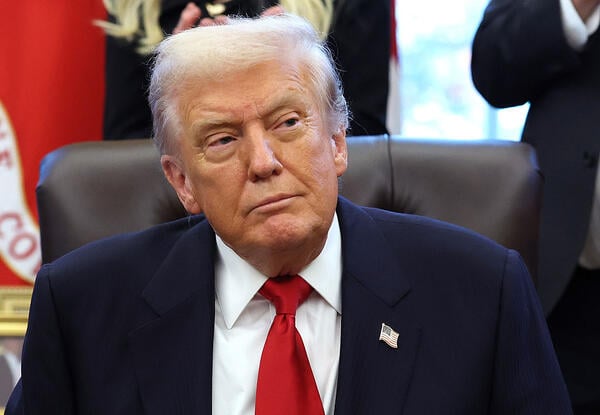
    President Donald Trump stressed the value of international students in the U.S. during an interview aired on Fox News Monday.  

    Fox News host Laura Ingraham pressed Trump on why he wouldn’t curb international student enrollments, particularly from China. Trump told her doing so would “perhaps make people happy” but colleges and universities would “go out of business.”

    “You don’t want to cut half of the people, half of the students from all over the world that are coming into our country—destroy our entire university and college system—I don’t want to do that,” Trump said. He also claimed historically Black colleges and universities would “all be out of business.”

    “Look, I want to be able to get along with the world,” Trump added.

    Ingraham pushed back, raising concerns about Chinese spying and intellectual property theft. But Trump framed welcoming international students as an economic decision.

    “We take in trillions of dollars from students,” he said. “You know, the students pay more than double when they come in from most foreign countries. I want to see our school system thrive. And it’s not that I want them, but I view it as a business.”

    The annual Open Doors report from the Institute of International Education estimates the economic value of foreign students in the U.S. to be about $50 billion per year.

    In May, Secretary of State Marco Rubio threatened to “aggressively revoke” Chinese students’ visas and intensify vetting for Chinese visa applications. But Trump reversed course this summer and proposed the U.S. allow 600,000 Chinese students into the country, prompting backlash from some members of his base, the Associated Press reported.

    The move, and Trump’s reiterated support for it on Fox this week, seem to contradict other actions his administration has taken, such as revoking international students’ visas, arresting international students for First Amendment–protected protests and ramping up scrutiny of international student visa applicants. Some campuses have experienced steep declines in international student enrollments this semester.

    Source link

  • Texas Gov. Orders Financial Investigation of Texas Southern

    Texas Gov. Orders Financial Investigation of Texas Southern

    Istockphoto.com/michelmond

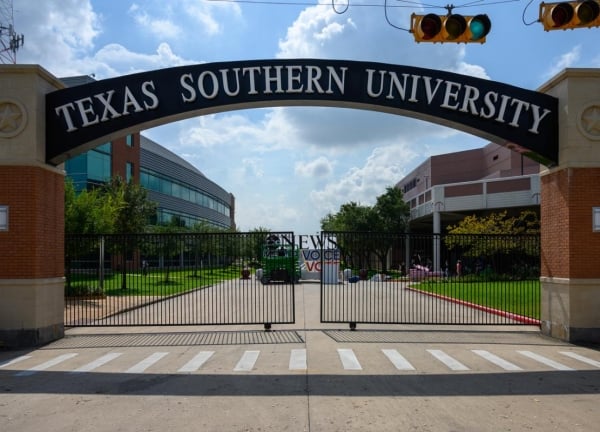
    Texas governor Greg Abbott and lieutenant governor Dan Patrick have ordered an investigation of Texas Southern University, a historically Black institution in Houston, after a state audit found evidence of financial mismanagement and bookkeeping inconsistencies, The Texas Tribune reported. Patrick also said he would look into freezing state funding to the institution.

    The audit found 700 invoices, totaling $280 million, linked to contracts that were listed as expired in the institution’s database. Another 800 invoices, worth $160 million, were dated before the purchases were approved, the Tribune reported. TSU was also months late in turning in financial statements for the past two fiscal years.

    The auditor attributed the errors to staffing vacancies, poor asset oversight and weak contracting processes.

    TSU officials said they had already fixed some of the issues outlined in the audit.

    “Texas Southern University has cooperated with the state auditor in evaluating our processes,” officials said in a statement. “The University enacted corrective measures prior to the release of the interim report, including a new procurement system. We look forward to gaining clarity and continuing to work with the state auditor to ensure transparency for all taxpayers of Texas.”

    Source link

  • Berkeley Law Dean Urges SCOTUS to Be “Guardrail” for Democracy

    Berkeley Law Dean Urges SCOTUS to Be “Guardrail” for Democracy

    Carlos Avila Gonzalez/The San Francisco Chronicle/Getty Images

    PHILADELPHIA—The final speech at the Association of Public and Land-grant Universities’ annual conference this week dissected the Trump administration’s “financial assault” on universities and urged the Supreme Court to be a check on a president whom Congress hasn’t reined in.

    Erwin Chemerinsky, dean of the University of California, Berkeley, School of Law and a constitutional scholar, also told the attendees of the APLU meeting that their institutions should be united against the administration’s attacks on higher ed.

    “The one thing we all learned on the playground is if you give in to a bully, it only makes it worse in the long term,” Chemerinsky said Tuesday, adding—to applause—that “it’s so important that institutions of higher education stand together at this moment and stand together for our shared missions.”

    The speech comes after multiple prominent universities, including a few public ones, refused to sign Trump’s proposed “Compact for Academic Excellence in Higher Education,” which asked them to give up significant autonomy in exchange for an unspecified edge in competitions for federal funds.

    It also follows legal victories against the administration’s grant cancellations. Litigation by UC researchers against Trump, the Department of Government Efficiency and other federal agencies and officials has restored more than $500 million in federal research grants, which the administration cut at UCLA after the Justice Department accused it of tolerating antisemitism during a spring 2024 pro-Palestinian protest encampment. Chemerinsky, who is Jewish, is representing the researchers in that litigation.

    Asked for comment, a White House official told Inside Higher Ed in an email, “UC Berkely clearly needs to make some changes – violence broke out on UC Berkeley’s campus just last night and they have failed to police antisemitism by tolerating an ‘unrelenting’ steam of antisemitic harassment toward Jewish students and faculty.”

    Even before the latest cuts, Chemerinsky estimated the Trump administration had already slashed close to $1 billion in funding for faculty and researchers across the UC system, a figure that he said was much higher than DOGE’s tally. The UC system didn’t confirm or deny this estimate or provide a more recent estimate Tuesday, saying the system was closed for Veterans Day.

    “I think the termination of grants that we’ve seen, whether it’s to researchers and faculty or to universities, is clearly illegal,” Chemerinsky said. But when it comes to “nonrenewal of grants in the future and funding in the future,” he added, the “government has far more discretion, and there it’s going to be much harder to bring legal challenges.”

    Chemerinsky also said federal funding cuts are just one of four financial vulnerabilities the administration has identified in universities: “they’re very dependent” on federal money, tuition, philanthropy and foreign students. Using his own institution as an example, he said Berkeley Law has an L.L.M., or master of laws, degree program that’s exclusively for foreign students and represents $20 million in its annual budget.

    He then expressed concern about how the Supreme Court has ruled on the administration’s actions, even beyond higher ed.

    “By my count, 39 matters have come to the Supreme Court since [Inauguration Day] Jan. 20, challenging actions of the Trump administration,” he said. “All are instances where the lower courts ruled against the Trump administration, and in 36 of 39, the Supreme Court has ruled in favor of the Trump administration.”

    Noting eight of the nine justices graduated from the law schools at either Harvard or Yale Universities (Amy Coney Barrett graduated from the University of Notre Dame), he said, “My optimistic self believes that the United States Supreme Court will stand up for higher education.” Chemerinsky added that since Congress hasn’t served as a check on the president, it’s up to the federal judiciary to uphold the laws and the Constitution.

    Fittingly, his speech took place at a Philadelphia hotel about a 15-minute walk from where the founders adopted the Constitution. APLU said more than 1,300 people attended this week’s three-day conference.

    “Ultimately, I believe the guardrail of our democracy has to be the courts and the Supreme Court,” Chemerinsky said. “If there is going to be a check on a president who has authoritarian impulses, it’s going to have to be from the restraints of the Constitution—and the only way we can enforce those is the courts.”

    Chemerinsky noted that “one characteristic of every authoritarian—or would-be authoritarian—rule is the way they go after universities. What we’ve seen in the last nine and a half months is unprecedented in American history.”

    He compared Trump’s actions to McCarthyism, the 1950s-era political persecution of faculty, government employees and others. But Chemerinsky pointed out that back then, “it wasn’t the president of the United States leading the attack on higher education,” and “there wasn’t the financial assault on universities.”

    “But the one thing that the McCarthy era should say to all of us is that history will judge us,” he said. “Twenty, 30, 50, 75 years from now, people will look back on us the way we look at university officials in the McCarthy era, and they will judge us as to whether we capitulated or whether we had courage.”

    Source link

  • 3 Questions for MIT’s Luke Hobson

    3 Questions for MIT’s Luke Hobson

    Luke Hobson does it all. He is not only assistant director of instructional design for MIT xPRO and a lecturer at the University of Miami’s School of Education and Human Development, but Luke also writes books, hosts a podcast, blogs, publishes a newsletter, creates videos on YouTube and seems to know everyone in our field.

    I asked if Luke would be willing to step away from all these commitments and projects to answer my questions, and he graciously agreed.

    Q: How did your career progress from an individual learning design contributor to advancing into a leadership role at your institution, as well as a thought leader and creator in the learning, technology and design space? What advice do you have for others in our field looking to increase their campus and national impact?

    A: I have a bit of an obsession within our field. I still find it remarkable that, for a living, I get to care about designing learning experiences. Funny enough, I had no idea this field even existed until I met an instructional designer back in 2013. As soon as I learned that this was a career, I went all in. That obsessive mentality stayed with me when I became a contributor at Northeastern University and later at MIT. I wanted to find every possible way to create the most effective and meaningful kinds of courses and programs.

    Through all of my seldom successes and many, many failures, I learned a thing or two along the way, and I decided to start sharing these stories online. It began with answering questions in Facebook groups, which eventually turned into a blog, a podcast, a YouTube channel, a book and more. What I discovered through sharing these moments is that I developed a love for teaching about instructional design. This led me to pursue a leadership role at MIT and to build a team of instructional designers. It also led me to teach in the University of Miami’s online Ed.D. program. Being able to teach future leaders in learning science has been an incredibly rewarding experience.

    The best piece of advice I can give is to share. Share everything. Share your wins. Share your losses. Share your moments of glory. Share the times you fall flat on your face. People appreciate transparency. That’s how I built my brand online and my presence at MIT. I didn’t realize how much of an impact I was having until multiple faculty members mentioned following me on LinkedIn and asked how they could hire an instructional designer for their team. It’s been amazing to see the growth of IDs here from when I first started to now.

    Another step you can take today is to build your network. Dig the well before you’re thirsty. You mentioned how it seems like I know everyone in our field and I chuckled, thinking back to when I didn’t know a soul in instructional design. The pandemic opened my eyes: Everyone was stuck at home and on Zoom, so I took advantage of that. I reached out to people on LinkedIn for virtual coffee chats, invited them on my podcast, gave webinars for universities and companies, and more. All of this was to get to know people. If you want to make an impact, you can’t do it alone. You need the support of others, and there is no better community than the learning nerds.

    Q: Your Ed.D. is in educational leadership. Please tell us about your program and how completing a terminal degree in this field has impacted your career. For our community of nonfaculty educators—learning nerds—what are your recommendations around pursuing a doctorate while working?

    A: I’m thankful that I had a truly fantastic Ed.D. experience. I have to give all the credit in the world to Dr. Peg Ford for what she built at Southern New Hampshire University. I was on the fence about pursuing this degree, but after speaking with current students at the time, I felt like it was the right place for me. The program was built on a core foundation of a cohort-based model and forging strong bonds with fellow members. Dr. Ford understood the perils and curve balls life throws your way when you’re pursuing a doctorate and how easily those challenges can land you in A.B.D. limbo. It didn’t take long to see she was absolutely right. Our cohort faced major life events—losing loved ones, taking on new roles, having children, relocating to new cities and more. Through it all, we stuck together.

    What I appreciated most about my Ed.D. in educational leadership was the range of educators I met. From business professors to special education teachers, from deans to superintendents, I had the opportunity to hear a wide variety of perspectives on education and what it means to support students and fellow educators. I was introduced to the good, the bad and the ugly. By taking in all of those voices, I was able to apply their teachings and life lessons to my own learning experiences. That program shaped me into the educator I am today.

    What I find most surprising is that I now teach in an online Ed.D. program in applied learning sciences at the University of Miami. I often share with my students the same message about sticking together as a cohort and how those bonds will carry them through. While Dr. Ford is no longer associated with SNHU’s program, my dissertation chair, Dr. Audrey Rodgers, is now leading it. I recently had the chance to speak with current students, and it’s amazing to see how much the program has grown since I graduated.

    Here’s what I wish I knew before pursuing a doctorate: It’s absolutely possible to do, but it will be the hardest thing you’ve ever done. There’s a reason why only a small fraction of the population holds the title of doctor. No matter which school you attend, it’s going to be difficult. But in my opinion, it’s worth it. I knew I wanted to work in academia, and after speaking with a few colleagues, they all advised me to go back to grad school. Every role I wanted in the future required either an Ed.D. or a Ph.D., so it was the logical choice.

    With all that said, the first step in your journey as a working professional should be finding the right program for your needs. Not all programs are created equal. After all, you’re about to commit at least three to seven years of your life to this institution, so it’s important to choose wisely. Do your due diligence. Contact the institution and ask as many questions as you want. Watch program webinars. Find currently enrolled students on LinkedIn and ask for a quick chat about their experience. Connect with faculty and administrators. Read online reviews. Go the extra mile before starting this journey.

    Once you’ve found the right program for your goals, my best advice is to set up a system that works for your life. Your schedule has to shift to make space for classwork, research, lectures, readings and everything else. For me, this meant starting my days earlier. I found myself constantly distracted during the day, so I decided to wake up before everyone else. Surprisingly, it worked. Once you find a system that fits, it needs to become sacred and a top priority. I also relied heavily on the Pomodoro technique to stay focused and on track. If you haven’t used the “study with me” videos on YouTube, you’re missing out. Whatever helps you get into a state of flow is going to be key.

    And I know your question was about going back to school while working, but honestly, work wasn’t the hardest part of my academic journey. For me, it was family and my social life. Work will always be there. But when you start missing family functions, birthdays and social events, it’s tough. I essentially became a hermit during the final stretch of my dissertation. That was the only way I could stay focused and meet my goals.

    Q: The growth of online programs has increased the demand for learning designers. There is concern within our profession that in the (near) future, AI will be able to do much of the work that learning designers have traditionally done. How worried should learning designers be and what can they do to ensure they are not replaced by AI?

    A: Ah yes, the million-dollar question. What’s funny is that I’ve been designing AI courses long before the generative AI boom, and I could’ve never predicted that AI would find its way into our space. In health care, medication discovery or 3-D printing? Sure. But instructional design? That thought never crossed my mind. Yet here we are.

    Let’s break down your question a bit, starting with the concern around AI. You’re going to see this come in waves. A new breakthrough will happen, there will be mass pandemonium online and, within a few weeks, it fades. AI tools will continue to evolve and become more helpful, but someone still has to drive the bus. AI can’t do everything for you. I think that’s where many decision-makers are getting confused. Everyone is trying to add AI into their products, but do people actually want those features? The answer is often no.

    AI can be helpful for kick-starting ideas. But if you’re a student and you find out that your entire course was generated by AI and not created by a human, you’d likely be furious.

    A great source of insight on this is Reddit. You’ll find post after post from students deeply concerned about how AI is being used, whether by classmates or even by professors. LLMs tend to have a certain tone and style. It’s hard to describe exactly, but the writing often feels off. Unnatural. AI isn’t magical, even though that’s exactly how marketers are presenting it. LLMs work by predicting patterns based on data and trying to say the next most probable thing to please the user. In many cases, this doesn’t add up.

    Now, on to the second part of your question: What can instructional designers do to ensure they’re not replaced?

    We do what we’ve always done. We learn. Become the most knowledgeable person on your team when it comes to the ins and outs of AI. For many, AI still feels like a black box, and that’s understandable. But if you know which tool serves which purpose and how to use these tools to enhance your designs, ensure accessibility, create flexible learning pathways, transform content into different formats and generate compelling visuals, you’ll be far ahead of the curve.

    As you experiment, you’ll also encounter the limits of these tools. And when you see where AI stumbles, you’ll feel much more secure about your place in this evolving landscape. It’s not there yet. And getting an entire industry to adopt something at scale, especially something as complex as AI, is a massive undertaking.

    Source link

  • Trump Gutted ED’s Civil Rights Office. Could States Step Up?

    Trump Gutted ED’s Civil Rights Office. Could States Step Up?

    The Education Department’s Office for Civil Rights, which is supposed to protect students from discrimination based on race, ethnicity, sex, age and disability status, isn’t what it once was.

    The Trump administration laid off nearly half the staff in March, shuttered seven of its 12 regional offices, shifted the hollowed-out agency’s focus to new priorities (including keeping transgender women out of women’s sports) and then reportedly terminated more employees amid the ongoing shutdown.

    Philadelphia was among the cities that lost its OCR regional office in the first round of layoffs. Lindsey Williams, a Pennsylvania state senator who serves as minority chair of the Senate Education Committee, said the region’s cases now go to Atlanta, “where they may or may not be heard.”

    To fill this void, Williams, a Democrat, announced she will file legislation to establish an Office of Civil Rights within the Pennsylvania Department of Education. The bill has yet to be written, but Williams said she wants to “create new authorities for the Pennsylvania Department of Education to investigate and enforce federal civil rights violations.” She noted, “There may be opportunity as well to strengthen our state laws in this regard.”

    “We’re looking at all of it to see what we can do,” she said, “because we haven’t been here before.”

    Students facing discrimination across the country now have far fewer staff in the federal Education Department OCR who can respond to their complaints. The agency had a large backlog of cases even before President Trump retook office, and then it dismissed thousands of complaints in the spring. Some advocates have expressed particular concern about OCR’s current capacity to process complaints of disability discrimination.

    And those left at OCR appear to be applying a conservative interpretation of civil rights law that doesn’t recognize transgender students’ gender identity. The Trump-era OCR has actively targeted institutions for allowing trans women in women’s sports. It’s also focused on ending programs and practices that specifically benefit minorities, to the exclusion of whites.

    Civil rights advocates are calling for states to step up.

    “We cannot stop what is happening at the federal level,” Williams said. “There’s plenty of lawsuits that are trying … but, in the meantime, what do we as a state do?”

    One of those ongoing suits, filed by the Victim Rights Law Center and two parents in April, alleges that shrinking OCR harms students from protected classes. It argues that the federal OCR cuts left “a hollowed-out organization incapable of performing its statutorily mandated functions,” adding that “without judicial intervention, the system will exist in name only.” But that intervention may not work in students’ favor—judges have issued preliminary injunctions, but the Supreme Court has, so far, allowed the Education Department layoffs to continue.

    Shelby Chestnut, executive director of the Transgender Law Center and a Pennsylvania resident, said, “States need to be picking up some of the slack.”

    “If more states with Democratic leaders started to propose such offices or legislation or money, it would likely create a bigger conversation,” Chestnut said.

    He noted that during the Obama administration, the federal government sued North Carolina over its controversial law banning trans people from using bathrooms matching their gender identity. But that’s not something the Trump administration would do. Chestnut said some states are now saying—and more should be saying—“OK, you won’t do your job, so we’ll do your job for you.”

    Beth Gellman-Beer, who was director of the Philadelphia regional office of the federal OCR before the Trump administration laid her off, said she doesn’t know of other states creating a new state-level agency like the one that’s been proposed in Pennsylvania. Even there, Republicans control the state Senate, and the legislation isn’t certain to pass. She said other state legislatures “should be really thinking about this and taking immediate steps to build out some kind of civil rights unit to help students in their state.”

    Some states already have their own agencies that protect civil rights in higher ed, Gellman-Beer said, including the existing Pennsylvania Human Relations Commission. But she said these entities “are traditionally severely understaffed and don’t have the resources and relied heavily on OCR.”

    Chad Dion Lassiter, executive director of the Pennsylvania Human Relations Commission, agreed with Gellman-Beer’s assessment of commissions like his. Lassiter said he feels “sheer exuberance” over the proposed legislation—which he said would be even greater if the new Office of Civil Rights were created in his agency.

    “Give us 20 additional staff and we’ll do the work,” Lassiter said. Ideally, 15 would be investigators in his agency’s education division and five would be attorneys, he said.

    “Each state that has a human relations commission should have an educational component,” he said. “Fund these commissions.”

    Gellman-Beer said the only true fix is to restore a federal OCR—because even if some states do step up, students’ rights will be contingent on where they live.

    “It used to be, under the model prior to this administration, that the promise for equal educational opportunity was across the board,” she said.

    Unequal Rights Across States

    For a student going before a state-level OCR in a state that doesn’t recognize their identity, the process could be as fruitless as seeking help from the Trump-era federal OCR. The Movement Advancement Project, which advocates for LGBTQ+ rights, says 27 states have laws banning trans students from participating in sports matching their gender identity. Such laws don’t all affect postsecondary students, but they often do, the organization said.

    Nicholas Hite, a senior attorney at Lambda Legal, which advocates for LGBTQ+ people in court, said the federal OCR was supposed to provide a single, consistent application of federal legal protections. Now, he said, “that just isn’t happening—they’re just refusing to do it.”

    “If we’re relying on states to be the enforcement mechanism, we’ve created this patchwork where each state is going to take their own approach,” Hite said.

    Universities in states with laws recognizing trans students’ rights have to decide whether to comply with those laws or with the Trump administration’s approach. The administration, using massive cuts to federal research funding, forced concessions from the University of Pennsylvania for allowing a trans woman to compete in women’s sports. But Scott Lewis—a co-founder of the Association of Title IX Administrators and managing partner of TNG Consulting, which advises higher ed institutions on civil rights issues—said so far he’s seen blue-state universities handling discrimination complaints like they did before Trump retook office.

    Lassiter, of the Pennsylvania Human Relations Commission, said, “It’s important for people to know you still have protections under the state.” But protections for trans students can be unclear.

    His agency enforces state laws protecting students against discrimination based on gender identity, but wouldn’t directly answer whether that means it would order a university to allow a trans woman to play on a woman’s sports team. Lassiter said his agency avoids “cultural wars.”

    Students facing discrimination of all sorts can still sue under federal civil rights law in lieu of seeking help from the federal OCR or any state version of that agency. But personal lawsuits can be expensive.

    Williams, the Pennsylvania state senator, noted that lawsuits may also not wrap up by the time a student graduates. Gellman-Beer, the former federal OCR employee, said they also often lead to individual remedies for a victim, rather than “systemic interventions to make sure that the problem doesn’t occur again for other students.” That was the kind of broad solution the federal OCR could achieve, she said.

    Hite welcomed people whose rights are being infringed, or who are concerned about others’ rights, to reach out to Lambda Legal. He noted the federal OCR did much of its work through negotiating with universities to fix issues, rather than pursuing litigation. If the federal OCR is no longer doing these negotiations, the burden is placed on students and parents to sue to uphold their own rights—while an added cost of litigation is also placed on universities, he said.

    Lewis said that if the Trump administration continues its trajectory, people who don’t feel they’re being served at the federal level will go to the state level.

    “If the federal government won’t do it,” he said, “the states are going to be left to do it.”

    Source link

  • Federal Policy Changes Impact Student Veterans (opinion)

    Federal Policy Changes Impact Student Veterans (opinion)

    Every year on Veterans Day, we pause to honor those who have served our country—but our gratitude must extend beyond a single day of reflection. One of the most powerful ways to repay veterans’ service is through education, a goal long supported by the general public and Republican and Democratic administrations alike. Student veterans bring leadership, discipline and unique experiences to college campuses; their postsecondary success strengthens both our communities and economies.

    Yet despite their proven academic potential and deep motivation to earn a degree, too many veterans face unnecessary barriers to completing college. At Ithaka S+R, we’ve reported on the value of enrolling and supporting student veterans and the unique challenges these students face in getting to and through higher education, for several years running. From underresourced institutions to opaque transfer processes and predatory recruitment practices, these obstacles result in lower bachelor’s degree attainment among veterans compared to their civilian peers.

    Right now, policy and appropriations decisions (including the current government shutdown) could undermine the progress the country has made in providing educational opportunities for our veterans. As we celebrate Veterans Day, it’s time for higher education leaders and policymakers to renew their commitment to supporting those who’ve served. Here are three developing situations that we’re monitoring for their potential impact on student veterans.

    Cuts to Veterans Upward Bound

    Veterans Upward Bound is a federally funded TRIO program focused on precollege, college transition and college success support for veterans. Started in 1972, the program now supports more than 8,000 veterans looking to enroll in or return to college by providing academic instruction, tutoring and counseling. There are 60-plus programs nationally, run by individual colleges and universities. The programs have proven highly effective: Participants are 42 percent more likely than their peers to earn a bachelor’s degree within six years.

    There is significant uncertainty about whether the federal government will sustain the current and future funding for these Veterans Upward Bound programs. The federal government delayed payment for the majority of TRIO programs this fall, including all Veterans Upward Bound programs. The funding delay came on the heels of proposals to decrease, or even eliminate completely, TRIO programs in next year’s federal budget. The Department of Education got a head start this year, canceling many thousands of dollars in already-allocated funding for TRIO programs, including for VUB programs, in mid-September. Although some of that funding has since been restored, the uncertainty leaves many programs struggling to plan for the year ahead.

    VA Staffing Cuts and GI Bill Processing Times

    Enrolled student veterans rely on the federal government for the processing of their GI Bill funds. The combination of staffing cuts at the Department of Veterans Affairs and the recent federal government shutdown has created delays, confusion and, ultimately, financial stress for student veterans.

    This summer, student veterans and campus advisers reported that benefit eligibility determinations and payments for the GI Bill took three times longer than previously because of understaffing and increased administrative errors. This meant that housing and textbook payments were delayed, which led to some student veterans missing the start of classes (and, in more severe cases, dropping or stopping out).

    The situation has worsened since the federal government shut down on Oct. 1. Although education benefits themselves are primarily funded through advance appropriations and thus can continue to be paid out, critical support services have ceased operation during the shutdown. The VA’s GI Bill phone hotline, which many rely on for questions about eligibility, payments and school certification, is closed. Regional VA offices, which normally handle in-person assistance, are also closed. Not only do these closures create challenges in the current moment, but resulting processing delays will result in a backlog even after the government reopens.

    For student veterans on fixed schedules, with tight budgets and in transitional life phases, the time and energy to deal with unsettled paperwork add up to real risks for academic progress and financial stability.

    Measuring Student Veteran Success

    The uncertainty of federal support for student veterans comes at a time when there is shrinking programmatic and rhetorical support for students that higher education has historically struggled to welcome. Veterans are increasingly more likely to belong to other underrepresented groups, such as racial minorities and adult learners, so the challenges they face in accessing and affording higher education may be multiplied.

    The states, systems and institutions interested in continuing to serve student veterans are also facing immense challenges as they confront federal policy changes that have downstream financial impacts, such as changes to graduate student loans and the decline in international student enrollment. While these challenges make it even more imperative for institutions to enroll a wider range of students, including student veterans, there is simultaneously increased difficulty in doing so.

    Investing in veteran-specific admissions strategies and academic advising, providing efficient credit transfer mechanisms, and tracking postcollege outcomes are initiatives that can help boost student veteran success. The full scope of that success, however, remains elusive, as the data landscape for student veterans remains fragmented and incomplete. Alongside institutional efforts to ensure success, regional and national efforts are needed to more fully understand how many new veterans could benefit from enrolling in higher education each year and in what degree programs they are most interested. To truly understand the scope of the impact of the federal budget and staffing cuts and how other parts of higher education can help fill that breach and prioritize veterans’ enrollment, it is essential to know more about the size and scope of the potential student veteran population we are looking to serve.

    Conclusion

    As federal uncertainty grows, from cuts to Veterans Upward Bound programs to delays in GI Bill processing, and the shutdown drags on, student veterans risk being left behind just when they need institutional support most. At the same time, colleges face shrinking budgets and shifting demographics that make it harder to serve those who’ve already given so much.

    But these challenges also present an opportunity for stakeholders throughout higher education to refocus on veterans. By investing in veteran-specific recruitment, advising and data collection efforts, institutions, states and veteran-serving organizations can open doors to a new generation of leaders ready to contribute to their campuses and communities.

    The promise of higher education for veterans should not only depend on bureaucratic stability or federal budget cycles; it requires a collective effort from within and beyond the field of higher education. This Veterans Day and every day after, let’s recommit to ensuring that those who served our nation have every chance to succeed in the classroom and beyond.

    Emily Schwartz is a principal of bachelor’s attainment at the nonprofit Ithaka S+R, which conducts research and offers strategic advice on student access and success, among other topics related to higher education and research. Michael Fried is a senior researcher and Daniel Braun is senior development and operations specialist, both at Ithaka S+R.

    Source link

  • Faculty Lead AI Usage Conversations on College Campuses

    Faculty Lead AI Usage Conversations on College Campuses

    Since the launch of ChatGPT in 2022, higher education as a sector has grappled with the role large language models and generative artificial intelligence tools can and should play in students’ lives.  

    A recent survey by Inside Higher Ed and Generation Lab found that nearly all college students say they know how and when to use AI for their coursework, which they attribute largely to faculty instruction or syllabus language.

    Eighty-seven percent of respondents said they know when to use AI, with the share of those saying they don’t shrinking from 31 percent in spring 2024 to 13 percent in August 2025.

    The greatest share of respondents (41 percent) said they know when to use AI because their professors include statements in their syllabi explaining appropriate and inappropriate AI use. An additional 35 percent said they know because their instructors have addressed it in class.

    “It’s good news that students feel like they understand the basic ground rules for when AI is appropriate,” said Dylan Ruediger, principal for the research enterprise at Ithaka S+R. “It suggests that there are some real benefits to having faculty be the primary point of contact for information about what practices around AI should look like.”

    The data points to a trend in higher education to move away from a top-down approach of organizing AI policies to a more decentralized approach, allowing faculty to be experts in their subjects.

    “I think that faculty should have wide latitudes to teach their courses how they see fit. Trusting them to understand what’s pedagogically appropriate for their ways of teaching and within their discipline” is a smart place to start, Ruediger said.

    The challenge becomes how to create campuswide priorities for workforce development that ensure all students, regardless of major program, can engage in AI as a career tool and understand academic integrity expectations.

    Student Perspectives

    While the survey points to institutional efforts to integrate AI into the curriculum, some students remain unaware or unsure of when they can use AI tools. Only 17 percent of students said they are aware of appropriate AI use cases because their institution has published a policy on the subject, whereas 25 percent said they know when to use AI because they’ve researched the topic themselves.

    Ruediger hypothesizes that some students learn about AI tools and their uses from peers in addition to their own research.

    Some demographic groups were less likely than others to be aware of appropriate AI use on campus, signaling disparities in who’s receiving this information. Nearly one-quarter of adult learners (aged 25 or older) said they don’t  know how or when to use AI for coursework, compared to 10 percent of their traditional-aged peers. Similarly, two-year college students were less likely to say they are aware of appropriate use cases (20 percent) than their four-year peers (10 percent).

    Students working full-time (19 percent) or those who had dropped out for a semester (20 percent) were also more likely to say they don’t know when to use AI.

    While decentralizing AI policies and giving autonomy to faculty members can better serve academic freedom and AI applications, having clearly outlined and widely available policies also benefits students.

    “There is a scenario here where [AI] rules are left somewhat informal and inconsistent that ends up giving an advantage to students who have more cultural capital or are better positioned to understand hidden curricular issues,” Ruediger said.

    In a survey of provosts and chief academic officers this fall, Inside Higher Ed found that one in five provosts said their institution is taking an intentionally hands-off approach to regulating AI use, with no formal governance or policies about AI. Fourteen percent of respondents indicated their institution has established a comprehensive AI governance policy or institutional strategy, but the greatest share said they are still developing policies.

    A handful of students also indicated they have no interest in ever using AI.

    In 2024, 2 percent of Student Voice survey respondents (n=93) wrote in “other” responses to the question, “Do you have a clear sense of when, how or whether to use generative artificial intelligence to help with your coursework?” More than half of those responses—55—expressed distrust, disdain or disagreement with the use of generative AI. That view appears to be growing; this year, 3 percent of respondents (n=138) wrote free responses, and 113 comments opposed AI use in college for ethical or personal reasons.

     “I hate AI we should never ever ever use it,” wrote one second-year student at a community college in Wyoming. “It’s terrible for the environment. People who use AI lack critical thinking skills and just use AI as a cop out.”

    The Institutional Perspective

    A separate survey fielded by Inside Higher Ed and Generation Lab found that more than half of student success administrators (55 percent) reported that their institution is “somewhat effective” at helping students understand how, when and whether to use generative AI tools in academic settings. (“Somewhat effective” is defined as “there being some structured efforts, but guidance is not consistent or comprehensive.”)

    More than one-third (36 percent) reported their institution is not very effective—meaning they offer limited guidance and many students rely on informal or independent learning—and 2 percent said their institution is “very effective,” or that students receive clear guidance across multiple channels.

    Ithaka S+R published its own study this spring, which found that the average instructor had at least experimented with using AI in classroom activities. According to Inside Higher Ed’s most recent survey of provosts, two-thirds of respondents said their institution offers professional development for faculty on AI or integrating AI into the curriculum.

    Engaging Students in AI

    Some colleges and universities have taken measures to ensure all students are aware of ethical AI use cases.

    Indiana University created an online course, GenAI 101, for anyone with a campus login to earn a certificate denoting they’ve learned about practical applications for AI tools, ethical considerations of using those tools and how to fact-check content produced by AI.

    This year the University of Mary Washington offered students a one-credit online summer course on how to use generative AI tools, which covered academic integrity, professional development applications and how to evaluate AI output.

    The State University of New York system identified AI as a core competency to be included in all general education courses for undergraduates. All classes that fulfill the information literacy competency requirement will include a lesson on AI ethics and literacy starting fall 2026.

    Touro University is requiring all faculty members to include an AI statement in their syllabi by next spring, Shlomo Argamon, associate provost for artificial intelligence, told Inside Higher Ed in a podcast episode. The university also has an official AI policy that serves as the default if faculty do not have more or less restrictive policies.

    Source link

  • UNC Chapel Hill Won’t Sign Compact

    UNC Chapel Hill Won’t Sign Compact

    The University of North Carolina at Chapel Hill made clear Friday that it won’t sign the federal “Compact for Academic Excellence in Higher Education” that has been extended to all institutions after seven of the original nine universities invited rejected the offer, WRAL reported

    Last month the Trump administration floated a plan for preferential treatment on federal funding in exchange for universities overhauling admissions and hiring practices, freezing tuition for five years, capping international enrollment at 15 percent, and making various other concessions that many critics have warned will undermine academic freedom.

    UNC Chapel Hill chancellor Lee Roberts said Friday that while the university has not received a formal invitation from the Trump administration, he is not interested in the arrangement.

    “There are some parts of the compact that we are already doing and there are some parts that would be difficult or impossible,” Roberts said in a faculty council meeting, according to WRAL. “There’s no way we can sign the compact as written and we don’t plan to.”

    Invitations to the compact were initially sent to Brown University, Dartmouth College, the Massachusetts Institute of Technology, the University of Arizona, the University of Pennsylvania, the University of Southern California, the University of Texas at Austin, the University of Virginia and Vanderbilt University. All but two declined—Vanderbilt said it would provide feedback and Texas has yet to offer a public response.

    Multiple others also announced pre-emptive rejections after the initial invitation went out, including Emory University, Pennsylvania State University, Syracuse University and the University of Kansas. So far, only two institutions have announced intentions to sign the compact: New College of Florida and Valley Forge Military College in Pennsylvania.

    Source link

  • From curriculum to career: why universities must lead the education–skills revolution

    From curriculum to career: why universities must lead the education–skills revolution

    This blog was kindly authored by Dr. Ismini Vasileiou, Associate Professor at De Montfort University. You can find HEPI’s other blogs on the Curriculum and Assessment Review here and here.

    When the Department for Education published its Curriculum and Assessment Review, billed as a Curriculum for Life and Work on 4 November 2025, it signalled more than a curriculum reform – it marked a national conversation about what education is for. For the first time, the school curriculum will explicitly combine knowledge, digital capability, employability, and citizenship – preparing young people not just for exams, but for participation in a complex, data-driven, and interconnected world. Crucially, this is not about replacing education with skills. It’s about redefining education as the process through which skills for life and work are formed. The message is clear: education and skills are inseparable, and the system must now be designed as one continuous journey.

    A moment of alignment

    This announcement completes the trajectory begun by the Post-16 Education and Skills White Paper (October 2025). Together, these two policy pillars – one focused on schools, the other on tertiary education – outline a vision of coherence across the learning lifecycle. The Post-16 paper’s introduction of V-Levels, simplification of Level 3 qualifications, and expansion of Higher Technical Qualifications now align with the Curriculum for Life and Work, which embeds the early foundations of employability and digital literacy in every pupil’s experience. For the first time in decades, England’s education policy points in a single direction: towards a joined-up system of education that builds character, competence, and confidence. But the success of this vision depends on one missing piece – universities, which sit at the intersection of learning, innovation, and the workforce.

    Education, not training

    Much of the public debate risks falling into false dichotomies: academic versus vocational, education versus skills. The government’s language – “life and work” – recognises that these are not opposites but continuums. Education remains the intellectual and moral foundation of a healthy democracy. But when delivered holistically, it also nurtures adaptability, creativity, and applied understanding – the very capacities employers now seek. Universities have a critical role in championing this integrated view. Their purpose is not to become training providers but to model what it means for education to produce confident, employable citizens who can learn, unlearn, and relearn throughout their lives.

    Lessons from cyber: integration in action

    This holistic approach already exists in one part of the education system: the cyber sector.

    The Cyber Workforce of the Future white paper (2025) called for a unified skills taxonomy, a shared definition of competence across education and industry, and seamless progression from schools through FE and HE into work. That model aligns almost exactly with what the new curriculum and the post-16 reforms now propose nationally: an ecosystem where education, employability, and innovation are interdependent rather than sequential. In cyber, this has already meant cross-sector curriculum design, embedded work experience, and a culture that treats technical and academic learning as equally rigorous. The next step is to scale that success across all disciplines – from green technologies to healthcare, design, and AI.

    Universities at the centre of reform

    Universities can make or break this national vision. Their position in the education–skills continuum gives them both responsibility and leverage. To succeed, they must:

    1. Anticipate the learners of 2028: The first cohort to study under the new curriculum will arrive at university at the start of the next decade. Institutions must adapt admissions, pedagogy, and assessment to students whose schooling will emphasise applied learning, digital literacy, and teamwork.
    2. Build local and regional partnerships: Collaborating with FE colleges, Skills England, and employers will be essential to map seamless pathways from school to post-16 and higher education.
    3. Integrate employability into education: Employability should not be treated as a bolt-on service but as an educational principle – part of how critical thinking, problem-solving, and collaboration are taught across disciplines.
    4. Champion digital confidence: With data, AI, and cyber understanding now fundamental to the new curriculum, universities must ensure every graduate – not only those in STEM – leaves equipped to operate in a digital society.
    5. Measure outcomes holistically: Success should not be judged solely by employment rates but by how graduates contribute to innovation, community resilience, and lifelong learning.

    Risks and responsibilities

    Reform at this scale brings challenges. Without alignment across sectors, the new curriculum could risk being a policy of aspiration rather than transformation. Schools may teach for adaptability, only for universities to assess for recall. Equally, the pressure to define “skills for work” must not narrow education’s scope. The aim is not to produce workers but well-educated citizens who can shape the future of work. Universities can protect that balance – ensuring that the education–skills revolution deepens, rather than dilutes, the purpose of learning.

    From reform to renewal

    The Curriculum for Life and Work represents a rebalancing of the national education story: knowledge still matters, but so do capability, confidence, and contribution. This aligns perfectly with the model already tested through the Cyber Workforce of the Future initiative – where education, employability, and innovation are treated as parts of one system. That approach, proven in a fast-moving digital sector, now provides a template for reform across the entire economy. For higher education, the challenge – and the opportunity – is to lead. By embedding employability as a dimension of education, not its substitute, universities can turn these policy reforms into a sustainable framework for growth, equity, and lifelong learning. The UK has a rare moment of alignment: curriculum reform, post-16 reform, and national skills strategy all pointing in the same direction. If higher education steps forward now, this could become not just another skills agenda, but a true education revolution for life and work.

    Source link

  • U.S. Universities Are National Security Assets (opinion)

    U.S. Universities Are National Security Assets (opinion)

    For too long, Americans have underestimated the strategic value of our universities. The popular belief is that higher education’s chief contribution to national security is soft power—the goodwill generated by cultural exchange, academic diplomacy and global networking. That’s accurate, but it’s only a small part of the security story.

    The vast majority of our 4,000-odd colleges and universities (including the elite ones) are hardly the ivory towers so associated with so-called woke movements and high-profile culture wars. Many, in fact, are the R&D labs of our national security infrastructure. They are the training grounds for the nation’s cyber warriors, military leaders, intelligence officers and diplomats. To be sure, they are one of America’s most potent weapons in an era of fierce geopolitical competition.

    The Reserve Officers’ Training Corps is the military’s largest commissioning source, with a footprint that spans the nation. Army ROTC alone operates at about 1,000 college campuses and provides merit-based benefits to roughly 15,000 students each year. It produces approximately 70 percent of the officers entering the Army annually, commissioning around 5,000 second lieutenants in a typical year.

    The scale is cross-service: Air Force ROTC maintains 145 host detachments with more than 1,100 partner universities and commissioned 2,109 Air Force and 141 Space Force officers in 2022. Navy/Marine Corps ROTC fields 63 units hosted at 77 colleges and extends to 160-plus colleges via cross-town agreements. Between 2011 and 2021, about 1,441 U.S. colleges and universities had at least one ROTC host, cross-town or extension unit—and every state has at least one host. Over its first century, ROTC has produced more than one million officers.

    The Department of Defense, as key partner with higher education, invests billions annually in university research. In fiscal year 2022 alone, the DOD’s research, development, test and evaluation budget authority reached $118.7 billion. For example, the Defense University Research Instrumentation Program awarded $43 million in equipment grants to 112 university researchers for the 2025 fiscal year. Entities like DARPA (the Defense Advanced Research Projects Agency), the Army Research Laboratory, and the Office of Naval Research fund breakthroughs in AI, quantum computing, hypersonics and cyber resilience. Universities partner with the Defense Department and other government agencies to conduct research in areas like drone technology, stealth aircraft and, historically, the development of the Internet and GPS.

    Cybersecurity is another front where U.S. universities lead with global distinction. The National Security Agency has designated nearly 500 campuses as national Centers of Academic Excellence in Cybersecurity. Universities like Carnegie Mellon, Purdue and the University of Texas at San Antonio run advanced programs focused on cryptography, digital forensics and cyber policy, partnering with both government and industry to build systems that repel state-sponsored hackers.

    Biosecurity is equally critical. The COVID-19 pandemic proved that viruses can fundamentally destabilize economies and national morale as quickly as warfare can. Johns Hopkins, Emory, Harvard and Vanderbilt Universities all were at the forefront of research on the coronavirus and vaccines. Land-grant universities like Texas A&M and Iowa State have long been securing our food supply against agroterrorism and climate threats. As just one example of this partnership, in 2024, the U.S. Department of Agriculture’s National Institute of Food and Agriculture announced $7.6 million in grants to 12 different universities focused on agricultural biosecurity.

    Then there’s the talent pipeline. American universities train the linguists, engineers, analysts and scientists who feed the Federal Bureau of Investigation, the Central Intelligence Agency, the Department of Homeland Security and the armed forces. Through partnerships with universities, the National Security Education Program, the Critical Language Scholarship and the National Security Language Initiative for Youth help produce graduates fluent in Arabic, Mandarin and Farsi—utterly essential skills for both diplomacy and national intelligence.

    Boren Scholars and Fellows are dedicated to harnessing their advanced linguistic and cultural skills within the federal government by securing a minimum of one year of employment in national security, actively strengthening the federal workforce and significantly elevating U.S. capabilities, deterrence and readiness.

    Meanwhile, China has built a centralized academic–military complex under its Military–Civil Fusion strategy. Top universities like Tsinghua and Beihang Universities are deeply integrated with the People’s Liberation Army, producing dual-use research in AI, quantum and hypersonics—technologies intended to challenge U.S. dominance. The National University of Defense Technology is a flagship institution in this network, known for dual-use supercomputing and aerospace research. This model is potent but currently lacks the kind of innovative potential of U.S. institutions.

    The U.S. system, by contrast, is decentralized, competitive and open. We often refer to this as “loose coupling”; the accompanying organizational dynamic is what enables so much of the innovative, interdisciplinary and cross-institutional work that U.S. higher education produces. But adequately funding this system is quickly becoming unsustainable and unpopular. The Trump administration is cutting funding for politically inconvenient fields—such as climate science, public health and international cooperation—and subjecting grant applications to political review. Many of these cuts target areas of academic inquiry that may appear obscure to the public but are fundamental to the foundational domains of national security. It is also worth noting that recent research suggests that the already high public and private returns to federally funded research are likely much higher than those reflected in current estimates.

    Focusing solely on weapons labs while neglecting other strategic fields is short-sighted and dangerous. Security is not merely about firepower—it’s about the stability of the knowledge-based society. Public health, basic sciences, environmental resilience, diplomacy and social cohesion are just as critical to preventing conflict as advanced missiles and cyber weapons. To be sure, our colleges and universities contribute, almost beyond measure, to the stability of U.S. civil society through each of these domains.

    Universities are not optional in the defense of this republic—they are indispensable. Undermine them and we hand our international competitors the high ground in both technology and ideas. In the contest for global leadership, the fight won’t just be won on battlefields. It will be won in classrooms, labs and libraries.

    Brian Heuser is an associate professor of the practice of international education policy at Peabody College of Vanderbilt University. For much of his career, he has worked on numerous projects related to national security education, including with the Boren Scholars Program, the former Edmund S. Muskie Graduate Fellowship Program and as a U.S. Embassy policy specialist to the Republic of Georgia.

    Source link