Tag: Career

  • International Students Navigate Escalating Threats

    International Students Navigate Escalating Threats

    International students across the country are on edge after a week of arrests, deportations and escalating threats from the Trump administration.

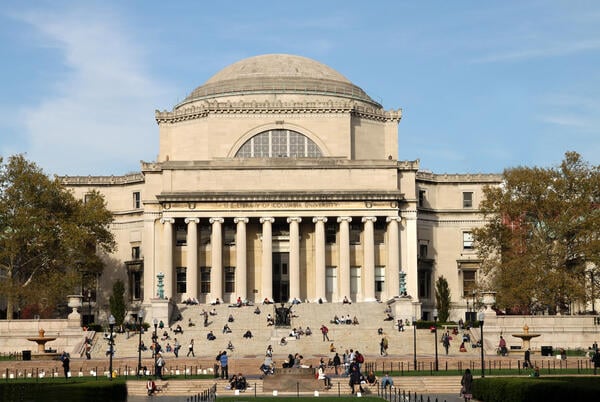
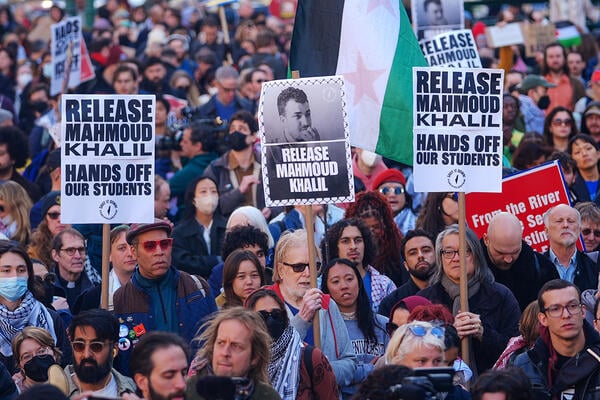
    So far the administration’s sights have been set primarily on Columbia University in New York. On March 8, immigration officials arrested recent graduate Mahmoud Khalil, intending to strip him of his green card and deport him for his role in pro-Palestinian campus protests last year. Over the next week, Department of Homeland Security agents raided students’ dorm rooms, arresting one international student and prompting another to flee to Canada.

    Elora Mukherjee, a law professor at Columbia and director of its Immigrants’ Rights Clinic, said international students have been flocking to the clinic for guidance: on whether their visas could suddenly be revoked, or if they should avoid traveling, delete their social media accounts or move off campus to make it harder for immigration officials to find them.

    She said she’s never seen anything like it.

    “Our clinic has been inundated with requests for legal consultation,” she said. “There is a palpable sense of fear among international students on campus.”

    Mukherjee said she’s been trying to quell international students’ anxieties. But in the wake of what she called an “unprecedented assault on due process, First Amendment rights and basic human decency,” she isn’t sure how.

    “They are worried about what may happen to their student visas. They are concerned that they may not be able to complete their degree programs if they are targeted. They’re wondering how they can make changes to their daily life to reduce the risk,” she said. “I don’t know what I can reassure them of right now.”

    Chief among the threats facing international students is the equation of protest activity and other protected speech with “terrorist activity.” In an interview with The Free Press last Monday, an unnamed White House official said that protesting made Khalil a national security threat, justifying his deportation. That strategy, the official added, is the administration’s “blueprint” for deporting other international students.

    In a post on Truth Social last Tuesday, Trump said that Khalil’s arrest was “the first of many,” calling international student protesters “not students, [but] paid agitators.”

    “We will find, apprehend, and deport these terrorist sympathizers from our country—never to return again,” Trump wrote. “We expect every one of America’s Colleges and Universities to comply.”

    Stephen Yale-Loehr, a retired Cornell University law professor who specializes in immigration law and international students in particular, said ICE officials’ activity at Columbia is the administration’s opening salvo in a battle against two of its most frequently invoked bogeymen: higher education and immigrants.

    “This administration has declared war on immigrants broadly and international students specifically,” he said.

    That war is currently centered on Columbia but is likely to spread across higher ed. On Sunday, Secretary of State Marco Rubio told Face the Nation that the administration plans to continue arresting and deporting international student activists. He added that the government is reviewing and revoking more student visas “every day.”

    It’s not clear if the Trump administration’s argument will hold up in court. If it does, experts say it would give the executive nearly unchecked power to deport noncitizens for disfavored speech, and there’s likely to be a fierce legal battle over that question. But international students have very few legal protections, Yale-Loehr said, and the administration has ample leeway to justify deporting them.

    “International students have the same constitutional rights as citizens, but immigration statutes are very broad and there are many grounds for deportability that could trip you up, even as a green card holder,” Yale-Loehr said. One of those potential grounds, he said, is donating to an overseas charity that the State Department deems suspicious or linked to terrorist activity—as it’s done with many charities for Palestinian children and families affected by the destruction of Gaza.

    “It’s easy for someone to unintentionally or unknowingly violate our immigration laws that way and get put into the deportation process,” Yale-Loehr said.

    When asked whether Columbia would protect current students approached by ICE or detained on campus, a university spokesperson pointed to a statement from earlier this month and said students were encouraged to familiarize themselves with university protocol in such cases.

    “Columbia is committed to complying with all legal obligations and supporting our student body and campus community,” the statement reads. “We are also committed to the legal rights of our students and urge all members of the community to be respectful of those rights.”

    The Trump administration is also considering instituting a travel ban similar to the one implemented during his first administration—except greatly expanded, from seven countries to 43, according to an internal memo circulating among media outlets.

    Some college officials are urging students not to travel until the details of such a plan become clear. On Sunday, Brown University advised its international student community, and any noncitizen staff and faculty, to avoid leaving the country or even flying domestically over the upcoming spring break.

    “Potential changes in travel restrictions and travel bans, visa procedures and processing, re-entry requirements and other travel-related delays may affect travelers’ ability to return to the U.S. as planned,” executive vice president for planning and policy Russell Carey wrote in a campuswide email.

    Jill Allen Murray, deputy executive director for public policy at NAFSA, an association of educators advocating for international students in the U.S., decried the student arrests as authoritarian and said they would have consequences for global views on U.S. colleges.

    “We as a nation hold dear freedom of speech and the right to protest. These are the very values that draw students from around the world to our shores,” Murray wrote in an email to Inside Higher Ed. “Americans and international students alike will certainly view this as an alarming attempt to crack down on freedom of expression.”

    Mounting a Legal Challenge

    Mukherjee said that even for students with longtime visa status or green cards, there are no guarantees. Trump’s invocation of an obscure wartime powers act to justify deporting student protesters, she said, is a “dramatic escalation” in anti-immigrant policy. She’s been cautioning students against appearing at protests or participating in research and academic opportunities abroad.

    The Columbia students aren’t the first to face potential deportation over pro-Palestine protests. Momodou Taal, a British graduate student at Cornell, was suspended for his activism last fall, and a university official told him he may need to “depart the U.S.” if his F-1 visa was subsequently nullified.

    On Sunday Taal filed a lawsuit against the Trump administration challenging two executive orders that empower immigration officials to deport noncitizens whom they determine to be national security threats. He said that threat amounts to unconstitutional repression of free speech.

    “The First Amendment is explicit and clear and extremely lucid in that it’s not protection for citizens alone; it is protection for persons within this country,” Taal told Inside Higher Ed.

    Taal successfully avoided deportation last year, but since his name has been well publicized, he’s been anticipating a knock on his door from ICE for weeks. He said that’s partly why he chose to pursue a legal challenge: to use his own vulnerability to try to protect other international students.

    “I know a lot of people are afraid … and I have had that fear, certainly, that something will happen to me. But I fundamentally reject the idea of sitting and laying in that fear and doing nothing,” Taal said. “This level of oppression is meant to stop people from talking about Palestine. When free speech is attacked, that is not the time to retreat, but rather double down.”

    Taal’s lawsuit joins another challenge to the administration’s deportation strategy. Last week legal advocacy groups filed a petition against Khalil’s arrest, and a federal judge ordered that Khalil be kept in the country while he reviews the case.

    ‘Much Higher Anxiety’

    Even before immigration officials raided dorm rooms, international students, recruiters and the institutions that serve them were anxious about President Trump’s second term.

    Last fall, colleges urged international students who had left for winter break to return to the U.S. before Trump’s inauguration on Jan. 20, fearing a possible travel ban or student visa suspension. Professionals in international student recruiting tell Inside Higher Ed that the crackdown on foreign students has been gradual but is ramping up fast.

    William Brustein, former vice president for global strategy and international affairs at West Virginia University, spent decades in international student recruiting and support. He said that international students in the U.S. have grown increasingly worried in recent years about their freedom to express public opinions, what kind of research they can work on, even their physical safety. Khalil’s arrest, he said, validated and escalated those concerns.

    “It just reinforces the sense of caution they have about what they can say in class, what they can post online, even what they can say in the cafeteria or around campus if someone is listening,” Brustein said.

    Brustein added that colleges have slashed spending on their international support offices, hampering their ability to respond to students’ needs at moments of crisis.

    “Colleges have limited resources, and there’s only so much they can do to help,” he said.

    Free speech restrictions and ICE raids aren’t the only challenges facing international students in the U.S. The Trump administration has promised to clamp down on approvals for new student visas, and Congress recently passed the Laken Riley Act, significantly lowering the threshold for visa revocation.

    Yale-Loehr said that such policies are beginning to manifest at the border. He’s heard stories of students with clearly marked visas in their passports being pulled aside and held for further inspection in airports across the country, some of them turned away by ICE and forced to challenge the decision from abroad.

    “In the past, these students would never have been put into secondary inspection,” Yale-Loehr said.

    Mukherjee said that while international students faced some of the same issues with visa crackdowns and travel restrictions under the first Trump administration, there is no comparison to the repressive tactics currently on display.

    “I’ve never seen a moment where international students are so worried about what may happen to them if they speak out about injustices in our country and across the world,” she said. “It’s an unprecedented time.”


    Source link

  • Democrats Blast McMahon Over Education Department Cuts

    Democrats Blast McMahon Over Education Department Cuts

    Sen. Bernie Sanders, ranking member of the Senate committee that oversees education policy, and 37 Democrats blasted Education Secretary Linda McMahon in a letter Monday, expressing “outrage” and arguing that the “reckless” cuts to her department’s staff last week will be “nothing short of devastating” for America’s students, schools and communities.

    “At a time of massive income and wealth inequality, when 60 percent of people live paycheck to paycheck, millions of Americans cannot afford higher education, and 40 percent of our nation’s 4th graders and 33 percent of 8th graders read below basic proficiency, it is a national disgrace that the Trump Administration is attempting to illegally abolish the Department of Education and thus, undermine a high-quality education for our students,” Sanders wrote.

    The letter noted that less than 24 hours after the reduction was announced, the Free Application for Federal Student Aid temporarily shut down; Education Department workers responsible for fixing it had reportedly been fired.

    Education Department spokesperson Madi Biedermann told the Associated Press that the layoffs didn’t affect employees working on the FAFSA or student loan servicing.

    “They are strategic, internal-facing cuts that will not directly impact students and families,” Biedermann said.

    But top Democratic appropriators, including Sen. Patty Murray of Washington State and ranking member of the House committee Rep. Rosa DeLauro of Connecticut, disagreed. In their own letter Monday, they argued that the cuts would impact students’ daily lives and demanded to know how McMahon will uphold the law with a decimated staff.

    “Firing the people that ensure states, school districts, and institutions of higher education live up to their legal obligations is neither efficient nor accountable,” the lawmakers wrote. “The President’s disregard for appropriations and other laws and the need for stability and productivity in government creates an imperative for the Department to provide accurate, timely responses on its use and planned use of taxpayer resources provided by the laws passed by Congress.”

    Source link

  • Accelerated Business Degree Reduces Student Debt

    Accelerated Business Degree Reduces Student Debt

    As more students and parents consider the value of higher education and the cost of a four-year degree, interest has grown in three-year degree opportunities that allow students to complete their education in less time for a lower tuition rate.

    Westminster College in Pennsylvania launched a new Degree in Three program in the School of Business this year, allowing learners to graduate with 125 credits and shave a year off their time in undergraduate education. Additionally, the program pairs with the college’s master of business administration, so learners can complete two degrees in four years if they so choose.

    The background: There were a few catalysts for creating a formal three-year degree program, explains Robert Badowski, Westminster’s school of business chair. First, more students were coming in with credits from high school from AP or dual-enrollment programs, making their degree progress quicker. Second, more students and parents had noted the high cost of education and concerns about student debt.

    A May 2024 Student Voice survey by Inside Higher Ed and Generation Lab found seven in 10 respondents say higher education institutions in general charge too much for an undergraduate education.

    Westminster isn’t the only college facing pressure to get students to graduation sooner: Interest in formalized three-year degree programs has grown in recent years, and more institutions are looking to get in the game, even medical schools.

    At Westminster, the college had helped students shape their own schedules to graduate in three years rather than four, but a curriculum review and restructuring of elective courses has helped make this accessible to all students.

    What’s different: Westminster students can take up to 19 credit hours per semester and be considered full-time, but the business program offered primarily four-credit courses, making it difficult for students to max out their credit load.

    “You could take four classes, but if you took the fifth class, you were paying extra money, and most students don’t want to take on that burden, even if it was cutting off a year,” Badowski explains.

    Many three-year degree programs reduce the total number of credits students have to complete, but Westminster accelerated business students still complete at least 125 credits. To do so, faculty members reimagined their four-credit elective courses to be worth either one or two credits instead.

    Now, instead of engaging in a deep dive into an elective topic, students receive greater breadth in a variety of areas and are able to hit that 19-credit threshold exactly.

    “We had a meeting [with faculty members] as far as which courses made sense to do this with, and we found out in the process that a lot of [content] was stretched out purposefully just to be stretched out,” Badowski says. The process of removing content or packing it into seven or eight weeks, therefore, made more sense in many cases.

    The restructuring of elective courses is something that will benefit all business students, not just those participating in the accelerated degree program, giving them greater flexibility in scheduling.

    BOGO deal: In addition to removing costs associated with attending college, the Degree in Three program allows students to pair their undergraduate and graduate degrees in a four-year timeline.

    “We have a pretty neat deal that if students want to take one of their M.B.A. classes the last semester of their senior year, they can,” Badowski says. “We don’t charge for the M.B.A. course, so that gets them kind of jettisoned into the program.”

    The offering is particularly attractive to student athletes at the college, many of whom want to use all four years of eligibility.

    The price of an M.B.A. at Westminster is also around $10,000, so students spend less for a three-plus-one M.B.A. degree than four years in their undergraduate program, Badowski says.

    What’s next: Administrators are working on creating awareness of the offering among prospective students and particularly parents, who “are going to look at this and hopefully go, ‘I can help my kids save a year of tuition, maybe get them out of college a year faster,’” Badowski says.

    The college doesn’t have specific goals for enrollment, but Badowski would like to see 20 in the first year and consistent growth after that. “I’m hoping that people find it useful for them, [because] they’re still getting the same amount of credits. They’re taking the same classes as everybody else, it’s just faster.”

    Get more content like this directly to your inbox. Subscribe here.

    Source link

  • Why Online Learning Teams Should Read “Co-Intelligence”

    Why Online Learning Teams Should Read “Co-Intelligence”

    Co-Intelligence: Living and Working With AI by Ethan Mollick

    Published in April 2024

    How many artificial intelligence and higher education meetings have you attended where much of the time is spent discussing the basics of how generative AI works? At this point in 2025, the biggest challenge for universities to develop an AI strategy is our seeming inability to achieve universal generative AI literacy.

    Given this state of affairs, I’d like to make a modest proposal. From now on, all attendees of any AI higher education–focused conversation, meeting, conference or discussion must first have read Ethan Mollick’s (short) book Co-Intelligence: Living and Working With AI.

    The audiobook version is only four hours and 37 minutes. Think of the productivity gains if we canceled the next five hours of planned AI meetings and booked that time for everyone to sit and listen to Mollick’s book.

    For university people, Co-Intelligence is perfect, as Mollick is both a professor and (crucially) not a computer scientist. As a management professor at Wharton, Mollick is experienced in explaining why technologies matter to people and organizations. His writing on generative AI mirrors how he teaches his students to utilize technology, emphasizing translating knowledge into action.

    In my world of online education, Co-Intelligence serves as an excellent road map to guide our integration of generative AI into daily work. In the past, I would have posted Mollick’s four generative AI principles on the physical walls of the campus offices that learning designers, media educators, marketing and admissions teams, and educational technology professionals once shared. Now that we live on Zoom and are distributed and hybrid—I guess I’ll have to put them on Slack.

    Mollick’s four principles include:

    1. Always Invite AI to the Table

    When it comes to university online learning units (and probably everywhere else), we should experiment with generative AI in everything we do. This experimentation runs from course/program development, curriculum and assessment writing to program outreach and marketing.

    1. Be the Human in the Loop

    While anything written (and very soon, visual and video) should be co-created with generative AI, that content must always be checked, edited and reworked by one of us. Generative AI can accelerate our work but not replace our expertise or contribution.

    1. Treat AI Like a Person (But Tell It What Kind of Person It Is)

    When working with large language models, the key to good prompt writing is context, specificity and revision. The predictive accuracy and effectiveness of generative AI output dramatically improve with the precision of the prompt. You need to tell the AI who it is, who the audience it is writing for is and what tone the generated content should assume.

    1. Assume This Is the Worst AI You Will Ever Use

    Today, we can easily work with AI to create lecture scripts and decks. How long will it take to feed the AI a picture of a subject matter expert and a script and tool to create plausible—and compelling—full video lectures (chunked into short segments with embedded computer-generated formative assessments)? Think of the time and money we will save when AI complements studio-created instructional videos. We are around the corner of AI’s ability to accelerate the work of learning designers and media educators dramatically. Are we preparing for that day?

    How are your online learning teams leveraging generative AI in your work?

    What other books on AI would you recommend for university readers?

    What are you reading?

    Source link

  • How Can Deans Support Faculty Well-Being? (opinion)

    How Can Deans Support Faculty Well-Being? (opinion)

    A recent issue of Liberal Education, a magazine published by the American Association of Colleges and Universities, takes up the issue of the mental health crisis in academia with five excellent pieces on how institutions can enhance student well-being. Two other articles explore how administrators and faculty members should administer self-care. That split is telling, for it sends the tacit message that universities are in the business of setting up systems to support students, but when it comes to employees, you are on your own.

    As a dean in the middle of his eighth year in that role, I want to address this gap by sharing tangible steps and practices administrators can use to systematize support for faculty well-being, in the hopes that I might inspire my decanal colleagues at other institutions to experiment with some of the strategies below. While those examples are inspired by my experience in a small, private, comprehensive university setting, most will translate to other environments.

    Just to be clear, it makes perfect sense why administrators do not focus on the well-being of their faculty, as a plethora of other responsibilities takes precedence. My own institution is a case in point, for while our deans’ responsibilities document calls on us to provide “recognition, encouragement, and support for the work faculty are doing,” the emphasis is on the labor produced by faculty rather than on their well-being. Such support work is often elided institutionally by more pressing and more measurable tasks tied to the operations of the university.

    This elision has been especially acute over the past half decade, as universities and colleges wrestle with a brutal collision of challenges, including enrollment pressures, budget cuts, student unrest, attacks on DEI, program prioritization, AI challenges and so on. When faced with such a list of horrors, though, I conclude that support of faculty well-being has never been more important, given the weight of these pressures on professors.

    Deans (as well as other leaders) can embrace the following strategies to enhance the well-being of their faculty. Most of them do not cost any money.

    • Protect faculty’s time. Because time is the most valuable currency of faculty life, think about how you can protect that precious resource. Because the “university bureaucracy … inevitably consumes the time and attention of its subjects to justify its existence,” according to Cal Newport, deans should consider how they can shield faculty from the pressures of the neoliberal, bureaucratic machine that thrives on forms, reports and trainings. Focus on work that is directly mission-aligned and create efficiencies in required processes like accreditation reports, tenure and promotion review, and budget management so that faculty are free to concentrate on their students and research.

    Newport also laments that our technocentric workplace—an environment “defined by hyperactive digital distraction and onerous administrative burdens”—has converted faculty into middle managers, ultimately “strangling productivity and making [them] miserable.” Therefore, ask yourself if that latest email update to your faculty is really necessary.

    Speaking of email, try to lay off the communication outreach outside of business hours—it’s the rare issue that requires immediate attention from faculty at 10 p.m. on a Tuesday. Use your email’s delay-delivery function liberally. And the tag appended to your signature line announcing that you “may work outside regular business hours and thus don’t expect an immediate reply from recipients” still does not stop the issue from landing on the psychological plate of faculty and could be misinterpreted as merely a passive-aggressive signal that you are working when others are not.

    • Acknowledge mental health challenges. It’s tough out there: Data show that higher ed employees are feeling burned out, with more than half of faculty and staff respondents in one recent survey saying “their job took a negative toll on their mental or emotional health.” More than a third pointed to their work supporting the emotional needs of students as having an impact on their own mental well-being. Recognizing that faculty in my own unit were being stretched thin as a consequence of their extraordinary efforts supporting students during the COVID-19 pandemic, I invited two of the university’s mental health counselors to visit our annual retreat to help faculty reset boundaries that had eroded during the past few years, to offer them insight into the mental health challenges of students and, most importantly, to give faculty permission to say no to unreasonable student requests.
    • Defend faculty’s academic freedom. A recent AAC&U survey shows faculty are feeling enormous pressure from external attacks on academic freedom, and they are struggling to navigate these treacherous waters inside and outside the classroom. Such anxieties will most likely accelerate over the next four years. According to the survey, “more than one out of three faculty report that they feel more constrained, compared with six or seven years ago, in their ability to speak freely” in terms of classroom content, faculty governance and even as a citizen. About half are self-censoring—even statements they believe to be true—for fear of “drawing negative attention.”

    Faculty see their academic leaders—deans and provosts—as chiefly responsible for protecting those freedoms, so we should be ready to stand up for faculty if they do come under attack. But in the meantime, deans must also acknowledge and support the well-being of faculty, which happens to be the final recommendation of the AAC&U report: “Even as legislative actions and the mercurial nature of politics may feel beyond institutional control, colleges and universities must find ways to support faculty mental health.”

    • Lead with empathy. When life intrudes or a family tragedy strikes, necessitating that a faculty member step away from their work unexpectedly, deans can give the imprimatur of the institution for faculty to redirect their emotional energy away from work and toward the personal matter at hand. A small change in wording in replying to their unfortunate news can make a world of difference. Instead of a curt email like “thanks for letting me know,” try something a bit more proactive: “I’m so sorry to hear this difficult news. Please know that we’ve got things covered for you so that you can focus your attention where it belongs, on your loved ones. Please let me know if there’s any way I can help with that project.”
    • Walk the talk. The narrative of faculty “going to the dark side” of administration and immediately forgetting the needs of their professorial colleagues is as old as the university itself, but one consequence of that narrative is that the resultant distrust, anger and suspicion can wear on the well-being of faculty. One approach to bridging that gulf is to demonstrate you are still in touch with the needs of faculty by standing in their shoes. The most obvious way to send that signal is to teach one class annually as a dean. If presidents can do it, certainly we can find a way.

    For me, this gesture was never more important than during the COVID-19 pandemic, as faculty were asked to pivot online with one week of warning and changes to protocols (wipe down the surfaces, stay behind the plastic shields, support students in quarantine) came down from on high at a dizzying pace. Standing beside my faculty in the classroom gave my requests during that difficult time extra weight. Likewise, make sure you are visible at the university’s latest Title IX training, attend required orientations and share tips learned from navigating your institution’s new frustratingly opaque HR system so that faculty know you are not exempt from such institutional responsibilities.

    • Own your mistakes. Being quick to admit your errors—both small and large—models for faculty that it is OK to fail, thus lowering the emotional pressure they may be feeling to perform, particularly junior faculty. Mea culpas from a leader may even encourage risk-taking and innovation in your unit. If an electronic form for faculty prepared by an administrative assistant does not work, that is on the dean for not checking it before its distribution, and you should say so. I once mishandled a conflict between faculty members and apologized afterward to faculty for not doing better. Taking Augustine’s dictum to heart—“fallor, ergo sum” (I err, therefore I am)—will humanize the dean and hopefully make you more approachable when faculty need support.
    • Advocate for faculty. One of the great pleasures of the dean’s role is your ability to advocate for your unit and its personnel. Letting faculty know you’ve got their backs and that you are always on the lookout for opportunities they might find exciting can help ground them mentally. Connecting them with a conference opportunity, suggesting them for a speaking gig or putting their name forward for a professional development workshop gives faculty confidence that they have someone in a position of power looking out for them, even in the face of all the uncertainties currently plaguing higher ed. Likewise, making professional development funds easier to access makes it less stressful for faculty who want to improve their craft.
    • Know your faculty’s work and recognize their achievements. As president of Princeton, Harold Shapiro used to read one book per week by his faculty members and even attended lectures to better understand their work and what they cared about. I would be hard-pressed to think of another gesture by a leader that might gratify an academic colleague more. Other signals of support can include a private note of congratulations or a “well done” at a university function. Following the mantra of “criticize in private and praise in public,” recognize faculty achievement at unit meetings, alumni gatherings and in email blasts, and do so for a wider variety of achievements beyond major grants, publications or teaching awards.
    • Provide stability. With new strategic plans coming down the pike every few years, administrative churn resulting in continuously shifting priorities, and constant requests to cut budgets while also innovating, the dean has the unique opportunity to provide a modicum of stability for their faculty in terms of processes and practices, consistent timelines and the unit’s strategic direction. In the face of turmoil across the larger institution, establishing your own unit as a sea of tranquility—as much as is possible—will be welcome. Parroting the institution’s “hair on fire” ethos is not helpful.
    • Bring faculty into the decision-making loop. Anxiety can surface when we do not feel in control of our circumstances, especially during times of crisis. While it is difficult to counter the many macro pressures facing higher ed, deans can give faculty some sense of ownership over your school’s direction by soliciting feedback on matters that go beyond those identified in the faculty manual, whether it is the unit’s fundraising focus for the year, locations for retreats or approaches to space allocation. Not all will be interested in participating, but faculty will appreciate being asked. On the flip side, no one’s mental health ever improved by being micromanaged by a supervisor: Give your faculty room to breathe.
    • Surface inequities—and then do something about them. Service work across units tends not to be distributed equitably: Women and faculty of color do more than their fair share. That is unacceptable, and deans are in position to right this wrong through strategies I have discussed previously. Systemizing equity policies instead of forcing faculty to depend on the good will of supervisors will also lessen the anxiety of faculty with the least power to say no.

    On a related note, deans can play a role in supporting faculty of color, LGBTQ+ faculty and other minoritized faculty in light of the overtly hostile national (and sometimes state) climate that gets expressed through attacks on DEI programming, the hollowing out of the curriculum and demonization of personnel. Tokenism, microaggressions and overt discrimination in the white, heteronormative space of the academy provide daily challenges for minoritized faculty. William A. Smith’s concept of “racial battle fatigue” is unfortunately alive and well in higher education, and deans can support their personnel suffering under the weight of that trauma not only by enacting policies that advance equity and inclusion, but also by offering to listen, intervening when invited and endorsing strategies of self-care.

    • Create community. Individuals who do not have a strong sense of community typically have greater odds for experiencing mental health challenges. While I am certainly not suggesting the workplace stand in for family or friend groups, deans have the opportunity to create community in their academic units in ways that will enhance faculty well-being, whether that be through annual retreats where faculty can deepen personal relationships with each other or the establishment of a strong culture and clarity around a unit’s mission, so that faculty buy-in for the unit’s work will excite and unite personnel.

    When I recently reviewed my annual dean’s evaluations from faculty for the past two years, anonymous respondents repeatedly highlighted in their optional narrative comments the following features of my leadership: commitment to faculty, listening and helping faculty feel heard, creating community, providing support, evincing compassion and care, and relationship-building. These qualities all fall under the faculty well-being umbrella, so it is worth honoring such faculty voices as we choose, as deans, where to focus our attention and request that universities fold these responsibilities into administrative job descriptions.

    Richard Badenhausen is dean of the Honors College at Westminster University and a board member of the American Conference of Academic Deans.

    Source link

  • Harvard Tuition-Free for Families With Incomes Up to $200K

    Harvard Tuition-Free for Families With Incomes Up to $200K

    Starting next academic year, Harvard will offer free tuition to students from households that earn $200,000 or less a year, according to a Monday announcement from university leaders.

    In addition, students with household incomes of $100,000 or less per year will attend Harvard for free, with the university covering not just tuition costs but food, housing, health insurance and travel expenses. Those students will also receive a $2,000 start-up grant in their first year and a $2,000 launch grant junior year to support their transitions to and from college.

    “Putting Harvard within financial reach for more individuals widens the array of backgrounds, experiences, and perspectives that all of our students encounter, fostering their intellectual and personal growth,” Harvard president Alan M. Garber said in the announcement. “By bringing people of outstanding promise together to learn with and from one another, we truly realize the tremendous potential of the University.”

    The changes make roughly 86 percent of American families eligible for Harvard financial aid, according to the announcement. The move comes at a time when the Ivy League institutions are under intense scrutiny from the Trump administration and lawmakers. Harvard joins a slew of other universities, including some highly selective institutions like the University of Pennsylvania and the Massachusetts Institute of Technology, that have unveiled expansive new financial aid plans.

    Source link

  • Why Every American Has a Stake in Columbia’s Fate (opinion)

    Why Every American Has a Stake in Columbia’s Fate (opinion)

    March 13 was a watershed day in the annals of American higher education and the history of America’s commitment to freedom and limited government. On that day, the Trump administration issued an edict telling Columbia University, a private institution, how to function.

    The people who founded the American republic must be turning over in their graves.

    Such a bold assertion of government power would be more familiar to people in many other nations. But in the United States, this is a shocking development and a warning of what is in store, not just for higher education, but for the entire country.

    What is happening at Columbia is an initial test of the Trump administration’s ambition to curb institutional autonomy, limit and punish dissent, and make life miserable for anyone who does not toe their line. That’s why each of us, whether or not we work in higher education, has a stake in Columbia University’s fate.

    Let’s face it: Universities are what people in the Departments of Defense or Homeland Security might call “soft targets.” Soft targets are easily accessible, relatively unprotected and therefore vulnerable to attack.

    A concerted, decades-long campaign against higher education by conservative critics, combined with excesses in universities’ quests to make themselves more inclusive and just, have eroded public support for and trust in America’s colleges and universities, which are now at historic lows.

    Public disdain for private, prestigious institutions like Columbia is high and growing. Critics call them snobbish, arrogant and out of touch.

    Some have even laid the blame for the rise of the MAGA movement on their doorstep.

    Like the successful, decades-long right-wing campaign to take over the courts in this country, which has wreaked havoc in the lives of ordinary Americans, the campaign against Columbia will, if similarly successful, prove costly well beyond that New York City campus.

    What is unfolding there is a testing ground for efforts in other sectors of American life.

    Acting in a high-handed and arbitrary manner in its dealings with Columbia paves the way for the government to carry out similar abuses of power elsewhere. Attacking academic freedom is a stalking horse for attacking freedom of speech and other freedoms.

    It is important to recall that Trump’s campaign against Columbia didn’t start on March 13. It began earlier with the cancellation of $400 million in federal grants and contracts and the move by Immigration and Customs Enforcement to arrest and detain Mahmoud Khalil, a green card holder and recent graduate who helped lead pro-Palestinian protests on campus.

    But the March 13 letter took it to new levels.

    The first thing to note about that letter was that it came from officials in the Departments of Education and Health and Human Services and the General Services Administration. They joined not only in asserting their right to intervene at Columbia under Titles VI and VII of the 1964 Civil Rights Act but to remind the university of the Trump administration’s power to cripple it financially.

    Title VI prohibits discrimination on the basis of race, color or national origin in programs and activities receiving federal financial assistance. Title VII makes it unlawful for employers to discriminate based on race, color, religion, sex or national origin.

    Since the act’s passage, it has been clear that alleged violators of Title VI must be afforded due process before federal funds can be withheld. That guarantees fairness and impartiality in investigations and ensures that enforcement actions will not be precipitous.

    The March 13 letter, with its demand for “immediate next steps that we regard as a precondition for formal negotiations regarding Columbia University’s continued financial relationship with the United States government,” is a chilling reminder of what happens when a government seeks to wield its formidable power without respecting the due process rights of those it targets.

    And if it gets away with practicing what one commentator calls “regulation by intimidation” at Columbia, the administration will be emboldened to do more of the same, and not just in higher education.

    The March 13 letter touches on matters colleges and universities routinely determine for themselves. For example, it demands that the university complete disciplinary proceedings against students who were involved in taking over a campus building last year and who participated in encampments in support of Palestinians. And it specifies that penalties of “expulsion or multi-year suspension” should be imposed.

    The same day it received the Trump administration’s letter, the university announced that it was expelling or suspending some students involved in the Hamilton Hall takeover and temporarily revoking the diplomas of other students who had since graduated.

    In addition, the March 13 letter directs Columbia to “Abolish the University Judicial Board (UJB) and … empower the Office of the President to suspend or expel students.”

    The intrusiveness of the letter extends to telling Columbia that it must ban the wearing of masks on campus and “formalize, adopt, and promulgate a definition of antisemitism” (it specifically cites the definition used in Trump’s Executive Order 13899). It even demands that Columbia’s Department of Middle East, South Asian and African Studies be put into “academic receivership” so that its faculty can no longer make hiring and curriculum decisions.

    That is the administration’s way of forcing the university to punish the department, some of whose faculty supported the encampment movement. Receivership means someone from outside the department would be appointed to make decisions for its faculty. It is a rarely used and nuclear response to departmental dysfunction.

    If Columbia were to do what the March 13 letter asks, it would be waving the white flag of surrender to any pretense that it will respect and protect academic freedom, the most prized and essential aspect of teaching and research in higher education. That would send a powerful and chilling signal about the administration’s ability to ensure freedom means the freedom to say and do what it prescribes.

    Taken together, the provisions in the March 13 letter amount to an effort to put the entire university into a kind of receivership. Beyond the world of higher education, receivership involves a court appointing “an independent ‘receiver’ or trustee to manage all aspects of a troubled company’s business. The company’s principals remain in place, but they have little authority over the company for the duration of the receivership.”

    The March 13 letter signals that intention when it calls for the development of a plan of “long-term structural reforms that will return Columbia to its original mission of innovative research and academic excellence.”

    “Innovation” and “excellence” are the watchwords for colleges and universities, businesses, artistic enterprises and individuals seeking to lead a free life. But since the founding of the republic, this country has been guided by the belief that the government would not be in the business of saying what could count as innovative and excellent in private life.

    If Americans stay on the sidelines as the current administration tries to bring Columbia to its knees, we will not only be damaging higher education, we will also be turning the founders’ vision of the relationship between the government and the people on its head.

    Austin Sarat is the William Nelson Cromwell Professor of Jurisprudence and Political Science at Amherst College.

    Source link

  • U of Delaware Business School Gifted a Historic $71.5M

    U of Delaware Business School Gifted a Historic $71.5M

    The University of Delaware has received a $71.5 million gift, the largest single donation in the university’s history, according to a news release Monday.

    The donation is from alumni Robert Siegfried Jr. and Kathleen (Horgan) Siegfried and will benefit the institution’s Alfred Lerner College of Business and Economics.

    As owners of the Siegfried Group LLP, an entrepreneurial leadership organization that advises financial executives, the couple have long been key donors to the university, but UD president Dennis Assanis said this gift in particular would be “transformative.”

    “The Siegfrieds’ generosity will significantly advance Lerner’s critical mission of preparing the next generation of leaders, change-makers and entrepreneurs to make an impact in the rapidly evolving world of business and economics,” Assanis said.

    UD plans to put the funding toward a state-of-the-art, student-centric learning space with modern classrooms, research and teaching labs, a student-run cafe, and an auditorium. The money will also be spent on developing a new Siegfried Institute for Leadership and Free Enterprise where students can develop as business leaders and study “the critical role [of] basic principles of limited government, rule of law, and free enterprise.”

    The university will commission the design process for Siegfried Hall this spring, with a goal of breaking ground within the next four years, the news release said.

    Source link

  • Donors Support Grad Students Lacking Federal Research Funds

    Donors Support Grad Students Lacking Federal Research Funds

    Recent federal executive orders from President Donald Trump have put a halt to some university operations, including hiring and large swaths of academic research. The National Institutes of Health and the National Science Foundation, among others, have paused grant-review panels to comply with the orders and cut funding, leaving researchers in limbo.

    Graduate students often receive educational stipends from federal agencies for their research, putting their work—and their own degree attainment—at risk.

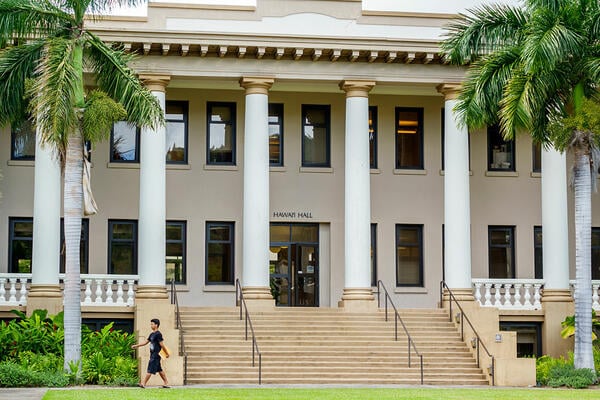
    To alleviate some hardships, the University of Hawaiʻi’s UH Foundation launched a Graduate Student Success Fund, which will provide direct relief for learners who have lost funding.

    Fewer than a dozen graduate students in the system have been impacted to various degrees to date, but “like most institutions, the extent of the possible impact is unknown,” a UH spokesperson said.

    On the ground: Michael Fernandez, a first-year UH Mānoa doctoral student in the botany program, is a participant in the National Science Foundation’s Graduate Research Fellowship Program, which supports learners pursuing research-based master’s or doctoral degrees in STEM education fields. The five-year fellowship includes three years of financial aid for tuition and fees and an annual stipend.

    “I and other fellows in the program feel uncertain about future funding from the fellowship,” Fernandez said in a press release. “This is especially concerning for me, as the NSF-GRFP is currently my primary and sole source of funding for my graduate studies.”

    University of Hawaiʻi president Wendy Hensel spurred the creation of the Graduate Student Success Fund for grad students at UH Mānoa and UH Hilo. The fund, supported by private donations, mirrors an undergraduate student success fund available to bachelor’s degree seekers who need help paying for tuition, books and fees.

    The UH Foundation will also support undergraduate researchers who may have had their work interrupted due to federal freezes.

    The Graduate Student Success Fund is designed to aid student retention and financial wellness and also support career development and future talent in Hawaiʻi.

    “It is critical that we do all we can to ensure that our university graduates, the next generation of talent, desperately needed for Hawaiʻi’s workforce,” Hensel said. “These graduate students are our scientists, doctors, nurses, psychologists, social workers, engineers, educators and leaders of tomorrow.”

    Details as to how funds will be distributed, including amounts and number of recipients, are still being determined, the spokesperson said.

    The bigger picture: Federally funded research projects that address diversity, equity, inclusion, gender, green energy or other alleged “far-left ideologies” have come under fire in recent weeks.

    In January Trump signed an executive order halting federal grant spending, which was later rescinded, but some organizations have halted funding regardless.

    Trump Administration Weaponizes Funding Against Institutions

    On March 7, the Trump administration announced it had canceled $400 million in federal grants and contracts to Columbia University for “the school’s continued inaction in the face of persistent harassment of Jewish students.” The federal government has also threatened to pull funding from any educational institution that invests in diversity, equity and inclusion programs.

    In February, the National Institutes of Health announced it would cut funding for indirect costs of conducting medical research, including hazardous waste disposal, utilities and patient safety. In 2024, the agency sent around $26 billion to over 500 grant recipients connected to institutions.

    Hensel published a memo in February opposing the cuts for reimbursement of facilities and administrative costs.

    “For UH, the impact of this decision cannot be overstated,” Hensel wrote. “The university is supported by 175 awards and subawards from the NIH with a current value of $211 million. NIH’s reduction of UH’s current negotiated [indirect compensation] rate of 56.5 percent at the JABSOM [UH Mānoa John A. Burns School of Medicine] and the [UH] Cancer Center alone will eliminate approximately $15 million in funding that UH uses to support its research programs, including ongoing clinical trials and debt service payments.”

    How is your college or university supporting students affected by federal action? Tell us more.

    Source link

  • Three States Weigh Changes to Presidential Search Processes

    Three States Weigh Changes to Presidential Search Processes

    Three states are considering changes to how public universities hire presidents via legislation to provide more, and in the case of Utah, less transparency in executive searches.

    Florida, Utah and Washington are all weighing changes, driven by state legislators in response to recent presidential searches. In the case of Florida, the move comes after the state, known for broad open records laws, revised presidential search processes in recent years in ways that narrowed transparency, which was followed by an influx of hires connected to conservative politics.

    Evergreen State legislators have proposed the changes following closed-door presidential searches at both the University of Washington and Washington State University, which they argue lacked adequate transparency because finalists were not named during the process. (However, they’ve backed off an initial bill to require universities to name finalists.)

    In Utah, lawmakers have crafted legislation to limit information on presidential searches. Current state law requires public universities to release the name of three to five finalists for presidential positions, but that could change with only a single finalist unveiled at the end of the search.

    The legislative proposals reflect a broader debate over how much transparency should be built into presidential searches and the politics of hiring processes.

    Florida’s Proposed Reversal

    The Florida Legislature passed a bill in 2022 that allowed institutions to keep the identity of applicants secret until a university identified three finalists. The change marked an about-face from prior practices, in which lists of applicants were released as part of presidential searches.

    Although the law passed in 2022 charged universities with naming three finalists, in practice it has often meant that institutions only release the name of one applicant at the end of the process. And since the passage of that legislation, Florida has tapped numerous Republican lawmakers to lead public universities, including former Nebraska U.S. senator Ben Sasse at the University of Florida, who stepped down after less than 18 months amid questions about his spending.

    Since Sasse’s exit, critics have alleged UF’s board missed or ignored multiple red flags.

    Governing boards have hired numerous other Republican former lawmakers to lead institutions since 2022. Recent hires include Adam Hasner at Florida Atlantic University, Jeanette Nuñez at Florida International University (who stepped down as lieutenant governor to take the job), Richard Corcoran at New College of Florida, Fred Hawkins at South Florida State College, Mel Ponder at Northwest Florida State College and Torey Alston at Broward College.

    In a statement on why she filed the bill to open search processes, Florida representative Michelle Salzman, a Republican, wrote that the legislation would ensure “our higher education institutions are governed in a transparent and ethical manner, with the best interests of our students and taxpayers as the guiding principle.”

    To Judith Wilde, a research professor at George Mason University who studies presidential searches and contracts, the bill seems like backlash to Republican governor Ron DeSantis, who many critics allege has used a heavy hand in installing GOP officials as college presidents.

    “They are definitely moving away from the more secretive and controlled processes that they’ve been under for the last few years. I’d say that is because so many people now are tired and upset with DeSantis putting in place his personal choices and how badly that has worked out,” Wilde said.

    Last year, the Florida Board of Governors also gave itself more authority over presidential searches, adopting a policy that requires its chair to approve a list of finalists before candidates are submitted to individual governing boards. That would go away under proposed legislation.

    The Florida Board of Governors did not respond to an inquiry about its position on the bill.

    Washington Backtracks

    Washington lawmakers initially proposed changes to how presidential searches are conducted with a bill that would require public universities to name “up to four priority candidates” for the job. But lawmakers backed off that idea, submitting a substitute bill that would expand voting rights for students and faculty on presidential searches, but not require finalists to be named.

    University of Washington officials had expressed concern about the initial proposed legislation, arguing that UW could lose highly qualified candidates if they can’t keep names confidential.

    “It’s important to understand that sitting presidents or chancellors participate in these processes at considerable professional risk. There may be reputational damage up to termination, even if their candidacy is unsuccessful, should their present employers learn that they are pursuing other employment,” Blaine Tamaki, chair of UW’s Board of Regents, wrote in a statement.

    A UW spokesperson also pointed to fallout in 2020 in the University of Alaska system when then-president Jim Johnsen stepped down after he emerged as the sole finalist to lead the University of Wisconsin system. Johnsen withdrew from the Wisconsin search after criticism that the process lacked transparency. He then resigned from the Alaska presidency mere weeks later.

    (Johnsen’s tenure at Alaska was heavily scrutinized while he was there, however, and many students and faculty members expressed relief that he planned to leave for another job, which Wilde suggested was more of a factor in his abrupt exit than his candidacy for the Wisconsin position.)

    Washington State University had also expressed concerns about the initial bill.

    “Specifically, we were apprehensive about losing strong candidates who would be unwilling to make their names public before a selection was announced,” a Washington State spokesperson wrote to Inside Higher Ed by email. “There is a very real concern for some candidates that they would lose their effectiveness at their home institutions if it became public that they were exploring employment opportunities elsewhere. This is particularly true for sitting presidents.”

    Washington State has expressed support for the new bill.

    Opacity in Utah?

    State Senator Chris Wilson, the Utah Republican who sponsored the bill to overhaul presidential searches, has argued the law needs to be changed so public universities don’t lose quality candidates who are unwilling to go through a process that exposes their identity.

    The Utah legislation seems at least partly inspired by Elizabeth Cantwell exiting the presidency at Utah State University last month to take the top job at Washington State.

    Wilson has pointed to Cantwell departing for Washington State as an example of why the bill is needed. Last month, in a House Education Committee meeting, Wilson stressed the need for confidentiality in searches and argued, “There’s no way the president of Utah State University would have applied for the presidency of Washington State if it wasn’t a private process.”

    Utah commissioner of higher education Geoff Landward has cast doubt on the notion that public universities in the state have lost applicants due to current processes.

    “I can confidently say that we have not had a single search wherein we were talking to very high-quality candidates who essentially said that they would be interested and willing to apply, were it not for the fact that the final three candidates would have to be public because that would put their current employment in peril unnecessarily,” Landward told lawmakers in February.

    But, he added, “This is a question of who did we not get to consider?”

    Wilde is skeptical of Utah’s proposal. She points to an example at Montana State University in 2019 when President Waded Cruzado informed the board that she was being recruited for another job. In response, the board gave Cruzado a $150,000 pay raise to entice her to stay—and it worked.

    “Just because they’re in the job market doesn’t necessarily mean that they want to leave the university,” Wilde said. “And if they’re doing a good job, make the effort to keep them.”

    Source link