Tag: Career

  • U.S. Universities Are National Security Assets (opinion)

    U.S. Universities Are National Security Assets (opinion)

    For too long, Americans have underestimated the strategic value of our universities. The popular belief is that higher education’s chief contribution to national security is soft power—the goodwill generated by cultural exchange, academic diplomacy and global networking. That’s accurate, but it’s only a small part of the security story.

    The vast majority of our 4,000-odd colleges and universities (including the elite ones) are hardly the ivory towers so associated with so-called woke movements and high-profile culture wars. Many, in fact, are the R&D labs of our national security infrastructure. They are the training grounds for the nation’s cyber warriors, military leaders, intelligence officers and diplomats. To be sure, they are one of America’s most potent weapons in an era of fierce geopolitical competition.

    The Reserve Officers’ Training Corps is the military’s largest commissioning source, with a footprint that spans the nation. Army ROTC alone operates at about 1,000 college campuses and provides merit-based benefits to roughly 15,000 students each year. It produces approximately 70 percent of the officers entering the Army annually, commissioning around 5,000 second lieutenants in a typical year.

    The scale is cross-service: Air Force ROTC maintains 145 host detachments with more than 1,100 partner universities and commissioned 2,109 Air Force and 141 Space Force officers in 2022. Navy/Marine Corps ROTC fields 63 units hosted at 77 colleges and extends to 160-plus colleges via cross-town agreements. Between 2011 and 2021, about 1,441 U.S. colleges and universities had at least one ROTC host, cross-town or extension unit—and every state has at least one host. Over its first century, ROTC has produced more than one million officers.

    The Department of Defense, as key partner with higher education, invests billions annually in university research. In fiscal year 2022 alone, the DOD’s research, development, test and evaluation budget authority reached $118.7 billion. For example, the Defense University Research Instrumentation Program awarded $43 million in equipment grants to 112 university researchers for the 2025 fiscal year. Entities like DARPA (the Defense Advanced Research Projects Agency), the Army Research Laboratory, and the Office of Naval Research fund breakthroughs in AI, quantum computing, hypersonics and cyber resilience. Universities partner with the Defense Department and other government agencies to conduct research in areas like drone technology, stealth aircraft and, historically, the development of the Internet and GPS.

    Cybersecurity is another front where U.S. universities lead with global distinction. The National Security Agency has designated nearly 500 campuses as national Centers of Academic Excellence in Cybersecurity. Universities like Carnegie Mellon, Purdue and the University of Texas at San Antonio run advanced programs focused on cryptography, digital forensics and cyber policy, partnering with both government and industry to build systems that repel state-sponsored hackers.

    Biosecurity is equally critical. The COVID-19 pandemic proved that viruses can fundamentally destabilize economies and national morale as quickly as warfare can. Johns Hopkins, Emory, Harvard and Vanderbilt Universities all were at the forefront of research on the coronavirus and vaccines. Land-grant universities like Texas A&M and Iowa State have long been securing our food supply against agroterrorism and climate threats. As just one example of this partnership, in 2024, the U.S. Department of Agriculture’s National Institute of Food and Agriculture announced $7.6 million in grants to 12 different universities focused on agricultural biosecurity.

    Then there’s the talent pipeline. American universities train the linguists, engineers, analysts and scientists who feed the Federal Bureau of Investigation, the Central Intelligence Agency, the Department of Homeland Security and the armed forces. Through partnerships with universities, the National Security Education Program, the Critical Language Scholarship and the National Security Language Initiative for Youth help produce graduates fluent in Arabic, Mandarin and Farsi—utterly essential skills for both diplomacy and national intelligence.

    Boren Scholars and Fellows are dedicated to harnessing their advanced linguistic and cultural skills within the federal government by securing a minimum of one year of employment in national security, actively strengthening the federal workforce and significantly elevating U.S. capabilities, deterrence and readiness.

    Meanwhile, China has built a centralized academic–military complex under its Military–Civil Fusion strategy. Top universities like Tsinghua and Beihang Universities are deeply integrated with the People’s Liberation Army, producing dual-use research in AI, quantum and hypersonics—technologies intended to challenge U.S. dominance. The National University of Defense Technology is a flagship institution in this network, known for dual-use supercomputing and aerospace research. This model is potent but currently lacks the kind of innovative potential of U.S. institutions.

    The U.S. system, by contrast, is decentralized, competitive and open. We often refer to this as “loose coupling”; the accompanying organizational dynamic is what enables so much of the innovative, interdisciplinary and cross-institutional work that U.S. higher education produces. But adequately funding this system is quickly becoming unsustainable and unpopular. The Trump administration is cutting funding for politically inconvenient fields—such as climate science, public health and international cooperation—and subjecting grant applications to political review. Many of these cuts target areas of academic inquiry that may appear obscure to the public but are fundamental to the foundational domains of national security. It is also worth noting that recent research suggests that the already high public and private returns to federally funded research are likely much higher than those reflected in current estimates.

    Focusing solely on weapons labs while neglecting other strategic fields is short-sighted and dangerous. Security is not merely about firepower—it’s about the stability of the knowledge-based society. Public health, basic sciences, environmental resilience, diplomacy and social cohesion are just as critical to preventing conflict as advanced missiles and cyber weapons. To be sure, our colleges and universities contribute, almost beyond measure, to the stability of U.S. civil society through each of these domains.

    Universities are not optional in the defense of this republic—they are indispensable. Undermine them and we hand our international competitors the high ground in both technology and ideas. In the contest for global leadership, the fight won’t just be won on battlefields. It will be won in classrooms, labs and libraries.
    Brian Heuser is an associate professor of the practice of international education policy at Peabody College of Vanderbilt University. For much of his career, he has worked on numerous projects related to national security education, including with the Boren Scholars Program, the former Edmund S. Muskie Graduate Fellowship Program and as a U.S. Embassy policy specialist to the Republic of Georgia.

    Source link

  • Fla. Board Says Syllabi, Reading Lists Must Be Posted Publicly

    Fla. Board Says Syllabi, Reading Lists Must Be Posted Publicly

    Photo illustration by Justin Morrison/Inside Higher Ed | Liudmila Chernetska, Davizro and DenisTangneyJr/iStock/Getty Images

    Faculty at all Florida public universities must now make syllabi, as well as a list of required or recommended textbooks and instructional materials for each class, available online and searchable for students and the general public for five years.

    The new policy is part of an amendment to the Florida Board of Governors’ regulation on “Textbook and Instructional Materials Affordability and Transparency,” and it passed unanimously without discussion at a board meeting Thursday. On the agenda item description, board officials cited improved transparency as the impetus for the rule, which is meant to help students “make informed decisions as they select courses.” But some faculty members say it’s designed to chill academic freedom and allow the public to police what professors teach in the classroom.

    “Many of my colleagues and I believe that this is yet another overreach by political appointees to let Florida’s faculty know that they are being watched for potentially teaching any content that the far right finds problematic,” said John White, a professor of English education and literacy at the University of North Florida. He said officials at his institution told faculty members they must upload their syllabi for 2026 spring semester classes to Simple Syllabus, an online syllabi hosting platform, by December.

    “Florida’s universities are being run in an Orwellian manner, and working as a faculty member in Florida is increasingly like living in the world of Fahrenheit 451,” he said.

    According to the approved amendment, professors must post the syllabi “as early as is feasible” but no fewer than 45 days prior to the start of class. Public syllabi must include “course curriculum, required and recommended textbooks and instructional materials, goals and student expectations of the course, and how student performance will be measured and evaluated, including the grading scale.” Individualized courses like independent study and theses are exempt from the rule.

    The Florida Board of Governors did not respond to Inside Higher Ed’s questions about the amended policy, including a question about when it will start being enforced.

    Concerns About Faculty Safety

    It’s not a unique policy, even in Florida. Since 2013, the University of Florida has required professors to post their syllabi online—but only three days prior to the start of class, and they have to remain publicly available for just three semesters. Now, all Florida public universities, including the University of Florida, must follow the new rules. A UF spokesperson told Inside Higher Ed the university is waiting for the Board of Governors to share guidance about when the new policy will be enforced.

    “Even before the rule, most faculty members have been posting anyway to advertise their course. Faculty members in fact prefer to post in advance and certainly have nothing against posting,” said Meera Sitharam, a professor in the department of computer and information science and engineering, and president of the University of Florida’s 2,150-member United Faculty of Florida union. The faculty she spoke with primarily took issue with the new 45-day deadline, which is “quite early for a posting containing all the details” of a syllabus, she said. They are also concerned that they will no longer be able to make changes to reading lists midsemester.

    “A good-quality discussion class would permit the instructor to assign new reading as the course proceeds. This would now be disallowed,” Sitharam said. “The effect of this is likely to be that an overlong reading list is posted by the faculty member just to make sure that they don’t miss anything they might want to assign. And much of the reading list may never be assigned.”

    Texas similarly requires all faculty at public institutions to make a version of their syllabus public. Indiana implemented a law in July requiring public institutions to publish all course syllabi on their websites, and this fall, the University System of Georgia introduced a new policy requiring faculty to post syllabi and curriculum vitae on institution websites.

    Some faculty members in those states have seen firsthand the risks of posting syllabi online; several professors have been harassed and doxed over course content in their online syllabi. Florida faculty are concerned the same thing could happen to them; several faculty members believe that the board passed the rule with the intent of siccing the general public on professors who teach about topics that conservative politicians don’t like.

    “The sole purpose is to subcontract out the oversight of all of our courses, so that if there’s some independent entity or individual that wants to look at the College of Education at Florida State, and they spend two months doing a deep dive into all of the classes, then they’ll come up with: ‘Here at Florida State we found these five classes that don’t meet [our standards],’” said William Trapani, communications and multimedia studies professor at Florida Atlantic University. “Why else would you have that capacity to make this data bank and make it publicly accessible for five years?”

    Stan Kaye, a professor emeritus of design and technology at the University of Florida, sees concerns about the policy as overblown. “I cannot see why making syllabi public at a public institution is a problem for anyone—I would think that promoting your work and subject is generally a good thing,” he said. “If you are afraid you are teaching something illegal or that lacks academic integrity and you want to keep it secret, that should be a problem.”

    Faculty safety is the primary concern for James Beasley, an associate professor of English and president of the faculty association at North Florida.

    “The most important issue related to this requirement is the safety of our faculty, both online and in person. The concern is that faculty will be exposed to external trolls of course content and that the publication of course locations will expose faculty to location disclosures,” Beasley said in an email. While it is typical for syllabi to include course meeting times and locations, the new board policy does not require that information to be posted online.

    Trapani also said that because of the five-year syllabus retention period, faculty are worried they could be retroactively harassed for teaching about something the public finds unfavorable from a class several years ago. White has similar concerns.

    “I’m teaching a course that utilizes neo-Marxist theory to critique the idea of meritocracy—will the Board of Governors or members of the public falsely claim I’m teaching communism or that I’m teaching students to hate their country? If a history professor or a social studies education professor is discussing redlining or Jim Crow laws, will they later be critiqued for teaching students about institutionalized racism or sexism?” White said.

    Ultimately, Trapani believes the amended syllabi policy is an attempt to insulate the Board of Governors from public criticism.

    “Florida will make a lot more sense to outsiders if its policymaking is viewed through a lens of fear,” he said. “They’ve deputized an army of outsiders to pore through records older than most students’ time at the university—all so that they cannot be accused of missing something … It’s just another way in which faculty employment conditions and physical safety are made more precarious by the endless barrage of false claims about our teaching practices.”

    Josh Moody contributed to this report.

    Source link

  • Trump administration cuts canceled this college student’s career start in politics

    Trump administration cuts canceled this college student’s career start in politics

    This story was produced in partnership with Teen Vogue and reprinted with permission. 

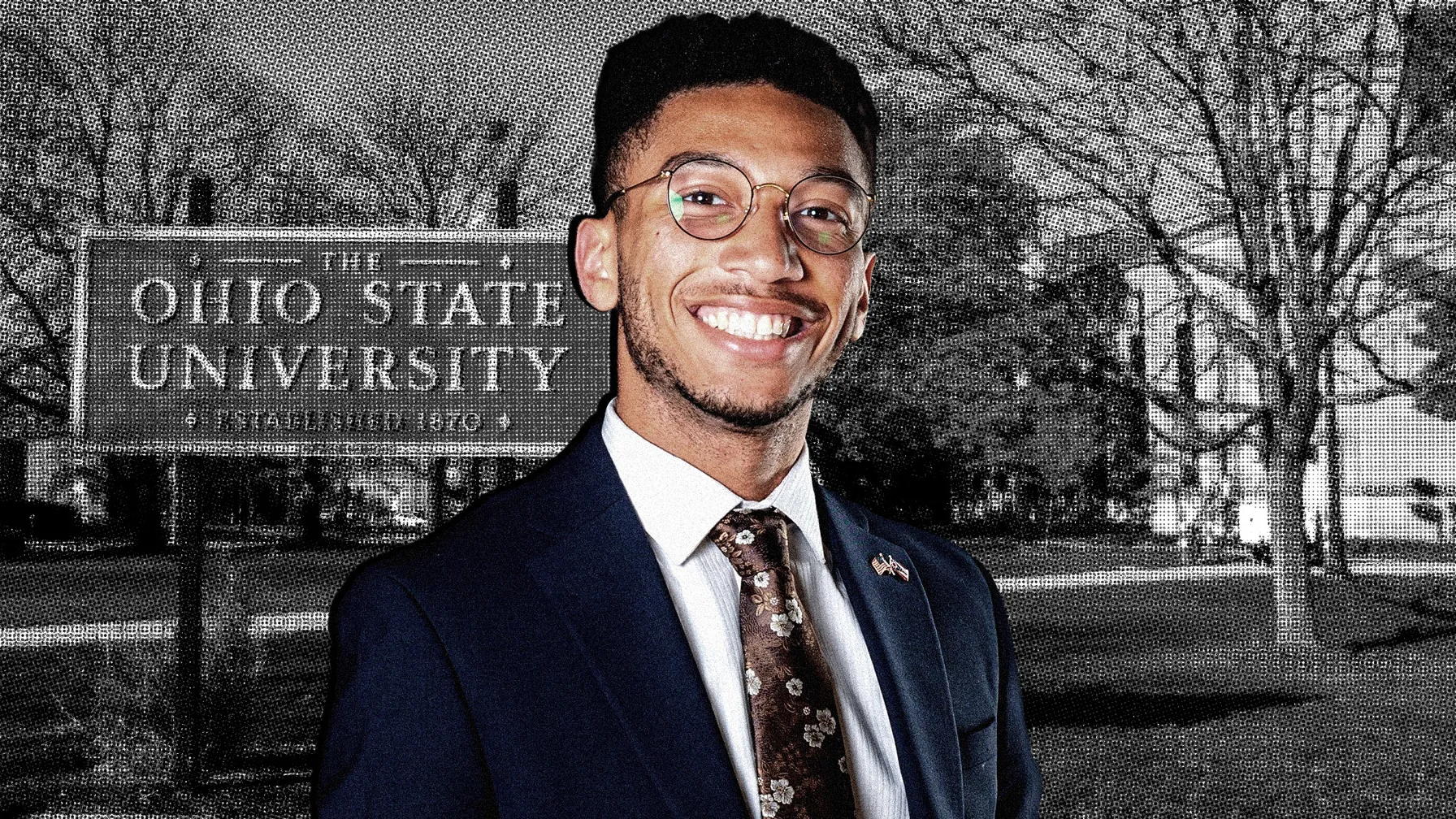
    Christopher Cade wants to be president someday. His inspiration largely comes from family members, who have been involved in local politics and activism since long before he was born. But policies from the Trump administration and the Ohio Legislature are complicating his college experience — and his plans to become a politician.

    Cade is a student at Ohio State University double-majoring in public policy analysis and political science with a focus on American political theory. He recalls his maternal grandmother, Maude Hill — who had a large hand in raising him — talking to him about her involvement in the Civil Rights Movement. She also worked at Columbus, Ohio-based affordable housing development nonprofit, Homeport, and has gone to Capitol Hill to speak with the state delegation multiple times. His dad is the senior vice president of the housing choice voucher program at the Columbus Metropolitan Housing Authority, and his older brother has a degree in political science and is interested in social justice advocacy work, Cade said. Last fall, his first on campus, Cade began applying to opportunities to bolster his resume for a future career in politics.

    The now 19-year-old secured an internship with the U.S. Department of Transportation and a work-study job on campus in the university’s Office of Diversity and Inclusion. But the federal opportunity was scrapped when the Trump administration imposed a hiring freeze and budget cuts. His campus job ended when the university announced it would “sunset” the diversity office in response to federal and state anti-diversity, equity and inclusion orders and actions, according to Cade.

    Related: Become a lifelong learner. Subscribe to our free weekly newsletter featuring the most important stories in education. 

    The work-study position was with the university’s Bell National Resource Center on the African American Male, which was founded to support Black men to stay in college. It’s a cause he was excited about. 

    “I would help order food or speak with students or do interviews,” said Cade. “I developed a good 20 different programs for the next year.” 

    In February, when the university announced it was closing the office, “I was like, ‘Well, so six months of work just for no reason,’” he said.

    OSU President Ted Carter released a statement on Feb. 27 saying the closure of the Office of Diversity and Inclusion was a response to both state and federal actions regarding DEI in public education. The move eliminated 17 staff positions, not including student roles, the university said. Programming and services provided by the Office of Student Life’s Center for Belonging and Social Change were also scrapped. 

    The change came before the Trump administration’s initial deadline for complying with a memo that threatened to cut funding for public colleges and universities, as well as K-12 schools, that offer DEI programs and initiatives. In March, the administration announced that OSU was one of roughly 50 universities under federal investigation for allegedly discriminating against white and Asian students in graduate admissions. Additionally, Ohio Gov. Mike DeWine signed legislation in March banning DEI programs in the state’s public colleges and universities. The legislation went into effect in June.

    Before the DEI office closed, Cade said, “I felt so heard and seen.” He’d attended a private, predominantly white, Catholic high school, he said. “It was not a place that supported me culturally and helped me understand more about who I am and my Blackness,” he recalled. At the university, though, “the programming we had throughout the year [was] about how to change the narrative on who a Black man is and what it means when you go out here and interact with people.

    “And then for them to close down all these programs, that essentially told me that I wasn’t cared about.”

    After the February announcement, students pushed back, organizing protests and a sit-in at the student union. But eventually, those efforts quieted.

    Cade says students felt like there was a “cloud of darkness” hanging over them. But he also thought of his Office of Diversity and Inclusion coworkers, some of whom had spent decades working there, helping students. In particular he thought of his former colleague Chila Thomas, who celebrated her fifth anniversary last year as the executive director of the Young Scholars Program. That program, which helps low-income aspiring first-generation college students get to and through college, was one of several of the office’s programs that will continue. The day after Carter’s announcement, she and others in the office spent time giving students space to talk through their feelings, despite the uncertainties surrounding their own employment, Cade said. 

    Related: A case study of what’s ahead with Trump DEI crackdowns: Utah has already cut public college DEI initiatives 

    Since the university crackdown on DEI, Cade said he’s experienced more discomfort on campus, even outright racism. He says he was approached by a white person who said, “I’m so glad they’re getting rid of DEI” and spit on his shoe and used a racial slur.  

    “I don’t know how that could ever be acceptable to anyone, but that was [when] a flip switched in my head,” Cade said. “I couldn’t sit down and be sad and silent. I had to stand up and make change.”

    In March, he traveled with other students to Washington, D.C., as part of the Undergraduate Student Government’s Governmental Relations Committee. They met with Ohio Rep. Troy Balderson and an aide, along with staffers from the offices of fellow Ohio lawmakers Sen. Bernie Moreno and Rep. Joyce Beatty, to discuss college affordability, DEI policies and the federal hiring freeze. Cade says he described how he was affected by the U.S. Department of Transportation canceling his internship.

    In Carter’s announcement, he stated that all student employees would be “offered alternative jobs at the university,” but Cade said during a meeting with Office of Diversity and Inclusion student employees, an OSU dean clarified that they would have to apply for new opportunities. With the policy changes meaning there were fewer work-study roles and more students in need of jobs, Cade saw the market as increasingly competitive, and he began to job hunt elsewhere. This summer he secured work with the Ohio Department of Transportation as a communications and policy intern. In October he began an intake assistant role in the Office of Civil Rights Compliance at the university. (Ohio State Director of Media and PR Chris Booker told Teen Vogue that the school could not comment on the experiences of individual students but that “all student employees and graduate associates impacted by these program changes were offered the opportunity to pursue transitioning into alternative positions at the university, as well as support in navigating that change.”)

    Although he was drawn to OSU for the John Glenn College of Public Affairs’ master’s program, Cade says he might have reconsidered schools had he known that the university would bend to lawmakers’ anti-DEI efforts. While he’s concerned about how education-related legislation and policies may continue to affect his college experience, he worries most about some of his peers. College is already so hard to navigate for so many young people, said Cade. “And this is just another thing that says, ‘Oh yeah, this isn’t for me.’”

    This story was published in partnership with Teen Vogue.

    The Hechinger Report provides in-depth, fact-based, unbiased reporting on education that is free to all readers. But that doesn’t mean it’s free to produce. Our work keeps educators and the public informed about pressing issues at schools and on campuses throughout the country. We tell the whole story, even when the details are inconvenient. Help us keep doing that.

    Join us today.

    Source link

  • Cornell Settles With the Trump Administration

    Cornell Settles With the Trump Administration

    Cornell University has reached a deal with the Trump administration to pay the government a $30 million settlement—and invest another $30 million in agricultural research—in exchange for having its frozen federal research funding restored.

    The agreement, announced Friday, makes Cornell the latest institution to strike a deal with the federal government in an effort to settle investigations into alleged civil rights violations. The settlement follows similar arrangements at the University of Pennsylvania, Columbia University, Brown University and the University of Virginia. Concessions varied by university, with Columbia making the biggest payout at $221 million.

    Collectively, those institutions were targeted for a range of alleged violations, including allowing transgender athletes to compete on women’s sports teams, failing to police campus antisemitism amid pro-Palestinian protests and operating supposedly illegal diversity, equity and inclusion practices as the Trump administration cracked down on DEI initiatives.

    Now the university will see roughly $250 million in frozen federal research funding immediately restored. The federal government will also close ongoing civil rights investigations into Cornell.

    While some institutions, including Columbia, have given tremendous deference to the federal government and agreed to sweeping changes across admissions, hiring and academic programs, the deal at Cornell appears to be relatively constrained, despite the $30 million payout.

    Under the agreement, Cornell must share anonymized admissions data broken down by race, GPA and standardized test scores with the federal government through 2028; conduct annual campus climate surveys; and ensure compliance with various federal laws. Cornell also agreed to share as a training resource with faculty and staff a July memo from U.S. Attorney General Pam Bondi barring the use of race in hiring, admissions practices and scholarship programs. And in addition to paying the federal government $30 million over three years, Cornell will invest $30 million “in research programs that will directly benefit U.S. farmers through lower costs of production and enhanced efficiency, including but not limited to programs that incorporate [artificial intelligence] and robotics,” according to a copy of the agreement.

    Cornell leaders cast the deal as a positive for the university.

    “I am pleased that our good faith discussions with the White House, Department of Justice, and Department of Education have concluded with an agreement that acknowledges the government’s commitment to enforce existing anti-discrimination law, while protecting our academic freedom and institutional independence,” Cornell president Michael Kotlikoff said in a statement shared with Inside Higher Ed. “These discussions have now yielded a result that will enable us to return to our teaching and research in restored partnership with federal agencies.”

    Education Secretary Linda McMahon also celebrated the deal in a post on X.

    “The Trump Administration has secured another transformative commitment from an Ivy League institution to end divisive DEI policies. Thanks to this deal with Cornell and the ongoing work of DOJ, HHS, and the team at ED, U.S. universities are refocusing their attention on merit, rigor, and truth-seeking—not ideology. These reforms are a huge win in the fight to restore excellence to American higher education and make our schools the greatest in the world,” she wrote.

    Some outside observers, however, excoriated the settlement as capitulation to authoritarianism.

    “The Trump administration’s corrupt extortion of higher ed institutions must end. Americans want an education system that serves the public good, not a dangerously narrow far right ideology that serves billionaires,” American Association of University Professors President Todd Wolfson said in a statement, which also urged colleges to fight intrusion by the federal government.

    This is a breaking news story and will be updated.

    Source link

  • Congress Accuses GMU President of Lying About DEI Efforts

    Congress Accuses GMU President of Lying About DEI Efforts

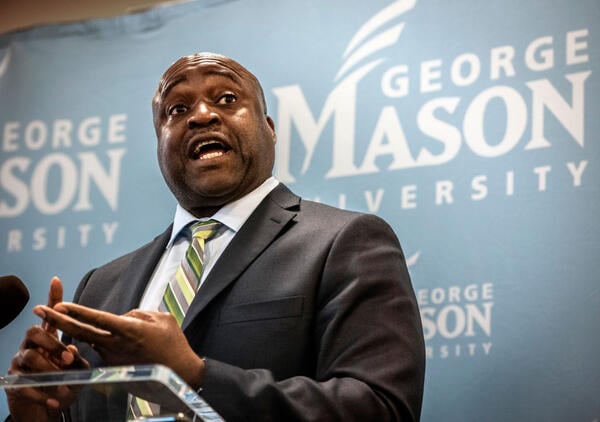
    House Republicans have accused George Mason University President Gregory Washington of lying to Congress about diversity practices at his institution, ratcheting up pressure on the president to step down.

    The Republican-led House Judiciary Committee alleged in a report released Thursday night that Washington made “multiple false statements to Congress” in testimony about diversity, equity, and inclusion efforts at GMU. The public university has been under fire for months over allegedly illegal DEI practices as the Trump administration has sought to crack down on such initiatives, claiming they are discriminatory and violate federal civil rights law. The Judiciary Committee report also alleged that the university “likely violated federal civil rights law by discriminating based on race in its hiring practices to advance Dr. Washington’s diversity, equity, and inclusion initiative.”

    Washington has denied breaking the law through efforts to diversify GMU’s faculty and staff, telling Congress that the university did not practice illegal discrimination under his leadership.

    The report is the latest salvo from Republicans who have launched federal investigations into GMU over its hiring policies, including demands that the embattled president apologize for allegedly discriminatory practices, which he has refused to do as he denies any wrongdoing.

    What’s in the Report

    The House Judiciary Committee’s report zoomed in on an effort by GMU, launched shortly after Washington took office in July 2020, to diversify employee ranks. The Anti-Racism and Inclusive Excellence initiative the president introduced aimed to make faculty and staff “mirror student Demographics” at GMU, which is among the most diverse institutions in the country. As part of that effort, GMU tasked schools and departments with hiring more underrepresented individuals.

    But in Congressional testimony, Washington denied the initiative was a strict mandate.

    “These are overall goals and they’re aspirational in focus,” Washington said, according to a transcript of his Sept. 17 interview released by the House Judiciary Committee Thursday.

    Though the Anti-Racism and Inclusive Excellence initiative stemmed from his office, Washington told Congress that faculty in each department developed plans for their unit. He also cast the creation of such plans as optional, telling Congress “if units did not want to develop a plan, they did not have to.”

    But the House Judiciary Committee claimed Washington lied about that.

    “Documents and testimony obtained by the Committee … show that Dr. Washington and his deputies actively sought to punish schools that did not comply with his racial discrimination mandates,” the committee report states. “A senior GMU official told the Committee that GMU financially punished any school that resisted Dr. Washington’s unconstitutional initiative.” 

    Congress pointed to testimony from Ken Randall, the dean of George Mason University’s Antonin Scalia Law School, as evidence that Washington lied about the plan being optional.

    “You’d get fired if you didn’t have a plan,” Randall said, according to an interview transcript.

    Washington also denied the administration formally reviewed plans to diversify faculty hiring. Republicans accused him of lying about that, too, pointing to internal remarks from then-vice president of Diversity, Equity, and Inclusion Sharnnia Artis (who now has a different title), in which she said the DEI team “consistently reviewed, monitored, and supported” such plans.

    “Again, the evidence contradicts Dr. Washington’s testimony,” the report states.

    However, Douglas Gansler, a lawyer representing the GMU president sharply disrupted claims that his client lied to Congress, which he accused of carrying out a “political lynching” in an emailed statement to Inside Higher Ed.

    “The political theater of the politicians accusing Dr. Washington of misrepresenting anything to them is unadulterated nonsense. Dr. Washington has never discriminated against anybody for any reason and did not utter one syllable of anything not verifiably completely true,” Gansler wrote.

    What Happens Next

    The GMU Board of Visitors has said little in the immediate aftermath of the report.

    “Today, the Board of Visitors received an interim staff report from the U.S. House of Representatives Committee on the Judiciary. We are reviewing the report and consulting with University counsel and counsel for Dr. Washington,” board members wrote in a brief statement. “The Board remains focused on serving our students, faculty and the Commonwealth, ensuring full compliance with federal law and positioning GMU for continued excellence.”

    While the board is reviewing the report, it appears unlikely members would be able to take action against Washington. GMU’s board, which is stocked with GOP donors and political figures appointed by Republican Governor Glenn Youngkin, is currently without a quorum after Virginia Democrats blocked multiple appointments in recent months. Now a legal battle over those blocked appointments is slowly winding its way through the judicial system. While the Virginia Supreme Court heard arguments in the case last month, it has yet to issue a ruling on the matter. In the meantime, with only six of its 16 seats filled, GMU’s board is hobbled.

    Youngkin’s office did not immediately respond to a request for comment from Inside Higher Ed.

    The George Mason chapter of the American Association of University Professors offered a fiery defense of Washington, arguing in a statement the committee was carrying out a politically motivated attack designed to erode institutional autonomy and impose partisan control over the public university.

    “The Committee’s unfounded accusations, dependence on clearly compromised sources, and selective presentation of ‘evidence’ represent an unprecedented abuse of congressional power—designed not to find the truth, but to silence leadership that refuses to yield to political pressure,” the GMU-AAUP chapter wrote in an emailed statement to Inside Higher Ed.

    GMU students, employees and community members rallied in support of president Gregory Washington earlier this year, amid concerns the board would fire him.

    With Washington under pressure from Congress, state and national Democrats have rallied to his defense, accusing the GOP of waging an ideological war on universities and hypocrisy by focusing on the GMU president’s alleged dishonesty while federal officials brazenly lie in court.

    “In Donald Trump’s Gangster State, they pick the target first and figure out the charges later,” House Judiciary Democrats wrote on X. “Today’s target: GMU President Gregory Washington. The Trump Education Department failed to find evidence of employment discrimination at GMU. So [House Judiciary committee] Chairman [Jim] Jordan opened his own investigation. When that one only confirmed Dr. Washington followed Virginia law, Jordan pivoted and conjured up an absurd and convoluted criminal referral based on an alleged lie that takes 8 pages to explain.”

    Representative James Walkinshaw—a Democrat in Virginia’s 11th district, which includes GMU—called Washington “an exemplary leader” in a biting statement posted on Bluesky.

    “Make no mistake, this is an attack on free speech and academic freedom,” Walkinshaw wrote. “It’s cancel culture at its worst and the American people are tired of right-wing snowflakes like Jim Jordan trying to silence anyone who doesn’t bend the knee to their bizarre MAGA ideology.”

    Source link

  • Billions of Aid Dollars Go to High-Income Students

    Billions of Aid Dollars Go to High-Income Students

    A new report from the Century Foundation found that state and institutional grant aid too often flows to higher-income students who don’t need it, while low-income students continue to struggle with unmet need.

    The analysis, released Thursday, shows that more than half of students from the top income quartile, 56 percent, receive grants that surpass their financial need, compared to a mere 0.2 percent of students from the bottom income quartile. That means that top income quartile students were 280 times more likely to receive grants that exceeded their level of need than their lowest income peers. The share of white students that receive grants beyond their needs (19 percent) far exceeds the share of Black of Hispanic students who receive such grants (5 percent).

    Part of the issue is that the share of state grants that are merit-based jumped 17 percentage points between 1982 and now, according to the report. Over all, about 10 percent of grant aid—at least $10 billion annually in state and institutional aid—exceeds students’ financial need.

    The analysis also found that state grants disproportionately go to students at highly selective public colleges versus students at open-admission public four-year institutions—$3,693 and $842 on average, respectively. And at four-year public colleges over all, students with an Expected Family Contribution of zero were less likely than students with higher EFCs to receive aid from their institution.

    “What people think about as a pillar of the financial aid system in higher education has become a windfall for wealthy students that leaves working families paying the bill for tuition increases,” Peter Granville, the report’s author and a fellow at the Century Foundation, said in a news release.

    Source link

  • Understanding how inflation affects teacher well-being and career decisions

    Understanding how inflation affects teacher well-being and career decisions

    Key points:

    In recent years, the teaching profession has faced unprecedented challenges, with inflation emerging as a significant factor affecting educators’ professional lives and career choices. This in-depth examination delves into the complex interplay between escalating inflation rates and the self-efficacy of educators–their conviction in their capacity to proficiently execute their pedagogical responsibilities and attain the desired instructional outcomes within the classroom environment.

    The impact of inflation on teachers’ financial stability has become increasingly evident, with many educators experiencing a substantial decline in their “real wages.” While nominal salaries remain relatively stagnant, the purchasing power of teachers’ incomes continues to erode as the cost of living rises. This economic pressure has created a concerning dynamic where educators, despite their professional dedication, find themselves struggling to maintain their standard of living and meet basic financial obligations.

    A particularly troubling trend has emerged in which teachers are increasingly forced to seek secondary employment to supplement their primary income. Recent surveys indicate that approximately 20 percent of teachers now hold second jobs during the academic year, with this percentage rising to nearly 30 percent during summer months. This necessity to work multiple jobs can lead to physical and mental exhaustion, potentially compromising teachers’ ability to maintain the high levels of energy and engagement required for effective classroom instruction.

    The phenomenon of “moonlighting” among educators has far-reaching implications for teacher self-efficacy. When teachers must divide their attention and energy between multiple jobs, their capacity to prepare engaging lessons, grade assignments thoroughly, and provide individualized student support may be diminished. This situation often creates a cycle where reduced performance leads to decreased self-confidence, potentially affecting both teaching quality and student outcomes.

    Financial stress has also been linked to increased levels of anxiety and burnout among teachers, directly impacting their perceived self-efficacy. Studies have shown that educators experiencing financial strain are more likely to report lower levels of job satisfaction and decreased confidence in their ability to meet professional expectations. This psychological burden can manifest in reduced classroom effectiveness and diminished student engagement.

    Perhaps most concerning is the growing trend of highly qualified educators leaving the profession entirely for better-paying opportunities in other sectors. This “brain drain” from education represents a significant loss of experienced professionals who have developed valuable teaching expertise. The exodus of talented educators not only affects current students but also reduces the pool of mentor teachers available to guide and support newer colleagues, potentially impacting the professional development of future educators.

    The correlation between inflation and teacher attrition rates has become increasingly apparent, with economic factors cited as a primary reason for leaving the profession. Research indicates that districts in areas with higher costs of living and significant inflation rates experience greater difficulty in both recruiting and retaining qualified teachers. This challenge is particularly acute in urban areas where housing costs and other living expenses have outpaced teacher salary increases.

    Corporate sectors, technology companies, and consulting firms have become attractive alternatives for educators seeking better compensation and work-life balance. These career transitions often offer significantly higher salaries, better benefits packages, and more sustainable working hours. The skills that make effective teachers, such as communication, organization, and problem-solving, are highly valued in these alternative career paths, making the transition both feasible and increasingly common.

    The cumulative effect of these factors presents a serious challenge to the education system’s sustainability. As experienced teachers leave the profession and prospective educators choose alternative career paths, schools face increasing difficulty in maintaining educational quality and consistency. This situation calls for systematic changes in how we value and compensate educators, recognizing that teacher self-efficacy is intrinsically linked to their financial security and professional well-being.

    Latest posts by eSchool Media Contributors (see all)

    Source link

  • U.K. University Apologizes to U.S. Scholar Over Publication Ban

    U.K. University Apologizes to U.S. Scholar Over Publication Ban

    Sheffield Hallam University has apologized to a professor whose research into alleged human rights abuses was blocked from publication after political pressure from the Chinese security services.

    In late 2024, a study by Laura Murphy, an American professor of human rights and contemporary slavery at Sheffield Hallam, into forced labor practices Uyghur Muslims allegedly face was refused publication by her institution after a campaign of harassment and intimidation from Beijing, The Guardian and BBC News reported.

    Sheffield Hallam staff working in offices in mainland China faced visits from intelligence officials over the research, while access to the university’s websites was blocked for more than two years, hampering student recruitment, officials say.

    In an internal email from July 2024 obtained by Murphy using a subject access request, university officials said “attempting to retain the business in China and publication of the research are now untenable bedfellows.”

    After taking a career break to work for the U.S. government, Murphy returned to Sheffield Hallam in early 2025 and says she was told by administrators that the university was no longer permitting any research on forced labor or on China, prompting her to start legal action.

    Her solicitor, Claire Powell, of the firm Leigh Day, said that Murphy’s “academic freedom has been repeatedly and unlawfully restricted over the past two years.”

    “The documents uncovered paint an extremely concerning picture of a university responding to threats from a foreign state security service by trading the academic freedom of its staff for its own commercial interests,” Powell added.

    Murphy, who claimed her university failed to protect her academic freedom, has now received an apology and the institution has told her it “wish[ed] to make clear our commitment to supporting her research and to securing and promoting freedom of speech and academic freedom within the law.”

    “The university’s decision to not continue with Professor Laura Murphy’s research was taken based on our understanding of a complex set of circumstances at the time, including being unable to secure the necessary professional indemnity insurance,” a spokesperson for the university added.

    These circumstances relate to a defamation case brought by a Hong Kong garment maker which initiated a libel case against Sheffield Hallam after its name was included in a report into forced labor published in December 2023. A preliminary rule at the High Court in London found the report had been “defamatory.”

    The apology comes months after new free speech laws came into effect in England in August, with the Office for Students’ free speech champion Arif Ahmed warning the regulator would take action if universities bowed to pressure from foreign governments regarding contentious areas of research.

    A U.K. government spokesperson said, “Any attempt by a foreign state to intimidate, harass or harm individuals in the U.K. will not be tolerated, and the government has made this clear to Beijing after learning of this case.

    “The government has robust measures in place to prevent this activity, including updated powers and offenses through the National Security Act.”

    The Chinese Embassy in London told the BBC that the university had “released multiple fake reports on Xinjiang that are seriously flawed.”

    “It has been revealed that some authors of these reports received funding from certain U.S. agencies,” the embassy added.

    Murphy told the BBC she has received funding over the course of her career from multiple U.S. research agencies, including the U.S. National Endowment for Humanities for work on slave narratives, the U.S. Department of Justice for work on human trafficking in New Orleans, and more recently from USAID and the U.S. State Department for her work on China.

    The Chinese Embassy said the allegations of “forced labor” in her reports “cannot withstand basic fact-check.”

    Source link

  • Report: Sticker Prices Inch Up

    Report: Sticker Prices Inch Up

    Photo illustration by Justin Morrison/Inside Higher Ed | Rawpixel

    College sticker prices rose slightly across all sectors for the 2025–26 academic year, according to the College Board’s Trends in College Pricing and Student Aid report, released Wednesday.

    For the 2025–26 academic year, the average published price for tuition and fees at public four-year institutions for in-state students is $11,950, a 2.9 percent increase before inflation over 2024–25 prices. For out-of-state students, public four-year institutions are charging an average of $31,880, up 3.4 percent from 2024–25. Public two-year colleges charge in-district students an average of $4,150, up 2.7 percent from the previous year—though notably, full-time students at community colleges have been receiving enough grant aid to cover their tuition and fees since the 2009–10 academic year. The average published price at private four-year colleges is $45,000, up 4 percent from 2024–25.

    Inflation-adjusted prices at public institutions have been on the decline for a while. Between the 2015–16 and 2025–26 academic years, the average inflation-adjusted tuition and fees at public four-year colleges fell 7 percent, and at public two-year institutions, the average fell 10 percent. At private nonprofit four-year colleges, average inflation-adjusted tuition and fees rose by 2 percent during the same ten-year timeframe.

    Net prices are also down as average student aid packages rise. The average net tuition and fees paid by first-time, full-time students at private nonprofit four-year institutions declined from $19,810 (in 2025 dollars) in 2006–07 to $16,910 in 2025–26. At public four-year institutions, the average net price fell from a high of $4,450 in the 2012–13 academic year to $2,300 for the 2025–26 academic year.

    When the maximum Pell grant award increased from $6,895 in 2022–23 to $7,395 in 2023–24, so too did the number of Pell Grant recipients. Between 2022–23 and 2024–25, the total number of Pell Grant recipients increased by 22 percent to 7.3 million, and total Pell Grant expenditures increased by 32 percent to $38.6 billion after adjusting for inflation.

    Other notable findings include:

    • Total annual student and parent borrowing is up slightly in 2024–25, to $102.6 billion, following a 38 percent decline between 2010–11 ($163.9 billion) and 2023–24 ($101.4 billion).
    • Institutional grant aid for undergraduates increased by 22 percent between the 2014–15 and 2024–25 academic years.
    • As of June 2025, 32 percent of borrowers owed less than $10,000 in federal loan debt. Another 21 percent of borrowers owed between $10,000 and $20,000 in federal loan debt. These groups held 4 percent and 8 percent of the total outstanding federal loan debt, respectively.

    Source link

  • Florida DOGE Finds Disproportionate Spending at New College

    Florida DOGE Finds Disproportionate Spending at New College

    Photo illustration by Justin Morrison/Inside Higher Ed | Thomas Simonetti/The Washington Post/Getty Images

    Nearly three years into a conservative overhaul of New College of Florida, costs are adding up as the operating expenses per student dramatically outpace other State University System of Florida members.

    Data presented at Thursday’s Florida Board of Governors offers the clearest breakdown so far of what New College is spending per student compared to 11 other system members. NCF spent $83,207 per student in fiscal year 2024, the highest among state universities.

    The University of Florida, a major research institution, was the next highest at $45,765 per student, while the lowest was the University of Central Florida at $12,172 per student, according to data compiled by the Florida Department of Government Efficiency.

    New College and UF also had the highest number of administrators per 100 students. New College had 33.3 administrators per 100 students while UF had 26.9. Others in the system ranged from a low of 4.6 administrators per student at UCF to 12.6 at the University of South Florida.

    Silence on Spending

    Now, despite support from Republican governor Ron DeSantis—who appointed a slate of conservative trustees in early 2023 and tasked them with reimagining the small liberal arts college—NCF is facing growing scrutiny over soaring operating expenses from alumni and other community members. But the Florida Board of Governors, which is appointed by DeSantis, had little to say when presented with the numbers at Thursday’s meeting.

    Eric Silagy, who has been the board member most critical of NCF’s spending and has previously pressed college leadership on the matter, was the only one to offer remarks about the disparity. In limited comments, Silagy thanked Ben Watkins, director of the Florida Division of Bond Finance, for the presentation, which he said made university spending clear.

    Now, Silagy said, “there can be no question anymore about what the numbers really are.” He added that Florida’s DOGE data will allow the Board of Governors to “address outliers where it’s not working” and determine how to reach “better outcomes for the students and the taxpayers.”

    Silagy had clashed with NCF President Richard Corcoran, a former Republican lawmaker, on how much New College spends per student in past meetings. Silagy had estimated NCF spent $91,000 per student, while Corcoran initially said the number was closer to $68,000 per head. Corcoran later backtracked, agreeing the figure was between $88,000 and $91,000 per student.

    That spending has ticked up even as critics in the community and state legislature are growing, and as the college saw its place in U.S. News & World Report rankings fall nearly 60 spots since the takeover. The rankings are highly valued by Florida lawmakers and system officials.

    Asked about DOGE’s findings, a New College spokesperson said issues preceded current leadership.

    “Thanks to Governor DeSantis and the Florida Legislature making a bold move to appoint new leadership with clear goals, the impact of New College’s revitalization is already visible with enrollment surpassing 900 students for the first time in history,” New College spokesperson James Miller wrote in an emailed statement to Inside Higher Ed. “As enrollment growth continues to skyrocket, cost-per-student and cost-per-graduate metrics will be one of the lowest of all top liberal arts schools in the country.”

    Other Meeting Notes

    Thursday’s board meeting also included an update from UCF President Alexander Cartwright, who told FLBOG members that the Higher Learning Commission (HLC) had approved the university for initial accreditation, amid an effort to switch accreditors that had been underway since 2023.

    UCF, like other state institutions, sought to switch from Southern Association of Colleges and Schools Commission on Colleges to another accreditor, following a change to state law in 2022 that mandated the switch after state officials clashed with the organization over various issues.

    Cartwright said he received the news from HLC just hours earlier during the meeting.

    State University System of Florida Chancellor Ray Rodrigues credited Cartwright for his work on the effort and criticized the Biden administration for allegedly slow-walking the process.

    Rodrigues argued that the Biden administration “did not want to see reform in the area of accreditation” and “put up barriers and obstacles to states like Florida and universities like UCF” who were seeking to change accreditors while following Department of Education guidelines.

    The Florida Board of Governors also approved a policy change that will now require professors at all state universities to publicly post course materials. The policy will require “universities to post current syllabi for all courses and course sections offered for the upcoming term” at least 45 days before the first day of class. Those materials will then remain online for at least five years.

    That policy change, which has been the subject of recent media coverage highlighting faculty concerns about being targeted for course content, was passed as part of the consent agenda with no public discussion. No faculty members spoke about the policy change during the public comment portion of the meeting despite concerns expressed by professors in recent coverage.

    The board did not take action or discuss a directive from DeSantis late last month to “pull the plug” on hiring workers on H-1B visas at state universities amid concerns that such hires are taking jobs that could otherwise be filled by Floridians. (However, critics have noted such jobs are often highly specialized and hard to fill.) The board plans to consider that directive in January.

    Source link