Tag: Career

  • Higher Ed Feels “Cumulative Exhaustion” of Longest Shutdown

    Higher Ed Feels “Cumulative Exhaustion” of Longest Shutdown

    As the current government shutdown claims the mantle of longest in American history, uncertainty is ratcheting up for faculty, students and their institutions trying to budget for the weeks, months and years ahead.

    Five weeks in, the federal government’s closure has disrupted nearly all aspects of campus life, including research, basic needs support and military-affiliated students’ access to tuition assistance.

    On Monday, North Carolina State University joined a growing list of institutions that have limited spending and faced research disruptions as a result of the government’s inaction. The university said the ongoing shutdown has delayed payment for federally funded research activities worth more than $25 million per month, according to an internal memo reviewed by Inside Higher Ed.

    “To ensure the long-term continuity of our research, we must take steps to preserve the university’s available resources that support our vital research projects,” administrators wrote in the memo to deans, directors and department heads. “Effective immediately, we are directing all colleges and units to limit all non-payroll expenses on federal contract, grant or other award mechanisms.”

    While federal payments remain suspended, federally funded researchers at NC State won’t be able to spend money on new hires, nonessential travel, consulting services, and supplies and materials among other things.

    Meanwhile, it’s still not clear when the government might reopen.

    Health Care in Question

    On Tuesday, Senate Republicans and Democrats failed for the 14th time in 36 days to negotiate an end to the shutdown. Those negotiations have centered on Democrats’ demands—and Republicans’ refusal—to extend enhanced tax credits for health insurance premiums through the Affordable Care Act, which are set to expire at the end of the year.

    Without those subsidies, the cost of health insurance is expected to increase for millions of Americans, including thousands of adjunct professors who don’t qualify for health insurance through their institutions and have only a small margin of discretionary income.

    “In this stalemate, there are no options I have to meaningfully plan for what the next month-and-a-half looks like going into the new year. There’s just no way to get ahead,” said Thomas Moomjy, a lecturer in American Studies at Rutgers University at New Brunswick who buys health insurance through New Jersey’s health care exchange. “I also have to account for the fact that the cost of everything else—electricity, car insurance—is going up, too.”

    But the results of Tuesday’s elections, which saw wins for Democrats in numerous state and local races, may further complicate the path toward reopening the government.

    President Donald Trump blamed Republican losses on the shutdown, emboldening Democrats to double down on their fight to extend the health insurance subsidies. “Donald Trump clearly is feeling pressure to bring this shutdown to an end,” Senate majority leader Chuck Schumer said on the Senate floor Thursday. “Well, I have good news for the president: Meet with Democrats, reopen the government.” So far, Trump has refused such a meeting, insisting that the government reopen prior to any negotiations.

    None of this week’s developments offer hope to college students, or some faculty and staff, who aren’t sure if they’ll be able to afford basic necessities as the shutdown continues.

    “At this point, I just want the government to reopen,” Moomjy said. “I’m not sure that will fix the ACA stuff, but we’re reaching a point of cumulative exhaustion. If this pushes on much further without [Congress] offering something to the American people to say, ‘We at least hear you and can help to lower it in some way,’ then it feels like they’re fighting each other with slogans. The people that are getting hurt are us down on the ground.”

    Basic Needs Insecurity

    Vulnerable Americans also include more than 1 million college students who rely on the federal Supplemental Nutrition Assistance Program (SNAP) to buy food, and who didn’t receive those subsidies as planned on the first of the month.

    On Monday, in response to court orders, Trump agreed to fund half of the program during the shutdown. After Tuesday’s election, he increased it to 65 percent of full funding, though experts say most SNAP recipients will get far less than that once they receive their already-late benefits. Despite those partial concessions, many colleges—which are already grappling with tight budgets as a result of Trump’s ongoing assault on higher education this year—are still scrambling to help their students cope with the partial loss to benefits this month.

    On Thursday, a federal judge ordered the Trump administration to fully fund SNAP.

    Concerns about paying for food, health care and housing during the shutdown are top of mind for students and families, according to an informal survey conducted by the American Council on Education (ACE). And those worries extend beyond students and parents who work in the public sector or receive government assistance directly; 30 percent said their private sector jobs are suffering because of the shutdown.

    “One [parent of a college student] said they work for a private contractor whose budgets partially depend on federal funding. The shutdown has reduced and delayed funding which affects their ability to provide services, earn their regular income and meet their basic needs,” Emmanual A. Guillory, senior director of government relations for ACE, told Inside Higher Ed. “Other [students and parents] said their inability to pay bills is causing strain on their mental health.”

    Disruptions for Military Students

    The shutdown is also directly threatening some students’ ability to stay enrolled at all.

    While civilian students can at least access federal financial aid to cover their tuition during the shutdown, student-veterans and their dependents who rely on military benefits—including Military Tuition Assistance (TA) and the My Career Advancement Account (MyCAA) tuition assistance program for military spouses—to pay for their education are dealing with disruptions and delays to those payments.

    Some institutions, including Austin Peay State University in Tennessee and the online learning behemoth Southern New Hampshire University, are helping military-affiliated students stay on track during the shutdown by allowing them to register without payments or tuition assistance in place.

    According to an SNHU spokesperson, 2,840 undergraduates who receive military tuition assistance were impacted by the shutdown when they started a new term last week. If the government is still closed by the time the next graduate term starts next week, an additional 440 military-affiliated students who have already registered for classes will need waivers from SNHU.

    Disruptions to GI Bill payments—caused by a system failure at the Department of Veterans Affairs and compounded by the shutdown—may also put up to 75,000 survivors and dependents of deceased military veterans at “serious” risk of losing access to post-secondary education subsidies, according to the Tragedy Assistance Program for Survivors.

    Meanwhile, Senate Democrats and Republicans remain at an impasse on resuming government operations.

    Guillory of ACE, who was at the Capitol this week for discussions about implementing the One Big Beautiful Bill Act, said that from what he’s observed “it’s highly unlikely” that a deal to reopen the government will be reached by Friday.

    But whenever it does finally happen, higher education institutions and their students and faculty who have been affected by the shutdown won’t just be able to pick up where they left off.

    “There’s going to be a backlog of things that needs to get done,” Guillory said. “This is pushing everything back and leaving institutions in a place of uncertainty.”

    Source link

  • Agentic AI Invading the LMS and Other Things We Should Know

    Agentic AI Invading the LMS and Other Things We Should Know

    Over the past 18 months, I’ve been spending the majority of my time writing and speaking about how I think we can and should continue to teach writing even as we have this technology that is capable of generating synthetic text. While my values regarding this issue are unshakable, the world undeniably changes around me, which requires an ongoing vigilance regarding the capabilities of this technology.

    But like most people, I don’t have unlimited time to stay on top of these things. One of my recommendations in More Than Words for navigating these challenges is to “find your guides,” the people who are keeping an eye on aspects of the issue that you can trust.

    One of my guides for the entirety of this period is Marc Watkins, someone who is engaged with staying on top of the latest implications of how the technology and the way students are using it is evolving.

    I thought it might be helpful to others to share the questions I wanted to ask Marc for my own edification.

    Marc Watkins directs the AI Institute for Teachers and is an assistant director of academic innovation at the University of Mississippi, where he is a lecturer in writing and rhetoric. When training faculty in applied artificial intelligence, he believes educators should be equally supported if they choose to work with AI or include friction to curb AI’s influence on student learning. He regularly writes about AI and education on his Substack, Rhetorica.

    Q: One of the things I most appreciate about the work you’re doing in thinking about the intersection of education and generative AI is that you actively engage with the technology using a lens to ask what a particular tool may mean for students and classes. I appreciate it because my personal interest in using these things beyond keeping sufficiently, generally familiar is limited, and I know that we share similar values at the core of the work of reading and writing. So, my first question is for those of us who aren’t putting these things through their paces: What’s the state of things? What do you think instructors should, specifically, know about the capacities of gen AI tools?

    A: Thanks, John! I think we’re of the same mind when it comes to values and AI. By that, I mean we both see human agency and will as key moving forward in education and in society. Part of my life right now is talking to lots of different groups about AI updates. I visit with faculty, administration, researchers, even quite a few folks outside of academia. It’s exhausting just to keep up and nearly impossible to take stock.

    We now have agentic AI that completes tasks using your computer for you; multimodal AI that can see and interact with you using a computer voice; machine reasoning models that take simple prompts and run them in loops repeatedly to guess what a sophisticated response might look like; browser-based AI that can scan any webpage and perform tasks for you. I’m not sure students are aware of any of what AI can do beyond interfaces like ChatGPT. The best thing any instructor can do is have a conversation with students to ask them if they are using AI and gauge how it is impacting their learning.

    Q: I want to dig into the AI “agents” a bit more. You had a recent post on this, as did Anna Mills, and I think it’s important for folks to know that these companies are purposefully developing and selling technology that can go into a Canvas course and start doing “work.” What are we to make of this in terms of how we think about designing courses?

    A: I think online assessment is generally broken at this point and won’t be saved. But online learning still has a chance and is something we should fight for. For all of its many flaws, online education has given people a valid pathway to a version of college education that they might not have been able to afford otherwise. There’s too many issues with equity and access to completely remove online from higher education, but that doesn’t mean we cannot radically think what it means to learn in online spaces. For instance, you can assign your students a process notebook in an online course that involves them writing by hand with pen and paper, then take a photograph or scan it and upload it. The [optical character recognition] function within many of the foundation models will be able to transcribe most handwriting into legible text. We can and should look for ways to give our students embodied experiences within disembodied spaces.

    Q: In her newsletter, Anna Mills calls on AI companies to collaborate on keeping students from deploying these agents in service of doing all their work for them. I’m skeptical that there’s any chance of this happening. I see an industry that seems happy to steamroll instructors, institutions and even students. Am I too cynical? Is there space for collaboration?

    A: There’s space for collaboration for sure, and limiting some of the more egregious use cases, but we also have to be realistic about what’s happening here. AI developers are moving fast and breaking things with each deployment or update, and we should be deeply skeptical when they come around to offer to sweep up the pieces, lest we forget how they became broken in the first place.

    Q: I’m curious if the development of the technology tracks what you would have figured a year or even longer, 18 months ago. How fast do you think this stuff is moving in terms of its capacities as they relate to school and learning? What do you see on the horizon?

    A: The problem we’re seeing is one of uncritical adoption, hype and acceleration. AI labs create a new feature or use case and deploy it within a few days for free or low cost, and industry has suddenly adopted this technique to bring the latest up-to-date AI features to enterprise products. What this means is the none-AI applications we’ve used for years suddenly get AI integrated into it, or if it has an AI feature, sees it rapidly updated.

    Most of these AI updates aren’t tested enough to be trusted outside of human in the loop assistance. Doing otherwise makes us all beta testers. It’s creating “work slop,” where companies are seeing employees using AI uncritically to often save time and produce error-laden work that then takes time and resources to address. Compounding things even more, it increasingly looks like the venture capital feeding AI development is one of the prime reasons our economy isn’t slipping into recession. Students and faculty find themselves at ground zero for most of this, as education looks like one of the major industries being impacted by AI.

    Q: One of the questions I often get when I’m working with faculty on campuses is what I think AI “literacy” looks like, and while I have my share of thoughts, I tend to pivot back to my core message, which is that I’m more worried about helping students develop their human capacities than teaching them how to work with AI. But let me ask you, what does AI literacy look like?

    A: I think AI literacy really isn’t about using AI. For me, I define AI literacy as learning how the technology works and understanding its impact on society. Using that definition, I think we can and should integrate aspects of AI literacy throughout our teaching. The working-with-AI-responsibly part, what I’d call AI fluency, has its place in certain classes and disciplines but needs to go hand in hand with AI literacy; otherwise, you risk uncritically adopting a technology with little understanding or demystifying AI and helping students understand its impact on our world.

    Q: Whenever I make a campus visit, I try to have a chance to talk to students about their AI use, and for the most part I see a lot of critical thinking about it, where students recognize many of the risks of outsourcing all of their work, but also share that within the system they’re operating in, it sometimes makes sense to use it. This has made me think that ultimately, our only response can be to treat the demand side of the equation. We’re not going to be able to police this stuff. The tech companies aren’t going to help. It’s on the students to make the choices that are most beneficial to their own lives. Of course, this has always been the case with our growth and development. What do you think we should be focused on in managing these challenges?

    A: My current thinking is we should teach students discernment when it comes to AI tools and likely ourselves, too. There’s no rule book or priors for us to call upon when we deal with a machine that mimics human intelligence. My approach is radical honesty with students and faculty. By that I mean the following: I cannot police your behavior here and no one else is going to do that, either. It is up to all of us to form a social contract and find common agreement about where this technology belongs in our lives and create clear boundaries where it does not.

    Source link

  • First-Gen Students More Likely to Drop Out Due to Low GPA

    First-Gen Students More Likely to Drop Out Due to Low GPA

    First-generation students make up half of all undergraduates, but only one quarter of them retain and graduate with a degree.

    A recent study from the National Bureau of Economic Research analyzed first-generation student data against that of their continuing-generation peers to identify gaps in the classroom that may be hindering their success. Researchers found that first-generation students who received lower-than-expected grades in their first term were more likely to leave college entirely compared to their peers who also underperformed but utilized other pathways to continue in higher education.

    The findings point to a need for additional support resources to help first-generation students understand academic recovery opportunities—including course withdrawal and switching majors—to promote persistence to graduation.

    Digging into data: The study relies on transcript data from 145,000 first-year students at Arizona State University from 2000 to 2022, as well as survey data fielded during the 2021–22 academic year.

    Researchers found that parental education is a significant predictor of a student’s academic success, even when controlling for a variety of characteristics, including demographics, household income, major choice and early college performance.

    One distinguishing factor between continuing and first-generation students was their use of academic policies to protect their grades. First-generation students were less likely to change their majors or withdraw from courses, strategies that some students deploy to save their GPAs. They were also less likely to know their peers or turn to family members for support when faced with academic challenges, researchers wrote.

    “First-generation students who encounter negative grade events have about a 40 percent likelihood of dropping out, which is around five percentage points higher than observationally identical continuing generation students who face the same academic setback,” according to the study. “Rather than dropping out, we find that continuing-generation students who face academic difficulties in their first year are more likely to switch majors.”

    Researchers surveyed students to understand how their academic perceptions and outcomes could influence their retention. Results showed that first-generation students were more likely to consider poor grades as detrimental to their success or a signal of their academic failure, which might push them to drop out.

    One example of this was the decision to switch majors. While all students were more likely to switch majors if their first semester grades fell below a 3.0 GPA, continuing-generation students were much more likely to switch their major because of lower grades; first-generation students were more inclined to remain in their major even with poor grades.

    Researchers hypothesized that first-gen students may be less likely to switch majors because they have a less differentiated perspective on major earnings, meaning they expect similar earnings after graduating college regardless of their major. Therefore, poor grades in one major would mean poor outcomes in all fields—not just that particular program.

    Survey Says

    A 2025 Student Voice survey by Inside Higher Ed and Generation Lab found that 55 percent of first-generation students said one of their top reasons for deciding to attend college was to pursue a specific career or profession.

    First-generation students were slightly more likely to say they enrolled to increase their earning potential or to achieve a personal goal, compared to their continuing-generation peers.

    One solution: As part of the study, researchers evaluated Arizona State University LEAD (Learn Explore Advance Design), a program that supports incoming students with lower grades or test scores. LEAD participants complete special first-year courses that focus on durable skills including time management and offer smaller class sizes and more interaction with faculty. The program also has dedicated staff and peer mentors who support incoming students.

    Data shows the program effectively helped students learn to navigate the university; participants had a slightly higher GPA and reported a greater sense of belonging and positive mental health. LEAD students were also more likely to switch majors and less likely to declare an undecided major, signaling to researchers that the program improved students’ cultural capital and flow of information.

    Related Research: First-generation students can be left behind in the classroom because they’re unaware of the “hidden curriculum,” or unspoken norms and processes involved in navigating higher education.

    Similarly, one research project found that first-generation students were less aware of conduct systems and how to interpret the student handbook, which could result in disproportionate disciplinary action.

    Read more here.

    How does your college help first-generation students navigate the hidden curriculum? Tell us more here.

    Source link

  • The Higher Ed Act Turns 60—And Needs a Refresh (opinion)

    The Higher Ed Act Turns 60—And Needs a Refresh (opinion)

    Sixty years ago, when Congress passed the Higher Education Act (HEA) of 1965, it made a bipartisan promise to the American people: that college opportunity should not be reserved for the wealthy, but made available to anyone willing to work for it. That commitment built the foundation for millions of students to pursue higher education, strengthen the workforce, improve their lives and advance our nation.

    But as we mark another anniversary of the HEA’s enactment, that promise feels increasingly distant. The law that should lay out a steadfast vision for higher education has been left to languish for nearly two decades without a comprehensive review or update. In the interim, the foundational need-based aid programs it created—like the Pell Grant and Federal Supplemental Educational Opportunity Grant programs—are now at the mercy of annual budget battles and political brinkmanship. When thoughtful reform is pushed to the back burner, the result is a student aid system that is fragmented and reactive, rather than strategic and steady. Rather than providing reliable support for students, it introduces instability and mistrust.

    The federal appropriations process, once a vehicle for steady investment in the nation’s priorities, has been weaponized—and students are collateral damage. The current government shutdown, now more than a month and counting, is only the latest reminder of how Congress is failing on its budgetary responsibilities. Congress consistently misses its own deadlines, instead relying on continuing resolutions, short-term fixes and partisan negotiations that leave students, families and the colleges that serve them in a constant state of uncertainty.

    When final budget information is not available until months after the fiscal year begins, students and families suffer. When schools cannot provide reliable estimates of federal, state or institutional aid awards, students are left in limbo and families lose faith that higher education remains a viable pathway to opportunity. That’s not a sustainable or fair system—it’s a symptom of one that’s been overrun by partisanship.

    Instead of prioritizing steady, predictable funding for student aid programs, lawmakers increasingly use appropriations as leverage to extract concessions on policy priorities better addressed outside of the appropriations process, ultimately leading to the threat of a government shutdown for which millions of Americans pay the price.

    But when updating landmark pieces of legislation falls off the list of priorities, it leaves few vehicles for thorough policy reform. FAFSA (Free Application for Federal Student Aid) simplification—the largest overhaul of the financial aid system in decades—was tacked onto an appropriations bill in the final days of the first Trump administration.

    And it’s not just appropriations. Over the past two decades, Congress has used the budget reconciliation process—a tool designed for swift deficit reduction—to make sweeping changes to federal student aid. From the creation of Public Service Loan Forgiveness in 2007 to the elimination of bank-based lending in the student loan program in 2010 to the recent overhaul of repayment plans and new loan limits in 2025, these changes have reshaped the financial aid landscape one policy at a time. This disjointed approach to policy change without comprehensive and considered debate results in confusion, unrealistic implementation timelines, conflicting statutes and unintended consequences, leaving the professionals who must translate policy into practice to manage monumental changes with little warning—and often little or unclear guidance.

    Without question, there are real challenges in higher education that demand congressional action. College prices continue to rise, student loan debt remains a national concern and families are rightly asking whether higher education is still worth the investment. But the place to grapple with those long-term structural, accountability and sustainability issues is through a full reauthorization of the Higher Education Act, not a patchwork of policies layered on top of one another through reconciliation bills, regulatory processes and executive orders.

    The HEA was designed to be reviewed and reauthorized every five years to ensure that student aid programs evolve alongside students’ needs, but the last comprehensive reauthorization took place in 2008. Since then, higher education has changed dramatically, but the law underpinning our financial aid system has not.

    What’s been lost in all this is the chance to step back and evaluate the student aid system as a whole, receive thoughtful input from experts and stakeholders, and pursue a comprehensive, bipartisan approach to address the root issues: how to make college more affordable, adapt to new learning models, streamline student aid delivery and ensure that public dollars are truly serving students’ needs.

    The Higher Education Act was born out of a shared belief that education is a public good—a cornerstone of economic mobility and national strength. As we reflect on the last six decades of progress, it’s clear that the country still believes in the promise of higher education, but trust in the system to deliver on that promise is eroding. What’s missing is the political will to rise above the polarization that threatens to pull us apart and to protect that promise. Congress must return to the thoughtful policymaking that once defined our approach to higher education and reauthorize the law that made opportunity possible for generations of Americans.

    Melanie Storey is president and CEO of the National Association of Student Financial Aid Administrators (NASFAA).

    Source link

  • The Rise of the Campus Right, Plus What Are Adjuncts For?

    The Rise of the Campus Right, Plus What Are Adjuncts For?

    It’s been a minute since I’ve done a Friday Fragments piece, but now that I’m publishing on Fridays, it seems a shame not to dust it off. So, here goes.

    As a political theorist who works in higher ed administration, I’m embarrassed to admit that it took me until last month to get around to Lauren Lassabe Shepherd’s excellent book Resistance from the Right. In a way, though, the delay helped.

    Lassabe Shepherd outlines the rise of right-wing organizations on college campuses in the U.S. in the 1960s. That’s an unusual choice in its own right; most accounts of the 60s focus on the New Left, and most accounts of the rise of the right don’t focus on higher ed.

    Hearing it now—I listened to it as an audiobook while driving, so I don’t have quotes at the ready—I was struck by several threads. The first was just how thoroughly intentional more established conservative figures were in seeding campus organizations. Students with conservative leanings were funded, groomed, trained and recruited with an efficiency that the leaderless New Left simply didn’t have. Prominent conservatives funded campus newspapers and radio stations that gave up-and-coming young conservatives platforms that their left or liberal counterparts couldn’t rival. The right was playing the long game, and it paid off.

    As a theorist, too, I appreciated Lassabe Shepherd’s attention to the persistent tensions between the “traditionalist” and libertarian streaks within the right. In the context of a military draft, for instance, the two camps disagreed so fundamentally that organizations like Young Americans for Freedom had schisms, effectively banning one side (in their case, the libertarians) from the group entirely.

    The most striking resonance, though, came from listening in 2025, as opposed to when it was published in 2023. The book offers a series of accounts of right-wing groups attacking college presidents and/or trustees for being insufficiently harsh on left-wing student protesters. In the wake of the Gaza protests of the last couple of years, the observation “hit different,” as the young say. And even in the moments when conservative organizations weren’t calling for vengeance, they were actively trying to narrow down colleges’ missions to vocational preparation, preferably with students bearing most of the cost. The idea was to use economic power to enforce political discipline. Lewis Powell himself—later to join the Supreme Court—made the connection explicit. It was a conscious strategy.

    It’s one thing to suspect as much. It’s another to get empirical confirmation.

    Lassabe Shepherd also hosts a terrific podcast, American Campus, that has quickly become a favorite. But I really can’t recommend her book highly enough.

    Thanks to the readers who wrote in with responses to the piece about hiring late-career professionals in technical fields as adjuncts as part of a glide path to retirement. Several readers noted that this was, in fact, the original vision of “adjunct” faculty: people with industry expertise who could offer a real-world complement to theory. Over time, the economic appeal of adjuncts to institutions led to expanding the category far beyond what it was intended to cover.

    There’s truth in that. In a job interview once, a professor asked me what my ideal adjunct percentage was. I replied something like “lower than it usually is now, but not zero.” The role can make sense in some cases. For example, when I was at the County College of Morris, it had a large and well-respected music program. (That’s still true.) Music majors had to have a primary instrument and a secondary one, one of which had to be piano. We could never realistically have a full-time professor for every major instrument. But being close-ish to New York City, we could draw on professional musicians as adjuncts. Given that most professional gigs are at night, daytime sections of lessons were fairly easy to staff. In that specific case, the model worked well. And I’ve seen it work with, say, working attorneys hired to teach a business law class on the side. In those cases, the appeal wasn’t simply cheap labor.

    A few other readers pointed out the need to provide serious pedagogical training for anyone picking up teaching as a late-career shift. (One reader made a distinction between the soon-to-retire and the retired; given the speed of technological change in many fields, folks who’ve been retired for a while may not be up-to-speed in the field anymore.) That’s obviously true, and something that we should be doing anyway. Many community colleges have variations on “centers for teaching and learning” that provide some of that, and some have formal mentoring programs as well. That said, I’ve also worked as an adjunct in places where the formal training consisted of showing me where to pick up my mail and where to get copies made. I hope things are better now, but I suspect the improvements are uneven across the industry.

    Thanks, too, to the folks who wrote in about dual enrollment and its economic impact on community colleges. I was especially struck by a note from a college president I know who mentioned that she’s in the midst of a reduction in force caused by the economic consequences of dual enrollment. That’s rough. Honestly, I would rather have been wrong.

    Some parents bond with their adult children over celebrity gossip, sports fandom or recipes. We do that too, but with a distinctly academic variation.

    The Girl and I recently spent a lovely hour or so rehashing and relishing the midcentury literary tiff between Irving Howe and Ralph Ellison.

    I’ll take it.

    Even better, she has her own distinct perspective on it, which she can back up with citations.

    As an academic Dad, I couldn’t be prouder.

    Source link

  • Talladega College Sells Off Murals

    Talladega College Sells Off Murals

    Talladega College, a historically Black college in Alabama, is selling murals by artist Hale Woodruff to shore up its finances and keep the art publicly accessible.

    The Toledo Museum of Art bought one mural, and three others were jointly acquired by the Terra Foundation for American Art and the Art Bridges Foundation. Two murals that depict the founding of the college and its library will remain on campus, under the college’s ownership. The murals will be reunited at Talladega, likely every six to eight years, and their connection to the college will be highlighted in future exhibitions, The New York Times reported. Art experts estimate the sales are worth about $20 million, a boon for an institution with a $5 million endowment that’s faced recent financial crises, struggling to make payroll in spring 2024.

    The goal of these new arrangements is “to ensure a vibrant future for Talladega by creating a meaningful financial opportunity that better prepares our students for an evolving world,” Rica Lewis-Payton, chair of Talladega’s Board of Trustees, said in a news release from the college. Officials also hope to “expand the profile of Alabama’s first private Historically Black College” and “increase the visibility of Hale A. Woodruff’s extraordinary paintings.”

    Source link

  • U.K. University Apologizes to U.S. Scholar Over Publication Ban

    U.K. University Apologizes to U.S. Scholar Over Publication Ban

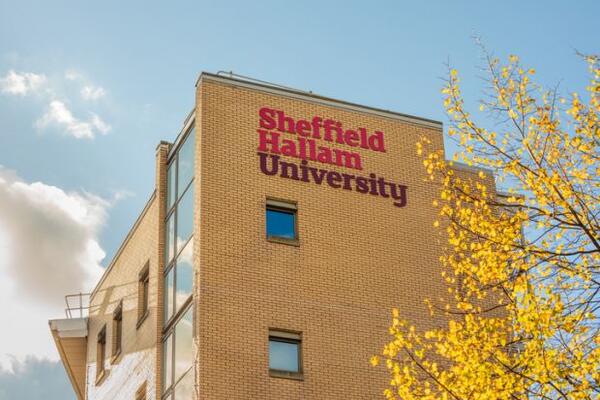
    Sheffield Hallam University has apologized to a professor whose research into alleged human rights abuses was blocked from publication after political pressure from the Chinese security services.

    In late 2024, a study by Laura Murphy, an American professor of human rights and contemporary slavery at Sheffield Hallam, into forced labor practices Uyghur Muslims allegedly face was refused publication by her institution after a campaign of harassment and intimidation from Beijing, The Guardian and BBC News reported.

    Sheffield Hallam staff working in offices in mainland China faced visits from intelligence officials over the research, while access to the university’s websites was blocked for more than two years, hampering student recruitment, officials say.

    In an internal email from July 2024 obtained by Murphy using a subject access request, university officials said “attempting to retain the business in China and publication of the research are now untenable bedfellows.”

    After taking a career break to work for the U.S. government, Murphy returned to Sheffield Hallam in early 2025 and says she was told by administrators that the university was no longer permitting any research on forced labor or on China, prompting her to start legal action.

    Her solicitor, Claire Powell, of the firm Leigh Day, said that Murphy’s “academic freedom has been repeatedly and unlawfully restricted over the past two years.”

    “The documents uncovered paint an extremely concerning picture of a university responding to threats from a foreign state security service by trading the academic freedom of its staff for its own commercial interests,” Powell added.

    Murphy, who claimed her university failed to protect her academic freedom, has now received an apology and the institution has told her it “wish[ed] to make clear our commitment to supporting her research and to securing and promoting freedom of speech and academic freedom within the law.”

    “The university’s decision to not continue with Professor Laura Murphy’s research was taken based on our understanding of a complex set of circumstances at the time, including being unable to secure the necessary professional indemnity insurance,” a spokesperson for the university added.

    These circumstances relate to a defamation case brought by a Hong Kong garment maker which initiated a libel case against Sheffield Hallam after its name was included in a report into forced labor published in December 2023. A preliminary rule at the High Court in London found the report had been “defamatory.”

    The apology comes months after new free speech laws came into effect in England in August, with the Office for Students’ free speech champion Arif Ahmed warning the regulator would take action if universities bowed to pressure from foreign governments regarding contentious areas of research.

    A U.K. government spokesperson said, “Any attempt by a foreign state to intimidate, harass or harm individuals in the U.K. will not be tolerated, and the government has made this clear to Beijing after learning of this case.

    “The government has robust measures in place to prevent this activity, including updated powers and offenses through the National Security Act.”

    The Chinese Embassy in London told the BBC that the university had “released multiple fake reports on Xinjiang that are seriously flawed.”

    “It has been revealed that some authors of these reports received funding from certain U.S. agencies,” the embassy added.

    Murphy told the BBC she has received funding over the course of her career from multiple U.S. research agencies, including the U.S. National Endowment for Humanities for work on slave narratives, the U.S. Department of Justice for work on human trafficking in New Orleans, and more recently from USAID and the U.S. State Department for her work on China.

    The Chinese Embassy said the allegations of “forced labor” in her reports “cannot withstand basic fact-check.”

    Source link

  • From the Classroom to the Career Office: Why Career Readiness Belongs in Every Discipline – Faculty Focus

    From the Classroom to the Career Office: Why Career Readiness Belongs in Every Discipline – Faculty Focus

    Source link

  • From the Classroom to the Career Office: Why Career Readiness Belongs in Every Discipline – Faculty Focus

    From the Classroom to the Career Office: Why Career Readiness Belongs in Every Discipline – Faculty Focus

    Source link

  • ED Reaches Consensus On Loan Caps

    ED Reaches Consensus On Loan Caps

    Pete Kiehart/The Washington Post/Getty Images

    A very limited number of degree programs would have access to the highest level of loans under a new set of regulations that the Department of Education and its negotiating committee signed off on Thursday.

    The regulations, written in response to the loan caps of Congress’s One Big Beautiful Bill Act, allow students in programs that qualify as professional to take out up to $200,000. Meanwhile, graduate students will only be able to take out up to $100,000.

    What was up for debate throughout the two-week negotiation process was which degree programs qualify for which level of loans.

    And while Thursday’s definition of professional programs was slightly more inclusive than the department’s original suggestion—a list of 10 degrees, including medicine, law, dentistry and a masters of divinity—they are not as expansive as a third proposal put forward by Alex Holt, the committee member representing taxpayers and public interest.

    The final definition limits professional programs to the original 10 programs, a doctorate in clinical psychology, and a handful of other doctorate programs that fall within the same four-digit CIP codes. By comparison, Holt’s plan would have included any program that is 80 credit hours long, regardless of whether it was a master’s or doctorate degree, so long as it fell within the same two-digit CIP code. (A CIP code, otherwise known as the Classification of Instructional Programs, is part of an organizational system used by ED to group similar academic programs.)

    On Thursday, before the committee’s final consensus vote, department officials explained to committee members that if they did not agree to their definition of a professional degree, they could lose out on other “concessions” they had won from the department. Without consensus, the department would legally be free to rewrite any aspect of the proposal prior to releasing it for public comment. (The proposal that reached consensus will still be subject to public comment.)

    “I also would like to remind everyone of numerous things that we have chosen to do in these negotiations that you requested for us to do,” said Tamy Abernathy, the department’s negotiator, before listing a slew of other changes the department made concerning the transition to new loan repayment plans and how to grandfather in existing borrowers to new loan policies.

    Under Secretary Nicolas Kent noted before the vote that the proposal was “not a perfect definition, but … a perfect definition for the purposes of consensus.”

    “We recognize that not every stakeholder group will be thrilled about our proposal,” Kent said. “But I want to remind everybody what consensus means, and that means that if you all agree, or can live with it—because we don’t have to love it—that we will take that regulatory language and put it into the notice of proposal.”

    Multiple committee members told Inside Higher Ed they agreed with Kent’s evaluation of what it took to reach a compromise.

    Kent closed the meeting by noting that “because we’ve reached consensus, negotiators and their employers will refrain from commenting negatively … as they agreed to do.”

    Source link