Tag: Career

  • Rise in college applications driven by minority students

    Rise in college applications driven by minority students

    The number of first-year applicants this cycle is up 5 percent over January of last year, according to a new report from Common App, and overall applications rose 7 percent.

    The growth was buoyed by a sharp uptick in underrepresented students: Latino applicants increased 13 percent, Black applicants by 12 percent and first-generation applicants by 14 percent. Asian applicants rose by 7 percent, while the number of white applicants didn’t change.

    A Common App analysis also found that the number of applicants from low-income neighborhoods increased more than those from neighborhoods above the median income level—by 9 percent, compared to 4 percent. And the number of applicants who qualify for a fee waiver is up 10 percent so far.

    Geographically, applicant trends seemed to follow broader demographic trends; they surged by 33 percent in the Southwest, with a 36 percent boost in Texas alone, while every other region remained relatively stable. The Western region saw applicants decline by 1 percent.

    In general, students are applying to about the same number of schools as last year, with only a 2 percent increase in applications per student. Public institutions have received 11 percent more applications, while private ones have received 3 percent more.

    For the first time since 2019, domestic applicant growth outpaced that of international applicants, with the former increasing by 5 percent and the latter slowing to 1 percent. Certain high-volume countries experienced steep declines: The number of applicants from Africa fell by 14 percent, and Ghana in particular saw a 36 percent decrease. Applicants from other increasingly popular source countries for international students surged; Bangladesh, for instance, saw 45 percent growth.

    The number of applicants who submitted test scores was about even with the number who didn’t. For the past four years, since test-optional policies were implemented in 2020, no-score applicants have significantly outnumbered those who submitted scores, but institutions returning to test requirements may be swinging the pendulum back.

    Source link

  • Students feel “spammed” by “overload” of university emails

    Students feel “spammed” by “overload” of university emails

    Students feel that they receive “too many emails” from their universities, and they find their institution’s communications “inconsistent, inauthentic and rather annoying,” according to researchers.

    A new paper says that an “overload” of emails sent from universities to students means important emails are getting “buried” and that students simply disengage from their inboxes.

    The article, based on interviews with students, senior academics and professional staff who typically distribute emails, found that students were more likely to read emails sent by course tutors, whereas they were likely to ignore mass emails sent from unknown senders.

    “Students spoke positively about the messages that related to modules they were studying but were critical of the ‘dear student’ mass communications, which most described as ‘irrelevant’ and some described as ‘spam’,” says the paper published in Perspectives: Policy and Practice in Higher Education.

    It found students were “remarkably consistent” when filtering their emails, explaining, “They read all the emails relating to their modules, then prioritized the rest using the name of the generator and the subject line. Messages from teaching staff were welcomed, but students rarely read messages from unknown generators, messages sent to all students or newsletters.”

    Student services staff said they felt “uncomfortable [and] even guilty” about some of the messages they were asked to distribute, and one student told the researchers, “In my first year, like, there were so many emails being sent out that I basically just gave up.”

    However, report co-author Judith Simpson, lecturer in material culture at the University of Leeds, told Times Higher Education that while institutions were “a long way away from optimal communication,” it was “important to note that we measured student perception of email.”

    “Some students definitely feel as if they are being spammed, but we don’t actually know how many emails it takes to create that effect. A small number of emails asking you to do life admin might feel like a horrible burden if you haven’t done life admin before,” she said.

    The article concedes that “universities are in a difficult situation” and that “students expect to be provided with necessary information but seem unprepared to read it.”

    It argues that while this is an “eternal problem” and students failed to read paper handbooks in the pre-email era, “‘overload’ does seem to have been accentuated by the pandemic,” when universities “compensated” for the lack of in-person communication by “reaching out” to students via email. This often included important news, as well as information about “all the good things the university was doing” during this period to support students.

    “Staff and students are less likely to meet on campus now that hybrid working is the norm, and the ‘email habits’ developed in the pandemic are still in operation,” the article says.

    It suggests that to improve student engagement, universities should consider re-routing well-being messages through personal tutors, and that administrative staff should be introduced to students—virtually or in-person—to increase trust in communications.

    Source link

  • California colleges confront loss as Los Angeles burns

    California colleges confront loss as Los Angeles burns

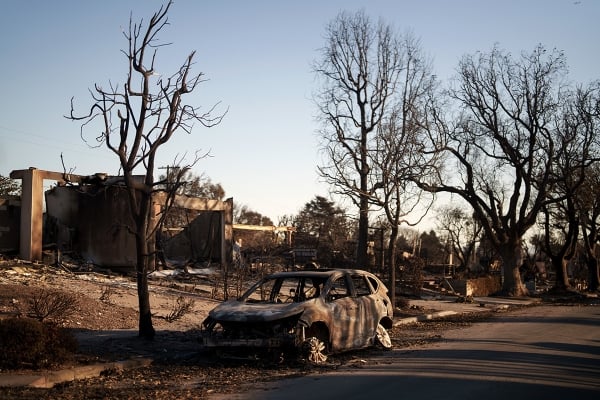
    The past week has been a blur for Fred Farina, the California Institute of Technology’s chief innovation officer, who lost his home in the fires still tearing through Los Angeles.

    “Things turned on a dime. One evening we were sitting in our living room and within 10 minutes we had to evacuate,” said Farina, who lived in Altadena, one of the neighborhoods hardest hit by the Eaton fire. “The loss of everything you have is hard to deal with.”

    Farina is one of hundreds of faculty, staff and students from colleges and universities across Los Angeles who have been displaced by the wildfires.

    While most institutions were spared burn damage to their physical plants, many spent the last week entrenched in immediate recovery efforts. Numerous colleges are raising money to help students and staff secure housing and other basic needs.

    Others are opening shelters and food pantries. Pepperdine University’s law school is hosting free remote legal clinics to educate homeowners and lawyers about federal emergency assistance and related issues such as insurance, leases and mortgages. And the University of California, Los Angeles, opened space at its research park for the Federal Emergency Management Agency to use as a disaster recovery center for fire victims living on the city’s Westside.

    Flexibility and Compassion

    But beyond efforts to meet their communities’ most pressing needs, colleges in Los Angeles are also figuring out how to move forward and get through a semester already scarred by more than one of the most destructive fires in California history. The priority emerging for most college leaders is moving forward with flexibility and compassion.

    “Words seem inadequate to capture the scale of the devastation,” said Thomas F. Rosenbaum, president of Caltech in Pasadena, near where the Eaton fire destroyed 1,400 homes. “The Caltech community has responded with compassion and generosity, seeking to help each other and working heroically to permit Caltech and [the Jet Propulsion Laboratory] to resume their fundamental missions of learning and discovery. We are in this for the long term, and the closeness of our community gives us hope for the future.”

    The blaze didn’t reach the Caltech campus itself, but the institute estimates that more than 1,000 students and employees live in an evacuation zone. Of those, more than 90 employees have lost their homes, along with at least 200 employees—many of whom live in the decimated nearby enclave of Altadena—of the Caltech-managed Jet Propulsion Lab.

    Caltech was one of the many colleges in Southern California that closed down last week—in addition to Santa Monica College, Pasadena City College and Glendale Community College—as strong winds accelerated the Palisades and Eaton fires and displaced scores of people affiliated with those campuses.

    Caltech resumed in-person classes Monday, and most other local colleges have done the same or are planning to in the coming days as the air quality continues to improve. But hundreds of students, staff and faculty are far from resuming life as it was before the fire.

    “It’s pretty overwhelming, the things that have to be done to get back to a good situation,” said Farina, who is in the throes of dealing with insurance and disaster relief logistics after losing his home. “There’s so many decisions that have to be made so quickly.”

    Although Farina is uncertain about when he’ll find permanent new housing for his family—apartments are scarce and rents have skyrocketed in the past week—Caltech helped him and many other employees secure a temporary place to live. So far, the Caltech and JPL Disaster Relief Fund has raised about $2 million, and the fund is giving that money to help displaced people meet their basic needs in the aftermath of the fires.

    Numerous other L.A.-area colleges are also helping their students and employees get access to cash and safe housing, which have emerged as two of the most needed resources more than a week after the fires started.

     At California State University at Los Angeles, at least 60 faculty, staff and students lost their homes, and college officials expects that number to grow. The university is raising money and offering basic needs support for those most affected, which includes grants for housing and food as well as adjustments to teaching and learning, as needed. Cal State LA President Berenecea Johnson Eanes said in a memo Wednesday that the institution “will continue to harness the healing power of our university for the long road to recovery.” (This paragraph was updated with information provided after publication.)

    The L.A. Foundation for Los Angeles Community Colleges launched the L.A. Strong: Disaster Response Fund, which is raising money to give people financial assistance for housing, transportation, clothing, food and other basic needs.

    “What’s most important right now is financial support,” said Alberto J. Román, chancellor of the Los Angeles Community College District, who expected the first round of assistance to be distributed by the end of the week. “We consider these really unprecedented times with an impact, and that’s why we are compassionate and empathetic of individual situations.”

    None of LACCD’s nine campuses sustained fire damage, and Román said he doesn’t believe any of the district’s more than 200,000 students and 9,000 employees were injured as a result of the disaster, either.

    “The impact that we’ve had has been on folks who’ve been evacuated or lost their homes, road closures preventing people from coming to work or power outages and being without internet,” he said, noting that the colleges transitioned to remote work last week.

    Although LACCD resumed in-person operations this week, Román said the district wants to be flexible with students and staff whose lives have been upended by the fires.

    “It is important for us to continue instruction,” he said. “It’s a balance between health and safety and ensuring that students can finish their courses.”

    Glendale Community College reopened for in-person classes Wednesday, though at least a dozen employees and 20 students lost their homes and dozens more had to evacuate. While officials continue to try and make contact with the 600 students who live in evacuation ZIP codes, the college is also offering extra paid leave for some employees, raising money, supplying students with laptops and helping people connect with other resources.

    Smoke and fire could be seen from the Glendale Community College’s Verdugo campus last week.

    Glendale Community College

    Tzoler Oukayan, dean of student affairs at Glendale CC, said the college is allowing students to withdraw from their classes without facing a penalty.

    “The challenge is that a lot of our students in these areas didn’t—and some still don’t—have power. Access to the internet and their classes has been very challenging,” she said. “It was important for us to open up campus and give people a place to just be.”

    Empathy and compassion will also be a priority for Mount St. Mary’s University president Ann McElaney-Johnson when her campus reopens. As of Thursday, the university’s Chalon campus—which is about three miles from the burn path of the Palisades fire—was still under evacuation orders and four faculty members so far have lost their homes.

    “The impact of the fire—once we’ve ascertained what it is—is going to be tremendous. So, we really want to make sure we’re caring for our community as we move forward,” McElaney-Johnson said, adding that the university is using money from its operations budget to provide staff and students with financial assistance. “We’ll pick up where we need to, but there will be special attention. Some of the plans for different projects can get put on hold. Right now, the only thing that really matters is the safety and well-being of this community.”

    ‘Healing More Than Academics’

    That’s the approach California State University, Chico, took in 2018, when it reopened two weeks after the Camp fire destroyed the homes of more than 300 faculty, staff and students.

    “We made sure that we had all of the exceptions and support systems in place to prioritize the people who were part of our community, to make sure our eye was on their long-term success,” said Ashley Gebb, executive director of communications at Chico State. “We were focused on healing more than academics. It was about how we could get students to the end of semester with their well-being as a priority.”

    While Gebb said Chico State was “one of the first to have a community leveled by a fire like this,” the fires in Southern California this month have proven that catastrophes of this scale are becoming more common.

    Meredith Leigh, climate programs manager for Second Nature, a nonprofit focused on higher education’s role in climate action, said it’s a signal that higher education institutions across the country should be prepared to navigate increasingly drastic events.

    “While campuses across our network have taken steps to increase climate resilience and adaptation, the scale and impact of the current fires (as well as recent floods in the East) is novel in its intensity,” she said. “In this way, the biggest lesson for campuses across the nation is to shift the mental model for resiliency and emergency management—away from planning and implementation based on what has happened in the past, toward what are certain to be more frequent and intense events that previously seemed ‘unimaginable.’”

    Source link

  • Indiana governor issues executive order eliminating DEI

    Indiana governor issues executive order eliminating DEI

    Indiana governor Mike Braun signed an executive order Wednesday eliminating diversity, equity and inclusion in all state agencies and replacing it with what he’s calling “MEI”—merit, excellence and innovation.

    The order requires all executive branch state agencies to uphold the Supreme Court’s 2023 decision in Students for Fair Admissions vs. Harvard, which prohibited the consideration of race in college admissions, noting that “eliminating racial discrimination means eliminating all of it” and that equal protection applies “without regard to any differences of race, of color, or of nationality.”

    Under the order, government offices cannot use state funds, property or resources to support DEI initiatives, require job candidates to issue DEI statements or “mandate any person to disclose their pronouns.” State agencies must review their individual programs and policies for compliance by April 30 and provide a written report to the governor by July 1.

    The order also closes the government’s Office of the Chief Equity, Opportunity and Inclusion Officer, which was created in 2020 under Braun’s predecessor, Governor Eric Holcomb.

    This makes Indiana the second state this year to eliminate DEI by executive order, following West Virginia.

    Among the other executive orders Braun signed during his first week as governor was one requiring the state personnel office to review all job postings and eliminate degree requirements for positions where they’re not necessary.

    Source link

  • Prof. says he was fired for email calling U.S. racist, fascist

    Prof. says he was fired for email calling U.S. racist, fascist

    After Donald Trump was elected president in 2016, some faculty canceled classes to allow themselves and students time to process a result that shocked the media and academe.

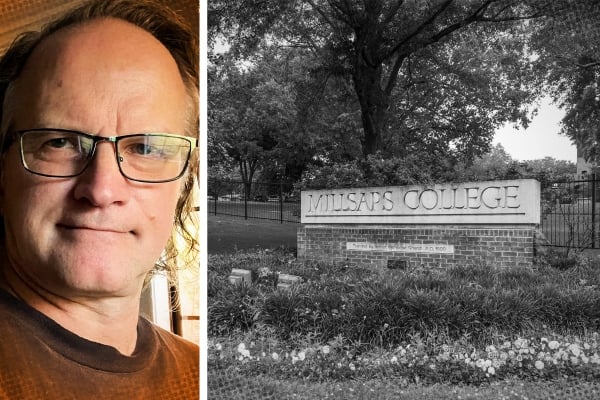
    Campus responses to Trump’s re-election in November seemed more muted. But at Millsaps College, a private Mississippi institution of roughly 600 students, James Bowley said he canceled his Abortion and Religions class meeting the day after the election.

    Bowley, a tenured religious studies professor, told Inside Higher Ed the class had only three students, and he knew they were upset about Trump’s re-election. He said he sent them an email with the subject line “no class today” and one line of text: “need time to mourn and process this racist fascist country.”

    For what he wrote in that email, Bowley said, the college swiftly barred him from campus and, on Tuesday, fired him—ending his more than 22 years of employment. He’s now fighting to get his job back and said he remains on the payroll while he appeals to the institution’s Board of Trustees.

    “This seems to me like the very definition of censorship, and of course it will make every single faculty member fearful of the administration, fearful of sharing their own opinions,” Bowley said. “There are hundreds of historians who would say that the election was a victory for fascism and racism,” he added.

    The college didn’t provide interviews Thursday and didn’t answer written questions. The situation appears to be another example of faculty members being punished for commenting on current events—but this time involving communication to a small group of students, according to Bowley. The Foundation for Individual Rights and Expression, a free speech and academic freedom advocacy group, is pushing for Bowley’s reinstatement.

    “This is absolutely absurd,” said Haley Gluhanich, a senior program officer in FIRE’s campus rights department. She said that when Bowley was initially suspended, “he was charged with an offense that does not exist in any of the handbooks, so they completely just made up a violation of policy.”

    The Email Gets Out

    Bowley said one of the students who received the email shared it on Instagram, approvingly, but another student whom he doesn’t know reported it to administrators. Bowley said he got a call from interim provost Stephanie Rolph on Nov. 7, the day after he sent the email, saying he was being placed on leave for it and banned from campus.

    “I was shocked, I was dumbfounded, I just could not believe it,” Bowley said.

    A copy of a letter from Rolph to Bowley, obtained by Inside Higher Ed, says this leave was “pending a review of the use of your Millsaps email account to share personal opinions with your students.” In the letter, Rolph told Bowley his email account access was cut off and further told him not to “engage with students.”

    The suspension dragged on, Bowley said, and three weeks in he filed a grievance against Rolph—which led to a hearing. Then, on Dec. 27, a grievance panel composed of three faculty members ruled that Bowley should be reinstated, according to a copy of the ruling that FIRE provided.

    “We recognize that Dr. Bowley has, on multiple occasions, shown poor judgment in his use of campus email,” the committee wrote. But during the hearing, Rolph couldn’t “identify a specific policy that Dr. Bowley violated,” they said. “No policy prohibiting the use of campus email to share personal opinions with students exists in either the Faculty Handbook or the Staff Handbook.”

    The panel further recommended that “Rolph issue a formal apology to Dr. Bowley” and that Bowley “be compensated for the loss of income resulting from his removal from the winter study abroad course he had been scheduled to teach.” Bowley told Inside Higher Ed that was a course in Mexico for which he would’ve been paid more than $6,000 and would have had his travel expenses covered. 

    The panel also concluded that Bowley wasn’t “afforded due process.” It said Rolph had argued that the both the staff handbook and the faculty handbook applied to faculty. It also mentioned unresolved tension between the interim provost’s confidentiality claims and Bowley’s right to the hearing, saying the “interim provost can refuse to answer substantive questions pertaining to the grievance.” (Michael Pickard, chair of the grievance panel and vice president of the college’s Faculty Council, said he couldn’t comment Thursday. Rolph didn’t respond to requests for comment.)

    Millsaps president Frank Neville rejected the grievance panel’s report and then fired Bowley on Tuesday, according to Bowley.

    Bowley and FIRE said there was an extra twist at the end: FIRE wrote on its website that Bowley was told in a meeting Tuesday that he was also fired for “not clarifying that his views were not that of the college’s. To be clear: The college fired Bowley for an offense … of which he wasn’t accused.”

    “The FIRE article is riddled with inaccuracies,” wrote college spokesperson Joey Lee in an email to Inside Higher Ed. He did not specify what those inaccuracies were.

    “Because Millsaps does not disclose information about individual employment matters for privacy and confidentiality reasons, the article is based on incomplete information,” he wrote.

    ‘A Bit Reckless’

    Was Bowley fired for more than the email? The college won’t specify, and Bowley didn’t provide a copy of his termination letter.

    David Wood, the Faculty Council president, told Inside Higher Ed he doesn’t exactly know why Bowley was fired, but he doesn’t think he should have been. Wood said he’s disappointed in the college administration and “the extreme nature of the punishment.” But he also said he’s disappointed in Bowley.

    “This is partly on him as well,” Wood said.

    Wood doesn’t believe academic freedom is under threat at Millsaps and thinks “everything was done legally and by our own rules at the college,” he said.

    (After this article was initially published Friday, Wood added in an email that he believes the “initial suspension was unfair and unsubstantiated” and that Rolph “exercised very poor judgment in banning James without a hearing.” Wood wrote that he believes “the review continued and shifted because” Rolph “realized she was wrong and had to go fishing for other reasons to fire James. The rest of her investigation I believe was done according to the rules of the Faculty Handbook.”)

    Asked whether college leaders were upset with Bowley for previous alleged transgressions, Wood said, “There’s a history there, I’ll just put it that way.”

    “James has been a bit reckless in the past, but I do not believe that being terminated was the appropriate punishment,” Wood said. “James likes to push the envelope, let me just put it that way … he’s not going to steer away from controversial issues.”

    Bowley, for his part, said that Rolph had verbally reprimanded him before for sharing with students and employees—through email—a brochure for a prayer vigil for Palestinians killed in Gaza that used the term “genocide.”

    But Bowley said the postelection email was the primary reason for his firing. Regarding any other accusations, he said, “The administration spent two months trying to find other things, and they allege that there were problems in my other class.”

    One accusation leveled at him was “lack of awareness of the status of assignments and grades for a course,” he said. But he wasn’t allowed to appear before a committee to answer such charges, he said, or access his emails and other documents to defend himself.

    He also said he’s protested the death penalty and celebrated the legalization of gay marriage and has ended up on the news for such demonstrations.

    “The idea of me pushing the envelope is me being an activist,” Bowley said. “I am an activist and people know that.”

    Source link

  • HBCU leaders prepare for “delicate dance” under Trump

    HBCU leaders prepare for “delicate dance” under Trump

    Mississippi Valley State University, a historically Black institution, proudly announced last month that its marching band was invited to perform at Donald Trump’s upcoming inauguration. The university’s president, Jerryl Briggs, described the invitation as a chance to “showcase our legacy” and “celebrate our culture.” A GoFundMe campaign was started in hopes of raising enough money for the Mean Green Marching Machine Band to make its debut on the national stage.

    Then the fighting started. Social media exploded with reactions to the move from within and outside of HBCU campus communities, with alumni coming down on both sides of the issue. Some condemned the university for participating in the celebration while others argued the band should embrace its moment in the spotlight. (The band is doing that, heading to the inauguration on Monday.)

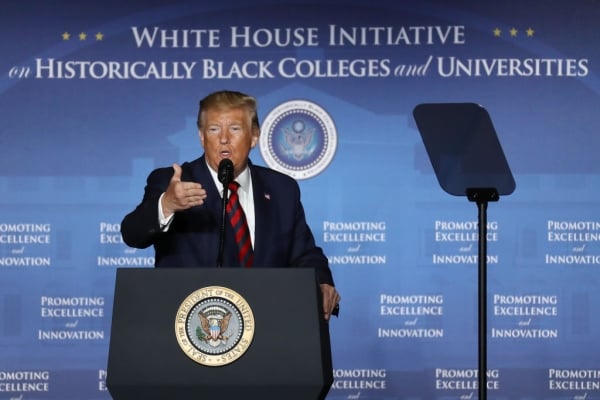
    The moment felt like déjà vu. During the first Trump administration, in 2017, a group of HBCU leaders spoke with Trump during an impromptu visit to the Oval Office after they met with other government officials. A photo of their interaction with the president went viral, prompting swift backlash and skepticism. “Is it a photo op, is it an opportunity for Trump to put himself next to Black people and smile?” Llewellyn Robinson, a Howard University sophomore at the time, asked The New York Times. “Is that the situation we’re dealing with? Or is it truly a seat at the table?”

    The controversy speaks to a tension HBCU leaders face ahead of a second Trump administration, with Republicans controlling both chambers of Congress. On the one hand, they want to foster positive relationships with the powers that be and take advantage of whatever opportunities the new administration can offer their students and institutions. On the other hand, they’re serving communities with deep misgivings about the incoming president.

    Most Black voters, 83 percent, voted for Kamala Harris, reported AP VoteCast. And while that’s fewer than the 91 percent who voted for President Biden in 2020, it’s still the vast majority at a time when many Black Americans, including HBCU students, are leery of anti-DEI rhetoric and state laws advanced by Trump supporters. Some have a more tangible worry: that Trump’s talk of abolishing the U.S. Department of Education may threaten the federal financial aid that gets many HBCU students to and through college and helps often cash-starved, tuition-dependent institutions meet their bottom lines.

    HBCU leaders and scholars find themselves, once again, thinking through how to navigate a fraught political moment.

    “It is sometimes a delicate dance,” said Walter Kimbrough, interim president of Talladega College and the former president of Philander Smith College and Dillard University. He expects some HBCU presidents will avoid “high-profile photo opportunities” with members of the new administration this time around. Even so, “we have to let our constituents know, we have to work with whoever is in the White House. That’s part of the job.”

    He also, however, believes part of the job is pushing back on policies that could hurt the sector regardless of who’s in office.

    “We need to be consistent on the things that are good for us, to be advocating,” he said, “and the things that we think are problematic, we need to be brave enough to speak up against those, too.”

    But doing so can be precarious for HBCU presidents and their institutions, said Melanye Price, a political science professor and director of the Ruth J. Simmons Center for Race and Justice at Prairie View A&M University. “The question is always: Is it better to speak out with the potential of losing whatever ability you have to tend to and care for students, or figure out ways to maneuver within the context that you’re in now and still be able to help students?” Price said.

    Efforts to partner with the new Trump administration have already begun. The Thurgood Marshall College Fund, an organization representing public HBCUs, congratulated Trump in a statement after he was elected. They also praised some of the wins HBCUs achieved under his first administration, including the FUTURE Act, which made permanent additional annual funding for minority-serving institutions, and the HBCU PARTNERS Act, which required some federal agencies to submit annual plans describing how they’d make grant programs more accessible to HBCUs.

    Michael L. Lomax, president and CEO of the United Negro College Fund, which represents private HBCUs, met with Linda McMahon, Trump’s pick for education secretary, in December. He said in a press release that he found her to be a “good listener” and said they had a “productive discussion” about “issues of importance to HBCUs, HBCU students, the nation’s underserved students and how to improve the avenues of learning for all students.”

    “We will continue to work with those elected, because the needs of our institutions and students are urgent,” Lomax added. “Our motto is ‘A mind is a terrible thing to waste,’ but so is an opportunity to advance our HBCU-related goals and objectives.”

    Strategies and Priorities

    Trump has often touted his support for HBCUs during his first term, arguing in a presidential debate last summer that he “got them all funded,” though HBCU leaders have pointed out that many of these successes were initially pushed forward by Congress and signed by the president. It’s also unclear whether support for HBCUs, a meaningful issue to Black voters, will be as much of an emphasis for Trump in his final term now that he’s no longer striving for re-election.

    But HBCU leaders express optimism that they can secure some legislative wins in the next four years, given that support for the institutions has historically come from both sides of the aisle. And they plan to keep it that way.

    “While I can’t say what the future may hold, I can say that our most recent interactions with the secretary-designate seemed as if we have reason to be positive about the next steps,” said Lodriguez Murray, UNCF’s vice president of public policy and government affairs.

    HBCUs achieved some of their goals in partnership with the first Trump administration, Murray noted, including some loan forgiveness for institutions that received federal disaster relief loans as a result of Hurricane Katrina.

    Harry Williams, president and CEO of the Thurgood Marshall College Fund, noted another reason for optimism heading into the new Trump term: Most HBCUs are located in red states, so they’ve always developed and relied on positive relationships with Republican lawmakers.

    State-level challenges to DEI programming from Republican lawmakers have ramped up anxieties on HBCU campuses about the state and federal political climate for their institutions in the years ahead, Williams said. But “what we have seen, and we’re hoping to continue” is that those same states are still investing in HBCUs. For example, Tennessee recently coughed up funds to keep Tennessee State University afloat, and Florida has made some sizable investments in HBCUs in recent years, he added.

    Williams hopes the incoming administration and Congress will echo those state lawmakers in their treatment of HBCUs. “Our strategy is to continue to partner with both sides and continue to forge relationships and create opportunities for our member schools to come and visit” government officials, he said.

    Kimbrough said those visits from HBCU representatives are going to be particularly important in the years ahead. Trump had an HBCU graduate and advocate among the ranks of his first administration, he noted—his former aide Omarosa Manigault Newman. But “right now, he doesn’t have anybody who really knows HBCUs at a close [level],” he said, “so we’ve got to do a lot of teaching and educating them about what we do, what our value is to the country.”

    With those ties reinforced, HBCU leaders plan to advocate for a long-held policy wish list: higher annual funding, improvements to campuses’ infrastructure, relief for institutions in debt and increases to the Pell Grant, federal financial aid for low-income students that helps the majority of HBCU students pay for college. HBCU leaders also want federal money for campus safety and security measures after a slew of bomb threats against HBCUs in 2022, which some campus leaders contend was inadequately handled by the Federal Bureau of Investigation.

    “We don’t believe that a single student needs to have in their mind that something is happening to their institution simply because of what the institution is and who they are,” Murray said.

    Murray noted one more priority: increased funding for the Education Department’s Strengthening Historically Black Colleges and Universities program, from about $400 million per year to at least $500 million, to keep pace with inflation.

    Student Fears, Faculty Concerns

    The day after the election, students in Price’s class on voting rights at Prairie View A&M discussed the results. The same worry came up over and over again: How will they pay for college if Trump abolishes the Department of Education?

    According to data from TMCF, more than 75 percent of HBCU students rely on Pell Grants, federal financial aid for low-income students. Price said it’s natural that students are worried about any policy plans that could destabilize financial aid. “There is a palpable fear about what this new administration will bring and that there’s no one to stop them,” she said.

    The students’ often tuition-dependent institutions are also vulnerable if changes in financial aid make it difficult for students to pay; most HBCUs don’t have large endowments or megadonors as a safety net.

    University of the District of Columbia professors, worried themselves, described a particular kind of pall hanging over their students ahead of Inauguration Day as they prepare for the Trump administration and new members of Congress to settle into the deep-blue district. To acknowledge and address some of students’ fears and worries, two faculty members organized a pre-inauguration teach-in today. It will begin with mindfulness practices, followed by panel discussions and speakers on Washington, D.C., history and politics and how the transition of power could affect the district.

    “Students are concerned about what the city will feel like in terms of its receptivity [and] tolerance around diversity,” said Michelle Chatman, associate professor of crime, justice and security studies and the founding director of the Mindful and Courageous Action Lab at UDC. Since Congress has more sway over D.C. than elsewhere, students also worry about programming and curriculum at the HBCU given restrictions on African American studies pushed by Republican lawmakers in other parts of the country. “We want them to feel empowered, and we want to normalize their feelings of concern.”

    Amanda Huron, a professor of interdisciplinary social sciences and political science and the director of the D.C. History Lab at UDC, said a teach-in felt like the obvious move in this tense political moment.

    “When we think, ‘well, what can we do in this moment, what can we as a university community do’—what we do is teach,” Huron said.

    She acknowledged that HBCUs have a difficult balance to strike right now. “HBCUs in the country, we want to thrive, regardless of what’s going on politically, and we need to, because we need to serve our students,” Huron said. At the same time, “we need to make sure that we are always providing spaces for critical and honest and fact-based conversation, so I think it’s important that we’re able to do both things.”


    Source link

  • How five colleges recognize the National Day of Racial Healing

    How five colleges recognize the National Day of Racial Healing

    Racial healing circles, or opportunities for community members to share stories and connect on a human level, are common activities for the National Day of Racial Healing. This year is the ninth observance of the holiday.

    AJ Watt/E+/Getty Images 

    Over the past two decades, higher education has grown exceptionally diverse, enrolling students from all backgrounds and offering opportunities for education and career development for historically underserved populations.

    This diversification of the students, staff and faculty who make up higher education also offers opportunities for institutions to promote justice and racial healing through intentional education and programming. One annual marker of this work is the National Day of Racial Healing.

    The background: The National Day of Racial Healing was established by the W. K. Kellogg Foundation in 2017 as part of the Truth, Racial Healing and Transformation (TRHT) initiative to bring people together and inspire action to build a more just and equitable world.

    The day falls on the Tuesday after Martin Luther King Jr. Day and is marked by events and activities that promote racial healing. Racial healing, as defined by the foundation, is “the experience shared by people when they speak openly and hear the truth about past wrongs and the negative impacts created by individual and systemic racism,” according to the effort’s website.

    On campus: The American Association of Colleges and Universities encourages institutions to “engage in activities, events or strategies to promote healing and foster engagement around the issues of racism, bias, inequity and injustice in our society,” according to a Dec. 18 press release. AAC&U partners with 72 institutions to establish TRHT Campus Centers, with the goal of developing 150 self-sustaining community-integrated centers.

    Some ways institutions can do this is through organizing activities, inviting faculty to connect course material to racial healing during that week, coordinating events or sharing stories on social media, according to AAC&U.

    Here’s how colleges and universities, many that host TRHT Campus Centers, plan to honor the National Day of Racial Healing.

    • Baldwin Wallace University in Ohio will host two Jacket Circles for students to participate in storytelling and deep listening to build empathy and compassion. The University of Louisville, similarly, will host Cardinal Connection Circles.
    • Emory University in Georgia will hold a three-day event, beginning on Jan. 21, that includes a keynote, lunch-and-learn panel discussion, racial healing circles, and a dinner experience.
    • Binghamton University, part of the State University of New York system, will host its first National Day of Racial Healing this year, which includes healing circles, roundtable discussions and art-based initiatives.
    • The TRHT Center at Northern Virginia Community College will partner with the Fairfax County Board of Supervisors to issue a formal proclamation in a public forum, acknowledging the importance of the day, a tradition for the two groups.
    • The University of Hawai‘i at Mānoa will take a pause today to recognize the overthrow of the Hawaiian kingdom, as well as the legacy of Martin Luther King Jr. and the National Day of Racial Healing. The event, Hawai‘i ku‘u home aloha, which “Hawai‘i my beloved home,” honors the past, present and future of the islands.

    Get more content like this directly to your inbox every weekday morning. Subscribe here.

    Source link

  • Turbulent times require both immediate and long views

    Turbulent times require both immediate and long views

    I don’t remember where I heard this bit of wisdom, if I read it in a book or someone else told it to me, but it’s something I’ve carried around for a while now: There’s always going to be a next, until there isn’t.

    My interpretation is a kind of combination of “this too shall pass” with “time marches on,” along with a reminder of the certainty that at some point all things and all people cease to exist.

    (I find that last bit sort of comforting, but maybe I’m weird that way.)

    It comes in handy when thinking about both exciting and difficult times. What is happening in a moment is not eternal, and something else will be coming along. In order to make that next thing as positive and beneficial as possible, we have to deal with both the present and those possible futures.

    I think this mindset might be helpful to anyone who is considering the coming couple of years for higher education and bracing for the possible impact of a presidential administration that appears hostile to the work of colleges and universities and intends to bring this perceived hostile group to heel. I’m concerned that many institutions are not considering that there’s always going to be a next, and short-term accommodations are going to result in long-term problems.

    What comes next will be far worse than it needs to be.

    It’s strange to think that institutions that are so well established with such long histories should act with such fragility in the face of present uncertainty, but there are signs of what scholar of authoritarianism Timothy Snyder calls “obeying in advance” everywhere.

    As reported by IHE’s Ryan Quinn, Texas A&M, along with other public higher ed institutions in the state, following threats ginned up by right-wing conservative billionaire-backed activist Christopher Rufo, has ended their participation in the PhD Project, a conference meant to help increase the number of doctoral students identifying as “Black, African American, Latino, Hispanic American, Native American or Canadian Indigenous.”

    The institutions had previously participated for a number of years but have now rescinded their sponsorship because of Texas law SB 17, banning DEI programs at public universities. Texas governor Greg Abbott threatened to fire A&M president Mark Welsh. Welsh folded, issuing a statement that said, “While the proper process for reviewing and approving attendance at such events was followed, I don’t believe we fully considered the spirit of our state law in making the initial decision to participate. We need to be sure that attendance at those events is aligned with the very clear guidance we’ve been given by our governing bodies.”

    The intention behind these attacks by Rufo and his backers is to, essentially, resegregate higher education under an entirely twisted definition of “fairness.” This point of view is ascendant, as multiple states have banned so-called DEI initiatives, and the rolling back of affirmative action in college admissions has already resulted in a decline in Black first-year students, something most pronounced at “elite” institutions.

    So, this is now, but in acting this way now, what’s likely to be next? Will Texas A&M regress to a de facto policy of segregation? Is this healthy for the institution, for the state of Texas?

    I grant that it is possible that a program of resegregation is consistent with the desires of a majority of the state’s citizens and the elected legislators are simply reflecting the desire of their constituency. If so, so be it … I guess. I wonder how long the institutions can last when it allows Chris Rufo or Elon Musk or Charlie Kirk or any other outside individual or group to dictate its policies. Is this a good precedent for whatever is next?

    There’s going to be a next. What happens now will give shape to what that next might be. I worry that the folks making decisions believe there is only the now, not the next.

    Thankfully, most of us do not have to make consequential decisions that impact many people working in large institutions, but we can use this framing in considering our individual fates as well.

    In a couple of weeks my next book, More Than Words: How to Think About Writing in the Age of AI, will be in the world. I’ve invested a lot in this book, not just time and effort, but some measure of my hopes for my career and the impact my ideas may have on the world of writing and teaching writing.

    It is a fraught thing to invest too much into something like a single book. Books fail to launch all the time, as I’ve experienced personally … more than once. Finding the balance between investing sufficient effort to take advantage of the now, while also recognizing that I will have to do something next, has been a bit tricky, but necessary.

    Maybe what’s next will be closely related to the now: more speaking, more workshops related to my vision for teaching writing, a truly tangible impact on how we collectively discuss these issues after being more of a gadfly and voice in the woods. But also, maybe this is closer to the end of a cycle that started with a previous book.

    To calm my worries, I spend time thinking about what would be next if 50 percent or even 90 percent of what I now do for my vocation and income dried up. This is what I did when it became clear that teaching off the tenure track was not going to continue to be a viable way forward—a process that has put me in this moment.

    Imagining a next, I think I would call my local School of Rock and see if they needed someone to teach kids the drums, and I also would get to work on a novel that’s been rolling around my head. I picture that possible next, and while there is a sadness that what I’m hoping to achieve now did not come to fruition, I can also envision real pleasure in that other path.

    To preserve their essential mission, institutions must be prepared for turbulence and change by knowing there will be a next. To survive in this time, individuals must both be present in the now and consider what might have to happen next.

    Not easy, but always necessary.

    Source link

  • What could WNMU’s ex-president’s exit package pay for?

    What could WNMU’s ex-president’s exit package pay for?

    Former Western New Mexico University president Joseph Shepard received an exit package that included severance pay of $1.9 million, and a tenured faculty job, with perks adding up to an estimated $3.5 million.

    Photo illustration by Justin Morrison/Inside Higher Ed | skodonnell/iStock/Getty Images | rawpixel

    The controversial exit package for former Western New Mexico University president Joseph Shepard could have funded multiple scholarships, according to one analysis, while the state’s governor says that the money could have helped feed hungry students at the university for a year.

    Judith Wilde, a research professor at George Mason University who studies presidential compensation and contracts, previously told Inside Higher Ed that Shepard’s exit package could have funded 90 scholarships for undergraduate students at Western New Mexico.

    To Governor Michelle Lujan Grisham, a Democrat, the decision to green-light a $1.9 million severance payment to the departing president “demonstrated an appalling disconnect from the needs of our state, where the median income of a family of four is just $61,000.”

    “The amount of money contained in Dr. Shepard’s separation agreement could have addressed food insecurity across the entire WNMU student body for a full year,” Lujan Grisham said in a news release last week.

    The estimated $3.5 million package—including benefits—for a president accused of improperly spending taxpayer dollars has infuriated state lawmakers and led to the resignations of several regents. More fallout is expected as the state attorney general seeks to claw back the severance payment.

    Shepard’s last day as president was Wednesday.

    Shepard, who led the university for 13 years, made a base salary of $365,000 a year. He’s not the only college president to get a generous severance on his way out the door, but compared to deals at other institutions, the agreement is unusually lucrative and will cost the university more than multiple line items in its budget. For example, when Ben Sasse stepped down as president of the University of Florida, he struck a deal to keep his $1 million annual salary through 2028 despite exiting the top job. But UF’s annual budget is just over $5 billion, meaning Sasse’s exit package comprises a tiny fraction of university expenses.

    Comparatively, Shepard’s exit package far exceeds those of other former presidents in his state. Former New Mexico State University system chancellor Dan Arvizu received an exit package valued at between $500,000 and $650,000 when he announced his early departure in 2023, a move both parties referred to as a “mutual separation” amid tensions. In 2016, Bob Frank left the University of New Mexico presidency early amid allegations of bullying, striking a deal for a $190,000-a-year tenured faculty job—down from the $350,000 annual salary initially considered.

    At WNMU, a university that enrolled 3,570 students in fall 2023, Shepard’s total exit package adds up to almost 5 percent of its $74.2 million fiscal year 2024 budget, an Inside Higher Ed analysis found.

    In one of the poorest states in the union, more than half of WNMU’s students receive Pell Grants. A 2023 survey also found nearly 60 percent of college students in New Mexico were food insecure, prompting efforts at Western New Mexico and other colleges to address the issue.

    Shepard’s exit package has roiled lawmakers, particularly in light of the economic challenges in the state and a state investigation that found the outgoing president improperly spent $360,000 in taxpayer money on international travel, splashy resorts and expensive furniture. Had the board elected to fire Shepard without cause, it could have spent roughly $600,000 to cut ties with him. Or the board could have waited for the conclusion of another state investigation, which might have given them cause to fire him without spending any additional money, depending on the findings.

    Instead, regents cut him a $1.9 million check and gave him a tenured faculty job teaching two courses a year with a remote option. Altogether those perks add up to a $3.5 million, Wilde estimated. (WNMU officials said the money was paid for out of reserves.)

    Four out of five WNMU regents have since resigned under scrutiny from lawmakers, including the governor. Attorney General Raúl Torrez also demanded an investigation into Shepard’s “golden parachute” and sought a restraining order to prevent him from accessing the $1.9 million severance payment as the state challenges the contract. However, a judge shot down the request to place a hold on those funds Monday. A legal challenge to the contract is pending.

    ButJohn C. Anderson, an attorney for Shepard, defended the payment as “appropriate” and said that the former president had “worked tirelessly on behalf of Western New Mexico University for nearly 14 years to increase graduation rates, modernize the campus through major renovations and the construction of new facilities, and expand the school’s programs,” among other accomplishments. (Shepard’s legal team also disputed the estimate of $3.5 million but did not provide their own figure.)

    As the legal wrangling continues, Inside Higher Ed took a look at WNMU’s budget to determine how Shepard’s controversial exit package stacks up to spending on athletics, academic support, faculty salaries and other line items in the fiscal year 2024 budget, which was last updated in December. While Shepard has already received a nearly $2 million severance payment, the remainder of his deal will be paid out to him as a tenured faculty member where he’ll initially make $200,000 a year. His salary will be paid for by the business school.

    • WNMU athletics teams—known as the Mustangs—compete on the NCAA Division II level. Western New Mexico University sponsors 13 sports with an athletics budget of $5.4 million.
    • The student services budget at WNMU is $4.5 million. That money is spread across a range of offerings from disability services to funding for special events and student health and well-being.
    • WNMU budgeted $4.4 million for the operation and maintenance of campus.
    • WNMU budgeted $3.9 million in academic support.
    • The student financial aid budget at WNMU was $1.2 million.
    • Shepard’s exit package also surpasses the total faculty salaries for any department at WNMU. The nursing department has 19 full-time faculty members, earning a combined salary of $1.4 million, according to budget documents. Nursing appears to be the largest program at WNMU based on the number of full-time employees listed. Social work is also among the university’s largest programs, with 17.2 full-time faculty members listed earning just over $1 million.

    Source link

  • Illinois guarantees transfer for all state high school grads

    Illinois guarantees transfer for all state high school grads

    Students who graduated from an Illinois high school, no matter where they’re currently enrolled, will soon be guaranteed transfer admission to any University of Illinois system institution—including the University of Illinois at Urbana-Champaign, which has a regular acceptance rate below 50 percent. 

    Illinois’s new policy, set to take effect this fall, builds on its previous transfer guarantee, which applied only to current Illinois community college students. Typical state transfer guarantee programs apply only to those currently enrolled in another state institution; Illinois’s more expansive approach may help bring back former residents who left the state for college.

    To be eligible, students must have graduated from an Illinois high school, earned at least 36 transferable credit hours toward their transfer institution and maintained a minimum 3.0 GPA in all transferable courses. Students will still have to apply, but if they meet the requirements, they’ll be automatically accepted. Admission to specific programs and majors, however, is not guaranteed. 

    Source link