Tag: Career

  • Federal judge throws out Biden’s Title IX overhaul

    Federal judge throws out Biden’s Title IX overhaul

    Updated at 6:30 p.m. Jan. 9

    A years-long effort to change how colleges respond to reports of sexual harassment and discrimination and to expand protections for transgender students is dead after a federal judge ruled Thursday that the Biden administration’s overhaul of Title IX of the Education Amendments of 1972 was unlawful.

    The court order vacates the rule nationwide and could create more confusion for colleges as they seek to move forward without running afoul of the federal gender equity law. The Title IX changes were already on hold in 26 states and at hundreds of colleges, thanks to a series of lawsuits from 26 Republican attorneys general. Thursday’s order is the first final ruling in those cases and was part of a lawsuit brought by Indiana, Kentucky, Ohio, Tennessee, Virginia and West Virginia.

    Republican lawmakers and state officials celebrated the ruling as a victory for women and girls while advocates for LGBTQ+ students criticized the decision as an attack on transgender students. The Biden rule allowed students to use the bathrooms and locker rooms that align with their gender identity.

    Chief Judge Danny Reeves of the U.S. District Court for the Eastern District of Kentucky, who previously criticized the rule, wrote in a 15-page opinion that the regulations suffer “significant constitutional infirmities.” For instance, using the wrong pronouns for a student could be considered harassment under the rule. That provision “offends the First Amendment,” wrote Reeves, a George W. Bush appointee.

    “As expected, courts have continued to find it impossible to justify the Biden administration’s changes to Title IX rules eviscerating students’ speech and due process rights,” said Tyler Coward, lead counsel for government affairs at the Foundation for Individual Rights and Expression, a free speech and civil liberties advocacy organization.

    The ruling is the latest legal setback for Biden’s higher ed agenda, which hasn’t fared well in federal court.

    ‘Back in Time’

    Colleges and universities will now revert to the previous Title IX rule, which took effect in summer 2020 during the first Trump administration. Those regulations required colleges to hold live hearings with an opportunity for cross-examination to allow those accused of sexual misconduct to confront their accusers—a provision the Biden rules nixed. Additionally, the 2020 regulations defined sexual harassment more narrowly than the Biden Title IX rule.

    “Fitting, I guess—everything’s going back in time four years,” said Brigid Harrington, a higher education attorney at Bowditch & Dewey who focuses on compliance with civil rights laws. “Schools that had been enjoined were already there, so it doesn’t change things for many.”

    Colleges don’t have to throw out all their new policies related to harassment and discrimination; they can keep the parts that don’t conflict with the 2020 rule. For example, under the 2024 regulations, colleges must give pregnant students notice of their rights, and the 2020 rule doesn’t prevent a college from doing so. (Reeves didn’t take issue with the pregnancy provisions but said, “It simply is not proper for the court to rewrite the regulations by excising the offending material.”)

    Thursday’s ruling wasn’t a complete surprise for colleges and universities, considering the injunction and upcoming change in administrations. Andrea Stagg, director of consulting services at Grand River Solutions, a company that works with colleges on Title IX and other issues, said that colleges already have started talking about what to change in their policies and what to keep.

    Still, reimplementing the 2020 regulations will mean retraining and re-educating students, staff and faculty about the changes.

    “It’s very complicated, expensive and exhausting … and folks don’t have the resources,” she said. “For a field that already experiences a ton of burnout … it’s demoralizing to work so hard and then have the rules change on you.”

    Several other lawsuits challenging the rule are still pending, and the Biden administration could appeal the decision to the U.S. Court of Appeals for the Sixth Circuit, so Thursday’s decision may not be the end of the legal battle over Title IX. The Education Department could not be reached for comment Thursday because the offices were closed in commemoration of former president Jimmy Carter’s passing.

    “I don’t think this is the last that we’re going to hear of this,” said Harrington. “I think that civil rights are going to be a big topic for the next four years.”

    A Repudiation or an Attack?

    Republican attorneys general who sued the Biden administration and conservative advocates who criticized the rule celebrated the judge’s decision “as a massive win” and a sign that “common sense is slowly returning.”

    “The court’s ruling is yet another repudiation of the Biden administration’s relentless push to impose a radical gender ideology through unconstitutional and illegal rulemaking,” Tennessee attorney general Jonathan Skrmetti said in a statement. “Because the Biden rule is vacated altogether, President Trump will be free to take a fresh look at our Title IX regulations when he returns to office [Jan. 20].”

    President-elect Donald Trump has criticized Biden’s Title IX changes, and many experts expect him to issue new regulations that are more conservative than his 2020 rule, especially concerning LGBTQ+ students.

    Congressional Republicans, who sought to overturn the Title IX rule, also praised the ruling and pledged to protect educational opportunities for women and girls. Passing legislation that would prevent transgender students from participating on the sports team consistent with their gender identity is a top priority for the House.

    “It is clear the Biden-Harris administration completely lost its way on Title IX,” said Louisiana senator Dr. Bill Cassidy, the chair of the HELP committee, in a news release. “They betrayed the original intent of Title IX by removing longstanding protections that ensured fairness for women and girls.”

    Representative Tim Walberg, the Michigan Republican who chairs the House Committee on Education and the Workforce, said that Biden’s proposed rewrite “would have undermined safety, freedom and fairness for women.”

    Meanwhile, advocates for LGBTQ+ students and those who experience harassment or sexual violence described the ruling as an attack on trans students and others that would impact their educations.

    “With these protections already removed in some states, students who experience sexual assault have had their complaints dismissed, or worse, been punished by their schools after reporting; pregnant students have been unfairly penalized for taking time off to give birth to a child; and LGBTQI+ students have faced vicious bullying and harassment just for being who they are,” said Fatima Goss Graves, president and CEO of the National Women’s Law Center.

    Tracey Vitchers, executive director of It’s On Us, a national organization working to combat campus sexual assault, took issue with claims that overturning the Biden rule would protect women and girls.

    “The 2020 regulations did well-documented harm to the safety of women and girls by making it more difficult to report and obtain justice if they experience sexual violence in school,” she said. “If preserving the rights and safety of women and girls was the actual litmus test for today’s decision, the judge would have chosen to uphold Biden’s rule. Instead, the safety of women and girls is being weaponized to discriminate” against trans people.

    Vitchers added that while Title IX is important, colleges are required under state and federal laws to respond to reports of harassment and address student safety.

    “Institutions are going to have to find ways to be creative to uphold the rights and safety of students on their campus under this new environment,” she said. “If Title IX is going to continue to be this horrible political football it has turned into, we need to see schools invest in evidence-based approaches to sexual violence prevention, because the ultimate goal is to ensure students have an education free of sexual violence.”

    Jessica Blake contributed to this report.

    Source link

  • Old Dominion University launches fill-in wellness classes

    Old Dominion University launches fill-in wellness classes

    xavierarnau/E+/Getty Images

    “Hello faculty! Are you attending a conference, going on vacation, taking a sick day or want to take a break from your usual lecture? Consider having staff from the Recreation and Wellness Health Promotion team come in and lead an engaging and educational presentation during your class time!”

    So reads a circulating announcement from Old Dominion University’s Rec Well staff, inviting professors to consider their guest-lecturer services when conflicts with teaching schedules arise.

    What it is: Health educator Steven Gunzelman says that the new service—called “Don’t Cancel That Class!”—is also available to conflict-free professors who simply see value in connecting their students with key health information they might not otherwise get.

    “One of our strategic cornerstones is health and well-being, so we really wanted to develop something that would go into the classrooms and meet with students in that kind of setting, where we can talk about these kinds of things that they might not learn other ways, like feeling stress or sleep issues,” he explains. “Students are here to, of course, get their academics. But in order to be able to graduate and get those life skills, they need health and well-being. It’s a big component of [student success], as well.”

    ODU follows the collective impact approach to well-being, meaning that no single department or office on campus owns this responsibility, or—to put it another way—that everyone owns this responsibility. Rec Well, for its part, offers programs throughout campus on a wide variety of topics. But the “Don’t Cancel That Class!” initiative allows professors to pick a guest talk from the following list of five, starting with one concerning the use of alcohol and other drugs:

    • AOD & Me: Safety With Substances
    • Burn Bright, Not Out: Strategies for Managing Stress
    • Food for Thought: Nutrition 101
    • Play It Safe: The Lowdown on Safe Sex
    • Zzz’s for a Better You: A Sleep Hygiene Journey

    The why and how: Gunzelman says the list is informed, in part, by the top four health campus health concerns, based on internal data gleaned from the American College Health Association’s National College Health Assessment: stress, anxiety, depression and sleep.

    This tracks with Inside Higher Ed’s own Student Voice survey series, which in 2024 found that nearly all students said stress was impacting their ability to focus, learn and perform well academically, either a great deal (43 percent) or some (42 percent), and fewer than half (42 percent) rated their mental health as excellent or good. And in another 2023 Student Voice survey that asked about sleep, 60 percent of respondents said getting more of it was a top health goal.

    ODU professors interested in scheduling a guest lecture can fill out this form. Gunzelman says the first to schedule a guest lecture was a professor of engineering, who wanted students to learn more about managing stress. He expects this to be a particularly popular topic.

    While the current “Don’t Cancel That Class” staff is small, Gunzelman’s hope is that it will be able to accommodate as many requests as possible and possibly expand topic options with time. As for measuring impact, Gunzelman initially plans to solicit feedback from students about the usefulness of the information shared and how likely it is to influence their behavior going forward.

    The student feedback will also help staff members refine their approach.

    “Can we add in more engagement, or can we add in more topics that are more geared toward students?” he says, for example. Gunzelman also suggests that professors encourage student participation, “whether it be surprise, whether it be a plan, whether it’s built into the syllabus for credit, or if they want to be part of it and are still in the room with us.”

    Don’t cancel that class: ODU is one of a growing number of institutions to offer a Don’t Cancel That Class–style initiative. The University of Minnesota at Morris, for example, offers one that includes workshops on professional development and academic skills such as time management, financial literacy and résumé building.

    Programs of that nature highlight the connection between academics and other pillars of student success, such as health and wellness. But the general practice of finding alternatives to canceling course sessions, especially multiple course sessions, is also considered a best practice in faculty work. The English department at the University of Louisville, for example, suggests rescheduling sessions (including via synchronous online sessions), asking a faculty colleague to fill in or assigning students an independent learning exercise or asynchronous lesson.

    Does your institution have a different kind of don’t-cancel-that-class initiative? Tell us about it.

    Source link

  • Understanding academic dismissal from the student perspective

    Understanding academic dismissal from the student perspective

    visualspace/E+/Getty Images

    Around 40 million Americans have some college credit but no credential. While some of these students left higher education voluntarily, others left involuntarily due to academic dismissal, or repeated low academic achievement.

    Recently published research from a Texas A&M University, San Antonio, faculty member seeks to understand how students who experienced academic dismissal fared and how institutions can support these learners as they return to college.

    Author Ripsimé K. Bledsoe found a majority of learners experienced a major life event that contributed to their academic shortfall, including loss of a loved one or illness of self or others. Students who have returned to college after dismissal demonstrated greater self-awareness, help-seeking behaviors and understanding of how to achieve success.

    The background: While students stop out for a variety of reasons—with recent studies pointing to the high costs of higher education as a major driver—academic challenges are a common factor. At many colleges, students whose cumulative grade point average falls below 2.0 are placed on academic probation, followed by academic dismissal if they make insufficient academic progress.

    Previous research shows a gap in creating a model of academic dismissal reinstatement, one that has created challenges for institutions who want to assess readmission policies or create programs to address the issue, according to the report.

    The present study uses community college student survey and interview data to understand the factors that influenced them to return to college and what assisted in this process.

    Methodology

    All students who participated in the study had left a two- or four-year college due to academic dismissal; re-enrolled at a large, urban community college; and were taking a Strategies for Student Success course. The survey includes 171 respondents from 13 course sections, and researchers conducted semistructured interviews with 11 of the respondents. Data was collected in fall 2018.

    Students say: The survey results demonstrated that academic readiness from high school did not directly predict success in college, as a majority of students took key college preparatory coursework in high school, including AP classes or Algebra 2 or higher, and only 40 percent took developmental courses in college.

    Further, almost half of students were “downward transfers,” with 45 percent admitted to a four-year college, and 41 percent attended a four-year institution at some point. Around 75 percent of students had enrolled in college within three months of completing high school or a GED, and half of respondents passed some type of first-year seminar.

    The greatest share of students on academic dismissal (43 percent) appealed to return immediately after being placed on dismissal. One-third returned a year later or more time.

    Two-thirds (67 percent) of dismissed students said a life-changing event was the strongest reason their grades dropped, including the death of someone close to them (26 percent), sickness (24 percent), the birth of a child (17 percent), moving away from home (11 percent), involvement in a violent experience (8 percent), loss of a job (7 percent) or spousal problems (6 percent).

    Put in practice: In interviews, researchers identified five factors that affected students’ dismissal and could, conversely, impact academic momentum.

    1. College readiness. For some students, transitioning to college contributed to their dismissal because the environment was more challenging and less structured. To combat this upon their return, students sought more structure and community to ensure academic achievement, including investing in study skills, note taking, time management and self-monitoring.
    2. A critical incident. While many learners experienced dismissal following a challenging experience in their lives, academic dismissal provided a turning point, particularly for learners who spent their time away from college working, to reassess their goals and ambitions. The institution where study participants attended required learners to reflect on their experiences prior to re-enrolling, which also helped students’ self-evaluation. “Consequently, institutions with automatic reinstatement, loose structuring, or no policies at all, can potentially rob students of the critical impact of academic dismissal and an appeal process,” according to the report.
    1. Effective teaching. Students said faculty interactions and support was one of the most important factors of success in the classroom upon their return. Faculty who created an atmosphere for active learning and participation were more engaging and effective. Students also identified their own learning strategies, including metacognition and self-regulation, as previous barriers to success and now a focus area.
    2. Academic resilience. Learners who returned had motivational attributes including a strong growth mindset, clear goals, self-determination and sense of personal responsibility. Students also demonstrated resilience when they faced setbacks and found solutions for the obstacles in their way, including turning to peers, tutors or faculty members.
    3. Supportive guidance. All participants in the study participated in specialized advising to guide them through the appeal process as well as help around course choices, loads and majors. These experiences were relational, not transactional, and helped affirm students’ help-seeking behaviors in positive ways, mitigating students’ feelings of confusion or like they must navigate higher ed on their own.

    So what? While this study provides characteristics of students returning from academic dismissal, there is a need for more data around probation, time away after dismissal or forced withdrawals versus voluntary departure, according to the report.

    College and university leaders should also consider their appeal process to create greater connections between students and staff or faculty, rather than an automatic reinstatement policy or a loose policy.

    “Formulating a well-crafted, institution-specific policy provides a meaningful milestone for students to stop, seek support, and reassess,” Bledsoe wrote.

    The study does not advocate for dismissal programs but does ask institutional leaders to create policies with more awareness of the different factors that impact academic success and to tie dismissal to support systems.

    Get more content like this directly to your inbox every weekday morning. Subscribe here.

    Source link

  • Human predictions for AI in higher education in 2025

    Human predictions for AI in higher education in 2025

    The year 2023 was a watershed moment for artificial intelligence. ChatGPT made its way into classrooms, prompting educators to grapple with AI’s potential and pitfalls. Industry leaders like Sundar Pichai declared AI as transformative as fire or electricity, while others voiced caution, warning of ethical dilemmas and societal upheaval.

    Two years later, amid the headlines and hype, the deeper question remains: What will AI actually look like in our day-to-day lives in higher ed? Understanding how AI will shape learning, recruitment and operations by 2025 is no longer optional—it’s essential.

    Below are five key ways AI is poised to transform higher education in 2025. These predictions aren’t abstract theories; they’re practical insights to guide your strategic planning, help you stay competitive and ensure your institution thrives in an AI-driven era.

    1. AI Agents Will Revolutionize Learning and Administration

    AI-powered agents are on the cusp of becoming indispensable tools in higher education. These intelligent systems are already taking on roles as digital mentors, capable of guiding students through complex material with tailored feedback. You may be familiar, for example, with Georgia State University’s AI chat-bot pilot program that answered student questions about financial aid and registration, reducing summer melt by 21 percent. In 2025, such agents will act as personalized tutors, adapting to individual learning styles and offering real-time academic support.

    Beyond learning, AI will also streamline administrative operations. Routine tasks like course scheduling, admissions processing and answering common student inquiries will increasingly fall to these systems, freeing human staff to focus on strategic initiatives.

    Imagine admissions officers who no longer spend hours manually reviewing applications but instead analyze data-driven insights provided by AI agents to make quicker, more informed decisions.

    This year will also bring us a new generation of AI that doesn’t just respond but takes action. For example, with agentic AI, a text might automatically go out to an applicant who needs a nudge to submit remaining documents—without a staff member lifting a finger.

    The future of higher education will be defined by AI systems that seamlessly blend proactive support with human expertise, transforming both student success and institutional efficiency.

    1. Generative AI Search Will Reshape Digital Engagement

    Generative AI is changing how prospective students discover and interact with institutions online. Platforms like ChatGPT are making it easier for users to ask complex questions and receive synthesized, conversational answers. Instead of clicking through multiple webpages, users increasingly expect clear and direct responses. In 2025, this shift will make traditional SEO strategies less effective, forcing institutions to reimagine their digital presence.

    One way they might do that is to incorporate generative AI search into their websites. You’ve likely used generative AI search yourself in Google—it’s the AI overview at the top of the page when you do a search that shows a summary answer of your query drawn from the sites that would traditionally appear in a list of search results.

    To prepare for students using AI tools outside of your site (e.g., ChatGPT, Perplexity) to learn about your school or incorporate generative AI search into your own site, there are critical to-dos for your website content teams to make your content as relevant, up-to-date and engaging as possible.

    The stakes are high: AI often relies on the most visible or credible content to provide answers. Universities with fragmented or outdated digital strategies risk being left behind, while those with robust, high-quality content will find themselves highlighted in AI-driven searches.

    Institutions that prioritize creating unique, authoritative content—such as faculty research profiles or interactive student success stories—will gain an edge in this new search landscape.

    1. Hyperpersonalization Will Redefine Student Engagement

    The days of one-size-fits-all communication and student services have ended. In 2025, institutions will rely on AI to create hyperpersonalized experiences that resonate with each student’s unique needs and goals. Drawing inspiration from industries like retail and entertainment, universities will use AI to craft individualized learning paths, anticipate challenges and deliver targeted interventions before students even ask for help.

    For example, Purdue University’s Course Signals initiative uses data analytics to identify students who may be at risk of falling behind and sends personalized alerts encouraging them to seek support. This type of proactive engagement not only improves retention rates but also fosters a sense of belonging. As McKinsey aptly describes it, the future of student engagement hinges on embracing the “care of one.”

    However, this approach raises ethical concerns. Institutions must carefully manage data privacy and ensure that algorithms do not inadvertently disadvantage certain groups. Transparency about how student data is collected and used will be crucial in maintaining trust.

    1. Faculty and Staff Roles Will Evolve Alongside AI

    The integration of AI will not replace faculty and staff but will redefine their roles. In 2025, educators will focus less on rote instruction and more on mentorship, critical thinking and creativity. This shift is already evident in programs like Northeastern University’s Experiential AI initiative, which trains faculty to incorporate AI tools into their teaching to enrich the student experience.

    Marketing and admissions teams will also need to adapt. AI insights can reveal patterns in prospective student behavior, allowing teams to craft campaigns that resonate on a deeper level. However, this will require staff to develop new skills in data interpretation and digital strategy.

    The transition won’t be without challenges. Institutions must invest in professional development to help their teams thrive in an AI-enhanced environment. Collaborative efforts between IT, academic affairs and marketing will ensure the successful adoption of these technologies.

    1. Ethical Challenges Will Take Center Stage

    The adoption of AI presents significant ethical considerations that will shape its implementation in higher education. From ensuring unbiased algorithms to safeguarding student data, institutions will need to tread carefully. Recent incidents, such as the use of biased AI tools in hiring processes, highlight the risks of unchecked AI deployment.

    Higher education can lead the way by modeling responsible AI practices. For example, Stanford University has established an Institute for Human-Centered Artificial Intelligence, emphasizing the ethical use of AI technologies across disciplines. By prioritizing fairness, transparency and accountability, institutions can harness AI’s potential without compromising their values.

    Preparing for 2025 and Beyond

    AI will ultimately elevate higher ed. Institutions that embrace AI’s changes with foresight and care will enhance their competitiveness, improve operational efficiency and create more meaningful experiences for students and staff alike. Success will depend on a willingness to adapt, invest in ethical practices and put students at the center of every decision.

    Mallory Willsea is chief strategist and producer at Enrollify.

    Source link

  • Community colleges in the lurch after WIOA bill founders

    Community colleges in the lurch after WIOA bill founders

    A bipartisan effort to update the nation’s workforce development law is dead, depriving hundreds of community colleges of increased funds and opportunities to cut through the red tape surrounding short-term job training.

    The Stronger Workforce for America Act would have given community colleges automatic eligibility to enter into training contracts with local workforce development offices, introduced a new federal grant and protected several existing programs from potential budget cuts in the new fiscal year.

    The bill’s sponsors were hopeful that the bipartisan legislation to reauthorize the Workforce Innovation and Opportunity Act would pass Congress before the end of the year, as it was included in a wider spending package to fund the government. But when Republicans voiced opposition to the omnibus spending bill just over 24 hours before the government shutdown deadline, lawmakers reversed course. They instead passed a pared-down continuing resolution to fund the government through mid-March, and WIOA reauthorization didn’t make the cut.

    Leaders on the House education and workforce committee had said the Stronger Workforce for America Act would create “transformative change” for the American workforce, pointing to how WIOA helps American workers keep pace with an ever-changing job market and gain high-demand skills. Reauthorizing WIOA was a top priority for Representative Virginia Foxx, the North Carolina Republican who chaired the committee until December.

    Members of the House and Senate education and workforce committees worked for the last two years to update the workforce bill, which expired in 2020. The House plan overwhelmingly passed last spring, and the Senate released a draft plan over the summer. The Senate bill didn’t move forward, but key lawmakers in the House and Senate reached a compromise in late November to update WIOA.

    Groups like the National Association of Workforce Boards and the American Association of Community Colleges say the death of the Stronger Workforce act won’t kill their programs, but nonetheless they expressed concerns about how a lack of reauthorization makes their programs vulnerable. They are trying to remain hopeful that reauthorization will be a priority for this Congress.

    “As the session waned, it was clear that getting a bill enacted in 2024 was going to be extremely difficult,” David Baime, senior vice president of government relations at AACC, said in a statement. “However, we are grateful for WIOA’s champions and very optimistic that a reauthorization will be enacted by the next Congress.”

    Until then, Inside Higher Ed called Baime to talk about the bill and what it means for community colleges and short-term workforce training. Here are three key obstacles he said remain until WIOA gets an update.

    Bureaucracy and Eligibility

    One of the largest benefits for community colleges under the Stronger Workforce act was that their training programs would have automatically qualified for federal WIOA grants.

    Currently, any training provider—be it a community college, an employer or a for-profit technical institution—must meet certain performance criteria in order to receive WIOA dollars. About $500 million is available for job training vouchers each year.

    Often, colleges receive funds by entering a contract with a local workforce board. The process begins with local workforce development agencies identifying key trades or certifications that are in high demand among their community. Then the board picks an approved training provider and contracts with them to train a set number of workers.

    But for years, jumping through the hoops required to make that eligibility list kept many underresourced community colleges from receiving those contracts and federal funds.

    “The bureaucratic nature of WIOA has made for some presidents not being as engaged as they might be,” Baime said. “In these cases, they just don’t find it worthwhile to invest a lot of time in their local workforce boards.”

    The WIOA update would have cut down that red tape.

    Increased Funds

    But even if community colleges did automatically qualify, Baime said, the funding set aside specifically for training programs is limited, and competition with other providers like for-profit technical institutions and employers is steep.

    “In fact, a lot more money for training goes to our students through Pell than through WIOA,” Baime explained.

    Since 2020, the Strengthening Community Colleges Training Grant program has provided dedicated funding for training programs at community colleges. Most recently, the Labor Department awarded $65 million to 18 colleges. Through five rounds of funding, more than 200 colleges have received a total $265 million.

    But the grant program was never formally authorized. That means there is no mandate requiring Congress to set aside a certain amount of funds each year, and the grant depends entirely on advocacy from specific lawmakers.

    The WIOA update would have authorized the grant, providing statutory protection for the funds.

    “SCCTG is a really important program for us. The program relies upon a tested model of community colleges working directly with businesses, in coordination with the federal workforce system. It’s not funded at the level we would like, but it reflects an appropriate prioritization of the role that community colleges play in job training,” Baime said.

    A few other, less direct funding increases were also lost when the legislation died. For example, one policy would have required 50 percent of all WIOA funds to be spent on training rather than administrative fees, leading local workforce boards to invest more in contracts with outside providers.

    Another would have specified that historically broad H1-B grants, which use the revenue from skills-based visas to train American workers, must be used to upskill individuals forced out of their current roles by innovations like AI. Workers would have received up to $5,000 through that change.

    “We think a voucher that size may be an attractive inducement for dislocated workers to receive training at community colleges,” Baime said.

    Future Vulnerability

    Finally, for community colleges, a key concern is how the incoming Congress and Trump administration will approach WIOA, especially now that legislation has failed.

    Republicans in Congress have made it clear they want to “substantially reduce funding,” so Baime fears that WIOA funding of all types could face serious cuts.

    The SCCTG, for example, which has historically been advocated for by Democrats, may no longer get a budget line at all.

    “The importance of workforce education is appreciated by lawmakers across the Hill,” he explained. “But we certainly would have rather gotten that bipartisan, bicameral demonstration of support by being part of this bill and enacted into statute going into the [fiscal year 2026] appropriations process.”

    Source link

  • New book envisions colleges dedicated to Earth’s well-being

    New book envisions colleges dedicated to Earth’s well-being

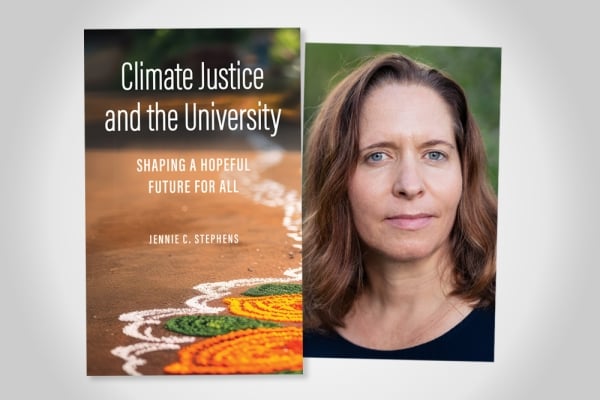
    What is a climate justice university, and how can our universities transform into institutions that truly promote the well-being of the earth and humanity? Jennie C. Stephens’s new book, Climate Justice and the University: Shaping a Hopeful Future for All (Johns Hopkins University Press, 2024), sets out to answer that question. It outlines where today’s universities fall short in their handling not only of the climate crisis but also a wealth of other modern social issues.

    The book lays out broad ideas for transforming how universities function in society, such as shifting research practices to collaborate with people and communities affected by the issues, like the climate crisis, at the center of that research. Stephens, who is a professor at both the National University of Ireland Maynoonth and Northeastern University, acknowledges in the introduction that such a transformation would be a major undertaking, and one that many universities would be disinclined to tackle. “Because of the internal pressure within higher education to maintain institutional norms, this book and its proposal for climate justice universities are, in some ways, radical acts of resistance,” she writes.

    In a phone interview, Stephens spoke with Inside Higher Ed about her vision for climate justice universities—and how modern institutions fail to meet it. The conversation has been edited for length and clarity.

    Q: It was interesting reading that your perspective on these issues comes both from your scholarly work and from a time that you worked on the administrative side of academia. Could you describe how those experiences came together to inspire this book?

    A: I’ve been working in academia my whole career—more than 30 years—and during that time, I’ve been focused on climate and energy issues and sustainability from a very social justice perspective. What has happened through my experiences over time is that I see part of society’s inadequate response to the climate crisis mirrored in academia.

    I think higher education has a really big role in society—in what we are doing and what we’re not doing, in how we’re teaching and learning, in what we’re doing research on and what we’re not doing research on—and I think that our collective insufficient response to the climate crisis is related to what’s been happening in our higher education institutions, which are increasingly very financialized. They’re driven by profit-seeking priorities and new tech and start-ups and focused on job training. We’ve drifted away from a public-good mission of higher education: What does society need in this very disruptive time, and how can our higher education institutions better respond to the needs of society, particularly of vulnerable and marginalized communities and people and households who are increasingly struggling with all kinds of precarity and vulnerabilities?

    Q: How would you define the term “climate justice university”?

    A: The idea of a climate justice university is a university with a mission and a purpose to create more healthy, equitable, sustainable futures for everyone. So, that is a very public-good mission. The idea is to connect the climate crisis with all the other injustices and the … multiple different crises that are happening right now; the climate crisis is just one among many. We also have a cost of living crisis; we have a mental health crisis, we have financial crises; we have a plastic pollution crisis and a biodiversity crisis; we have a crisis in international law and a militarization crisis. We have all of these crises, and yet what we’re doing in our universities tends to continue to be quite siloed and trying to address parts of specific problems, rather than acknowledging that these crises are symptoms of larger systemic challenges.

    For me, climate justice is a paradigm shift toward a transformative lens, acknowledging that things are getting worse and worse in so many dimensions, and that if we want a better future for humanity and for societies around the world, we actually need big, transformative change. A lot of things we do in our universities are reinforcing the status quo and not promoting or endorsing transformative change. So, climate justice is a paradigm shift with a transformative lens that focuses less on individual behavior, more on collective action, less on technological change, more on social change, and less on profit-seeking priorities, more on well-being priorities. What do human beings need to live meaningful, healthy lives, and how can society be more oriented toward that?

    Q: Can you talk a bit more about how the current structure of the university maintains the status quo with regard to climate?

    A: One of the ways that I think universities kind of perpetuate the status quo is by not acknowledging what a disruptive time we’re in with regard to climate crisis, but other crises as well. There’s an encouragement on many campuses for kind of being complacent, like, “Oh, this is the way the world is.” Not necessarily encouraging students and researchers to imagine alternative futures.

    There’s also a focus on doing research that billionaires or corporate interests want us to do, and—in particular, in the climate space—what this has led to is a lot of climate and energy research that is funded by big companies and other wealthy donors who actually don’t want change. We have more and more research to show who has been obstructing climate action and transformative change for a more stable climate future. We know many of those same companies and same fossil fuel interests have also been very strategically investing in our universities. What that does is constrain the research and also the public discourse about climate and energy futures toward very fossil fuel–friendly futures.

    Early on in my own career, I worked on projects that were funded by the fossil fuel industry on carbon capture and storage, and a lot of the climate and energy research in our universities is focused on carbon capture and storage, carbon dioxide removal technology, geoengineering—all these technical fixes that assume we’re just going to keep using fossil fuels. What we really need, if we had more climate justice universities that were focused on the public good and what the climate science has been telling us for decades, is to phase out fossil fuels. We need a global initiative to phase out fossil fuels. But we don’t have in our universities much research on how to phase out fossil fuels.

    Q: In your book, you discuss the concept of exnovation—the process of phasing out inefficient or harmful technologies. Why is research into exnovation not already more common in higher education, and what are the main barriers for researchers who want to take this approach?

    A: I do think funding has a lot to do with it. There’s a whole chapter in the book about the financialization of higher education institutions, which has resulted from kind of a decline in public support toward more private sector support, which means that universities are beholden to private sector interests, increasingly, and they’re encouraged and incentivized to cater to and partner with … private sector interests. I think that has really changed the kinds of impact that higher education institutions and research has had.

    Of course, there are a lot of people within universities who are interested in the public good and doing research on exnovation. But the incentive structure, even among those of us who would want to contribute in those ways, is such that we are increasingly incentivized and promoted based on how much money we can bring in, how many papers can we get published and the scale of resources available to do research. So, there’s a larger, long-term strategy to orient research toward the technical fixes, particularly when it comes to climate and energy, and a lot less funding available for social change or governance research on how to bring back the public-good priorities in our policies, our funding, in our universities. It’s really a longer-term trend that has led to this financialization.

    Q: You lay out a lot of alternative ideas for financing universities, which is important given that anxiety over funding is at an all-time high at some institutions. Walk me through some of your ideas and talk about the feasibility of restructuring how universities are funded.

    A: One idea in the chapter on new ways of engaging and being more relevant is what if we imagine higher education institutions more like public libraries? Public libraries, we all kind of recognize as valuable resources for everyone; every community should have some access to a public library. What if higher education could be [better] invested in that sense of being a resource and not being an ivory tower that is really hard to get into and only some privileged people get access to? What if our higher education institutions were designed and funded to provide more accessible and relevant resources, co-created with communities? That’s kind of one of the big ideas of imagining what this really valuable resource could be more relevant and more connected to the needs of society and of communities.

    You also asked about feasibility, and one of the things that I want to point out is that this book is not a how-to; every context and region and different place in the world has different things going on with their higher education institutions. The idea with this book is to invite us all to kind of think about, what is the purpose of higher education institutions? And how can we better leverage all the public investment that is already spent on higher education institutions? How can that be oriented toward better futures for everyone?

    At higher education institutions that are feeling very vulnerable, having a lot of anxiety about funding levels—the ideas in this book don’t provide a prescription on how to fix that in the near term. But the ideas in the book are really to encourage us all—and especially those involved in higher education policy and higher education funding—to re-evaluate and reclaim the public-good mission of higher education and reconsider how to restructure higher education so that the value and the resources are more accessible, more relevant and more transformative, in terms of fitting the needs of a very disruptive time for humanity and for societies and communities around the country and around the world.

    Source link

  • Dartmouth Men’s Basketball Team Drops Union Bid

    Dartmouth Men’s Basketball Team Drops Union Bid

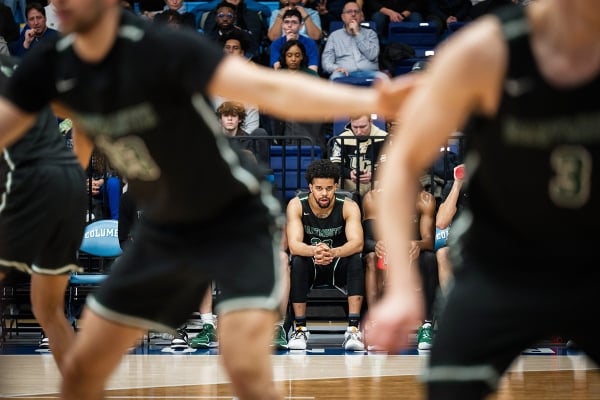
    The Dartmouth College men’s basketball team is dropping its historic bid to form a union, months after voting to do so. 

    The decision, announced Tuesday, comes as Republicans are poised to take control of the National Labor Relations Board, which could affect who is allowed to unionize on college campuses. A regional office of the board cleared the way earlier this year for the players to vote on the petition, ruling that the student-athletes were employees and thus allowed to unionize.

    Dartmouth disagreed with that opinion and refused to bargain with the team until the five-member NLRB ruled on the issue. Currently, the five-member panel has two vacancies, so incoming President Donald Trump could quickly reshape the board. In withdrawing the petition, the Service Employees International Union, Local 560, which represents the players, decided not to gamble with the new board and potentially risk a negative opinion.

    “By filing a request to withdraw our petition today, we seek to preserve the precedent set by this exceptional group of young people on the men’s varsity basketball team,” local president Chris Peck said in a statement to the Associated Press. “They have pushed the conversation on employment and collective bargaining in college sports forward and made history by being classified as employees, winning their union election 13-2, and becoming the first certified bargaining unit of college athletes in the country.”

    The Dartmouth team union threatened to upend college sports and added more urgency to the National Collegiate Athletic Association’s efforts to settle the question of whether student athletes are employees who can collectively bargain. The NCAA has lobbied Congress to pass a law affirming that college athletes aren’t employees. The incoming Congress seems likely to grant that request.

    Source link

  • Biden administration finalizes distance ed, TRIO rules

    Biden administration finalizes distance ed, TRIO rules

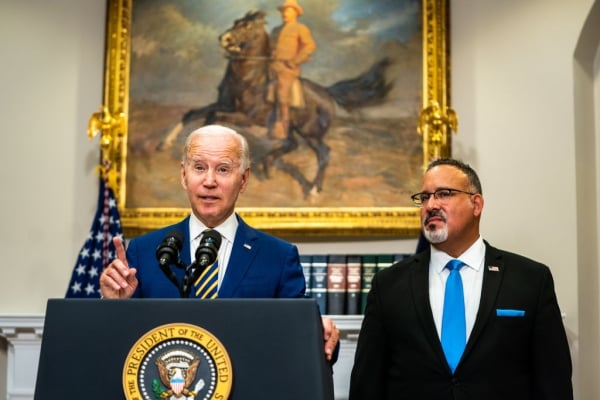
    The Biden administration’s regulations changing how colleges are held accountable and adding new requirements for institutions to access federal financial aid are now in place, though legal challenges loom. 

    Demetrius Freeman/The Washington Post/Getty Images

    Colleges will have to submit to the federal government new data on their distance education programs under a batch of new rules the Biden administration finalized Monday.

    The rules, which will take effect July 1, 2026, will likely be the president’s last package of new regulations for colleges and universities before Trump takes office Jan. 20.

    The new regulations carry out Biden’s plan to increase federal oversight of online programs, but the final version doesn’t go as far as the president initially intended After receiving significant pushback from online education lobbyists, the Education Department conceded, backing off a plan to  disallow asynchronous options for clock-hour courses or require colleges to take attendance in online classes.

    The package does, however, still include rules that require colleges to report more data on enrollment in distance education classes, which include those offered online or via correspondence. Higher ed institutions won’t have to begin submitting the data until July 1, 2027.

    “Online learning can reach more students and sometimes at a lower cost to students, but what we know about the outcomes of online education compared to traditional in-person instruction is woefully inadequate,” Under Secretary James Kvaal said in the release. “The new reporting in this final rule will help the department and the public better assess student outcomes at online programs and help students make informed choices.”

    The final rule also included technical changes to federal college prep programs known as TRIO. But the department decided not to move forward with a plan to open eligibility to some TRIO programs to undocumented students—a long-sought goal of some TRIO directors and advocates, as well as higher education associations. 

    Distance Education

    But one of the most controversial parts of the rule for colleges and universities was whether Biden would decide to end any asynchronous options for students in online clock-hour programs, which are typically short-term workforce training programs that lead to a certificate.

    A Trump-era rule allowed asynchronous learning activities—such as watching a prerecorded video—to count toward the required number of credits in short-term clock-hour programs. But the department said in its proposal that because of the hand-on nature of many clock-hour programs, the change often results in a “substandard education” that “puts students and taxpayers at risk.” 

    Hundreds of professors and higher education groups disagreed. Some, particularly those representing for-profit programs, argued in public comments that the proposal exceeded the department’s authority and would burden institutions. Others said the new rules reflected an antiquated mindset about college modality, arguing that disallowing asynchronous options could limit access for students who benefit from the flexibility that online education provides.

    While the department decided not to end asynchronous distance ed programs, the agency intends to keep a close eye on the courses. 

    “The department refined these final rules based upon extensive public comment on a notice of proposed rulemaking published over the summer,” department officials said in a news release. “However, we remind institutions that asynchronous clock hours cannot be used for homework and that there must be robust verification of regular and substantive interaction with an instructor.”  

    No Expanded TRIO

    Although the decision not to expand eligibility for TRIO has fewer implications for colleges, the move is a blow for the TRIO directors and immigration equity advocates who have been working for years to open up the program.

    Miriam Feldblum, executive director of the Presidents’ Alliance on Higher Education and Immigration, told Inside Higher Ed that nearly 100,000 undocumented students graduate from high school each year, many of whom could benefit from TRIO services. 

    But Republicans opposed the idea. Six GOP members of Congress, including Virginia Foxx, a North Carolinian and former chair of the House education committee, blasted the concept in a letter to Secretary Miguel Cardona in August.

    “The proposed expansion is a blatant attempt to provide additional taxpayer-funded services to those not seeking citizenship in the name of reducing ‘burden.’ The department’s proposed expansion will stretch funding thin and risk those currently eligible for TRIO,” they wrote.

    Some college administrators and TRIO directors in red states are worried about the potential political backlash Biden’s new regulation could cause for their programs.

    “The fighter in me thinks that this is a tough time to go to battle and have an unforced error or a target on our backs and [on] TRIO, given the contentious nature of immigration policy right now,” Geoffrey Garner, a TRIO program director from Oregon, said in at January 2024 advisory committee meeting. “We just think right now is not the best time for this proposal, as much as it breaks my heart to say that out loud.”

    That advisory committee ended up backing the changes to expand some TRIO programs to undocumented students.

    Education Department officials said its decision wasn’t due to political tensions. Rather, they said the proposal “was too narrow … in scope of additional populations to be served.”

    Under the department’s proposed rule, high school students who aren’t citizens or permanent residents could qualify for Upward Bound, Talent Search and Educational Opportunity Centers but not Student Support Services or the McNair Scholars Program.

    “An expansion of student eligibility under only certain TRIO programs would create confusion, as many grantees administer grants under more than one TRIO program,” officials wrote in the final rule. “Eligibility for only certain TRIO programs would increase administrative burden by requiring grantees to deny similarly situated noncitizens from participating under certain TRIO programs, but not others.”

    Source link

  • Univ. of Arizona Global Campus faculty respond to professor

    Univ. of Arizona Global Campus faculty respond to professor

    In a recent article, “Dear Prospective UAGC Students: Stay Away,” a professor from the University of Arizona discourages students from attending the University of Arizona Global Campus (UAGC). Unfortunately, this article was based on the author’s perspective rather than on facts and thus lacked the academic rigor of factual data from credible sources. This opinion piece was a collection of baseless assumptions, completely overlooking the true mission of UAGC, its faculty, and the diverse students we proudly serve. Frankly, the article has no merit.

    There is power in knowledge and truth. As such, the article could have accurately depicted the realities of UAGC instead of relying on inaccurate critiques about educational quality, enrollment numbers, adjunct faculty, and alleged student dissatisfaction. To set the record straight, UAGC is committed to providing online higher education for non-traditional students, including working adults, military personnel, parents, and underserved communities. Our students juggle countless responsibilities, and UAGC offers the flexibility and support they need. UAGC is vital in making higher education accessible to those who need it most, breaking barriers that traditional institutions often ignore.

    Furthermore, UAGC is unwavering in its commitment to supporting students, staff, and faculty, ensuring consistent educational quality and professional growth. As we continue to evolve, we focus on transparent evolution and collaboration, learning from past oversights to create an environment where our students can improve employment opportunities. Our pursuit of high-quality education is not a destination but an ongoing journey to which UAGC is deeply committed. Like any reputable university, we conduct regular course and program reviews, embrace continuous improvement, and acknowledge areas for development as a perpetual process. This commitment to educational quality is a cornerstone of our institution, ensuring our students receive the best education possible and can be confident in our dedication to their success. 

    The UAGC faculty, the backbone of our institution, is growing increasingly weary of misleading and disparaging remarks against the university and the faculty. It is time to move forward constructively and collegially. In the name of higher education, we implore you to stop defaming our university, staff, faculty, and students. To that end, we welcome meeting and educating any skeptical faculty or staff on our university’s mission and approach to serving non-traditional adult learners. Above all, we’re eager to clear any misconceptions by providing accurate data, helping to ensure that your words align more closely with the truth moving forward.

    As we look to the future (Dr. Cabrera), the late President Franklin D. Roosevelt, who signed the unprecedented G.I. Bill into legislation, stated, “A smooth sea never made a skilled sailor” (Roosevelt, n.d.).”


    Yvonne M Lozano, Ph.D. UAGC Faculty Council Co-Chair
    Teresa Handy, Ph.D. UAGC Faculty Council Representative
    Deanna Lauer, UAGC Associate Faculty Council Representative
    Carl Marquez, UAGC Faculty Council Representative
    Cara Metz, Ph.D. UAGC Faculty Council Co-Chair
    Darla Branda, Ph.D. UAGC Program Chair

    Source link

  • Biden scraps debt relief plans, other regs

    Biden scraps debt relief plans, other regs

    Andrew Caballero-Reynolds/AFP via Getty Images

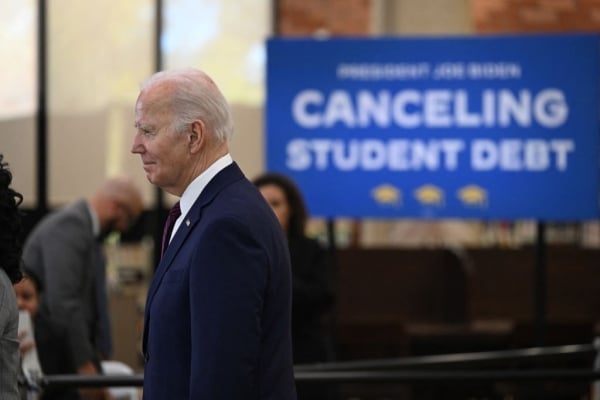
    The Biden administration’s ambitious plans to provide debt relief for millions of Americans is officially dead along with a number of other proposed regulatory changes.

    The administration said Friday it’s withdrawing two debt relief proposals from consideration. The Education Department had been reviewing thousands of comments on the plans and preparing to finalize at least one proposal before Friday’s announcement. The Associated Press first reported on the decision.

    The department is also scraping its proposal to amend Title IX to prohibit blanket bans barring transgender students from participating in the sport consistent with their gender identity. That proposal proved controversial, receiving more than 150,000 comments and prompting legal challenges to the department’s separate overhaul of Title IX. added

    “In light of the comments received and those various pending court cases, the department has determined not to regulate on this issue at this time,” officials wrote in a notice on the Federal Register. added

    The department also said Friday that it’s abandoning the effort to update the rules for accreditation, state authorization and cash management. Regulatory proposals were hashed out in the spring but have stalled since. Proposals to gather more data about distance education and open up college-prep programs to undocumented students appear to be moving forward. added

    The department said terminating the rule-making process or those three areas will “allow for additional evaluation of recent changes in other regulations and industry practices.” added

    The debt relief plans have been in the works since summer 2023 after the Supreme Court struck down President Biden’s first attempt at providing student loan forgiveness. Republicans and other critics said these latest debt relief plans, which would have benefited 36 million Americans, were unconstitutional and amounted to an unfair wealth transfer.

    Education Department officials maintain that they have the authority to forgive student loans for borrowers who meet certain criteria or are facing financial hardship, but they concluded that they don’t have the time to implement the proposals before Biden leaves office Jan. 20.

    “With the time remaining in this administration, the Department is focused on several priorities including court-ordered settlements and helping borrowers manage the final elements of the return to repayment,” officials wrote in a Federal Register notice. “At this time the Department intends to commit its limited operational resources to helping at-risk borrowers return to repayment successfully.”

    Withdrawing the rule “will assure agency flexibility in reexamining the issues,” officials added. The move means that the incoming administration would have to start from scratch on a rulemaking process rather than just rewrite the pending proposal.

    Some Republican attorneys general sued the administration over one of the plans, which would have provided targeted debt relief to borrowers who owe more than they initially borrowed or have been repaying their loans for more than 20 years, among other groups. That plan was blocked by a federal judge before the department could finalize it.

    The department’s decision came on the same day the Biden administration announced another round of loan forgiveness. The Education Department announced Friday morning that it would forgive loans for 55,000 borrowers who reached eligibility through Public Service Loan Forgiveness. A program created in 2007 and retooled under Biden, PSLF relieves an individual’s remaining debt if they properly complete 120 monthly payments while working full-time in a public interest career like law enforcement, health care or education. 

    Including Friday’s batch of relief, which totaled $4.28 billion, the Biden administration has now forgiven $180 billion in student loans for 4.9 million borrowers.

    Borrower advocacy groups like the Student Borrower Protection Center say that while they are deeply disappointed the Biden administration has to withdraw its regulations in response to legal pushback from right-wing attorneys, they appreciate Biden’s efforts and celebrate the regulations he was able to finalize. 

    “President Biden’s fixes to the Public Service Loan Forgiveness program and other student loan relief programs have once again delivered lasting change and will benefit millions of borrowers for years to come,” said Persis Yu, deputy executive director of the Student Borrower Protection Center, in a statement. But, at the same time, Yu added that “the actions of right-wing attorneys general have blocked tens of millions of borrowers from accessing critical student debt relief.” 

    Meanwhile, Republican lawmakers, including Senator Dr. Bill Cassidy of Louisiana, described Biden’s unfinalized attempts at student debt relief as a “scheme to transfer student debt onto American taxpayers.”

    “The Biden-Harris administration’s student loan schemes were always a lie,” the senator said in a statement. “With today’s latest withdrawal, they are admitting these schemes were nothing more than a dishonest attempt to buy votes by transferring debt onto taxpayers who never went to college or worked to pay off their loans.”

    Jessica Blake contributed to this report.

    Source link