Tag: Career

  • Partial Victory for Freedom of the Press at Indiana U

    Partial Victory for Freedom of the Press at Indiana U

    The decision by Indiana University administrators to allow the Indiana Daily Student newspaper to resume occasional publication is a victory for the advocates of free expression on campus. The Student Press Law Center, the Foundation for Individual Rights and Expression, and the American Association of University Professors, along with student newspapers across the country, spoke out loudly in defense of Indiana student journalists. Particular praise goes to the students at the Purdue Exponent, which printed the censored homecoming issue of the Indiana Daily Student and distributed it around Bloomington, Ind., in solidarity with fellow journalists.

    It’s rare for administrators to quickly reverse course and effectively admit they made a mistake. But while we need to celebrate a win, we also need to recognize how partial and temporary it was—and the enormous threat to freedom of the press that still exists at Indiana and beyond.

    What Indiana University administrators did was one of the worst attacks on a free press at a public university in the history of American higher education. It combined three of the most terrible types of censorship of the press: 1) imposing massive content restrictions by attempting to ban the newspaper from printing any news, 2) banning the newspaper completely from being printed when the editors refused to obey these unlawful demands and 3) firing the professor who served as newspaper adviser, student media director Jim Rodenbush, for defending freedom of the press.

    While the first two forms of repression have now been (temporarily) lifted, the last one still remains. When the newspaper adviser who was fired for opposing censorship remains fired, it’s still censorship. And Chancellor David Reingold’s decision to allow the newspaper to publish still includes severe budget cutbacks and elimination of university support for the publication.

    Suppression of a free press at Indiana is linked to its broader repression of free expression. FIRE recently ranked Indiana University as the worst public university in America for free speech (and the student newspaper’s article about this ranking reportedly was one of the reasons why the administration cracked down on the free press). The repression by Indiana administrators has been astonishing. In December 2023, Indiana University suspended professor Abdulkader Sinno for the crime of reserving a room for an event critical of Israel. At the same time, the administration also canceled its art museum exhibit of abstract art paintings by Samia Halaby, a Palestinian American artist who had been critical of the Israeli government. In 2024, Indiana officials banned all expression on campus between 11 p.m. and 6 a.m., which a federal judge paused while an ACLU lawsuit against the censorship continues.

    In my 2020 report for the University of California National Center for Free Speech and Civic Engagement about freedom of the press on campus, I noted some of the severe threats to free expression: punishing independent media advisers who fail to rein in student newspapers, censoring campus papers directly, restricting access to campus, limiting the rights of faculty and staff to speak to reporters, and many more. But perhaps the greatest threat to journalism on campus is economic, when student newspapers are defunded and eventually decline from a thousand budget cuts.

    The dire economic environment for newspapers across the country has also affected student publications. The drop in advertising revenue has hit campus newspapers, and many universities would rather put resources into public relations staff under the control of administrators rather than support student journalists who challenge them.

    What universities can do to respect freedom of the press: First, do no harm. Stop trying to censor newspapers. Enact free expression policies that protect freedom of the campus press and the rights of their advisers and sources.

    Second, integrate journalism into the curriculum. Offer classes about journalism, but recognize that many different classes (and especially writing-focused classes) can encourage students to publish their work, both online and in print. Good journalism is just good writing, and colleges should encourage students to publicly express their ideas on a wide range of topics.

    Third, support campus journalism financially. Colleges ought to provide a substantial fund to campus newspapers to publish ads promoting events and activities on campus. By allocating this money for newspaper ads and then allowing campus programs and student organizations to freely use it for their events, colleges can promote what they are doing while supporting independent journalism. The belief that student newspapers shouldn’t be subsidized and must independently finance every word they print is a strange concept for colleges that are devoted to subsidizing the free exchange of ideas.

    Student newspapers are the most important extramural activity on college campuses, and more essential than much of the courses, research and administrative work that receives vastly greater funding. A campus newspaper is more than just a critical source of information about what happens at colleges: It’s an education for writers and readers alike. It’s a bridge between the campus and the community, where growing news deserts make student papers more important than ever. And the campus newspaper is a symbol of intellectual debate, the most public place at a college where ideas are exchanged and arguments between different viewpoints are heard.
    Source link

  • UC to Stop Funding Systemwide Postdoc Program

    UC to Stop Funding Systemwide Postdoc Program

    Juliana Yamada/Los Angeles Times/Getty Images

    Starting next fall, the University of California system office will no longer pay for the UC President’s Postdoctoral Fellowship Program, a fellowship established in 1984 to encourage more women and minority Ph.D.s to pursue academic careers.

    The fellowship program, available at all 10 UC campuses and three national laboratories, has inspired numerous copycats at other state universities, including at the University of Maryland, the University of Minnesota–Twin Cities, the University of Michigan and Pennsylvania State University. But its focus on recruiting diverse candidates has also been criticized by conservatives who claim it’s a pipeline for young hires with radical leftist politics.

    The UC system office will stop providing financial support for the program beginning with fellows hired after summer 2025, a system spokesperson told Inside Higher Ed. Since 2003, the UC system office has paid the $85,000 salaries of PPFP fellows for their first five years on the faculty; then the UC campus where they are employed takes over. To date, the system has spent $162 million on PPFP faculty salaries, averaging about $7.36 million per year.

    “Due to the severe budget constraints currently facing UC, the PPFP faculty hiring incentive is sunsetting as of fall 2025,” the spokesperson said in a statement. “While the University will continue to provide five years of salary support to PPFP fellows hired by summer 2025 and in earlier years, no new incentives will be provided going forward. Campuses will still be able to hire PPFP fellows as part of their normal search and hiring processes, but the additional financial contribution from the incentive program will no longer be available.”

    The University of California system is facing a decline in state funding and pressure from the Trump administration to implement a number of changes that weaken or abolish diversity, equity and inclusion practices. In March, former system president Michael Drake announced a systemwide hiring freeze and other cost-saving measures. At the same time, the system board prohibited campus officials from asking job candidates to submit a diversity statement as part of the hiring process. In August, the Trump administration demanded that the University of California, Los Angeles, pay a $1.2 billion fine for allegedly failing to address antisemitism on campus, as well as overhaul numerous policies related to admissions, hiring, athletics, scholarships, gender identity and discrimination.

    In a thread posted to Bluesky, Sarah Roberts, a professor of information studies, gender studies and labor studies at UCLA, called the PPFP program a “jewel in the crown for faculty development and recruitment at the University of California.”

    “To my mind, not only is this a direct attack by a UC central admin content to capitulate and emulate the federal position that arrived via extortion letter, it is part of a much larger plan, congruent with UC central admin, of weakening and eliminating faculty governance and power,” Roberts wrote about the decision to end funding for the program.

    Despite its origins, the PPFP no longer explicitly seeks women and minority candidates and instead considers applicants “whose life experiences and educational background would help to broaden the perspectives represented in the faculty of the University of California,” according to the website.

    This is a recent change; in 2024, the PPFP webpage included the tagline “advancing excellence through faculty diversity.” The criteria also stated that “faculty reviewers will evaluate candidates according to their academic accomplishments, the strength of their research proposal, and their potential for faculty careers that will contribute to diversity and equal opportunity through their teaching, research and service. Faculty reviewers also may consider the mentor’s potential to work productively with the candidate and commitment to equity and diversity in higher education.”

    The PPFP, and fellow-to-faculty programs at large, have drawn criticism from conservatives including John D. Sailer, a senior fellow at the Manhattan Institute who has written extensively on the programs. He believes they allow universities to recruit scholars who “embrace positions on the fringes of leftist politics.”

    “Ideological screening has downstream consequences for our sensemaking institutions,” Sailer wrote in a February article. “Ultimately, the fellow-to-faculty model pushes conformity across once-distinct academic fields. As the UC professor put it, ‘it erodes disciplinary boundaries,’ flattening all forms of inquiry into a discussion of race and oppression.”

    Source link

  • Trinity Christian College Announces Closure

    Trinity Christian College Announces Closure

    Trinity Christian College outside Chicago will close at the end of the current 2025–26 academic year due to insurmountable financial pressures.

    The college announced the move Tuesday, citing a litany of challenges, which include “post-Covid financial losses; persistent operating deficits; a decline in college enrollment and increased competition for students; and a shift in donor giving and financial circumstances,” according to a statement from officials posted on a frequently asked questions webpage.

    Acting President Jeanine Mozie said in a video message that the Board of Trustees considered multiple options to address “significant and rapidly evolving financial challenges,” but ultimately, there was “no sustainable path forward for our beloved institution.”

    The FAQ page noted that the Board of Trustees considered “significant programmatic changes, strategic partnerships, and the like” but “determined that these and other alternatives were insufficient to overcome the college’s deficit” and sustain Trinity’s mission over the long term.

    The closure announcement follows a recent leadership change at the college. Former president Aaron Kuecker resigned in August after less than two years in the top job but nearly 14 at Trinity altogether. Multiple staff members were also reportedly laid off in August.

    A review of the college’s finances shows that Trinity operated at a loss in eight of the last 10 fiscal years and relied significantly on a small pool of donors. An estimated 76 percent of all financial contributions came from just three donors in 2024, according to Trinity’s latest audit.

    Trinity also had less and less cash on hand. According to the audit, “cash and cash equivalents” fell from nearly $7.2 million in fiscal year 2023 to just under $5 million—a drop of nearly 31 percent. Trinity also had a meager endowment, valued at $11 million at the end of the 2024 fiscal year. (A recent study found the median endowment across the sector is $243 million.)

    Bondholders warned the college in June that Trinity was at risk of violating its financial covenants because of its limited liquidity, according to publicly available documents.

    Both faculty numbers and student head count had dropped in recent years, bond documents show. Both of those numbers have been in decline in recent years with total faculty falling from 145 to 126 and enrollment dropping from a total head count of 1,068 in fall 2019 to 872 last year, despite a recent tuition reset to attract students. Trinity aimed to hit 1,081 students by the 2027–28 academic year, financial documents show.

    Trinity was founded by Chicago businessmen in 1959 and is located on a 56-acre campus in Palos Heights, Ill., outside Chicago, which was recently estimated to be worth $25 million.

    College officials announced teach-out and transfer agreements with Calvin University in Michigan as well as Olivet Nazarene University and Saint Xavier University, both of which are in Illinois.

    Trinity follows several other small, cash-strapped Christian colleges that have announced closures this year, some of which have shut down abruptly, such as Limestone University and St. Andrews University. Siena Heights University, a Roman Catholic institution, also announced plans to close. On the secular side, Northland College in Wisconsin closed earlier this year, and Pennsylvania State University announced plans to shut down seven rural campuses by 2027 after years of shrinking enrollment.

    Source link

  • The Push for Viewpoint Diversity Misses the Point (opinion)

    The Push for Viewpoint Diversity Misses the Point (opinion)

    Much of the controversy around the Trump administration’s “Compact for Academic Excellence in Higher Education” has focused on its push for viewpoint diversity and the claim that open inquiry does not exist in our classrooms. That push builds on a long-standing conservative critique that today makes hay out of the fact that the vast majority of faculty in U.S. colleges and universities lean left.

    Recent data supports that claim. In elite institutions, like Duke and Harvard Universities, surveys suggest the number of faculty identifying as liberal exceeds 60 percent. The percentages differ not only by type of institution but by discipline, with the humanities and social sciences leaning more liberal than STEM. Some even claim that political bias corrupts academic disciplines.

    Liberal faculty and commentators on higher education sometimes take the bait and respond defensively to what often is a politically motivated attack. In an op-ed in The Guardian, Lauren Lassabe Shepherd argued that the purpose of the conservative critique has been “to delegitimize the academy … [and] return colleges to a carefully constructed environment not to educate all, but to reproduce hierarchy.”

    Whether or not she is right, you don’t have to look hard to see that institutions of higher education are feeling growing pressure to right their ships—to create campuses and classrooms where open inquiry flourishes, where students feel free to say what they think and to challenge ideas they disagree with. Colleges have responded by scrambling to incorporate more ideological diversity into their course offerings, to implement new programming and to recruit guest speakers who challenge progressive thinking.

    All this misses the point and distracts us from the work that needs to be done to further improve the quality of the education students receive in American colleges and universities. Put simply, instead of fixating on who is in the classroom and whether they are liberal or conservative, we should be focused on how we are in the room.

    Higher education’s greatest challenge to achieving open inquiry is not one of ideology or viewpoint diversity, but of disposition. Harvard University’s 2024 report from a working group on open inquiry gestured in this direction but did not flesh it out.

    If we are to truly commit to open inquiry, we need to step back, pause and reflect not just on what we think, but on how we acquire knowledge, how we think, whether we are interested in learning more or if we are content with what we already know.

    You can decorate campuses with all the colors of the political rainbow but not make them better places to learn.

    The issue is how we show up with others. Data suggests that students in our classrooms don’t feel comfortable pushing back on each other or on their professors when they disagree. They engage in what psychologists Forest Romm and Kevin Waldman call “performative virtue-signaling.”

    In conversations with students at Amherst College, we have heard that they are not just constraining their expression in academic settings but in social settings, too. It seems we are afraid of each other.

    It is no wonder. The academic and public squares have not proven themselves to be especially kind or generous as of late. We need look no further than the vitriolic reactions to Charlie Kirk’s murder, and the as-vitriolic reactions to the reactions to his murder. When we do, we can see that the rush to righteousness operates across the ideological spectrum.

    The work of college education is to dislodge the instinct to judge and replace it with a commitment to rigorous listening. The work of college teachers is to model an approach to the world that puts empathy before criticism.

    What if instead of just talking about the right to speech, we emphasized the right to listen? But we don’t just mean any kind of listening; we mean listening in a certain way. Deep listening. The kind of listening that takes in ideas in slow, big gulps and lets them settle deeply, and sometimes uncomfortably.

    It is listening that seeks to catch ideas in flight and carry them further. This is a disciplined kind of listening that resists defensiveness and instead burrows into curiosity.

    To foster it, we have to cultivate in ourselves and in our students a disposition to wonder. Why does someone think that way? What experiences, places, relationships, institutions and social forces have shaped their thinking? How did they get to that argument? How did they get to that feeling? How is it that they could arrive at a different perspective than I did?

    This is the heart of open inquiry, and it is much harder to achieve than it is to bring more conservatives to campus. Without the disposition to wonder, doing so will produce enclaves, not engagement, on even the most ideologically diverse campus.

    This kind of open inquiry would demand that we remove the stance of moral certainty and righteousness from our ways and practices of thinking. That is the real work that needs to animate our colleges and universities.

    It is hard, slow work. There is no magic bullet. Teachers and their students, liberals and conservatives, have to commit to it.

    While open inquiry is a social disposition, it is also about how we orient our thinking when we are alone. We need to challenge our students to wonder not just about others but about themselves.

    What would happen if we all got into the habit of asking ourselves: When was the last time we changed our mind about something? When was the last time we left a conversation or finished a text and actually grappled with our orientation to a subject?

    We yearn for our students to practice open inquiry not just when they are in our classrooms, but when they are in the library or in their dorm room with a book to read, an equation to solve, a painting to finish.

    The promise of this type of inquiry is exhilarating, freeing. And it opens up great possibilities of seeing the world differently or in more complicated ways.

    At the end of the day, the literary scholar Peter Brooks gets it right when he says, “To honor, even only nominally, the call for ‘viewpoint diversity’ is to succumb to a logic that is at its heart hostile to the academic enterprise.” At the heart of that enterprise is a belief that viewpoint diversity is not the same thing as open inquiry. That belief requires changing the culture of learning on our campuses.

    Maybe the shift does not seem responsive to the political clamor of the moment. Maybe it sounds like it demands too much and will be hard to assess.

    But whatever the case, it feels revolutionary to us.

    Austin Sarat is the William Nelson Cromwell Professor of Jurisprudence and Political Science at Amherst College.

    Leah Schmalzbauer is the Clarence Francis 1910 Professor in the Social Sciences and associate provost and associate dean of the faculty at Amherst College.

    Source link

  • Innovation Project Experience Designer at Grand Valley

    Innovation Project Experience Designer at Grand Valley

    Are you leading a search for a role at the intersection of learning, technology and organizational change? Today, we hear from Eric Kunnen, senior director of IT innovation and research at Grand Valley State University, who is recruiting for an innovation project experience designer.

    Q: What is the university’s mandate behind this role? How does it help align with and advance the university’s strategic priorities?

    A: Put simply, the IT innovation and research team’s futurEDlab is on a mission to unite faculty, staff and students to spark innovation and help shape the future of education. At Grand Valley State University, our Reach Higher Strategic Plan highlights the value of innovation as well as the university’s commitment to empowering learners and enriching society. Specifically, this role contributes to enhancing education through incubating ideas and facilitating project management in our work to design, develop and deliver innovative immersive experiences leveraging emerging technologies.

    Q: Where does the role sit within the university structure? How will the person in this role engage with other units and leaders across campus?

    A: The innovation project experience designer at GVSU will serve on the information technology division’s innovation and research team, engaging across the university through partnerships and interdisciplinary partnerships.

    Q: What would success look like in one year? Three years? Beyond?

    A: In year one, success includes catalyzing our project intake and management operational procedures within the futurEDlab, building momentum, capacity, efficiency and effectiveness as we deliver high-impact innovation experiences at Grand Valley State University. In three years, this role will be pivotal as we increase the value of digital transformation in teaching and learning as part of the innovation pipeline with the Blue Dot Lab ecosystem.

    Q: What kinds of future roles would someone who took this position be prepared for?

    A: Future roles for this position include coordination, management, leadership and innovation pathways in higher education, such as innovation strategy, digital transformation and senior level innovation program and project management.

    Please get in touch if you are conducting a job search at the intersection of learning, technology and organizational change. Featuring your gig on Featured Gigs is free.

    Source link

  • Students, Unions to Protest Trump’s Higher Ed Agenda Friday

    Students, Unions to Protest Trump’s Higher Ed Agenda Friday

    Members of the American Association of University Professors, the affiliated American Federation of Teachers and student groups are planning protests in more than 50 cities Friday against “the Trump administration’s broad assault” on higher ed, the AAUP announced in a news release.

    The AAUP said demonstrators will urge institutions to continue rejecting Trump’s “Compact for Academic Excellence in Higher Education” and instead “commit to the freedom to teach, learn, research, and speak out without government coercion or censorship.”

    “From attacks on academic freedom in the classroom to the defunding of life-saving scientific research to surveilling and arresting peaceful student protesters, Trump’s higher education policies have been catastrophic for our communities and our democracy,” AAUP president Todd Wolfson said in the release. “We’re excited to help build a coalition of students and workers united in fighting back for a higher education system that is accessible and affordable for all and serves the common good.”

    The protests are part of a progressive movement called Students Rise Up, or Project Rise Up. The Action Network website says there will be “walkouts and protests at hundreds of schools” Friday—the start of a buildup “to a mass student strike on May 1st, 2026, when we’ll join workers in the streets to disrupt business as usual.”

    “We’re demanding free college, a fair wage for workers, and schools where everyone is safe to learn and protest—regardless of their gender or race or immigration status,” the website says.

    Other groups listed as organizing or supporting the protests include the Campus Climate Network, College Democrats of America, Florida Youth Action Fund, Frontline for Freedom, Higher Ed Labor United, Ohio Student Association, Sunrise Movement, Dissenters, Feminist Generation, Gen-Z for Change, Generation Vote (GenVote), March for Our Lives, Oil and Gas Action Network, Socialist Alternative, Together Across America, Voters of Tomorrow, Blue Future, Get Free, and NOW Young Feminists.

    Asked for a comment from the Education Department, Madi Biedermann, deputy assistant secretary for communications, repeated statements the department previously made, saying, “The Trump Administration is achieving reforms on higher education campuses that conservatives have dreamed about for 50 years.”

    “Institutions are once again committed to enforcing federal civil rights laws consistently, they are rooting out DEI and unconstitutional race preferences, and they are acknowledging sex as a biological reality in sports and intimate spaces,” she wrote.

    Source link

  • Anatomy of the Research Statement (opinion)

    Anatomy of the Research Statement (opinion)

    The research statement that you include in your promotion and tenure dossier is one of the most important documents of your scholarly career—and one you’ll have little experience writing or even reading, unless you have a generous network of senior colleagues. As an academic editor, I support a half dozen or so academics each year as they revise (and re-revise, and throw out, and retrieve from the bin, and re-revise again) and submit their research statements and P&T dossiers. My experience is with—and so these recommendations are directed at—tenure-track researchers at American R-1s and R-2s and equivalent Canadian and Australian institutions.

    In my experience, most academics are good at describing what their research is and how and why they do it, but few feel confident in crafting a research statement that attests to the impact of their accomplishments. And “impact” is a dreaded word across the disciplines—one that implies reducing years of labor to mere numbers that fail to account for the depth, quality or importance of your work.

    When I think about “impact,” I think of course of the conventional metrics, but I think as well of your work’s influence among your peers in academia, and also of its resonance in nonacademic communities, be they communities of clinicians, patients, people with lived experiences of illness or oppression, people from a specific equity-deserving group, or literal neighborhoods that can be outlined on a map. When I edit research statements, I support faculty to shift their language from “I study X” to “My study of X has achieved Y” or “My work on X has accomplished Z.” This shift depends on providing evidence to show how your work has changed other people’s lives, work or thinking.

    For researchers who seek to make substantial contributions outside of academia—to cure a major disease, to change national policy or legislation—such a focus on impact, influence and resonance can be frustratingly short-termist. Yet if it is your goal to improve the world beyond the boundaries of your classroom and campus, then it seems worthwhile to find ways to show whether and how you are making progress toward that goal.

    If you’re preparing to go up for tenure or promotion, here’s a basic framework for a research statement, which you can adopt and adapt as you prepare your own impact-, influence- or resonance-focused research statement:

    Paragraph 1—Introduction

    Start with a high-level description of your overarching program of research. What big question unites the disparate parts of your work? What problem are you working toward solving? If your individual publications, presentations and grants were puzzle pieces, what big picture would they form?

    Paragraph 2—Background (Optional)

    Briefly sketch the background that informed your current preoccupations. Draw, if relevant, on your personal or professional background before your graduate studies. This paragraph should be short and should emphasize how your pre-academic life laid the foundation that has prepared you, uniquely, to address the key concerns that now occupy your intellectual life. For folks in some disciplines or institutions, this paragraph will be irrelevant and shouldn’t be included: trust your gut, or, if in doubt, ask a trusted senior colleague.

    Middle Paragraphs—Research Themes, Topics or Areas

    Cluster thematically—usually into two, three or four themes—the topics or areas into which your disparate projects and publications can be categorized. Within each theme, identify what you’re interested in and, if your methods are innovative, how you work to advance scholarly understandings of your subject. Depending on the expected length of your research statement, you might write three or four paragraphs for each theme. Each paragraph should identify external funding that you secured to advance your work and point to any outputs—publications, conference presentations, journal special issues, monographs, edited books, keynotes, invited talks, events, policy papers, white papers, end-user training guides, patents, op-eds and so on—that you produced.

    If the output is more than a few years old, you’ll also want to identify what impact (yes) that output had on other people. Doing so might involve pointing at your numbers of citations, but you might also:

    • Describe the diversity of your citations (e.g., you studied frogs but your research is cited in studies of salmon, belugas and bears, suggesting the broad importance of your work across related subfields);
    • Search the Open Syllabus database to identify the number of institutions that include your important publication in their teaching, or WorldCat, to identify the number of countries in which your book is held;
    • Link your ORCID account to Sage’s Policy Profiles to discover the government ministries and international bodies that have been citing your work;
    • Summarize media mentions of your work or big, important stories in news media, e.g. magazine covers or features in national newspapers (e.g. “In August 2025, this work was featured in The New York Times (URL)”);
    • Name awards you’ve won for your outputs or those won by trainees you supervised on the project, including a description of why the award-giving organization selected your or your trainee’s work;
    • Identify lists of top papers in which your article appears (e.g., most cited or most viewed in that journal in the year it was published); or,
    • Explain the scholarly responses to your work, e.g., conference panels discussing one of your papers or quotations from reviews of your book in important journals.

    Closing Paragraphs—Summary

    If you’re in a traditional research institution—one that would rarely be described by other academics as progressive or politically radical—then it may be advantageous for you to conclude your research statement with three summary paragraphs.

    The first would summarize your total career publications and your publications since appointment, highlighting any that received awards or nominations or that are notable for the number of citations or the critical response they have elicited. This paragraph should also describe, if your numbers are impressive, your total number of career conference presentations and invited talks or keynotes as well as the number since either your appointment or your last promotion, and the total number of publications and conference presentations you’ve co-authored with your students or trainees or partners from community or patient groups.

    A second closing paragraph can summarize your total career research funding and funding received since appointment, highlighting the money you have secured as principal investigator, the money that comes from external (regional, national and international) funders, and, if relevant, the new donor funding you’ve brought in.

    A final closing paragraph can summarize your public scholarship, including numbers of media mentions, hours of interviews provided to journalists, podcast episodes featured on or produced, public lectures delivered, community-led projects facilitated, or numbers of op-eds published (and, if available, the web analytics associated with these op-eds; was your piece in The Conversation one of the top 10 most cited in that year from your institution?).

    Final Paragraph—Plans and Commitments

    Look forward with excitement. Outline the upcoming projects, described in your middle paragraphs, to which you are already committed, including funding applications that are still under review. Paint for your reader a picture of the next three to five years of your research and then the rest of your career as you progress toward achieving the overarching goal that you identified in your opening paragraph.

    While some departments and schools are advising their pretenure faculty that references to metrics aren’t necessary in research statements, I—perhaps cynically—worry that the senior administrators who review tenure dossiers after your department head will still expect to see your h-index, total number of publications, number of high-impact-factor journals published in and those almighty external dollars awarded.

    Unless you are confident that your senior administrators have abandoned conventional impact metrics, I’d encourage you to provide these numbers and your disciplinary context. I’ve seen faculty members identify, for example, the average word count of a journal article in their niche, to show that their number of publications is not low but rather is appropriate given the length of a single article. I’ve seen faculty members use data from journals like Scientometrics to show that their single-digit h-index compares to the average h-index for associate professors in their field, even though they are not yet tenured. Such context will help your reader to understand that your h-index of eight is, in fact, a high number, and should be understood as such.

    You’ll additionally receive any number of recommendations from colleagues and mentors; for those of you who don’t have trusted colleagues or mentors at your institution, I’ve collected the advice of recently tenured and promoted associate professors and full professors from a range of disciplines and institutional contexts in this free 30-page PDF.

    I imagine that most of the peers and mentors whom you consult will remind you to align with any guidelines that your institution provides. Definitely, you should do this—and you should return to those guidelines and evaluation criteria, if they exist, as you iteratively revise your draft statement based on the feedback you receive from peers. You’ll also need to know what pieces of your P&T dossier will be read by what audience—external readers, a departmental or faculty committee, senior administrators. Anyone can tell you this; every piece of writing will need to consider both audience and context.

    But my biggest takeaway is something no client of mine has ever been told by a peer, colleague or mentor: Don’t just describe what you’ve done. Instead, point to the evidence that shows that you’ve done your work well.

    Source link

  • Colleges Pay Students to Participate in Events on Campus

    Colleges Pay Students to Participate in Events on Campus

    Since 2020, faculty, staff and administrators have noticed a trend among incoming college students: They don’t know how to make friends. Data affirms this—fewer students said they studied with classmates, volunteered or participated in clubs or organizations in 2023 than in 2019, according to a 2025 report from the Student Experience in the Research University Consortium.

    At the same time, student engagement and belonging correlate with academic success. Past surveys show that students who engage in extracurricular activities are more likely to feel that they belong on campus and that it’s easier to make friends. Extracurriculars can advance students’ career skills such as leadership and communication, as well as develop their professional interests.

    The challenge for institutions, therefore, is how to reverse the trend toward disengagement and emphasize on-campus connections.

    Some colleges are moving beyond offering free T-shirts and raffle prizes to encourage event attendance and moving straight to giving out cash, recognizing that finances are often the biggest barrier to student participation.

    State of play: An August 2025 Student Voice survey by Inside Higher Ed and Generation Lab found that 36 percent of students have not participated in an extracurricular or co-curricular activity on campus. About one-third of students said they were involved in a few activities, and 17 percent said they were very involved in one activity.

    Adult learners (65 percent) and two-year students were least likely to say they’ve participated in campus activities (64 percent), as were students who had dropped out for a semester (63 percent), students working at least 30 hours per week (55 percent), first-generation students (49 percent) and Hispanic students (48 percent).

    The biggest hang-up for students: finances. As the costs of attending college continue to rise, a greater share of students work while enrolled. Seventy percent of Student Voice respondents said they hold a job in a typical semester, and 30 percent of those students work full-time.

    When asked their top source of stress while in college, students pointed to balancing academics with other financial and personal obligations (50 percent) or paying for college (38 percent). An additional 22 percent indicated that paying for personal expenses was a top stressor.

    Rather than ask students to choose between work or campus activities, administrators are creating avenues to pay students for certain university-led activities, such as attending workshops, engaging with support resources or investing in their health.

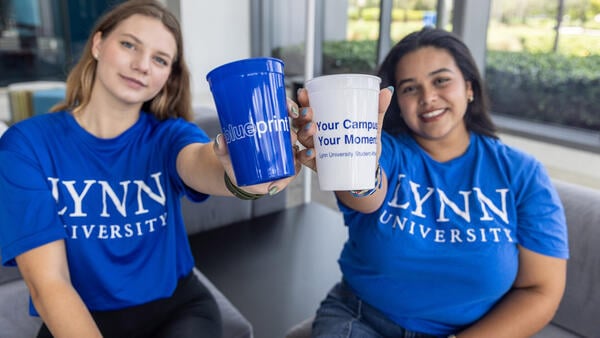
    Points for participation: Lynn University in Boca Raton, Fla., is launching a points-based incentive program next spring, called Blueprint Rewards, that translates on-campus participation into scholarship dollars and discounts at the campus store. The initiative builds on previous investments in co-curriculars including a student-facing app, Blueprint, and digital badging, which were implemented in 2018 and 2021, respectively.

    Under Blueprint Rewards, some campus events are designated as points-bearing in Blueprint, denoted by the abbreviation SET, for Student Engagement Transcript.

    Each SET event is worth between one and 10 points. After reaching 20 points connected to a given theme, students unlock a badge. The six badges are loosely modeled on the National Association for Colleges and Employers’ career competencies: leadership, accountability, problem-solving, growth mindset, collaboration and adaptability.

    For example, activities that count toward the growth mindset badge include participating in a mindfulness event (worth one point), attending a fitness center training (five points) or becoming a wellness educator on campus (10 points).

    After completing one badge, students also earn $500 in scholarship dollars, which is applied to the following year’s tuition, making the program a retention strategy as well.

    Students unlock scholarships and other rewards as they complete various badges in the Blueprint Rewards program.

    Students can redeem up to $1,000 in badge dollars toward tuition each academic year. Administrators elected to cap badge scholarships at two per academic year to ensure students are juggling their academic and other responsibilities with campus participation, according to a FAQ page.

    If they finish all six badges, students can opt to enroll in a no-tuition graduate-level course after their senior year, a value of $2,250.

    If they complete three badges by the end of their junior year, students can gain an additional $1,500 toward participation in a faculty-led experience in the U.S. or abroad. The goal is to encourage study-away experiences, and the badges (adaptability, problem-solving and accountability) help make sure the student is adequately prepared for travel.

    The program was announced Oct. 29, and full-time undergraduate students can start earning rewards in January. Since launching the digital badges in 2021, the university has seen the number of student engagements in co-curricular activities grow 65 percent, President Kevin Ross said.

    “Blueprint Rewards builds on that momentum—helping students lower tuition costs while earning résumé-boosting credentials and scholarships that recognize their engagement and career readiness,” Ross said.

    Another model: Administrators at Lynn aren’t the only campus officials using financial incentives to get students out of their dorm rooms and gaining life skills.

    The University of Kentucky’s UK Invests both rewards students for engaging in health and wellness activities and provides financial literacy and investment education. The university dedicated $1 million for the first year and has received philanthropic support to continue awarding students money.

    UK students who open a Fidelity savings account and deposit $25 are given $50 by the investment firm; each event they attend could be worth as much as an additional $50 in their accounts.

    Student behaviors are tracked on three platforms—Handshake, SUMO and BBNvolved—and participation data is used to establish how much money the student earned, which is then deposited into the student’s Fidelity account. The university processes payments to student accounts every other Friday.

    There is no cap on how much money a student can earn in a given year under UK Invests, but there is a limit to which events have financial incentives attached. For example, a student who uses the gym is paid $5 for visiting the gym three times in one week, but the student isn’t eligible to earn money after six weeks.

    The goal for the university, in addition to encouraging students to take advantage of the various offerings on campus, is to ensure graduates leave with a return on investment for their degree and some cash in savings.

    We bet your colleague would like this article, too. Send them this link to subscribe to our newsletter on Student Success.

    Source link

  • Trump Partially Funds SNAP, Colleges Scramble

    Trump Partially Funds SNAP, Colleges Scramble

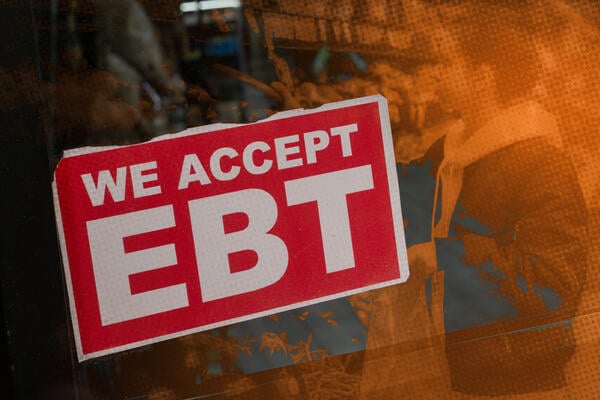
    In the last week, campuses scrambled to shore up resources as 42 million Americans, including over a million college students, prepared to lose federal assistance to buy food. Payments for the Supplemental Nutrition Assistance Program, or SNAP, didn’t go out on the first of the month as they normally would amid the ongoing government shutdown.

    Now the Trump administration plans to dole out some of the benefits this month—but not all—in response to two federal court orders.

    In court filings Monday, the Trump administration agreed to expend emergency reserves to issue partial benefits this month, but also said the funds will only cover half of eligible households’ current benefits. And for at least some states, payments could take months to come through because of bureaucratic hurdles.

    Erika Roberson, senior policy associate at the Institute for College Access and Success, said she worries students who rely on SNAP will still get less food than they need.

    “Some food is not nearly enough food—especially when students are left to decide between finding their next meal and studying for an exam,” Roberson said in a statement to Inside Higher Ed. “Food should not be a luxury, but today, sadly, many college students are finding themselves in a position where that’s their reality.”

    And while partial benefits are better than none at all, some questions remain unanswered. It’s unclear whether all SNAP recipients will get half of their benefits or whether some will get less than others this month, said Mark Huelsman, director of policy and advocacy at the Hope Center for Student Basic Needs at Temple University. He also expects payments to be delayed.

    “I think that it still holds that campuses and food pantries and community organizations are going to be stretched pretty thin in the coming weeks,” Huelsman said, “even if the courts did the right thing here and stepped in and made sure that people’s benefits weren’t completely withheld.”

    Campuses ‘Plan for the Worst’

    Colleges and universities across the country have been furiously stocking up their campus pantries and expanding on-campus food programs in preparation for a pause in SNAP.

    Southeast Community College in Nebraska typically runs a food drive in November for the food pantries on its three campuses. But this year, the college started its drive a month early, predicting a surge of students in need. Already, the Lincoln campus’s pantry went from serving 49 students two years ago to 505 students this September, said Jennifer Snyder, communications specialist at Southeast Community College. That number is only expected to grow. The college also plans to run a fundraising campaign for its emergency scholarship fund in case more students need aid than usual.

    Ramping up these supports comes with challenges, Snyder said. Campus pantries used to be able to stock up by buying items at a low price from local food banks, but food banks are holding on to more of their goods as they also prepare for increases in demand. As campus pantries become harder to fill, Snyder worries staff members will have to make difficult decisions about how much food students can take.

    “The need is there, and the demand is there, but the supply just keeps dwindling,” Snyder said. “So, how do you make it even? How do you make it fair for everybody so that everybody has access?”

    Snyder said the Trump administration’s promise to partially fund SNAP this month hasn’t changed the college’s plans.

    “If it’s partial funding, that’s a benefit,” she said. But “you just don’t know when it’s going to be taken away, so we should plan for the worst.”

    Keith Curry, president of Compton College in Los Angeles, also sprang into action when he realized his students’ SNAP benefits were at risk.

    The college already offers students one free meal per day through a partnership with the nonprofit Everytable. Starting Wednesday, the college is upping the number to two free meals daily for students participating in CalFresh, the state’s SNAP program, and CalWORKs, a state benefit program for low-income families. CalWORKs students will also get $50 in grocery vouchers per week, and students in either program get an extra $20 in farmers market vouchers per week.

    Compton College also has a data-sharing agreement with the Los Angeles County Department of Public Social Services that helps the college identify students who are eligible for CalFresh and CalWORKs to offer them extra supports, if students sign a waiver allowing it. The college plans to lean on that partnership to verify more students participating in these programs who are now eligible for Compton College’s new supports. The college and Everytable are splitting the costs of the additional free meals, and the college plans to reassess the political situation every Friday to determine whether the extra measures are still needed.

    “We’re moving forward, because we don’t know what the impact will be to our students,” Curry said. “We don’t know how much they will actually receive. And our students need us more now than ever before. People are waiting for their benefits, and they’ve got to figure it out. Students are in a precarious position where they already have other needs.”

    The Foundation for California Community Colleges expects more than 275,000 students in the system will be affected by SNAP payment delays, according to an emergency fundraising campaign launched Monday.

    Grant Tingley, 41, is one of those students. He’s a student at Cypress College and an ambassador for the foundation whose job is to spread information about student food and housing resources. He’s also a SNAP recipient himself. In preparation for SNAP’s lapse, he’s been working with community organizations and other students to create a database of local food pantries and is pushing his campus food pantry to expand its hours.

    Tingley emphasized that hunger makes it harder for the most vulnerable students to focus on their schoolwork. He’s also a student worker at Rising Scholars, a support program for formerly incarcerated students, students with incarcerated family members or students recovering from substance use, like himself. He fears these students in particular are at risk of losing academic momentum.

    “They’re a group of people that have been beaten down repeatedly, time after time, and sometimes a small roadblock can really be a huge impediment for them going forward and continuing on their path,” he said. “Every little roadblock that we put in front of these students is almost make or break.”

    Huelsman, of the Hope Center, encouraged colleges and universities to keep pushing forward plans to bolster student food supports and emergency aid as students divert funds they use for housing and other necessities to groceries. The Hope Center also put out a guide to help colleges navigate how to support students through disrupted SNAP benefits.

    Even with partial benefits flowing, “every contingency plan and every preparation that institutions were making to help students weather this is still live,” he said. “Students are going to still feel a pretty severe disruption. And there’s just general confusion about what’s next.”

    Source link

  • Gen Z’s Career Apocalypse Just Got Worse (Vincent Chan)

    Gen Z’s Career Apocalypse Just Got Worse (Vincent Chan)


    The job market is the worst it’s been in over a decade, specifically for the younger generation. Gen Z’s unemployment rate is nearly double the national average and nearly 60% of recent college grads are still looking for their first job, compared to just 25% of recent college graduates in previous generations. but this all Gen Z’s fault or is there something else going on?

    Source link