Tag: Career

  • New Report Finds Low Share of R&D Funds Goes to HBCUs

    New Report Finds Low Share of R&D Funds Goes to HBCUs

    A new report from the Center for American Progress and the Thurgood Marshall College Fund shows that historically Black colleges and universities receive a disproportionately low percentage of federal research and development funding.

    While HBCUs make up roughly 3 percent of all four-year higher ed institutions, they’ve received less than 3 percent of R&D funding since at least 2010, according to the report. In recent years, between 2018 and 2023, they were awarded less than 1 percent of R&D expenditures.

    Some agencies have given HBCUs a relatively high proportion of R&D funding, including the Department of Education, the Small Business Administration and the Department of Agriculture, which has required allotments for land-grant HBCUs. But the two federal agencies that award the most R&D funding annually, the Department of Health and Human Services and the Department of Defense, have doled out especially low shares of those funds to HBCUs; in 2023, they awarded 0.54 percent and 0.40 percent, respectively. Meanwhile, 17 of the 43 federal agencies that supply research funding didn’t give HBCUs any R&D funds at all that year.

    Sara Partridge, associate director of higher education policy at CAP and co-author of the report, said both Republicans and Democrats have sought to address inequities in R&D funding, but their efforts have been insufficient.

    “In order to support these key drivers of scientific achievement and upward mobility, we need federal policymakers to commit to measurable benchmarks for the share of funds awarded to these institutions,” she said in a press release.

    Source link

  • Colleges Teach Students Healthy Eating, Cooking Habits

    Colleges Teach Students Healthy Eating, Cooking Habits

    A 2025 survey of 5,000 undergraduates by Inside Higher Ed, supported by Generation Lab, found that the greatest share of students rated their nutrition at college as average (44 percent), with an additional 30 percent describing their nutrition as below average or poor.

    A number of colleges and universities are working to teach students proper nutrition habits and equip them to lead healthy lives in and beyond college.

    The research: A 2023 literature review found that college students experience a variety of risk factors that make them uniquely positioned to experience food insecurity, including busy schedules and a lack of access to nutritious food.

    Several studies found that students who had cooking experience were less likely to face food insecurity, implying that those without cooking or food-preparation skills may be at higher risk for food insecurity, according to the report.

    The report suggests colleges can provide cooking and meal-preparation demonstrations to help students gain skills, as well as learn how to prepare low-budget, nutritious meals. One study cited in the literature review suggested adding nutrition education—including food budgeting and recipes—as a feature of first-year seminars.

    Inside Higher Ed compiled five examples of nutrition education designed to address student health, food insecurity and malnutrition.

    1. University of Memphis: Grilling Classes

    To help teach students how to cook using relevant tools and resources, the University of Memphis staff hosts a lunchtime nutrition class, teaching students how to prepare and grill a personal pizza.

    The university charges students $15 to participate in the class, which covers ingredients and lunch foods, providing a low-cost and casual introduction to basic cooking principles.

    1. University of North Dakota: Culinary Corner

    At UND, students get the chance to lead their peers in cooking classes. Events are open to all campus members, including faculty and staff, and the hourlong sessions in the wellness center teach students how to prepare simple meals.

    In addition, UND has a virtual demonstration library so students can teach themselves how to cook a range of healthful recipes from wherever they are, including honey-glazed salmon, chana masala or acai bowls. Each demonstration video features a student instructor and a recipe card for viewers to follow along.

    1. Lewis College, University of Georgia Cooperative Extension: Fulton Fresh University

    This fall Georgia State University students benefited from a free cooking demonstration and nutrition course pilot hosted by two local institutions.

    Fulton Fresh University, a partnership between Lewis College and the University of Georgia Cooperative Extension, typically educates seniors or those in low-income communities. But in 2024, the partners tested a new offering for college students who don’t necessarily know how to cook and are more inclined to eat quick meals or takeout, according to a university press release.

    The four-week, no-cost course provided students with 10 pounds of produce at each session, in addition to spices and a variety of kitchen tools to keep.

    1. Iowa State University: Culinary Boot Camp

    Iowa State University students can participate in a two-credit course, Culinary Boot Camp, which provides nutrition education and culinary skills to promote healthy living.

    The course, which has been offered since 2016, covers topics including storing food safely, reducing food waste, converting recipes and shopping efficiently for groceries, among others.

    1. Cornell University: Get Cooking With Cornell Dining

    Cornell offers students a chance to learn from the professionals: the campus dining team. Members host events in the Discovery Kitchen in a residence hall on campus, where students can practice preparing plant-based dishes, which they then enjoy.

    The goal is to help students learn to make healthy dishes that are both tasty and environmentally friendly.

    Do you have a wellness intervention that might help others promote student success? Tell us about it.

    Source link

  • Angelo State Allows Pride Flags, Keeps Anti-Trans Policies

    Angelo State Allows Pride Flags, Keeps Anti-Trans Policies

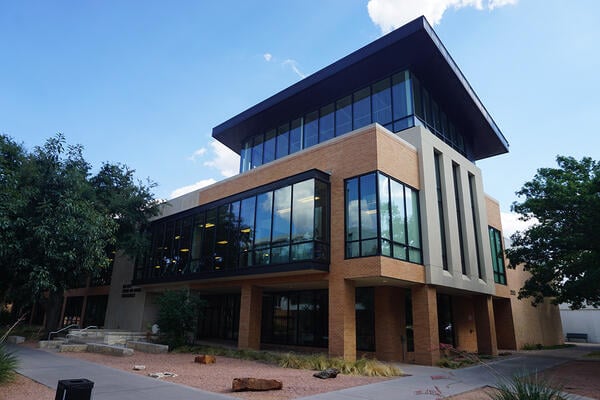
    Michael Barera/Wikimedia Commons

    Directives related to a slate of convoluted and sometimes contradictory new policies prohibiting discussion of transgender topics and identity have left employees at Angelo State University frightened and confused.

    As of Monday, conversations and content about transgender identities are still prohibited, but employees are allowed to use students’ preferred names, display rainbow flags in their offices and on their cars, and talk about lesbian, gay, bisexual and queer identities, according to emails from department heads to faculty obtained by Inside Higher Ed.

    The changes were clarified to employees after a meeting between the deans, provost and ASU legal counsel. Employees are still seeking other clarifications. For example, students who are already working on papers related to transgender identity are allowed to continue doing so, but it’s unclear whether they could give a final class presentation on the topic. 

    Only some faculty members at some the university’s colleges have been told about these changes. Others are still responding to the initial policies handed down to employees Friday following a meeting with Angelo State leadership. The policies are stringent and exhaustive: no pride flags, no calling students by the singular “they” or using their preferred names (unless it aligns with their sex assigned at birth), no pronouns in email signatures and no mention of the fact that there are more genders than the two assigned at birth.

    None of the policies are formalized in writing, and that is purposeful, said Brian Evans, president of the Texas Conference of the American Association of University Professors. The guidance only changed after faculty brought up questions about the policies, which deans took back to the provost and university counsel. Final details about what is and is not allowed and how the rules will be enforced are still under discussion.

    Source link

  • States Need to Pass Budgets

    States Need to Pass Budgets

    This isn’t unique to my state, but it’s my first time encountering it.

    Pennsylvania’s state government runs on a July-to-June fiscal year, which means that it was supposed to have passed a budget for this fiscal year by July 1.

    It hasn’t passed one yet, and passage doesn’t look imminent.

    This is becoming a problem.

    It’s already a problem for our county, which has announced cuts. And it’s increasingly a problem for the college.

    Based on previous years, we’ve expected the state allocation to cover a little over 40 percent of the operating budget. (The county’s figure is much lower.) So far this year, it has covered zero percent, for a difference of—let’s see, carry the three—millions.

    We have reserves, and they’ve come in handy. But they’re meant to even out cash flow over the course of a year, to cover emergencies and to help with large expenses. They were never intended to supplant the state’s role in the budget. Our CFO recently had to calculate the number of months we could go without the state allocation, which is a number you never want to matter.

    For those keeping score at home, reserves at a community college are very different from endowments at universities. Endowments are generated mostly from a combination of donations and investment returns, and they’re meant to “throw off” a certain amount per year to pay for other things. Those other things can be the operating budget, or scholarships, or facilities, as specified. (Endowment funds are a mix of restricted and unrestricted. Restricted funds can only be used for designated purposes; unrestricted funds are more flexible.)

    Reserves, by contrast, are generated from operational savings and are meant to provide a bit of buffer. They’re almost always invested very conservatively because they’re meant to be liquid. Endowments can take greater risks because they’re intended to have much longer time horizons. If endowments are like retirement accounts, reserves are closer to savings accounts.

    They’re crucial for cash flow because peak revenue times and peak spending times don’t always align. For a college on a traditional calendar, August shows high revenues and low spending, and October shows high spending and low revenues. That’s because students pay tuition in August to take classes in October.

    Reserves can create perverse incentives for legislators. A legislator looking to pay for some other line item closer to his heart may see a public college with relatively healthy reserves as a painless target for cutting. But once reserves are spent, they’re spent, and one of the dangers of public-sector math is that even a single year’s cut can become a new baseline. At that point, climbing out of the hole can become a Sisyphean nightmare.

    In practice, that means that public colleges have to perform a delicate balance with reserves. Save too much, and you become a tempting target. Save too little, and you may find yourself in a tight spot if something happens.

    Right now, something is happening—or not happening, to be exact—with a major impact. The frustrating part is that the something in question is unnecessary. This isn’t the aftermath of a natural disaster; it’s collateral damage from a political standoff. The fact that it leaves us much more vulnerable to, say, a natural disaster doesn’t seem to bother legislators.

    So, my request to the elected leaders of Pennsylvania, and to other states in similar spots: Pass a budget! Reserves weren’t meant for this.

    Source link

  • 2026–27 FAFSA Launched Ahead of Schedule

    2026–27 FAFSA Launched Ahead of Schedule

    The final version of this year’s Free Application for Federal Student Aid was made available to all students Wednesday—eight days ahead of schedule. This marks the application’s earliest launch date since it first transitioned to an online platform nearly two decades ago, according to the Department of Education.

    Education Secretary Linda McMahon used the announcement as an opportunity to criticize the Biden administration for its “infamously botched” rollout of an extensive FAFSA overhaul two years prior. 

    “I am extremely proud to announce the earliest launch of the FAFSA form in history, which ensures American students and families have access to critical resources as they begin or continue their postsecondary education journey,” she said in a news release. “Under President Trump’s leadership, our talented team has redesigned and streamlined the process so all American students can now successfully complete the form in minutes.” 

    There were limited changes to this year’s form, but to test the changes that were made, a beta version was first made available to a select number of students and families in early August. Then, last week, all students could access the test form. Over the course of those two months, more than 40,000 applications have been started, about 27,000 have been submitted and roughly 24,000 have been processed without rejection.

    Updates to this year’s form include a redesigned process for inviting parents to contribute to the form and a faster verification process for new accounts. And over all, the students who have tested the form so far have had a good experience, with 97 percent of respondents reporting satisfaction and 90 percent saying it took a reasonable amount of time to complete.

    Source link

  • Kentucky to End In-State Tuition for Undocumented Students

    Kentucky to End In-State Tuition for Undocumented Students

    Photo illustration by Justin Morrison/Inside Higher Ed | amriphoto/E+/Getty Images | klyaksun and SAHACHAT/iStock/Getty Images

    The Kentucky Council on Postsecondary Education agreed to terminate its offering of in-state tuition to undocumented students, according to a settlement filed in court Monday, WKU Public Radio reported.   

    The termination of reduced tuition remains tentative, as the settlement has yet to be signed by a district court judge, but if it does come to fruition, Kentucky would be the third state to capitulate to demands of the Trump administration on the issue.

    President Trump’s Department of Justice has sued multiple states over their policies that provide in-state tuition to undocumented students, arguing that doing so discriminates against out-of-state Americans. Republican-led states that were sued quickly agreed to scrap the policies. But Kentucky, governed by a Democrat, took longer. (Similar lawsuits against Minnesota and Illinois are still pending.)

    The state attorney general, a Republican, told the council that the lawsuit would be a “losing fight,” WKU reported.

    The Trump administration and state Republicans leaders have used these lawsuits to go around state legislatures and Congress to change policies and programs.

    Some higher education and legal experts have called the practice unlawful collusion and tried to intercede on behalf of the immigrant students in court, but they’ve had little luck so far.

    MALDEF, the same Latino civil rights group that tried and failed to intervene in the Texas lawsuit, has filed a motion to intervene in Kentucky, but the court has yet to rule on that request.

    Source link

  • New Promise Programs Launch for Families Making Under $100K

    New Promise Programs Launch for Families Making Under $100K

    When Jake Winston began looking at colleges in fall 2019, he was primarily looking at public colleges in his home state of North Carolina, as he felt those would be the only institutions he could afford. He was interested in Washington & Lee University, in Virginia, due to its location—far enough for a change of scenery, but not so far he couldn’t visit home—and its rich and complex history. But he didn’t think he could afford the high price tag.

    At a presentation by admissions officials, though, he learned about the W&L Promise, which covers the full cost of tuition for all students whose families fall into a specific income bracket. Once he got his aid offers back from colleges, WLU was the obvious choice, costing him just $5,000 annually, a sum that he paid out of pocket using money he made from summer research jobs.

    “Being able to know I was going to graduate debt-free from the start allowed me to pick what I was passionate in, and that’s teaching, which is not the highest-paying role in the country,” said Winston, who now teaches seventh-grade history in Northern Virginia. “But it is what I wanted to do with my life.”

    WLU has one of the oldest tuition-guarantee programs in the country. It launched in 2014, offering free tuition to students whose families make less than $75,000 each year; now, that number has surged up to $150,000, and students whose family income is less than $75,000 also get free room and board.

    Since then, more and more colleges—especially, but not only, selective private institutions—are offering completely free tuition to students whose families fall under a certain income threshold. Nowadays, that maximum is typically $100,000 annually, an income bracket that includes about 57 percent of U.S. families as of 2024, according to an analysis by the Motley Fool. But some have expanded the offer of free tuition to those whose families make as much as $200,000, encompassing all but 16 percent of American households. (Most programs also require the families to have typical assets, and some are only open to in-state students.)

    In the past year alone, a slew of universities has announced new free tuition programs or expanded their existing programs, including Wake Forest University, Reed College, Emory University, Macalester College, Tufts University, the Massachusetts Institute of Technology, Harvard University and Lasell University.

    Administrators at more than half a dozen institutions with promise programs told Inside Higher Ed that they hope that the move will attract low-income students who didn’t realize how financially accessible higher education, even at expensive institutions, can be. It’s also an effort to improve cost transparency—an area that has frequently come under scrutiny as the actual cost of college has become increasingly obscured by scholarships, aid, fees and books and other indirect costs.

    Breaking the Cost Barrier

    For many institutions offering tuition guarantees—also called promise programs—it’s more of a change in rhetoric than in actual financial aid policy.

    Carnegie Mellon University in Pittsburgh, for example, announced a program last November guaranteeing free tuition for students with family incomes under $75,000 and promising those with incomes under $100,000 wouldn’t have to take out any student loans to access a CMU education, beginning with the incoming class in fall 2025. But according to Brian Hill, the university’s associate vice provost for student financials and enrollment systems, that’s how the university had already been quietly operating since 2016.

    “In truth, it was to make sure that prospective students knew that CMU was an affordable option for them. That was the primary reason,” he said. “We’ve been saying that we met full demonstrated financial need for our students … [but] a barrier we don’t know if we’d gotten through or not is students that would look at the sticker price [of $67,020 per year] and just completely write CMU off before they even explored it.”

    The surge of these programs comes amid concerns about the growing cost of higher education and that the return on investment of a bachelor’s degree doesn’t warrant the seemingly exorbitant cost; a few institutions in the U.S. now have a sticker price upward of $100,000 a year.

    At the same time, experts argue that the price of higher education has actually gone down when accounting for inflation and the high rate of aid students generally receive. For several decades, higher education has followed a model in which institutions advertise a high cost of attendance but a significant number of students receive large scholarships. This approach helps to make higher education look like a luxury product while students and families feel like they’re getting a good deal. But that strategy has come to bite institutions in the butt, according to W. Joseph King, former president of Lyon College and a higher education consultant, as many low- and middle-income students now feel the high cost of college makes an education unattainable.

    “What this led to was almost like an arms race of rising stated tuition numbers and a fall in net tuition numbers. All sorts of groups, including the federal government, have been trying to get to numbers that are more reflective of the actual cost,” he said.

    Promise programs aim to change that narrative by showing low- and middle-income families that getting an education even at a seemingly pricey school can be achievable.

    Colleges have made other attempts to communicate that message to students and parents. That includes developing net price calculators, which often show that low-income students would be paying just a fraction of the sticker price, or announcing that their institution is able to meet all of a student’s demonstrated financial need—a number based on a federal student aid formula that determines how much a family is able to pay.

    But many families have no idea what demonstrated financial need means or are unaware of net price calculators, enrollment professionals say. Simply saying that an institution offers free tuition can be the ultimate tool for price transparency, according to Milyon Trulove, vice president and dean of admission and financial aid at Reed College, which announced plans to expand its regional promise program—currently available only to students in Oregon and Washington—to all students with family incomes under $100,000 in 2026.

    The institution also has a net price calculator, he said. But if presented with both that calculator and the promise of free tuition, the latter will immediately be meaningful to students, whereas the former won’t.

    “[Students] say, ‘This makes sense to me, today, right now … and now I can listen to all the other stuff about fit and anxiety about money is no longer in the way of me fully participating in the college admission process,’” he said.

    Along with institutions offering free tuition to any student who fits within a certain income bracket, even more institutions offer tuition guarantees to students based on grade point average or for transferring from a local community college system.

    ‘Rigorous Financial Planning’

    Most of the university officials who spoke with Inside Higher Ed said that their institution was in a very strong financial position and able to afford to support so many students because of large endowments and generous donations, including fundraising specifically aimed at increasing student aid.

    From 2016 to 2024, Carnegie Mellon, for example, increased its undergraduate financial aid budget 86 percent.

    “We truly made a massive commitment to making affordability a real thing at CMU,” said Hill. “I think we’re in a very positive position in terms of finances, but it took a lot of commitment from … executive leadership to make this a priority.”

    Wake Forest, which announced last week that it will offer free tuition to all North Carolina students with family incomes below $200,000, is one of the few schools that said that its promise program, called the North Carolina Gateway, would substantially increase the total amount of aid it gives out. President Susan Wente said that, similarly to CMU, the funds for the initiative come in large part from a massive fundraising effort that has raised over $150 million for financial aid since 2022.

    “This involved rigorous financial planning and analysis and knowing we could meet the commitment, should we announce it,” she said.

    But not every university with a promise program is leaning on massive donation campaigns. Radford University, a public institution in Virginia, was able to begin offering free tuition to all students from Virginia with incomes below $100,000 simply because of the ample amount of funding it gets from the state, according to Dannette Gomez Beane, vice president for enrollment management and strategic communication.

    Virginia tends to be generous toward higher education, Beane said, but the two regional public universities in southwest Virginia, which has the lowest college-going rate of higher education of any area in the state, receive the most funding. That’s what allowed Radford to begin its promise program, which the institution promoted heavily in the 60-mile radius around its campus, in 2024.

    “With all things higher ed and higher ed financial aid, not everything is sure, and we’re learning that this year more than ever,” she said. “I think that state funding, federal funding—if you have models that are dependent on those, you have to constantly be adjusting your models … there is that vulnerability, but we’re just gracious that we’ve had favor with the state.”

    Boosting Low-Income Enrollment

    Although many of these programs are new, those that have been around for multiple years have seen positive results. At Washington & Lee, Sally Richmond, vice president for admissions and financial aid, said that there have been massive jumps in enrollment of rural students, first-generation students and Pell-eligible students since she joined the university in 2016.

    It’s impossible to say whether those changes can be attributed specifically to the university’s promise program, she noted. But, she said, “our financial aid office, who is certainly on the front line of having these conversations along with our admissions team, speaks to the fact that this concept of the promise is the one that resonates most with our prospective students and families.”

    Reed College, similarly, saw a 25 percent increase in middle-income students in its program’s first year, during which it was only available to students from Oregon and Washington.

    Wente, Wake Forest’s president, said she is eager to see how the university’s newly announced tuition guarantee program will impact low- and middle-income enrollment.

    “As a scientist myself, we’re going to pilot this, look at its impact, look at how we can ensure that it’s really achieving what we hope in terms of offering students greater access,” she said. “In terms of the middle and lower income bands, those are the students who often don’t have as many options. So, how do we give them as many options as possible?”


    Source link

  • What Missouri Can Teach Trump About Merging ED and Labor

    What Missouri Can Teach Trump About Merging ED and Labor

    In a recent statement and a series of fireside chats, Education Secretary Linda McMahon repeatedly drew attention to her efforts to move all career, technical and adult education programs from the Department of Education to the Department of Labor and consolidate some as part of the Trump administration’s quest to eliminate waste, fraud and abuse.

    “I can’t think of a more inefficient system than to have duplication and just one side not knowing what the other is doing,” she said at one conservative policy summit last week. “So let’s consolidate them all in the Department of Labor, where I think they should be. And if we show that this is an incredibly efficient and effective way to manage these programs, it is my hope that Congress will look at that and approve these moves.”

    According to ED, many staff members from the Office of Career, Technical and Adult Education are already working under the supervision of the DOL, though the funding for the programs they oversee is still managed by McMahon. Moving that money, which was appropriated by Congress to the Education Department, would require legislative approval. But symbolically, the integration process is under way.

    The Trump administration is not the first government body to propose or execute such a merger, however. A handful of states have combined their departments of higher education and workforce development agencies in the hopes of better aligning state budgets, curriculum and grant allocation with the needs of local employers. Missouri, for example, has been working since 2018 to integrate what was the Department of Higher Education and the Division of Workforce Development into a new Department of Higher Education and Workforce Development.

    Inside Higher Ed spoke with the newly fused department’s commissioner, Bennett Boggs, and deputy commissioner, Leroy Wade, to understand how it came to be, what challenges they faced in the process and the benefits they’ve seen as a result.

    The conversation has been edited for length and clarity.

    Q: Take me back and tell me a little bit about what sparked this merger for Missouri.

    Wade: There was a realization that we weren’t being as effective as we could be as a state in terms of our economic development. And so Governor Parson, at that point, put together a group called Talent for Tomorrow that looked at what direction do we need to go and what kinds of things do we need to focus on? And then there was an ancillary piece called Best in the Midwest that looked around at our surrounding states to decide, from an economic development, from a workforce perspective, how are we doing?

    Unfortunately, what we found was that we weren’t doing really very well. We were toward the bottom in almost everything that we looked at. And so out of that process and a listening tour all around the state to hear what folks wanted and what their perspective was, came two things. One was to try and streamline our Department of Economic Development. The other piece was to look at, how do we change our pipeline system? And that’s what brought the Division of Workforce Development to merge with the Department of Higher Education

    Q: How did the process of merging these two institutions work? Was it all led by the governor and the state executive branch, or did it require any legislative backing?

    Wade: The governor has the authority to reorganize state government, if you will, at least to a certain extent. So the process started with an executive order laying out what that reorganization would look like. Now, the Legislature has a role in that process. They can’t make changes to it, but they can either vote to accept it or not. But it went through; there was no legislative opposition.

    There was some existing statutory language that talked about the Department of Higher Ed, and so there had to be some language changes to adopt the new name of the organization and to reflect some of the structural changes that took place. But it was really all driven by that executive order.

    Q: One of the core justifications we’ve heard from the Trump administration for merging the CTE operations at a federal level is to eliminate what they say are duplicate programs. When Missouri combined its agencies, was that one of your motivations as well, and did you find any duplicates to consolidate?

    Boggs: What we have found here in Missouri is not so much duplication as an opportunity for coordination. A large part of it was about combining functions that have similar end goals but are not exactly the same program. It’s about asking, how can they be coordinated to be more effective together?

    Commissioner Bennett Boggs

    One of the answers to that is leveraging broader expertise. If you bring people and programs together and help broaden the perspective of the work that they’re doing, it allows the organization to move from silos to strategic partnerships.

    For example, Missouri is very strong in registered apprenticeships. But it’s not just in the trades. We’ve also developed some really effective programs in education and health care and some other professional industries. Part of that is because we’ve been able now to coordinate with local workforce boards, local regional employers and then the two- and four-year institutions, particularly regional ones. Before, these three groups may have been unintentionally competing because they weren’t that aware of each other, but now by working together they can be a funding stream. They can bring resources together to help strengthen and accelerate workforce development that would not have happened if they kept operating separately.

    It also just strengthens our communications and helps us as a department talk about higher education in terms of, how does this make life better for Missourians? And that’s a better, healthier conversation to be having.

    Q: Despite the shared end goal, there had to be times where there was internal conflict in trying to streamline things. For example, if both an apprenticeship program and a health-care school are training hospital technicians, I can imagine they’re each trying to fill their own seats. So what were some of the challenges you faced in the merger process and how did you overcome them?

    Boggs: We know in Missouri, 65 percent of all jobs currently require education or training past high school, and that number is only expected to grow. Of that, 35 percent would be an associate degree or some certification, and 30 percent would be a bachelor’s degree and above. So this is a statewide effort to create pathways for all Missourians—so this is not either-or, it’s yes-and.

    Why can’t a student have an internship or a work-based learning experience while in a postsecondary institution? And so part of those regional partnerships is that they help us think about things like that. They’re not only preparing students for the current job but asking, how do we get them on a pathway to be ready for the next one?

    One of the challenges in this is understanding that different sections of our department work in different time frames. For example, we run 21 job centers in the state, and when folks come in the door there, they need a job to pay the rent next week. We also have different parts of the department that are approving academic programs in a way that might not really take off for three to five years. It’s not only a difference in pace but also culture and lingo. We just have to be aware of each other and learn.

    The other challenge is potential for misalignment related to policies, data and physical infrastructure. This really hits home in terms of our planning and budget folks. We now have an array of state and federal programs that support Missourians in paying for education, whether that’s state-funded financial aid or federal [Workforce Innovation and Opportunity Act] funds. These separate funding streams have different requirements, different reporting structures and eligibility criteria, so our staff then has to be able to think quickly, know about and pivot between multiple particular funding streams.

    Q: We’ve also heard critics of the merger at the federal level suggest that there may be barriers in statute that make it difficult to merge or consolidate various programs and grants. Did you experience any difficulties legally when merging your two agencies?

    Boggs: We didn’t encounter any legal hurdles, but as I was mentioning earlier, understanding the differences in the federal and state funding streams and the requirements and the structures and the eligibility requirements, those kinds of things had to get worked through.

    Q: So would you say it was less about trying to change the existing rules and regulations for various programs and more trying to understand those stipulations in order to use the funding in a more strategic, collaborative way?

    Boggs: I think that’s pretty accurate. It’s about keeping the similar end goal in mind, and then asking, what funds can be used to help advance to that shared goal?

    Q: All challenges aside, over all, has this merger positively affected Missouri’s higher ed and workforce development landscape? And, if so, how?

    Boggs: Absolutely. It’s changed the tone and the conversation statewide in terms of postsecondary education being part of economic and community development. It has pulled in strategic partners, from job centers, regional workforce boards, chambers of commerce and regional universities to have really interesting gatherings and talk about where they need to grow. And it makes for a better conversation about the cutting-edge research our flagship institution does. Over all, it helps us as a state have a better, more comprehensive conversation about learning and workforce development.

    Q: Has the Trump administration reached out to you in an effort to learn from Missouri’s experiences in merging these two departments?

    Boggs: No, but if they wanted to contact us, we’d be happy to assist however we could.

    Q: Do you think there’s an opportunity for the federal government to learn from both the challenges and the successes that you have experienced at the state level?

    Boggs: You know there’s a famous quote from Louis Brandeis that says, “States are the laboratories of democracy.”

    I wouldn’t pretend to know what the federal government can take away from Missouri. They are operating at a much more complicated level, with many more components in play. But certainly in Missouri, we’ve had a good experience doing this, and we’re still discovering new areas for improvement all the time.

    In fact, we’ve got a technical cleanup bill we’re proposing this upcoming legislative session of just small bits and pieces in the state statutes from before the merger that still need to be addressed. Part of what helped us out, though, is data—the integrating of some of the disparate data systems into now a more comprehensive data group, and that’s helping us statewide with better policymaking.

    Source link

  • HHS Civil Rights Arm Joins in Trump’s Higher Ed Crackdown

    HHS Civil Rights Arm Joins in Trump’s Higher Ed Crackdown

    In June, in an escalation of the Trump administration’s pressure on Harvard University to bow to its demands, a federal Office for Civil Rights announced that the institution was violating federal law.

    The office released a nearly 60-page report accusing Harvard of “deliberate indifference” to ongoing discrimination against Jewish and Israeli students, which is illegal under Title VI of the Civil Rights Act of 1964. “OCR’s findings document that a hostile environment existed, and continues to exist, at Harvard,” the office said in an accompanying news release.

    But this wasn’t the Education Department’s Office for Civil Rights. It was an office of the same name within the Health and Human Services Department that’s been playing a more public role as part of Trump’s crackdown on higher ed. Officials who served in previous administrations said agencies used to generally defer to the Education Department when it came to civil rights issues in higher ed. But since Trump retook office, colleges and universities are facing increased pressure from probes by HHS and other agencies enforcing the new administration’s right-wing interpretation of civil rights.

    HHS OCR said it began its Harvard investigation in February by looking into the university’s medical school, after alleged antisemitism during the May 2024 graduation ceremony. But, in April, it widened its probe to “include Harvard University as a whole and to extend the timeframe of review to include events and information from October 7, 2023, through the present.” (The HHS OCR has jurisdiction over institutions that accept HHS funding, including National Institutes of Health research grants and Medicaid dollars.)

    And this wasn’t the HHS OCR’s only investigation into parts of Harvard that didn’t appear related to health or medicine. The news release noted the “findings released today do not address OCR’s ongoing investigation under Title VI into suspected race-based discrimination permeating the operations of the Harvard Law Review journal.” And Harvard is just one of several universities that this non–Education Department OCR has targeted since Trump retook the White House in January.

    Civil rights advocates say the HHS OCR has become just one more pawn in Trump’s strategy to target universities and end protections and programs that aid minority groups. For universities, Trump’s HHS OCR represents a new threat to their funding if they’re accused of promoting diversity, equity and inclusion; fostering antisemitism; or letting transgender women play on women’s sports teams.

    It’s unnecessary to do what the administration is doing now, unless one is operating like a mob boss.”

    —Catherine Lhamon, former head of OCR at the Education Department

    The office’s investigations and public denunciations add to the work of the ED OCR, which the Trump administration has also shifted to focus on the same issues. The two OCRs announced a joint finding of violations against Columbia University, but they’ve also trumpeted independent probes into other institutions.

    “As we feared, the Trump administration is abusing civil rights tools to advance a radical and divisive agenda that aggressively hoards access to education, living wage jobs, and so much more,” the NAACP Legal Defense Fund said in a statement. “Unfortunately, HHS and many other federal agencies are being used as one of the vehicles to carry out that agenda.”

    The Legal Defense Fund said, “Colleges and universities are being targeted precisely because of the critical role they play in opening the doors of opportunity and preparing the next generation to lead our multi-racial democracy. By attacking institutions that help level the playing field for Black students and other students of color, the Trump administration is ultimately weakening our democracy and our economy as a whole.”

    Former officials at the Justice Department, to which HHS OCR can forward cases if the targets of investigations don’t comply, told Inside Higher Ed that HHS OCR historically deferred probes into universities to the Education Department.

    Catherine Lhamon, former director of the Education Department’s OCR under Presidents Biden and Obama, said, “There are 13 federal agencies with external civil rights enforcement, of which HHS is one, and it’s relatively large.” She said they’re pieces of Trump’s broader strategy.

    “The administration has used every agency in a contemporaneous, simultaneous assault on universities,” Lhamon said, multiplying the amount of federal funding it can threaten.

    The HHS OCR’s announced investigations under Trump show it’s investigating similar issues to the Education Department OCR—or what’s left of that office after the administration’s cuts. Lhamon said the practice for decades has been for the agency with principal expertise over an area to investigate that area—hence why universities were mostly investigated by the Education Department OCR.

    “It’s unnecessary to do what the administration is doing now, unless one is operating like a mob boss,” Lhamon said.

    An HHS spokesperson said, “We’re leading implementation of the president’s bold civil rights agenda,” which includes four focuses: upholding religious conscience rights, fighting antisemitism, ending race-based discrimination embedded in DEI programs and “defending biological truth” in sex-discrimination enforcement. She also said that fighting antisemitism, for instance, is a priority across the whole administration, “so our office is going to be a part of that and going to participate to the fullest extent that we can.”

    It remains unclear how much of the HHS OCR’s daily workload is now devoted to Trump’s targeting of higher ed. HHS OCR did investigate higher ed institutions even before Trump took office, the HHS spokesperson said.

    “We may be being more public about it now,” the spokesperson said, “particularly because that’s where the issue areas with respect to this administration are.”

    She said the office also continues to investigate non–higher ed–related medical providers and non–civil rights issues that it has responsibility for despite the office’s name—such as information privacy under the Health Insurance Portability and Accountability Act.

    The spokesperson said the HHS OCR news releases don’t tell the full story of what the office is currently investigating because—out of the roughly more than 40,000 complaints it receives annually—it doesn’t normally disclose which complaints lead to probes “to protect the integrity of the investigation.” The office also launches some investigations without receiving complaints, she said.

    “In the past we’ve not announced through press releases that we’ve opened major investigations,” she said.

    She didn’t provide Inside Higher Ed a list of the office’s current investigations. She also didn’t say how many employees HHS OCR has. HHS’s fiscal year 2026 budget request said that “in FY 2010, there were 111 investigators onboard, and in FY 2022, this number fell to 60, while simultaneously HHS received the highest number of complaints in its history (51,788).” (For comparison, the ED OCR, in a FY 2024 report, said it had received its highest-ever volume of complaints, but the number was only 22,687.)

    Since taking power, the Trump administration has been slashing the federal workforce—the administration laid off nearly half of the Education Department’s OCR staff in March. It’s unclear how much HHS OCR has been cut. The FY 2026 budget request said the HHS OCR “has faced a continually growing number of cases in their backlog, rising to 6,532 cases by the end of FY 2024.” And that was before the office launched these new probes based on Trump’s priorities.

    The HHS OCR receives roughly more than 40,000 complaints annually, a spokesperson said.

    Kayla Bartkowski/Getty Images

    A String of Investigations

    Since Trump’s Jan. 20 inauguration, HHS OCR has announced a spate of higher ed investigations, mostly without naming the institutions. The spokesperson said most are ongoing.

    In early February, it announced investigations of four unnamed medical schools, also citing reports of antisemitism during their 2024 commencements. (That was the same month the Harvard investigation began, HHS OCR later said, so Harvard was likely among the four.)

    On Feb. 21, Trump told Maine governor Janet Mills during a televised White House event that her state must bar transgender women from women’s sports or lose federal funding, to which Mills replied, “See you in court.” In response to this, the HHS OCR issued a news release that same day announcing an investigation into “the Maine Department of Education, including the University of Maine System,” due to reports that the “state will continue to allow biological males to compete in women’s sports.” (The HHS spokesperson said the investigation eventually found that the most relevant issues were unrelated to higher ed.)

    In March, the office announced investigations into four unnamed “medical schools and hospitals” over “allegations and information” concerning medical education or scholarships “that discriminate on the basis of race, color, national origin, or sex.” The news release didn’t have much further detail but referenced a Trump executive order targeting “illegal” diversity, equity and inclusion programs. Later that month—again citing the anti-DEI order—it announced it was investigating “a major medical school in California” over whether it “gives unlawful preference to applicants based on their race, color, or national origin.”

    In April, it announced it was investigating an “HHS-funded organization” over whether it excludes “certain races” from a “health services research scholarship program.” Later in April, it launched an “online portal where whistleblowers can submit a tip or complaint regarding the chemical and surgical mutilation of children”—the Trump administration’s phrase for gender-affirming care. Simultaneously, it announced it’s investigating “a major pediatric teaching hospital” for allegedly firing a whistleblower nurse who “requested a religious accommodation to avoid administering puberty blockers and cross-sex hormones to children.” (The HHS spokesperson said the first Trump administration brought a focus on religious conscience rights to the office that disappeared under Biden but has now returned.)

    Also in April, it announced a second Harvard probe: a joint investigation with the Education Department’s OCR into both Harvard and the Harvard Law Review “based on reports of race-based discrimination permeating the operations of the journal.” The HHS OCR news release said an editor of the law journal “reportedly wrote that it was ‘concerning’ that ‘[f]our of the five people’ who wanted to reply to an article about police reform ‘are white men.’” The office also raised concern about another editor allegedly suggesting expedited review for an article because the author was a minority.

    In May, the HHS OCR announced it’s investigating a “prestigious Midwest university” over alleged discrimination against Jewish students. Later that month came its announcement of its joint finding with the Education Department OCR that Columbia University violated Title VI through “deliberate indifference towards student-on-student harassment of Jewish students.” (This was part of the administration’s pressure campaign on Columbia that culminated with a controversial July settlement.)

    In June came the HHS OCR’s Title VI finding against Harvard in the investigation of alleged antisemitism. Then, in July, HHS OCR said it was investigating “allegations of systemic racial discrimination permeating the operations of Duke University School of Medicine and other components of Duke Health,” which includes “other Duke health professions schools” and “health research programs across Duke University.” In a statement alongside that announcement, HHS secretary Robert F. Kennedy Jr. said, “Federal funding must support excellence—not race—in medical education, research, and training.”

    And last week, after months of silence on new higher ed–related investigations, the HHS OCR announced an investigation into the legal scholarship of an HHS-funded “national organization,” over allegations that it “preferences applicants of certain races and national origin groups.”

    Lhamon, the former Education Department OCR head, said what the administration has called civil rights investigations into Harvard, Columbia and other universities aren’t really investigations. She noted the administration has used a “mob theory” by going ahead and pulling HHS and other funding from multiple institutions before the investigations are over.

    Instead, she said, this is “an assault on universities, which is a very different thing from ensuring compliance with the civil rights laws as Congress has enacted them.”

    Source link

  • Former Provost Sues UNC Chapel Hill

    Former Provost Sues UNC Chapel Hill

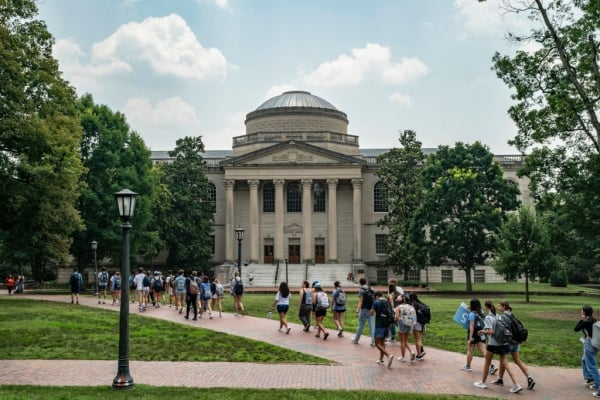
    A former provost at the University of North Carolina at Chapel Hill accused the Board of Trustees of systematically violating open records and meetings laws on multiple occasions, including to retaliate against him, according to a lawsuit filed earlier this week.

    At the heart of the lawsuit from Chris Clemens, who resigned in April, is a delayed tenure vote.

    In March, the UNC Board of Trustees postponed a vote to grant tenure to 33 faculty members. At that meeting, held March 20, the board moved into closed session, with Clemens present, apparently to discuss individual tenure cases. Instead, trustees launched into a debate over the value of tenure, with some voicing their philosophical opposition to the practice and others arguing that they should delay such approvals for financial reasons, according to the lawsuit.

    The board eventually approved tenure for all 33 candidates in June via an email vote.

    According to the lawsuit, Clemens shared details from the meeting with other academic leaders, noting that no tenure decisions were made or individual candidates considered and that the board instead “engaged in a sweeping policy discussion about tenure’s institutional value and global costs.” Following that briefing, the Board of Trustees allegedly communicated through Signal, a private messaging application that includes a feature to automatically delete messages after they are read, to call for a vote of no confidence in Clemens. UNC leadership asked Clemens to step down shortly thereafter, according to the lawsuit.

    But even if Clemens’s suit is successful and the violations are proven to be true, the board will likely face few repercussions given past precedent.

    A Systemic Pattern

    Clemens’s lawsuit also accused Jed Atkins, director and dean of the School for Civic Life and Leadership, of relaying the former provost’s briefing to then–board chair John Preyer via Signal. (Clemens had taken issue with the hiring practices at the civic life school before stepping down.)

    The lawsuit alleges that Atkins “requires that his leadership team subscribe to a Signal group and conducts a substantial portion of official communications via Signal with auto-delete enabled not only in exchanges with trustees but as a routine practice,” in violation of state law. Atkins did not respond to a request for comment from Inside Higher Ed.

    Beyond the tenure flap, Clemens has accused the board of defying state open meetings laws on multiple occasions in an effort to “hide policy debates from public view,” according to his lawsuit.

    “Over the past four years, the Board has engaged in a pattern and practice of systematically violating the Open Meetings Law by improperly invoking closed session exemptions to shield policy and budget deliberations from public scrutiny,” the former provost alleged.

    Contacted by Inside Higher Ed, Clemens declined to comment.

    In his legal filing, Clemens cited three specific examples beyond the March tenure discussion in which he alleged the board violated open meetings laws. He specifically pointed to a closed session discussion in November 2023, when UNC discussed athletic conference realignment; further secret deliberations over athletics in May 2024 involving both conference realignment and finances; and an “emergency meeting” in December 2024 to hire a head football coach. At the December meeting, UNC Chapel Hill hired NFL legend Bill Belichick on a $10 million annual contract.

    (Responding to a separate legal complaint over the May 2024 meeting, trustees previously agreed to reaffirm their commitment to open meetings laws and pay $25,000 in attorneys’ fees.)

    “Each episode follows the same pattern: the Board invokes a statutory exemption, enters closed session, then discusses broad policy or budget matters that must be debated publicly,” the lawsuit states.

    Despite being allegedly pressured to step down, Clemens isn’t seeking a payout or his job back. Instead, he’s asking the court to prevent the board from continuing its alleged defiance of open meetings laws, to produce minutes or a transcript of the March 20 closed session and to mandate that trustees participate in training on state open meetings and public records laws.

    Responses

    Contacted by Inside Higher Ed, UNC Chapel Hill spokesperson Kevin Best wrote by email, “We’re aware of the litigation and are reviewing it closely,” but he declined to comment further given the pending nature of the case.

    The Board of Trustees released a more forceful statement Wednesday.

    “The former Provost’s baseless assault on this volunteer Board and how it conducts its business stands in stark contrast to the widely recognized excellence the University has achieved under this Board’s leadership,” chair Malcom Turner said. “His allegations are disappointing and inaccurate, not to mention a waste of taxpayer dollars, for which this former officer of the University shows no regard. His claims will not withstand scrutiny.”

    Most of the individuals named in the lawsuit either declined to comment or did not respond to media inquiries. Multiple faculty and staff members at the School of Civic Life and Leadership (none of whom are defendants in the lawsuit) also did not respond to requests for comment.

    However, one source alleged that the former provost instructed employees to use Signal and that he also used it for university business, which Inside Higher Ed confirmed via screenshots.

    Allegations that Clemens used Signal come amid an opaque investigation by outside counsel into the School of Civic Life and Leadership that was announced earlier this month. While Chapel Hill leadership has said little about the investigation, it comes after multiple resignations from faculty members in the school, some of whom have alleged it has “lost sight of its mission.”

    Dustin Sebell, a School of Civic Life and Leadership professor, told Inside Higher Ed via text message that Clemens “habitually used Signal for university business” and encouraged others to do so. To Sebell, the lawsuit seems like an effort by Clemens to sidestep the investigation.

    “By hastily filing a hypocritical lawsuit, Chris is trying to avoid investigators’ questions about his misconduct as Provost by claiming privilege pending ongoing litigation,” Sebell wrote.

    But some faculty members, such as Michael Palm—president of the UNC Chapel Hill chapter of the American Association of University Professors—expressed concern about political influence on the board.

    “Open meetings laws are important for public universities. Unfortunately, right now we don’t need them to know that the UNC [Board of Trustees] considers UNC faculty to be their enemy,” Palm wrote to Inside Higher Ed via email. “The crisis we’re in is political, not procedural.”

    Although North Carolina has historically been considered a swing state, the UNC Chapel Hill board appears to be overwhelmingly comprised of Republicans. Some have previously worked for Republican officials, while others have donated heavily to GOP candidates and causes.

    Of 14 voting members on the UNC Chapel Hill board, at least 10 have donated to conservative politicians and organizations, some contributing tens of thousands of dollars, according to a review by Inside Higher Ed. Several others have direct GOP connections, including Preyer, who previously worked for former senator Lauch Faircloth. Three other trustees previously held state office: Robert Bryan III, James Blaine II and Patrick Ballantine. All were elected as Republicans.

    Potential Consequences

    Should the allegations in the lawsuit be proven true, consequences will likely be fairly light—at least, that has been the outcome in other cases where boards allegedly violated sunshine laws.

    The Pennsylvania State Board of Trustees, for example, was required to complete training on the state’s Sunshine Act recently as part of a settlement with the news organization Spotlight PA over alleged violations of opening meetings laws related to secretive practices by the board.

    But in other cases, universities have largely escaped consequences for clandestine actions.

    Kentucky attorney general Russell Coleman has found that multiple state institutions have violated open records laws, adding up to 10 times this year alone. Coleman found that the University of Kentucky violated open records law four times and had four partial violations, while Northern Kentucky University had one violation and the University of Louisville had a partial violation. However, none of those violations resulted in punitive actions from the state.

    Last year Indiana’s public access counselor found that Indiana University’s Board of Trustees violated open meetings laws when members claimed that they were holding a private meeting to discuss litigation. But trustees also discussed IU president Pamela Whitten’s performance and a campus climate review, expanding the private meeting beyond its stated aims. A complaint from a news organization prompted scrutiny from state officials, but no punitive or corrective actions.

    UNC Chapel Hill was also previously accused of violating state open meetings laws, including in 2021 when it hired Clemens as provost, choosing to approve “Action 1” on its agenda with a vague reference to personnel matters, raising concerns that trustees violated state law via a secretive vote. Board leadership defended the vote and Clemens remained in place until April.

    This story has been updated with a statement from the UNC Chapel Hill Board of Trustees.

    Source link