Tag: Career

  • Staff Members Fired, Grad Student Punished for Cheering Charlie Kirk’s Death

    Staff Members Fired, Grad Student Punished for Cheering Charlie Kirk’s Death

    Photo illustration by Justin Morrison/Inside Higher Ed | skynesher/E+/Getty Images

    Two administrators are now out of a job and a graduate student lost an internship after making comments online that downplayed or celebrated the death of Charlie Kirk, the influential conservative founder of the campus-focused Turning Point USA. 

    In the 36 hours since Kirk was shot and killed during an event at Utah Valley University, right-wing social media accounts have screenshotted and circulated several social media posts, likes and reposts from college faculty and staff members related to Kirk’s death. In addition to the firings, the campaign to name and shame these individuals has led to death threats, Wired reported.

    Late Wednesday, a student affairs administrator at Middle Tennessee State University was fired after posting “insensitive” remarks on Facebook in response to Kirk’s death. “We take great pride in the professionalism of our staff; in my long tenure with this university I’ve never before had to dismiss someone for so carelessly undermining the work and mission of this fine institution,” Middle Tennessee State president Sidney McPhee wrote in a statement Thursday. A university spokesperson confirmed the employee was Laura Sosh-Lightsy, an associate dean of student care and conduct who had worked at the university since 2005. 

    “Looks like ol’ Charlie spoke his fate into existence. Hate begets hate. ZERO sympathy,” Sosh-Lightsy wrote in a Facebook post that has been circulated widely by right-wing accounts on social media. A university spokesperson did not confirm whether or not that specific post led to her firing but noted that “her termination was related to her insensitive social media posts related to the horrific death of Mr. Kirk.” Tennessee senator Marsha Blackburn, a Republican, called for Sosh-Lightsy’s firing on X, writing that she “should be ashamed of her post.” Sosh-Lightsy did not respond to Inside Higher Ed’s request for comment.

    On Thursday afternoon, University of Mississippi chancellor Glenn Boyce confirmed the firing of an unnamed staff member who he said “re-shared hurtful, insensitive comments on social media regarding the tragic murder of Charlie Kirk.”

    Boyce didn’t provide specifics but noted that “these comments run completely counter to our institutional values of civility, fairness and respecting the dignity of each person.” 

    At Baylor University, officials distanced the university from a graduate student who wrote “this made me giggle” in response to a social media post sharing the news of Kirk’s death.

    “We are aware and greatly disappointed by a social media comment from a Baylor graduate student regarding the fatal shooting of Charlie Kirk. To make light of the death of a fellow human being is completely inappropriate and completely counter to Baylor’s Christian mission. Baylor strives to be a community in which every individual is treated with respect—in life and in death,” a university statement said.

    The graduate student—whose online username includes “coach”—is not a member of the faculty nor a part of the athletics program, the statement clarified. Midway Middle School, where the graduate student was student teaching, also removed him from teaching there, KWTX reported

    The Foundation for Individual Rights and Expression is monitoring which universities are censoring employee speech, said Lindsie Rank, director of campus rights advocacy at FIRE. “It may not be moral to speak ill of the dead, but it is protected by the First Amendment so we’re going to be keeping our eyes open for those situations,” she said.

    Ryan Quinn contributed to this report.

    Source link

  • Florida Finalizes Interim President Hire

    Florida Finalizes Interim President Hire

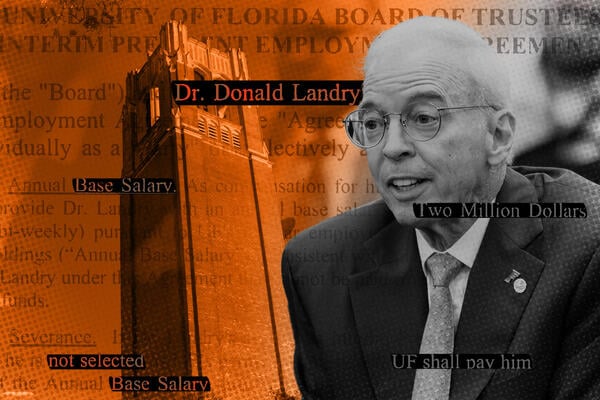
    The Florida Board of Governors unanimously approved Donald Landry on Thursday as interim president of the University of Florida, three months after it rejected Santa Ono for the job in a split vote.

    Landry, who has a lengthy academic résumé but has never been a college president, will now be among the top-paid campus leaders in the country, with a base salary of $2 million and the potential to earn an additional $500,000 in bonuses. But the one-year contract also includes an unusual caveat: Landry will earn $2 million in severance pay if he is not selected for the permanent job.

    Such a guarantee is an anomaly for an interim president, one expert said.

    The Interview

    Landry’s interview with the Board of Governors Thursday was much less contentious than Ono’s.

    The board grilled Ono, who resigned as president of the University of Michigan to pursue the top job at UF, for almost three hours, mostly over his past support of diversity, equity and inclusion initiatives, which he sought to distance himself from ahead of the interview.

    But on Thursday, it was clear from the outset that board members liked what they saw in Landry.

    Prior to the vote, University of Florida Board of Trustees chair Mori Hosseini ticked off Landry’s accomplishments, noting he is a celebrated physician and academic. Hosseini also highlighted his various roles, such as chair emeritus of the Department of Medicine at Columbia University and president of the American Academy of Sciences and Letters, as well as his prior experience on the President’s Council on Bioethics during the George W. Bush administration, among other achievements.

    “We are excited to see what UF can accomplish under his leadership,” Hosseini told the board.

    The statewide Board of Governors also seemed excited about the candidate, approving his hire after an interview of around 30 minutes, which included more complimentary remarks from members praising Landry for his leadership in the health field and for filing an amicus brief supporting Florida and Texas officials in a Supreme Court case last year. In that brief, Landry argued against content moderation efforts on social media platforms, which he cast as censoring alternative perspectives and “suppressing dissent on a host of scientific questions.”

    Paul Renner, a former Republican lawmaker and current gubernatorial candidate, told Landry, “In addition to your remarkable academic record, it strikes me as unique that I don’t know anyone else in academia that’s filed an amicus brief to the Supreme Court in defense of free speech.”

    Renner also asked how Landry would defend free speech at UF.

    Landry answered that beyond academic freedom and free speech, there “is a right to teach and a right to learn.” He said he would prevent disruptions to “the teaching functions of the university” by emphasizing time, place and manner restrictions “as significant as necessary but as small as possible” to balance free speech with UF’s mission. Landry also emphasized the importance of inculcating a culture of civility and the need for UF students and faculty to buy in.

    At another point in the interview, Landry expressed concerns about “ideological pressure” to “not speak to certain topics,” specifically referring to climate change. He argued that climate activism has suppressed the free discussion of science, which Landry said “is not settled in that area.”

    The Contract

    One expert noted that several parts of Landry’s contract stand out as unusual—starting with severance pay if he’s denied the permanent job in a year.

    “I’ve never seen a guarantee of any type given to an interim,” said Judith Wilde, a research professor at George Mason University who studies presidential searches and contracts.

    The salary itself is also quite substantial, especially for an interim president, she said. Ono was set to make around $3 million a year, which Wilde suspects the next permanent president will also get.

    “Given the way that Santo Ono was treated in Florida, they may have been fearful that it would be difficult to get anybody to come. So they’ve advertised, in a sense, that they are still willing to give a big salary,” Wilde said. “Whoever steps into that job will probably get at least $3 million.”

    Wilde also said that the key duties and responsibilities listed in Landry’s contract are highly prescriptive compared to other contracts, which don’t spell out specifics to the same level of detail. Among other duties, Landry is directed to appoint a permanent provost, fill interim dean positions and other vacant leadership roles, and “accelerate efforts” to encourage “Jewish students who feel threatened or harassed at other institutions to apply for admission.”

    He is also instructed to “work with Florida and Federal [Department of Government Efficiency] to eliminate waste, fraud, and abuse”—a provision that has appeared in other presidential contracts. (While Ono’s contract also included that provision, it was less prescriptive over all.)

    Several of the key duties and responsibilities, including certain hiring decisions, require the approval of UF’s board chair, which Wilde said would grant significant power to Hosseini.

    “In essence, it makes him a co-president,” Wilde said.

    Source link

  • Trump Wants Harvard to Build Vocational School

    Trump Wants Harvard to Build Vocational School

    Zhu Ziyu/VCG/Getty Images

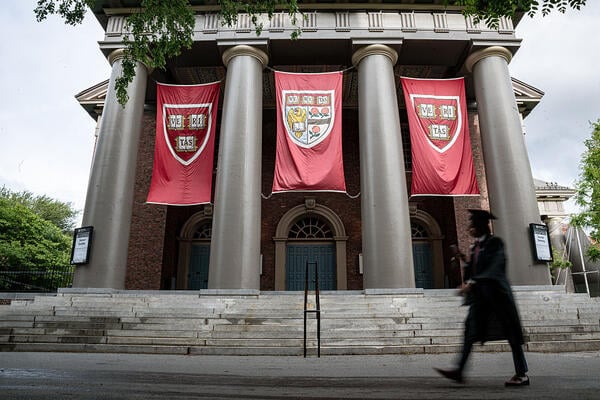
    While President Trump has proposed slashing the federal workforce development budget, a potential settlement between Harvard University and the Trump administration could involve the a plan to use $500 million the government is demanding to build vocational schools, Bloomberg reported Thursday. 

    Harvard is one of nine universities the Trump administration has targeted with federal funding freezes. In April, the government froze $2.2 billion in federal grants after the university rejected its demands to overhaul its policies on admissions, governance, hiring and more. In July, Harvard, which also sued the Trump administration over the freeze, was reported as open to paying as much as $500 million to settle with the Trump administration, though leaders said they would be reluctant to pay the government directly. 

    While no deal with Harvard has materialized yet, Commerce Secretary Howard Lutnick told CNBC on Thursday that if one does, the $500 million could go toward vocational education. 

    “If Harvard settles with Donald Trump, you know what he’s going to do with the $500 million?” Lutnick said. “He’s going to have Harvard build vocational schools. The Harvard vocational school, because that’s what America needs.” 

    But deal or no deal, the frozen funds may start flowing back to Harvard soon.

    Last week, a federal judge ruled that the Trump administration illegally froze Harvard’s federal money, but the government plans to appeal. Earlier this week, The New York Times reported that Harvard researchers were told some grants were being restored, though it’s not clear how widespread those restorations were.

    Source link

  • Stopping Political Violence With Free Speech

    Stopping Political Violence With Free Speech

    The horrific assassination of Charlie Kirk at Utah Valley University is an unspeakable crime. But we must speak about its causes and how we can seek to reduce violence of this kind—and also how we must not seek to silence free speech in response.

    Obviously, murder is an evil act in itself. But a political assassination of this kind is many magnitudes worse than the all-too-common murders we encounter every day in America.

    Political violence undermines the sense of safety that’s essential to free and open debate. If controversial views inspire murder, then most of us will be reluctant to speak out honestly. Political violence and threats can be a powerful source of self-censorship. We need to end support for political violence of every kind on every side, from this terrible murder to the threats of violence against professors from all sides who express controversial views.

    Political violence also breeds administrative censorship. Many of the campus bans on protests and suspensions and banishments of those accused of misconduct are done using the excuse of fear of violence. Safety becomes a simple defense for every act of repression, and Kirk’s murder may be used by campus officials to ban controversial speakers from all sides and to prohibit the kind of public discussion that Kirk was admirably engaged in when he was killed.

    And political violence inspires political censorship, particularly when elected officials are looking for any excuse to suppress their ideological opponents. Donald Trump announced a campaign of retribution against leftists who harshly criticized Kirk: “For years those on the radical left have compared wonderful Americans like Charlie to Nazis. This kind of rhetoric is directly responsible for the terrorism that we’re seeing in our country and it must stop right now. My administration will find each and every one of those who contributed to this atrocity and to other political violence, including the organizations that fund it and support it …”

    It’s appalling that Trump would call for unconstitutional repression of this kind to “find” and “stop” any leftist who ever used mean rhetoric—and the organizations that fund or support them. Even if you believe (as I do) that prominent political leaders such as Trump—one of the worst offenders at nasty political rhetoric—should tone down their hatred, that doesn’t mean that everyone should restrain their rhetoric, and it certainly does not allow the government to punish those who choose to say harsh words.

    Since we do not yet know who murdered Kirk or what the motives were, it’s bizarre to assign ideological blame for this violence. But even if the murderer turns out to be a leftist inspired by hateful essays about Kirk, we must not punish (or even condemn) people who denounced Kirk.

    We need to condemn horrible violence of this kind from any source, but we cannot blame those who engage in political critique for the crimes of lunatics. Words do not cause violence, and censorship does not stop it. It’s bizarre that the party of “guns don’t kill people, people kill people” is now suggesting that mean tweets kill people.

    Other Republican politicians urged repression as the response. Rep. Clay Higgins (a Louisiana Republican) called for massive censorship of anyone who “belittled the assassination of Charlie Kirk,” calling for them to be “banned from ALL PLATFORMS FOREVER,” to have their business licenses and permits and driver’s licenses revoked, and be “kicked from every school.”

    By far the most disturbing finding in the latest free speech survey of college students released this week by the Foundation for Individual Rights and Expression was that the proportion of students willing to support physical violence to stop an offensive speaker on campus grew from 20 percent in 2022 to 34 percent in 2025. FIRE chief research adviser Sean Stevens noted, “This finding cuts across partisan lines. It is not a liberal or conservative problem—it’s an American problem.”

    In FIRE’s survey, the growth in willingness to use violence to stop an offensive speaker over the past few years tracks directly with the growth in willingness to shout down speakers (from 62 percent to 71 percent) and to physically block students from attending a speech (from 37 percent to 54 percent).

    The willingness of people to silence speech is connected to their willingness to support violence as just one further step to achieve that repression. Stopping political violence can’t be seen in isolation from stopping political censorship of all kinds. We need to view a commitment to free speech as an essential tool to help reduce political violence.

    Censorship can become the training wheels for political violence. Once you are willing to dehumanize someone by stripping away their rights and silencing their speech, the kind of dehumanization necessary to violently attack them becomes easier to imagine. And once you’re willing to use political violence, the reality will always become more likely.

    Alice Dreger at Heterodox Academy noted that after the problems we’ve seen with the heckler’s veto, “The shooter’s veto is a whole new level of terrorism endangering political speech in America.” But what if the shooter’s veto is just the logical extension of the heckler’s veto?

    It’s worth noting that in another of the rare cases of violence against a campus speaker—at Middlebury College in 2017, when Charles Murray was attacked and Professor Allison Stanger was injured—the violence followed in the wake of the students shouting down Murray. Censorship and violence are often linked together, and both are common weapons of totalitarian regimes.

    That’s why we must reject political violence in all its forms and begin with the steps of censorship that often lead to it. That’s also why we must reject censorship as an answer to political violence. Because censorship is the foundation of political violence, we cannot cure it with more censorship.

    I disagreed with many of Kirk’s political views, but I liked some of his methods—organizing students and publicly engaging in debates on campus with critics (as he was doing when he was murdered).

    As I noted back in 2017 for why colleges must recognize TPUSA chapters, “Although Professor Watchlist is morally wrong and a threat to academic freedom, that is not a good reason for a university to de-recognize a student group associated with it. Free speech applies even to those who oppose free speech. And the right of students to form organizations is an essential part of student liberty, even if that means criticizing faculty.” I wrote about those leftists who supported repression, “If you think only your political enemies will be subject to censorship by administrators, I think you are very mistaken.”

    We need colleges to be safe spaces in the sense of physical safety from political violence and physical threats. We also need safety from professional retaliation, to ensure that people are not fired or silenced or punished for their beliefs. We must reject the use of repression to protect people from hearing offensive ideas, whichever side is being censored. By rejecting censorship, and making the open exchange of ideas an essential part of campus life that no violent act can take away, we can reduce the culture of political violence that endangers all of our voices.

    The best tribute to Kirk would be for colleges and politicians and advocates on all sides to imitate the best of what he did—to create and approve student organizations that express controversial views and debate those who disagree, asking them to “prove me wrong.”

    Source link

  • GAO Raises Concern About Future FAFSAs

    GAO Raises Concern About Future FAFSAs

    Photo illustration by Justin Morrison/Inside Higher Ed | sdominick/Getty Images | Ake/rawpixel

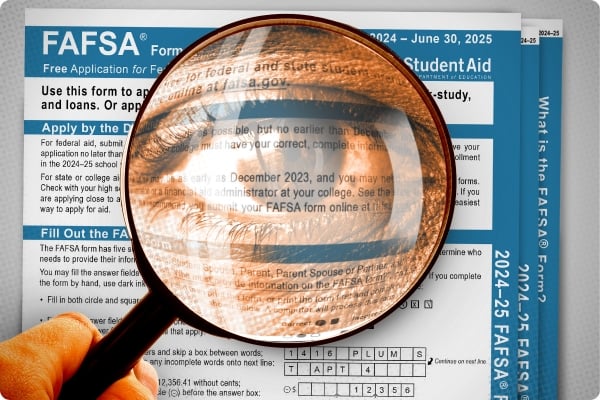
    The Education Department is on track to release the 2026–27 Free Application for Federal Student Aid by Oct. 1, but a government watchdog warned this week that future forms are at risk of technical issues.

    The Government Accountability Office, in its second report on the botched launch of the 2024–25 FAFSA, found that the department has yet to implement a number of its recommendations from the first report released in September 2024. Additionally, the agency needs to improve its oversight of contractors. The GAO also noted that the department doesn’t have a plan for testing future FAFSAs and that staff overseeing the application lack key experience and training.

    “Until [the Office of Federal Student Aid] makes progress in these important areas, [the FAFSA Processing System] is at risk of not functioning as intended in future releases, leading to students having trouble in obtaining timely aid,” the report states. “Further, the FPS contract is at risk of overexpenditure and potentially wasting taxpayer dollars. These risks are compounded by reductions in staff that likely impact the agency’s ability to carry out its mission to manage and oversee student financial assistance programs.”

    FSA officials took issue with parts of the report and recommendations in a response to the agency.

    “We believe that GAO’s analysis teaches the wrong lessons and, as an unintended consequence, reinforces the exact practices that led to the FAFSA’s initial challenges,” wrote Aaron Lemon-Strauss, executive director of the FAFSA program.

    Lemon-Strauss said GAO is applying a “more traditional, and somewhat outdated, project-based model that does not support modern technology development for scaled systems like the FAFSA.” He went on to outline a number of changes that the department made to improve the system, as well as the key challenges they faced.

    Among other things, he noted that FSA had no internal engineering expertise until last year and that contractors working on different pieces of the process used different tools that didn’t integrate with each other.

    “The team is still working to unwind these parallel environments and the technical debt created by these decisions today,” he wrote.

    GAO officials disagreed with some of the department’s statements and proposed changes to their recommendations, countering that the review was based on both federal and department guidelines and that ED needs a way to hold its contractors accountable.

    “As our report notes, FSA was not appropriately overseeing the work of its contractor and did not adequately ensure rigorous testing of the system,” officials wrote. “By not doing so, FSA put the FAFSA modernization effort at risk of failure, which their letter points out.”

    Source link

  • Mass. College Launches Student-Led Basic Needs Center

    Mass. College Launches Student-Led Basic Needs Center

    An estimated 59 percent of all college students have experienced some form of housing or food insecurity in the past year, according to 2024 data from the Hope Center at Temple University. Closer to three in four students have lacked access to other basic needs, such as mental health care, childcare, transportation or technology.

    At Massachusetts College of Liberal Arts, it was students who first noticed their peers needed additional resources.

    Spencer Moser, MCLA’s assistant dean for student growth and well-being, teaches a leadership capstone course in which students complete a community-based service project. “One group of students was aware that some of their peers were attending classes hungry,” he recalled.

    As part of their assignment, students researched available resources to address basic needs insecurity and identified the need for a campus pantry.

    “The program started as a drawer at my desk,” Moser said. “Then it grew to fill a shelving unit, a closet and eventually its own space on campus.”

    Now, MCLA hosts an Essential Needs Center (ENC) on campus for any student who may face financial barriers to acquiring food, housing or other necessary items.

    How it works: Located in the campus center, the Essential Needs Center is open 24 hours a day from Monday to Thursday, with more limited hours on Fridays. The center provides students with food, housing and transportation assistance, seasonal clothes, and more.

    Students can utilize a variety of resources to address food insecurity, including grab-and-go or instant meals and free meal swipes for the dining hall, as well as help with their SNAP applications. The center’s website also provides links to recipes using MCLA food pantry staples to help students with minimal cooking experience prepare nutritious meals.

    One of the unique offerings of MCLA’s center is a build-a-bundle initiative that allows students to request a variety of personal health, kitchen, bathroom, bedroom or cleaning items, as well as school supplies. Students can submit a form online requesting supplies ranging from a first-aid kit to baking supplies and a bath mat.

    The pantry has a small budget from the college, which is supplemented by grants, a partnership with the Food Bank of Western Massachusetts and donor support. Interested donors can give nonperishable food items, toiletries or monetary contributions.

    Student supported: The ENC first started with students looking to support their classmates, and student leadership continues to be at the heart of the center’s work.

    “Students manage the inventory, make sure their peers know about this resource, staff the center,” Moser said. “The center is student-run and -managed, designed to be student-centric due to the belief that students know best what students’ needs are.”

    The pantry sees 400 to 500 students use the pantry regularly, for a total of 1,313 visits between November 2023 and January 2025, Moser said.

    In fall 2024 alone, ENC logged 729 visits—including from 96 first-time visitors—and distributed over 2,600 items.

    Other Models of Success

    Basic needs insecurity impacts college students across the country, hindering their academic progress and forcing them to choose between educational pursuits and personal needs. Here are some examples of how other colleges and universities are promoting student well-being.

    • Anne Arundel Community College students in Maryland created a cookbook featuring items exclusively from the campus pantry, many reflecting their traditions and cultures.
    • Some colleges allow students to pay off their parking tickets by donating food pantry items.
    • Pace University offers a monthly mobile market for students, faculty and staff to receive free food items that cannot be stored for longer in the permanent campus pantry.
    • The University of California, Davis, piloted a discounted food truck on campus at lunchtime, allowing students to receive a hot meal at a pay-what-you-can price.
    • Virginia Commonwealth University established mini pantries across campus with grab-and-go food items, modeled off the concept of a little free library.

    Source link

  • Thoughts on Education and Freedom as Fall Begins (opinion)

    Thoughts on Education and Freedom as Fall Begins (opinion)

    As our fall semester begins, college students are filled with excitement and nervous anticipation. By my lights, they are getting ready to practice freedom in the service of learning. Back in the 18th century, the great German philosopher Immanuel Kant wrote that enlightenment was freedom from self-imposed immaturity, describing how the process of education was the practice of freedom. When people learn—embarking on the journey of thinking for themselves in the company of others—they are experimenting with choice, autonomy, relationship and discipline.

    I (usually) find it thrilling to watch students experiment in these ways, and I occasionally get to join in. They are relinquishing—not completely, and certainly not all at once—their childish ways and trying on what it means to be an adult. They begin to experience that freedom from immaturity and figure out, provisionally, the kinds of lives they want to live. This normally includes, but is not limited to, the kind of work they are prepared to do. Facing this very practical issue is part of growing up, and colleges provide various opportunities for doing just that.

    Still, many in America have doubts about whether today’s college student is, in fact, learning to be a free adult. Some have been persuaded that college campuses no longer value the open exchange of ideas but instead demand allegiance only to ideas deemed progressive. Others see colleges as failing to practice what they preach. Children of alumni or wealthy donors have a much better chance of getting admitted to highly selective colleges than ordinary Americans; the paths to colleges believed to offer the best educations are paved with gold.

    The charge of unfair admissions—like the criticism of political groupthink or mindless grinding away to get grades and internships—attacks the integrity of learning as a path to freely thinking for oneself. If colleges are unfair or corrupt in choosing their students, then the value of the education offered is undermined. If one only learns to imitate the views of one’s professors in order to win their favor, then one is wallowing in immaturity and not practicing freedom.

    Unquestionably, there has been a loss of trust in higher education, and— while less dramatic, perhaps, than the loss of trust in the judiciary, the media or Congress—it undermines the ability of colleges to teach their students. No matter how much teachers emphasize critical thinking, learning requires trust. It requires that we open ourselves to ideas and people that might have an impact on how we live. This can, of course, sometimes be disturbing, even offensive, but the deepest learning often involves reconsidering our assumptions and deeply held beliefs.

    I see this regularly in the class I teach, Virtue and Vice. I see undergraduates willing to stress test their moral intuitions against thinkers as varied as Aristotle and Machiavelli, Friedrich Nietzsche and Danielle Allen. I see students considering how they want to live by thinking with some of the central texts of our traditions. Each week they practice one of the traditional virtues and discuss this with their fellow students. They read, think, practice, discuss. Reconsider and repeat.

    Critics prone to exaggeration have claimed that this kind of traditional humanistic work is no longer possible because today’s colleges have been captured ideologically by the woke left. Of course, there have been pernicious examples of close-mindedness from progressive purists, but the current attempt at ideological capture by the Trump administration is far more dangerous, as well as dishonest. Since President Trump’s inauguration, scores of colleges are being investigated for deliberately ignoring the harassment and intimidation of their Jewish students. These investigations, I have argued, are just vehicles for the White House to put pressure on higher education.

    As a Jewish teacher and university president, it pains me to see the fight against antisemitism used as a cudgel with which to attack centers of teaching and research. I’ve been very aware of antisemitism since I was a little boy, when a fellow fourth grader told me the only thing wrong with Hitler was that “he didn’t finish the job.” I reported this to my dad, and he told me to punch the kid at the next opportunity, which I did. I got in trouble at school, but my father was not displeased. I’ve never expected antisemitism to go away, and so its recent resurgence is concerning but not surprising.

    I am genuinely startled, though, by the ways Christian nationalists in the American government use Jew hatred as a vehicle to advance their authoritarian agenda. That’s what we are witnessing today: the exploitation of anti-antisemitism by a White House determined to extort money and expressions of loyalty from higher education. Sensing opportunity, some universities see a marketing advantage in portraying themselves as “good for the Jews,” offering protest-free environments (all the while singing the praises of free speech).

    As academic leaders, of course we must support students of faith generally, and we have a particular obligation to acknowledge religious minorities who have traditionally been targets of abuse. This, of course, includes but is not limited to Jews. Not a few of my students are interested in the topic “virtue and vice” because of their religious beliefs, and I find they are at least as capable of thinking critically about their faith as secular students are when asked to reconsider their own values. They join in the process of reading, thinking, practicing, discussing. Reconsider and repeat. As we practice a virtue each week, all my students learn how moral ideas might play a role in their daily lives. How much of a role, of course, is up to them.

    When I write it’s “up to them,” I imagine their choices as part of the process of leaving behind self-imposed immaturity. Sometimes, unfortunately, parents contribute to a student remaining a child, especially when they try to run interference for cherished offspring whenever an obstacle arises. But most of the time I see undergraduates practicing freedom in a safe enough environment—not too safe that they aren’t pushed to reconsider their choices, but accommodating enough that they can explore possibilities without feeling in danger. 

    This environment is threatened by the enormous pressure the federal government is putting on higher education to “align its priorities” with those of the president. I am worried about the normalization of this authoritarian effort to reshape the ecosystem of higher education. Too many opportunists and collaborators have been responding by noisily preaching neutrality or just keeping their heads down.

    Some faculty, student and alumni groups, however, have begun to stand up and make their voices heard. Whether refusing to apologize for diversity efforts or simply standing up for the freedom of scientific inquiry, there is growing resistance to the administration’s attempt to control civil society in general and higher education in particular.

    The groups defending their campuses from governmental intrusion are not just shielding the status quo. They are resisting attempts to undermine education as the practice of freedom, safeguarding the various ways that learning can allow students and teachers to open their minds and their hearts to new ideas and ways of living.

    We don’t want the government thinking for us, telling us what the president’s priorities are so that we can imitate them. We want to learn to think for ourselves in the company of others, leaving behind a dependence on authority. Authoritarians would see us impose immaturity upon ourselves. As the new school year begins, we in higher education must redouble our efforts to model and defend the enlightenment ideals of education and freedom—while we still can.


    Source link

  • Teaching and Learning Can’t Happen Under These Circumstances

    Teaching and Learning Can’t Happen Under These Circumstances

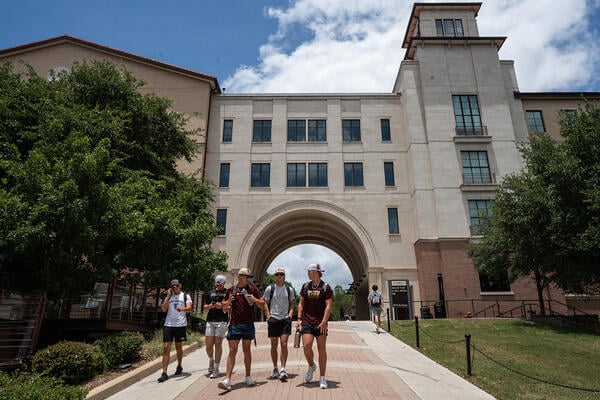
    I’m hoping everyone working in higher education is aware of the recent events at Texas A&M, where a student recording of an exchange with an instructor ultimately led to the dismissal of the instructor and the demotion of both the department chair and college dean that had backed the instructor’s classroom autonomy.

    I looked at the big-picture academic freedom implications in a newsletter for the Center for the Defense of Academic Freedom, where I note that one of the people who initially defended the instructor’s autonomy was Texas A&M president Mark Welsh, who told the student complainant that firing the instructor was “not happening,” only to reverse course after a storm of right-wing outrage and political pressure rained down.

    The instructor was a model of professionalism—watch the video yourself if you don’t believe me—and yet this student set out with a plan deliberately engineered to get the instructor fired, and it worked.

    I’ve been thinking a lot about this student, about what has to happen for a young person to enter college seeing something like this—personally targeting and destroying another human being who is just doing their job—as what they want to spend their college years doing.

    It is an act of great cruelty, and yet I must imagine this person does not see themselves as cruel. I’m sure they somehow have justified this cruelty, but there is simply no justification for it. If they are not cruel, what is left? It becomes an act of madness.

    One of my favorite things about teaching college-age students is that they are ready for the whole deal, adults who have volunteered themselves for a potentially transformative experience. Look, I’m not naïve about the more transactional mindsets that students bring to college, but it always seemed to me that at least the potential for something more meaningful, more lasting, was always present.

    I loved teaching because I knew that this was the goal, even as I only had vague notions of how it could be achieved. And when it was achieved for a particular student, it was clear that this was not necessarily replicable on a mass scale using the same approach. That difficulty is fascinating. The tension in not knowing if it can be pulled off, but trying anyway, was energizing, sometimes even intoxicating. This is very hard, but it is also very worth doing.

    At least I think so.

    Sometimes, when things were going well during a class, I would step outside myself for a moment and think, Look at all these people! Each one of them was a person, and together we were collectively being human, at least for a moment. What could be better?

    Here we are. I honestly don’t know how anyone can teach and learn under the present circumstances. For the bulk of my career, I worked in places where my political and religious views were out of sync with those of most my students, but I could not imagine being afraid of them exacting punishment or revenge on me for the mere fact of these views. My students were fundamentally open and curious, not without convictions by any means, but also essentially trusting that everyone involved in the educational enterprise had their best interests at heart unless proven otherwise.

    Now, it seems prudent to assume someone is out to get you, because it only takes one person of bad faith armed with a smart phone and ill intent to destroy your career. There is an essential fragility, a brittleness to this student who took down their instructor that makes them impossible to work alongside. There is no potential for community. Even if they are only one in a thousand, the whole deal is spoiled.

    In my course policies, I would often share a quote from Cornel West regarding the project I hoped the students and I were embarking on together.

    “I want to be able to engage in the grand calling of a Socratic teacher, which is not to persuade and convince students, but to unsettle and unnerve and maybe even unhouse a few students, so that they experience that wonderful vertigo and dizziness in recognizing at least for a moment that their world view rests on pudding, but then see that they have something to fall back on. It’s the shaping and forming of critical sensibility. That, for me, is what the high calling of pedagogy really is.”

    There are places today where it seems like even articulating such a philosophy, let alone attempting to put it into practice, would disqualify me from the classroom.

    As I was first working on drafting this column, I saw the news of the violent death of another young person who got his start as an antagonist to college professors and became quite wealthy and powerful primarily by calling down harassment on others—harassment that caused them to fear for their jobs and even sometimes their lives.

    He had a wife and two children under 4 years old. More madness.

    I honestly don’t know what to make of any of this. I am in a moment of Dr. West’s “pudding.”

    Maybe tomorrow more helpful thoughts will come.

    Source link

  • Texas State Fires Professor Accused of Inciting Violence

    Texas State Fires Professor Accused of Inciting Violence

    Mikala Compton/Austin American-Statesman/Getty Images

    Texas State University fired a professor Wednesday after he was accused of inciting violence during a speech at a socialist conference, The Texas Tribune reported

    In a video posted on X, associate professor of history Thomas Alter can be seen giving a speech over Zoom to attendees of the Revolutionary Socialism Conference. “Without organization, how can anyone expect to overthrow the most bloodthirsty, profit-driven mad organization in the history of the world—that of the U.S. government,” he said in the clip, which was circulated online by a YouTuber who infiltrated and recorded the event.

    Texas State president Kelly Damphousse said in a statement Wednesday that the university reviewed the comments, which he said “amounted to serious professional and personal misconduct.”

    “As a result, I have determined that his actions are incompatible with their responsibilities as a faculty member at Texas State University,” he added. “Effective immediately, his employment with Texas State University has been terminated.”

    The video clip shared on social media was spliced and cut together. In the full version of his speech, which is posted on YouTube, Alter discusses the various tactics of different socialist groups. 

    “Another strain of anarchism gaining ground recently is that of insurrectionary anarchism,” Alter said in his speech. “Primarily coming out of those that were involved in the Cop City protest. These groups, individuals have grown rightfully frustrated with symbolic protests that do not disrupt the normal functioning of government and business. They call for more direct action and shutting down the military-industrial complex and preventing ICE from kidnapping members of their communities. Many insurrectionary anarchists are serving jail time, lost jobs and face expulsion from school. They have truly put their bodies on the line. While their actions are laudable, it should be asked, what purpose do they serve? As anarchists, these insurrectionists explicitly reject the formation of a revolutionary party capable of leading the working class to power. Without organization, how can anyone expect to overthrow the most bloodthirsty, profit-driven mad organization in the history of the world—that of the U.S. government.”

    Alter didn’t respond to a request for comment from Inside Higher Ed.

    He is the second Texas professor to be fired from their post this week. On Tuesday, Texas A&M officials fired Melissa McCoul, a senior lecturer, and removed two faculty members from their administrative roles after a student complained that the material McCoul taught in a summer course violated President Donald Trump’s executive orders.

    Source link

  • Multiple HBCUs Go On Lockdown in Response to Threats

    Multiple HBCUs Go On Lockdown in Response to Threats

    At least seven historically Black colleges and universities across the country went into lockdown on Thursday after institutions received threats, which they did not elaborate on.

    Southern University and A&M College in Louisiana asked those on campus to shelter in place in response to a “potential threat to campus safety.”

    The lockdown applied to the “entire Baton Rouge landmass,” including the Southern University Law Center, the Agricultural Research and Extension Center, and the university’s Laboratory School, according to a statement from the institution.

    The lockdown lifted in the afternoon, but all classes and campus activities were canceled through the weekend.

    Alabama State University also received a “terroristic threat,” university officials told local media outlets, and shut down campus as law enforcement officials checked buildings. The university sent an all-clear notice later in the day, noting that “the immediate threat has been resolved,” but told students to continue to shelter in place.

    Two HBCUs in Virginia were also targeted.

    Virginia State University went into lockdown while local, state and federal law enforcement agencies investigated the credibility of a threat received earlier that day, according to a message from the Virginia State University Office of Communications and University Relations. University officials assured students, “No injuries or incidents have been reported in connection with the threat” and said they would be provided with meals in university housing during the lockdown.

    Hampton University canceled all activities and classes for both Thursday and Friday in response to a potential threat. Students were discouraged from moving across campus unless absolutely necessary, and all nonessential employees were told to “evacuate immediately” in a notice on the university’s website.

    A threat at Bethune-Cookman University in Florida also forced the university to cancel classes and go into lockdown. A notice from the university told students to go to their dorms and faculty and staff members to leave campus.

    Spelman College in Atlanta didn’t receive a threat but issued a shelter-in-place order because of its proximity to Clark-Atlanta University, which did. The order was lifted around 2 p.m.

    Howard University, in Washington, D.C., assured students the institution hadn’t received any threats but would maintain “heightened security.”

    “At Howard, we denounce all acts of hate designed to foster fear in our communities,” an update from the university read. “Howard stands in solidarity with our fellow HBCUs.”

    A predominantly white institution, the University of Central Florida, also reported receiving a threat Thursday. The Orlando Sentinel, which obtained a copy via an anonymous tipster, reported that the expletive-laden message threatened Black students and referenced the killing of Iryna Zarutska, a Ukrainian refugee stabbed on a train in North Carolina.

    A message from the UCF Police Department Thursday afternoon said, “Similar messages have been reported at other universities around the country.” The police department added it was working with the Federal Bureau of Investigation to assess the threat but does not consider it “to be credible.”

    In what appears to be an unrelated incident, the U.S. Naval Academy in Annapolis, Md., went on lockdown Thursday evening after suspicious activity was reported on campus, The Baltimore Banner reported. One person was injured as Naval Security Forces cleared a building.

    Florida A&M University, an HBCU, did not receive any threats but put out a statement of solidarity with institutions on lockdown.

    Rep. Troy A. Carter, a Democrat from Louisiana, posted on X that he was “outraged and deeply disturbed” by the threats to HBCUs.

    “These reprehensible acts are not only an attack on institutions of higher learning—they are an attack on our history, our culture, and the promise of opportunity that HBCUs represent for generations of students,” Carter wrote. In a statement, he called on the federal government “to utilize every available resource to identify, apprehend, and prosecute those responsible.”

    The Congressional Black Caucus also put out a statement calling for action from the U.S. Department of Justice and FBI. Caucus members described the threats as a “chilling reminder of the relentless racism and extremism that continues to target and terrorize Black communities in this country.”

    The rash of violent threats is reminiscent of a wave of bomb threats that targeted HBCUs in 2022 and prompted the FBI to get involved. The HBCU campus lockdowns also come on the heels of a series of false calls to colleges and universities about active shooters last month; an online extremist group claimed responsibility for the hoaxes.


    Source link