Tag: Career

  • Service Portfolios Make Service Visible (opinion)

    Service Portfolios Make Service Visible (opinion)

    Another academic year is fast approaching, and with it another promotion and tenure cycle in which faculty members will prepare dossiers for promotion. Some, but not all, universities have detailed instructions on what and what not to include in the dossier. At many research institutions, the service section consists of a list of committees on which the faculty member has served with little information about the nature of their participation. Having managed promotion and tenure at multiple institutions, I know that faculty members are often told to check the service boxes and move on.

    Yet, the pandemic and its aftermath threw into high relief what most faculty members already knew: Faculty service is a mission-critical portion of workloads and highly undervalued by our institutions. We also know that mission-critical workload is unevenly allocated to and carried out by some faculty members while others either refuse to participate, focus their service outside the institution for the profession or participate as free riders while others pull their load. This leads to conversations about “service slacking” and “service shaming.” Articles abound with useful suggestions on how to address the uneven distribution of service, including advice on how to say no. And the Faculty Workload Equity project, part of an NSF ADVANCE award to the University of Maryland, provides important tools to better understand the contours of differential workloads and ways to create transparency around them.

    This conversation is not new; Joya Misra and colleagues suggested in 2011 that changing the culture around service is essential in order to find ways to distribute the workload more evenly and to develop reward mechanisms for doing critical service in mission-central areas like curricular reform or student outcomes assessment. More than 10 years later, this conversation seems to have stalled. Properly recognizing the value of service would be a good way to restart it.

    Articulating the Value of Service

    Let me start with a story. About 15 years ago, I co-chaired my institution’s reaccreditation bid with the North Central Association of Colleges and Schools. We were tasked, among other things, with collecting information about how our faculty engaged in outreach to our community. Our campus survey about community engagement came back with pitifully little data. We realized that we needed to excavate the information. After visits to lots of faculty meetings, we had an amazingly rich list of ways our faculty were engaging with schools, nonprofits and local governments in our area. To my question about why these activities didn’t appear in any university document, faculty members universally replied that they didn’t think anyone cared.

    As Cullen C. Merrit recently argued, service and engagement activities are ways that the academy provides value to society at large. I agree. Yet we cannot value or demonstrate the impact of what we don’t document.

    To that end, colleges can launch a service portfolio that faculty can submit as part of promotion and performance-review processes. The service portfolio documents the range of service activities for each faculty member, as well as success metrics that demonstrate their impact on students, other faculty and the institutional mission. Identifying impact is a first step in increasing the value our institutions place on service activities and establishing fairer systems of allocation and rewards.

    The Service Portfolio

    Before you stop reading because no one wants to do more service work, a service portfolio can help bring attention to the value of work by demonstrating the impacts and outcomes. Indeed, some universities and colleges already have faculty members provide such information about service; others make suggestions about how to craft a promotion and tenure service and engagement dossier.

    As with a teaching portfolio, a service portfolio is a structured assemblage of contributions to mission-critical activities around student and faculty success (e.g., mentoring, curriculum development, professional development) and engagement with local and regional communities (e.g., support for K–12 education, support for local governmental and nongovernmental agencies).

    Service portfolio guidelines could begin by listing elements of the stated mission or the strategic planning goals at the department, college/school and institution levels. In consultation with department chairs or deans, faculty members would then select those elements to which they contribute through their service activities. In addition to describing their contributions, faculty could describe outcomes and impacts either in terms of future goals or what can already be measured.

    For example, a faculty member might want to prioritize curriculum development or faculty mentoring. In that case, we might expect them to serve locally or institutionally in those areas, to engage in professional development opportunities, or to develop community engagement activities related to their specializations. A focus on value requires that the service portfolio identify the impacts or expected outcomes of each activity. For example, participation in a curriculum revision might result in higher learning outcomes or lower DFW rates. Faculty mentoring can result in improved teaching outcomes, enhanced research productivity and an improved work environment.

    There are numerous advantages of a service portfolio over the current way of counting the number of committees on which we serve. First, faculty members can gain agency in the way that they shape and narrate their own contributions to the institutional mission through service. Agency is a motivating factor that might encourage yet more engagement. Faculty members will have a harder time free riding on a committee when they must articulate their contributions and when those contributions are then reviewed by departmental peers. Equity-minded faculty members and chairs/heads will be better able to track individual contributions and ensure that service is equitably allocated. And chairs and departmental colleagues who are impressed with a particular faculty member’s service contributions will be better positioned to suggest that recognition or reward for those contributions may be in order.

    To be sure, putting together a service portfolio will require extra time, something that faculty members do not have lots of. But the relatively small time commitment can result in significant benefits to faculty and to the institution. Intentional and agentic shaping of service and engagement workloads can ensure that mission-critical work is accomplished in a visible way and can be assessed for impact. Perhaps most importantly, a service portfolio gives information and tools to our colleagues to amplify impactful and valuable activities.


    Beth Mitchneck is professor emerita in the School of Geography, Development and Environment at the University of Arizona.

    Source link

  • VP Online Enrollment, Integrated Marketing Solutions, Carnegie

    VP Online Enrollment, Integrated Marketing Solutions, Carnegie

    The last time we caught up with Shankar Prasad, he was telling us about his new role as chief strategy officer at Carnegie. Shankar reached out, saying that he is recruiting for the key role of Carnegie’s VP of online enrollment and integrated marketing solutions. As I’m on the lookout to share information with our community about roles at the intersection of learning, technology and higher education change, this job seemed perfect. Shankar graciously agreed to answer my questions about the role.

    Q: What is the mandate behind this role? How does it help align with and advance the company’s strategic priorities?

    A: Carnegie’s Online Program Experience (OPX) business line is an important growth area. The company aims to be the premier provider of integrated marketing and enrollment solutions for online programs. The mandate of the VP of online enrollment and integrated marketing solutions is to build and own the sales plan for this OPX business, drive revenue growth, and ensure that Carnegie’s full suite of services (research, strategy, digital marketing, lead generation, creative and website development) are successfully cross‑sold to new and existing clients.

    The job description states that the VP will “lead our sales strategy and execution to achieve our revenue targets,” shape the OPX growth strategy, and establish Carnegie as the premier provider of online program solutions in higher education. To do this, the VP must create the OPX sales plan, drive sales, meet goals and targets, and deliver growth through new clients and client‑expansion opportunities across Carnegie’s entire suite of services.

    This work aligns closely with Carnegie’s strategic priorities. The company positions itself as a leader in higher education marketing and enrollment strategy and emphasizes human‑centered, data‑driven solutions. By spearheading integrated marketing and enrollment solutions for online programs, the VP advances this mission—ensuring that Carnegie’s OPX offerings evolve with market trends, deliver measurable results and reinforce the organization’s leadership position. The role also requires thought leadership, cross‑team collaboration and partnerships, which support Carnegie’s focus on innovation and authentic human connections

    Q: Where does the role sit within the company’s structure? How will the person in this role engage with other units and leaders across the company?

    A: The VP of online enrollment and integrated marketing solutions is Carnegie’s leader of integrated sales for OPX. The position sits within the company’s growth and revenue organization and is accountable for the sales plan, revenue forecasting and team performance. The description notes that the VP “owns the development of all sales pursuits related to OPX” and partners closely with the SVP of marketing and the chief growth officer to develop messaging, positioning and proposals. This indicates that the role reports into or collaborates with senior leadership on growth strategy and marketing alignment.

    The role is highly cross‑functional. It requires partnering with marketing and business development to support inbound and new business pursuits and providing training and support to sales representatives in those divisions. The VP must collaborate with leaders of all business units to share feedback and optimize the OPX solution for clients.

    Day to day, the person will work with colleagues in sales, account management, production, senior strategists, client success, executive sales and enrollment strategy. They will also work with growth team members to craft proposals and coordinate with the marketing leader on business development materials and events. Additionally, the VP manages OPX revenue forecasting and ensures visibility across all accountable parties. This matrixed engagement means the VP acts as a connector between sales, marketing, product and leadership, ensuring that OPX solutions are delivered seamlessly and that market feedback informs strategic decisions.

    Q: What would success look like in one year? Three years? Beyond?

    A: In the first 12 months, success would involve laying the groundwork for a high-performing OPX sales organization. The VP should build and execute a sales plan, recruit or train a team, and cultivate strong relationships with marketing, business development and other unit leaders. Key milestones would include securing new OPX clients and expanding revenue from existing accounts, delivering on initial sales goals, instituting accurate revenue forecasting and establishing Carnegie as a respected thought leader at conferences and webinars.

    Three years: By year three, the VP should have turned OPX into a mature, scalable business line. The sales plan would be continuously optimized based on market feedback and the team would be driving sustained revenue growth across Carnegie’s services. Market penetration should be evident through a diversified client base, with high renewal and upsell rates. The VP should have built a strong network of external relationships and should be contributing to product evolution by monitoring industry trends and competitor activity. Measurable outcomes might include year‑over‑year revenue growth outpacing the market, higher average contract values and expanded partnerships or acquisitions that enhance the OPX offering.

    Beyond (five-plus years): Over a longer horizon, success would mean that the OPX division is a significant growth engine for Carnegie and a well‑recognized market leader. The VP will have built a resilient, data‑driven sales organization capable of adapting to changes in the higher education landscape. They may spearhead new offerings or strategic acquisitions and could play a central role in broader company leadership. The division’s revenue contribution might warrant further expansion into related services or international markets, ensuring Carnegie remains at the forefront of online program marketing and enrollment strategy.

    Q: What kinds of future roles would someone who took this position be prepared for?

    A: The VP of online enrollment and integrated marketing solutions oversees sales strategy, team leadership, revenue forecasting and cross‑functional collaboration. With 10-plus years of experience required in higher education enrollment and marketing for online programs, the role prepares someone for broader executive positions. Potential future roles could include:

    • Chief growth officer or chief revenue officer, because the VP manages revenue planning, sales execution and cross‑unit coordination.
    • General manager or president of a business unit, given the experience in developing a business line, building teams and driving profitability.
    • Chief marketing officer or chief commercial officer: The position demands collaboration with marketing leadership and deep knowledge of enrollment strategy.
    • Consulting or strategic advisory roles in higher education marketing and enrollment strategy, leveraging expertise in market trends, client relationships and integrated solutions.
    • Entrepreneurial leadership roles within the higher ed technology and services space, capitalizing on the growth mindset, executive presence and strategic thinking emphasized in the qualifications.

    By leading a high‑growth, cross‑disciplinary sales organization, the VP will develop a skill set that translates to senior leadership roles not only within Carnegie but across the broader higher education services sector.

    Source link

  • Psychology Course Encourages College Students to Make Friends

    Psychology Course Encourages College Students to Make Friends

    Starting college can be an exciting time for students to learn new things, make friends and live away from home for the first time. But not every student takes advantage of the opportunity.

    Emmanuel College psychology professor Linda Lin said she’s seen students reluctant to engage with peers in public spaces, including on their own dorm floor, out of fear of being perceived as odd or intrusive.

    “At the beginning of the semester, I always offer students extra credit points if they come see me for a 10-minute meeting and I just check in with them,” Lin said. Typically, a significant share of those students will say they have yet to make friends and get connected on campus.

    “It’s become almost half or maybe a majority of the students are really struggling to find their people on campus and find their way,” Lin said.

    Nationally, college students express high levels of social anxiety. One study, by the College Student Wellness Advocacy Coalition and the Hi, How Are You Project, found that 65 percent of students said they feel stress often or all the time, and 57 percent reported feeling anxious, worried or overwhelmed frequently.

    Lin thinks this could be due in part to the pandemic’s role in hindering social skill development as well as changing social norms among adults in the U.S., who now prioritize relationships built online or via phone-enabled connections, rather than in shared physical spaces.

    In response, Lin designed a course on positive psychology and happiness to demonstrate the evidence-based practices that can improve student well-being and push them out of their comfort zones.

    How it works: The course covers topics in positive psychology and the research behind those principles. Content includes stress management, connection to nature, exercise and mental health, gratitude, spirituality, optimism, self-compassion, mindfulness, and generosity.

    The class is an upper-level psychology elective, so the majority of students enrolled are junior or seniors majoring in psychology, though about 20 percent are nonmajors, Lin said.

    Throughout the semester, students receive assignments to practice various techniques to boost their own well-being, ranging from taking a nature walk to writing a letter expressing thankfulness or performing a random act of kindness.

    Lin’s most controversial assignment is asking students to talk to three people they don’t know over two or three days. “It can be a stranger you’re making small talk with, or someone that you see in your regular day that you’ve never introduced yourself to,” she said.

    Students have said they’d rather drop her class than do the assignment, Lin said. “The social anxiety is so high, they anticipate it being super awkward, super anxiety-provoking, that people are gonna think they’re weird.”

    But so far, none of her students has reported a bad experience; instead they’ve come back pleasantly surprised by the interactions. Some have even made lasting friends.

    The impact: The class has received an overwhelmingly positive review from students who have taken it, Lin said, with some graduating seniors telling her it had a huge impact on them or that the course changed their life.

    “A lot of students, generally, by the end of the course, are shocked that these little things make them feel better,” Lin said. “A lot of them were saying, ‘I technically know I should be doing these things, but this course gave me an opportunity to actually do them.’”

    Some students shared her lecture recordings (PowerPoints with audio overlaid) and assignments with their families and friends, in the hopes that the content could benefit their health and well-being, as well.

    Lin also conducts pre- and postassessments of student happiness and well-being throughout the term. She found that from the first class in September to the final one in December, students report a 20 percent jump in their scores. And that’s on top of seasonal blues and stressful final exam season feelings, Lin said.

    The practices helped all students boost their happiness and well-being, but the greatest gains were among students who were already struggling, especially those receiving clinical mental health support.

    “One student was like, ‘My therapist wants to talk to you—this made such a big difference in my life,’” Lin said.

    Lin is collecting data from the course for future research and has also taken her curriculum out of the classroom, training resident advisers and other campus community members on how to make friends.

    “I think everybody’s a little bit concerned about this, and I’m just trying to go out and take the science everywhere, because I think this should not be behind a paywall,” Lin said.

    Are you noticing and responding to a lack of peer engagement and community on your campus? Tell us more about it.

    Source link

  • Abrupt Pause, Unpause of Grants Doesn’t End NIH Funding Woe

    Abrupt Pause, Unpause of Grants Doesn’t End NIH Funding Woe

    The Tuesday night news quickly sowed alarm among researchers: Media outlets reported that the Trump administration had stopped the National Institutes of Health from funding any new grants. The Wall Street Journal wrote that “certain grants that are up for renewal” were also cut off, and STAT, along with other outlets, later confirmed that reporting.

    The newspaper reported that the Office of Management and Budget was blocking these billions of dollars in research funding for the rest of the fiscal year, which ends Sept. 30. After that, the dollars would return, unspent, to the Treasury. This nationwide halt to grants stemmed from an OMB footnote in a budget document, the Journal reported, adding that “the fourth quarter of the fiscal year is typically the busiest for grant-giving institutes at the NIH.”

    Inside Higher Ed reviewed screenshots of an email from an NIH employee saying, “Research grant, R&D contract, or training awards cannot be issued during this pause.” The funding halt would’ve meant an end to new research to help find and improve cures and treatments for diseases as well as stanched the flow of federal dollars to already financially beleaguered universities and labs nationwide.

    “This is undeniably an unforced error, since this will not only harm current and future American patients, but the disruptive and chilling effect of this sudden holding back of promised funds will further jeopardize the future of the American medical research enterprise,” Association of American Universities president Barbara R. Snyder said a statement Tuesday.

    But before the night was over, the Trump administration appeared to reverse course. In an updated article citing unnamed sources, the Journal reported that unnamed “senior White House officials intervened.” (OMB is part of the executive branch.) The Journal said officials at the Health and Human Services Department, which includes NIH, fought the pause for days, but OMB only relented after the newspaper published its initial story Tuesday.

    In response to Inside Higher Ed’s written questions and interview requests about the situation Wednesday, the White House and HHS both sent the same statement from an HHS spokesperson: “The programmatic review is over. The funds are out.”

    One OMB spokesperson posted on X that OMB had been “waiting for more information from NIH” before releasing the funds.

    The NIH is one of the largest sources of funding for research at colleges and universities, and it touts itself as the “largest single public funder of biomedical and behavioral research in the world.” Tuesday night’s controversy wasn’t the first—and likely won’t be the last—upheaval that this crucial agency has faced under the Trump administration.

    From grant cancellations to the White House proposal to slash the agency’s budget by 40 percent for the next fiscal year, institutions and researchers have seen the flow of NIH grant money stymied. Atop all this, the reportedly now-abandoned move by OMB to stop grant awards highlights continuing concerns about the fate of the grant dollars that the NIH still hasn’t given out this current fiscal year.

    Since Trump took office, the NIH has awarded fewer grants compared to previous years, multiple analyses have found. A former NIH official estimated to Science that at least $6 billion of the agency’s $48 billion budget could be sent back. In a higher estimate, Sen. Patty Murray, the top Democrat on the Senate Appropriations Committee, said in a statement that what OMB reportedly tried to do before reversing course Tuesday “would choke off approximately $15 billion in funding that would otherwise go to institutions across the country.”

    A nongovernment official familiar with the NIH appropriations process told Inside Higher Ed that, within a sample of major universities surveyed, institutions are down 20 to 48 percent in NIH award and renewal funds compared to the same time last year.

    The official, who requested anonymity to maintain relationships with people within the administration, said Wednesday that there’s been “a very, very slow spend at NIH, even prior to last night’s fire drill.” The official said they don’t think NIH has ever had to push out so much remaining money in such a short time, and there’s “a very small amount of NIH staff left to allocate those funds.”

    Heather Pierce, senior director for science policy at the Association of American Medical Colleges, told Inside Higher Ed that Tuesday’s news “caused a real concern across the research enterprise very quickly. This is a community that has seen not just threats but actual damaging changes to the typically stable federally funded research grants take place overnight, or even faster.

    “By any measure, the pace of grant funding is a fraction of what it has been in any other year, and that includes grant renewals, that includes new funding opportunities,“ Pierce added. “And the pace with which grant applications are reviewed and awarded is far below what we’ve seen in the past, and that includes applications that were submitted a long time ago that have already been scored and gotten very competitive scores that would be expected to be funded.”

    Joanne Padrón Carney, chief government relations officer for the American Association for the Advancement of Science, said the reported freeze “just reinforced the current mood among researchers that the future of scientific research at NIH is still in question and could change at a moment’s notice, but also that this isn’t just about NIH. This cloud of uncertainty hovers over other agencies as well, such as the National Science Foundation.”

    Carney added that “the head of the Office of Management and Budget has made public his interest in reducing spending and reducing the size of government and using what tools that he is able to use to do that.”

    Russell Vought, head of OMB, hasn’t sworn off using rescission legislation, which can be passed with a simple majority in both chambers of Congress, to take back already appropriated funds during a fiscal year. NPR also reported that he’s called Congress’s spending bills “a ceiling … not a floor.”

    Murray, who represents Washington State, previously warned that the Trump administration’s use of such legislation to claw back funds already appropriated for this fiscal year—like it recently did for public broadcasting money—could scuttle consensus on the budget for next fiscal year.

    Carney attributed the slowdown in NIH grants to multiple factors, including the regular change in presidential administrations, Congress adopting a continuing resolution instead of a budget for this fiscal year and the Trump administration’s executive orders and other actions.

    “It’s like throwing sand into the machine,” Carney said. She said her association is pleased “that the funding will continue to flow, but it’s still unknown whether that flow of funds will be in drips or will be full stream, and we only have two months left until the end of the fiscal year.”

    Some Senate Republicans recently called on NIH and OMB to send more money out the door, as directed in the continuing resolution Congress passed in March.

    “We are concerned by the slow disbursement rate of [fiscal year 2025] NIH funds, as it risks undermining critical research and the thousands of American jobs it supports,” the senators wrote in a letter to OMB. “Suspension of these appropriated funds—whether formally withheld or functionally delayed—could threaten Americans’ ability to access better treatments and limit our nation’s leadership in biomedical science. It also risks inadvertently severing ongoing NIH-funded research prior to actionable results.”

    Tuesday night’s controversy came as some Republican members of Congress have joined Democrats in opposing the president’s proposal to gut the NIH’s funding for fiscal 2026. The Senate Appropriations Committee is meeting today, and it’s set to unveil how much it plans to send NIH next fiscal year.

    Carney said, “The U.S. is considered a global leader in biomedical research and medical discoveries, and we can’t afford to lose opportunities for advancing new discoveries and therapies and treatments for diseases that affect millions all over the world.

    “So when it comes to Alzheimer’s or cancer or infectious diseases, this is about hope,” she said. “It shouldn’t be about politics.”

    Source link

  • Pay Attention to “The Manhattan Statement” (opinion)

    Pay Attention to “The Manhattan Statement” (opinion)

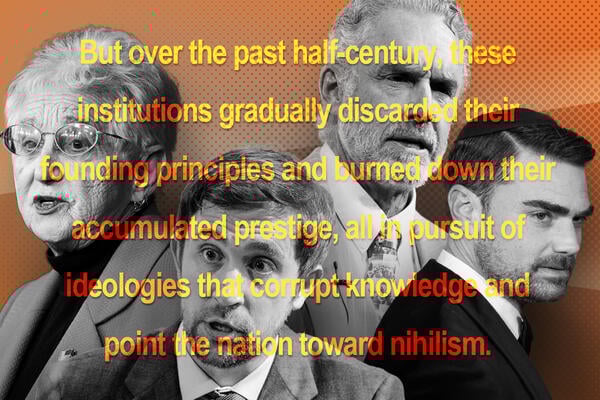
    Earlier this month, the Manhattan Institute released a statement with a proposed “new contract” for higher education and called on President Trump to write the terms of that contract into “every grant, payment, loan, eligibility, and accreditation” and then revoke federal funding for colleges and universities if they aren’t following them. To maintain public funding, universities would, for example, have to “advance truth over ideology,” “cease their direct participation in social and political activism,” and “adhere to the principle of colorblind equality, by abolishing DEI bureaucracies, disbanding racially segregated programs, and terminating race-based discrimination in admissions, hiring, promotions, and contracting.”

    Another term of the proposed contract would require universities to enact “swift and significant penalties, including suspension and expulsion, for anyone who would disrupt speakers, vandalize property, occupy buildings, call for violence, or interrupt the operations of the university.”

    You may be thinking: Well, think tanks and political actors publish things like this all the time. What’s the big deal?

    This proposed list of reforms was led by the Manhattan Institute’s Christopher Rufo, who has been the architect of many of the attacks on higher ed that we have seen come out of the White House and the Department of Education over the last six months.

    But what is more concerning is it was signed by Congresswoman Virginia Foxx—former chair of the House Education and Workforce Committee who oversaw the first subpoena sent to a higher education institution under the pretext of fighting antisemitism on campus. It was also endorsed by Education Secretary Linda McMahon, who posted on X to congratulate the Manhattan Institute for “envisioning a compelling roadmap to restore integrity and rigor to the American academy!”

    All this brings to mind Project 2025—an initiative led by another conservative think tank, the Heritage Foundation, which Democrats warned the American people about before the election and that has since been largely followed as a policy agenda for the Trump administration. You may remember that the education chapter of this conservative platform was written by the director of Heritage’s Center for Education Policy, Lindsey Burke—the same person now serving as the deputy chief of staff for policy and programs at the U.S. Department of Education.

    As predicted, the policy proposals in Project 2025 mirror those being pursued by the current leadership at the Department of Education. Providing universities more flexibility on accreditation; rescinding the Biden administration’s Title IX regulations; eliminating the disparate impact standard in civil rights cases; phasing out existing income-driven repayment plans; eliminating GEAR UP; transferring programs from the Office of Career, Technical and Adult Education to the Department of Labor; and capping indirect cost rates for federal science grants are just a few of the policies in Project 2025 that have started to come to fruition in the Trump administration.

    We now have another road map that college leadership and policymakers need to be ready to push back on. As noted above, the Manhattan Institute’s agenda is comprised of pledges for colleges and universities that include ending participation in social and political activism; abolishing diversity, equity and inclusion programs; ending race-based decisions in hiring, promotions and contracting; and enacting restrictions on free speech. In other words, it is a road map for a new level of federal interference into the administration of colleges and universities. It is not a road map for reforms that will help students. Rather, it is an attempt to undermine the independence of our higher ed institutions by dictating policies—those based on a specific political ideology—in exchange for federal funding.

    What’s next? Just like the proposals in Project 2025, Christopher Rufo’s proposals have had a pretty good track record of being implemented by the Trump administration. If the past is prologue, we can expect to see new language in program participation agreements that ties Title IV funds to restrictions on academic freedom; new accreditation rules that prohibit standards around diversity, equity and inclusion; and certifications sneaked into grant terms and conditions that threaten strict penalties for activities that do not align with this administration’s ideology.

    Higher education institutions have been far from perfect, and some may even have drifted from their missions of serving all students in the best way possible. But what students deserve is a reform agenda that leads to student success, college completion and strong postsecondary outcomes. That is the agenda that should be endorsed by our nation’s leading education official. What the Manhattan Institute is proposing is not an agenda that is in our country’s best interest.

    We need an agenda that makes access to a college degree or credential of value affordable and accessible. We need an agenda that allows a range of viewpoints to thrive across college campuses and fosters intellectual diversity. We need an agenda that ensures college campuses are inclusive communities and that they serve all students, and we should have a contract between the federal government and colleges and universities that protects investments in our nation’s future and success—not one that threatens disinvestment and opens the door for political interference and federal intrusion.

    Amanda Fuchs Miller served as the deputy assistant secretary for higher education programs at the U.S. Department of Education in the Biden-Harris administration. She is the president of Seventh Street Strategies, which advises higher ed institutions, nonprofit organizations and foundations on policy and advocacy strategies.

    Source link

  • DOJ Says UCLA Violated Jewish Students’ Civil Rights

    DOJ Says UCLA Violated Jewish Students’ Civil Rights

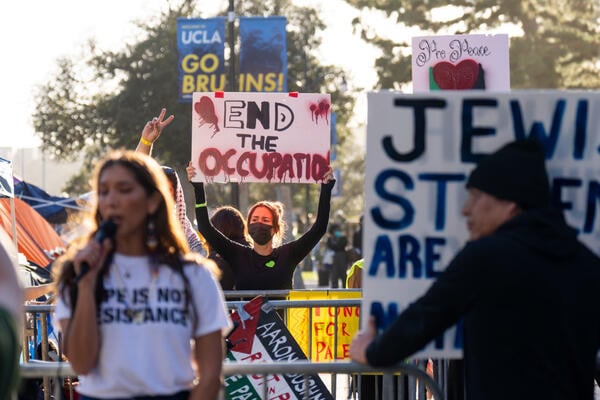
    The U.S. Department of Justice issued a notice to the University of California, Los Angeles, on Tuesday alleging that it violated civil rights law. The move came just hours after the university announced a $6.45 million settlement to end a lawsuit brought by Jewish students over allegations of antisemitism last year.  

    “The Department has concluded that UCLA’s response to the protest encampment on its campus in the spring of 2024 was deliberately indifferent to a hostile environment for Jewish and Israeli students in violation of the Equal Protection Clause and Title VI,” the notice read. It also said an investigation into the University of California system is ongoing.

    The message made no mention of the settlement; UCLA divided the funds between the plaintiffs and Jewish advocacy and community organizations. The settlement also said the university cannot exclude Jewish students or staff from educational facilities and opportunities “based on religious beliefs concerning the Jewish state of Israel.” (Jewish student plaintiffs argued they were barred by pro-Palestinian protesters from entering certain areas of campus.)

    According to the federal notice, UCLA now has until Aug. 5 to contact the DOJ to seek a voluntary resolution agreement “to ensure that the hostile environment is eliminated and reasonable steps are taken to prevent its recurrence.” DOJ officials said they’re prepared to file a complaint in federal district court by Sept. 2 “unless there is reasonable certainty that we can reach an agreement in this matter.”

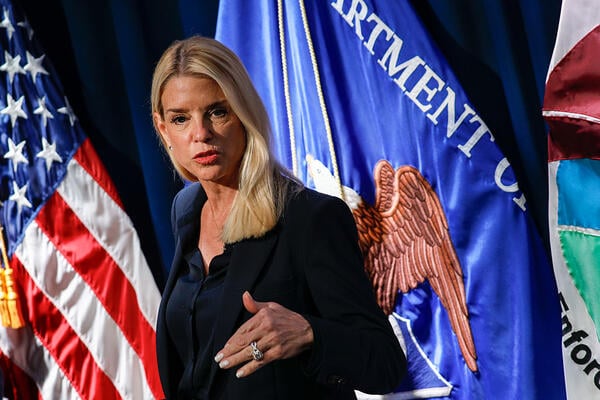
    “Our investigation into the University of California system has found concerning evidence of systemic anti-Semitism at UCLA that demands severe accountability from the institution,” Attorney General Pamela Bondi said in a statement. “This disgusting breach of civil rights against students will not stand: DOJ will force UCLA to pay a heavy price for putting Jewish Americans at risk and continue our ongoing investigations into other campuses in the UC system.”

    Source link

  • HACU Seeks to Fight Lawsuit Targeting HSIs

    HACU Seeks to Fight Lawsuit Targeting HSIs

    The Hispanic Association of Colleges and Universities, represented by the civil rights organization LatinoJustice PRLDEF, recently filed a motion to intervene in a lawsuit that takes aim at Hispanic-serving institutions.

    The lawsuit was brought against the U.S. Department of Education by the state of Tennessee and Students for Fair Admissions, the advocacy group whose lawsuits against Harvard and the University of North Carolina at Chapel Hill resulted in the U.S. Supreme Court ruling against affirmative action in college admissions. The lawsuit claims the federal designation for HSIs, which requires 25 percent Latino enrollment, is discriminatory and therefore unconstitutional.

    HACU, an association representing HSIs, argued in its motion that it should become a party to the lawsuit to stand up for the constitutionality of the HSI program. The organization suggested the Education Department is unlikely to vigorously defend the federal designation while it’s in the process of dismantling itself.

    Antonio R. Flores, president and CEO of HACU, said the lawsuit “directly undermines years of advocacy by our founding members that led the federal government to formally recognize HSIs in 1992.”

    “The HSI program is a vital engine of educational excellence, workforce readiness and opportunity for all students attending these exemplary learning communities,” Flores said in a statement. “HACU joins in defending the policies and resources HSIs need to educate and serve 5.6 million students from all backgrounds nationwide.”

    Source link

  • Brown Strikes Deal With Trump Administration

    Brown Strikes Deal With Trump Administration

    Jonathan Wiggs/The Boston Globe via Getty Images

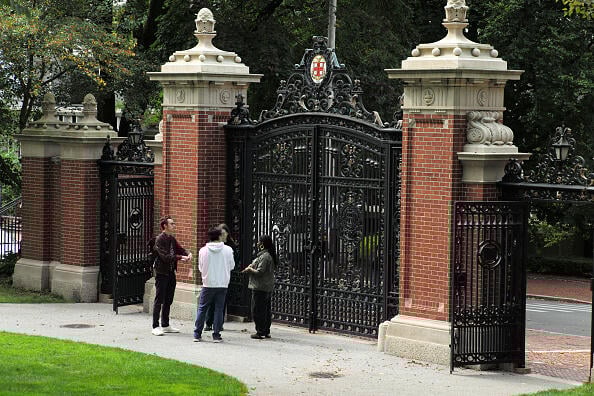
    Brown University has struck a deal with the Trump administration to restore about $510 million in frozen federal research funds in exchange for various concessions but no payment, officials announced Wednesday.

    The federal government will restore millions in frozen research funding and settle investigations over allegations of campus antisemitism, according to the agreement. While Brown will not pay out a settlement to resolve the complaints like its Ivy League counterpart Columbia University did, the university pledged $50 million over the next decade to state workforce development efforts in Rhode Island.

    Brown is the second university to cut a deal with the Trump administration since Columbia reached a similar agreement last week. Trump officials said the Columbia settlement would be a template for their talks with other colleges, though other higher ed experts argued the deal was unlawful and represented a threat to the sector at large. (Harvard University, which has also been in the administration’s crosshairs over alleged antisemitism, has reportedly considered a settlement of up to $500 million to resolve its ongoing dispute.)

    Still, Brown agreed to multiple other changes. They include adopting the Trump administration’s definitions of male and female, not performing gender-affirming surgeries on minors or prescribing them puberty blockers, providing admissions data to the federal government, and conducting a campus climate survey and sharing the results with the federal government. Brown also agreed to codify prior changes officials announced to combat discrimination on campus.

    The deal does not include restrictions on campus curriculum or programs.

    “At its core, the agreement preserves the integrity of Brown’s academic foundation, and it enables us as a community to move forward after a period of considerable uncertainty in a way that ensures Brown will continue to be the Brown that our students, faculty, staff, alumni, parents and friends have known for generations,” President Christina Paxson said in a statement.

    Brown announced the agreement shortly after the university took out a $500 million loan, which could have helped plug research funding holes or fund a protracted legal battle. The university also borrowed $300 million in April after the Trump administration froze research funding over allegations of antisemitism connected to pro-Palestinian protests.

    The funding freeze, along with other changes in federal policy, has hit the university hard, and officials warned in June of the potential for “deep financial losses.”

    Education Secretary Linda McMahon celebrated the deal, asserting in a statement that the agreement would protect Jewish students from antisemitism as well as women’s sports.

    “Restoring our nation’s higher education institutions to places dedicated to truth-seeking, academic merit, and civil debate—where all students can learn free from discrimination and harassment—will be a lasting legacy of the Trump administration, one that will benefit students and American society for generations to come,” McMahon wrote in a social media post.

    Source link

  • DOJ Declares Slew of DEI Practices Unlawful in Memo

    DOJ Declares Slew of DEI Practices Unlawful in Memo

    Photo by Yasin Ozturk/Anadolu via Getty Images

    More than three months after a federal court struck down an Education Department directive that barred any practices that consider race at colleges across the country, the Department of Justice declared Wednesday that diversity, equity and inclusion practices are unlawful and “discriminatory.”

    But the agency’s memo goes even further than ED’s guidance, suggesting that programs that rely on what they describe as stand-ins for race, like recruitment efforts that focus on majority-minority geographic areas, could violate federal civil rights laws. The directive applies to any organization that receives federal funds, and DOJ officials warned that engaging in potentially unlawful practices could lead to a loss in grant funding.

    Other examples of “potentially unlawful proxies” include requirements that job applicants “demonstrate ‘cultural competence,’ ‘lived experience,’ or ‘cross-cultural skills’” or narratives about how the applicant has overcome obstacles, Attorney General Pamela Bondi wrote.

    This interpretation of federal law could present new challenges for colleges that have relied on tactics like place-based recruitment to create diverse student bodies since the Supreme Court banned affirmative action in 2023. For instance, some colleges have guaranteed admission to students who graduate in the top 10 percent of their high schools.

    “This highlights that every practice of colleges is under scrutiny, even ones that have been viewed as politically safe for years (such as top ten percent plans or even TRIO programs). The only truly safe ways to admit students right now are to admit everyone or only use standardized test scores,” Robert Kelchen, a professor in the University of Tennessee at Knoxville’s Department of Educational Leadership and Policy Studies, wrote in an email to Inside Higher Ed. “Being an enrollment management leader has always been tough, but now it’s even more challenging to meet revenue targets and satisfy stakeholders who have politically incompatible goals.”

    The document offers clearer guidance about what the Justice Department considers off-limits as it investigates DEI at colleges and universities. The DOJ is playing a greater role in investigating colleges as it enforces its position that DEI programs as well as efforts to boost diversity among faculty and staff violate federal antidiscrimination laws.

    Since President Trump took office in January, he’s targeted DEI programs, practices and personnel via executive orders and other efforts. However, higher ed experts have repeatedly said that the orders don’t change the underlying laws, so colleges that complied with the law before Jan. 20 remain in compliance. In response to the federal edicts, colleges have rolled back a number of their programs and closed centers that catered to specific student groups.

    Many of the practices declared unlawful in the nine-page memo echo those referenced in the Education Department’s February Dear Colleague letter, such as race-based scholarships. But it also explicitly states that “BIPOC-only study lounges” and similar facilities are unlawful. The Education Department’s guidance mentioned race-based facilities generally but not specifically study lounges.

    DEI advocates have long argued that these centers or lounges are open to all students. Some have persisted even after state DEI bans, but multiple colleges have in recent months closed centers that catered to specific student groups. Bondi argued that such spaces violate Title VI of the Civil Rights Act of 1964, which bars discrimination based on race and national origin.

    “Even if access is technically open to all, the identity-based focus creates a perception of segregation and may foster a hostile environment. This extends to any resource allocation—such as study spaces, computer labs, or event venues—that segregates access based on protected characteristics, even if intended to create ‘safe spaces,’” the order reads.

    Lynn Pasquerella, president of the American Association of Colleges and Universities, said that the memo is “another example of governmental overreach into academic freedom, institutional autonomy and shared governance that conditions federal funding on ideological alignment with the administration’s viewpoints.”

    She added that the guidelines in the document violate existing constitutional protections and erode federal civil rights law.

    “What is missing from the DOJ narrative on DEI is that treating people differently is not always unjust, especially when doing so corrects a broader pattern of systemic injustice. Considering race and gender in the context of historic unjust discrimination to inform policies and practices at colleges and universities doesn’t in and of itself constitute illegal discrimination, though the letter suggests otherwise.”

    Beyond race-based practices, the letter also addresses transgender student athletes, building on the Trump administration’s previous actions that advocates say deny the existence of trans individuals and roll back their rights. The memo states that it would “typically be unlawful” for someone assigned male at birth to compete on women’s sports teams or for an institution to “compel” individuals to share an intimate space, like a locker room, with someone of another sex.

    Pasquerella noted that the letter offers guidance, not legal mandates.

    “Nevertheless,” she said, “what are described as ‘best practices and nonbinding suggestions’ will likely cause another wave of anticipatory compliance and overcorrection given the climate of fear and intimidation created by the weaponization of research funds.”

    Katherine Knott contributed to this report.

    Source link

  • NCCU Receives $500K Grant to Study Career Barriers Facing Young Men in Research Triangle

    NCCU Receives $500K Grant to Study Career Barriers Facing Young Men in Research Triangle

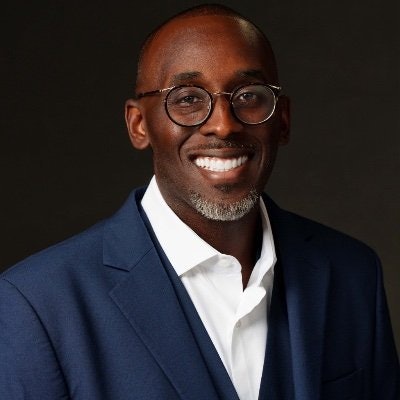
    NDr. Tryan McMickensorth Carolina Central University has received a $500,000 grant from the Walton Family Foundation to launch a  research initiative addressing the systemic barriers that prevent young men in the Research Triangle region from accessing career pathways and educational opportunities.

    The two-year study, titled “Understanding Education as a Career Choice for NC Research Triangle Youth,” will focus on what researchers term “opportunity youth” – young men between ages 18 and 24 who have become disconnected from both education and employment systems. Despite broader national gains in educational access, this demographic continues to face significant obstacles that contribute to high dropout rates and limited postsecondary success.

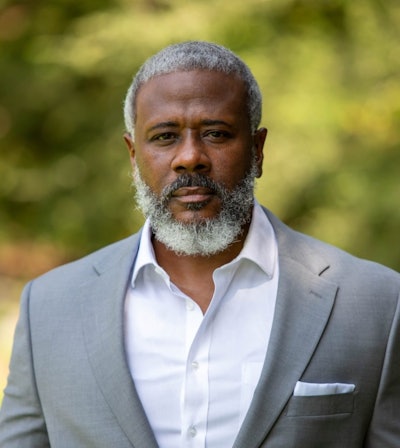
    Dr. Tryan McMickens, professor of higher education and coordinator of NCCU’s higher education administration program, will lead the initiative alongside Dr. Jim Harper II, professor of history and associate dean of the School of Graduate Studies. Their research team will include faculty members, six graduate students from the higher education administration and history programs, and a dedicated project manager.Dr. Jim Harper II Dr. Jim Harper II

    “I am thrilled that the Walton Foundation has chosen to invest in NCCU faculty to advance research on postsecondary attainment among boys and young men,” said Dr. Ontario Wooden, NCCU provost and vice chancellor for academic affairs. “This support highlights the importance of this critical area and empowers our faculty to deliver meaningful, evidence-based results. I eagerly anticipate the insights and impact this work will bring.”

    The research aims to move beyond simply identifying problems to developing concrete solutions through research-based interventions, community engagement, and policy recommendations. The project will culminate in a two-day conference planned for 2026, where findings and potential interventions will be shared with stakeholders across the region.

    McMickens brings extensive expertise in higher education access and the experiences of Black male students to the project. His research centers on college mental health and historically Black colleges and universities, and he authored Black Male College Students’ Mental Health: Providing Holistic Support in Higher Education. Harper’s scholarship focuses on African and African American education and innovative uses of technology for public engagement with history. He co-authored With Faith in God and Heart in Mind: A History of Omega Psi Phi Fraternity, Inc.

    The Research Triangle region, encompassing Raleigh, Durham, and Chapel Hill, represents one of the nation’s most concentrated areas of higher education institutions and technology companies. However, the economic opportunities created by this educational and technological hub have not been equally accessible to all young people in the region, particularly young men from underserved communities.

    The Walton Family Foundation, established by descendants of Walmart founders Sam and Helen Walton, focuses its philanthropic efforts on three primary areas: improving K-12 education, protecting rivers and oceans along with their communities, and investing in Northwest Arkansas and the Arkansas-Mississippi Delta. The foundation also supports projects reflecting individual family members’ personal interests.

    The timing of this research initiative comes as higher education institutions nationwide are examining their role in addressing broader social and economic inequities, particularly those affecting young men of color who face disproportionate barriers to educational and career advancement.

    Source link