By Professor Isabel Lucas, Pro-Vice Chancellor for Education at the Liverpool School of Tropical Medicine and outgoing Chair of the national Heads of Educational Development Group (HEDG).
In higher education, prestige and promotion have long hinged on research output. But with growing numbers of academics focused on teaching, educational leadership and knowledge exchange, the old metrics no longer fit. A report by the European Association for Universities places academic career reform at the heart of its 2030 vision, highlighting the need to recognise impact beyond traditional research publications. This shift is not only about fairness – it’s about organisational effectiveness and employee wellbeing.
Research has long dominated academic prestige, promotions, and funding. Sterling et al. (2023) argue that current academic career frameworks are weighted heavily toward research, often sidelining innovative teaching and educational leadership. Yet, as the higher education sector evolves, so too must our understanding of what counts as impactful academic work.
The reality is already shifting. Data from HESA (2022) shows a 10% rise in teaching-only contracts between 2015 and 2022, balanced by a 9% decrease in research-related roles. This suggests a growing academic population for whom the current research-heavy promotion pathways simply don’t apply. However, ‘teaching-only’ staff (a problematic term as it is inevitably not only teaching) often find themselves ineligible – or unrecognised – within traditional academic progression systems. The lack of progression routes for these high-quality staff capable of transforming the education and student experience at a strategic level risks undermining job satisfaction and retention.
What’s more, staff on Professional Service contracts, including roles like educational developers and academic skills support tutors, are engaged in academic work without the benefits or recognition of an academic title. HESA’s own definitions blur the lines: academic function is tied to the contract, not necessarily the work performed. This disconnect creates a situation where talented, impactful educators are ‘othered’ – excluded from meaningful recognition and progression.
Key findings from sector analysis undertaken in 2024 via the Heads of Educational Development Group (HEDG) showed some alarming disparities among middle managers with institutional responsibility for learning and teaching:
Career Blockages:
100% of academic contract holders in the study had access to promotion to Reader/Professor.
Only 39% of Professional Service contract holders had similar access—even when doing the same academic work as peers on academic contracts.
Misalignment of Identity and Contract:
Staff whose professional identity did not match their contract type (e.g. self-identifying as academic but on a Professional Service contract) reported significantly lower satisfaction and empowerment scores.
Promotion Criteria Gaps:
Respondents noted they could meet academic promotion criteria, but were ineligible due to contract type.
Job satisfaction scores were lowest where staff reported that promotion routes existed but were inaccessible due to the nature of their role.
So, how can HE evolve its career structures beyond research? Establishing clear, visible academic promotion routes to Reader/Professor that recognise leadership in education, curriculum innovation, and pedagogic research would be a good starting point. Making sure promotion frameworks include non-research excellence – impact on student learning, institutional strategy, and sector-wide education initiatives – would be even more inclusive. Neither of these things should pose a significant operational or cost challenge to universities and would reap significant rewards in staff retention and satisfaction.
Institutions that fail to adapt risk not just losing talent, but falling behind in impact, innovation, and reputation. It’s time to value all forms of academic excellence. The future of higher education, now more than ever, depends on it.
Back in 2001, when I first attended university, I didn’t join any student organizations, clubs or professional societies. I was busy with classes, after all, and didn’t know what benefit they could provide me anyway. What possible value would becoming a SACNAS member offer? Some clubs even required a membership fee!
Now I know better. Professional societies are a critical, often overlooked way of building your network, strengthening your résumé and finding professional development opportunities outside classes. As discussed in a 2020 Developmental Biology article titled “Professional societies can play a vital role in career development,” professional societies offer conferences, workshops, virtual seminars and free resources to members and, in many cases, nonmembers.
These resources provide learning opportunities across multiple categories, including professional development, career deep dives and leadership training. My own organization, the Genetics Society of America, offers the Leadership Dialogue Series organized by our early-career scientists, seminars in languages other than English and workshops on different types of careers and topics related to accessibility in STEM. Each of these events represents an opportunity not just for our community to learn about a new career, skill or research topic, but also provides CV and résumé boosts to our event organizers, whose volunteerism powers GSA’s ability to offer these resources.
Speaking for myself, when I returned to school in 2010, I joined groups that aligned with my career and professional goals: building a support community via a Society for Advancement of Chicanos/Hispanics and Native Americans in Science membership, building a professional community via a Graduate Student Association and Association for Women in Science membership, learning more about science writing opportunities via a National Association of Science Writers membership, and connecting with fellow mycologists via a Mycological Society of America membership.
As a transfer student with a previous degree, I was also inducted into the Tau Sigma National Honor Society. Now, as a career development professional, I am an active member and volunteer for the Graduate Career Consortium. All these memberships helped guide me to the career I have today and have opened numerous opportunities for collaborations, event organizing, volunteer work and personal career development. I can say without any hesitation that my membership with GSA, MSA and NASW led me directly to the position I have now, and collectively my society memberships keep me informed of current developments in higher education, professional development opportunities, and my own field of genetics.
As you scan each professional society’s page, note the many conferences, professional development programs and job postings each of these memberships gives you access to. You may not be in a position to invest in more than one professional society, and that’s perfectly fine! Choosing one specific society as your “home” and focusing your volunteer efforts and involvement in this specific society is a wonderful way to build your network; connect with other like-minded professionals; collaborate in organizing high-value, marketed events; and learn the inner workings of a professional society.
Choosing your society of interest might seem daunting. Here are some tips to help you navigate this choice and select the best society to fit your needs:
Cost: Determine how much you can budget each year for a membership. You may need to save up to afford this cost at a future date, so keep track of membership renewal times. Check with your adviser, lab or department to see if they would be able and willing to pay for one professional society membership as part of your graduate studies. Many societies offer lower rates for students. Also check for low-income waivers—many societies offer discounts or waivers due to economic hardship.
Field-specific societies: If you’re a physicist, the American Physical Society makes more sense to join than GSA. A social worker should join a society such as the National Association of Social Workers. Whatever your field, there’s a professional society that serves your community! If you’re not sure what your field’s societies are, ask your adviser and other faculty. You can also ask an AI tool to compile a list, with links to check sources, using this prompt: “Create a table for scientific societies based in the United States which serve [YOUR FIELD] academics. The columns should be society name, website, upcoming conferences and membership cost for a graduate student member.” For example, using this prompt with “history” as the field, I received the following results from OpenAI’s ChatGPT:
Here is a table of prominent U.S.-based scientific societies that serve history academics, including their websites, upcoming conferences and graduate student membership costs:
34th Annual Meeting, June 26–28, 2025, Louisville, Ky.
Not specified
Please note that membership costs and conference details are subject to change. For the most accurate and up-to-date information, it’s best to visit the respective society’s official website.
You can see that not every result includes a cost, but because I have the website, I can quickly check and find that the American Historical Association offers a one-year student membership for $42 and update my table accordingly. Since two of the conference dates listed on the table have already passed, I can also easily update the information for the Organization for American History and the American Catholic Historical Association to reflect the planned 2026 conference dates and locations.
Attend a conference: Talk to your adviser about attending a conference offered by the professional society you’re interested in. Many societies offer travel fund awards that you can apply for if your adviser is not able to support your attendance.
Check out the organization’s professional development opportunities: If the society has an early-career program or committee, apply to become a member! These programs are an excellent way to get your name out to a large number of colleagues and build your network, as the early-career students you work with will become your professional colleagues who step into academia, industry and beyond with you.
Be strategic in your involvement: Decide how much time you’re willing to invest each month in a volunteer opportunity and guard your time diligently. Burnout is a fast way to turn a positive experience into a negative drag on your time, so approach each opportunity as a large project and add more only if you have the time. You don’t want to become known for bailing out on multiple collaborative volunteer opportunities!
When thinking about which professional society you should join, make sure you’re choosing the society that aligns with both your career goals and personal needs, and that offers you the best opportunities for your investment. Talk with your adviser to see if there’s a society they recommend and begin your professional society journey early to maximize this resource as you move forward in your career.
Jessica M. Vélez is the senior manager of engagement, community building and professional development for the Genetics Society of America. She earned her Ph.D. in energy science and engineering from the University of Tennessee, Knoxville, in 2020, and was awarded the National GEM Fellowship during her graduate studies.
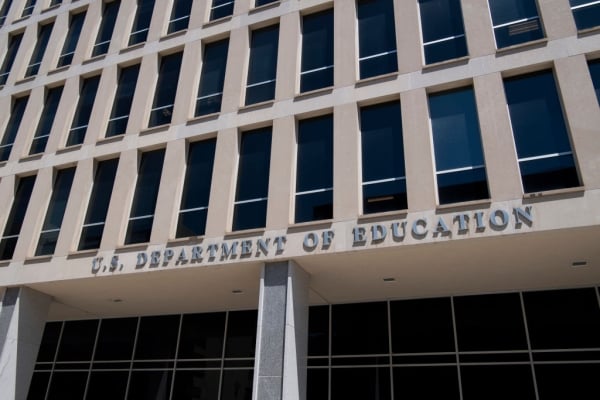
The Trump administration asked the Supreme Court on Friday to allow it to move forward with its plan to lay off nearly half of the Education Department’s employees and dismantle the agency, USA Today reported.
In late May,a federal district court ruled that the reduction in force made it impossible for the executive branch to carry out congressionally mandated programs and services. An appeals court affirmed that ruling June 4.
President Trump and his Department of Justice, however, disagree with both rulings, and they hope the 6-to-3 conservative majority on the Supreme Court will, too.
“The Constitution vests the Executive Branch, not district courts, with the authority to make judgments about how many employees are needed to carry out an agency’s statutory functions, and whom they should be,” Solicitor General John Sauer wrote in the emergency appeal to the Supreme Court.
States, school districts and teachers’ unions involved in the case have until June 13 to respond to Trump’s appeal, the Supreme Court stated.
More colleges and universities are investing in support service offerings to increase student retention and graduation outcomes, but these interventions and offices come at a cost—one that is often subsidized by students.
A recently published analysis from Studocu of data from the Integrated Postsecondary Education Data System finds that among four-year colleges and universities, most spent nearly $2,933 on academic supports and $4,828 on student services during the 2022–23 academic year. Across all institutions, the average expense per full-time equivalent student was $3,334 for student services and $4,198 for academic supports.
The group analyzed over 1,000 degree-granting institutions across the U.S. that enroll at least 101 undergraduates. Institutions ranged from large, primarily online institutions to small liberal arts colleges. Community colleges and technical colleges were not included in the study.
Academic support offerings were categorized as classroom-focused interventions, including tutoring centers, writing labs, academic advising and technology-enhanced learning tools. Student services included mental health counseling, career services, housing assistance and extracurricular programs, according to Studocu.
The biggest spenders on academic supports were, not surprisingly, wealthy Ivy League institutions. Yale University spent the most on academic supports ($1.8 billion) in the 2023 fiscal year, followed by the University of Pennsylvania ($1.1 billion) and Harvard University ($1 billion), each of which has an undergraduate population of less than 10,000.
Per student, Yale invested $225,000, Harvard spent $132,000 and Penn spent $105,707 on academic interventions.
Next in line were two public institutions: the University of Washington at Seattle, which spent $844 million for 30,000 undergraduates, or $28,133 per student, and the University of California, San Diego, which spent $844 million for 32,800 undergraduates, or roughly $25,732 per student.
Looking at student services, some of the institutions that spent the most were those with substantial online student bodies, including Grand Canyon University ($504 million), Southern New Hampshire University ($435 million), Liberty University ($289 million) and Arizona State University ($243 million).
But Yale spent the most per capita, investing $53,000 per student in nonacademic programs, followed by the California Institute of Technology and the U.S. Naval Academy, which spent $41,000 and $36,000 per student, respectively.
The analysis also revealed a positive correlation between dollars spent per student and graduation rates, which researchers said suggest well-funded support services provide meaningful benefits, particularly for students who might otherwise be at risk. However, the data does not capture the privileges of socioeconomic advantage that may supplement on-campus offerings, nor the likelihood of students to graduate regardless of support offerings due to selective admissions processes.
Students foot the bill: The high level of investment in student supports contrasts with the revenue the average student produces. The average public college received about $8,720 net revenue in tuition and fees per full-time-equivalent student in 2021, and the average private nonprofit received $23,900, according to the National Center for Education Statistics.
A growing number of colleges and universities are embedding student service fees into tuition costs to fund support offerings, particularly health and wellness resources.
James Madison University, which spends around $1,620 per student on support services and $3,220 on academic resources, charges $5,662 in student fees, among the highest in the nation, according to a Sportico analysis. Nearly half ($2,362) of that fee goes directly to athletics funding, Sportico reported.
Harvard charges $3,676 annually for student services as part of the cost of attendance, a fraction of its total spend per student ($163,000). The Massachusetts Institute of Technology bills students $420 annually for student clubs and organization funding, as well as fitness activities—about 2 percent of the total dollars invested in student supports. Caltech charges $2,586 in fees, while the Naval Academy does not charge tuition.
The University of Pennsylvania lists $8,032 in fees in its estimated costs of attendance, but it’s unclear which expenses students are paying for with those fees.
Yale does not differentiate student fees in tuition prices, grouping lab, library and gymnasium costs into a student’s tuition package. Similarly, UCSD and UW do not have additional fees associated with the cost of attendance.
This is the latest of a series of contract cuts for the Institute of Education Sciences.
Caroline Brehman/CQ-Roll Call Inc./Getty Images
The Trump administration terminated a key contract to train college officials on how to report data to the Integrated Postsecondary Education Data System, a move that could further hamper the Education Department’s data infrastructure.
Used to track trends in higher education enrollment, completion, financial aid usage and other institutional characteristics, IPEDS survey data has long been critical to higher education research. But in order to access and utilize the data, institutions need to know how to properly complete the survey and researchers need to know how to navigate the database.
That’s where the Association of Institutional Research and its IPEDS training programs came in—or at least they used to.
In a social media post Thursday, AIR’s executive director, Christine Keller, announced that the organization’s subcontract with IPEDS and the National Center for Education Statistics would not be renewed for the upcoming academic year. This means that updated self-paced courses and video tutorials on how to report and use data, as well as in-person workshops on topics like how to set data-informed benchmarks and improvement plans for an institution, will no longer be available.
“When you’ve done meaningful work with committed partners for more than two decades, it’s difficult to acknowledge that it’s coming to an end,” Keller wrote. “While this chapter is closing, AIR’s commitment to supporting data-informed decision-making remains strong. We are actively exploring ways to continue offering select IPEDS training under the AIR brand to meet the needs of our community.”
But while AIR intends to continue similar training models, Keller was sure to clarify that any future coaching will come at a cost. Past resources were subsidized by the contract and therefore available for free.
The end of this subcontract will not, however, terminate other components of the IPEDS contract managed through RTI International—such as aiding in data collection, maintaining the IPEDS website and managing the help desk. (This paragraph has been corrected to reflect that RTI International contract for IPEDS.)
An Education Department spokesperson wrote in an email that the decision reflected its commitment to supporting “useful and relevant research” while “respecting the American taxpayer’s wallet.”
“Multiple federal contractors were collecting 50 percent or more in overhead costs, which is neither sustainable nor reasonable,” the spokesperson said. “We believe in the value of training users to make best use of federally funded databases. Thus, we are in [the] process of reexamining how that training might be more efficiently and effectively delivered in the future.”
College staff members and policy experts who focus on using institutional data to improve student outcomes, however, say the discontinuation of free AIR training programs will be devastating.
Henry Zheng, vice provost for institutional effectiveness and planning at Carnegie Mellon University, wrote on LinkedIn that this abrupt ending was “sobering” and that he is “pray[ing] that this program will continue on another day.”
Wesley Whistle, a project director on student success and affordability at New America, a left-leaning think tank, also took to LinkedIn to comment on the news, saying, “These trainings are vital for institutional researchers as they fulfill their reporting obligations.”
And this is not the first blow for IPEDS and NCES under the Trump administration. In February, Elon Musk’s Department of Government Efficiency announced that it had canceled nearly $900 million in contracts across the statistics center and its larger parent agency, the Institute of Education Sciences.
At the time, a DOGE official said 89 IES contracts were canceled, while other organizations put the total at closer to 170. (Previous Inside Higher Ed reporting has shown that the data being published by DOGE regarding the scope and effect of its cuts is likely inaccurate.)
Additionally, the department fired more than 80 percent of IES’s 120 employees. The Education Department said in recent budget documents that it is planning to reimagine “a more efficient, effective, and useful IES to improve support for evidence-based accountability, data-driven decision making, and education research for use in the classroom.”
Collectively, IPEDS, NCES and IES serve as the Education Department’s research and development arm, funding research on how to improve equity in education access and outcomes in the future as well as providing data on how students in K–12 and college fare in programs. So to discontinue the services that bolstered college staff members’ professional development could hurt their ability to report congressionally mandated statistics accurately, higher ed experts say.
In the end, some fear that losing the training could lead to less data-informed decision-making.
“We need to collect data both at the national level and at the institutional level. Without measuring the problem, we risk pretending it doesn’t exist,” wrote James Orlick, director of grant writing and innovation for inclusive excellence at the University of Louisville. “The belief that ‘if you don’t measure it, it isn’t a problem’ reinforces inaction and won’t solve the systemic issues we face.”
The University of Michigan hired dozens of private investigators to go undercover on campus and surveil pro-Palestinian student protesters,The Guardian reported Friday.
Some of the investigators, who work for a Detroit-based security firm, were caught on camera trailing, recording and harassing students; one reportedly drove a car at one student, who had to jump out of the way.
“It’s so insane that they have spent millions of dollars to hire some goons to follow campus activists around,” one student who’d been followed by agents told The Guardian. “It’s just such a waste of money and time.”
A spokesperson for the university did not deny hiring the investigators in responses to The Guardian’s questions and defended “security measures” as essential to “maintaining a safe and secure campus environment.”
Grant House, the plaintiff in a now settled antitrust lawsuit against the NCAA, swam for Arizona State University.
Michael Reaves/Getty Images
Federal district judge Claudia Wilken granted final approval to a multi-billion-dollar settlement in the yearslong House v. NCAA lawsuit late Friday evening, effectively transforming college sports: Starting July 1, institutions will be allowed to pay student athletes directly.
In accordance with the settlement, the National Collegiate Athletic Association and colleges in Division I conferences will distribute nearly $2.8 billion in back damages over the next 10 years to athletes who competed any time since 2016, as well as to their lawyers. The case also allows each college that opted in to pay their athletes collectively up to $20.5 million per year, in addition to scholarships. That figure will increase incrementally over time.
The ruling, which technically resolves three antitrust lawsuits against the NCAA, essentially turns student-athletes from amateurs into professionals. But experts say this isn’t likely to end court battles over athletics. The creation of the revenue-sharing model (where schools distribute money earned from areas such as media rights or merchandise), combined with existing turmoil over the regulation of name, image and likeness (NIL) deals, will only invite more lawsuits, they say.
“The judge said, in essence, this is not a perfect settlement that solves everyone’s concerns, but it makes progress towards ‘righting the wrongs’ of higher education’s desire to maintain amateurism status for the players but no one else,” Karen Weaver, adjunct assistant professor in the graduate school of education at the University of Pennsylvania, wrote in an email to Inside Higher Ed.
Although many colleges began making changes to their programs in anticipation of the settlement’s approval, the timing of the ruling could present logistical challenges as they move to start revenue-sharing with students from the July 1 deadline set out in the suit.
Current and former athletes have celebrated the ruling.
“It’s historic,” former college basketball star Sedona Prince, a co-lead plaintiff in one of the lawsuits, told ESPN. “It seemed like this crazy, outlandish idea at the time of what college athletics could and should be like. It was a difficult process at times … but it’s going to change millions of lives for the better.”
Wild West Yet to be Tamed
Judge Wilken’s ruling comes nearly two months after both parties presented arguments in early April for approving the settlement, and nearly five years after the suit was first filed in 2020. But contentious debates over how to manage paying student athletes really erupted in 2021, when NIL deals were first legalized.
Since then, collectives made up of alumni and boosters have paid athletes millions of dollars to play at schools through unregulated NIL partnerships. Top football and basketball players have earned the most.
College leaders have argued that the collectives could give wealthier institutions an unfair recruiting advantage. The House settlement, which not only allows colleges to pay athletes directly but also gives conferences the power to regulate booster influence, could help solve that problem.
“For several years, Division I members crafted well-intentioned rules and systems to govern financial benefits from schools and name, image and likeness opportunities, but the NCAA could not easily enforce these for several reasons,” NCAA president Charlie Baker wrote in a statement Friday. “The result was a sense of chaos: instability for schools, confusion for student-athletes and too often litigation.”
“The settlement opens a pathway to begin stabilizing college sports,” Baker said. “This new framework that enables schools to provide direct financial benefits to student-athletes and establishes clear and specific rules to regulate third-party NIL agreements marks a huge step forward for college sports.”
The settlement alsoestablishes a new clearinghouse, run by Deloitte, that will vet any endorsement deal between a booster and an athlete worth more than $600, with the goal of ensuring it is for a “valid business purpose.”
Still, doubts remain about how the watchdog will work; one commenter on X noted that all it takes for boosters to create an NIL regulatory loophole is to pay athletes in multiple $599 payments rather than one mass sum
Despite the efforts to regulate NIL payments through the clearinghouse, Weaver said the settlement will create “a feeding frenzy of agents and dealmakers capitalizing on a few athletes wealth while schools scramble to lock down players who could bolt for a better offer at any moment.”
“I expect to see the first Title IX lawsuits, and requests for an immediate stay, filed as soon as this week,” she said. “It’s important for higher education leaders to understand the far-reaching impact on our industry—it’s only just begun.”
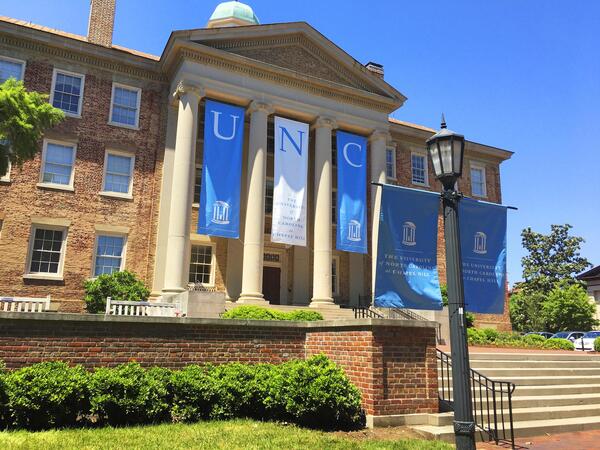
Last month, Peter Hans, president of the University of North Carolina system, casually dropped a bombshell announcement that the system and others were in talks to launch a new accreditor.
“We’ve been having a number of discussions with several other major public university systems, where we’re exploring the idea of creating an accreditor that would offer sound oversight,” Hans said at a UNC system Board of Governors meeting last month, The News & Observer reported.
Since then, no additional details have emerged, though Hans teased an update to come in July.
But public records obtained by Inside Higher Ed show UNC system officials have been quietly engaged in conversations about launching a new accreditor for at least a year, including discussions with unnamed collaborators in Florida, where the effort could be headquartered. UNC officials have also spoken with officials at the U.S. Department of Education, even getting a heads-up on what an April 23 executive order from the Trump administration on accreditation would entail.
Here’s what those documents show.
‘The Florida Project’
In early April, UNC officials appeared ready to tell the world about their plans for a new accreditor that “would be publicly accountable, outcomes-based, and more efficient and effective in its reviews,” according to the draft of a statement that was never publicly released.
“We believe it is past time for the creation of a new accreditor focusedon the unique needs of public colleges and universities,” the statement said. “We have worked collaboratively over the past year to explore and develop such a cross-state partnership.”
Andrew Kelly, a senior adviser to Hans, sent a draft of the statement to other UNC officials. The statement argued that accreditors “wield enormous power, but too often have opaque and counterintuitive governance” and fail to “focus on matters that are significant to students.” He argued in the statement that the current model “creates unnecessary duplication and cost, conflicts with the authority of state governments, and does little to ensure educational quality.”
An unidentified number of state systems of higher education were supposed to sign the statement, according to the draft.
Kelly drafted the statement in response to the Trump administration’s anticipated changes to accreditation, which included streamlining the processes for ED to recognize accreditors and for institutions to switch agencies, among other changes to the system that serves as gatekeeper to federal financial aid.
But the public did not hear about the UNC system’s quiet effort to launch a new accreditor until Hans spoke up at the May board meeting.
Other emails yielded some insights into whom the UNC system might be partnering with.
Daniel Harrison, vice president for academic affairs at the UNC system, sent an email on April 23 to fellow officials recapping a call with the U.S. Department of Education and what could be expected in the coming executive order on accreditation (which was issued shortly after his email).
In that email, Harrison also pointed to potential partners in the accreditation effort.
“An update on the Florida project—we met with the new entities [sic] attorneys and made substantial progress toward determining the legal structure of the new accreditor. It is likely to be a single member Florida nonprofit corp. Florida would be the sole member, but would delegate all delegable powers to a Board of Directors made up of the participating states,” Harrison wrote.
But despite having met with potential partners, UNC considered going its own way.
In a response to Harrison, Hans asked him to convene several system officials involved with the effort to weigh the pros and cons of “joining [a] multi-state coalition” or “forming a NC entity.” Email records obtained by Inside Higher Ed don’t show what the group recommended, but remarks made by Hans at May’s meeting indicate the system opted for the coalition approach.
UNC system officials did not respond to requests for comment from Inside Higher Ed.
System leaders also appear to have discussed the effort with state legislators in private. On May 15, Hans asked senior vice president of government relations Bart Goodson to set up a meeting with Michael Lee, the Senate majority leader in the Republican-dominated Legislature. When Goodson asked about the topic, Hans replied, “accreditation update with good news.”
Lee did not respond to a request for comment from Inside Higher Ed.
Potential Partners?
Like their UNC counterparts, other public systems are staying quiet on the effort.
Inside Higher Ed contacted a dozen public university systems, all in red states, to ask if they are partnering with UNC or others in an effort to launch a new accreditor, or if they participated in such discussions. Only two replied: the Arkansas State University system and the University of Alabama system. Both noted they had not been involved in those accreditation discussions.
The State University System of Florida—which did not reply to media inquiries—is the most likely potential partner, given the details in Harrison’s email and the governor’s recent political fury with accreditors.
In 2022, Florida’s dark-red Legislature passed a law requiring state institutions to switch accreditors regularly. That move came after the Southern Association of Colleges and Schools Commission on Colleges, which accredited all 40 of Florida’s public institutions, inquired about a potential conflict of interest at Florida State University, which was considering Richard Corcoran for its presidency despite his role on the Florida Board of Governors. (He now leads New College of Florida.)
SACS also raised questions about an effort by the University of Florida to prevent professors from testifying against the state in a legal case challenging voting-rights restrictions. (UF later dropped that policy amid a torrent of criticism.) Both incidents occurred in 2021.
Florida governor Ron DeSantis has been a vocal critic of the federal accreditation system.
Joe Raedle/Getty Images
Following the 2022 law, some institutions began the process of switching accreditors,though state officials argued that the Biden administration slowed down that effort and Florida tried unsuccessfully to get a federal judge to rule the current system of accreditation unconstitutional.
Outside of Florida, North Carolina is the only other state with a similar law. In 2023, legislators quietly slipped a provision into a state budget bill that required state institutions to change accreditors every cycle. The law was passed with no debate among North Carolina lawmakers. The change came after UNC clashed with SACS in early 2023 over shared governance.
Florida governor Ron DeSantis did not confirm to Inside Higher Ed whether the state is launching a new accreditor, but recent remarks from the GOP firebrand suggest, albeit vaguely, that something is in the works.
“For too long, academic accreditors have held our colleges and universities hostage,” DeSantis said in an emailed statement. “These accreditation cartels have worked behind the scenes to shape university behavior, embedding ideological concepts like Diversity, Equity, and Exclusion Indoctrination into the accreditation process. If you weren’t meeting politically motivated standards, like enthusiastic participation in DEI, they would hamper your accreditation and access to federal funding. In Florida, we refuse to let academic accreditation cartels hold our colleges and universities hostage to ideology at the expense of academic excellence. Stay tuned.”
Wade Maki, Faculty Assembly chair and a philosophy professor at UNC Greensboro, said he and other faculty members recently met with system officials to share their thoughts on the plan.
“We had a very open conversation with the system office and shared our hopes that we get an accreditor that is independent, that maintains the strong reputation of the UNC system and helps keep the politics out of higher ed and the curriculum, whether that’s from the politicians or the accreditors themselves,” Maki said. “We’ve seen it come from both directions over the years.”
He also thinks the narrow focus of such an accreditor could be a positive.
“My leadership team, the Faculty Assembly Executive Committee and the faculty that we’ve talked to on campuses, we see the potential benefits of trying something like this, of having an accreditor that focuses just on the accrediting of state-supported public institutions,” Maki said.
Outside observers were more critical of the UNC system’s plans.
Accreditation expert Paul Gaston III, an emeritus trustees professor at Kent State University, argued that building an accreditor composed only of public institutions would omit valuable perspectives in review processes. He argued that colleges undergoing accreditation reviews benefit from the diversity of experiences from evaluators working at a broad range of institutions.
“What would be the advantage of, in a sense, separating classes of institutions for accreditation? I think one of the strengths of accreditation has been that it brings a variety of perspectives to the evaluation of a particular institution,” Gaston said.
Then there’s the arduous process of getting a new accrediting agency up and running; gaining federal recognition, which is required, takes years. Although Trump’s executive order on accreditation promised a smoother pathway to recognition for new entrants, it does not supersede federal regulations.
“Becoming federally recognized, typically, is a five-plus-year process,” said Edward Conroy, a senior policy manager at the left-leaning think tank New America. Under current federal regulations, Conroy doesn’t expect the new accreditor to be recognized until 2030 or so.
Conroy also questioned whether the effort to create a new accreditor is about institutional quality assurance or political control.
“Everything Florida has done on accreditation over the past few years appears to be politically and ideologically driven, rather than about what is best for students and ensuring that they go to high-quality institutions and get a good education when they’re paying a lot of money for it and when taxpayers are investing a lot of money in public funding for higher education,” he said.
Conroy worries that state lawmakers in either Florida or North Carolina would require public colleges in their state to be accredited by their new accreditor. That would undermine the current requirement that colleges get to choose their own accreditor.
“It undercuts the principle of the higher education accountability triad, where states, accreditors and the Department of Education are all meant to do different things,” Conroy said. “If you have a state that becomes both, to some degree or another, the accreditor, as well as the state authorizing entity, then we’ve combined two legs of a three-legged stool.”
A federal judge ordered the Trump administration to restore funding to AmeriCorps programs in 24 states and Washington, D.C., following a lawsuit that challenged the April cuts to the program, The Hill reported Thursday.
The judge, Obama appointee Deborah Boardman, ruled that the states were likely to succeed in their argument that the agency’s funding could not legally be cut without a notice-and-comment period. The ruling did not reinstate any of the agency’s staff.
AmeriCorps volunteers and grants support at least 100 college-access organizations across the U.S., many of which had to lay off their AmeriCorps members in the wake of the cuts.
It’s the latest court order blocking the administration’s crusade to reduce the size of the federal government; recently, judges reversed layoffs at the Department of Education and ruled that a lawsuit challenging funding cuts at the National Institutes of Health could move forward.
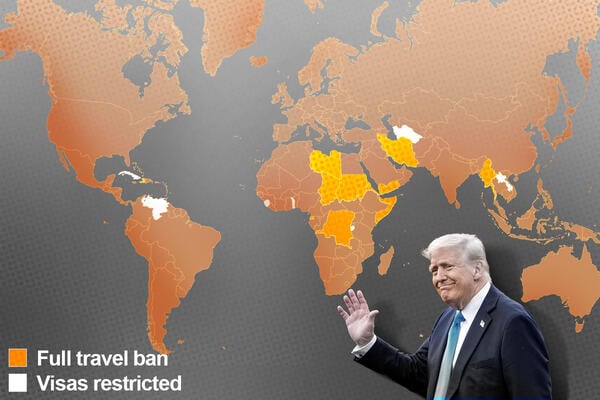
President Trump issued two directives targeting international students just hours apart on Wednesday night. One is a ban on entering the U.S. for citizens from 12 countries and heightened visa restrictions for those from another seven. The other bans all international students, researchers and other “exchange visitors” from Harvard University.
The orders represent another escalation of the Trump administration’s simultaneous, and sometimes overlapping, campaigns to both punish Harvard and curtail the number of foreign students studying in the U.S.
Chris Glass, a professor of higher education at Boston College and a member of the college’s Center for International Education, said the combination of the travel ban and the Harvard order are part of the administration’s “flood the zone” strategy for its higher education agenda. He added that the timing of the dual orders, following on the heels of a “seemingly indefinite” pause on student visa interviews and a promise to “aggressively revoke” Chinese students’ visas, seems intended to cause the most chaos possible.
“The timing couldn’t be worse … this is when 70 percent of international students are getting or renewing their visas,” he said. “It injects catastrophic uncertainty, and the uncertainty is the strategy from my perspective.”
On Thursday evening, Harvard filed a legal challenge to the proclamation targeting the university and asked a judge to issue a temporary restraining order against the administration. Judge Allison Burroughs from the District of Massachusetts quickly granted that request and extended the current restraining order issued last month. She set a hearing for June 16.
2017 Again
The last time Trump instituted a travel ban, in his first term, it threw colleges into chaos and left students and researchers stranded for months in the middle of winter break, sending colleges scrambling to find ways to bring them back. Higher ed has been bracing for a repeat of that travel ban since Trump was elected in November; many institutions told their international students to return to campus before the inauguration to avoid the same fate.
The new ban is not as drastic as many predicted; when the White House initially proposed another travel ban in March, officials rolled out a list of 43 potential target countries. But it is more expansive than the 2017 ban—it affects 19 countries instead of eight—and, combined with the administration’s barrage of attacks on international students over the past three months, could be even more damaging to international enrollment.
The full ban applies to Afghanistan, Chad, Republic of the Congo, Eritrea, Equatorial Guinea, Haiti, Iran, Libya, Myanmar, Somalia, Sudan and Yemen—largely Middle Eastern and African countries with substantial Muslim populations. Trump also restricted visas from Burundi, Cuba, Laos, Sierra Leone, Togo, Turkmenistan and Venezuela.
The travel ban doesn’t immediately affect students currently in the U.S. or who have already been approved for visas. But with many admitted international students still languishing in a visa process that the State Department halted two weeks ago, it will likely prevent thousands of students from attending in the fall and upend institutions’ projected enrollments.
The countries on the list send a relatively small number of students to U.S. colleges. Of the affected countries, Iran has by far the most students studying in the U.S. It is the 15th most common origin country for international students, with 12,430 studying at American colleges and universities as of fall 2024, according to the latest report from the Institute for International Education.
Still, the order is likely to compound the uncertainty and fear that has grown among international student populations, leading to signs of a large decline in student visa applications. Glass’s research, along with more recent reports, shows a double-digit decline in student visas from March 2024 to this March alone; the latest moves could double that, he said.
“[The] COVID [pandemic] was a disruption of 15 percent,” he said. “This looks like it could be more significant than COVID, if the pause is extended and the uncertainty continues.”
In his proclamation announcing the travel ban, Trump wrote that the targeted countries had “deficient” vetting and screening processes for visa applicants, or had “taken advantage of the United States in their exploitation of our visa system and their historic failure to accept back their removable nationals.”
Sarah Spreitzer, vice president and chief of staff for government relations at the American Council on Education, said the rationale outlined in the travel ban—that students pose a unique national security threat and have been overstaying their visas—doesn’t align with reality.
“If this is for national security concerns, our students are some of the most vetted visas out there,” she said. “And I don’t know if our students actually overstay their visas very often.”
Fanta Aw, the president of NAFSA, an association of international educators, echoed Spreitzer and said that international students are already “among the most tracked individuals entering the United States.”
“Actions such as halting student visa issuance and implementing nationality-based travel bans do not enhance national security,” she wrote in an email. “Instead, they weaken it—undermining our economy, diminishing our global competitiveness and eroding our country’s ability to effectively engage with the global population.”
The 2017 travel ban was amended twice after being challenged in the courts and eventually exempted nonimmigrant visas, including student and exchange visas. Spreitzer said the administration’s outsize focus on student visa holders over the last few months makes that outcome less likely, but only time—and the courts—will tell.
Havoc at Harvard
The travel ban came on the heels of another White House proclamation Wednesday night, this one banning foreign students and scholars from attending Harvard.
Trump restricted visa applicants from entering the country “solely or principally to participate in a course of study at Harvard University or in an exchange visitor program hosted by Harvard,” claiming that allowing foreign students on campus would be “detrimental to the interests of the United States because, in my judgment, Harvard’s conduct has rendered it an unsuitable destination for foreign students and researchers.”
A Harvard spokesperson wrote that the proclamation is “another illegal retaliatory step taken by the administration in violation of Harvard’s first amendment rights” and that the university “will continue to protect its international students.”
The proclamation is the latest jab in a weeks-long fight over international students on Harvard’s campus. Last month the Trump administration attempted to revoke Harvard’s Student Exchange and Visitor Program certification, which would have banned the university from enrolling international students altogether, affecting not just visa applicants but also foreign students and researchers currently on campus. Harvard challenged the effort in court, and a judge swiftly granted the university an injunction; on Monday, the Trump administration lost its appeal to overturn that decision.
Harvard amended that lawsuit to include a challenge to the newest proclamation, calling it “an unlawful evasion of the Court’s order.”
“When the Court enjoined the Secretary [of State’s] efforts to revoke Harvard’s certifications and force its students to transfer or depart the country, the President sought to achieve the same result by refusing to allow Harvard students to enter in the first place,” the amended suit reads.
Unlike the SEVP decertification attempt, Trump’s executive proclamation doesn’t immediately affect international students currently enrolled at Harvard, only those who have yet to secure visas—though it does instruct the State Department to determine whether current students “should have their visas revoked.”
The proclamation runs through a gamut of justifications for its international student ban. Trump cites data on increasing campus crime rates in the interest of student safety, alleges discrimination in the admissions process that he claims foreign students exacerbate and points to academic partnerships and financial contributions from countries like China that he says endanger U.S. national security interests.
Notably, Trump also says Harvard has failed to cooperate with the administration’s demands for student misconduct records; the university has provided data on “only three students,” which Trump wrote was evidence that “it either is not fully reporting its disciplinary records for foreign students or is not seriously policing its foreign students.”
Glass said the move is almost certainly an attempt to work around the court injunction using executive powers rather than the visa bureaucracy. And making the issue about constitutional authority in the national security realm—rather than whether the proper SEVP decertification process was followed—could change the legal calculus in court.
“That’s what’s going to set a precedent for generations,” Glass said. “Will the precedent of autonomy and academic freedom at Harvard win in the courts? Or will the precedent of national security powers for the government win the day?”
(This story has been updated to correct the list of banned countries to include Republic of the Congo.)