Tag: Career

  • Michigan Governor Declines to Remove Two MSU Trustees

    Michigan Governor Declines to Remove Two MSU Trustees

    After more than a year of uncertainty, Michigan governor Gretchen Whitmer has decided not to remove two Michigan State University trustees as requested by the board, The Lansing State Journal reported.

    Michigan State’s Board of Trustees asked the Democratic governor to remove Rema Vassar and Dennis Denno last year after a university investigation found both trustees violated MSU’s code of conduct. The investigation determined that the pair had “created a fear of retaliation amongst administrators and other MSU personnel,” according to the report, which said they encouraged students to call a frequently critical faculty member a racist. Vassar also accepted gifts from donors, including flights and tickets to athletic events, the report said.

    (Vassar and Denno are currently facing a lawsuit from the professor they allegedly targeted.)

    The report also found the duo intended to “embarrass and terrify” former interim president Teresa Woodruff. The trustees have refuted most allegations and taken issue with the findings.

    Both trustees were stripped of their duties by the board and Vassar stepped down as chair.

    While Whitmer called Vassar and Denno’s actions “shameful,” she decided not to remove her fellow Democrats. (Trustees at Michigan State are elected, unlike at most institutions nationally.)

    “The denial of the request by no means indicates a condoning of the conduct alleged in the referral,” Whitmer’s deputy legal counsel Amy Lishinski wrote in a letter to the MSU board obtained by the newspaper. “Rather, it only means that other considerations related to the Governor’s removal authority weigh against removal under these circumstances at this time.”

    Source link

  • They Don’t Want to Learn About the Middle East (opinion)

    They Don’t Want to Learn About the Middle East (opinion)

    Being arrested by armed riot police on my own campus was not, somehow, the most jarring thing that has happened to me since the spring of 2024. More disturbing was the experience of being canceled by my hometown.

    In June 2024, I was supposed to give the second of two lectures in a series entitled “History of the Middle East and the Israeli-Palestinian Conflict” at the public library in San Anselmo, Calif., a leafy suburb of San Francisco best known as the longtime home of George Lucas.

    I grew up in San Anselmo during the Sept. 11 era and vividly remember how stereotypes and misperceptions of the Middle East were used to justify war in Iraq and discrimination against Arabs and Muslims at home. I was shaped by the commonplace refrains of that moment, especially that Americans needed to learn more about the Middle East. So, I did. I learned Arabic and Farsi and spent years abroad living across the region. I earned a Ph.D. in Middle Eastern history and am now a professor at a public university in Colorado. I see teaching as a means of countering the misrepresentations that generate conflict.

    But as the second lecture approached, I began receiving alarmed messages from the San Anselmo town librarian. She told me of a campaign to cancel the lecture so intense that discussions about how to respond involved the town’s elected officials, including the mayor. I was warned that “every word you utter tomorrow night will be scrutinized, dissected and used against you and the library” and that she had become “concerned for everyone’s well-being.” Just hours before it was scheduled to begin, the lecture was canceled.

    I later learned more about what had transpired. At a subsequent town council meeting, the librarian described a campaign of harassment and intimidation that included “increasingly aggressive emails” and “coordinated in-person visits” so threatening that she felt that they undermined the safe working environment of library staff.

    In Middle Eastern studies, such stories have become routine. A handful have received public attention—the instructor suspended for booking a room on behalf of a pro-Palestinian student organization, or the Jewish scholar of social movements investigated by Harvard University for supposed antisemitism. Professors have lost job offers or been fired. Even tenure is no protection. These well-publicized examples are accompanied by innumerable others which will likely never be known. In recent months, I have heard harrowing stories from colleagues: strangers showing up to classes and sitting menacingly in the back of the room; pressure groups contacting university administrators to demand that they be fired; visits from the FBI; a deluge of racist hate mail and death threats. It is no surprise that a recent survey of faculty in the field of Middle East Studies found that 98 percent of assistant professors self-censor when discussing Israel-Palestine.

    Compared to the professors losing their jobs and the student demonstrators facing expulsion—and even deportation—my experience is insignificant. It is nothing compared to the scholasticide in Gaza, where Israeli forces have systematically demolished the educational infrastructure and killed untold numbers of academics and students. But the contrast between my anodyne actions and the backlash they have generated illustrates the remarkable breadth of the censorship that permeates American society. The mainstream discourse has been purged not just of Palestinian voices, but of scholarly ones. Most significantly, censorship at home justifies violence abroad. Americans are once again living in an alternate reality—with terribly real consequences.


    On Oct. 7, 2023, it was clear that a deadly reprisal was coming. It was equally evident that no amount of force could free Israeli captives, let alone “defeat Hamas.” I contacted my university media office in hopes of providing valuable context. I had never given a TV interview before, so I spent hours preparing for a thoughtful discussion. Instead, I was asked if this was “Israel’s Pearl Harbor.”

    Well, no, I explained. It was the tragic and predictable result of a so-called peace process that has, for 30 years and with U.S. complicity, done little more than provide cover for the expansion of Israeli settlements. Violence erupts when negotiation fails. Only by understanding why people turn to violence can we end it. I watched the story after it aired. Nearly the whole interview was cut.

    I accepted or passed to colleagues all the interview requests that I received. But they soon dried up. Instead, I began receiving hate mail.

    It quickly became clear that I had to take the initiative to engage with the public. I held a series of historical teach-ins on campus. The audience was attentive, but small. I reached out to a local school district where I had previously provided curriculum advice. I never heard back. I contacted my high school alma mater and offered to speak there. They were too afraid of backlash. I was eventually invited to speak at two libraries, including San Anselmo’s. Everyone else turned me down.


    In April 2024, the Denver chapter of Students for a Democratic Society organized yet another protest in their campaign to pressure the University of Colorado to divest from companies complicit in the Israeli occupation. This event would be different. As one of the students spoke, others erected tents, launching what would become one of the longest-lasting encampments in the country.

    There was no cause for panic. The encampment did not interfere with classes or even block the walkway around the quad. Instead, it became the kind of community space that is all too hard to build on a commuter campus. It hosted speakers, prayer meetings and craft circles. But as I left a faculty meeting the day after the start of the encampment, I sensed that something was wrong. I arrived on the quad to find a phalanx of armed riot police facing down a short row of students standing hand in hand on the lawn.

    Fearing what would happen next, two colleagues and I joined the students and sat down, hoping to de-escalate the situation and avoid violence. The police surrounded us, preventing any escape. Then they were themselves surrounded by faculty, students and community members who were clearly outraged by their presence. We sat under the sun for nearly two hours as chaos swirled around us. The protesters cleared away the tents to demonstrate their compliance. It made no difference. Forty of us were arrested, zip-tied and jailed. I was charged with interference and trespassing. Others faced more serious charges. I was detained for more than 12 hours, until 3:00 in the morning.

    The arrests backfired. When the police departed, the protesters returned, invigorated by an outpouring of community support. I visited the encampment regularly over the following weeks. When the threat of war with Iran loomed, I gave a talk about Iranian history. When the activists organized their own graduation, they invited me to give a commencement address. I spoke about their accomplishments: that they had taken real risks, made real sacrifices and faced real consequences in order to do what was right. The encampment became the place where I could speak most freely, on campus or off.

    While the encampment came to an end in May, the prosecutions did not. The city offered me deferred prosecution, meaning that the matter would be dropped if I did not break the law for six months. I am not, to put it lightly, a seasoned lawbreaker, so the deal would have effectively made everything disappear. I turned it down. Accepting the offer would have prevented me from challenging the legality of the arrests, and I was determined to do what I could to prevent armed riot police from ever again suppressing a peaceful student demonstration. It was a matter of principle and precedent. A civil rights attorney agreed to represent me pro bono. I would fight the charges.


    During my pretrial hearings, I learned more about the cancellation of my lecture in San Anselmo. A local ceasefire group served the town with a freedom of information request that yielded hundreds of pages of emails. Two days before the talk was scheduled, one local resident sent an “all hands on deck” email that called for a coordinated campaign against my lecture “in hopes of getting it canceled.” A less technologically savvy recipient forwarded the message on to the library, providing an inside view.

    The denunciations presented a version of myself that I did not recognize. The letters relied on innuendo and misrepresentation. Many claimed that I was “pro-Hamas” or accused me of antisemitism, which they invariably conflated with criticism of Israeli policy. Several expressed concern about what I might say, rather than anything I have ever actually said, while others misquoted me. Fodder for the campaign came largely from media reports of my arrest and video of my commencement address, both taken out of context. One claimed that the talk was “a violation of multiple Federal and California Statutes.” Another claimed that I “seemed to promote ongoing violence”—the lawyerly use of the word “seemed” betraying the lack of evidence behind the accusation.

    Perhaps the most popular claim was that I am biased, an activist rather than a scholar. My opponents seemed especially offended by my use of the word “genocide.” But genocide is not an epithet—it is an analytical term that represents the consensus in my field. A survey of Middle East studies scholars conducted in the weeks surrounding the talk found that 75 percent viewed Israeli actions in Gaza as either “genocide” or “major war crimes akin to genocide.”

    I was most struck by how many people objected to the idea of contextualizing the Oct. 7 attack; one even called it “insulting.” But contextualization is not justification. Placing events in a wider frame is central to the study of history—indeed, it is why history matters. If violence is not explained by the twists and turns of events, it can only be understood as the product of intrinsic qualities—that certain people, or groups of people, are inherently violent or uncivilized. In the absence of context, bigotry reigns.

    I did what I could to fight back against the censorship campaign. After reading the library emails, I reached out to journalists at several local news outlets to inform them about the incident. None followed up. The only report ever published was written by an independent journalist on Substack.

    In the weeks leading up to my trial, I wrote an op-ed calling for the charges to be dropped. I noted that the protest was entirely peaceful until the police arrived. I asked how our students, especially our undocumented students or students of color, can feel safe on campus when the authorities respond to peaceful demonstrations by calling the police. I sent the article to a local paper. I never heard back. I sent it to a second. Then a third. None responded. It was never published.

    In October, prosecutors dropped the charges against me. The official order of dismissal stated that they did not believe that they had a reasonable likelihood of conviction. I have now joined a civil lawsuit against the campus police in the hope that it will make the authorities think twice before turning to the police to arrest student demonstrators.


    Scholars of the Middle East are caught in an inescapable bind. Activist spaces are the only ones left open to us, but we are dismissed as biased when we use them. We are invited to share our insights only if they are deemed uncontroversial by the self-appointed gatekeepers of the conventional wisdom. If we condemn—or even just name—the genocide unfolding before our eyes, we are deplatformed and silenced. The logic is circular and impenetrable. It is also poison to the body politic. It rests on a nonsensical conception of objectivity that privileges power over truth. This catch-22 is no novel creation of the new administration. The institutions most complicit in its creation are the pillars of society ostensibly dedicated to the pursuit of justice—the press, the courts and the academy itself. They have constricted the boundaries of respectable discourse until they fit comfortably within the Beltway consensus. Rather than confronting reality, they have become apologists for genocide and architects of the post-truth world. They have learned nothing from Iraq. Nor do they want to. They don’t want to learn about the Middle East.

    Alex Boodrookas is an assistant professor of history at Metropolitan State University of Denver. The opinions expressed here are his own and do not represent those of his employer.

    Source link

  • ED Pressures Accreditor to Act on Columbia

    ED Pressures Accreditor to Act on Columbia

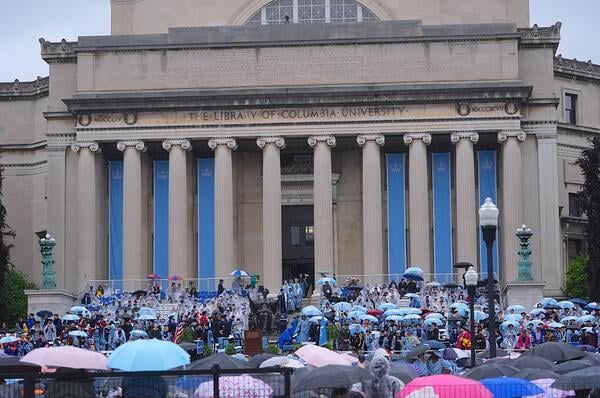
    The Department of Education has publicly called on Columbia University’s accreditor, the Middle States Commission on Higher Education, to take action against the university’s alleged noncompliance with federal nondiscrimination laws.

    In a Wednesday news release, officials wrote that Columbia was found to have acted “with deliberate indifference towards the harassment of Jewish students, thereby violating Title VI of the Civil Rights Act of 1964.” Officials said, “Columbia failed to meaningfully protect Jewish students against severe and pervasive harassment on Columbia’s campus and consequently denied these students’ equal access to educational opportunities to which they are entitled under the law.” As a result of that finding, ED called on MSCHE to take action on the matter.

    Education Secretary Linda McMahon accused the university of failing to protect Jewish students on campus in the wake of Hamas’s Oct. 7 terrorist attacks against Israel, arguing that such a lapse “is not only immoral, but also unlawful.”

    McMahon added that accreditors are obligated to ensure members abide by their standards and called on MSCHE to inform the department of compliance actions taken against Columbia. ED indicated that MSCHE should require Columbia to develop a plan to ensure compliance.

    “We are aware of the press release issued today by the United States Department of Education (USDE) regarding Columbia University and can confirm that we received a letter regarding this matter this afternoon,” MSCHE president Heather Perfetti said in a statement. “This letter is part of the commitment reflected within the Executive Order to promptly provide to accreditors any noncompliance findings relating to member institutions issued after an investigation conducted by the Office of [sic] Civil Rights. Consistent with our Commission’s management of investigative findings, we will process these in accordance with our policies and procedures.”

    The call for MSCHE to take action on Columbia is the latest effort by the Trump administration to force further changes at an institution that has been in its crosshairs over how it handled a pro-Palestinian student encampment and related demonstrations in the aftermath of Oct. 7.

    Columbia has already yielded to the Trump administration’s call for sweeping changes, agreeing in March to revise disciplinary processes, hire campus police officers with the authority to make arrests and appoint a new senior vice provost to oversee academic programs focused on the Middle East, among other changes—despite concerns around academic freedom. However, university officials appear to have rejected the administration’s desire for a consent decree.

    The Trump administration has also frozen hundreds of millions of dollars in federal research funding, an effort that has continued even after university officials agreed to various demands.

    Columbia officials acknowledged the exchange between ED and MSCHE in a statement.

    “Columbia is aware of the concerns raised by the U.S. Department of Education’s Office for Civil Rights today to our accreditor, the Middle States Commission on Higher Education, and we have addressed those concerns directly with Middle States. Columbia is deeply committed to combatting antisemitism on our campus. We take this issue seriously and are continuing to work with the federal government to address it,” university officials wrote in a statement posted online.

    Wednesday’s news sparked confusion (and celebrations from some critics) online, as many social media users incorrectly interpreted the news to mean Columbia had lost accreditation. However, the federal government does not have the power to strip accreditation. Only accreditors can determine if universities are out of compliance, as experts have previously noted.

    (This article has been updated to add statements from MSCHE and Columbia.)

    Source link

  • This Is a Summer to Organize (opinion)

    This Is a Summer to Organize (opinion)

    We’re entering what would normally be the long-awaited reprieve of summer—a time to write, think, travel, to escape the demands of the academic year. But this will not be a normal summer.

    Faculty may long for a break, but the government is actively operationalizing Project 2025, a blueprint for remaking every public institution, with higher education being the crown jewel of its antidemocratic agenda. At his 100-day rally in Michigan, Donald Trump declared, “We’ve just gotten started. You haven’t even seen anything yet.” Christopher Rufo, architect of the right-wing culture war, promises to plunge higher education still further into “an existential terror.”

    We should be prepared for a potential wave of coordinated assaults on higher education this summer: reductions in Pell Grant eligibility for low-income students and slashed student loans, more dismantlement of scientific research funding, politicized accreditation crackdowns, new endowment taxes, expanded intimidation of international students and scholars, and further weaponization of Title VI and Title IX enforcement.

    We recommend mobilizing on two simultaneous fronts this summer: by operationalizing mutual academic defense compacts (MADCs), and through direct activism. We must forge powerful alliances for mass protest. We suggest one often-overlooked but deeply strategic constituency— veterans.

    Recent opinion polls show that most Americans oppose the Trump administration’s approach to higher education. This public sentiment gives us a crucial opening—and we must seize the momentum as we move into summer.

    1. Mobilize and Form Unlikely Alliances

    Faculty can take simple, student-centered actions this summer—sharing stories of student impact over social media using #DegreesForDemocracy, or highlighting the real-world outcomes of their teaching and research with #WhatWeBuild—to demonstrate the value of higher education and help galvanize public support. Op-eds and blog posts that highlight how higher ed strengthens local communities, drives economic growth and improves American public health and well-being are also powerful tools.

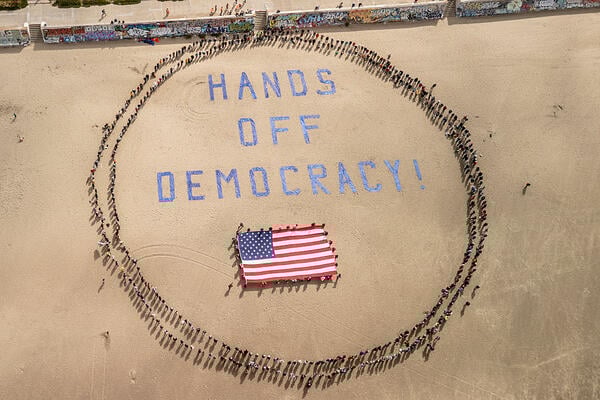
    In addition, faculty must begin to mobilize on the streets for mass peaceful protest. This will require reaching beyond our usual circles and forming big-tent coalitions. Now is not the time for ideological purity or partisan hesitation. The threat we face at this point goes beyond conventional liberal-versus-conservative disagreement; it is an attack on democratic institutions, civil liberties and public education itself.

    One particularly powerful, and perhaps surprising, potential partner in this moment is the veteran community. As a start, we urge faculty to consider aligning with veterans this Friday for the June 6 D-Day anniversary protest: Veterans Stand Against Fascism Nationwide at the National Mall, as well as at more than 100 other venues across the country. This is a great way for higher ed to show up in the lead-up to the June 14 No Kings Day protests.

    Why Join With Veterans?

    The shared legacy of the GI Bill links veterans and higher education. A public alliance with veterans has the potential to lend more political credibility to faculty and foster broader public empathy that will disrupt the Trump administration’s strategy of divide and conquer.

    From Black WWII veterans who catalyzed the civil rights movement to anti–Vietnam War resistance, veterans have consistently served on the front lines of social change. Today, they are standing up to deep cuts to the Department of Veterans Affairs; the elimination of diversity, equity and inclusion initiatives; and dangerous reductions to the veteran workforce—issues that mirror the assaults on higher education.

    Professors and veterans are natural allies in more ways than many realize. Since the passage of the GI Bill in 1944, millions of veterans have earned college degrees and experienced upward mobility through higher education. Veterans are a protected class under antidiscrimination law and recipients of DEI programming. The veterans’ centers and services we have created to support them are now under threat from the Trump administration’s ideological dismantling of DEI. While trust in most American institutions—including higher education—has declined, polling shows that the military remains one of the few institutions still trusted by a majority of Americans. This trust is rooted in the military’s demographic breadth: Its members come from every region, ethnicity, income bracket and political background.

    In contrast, higher education suffers from an image problem—often caricatured as elite, out of touch and overly partisan. Yet many of the most trusted professionals in society—nurses, teachers, first responders, small business owners and veterans themselves—were trained and mentored in our classrooms. Building visible alliances with veterans can help reshape public perceptions of academia, challenging the dominant narratives that seek to isolate and delegitimize higher education.

    1. Operationalize Mutual Academic Defense Compacts

    While public protest builds pressure, cross-institutional coalition building creates networks for effective resistance. Faculty and university senates across the country are approving mutual academic defense compact resolutions, which call for universities to join in shared defense of any participating institution that comes under government attack. But this is just the beginning. We need more, and these resolutions need to be operationalized through the creation of MADC task forces of administrators and faculty on as many campuses as possible. Presidents and chancellors need to endorse both the compacts and the task forces.

    We must use this summer to refine model MADC resolution language to align with institutional legal and financial requirements, to prepare for the passage of resolutions and creation of MADC task forces in the early fall, and to build the infrastructure that will allow these coalitions to function as coordinated networks of protection, resistance and shared strategy.

    That’s why we co-founded Stand Together for Higher Ed, a growing national movement to help faculty organize in defense of academic freedom and institutional autonomy. After beginning with a letter signed by about 5,000 professors in all 50 states calling on institutions to unite in a proactive common defense, we are now building a network of MADCs, campus task forces and shared strategies. This summer, Stand Together is offering model resolutions, organizing tools and communications support to help campuses build capacity for the fights ahead.

    We’ve been struck by how many faculty members lack formal structures for self-governance on their campuses. Shared governance is a foundational pillar of academic freedom—though often overshadowed by the more visible right to pursue scholarship free from interference. We’re working with campuses to strengthen existing faculty governance organizations with the establishment of Stand Together groups, and where none exist, we’re helping to establish American Association of University Professors and other advocacy chapters to fill that crucial gap.

    This summer, we must think strategically—and expansively. This summer calls for alliance building across our sister institutions of higher ed and across diverse nonacademic interest groups. The stakes are nothing less than the future of democracy.

    Jennifer Lundquist is a professor of sociology at the University of Massachusetts Amherst. Kathy Roberts Forde is a professor of journalism at the University of Massachusetts Amherst. Together, the authors co-founded Stand Together for Higher Ed.

    Source link

  • As Recession Risk Rises, Don’t Expect 2008 Repeat (opinion)

    As Recession Risk Rises, Don’t Expect 2008 Repeat (opinion)

    Months into the second Trump administration, clear trends are reshaping the higher education landscape. Economic uncertainty stemming from inconsistent tariff policies has left businesses and consumers grappling with unpredictability. Meanwhile, efforts by the administration and congressional leadership to overhaul federal funding for higher education, including cuts to research grants and proposed cuts to Pell Grants and student loans, have created significant challenges for the sector.

    The U.S. economy contracted slightly in the first quarter of 2025, with the administration’s erratic and unpredictable policies amplifying recession risks. These fluctuations have led some to draw comparisons to the 2008 Great Recession, particularly regarding public higher education. While some lessons of that recession for higher education, such as those related to state appropriations, remain relevant, others may not apply due to the administration’s unique policies and priorities.

    Since the 1980s, economic downturns have increasingly impacted public higher education, primarily due to state budget cuts. During the 1980 recession, state educational appropriations per full-time-equivalent student dropped by 6 percent but recovered to pre-recession levels by 1985. In contrast, during the 2008 Great Recession, funding fell by nearly 26 percent, and most states never fully restored funding to pre-recession levels before the COVID-19 pandemic once again disrupted budgets in 2020. This prolonged recovery left public institutions financially weakened, with reduced capacity to support students.

    More than a decade after the Great Recession, public institutions were struggling to regain the level of state funding they once received. This prolonged recovery significantly affected student loan borrowing. The Great Recession weakened higher education systems as states shifted funds to mandatory expenses and relied on the federal student loan system and Pell Grants to cover a growing share of students’ educational costs. As a result, when states reduce funding, students and their families shoulder more financial responsibility, leading to greater student loan debt.

    During the Great Recession, public institutions were operating with reduced funding and downsizing, even as rising joblessness drove more people to enroll in college. Before 2008, total enrollment in degree-granting institutions was about 18.3 million, but by 2011–12, it exceeded 21 million. This period marked the emergence of the modern student loan crisis. Public institutions, already strained by reduced funding, faced the dual challenge of accommodating more students while maintaining quality. For many students, especially those pursuing graduate degrees, borrowing became a necessity. The economic downturn exacerbated these trends, further entrenching reliance on debt to finance education.

    A future recession could have an even more pronounced impact on public higher education, particularly in terms of state funding. The recently passed House budget bill, which proposes substantial cuts to higher education and Medicaid, exacerbates this risk by forcing states to prioritize addressing these funding shortfalls. Consequently, as legislatures shift resources to more immediate needs, both states and students may find themselves unable to rely on federal aid to support education. Long-standing research indicates that states will prioritize health-care funding over higher education. This pattern suggests that recent state investments in higher education could be rolled back or significantly reduced, even before a recession takes hold.

    The financial pressures on public institutions are already evident. Some systems are considering closing branch campuses, while others are cutting programs, laying off staff or grappling with declining enrollments. In addition, public regional institutions are particularly at risk, as they depend heavily on state funding and serve many of the students most vulnerable to financial challenges. If a recession occurs, these institutions may face severe and rapid downsizing.

    Following downsizing, a key consideration is whether a future recession will lead to an enrollment rebound similar to that seen during the Great Recession. This issue can be analyzed through two key factors: (1) the severity of joblessness and (2) the availability of grants, scholarships and loans, as well as the repayment structures of those loans.

    During the 2008 crisis, unemployment peaked at 10 percent, double the pre-recession rate, with a loss of 8.6 million jobs. Higher unemployment historically benefits higher education as individuals seek to retool their skills during economic downturns. Economists predict that under the current administration, unemployment could rise from 4.1 percent to between 4.7 percent and 7.5 percent, though projections are uncertain due to volatile policies. While higher unemployment might lead more people to consider enrolling in college, proposed changes to financial aid policies could significantly dampen such trends.

    The House’s One Big Beautiful Bill Act introduces stricter eligibility requirements for Pell Grants, such as tying awards to minimum credit-hour thresholds. Students would need to enroll in at least 30 credit hours per year for maximum awards and at least 15 credit hours per year to qualify at all. Furthermore, the bill eliminates subsidized student loans, meaning students would accrue interest while still in school. This change could add an estimated $6,000 in debt per undergraduate borrower, increasing the financial burden on students and potentially deterring enrollment.

    On the repayment side, the proposed Repayment Assistance Plan would replace existing income-driven repayment options. Unlike current plans, RAP bases payments on adjusted gross income rather than discretionary income, resulting in higher monthly payments for lower-income borrowers. Although RAP ensures borrowers do not face negative amortization—which is important for borrowers’ financial and mental distress—the 30-year forgiveness timeline is longer than that of current IDR plans, and the lack of inflation adjustments makes it less appealing than current IDR plans. Together, these changes could discourage potential students, particularly those from low-income or disadvantaged backgrounds, and depress graduate student enrollment.

    The bill also introduces a risk-sharing framework that requires institutions to repay the federal government for a portion of unpaid student loans. This framework, based on factors such as student retention and default rates, could influence enrollment decisions. Institutions might avoid admitting students who pose financial risks, such as those from low-income backgrounds, with lower precollege performance or nonwhite students, thereby restricting access and perpetuating inequities. Alternatively, some institutions may opt out of the student loan system entirely, further limiting opportunities for those who rely on federal aid.

    Recent executive actions pausing international student visa interviews will hinder the ability to recruit international students and eliminate the potential for these students to help subsidize low-income domestic students. As a result, institutions have fewer resources to support key groups in the administration’s electoral base without burdening American taxpayers. These actions not only increase the cost of higher education but also appear inconsistent with a fiscally conservative ideology.

    Mass layoffs in the Department of Education have delayed financial aid processing and compliance and hindered institutions’ ability to support more low-income students during an economic downturn. These personnel play a critical role in ensuring that state higher education systems receive the funding needed to expand access for low-income students. During the last recession, their efforts were essential to fostering student success, but under the current administration, the federal government continues to be an unreliable partner.

    While lessons from the Great Recession may offer some insight for public higher education during a future recession, the financial context and the priorities of the administration and congressional majority leadership differ significantly. Unlike the Great Recession, the next economic downturn may not lead to a surge in higher education enrollment. Without proactive measures to protect funding, expand financial aid and increase opportunity, public higher education risks reduced capacity and declining student outcomes. These changes will likely undermine higher education’s role as a pathway to economic mobility and societal progress.

    Daniel A. Collier is an assistant professor of higher and adult education at the University of Memphis. His work focuses on higher education policy, leadership and issues like student loan debt and financial aid; recent work has focused on Public Service Loan Forgiveness. Connect with Daniel on Bluesky at @dcollier74.bsky.social.

    Michael Kofoed is an assistant professor of economics at the University of Tennessee, Knoxville. His research interests include the economics of education, higher education finance and the economics of financial aid; recent work has focused on online learning during COVID. Connect with Mike on X at @mikekofoed.

    Source link

  • Keystone College Merges With Think Tank

    Keystone College Merges With Think Tank

    Keystone College has completed a merger with ​​the Washington Institute for Education and Research, a fledgling think tank, after nearly three years of work, officials announced Monday.

    Last week, Keystone’s accreditor, the Middle States Commission on Higher Education, announced that it had reviewed and signed off on the ownership change, making it official at the end of May.

    The Pennsylvania Department of Education, the Pennsylvania Office of the Attorney General and the U.S. Department of Education already approved the merger.

    Keystone president John F. Pullo Sr. noted the merger effort was both lengthy and challenging.

    “I am pleased to report that the merger transaction between Keystone and WIER was concluded on Friday, May 30, finally joining the College with its strategic partner after nearly a three-year journey that at times threatened the future of the College,” Pullo said in a news release.

    Pullo’s remarks are a likely nod to Keystone’s precarious position in recent years. Last spring, MSCHE warned that the private college was “in danger of immediate closure.” However, Pullo noted at the time that officials were in talks with “an investment partner” to help stabilize the college. (Keystone’s accreditation was also at risk last year, but it remains accredited.)

    Keystone’s new owner is a largely unknown think tank based in Washington, D.C. 

    WIER, founded in 2023, describes its purpose on its website as “The establishment and operation of post-secondary degree-granting institutions for the instruction of students” and “Funding and supporting other post-secondary 501(c)(3) degree-granting institutions.” WIER does not list any staff members on its website except for founder and president Ahmed Alwani. 

    Alwani was previously president of Fairfax University of America in Northern Virginia, which quietly closed in December due to its inability to find a new accreditor after the Accrediting Council for Independent Colleges and Schools lost federal recognition, according to the FXUA website. The private, nonprofit institution, formerly known as Virginia International University, was almost shut down by state regulators in 2019 due to various issues highlighted by the State Council of Higher Education for Virginia, including a lack of academic rigor and other concerns.

    Source link

  • Florida Board Rejects Ono for UF Job

    Florida Board Rejects Ono for UF Job

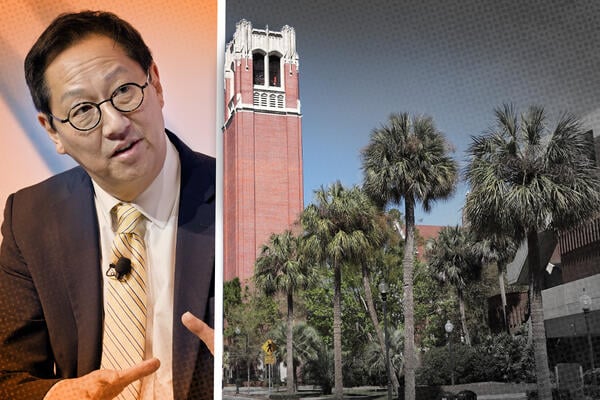
    The Florida Board of Governors voted Tuesday to reject Santa Ono as the next president of the University of Florida, bowing to opposition from conservatives over his past support of diversity, equity and inclusion initiatives.

    Anti-DEI activist Chris Rufo led the conservative backlash, while multiple elected officials in Florida alleged that Ono failed to protect Jewish students during his time as president of the University of Michigan.

    Amid those concerns, the Board of Governors voted 10 to 6 to reject Ono for the UF job.

    That process included a no vote from Paul Renner, a former Republican lawmaker in the state who had previously angled for the UF presidency, as became clear during board discussions. Throughout the meeting Renner grilled Ono on his past support for DEI, prompting fellow board members to push back, accusing him of “interrogating” Ono and questioning the fairness of his inquiries.

    The vote comes after the UF Board of Trustees approved Ono’s hire last week following a public interview that focused largely on DEI. Ono distanced himself from DEI in that interview, arguing that the initiatives began with good intentions but ultimately became divisive. He said they siphoned resources away from student success efforts and stifled dialogue, which he said prompted his decision to close Michigan’s DEI office this spring. (Ono resigned from the Michigan presidency in May to pursue the UF job.)

    “I am here to ensure that DEI never returns to the University of Florida,” Ono said Tuesday.

    In the past, Ono had condemned systemic racism and argued for the necessity of DEI. But Tuesday—as he did in his public interview with UF’s Board of Trustees last week—Ono emphasized his ideological evolution, which ultimately failed to convince the board.

    A Contentious Meeting

    In the public comments portion of the meeting, both Ono’s supporters and detractors made their case.

    Michael Okun, director of the Norman Fixel Institute for Neurological Diseases at UF, disputed claims that Ono failed to protect Jewish students. Okun, who is Jewish, argued Ono is an ally to the Jewish community, “and suggesting otherwise is factually incorrect and deeply harmful.”

    But University of Michigan Medical School professor Joshua Rubin countered that claim, arguing that Ono had failed to stymie a culture in Michigan where antisemitism thrived. Rubin argued that Ono failed to fix problems at UM and “is complicit in that culture.”

    Other speakers included Kent Fuchs, the former UF president called out of retirement to helm the university again when Ben Sasse exited the job abruptly last year. Fuchs, who is currently serving as interim president, supported Ono’s hire, telling the board the candidate was “unmatched nationally in both his credentials and his experience and his track record.”

    UF Board of Trustees chair Mori Hosseini also made an impassioned plea to hire Ono.

    “The bottom line is that Dr. Ono is globally recognized as one of the most respected leaders in higher education, and we are lucky to have him. Outside of Dr. Ono, there are very few people, if any, with a combination of ideological alignment in Florida and the operational experience to run a research powerhouse like you are,” Hosseini said in remarks to the Board of Governors.

    He added that “the UF presidency is not a position where someone can learn on the job.”

    But the Board of Governors bombarded Ono with a series of sharp questions.

    Few had to do with how he would run the University of Florida; student and faculty representatives on the board asked how he would support and include their respective groups in his decision-making process, but most questions focused on DEI.

    Jose Oliva, a former Republican lawmaker, told Ono his ideological shift was “nothing short of incredible.” He also asked Ono, who has a background in ophthalmology, what science his “decades-long, enthusiastic support and advocacy” for DEI initiatives was based on.

    Ono argued that he was “not an expert in that area” and had not created any DEI programs; he said such efforts were already in place when he arrived at UM and his previous institutions, such as the University of British Columbia.

    “Your words simply don’t support that you were just kind of sailing along,” Oliva responded.

    Some trustees also pressed Ono on transgender care at University of Michigan Health, questioning whether the hospital had “cut off” the breasts or genitals of transitioning patients, particularly children.

    As with many other questions, Ono demurred. In that case, he said he didn’t want to misspeak.

    “I’m not an expert,” Ono said, in what became a common refrain throughout the day.

    Hosseini, who was seated next to Ono and involved in the conversation at times—including when he revealed that Renner, who was one of Ono’s fiercest inquisitors of the day, had inquired about the UF job—appeared to bristle at the Board of Governors’ sharp questions for the candidate.

    “You all decided today is the day you’re going to take somebody down,” Hosseini told the board.

    Ono had been set to make up to $3 million a year as UF president. Now it appears Hosseini and the rest of the board will have to restart the search process.

    Ono’s Opponents Celebrate

    As news of Ono’s rejection spread, conservative critics took a victory lap.

    “This is a massive win for conservatives—and an act of courage by the board,” Rufo posted.

    Florida’s elected officials also weighed in.

    “This is the right decision for @UF. UF’s students, faculty, and staff deserve a president who will stand for Florida values and against antisemitism,” Republican senator Rick Scott posted on X. (Scott had previously called for an investigation into the search that yielded Ono.)

    But conservatives weren’t the only ones celebrating.

    Multiple academics on BlueSky also seemed to take satisfaction in the news, with some indicating they thought Ono had done an about-face on DEI, only for the move to backfire.

    “I don’t know how many times this needs to be said: there is no winning with these people. If you’re willing to sell your soul to try and appease them, then I’m sorry but you deserve whatever they do to you,” Neil Lewis Jr., a communication professor at Cornell University, wrote online.

    Outside experts also noted how the Ono vote reflected the influence of state-level politics on decisions.

    James Finkelstein, a professor emeritus of public policy at George Mason University who studies presidential contracts and hiring processes, told Inside Higher Ed by email that the outcome illustrated the growing complexity and politicization of picking a college leader.

    “This episode is a stark reminder of how state-level politics are reshaping the presidential search process. The lesson is clear: until a contract is signed, nothing is guaranteed,” Finkelstein wrote.


    Source link

  • This Is a Summer to Organize (opinion)

    This Is a Summer to Organize (opinion)

    We’re entering what would normally be the long-awaited reprieve of summer—a time to write, think, travel, to escape the demands of the academic year. But this will not be a normal summer.

    Faculty may long for a break, but the government is actively operationalizing Project 2025, a blueprint for remaking every public institution, with higher education being the crown jewel of its antidemocratic agenda. At his 100-day rally in Michigan, Donald Trump declared, “We’ve just gotten started. You haven’t even seen anything yet.” Christopher Rufo, architect of the right-wing culture war, promises to plunge higher education still further into “an existential terror.”

    We should be prepared for a potential wave of coordinated assaults on higher education this summer: reductions in Pell Grant eligibility for low-income students and slashed student loans, more dismantlement of scientific research funding, politicized accreditation crackdowns, new endowment taxes, expanded intimidation of international students and scholars, and further weaponization of Title VI and Title IX enforcement.

    We recommend mobilizing on two simultaneous fronts this summer: by operationalizing mutual academic defense compacts (MADCs), and through direct activism. We must forge powerful alliances for mass protest. We suggest one often-overlooked but deeply strategic constituency— veterans.

    Recent opinion polls show that most Americans oppose the Trump administration’s approach to higher education. This public sentiment gives us a crucial opening—and we must seize the momentum as we move into summer.

    1. Mobilize and Form Unlikely Alliances

    Faculty can take simple, student-centered actions this summer—sharing stories of student impact over social media using #DegreesForDemocracy, or highlighting the real-world outcomes of their teaching and research with #WhatWeBuild—to demonstrate the value of higher education and help galvanize public support. Op-eds and blog posts that highlight how higher ed strengthens local communities, drives economic growth and improves American public health and well-being are also powerful tools.

    In addition, faculty must begin to mobilize on the streets for mass peaceful protest. This will require reaching beyond our usual circles and forming big-tent coalitions. Now is not the time for ideological purity or partisan hesitation. The threat we face at this point goes beyond conventional liberal-versus-conservative disagreement; it is an attack on democratic institutions, civil liberties and public education itself.

    One particularly powerful, and perhaps surprising, potential partner in this moment is the veteran community. As a start, we urge faculty to consider aligning with veterans this Friday for the June 6 D-Day anniversary protest: Veterans Stand Against Fascism Nationwide at the National Mall, as well as at more than 100 other venues across the country. This is a great way for higher ed to show up in the lead-up to the June 14 No Kings Day protests.

    Why Join With Veterans?

    The shared legacy of the GI Bill links veterans and higher education. A public alliance with veterans has the potential to lend more political credibility to faculty and foster broader public empathy that will disrupt the Trump administration’s strategy of divide and conquer.

    From Black WWII veterans who catalyzed the civil rights movement to anti–Vietnam War resistance, veterans have consistently served on the front lines of social change. Today, they are standing up to deep budget cuts to the Department of Veterans Affairs; the elimination of diversity, equity and inclusion initiatives; and dangerous reductions to the veteran workforce—issues that mirror the assaults on higher education.

    Professors and veterans are natural allies in more ways than many realize. Since the passage of the GI Bill in 1944, millions of veterans have earned college degrees and experienced upward mobility through higher education. Veterans are a protected class under antidiscrimination law and recipients of DEI programming. The veterans’ centers and services we have created to support them are now under threat from the Trump administration’s ideological dismantling of DEI. While trust in most American institutions—including higher education—has declined, polling shows that the military remains one of the few institutions still trusted by a majority of Americans. This trust is rooted in the military’s demographic breadth: Its members come from every region, ethnicity, income bracket and political background.

    In contrast, higher education suffers from an image problem—often caricatured as elite, out of touch and overly partisan. Yet many of the most trusted professionals in society—nurses, teachers, first responders, small business owners and veterans themselves—were trained and mentored in our classrooms. Building visible alliances with veterans can help reshape public perceptions of academia, challenging the dominant narratives that seek to isolate and delegitimize higher education.

    1. Operationalize Mutual Academic Defense Compacts

    While public protest builds pressure, cross-institutional coalition building creates networks for effective resistance. Faculty and university senates across the country are approving mutual academic defense compact resolutions, which call for universities to join in shared defense of any participating institution that comes under government attack. But this is just the beginning. We need more, and these resolutions need to be operationalized through the creation of MADC task forces of administrators and faculty on as many campuses as possible. Presidents and chancellors need to endorse both the compacts and the task forces.

    We must use this summer to refine model MADC resolution language to align with institutional legal and financial requirements, to prepare for the passage of resolutions and creation of MADC task forces in the early fall, and to build the infrastructure that will allow these coalitions to function as coordinated networks of protection, resistance and shared strategy.

    That’s why we co-founded Stand Together for Higher Ed, a growing national movement to help faculty organize in defense of academic freedom and institutional autonomy. After beginning with a letter signed by about 5,000 professors in all 50 states calling on institutions to unite in a proactive common defense, we are now building a network of MADCs, campus task forces and shared strategies. This summer, Stand Together is offering model resolutions, organizing tools and communications support to help campuses build capacity for the fights ahead.

    We’ve been struck by how many faculty members lack formal structures for self-governance on their campuses. Shared governance is a foundational pillar of academic freedom—though often overshadowed by the more visible right to pursue scholarship free from interference. We’re working with campuses to strengthen existing faculty governance organizations with the establishment of Stand Together groups, and where none exist, we’re helping to establish American Association of University Professors and other advocacy chapters to fill that crucial gap.

    This summer, we must think strategically—and expansively. This summer calls for alliance building across our sister institutions of higher ed and across diverse nonacademic interest groups. The stakes are nothing less than the future of democracy.

    Jennifer Lundquist is a professor of sociology at the University of Massachusetts Amherst. Kathy Roberts Forde is a professor of journalism at the University of Massachusetts Amherst. Together, the authors co-founded Stand Together for Higher Ed.

    Source link

  • Encouraging Alumni to Assist in Career Development

    Encouraging Alumni to Assist in Career Development

    A May 2024 Student Voice survey by Inside Higher Ed and Generation Lab found that 29 percent of respondents believe their college or university should prioritize connecting students to alumni or other potential mentors. However, not every student has this opportunity before graduating; only one-third of graduates said their institution helped them to network with alumni while they were students, according to a 2024 National Alumni Career Mobility survey.

    Administrators don’t always recognize this disconnect between current and former students; a 2024 survey of student success leaders found that 56 percent believe their career center effectively connects students with the institution’s alumni network.

    Inside Higher Ed compiled six ways colleges and universities can invite alumni to partner with them to enhance students’ career development.

    1. Mentorship Programming

    Pairing students with graduates, particularly those in the same discipline or with similar career goals, is a common way to foster feelings of belonging among classes and with the institution.

    Survey Says

    A 2025 survey from Gravyty found that 80 percent of alumni engagement teams invite alumni to participate in community or networking events, but just over one-quarter ask alumni to become active volunteers. A survey of alumni also by Gravyty found that alumni who have served as mentors say they are 200 percent more likely to donate in the future.

    The University of Massachusetts Dartmouth hosts a Meet and Mentor mixer to introduce current and past students, building organic relationships in an informal setting. Syracuse University extends mentorship opportunities for alumni far from campus through virtual mentorship meetings. The university has coordinated over 1,000 meetings between students and alumni mentors over the past five years.

    In some cases, alumni can provide insights into evolving industries in ways that career services pros may be less equipped to.

    Worcester Polytechnic Institute created a mentorship program for students interested in green or sustainable jobs and industries, in part to help them keep up with the rapid changes in the field. The program has found more mentors than mentees so far, including alumni from a variety of industries such as architecture and design, waste reduction, consulting, and energy.

    1. Office Hours Programs

    Establishing an informal space for students to meet with alumni allows them to create connections and helps students build confidence for venturing into more professional networking spaces. Clemson University’s business school invites alumni to participate in drop-in office hours to review résumés, provide career advice or engage in a casual conversation with students.

    Some colleges and universities designate alumni in residence who provide one-on-one guidance, give presentations, engage in networking receptions and more, as needed. The University of Connecticut’s career center asks alumni in residence to devote at least four hours per month for virtual office hours and to participate in several career events and programs.

    1. Job Shadows

    While many students may know what field they’re interested in working in, understanding the day-to-day responsibilities of an industry professional can feel out of reach. Alumni connections can address the transition to work and help students establish work-life balance. Kalamazoo College connects students with local alumni for a short-term job shadow during spring break, showcasing local businesses and industries that hire graduates.

    Grinnell College also taps alumni around the globe each spring to provide job shadows and homestays, giving soon-to-be graduates a deeper look at what their future may be after college. The visits, which can last from a day to a week, connect students to new cities, professional networks and careers.

    1. Microinternships

    Microinternships have grown as a way to engage students in project-based experiential learning connected to a potential employer. At Goucher College, microinternships also introduce students to alumni who share their career interests. The six-week virtual experiences take place across the winter break and January term, and students are paid a stipend by the university, reducing barriers for participation.

    Projects vary depending on the needs of alumni, and in the past students have edited books, organized data, created presentations or conducted market research. The goal is to enable the student to walk away with a portfolio piece they can talk about in future interviews.

    1. Early Alumni Engagement

    Colleges can also help graduating students make the transition to being engaged alumni by establishing programs for recent graduates.

    Boise State University created BOLD, short for Broncos of the Last Decade, an alumni group specifically for students who graduated in the past 10 years, which holds tailgate events and a champagne reception for new grads during commencement weekend. BOLD also offers discounts on football and basketball season tickets, helping alumni maintain connections to the institution even after graduation.

    West Virginia University and Marshall University partnered to create a talent-development pipeline, called First Ascent, for recent graduates to reduce brain drain in the state and connect recent alumni to peers and mentors.

    1. Financial Support

    Alumni can also build institutional capacity and help sustain programs for current students through financial gifts and endowed resources. Supported through alumni donations, Brandeis University’s World of Work fellowship program provides stipends of up to $6,000 for students to participate in unpaid or underpaid experiential learning opportunities, helping build their career skills.

    Many career centers are also endowed by alumni, including the University of Central Florida’s Kenneth G. Dixon Career Development Center, named for the 1975 alumnus who donated $5 million in 2024.

    Do you have a career-focused intervention that might help others promote student success? Tell us about it.

    Source link

  • Cross-Functional Marcomm Teams Drive Strategic Success

    Cross-Functional Marcomm Teams Drive Strategic Success

    During my first foray into marcomm leadership, every project seemed on fire. If the project was due at 3 p.m., the first draft was ready at 2 p.m., giving little time for adjustments. I noticed this happened with almost every project. As I did some research into the production calendar, I realized there were more projects than time. That meant if one project got behind, there was a ripple effect that continued to impact more and more projects the team was working on.

    An initial strategy to address this involved offloading projects that were not the best use of marcomm’s time. The second strategy looked at increasing capacity through student workers and approved freelance partners. Despite implementing both, the team still struggled to accomplish all the tasks, finding many delays in the back-and-forth process with the campus partner. As I started exploring what would help the team, the idea of cross-functional teams emerged as a viable strategy to yield better alignment with key constituents, increase efficiency and create better products.

    Cross-functional teams are groups of people from various areas in an organization who work together to achieve a common goal. I have used these teams with key university partners including enrollment, advancement and athletics. Each cross-functional team has several members from the marcomm team (usually a representative from communications, marketing, creative and web) and two or three members from the other unit. Together, these groups meet regularly and work as strategic partners to meet institutional goals.

    Cross-functional teams are time-consuming but can have significant impact on outcomes, culture and organizational success when done well. Below are a few benefits of utilizing cross-functional teams when working with strategic campus partners.

    Moving From Service Provider to Strategic Partner

    One benefit of cross-functional teams is positioning marcomm teams as a strategic partner, not just an order taker. This shift allows marcomm to more meaningfully support institutional goals. Instead of executing someone else’s strategy, these teams can apply their individual expertise while collaborating on integrated strategies that support the partner and ultimately the organization. For example, the web team member can begin approaching the project thinking about the entire digital strategy, instead of just making a website pretty. This role’s shift helps improve relationships between the teams but ultimately drives results.

    Operational Efficiency Creates Wins Faster

    Familiar teams work faster. Less time is required to navigate procedural and relational decisions, such as who needs to review something or what the feedback process entails. In cross-functional teams, the members become comfortable with these aspects, allowing them to begin working faster. The speed comes not only from familiarity but also from intentionality. Shared institutional knowledge of the goals and the internal processes to complete tasks results in more thoughtful responses when adjustments are needed because of changes like enrollment shifts, market changes or budget adjustments.

    Consistency Builds Brand Equity

    Aligned teams also create consistent work. Regular collaboration leads to consistency in voice, tone and look on projects. For example, when cross-functional teams are collaborating on the goals for a piece, there is more likely to be synergy in the tactical execution of the piece or at a least a shared understanding of the approach. When there is no alignment, the teams may agree on the goal but are less likely to agree on the strategies and tactics, resulting in disjointed messaging and less effective outcomes.

    Cohesive messages also build trust and recognition with external audiences, which is critical to support for university objectives. Ultimately, consistency across teams strengthens the university’s voice in the market and amplifies the impact of every communication.

    Internal Alignment Supports Goals

    One of the biggest benefits of cross-functional teams is how they strengthen internal alignment within marcomm. By collaborating closely with colleagues across disciplines, the marcomm team is better equipped to align its work with the goals and priorities of campus partners. For example, telling our story takes on an enhanced meaning when it is viewed through the lens of growing enrollment or raising private institutional support. In addition, this cross-functional collaboration fosters greater accountability and trust within the marcomm unit itself. From my experience, the team often internally aligns on the approach and presents a strategic (and united) front when pitching concepts or suggesting strategy shifts.

    Empowered Teams Create Elevated Outcomes

    Cross-functional teams facilitate learning from all members. Hearing new perspectives from other divisions creates new understandings, both within marcomm and outside of it. For example, web team members learn about graphic design and enrollment best practices. This occurs because cross-functional teams are collaboration-based, so all team members are empowered to contribute ideas instead of only giving feedback on their traditional roles. More broadly, the entire marcomm team benefits from cross-functional teams if there’s a way to share these learnings with the full group instead of just those in a specific meeting.

    Working Toward Success

    When I first stepped into marcomm leadership, the team was running full speed just to keep up, racing from one fire drill to the next with little time to pause, reflect or align. What initially seemed like a time-management problem turned out to be a deeper issue of structure, communication and partnership. Through the intentional creation of cross-functional teams, we began to shift from reactive executors to proactive strategic partners.

    Cross-functional teams require time investment to create shared mission, collaboration frameworks and understanding of the work at hand. However, these teams generate shared ownership and strong trust, central to ongoing collaboration, partnerships and organizational innovation. Most importantly, the outcomes are usually a more agile, aligned and high-performing organization—better equipped to meet both immediate goals and long-term strategic priorities of the institution.

    Carrie Phillips, Ed.D., is chief communications and marketing officer at the University of Arkansas at Little Rock.

    Source link