Tag: Career

  • Judge Keeps Block on Harvard International Student Ban

    Judge Keeps Block on Harvard International Student Ban

    The Trump administration still won’t be able to prevent Harvard University from enrolling international students after a federal judge decided Thursday to keep a temporary restraining order in place.

    The hearing before Judge Allison Burroughs in Massachusetts District Court came a week after the Department of Homeland Security revoked Harvard’s ability to enroll international students and required those currently at the university to transfer. Harvard quickly sued to block that decision, and Burroughs granted a temporary restraining order May 23. 

    Harvard argued in the lawsuit that the administration violated the First Amendment and the university’s due process rights with the abrupt revocation. In an apparent effort to address Harvard’s concerns, the administration said ahead of the hearing that it would go through a more formal administrative process to decertify Harvard from the Student and Exchange Visitor Program. According to the notice filed in court Thursday morning, Harvard has 30 days to respond to the claims that it failed to comply with certain reporting requirements and to maintain a campus free from discrimination as well as “practices with foreign entities raising national security concerns.”

    But while that process continues, Burroughs wants to maintain the status quo for Harvard, which means that international students can remain at the university. She plans to eventually issue a preliminary injunction, the next step after a temporary restraining order.

    Burroughs said an order would give “some protection to international students who might be anxious about coming here or anxious about remaining here once they are here,” The Boston Globe reported.

    The government lawyers argued in the hearing that an order wasn’t necessary because of the new notice. But Harvard’s lawyer Ian Heath Gershengorn countered that “we want to make sure there are no shenanigans” while Harvard challenges the Trump administration’s action.

    And despite Burroughs’s quick restraining order, current and prospective international students at Harvard have faced disruptions.

    Maureen Martin, director of immigration services in the Harvard International Office, wrote in a court filing that students scheduled to travel to the United States in the fall found out by the morning of May 23 that their visa applications were denied. (The administration revoked Harvard’s certification May 22.)

    “I am personally aware of at least ten international students or scholars whose visa applications were refused for ‘administrative processing’ immediately following the Revocation Notice,” Martin wrote, adding that none of the visa applications that were refused or revoked following the revocation have been approved or reinstated. 

    For example, when a visiting research scholar at the Harvard School of Dental Medicine tried to obtain a J-1 visa at the U.S. embassy in Prague on May 23, her visa application was rejected.

    “The officer gave the scholar a slip that stated she had ‘been found ineligible for a nonimmigrant visa based on section 221(g) of the U.S. Immigration and Nationality Act (INA).’ The slip said, ‘In your case the following is required,’ and the consular officer checked the box marked ‘Other’ and handwrote, ‘SEVP Revocation / Harvard,’” Martin wrote.

    Martin wrote that the Trump administration has caused “significant emotional distress” for current international students and raised a number of questions for either incoming or prospective students who are trying to assess their options. At least one student deferred admission for a year for visa-related reasons.

    Source link

  • Trump Targets Chinese Students, a Harsh Blow to Higher Ed

    Trump Targets Chinese Students, a Harsh Blow to Higher Ed

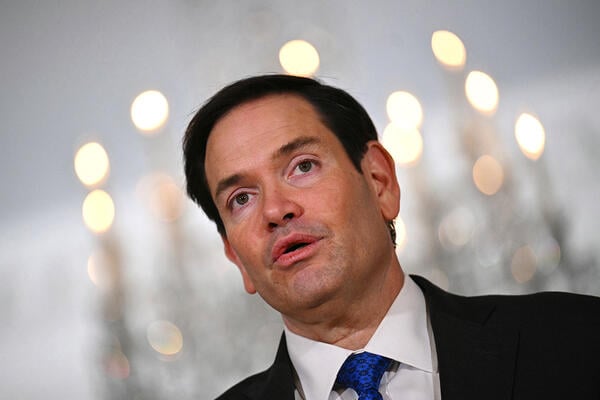
    Secretary of State Marco Rubio announced on Wednesday night that the Trump administration will “aggressively revoke” Chinese college students’ visas and heighten scrutiny of visa applicants from China. The new policy specifically targets “those with connections to the Chinese Communist Party or studying in critical fields.”

    It’s the administration’s latest move in what has been a sudden resurgence in its attacks on international students, which it seemed to suspend in April after legal efforts led to the restoration of the legal status of thousands of students.

    The news sent shock waves through higher education and could lead to a major reduction in foreign students at American universities, especially public research institutions. China contributes the largest number of international students to the U.S., with nearly 280,000 enrolled in 2023–24, according to data from the Institute of International Education—about a quarter of the total international student population in the country. 

    That share, however, has been shrinking since the COVID-19 pandemic; last year, India overtook China as the No. 1 source country of international students. But Chinese students are far more likely to enroll in undergraduate programs and pay more in tuition. They also make up a significant slice of STEM researchers: 16 percent of all U.S. graduate students in STEM fields and 2 percent of undergraduates are Chinese nationals, according to a 2020 report from the Center for Security and Emerging Technology at Georgetown University.

    It’s not clear whether the visa revocations would be accompanied by legal status terminations in the Student Exchange and Visitor Information System or prompt deportation proceedings, as they did for thousands of international students in March and April. Those steps would be the purview of the Department of Homeland Security.

    The targeting of students in “critical fields” in particular could devastate STEM programs and research labs at smaller universities across the country, where Chinese international students are heavily represented. Rubio did not clarify what fields could be considered critical, potentially setting the stage for a sweeping focus on areas where GOP lawmakers have raised concerns about sensitive national security research being shared with the Chinese government.

    A spokesperson for the State Department did not respond to a list of questions, including requests to clarify the scope of the new policy’s target and the timeline for visa revocations, in time for publication. At a press conference yesterday, department spokesperson Tammy Bruce declined to “get into the details” of how the new visa scrutiny would be applied or what “critical fields” the department was referring to, because it “might give up our hand and make certain things less effective.”

    “When we think of critical fields, we think of national security, the nature of how we keep America safe and secure and more prosperous,” she said. “It is important to keep a broad base, because that could mean many things.”

    The new policy’s focus on students with ties to the Chinese Communist Party has also raised concerns about academic freedom and free speech violations. Jonathan Friedman, managing director of U.S. free expression at PEN America, said the new policy targeting Chinese students would “hold student visas hostage to an ideological litmus test and disrupt the open exchange of ideas across cultures and borders.”

    “‘Aggressively revoking’ visas based on political ideology is a gross violation of basic free expression principles that anchor the academy,” he wrote to Inside Higher Ed.

    William Brustein, a retired longtime international student administrator, said the vague nature of Rubio’s directive could enable a sweeping dragnet that catches the majority of Chinese students—especially since association with the ruling Communist Party is difficult to avoid in China.

    “How will they know who’s a member? Maybe they’ll say if you were in a Chinese-sponsored youth group as a child, that could prevent you,” Brustein said. “Right now that policy is so vague that it could cover all Chinese students who want to study in the U.S.”

    Revocation Resurgence

    The administration briefly retreated from its persecution of international students late last month, after targeting pro-Palestine student protesters and expanding its scope to terminate the legal residency of thousands of students at institutions across the country. But a spate of successful court challenges halted the campaign in April, spurring the Trump administration restore more than 5,000 students’ SEVIS statuses.

    A lull followed the restoration as students, advisers and lawyers waited for the administration’s next move. It came two weeks ago, when the Department of Homeland Security released a new Immigration and Customs Enforcement policy granting the agency more leeway to revoke students’ SEVIS status with little justification.

    The Trump administration’s new strategy seems to target specific international student populations. So far, those have been recent graduates on Optional Practical Training visa extensions, students at Harvard University and potentially other institutions in their crosshairs, and now students from China, who Rubio claims are more likely to be national security threats.

    The State Department has also begun to tighten visa restrictions for applicants and incoming students. On Tuesday, Rubio announced a pause on all new student and exchange visa interviews while the administration implements an intensive new social media screening policy. The latest announcement on China also said the State Department would review application criteria to “enhance scrutiny of all future visa applications” from China and Hong Kong.

    Marjorie Hass, president of the Council of Independent Colleges, said there’s already a process for vetting international students, and that the administration’s new policy seems more aimed at scoring political points and justifying deportations than enhancing national security.

    “Institutions have their own admissions standards and the embassies do vet students who come into the country,” she said. “It’s not currently the Wild West.”

    Brustein said that if international students from China weren’t already moving away from American colleges en masse due to this spring’s targeting of foreign students, the latest move is sure to discourage future applicants.

    “We’re shooting ourselves in the foot,” he said. “Even if some of these decisions are reversed, we’re undoing the progress we’ve made over so many years in being this welcoming environment for the best and brightest in the world.”

    “That harm I don’t think can be undone.”

    A Blow for Research Universities

    Brustein has led international student offices at West Virginia University, the University of Illinois at Urbana-Champaign and Ohio State University, where he said there were “thousands” of Chinese students who often paid three times as much as their domestic peers.

    He said the colleges likely to be hit hardest by a major reduction in current and future Chinese students are public ones, especially regional institutions in areas with shifting demographics and declining college-going rates.

    “There are regional public universities and flagships across the Midwest, in the South, that have a large contingent of Chinese students who are coming particularly for STEM education,” Brustein said. “It’s those ones that survive on a thin revenue stream who are going to suffer the most.”

    He added that a sizable reduction in Chinese international students would likely hit scientific research hardest.

    “Many Chinese students get degrees in computer science, engineering, and go on to go to grad school or do an OPT,” he said. “They stay in the country, work in our labs, contribute significantly to innovation in this country, not China. To lose that is going to be a very big blow to our capacity for innovation.”

    Hass said that Chinese students have been both a financial lifeline and a source of cross-cultural exchange between the two countries for more than a decade. She said the benefits for higher education and for American diplomacy have been overwhelmingly positive, and a large-scale rollback of that relationship would be destructive for both.

    “This is a place where the balance of trade is very much in favor of the U.S.,” she said. “It’s mystifying why we would be undermining that.”

    She added that for many colleges, international students—and the volume of full-paying Chinese students in particular—help institutions improve access for local students.

    “Colleges will miss out on a lot of revenue,” she said. “That means the burden has to be borne by domestic students.”

    Source link

  • What First-Generation Students Need for Career Development

    What First-Generation Students Need for Career Development

    Title: First-generation College Students’ Career Entry: College Perspectives

    Authors: Melinda Mechur Karp, Suzanne Lyons, Nancy Stalowski, and Mary Fugate

    Source: FirstGen Forward and Phase Two Advisory

    First-generation college students experience the transition from high school to college and enrollment in higher education in a unique way. While there is significant research on first-generation students’ postsecondary pursuits and how they cross the boundary from the K-12 system into colleges and universities, less attention has been dedicated to exploring first-generation students’ career development and movement into the workplace.

    A new brief by FirstGen Forward helps to close this knowledge gap, drawing on a national survey from 411 colleges and universities across 47 states and Washington, DC, and six focus groups with higher education professionals. Eighty-nine percent of those interviewed work directly with first-generation initiatives and programs, and 72 percent of respondents identify as first-generation graduates themselves.

    Additional highlights and insights include:

    First-generation college student career development is highly unique. First-generation students rely heavily on institutional resources and mentors to help them progress through unfamiliar environments, which include institutions. Focus group participants indicated that students often need additional mentorship and support in understanding how their experiences as first-generation students can be career assets and how they can be reframed in job applications.

    First-generation respondents frequently indicated they need exposure to individuals who share their identities who can help them explore their future career pathways. When asked what students need for future career support, 20 percent of survey respondents said opportunities to build social capital, including networking, mentoring, and internship opportunities.

    Institutional approaches to promoting first-generation career development differ. First-generation students indicated they rely on both general university career services and programs tailored to them. Thirty-six percent of respondents reported their postsecondary institution offers career services tailored to first-generation students, 43 percent stated their institution does not, and the rest were unsure. Of 201 written survey responses about specific knowledge first-generation students need, the most commonly mentioned skill was interview preparation. However, the survey responses indicate that only 66 percent of respondents’ institutions offer this.

    First-generation College Students’ Career Entry: College Perspectives is the first of six research and policy briefs that will make up a national landscape analysis. Additional briefs will be released over the coming months.

    To read the full report from FirstGen Forward, click here.

    —Austin Freeman


    If you have any questions or comments about this blog post, please contact us.

    Source link

  • Ono’s UF Contract Valued at Roughly $3M a Year

    Ono’s UF Contract Valued at Roughly $3M a Year

    University of Florida presidential pick Santa Ono could earn nearly $3 million a year if confirmed by the Florida Board of Governors next week, according to a copy of the contract proposal.

    Ono’s proposed base salary for the presidential role is $1.5 million, an increase from the $1.3 million he earned at the University of Michigan before stepping down to pursue the Florida job. He could also earn 20 percent annual performance bonuses and a yearly raise of 3 percent.

    In addition, the proposal includes a role for Ono at UF Health, where he will chair the board and serve as a principal investigator, overseeing a lab, which comes with a $500,000 annual salary. That role also earns a 3 percent annual raise and performance and retention bonuses.

    Other elements of the contract, such as benefits and deferred compensation, bring its total value to more than $3 million a year if Ono is approved by the Board of Governors, which has called a special meeting for Tuesday to decide.

    Ono, an ophthalmologist by training, would also receive a tenured faculty role in the UF College of Medicine.

    The contract includes some unusual provisions. It requires Ono to work with the Florida Department of Government Efficiency “to evaluate and reduce administrative overhead, ensuring that University resources are directed to teaching, research, and student success while safeguarding taxpayer and donor investments.” In addition, he would be prohibited from spending “any public or private funds” on “DEI or political or social activism.”

    Though the University of Florida Board of Trustees unanimously approved Ono as president earlier this week, he has faced opposition from conservative critics over past support of diversity, equity and inclusion efforts. Ono spent much of his public interview with the board this week articulating how he changed his mind on DEI. He argued that while he was initially supportive of DEI, he now believes such initiatives are costly, divisive and counterproductive.

    Ono’s public about-face comes amid a campaign from anti-DEI activist Chris Rufo, who circulated numerous videos on social media ahead of the UF Board of Trustees meeting that showed Ono supporting DEI and speaking against systemic racism, which Rufo argued was disqualifying because it ran counter to the goals of Republican governor Ron DeSantis.

    Other conservative figures have since leveled additional criticism at Ono, including state officials and Donald Trump Jr., who wrote online, “This woke psycho might be a perfect fit for a Communist school in California, but how is he even being considered for this role in Florida?” Trump Jr. also encouraged the Florida Board of Governors to vote against confirming Ono.

    While DeSantis, who has wielded considerable influence over university hiring decisions, told local media that Ono’s past comments on DEI have made him “cringe,” he has not joined the chorus of conservatives calling to block Ono and has expressed confidence in the search.

    Source link

  • Art Activities Help Med Students Unwind

    Art Activities Help Med Students Unwind

    Administrators at Duke University have devised a creative program to encourage medical students to practice mindfulness and take time for themselves during a rigorous and demanding course of study.

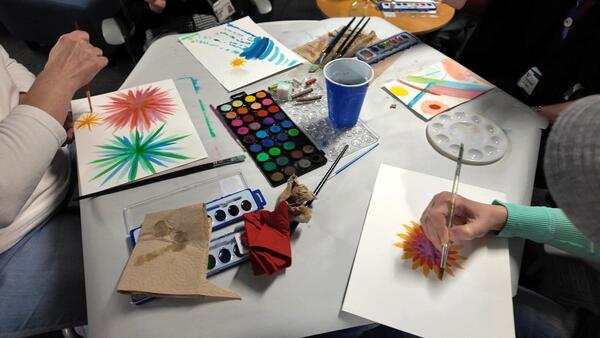
    A partnership between the Office of Learning Environment and Well-Being and Duke Arts Create established a free workshop that takes place twice a month to provide students the chance to unwind using various artistic media. The events help students engage in new art forms, connect with their peers and learn skills they can apply to their careers and beyond.

    In the Literature

    A 2018 research study found that medical students who had greater exposure to arts and humanities had better empathy, emotional intelligence and wisdom than those who didn’t. They were also less likely to develop burnout. Another study showed that art courses reduced stress for students enrolled in medical school.

    Crafting opportunities: Duke’s School of Medicine enrolls over 1,400 students in a variety of health-profession programs, including doctor of medicine, physician assistant, master of biomedical sciences and doctor of physical therapy programs, each with its own goals and accrediting body. Students represent a variety of backgrounds and experiences, so “there is no one-size-fits-all strategy for well-being,” said Jane Gagliardi, associate dean for learning environment and well-being for the medical school.

    Medical school students are able to participate in wider campus events, but the programs often feel siloed or off-limits to them, Gagliardi explained.

    Gagliardi first met Anna Wallace, who is the student engagement coordinator for Duke Arts, the university’s school of arts, at a student resource fair where they both had tables. Wallace had decorated hers with brown paper and crayons, allowing visitors to stop by and color.

    Gagliardi realized how much something as simple as coloring could be a pick-me-up for students, and she created a partnership with Wallace to provide art workshops for those in the medical school.

    Getting artsy: The free workshops, part of Duke Arts Create Workshops, take place twice monthly throughout the academic year on Duke Medicine’s Wellness Wednesdays.

    Activities include watercolor painting, needle felting, poetry through text deconstruction, zine making and singing workshops. One notable art project focused on the Duke chapel; students used watercolors to decorate a freely drawn image of the chapel.

    Students bring a variety of skills and talent levels to the workshops, sometimes surprising the staff.

    “It’s the students you think are the most clearly science-focused who are also just brilliant at expressing themselves creatively and supporting their classmates and colleagues at doing those things,” Gagliardi said.

    Some of the events are cohosted by affinity organizations on campus; for instance, the Lunar New Year celebration was conducted in partnership with the Duke Med Chinese Association, which taught students paper cutting and shared treats like boba tea.

    Events have been well received by everyone who’s participated, Gagliardi said, but having high attendance isn’t a goal. Rather, Gagliardi hopes such efforts show students that the school cares about their mental health and well-being.

    “I wanted an outlet to be free and let my creativity flow,” said Carly Williams, a Ph.D. student in the department of biochemistry, according to a Duke Arts press release. “I remembered doing watercolors as a kid and loving it, so this seemed like the perfect art session for me. And it turned out to be a relaxing two hours of painting and good company.”

    One of the benefits of the program is that it’s fairly low budget and easy to implement, Gagliardi said, allowing the school to pivot and be responsive to student interests as they arise.

    Holistic support: In addition to art workshops, Gagliardi heads various well-being initiatives across the medical school to support students and staff.

    “Finding ways to maintain your humanity while pursuing your rigorous study is important,” she said, particularly in a field like medicine, in which students learn about illness, recovery and death. “Equipping people with skills and strategies to deal with distress is important to maintain a functional ability to learn.”

    Each week, she hosts Granola With Gagliardi, open hours for anyone to stop by, pick up a KIND bar and talk with her.

    Duke Medicine also regularly collaborates with Medicine in Motion, hosting events like power yoga, running or pickleball tournaments to promote physical activity and well-being.

    In the future, Gagliardi hopes to connect additional student groups with Wellness Wednesday events.

    Do you have a wellness intervention that might help others promote student success? Tell us about it.

    Source link

  • Distorted Views of Higher Ed Lead to Wrong Remedy (opinion)

    Distorted Views of Higher Ed Lead to Wrong Remedy (opinion)

    Every day, in articles, podcasts and social media, I learn about American higher education.

    I learn that it aggressively stifles ideas that deviate from a narrow leftist orthodoxy. I learn that it privileges identity and politics over merit and knowledge.

    I learn that it is rife with antisemitism while serving as a safe harbor for people of color and LGBTQ+ people. I learn that Harvard, Columbia and other Ivy League universities are the prominent tip of a higher education iceberg that threatens to destroy our culture and country.

    If that is all I knew about American higher education, I would support tearing it down.

    I would think that American higher education, in anything resembling its current form, cannot and should not be saved.

    However, because I am a college president and have the opportunity to engage with students, faculty, staff and other college leaders every day, I think otherwise.

    Every day, I see students from myriad backgrounds and with disparate beliefs flourishing because they interact with one another in class, in the dining hall, in student residences, on athletic teams and in clubs. I hear about students whose understanding of the world is being pushed and transformed by faculty who expose them to new perspectives and new information.

    Every day I interact with students and alumni who are achieving their full potential because our college and our donors provide financial aid that caps student loans at $27,000 over four years, which is less than the average new car loan. Every day I am reminded that racism, sexism and transphobia have not been eliminated from our classrooms or our campuses—despite seeing daily evidence of our efforts to ensure that neither race, religion, nor any other identity confers advantages or disadvantages on our students, faculty and staff.

    It is because I see what college is every day, and not just what occurs on rare days on some campuses, that I know that ongoing efforts to tear down higher education are a travesty for our children and our country.

    It is why I know that the actions of those who are rarely on campus, and those who are focused on scoring political points, represent existential threats to America in what will continue to be a world in which knowledge and technology dominate.

    Much of the past 80 years shows what happens when the United States chooses knowledge over ignorance and decides to invest in its young people. After World War II, the U.S. made it possible for veterans, and then women, people of color and lower-income students, to attend college, raising the quality of life for millions.

    Our government partnered with universities to develop a research infrastructure that became the envy of the world. Innovations transformed lives and society. Diseases were cured. People lived longer and healthier lives.

    So, what confronts us now is a decision that will determine what kind of lives our children and grandchildren have.

    Are there too many colleges and universities at current prices? Are there some faculty who are intolerant of views that are inconsistent with their own? Would some college curricula benefit from more engagement with the real world?

    Yes, yes and yes.

    But will future generations thank us if we destroy the higher education system that took generations to build? Will they be better off if we judge every faculty member, administrator and student by the actions of those on the fringe, or by what we observe at a small number of colleges? Will they be better off if we shift control of scientific and intellectual innovations, course content and pedagogy from scholars to bureaucrats and politicians?

    For the sake of future generations and our country, we must find ways to convene a national discussion on the future of higher education. What are we trying to accomplish as a country, what part does each college play in that collective goal and how can we ensure the system is effective? What is right for the country is not the sum of the paths colleges set for themselves. It is not what colleges individually decide while trying to avoid existential threats from protesters, activist donors or state and federal governments.

    We must continue constructive engagement involving representatives from government, boards of trustees, college leadership, think tanks, student groups, the American Association of University Professors and other critical constituencies. The result must be a plan and action.

    As a soon-to-be former college president and the father of a future college student, I look forward to continuing to be part of this fight in the years to come. Those who sacrificed to create our great country, and those who will be impacted by our actions in the future, deserve nothing less.

    David R. Harris will step down in June after seven years as president of Union College in Schenectady, N.Y. He will join Harvard Graduate School of Education in the fall as a president in residence.

    Source link

  • Teaching Students Practical Life Skills

    Teaching Students Practical Life Skills

    Higher education is designed to prepare students for their future lives and careers by imparting technical and soft skills, but what about practical, hands-on tasks, like managing a home or vehicle?

    A 2023 survey found that young adults lack practical life skills, with two-thirds (68 percent) of millennials and Gen Z unable to change their car oil, nearly half (48 percent) unable to change a tire and 46 percent unable to tie a tie. Eighty percent of Gen Z respondents said they do not feel like they have figured out adulting.

    A workshop series at George Mason University in Virginia, titled Now What?, helps build students’ practical knowledge and well-being by giving them life advice and skills, such as how to change a tire.

    In this episode of Voices of Student Success, host Ashley Mowreader spoke with Ethan Carter, associate director of programs, well-being and assessment, and graduate student assistant Dianna Philipps, to learn more about the program offerings and how it supports student success.

    An edited version of the podcast appears below.

    Inside Higher Ed: I wonder if we can just start by talking about the inspiration for this program. Where did the idea come from?

    Ethan Carter: I came up with the idea, because as a [student activities] programmer, it is difficult to replicate things. When I thought a lot about being a college student—which was several years ago—I was like, “Man, what were the things that I wish I had known back then?” And so I kind of tried to think about something catchy, and I said, “Well, there were lots of things— I would do something, and then I’d be like, ‘So now what?’’ And so I was like, “Oh, that would be a really good little catchy phrase.”

    Also, from a programming standpoint, it is very adaptable to what we want to do. I don’t have to replicate my programs, but we can have the theme of Now What?, and seeking what students would want to know more about in their lives. Not that what I wanted to learn was bad. It was just, things change.

    Inside Higher Ed: When you address that question of Now What?, what are some of the themes you all have talked about? What has programming looked like practically?

    Dianna Philipps: One of our main ones would be the “how to change a tire” one. I feel like most people on campus have a car, [but] they don’t really think of the things that come with having a car.

    So when you see the tire-changing [workshop], you’re like, “Oh, what if I do get a flat tire? Like, maybe I should learn how to handle that if I’m on my own on the road or something.” I feel like things like that really stand out to students when they see it.

    Inside Higher Ed: Something I thought was cool is that your roles focus on well-being and recreation and this program is an interesting intersection of those two ideas. I wonder if you can talk about how this contributes to students’ well-being and thriving on campus.

    Carter: When you work on a college campus, and the big theme behind the campus is about well-being, you try and find out, where do you fit? And for us, it wasn’t just in the fitness realm. We wanted to think about something that was what we would consider our niche.

    I settled on practical well-being because it is adaptable and relatable. Recreation is usually seen as something that does provide movement, but I wanted to capitalize on that and build off of the aspect of, just, living in general can be tough. It also opens the door for us to be able to partner, because a lot of our programs within themselves are not things that we run, and it’s not our expertise, but it is a place where we can be a hub and connect individuals, which kind of ties in with the well-being aspect, like, you need to find your own well-being.

    Inside Higher Ed: Who are those partners across campus, and how do they participate in this?

    Carter: Anyone and everyone is actually who we get to partner with. The [change a] tire one is done with our facilities group and specifically the auto shop—they help us with any vehicle-based activities that we have going on.

    We’ve also connected with Student Health Services for ones that are related to health insurance, with anything about self-care. And then we did another [event] with academics for a little bit, talking about preparing for exams and test-taking and things like that.

    One of my other favorite [events] is intercollaboration within a department. So like, how to do a hike, how to change a flat tire on a bike.

    I think we had one more connection, oh, with dining. Dining teaches us how to cook, and so we’ve done a Super Bowl one where we made a special dip and some other little fun delicacies.

    Inside Higher Ed: What have you learned from students and their feedback as you’ve done the events over the past year or so? What did they enjoy about it?

    Philipps: I would say the main feedback is that it was very helpful for them. I think most of the people who have come to one event, they’re the ones who continue going to each of the events. I think it just helps them learn the things that they don’t know, because they’re like, you don’t know what you don’t know until you, I guess, go to the event. So that kind of helps them a lot.

    Inside Higher Ed: There are knowledge gaps for all students as they come on college campuses—whether that’s academic preparedness or just life skills that you might not know. If you’ve never owned a car before, you might not know how to jump your car or change a tire, or if you’ve never had a full-size kitchen before, you might not know how to cook a Super Bowl dish. So I think it’s really cool that you all give them the opportunity to identify what they don’t know, but then also just close those gaps and help them feel like they’re not left behind or unsure of what they do next.

    Carter: I would also add that they’ve enjoyed putting their hands on the tools that help them.

    We do one [workshop] on how to use hand tools, and sometimes the power drill is the [tool] that we get to play around with. Other times it’s a hammer and nail. Sometimes we play around with a tape measure. And I’ve appreciated the vulnerability of the students and admitting like, “Hey, this is what I don’t know,” and it provides an opportunity for me to talk more about like, “Hey, this is what I was feeling when I was a college student.”

    When you are thinking about all the resources that are available to you on campus, it’s important that you’re able to admit that you don’t know how to do something, and then go out and ask someone, because most of the time, most of those tools are readily available for you on campus. You just have to be pointed in the right direction, and people can’t give you what they don’t know you need. So that would be something else that I would say has been a great benefit for me in connecting with other campus partners and connecting with those students.

    Inside Higher Ed: I remember when I was a college student, I was really afraid of the makers’ studio, where the VR lab and the 3-D printing are. It just felt so intimidating to go in and actually try things out. But once you have an experience like this, where it’s a little more hands-on and assisted, you feel like you have the skills to do it.

    I bet there’s also an element of introduction to staff on campus. Maybe students have never met a facilities manager before, and now, after changing a tire with them, they can ask for help in other ways. Or if you’ve never talked to the Student Health Center, now you feel more comfortable talking about health insurance or other things like that.

    If you had to give advice or insight to another college or university that was looking to replicate your idea, what would you say you’ve learned? Or what are some best practices for people to know?

    Carter: First one is, what I actually tell the students all the time, is to be yourself within your organization. You maybe have a limited budget, and you only have certain resources available to you, so it’s important for you to not try and go and do what everybody else is doing. It’s important for you to do what you’re able to do, and then to connect with your students and allow them to be part of the construction of what your program is going to be.

    It may start out as just being something where you’re looking at budgets, and then another student comes in—because you are making this for the students. So if you don’t have the student audience that is available for what you’re providing, like, it isn’t super helpful.

    So do that, and then the adaptability aspect: Be OK with something not working. Because when you hear “no” or no one comes, that is good information; you know not to do that anymore. A lot of people get offended by that and are like, “Oh, I’m a horrible programmer” or whatnot.

    It could be that you’re doing it at the wrong time, or it’s just that students are not available for that. Why would we do something that’s related to budget and all the students that need to do the budget stuff are in class in the a.m., so maybe I should try it in the evening. Things of that nature. So be OK not always having everything get hit out of the ballpark. And then if you do find something, you try and make it better as you go.

    Inside Higher Ed: You mentioned that this is a different sort of programming and something that you all can adapt to reflect student needs. I’ve heard a lot from people who work on college campuses that post-COVID, it’s just been harder to get students to show up for things or feel like you’re being responsive to their needs. Have you felt like this has accomplished that goal in being adaptable, but also engaging students?

    Carter: I would say it depends, and it really depends on what’s going on and what the particular group you’re working with is all about. So, Dianna, if you don’t mind sharing some of your ideas to try and help us get some people coming.

    Philipps: One of the main ones would be changing locations. Especially if you’re on a bigger campus, trying to make it more central so it can target different types of people, either coming from class or coming from the dining hall or things like that.

    Just back to what Ethan had said about being creative with it, and if something doesn’t work, look at what did work, keep that and then change what didn’t work. You can learn from that. See what things people are actually going to, what they actually need help with. So, again, being adaptable to things.

    Inside Higher Ed: You mentioned earlier that students who come to one event might come to multiple—like, they really appreciate the skills that they’re building. Have you seen that that’s true of a handful of students or more?

    Carter: It makes you feel good when you see somebody that you’ve seen before; it kind of increases your self-esteem. You’re like, “Oh, I did something, right?”

    I think the bonus is that they invite their friends and they make them aware. I think that a lot of times, even as an adjunct professor, I’ve had to change my perspective of it isn’t what the student looks like, because most of the time when I’ve talked to my students, they look like they don’t care about my class. But then I mentioned that to them, and they’re like, “No, you’re one of the coolest professors that I’ve ever had.” I’m like, “I can’t tell from looking at your face.”

    So when we’re doing our programming, it may not be that the students don’t like it, they just may not be aware, which is why we’ve tried really, really hard to go to the students to make the things available—not just putting a flier in front of their face, but providing them an opportunity where they can go and do something.

    I would say we’ve gotten the greatest number of students coming to things when we went to another class with content that was in line with what we were doing; we were complimenting what an instructor was teaching. And then the students are like, “We had no idea that this was going on; what other programming do you have available?”

    So I would say that that has been super, super helpful, going to the students and just becoming more and more visible, shaking hands and getting to know people, which, again, it seems like it’s common sense, but you do have to become visible in a way that is helpful and not harmful.

    Inside Higher Ed: You mentioned working with other staff on campus; have faculty been a partner in this work as well?

    Carter: We have gotten to work with them. And like I said, when we invite ourselves to their class, it doesn’t work out so well. When we are paying attention to what it is that they’re teaching and ask them, “Hey, this is something that we’re offering. Is there, maybe, 15 or 20 minutes that we can come and complement some of the stuff that you’re teaching?” That actually ends up being a two-way thing, because usually that instructor is willing to come over to our workshops and provide some informational knowledge, and so that has been super, super helpful with that. So having a crossover is good.

    Inside Higher Ed: This series is all about helping Gen Z prepare for unknown futures and navigate their world after college. When we talk about the role of higher education, I think we talk a lot about careers, about students building life skills like critical thinking and things like that. But there’s also this idea of helping students just be people, having that practical wellness. I wonder if you can tie this all together—why this is important for colleges and universities to do, and how this is foundational to not only the students’ success, but also just being responsive to their needs?

    Carter: We have a saying in our well-being practices—our goal is to help students to live just as they breathe.

    When you think about well-being and the holistic aspect of it, it’s important that people realize that eating well can be tied into you, just coming and sitting in a facility, being around people. It can also be exercise. It can also be yoga. It can also be about you being able to get the job done, or even going through a bout of anxiety and finding out you know how to be resilient in that space, or how to ask for help.

    When it comes to our programming, we want to do what’s going to help people to be the best version of themselves. And that’s a journey that students have to take, and we’re on that journey with them.

    We want to walk alongside the student and provide the things that they need, to help them to feel like, “Hey, you know, I feel like I’m a better adult,” and at the end of the day, want to come back and give to other students. So being a human being is what we’re all about, and we want to support that in the best way possible, through our programming. And if we don’t have the programming, we can point them to other services and other individuals on a college campus, because that’s what universities are here for.

    In higher education, the more that we acknowledge the humanity of others, I think the better off that we’ll be, as opposed to trying to figure out things in a box. We’re not people built in boxes; we’re people with unique qualities and differences.

    Philipps: I would add that these events also teach us how to ask for help. Because I feel like that’s a big thing, especially when we’ll have actual careers and stuff, you don’t know everything as much as you may think you do. So just having that skill of asking for help, or just even getting assistance collaborating with others, is really important, and I think we get that from these events.

    Get more content like this directly to your inbox. Subscribe here.

    Source link

  • State Dept. to Expand Social Media Screening for Intl. Students

    State Dept. to Expand Social Media Screening for Intl. Students

    John McDonnell/Getty Images

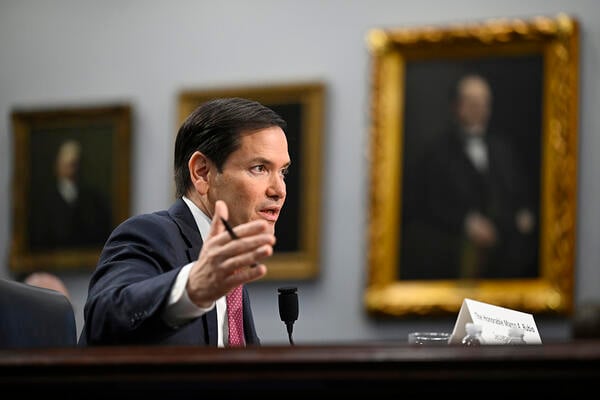
    The Trump administration is planning to implement a policy that would require all student visa applicants to undergo social media vetting, according to a cable sent by Secretary of State Marco Rubio, Politico reported Tuesday. All new student visa interviews have been paused in preparation for the new policy.

    “The Department is conducting a review of existing operations and process for screening and vetting of student and exchange visitor (F, M, J) visa applicants, and based on that review, plans to issue guidance on expanded social media vetting for all such applicants,” the memo reads, according to a copy published in full on social media by independent journalist Marisa Kabas.

    The planned changes come amid the federal government’s ongoing attacks on student visa holders, which began in March with the detention of multiple students and recent graduates who had been involved in pro-Palestinian protests on their campuses. Shortly after, the administration terminated thousands of student visa holders’ records in the Student Exchange and Visitor Information System, the database the houses international students’ records, leading to a slew of legal actions from students who feared they wouldn’t be able to continue studying in the U.S.

    Most recently, the Trump administration announced last week that it would prohibit Harvard University from enrolling international students as punishment for allegedly failing to prevent antisemitism and harassment on campus during last year’s pro-Palestinian encampments. Though that action was quickly blocked by a judge, the move could be devastating for the Ivy League institution, where international students make up more than a quarter of the student body.

    The proposed policy would increase the amount of time, manpower and resources required to process visa applications, according to experts.

    Faye Kolly, an immigration attorney based in Texas, noted that it’s not unusual for immigration officials to review visa applicants’ social media profiles, which they are required to list on certain immigration forms. But the administration has begun specifically screening the social media accounts of some returning students with visas who had participated in pro-Palestinian campus protests, though Politico reported that State Department officials had found the guidance on how to complete those screenings vague.

    It is not clear how this expanded vetting process will unfold; Rubio included no details in the memo, which said further guidance would be disseminated in the coming days. Though the memo didn’t say as much, Kolly predicted that the extra screening will involve looking “at [applicants’] social media handles more closely for what I’m assuming is going to be speech that could be considered either anti-Israel or pro-Gaza.”

    International education advocates have sounded the alarm on the proposed policy, arguing that it limits prospective students’ right to free expression and illustrates the Trump administration’s devaluation and distrust of international students.

    Fanta Aw, the CEO of NAFSA, an association for international educators, told Politico, “The idea that the embassies have the time, the capacity and taxpayer dollars are being spent this way is very problematic. International students are not a threat to this country. If anything, they’re an incredible asset to this country.”

    Kolly told Inside Higher Ed that the move harks back to the SEVIS terminations in March and April. Both actions, she said, indicate the administration’s lack “of nuance … regarding international students. It’s [taking] a simplistic approach to a very complex issue. When you target international students en masse, it’s irresponsible.”

    Daryl Bish, the president of EnglishUSA, which represents all English language programs in the country, said the change will reverse recent progress on the visa approval process and have an “immediate impact” on enrollment in English language programs.

    “The extraordinary decision to pause visa interviews, under the guise of security and enhanced vetting, is a dangerous precedent that will have immediate short-term consequences,” Bish said. “Visa appointment wait times have, generally, improved since the pandemic. This means that many students apply for the visa close to their program start date. The pause in interviews, if protracted, will force these students to change their plans.”

    Elora Mukherjee, a law professor at Columbia University and the director of the law school’s Immigrants’ Rights Clinic, also criticized the government for pausing new student visa interviews in the interim—especially as the memo gave no indication of how long the pause might last.

    “The pause is destructive to our national interests and America’s reputation in the world, and its effects may be felt for years. It has thrown the lives of tens of thousands of prospective international students into turmoil and will cause chaos and disruption at colleges and universities across the country. International students have been preparing for months to join U.S. colleges and universities in the fall, and schools have been preparing to welcome them,” she wrote in an email to Inside Higher Ed.

    “It is unclear how long the ‘pause’ will be in place, what heightened scrutiny visa applicants will face once the pause is lifted, and the extent to which decisions about granting visas may be tainted by prejudices based on race, religion, and national origin.”

    Source link

  • Degrees and Skills: A More Promising Approach

    Degrees and Skills: A More Promising Approach

    Earlier this week, we announced a new partnership between the University of Michigan and Google to provide free access to Google Career Certificates and Google’s AI training courses for more than 66,000 students across U-M’s Ann Arbor, Dearborn and Flint campuses. These high-demand, job-ready programs are now available through the university’s platform for online and hybrid learning, Michigan Online. The courses and certificates help students to develop in-demand skills in areas like cybersecurity, data analytics, digital marketing, UX design, project management and foundational AI.

    We’re both proud graduates of the University of Michigan. Our undergraduate experiences in Ann Arbor were transformational, shaping how we think, who we are and the lives we’ve led. There are countless ways to take advantage of an extraordinary place like U-M. But with the benefit of hindsight, one lesson stands out: Learning how to learn may be the most valuable thing you can take with you.

    That has always been true. But it’s becoming more essential in a world where technological change is accelerating and the life span of a “job-ready” skill is shrinking.

    A False Choice We Can’t Afford to Make

    Today’s learners are navigating a noisy debate: Is a degree still worth it? Should they invest in college—or seek out a set of marketable skills through short-term training?

    Too often, this is framed as an either-or choice. But our new partnership underscores the power of both-and.

    A college degree is a powerful foundation. And when paired with flexible, high-impact programs like Google Career Certificates, AI Essentials and Prompting Essentials, students are positioned to thrive in a dynamic global workforce. This is not about diluting the value of higher education. It’s about enhancing it—by equipping students with the durable intellectual tools of a university education and the technical fluency to succeed in real-world roles.

    The stakes are high. Nearly 70 percent of recent college graduates report needing more training on emerging technologies, while a majority of employers expect job candidates to have foundational knowledge of generative AI. As noted in a New York Times opinion piece by Aneesh Raman, chief economic opportunity officer at LinkedIn, the rise of AI and automation is reshaping the skills required for many jobs, making it imperative for educational institutions to adapt their curricula accordingly. This underscores the importance of integrating practical, technology-focused training into traditional degree programs to ensure graduates are prepared for the modern workforce. The world of work is changing rapidly. Higher education can and must evolve with it.

    Rethinking What It Means to Prepare Students for the Future

    This partnership is part of a larger effort at the University of Michigan to reimagine what it means to support lifelong learning and life-changing education. Through Michigan Online, U-M students already have access to more than 280 open online courses and series created by faculty in partnership with the Center for Academic Innovation, as well as thousands of additional offerings from universities around the world. These new certificates and AI courses deepen that commitment, creating new on-ramps to opportunity for every student, regardless of background or campus.

    Through Google’s flexible online programs, we’ve seen how high-quality, employer-validated training can make a meaningful difference. More than one million learners globally have completed Google Career Certificates, and over 70 percent report a positive career outcome—such as a new job, raise or promotion—within six months of completion. Google’s employer consortium, including more than 150 companies like AT&T, Deloitte, Ford, Lowe’s, Rocket Companies, Siemens, Southwest, T-Mobile, Verizon, Wells Fargo and Google itself, actively recruits from this pool of talent. Google partners with over 800 educational institutions in all 50 states, including universities, community colleges and high schools, to help people begin promising careers in the Google Career Certificate fields.This new partnership extends these opportunities to U-M students to further support career readiness.

    By offering accessible, skill-based programs like the Google Career Certificates, we aim to provide additional scaffolding for student success and career readiness, alleviating some of the pressures associated with traditional academic routes and recognizing diverse forms of achievement.

    An Invitation to Higher Ed and Higher Ed Ecosystem Leaders

    We believe this partnership is a model for how industry and education can come together to create scalable, inclusive and future-forward solutions.

    But it’s just one step.

    As we reflect on this moment, we invite fellow leaders in higher education, industry and government to ask,

    • How can your institution better integrate career-relevant skills into the student journey without sacrificing the broader mission of a liberal arts education?
    • What partnerships or platforms might allow your students to benefit from both a degree and credentials with market value?
    • In an era defined by AI, how will your institution ensure students are not just informed users of new tools, but thoughtful, responsible and empowered innovators?
    • How can your institution or organization expand equitable access to high-value learning opportunities that lead to social and economic mobility?
    • What role should public-private partnerships play in shaping the future of education, work and innovation, and how can we design them for long-term impact?

    The path forward isn’t a binary choice. It’s a commitment to both excellence and access, both degrees and skills, both tradition and transformation.

    We’re honored to take this step together. And we look forward to learning alongside our students and our peers as we navigate what’s next. In a rapidly shifting higher education environment, we see reason for optimism: opportunities to reimagine student success, forge lasting strategic partnerships and strengthen the bridge between higher education and the future of work.

    James DeVaney is special adviser to the president, associate vice provost for academic innovation and the founding executive director of the Center for Academic Innovation at the University of Michigan.

    Lisa Gevelber is the founder of Grow with Google.

    Source link

  • New Book Helps Academics Become Public Writers

    New Book Helps Academics Become Public Writers

    I’d be hard-pressed to find any person in higher ed who has had a larger influence on my own thinking than James Lang. Many folks will know Jim from his books like Cheating Lessons, Small Teaching and Distracted. He’s consistently ahead of the curve when it comes to identifying a problem in teaching and learning spaces—academic dishonesty, class disengagement, student attention problems—and proposing remedies that instructors can explore and make use of for themselves.

    His new book, Write Like You Teach: Taking Your Classroom Skills to a Bigger Audience, part of the University of Chicago Press series of guides to writing, editing and publishing, is the best book I’ve ever seen for showing academics how to translate their current skills and practices to another audience and purpose. I’m excited by this book because we need as many academics as possible putting their voices into the world, not just because they have so many interesting and worthwhile things to say as individuals, but because it also helps remind everyone about the value of institutions where this kind of work happens.

    I had a great time talking to Jim over email. This Q&A even breaks some news on Jim’s next book, too.

    Jim Lang is a professor of the practice at the Kaneb Center for Teaching Excellence at the University of Notre Dame, and an emeritus professor of English at Assumption University. He’s the author of multiple books, including Small Teaching and Distracted, and a longtime columnist for The Chronicle of Higher Education. You can follow him on Substack at A General Education or connect with him on LinkedIn.  

    John Warner: One of my favorite initial questions for people who write is if they enjoy writing. So that’s my question: Do you enjoy writing?

    James Lang: “Enjoyment” doesn’t seem like the right word for my feelings about writing. Writing has always been the activity that drives and gives meaning to my life. It helps me make sense of the world; if I have deep questions about the purpose of my life, or questions about anything important, I seek answers through writing, both within my published work and in my various notebooks. I have always been a very curious person who gets excited about learning new things, so writing has always been a way to satisfy those curiosities and push me into new places in my life.

    If I focus specifically on the emotion of enjoyment … I hate to admit it, but I don’t seem to enjoy the actual writing process quite as much as I used to. I think I had a more unreserved embrace of writing when I was younger, when I felt like I had a lot to say and was confident that I had the ability to say it. I think both of those feelings have diminished, which I attribute in equal parts to the stroke I had a few years ago and to my age. I had to learn to speak and write again after my stroke, and while I have regained all of the words and writing skills I had before, I have to work a little harder than I used to [to] call them up and apply them. But even beyond the stroke, I guess I feel less of a desire to announce my ideas confidently to the world than I once felt. I have a great family, lots of friends and ongoing interests in many areas of my life. As my appreciation for those things has increased, the available real estate in the enjoyment part of my brain has shrunk slightly.

    But the key word in that sentence is “slightly.” I do still take much pleasure from finding the perfect word, crafting a great sentence or launching a new essay or book. Writing still fills my life with meaning, and I could never envision my life without writing, or at least the desire to write, being part of who I am.

    Q: What you describe sounds a bit like a winding down or maybe a shift in focus? I often say about myself that I’m never going to retire because I can’t imagine not reading and writing, which is both my pleasure and my work. But I do sometimes wonder if there’s a space to do less of it, if that makes sense. But as you note, it seems impossible to shut off that curiosity that drives those activities.

    Where does that curiosity come from for you? You’ve had a varied career and it seems like every so often you shifted gears. Was that necessity or design or something else?

    A: It comes from both a negative and a positive place. The negative place is that I do get bored of routines in any form, and when I feel like my life has fallen into a routine place, I start getting this itch to break it. I received tenure in the usual time frame, and it was only a couple of years after that I was seeking a new challenge, so I applied to direct our honors program. I enjoyed that work tremendously, but then once again sought a change and founded a new teaching center on campus. Right after the pandemic, based on the success of Small Teaching and Distracted, I decided to give myself a new challenge: give up tenure and try to make it with a mix of writing, speaking and adjunct teaching. That plan was upended by my long medical ordeal, but even after I was able to return to that life, I realized that I missed deeply having a home on a campus, which led me to Notre Dame. So that has definitely been a pattern in my career and in my life.

    For the positive explanation for this restlessness, I would point to something my wife (an elementary school teacher) told me about the kids who come into her classrooms each year. She says that while we might be all born curious, by the time children get into school, they are already separating in terms of how much curiosity they bring to school. The differentiating factor she sees is how much exposure kids have to different kinds of life experiences. The kids who sit in their bedroom on their parents’ tablets all day or play video games in their rooms just don’t see as much of the world, and they aren’t being prompted to ask questions, wonder and explore. The ones who come in curious are the ones whose parents have deliberately tried to expose them to new things in some form—trips, walks outside, reading aloud, giving them books, etc.

    When I heard that, I realized that I had been raised as one of those latter kids. My mother was also an elementary school teacher, but her best years were in preschool. She had a special love, and special gift, for very young children. And while I have only a few memories of my preschool years, I know from seeing how she interacted with my children that I must have been raised to become a curious person.

    Q: I had a mini epiphany while reading the opening section of Write Like You Teach, which is that good teachers and good writers think of the needs of their audience (students/readers) first. This is something I think I’ve always done as a teacher, perhaps because I was a writer before I was a teacher, but you make it pretty explicit and then give it a little specific flesh. When did this connection first come to you?

    A: I actually can’t quite remember where that specific connection came from. I do know that this book really came out of my desire to write some more about attention, the subject of my previous book. I have written books about several major issues in teaching and learning, and some of them I finished and felt like I was done with that topic. That wasn’t true for attention. The more you read and learn about attention, the more you realize how it has a part in almost everything that matters in our lives. Work, play, relationships, spirituality, learning—all of them demand our attention. They often go well or poorly depending upon the quality of our attention. And so I still find attention fascinating, and I keep reading and thinking and writing about it. I also just really enjoyed writing the book Distracted. So I think maybe I was trying to determine what else I could write about attention which would relate to another area where I have some interest and expertise.

    Reading was the initial bridge to further thinking about attention. Anyone who reads a lot knows that some books capture our attention more than others. I think the teaching-writing connection that produced this book came from realizing both in classrooms and books, you have to be aware of the limits of a learner’s attention. Both as teachers and writers, we can either just expect people to pay attention or we can try to help them. I had made the case for the latter approach in Distracted and realized I could make the same case to writers: If you want readers to sustain their attention over the course of many pages, don’t just bang away at them with paragraph after paragraph of argument and idea. They need breaks, they need stories, they need space to pause and think—just as students do in the classroom. Seeing how attention informs both teaching and writing led to the basic idea of the book: The things we do in the classroom to help students learn can also be useful for our readers.

    Q: In a note at Substack, Arvind Narayanan (coauthor of AI Snake Oil) offered a “hypothesis on the accelerating decline of reading.” It’s got a bunch of bullets, so I’ll do my best to paraphrase: Essentially, people mostly read for pleasure or to obtain information. These functions have been replaced by other things. Video is more entertaining than reading. We can use large language models to summarize long texts and deliver information to us. He theorizes that most people will be happy with the trade-off of increased speed/efficiency, the same way we’ve gravitated toward “shallow web search over deeper reading.” He’s worried about this but also believes that merely “moralizing” about this is not going to be helpful. (I tend to agree.) I’ve argued for years that getting students engaged with writing is a great way to get them reading, because reading is the necessary fodder for writing. Writing is also a tremendous way to cultivate our ability to pay attention. I’m wondering if you’re worried in the same way as Narayanan or if you have any additional ideas of what we can do about this.

    A: First, thanks for sharing that note, which will be helpful to me as I am working on my next project—which I am happy to announce here. My next book will be The End of Reading?, which will be published by W. W. Norton, a publisher whose books I have been reading since high school and assigning in my courses for my entire teaching career. I’m so excited to dig into this project, but I am going to beg off on an answer here because I am just in the beginning of my thinking and writing and need more time to formulate my ideas. Put another way: Ask me that question again in two years!

    Q: I have sort of the opposite problem as the folks this book is addressed to, in that I find it very natural to write to regular people—because that’s where I started—while writing for more formal or academic audiences is something I can struggle with. What is it about the experience of the academic that makes the transition you’re writing about difficult?

    A: The problem here is that experts often lose track of what novices don’t know in their fields. The more we know in a discipline, the further away we get from our memories of what it was like to know very little about biology or literature or politics. When academics write to each other, they can assume their readers know certain things: basic facts, theories, common examples or cases, histories, major players in the field. Let’s say I’m a scholar of Victorian literature and want to write something about a work of Victorian literature. If I am writing to other scholars in that field, I can be confident that my readers know things I know: the expansion of the British Empire during that time period, the impact of Darwin and evolutionary theory on many writers in that era, the political turbulence and social unrest accompanying the Industrial Revolution.

    If I am writing to a more public audience, I can’t assume my reader knows any of that stuff. In a classroom, I can always stop and just ask students, “Have you heard of this before?” If they haven’t, I can give a quick introduction. But as a writer with deep expertise in a subject, I have no idea what a more public audience knows or doesn’t know. Faced with that problem, I think a lot of academics just say, “Never mind, I’ll just keep writing to my people.” And that writing is important and can be great! I love a good scholarly book, and I still read them regularly. That kind of writing also helps people get and keep academic jobs, so I am not on some crusade to encourage everyone to write for the public. But I think the major sticking point for people who do want to expand their audiences is thinking more deeply about their audiences: what they know or don’t know, why they are reading your work, and what you want them to take away from the experience.

    Q: Something I’ve often said about both writing and teaching is that they are “extended exercises in failure,” where failure means not missing the target entirely, but falling short of one’s initial expectations. I find this reality interesting, fascinating, really, because with both activities, you usually get a chance to try again. Does this make sense to you, or do you have any different frames for how you view these two activities?

    A: No absolutely, and in fact that framework applies to all of the pursuits that give me satisfaction, including the other major intellectual pursuit of my life: learning languages. I did not start learning other languages until my first year of high school, where I started with Latin. Immediately I was fascinated, and so in my junior year I added ancient Greek into my curriculum. When I got to college, I took classes in both those languages, and then also took French. Over the next 30 years I have gone back and forth with those original three languages and also tried to learn Spanish and Italian and German.

    I start every new language with this expectation that this time I’m going to really dig in and master this thing and become just totally fluent. The truth is that I have some basic knowledge in all six of those languages but know none of them particularly well. But I just love the fact that I can go back to any of them, at any time, and start trying again. I’m 55, and my brain has a different shape than it used to (because of the stroke), so I have to be realistic and acknowledge that it’s unlikely that I will ever become a fluent speaker in any other language than English. But gosh, I just love to keep trying.

    As you say, teaching and writing are the same. You start off with such hope and expectation and excitement: This will be the best class I will ever teach! This essay or book is the one that will change people’s lives! But it never quite works out that way. Even when you teach a great course, not every class period will be perfect. Not every student will have a great experience. When I look at my own books, I am proud of them but can see places where I cringe and wish I had done better. But I don’t feel defeated by those feelings: They make me want to keep trying.

    Q: The book is filled with practical approaches to writing for broader audiences, but I wouldn’t quite call it a book of “advice.” The word that comes to mind is “guidance.” Does that distinction make sense to you?

    A: This distinction matters a lot to me, actually. I think because of the success of Small Teaching, which had a lot of concrete pieces of advice, people can view me as a “teaching tips” guy. I do love learning and thinking about specific practices in the classroom, so I don’t wholly disavow that association. Presenting theories and big ideas about teaching only gets people so far; they need to envision what those theories look like when they are standing in the classroom on Tuesday of week seven with 20 blank faces in front of them. Describing examples of specific practices helps them with that imaginative work.

    But I always want people to understand that I am not advising them to do anything in particular: I am showing examples designed to spur their own creative thinking. Write Like You Teach, for example, has a chapter about the challenge of reader attention, and I do offer some very concrete pieces of advice based on writing strategies that I have observed in great writers. Ultimately, though, I want the readers of my book to move beyond these specific examples and develop their own strategies based on the principle readers are learners, and learners need support for their attention. With that principle in mind, I want people to analyze their classroom practices and see what translates to the page.

    That leads me to the final thing I want to say: The first and final goal of this book is to help academics feel empowered and enabled to write for the public. The prospect of doing that kind of writing can be intimidating, and many of us shy away from it. But if I can convince academics of this one principle—a great teacher can become a great writer—then I hope they will be able to develop their own writing practices based on their experiences in the classroom.

    Q: And finally, the last question I ask everyone: What’s one book you recommend that you think not enough people are aware of?

    A: When people ask me to recommend a novel to them, or when people ask me to share my favorite novel, I always mention two: Zadie Smith’s White Teeth and Arundhati Roy’s The God of Small Things. I am cheating a little bit here because both of these novels were very well-known when they were published, sold many copies and won prizes. But they are both a couple of decades old now, and I believe that their themes are as relevant today as they were when they were first published. If you are a word person, choose Roy, whose prose comes as close to poetry as a novel can get; if you love a great plot, choose Smith, whose genius shines through the ebullience of her narrative construction. If I were forced to choose between the two, I would choose … I can’t. I just can’t.

    Source link