Higher education is designed to prepare students for their future lives and careers by imparting technical and soft skills, but what about practical, hands-on tasks, like managing a home or vehicle?
A 2023 survey found that young adults lack practical life skills, with two-thirds (68 percent) of millennials and Gen Z unable to change their car oil, nearly half (48 percent) unable to change a tire and 46 percent unable to tie a tie. Eighty percent of Gen Z respondents said they do not feel like they have figured out adulting.
A workshop series at George Mason University in Virginia, titled Now What?, helps build students’ practical knowledge and well-being by giving them life advice and skills, such as how to change a tire.
In this episode of Voices of Student Success, host Ashley Mowreader spoke with Ethan Carter, associate director of programs, well-being and assessment, and graduate student assistant Dianna Philipps, to learn more about the program offerings and how it supports student success.
An edited version of the podcast appears below.
Inside Higher Ed: I wonder if we can just start by talking about the inspiration for this program. Where did the idea come from?
Ethan Carter: I came up with the idea, because as a [student activities] programmer, it is difficult to replicate things. When I thought a lot about being a college student—which was several years ago—I was like, “Man, what were the things that I wish I had known back then?” And so I kind of tried to think about something catchy, and I said, “Well, there were lots of things— I would do something, and then I’d be like, ‘So now what?’’ And so I was like, “Oh, that would be a really good little catchy phrase.”
Also, from a programming standpoint, it is very adaptable to what we want to do. I don’t have to replicate my programs, but we can have the theme of Now What?, and seeking what students would want to know more about in their lives. Not that what I wanted to learn was bad. It was just, things change.
Inside Higher Ed: When you address that question of Now What?, what are some of the themes you all have talked about? What has programming looked like practically?
Dianna Philipps: One of our main ones would be the “how to change a tire” one. I feel like most people on campus have a car, [but] they don’t really think of the things that come with having a car.
So when you see the tire-changing [workshop], you’re like, “Oh, what if I do get a flat tire? Like, maybe I should learn how to handle that if I’m on my own on the road or something.” I feel like things like that really stand out to students when they see it.
Inside Higher Ed: Something I thought was cool is that your roles focus on well-being and recreation and this program is an interesting intersection of those two ideas. I wonder if you can talk about how this contributes to students’ well-being and thriving on campus.
Carter: When you work on a college campus, and the big theme behind the campus is about well-being, you try and find out, where do you fit? And for us, it wasn’t just in the fitness realm. We wanted to think about something that was what we would consider our niche.
I settled on practical well-being because it is adaptable and relatable. Recreation is usually seen as something that does provide movement, but I wanted to capitalize on that and build off of the aspect of, just, living in general can be tough. It also opens the door for us to be able to partner, because a lot of our programs within themselves are not things that we run, and it’s not our expertise, but it is a place where we can be a hub and connect individuals, which kind of ties in with the well-being aspect, like, you need to find your own well-being.
Inside Higher Ed: Who are those partners across campus, and how do they participate in this?
Carter: Anyone and everyone is actually who we get to partner with. The [change a] tire one is done with our facilities group and specifically the auto shop—they help us with any vehicle-based activities that we have going on.
We’ve also connected with Student Health Services for ones that are related to health insurance, with anything about self-care. And then we did another [event] with academics for a little bit, talking about preparing for exams and test-taking and things like that.
One of my other favorite [events] is intercollaboration within a department. So like, how to do a hike, how to change a flat tire on a bike.
I think we had one more connection, oh, with dining. Dining teaches us how to cook, and so we’ve done a Super Bowl one where we made a special dip and some other little fun delicacies.
Inside Higher Ed: What have you learned from students and their feedback as you’ve done the events over the past year or so? What did they enjoy about it?
Philipps: I would say the main feedback is that it was very helpful for them. I think most of the people who have come to one event, they’re the ones who continue going to each of the events. I think it just helps them learn the things that they don’t know, because they’re like, you don’t know what you don’t know until you, I guess, go to the event. So that kind of helps them a lot.
Inside Higher Ed: There are knowledge gaps for all students as they come on college campuses—whether that’s academic preparedness or just life skills that you might not know. If you’ve never owned a car before, you might not know how to jump your car or change a tire, or if you’ve never had a full-size kitchen before, you might not know how to cook a Super Bowl dish. So I think it’s really cool that you all give them the opportunity to identify what they don’t know, but then also just close those gaps and help them feel like they’re not left behind or unsure of what they do next.
Carter: I would also add that they’ve enjoyed putting their hands on the tools that help them.
We do one [workshop] on how to use hand tools, and sometimes the power drill is the [tool] that we get to play around with. Other times it’s a hammer and nail. Sometimes we play around with a tape measure. And I’ve appreciated the vulnerability of the students and admitting like, “Hey, this is what I don’t know,” and it provides an opportunity for me to talk more about like, “Hey, this is what I was feeling when I was a college student.”
When you are thinking about all the resources that are available to you on campus, it’s important that you’re able to admit that you don’t know how to do something, and then go out and ask someone, because most of the time, most of those tools are readily available for you on campus. You just have to be pointed in the right direction, and people can’t give you what they don’t know you need. So that would be something else that I would say has been a great benefit for me in connecting with other campus partners and connecting with those students.
Inside Higher Ed: I remember when I was a college student, I was really afraid of the makers’ studio, where the VR lab and the 3-D printing are. It just felt so intimidating to go in and actually try things out. But once you have an experience like this, where it’s a little more hands-on and assisted, you feel like you have the skills to do it.
I bet there’s also an element of introduction to staff on campus. Maybe students have never met a facilities manager before, and now, after changing a tire with them, they can ask for help in other ways. Or if you’ve never talked to the Student Health Center, now you feel more comfortable talking about health insurance or other things like that.
If you had to give advice or insight to another college or university that was looking to replicate your idea, what would you say you’ve learned? Or what are some best practices for people to know?
Carter: First one is, what I actually tell the students all the time, is to be yourself within your organization. You maybe have a limited budget, and you only have certain resources available to you, so it’s important for you to not try and go and do what everybody else is doing. It’s important for you to do what you’re able to do, and then to connect with your students and allow them to be part of the construction of what your program is going to be.
It may start out as just being something where you’re looking at budgets, and then another student comes in—because you are making this for the students. So if you don’t have the student audience that is available for what you’re providing, like, it isn’t super helpful.
So do that, and then the adaptability aspect: Be OK with something not working. Because when you hear “no” or no one comes, that is good information; you know not to do that anymore. A lot of people get offended by that and are like, “Oh, I’m a horrible programmer” or whatnot.
It could be that you’re doing it at the wrong time, or it’s just that students are not available for that. Why would we do something that’s related to budget and all the students that need to do the budget stuff are in class in the a.m., so maybe I should try it in the evening. Things of that nature. So be OK not always having everything get hit out of the ballpark. And then if you do find something, you try and make it better as you go.
Inside Higher Ed: You mentioned that this is a different sort of programming and something that you all can adapt to reflect student needs. I’ve heard a lot from people who work on college campuses that post-COVID, it’s just been harder to get students to show up for things or feel like you’re being responsive to their needs. Have you felt like this has accomplished that goal in being adaptable, but also engaging students?
Carter: I would say it depends, and it really depends on what’s going on and what the particular group you’re working with is all about. So, Dianna, if you don’t mind sharing some of your ideas to try and help us get some people coming.
Philipps: One of the main ones would be changing locations. Especially if you’re on a bigger campus, trying to make it more central so it can target different types of people, either coming from class or coming from the dining hall or things like that.
Just back to what Ethan had said about being creative with it, and if something doesn’t work, look at what did work, keep that and then change what didn’t work. You can learn from that. See what things people are actually going to, what they actually need help with. So, again, being adaptable to things.
Inside Higher Ed: You mentioned earlier that students who come to one event might come to multiple—like, they really appreciate the skills that they’re building. Have you seen that that’s true of a handful of students or more?
Carter: It makes you feel good when you see somebody that you’ve seen before; it kind of increases your self-esteem. You’re like, “Oh, I did something, right?”
I think the bonus is that they invite their friends and they make them aware. I think that a lot of times, even as an adjunct professor, I’ve had to change my perspective of it isn’t what the student looks like, because most of the time when I’ve talked to my students, they look like they don’t care about my class. But then I mentioned that to them, and they’re like, “No, you’re one of the coolest professors that I’ve ever had.” I’m like, “I can’t tell from looking at your face.”
So when we’re doing our programming, it may not be that the students don’t like it, they just may not be aware, which is why we’ve tried really, really hard to go to the students to make the things available—not just putting a flier in front of their face, but providing them an opportunity where they can go and do something.
I would say we’ve gotten the greatest number of students coming to things when we went to another class with content that was in line with what we were doing; we were complimenting what an instructor was teaching. And then the students are like, “We had no idea that this was going on; what other programming do you have available?”
So I would say that that has been super, super helpful, going to the students and just becoming more and more visible, shaking hands and getting to know people, which, again, it seems like it’s common sense, but you do have to become visible in a way that is helpful and not harmful.
Inside Higher Ed: You mentioned working with other staff on campus; have faculty been a partner in this work as well?
Carter: We have gotten to work with them. And like I said, when we invite ourselves to their class, it doesn’t work out so well. When we are paying attention to what it is that they’re teaching and ask them, “Hey, this is something that we’re offering. Is there, maybe, 15 or 20 minutes that we can come and complement some of the stuff that you’re teaching?” That actually ends up being a two-way thing, because usually that instructor is willing to come over to our workshops and provide some informational knowledge, and so that has been super, super helpful with that. So having a crossover is good.
Inside Higher Ed: This series is all about helping Gen Z prepare for unknown futures and navigate their world after college. When we talk about the role of higher education, I think we talk a lot about careers, about students building life skills like critical thinking and things like that. But there’s also this idea of helping students just be people, having that practical wellness. I wonder if you can tie this all together—why this is important for colleges and universities to do, and how this is foundational to not only the students’ success, but also just being responsive to their needs?
Carter: We have a saying in our well-being practices—our goal is to help students to live just as they breathe.
When you think about well-being and the holistic aspect of it, it’s important that people realize that eating well can be tied into you, just coming and sitting in a facility, being around people. It can also be exercise. It can also be yoga. It can also be about you being able to get the job done, or even going through a bout of anxiety and finding out you know how to be resilient in that space, or how to ask for help.
When it comes to our programming, we want to do what’s going to help people to be the best version of themselves. And that’s a journey that students have to take, and we’re on that journey with them.
We want to walk alongside the student and provide the things that they need, to help them to feel like, “Hey, you know, I feel like I’m a better adult,” and at the end of the day, want to come back and give to other students. So being a human being is what we’re all about, and we want to support that in the best way possible, through our programming. And if we don’t have the programming, we can point them to other services and other individuals on a college campus, because that’s what universities are here for.
In higher education, the more that we acknowledge the humanity of others, I think the better off that we’ll be, as opposed to trying to figure out things in a box. We’re not people built in boxes; we’re people with unique qualities and differences.
Philipps: I would add that these events also teach us how to ask for help. Because I feel like that’s a big thing, especially when we’ll have actual careers and stuff, you don’t know everything as much as you may think you do. So just having that skill of asking for help, or just even getting assistance collaborating with others, is really important, and I think we get that from these events.
Get more content like this directly to your inbox. Subscribe here.
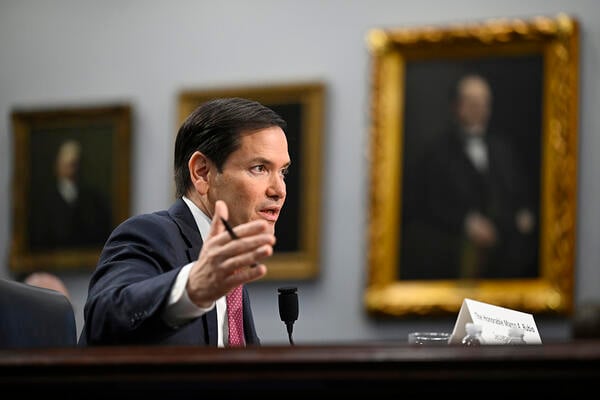
The plans to expand social media screening, first reported by Politico, were outlined in a memo sent by Secretary of State Marco Rubio.
John McDonnell/Getty Images
The Trump administration is planning to implement a policy that would require all student visa applicants to undergo social media vetting, according to a cable sent by Secretary of State Marco Rubio, Politico reported Tuesday. All new student visa interviews have been paused in preparation for the new policy.
“The Department is conducting a review of existing operations and process for screening and vetting of student and exchange visitor (F, M, J) visa applicants, and based on that review, plans to issue guidance on expanded social media vetting for all such applicants,” the memo reads, according to a copy published in full on social media by independent journalist Marisa Kabas.
The planned changes come amid the federal government’s ongoing attacks on student visa holders, which began in March with the detention of multiple students and recent graduates who had been involved in pro-Palestinian protests on their campuses. Shortly after, the administration terminated thousands of student visa holders’ records in the Student Exchange and Visitor Information System, the database the houses international students’ records, leading to a slew of legal actions from students who feared they wouldn’t be able to continue studying in the U.S.
Most recently, the Trump administration announced last week that it would prohibit Harvard University from enrolling international students as punishment for allegedly failing to prevent antisemitism and harassment on campus during last year’s pro-Palestinian encampments. Though that action was quickly blocked by a judge, the move could be devastating for the Ivy League institution, where international students make up more than a quarter of the student body.
The proposed policy would increase the amount of time, manpower and resources required to process visa applications, according to experts.
Faye Kolly, an immigration attorney based in Texas, noted that it’s not unusual for immigration officials to review visa applicants’ social media profiles, which they are required to list on certain immigration forms. But the administration has begun specifically screening the social media accounts of some returning students with visas who had participated in pro-Palestinian campus protests, though Politico reported that State Department officials had found the guidance on how to complete those screenings vague.
It is not clear how this expanded vetting process will unfold; Rubio included no details in the memo, which said further guidance would be disseminated in the coming days. Though the memo didn’t say as much, Kolly predicted that the extra screening will involve looking “at [applicants’] social media handles more closely for what I’m assuming is going to be speech that could be considered either anti-Israel or pro-Gaza.”
International education advocates have sounded the alarm on the proposed policy, arguing that it limits prospective students’ right to free expression and illustrates the Trump administration’s devaluation and distrust of international students.
Fanta Aw, the CEO of NAFSA, an association for international educators, told Politico, “The idea that the embassies have the time, the capacity and taxpayer dollars are being spent this way is very problematic. International students are not a threat to this country. If anything, they’re an incredible asset to this country.”
Kolly told Inside Higher Ed that the move harks back to the SEVIS terminations in March and April. Both actions, she said, indicate the administration’s lack “of nuance … regarding international students. It’s [taking] a simplistic approach to a very complex issue. When you target international students en masse, it’s irresponsible.”
Daryl Bish, the president of EnglishUSA, which represents all English language programs in the country, said the change will reverse recent progress on the visa approval process and have an “immediate impact” on enrollment in English language programs.
“The extraordinary decision to pause visa interviews, under the guise of security and enhanced vetting, is a dangerous precedent that will have immediate short-term consequences,” Bish said. “Visa appointment wait times have, generally, improved since the pandemic. This means that many students apply for the visa close to their program start date. The pause in interviews, if protracted, will force these students to change their plans.”
Elora Mukherjee, a law professor at Columbia University and the director of the law school’s Immigrants’ Rights Clinic, also criticized the government for pausing new student visa interviews in the interim—especially as the memo gave no indication of how long the pause might last.
“The pause is destructive to our national interests and America’s reputation in the world, and its effects may be felt for years. It has thrown the lives of tens of thousands of prospective international students into turmoil and will cause chaos and disruption at colleges and universities across the country. International students have been preparing for months to join U.S. colleges and universities in the fall, and schools have been preparing to welcome them,” she wrote in an email to Inside Higher Ed.
“It is unclear how long the ‘pause’ will be in place, what heightened scrutiny visa applicants will face once the pause is lifted, and the extent to which decisions about granting visas may be tainted by prejudices based on race, religion, and national origin.”
Are you on the job market or seeking a new career? Professors and researchers, this interview is especially for academics considering leaving academia (or if you’re forced to leave unexpectedly). I’m happy career coach, Dr. Jennifer Polk of From PhD to Life is back for this 2025 episode.
Jen’s been on The Social Academic to chat with me back in 2022 when we talked about Informational Interviews. She also joined me for a YouTube live in 2020 where she answered the question, What Is Networking? This year especially, mid-career and senior academics may be pivoting away from their more traditional academic career path. Many researchers and scientists in the United States of America have been let go. While there’s many resources out there to help with your next steps, such as the From PhD to Life blog, you may want personalized support from a career coach and community. We talk about Jen’s PhD Career Clarity Program which you may find helpful.
While we talk about a service for academics in this and other interviews on The Social Academic, I don’t receive any gift or monies if you choose to move forward with Jen’s PhD Career Clarity Program. I share people including Dr. Jen Polk with you, because I trust and recommend her to clients and friends.
In this interview
Reintroducing Dr. Jennifer Polk (@FromPhDToLife)
Jennifer Van Alstyne[‘Jennifer’]: Hi! Welcome back to The Social Academic, a podcast, blog, YouTube channel about online presence for professors, researchers, PhDs, people who are in academia. Dr. Jennifer Polk is back with me today. She’s someone who we featured here on The Social Academic in the past. She’s been live on the YouTube channel, but this time we have new things to talk about. I mean, the social media landscape has changed in 2025. Jen, would you start by introducing yourself?
Dr. Jennifer Polk [‘Jen’]: Oh no, I’m on the spot!
Yes, I’m Jen Polk. My business is called From PhD to Life. I work with professors, postdocs, and other PhDs who are ready to leave academia and go somewhere where they will be respected and valued and all that good stuff, even if they don’t yet know what the heck that could ever be. I’ll help them figure it out.
Jennifer: I love that. You’re a career coach who’s like, you’re not new to this space, right? You’ve been doing this for a while.
Jen: A while, indeed. What’s a while? More than 10 years? More than 10 years, yes.
Jennifer: Amazing.
Jen: Yes. Someone called me the OG PhD career coach. Am I saying that right? OG, is that what the kids say?
Social media climate for academics in 2025
Jennifer: OG, yeah. I love it. I love it. I’m curious because you’re actually like an early social media user, early online user. How have you seen things shifting or changing in social media in the past year or so?
Jen: Big sigh, sob, hysterics. [Sighs]. Okay, one way of putting it is Twitter is dead to me. I mean, Twitter is dead, right? Twitter is dead to me and Twitter is dead. And now that was a big problem. And please interrupt me when I go on and on and on about this. Most of my clients the last few years found me via Twitter. Not 100%, but that was a big place where people got to know me and eventually work with me. And that was true for individuals who wanted to work with me as like for career coaching, guidance on their own individual job searches, as well as the folks who work in universities and bring in speakers to do workshops and presentations. And so a lot of my business happened in part on Twitter.
Now, I don’t even go to Twitter anymore. So just for me personally, Elon Musk has ruined my life. No, I’m being dramatic. Yeah, just like that’s a small but sort of huge thing for me when it comes to social media. I mean, that’s the first thing that comes to mind.
Jennifer: I’m curious, like, gosh, you’ve been such a prolific Twitter user. Are you finding community elsewhere? Like, are you using other platforms the way you used to use Twitter or what?
Jen: Yeah, it’s a good question. And I don’t have a good answer because my answer right now is also a sigh. And I am on Bluesky, but I haven’t quite started using it for my career. Let’s put it that way. So it’s not that I’m not using it at all, but I tend to go on there more as like a personal, I want to share a thing. And ideally, if it was, if it made sense to spend the time, it would have a mix of like me as a person and me as a business owner that you could work with. That is how I always used Twitter. And Bluesky is different in terms of reach and engagement. That is not just because I’m bad at it, but that was like a deliberate, you know, that’s how it works.
Jennifer: I think that’s so helpful to share with people. I mean, like you are, you have a huge following on social media. Whether Twitter is dead or not, like people still follow you there. And yet on Bluesky, what was working for you in the past, maybe it doesn’t feel the same, maybe it doesn’t get the same engagement. The same thing on different platforms can have different results. And that’s something helpful for people to know when someone has an audience size of yours is still experiencing that, I don’t know, that frustration.
Jen: Yeah. And something else that might be interesting for your audience is that I have mixed feelings, I mean, I have mixed feelings about so many things in life, but including LinkedIn as well. I go through like seasons with LinkedIn. Last year, what is it, 2025 now. So back in 2024, for the first almost six months of the year, most days of the week, I would say I was posting on LinkedIn. And yeah, I did that consistently for those first six months and I got out of the habit and I’m much more sporadic now and I want to like it, but it’s just never, it’s just never really done it for me the way it’s . . . oh, lament, lament for Twitter of old.
I don’t know. I don’t know. I mean, I don’t know social media, you’re not doing it for me, but I want to like it.
Social media for academics who are job seekers in 2025
Jennifer: Mm. Hmm. Now, there are so many job seekers right now, whether they’ve been laid off in federal government and their PhDs or their academics who are finding funding issues that are now unexpectedly needing to search for jobsl for their financial future. I’m curious, what we just talked about in terms of social media, how might that impact job seekers?
Jen: Man, it’s such a scary time. One thing that comes to mind for the impact on job seekers is folks that do have jobs in the US federal government, in the US in general maybe, in universities, I think they might want to be a little bit more circumspect if that’s the right word. A little more cautious about what they put out there. I mean, we’re reading like insane things. Who knows if they’re true, but like, is Grok reading your tweets? Is DOGE [Department of Government Efficiency], are the teenagers surrounding Musk like turning the AI on your tweets and deciding who to fire that way? Like, I don’t mean to sound like a conspiracy theorist, but I think there’s some evidence that, anyways, I think people might be right to be a little bit more cautious about what they put out there. Even Bluesky, my understanding is that Bluesky is open. So you don’t even, I mean, even though it’s not owned by bad faith actors, foreign actors, it’s still maybe, you still want to maybe be a bit cautious about it. I don’t know if that’s what you were getting at with your question, but that’s one thing. That’s not the only thing, but I think that’s one thing that folks might want to think about.
Jennifer: Yeah, I really appreciate you saying that because that’s a question that’s been on my mind lately as professors who, this actually came up in a workshop, have sensitive topics. That was a good way of putting it. Sensitive in the sense that if they talk about it, the thing that they do in their research, in their work every day, they could attract hate. They could attract political controversy, even if they’re just posting about a new publication. And so this is actually something I brought up in a social media mastermind group that I’m in monthly because I wanted to hear how other people, how strategists who work on social media with companies and different agencies are handling the political divide. And it was really great to be open about the worries and fears that some professors are having right now. Yeah, everyone kind of said, “Airing on the side of caution.” Airing on the side of facts doesn’t even always work. It’s not enough anymore. And so really thinking about protecting yourself and having that feeling of safety, if you’re unsure before you post, maybe don’t do it. Ask a friend to look it over in advance. It’s hard.
Jen: I hate it, right? I hate it. I don’t want this. I have a client who is, well, let me not give away too many details, but who is a target of bad actors, right-wing bad actors as a person that shows up on lists, the kind of lists that you don’t want to be on and that is just total BS, right? And her solution, one solution anyways, to continue to be a public intellectual, to write because that’s important to her, is that she has changed the name that she uses. So it’s still kind of basically the same name, but the addition of like an initial or, I forget exactly what it was, the decision, but like of using like the first name instead of the middle name kind of thing as just one, it just makes it easier to differentiate herself from the person who’s being targeted on the internet. And I thought that was a nice, you know, partial kind of practical thing that was in her control, you know, because she can’t scrub the web, doesn’t have any control over that, but she could, you know, add an initial or anyways, you know what I’m saying?
Jennifer: I really like that. That’s such a, it’s a doable solution for people when you’re unsure, just know that you have that option. And maybe now is a time that anonymous accounts could protect you. If you’re someone who does want to say something politically, and you don’t want it to touch your professional or your personal kind of social media. I did hear from a couple of people who do like to say, what is truth? What is science? What is facts? And they need to protect themselves in order to do that by creating maybe an anonymous profile that’s not connected with themselves. So there are options, even though yes, it is scary. Yes, things have changed. [Sighs]
Jen: It’s just like you’re in that lament mode.
Jennifer: I know. I’m sorry. I’m kind of a downer. But honestly, I think that’s how people are feeling. And that’s what people are experiencing right now. So if we didn’t say it, it would be not right.
Jen: Yeah. The free speech brigade is, that’s not what they care about. I mean, this is obvious, right? But let’s just say we know that this is obvious. They don’t have consequences, but you might experience consequences.
Blogging and other ways to share online
Jennifer: Exactly. Exactly. Now, there are other ways to create content and you’re someone who’s actually for a long time tried different forms of content. Blogging is one of them.
Jen: [Laughs] In other words, you have failed so many times, Jen. You have failed to hit on the thing that works.
Jennifer: No. In other words, you’ve experimented with lots of different forms of media and you found things that really work for you for a time. And then sometimes you get curious about something else. And so you switch it up.
Jen: That’s a better way to put it.
Jennifer: I think that’s really what’s happened with you because you were prolific at the things that you do try and experiment with. And the From PhD to Life blog is one of them. I mean, when did you start that? That’s pretty old, right?
Jen: It’s old. So unless my memory is going, I started, so From PhD to Life started as a blog and a website the same day, December 12, 2012. I bought the domain and I got the WordPress site and I wrote my first two posts, I think, if memory serves. Yes, back in 2012, I was really excited about it. The internet was a different place back in 2012, but that is how I started and that is how I grew my business in the early years. I was on Twitter pretty quickly as well, but first the blog, then came Twitter. I think important for folks to know is that although I started my blog on my own website, within, I think I’m getting this right, within a few months, I got asked to blog on an external site. So universityaffairs.ca, which is a Canadian post-secondary ed sector magazine. I don’t know if they’re still a physical magazine, but they were like a 10 times a year kind of magazine and they also had a website. And so I was one of their bloggers, one of their columnists as they called me, but just online. So that was amazing for reach in Canada and beyond as a legitimizing place. Again, the internet is different now, but that was cool.
Jennifer: That is so cool. And you actually, I remember you won an award for that, didn’t you?
Jen: Three!
Jennifer: Three! You won three awards!
Jen: I mean, it’s been a few years now. I think back in 2015, 16, 17, I got the Gold Award in front of the Canadian Online Publishing Awards for best blog or column in the Blue category, which was for business.
Jennifer: Amazing. It’s amazing. I mean, it’s amazing because having a blog about PhDs seeking careers and finding a path that works for their life is like, that should be awarded. But I mean, it’s exciting that that’s the topic that they chose because your blog was so great. Now, the blog did win awards and it did have this big reach, but recently kind of disappeared from the university affairs website, which is typical. I will say like, websites do this. They take down the public writing sometimes in order to put new stuff up. And so when did you notice that it was gone?
Jen: Yeah. So I think I noticed maybe late fall 2024, something like that. I noticed because I think it was when a client alerted me to a broken link in our online platform for my online course. And I was like, “Oh. Oh, it’s all gone. Okay. Okay. All right. Fair enough.” I know. Gut punch, stab, but also, “Yeah, fair enough.” Okay. It’s been a few years. I stopped blogging for them back in 2020. So it’s been a few years. They owe me nothing. But there was a bit of a moment of, there was at least some good content there that, of course, I didn’t have a record of because who’s that organized? Maybe everybody else listening, but not me.
Jernnifer: No, when I’m thinking about it now, like my first two years of blogging, I backed up everything. Like I have like a word document of them at least. Recently, nothing. I don’t have anything saved outside of the website itself.
Jen: Well, it’s time.
Reclaiming online presence from out of the past
Jennifer: I know, it’s time, especially after what happened with the University Affairs version of your blog. Now, what did you do? Like, that stuff was just gone and you had a solution for actually finding the most important things and bringing it back. What happened?
Jen: Yeah. So the immediate issue was that there was this post that I’d linked to from my course that I think was a good one and useful. And I found it on Internet Archive. And so when it came time to think sort of beyond this immediate problem of like, “Okay, that one post, I want to continue to link to it. Oh, can I find all of the ones on Internet Archive?” In fact, I made a donation to Internet Archive because I was like, “Thank you so much!” Yeah. So then with your help JVA, I went through and picked out the blog posts that I thought were worth saving. I mean, there were, there were a handful that was like, “Eh, that was what I was thinking, you know, eight years ago, but whatever.” And yeah, you helped me put them on my website, copy and paste. Anyways, if you want to say more about that, I’ll let you say more about that. But I’m glad for that because now it’s on my site, I own it. Well, whoever owns the internet owns it. I feel like it’s a little bit more in my hands.
Jennifer: Yeah. I think that process is overwhelming for people. So it was kind of nice that we got to do it together. But my father-in-law, for instance, is a critic of art. And so he’s had a long career where he’s written, I mean, like hundreds, like thousands, I don’t know, like so many reviews and articles that, when art critics were being laid off quite a while ago and since then, his writing has disappeared from, a lot of his writing has disappeared from the website. And they did give him permission to pull all of the things that he wanted. But like, is he going to go back through the Internet Archive and pull all of those things? No, he doesn’t have the same drive or motivation that someone like you does. So a lot of that stuff, it’s not lost. He has it in physically bound, beautiful books, but it doesn’t mean that it’s like accessible for other people. And so when that’s the goal, when like that’s what you want, yeah, sometimes the project takes a little bit longer than we might want. It can be a little bit frustrating to have to search down old things, but then you have agency and choice in what you do about it next. And so for Jen, she got to pick the ones that were most important to her, we put them back on her blog, on her website FromPhDtolife.com. And that’s something that you could do for your own website. There’s so many options for you, but just knowing that the Wayback Machine and the Internet Archive exist for you to search, it’s a huge tip for people. Actually, after we worked together on that, I went back and I found some things that I’d written as like guest posts for other people in the past that had disappeared. Like they weren’t on the blog anymore because maybe the business had changed or what they were doing with the organization had changed. And so it was really easy for me to pull my original writing, which I didn’t have a good copy of, and put it back on my website so it could still help people. And when I did, I still put a little note at the bottom that said this has originally appeared on this place because I still want to honor that original purpose for the writing. And it’s really interesting to see how we can create afterlives for the things that we’ve written and created. So I love that.
Jen: Yeah, I will say one thing for folks to know, at least in my experience, the Internet Archive kind of crapped out after a few years. So if you’ve got stuff from like 20 years ago, well, is it even alive after 20 years, I don’t know. But anyways, just do it now. You know, put an hour or two in your calendar, do it now. Don’t wait for five years.
Jennifer: Yeah, right. Pull the content now and you can always do something with it later.
Jen: Yep. Yeah, it really only took me an hour or two-
Jennifer: Perfect.
Jen: And I didn’t have your father-in-law’s archive, but you know, I had a few years of stuff.
Jennifer: There was actually more than I expected in a good way, in the sense that like it really created new life for those pieces of writing that were just lost in the Internet Archive. Now, I’m curious about how your website has kind of changed over time, because the website is 2012. That’s a long time to have a website and actually add new things to it. Like, that’s a lot of new things. So what’s it been like to have a website for that long?
Jen: Whew, boy. Yeah. And for most of that time, I, and only I was the one doing all the things and you could tell. That’s okay, but you know. I always used a free WordPress. So it’s always been a WordPress and I, it’s always been on WordPress.org, is that right?
Jennifer: Yeah, that’s correct for you.
Jen: Yeah. And it’s always been connected to my domain FromPhDtolife.com. Anyways, I’m veering from your question. What was it, a year and a half ago that I hired you? Two years ago?
Jennifer: Yeah, something like that.
Jen: And you, so we’ve done this in two or three stages now. Which has felt manageable, you know, both financially and also in terms of my own need to do some homework, pre-work.
Jennifer: We only have so much capacity to do things for our own websites and stuff.
Jen: Yeah. So that was, I think that’s really a key point because I had not an outrageous number of pages, but it’s not, it’s not just a one page or two or three page website. There’s a few more pages than that. And for the most part I think my pages were ones that I wanted to keep, but they just over, over time they get longer like an academic CV, right? I’m thinking of like one or two pages in particular that they just, they just grow. You know, as if I was some sort of like tenured professor. So it was really good to say, “Okay, let’s focus on this page and this page and then let’s stop.” And then six months later, “Okay, now I’m ready to do this and this,” right? So that was, so yeah, it just made the process a lot more manageable. And now if you go to my website now, unless I’ve messed it up, unless I have messed it up, it’s looking so much more in-, it’s just more inviting and welcoming, easier for people to use and get at the information that will help them. Yeah, so that I can help them, whether they’re just looking at my website or wanting to take another step or two into working with me.
How to work with Dr. Jen Polk
Jennifer: Yeah. Like what, what does that look like? Like what if someone does come to your website and they want to take those next steps to work with you? How can PhDs, professors, researchers thinking of leaving academia, you know, work one-on-one with you, work in a group with you? How does that work?
Jen: Yeah. So folks that are like raring to go. They have options to just pay me money and start working with me immediately. Of course, that’s not going to be most people, especially if you’ve never heard of me before. The main thing that I recommend, so this is for individuals who are interested in their own job search, right? You know, getting another job. There is a free webinar, it’s a video on my website and then there’s like a yellow button kind of all over the place. So I recommend starting with that. You can sign up, you can watch this whenever, you can put it in your schedule and watch it later. It’s got captions and you can press pause, all that good stuff, right? So that I really recommend because it is a, a rich intro to what I teach my clients and the step-by-step process that I recommend everybody go through from like, “Uhh” to “Okay!” You know, I have a great offer and I’m starting a job. Yeah, and then at that point, what most folks do is of course, they feel more confident and more ready to, and they just have a sense of, “Okay, I’m going to stop doing that approach and,” you know, shift my energies more in this direction. And they can go off and do it on their own. There’s a couple of options after that. Individuals can sign up for a one-on-one with me, over Zoom, phone if you want and we can go more in depth for an hour on, you know, your particular issue, whether that’s networking or LinkedIn, or I don’t even know what I should be doing for the rest of my life. Or even better, depending on the person, I have a program. It’s an online course plus, plus other stuff, right? I called a PhD Career Clarity Program and that’s really great for professors, postdocs, other PhDs who are ready to leave academia and leaving academia can mean that you are right now working in academia, or it can mean like in some way you still identify with that profession even if you don’t currently work there. I often get clients who already got a job outside of academia, but that’s not the right fit. So anyways, that’s a very long answer. Start with the free thing and then take it from there.
Feeling hope with the PhD Clarity Program
Jennifer: I love that. And one of the things that we talked about when we were working on kind of the sales page for the PhD career clarity program is that feeling of hope that people have when they are joining this group and feeling like, “Oh, okay, now I can have that support.” What is the emotional journey for some of these people who are going through your program?
Jen: Yeah, it’s really interesting because I asked one of my clients a while back, asked somebody that was in the program like, “Why did you join?” And what my, the things that I thought that she would share or that I think sort of in general people share is that they’re feeling kind of like, despair. Maybe not completely, but like there’s some moment of, there’s some feeling of, “I can’t do anything. I’m no good for anybody. Nobody’s ever going to pay me money to do anything. I can’t do it.” And I think sometimes that’s relatable for some people, not everybody.
Jennifer: Yeah, yeah.
Jen: There are certainly other people that are like, “No, I’m feeling confident. I know I have something to offer. I don’t know what it is outside of academia. And so it’s not that I feel bad about myself. It’s that I need to figure out like, what is this called elsewhere?” So those are kind of two things that I had in mind, depending on the person. I mean, maybe you can tell resonated more personally with the first one.
Jennifer: I think my husband did too. He’s also a PhD who felt some despair. Yeah.
Jen: Yes. So okay, you’re in good company. If you consider me to be good company anyways.
Jennifer: Yes!
Jen: So there was a third option that I found when I asked my own client who was in the program. And, I think of course she probably felt both of those two things. And a third thing, which is the moment that she decided to join the program, she felt hope. Right? It was like, okay, I don’t know. I don’t know what it is that I’m going to do. Right? I don’t, I’m not entirely sure about my place in the world and what I have to offer and how to tell people about who I am and all of that stuff. But I’m hopeful and I’m going to invest that hope, that energy, that time, some money into moving myself forward. And I really, I love that, right? Cause that’s actually, that was I think a missing piece in my understanding of where people were at. Because yeah, I want you to bring some energy, some hope into this, which is not to downplay any of the other emotions: good, bad, ugly. But I think there’s some . . . Yeah, I think that’s a good, that’s a good, helpful thing to have and a hard thing, a hard thing, right?
Jennifer:The PhD Career Clarity Program has like a core course, it has workshops and resources. It also has a community. I’d love to hear a little bit more about that community aspect and how people from all these different fields are coming together and like actually finding support within their job search process?
Yeah. So the community I would say tends to exist, communities are amorphous things, but I would say it comes alive for the most part during our live meetings. And I, there’s two types of live meetings. One is the small group coaching sessions, which these days I do three times a month for an hour. Those are drop-in, you know, bring yourself and whatever’s going on. And then three of those a month. And then once a month, you mentioned I do live workshops. That’s really where the community comes alive, yeah? And it’s really great because the question that sometimes folks ask me is, “Oh, have you ever worked with, you know, a biochemical engineer, right? Or have you ever worked with somebody who goes into like X specific company, right? And the answer could very well be yes, but then the second part of the answer is it doesn’t matter. It doesn’t matter because it’s really magical what happens when people with disparate backgrounds and career trajectories and, you know, knowledge, expertise and skill areas. In fact, we have a lot in common and that there are differences really enrich the discussions that we have because of course, we’re all different. We’re all different men, women, trans folks, like we, you know, life is different: mothers, fathers, people without kids, et cetera. But it really, it’s really great what happens when we’re together sharing updates and commiserations and strategizing and putting our eyeballs, you know, on each other’s resumes and LinkedIn profiles. I think it really helps people feel much more confident. Academia can be so siloed within disciplines that it can be difficult to imagine yourself stepping into a professional world where you’re not surrounded by other chemists or other anthropologists or whoever, right?
Jennifer: Yeah.
Jen: So in a way this is like part of growing your confidence, is interacting in a semi-professional space with people from different backgrounds.
Jennifer: I think it sounds really warm. I think that I’m someone who personally had avoided community or group type things in the past and it was only in the last like five years or so that I have found not just comfort, but like comfortableness within myself because of group programs. Like because I feel more comfortable in smaller communities where we can actually get like a surprising amount of stuff done, whether it’s like emotional relationship building or whether it’s like really getting down and working on strategy and doing something harder. But like my resistance to group programs is like something that, I’m so glad that I have left behind because it really opens up my world to new things. So I’m glad you said that. Yeah.
Jen: You know, when I started my business, I was doing one-on-one coaching and that’s like the typical model for someone with a coaching approach. And I sometimes do that now, but the coaching I do for the most part is group coaching. And it’s facilitation, group discussions, And that I think is, yeah, is just really powerful and fun. You know, I’m happy to chat with anybody who’s interested but concerned because I know that, there are concerns that people have like, “Am I going to be drowning in all of these other people? Am I going to be the odd person out with nothing in common with anybody else,” etc. But let me know. Let’s chat about it. It’s not for everybody, but I think it’s probably for you.
Big sigh, last words
Jennifer: I appreciate you, Jen. I’m so glad you came back on The Social Academic. Is there anything else you’d like to add before we wrap up?
Jen: Big sigh. You know, I think there’s still connection to be made online. There’s still good people out there trying to make a difference in the world in the ways that they can, including online.
Jennifer: Yeah.
Jen: There’s still value in sharing what you’re about. Even if right now in some circumstances, you might choose to be a little bit more circumspect. There’s still value in that. And in the meantime, you may build community in other ways and that’s okay too. You know, you don’t owe your social media followers. Can I say this? You don’t owe them anything, right? You don’t owe them your presence. You don’t, you can choose to pause your activity and you don’t have to stress about it. I mean, what would you say?
Jennifer: Yeah, I think that’s really good. I think that last year, personally, I leaned into more of the pause in the sense that like, I didn’t put as much effort into social media. I really tried to be more relaxed about it. And that meant I was posting less. It meant I was taking some long breaks, sometimes weeks. And it made a difference for my mental health, but it also made a difference for like my brain and what I was able to focus on instead. Letting go of some of that need to post was helpful for me. But on the flip side of that, if you’re someone who struggles to post, being conscientious, being cautious does make sense, but also know that there’s other ways that you can have a strong online presence, whether it’s filling out your LinkedIn profile, creating a simple personal website or portfolio website. There’s so many options for you. And it’s okay if social media isn’t where you want to be spending your time.
Jen: Yeah, it’s great when people reach out and they write because they found you somewhere.
Jen: Thank you. Always, always nice to chat, even if it’s a bit formal like this.
Jennifer: And for everyone who’s listening, I’m going to drop the links to Jen and I’s past interviews on informational interviews and on what is networking so you can check those resources out too.
Jen: Can I say one more thing?
Jennifer: Yeah.
Jen: Just anybody who is thinking about hiring my friend JVA to help with your online presence, writing a bio, you know, let me be more specific, getting your website looking a little better, maybe a lot better. Do not hesitate. Act now. Run, don’t walk.
It’s been really, really fun to work with you, Jennifer. And we’re going to do it again. I’m warning you now. We’re not done.
Jen: Thank you. I love it. I love it. Thank you so much for coming on the Social Academic, Jen.
Dr. Jennifer Polk’s Bio
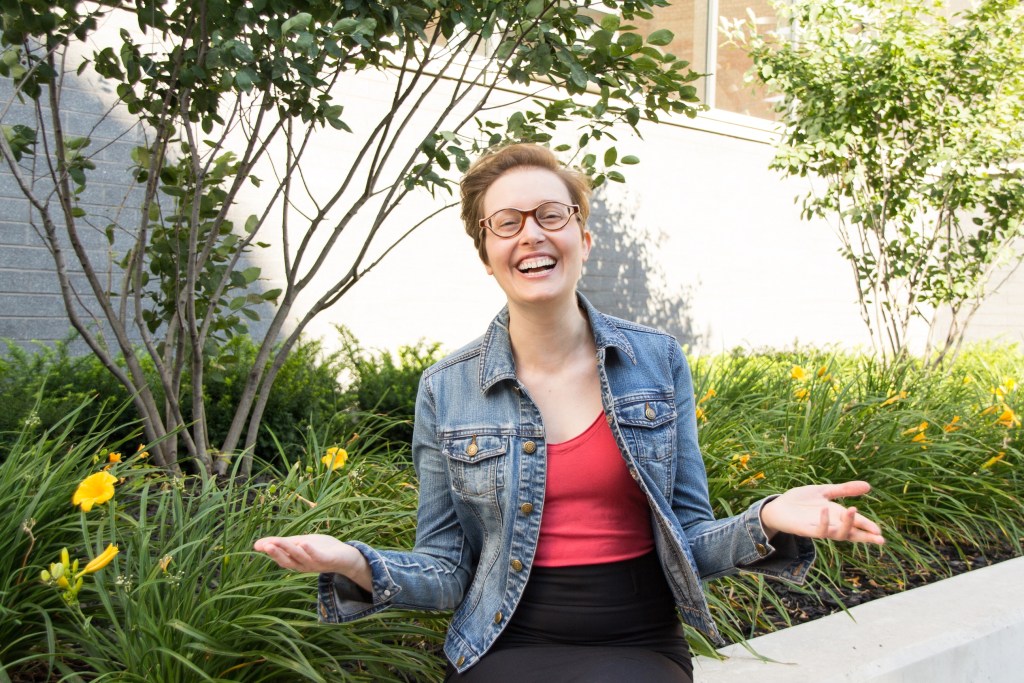
Dr. Jennifer Polk, photo by Nadalie Bardowell
Jennifer Polk, PhD, is a career coach and expert on PhD careers. Since 2013, she’s worked with graduate students and doctoral degree holders based in Canada, the United States, the UK, Australia, and elsewhere. Jen created her PhD Career Clarity Program to help PhDs navigate their career paths with confidence.
Jen has spoken on university campuses and at academic and professional conferences throughout North America on issues related to graduate education and career outcomes for PhDs. Jen regularly facilitates professional development workshops (now online) and delivers presentations for graduate students and postdocs. In addition, she currently serves on the board of directors for CAGS, the Canadian Association for Graduate Studies.
Her writing has appeared in University Affairs, Inside Higher Ed, the Chronicle of Higher Education, the Globe and Mail, and Academic Matters. Her University Affairs blog (2013–20), “From PhD to Life,” won three gold awards at the Canadian Online Publishing Awards. She’s also contributed essays to three books: Moving On: Essays on the Aftermath of Leaving Academia (2014), Reflections on Academic Lives: Identities, Struggles, and Triumphs in Graduate School and Beyond (2017), and How to Get Your PhD: A Handbook for the Journey (2021). Jen was also an expert panelist for the 2021 Canadian Council of Academies report, Degrees of Success, on the challenges PhDs face transitioning to employment.
Jen was co-founder of Beyond the Professoriate from the company’s founding until her departure in January 2020. Between 2014 and 2019 she co-produced and -hosted several online conferences attended by hundreds of graduate students, PhDs, and career education professionals. For several years she also ran Self-Employed PhD, an online network of freelancers, independent consultants, entrepreneurs, and small business owners. She hosted #withaPhD chat, a twice-monthly Twitter discussion, for three years.
Jen is actively engaged in online conversations about careers for PhDs, especially on social media. Follow her @FromPhDtoLife, or interact with her on LinkedIn and Facebook.
Jen earned her PhD in history from the University of Toronto in 2012, and an MA and BA from Carleton University.
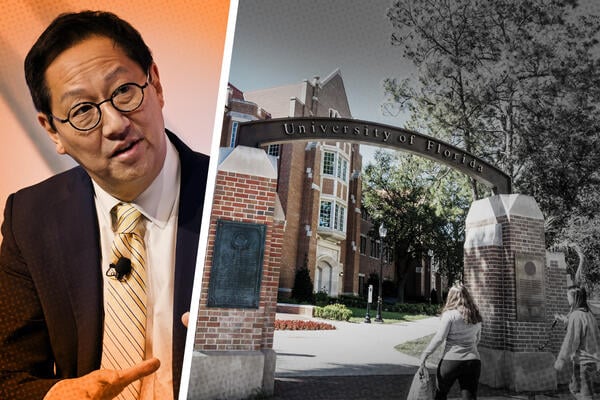
Despite mounting conservative criticism over Santa Ono’s stance on diversity, equity and inclusion, the University of Florida Board of Trustees on Tuesday overwhelmingly voted to hire the former University of Michigan president as its next leader.
Ono, who held three prior presidencies, was named the sole finalist for the top job at Florida in early May. As a traditional academic, Ono marks a break from the norm at Florida’s public universities, where the emphasis in the past few years has been on hiring former Republican lawmakers and others with political connections.
But his candidacy faced heavy criticism from conservative critics such as anti-DEI activist Chris Rufo, Heritage Foundation president Kevin Roberts and several Florida lawmakers, including Republican U.S. senator Rick Scott, who called for an investigation into the search that yielded Ono due to his past remarks on DEI. Some critics have claimed that Ono is a radical liberal academic who made an about-face on DEI due to careerist ambitions.
Ono, who made more than $1.3 million a year at Michigan, where he was under contract until 2032 before he stepped down to pursue the Florida job, could earn up to $3 million a year at UF, according to the salary range.
Ono’s Evolution on DEI
Rufo has led the charge among Ono’s conservative critics.
“Woke is threatening a return to power,” Rufo declared in an opinion piece in the conservative City Journal in which he argued that Ono’s noted past support of DEI policies was disqualifying.
(Although Rufo argued that Ono’s presidency would threaten to undo changes to education in the state driven by Republican Ron DeSantis, the governor has defended the pick.)
Prior to Tuesday’s meeting, Rufo circulated various videos of Ono speaking in favor of DEI policies and against systemic racism. While those videos gained traction on social media, the posts did not sway the UF Board of Trustees, which voted unanimously to hire Ono.
But Ono’s changing stances on DEI did hang over much of Tuesday’s meeting, popping up in multiple questions where Ono discussed his evolution on the issue and noted that he dismantled DEI initiatives at the University of Michigan after his perspective began to shift in late 2023.
“I did not come to bring DEI back; I came to make sure it never returns,” Ono told UF trustees.
Ono argued that while he initially agreed with the aims of DEI programs, while president of the University of Michigan he came to see that such initiatives were divisive and diverted resources from student success, leading to his decision to shutter the DEI office there earlier this year.
He argued that “large DEI bureaucracies” stifle open dialogue and erode trust on campus and that “it became clear to me through experience, not theory, that something had gone wrong.”
Ono sought to distance himself from his prior statements, arguing that what matters “is not what I said two to six years ago,” as depicted in the videos, but rather what he has done in the last 18 months, which includes winding down the DEI office at Michigan before he resigned last month. Although the move came after increased criticism of DEI spending at Michigan, Ono cast it as a move that grew out of conversations he began having in late 2023 in which he questioned the efficacy of such initiatives.
He also stressed again how his vision aligns with the goals of UF and DeSantis.
“I understand and support what Florida’s vision for higher education represents: a decisive move away from ideological bias and activist-driven culture that has come to define too many colleges and universities in this country and abroad,” Ono said. “The goal is not to replace one orthodoxy with another. It is to restore balance, to protect the pursuit of truth and create a university environment where all students can thrive, regardless of their viewpoint. Florida is showing the nation that it’s possible to elevate academic excellence without ideological indoctrination.”
While issues like faculty recruiting and retention, post-tenure review, college athletics, and other aspects of running the university were addressed in an almost three-hour public interview, much of that time, and the board’s questions, centered on DEI and campus protests.
For instance, Ono was asked multiple times about concerns of rising antisemitism on campus.
He responded that antisemitism is “a persistent threat, especially on college campuses” that “too often hides behind the language of political critique” and has been “normalized in the name of activism.” Ono also emphasized a commitment to keeping Jewish students safe at UF.
Asked about his decision to allow a pro-Palestinian encampment to remain at Michigan for 30 days, Ono said that the university did not want to escalate the situation and create an atmosphere of unrest close to commencement. He added that he spoke with Jewish students who were worried about how removing the encampment might disrupt commencement. Ono also said that Michigan subsequently updated its time, place and manner policies to prevent future encampment protests.
A Looming Battle?
Although the UF Board of Trustees approved the Ono hire, it’s not a done deal, as the Florida Board of Governors has the final say.
That board will meet in either mid-June or at a special meeting to consider Ono. That could provide another opportunity for Ono’s conservative critics to derail the hire if the Board of Governors comes out against the selection.
Florida representative Greg Steube, a Republican, immediately called for the board to block the hire.
“The @UF Board of Trustees has made a grave mistake. Today, Dr. Ono gave it his best ‘college try’ walking back his woke past, claiming he’s now ‘evolved.’ But I’m not sold. This role is too important to gamble on convenient conversions,” Steube wrote on social media Tuesday.
At least one member of the Board of Governors noted over the weekend that concerns about Ono will be addressed.
“The UF Board of Trustees is responsible for vetting the issues raised by concerned stakeholders, which their fiduciary obligations require they do, and which they need to do before making a decision. If/when the BOT acts, it will come to the Board of Governors, where the Board of Governors must agree to confirm the candidate for President of UF. The BOG takes this responsibility seriously, and issues will likely be fully reviewed and discussed publicly,” FLBOG member Alan Levine wrote in a Sunday social media post before Ono was hired.
While the Board of Governors does have the power to derail Ono’s selection, members could have done so earlier—and behind closed doors—if they had concerns. Under a policy established last year, the Board of Governors must sign off on a list of presidential finalists identified by search committees before those candidates can be considered by individual boards. So the board could’ve wielded that veto power of sorts to remove Ono before he was named as a sole finalist.
If confirmed, Ono will replace interim president Kent Fuchs, who came out of retirement after then-president Ben Sasse stepped down last July, weeks before a spending scandal emerged.
Elsewhere in the state, the University of West Florida tapped former Republican lawmaker and current Florida commissioner of education Manny Diaz Jr. as its interim president in a process some trustees argued was rushed and lacked transparency. As the fifth president hired to lead a public university in Florida this year (including those serving in an interim capacity), Ono is the only one who is not either a former Republican lawmaker or connected to the governor’s office.
I vividly recall when an editor in chief invited me to publish in a well-known journal. Fresh from defending my dissertation, I still grappled with understanding how publishing worked in academia—like whether I should try to imitate the densely written, abstract sentences that appeared in the journal he edited. I thumbed the latest issue and looked at him. “Do you have a house style I should use?”
He shuddered and gave a response I’ve since heard echoed by other editors in chief of similarly well-respected journals: “Please don’t! We publish manuscripts despite how they’re written.”
But this candid advice leaves most graduate students and even seasoned faculty members with another dilemma. If you can’t imitate articles published in the best journals, how do you write up your research so it gets published?
During my early years of teaching writing courses, I discovered that students seldom revised their work significantly, even when they received extensive feedback from both me and their peers. In fact, students failed to revise even when they received feedback and grades from their peers.
All writing students also struggle with the idea that both feedback and grades on their writing are subjective, a reflection of how a particular instructor prefers students to write in a specific course. In addition, English literature and creative writing courses teach students that writing is a combination of mystery and art.
In contrast, researchers in cognitive neuroscience and psycholinguistics identified the features that make sentences easy or difficult to read decades ago. As a result, we can teach students how to make their sentences clear—no matter how complex the subject—by teaching science-based writing methods. And as a graduate student or faculty member, you can improve your own academic writing—and your chances for publication—by focusing on the five basic principles that cause readers to perceive sentences as clear.
Second, English sentence structure reflects causes and effects in its ordering of words: subject-verb-object. As researchers discovered, participants read sentences with active voice at speeds one-third faster than they read sentences in passive voice. Moreover, these same participants misunderstood even simple sentences in passive voice about one-quarter of the time. While many writing instructors require students to use active voice, few alert students to the specific benefits of active sentences that make them easier to read. These sentences are shorter, more efficient and more concrete, while sharpening readers’ sense of cause and effect.
Consider the differences between the first example below, which relies on passive voice, and the second, which uses active voice.
Passive: It has been reported that satiety may be induced by the distention of the gastric antrum due to the release of dissolved gas from carbonated water,which may improve gastric motility, thereby reducing hunger.
Active: Cuomo, Savarese, Sarnelli et al. reported that drinking carbonated water distends the gastric antrum through the release of dissolved gas, inducing satiety and improving gastric motility, all of which reduce hunger.
Actors or concrete objects turn sentences into microstories.
Academic writing naturally tackles complex content that can prove challenging even to subject matter experts. However, writers can make even challenging content comprehensible to nonexperts by making cause and effect clear in their sentences by using nouns that readers can easily identify as subjects. When the grammatical subjects in sentences are nouns clearly capable of performing actions, readers process sentences with greater speed and less effort. For actors, use people, organizations or publications—any individual, group or item created with intention that generates impact.
We unconsciously perceive these sentences as easier to read and recall because identifying actors and actions in sentences aids readers in fixing both a word’s meaning and the role it plays in sentence structure. Furthermore, these nouns enhance the efficiency of any sentence by paring down its words. Take these examples below:
Abstract noun as subject: Virginia Woolf’s examination of the social and economic obstacles female writers faced, due to the presumption that women had no place in literary professions and so were instead relegated to the household, particularly resonated with her audience of young women who had struggled to fight for their right to study at their colleges, even after the political successes of the suffragettes.
Actor as subject: In A Room of One’s Own, Virginia Woolf examined social and economic obstacles female writers faced. Despite the political success of the suffragettes, writers like Woolf battled the perception that women had no place in the literary professions. Thus Woolf’s book resonated with her audience, young women who had to fight for the right to study at their colleges.
Pronouns send readers backward, but readers make sense of sentences by anticipating what comes next.
If writers imitate the academic writing they see in print, they typically rely on pronouns as the subjects of sentences, especially “this,” “that,” “these,” “those” and “it.” However, pronouns save writers time but cost readers significantly, for two reasons.
First, readers typically assume that pronouns refer to a single noun rather than a cluster of nouns, a phrase or even an entire sentence. Second, when writers use these pronouns without nouns to anchor their meaning, readers slow down and frequently misidentify the meanings of pronouns. Moreover, readers rated writing samples with higher numbers of pronouns as less well-written than sentences that relied on actors as subjects—or even pronouns like “this” anchored by nouns like “outcome.”
Pronoun as subject: Due to the potential confounding detrimental effects of sulfonylureas and insulin in the comparator arms of the trials evaluating anticancer effects of metformin/thiazolidinediones, it is difficult to draw any firm conclusions from prior studies.
Actor as subject: In trials to assess the anticancer effects of metformin/thiazolidinediones, we had difficulty drawing any firm conclusions from prior studies due to potential confounding detrimental effects from sulfonylureas and insulin.
Action verbs make sentences more concrete, efficient and memorable.
Open any newspaper or magazine and, even in just-the-facts-ma’am hard news stories, you’ll find action verbs, like “argues,” “reinvents,” “writes” and “remakes.” In contrast, most writers overrely on nonaction verbs. These verbs include “is,” “has been,” “seems,” “appears,” “becomes,” “represents” and that evergreen staple of academic writing, “tends.”
Action verbs enable readers to immediately identify verbs, a process central to comprehending sentence structure and understanding meaning alike. Furthermore, action verbs make sentences more efficient, more concrete and more memorable. In one study of verbs and memory, readers recalled concrete verbs more accurately than nonaction verbs.
When we read action verbs, our brains recruit the sensory-motor system, generating faster reaction times than with abstract or nonaction verbs, which are processed outside that system. Even in patients with dementia, action verbs remain among words patients with advanced disease can identify due to the semantic richness of connections action verbs recruit in the brain.
Nonaction verbs: Claiming the promotion of research “excellence” and priding oneself in the record of “excellence” has become commonplace, but what this excellence is concretely about is unclear.
Action verbs: Research institutions claim to promote faculty on the basis of research “excellence,” but institutions define “excellence” in many ways, with few clear definitions.
Place subjects and verbs close together.
When we read, we understand sentences’ meaning based on our predictions of how sentences unfold. We unconsciously make these predictions from our encounters with thousands of sentences. Most important, these predictions rely on our ability to identify grammatical subjects and verbs.
We make these predictions easily when writers place subjects and verbs close together. In contrast, we struggle when writers separate subjects and verbs. With each increase in distance between subjects and verbs, readers exert greater effort, while reading speeds slow down. More strikingly, readers also make more errors in identifying subjects and verbs with increases in the number of words between subjects and verbs—even in relatively short sentences.
For example, in this sentence, readers must stumble through two adjective clauses, noted in orange below, before encountering the verb “decreases,” paired with the underlined subject, “rule”:
Specifically, a rule that indicates a reduction in delaythat precedes an aversive consequence decreases procrastination in university students.
But this separation strains working memory, as readers rely on subject-verb-object order to identify sentence structure. Ironically, as academic writers gain sophistication in their subject-matter expertise, they frustrate readers’ mechanisms for comprehension. Your urge to immediately modify the subject of your sentence with phrases and clauses slows reading and increases readers’ sense of conscious effort.
On the other hand, reading speeds increase while effort decreases when subjects and verbs appear close together. Introduce your main point with a subject and verb, then modify them with clauses or phrases:
Specifically, university students decrease procrastination when they face aversive consequences immediately for failure to meet deadlines.
These principles will work in any discipline, enabling writers to control how editors and peer reviewers respond to their manuscripts and proposals. These changes can help make an academic career successful, crucial in today’s competitive environment.
Yellowlees Douglas is a former professor of English at Holy Names University and was a director of five writing programs at universities including the City University of New York and the University of Florida. She is the author, most recently, of Writing for the Reader’s Brain: A Science-Based Guide (Cambridge University Press, 2024).
The Concordat to Support the Career Development of Researchers was designed to drive culture change, not compliance. However, many institutional action plans suggest institutions are meeting the letter rather than the spirit of its commitments.
Financial constraints and the evolving REF 2029 people, culture and environment (PCE) guidance are shaping how institutions support research staff, and universities face a choice: stick with the easy, surface-level interventions that look good on paper, or commit to the tougher, long-term changes that could truly improve research careers.
The latter is difficult, resource-intensive, and politically fraught – but it is the only route to a research culture that is genuinely sustainable.
Progress and pressures
There has been real progress in embedding researcher development in UK higher education. The 2019 review of the concordat highlighted expanded training opportunities, strengthened mentoring schemes, and, crucially, the integration of researcher development into institutional strategies and governance. Many institutions have since used its principles to shape research culture action plans and strategies.
This progress has been uneven, however. Access to high-quality training and development opportunities varies across the sector, particularly for researchers in smaller, less well-resourced institutions. In addition, new initiatives frequently lack long-term sustainability beyond initial funding.
Institutional action plans tend to emphasise soft politics – awards, charters and resource hubs – which, while useful, may function as reputational signals more than mechanisms for change. Meanwhile, the concordat’s more challenging commitments, like improving job security, workload management, and the visibility of career pathways across sectors, receive less attention.
Financial constraints and shifting priorities
Universities are operating in an era of financial constraint forcing difficult decisions about what can be sustained and what must be scaled back. These financial pressures are already reshaping researcher development and career pathways, with potentially lasting consequences:
Shift toward low-cost interventions: Institutions may prioritise training, mentoring, and “off the shelf” development workshops as the most financially viable options, while more complex reforms – such as improving career pathways, addressing workload pressures, and ensuring meaningful career learning – are pushed aside.
Growing precarity and inequity in research careers: With the risk of non-renewal of fixed-term contracts and rising redundancies, instability may increase. The effects will likely be unequal – early-career researchers, those with caring responsibilities, and underrepresented groups are usually most affected in such situations, with workload pressures further widening existing inequities in career progression and retention.
Shifts in career trajectories: Financial pressures will push more researchers to seek opportunities beyond academia, not always by choice but due to diminishing prospects within universities. This is not in itself a bad thing, but the absence of robust career tracking data, limited engagement with non-academic sectors, and a lack of structured support for diverse pathways mean that institutions risk making decisions in a vacuum.
Without a clear understanding of where researchers go and what they need to thrive, researcher development may become misaligned with market realities – undermining both retention and outcomes. Initiatives like CRAC-Vitae’s new UK research career tracking initiative aim to close this critical evidence gap.
What makes researcher development sustainable?
What will actually make researcher development sustainable? The answer isn’t simply more initiatives, or cheaper ones – it’s about embedding development in institutional culture and building on evidence of what works. That means making time for development activities, creating space for strategic reflection, and encouraging researchers to learn from one another – not just offering mentoring or reciprocal schemes in isolation. Vitae’s refreshed Researcher Development Framework sets out the full breadth of what this encompasses.
Researcher development doesn’t necessarily require large budgets. Much of it comes down to embedding development in the culture: time to pursue meaningful opportunities, support from line managers and supervisors to do so, and the ability to learn in community with others. Yet in times of crisis, workloads tend to rise – and it’s often this development time that’s seen as non-essential and cut. Around half of research staff do not have time to invest in professional development – demonstrating just how limited that space already is.
These overlapping pressures are pushing institutions to make trade-offs – but it’s clear that the most effective and sustainable approaches to researcher development will depend not just on resource levels, but on institutional priorities and strategic leadership.
Unmet expectations
At the same time, the ongoing review of sector-wide concordats and agreements, meant to clarify priorities and improve alignment, seems to have stalled – raising concerns about whether it will lead to meaningful action. The Researcher Development Concordat Strategy Group, tasked with overseeing implementation and strategic coordination, has also been quiet over the last year, though the new chair has recently signalled renewed commitment to its activities.
This stagnation raises questions about the long-term value of the concordat, particularly in a landscape where institutions are grappling with resource constraints. Without strong leadership and coordinated sector-wide action, there is a real risk that institutions will continue to take a fragmented, compliance-driven approach rather than pursuing deeper reform.
If the concordat is to remain relevant, it must address the structural issues it currently skirts around – particularly those related to researcher employment conditions, workload sustainability, and career progression. Without this, it risks becoming another well-intentioned initiative that falls short of delivering real sector-wide change.
PCE and the concordat
The introduction of people, culture and environment (PCE) in REF 2029 was intended to shift the sector’s focus from research outputs to the broader conditions that enable research excellence. However, the way institutions interpret these requirements is critical.
REF PCE has the potential to drive meaningful change – but only if institutions use it as a platform for genuine reflection rather than a showcase of best practices.
PCE and the concordat share several ambitions: both emphasise inclusive research environments, professional development, and supporting leadership at all career stages. The concordat’s focus on employment conditions, researcher voice, and long-term career development also aligns with PCE’s emphasis on institutional responsibility for research culture.
This coherence is no accident – PCE was co-developed with the sector, and the concordats and agreements review recognised the overlaps between existing frameworks.
If institutions take a strategic, integrated approach, REF PCE could reinforce and enhance existing concordat commitments rather than becoming another compliance exercise. However, this requires institutions to go beyond superficial reporting and demonstrate tangible improvements in the working conditions and career pathways of researchers.
A call to action
If institutions want to move beyond just ticking boxes, they need to take bold, practical steps.
Job security must be redefined in the current climate. Researcher development should not just focus on career skills and knowledge but on career sustainability, accountability, and agility. While reducing reliance on fixed-term contracts remains a long-term goal, immediate priorities must also include clearer career progression routes (within and beyond higher education), cross-sector mobility, and support for career transitions.
Workload and pay transparency need urgent attention. As researchers face increasing uncertainty about their career trajectories, solutions must go beyond surface-level fixes. This requires coordinated policy reform at both institutional and sector levels, including meaningful workload management strategies, transparent pay equity audits, and governance processes that embed researcher voices. While wellbeing initiatives have value, they are not a substitute for structural reform.
Finally, the role of the concordat strategy group must evolve in response to the current climate. With institutions facing severe financial constraints and a shrinking research workforce, the group must take a more proactive role in advocating for sustainable researcher careers. This includes setting clearer expectations for institutions, addressing gaps in employment stability, and ensuring that commitments to researcher development are not lost amid cost-cutting measures. Without stronger leadership at the sector level, there is a risk that the concordat will become little more than a bureaucratic exercise, rather than a meaningful driver of change.
The Alliant Credit Union Foundation has awarded a $108,000 grant to Digital Leaders Now, the nonprofit that powers the Digital Leaders Academy at Ridgewood Community High School District 234, to support the implementation of innovative digital opportunity programs.
The initiative will begin rolling out in Spring 2025, with full program implementation for the 2025-2026 school year. The grant will help students gain critical digital skills, enhance career preparation opportunities at Ridgewood and beyond, and ensure teachers have the necessary resources to integrate technology into the classroom effectively.
“The Alliant Credit Union Foundation is committed to fostering educational opportunities that prepare students for the future,” said Meredith Ritchie, President of The Alliant Credit Union Foundation. “By partnering with the Digital Leaders Academy, we are helping to bridge the digital divide and ensure that students in Ridgewood Community High School District 234 are equipped with the skills and knowledge they need to succeed in the evolving workforce.”
The grant will support key initiatives, including:
Integration of AI Tools: Students will gain hands-on experience using AI and emerging technologies to enhance their learning and problem-solving skills.
Teacher Training & Development: Supporting professional development programs that empower educators with the tools and knowledge to incorporate digital learning strategies into their curriculum.
Digital Fluency Expansion: Enhancing student digital literacy and technology-based learning experiences to build a foundation for future careers.
Career Readiness Programs: Preparing students for high-demand technology roles by connecting them with industry experts, mentorship opportunities, and real-world applications of digital skills.
Through this initiative, the Alliant Credit Union Foundation continues its mission of driving positive change in education by expanding access to technology and professional development resources.
“The Digital Leaders Academy is a testament to the power of partnership and community. With the support of Alliant, we’re equipping students, teachers, and parents with the tools to thrive in the digital age, because when we invest in digital fluency, we unlock limitless potential,” said Caroline Sanchez Crozier, Founder of Digital Leaders Now, an Illinois-based nonprofit, and creator of Digital Leaders Academy.
Ridgewood Community High School District 234 students will benefit from enhanced learning experiences, giving them a competitive edge in today’s digital economy.
Kevin is a forward-thinking media executive with more than 25 years of experience building brands and audiences online, in print, and face to face. He is an acclaimed writer, editor, and commentator covering the intersection of society and technology, especially education technology. You can reach Kevin at [email protected]
International students make up more than one-quarter of Harvard’s student body.
APCortizasJr/iStock Unreleased/Getty Images
Less than a day after having its ability to host international students revoked by the federal government, Harvard University successfully sued the Trump administration to block the move. A judge granted a temporary restraining order late Friday morning.
Department of Homeland Security Secretary Kristi Noem announced Thursday afternoon that the Trump administration had stripped Harvard’s Student and Exchange Visitor Program certification in a letter that vaguely accused Harvard of a “failure to adhere to the law.”
However, the letter did not name any specific violations of the law by Harvard.
On Friday morning, Harvard threw a legal counterpunch, filing a lawsuit challenging the revocation of SEVP certification and seeking a temporary restraining order to halt the action, which could cost Harvard to suddenly lose more than 6,000 students if they are unable to enroll. (International enrollment typically makes up about a quarter of Harvard’s head count.) Beyond blocking new enrollments, the revocation would require current international students to transfer.
Harvard president Alan Garber blasted the SEVP revocation as “unlawful and unwarranted” and said it was a punitive effort by the Trump administration in response to Harvard’s rejection of demands to reform governance, admissions, hiring processes and more following allegations of antisemitism and harassment that stemmed from pro-Palestinian protests last year. (Harvard filed a separate lawsuit pushing back on those demands last month, prompting the Trump administration to retaliate by freezing $2.7 billion in grants and contracts, or about a third of its federal research funding.)
“It imperils the futures of thousands of students and scholars across Harvard and serves as a warning to countless others at colleges and universities throughout the country who have come to America to pursue their education and fulfill their dreams,” Garber wrote in a message to campus.
He added, “We will do everything in our power to support our students and scholars.”
Harvard’s lawsuit echoed Garber’s points in an even sharper tone, accusing the federal government of blatantly violating the First Amendment and Harvard’s due process rights.
“With the stroke of a pen, the government has sought to erase a quarter of Harvard’s student body, international students who contribute significantly to the University and its mission,” lawyers representing Harvard argued in Friday’s early-morning legal filing.
Harvard’s lawsuit named DHS, Noem and other officials within the department as defendants, as well as the U.S. Departments of Justice and State and agency leaders.
Assistant DHS secretary Tricia McLaughlin fired back at Harvard in a response to Inside Higher Ed.
“This lawsuit seeks to kneecap the President’s constitutionally vested powers under Article II. It is a privilege, not a right, for universities to enroll foreign students and benefit from their higher tuition payments to help pad their multibillion-dollar endowments. The Trump administration is committed to restoring common sense to our student visa system; no lawsuit, this or any other, is going to change that. We have the law, the facts, and common sense on our side,” she wrote.
Another Legal Setback
A judge swiftly agreed with Harvard’s argument, signing off on the temporary restraining order to prevent revocation of the university’s SEVP certification within hours of the lawsuit being filed.
In a brief opinion, a district court judge in Massachusetts wrote in response to Harvard’s legal filing that the temporary restraining order was “justified to preserve the status quo.” The judge blocked DHS from stripping SEVP certification, at least temporarily, and granted a hearing.
A date for the hearing was not specified in court documents.
The temporary restraining order is one of multiple legal setbacks the Trump administration has faced recently as it has sought to pull student visas over minor infractions (and for constitutionally protected speech), cap federal research funding reimbursement rates, and slash staff at the Department of Education and other agencies. Many of those efforts face ongoing challenges.
On Thursday, for example, a federal judge barred the Trump administration from firing thousands of Department of Education employees as part of a sweeping reduction of force.
The federal government has already appealed that decision.
‘Do This Everywhere’
The Trump administration’s latest action against Harvard prompted broad condemnation from academics and free speech groups, who argued that the federal government did not follow legal processes for stripping SEVP certification and had ignored the university’s due process rights.
“The administration has clearly targeted Harvard in recent months. In doing so, it has violated not only Harvard’s First Amendment rights, but also the rights of the university’s students and faculty,” the free speech group Foundation for Individual Rights and Expression wrote in a Friday social media post. “We commend Harvard for standing up for itself. Free speech and academic freedom are essential to higher education. They are values worth fighting for.”
Despite widespread concerns from academics and lawyers that stripping Harvard’s SEVP certification is not legal, multiple Republican officials have endorsed Noem’s actions.
Rep. Randy Fine, a Republican who represents Florida and a member of the House Education and the Workforce Committee, cheered on the move in a Friday appearance on FOX Business. Fine, a two-time Harvard graduate, said the Trump administration should “do this everywhere” amid concerns about antisemitic behavior and harassment on college campuses.
Fine also took a dim view of international students exercising their First Amendment rights.
“We should not be bringing people into America to get an education who hate us. They should be coming here to get an education, and frankly they should keep their mouths shut beyond that. I don’t go into someone else’s house and complain about it when I’m there,” Fine said.
International students make up more than one-quarter of Harvard’s student body.
APCortizasJr/iStock Unreleased/Getty Images
Less than a day after having its ability to host international students revoked by the federal government, Harvard University successfully sued the Trump administration to block the move. A judge granted a temporary restraining order late Friday morning.
Department of Homeland Security Secretary Kristi Noem announced Thursday afternoon that the Trump administration had stripped Harvard’s Student and Exchange Visitor Program certification in a letter that vaguely accused Harvard of a “failure to adhere to the law.”
However, the letter did not name any specific violations of the law by Harvard.
On Friday morning, Harvard threw a legal counterpunch, filing a lawsuit challenging the revocation of SEVP certification and seeking a temporary restraining order to halt the action, which could cost Harvard to suddenly lose more than 6,000 students if they are unable to enroll. (International enrollment typically makes up about a quarter of Harvard’s head count.) Beyond blocking new enrollments, the revocation would require current international students to transfer.
Harvard president Alan Garber blasted the SEVP revocation as “unlawful and unwarranted” and said it was a punitive effort by the Trump administration in response to Harvard’s rejection of demands to reform governance, admissions, hiring processes and more following allegations of antisemitism and harassment that stemmed from pro-Palestinian protests last year. (Harvard filed a separate lawsuit pushing back on those demands last month, prompting the Trump administration to retaliate by freezing $2.7 billion in grants and contracts, or about a third of its federal research funding.)
“It imperils the futures of thousands of students and scholars across Harvard and serves as a warning to countless others at colleges and universities throughout the country who have come to America to pursue their education and fulfill their dreams,” Garber wrote in a message to campus.
He added, “We will do everything in our power to support our students and scholars.”
Harvard’s lawsuit echoed Garber’s points in an even sharper tone, accusing the federal government of blatantly violating the First Amendment and Harvard’s due process rights.
“With the stroke of a pen, the government has sought to erase a quarter of Harvard’s student body, international students who contribute significantly to the University and its mission,” lawyers representing Harvard argued in Friday’s early-morning legal filing.
Harvard’s lawsuit named DHS, Noem and other officials within the department as defendants, as well as the U.S. Departments of Justice and State and agency leaders.
Assistant DHS secretary Tricia McLaughlin fired back at Harvard in a response to Inside Higher Ed.
“This lawsuit seeks to kneecap the President’s constitutionally vested powers under Article II. It is a privilege, not a right, for universities to enroll foreign students and benefit from their higher tuition payments to help pad their multibillion-dollar endowments. The Trump administration is committed to restoring common sense to our student visa system; no lawsuit, this or any other, is going to change that. We have the law, the facts, and common sense on our side,” she wrote.
Another Legal Setback
A judge swiftly agreed with Harvard’s argument, signing off on the temporary restraining order to prevent revocation of the university’s SEVP certification within hours of the lawsuit being filed.
In a brief opinion, a district court judge in Massachusetts wrote in response to Harvard’s legal filing that the temporary restraining order was “justified to preserve the status quo.” The judge blocked DHS from stripping SEVP certification, at least temporarily, and granted a hearing.
A date for the hearing was not specified in court documents.
The temporary restraining order is one of multiple legal setbacks the Trump administration has faced recently as it has sought to pull student visas over minor infractions (and for constitutionally protected speech), cap federal research funding reimbursement rates, and slash staff at the Department of Education and other agencies. Many of those efforts face ongoing challenges.
On Thursday, for example, a federal judge barred the Trump administration from firing thousands of Department of Education employees as part of a sweeping reduction of force.
The federal government has already appealed that decision.
‘Do This Everywhere’
The Trump administration’s latest action against Harvard prompted broad condemnation from academics and free speech groups, who argued that the federal government did not follow legal processes for stripping SEVP certification and had ignored the university’s due process rights.
“The administration has clearly targeted Harvard in recent months. In doing so, it has violated not only Harvard’s First Amendment rights, but also the rights of the university’s students and faculty,” the free speech group Foundation for Individual Rights and Expression wrote in a Friday social media post. “We commend Harvard for standing up for itself. Free speech and academic freedom are essential to higher education. They are values worth fighting for.”
Despite widespread concerns from academics and lawyers that stripping Harvard’s SEVP certification is not legal, multiple Republican officials have endorsed Noem’s actions.
Rep. Randy Fine, a Republican who represents Florida and a member of the House Education and the Workforce Committee, cheered on the move in a Friday appearance on FOX Business. Fine, a two-time Harvard graduate, said the Trump administration should “do this everywhere” amid concerns about antisemitic behavior and harassment on college campuses.
Fine also took a dim view of international students exercising their First Amendment rights.
“We should not be bringing people into America to get an education who hate us. They should be coming here to get an education, and frankly they should keep their mouths shut beyond that. I don’t go into someone else’s house and complain about it when I’m there,” Fine said.
On a recent Thursday morning, Michael Taubman asked his class of seniors at North Star Academy’s Washington Park High School: “What do you think AI’s role should be in your future career?”
“In school, like how we use AI as a tool and we don’t use it to cheat on our work … that’s how it should be, like an assistant,” said Amirah Falana, a 17-year-old interested in a career in real estate law.
Fernando Infante, an aspiring software developer, agreed that AI should be a tool to “provide suggestions” and inform the work.
“It’s like having AI as a partner rather than it doing the work,” said Infante during class.
Falana and Infante are students in Taubman’s class called The Summit, a yearlong program offered to 93 seniors this year and expanding to juniors next year that also includes a 10-week AI course developed by Taubman and Stanford University.
As part of the course, students use artificial intelligence tools – often viewed in a negative light due to privacy and other technical concerns – to explore their career interests and better understand how technology could shape the workforce. The class is also timely, as 92% of companies plan to invest in more AI over the next three years, according to a report by global consulting firm McKinsey and Company.
The lessons provide students with hands-on exercises to better understand how AI works and how they can use it in their daily lives. They are also designed so teachers across subject areas can include them as part of their courses and help high school students earn a Google Career Certificate for AI Essentials, which introduces AI and teaches the basics of using AI tools.
Students like Infante have used the AI and coding skills they learned in class to create their own apps while others have used them to create school surveys and spark new thoughts about their future careers. Taubman says the goal is to also give students agency over AI so they can embrace technological changes and remain competitive in the workfield.
“One of the key things for young people right now is to make sure they understand that this technology is not inevitable,” Taubman told Chalkbeat last month. “People made this, people are making decisions about it, and there are pros and cons like with everything people make and we should be talking about this.”
Students need to know the basics of AI, experts say
As Generation Z, those born between 1997 and 2012, graduate high school and enter a workforce where AI is new, many are wondering how the technology will be used and to what extent.
Nearly half of Gen Z students polled by The Walton Family Foundation and Gallup said they use AI weekly, according to the newly released survey exploring how youth view AI. (The Walton Family Foundation is a supporter of Chalkbeat. See our funders list here.) The same poll found that over 4 in 10 Gen Z students believe they will need to know AI in their future careers, and over half believe schools should be required to teach them how to use it.
This school year, Newark Public Schools students began using Khan Academy’s AI chatbot tutor called Khanmigo, which the district launched as a pilot program last year. Some Newark teachers reported that the tutoring tool was helpful in the classroom, but the district has not released data on whether it helped raise student performance and test scores. The district in 2024 also launched its multimillion project to install AI cameras across school buildings in an attempt to keep students safe.
But more than just using AI in school, students want to feel prepared to use it after graduating high school. Nearly 3 in 4 college students said their colleges or universities should be preparing them for AI in the workplace, according to a survey from Inside Higher Ed and College Pulse’s Student Voice series.
Many of the challenges of using AI in education center on the type of learning approach used, accuracy, and building trust with the technology, said Nhon Ma, CEO of Numerade – an online learning assistant that uses AI and educators to help students learn STEM concepts. But that’s why it’s important to immerse students in AI to help them understand the ways it could be used and when to spot issues, Ma added.
“We want to prepare our youth for this competitive world stage, especially on the technological front so they can build their own competence and confidence in their future paths. That could potentially lead towards higher earnings for them too,” Ma said.
For Infante, the senior in Taubman’s class, AI has helped spark a love for computer science and deepened his understanding of coding. He used it to create an app that tracks personal milestones and goals and awards users with badges once they reach them. As an aspiring software developer, he feels he has an advantage over other students because he’s learning about AI in high school.
Taubman also says it’s especially important for students to understand how quickly the technology is advancing, especially for students like Infante looking towards a career in technology.
“I think it’s really important to help young people grapple with how this is new, but unlike other big new things, the pace is very fast, and the implications for career are almost immediate in a lot of cases,” Taubman added.
Students learn that human emotions are important as AI grows
It’s also important to remember the limitations of AI, Taubman said, noting that students need the basic understanding of how AI works in order to question it, identify any mistakes, and use it accordingly in their careers.
“I don’t want students to lose out on an internship or job because someone else knows how to use AI better than they do, but what I really want is for students to get the internship or the job because they’re skillful with AI,” Taubman said.
Through Taubman’s class, students are also identifying how AI increases the demand for skills that require human emotion, such as empathy and ethics.
Daniel Akinyele, a 17-year-old senior, said he was interested in a career in industrial and organizational psychology, which focuses on human behavior in the workplace.
During Taubman’s class, he used a custom AI tool on his laptop to explore different scenarios where he could use AI in his career. Many involved talking to someone about their feelings or listening to vocal cues that might indicate a person is sad or angry. Ultimately, psychology is a career about human connection and “that’s where I come into play,” Akinyele said.
“I’m human, so I would understand how people are feeling, like the emotion that AI doesn’t see in people’s faces, I would see it and understand it,” Akinyele added.
Falana, the aspiring real estate attorney, also used the custom AI tool to consider how much she should rely on AI when writing legal documents. Similar to writing essays in schools, Falana said professionals should use their original writing in their work but AI could serve as a launching pad.
“I feel like the legal field should definitely put regulations on AI use, like we shouldn’t be able to, draw up our entire case using AI,” Falana said.
During Taubman’s class, students also discussed fake images and videos created by AI. Infante, who wants to be a software developer, added that he plans to use AI regularly on the job but believes it should also be regulated to limit disinformation online.
Taubman says it’s important for students to have a healthy level of skepticism when it comes to new technologies. He encourages students to think about how AI generates images, the larger questions around copyright infringement, and their training processes.
“We really want them to feel like they have agency in this world, both their capacity to use these systems,” Taubman said, “but also to ask these broader questions about how they were designed.”
Chalkbeat is a nonprofit news site covering educational change in public schools.