Tag: college

  • The difficult human work behind responsible AI use in college operations

    The difficult human work behind responsible AI use in college operations

    This audio is auto-generated. Please let us know if you have feedback.

    COLUMBUS, OHIO — Artificial intelligence-based products and software for college admissions and operations are proliferating in the higher education world. 

    How to choose from among them? Well, leaders can start by identifying a problem that is actually in need of an AI solution. 

    That is one of the core pieces of advice from a panel on deploying AI technology responsibly in college administration at the National Association for College Admission Counseling’s conference last week.

    Jasmine Solomon, senior associate director of systems operations at New York University, described a “flooded marketplace” of AI products advertised for a range of higher ed functions, from tutoring systems to retention analytics to admissions chatbots. 

    “Define what your AI use case is, and then find the purpose-built tool for that,” Solomon said. “If you’re using a general AI model or AI tool for an unintended purpose, your result is going to be poor.” 

    Asking why before you buy

    It’s also worth considering whether AI is the right tool. 

    “How does AI solve this problem better? Because maybe your team or the tools that you already have can solve this problem,” Solomon said. “Maybe you don’t need an AI tool for this.”

    Experts on the panel pointed out that administrators also need to think about who will use the tool, the potential privacy pitfalls of it, and its actual quality. 

    As Solomon put it, “Those built-in AI features — are they real? Are they on a future-release schedule, or is it here now? And if it’s here now, is it ready for prime time or is it ‘here now, and we’re beta testing.’” 

    Other considerations in deploying AI include those related to ethics, compliance and employee contracts.

    Institutions need to be mindful of workflows, staff roles, data storage, privacy and AI stipulations in collective bargaining contracts, said Becky Mulholland, director of first-year admission and operations at the University of Rhode Island

    “For those who are considering this, please, please, please make sure you’re familiar with those aspects,” Mulholland said. “We’ve seen this not go well in some other spaces.”

    On top of all that is the environmental impact of AI. One estimate found that AI-based search engines can use as much as 30 times more energy than traditional search. The technology also uses vast amounts of water to cool data centers.

    Panelists had few definitive answers for resolving AI’s environmental problems at the institutional level. 

    “There’s going to be a space for science to find some better solutions,” Mulholland said. “We’re not there right now.” 

    Solomon pointed to the pervasiveness of AI tools already embedded in much of our digital technology and argued untrained use could worsen the environmental impact. 

    “If they’re prompting [AI] 10, 20 times just to get the answer they want, they’ve used far more energy than if they understood prompt engineering,” Solomon said. 

    Transparency is also important. At NYU, Solomon said the university was careful to ensure prospective students knew they were talking with AI when interacting with its chatbot — so much so that they named the tool “NYUAdmissionsBot” to make its virtual nature as explicit as possible. 

    “We wanted to inform them every step of the way that you were talking to AI when you were using this chatbot,” Solomon said. 

    ‘You need time to test it’

    After all the big questions are asked and answered, and an AI solution chosen, institutions still have the not-so-small task of rolling the technology out in a way that is effective in both the short and long term. 

    The rollout of NYU’s chatbot in spring 2024 took “many, many months,” according to Solomon. “If a vendor tells you, ‘We will be up in a week,’ multiply that by like a factor of 10. You need time to test it.” The extra time can ensure a feature is actually ready when it’s unveiled for use. 

    The upside to all that time and effort for something like an admissions chatbot, Solomon noted, is that the AI feature can be available around-the-clock to answer inquiries, and it can quickly address the most commonly asked questions that would normally be flooding the inboxes of admissions staff. 

    But even after a successful initial rollout of an AI tool or feature, operations staff aren’t done. 

    Solomon described a continuous cycle of developing key metrics of success, running controlled experiments with an AI product and carefully examining data from AI use, including by having a human looking over the shoulder of the robots. In NYU’s case, this included looking at responses the chatbot gave to inquiries from prospective students.

    Source link

  • How Prospective Families Weigh Online and Hybrid College Options

    How Prospective Families Weigh Online and Hybrid College Options

    Nearly half of all students worldwide have engaged in online learning.

    Online and hybrid education have shifted from emergency responses during the COVID-19 pandemic to permanent, influential forces reshaping education from kindergarten to high school to higher education. Once seen as supplemental, these models play a central role in how students, families, and institutions approach learning, access, and opportunity.

    Full online enrollment remains rare in grades K-12, with just 0.6% of U.S. public school students fully online. However, hybrid learning is widespread, with 63% of students using online tools daily (National Center for Education Statistics, 2023). Globally, nearly half of all students have engaged in online learning, fueling a K–12 online education market valued at more than 171 billion U.S. dollars (Devlin Peck, n.d.; Yellow Bus ABA, n.d.).

    In higher education, the shift is even more pronounced. By 2023, over half of U.S. college students had taken at least one online course, and over one-quarter were enrolled exclusively online (National Center for Education Statistics, 2023; BestColleges, 2023). Adult learners and graduate students have been especially drawn to online programs, attracted by the flexibility and accessibility they offer (Arizton Advisory & Intelligence, 2023).

    But the numbers alone do not tell the whole story. To understand the future of online and hybrid learning, we need to listen to families, not as bystanders, but as essential decision-makers, advocates, and partners in shaping students’ educational journeys.

    What families and students think, and why it matters

    Across education levels, families appreciate the flexibility of online and hybrid models but consistently voice concerns about academic rigor, social connection, and equitable access.

    In K–12, parents generally prefer in-person schooling but want schools to improve the quality of online options (Barnum, 2020; Dong, Cao, & Li, 2020; Garbe, Ogurlu, Logan, & Cook, 2020). Adult and international students in higher education often rely on online programs to balance work and family demands. However, they face barriers such as isolation, inconsistent internet access, and limited interaction with peers and faculty (Kibelloh & Bao, 2014).

    Research underscores that strong course design is essential for satisfaction and success (Babb, Stewart, & Johnson, 2010; Detyna & Koch, 2023) and that social connection is not a luxury but a critical factor in persistence and well-being (Tayebinik & Puteh, 2012). Equity gaps also loom large: students without access to reliable devices, broadband, or support networks face steeper challenges (Eduljee, Murphy, Emigh-Guy, & Croteau, 2023; Neece, McIntyre, & Fenning, 2020).

    Families’ pandemic experiences reinforce these themes. Many described overwhelming stress and inequities that left them skeptical of online learning without stronger support and communication (Dong et al., 2020; Garbe et al., 2020; Neece et al., 2020).

    Key findings: What families want, and what budget cuts threaten

    The RNL, Ardeo, and CampusESP (2025) Prospective Family Engagement Report surveyed 9,467 families of prospective college students, offering rare insight into how families view online and hybrid education not just in theory, but as a meaningful factor in enrollment decisions.

    1. Families are cautious about fully online. Only 11% said they would consider a fully online experience for their student. In contrast, about 60% were open to hybrid models, which they saw as the “best of both worlds,” combining affordability, flexibility, and connection.

    2. First-generation families are more open. Nearly one in five said they would consider fully online, and 60% were open to hybrid options. These pathways can be lifelines, but cuts to advising, technology, or aid risk undermining that promise.

    3. Income divides are stark. Families earning under $60,000 were twice as likely to express interest in fully online compared to higher-income families. Yet as state funding declines, public colleges may raise tuition or online fees, making even “affordable” pathways harder to access.

    4. Race and ethnicity matter. Black and Hispanic families showed greater openness to online and hybrid formats than Asian or White families. That opportunity will only expand if institutions sustain culturally responsive communication, peer representation, and targeted support.

    5. Generational and gender differences are shifting demand. Younger parents and female caregivers are more comfortable with online and hybrid learning. Demand will keep growing, but families may see online options as second-class without continued investments in quality and communication.

    6. Region matters, too. Families in the Great Lakes and Far West regions were more receptive to online learning, while New England families leaned more traditional. These cultural and infrastructural differences should shape institutional strategies.

    These findings show that online and hybrid education hold real promise, especially for families seeking flexibility, affordability, and access. But that promise rests on a fragile foundation. Budget cuts threaten the very investments that make these models credible: faculty development, instructional design, technology, and support services. Without them, families’ trust could erode.

    What this means for colleges: Practical implications

    The research points to clear takeaways for colleges and universities:

    • Flexibility matters, but only if paired with quality. Families want flexible options backed by evidence of rigor, outcomes, and strong faculty engagement.
    • Hybrid is a strength, not a compromise. Market it as a high-quality “best of both worlds,” not a fallback option.
    • Equity-focused support is critical. Expand device loan programs, connectivity grants, and first-generation mentoring to close gaps.
    • Culturally tailored communication builds trust. Engage families with inclusive outreach and visible peer representation.
    • Generational shifts mean rising demand. Younger parents are more open to online and hybrid; invest now to meet tomorrow’s expectations.
    • Regional strategy matters. Align program design and marketing with local cultures, broadband realities, and institutional density.
    2025 Prospective Family Engagement Report2025 Prospective Family Engagement Report

    Ultimately, this is about listening. For some families, online pathways may be the only way higher education is possible. For others, a hybrid model that blends connection with convenience is the right fit. Institutions that understand these diverse perspectives and invest in the structures that support them will be best positioned to earn families’ trust and help students thrive.

    For more insights, read the 2025 Prospective Family Engagement Report from RNL, CampusESP, and Ardeo.

    References

    Source link

  • How Social Media Shapes College Planning for Students

    How Social Media Shapes College Planning for Students

    Social media is a front door for student outreach.

    Let us be honest: College planning is not just about campus tours and glossy brochures anymore. These days, it is about late-night scrolling. It is about finding your future in a 15-second TikTok or watching a day-in-the-life dorm vlog on YouTube, possibly squeezed between a skateboarding dog and a viral dance challenge. And let us admit it, none of this is mindless. Students make real decisions right there in the middle of the scroll, about where they belong, who they want to be, and what opportunities are out there (Astleitner & Schlick, 2025).

    That is the story the 2025 E-Expectations Trend Report tells us. Social media is not a bonus channel for student outreach; it is the front door. In fact, 63% of students are on Instagram, but only 53% see college content there. That is a missed opportunity (RNL, Halda, & Modern Campus, 2025). Here is the twist: Colleges know social is powerful, too. The 2025 Marketing and Recruitment Practices Report for Undergraduate Students shows that enrollment teams rank social media, retargeted, and video ads among their most effective digital tactics. Still, when it comes time to pull out their wallets, colleges spend most of their spending on Instagram and Facebook, while TikTok and YouTube, where teenagers spend much of their time, are left underused (RNL, 2025).

    Social media is where the search begins

    The E-Expectations data shows that for 56% students, social media matters most when they start thinking about college. Before they ever request information or take a tour, they are watching you. They are searching for clues, hints, and maybe a sign that this could be their future home.

    We know they are asking themselves:

    • “Could I see myself there?”
    • “Do these students look like me?”
    • “Would I fit in?”

    This lines up with findings from the Pew Research Center (2024), which reports that over 90% of teenagers use social media every day, and platforms like Instagram and TikTok are where they are most active. More importantly, teenagers rely on these platforms for support in decision-making, including school decisions (American Student Assistance, 2021).

    For first-generation and underrepresented students, that early scroll matters even more. Social media often serves as their first “window in,” a way to explore campus life and build confidence before they ever reach out (Wohn, Ellison, Khan, Fewins-Bliss, & Gray, 2013; Brown, Pyle, & Ellison, 2022). Maybe they are wondering if the dining hall food is as good as those Instagram stories claim, or if the students in the videos hang out together.

    Your social media should say:

    “We see you. We want you to feel welcome before you even set foot on campus.”

    Yet, the 2025 Marketing Practices Report suggests that many institutions lead with brand identity campaigns, polished facilities videos, or rankings rather than authentic student stories that help them feel like they belong (RNL, 2025). Students are looking for belonging; colleges are still showing off prestige. That gap is where connections can get lost.

    What makes students follow?

    2025 E-Expectations Trend Report. Explore the online expectations, experiences, and behaviors of college-bound high school students2025 E-Expectations Trend Report. Explore the online expectations, experiences, and behaviors of college-bound high school students

    The E-Expectations data makes one thing clear: Students want more than glossy photos. They want real, raw, relevant content that speaks to their life and dreams.

    • 37% follow colleges for student life content.
    • 31% want “the lowdown” on how to apply.
    • 30% are all about content in their major

    That desire for honesty is backed up by research: High school students value user-generated content for authenticity but still expect official accounts to provide reliable information. The sweet spot is when both work together (Karadağ, Tosun, & Ayan, 2024). Emotional validation from peers does not just spark a like; it deepens their sense of connection (Brandão & Ramos, 2024). In other words, students are not just following but searching for a place where they feel understood.

    Not just where, but when

    The E-Expectations data details a crucial truth: Social media matters most when students start college planning. More than half (56%) are scrolling and watching before picking up a brochure or visiting a website. After that, social media’s influence drops steadily as they move through applications, visits, and acceptance. By the time they are accepted, only 21% say social media still plays a significant role (RNL, 2025).

    The Marketing Practices Report, however, shows that many colleges still dial up their social spend around yield campaigns (RNL, 2025). That timing mismatch means institutions may miss the critical “imagination phase” when students decide if a school even makes their list. We want to meet them at the beginning, not just at the finish line.

    Other research backs this up: Universities with consistent, active presences across platforms are far more likely to stay on students’ minds (Capriotti, Oliveira, & Carretón, 2024), and aligning posts with algorithmic sequencing ensures they see the content when it matters (Cingillioglu, Gal, & Prokhorov, 2024). We want to make sure we are in their feed when they need us the most, not just when institutions need them.

    Human connections start with digital ones

    Behind every follow, like, and story tap is a student looking for an exciting and safe future. Research on elite universities shows the highest engagement comes from Instagram content that blends professionalism with authenticity (Bonilla Quijada, Perea Muñoz, Corrons, & Olmo-Arriaga, 2022). Prospective students use social media to assess fit, culture, and belonging in admissions (Jones, 2023).

    When we lean into authentic stories on students’ platforms, we can transform social media from a megaphone into a welcome mat. The 2025 Marketing and Recruitment Practices Report shows that social ads are effective, but they work best when they align with the raw, real, and relevant content students say draws them in (RNL, 2025).

    This is what we should be doing

    Institutions should aim to do more than hope students do not scroll past. Encourage exploration, curiosity, and the search for stories that sound like their own. Teenagers are not interested in polished perfection alone; they are looking for something real that feels possible for them.

    You, as institutions, need to show up where students are. Meet them in their late-night scroll, not just in a campus brochure. Answer their questions about laundry machines and dining hall mysteries, as well as the questions about belonging and opportunity. When you share genuine stories and welcome every curiosity, no matter how unusual, you help students see themselves on your campuses.

    Our collective mission goes beyond applications and acceptance rates. We want students to find their people, place, and purpose. We care about more than numbers; we care about each student’s journey. Let us help them write the next chapter, not just enroll for the next semester.

    Be the reason a student stops scrolling and starts imagining a future with you!

    Students are already scrolling. The question is: Will they stop on your story? Get the data, benchmarks, and practical recommendations in the 2025 E-Expectations Report. The late-night scroll is real. Let’s make sure students find you there! Explore the 2025 E-Expectations Report for practical strategies to build authentic, high-impact connections with prospective students.

    Talk with our marketing and recruitment experts

    RNL works with colleges and universities across the country to ensure their marketing and recruitment efforts are optimized and aligned with how student search for colleges.  Reach out today for a complimentary consultation to discuss:

    • Student search strategies
    • Omnichannel communication campaigns
    • Personalization and engagement at scale

    Request now

    References

    Source link

  • A Broken Pipeline to College and Jobs

    A Broken Pipeline to College and Jobs

    K12 Inc., now rebranded as Stride, is a Wall Street darling—but for students, it’s a nightmare. Critics call it “one of the worst charter schools in America,” with dropout rates soaring above 50% and graduation rates below 30%. Behind the glossy marketing and investor pitches, Stride operates as a pipeline not to opportunity, but to debt, dead-end jobs, and corporate profit.

    Stride presents itself as an innovative online education platform, but the numbers tell a different story. Full-time virtual schools nationally graduate just 54.6% of students, compared to 85% in traditional public schools. K12/Stride’s virtual offerings hover around 56.3%, with blended programs faring slightly better at 80.9%. In some districts, however, the picture is grim: Kansas K12 charters reported graduation rates as low as 26.3%, while local brick-and-mortar schools achieved nearly 90%.

    High student churn compounds the problem. Stride-powered schools report turnover of 50–57%, highlighting systemic disengagement and academic instability. Student-teacher ratios are extreme, sometimes exceeding 40:1, more than double the national average. Only a third of K12 schools met Adequate Yearly Progress under No Child Left Behind, illustrating a chronic failure to deliver even basic accountability.

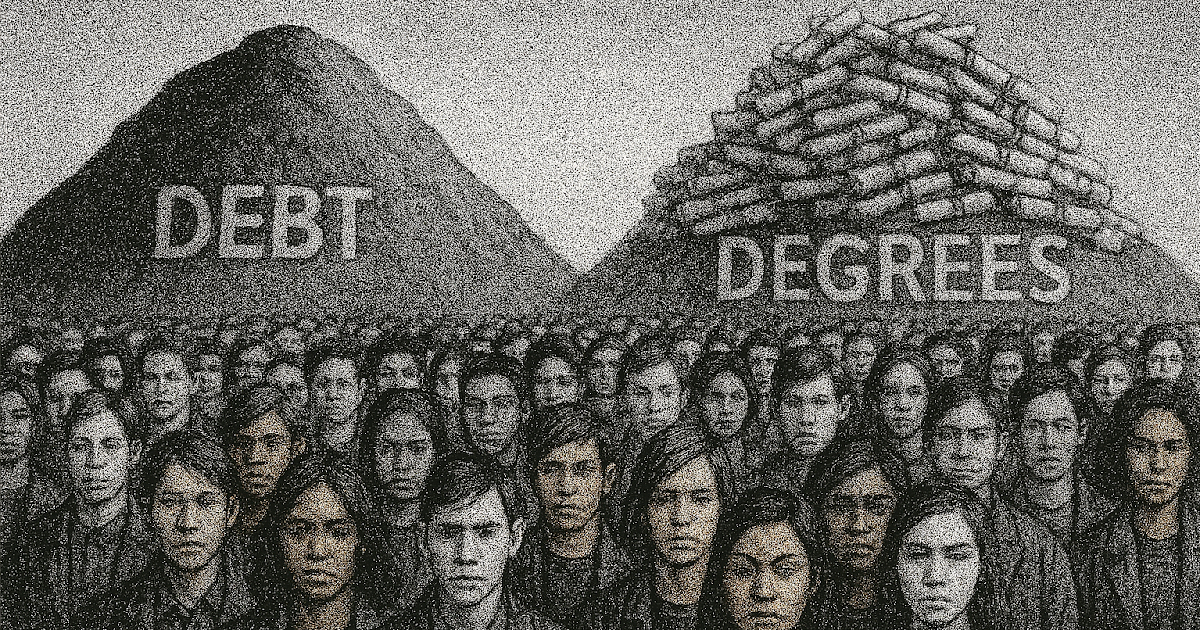
    K-12 education is meant to be a pipeline—leading students into college, skilled careers, and financial stability. For students leaving Stride underprepared or without diplomas, that pipeline is broken. Many are pushed into low-wage work, forced into remedial college courses, or trapped in a credential system designed to extract debt rather than confer opportunity. In this way, Stride acts less as an educational institution and more as a conveyor belt funneling vulnerable youth into economic precarity.

    Stride is backed by investors and private equity interests that profit from this dysfunction. Its glossy “Graduation Guarantee,” introduced in 2021, promises remediation for students who age out without graduating. But these measures are reactive, not systemic; they don’t address the structural incentives that prioritize profit over learning. Every public dollar flowing into Stride’s coffers is money extracted from communities, while many students exit the system with weak credentials and limited prospects.

    The broader story is clear: billionaire-backed for-profit virtual schools like Stride are part of a national effort to privatize public education, monetize student debt, and commodify learning. They transform education from a public good into a profit center, leaving students and families to bear the real cost. Without accountability, oversight, and a renewed commitment to equitable public education, this pipeline—supposed to carry students toward opportunity—will continue to deliver them into debt, underemployment, and economic marginalization.


    Sources

    Source link

  • Why Did College Board End Best Admissions Product? (opinion)

    Why Did College Board End Best Admissions Product? (opinion)

    Earlier this month, College Board announced its decision to kill Landscape, a race-neutral tool that allowed admissions readers to better understand a student’s context for opportunity. After an awkward 2019 rollout as the “Adversity Score,” Landscape gradually gained traction in many selective admissions offices. Among other items, the dashboard provided information on the applicant’s high school, including the economic makeup of their high school class, participation trends for Advanced Placement courses and the school’s percentile SAT scores, as well as information about the local community.

    Landscape was one of the more extensively studied interventions in the world of college admissions, reflecting how providing more information about an applicant’s circumstances can boost the likelihood of a low-income student being admitted. Admissions officers lack high-quality, detailed information on the high school environment for an estimated 25 percent of applicants, a trend that disproportionately disadvantages low-income students. Landscape helped fill that critical gap.

    While not every admissions office used it, Landscape was fairly popular within pockets of the admissions community, as it provided a more standardized, consistent way for admissions readers to understand an applicant’s environment. So why did College Board decide to ax it? In its statement on the decision, College Board noted that “federal and state policy continues to evolve around how institutions use demographic and geographic information in admissions.” The statement seems to be referring to the Trump administration’s nonbinding guidance that institutions should not use geographic targeting as a proxy for race in admissions.

    If College Board was worried that somehow people were using the tool as a proxy for race (and they weren’t), well, it wasn’t a very good one. In the most comprehensive study of Landscape being used on the ground, researchers found that it didn’t do anything to increase racial/ethnic diversity in admissions. Things are different when it comes to economic diversity. Use of Landscape is linked with a boost in the likelihood of admission for low-income students. As such, it was a helpful tool given the continued underrepresentation of low-income students at selective institutions.

    Still, no study to date found that Landscape had any effect on racial/ethnic diversity. The findings are unsurprising. After all, Landscape was, to quote College Board, “intentionally developed without the use or consideration of data on race or ethnicity.” If you look at the laundry list of items included in Landscape, absent are items like the racial/ethnic demographics of the high school, neighborhood or community.

    While race and class are correlated, they certainly aren’t interchangeable. Admissions officers weren’t using Landscape as a proxy for race; they were using it to compare a student’s SAT score or AP course load to those of their high school classmates. Ivy League institutions that have gone back to requiring SAT/ACT scores have stressed the importance of evaluating test scores in the student’s high school context. Eliminating Landscape makes it harder to do so.

    An important consideration: Even if using Landscape were linked with increased racial/ethnic diversity, its usage would not violate the law. The Supreme Court recently declined to hear the case Coalition for TJ v. Fairfax County School Board. In declining to hear the case, the court has likely issued a tacit blessing on race-neutral methods to advance diversity in admissions. The decision leaves the Fourth Circuit opinion, which affirmed the race-neutral admissions policy used to boost diversity at Thomas Jefferson High School for Science and Technology, intact.

    The court also recognized the validity of race-neutral methods to pursue diversity in the 1989 case J.A. Croson v. City of Richmond. In a concurring opinion filed in Students for Fair Admission (SFFA) v. Harvard, Justice Brett Kavanaugh quoted Justice Antonin Scalia’s words from Croson: “And governments and universities still ‘can, of course, act to undo the effects of past discrimination in many permissible ways that do not involve classification by race.’”

    College Board’s decision to ditch Landscape sends an incredibly problematic message: that tools to pursue diversity, even economic diversity, aren’t worth defending due to the fear of litigation. If a giant like College Board won’t stand behind its own perfectly legal effort to support diversity, what kind of message does that send? Regardless, colleges and universities need to remember their commitments to diversity, both racial and economic. Yes, post-SFFA, race-conscious admissions has been considerably restricted. Still, despite the bluster of the Trump administration, most tools commonly used to expand access remain legal.

    The decision to kill Landscape is incredibly disappointing, both pragmatically and symbolically. It’s a loss for efforts to broaden economic diversity at elite institutions, yet another casualty in the Trump administration’s assault on diversity. Even if the College Board has decided to abandon Landscape, institutions must not forget their obligations to make higher education more accessible to low-income students of all races and ethnicities.

    Source link

  • Online Course Gives College Students a Foundation on GenAI

    Online Course Gives College Students a Foundation on GenAI

    As more employers identify uses for generative artificial intelligence in the workplace, colleges are embedding tech skills into the curriculum to best prepare students for their careers.

    But identifying how and when to deliver that content has been a challenge, particularly given the varying perspectives different disciplines have on generative AI and when its use should be allowed. A June report from Tyton Partners found that 42 percent of students use generative AI tools at least weekly, and two-thirds of students use a singular generative AI tool like ChatGPT. A survey by Inside Higher Ed and Generation Lab found that 85 percent of students had used generative AI for coursework in the past year, most often for brainstorming or asking questions.

    The University of Mary Washington developed an asynchronous one-credit course to give all students enrolled this fall a baseline foundation of AI knowledge. The optional class, which was offered over the summer at no cost to students, introduced them to AI ethics, tools, copyright concerns and potential career impacts.

    The goal is to help students use the tools thoughtfully and intelligently, said Anand Rao, director of Mary Washington’s center for AI and the liberal arts. Initial results show most students learned something from the course, and they want more teaching on how AI applies to their majors and future careers.

    How it works: The course, IDIS 300: Introduction to AI, was offered to any new or returning UMW student to be completed any time between June and August. Students who opted in were added to a digital classroom with eight modules, each containing a short video, assigned readings, a discussion board and a quiz assignment. The class was for credit, graded as pass-fail, but didn’t fulfill any general education requirements.

    Course content ranged from how to use AI tools and prompt generative AI output to academic integrity, as well as professional development and how to critically evaluate AI responses.

    “I thought those were all really important as a starting point, and that still just scratches the surface,” Rao said.

    The course is not designed to make everyone an AI user, Rao said, “but I do want them to be able to speak thoughtfully and intelligently about the use of tools, the application of tools and when and how they make decisions in which they’ll be able to use those tools.”

    At the end of the course, students submitted a short paper analyzing an AI tool used in their field or discipline—its output, use cases and ways the tool could be improved.

    Rao developed most of the content, but he collaborated with campus stakeholders who could provide additional insight, such as the Honor Council, to lay out how AI use is articulated in the honor code.

    The impact: In total, the first class enrolled 249 students from a variety of majors and disciplines, or about 6 percent of the university’s total undergrad population. A significant number of the course enrollees were incoming freshmen. Eighty-eight percent of students passed the course, and most had positive feedback on the class content and structure.

    In postcourse surveys, 68 percent of participants indicated IDIS 300 should be a mandatory course or highly recommended for all students.

    “If you know nothing about AI, then this course is a great place to start,” said one junior, noting that the content builds from the basics to direct career applications.

    What’s next: Rao is exploring ways to scale the course in the future, including by developing intermediate or advanced classes or creating discipline-specific offerings. He’s also hoping to recruit additional instructors, because the course had some challenges given its large size, such as conducting meaningful exchanges on the discussion board.

    The center will continue to host educational and discussion-based events throughout the year to continue critical conversations regarding generative AI. The first debate, centered on AI and the environment, aims to evaluate whether AI’s impact will be a net positive or negative over the next decade, Rao said.

    The university is also considering ways to engage the wider campus community and those outside the institution with basic AI knowledge. IDIS 300 content will be made available to nonstudents this year as a Canvas page. Some teachers in the local school district said they’d like to teach the class as a dual-enrollment course in the future.

    Get more content like this directly to your inbox. Subscribe here.

    Source link

  • Fewer College Staff Say They’ll Likely Seek New Jobs in 2025

    Fewer College Staff Say They’ll Likely Seek New Jobs in 2025

    About a quarter of nonfaculty higher ed employees told an April survey that they were likely or very likely to look for new jobs in the next year—a drop from the third of such workers who indicated in 2023 they would go job hunting.

    The College and University Professional Association for Human Resources released this week the results of its latest Higher Education Employee Retention Survey, which had nearly 3,800 respondents, 96 percent of whom said they’re full-time employees and 75 percent of whom said they’re overtime-exempt workers. The respondents hailed from 505 different colleges and universities.

    Greater rates of nonsupervisors, men and employees of color reported they were seeking to change jobs compared to their counterparts. And, out of the various types of offices—such as academic affairs and admissions, enrollment and financial aid—the CUPA-HR report says “external affairs appears to be the most stable area, with nearly two-thirds (62%) of employees indicating they are unlikely or very unlikely to look for a new job.”

    Employees who are eyeing new jobs aren’t necessarily seeking to leave academe, or even their current employers. Around 72 percent of those who said they intend to job hunt said they plan to look at other colleges or universities. Nearly half want to explore new roles at their current institutions. The same share plan to look at non–higher ed nonprofits, while 60 percent are eyeing private, for-profit companies. (Respondents who say they are job hunting could pick multiple options.)

    Why are they seeking new jobs? Around 70 percent ranked higher pay in their top three reasons for leaving, a far higher percentage than any other impetus. The next most common reason was seeking promotion, at 39 percent, followed by desiring a different workplace culture and reducing stress, each around 33 percent. Then came remote work opportunities, at 28 percent, and job security concerns, at 26 percent.

    Job security concern “was particularly pronounced among employees in research and sponsored programs/institutional research,” the report says.

    Despite employees’ wishes for more money, the report says feelings of belonging and of purpose in work, along with senses of being valued by others at work and engaged with work, “are stronger predictors of retention than is the perception of fair pay.”

    Source link

  • Higher education postcard: Lincoln College, Oxford

    Higher education postcard: Lincoln College, Oxford

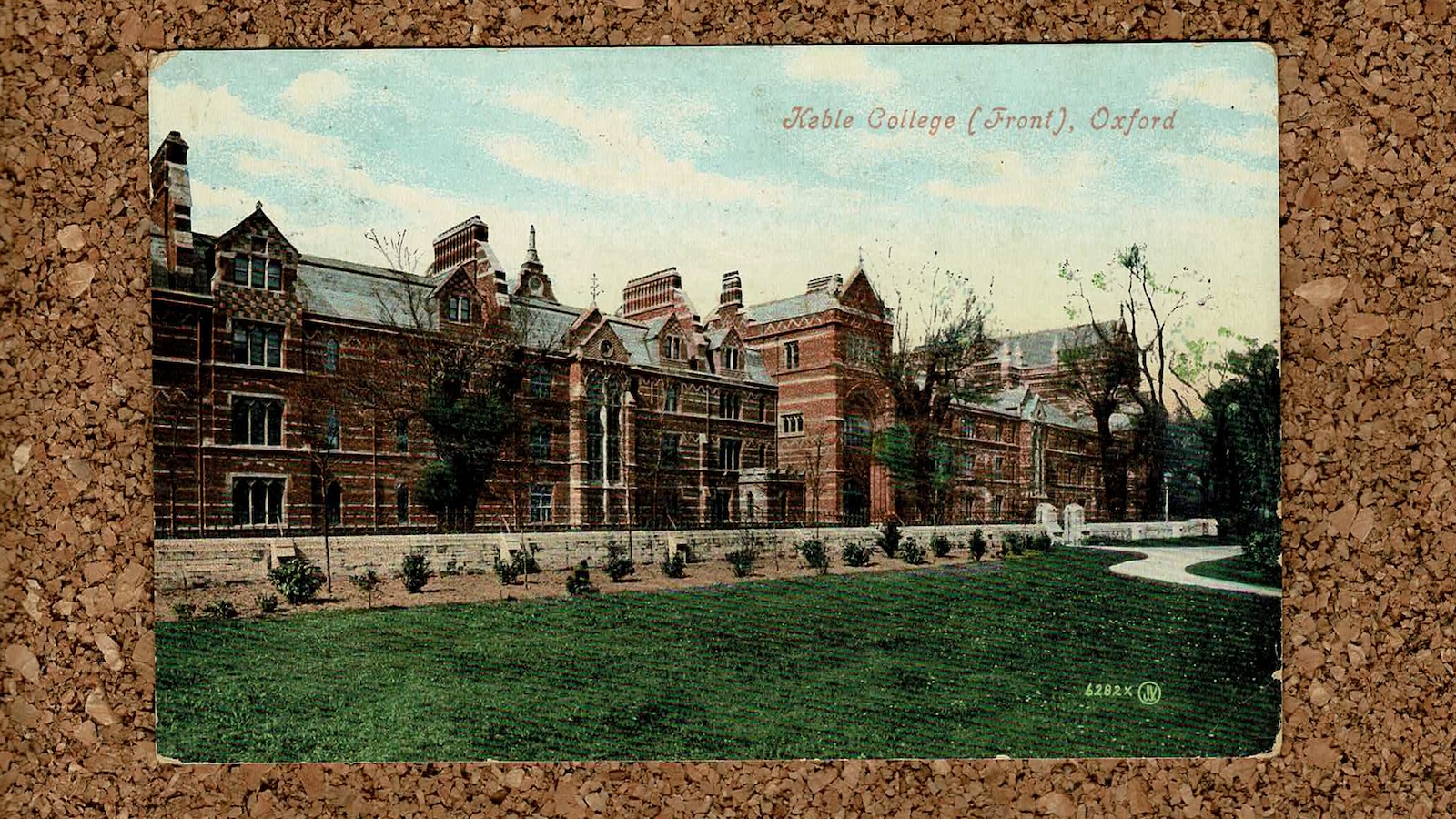
    It’s late fourteenth century England, and a religious reform movement known as Lollardy was on the rise.

    The incomparable Sellar and Yeatman had it thus:

    During this reign the memorable preacher Wyclif collected together a curious set of men known as the Lollards or Dullards, because they insisted on walking about with their tongues hanging out and because they were so stupid that they could not do the Bible in Latin and demanded that everyone should be allowed to use an English translation. They were thus heretics and were accordingly unpopular with the top men in the Church who were very good at Latin and who liked to see some Dullards burnt before every meal.

    The Encyclopaedia Britannica will give you more detail if you need to know. Importantly, remember that John Wyclif is not the same person as Wyclef Jean.

    Anyway, Lollardy was considered a problem by the church, and in 1427 Richard Fleming, Bishop of Lincoln, founded a college in Oxford as, apparently, “a little college of true students of theology who would defend the mysteries of Scripture against those ignorant laymen who profaned with swinish snouts its most holy pearls.”

    Benefactions in 1436 and 1437 enabled the nascent college to establish a physical base in Oxford, with a chapel, a library, a hall, a kitchen, rooms and, in 1465, rooms for the college’s master. In 1478, a second Royal Charter was granted, at the prompting of Thomas Rotherham, Bishop of Lincoln and later Lord Chancellor and Archbishop of York, who was the college’s visitor. (We’ll cover the role of the visitor another time, when I have the right postcard!)

    By this stage we’ve got in place the necessities of a college, and a few more elements – leasing the Mitre Inn, gaining a coat of arms – followed in the next hundred years. And the college continued to add buildings and the like, in the way that medieval Oxford colleges did. The interesting parts of our story now are people.

    Let’s fast forward to 1726, when John Wesley was elected a fellow of Lincoln. Discussions within the college set the scene for the establishment of Methodism. Having started as a college to counter heretical beliefs, the college had now enabled a significant branch of non-conformist Christianity to be born.

    In 1882 the first Jewish fellow of an Oxford college was elected at Lincoln. This followed the Universities Tests Act, passed in 1871, which removed religious barriers to participation in university life at Oxford, Cambridge and Durham. The fellow in question was Samuel Alexander, who later became a professor at Owens College, Manchester, and whose work focused, as best as I can tell, on questions of the nature of space and time. He’d have answered Zeno’s paradox, I suspect, by denying the reality of incrementally smaller units of time. But I may be wrong!

    In 1925 Theodor Seuss Geisel enrolled as a graduate student at Lincoln, having completed undergraduate studies at Dartmouth College, USA. We know him better as Dr Seuss. He didn’t, it seems, complete his postgraduate work. Maybe he’d have been a better writer if he had, maybe not – who knows?

    In 1952 another notable writer began his studies at Lincoln. This was David Cornwall, who is similarly better known by his pen-name: John le Carré. Cornwall graduated in 1956; it is thought that he was working for MI5 while at the college, and he certainly became an intelligence agent afterwards, continuing until 1964, when the fall-out from Kim Philby’s spectacular betrayal of many British agents means that he left the secret service. Fortunately for him, his writing enabled him to make an alternative living.

    Other notable Lincoln names include Rishi Sunak, former PM; Edward Thomas, WW1 poet; and physician John Radcliffe, after whom many Oxford buildings, including the hospital, the camera and the observatory, were named.

    Women were admitted to Lincoln for the first time in 1979.

    Lincoln College’s full name – reserved for Sunday best – is the College of the Blessed Mary and All Saints, Lincoln. It’s only called that by the monarch and by the university when it has been naughty, I imagine. The college has a very good page on its history – including some shot films – here. There’s more than I could reference in this piece.

    The card itself was unposted but has a message written on the back.

    Dear Mr Smithies, Great pleasure to talk to you – thanks for your kind offer of support.

    And as usual, here’s a jigsaw of the card – enjoy!

    Source link

  • New College Plans Kirk Statue on Campus

    New College Plans Kirk Statue on Campus

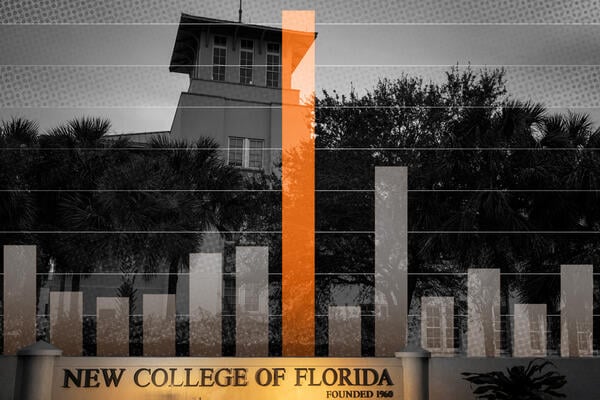
    New College of Florida plans to honor recently murdered conservative activist Charlie Kirk with a statue on campus, the public liberal arts institution announced on social media earlier this week.

    Kirk, who founded the organization Turning Point USA, which has chapters at hundreds of colleges, was shot and killed while speaking outdoors at Utah Valley University last week. Kirk has since been eulogized by multiple conservative figures, including President Donald Trump. 

    “Today, we announced that we will commission a statue of Charlie Kirk to honor his legacy and incredible work after his tragic assassination last week. The statue, privately funded by community leaders, will stand on campus as a commitment by New College to defend and fight for free speech and civil discourse in American life,” New College officials wrote Monday on X.

    Where on campus the statue would go has not yet been announced.

    NCF appears to be the first to announce such a move to honor Kirk, though more than a dozen congressional Republicans are seeking to place a statue of Kirk in the United States Capitol. Additionally, Iowa representative Mariannette Miller-Meeks has called on the University of Iowa to name its new Center for Intellectual Freedom after the activist as a tribute to his legacy.

    Although a public institution, NCF made national headlines in early 2023 when Republican governor Ron DeSantis appointed a swath of new members to its Board of Trustees and tasked them with shifting New College in a conservative direction akin to the private Hillsdale College.

    New College’s announcement generated millions of impressions on social media, including concerns about whether the statue would be vandalized, prompting DeSantis to respond, “If a student defaces the statue, then the student will be sent packing. Go ahead, make my day!”

    Source link

  • UW-Stevens Point partners with community college to shore up struggling branch

    UW-Stevens Point partners with community college to shore up struggling branch

    Dive Brief:

    • The University of Wisconsin-Stevens Point is teaming up with a community college to share space, offer joint programming and develop transfer pathways between the institutions. 
    • Under the partnership, UW-Stevens Point’s Wausau branch will relocate to nearby Northcentral Technical College’s campus in the city beginning in fall 2026. 
    • Through the partnership, the university plans to increase degree programs in Wausau in high-demand fields like healthcare and business. For example, the two institutions are discussing collaborating on a surgical technician program, they said.

    Dive Insight:

    The partnership between UW-Stevens Point and NTC comes after years of steep enrollment decline at the university’s Wausau location and questions about the branch’s viability. 

    Between fall 2011 and fall 2023, full-time equivalent enrollment at UW-Stevens Point’s Wausau campus fell by a vertiginous 78.5% to just 232 students, according to institutional evaluations of the Universities of Wisconsin system by Deloitte last year. 

    The university’s Marshfield campus suffered a similar decline. Deloitte’s assessment of both campuses was that the sharp enrollment drop-offs “threaten the future viability” of those locations. 

    It also added pressure to the university as a whole. Without making operational changes, Deloitte forecast UW-Stevens Point would face mounting deficits in the years ahead. 

    NTC has also seen declines in recent years. Between 2018 and 2023, fall headcount declined 8.7% to 5,838 students at the technical college, per federal data.

    The institutions hope that joining forces can help play to their strengths while offering students new reasons to attend each college. The UW-Stevens Point branch will offer bachelor’s and master’s degrees while NTC offers associate degrees and certificates. 

    “Students will have a seamless connection between UWSP and NTC,” Miranda Gentry-Siegel, executive of UW-Stevens Point’s Wausau campus. “Advisers from both schools will work together to find options that fit students’ interest and finances.”

    The institutions also pointed to the potential for joint programs, collaboration between faculties on program design, combined student support services, and cost savings by reducing duplicated programs and services.

    Faculty from UW-Stevens Point will stay employees of the university upon moving to teach at NTC’s campus, according to a FAQ page. It also signaled the possibility that some staff positions could be cut, noting that those who lose their positions will be “given the opportunity” to pursue jobs elsewhere in UW-Stevens Point or in the county government. 

    The university is working with Marathon County to determine future use of its current campus, which is about two miles from NTC.

    After the move to NTC’s facilities, UW-Stevens Point will end its varsity sports programs in men’s basketball and women’s volleyball through the Wisconsin Competitive Sports League, the university said.

    Several branch campuses within the Universities of Wisconsin system have shuttered in recent years. UW-Milwaukee closed its campus in Washington County in 2024 and its Waukesha campus this summer. However, the university is opening a center at Waukesha County Technical College to offer bachelor’s and graduate programs. 

    Additionally, UW-Platteville closed its Richland campus in 2023, and UW-Oshkosh shuttered its Fond du Lac branch in 2024.

    Source link