This audio is auto-generated. Please let us know if you have feedback.
Dive Brief:
Trinity Christian College plans to close after the 2025-2026 academic year amid mounting financial issues, the private liberal arts institutionsaid Tuesday.
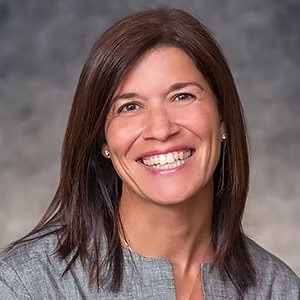
“The board has worked faithfully and tirelessly to consider every possible option in the face of significant and rapidly evolving financial challenges,”Acting President Jeanine Mozie said in a video message.
In explaining why it was closing, Trinity, based near Chicago, cited persistent deficits, falling enrollment, shifts in charitable giving and financial challenges since the pandemic.
Dive Insight:
Trinity said it worked with advisers on possible solutions to its financial struggles, including “significant programmatic changes” and strategic partnerships with other institutions.
“However, there is no sustainable path forward for our beloved institution,”Mozie said in the video message, in which she appeared with board chair Ken Dryfhout.
Between fiscal years 2020 and 2024, the college’s total assets fell by nearly14% to $72.3 million. Much of that decline came in its cash holdings, which fell by nearly $8 million during that period, to $5 million.Trinity also reported operating deficits every year during that time.
In June, Trinity reported that it could fail to meet bond requirements for cash on hand and a metric measuring its ability to pay its debt obligations. The college said at the time that it was soliciting donors to help it meet the covenants.
Many of Trinity’s financial woes stem from its shrinking student body and the pressures on small liberal arts institutions. Already small, the college’s fall enrollment dropped to 883 students in fall 2023, a nearly 22% decline from five years prior, according to the latest federal data.
Enrollment declines hurt Trinity’s revenue. In fiscal 2024, net tuition and fee revenue stood at $12.1 million, roughly 14% less than 2020 levels.
The revenue drop also came after a period of steep inflation in higher education and the broader economy. At Trinity, total expenses rose at nearly the same rate as revenue declined between fiscal 2020 and fiscal 2024, reaching $32.9 million.
Mozie was appointed acting president, replacing Aaron Kuecker, just two months before she announced the college’s closure. Prior to that, she was Trinity’s chief operating officer.
Founded with a nondenominational Christian mission, Trinity elected its first board of trustees in 1959.It soon opened a two-year college with just five faculty members and roughly three dozen students on a former golf course, using a renovated clubhouse and pro shop. By 1971, the institution was issuing four-year degrees, and it added graduate programs in 2012.
Trinity plans to hold its last commencement next year for the class of 2026. It is allowing students to take above the max course load per semester to graduate as many as possible, with the rest offered teach-out and transfer options.
The college has teach-out agreements in place for most undergraduate programs with regional neighbors Saint Xavier, Calvin and Olivet Nazarene universities.It is working on agreements for many of its remaining programs.
Trinity said it plans to sell its property after closing to repay its debt. As of fiscal 2024, Trinity owned property and equipment valued at $44.2 million and owed $14.8 million in bonds.
by Jon Marcus, The Hechinger Report November 5, 2025
After he graduates from the University of Wisconsin-Madison, Drew Wesson hopes to begin a career in strategic communication, a field with higher-than-average job growth and earnings.
One year into his time at the university, Wesson became more strategic about this goal. Like nearly 1 in 3 of his classmates, he declared a second major to better stand out in an unpredictable labor market.
It’s part of a trend that’s spreading nationwide, according to a Hechinger Report analysis of federal data, as students fret about getting jobs in an economy that some fear is shifting faster than a traditional college education can keep up.
“There’s kind of a fear of graduating and going out into the job market,” said Wesson, a sophomore from Minneapolis who is double-majoring in international security and journalism. “And having more skills and more knowledge and more majors gives you a competitive edge.”
The number of students at UW-Madison who double-major has grown by 25 percent over the last decade, the data show. But double-majoring is also on the rise at private, nonprofit colleges across the country, and at other public institutions, including the University of California, San Diego, and the University of North Carolina at Chapel Hill.
Nearly 5.4 million credentials — degrees or certificates — were earned by the 4.8 million college and university graduates in 2023-24, the most recent year for which the figure is available. That means about 12 percent left school with more than one, compared to 6 percent ten years earlier. Academic minors don’t count as a credential and aren’t tracked..
Related: Interested in innovations in higher education? Subscribe to our free biweekly higher education newsletter.
“Students are feeling a sort of spiraling lack of control in a very dynamic labor market,” said Rachel Slama, associate director of Cornell University’s Future of Learning Lab, which studies how technology and other innovations are changing education. “They’re probably clinging to the one thing that’s in their control, which is the majors they choose. And they think that more is more.”
They may be right, according to one of the few studies of this topic, by scholars at St. Lawrence University and Vanderbilt Law School. Students who have one major in business and a second in science, technology, engineering or math, it found, earn more than if they majored in only one of those disciplines, the 2016 study found.
Graduates who double-major are also 56 percent less likely to be laid off, have their pay cut or suffer other negative effects in economic downturns, according to another study, released last year by researchers at Ohio State and four other universities. These outcomes show “the importance of diverse skill sets,” the researchers concluded. If there’s a drop in demand for the skills associated with one major, “a double major can pursue a job related to the unaffected major.”
At Wisconsin, nearly 6 in 10 students in computer science who pick a second major choose the lucrative discipline of data science; the number of jobs in data science is projected by the Bureau of Labor Statistics to increase 34 percent over about the next 10 years, at salaries that are nearly twice the national average.
The unemployment rate among new bachelor’s degree recipients is now higher than for workers overall, and at its highest level since 2014, not including the pandemic years, according to the Federal Reserve Bank of St. Louis. That’s partly because artificial intelligence and other factors are transforming what employers need.
Nearly half of recent graduates feel underqualified to apply for even entry-level jobs, a survey by the education technology company Cengage Group finds. Only 30 percent say they have full-time jobs related to the fields that they studied.
Meanwhile, colleges and universities — traditionally slow to transform what and how they teach — are encouraging students to combine majors as a faster way to keep up with changes in the labor market, said Taylor Odle, an assistant professor at UW-Madison who studies the economics of education and the value of credentials in the workforce.
“Institutions are thinking strategically about how to align their degree programs with industry, and it might be by pairing two things they already have,” Odle said.
There are other reasons for the rising popularity of double majors. At UW-Madison, for example, one factor propelling the growth is that there are no minors, noted Taylor Odle, an assistant professor there who studies the economics of education and the value of credentials in the workforce..
Double-majoring isn’t easy. It typically means earning more than the usual minimum number of credits required to graduate, on top of extracurricular and other obligations. Wesson, at UW-Madison, for instance, is an officer of student government, a reporter and photographer for the campus newspaper and an honors student.
Some separate majors have overlapping requirements. Even if they don’t, most universities and colleges charge the same tuition per semester no matter how many courses undergraduates take. So unless a second major extends the number of semesters a student needs to complete required courses,or forces him or her to take additional classes in the summers, double-majoring doesn’t typically cost more or take longer.
Meanwhile, more students are arriving at college having already knocked off credits by taking dual-enrollment and Advanced Placement classes in high school.
About 2.5 million high school students participate in dual enrollment, according to an analysis of federal data by the Community College Research Center at Teachers College, Columbia University. (The Hechinger Report, which produced this story, is an independent unit of Teachers College.)
This means they have room in their schedules in college for second majors, said Kelle Parsons, who focuses on higher education as a principal researcher at the American Institutes for Research.
For some students, double-majoring makes more sense than changing majors altogether. About 30 percent of students change their majors at least once, and 10 percent two or more times, according to the U.S. Department of Education. Adding a second major is less drastic than dropping a first one and starting again from scratch, said Patrick Denice, an associate professor of sociology at the University of Western Ontario.
“If you add a [second] major, you hedge your bets against a changing labor market without losing those credits and that coursework you’ve already earned” toward the first one, said Denice, who has studied why students at U.S. universities pick and change their majors.
There’s yet another reason students are increasingly double-majoring. Even as they crowd into specialties associated with career opportunities, such as business and health-related disciplines — which together now account for nearly 1 in 3 undergraduate fields of study — some are adding second majors for which they simply have a passion.
“They’re trying to satisfy their parents, who want them to be employed,” said J. Wesley Null, vice provost for undergraduate education and academic affairs at Baylor University, where there were more than twice as many double majors last year than there were in 2014. “But they’re also interested in a lot of interdisciplinary kinds of things. They’ll combine biology with Sanskrit or Chinese. These really bright students have a lot of diverse interests.”
At the University of Chicago, where the number of double majors has also more than doubled, “I see students committing to one career but wanting to have more breadth,” said Melina Hale, dean of the college. “They’re going and exploring all of these other majors and finding one they love.”
Double-majoring is also “a great way for students to demonstrate that they know how to think in different ways,” said Hale, herself a biologist who has collaborated with engineers. “If you’re going into a job in finance and have a deep background in history, you’re bringing different ways of approaching problems.”
This way of thinking is pushing still another trend: More students nationwide are earning certificates, which they can get in a matter of months and alongside their degrees, in subjects such as business management. Seventeen percent of bachelor’s degree recipients also finished college with at least one certificate in 2023-24, the National Student Clearinghouse Research Center reports.
Known as “stackable credentials,” these kinds of certificates “have been talked about for a long time,” said Ryan Lufkin, vice president of global academic strategy at the educational technology company Instructure. “And now there’s really demand for them.”
That’s because — like double-majoring and minoring — they make applicants stand out to employers, said Odle, at UW-Madison.
Students, he said, “are trying to emphasize their attractiveness in the labor market. They’re trying to cover their bases.”
Contact writer Jon Marcus at 212-678-7556, [email protected] or jpm.82 on Signal.
This story about double majors was produced by The Hechinger Report, a nonprofit, independent news organization focused on inequality and innovation in education.
This <a target=”_blank” href=”https://hechingerreport.org/students-worried-about-getting-jobs-extra-majors/”>article</a> first appeared on <a target=”_blank” href=”https://hechingerreport.org”>The Hechinger Report</a> and is republished here under a <a target=”_blank” href=”https://creativecommons.org/licenses/by-nc-nd/4.0/”>Creative Commons Attribution-NonCommercial-NoDerivatives 4.0 International License</a>.<img src=”https://i0.wp.com/hechingerreport.org/wp-content/uploads/2018/06/cropped-favicon.jpg?fit=150%2C150&ssl=1″ style=”width:1em;height:1em;margin-left:10px;”>
Trinity Christian College outside Chicago will close at the end of the current 2025–26 academic year due to insurmountable financial pressures.
The college announced the move Tuesday, citing a litany of challenges, which include “post-Covid financial losses; persistent operating deficits; a decline in college enrollment and increased competition for students; and a shift in donor giving and financial circumstances,” according to a statement from officials posted on a frequently asked questions webpage.
Acting President Jeanine Mozie said in a video message that the Board of Trustees considered multiple options to address “significant and rapidly evolving financial challenges,” but ultimately, there was “no sustainable path forward for our beloved institution.”
The FAQ page noted that the Board of Trustees considered “significant programmatic changes, strategic partnerships, and the like” but “determined that these and other alternatives were insufficient to overcome the college’s deficit” and sustain Trinity’s mission over the long term.
The closure announcement follows a recent leadership change at the college. Former president Aaron Kuecker resigned in August after less than two years in the top job but nearly 14 at Trinity altogether. Multiple staff members were also reportedly laid off in August.
A review of the college’s finances shows that Trinity operated at a loss in eight of the last 10 fiscal years and relied significantly on a small pool of donors. An estimated 76 percent of all financial contributions came from just three donors in 2024, according to Trinity’s latest audit.
Trinity also had less and less cash on hand. According to the audit, “cash and cash equivalents” fell from nearly $7.2 million in fiscal year 2023 to just under $5 million—a drop of nearly 31 percent. Trinity also had a meager endowment, valued at $11 million at the end of the 2024 fiscal year. (A recent study found the median endowment across the sector is $243 million.)
Bondholders warned the college in June that Trinity was at risk of violating its financial covenants because of its limited liquidity, according to publicly available documents.
Both faculty numbers and student head count had dropped in recent years, bond documents show. Both of those numbers have been in decline in recent years with total faculty falling from 145 to 126 and enrollment dropping from a total head count of 1,068 in fall 2019 to 872 last year, despite a recent tuition reset to attract students. Trinity aimed to hit 1,081 students by the 2027–28 academic year, financial documents show.
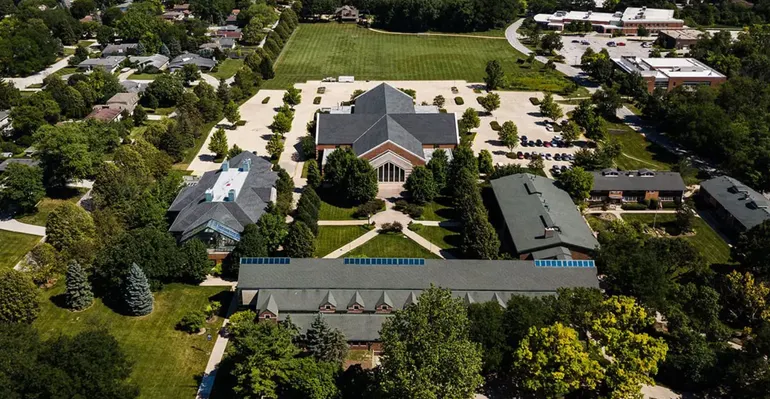
Trinity was founded by Chicago businessmen in 1959 and is located on a 56-acre campus in Palos Heights, Ill., outside Chicago, which was recently estimated to be worth $25 million.
College officials announced teach-out and transfer agreements with Calvin University in Michigan as well as Olivet Nazarene University and Saint Xavier University, both of which are in Illinois.
Trinity follows several other small, cash-strapped Christian colleges that have announced closures this year, some of which have shut down abruptly, such as Limestone University and St. Andrews University. Siena Heights University, a Roman Catholic institution, also announced plans to close. On the secular side, Northland College in Wisconsin closed earlier this year, and Pennsylvania State University announced plans to shut down seven rural campuses by 2027 after years of shrinking enrollment.
Amanda Fuchs Miller On this Election Day, it is critical to think about how we as a country want to ensure that more young people vote and get involved in public service. As a democracy, we should all be striving to make it easier for new voters to register, get to the polls, and have their vote count. However, what we are seeing instead are efforts to make it harder for college students to be engaged in our electoral process – through restrictions on supports and language designed to have a chilling effect on voting instead of encouraging it.
Right before college students returned to campuses, the U.S. Department of Education issued new guidance designed to make it harder for college students to vote. Every school year, students receive an email with information about how to register to vote. This is because it is required in law. The Higher Education Act requires institutions of higher education to “make a good faith effort to distribute a mail voter registration form…to each student enrolled in a degree or certificate program and physically in attendance at the institution, and to make such forms widely available to students at the institution.”
Contrary to statute, the Trump Administration is now encouraging schools to limit who they send this information to – saying that if a school doesn’t send it to students who they have “reason to believe” are ineligible to vote, that’s okay. In addition to this being contrary to law, which requires all students to receive this information, this will increase the likelihood of students who are eligible not receiving information about how to register to vote (thus suppressing their votes) – and is likely to most impact students of color. The Department is also encouraging the voter registration information to include language reminding students of the list of ways that voting may be fraudulent – another tactic that may have a chilling effect on students going to the polls.
The same Department guidance prohibits students from being paid with federal work-study funds for any voting-related activities. A press release from the Department says that they are making a change to this longstanding policy because “Federal Work-Study is meant to provide students opportunities to gain real-world experience that prepares them to succeed in the workforce, not as a way to fund political activism on our college and university campuses.”
As we prepare our next generation of leaders to play a role in our democracy, in government, and in public service, it is hard to see how allowing students to participate in nonpartisan voting engagement is not aligned with experience they will benefit from in the workplace. By engaging in nonpartisan voter registration efforts using work-study positions, college students are able to increase the number of their peers who are registered to vote while learning and participating fully in our democratic system – all while earning the funds they are entitled to so that they can afford a college degree. It can’t go without saying that this restriction is also counter to statute and regulations which do not limit the types of on-campus work study positions to those that are in the “public interest,” as the guidance suggests. That limitation is only linked to off-campus work-study positions.
In a survey by CIRCLE following the 2024 elections about why young people didn’t register to vote, more than one in 10 – 12 percent – of people aged 18-34 said they did not know how to register or had problems with voter registration forms. Nearly a third of young people – 31 percent – said they were too busy, ran out of time, or missed the registration deadline. Without receiving voter registration information, in an objective way, from their college or university or their peers on campus, these numbers are likely to go up as more students will lack the information they need about voter registration.
Ensuring college students are able to vote shouldn’t be a partisan issue. In 2024, there were disparities by both gender and race in youth voter turnout. We all benefit from a democracy where everyone’s voice is heard and every vote is counted – for whomever the ballot is cast.
_________
Amanda Fuchs Miller is president of Seventh Street Strategies and former Deputy Assistant Secretary for Higher Education Programs at the U.S. Department of Education in the Biden-Harris Administration.
November 2, 2025, By Dean Hoke — When Sweet Briar College’s trustees voted to close in 2015, they framed the decision as a financial necessity. Alumnae mounted an extraordinary campaign—raising $28.5 million in 110 days—and, through a state-brokered settlement, the college reopened under new governance. By 2023, donors had contributed well over $133 million since the crisis. What looked like an inevitable failure became one of higher education’s most remarkable turnarounds.
Sweet Briar is not only a story of crisis response; it exposes a recurring miscalculation in today’s merger conversations: the assumption that boardroom consensus equals donor legitimacy. Trustees speak for donors in a fiduciary sense—they hold legal responsibility for institutional assets—but not in the communal sense that captures sentiment, legacy, and trust. When colleges announce merger talks, headlines dwell on enrollment curves and debt ratios. Yet behind every deal stands a quieter, decisive constituency: major donors, family foundations, and planned-giving benefactors whose confidence (or loss of it) can determine whether the combined institution thrives—or limps forward under the weight of broken relationships.
This article reframes mergers as philanthropic integration projects. The legal mechanics matter, but durable success is won in the design phase: early engagement with philanthropic stakeholders, explicit safeguards for identity and donor intent, transparent transition planning, and a mission-first case that invites continued—and new—investment. When leaders bring donors and alumni into the architecture of the merger rather than the press release, they convert anxiety into commitment and preserve the institutional DNA that constituents care about most.
We’ll see this principle in contrasting cases: mission-advancing acquisitions that attracted significant philanthropic support, integrations that prioritized identity and donor intent from the outset, and lessons from failed or contested processes. The throughline is simple: treat philanthropy as a core workstream—not an afterthought—and the odds of a credible, sustainable merger rise dramatically.
The stakes have never been higher. Survey data from Ruffalo Noel Levitz’s 2025 National Alumni Survey, which surveyed more than 50,000 alumni, reveals that donor relationships with higher education are already strained. While 81% of alumni report that being philanthropic is important to them personally and 77% make charitable donations, their connection to their alma mater has weakened dramatically. Only 31% of alumni who donate to any charity gave to their alma mater last year, dropping to just 19% among Millennials and 10% among Gen Z graduates.
Even more troubling: 59% of alumni who never donate to their alma mater actively support other causes, as do 83% of lapsed donors. They have not stopped giving—they have simply redirected their philanthropy elsewhere. This suggests that alumni disengagement reflects institutional failure rather than generational selfishness.
Satisfaction drives everything. Alumni who report being ‘very satisfied’ with their student experience are 18 times more likely to donate than neutral respondents and 73 times more likely than dissatisfied graduates. Yet only 42% of Gen Z alumni report feeling ‘very satisfied’ with their experience, compared to 72% of Silent Generation graduates.
Mergers test already-fragile relationships. When institutions announce consolidation, donors who felt lukewarm about their undergraduate experience see confirmation that their alma mater is failing. A merger framed solely as a financial necessity will not inspire them. But a merger presented as advancing mission-driven impact—expanding access, strengthening programs that address social challenges, or preserving an educational model under threat—can mobilize support from the very alumni who have drifted away.
As Millett (1976) noted, successful integrations often ‘show structure, not just sentiment’—for example, Case Western Reserve kept a distinct Case Institute identity, and Carnegie Mellon created a Carnegie Institute of Engineering and a Mellon Institute of Science to carry legacies forward.
A half-century ago, John D. Millett’s 1976 analysis of U.S. college mergers examined a range of cases—from research institutes to liberal arts colleges—and distilled lessons that remain strikingly current. Four observations deserve renewed attention today:
1. Endowments transfer; relationships do not. In many mergers, endowments and restricted funds move to successor institutions through standard legal pathways. The mechanics are manageable. The harder work is relational: ensuring donors can see how their original intent will be honored in the new configuration, and that the program or ethos they loved will not be erased.
2. Alumni skepticism is predictable—and manageable. Leaders should not assume alumni approval, especially when the smaller institution is absorbed. Visible steps to cultivate and retain legacy alumni—keeping familiar staff contacts for a transitional period, acknowledging a distinct identity, and offering tangible ways to shape the merged future—go a long way.
3. Governance approval is not donor legitimacy. Even when boards vote, state bodies concur, and presidents sign, philanthropic legitimacy remains a separate test. Communities expect to be consulted; they often oppose mergers if they learn about them too late. Participation must be planned early, not added later.
4. Language and structure matter more than sentiment. Labels and explanations—federation versus absorption, mission expansion versus rescue—shape how alumni and donors interpret the outcome. Leaders who explain clear educational benefits and who visibly protect identity through formal structures earn trust faster.
Historical Examples: Structure, Not Just Sentiment
After the Case Institute of Technology and Western Reserve University merger, the successor Case Western Reserve University continued the designation of Case Institute of Technology as an organizational component. At Carnegie Mellon University, leaders created a Carnegie Institute of Engineering and a Mellon Institute of Science—formal structures that carried legacy identities forward within the new entity.
The Bellarmine-Ursuline (Louisville) merger (1968-1971) offers another instructive example. The combined institution briefly used the Bellarmine-Ursuline name before reverting to Bellarmine College in 1971, but Bellarmine has continued to honor Ursuline identity through durable structures—explicitly including Ursuline alumnae in alumni awards and honors and recognizing the Ursuline legacy through commemorations and alumni programming. These are structural signals that preserve identity even when the combined name does not persist.
Millett also notes that successor institutions often made special effort to cultivate and retain alumni of the absorbed college, including keeping an alumni-relations officer from the legacy institution and providing a special alumni designation or status—practical ways to keep traditions and community intact during transition.
Crisis-Reactive: What Not to Do
Planning is done privately, the announcement is abrupt, and donors are asked to accept a fait accompli. Mills College’s merger with Northeastern University proceeded despite alumni resistance, prompting legal challenges over donor intent. The Alumnae Association spent hundreds of thousands in legal fees opposing the merger, and a class action lawsuit resulted in a $1.25 million settlement. The litigation divided alumnae and consumed resources that could have been invested in the merged institution’s success.
Even when the legal mechanics are sound, the community verdict is that identity has been erased. The result: backlash, donor-intent disputes, and years of costly trust repair.
Compliance-Only: Necessary but Insufficient
Teams carefully inventory restricted funds, ensure transfers align with donor intent, and communicate the basics. This prevents disasters but rarely generates enthusiasm or new investment. Survey data reveals that 70% of alumni need to believe their gift amount matters, and 66% rate the ability to see how their gift is used as critical. When a college merges, donors worry their legacy has been erased—regardless of legal assurances that funds will be protected.
The compliance model maintains existing donors but does not mobilize new support for the merged institution’s expanded mission. The message is ‘We will comply,’ not ‘Here is a better future you can help build.’
Strategic Partnership: The Target State
Donors and foundations are treated as co-creators from Day 0. Leaders conduct quiet briefings with major benefactors pre-announcement, frame the merger as mission expansion, and embed structural commitments to legacy preservation. This model doesn’t eliminate hard feelings, but it channels energy toward shared outcomes.
Delaware State University–Wesley College (2020–21). DSU—an HBCU—acquired Wesley and framed the move as mission advancement, launching the Wesley College of Health & Behavioral Sciences to expand pathways in nursing and allied health for underserved students. Financing combined philanthropy and prudence: a $20M unrestricted gift from MacKenzie Scott (with a portion—reported as roughly one-third of the $15M total—applied to transition costs) and a $1M Longwood Foundation grant for the acquisition. The case shows how a mission-first narrative can catalyze major-donor and foundation support.
By tying dollars to a new health‑workforce pipeline—rather than balance‑sheet triage—leaders converted donor anxiety into visible, restricted impact.
Ursuline College–Gannon University (ongoing). From the outset, both institutions engaged stakeholders publicly and affirmed philanthropy principles: “Honoring donor intent is important to Gannon University,” and donors will be able to designate gifts to the Pepper Pike campus. Ursuline will retain its identity as the Ursuline College Campus of Gannon University after the transition, and the Ursuline Sisters of Cleveland have voiced support for the merger—signals aimed at preserving community trust and legacy while the integration proceeds through 2026. These commitments, paired with the HLC’s Change-of-Control approval, frame the merger as continuity-minded rather than absorptive.
University of Tennessee Southern (formerly Martin Methodist College).
University of Tennessee Southern (formerly Martin Methodist College) When Martin Methodist joined the University of Tennessee System in 2021, leaders prioritized transparent, compassionate communication—“a liminal space” requiring a strong plan, as President Mark La Branche put it. They also set aside portions of the legacy endowment (via the Martin Methodist College Foundation) to protect signature programs, showing that integration need not erase institutional identity.
Public commitments to donor intent and the campus naming convention did early legitimacy work that legal filings can’t.
When a stronger institution absorbs a struggling one, leaders often assume donor concerns belong primarily to the acquired institution. This is a strategic error. The acquiring institution’s donors also have a stake in the outcome—and their continued support is essential to merger success.
Major donors to the acquiring institution may question why resources should be directed toward absorbing another college. They may worry that the acquired institution’s struggles will tarnish their alma mater’s reputation, or that merger costs will compete with planned campus improvements. These concerns are legitimate and require proactive engagement.
Frame the Merger as a Strategic Opportunity
The narrative for acquiring institution donors must emphasize strategic opportunity rather than charitable rescue. Several frames can be effective:
Geographic expansion: The merger creates a presence in a new market, expanding the institution’s reach and visibility.
Program complementarity: The acquired institution brings academic strengths that fill gaps in the acquiring institution’s portfolio.
Mission advancement: The merger expands capacity to serve students and fulfill the educational mission on a greater scale.
Competitive positioning: In an era of consolidation, the merger strengthens the institution’s competitive position and long-term sustainability.
Rather than waiting for resistance to emerge, acquiring institution leaders should brief major donors before public announcement. These confidential conversations acknowledge donors’ legitimate interest in institutional strategy, allow leaders to address concerns directly, and create opportunities for donors to become merger advocates.
Legal clarity: When restricted funds cannot be used as originally intended post‑merger, pursue a cy‑près modification early—advancement and counsel should partner on donor communication before any filing to preserve trust.
You can brief a small set of major donors pre‑announcement under strict NDAs without privileging them over faculty governance or regulators. Use a defined rubric for who is briefed (e.g., top 10% of lifetime commitments and active pledgors), disclose no nonpublic counterparties’ terms, and limit to mission rationale, identity safeguards, and timeline. Record each briefing in counsel’s log.
Before Announcement (Day 0 Work)
Philanthropic due diligence—parallel to financial. Inventory endowed and restricted funds, bequests in the pipeline, and active foundation grants. Identify potential cy-près risks and draft stewardship language now. Treat this as a distinct workstream with advancement, finance, and counsel at the table from the start.
Quiet briefings with top donors and foundations on both sides. Under confidentiality, preview the rationale, surface donor-intent questions, and invite advice. Ask for early champions willing to speak publicly when the time comes.
Identity protections by design, not promise. Prepare a naming plan (e.g., ‘[Legacy] College at [Acquirer]’), preserve scholarship and reporting lines, and keep alumni-relations continuity for 12-24 months. Publish a short ‘Identity & Intent’ brief on day one that shows, in plain language, how donor purposes are carried forward.
At Announcement
Mission-driven case for support. Lead with the educational value only possible together: new academic pathways, access expansions, regional partnerships, research synergies. Avoid rescue framing. Make the case specific and concrete, tied to programs and outcomes donors care about.
Dedicated ‘Legacy to Impact’ funds with challenge matches. Create visible vehicles that convert anxiety into investment—restricted funds for scholarships, program launches, and student success tied to the integrated entity.
Community-benefit specificity. Spell out local benefits and stakeholder wins (clinics, teacher pipelines, innovation hubs). When people can ‘see’ the upside, they are likelier to invest in it.
First 12-24 Months
Quarterly transparency. Report enrollment in merged programs, first scholarship cohorts, renewed or new foundation grants, and capital milestones. Transparency reduces rumors and builds credibility.
Recognition symmetry. Offer parity for legacy and acquirer donors—naming walls, digital honor rolls, endowed-fund dashboards, and joint stewardship events.
Two-sided cultivation. Brief the acquirer’s major donors so they see strategic growth rather than a charitable drain. Ask two or three to seed a matching pool restricted to merger priorities; matches signal confidence and reduce perceived risk.
Because reliable analytics on donor behavior in mergers are sparse, leaders should build their own lightweight evidence base. For each merger, track three years pre- and post-integration for: total private support; alumni participation (where available); number of $1M+ gifts; and the mix of restricted versus unrestricted giving.
Pair quantitative metrics with a qualitative log: Was identity preserved in naming? Did a Legacy Alumni structure exist? Were there donor-intent disputes? Did the acquirer launch dedicated legacy funds? How soon were KPIs reported?
Even a simple dashboard, updated quarterly, changes the conversation with trustees and donors. It shows momentum (or lack thereof), prompts targeted stewardship, and gives leaders permission to make mid-course corrections. It also validates the core claim of this article: philanthropy works best when it is built into planning, not bolted on after the fact.
The most fundamental error in merger planning is treating donors as communications targets rather than strategic partners. Donors are not merely sources of revenue to be managed; they are partners whose investments reflect belief in institutional mission and values.
Mergers that succeed treat donors, foundations, and alumni as planning inputs, not a downstream audience for PR. Millett’s 1976 study reminds us that while the legal mechanics of endowment transfers are straightforward, the human mechanics are not. Alumni skepticism is predictable; identity needs visible protection through formal structures, not just promises; language and framing carry unusual weight.
When leaders internalize those lessons—and create structures that honor donor intent, invite co-creation, and make the mission upside measurable—legacy becomes leverage rather than liability. Higher education’s financial pressures are real, but so is the reservoir of goodwill that donors and alumni hold for institutions that respect them.
The Sweet Briar alumnae who raised $133 million did not do so because they were told the college would comply with donor intent. They did so because they were invited to co-create a future worth investing in. That is the lesson for every merger: bring philanthropic stakeholders into the room early, build identity protections into the design, launch vehicles that convert anxiety into investment, and report steadily and transparently on what their support makes possible.
That is how two proud legacies become one stronger future—and how the ‘silent stakeholders’ find their voice in shaping it.
Sources (selected): institutional FAQs and press releases (Ursuline–Gannon; DSU–Wesley; UT Southern), RNL Alumni Giving Data 2025 (for participation/attitudes), and Millett, J.D. (1976) ED134105 on college mergers.
Dean Hoke is Managing Partner of Edu Alliance Group, a higher education consultancy. He formerly served as President/CEO of the American Association of University Administrators (AAUA). Dean has worked with higher education institutions worldwide. With decades of experience in higher education leadership, consulting, and institutional strategy, he brings a wealth of knowledge on colleges’ challenges and opportunities. Dean is the Executive Producer and co-host for the podcast series Small College America.
Staying Focused on College Goals: Strategies for Gifted and Driven Students
Even the most gifted and talented students can occasionally be tempted to “drift” during the school year. In fact, bright students may be even more susceptible to losing focus when they lack sufficient academic challenge or stimulation. For this reason, it’s important for both parents and students to stay mindful of effective ways to remain focused on long-term goals—even when others may lose their way temporarily or, unfortunately, more permanently.
Every school year brings its share of ups and downs, but the students who maintain consistent focus and motivation throughout high school are typically those who find themselves in the strongest position when it comes time to graduate and move on to the next stage of life.
Fortunately, there are a number of proven strategies that can help students stay on track with their college preparation goals. Identifying which approaches work best for your student can pay major dividends throughout the high school experience.
In this month’s newsletter, we’re sharing some of the top tips for helping students keep their eye on the “college ball” during their preparatory years. If you have specific questions—or would like more personalized guidance—please don’t hesitate to contact us. As college funding professionals and application experts, we are uniquely equipped to provide the details, planning, and strategies that can make a lasting difference for your family’s college journey.
Tip 1: Focus on Specifics
The details matter—and they’re different for everyone. Each student has unique strengths and weaknesses. For instance, one student might struggle to keep track of notes or materials from a particular class. A simple, specific strategy could be to organize and store all materials immediately after class. This small, targeted action eliminates the problem of misplaced notes.
Another common challenge is procrastination—something almost all students face. Attaching specific actions to goals can help combat this tendency. For example, setting a rule to finish homework before engaging in social activities builds discipline, focus, and confidence when followed consistently.
Tip 2: Stay Positive
Attitude plays a major role in academic success. As Charles R. Swindoll wisely said, “Life is 10% what happens to you and 90% how you react to it.” High school is full of challenges—whether it’s a difficult class, a tough teacher, or even illness—but how students respond to these obstacles can determine their ultimate success.
Staying positive doesn’t mean ignoring difficulties; it means looking for the silver lining and learning from every experience. Maintaining an optimistic mindset helps students avoid getting bogged down by negativity that can drain motivation and focus.
Tip 3: Prioritize, Prioritize, Prioritize!
When faced with multiple tasks, most people instinctively tackle the easiest one first—but that isn’t always the smartest move. True prioritization means identifying which tasks matter most in relation to long-term goals.
Easier classes might not require immediate attention, while more challenging subjects may need to come first. Taking time to evaluate which areas demand the most focus allows students to allocate their effort wisely and stay on course toward academic success.
Tip 4: Swallow Pride—Ask for Help When Needed
Admitting the need for help can be difficult, but it’s also a sign of maturity and self-awareness. When challenges arise, it’s crucial to seek assistance early before falling too far behind.
Whether it’s asking a teacher for clarification, finding a tutor, or reaching out to peers for support, even small amounts of extra help can make a big difference in staying motivated and on track.
Tip 5: Set SMART Goals
Goal-setting is one of the most effective ways to stay motivated. A simple but powerful framework is to set SMART goals—those that are:
Specific – Clearly define what you want to accomplish.
Measurable – Track progress with concrete milestones.
Attainable – Set goals that are challenging but realistic.
Relevant – Focus on goals that directly support academic and personal success.
Timely – Establish deadlines to maintain accountability.
For example, instead of vaguely resolving to “get better at math,” a SMART goal might be: “Raise my algebra grade from a B to an A by the end of the semester through weekly review sessions and regular practice.”
Writing down goals, creating timelines, and revisiting them regularly keeps students on a clear and measurable path to achievement.
Tip 6: Take Time to Reassess
Even the best-laid plans encounter obstacles. That’s why it’s essential to periodically review goals and strategies to see what’s working—and what’s not.
Regular reassessment allows for course corrections before small setbacks turn into major roadblocks. Adjusting plans as needed isn’t a sign of failure; it’s a smart, proactive approach that helps ensure steady progress toward success.
Remember, assessment isn’t just a beginning-and-end exercise—it’s an ongoing process throughout the high school years, and one of the most powerful tools for long-term achievement.
President Donald Trump extended the invitation to all colleges after initial rejections from institutions that objected to provisions in the compact that would limit academic freedom.
The compact would require universities to suppress criticism of conservatives on campus, cap international enrollment at 15 percent, freeze tuition, overhaul admissions and hiring practices, and make various other changes in return for preferential treatment on federal research funding.
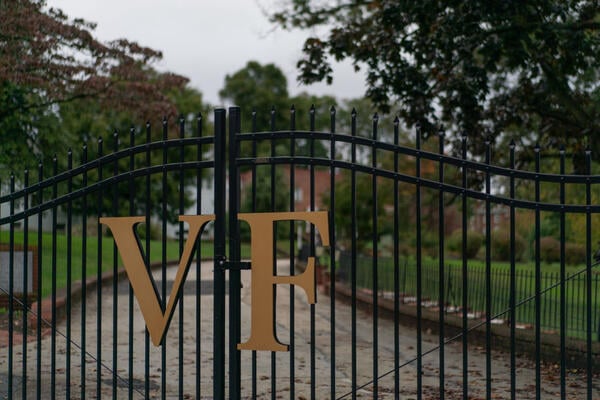
Now Valley Forge, a private two-year college in Pennsylvania, wants in on the compact.
“Participation in the Compact would provide valuable opportunities for collaboration, shared learning, and continuous improvement. We are particularly eager to contribute to discussions on leadership education, student resilience, and pathways from two-year programs to four-year institutions,” officials wrote to the Education Department. “These are areas in which Valley Forge has developed effective practices and measurable outcomes that could benefit peer institutions.”
Universities in the initial invitation were all research-focused, and the appeal from U.S. Education Secretary Linda McMahon emphasized the benefits of signing on, which would include “allowance for increased overhead payments where feasible, substantial and meaningful federal grants, and other federal partnerships.”
It is unclear how Valley Forge, which does not have a research focus, would benefit. The college is also much smaller than the first invitees, enrolling 86 students in fall 2023, according to federal data.
Valley Forge is now the third institution to publicly express interest in signing the compact since the invitation was expanded, following Grand Canyon University and New College of Florida.
Perception of cost has a major impact on college choice.
Choosing a college is rarely just about academics, location, or prestige. For most families, it comes down to the question of cost. The numbers on a price tag do not just suggest affordability; they shape what feels possible. Sticker shock alone can quietly close a door before a student even fills out an application, while clear, honest information can keep dreams in play. In this moment of rising costs and growing financial anxiety, understanding how families navigate affordability has never mattered more.
Before examining what RNL’s latest research shows, it helps to step back and see where the broader conversation is heading. Recent studies highlight how affordability, family background, and perceptions of cost steer the college search. Again and again, the evidence points to a simple truth: for families, financial reality and perception are tightly linked (Stabler-Havener, 2024). This context is essential for understanding the RNL findings and considering how colleges can truly meet families where they are.
What research tells us
The research is clear: affordability, family income, and perceptions of cost are among the strongest forces shaping college choices. In one recent study, only three in ten students who believed college was unaffordable planned to enroll, showing how perception alone can narrow opportunities (Stabler-Havener, 2024).
Policy leaders are responding. State priorities now center on boosting affordability and families’ sense of value (Harnisch, Burns, Heckert, Kunkle, & Weeden, 2024). As families weigh cost and worth, the call for reform grows louder.
Family perspective lies at the heart of these decisions. Financial worries shape the choices parents and students make, often shrinking the list of options for those with fewer resources (Chuong-Nguyen, 2025). Parental guidance and support are deeply shaped by income and stress, sometimes as early as elementary school, when children first start to believe in what is possible (Keeling, 2025). For many out-of-state students, aid and affordability matter more than distance or campus life (Stansell, 2025). While the campus experience may guide the final decision, cost remains the gatekeeper. Together, these studies send a clear message: real and perceived affordability remain central to college access.
Policy changes with big impact
Federal policy changes are reshaping the landscape of affordability as well. The One Big Beautiful Bill Act keeps undergraduate loan limits intact but introduces two significant changes: a $65,000 lifetime cap on Parent PLUS loans, and a rule eliminating Pell Grant eligibility if scholarships already cover the full cost of attendance. While these details may sound technical, their impact is deeply personal. Middle- and low-income families, and first-generation students, are most likely to feel squeezed by these new limits (American Council on Education, 2025; National Association of Independent Colleges and Universities, 2025). These changes may become the tipping point for families already sensitive to sticker price.
What this means for colleges
The research suggests several practical steps:
Make affordability unmistakably clear. Families often overestimate cost and underestimate available aid. Tools like net price calculators and plain-language award letters can help (Chuong-Nguyen, 2025; Stabler-Havener, 2024).
Reach parents early. Parents start shaping their child’s college expectations years before high school. Outreach in middle school can expand what families believe is possible (Keeling, 2025).
Highlight value as well as cost. Families want to know if college is worth the investment. Colleges can tell stories of career outcomes, alum success, and community, not just numbers (Harnisch et al., 2024; Stansell, 2025).
Connect finances to student experience. Students care about campus feel as much as aid. Affordability should be shown alongside housing, safety, clubs, and social life (Stansell, 2025).
Prioritize equity. First-generation and lower-income families face more information gaps and greater stress. Targeted advising, financial literacy programs, and direct communication can help bridge that divide (Chuong-Nguyen, 2025; Keeling, 2025).
What RNL research tells us
While these studies offer a broad view of how cost and perception shape college decisions, the lived experience of families comes into even sharper focus when we look at recent data from the 2025 Prospective Family Engagement Report. The findings from RNL, Ardeo, and CampusESP provide a window into what families are navigating right now: the confusion, the questions, and sometimes, the sense of being overwhelmed by the college search. Examining this data helps us move from general trends to the specific realities facing families today, and shows where institutions can make the most meaningful difference.
The bottom line
For families, cost is never just a number. It is tangled up with their hopes, sense of security, and vision for the future: sticker price, net cost, debt, and perception; all of these shape what feels possible. For colleges, the work goes beyond lowering costs. The real challenge is helping families understand those costs, connect them to real outcomes, and expand what each student believes is within reach.
Families’ need for clear information
The 2025 Prospective Family Engagement Report (RNL, Ardeo, & CampusESP, 2025) found that 99% of nearly 10,000 families surveyed believe clear cost, tuition, and academic information is essential. Yet almost one in four families cannot find it. The gap is even larger for first-generation families (37 percent) and those earning under $60,000 (43%). These gaps are not just inconvenient; they are real barriers.
Faces behind the data
Consider the single parent in rural Ohio, working two jobs and searching late at night for financial aid information. She finds buried calculators and confusing language and assumes the sticker price is final. The dream quietly shrinks.
Alternatively, think of the middle-income family in suburban Atlanta. They make too much for much-needed aid but still feel stretched thin. They cross colleges off their list without ever seeing the actual net cost.
Income-level differences in cost perception
The study shows clear patterns (RNL, Ardeo, & CampusESP, 2025):
Families under $60,000 have the lowest awareness of cost tools, face the most difficulty finding aid information, and are most likely to rule out schools early due to sticker price.
Those earning $60,000–$149,000 have moderate awareness, but three in four have eliminated colleges based on sticker price alone.
Families earning $150,000 or more have the highest awareness and least trouble finding information, but even among them, almost three in four have ruled out colleges due to price.
Financial aid and scholarships: The deciding factor
Four out of five families list aid and scholarships among their top five decision factors; for almost two in five, it is the most important factor. The urgency is even greater for first-generation families (54%) and low-income households (68%).
38% say aid and scholarships top the list.
43% place them in the top five.
Even among the highest-income families, more than a quarter cite aid as their top factor, and nearly half put it in their top five.
Sticker shock and final cost
72% of families have ruled out colleges because of sticker price. Middle-income families lead (76%), followed by high-income (74%) and low-income families (66%).
65% say the final cost after aid is the biggest dealbreaker, consistent across first-generation (66%), continuing generation (65%), and especially middle-income families (73%).
Financing difficulty and loan anxiety
Paying for college feels “very difficult” for 28% of families, and “difficult” for another 27%. The challenge is sharpest for low-income families (47% “very difficult”) and first-generation families (40%). Even among households earning over $150,000, one in five reports that paying for college will be “very difficult.” Anxiety about borrowing is widespread; 61% of families feel uneasy about loans, regardless of income (RNL, Ardeo, & CampusESP, 2025).
Implications for colleges
Clarity is currency. A trust gap grows when nearly every family values clear cost information, but the most price-sensitive families cannot find it. Make cost information unmistakable, on websites, in print, in portals, and through personal outreach.
Lead with your aid story. Aid and scholarships top the list for most families. Burying this information wastes a key point of connection. Use real examples and plain language.
Defuse sticker shock early. With nearly three-quarters of families eliminating schools based on sticker price, net price calculators should be prominent, easy to use, and personalized.
Do not forget middle-income families. They often miss out on need-based aid but are just as price-sensitive. They deserve targeted outreach and clear explanations of their options.
Address financing challenges directly. Offer flexible payment plans, start conversations about the total cost early, and provide tools for first-generation and low-income families. Even high-income families appreciate empathy and honesty.
Reframe borrowing. With 61 percent anxious about loans, transparency about repayment timelines, graduate earnings, and debt-to-income ratios is critical.
The emotional weight of cost
Cost is never just a number; it is an emotional flashpoint. Families weigh college prices as figures on a spreadsheet and as symbols of opportunity, security, and trust. Information gaps hit first-generation and low-income families hardest, but financial pressure is universal:
Aid matters.
Sticker price stings.
Financing feels difficult for almost everyone.
Borrowing brings real anxiety.
The colleges that thrive will treat cost not only as a financial challenge but as a moment to build trust and expand possibilities for every family they serve.
Revolutionize your financial aid offers with video
References
American Council on Education. (2025, July 29). Summary: One Big Beautiful Bill Act (H.R. 1). Division of Government Relations and National Engagement.
Chuong-Nguyen, M. Q. (2025). College application experience: Personal and institutional factors affecting high school seniors’ college-going decision-making process and college choice (Doctoral dissertation, Concordia University Irvine).
Harnisch, T., Burns, R., Heckert, K., Kunkle, K., & Weeden, D. (2024). State priorities for higher education in 2024. State Higher Education Executive Officers Association (SHEEO).
Keeling, C. (2025). Perceptions of parents regarding their participation in decision-making related to the academic and technical education preparation of their children’s career pathways (Doctoral dissertation, Purdue University).
National Association of Independent Colleges and Universities. (2025, July). Frequently asked questions about the One Big Beautiful Bill Act. NAICU.
Stabler-Havener, J. M. (2024). Interactions between quality, affordability, and income groups at private colleges and universities (Doctoral dissertation, Fordham University).
Stansell, L. J. (2025). Driving enrollment amidst change: Exploring college choice of out-of-state students (Doctoral dissertation, University of Tennessee, Knoxville). TRACE: Tennessee Research and Creative Exchange. https://trace.tennessee.edu/utk_graddiss/12424
Every family’s college search tells a story, one built on hopes, questions, and the quiet moments when a parent whispers, “This feels right.” Over the past year, I have immersed myself in both research and real voices to understand what drives that feeling.
This blog brings those insights together. I begin with what the research shows, how campus visits, family engagement, and equity intersect, and then layer in fresh data from the 2025 RNL, Ardeo, and CampusESP Prospective Family Engagement Report.
Together, they reveal a simple truth that feels anything but small: families want to feel seen, informed, and included in the journey. For me, this work is not just about enrollment; it is about belonging, trust, and designing experiences that make families confident in saying, “Yes, this is our place.”
The research story: Why families and visits matter
Across K–12 and higher education, families and campus visits consistently emerge as pivotal mechanisms shaping students’ aspirations, access, and belonging. In A Review of the Effectiveness of College Campus Visits on Higher Education Enrollment, Case (2024) shows that campus visits not only help students assess academic and cultural fit but also allow parents and guardians to evaluate safety, hospitality, and organizational factors that directly influence trust and enrollment decisions.
Amaro-Jiménez, Pant, Hungerford-Kresser, and den Hartog (2020) reinforce that family-centered outreach, such as Latina/o Parent Leadership Conferences that combine campus tours with financial aid and admissions workshops, increases parents’ College Preparedness Knowledge (CPK) and confidence in guiding their children. These immersive experiences turn visits into learning opportunities that demystify college processes and affirm parental agency.
From an operational lens, Kornowa and Philopoulos (2023) emphasize that admissions and facilities management share responsibility for the campus visit, describing it as “a quintessential part of the college search process for many students and families” (p. 96). Every detail, from signage to staff warmth, shapes families’ perceptions of authenticity and belonging, making visits both emotional and informational experiences.
In K–12 contexts, Robertson, Nguyen, and Salehi (2022) find that underserved families, particularly those with limited income, face barriers such as inflexible schedules and unwelcoming environments when attending school tours. They call for trust-based, personalized engagement, often led by parent advocates, to turn visits into equitable opportunities rather than exclusive events.
Similarly, Byrne and Kibort-Crocker (2022) frame college planning through Family Systems Theory, viewing the college search as a shared family transition. Families’ involvement in campus visits, financial planning, and orientation sessions fosters understanding and belonging, especially when institutions provide multilingual materials and parent panels. Even when parents lack “college knowledge,” their emotional support and presence remain vital assets.
Finally, Wilson and McGuire (2021) expose how stigma and class-based power dynamics shape family engagement in schools. Working-class parents often feel judged or dismissed in institutional spaces, leading to withdrawal rather than disinterest. The authors urge empathetic, flexible communication to dismantle these barriers and create welcoming, inclusive climates for all families.
Taken together, these six studies show that family engagement and visits are deeply intertwined acts of trust, access, and belonging. Whether evaluating campus safety, building college knowledge, or navigating inequities, families who feel welcomed, informed, and respected become co-authors in their children’s educational journeys.
The research paints a clear picture: families want to feel informed, included, and welcomed. Our latest data with RNL, Ardeo, and CampusESP shows exactly where those feelings take root, and which experiences most influence their decision to say, “Yes, this is the right college for my student.”
What families told us: Insights from the 2025 Prospective Family Engagement Report
Families are not passive bystanders; they are active partners in the college search, weighing what they see, hear, and feel. Their feedback reveals a clear pattern: human connection and real-world experiences matter far more than abstract or digital tools.
Campus visits and human touchpoints build trust
The most powerful influences on family support are on-campus visits (97%) and face-to-face interactions with admissions staff (93%), faculty (92%), and coaches (88%).
For first-generation (98%) and lower-income families (96%), these experiences are even more critical. Seeing the campus, meeting people, and feeling welcomed helps them imagine their student thriving there.
Key insight: Families decide with both heart and head. A warm, well-organized visit remains the single most persuasive factor in earning their support.
Virtual engagement expands access
Two-thirds of families (67%) value virtual visits, but that rises to 75% for first-generation and 80% for lower-income families, groups often limited by cost or travel. Virtual experiences can level the playing field when they feel personal and guided, not automated.
Key insight: Virtual visits are equity tools, not extras. They must be designed with care, warmth, and a human presence.
Counselors and college fairs still count
About 73% of families see college fairs and high school counselors as meaningful sources, especially first-generation (81%) and lower-income (84%) families. These trusted guides help families translate options and make sense of complex processes.
Key insight: Families lean on human interpreters, counselors, fairs, and coaches to navigate choices with confidence.
AI tools spark curiosity, not confidence
Fewer than half of families find AI tools, such as chatbots, program matchers, or demos, meaningful (40–43%). Interest is higher among first-generation (53–56%) and lower-income (55%) families, who may see AI as a learning aid. Still, most want human reassurance alongside it.
Key insight: AI works best as a co-pilot, not a replacement. Pair technology with empathy and guidance.
Communication quality matters most
Two experiences top the list:
Information about the program or school (97%)
Quality of communication with parents and families (96%)
For first-generation and lower-income families, both climb to 98%, showing that clear, bilingual, and affirming outreach builds trust and inclusion.
Key insight: Families value how colleges communicate care; clarity and tone matter as much as content.
Equity lens: More support, more belonging
Across nearly every measure, first-generation and lower-income families report higher experiences. They seek more touchpoints, more guidance, and more invitations into the process.
Key insight: Equity is about designing belonging, mixing in-person and virtual options, speaking their language, and centering relationships.
This story does not end with the data; it begins there
Every number and story in this study points to the same truth: families want to feel invited in. They want experiences that inform people who listen, and moments that confirm their student belongs. Our work is to create those moments, to build trust in the details, warmth in the welcome, and clarity in the journey. Because when families feel it, when they walk the campus, meet the people, and think, “This feels right!”, they do not just choose a college. They choose belonging.
Ready to reach your enrollment goals? Let’s talk how
Our enrollment experts are veteran campus enrollment managers who now work with hundreds of colleges and universities each year. Find out how we can help you pinpoint the optimal strategies for creating winning student search campaigns, building your inquiry and applicant pools, and increasing yield.
Amaro-Jiménez, C., Pant, D., Hungerford-Kresser, H., & den Hartog, S. (2020). Identifying the impact of college access efforts on parents’ college preparedness knowledge. Journal of College Access, 6(2), 7–27.
Byrne, R., & Kibort-Crocker, E. (2022). What evidence from research tells us: Family engagement in college pathway decisions. Washington Student Achievement Council.
Case, R. D. (2024). A review of the effectiveness of college campus visits on higher education enrollment. International Journal of Science and Research, 13(9), 716–718. https://doi.org/10.21275/SR24911223658
Kornowa, L., & Philopoulos, A. (2023). The importance of a strong campus visit: A practice brief outlining collaboration between admissions and facilities management. Strategic Enrollment Management Quarterly, 11(1), 54–74.
Robertson, M., Nguyen, T., & Salehi, N. (2022). Not another school resource map: Meeting underserved families’ information needs requires trusting relationships and personalized care. Digital Promise Research Brief.
Wilson, S., & McGuire, K. (2021). ‘They had already made their minds up’: Understanding the impact of stigma on parental engagement. British Journal of Sociology of Education, 42(5–6), 775–791. https://doi.org/10.1080/01425692.2021.1908115
Back in 1943 the UK government knew that more school teachers would be needed. The school leaving age was to be raised: this and other planned changes meant that 70,000 extra teachers would be needed over the coming years. The teacher training colleges then in place trained 7,000 a year, so there was a problem.
The solution? Emergency Training Colleges. A compressed curriculum was piloted at Goldsmiths College, and in five years about 50 such colleges produced about 35,000 teachers. But it was a short-term scheme, and many of the colleges were wound up after 1950 or 1951.
Nevertheless, there continued to be a need to grow base capacity to train teachers. The emergency colleges had dealt with the immediate shortfall, but with more children attending schools every year, there was still work to be done. Some of the emergency colleges became regular training colleges, and some local authorities established new colleges of their own. And this is where Totley Hall enters the stage.
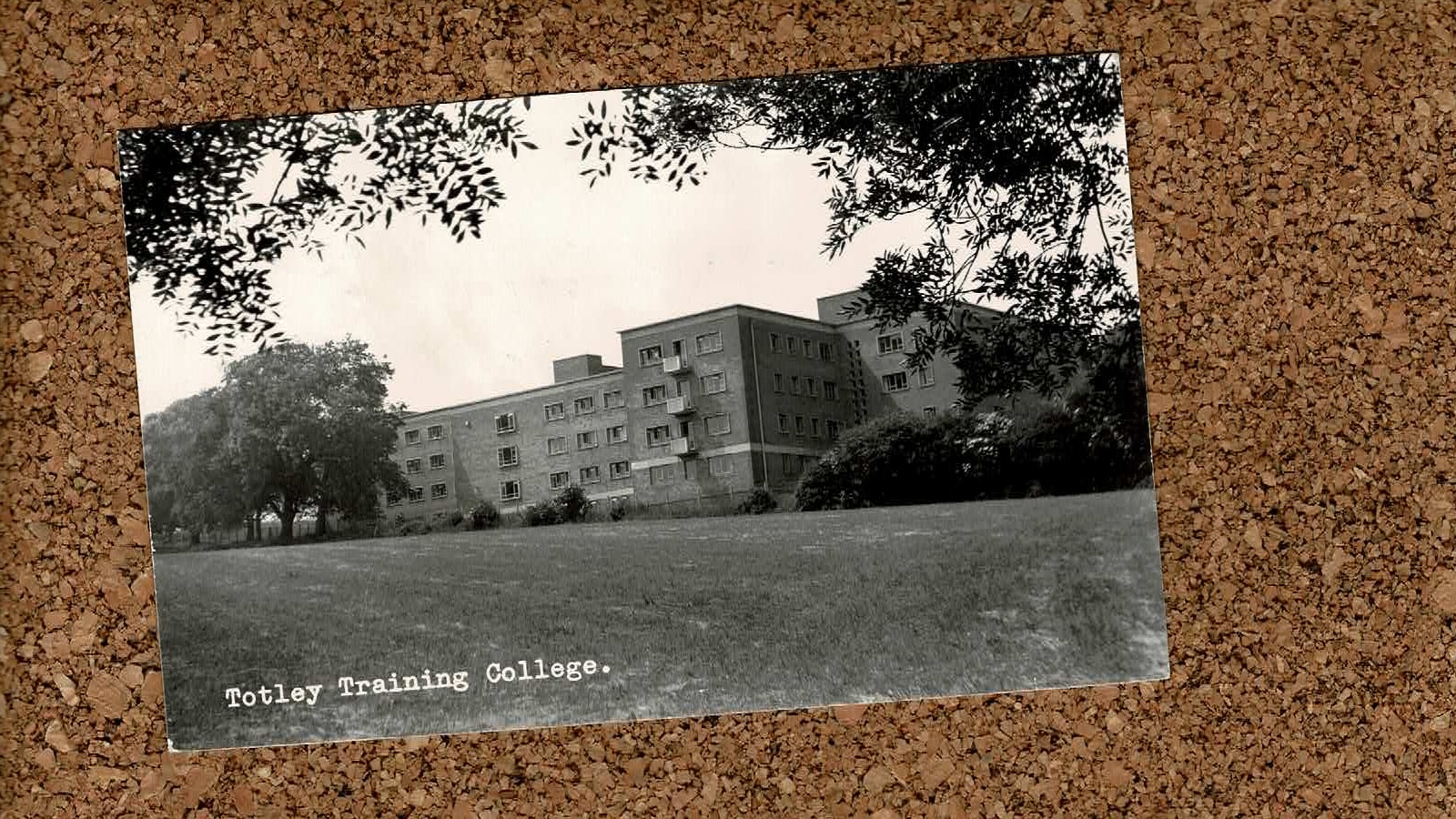
Not shown on the card is Totley Hall, built in 1623 and in 1949 passed to Sheffield Council. This was to be the heart of a new training college – the Totley Hall Training College of Housecraft. Its mission: training domestic science teachers.
There’s a wonderful account of the college’s foundation and development, written by Anna Baldry, who was one of the first lecturers at the college. It’s well worth a read. Highlights include her nerves at interview; problems with electricity blackouts; HMI inspections; the admission of men; its opening by Violet Attlee; and some lovely photographs.
More prosaically, the college had by 1963 become the plain Totley Hall Training College, focusing on training primary teachers. In 1967 men were admitted; in 1969 the best students could continue to study for a fourth year to gain a Bachelor of Education (BEd) degree from the University of Sheffield, rather than the Certificate in Education. And in 1972 – there being simultaneous vacancies in the principalships – Totley Hall Training College and the nearby Thornbridge Hall Training College were merged, to form the Totley/Thornbridge College of Education.
In 1976 the College became part of Sheffield Polytechnic, which was renamed Sheffield City Polytechnic – and this in turn became Sheffield Hallam University in 1992, and I’ve written about it here.
The card was posted, but I can’t read the postmark, so don’t know when. The 3p stamp shows it was after decimalisation. If it was in 1971 or 1972 it was sent first class; if it was 1973 it was sent second class. Those are the only options for that stamp.
An engagement? A wedding? A pools win? A baby? What do we think?