October 27, 2025, By Dean Hoke—As many of you know, I am deeply committed to helping small and mid-sized colleges find sustainable paths forward. That’s why I’m proud to announce the launch of the Edu Alliance Group Center for College Partnerships and Alliances, dedicated to helping institutions explore partnerships, mergers, and strategic alliances that strengthen their mission and impact.
The Center will be led by newly appointed partners Dr. Chet Haskell and Dr. Barry Ryan, two distinguished higher education leaders with deep experience in governance, accreditation, and institutional transformation. Together, they bring a wealth of expertise in guiding colleges and universities through complex transitions while preserving mission integrity and academic excellence.
The Center’s framework draws on insights presented in “A Guide to College Partnerships, Mergers, and Strategic Alliances for Boards and Leadership:From Awareness to Implementation,” authored by Dr. Chet Haskell, Dr. Barry Ryan, and Edu Alliance Managing Partner Dean Hoke. The guide outlines a five-stage model: Recognize, Assess, Explore, Negotiate, and Implement. It emphasizes mission integrity, transparency, and trust as the foundation for success.
“Our goal is to help college leaders and boards move from awareness to action with clarity, confidence, and compassion,” said Dr. Haskell. “Partnerships and alliances can preserve institutional identity while creating new opportunities for students and communities.”
“Edu Alliance has long supported institutions navigating change,” added Dean Hoke, Co-Founder and Managing Partner. “With the launch of the Center, we’re expanding our ability to help presidents and boards design solutions that are both visionary and pragmatic.”
About the Leadership
Dr. Chester (Chet) Haskell recently completed six and a half years as Vice Chancellor for Academic Affairs and University Provost at Antioch University, where he played key roles in integrating the institution academically and structurally, as well as in creating the Coalition for the Common Good with Otterbein University, where he was Vice President for Graduate Programs. He previously held senior positions at Harvard University—including Associate Dean of the Kennedy School of Government—and later served as Dean of the College at Simmons College (Boston). Dr. Haskell went on to serve as President of both the Monterey Institute of International Studies (now part of Middlebury College) and Cogswell Polytechnical College, leading both institutions through successful mergers. He holds DPA and MPA degrees from the University of Southern California, an MA from the University of Virginia, and an AB cum laude from Harvard University.
Dr. Barry Ryan has served as President of five universities and as Provost and Chief of Staff at three others, spanning state, private nonprofit, and private for-profit institutions. A Supreme Court Fellow in the chambers of Chief Justice William H. Rehnquist, Dr. Ryan is a member of several federal and state bars and has held two terms as Commissioner for WASC (WSCUC). He has led institutions through mergers, acquisitions, and affiliations that preserved academic quality, expanded access, and strengthened long-term viability. His leadership is characterized by transparency, shared governance, and a deep commitment to stakeholder engagement. Dr. Ryan earned his Ph.D. from the University of California, Santa Barbara, his J.D. from the University of California, Berkeley, and a Dipl.GB in international business from the University of Oxford.
You’ll often hear two words come up in advising sessions as students look ahead to college: match and fit. They sound interchangeable, but they’re not.
Match refers to what colleges are looking for from students. It’s mostly determined by admissions requirements such as GPA and test scores, and in some cases, other criteria like auditions, portfolios, or athletic ability. Fit is more of an art than a science; it refers to what the student is looking for in a college, including personal preferences, social and cultural environment, financial factors, and academic offerings. When we talk to students about college fit, it’s an opportunity for them to ask themselves whether they like what a certain institution offers beyond being admitted.
In the college admissions process, both terms matter. A strong match without a good fit can leave a student disengaged and negatively affect their chances of graduating from college. Nearly a quarter of undergraduate freshmen drop out before their second year, and it seems likely to me that a lot of these cases boil down to bad fits. On the other hand, a great fit that isn’t a match could be difficult for admission in the first place, and if a student is admitted anyway, the rigorous coursework they encounter might be more than they’re ready for. To maximize postsecondary success, advisors, families, and students alike should fully understand the difference between match and fit and know how to approach conversations about each of them.
Match: Reach, target, and solid
As I’ve worked with advisors over the years, one of the best ways we’ve found to guide students on match is using the categories of “Reach,” “Target,” and “Solid” schools. We can determine which schools belong to what category using the data that colleges share about the average incoming GPAs and test scores of admitted classes. Typically, they report weighted GPAs and composite test scores from the middle 50 percent of accepted applicants, i.e., from the students who fall anywhere from the 25th to 75th percentile of those admitted.
Reach: These are schools where admission is less likely, either because a student’s test scores and GPA are below the middle 50 percent or because the school traditionally admits only a small percentage of eligible applicants.
Target: These are schools where either GPA or test scores fall in the middle 50 percent of admitted students.
Solid: These are schools where students are well within the middle 50 percent for both GPA and test scores.
Building a balanced college list across these categories is essential in the college planning process. Often, I see high-achieving students over-index on too many Reach schools, which may make it hard for them to get accepted anywhere on their list, simply because their preferred schools are ultra-selective. Meanwhile, parents and guardians may focus heavily on fit and overlook whether the student actually meets the college’s admission criteria. Advisors play a key role in keeping these data-informed conversations grounded with the goal of a balanced list of college options for students to pursue.
The importance of early planning
Timing matters. In general, if you meet with students early enough, conversations about fit are productive, but if you’re meeting with students for the first time in their senior year, the utmost priority should be helping them build a balanced list. Ideally, we want to avoid a situation where a student thinks they’re going to get into the most competitive colleges in the country on the strength of their GPA and test scores, only to find out that it’s not that easy. If advisors wait until senior year to address match, students and families may already have unrealistic expectations, leading to difficult conversations when options are limited.
On the other hand, we would stress that although GPA is the factor given the most weight by admissions offices, there are ways to overcome match deficits with other elements of a college application. For instance, if a student worked part-time to support their family or participated in co-curricular activities, colleges using holistic review may see this as part of the student’s story, helping to balance a GPA that falls outside the typical range. These experiences highlight a student’s passions and potential contributions to their chosen major and campus community. We don’t want students to have unrealistic expectations, but we also shouldn’t limit them based on numbers alone.
In any case, advisors should introduce both match and fit concepts as early as 9th grade. If students have a specific college in mind, they need to be aware of the match requirements from the first day of freshman year of high school. This allows students to plan and track academic progress against requirements and lets families begin exploring what kind of environment, resources, and financial realities would make for the right fit.
Fit: A personal process
Once match is established, the next step is making sure students ask: “What do I want in my college experience?” The answers will involve a wide range of factors:
Institutional type: Public or private? Small liberal arts college or large research university?
Academic considerations: What majors are offered? Are there study abroad programs? Internship opportunities?
Student life: What is the student body like? What kind of extracurriculars, sports, and support services are offered? Are there fraternities and sororities? What is the campus culture?
Affordability: What financial aid or scholarships can I expect? What is the true net cost of attendance?
Outcomes: What a student hopes to gain from their postsecondary experience, including specific degrees or credentials, career preparation, financial benefits, personal growth, and skill development.
Fit also requires conversations within families. I’ve found that open communication can reveal misunderstandings that would otherwise falsely limit students’ options. Sometimes students assume their parents want them close to home, when in fact, parents just want them to find the right environment. Other times, families discover affordability looks very different once they use tools like free cost calculators. Ongoing dialogue about these topics between advisors, students, and families during the high school years helps prepare for better decisions in the end.
Bringing it all together
With more than 4,000 colleges and universities in the U.S. alone, every student can find a college or university that aligns with their goals and abilities. Doing so, however, is both an art and a science. Advisors who help families focus on both dimensions, and start the conversation early, set students up to receive those treasured acceptance letters and to thrive once they arrive on campus.
For school districts developing their proficiency in postsecondary readiness factors, like advising, there is an increasing amount of support available. For one, TexasCCMR.org, has free guidance resources to strengthen advising programs and other aspects of college and career readiness. While Texas-focused, many of the insights and tools on the site can be helpful for districts across the country in building their teams’ capabilities.
Donald Kamentz, Contigo Ed
Donald Kamentz is a skilled facilitator and education consultant utilizing his diverse experiences in both non-profit management and K-12 education to help organizations best serve all student populations. As the Founder and CEO of Contigo Ed, Donald Kamentz brings his over 30+ years of diverse experiences and passion for working in the postsecondary access and success arenas. He has been a member of both the National Association of College Admission Counseling (NACAC) and the Texas Association for College Admission Counseling (TACAC) since 1999.
Latest posts by eSchool Media Contributors (see all)
This audio is auto-generated. Please let us know if you have feedback.
Dive Brief:
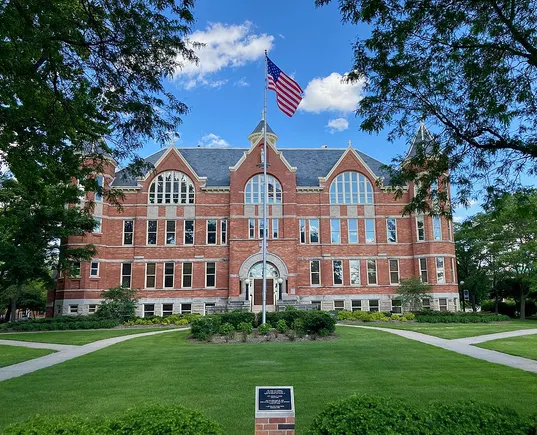
St. Norbert College, in Wisconsin, unveiled a handful of new academic offerings on Thursday, just months after it cut almost two dozen programs and laid off 21 faculty members amid budget-balancing efforts.
The Catholic nonprofit will launch four undergraduate degrees and one bachelor’s-master’s combination program in fall 2026, pending approval from its accreditor, the Higher Learning Commission.
The academic expansion comes after St. Norbert President Laurie Joyner reported at the end of July that the college anticipated a balanced fiscal 2026 budget. In March, she said St. Norbert would need to cut $7 million to achieve that goal.
Dive Insight:
Shortly after joining St. Norbert in July 2023, Joyner identified “a significant miscalculation” with the fiscal 2024 budget, resulting in a much bigger deficit than previously anticipated.
The shortfall had ripple effects on the college’s finances, and it has since made multiple rounds of reductions to its workforce and suite of academic offerings. Eliminated programs covered fields such as studio art, theology and applied mathematics. At least one cut program, engineering physics, had been introduced less than a year earlier.
Thanks to the cut, St. Norbert closed fiscal 2025 “with positive operating results” and a stronger financial position, Joyner said in a July community message.
“With significant cost-saving efforts, program streamlining, and an institution-wide focus on efficiencies, we anticipate breaking even this fiscal year (FY26) as well — despite predicted enrollment declines,” she wrote.
St. Norbert’s has struggled with enrollment in recent years. In fall 2022, it had 1,882 students, down 17.7% from a decade prior, according to federal data. Like many other small liberal arts institutions, much of the college’s funds comes from tuition. In fiscal 2023, it received 50% of its core revenue from tuition and fees.
But the college saw a reversal of the trend in fall 2023 — the most recent semester for which federal data is available — when it enrolled 2,165 students.
In August, Anindo Choudhury, the college’s interim vice president and chief academic officer, signaled the institution’s interest in reinvesting in its remaining programs.
“We have had to make some difficult decisions involving both programs and personnel,” he said in an August email. “While some majors no longer exist, we are redirecting existing and new resources to current and recently developed programs.”
On Thursday, St. Norbert’s leaders touted the newly announced programs as a demonstration of the college’s ability to adapt to changing workforce demands and student needs.
The forthcoming undergraduate programs include bachelor’s degrees in cybersecurity management, exercise science, digital marketing and sacred music.
Pending accreditor approval, the college will also launch a 4+1 business administration program that will allow students to earn both bachelor’s and master’s degrees in five years.
Students in its media studies and communications programs will be able to enroll in new concentrations in sports media, business and professional communication, journalism or public image and promotion.
The additional academic offerings aren’t the only recent tactics the college has undertaken in the pursuit of financial longevity.
St. Norbert struck a partnership with nearby Northeast Wisconsin Technical College to allow the public community college’s students to transfer into its data analytics bachelor’s degree program more easily.
And earlier this month, the college announced a $15 million donation from the religious organization with which it is affiliated, the Norbertine Order.
Too many student-parents never make it to graduation, in no small part because their campuses don’t adequately help them fit college into their lives — or even just fit in.
Yet over 3 million student-parents across the nation, myself included, are pursuing higher education, seeking the intergenerational benefits that come with earning a degree. To reap them, we must overcome many obstacles, as colleges aren’t designed for students like us.
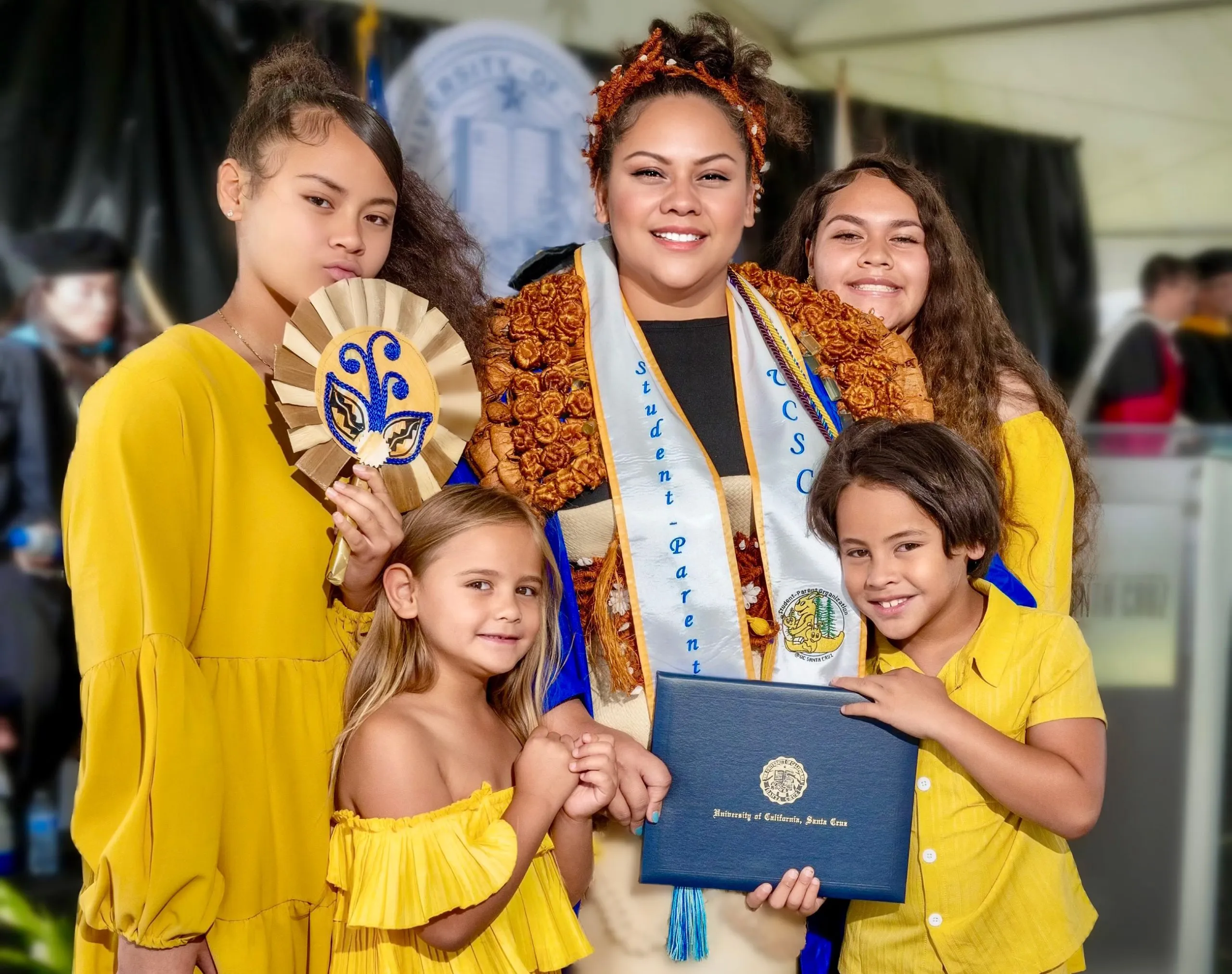
For me, the last hurdle I had to clear was graduation itself. After years of sacrifice — not just my own, but my whole family’s — walking the stage with my four children at my graduation from the University of California, Santa Cruz was deeply important.
The university, however, didn’t understand that or account for us. When I asked to accept my diploma with my kids, I was met with resistance, a particularly tough reminder of the work institutions have left to do to meet the needs and priorities of student-parents.
Related: Interested in innovations in higher education? Subscribe to our free biweekly higher education newsletter.
Earning my college degree in my late 30s was undoubtedly a major achievement, but so was going back for my bachelor’s in the first place — I didn’t even finish high school the first time around.
After I became a mom at 20, I earned my GED, hoping it would help me support my family. Continuing my education only got harder. I started and stopped community college more times than I can count, juggling bills, jobs, custody battles and parenting.
Finally, I transferred to UCSC, proud that I was taking this step two decades in the making and changing the trajectory of my and my family’s lives.
However, I didn’t fully realize what my education would cost my children. Used to our tight-knit Tongan community, they felt like cultural outsiders when we moved to Santa Cruz, no longer surrounded by family, our native language or familiar foods and music.
My children sacrificed their home and sense of belonging so that I could pursue this dream. As graduation approached, I knew I wanted to walk the stage with them. They had earned it just as much as I had.
Yet the administration denied my request, citing the added logistical difficulties. They suggested I bring my kids to a separate, informal celebration for those of us living in family student housing instead. The offer sounded like “be invisible or settle for less.”
I immediately started mobilizing UCSC’s Student Parent Organization, where I was president. Working with the student government, I drafted a resolution permitting student-parents to walk with their children. I reached out to alumni, administrators, fellow parents and friends for support.
Thanks to our collective voice, the dean of students changed his mind, offered an apology and committed to changing the policy going forward for all graduating student-parents. Though my kids and I were placed at the end of the ceremony, we crossed the stage together as a family.
That seed of inclusion will grow in them, just like it will for all the children of student-parents who walk that path in the future.
The next year, my mentee and friend walked with her son at the UCSC commencement, this time without pushback. The university invited them to rehearsal, and on graduation day, they had VIP seats. She was one of the first to walk, not the last.
That is the power of advocacy. It turns exclusion into inclusion. It rewrites the rules not just for one person, but for those who come after. I am proud to continue my advocacy work as a graduate student at the University of San Francisco and a member of The California Alliance for Student Parent Success.
I have since seen institutions across California make good progress on their efforts to support student-parents, but colleges and universities nationwide must still do more. At the University at Buffalo, university police chased a graduating student across the stage when he attempted to bring his infant son with him.
These stories and the momentum building in the wake of September’s National Student Parent Month should serve as a call to higher education leaders across the country to cultivate campus climates that build trust and belonging among student-parents.
This work should start before we even step foot on campus and continue until we graduate.
Institutions that truly wish to serve families will ensure that the value we bring to higher education is visible. They will account for student-parents when planning campus events and weave together support networks of faculty, staff and peers who can respond to our needs.
When we ask institutions for policies and practices to better accommodate our families, they will listen and act. They will hold themselves accountable to all of their students, parents included.
Walking the stage with my kids was a step in the right direction, albeit an uphill climb. Let’s keep going and do better by student-parents and their families.
The Hechinger Report provides in-depth, fact-based, unbiased reporting on education that is free to all readers. But that doesn’t mean it’s free to produce. Our work keeps educators and the public informed about pressing issues at schools and on campuses throughout the country. We tell the whole story, even when the details are inconvenient. Help us keep doing that.
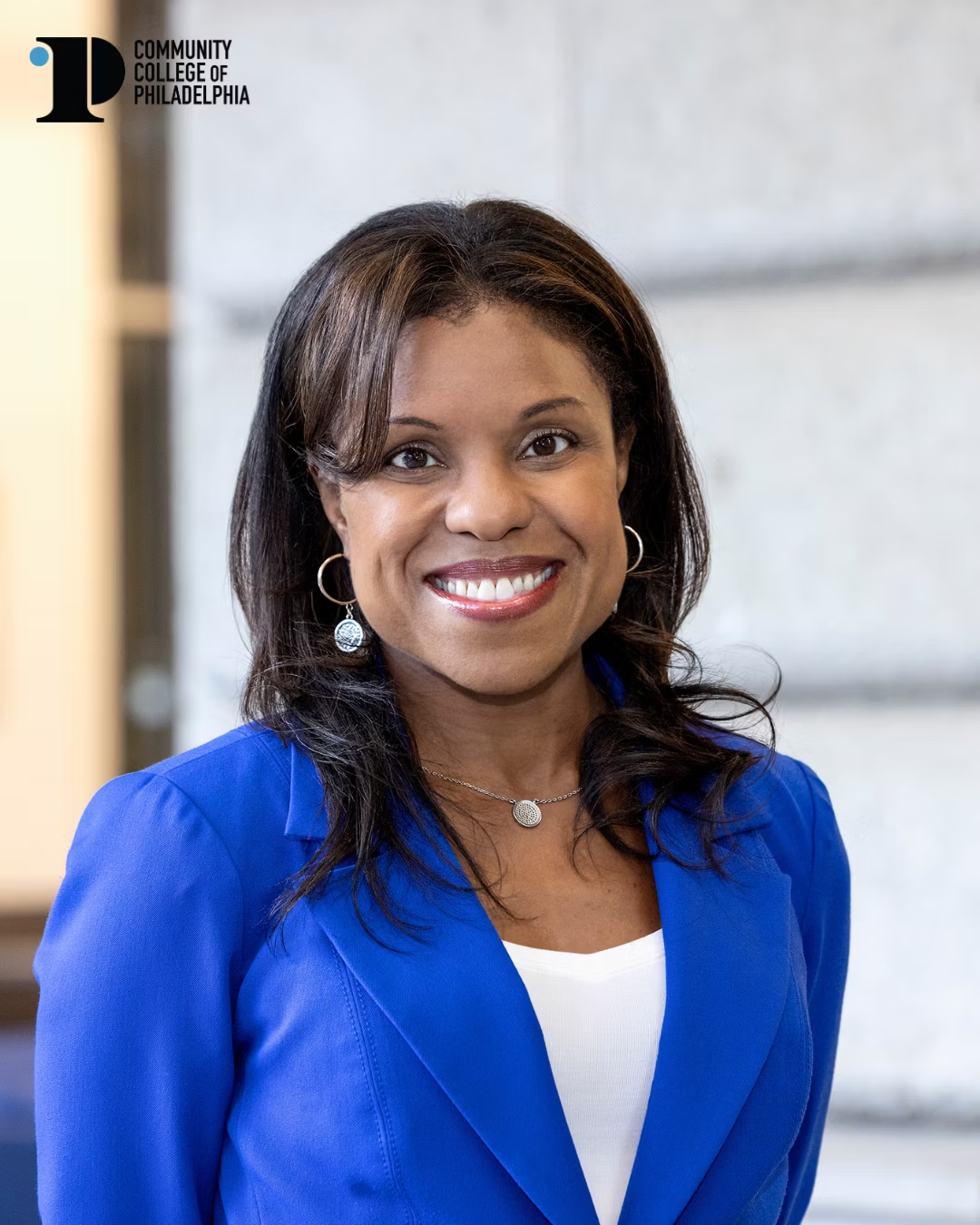
Dr. Alycia MarshallCommunity College of PhiladelphiaThe Community College of Philadelphia Board of Trustees has announced the appointment of Dr. Alycia Marshall as the institution’s new president. Marshall’s selection comes after the Board’s decision to remove Dr. Donald “Guy” Generals from the presidency.
“As Chair of the Board of Trustees, I am proud to officially welcome Dr. Alycia Marshall as the seventh president of Community College of Philadelphia,” said Harold T. Epps. “After a nationwide search, it has become evident that Dr. Marshall demonstrates the clear vision and outstanding leadership needed to guide our institution forward. I look forward to continuing to work with Dr. Marshall and to the positive impact she will have on our students, faculty, staff, and the broader community.”
Marshall has been serving as interim president since Generals’ departure from the college in April. Prior to the interim appointment, she held the position of Provost and Vice President for Academic and Student Success, where she oversaw Academic Affairs, Workforce Development, and Student Support and Engagement.
“I congratulate Dr. Alycia Marshall on her appointment as President of the Community College of Philadelphia,” said Cherelle Parker, Mayor of Philadelphia. “CCP is a beacon of hope and economic opportunity for our students and for everyone seeking to advance their pathways to better lives. The Parker Administration supports CCP, Dr. Marshall, and the Board in its mission.”
Marshall brings extensive higher education experience to the presidency. She began her career at Anne Arundel Community College (AACC) in Maryland, where she served as a tenured Full Professor of Mathematics, Department Chair of Mathematics, and Associate Vice President for Learning and Academic Affairs. She holds a Ph.D. in Mathematics Education from the University of Maryland College Park, a Master of Arts degree in Teaching from Bowie State University, and a Bachelor of Arts degree in Mathematics from the University of Maryland Baltimore County.
“Community College of Philadelphia truly feels like home,” said Marshall. “Every day, I witness the extraordinary dedication of our faculty and staff who work tirelessly to ensure our students are supported, challenged, and inspired to succeed. While my time as interim president has deepened my connections with the college community and our external partners, it is my foundation as an educator that will continue to guide me. I am deeply honored to serve as president of The City’s College—a beacon of access, opportunity, and transformation—as we move forward together.”
More than 32,000 California community college students who earned transfer degrees never applied to California State University despite guaranteed admission, according to a new report that highlights critical gaps in the state’s higher education pipeline.
Marisol Cuellar MejiaThe Public Policy Institute of California study reveals that 21 percent of Associate Degree for Transfer recipients between 2018-19 and 2022-23 failed to apply to CSU. Most concerning, more than half of these students — 32,500 individuals — appear to have abandoned their pursuit of a bachelor’s degree altogether.
The findings come as California races to meet an ambitious goal of 40 percent baccalaureate completion among working-age residents by 2030, a target that depends heavily on improving transfer rates from community colleges.
“When the transfer pathway works, it works,” said Marisol Cuellar Mejia, co-author of the report. “The challenge lies in ensuring that more California community college students are able to get to the point of applying.”
The report identifies another significant loss point: nearly 63,000 students who were admitted to CSU but chose not to enroll never appeared at any four-year institution. This group represents what researchers call “the most immediate opportunity for enrollment gains” at the state university system.
Despite these gaps, the study found high success rates for students who complete the transfer process. Among community college applicants to CSU, 92 percent are eventually admitted to at least one campus, and 76 percent of fall 2020 transfer students graduated by spring 2024. Transfer applications and enrollment remain below pre-pandemic levels. Fall 2024 saw 50,259 new transfer students enroll at CSU, a 6 percent increase from the prior year but still 17 percent below the 2020 peak of 60,529 students. Applications are down 16.4 percent from 2020 levels.
The decline has not affected campuses equally. San Diego State, Cal State Los Angeles, and San Francisco State continued enrollment drops through fall 2024, with the latter two campuses seeing transfer enrollment more than 30 percent below 2020 peaks.
Meanwhile, five campuses — Fresno State, Fullerton, Sonoma State, Monterey Bay, and Chico State — have surpassed their 2020 transfer enrollment numbers. The report notes that CSU is the leading destination for California community college transfers, receiving about 58 percent of students who successfully transfer to four-year institutions. Another 17 percent transfer to University of California campuses, while 25 percent go to private or out-of-state schools.
The study found that the typical CSU applicant spends nine terms enrolled in the community college system before applying. However, students who reach key academic milestones during their first year can apply sooner. Three in ten applicants apply in more than one term, and almost half of these students had all applications denied initially but were admitted later. Among admitted students, 69 percent chose to enroll at CSU.
The California Community Colleges system serves more than 2.1 million students, with most expressing intent to transfer. However, only one in five actually transfers within four years of initial enrollment, meaning even modest improvements could substantially boost four-year college enrollment statewide.
CSU recently committed to increasing transfer enrollment by 15 percent over the next three years as part of its systemwide strategic plan. The move comes as high school graduate numbers are expected to plateau or decline, limiting the pool of first-time freshmen and making community college transfers increasingly important for maintaining enrollment.
National data suggests today’s college students are less prepared to succeed in college than previous cohorts, due in part to the COVID-19 pandemic and remote instruction. Students lack academic and socio-emotional readiness, administrators say, prompting colleges to implement new interventions to get them up to speed.
For years, Mount Saint Mary’s University in California has offered a summer bridge program for students who may be less prepared to make the transition to college, such as first-generation students.
This summer, MSMU launched Summer Pathways, which is designed for all incoming students to get a head start on college. They complete two college courses for free and are able to connect with peers and explore campus before starting the term.
“We felt the earlier we can engage students, the better,” said Amanda Romero, interim assistant provost.
How it works: Summer Pathways is a six-week, credit-bearing experience that takes place in the middle of the summer, after orientation in June but before classes start in August.
During the program, students complete a Summer Pathway seminar and one additional introductory course, choosing among sociology, English and mathematics.
Students take classes Mondays, Wednesdays and Fridays; on Tuesdays and Thursdays they participate in workshops about managing their time, dealing with impostor syndrome or maintaining well-being.
“We’ve invited the whole campus community to come in, meet with our students in person, talk about their careers, their offices, how they ended up at the Mount, what their hopes and aspirations are for the future,” said Elizabeth Sturgeon, interim assistant provost and director for Summer Pathways.
The goal is to make students aware of campus resources and connect them with faculty and staff early in their college careers.
The program also takes students on fun excursions around Los Angeles, including to the ballet, the Hollywood Bowl and the Getty Museum.
The experience is free, and students are given a $250 stipend to help pay for gas and food. They can also pay $3,000 to live in a residence hall for the six-week program if they don’t want to commute to campus each day.
A community approach: While many faculty work on eight-month contracts and have the summers off, Sturgeon and Romero said it wasn’t difficult to get professors engaged and on campus for the program.
“We had departments that had never participated in Summer Pathways before, never knew what it was about, opting in and coming down in person to present to our students,” Sturgeon said.
“It’s important for our core faculty to get in front of students, and this is a great opportunity to do just that,” Romero said.
Returning students also stepped up to serve as peer mentors for new students.
The program has paid off thus far, leaders said, with students hitting the ground running at the start of the term.
“It offers a smoother transition,” Romero said. “A lot of anxiety with starting a new place is ‘where’s this, where’s that, where do I go?’”
“They know what the resources are, they know where to park, what to order in the cafeteria,” Sturgeon said. “They have a friend group; they have that one peer mentor who’s their friend they can reach out to. From day one, in the business of being a college student, they’re an alum after six weeks.”
What’s next: In summer 2025, 66 out of 90 incoming students participated in Summer Pathways, engaging in five different courses. And 98.5 percent of them matriculated in the fall.
In the future, campus leaders hope to introduce project-based learning into the courses, interweaving the university’s mission as a Sisters of St. Joseph of Carondelet institution.
“We just want to make it bigger going forward, with more classes and students participating,” Sturgeon said.
The overarching dream is to get all incoming students to sign up, but administrators recognize that those who don’t live in the region may face additional barriers to engaging in in-person activities because they lack housing. Sturgeon and Romero are pushing for additional resources to offer housing and seeking solutions to address the need for additional funding and staffing.
If your student success program has a unique feature or twist, we’d like to know about it. Click here to submit.
Photo illustration by Justin Morrison/Inside Higher Ed | Remigiusz Gora/iStock/Getty Images
It was legit: She was a beneficiary of the Colorado Re-Engaged Initiative (CORE), which draws on reverse-transfer policies to allow the state’s four-year institutions to award degrees to stopped-out students who have fulfilled the requirements of an associate of general studies degree.
Created by state legislation in 2021, CORE seeks to reduce the share of the 700,000 plus students in the state who have completed some college credits but don’t hold a degree.
“It has always been problematic for me to think that people could have gone three years, three and a half years to college and the highest credential that they have is a high school diploma,” said Angie Paccione, executive director of Colorado’s Department of Higher Education.
For Varkevisser, getting recognized for her years’ worth of credit accumulation was simple; she just had to say yes to the email. “It came out of nowhere, but I have my college degree now,” Varkevisser said.
Colorado isn’t the only state aiming to reduce the millions of individuals who fall in the some college, no degree population in the U.S. And reverse transfer—awarding an associate degree to students who have met the credit threshold—is a relatively simple way to do it, thanks to new technologies and state initiatives to streamline policies.
But one barrier has tripped up colleges for over a decade: working with students to make them aware so they participate in these programs. In Colorado, for example, fewer than 5 percent of eligible students have opted in to CORE.
“I can’t imagine why” a student wouldn’t opt in, Paccione said. “You’ve already paid money; you don’t have to do anything, all you have to do is call [the institution] up and say, ‘Hey, I understand I might be eligible for an associate degree.’ It takes a phone call, essentially.”
Credits but No Credential
In the 2010s, reverse transfer was a popular student success intervention, allowing students who transferred from a two-year to a four-year institution to pass their credits back to their community college to earn a credential.
Experts say awarding an associate degree for credits acquired before a student hits the four-year degree threshold can support their overall success in and after college, because it provides a benchmark of progress. A 2018 report found that most community colleges students who transferred to another institution left their two-year college without a degree, putting them in limbo between programs with credits but no credential.
Now, reverse-transfer policies are being applied to students who have enrolled at a four-year college and left before earning a degree, who often abandon a significant number of credits.
The National Student Clearinghouse Research Center’s latest report on the some college, no credential (SCNC) population found that 7.2 percent of stopped-out students had achieved at least two years’ worth of full-time-equivalent enrollment over the past decade. In other words, 2.6 million individuals in the U.S. have completed two years’ worth of college credits but don’t hold a credential to prove it.
In addition to Colorado, Florida, Maryland, Michigan, Missouri, Oregon and Texas are introducing or modifying policies to award associate degrees to stopped-out students who have earned enough credits. The trend reflects a renewed focus on better serving stopped-out students instead of simply pushing them to re-enroll.
“What’s happening at the national level is that folks are recognizing that we’re still not seeing the completion that we want,” said Wendy Sedlak, the Lumina Foundation’s strategy director for research and evaluation. “It’s taking a long time to make headway, so nationally, people are looking back, and looking into what are those initiatives, what are those policies, what are those practices that have really helped us push ahead?”
Photo illustration by Justin Morrison/Inside Higher Ed | stphillips/iStock/Getty Images
Obstacles to Implementation
Reverse transfer, while simple on paper, faces a variety of hurdles at the state, institutional and individual levels.
At the highest level, most universities cannot award associate degrees due to state legislation. Before CORE, Colorado universities were limited to being “dual mission” (awarding two- and four-year degrees) or awarding higher degrees, such as master’s or doctorates.
There’s also a stigma around offering two-year degrees to students. Only eight universities are participating in CORE, because “some of the institutions don’t want to be associated with an associate degree,” Paccione said. “They pride themselves on the bachelor’s degree and they want to make sure students complete that.”
Critics of reverse transfer claim that awarding students an associate degree if they fail to complete a bachelor’s gives them an incentive to stop out, but most of these programs require students to have left higher education for at least two years to be eligible for reverse transfer.
Restrictions on student eligibility has further limited the number who can benefit from reverse-transfer programs.
To earn an associate degree retroactively through traditional reverse-transfer processes, students have to begin their college journey at a two-year institution and earn at least one-quarter of their credits there. They are also required to take a certain number (typically 60 or more) and type of credits to fulfill requirements for the degree, whether that’s an associate of arts, science or general studies. So a student who completed 59 credits of primarily electives or upper-level credits in their major would not be able to earn the degree, for example.
While 700,000 students in Colorado have earned some college credit but no degree, only about 30,000 residents have earned the minimum 70 credits at a four-year state university within the past 10 years that makes them eligible for CORE, according to the state.
Most colleges require students to opt in to reverse transfer due to FERPA laws, meaning that students need to advocate for receiving their award and facilitate transcript data exchanges between institutions. This can further disadvantage those who are unfamiliar with their college’s bureaucratic processes or the hidden curriculum of higher education.
In addition, getting up-to-date emails, addresses or phone numbers for students who were enrolled nearly a decade ago can be difficult for the institution.
For some students, the opportunity may seem too good to be true.
Peter Fritz, director of student transitions and degree completion initiatives at the Colorado Department of Higher Education, talked to CORE participants at their graduation ceremony in 2023 who—like Varkevisser’s partner—initially thought the program was a scam. Media attention and support from the governor have helped build trust in CORE. And the state’s Education Department continues to affirm messaging that this isn’t a giveaway or a money grab, but recognition of work already completed.
Thousands of Colorado residents are eligible for CORE, but Varkevisser said she hasn’t heard of anyone in her community who’s taken advantage of it. “Actually, I am the one that’s telling everyone I know, and they go, ‘That’s crazy!’”
Photo illustration by Justin Morrison/Inside Higher Ed
Giving Students Degrees
Between CORE’s launch in 2022 and January 2025, 1,032 stopped-out students earned associates degrees, according to Colorado’s education department.
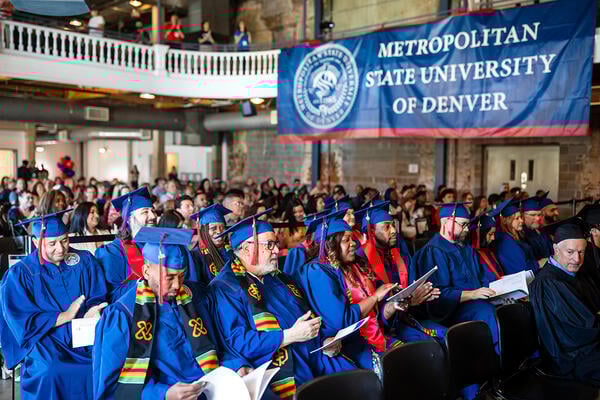
At Metropolitan State University of Denver, one of the Colorado institutions that opted in to CORE, when administrators began combing through institutional data to see which students would be eligible for the associate of general studies degree, they found 4,256 that could earn an A.G.S.
Another few thousand were eligible for a different degree entirely. If students had completed 15 or more credits at the community college system, “you wouldn’t be eligible for us to award you anything,” said Shaun Schafer, associate vice president of curriculum academic effectiveness and policy development. “Guess what? It’s reverse transfer.”
MSU Denver identified nearly 2,000 students who could receive a two-year degree from their community college. “We sent that back to the different institutions saying, ‘Hey, this person is actually eligible to reverse transfer and get an associate’s from you,’” Schafer said. “We can’t really do anything for them.”
In 2024, 336 students accepted an A.G.S. from MSU Denver, just under 9 percent of those eligible. An additional 130 or so students had reached 120 credit hours or more, so the university offered to help them re-enroll to finish their degree, and 300 had resumed coursework at other institutions.
National data shows policies like reverse transfer are making a dent in the “some college no degree” population by eliminating the barrier of re-enrollment to attain a credential. In the past year, about one in four SCNC students who earned a credential in the U.S. (15,500 students in total) did so without re-enrolling, according to National Student Clearinghouse data.
In Colorado, a total of 2,100 SCNC students completed a credential during the 2023–24 academic year alone, and 800 of those did not need to re-enroll, NSC data shows.
Some states, including Colorado, Michigan, Missouri and Oregon, require institutions to contact upward transfer students to make them aware of their reverse-transfer eligibility. In Texas, students consent to participating in reverse transfer when they fill out their application; they have to uncheck the box to opt out, giving universities leeway to enroll them in the process when they become eligible.
“Students often don’t do optional,” Sedlak said. “When you create additional barriers, you’re not going to see things get done.”
Alyson McClaran/MSU Denver
The first Summer Ceremony for Associate’s Degrees on June 22, 2024, in the Tivoli Turnhalle.
Leveraging Tech
Some universities have implemented new reverse transfer policies that capture students while they’re still enrolled, utilizing technology to expedite the process.
The University of Nebraska system, which includes the Lincoln, Omaha and Kearney campuses, implemented an automatically triggered reverse-transfer initiative in 2023. All eligible students need to do is respond to an email.
“Rather than putting the responsibility on the students to do that work—most of whom are not going to do that work—the system thought it would be better to create a mechanism that would automatically notify students when the courses that they’ve taken have gotten to that threshold,” said Amy Goodburn, senior associate vice chancellor at UNL.
To be eligible, students must complete at least 15 credits at a community college and then transfer to the University of Nebraska. The registrar’s office monitors a dashboard and, after confirming a student completed the appropriate number and type of credits for an associate degree, notifies the student. If the student responds to the email, the university processes the reverse transfer with the prior institution to confirm the associate degree.
“We’re trying to take the need for students to be proactive off their backs,” Goodburn said.
The process is not a heavy lift, Goodburn said, and it boosts the community college’s completion rate, making it mutually beneficial.
Still, the uptake remains stubbornly low.
At UNL, February 2025 data showed that 2,500 students were eligible to participate in reverse transfer, but only 10 percent have opted in. A reverse-transfer initiative in Tennessee a decade ago saw similar numbers; 7,500 were eligible, but only 1,755 students chose to participate and 347 degrees were awarded.
“I’m curious about the other 90 percent, like, are they not doing it because they don’t want it on their transcript?” Goodburn said. “Or they’re just not reading their emails, which is often the case? Or is there some other reason?”
The University of Montana is in the early stages of building its own process for the reverse transfer of stopped-out students. The institution has offered an associate of arts degree for years as part of Missoula College, an embedded two-year institution within the university. Now, through the Big Sky Finish initiative, officials will be able to retroactively award degrees to former students.
Brian Reed, the University of Montana’s associate vice president for student success, has been leading the project, convening with stakeholders—including the president, the provost, Missoula College leaders and the registrar’s office—to develop the process. The goal, Reed said, is to address the some college, no degree population while also investing in state goals for economic development.
Big Sky Finish hinges on a partnership with the ed-tech provider EAB, which has created a dashboard connecting various institutional data sets to identify which students are eligible for reverse transfer. The system highlights former students who have 60 credits or more that fulfill a general studies associate degree, as well as stop-outs who are mere credits away from meeting the requirement.
So far, Montana staff have identified just 11 students who are eligible to earn an A.A. degree and 150 more who are a class or two short of the needed credits.
Photo illustration by Justin Morrison/Inside Higher Ed | silverlining56/E+/Getty Images
Putting Degrees to Work
While CORE and similar initiatives are helping students earn a degree of value after leaving higher education, it’s less clear what impact associate degrees are having on students. Is it advancing their careers or getting them re-engaged in college?
About 10 percent of Colorado’s stopped-out students have chosen to re-enroll in higher education to pursue their bachelor’s degree, Fritz said.
For Varkevisser, receiving an A.G.S. degree provided the impetus to re-enroll and work toward a bachelor’s degree. The associate degree also gave her access to a variety of resources for alumni, including discounted tuition rates and career services.
“We recognize that it may not be for everybody to do this as a bachelor’s completion model, but the advantage of having an associate over a high school diploma, I think, helps,” Paccione.
But after students have their degrees, the career benefits and long-term implications for A.G.S. graduates are still murky. Median earnings of full-time, year-round workers with an associate degree are 18 percent higher than those with only a high school diploma, but still 35 percent lower than bachelor’s degree completers, according to the National Center for Education Statistics.
In Colorado, the average high school graduate in their mid-20s will earn about $25,000 per year, whereas a graduate with an associate of general studies degree will earn closer to $34,000 per year, according to 2021 data.
“There was an assumption that maybe an A.G.S. wasn’t really worth much, but the data we had on hand locally said there’s not really much difference financially and employment-wise between the different types of associate degrees,” Fritz said.
“I still don’t really know what all [the A.G.S.] can do for me,” Varkevisser said. “I was never not going to go for it once I got the email and found out it was a real thing, but I don’t know what to do with it necessarily.” She’s considered other forms of employment that require an associate degree, such as a laboratory or X-ray technician, while she finishes her bachelor’s degree in mathematics.
In Montana, there’s a slight wage premium for individuals who hold an associate degree compared to those with only a high school diploma, Reed said. An associate degree also opens doors in some career fields, such as bookkeeping.
The University of Montana is hoping to partner with the city of Missoula to identify small businesses looking for credentialed talent so completers can have a career pathway to transition into .
“I don’t think people are going into six-figure jobs after this,” Reed said. “But it’s creating a step toward something else for these folks. They get another job a little higher up, a little higher up, that prepares them for the next thing.”
But an A.G.S. isn’t a great target for workers and it can’t guarantee further education, MSU Denver’s Schafer noted.
“I hate to say it, but it’s a little bit of, it’s a lovely parting gift,” Schafer said. “Here, you have something that you can now show to the world. But how do I [as an administrator] build you on to the next thing when you’ve already stopped out? Maybe that’s the best hope. Even then, maybe it doesn’t work quite as magically as we want it to.”
High school students who combine dual enrollment courses with Advanced Placement or International Baccalaureate programs are significantly more likely to graduate from college and earn higher salaries in their early twenties than peers who pursue only one type of accelerated coursework, according to a new report from the Community College Research Center.
File photoThe study, which tracked Texas high school students expected to graduate in 2015-16 and 2016-17 for six years after high school, found that 71% of students who took both dual enrollment and AP/IB courses earned a postsecondary credential within six years—including 60% who completed a bachelor’s degree. By comparison, only 10% of students who took no accelerated coursework completed any postsecondary credential.
“Most dual enrollment students in Texas also take other accelerated courses, and those who do tend to have stronger college and earnings trajectories,” said Dr.Tatiana Velasco, CCRC senior research associate. “It’s a pattern we hadn’t fully appreciated before, which offers clues for how to expand the benefits of dual enrollment to more students.”
The financial benefits of combining accelerated programs extend well beyond graduation. Students who took both dual enrollment and AP/IB courses earned an average of $10,306 per quarter at age 24—more than $1,300 per quarter above students who took dual enrollment alone and nearly $1,400 per quarter more than those who took only AP/IB courses.
These advantages persisted even after researchers controlled for student demographics, test scores, and school characteristics, suggesting the combination of programs provides genuine educational value rather than simply reflecting differences in student backgrounds.
While the study revealed promising outcomes for students combining dual enrollment with career and technical education programs, participation in this pathway remains critically low. Fewer than 5% of students combine a CTE focus—defined as taking 10 or more CTE courses—with dual enrollment.
Yet those who do show remarkable success. By age 24, dual enrollment students with a CTE focus earned an average of $9,746 per quarter, substantially more than CTE-focused students who didn’t take dual enrollment ($8,097) and second only to the dual enrollment/AP-IB combination group.
The findings suggest a significant missed opportunity, particularly for students seeking technical career paths who could benefit from early college exposure while building specialized skills.
The report highlights concerning equity gaps in accelerated coursework access. Students who combine dual enrollment with AP/IB courses are less diverse than those taking AP/IB alone, raising questions about which students have opportunities to maximize the benefits of accelerated learning.
Early college high schools present a partial solution to this challenge. These specialized schools, where students can earn an associate degree while completing high school, serve more diverse student populations than other accelerated programs. Their graduates complete associate degrees at higher rates and earn more than Texas students overall by age 21. However, early college high schools serve only 5% of Texas students statewide.
With less than 40% of Texas students without accelerated coursework enrolling in any postsecondary institution, and only one in five Texas students taking dual enrollment, researchers see substantial room for expansion.
The report’s authors recommend that K-12 districts and colleges work to expand dual enrollment participation while ensuring these programs complement rather than compete with AP/IB offerings. They also call for increased access to dual enrollment for CTE students and additional support structures to promote student success in college-level coursework during high school.
A new report analyzes earnings for college graduates from different majors.
Nuthawut Somsuk/Getty Images
Despite mounting public skepticism about the value of a college degree, the data is still clear: Over all, college graduates have much higher earning potential than their peers without a bachelor’s degree. But the limits of those boosted earnings are often decided by a student’s major.
American workers with a four-year degree ages 25 to 54 earn a median annual salary of $81,000—70 percent more than their peers with a high school diploma alone, according to a new report that Georgetown University’s Center on Education and the Workforce published Thursday. However, the salary range for workers with a bachelor’s degree can span anywhere from $45,000 a year for graduates of education and public service to $141,000 for STEM majors.
And even within those fields, salary levels have a big range. Humanities majors in the prime of their careers earn between $48,000 and $105,000 a year, with a median salary of $69,000. Meanwhile, business and communications majors earn between $58,000 and $129,000 a year, with a median salary of $86,000.
“Choosing a major has long been one of the most consequential decisions that college students make—and this is particularly true now, when recent college graduates are facing an unusually rocky labor market,” said Catherine Morris, senior editor and writer at CEW and lead author of the report, “The Major Payoff: Evaluating Earnings and Employment Outcomes Across Bachelor’s Degrees.”
“Students need to weigh their options carefully.”
The report, which analyzed earnings and unemployment data collected by the U.S. Census Bureau’s American Community Survey from 2009 to 2023, also documented rising unemployment for recent college graduates. In 2008, recent graduates had lower unemployment rates relative to all workers (6.8 percent versus 9.8 percent). But that gap has narrowed over the past 15 years; since 2022, recent college graduates have faced higher levels of unemployment relative to all workers.
Morris attributed rising unemployment for recent college graduates to a mix of factors, including increased layoffs in white-collar fields, the rise of artificial intelligence and general economic uncertainty. At the same time, climbing tuition prices and the student debt crisis have heightened consumer concern about a degree’s return on investment.
“Over the past 15 years, there’s been more and more of a shift toward students wanting to get degrees in majors that they perceive as lucrative or high-paying,” Morris, who noted that STEM degrees, especially computer science, have become increasingly popular. Meanwhile, the popularity of humanities degrees has declined.
But just because a degree has higher earning potential doesn’t mean it’s immune to job instability. In 2022, 6.8 percent of recent graduates with computer science degrees were unemployed, while just 2.2 percent of education majors—who typically earn some of the lowest salaries—were unemployed.
“The more specific the major, the more sensitive it is to sectoral shocks,” said Jeff Strohl, director of the center at Georgetown. “More general majors actually have a lot more flexibility in the labor market. I would expect to see some of the softer majors that start with higher unemployment than the STEM majors be a little more stable.”
And earning a graduate degree can also substantially boost earnings for workers with a bachelor’s degree in a more general field, such as multidisciplinary studies, social sciences or education and public service. Meanwhile, the graduate earnings premium for more career-specific fields isn’t as high.
“About 25 percent of bachelor of arts majors don’t by themselves have a positive return on investment,” Strohl said. “But we need to look at the graduate earnings premium, because many B.A. majors don’t stand by themselves.”
Although salaries for college graduates are one metric that can help college students decide on a major, Morris said it shouldn’t be the only consideration.
“Don’t just chase the money,” she said. “The job market can be very unpredictable. Students need to be aware of their own intrinsic interests and find ways to differentiate themselves.”