The report, released Thursday, shows the majority of students see a positive return on investment within 10 years, but Strada says it isn’t enough.
Chaichan Pramjit/iStock/Getty Images Plus
Seventy percent of the country’s college graduates see their investment pay off within 10 years, but that outcome correlates strongly to the state where a student obtains their degree, according to the Strada Foundation’s latest State Opportunity Index.
The report, released Thursday, shows that states such as California and Delaware surpass the average at 76 percent and 75 percent, respectively, while North Dakota, for example, falls significantly short at 53 percent.
Across the board, the nation still has a ways to go before it can ensure all graduates see a positive return on investment, according to the report.
“Too many learners invest substantial time and money without achieving strong career and earnings outcomes,” it says. “Meanwhile, many employers struggle to find the skilled talent they need to fill high-wage jobs.”
Strada hopes that the index and the five categories it highlights—outcomes, coaching, affordability, work-based learning and employer alignment—will provide a framework for policymakers to “strengthen the link between education and opportunity.”
“The State Opportunity Index reinforces our belief at Strada Education Foundation that we as a nation can’t just focus on college access and completion and assume that a college degree will consistently deliver for all on the promise of postsecondary education as a pathway to opportunity,” Strada president Stephen Moret said in a news release. “We must look at success beyond completion, with a sharper focus on helping people land jobs that pay well and offer growth opportunities.”
As the vice president of academic affairs and a member of the admissions committee at SSP International (SSPI), a nonprofit organization offering immersive scientific experiences, I review hundreds of applications each year from rising seniors for our flagship program, Summer Science Program. What we’ve learned is that many of our bright and talented students are navigating their academic careers without access to the same supports as similarly high-achieving students.
Where other Summer Science Program applicants might benefit from private tutors, college consultants, or guidance from parents familiar with the college application process and the high stress of today’s competitive college market, these students rise to the top of the applicant pool without leaning on the same resources as their peers.
This is especially true for first-generation students who will be the first in their families to graduate from high school, go through the college admissions process, apply for financial aid, and enroll in college. Not only do they need to be more resourceful and self-reliant without the support of their personal networks, but they also often take on the responsibility of guiding their parents through these processes, rather than the other way around.
School counselor shortage
For many students who are underrepresented in academia, their exposure to different colleges, careers, and networks comes from their school counselors. While the American School Counselor Association (ASCA) recommends a minimum student-to-school counselor ratio of 250:1, the nationwide shortage of counselors led to a national average ratio of 385:1 between 2020-2023. That is a lot of strain on counselors who already serve as jacks of all trades–needing to keep up with evolving college admissions processes, understand the financial circumstances of hundreds of families, provide emotional support, and stay on top of the job market to advise accordingly. This ultimately affects the level of personalized counseling students receive.
Making the college admissions process accessible
In 2020, SSPI launched College Link, a mentorship program offering Summer Science Program alumni access to one-on-one or group mentoring. Mentors support students during their transition from high school to college through guidance on financial aid, early decision/early action processes, college applications, personal essay writing, resume workshopping, and more. To date, College Link has served over 650 mentees and recruited over 580 mentors sourced from SSPI’s 4,200 alumni network.
This mentorship network comprises individuals from various backgrounds, leading successful and diverse careers in academia and STEM. Mentors like Dr. Emma Louden, an astrophysicist, strategist, and youth advocate who also helped develop the program, provided SSPI’s recent alumni with insights from their real-world professional experiences. This helps them explore a variety of careers within the STEM field beyond what they learn about in the classroom.
Demographic data from last year’s Summer Science Program cohort showed that 37 percent of participants had parents with no higher education degree. That is why College Link prioritizes one-on-one mentoring for first-generation college alumni who need more personalized guidance when navigating the complexities of the college application and admission process.
College Link also offers group mentoring for non-first-generation students, who receive the same services from several mentors bringing great expertise on the varying topics highlighted from week to week.
With the support of College Link, nearly one hundred percent of Summer Science Program alumni have gone on to attend college, including MIT, Stanford, Harvard, Caltech and other prestigious institutions.
Using College Link as a blueprint
As the U.S. continues to face a counselor shortage, schools can further support students, especially first-generation students, through the college admissions process by creating mentorship networks using the College Link model. Schools can tap into their alumni network and identify successful role models who are ready to mentor younger generations and guide them beyond the admissions process. With the widespread implementation of Zoom in our everyday lives, it is now easier than ever to build networks virtually.
Mentorship networks in schools can provide additional support systems for high school students and alleviate the pressures school counselors experience daily during college admissions season. Let’s continue to ensure the college admissions process is accessible to all students.
Dr. Mike Manzella, SSP International
Dr. Mike Manzella is the VP of Academic Affairs at SSP International, where he oversees all academic aspects of SSPI’s new and existing STEM research programs and SSPI’s Summer Science Program faculty recruiting efforts. Mike holds a B.S. in Biotechnology from the Rochester Institute of Technology and a PhD in Microbiology and Molecular Genetics from Michigan State University.
Latest posts by eSchool Media Contributors (see all)
What we learn in school comes in part, and perhaps the smaller part, through the manifest curriculum. We first learn skills—how to read and write and do arithmetic—and then we begin the long process of learning subject matter. This is what school is intended to impart to us. We are taught, in all manner of visible ways, how to do things and what we ought to know.
From the start, we learn other things as well: how to follow rules, how organizational hierarchies work and how we can be held accountable for misbehavior. We learn, too, what matters to other members of our tribe—individual achievement, success in competition—and what makes some people more important than others. These are elements of the hidden curriculum, or what might be called the meta-lessons of school.
By the time students get to college, they have already absorbed many such lessons, or they wouldn’t be here at all. But college offers a new set of meta-lessons. These are lessons about knowledge itself: how to assess it, how to identify its varieties, how it’s created. To miss out on these lessons, as can happen, is to miss out on what is most valuable about a college education.
The meta-lessons of college come with political implications. As political scientists and others have shown, there is a diploma divide in this country. On one side is the largest and most loyal group of Trump supporters: whites without a college degree. On the other side are those with bachelor’s or advanced degrees, who tend to vote Democratic. Clearly, there is something about a college education that makes a difference in political behavior.
Some analysts have argued that the divide reflects a feeling on the part of non-college-educated whites of being left behind in a high-tech economy. These feelings of disappointment and failure in turn make this group receptive to racist dog whistles—DEI policies are giving undeserving minorities unfair advantages!—used by right-wing politicians. Others have argued that the divide reflects an indoctrination into liberalism that students experience in college.
Analyses of the diploma divide have been going on for nearly a decade, since soon after Trump’s first election in 2016. Sorting out this body of work would require a separate essay. Here I am proposing only that the divide owes in part to the meta-lessons of college, in that these lessons should, in theory, make people less susceptible to political hucksterism, emotionally manipulative rhetoric and the embrace of simple nostrums as solutions to complex social problems.
And so it seems worthwhile for pedagogical and civic reasons to put the meta-lessons of college on the table. I identify seven that strike me as crucial. No doubt others’ lists will vary, as will ideas about how much these lessons matter. Yet it seems to me that these lessons, if taken to heart and applied, are what enable college graduates to sort sense from nonsense, fact from fiction and rational argument from demagoguery. Here, then, are the lessons.
Empirical claims are distinct from moral claims. To say, for example, that the death penalty deters capital crimes is to make an empirical claim. It isn’t a matter of opinion. With the right data, we can determine whether this claim is true or not (it’s not). To say the death penalty is wrong is to make a moral claim that must be addressed philosophically. Students who learn how to make this fundamental distinction are less likely to be distracted by philosophical apples when empirical oranges are the issue. Whether revenge feels like justice, they will understand, has no bearing on its practical consequences.
Evidence must be weighed. Arguments gain credence when supported by evidence, especially when it comes to empirical matters. But the importance of assessing the quantity and quality of supporting evidence is less widely appreciated. To the extent that college students learn how to do this—and acquire the inclination to do it even when an argument or analysis is emotionally appealing—they are less likely to be misled by anecdotes, atypical examples or cherry-picked studies that employ weak methods.
Errors often hide in assumptions. An argument can be persuasive because it sounds good and appears to be backed by evidence. Yet it can still be wrong because it starts from false premises. A key meta-lesson in this regard is that it is important to examine the foundations of an argument for logical or empirical cracks that make it unsound. To always ask, “What does this argument take for granted that might be wrong?” is a valuable habit of mind, a habit nurtured in college classrooms where students are taught, likely at the cost of some discomfort, to interrogate their own beliefs.
Logic matters. Poets might want to express the contradictory multitudes they contain, but those who purport to offer serious political analysis must respect logic, the absence of which ought to be discrediting. If your theory of social attraction says birds of a feather flock together, except when opposites attract, you had better find a higher-order principle that reconciles the contradiction or admit that you’re just making stuff up. The meta-lesson that logic matters, again learned through disciplined skepticism, provides at least partial protection against toxic nonsense.
Truth can be elusive, but it is not an illusion. Truth has taken a beating in recent decades under the influence of postmodernist social theories. Even so, it remains possible, unless we abandon the idea of evidence altogether, to have confidence that some empirical claims are true, in the ordinary sense of the term. Students learn this in their subject-matter courses; they learn that research can turn up real facts, that some empirical claims warrant more confidence than others and that some claims are demonstrably wrong. This meta-lesson can help ward off the nihilism—the paralyzing feeling that it is impossible to know what to believe—that often arises in the face of a blizzard of lies.
Expertise is real. In college, students encounter people who have spent years studying, and possibly creating new knowledge about, some aspect of the natural or social world. These people—scientists, scholars—know more about their subject-matter areas than just about anyone else. The meta-lesson, hopefully one that sticks, is that hard-won expertise exists, and while experts might not always be right, they are more reliable sources of analysis than glib pundits and unctuous politicians.
A slogan is not an analysis. Slogans that are useful as rallying cries often deliver no real understanding. “Defund the police” is as useful a guide to crime prevention as “Guns don’t kill people; people kill people” is to addressing the problem of gun violence. Other examples abound. The important meta-lesson is that a useful, sense-making analysis of a complex problem is likely to be complex in itself—and it would be wise, as college students ought to learn, not to forsake complexity in favor of a catchy sound bite.
The suggestion that these meta-lessons inoculate college graduates against irrationality and unreason stumbles against the fact that college graduates can still succumb to these maladies. It’s hard to know whether this occurs because the lessons were not learned, or if circumstances make it expedient to forget them. I suspect that when well-educated people—the JD Vances and Josh Hawleys of the world—appear not to have learned these lessons, what we’re seeing is a cynical performance in the service of self-interest. The lessons were indeed learned, I further suspect, but are applied perversely, as when the physician becomes a skilled poisoner.
Nonetheless, the diploma divide is real; a college education, on average, all else being equal, does seem to make people more resistant to misinformation, comforting myths, evidence-free claims about the world, irrational emotional appeals, illogical arguments and outright lies. This is as it should be; it is higher education having the effects it ought to have, effects that can impede authoritarianism. To be sure, college is not the only place where this kind of critical acumen is acquirable. College is just the place best organized to cultivate it.
In the end, the issue is not the diploma divide. For educators, the issue should be how to do a better job of transmitting the meta-lessons of college, presuming a shared belief in the value of these lessons for the intellectual and civic benefits they can yield. Spotlighting these elements of the “hidden curriculum” of course means they are not hidden at all, and so when critics insist that our job is to teach students how to think, we can say, “Yes, look here: That is exactly what we’re doing.”
Michael Schwalbe is professor emeritus of sociology at North Carolina State University.
This audio is auto-generated. Please let us know if you have feedback.
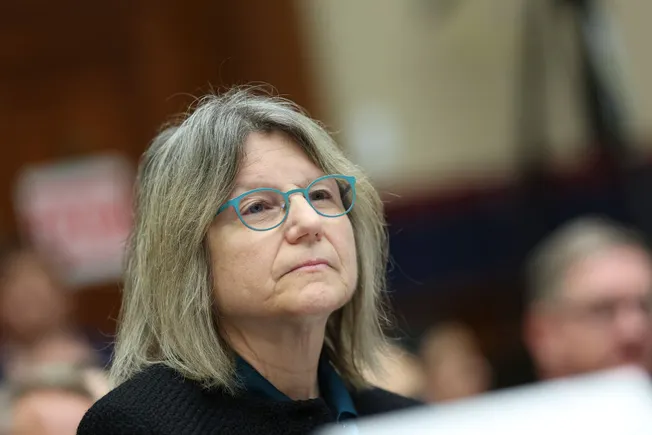
The Massachusetts Institute of Technology on Friday rejected the Trump administration’s proposed compact that offers priority for federal research funding in exchange for making sweeping policy changes.
MIT is the first institution to formally reject the compact, which the administration sent to nine research universities on Oct. 1.
The nine-page compact’s wide-ranging terms include freezing tuition for five years, capping international student enrollment to 15% of the institution’s undergraduate student body, and changing or eliminating units on campus that “purposefully punish, belittle, and even spark violence against conservative ideas.”
MIT already meets or exceeds many of the proposed standards in the compact, university President Sally Kornbluth said in a Friday message to U.S. Education Secretary Linda McMahon. However, the compact includes other principles that would restrict the university’s free expression and independence, Kornbluth said.
“And fundamentally,” Kornbluth added, “the premise of the document is inconsistent with our core belief that scientific funding should be based on scientific merit alone.”
The White House did not immediately respond to a request for comment on Friday.
Kornbluth’s letter to the Trump administration
In her message, which she shared publicly, Kornbluth pointed to several MIT policies that she said were already in step with the compact.For instance, the proposed agreement dictates that colleges mandate standardized testing for applicants, and MIT reinstated its SAT and ACT requirement in 2022 after pausing it due to the coronavirus pandemic.
Similarly, Kornbluth noted that MIT limits international enrollment to about 10% of its undergraduate population — below the Trump administration’s proposed cap of 15%.
The compact also focuses on affordability, including through a standard that would require colleges with large endowments to not charge tuition to students enrolled in “hard science programs,” with exceptions for those from well-off families.
Kornbluth shared MIT’s own affordability initiatives, including not charging tuition to incoming undergraduate students from families earning under $200,000. She noted that 94% of undergraduate degrees awarded at MIT are in science, technology, engineering and mathematics fields.
But the MIT president opposed other compact provisions over concerns that they would restrict free expression at the university — which she underscored as a core MIT value.
“We must hear facts and opinions we don’t like — and engage respectfully with those with whom we disagree,” Kornbluth wrote.
The compact’s terms have raised alarms from free speech advocates since becoming public.
Tyler Coward, lead counsel for government affairs at the Foundation for Individual Rights and Expression, said that the compact contains troubling language, pointing to the provision to eliminate departments that “belittle” or “spark violence” against conservative beliefs.
“Let’s be clear: Speech that offends or criticizes political views is not violence,” Coward wrote in an Oct. 2 statement. “Conflating words with violence undermines both free speech and efforts to combat real threats.”
Widespread opposition to the compact
The eight other colleges that received the compact are Brown University, Dartmouth College, the University of Arizona,the University of Pennsylvania, the University of Southern California, the University of Texas at Austin, the University of Virginia and Vanderbilt University.
The compact has drawn widespread opposition from employee groups and students.
Faculty senates at two institutions — the University of Arizona and UVA — have voted to oppose the agreement. It has also drawn campus protests and petitions to urge administrators to reject the proposal.
Democratic state lawmakers have likewise pushed colleges to reject the agreement.
“This is not a partnership,” the Virginia lawmakers said in an Oct. 7 letter to UVA leadership. “It is, as other university leaders have aptly described, political extortion.”
As of Friday afternoon, other university leaders had yet to publicly share whether they plan to agree to or reject its terms, though some of their statements allude to concerns with it. The Trump administration has demanded feedback on the proposed compact by Oct. 20 and a signature by Nov. 21
At Dartmouth College, President Sian Beilock said in an Oct. 3 statement that she would always guard the institution’s “fierce independence.”
“You have often heard me say that higher education is not perfect and that we can do better,” Beilock wrote in a message to the Dartmouth community. “At the same time, we will never compromise our academic freedom and our ability to govern ourselves.”
And Penn President J. Larry Jameson said the university “seeks no special consideration.”
“We strive to be supported based on the excellence of our work, our scholars and students, and the programs and services we provide to our neighbors and to the world,” Jameson wrote in an Oct. 5 statement.
However, he said he was seeking input from Penn stakeholders, including the trustee board, the faculty senate, deans and university leadership.
The framework lays out a clear vision for how colleges and universities can help students connect their education to meaningful careers. It calls for guidance that is equity-centered, driven by student agency, and informed by evidence and labor market data.
“By centering education-to-career guidance on equity, student agency, and evidence, these principles strengthen ACE’s work in shaping responsive policy, supporting nontraditional learners, and advancing flexible, career-aligned pathways,” said ACE President Ted Mitchell.
As public skepticism about the value of a college degree persists, the number of students who expect to earn one is also on the decline.
Between 2002 and 2022, the percentage of students surveyed who said they expected to earn a bachelor’s degree or higher fell from 72 percent to 44 percent, according to a research brief the Pell Institute for the Study of Opportunity in Education published Tuesday.
During the same time frame, the percentage of first-generation students who aspired to earn a degree fell from 60 percent to 33 percent; among students with at least one college-educated parent, degree aspirations dropped from 83 percent to 53 percent.
“The decline in college aspirations among first-generation students is deeply concerning,” Kimberly Jones, president of the Council for Opportunity in Education, which oversees the Pell Institute, said in a news release. “These students have long faced systemic barriers to higher education, and this data underscores the urgent need for renewed investment in outreach, support, and affordability—including through programs like TRIO and the Pell Grant.”
But in his quest to shrink the size of the federal government, President Donald Trump has proposed cutting funding for TRIO—a set of federally funded programs that support low-income, first-generation college students and students with disabilities as they navigate academic life.
Major cuts to the federal government also mean it will be harder to produce reports like the one the Pell Institute released this week. That’s because such studies rely on data from now-discontinued longitudinal surveys that were administered by the National Center for Education Statistics; the Trump administration fired all but a handful of NCES employees earlier this year.
“Without the continuation of these programs, it will be much harder to track the progress of high school, first-generation, and college students and to learn how to improve education outcomes,” Sean Simone, vice president of research at COE, said in the news release.
The economics of higher education are tricky. It’s a labour-intensive industry, and generally speaking the cost of producing labour-intensive goods will always increase faster than the price of producing capital intensive goods, because the latter have more scope for increasing productivity. That’s not a problem if you are a public institution in a country with bottomless pockets, or if you are a prestigious private institution with almost unlimited ability to raise prices. If you’re among the other 99 percent of the world’s institution, though, you have to find ways to balance rising costs with new sources of income. But every money-making scheme comes with problems…and costs! So which one to choose?
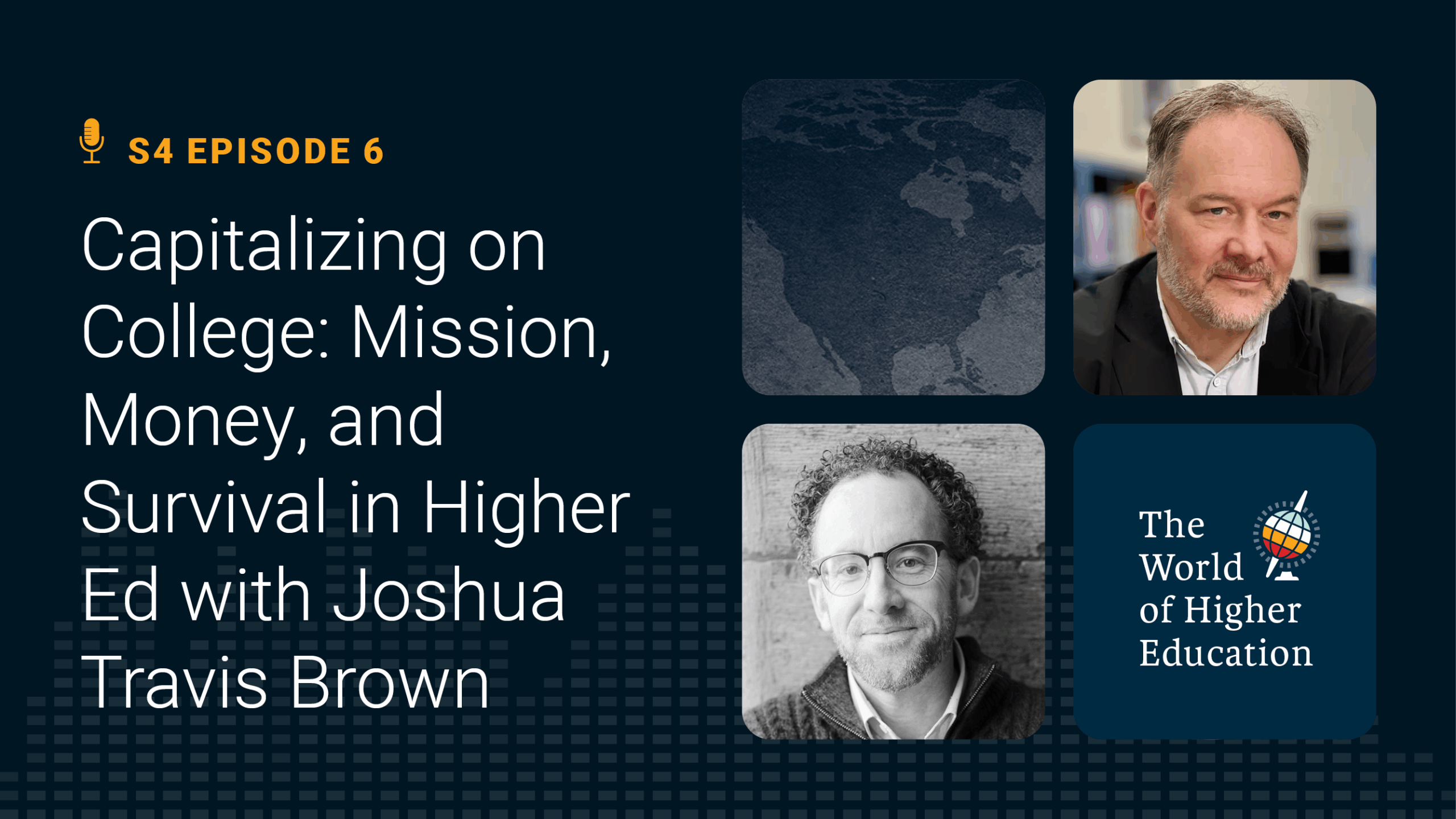
Today’s guest is Joshua Travis Brown, from Johns Hopkins University’s School of Education. He’s the author of a new book called Capitalizing on College: How Higher Education went From Mission-Driven to Margin-Obsessed, which follows the fortunes of a number of institutions who try out different strategies to try to keep themselves afloat. Some try to double-down on a historic place-based residential mission and charge higher fees; others try to find ways to generate revenue that can cross-subsidize their historic place-based activities. But what’s particularly intriguing about this book is that his subject institutions are all religious institutions. Not only does that mean no core public funding: it means that decisions about how to find new business lines all really have to pass a test of God vs. Mammon.
This really is one of the best higher education books of the year and I was so pleased we could get Josh on the show. I won’t spoil the fun any more: here’s Josh.
The World of Higher Education Podcast Episode 4.6 | Capitalizing on College: Mission, Money, and Survival in Higher Ed with Joshua Travis Brown
Transcript
Alex Usher (AU): Josh, your book is one of my favorite kinds of higher education books—lots of real, if disguised, institutional case studies. I get the impression that what you were trying to do was look at different financial strategies to cope with the phenomenon of ever-rising costs in higher education—Baumol’s disease, basically. How did you choose those eight institutions for your case studies? And why did you focus only on religious institutions, which I thought was a really intriguing choice?
Joshua Travis Brown (JTB): Thanks, Alex. That’s an excellent question to open with. I was looking around at the world, and a lot of what we in higher education base our norms on are the best practices maintained by elite institutions—those that accept only about five to nine percent of applicants. But then there’s the other ninety-one to ninety-five percent of institutions that don’t have those kinds of resources, and their world looks radically different.
One group I focused on are what we call tuition-driven institutions in the American sector. That’s actually a very diverse set of schools that, I’d argue, form the backbone of American higher education—at least in terms of its diversity. These include Hispanic-serving, minority-serving, HBCUs, predominantly Black, religious, women’s, Asian American, vocational, and regional colleges, among others.
Within that really rich and diverse group, the largest by far are the religious colleges and universities in the United States. There are roughly a thousand of them—Protestant, Catholic, some Buddhist, Mormon, Muslim, and Jewish institutions as well. I chose to sample primarily from the Protestant group. And the reason for that choice is that I was interested in behavior, not belief.
The perspective I argue is most valuable is one that looks at behavior that cuts across institutional types, rather than staying within silos and making what I’d call an erroneous assumption that, “This sector operates this way, and that sector operates that way.” I argue instead that everyone is in competition with one another—and to truly understand the sector, you have to look at behavior across all types.
AU: Based on your work at these institutions, you developed a four-part typology with four types of institutions. You call them those following a Traditional Strategy, a Pioneer Strategy, a Network Strategy, and an Accelerated Strategy. How did you come up with those four? Were they in the back of your mind when you selected the cases, or did they emerge organically from the research?
JTB: This is purely grounded theory—straight from the data. What I’m arguing here is that I’m looking within what I call the “missing middle.”
A lot of higher education research tends to focus on what I call the bookends—students on one end, and government or the state on the other. But we don’t do a great job, as researchers, of really diving in to hear the voices of those actually running and leading the institutions.
So as I started to look at the data, pull out themes, and group them into buckets, these four strategies emerged. There was even a fifth one beginning to appear, which I called Accelerated Networks—where the accelerated institution was trying to crack the code to move to the next level of market-oriented behavior. So yes, they surfaced organically from the research.
AU: Let’s talk about that Traditional Strategy. What does it entail? What kind of resources does it take to implement? And how easy is it to, you know, for lack of a better word, win using this strategy?
JTB: The Traditional Strategy is your typical higher education institution that values prestige. They’re constantly looking to the elites.
There’s a whole sector of “little Ivys,” “public Ivys,” and “mini Ivys” that sit just below the Ivy League institutions, and they’re really trying to leap forward into that group. These institutions not only value prestige, but they also operate under the assumption of an in-person education. As one president told me, “You come to a tradition.” He repeated that phrase several times. These institutions rely heavily on building their brand, climbing the rankings, ensuring their athletics are top-notch, and gaining national exposure through sports. They want to become household names.
The problem for traditional institutions—and really, for all institutions—is that the residential, on-campus, in-person model of higher education in the United States operates at a deficit. It must be subsidized.
For the traditional institutions, that subsidy comes primarily from endowments—the spinoff revenue that supports the residential model. And the key takeaway from the book, across all these strategies, is that everyone is trying to subsidize the residential core. What differs is how they do it.
The traditional model depends on philanthropists, wealthy donors, and the prestige that fills their sails. They can call on endowments of two, three, four, five, six, even eight hundred million dollars—and the revenues those spin off—to make their operations sustainable. Or at least, so they think.
AU: Tell us about the second strategy then. You’ve got a Pioneer Strategy. What does that mean—and where do those subsidies come from, if we can put it that way?
JTB: From this point forward in the book, everything turns entrepreneurial. These institutions no longer look to endowments—because they don’t have them. So, for the next six schools in the book, every president is basically saying, “I don’t have an endowment. I need to find margins—and I need to find them somewhere.”
And what they do is turn to students. That’s where they find their margins.
In the Traditional Strategy, as I mentioned earlier, the assumption was that you come to the institution for the tradition—to receive it, to be inculcated into it. The Pioneer Strategy turns that idea on its head. These institutions ask, what if we took the classroom to the students?
That’s the innovation here. Every one of the next strategies has some kind of innovation at its core. In many ways, this book is a story—or a playbook—of innovation. That’s what I hope readers take away: not just the strategies, but the innovative practices themselves.
So, these institutions took classrooms to hotels. They took classrooms to schools and high schools, to shopping malls, to military bases. They went to where the customer was. The classroom became reconceived—portable. And they picked a type.
I take readers through three different types in that chapter, and then show how they replicate it. Whatever region they’re in, what you end up seeing is a giant branch campus model built around that one specific type.
You’ve got multiple sites, but all following the same formula. And all of the revenue—say, a 20% profit margin—from those branch campuses flows back to the core institution. That’s how they rebuild the core.
Over the course of a decade, they can raise anywhere from two hundred to five hundred million dollars—and they use that money to physically transform and rebuild the residential campus.
AU: But all those markets you’re talking about—it’s really just mature students, right? Are there other pioneer markets you can go to besides mature students?
JTB: The principle here is that these institutions were first movers. They were the first movers in adult education at the time.
For readers today—if I’m a leader picking up this book and asking, “What’s the takeaway here?”—I’d say: think badgification, think microcredentials. Think of some new market that’s just about to spin off or is moments away from being spun off.
Anyone who goes all in on that kind of emerging market would be a pioneer institution. They’d be adopting the Pioneer Strategy for that new market—just as these institutions did about a decade ago.
AU: Does it work? I mean, it takes money to make money, right? You’ve got to rent the hotel rooms, pay the professor to go there and teach. It sounds like you have to be extremely margin-conscious—and at a certain point, it’s easy to overshoot, to overcommit to these kinds of things. So how many of the institutions you looked at actually managed to reinforce the residential core?
JTB: They did—but by the time I arrived on campus, the folks in the Traditional bucket were saying, “Oh my gosh, we need a new strategy.”
Meanwhile, the folks at the Pioneer institutions were saying, “Hey, this has worked for about five to seven years, but the competition is so intense it’s eating into our margins. Other institutions are moving into our space. It’s getting really hard to recruit. We need to add a new market.”
And that’s the principle behind the Network Strategy. Rather than having one type, they add multiple types. That’s the big difference between the two: the Pioneer Strategy has one type with multiple sites, while the Network Strategy has multiple types, multiple sites—and it’s global.
AU: Let’s talk now about that Network Strategy. Just as you were finishing there, I think you were saying the difference between the Pioneer and Network strategies is how many new markets you go after. Is it more than that, or is that really the key distinction between the two?
JTB: No, that’s the big difference—because again, what we’re really trying to figure out here is: how are you subsidizing your residential model? It never makes enough money on its own. So where are you finding those margins? And those margins always come from the periphery.
For the Network Strategy, one of the presidents I interviewed described what he called his tabletop strategy for running the institution. He said, “The residential core is the tabletop. All of my peripheral markets—whether online, international, transfer, or adult education—those are the legs. And I’m constantly looking for new legs, new sources of revenue, to support this tabletop.” He went on to say that the tabletop—the residential core—is what gives legitimacy to the entire model. You can’t do this without the tabletop.
And that’s the key difference between the Network Strategy and something like the University of Phoenix. Phoenix was essentially one giant leg. What they lacked—and what people criticized them for—was legitimacy. They didn’t look like a traditional college, and they weren’t serving typical students.
That’s why this book and this perspective are so valuable: when nonprofit institutions start going after the same students or adopting some of the same practices as for-profit institutions like Phoenix, the lines begin to blur. To really understand what’s happening, you have to look across types and sectors—and focus strategically on the behavior itself.
AU: Is that an easier strategy to pull off than the Pioneer one? I mean, it sounds harder to me—but it might also have bigger rewards, since it spreads the risk across different types of markets.
JTB: That’s absolutely key, Alex. One of the presidents I interviewed put it exactly that way. He said, “I’m trying to build a stock portfolio of enrollment. If one sector goes down, I still have another three or four sectors over here, so a drop in one leg isn’t going to sink the ship.” What they were striving for was balance. But both institutions, in their enthusiasm for adding new legs, made a critical mistake—they actually ended up creating a second tabletop.
They either absorbed another institution or built a massive campus overseas—in one case, in Asia. And instead of funneling all of their margins back to the residential core, they had to start directing them to these peripheries, to that second tabletop.
It became really complex. Morale declined. And by the time I arrived on campus, they were looking for a new kind of market—something they could take to scale. And that’s what the next school managed to crack.
AU: Let’s talk about that last strategy—the one you call the Accelerated Strategy. It’s an amazing case study, especially because it’s a religious institution. As you put it, it’s where God and Mammon really start to duke it out.
This is an institution that seems to have crossed the line from being merely margin-conscious to acting like a full-on for-profit college. And that’s wild for a faith-based organization. Tell us about this institution—and how going down this route changes a university.
JTB: You know, what’s crazy is that I changed all the names of the actual schools in the book—but when a school named its competitors, I left those in.
So as I’m interviewing the leaders at the accelerated institution, they’re saying, “Hey, we’re like ASU. We’re like Penn State. We’re like the Maryland system. We’re like Western Governors, UCF, Florida, Southern New Hampshire University.” And they viewed that entire group of schools as their competitors. The way they took their model to scale was through process and product innovation.
I was sitting across from the provost, and he told me, “I had a vision. I pictured an old country store. Down one side of the store was one product, and down the other side was another product—and that’s all we had to sell.” Those two products were an MBA and an interdisciplinary studies degree. At that time, if you wanted to earn a degree online from this institution, those were your only two options. But then he had this transformative idea. Over the course of a single summer, he took roughly 35 to 80 residential courses and converted them for online delivery. Within three to six months, that old store suddenly had 35 different products on the shelves.
And here’s the key innovation: everyone else at the time was selling online classes. This institution became one of the first—outside of Phoenix—to sell online degrees. They fundamentally shifted the product, and that move blew up their market. Virtually overnight, they went from 8% to 42% growth.
AU: Wow. But surely it changed the culture of the campus?
JTB: It did. People talked about the tension between the residential and online sides of the institution. The student population ballooned so dramatically that it went from being majority residential to, essentially, for every ten online students, there was one residential student. It radically transformed the institution. They were able to hold costs flat.
Now, the other entrepreneurial schools I studied were funneling their margins back into overhauling the residential campus. That’s what I call margin capitalization. Instead of looking for donors or venture capitalists, they turned to students.
This particular school made so much money—just north of two hundred million dollars a year—that they were not only able to completely rebuild their campus, but also to put hundreds of millions into their endowment.
What this institution effectively invented is a new form of philanthropy that I call margin philanthropy. Instead of relying on alumni—graduates who go out into the world and eventually give back—you’re leveraging the loans of students who are currently enrolled. They become your new philanthropists.
The risk of construction and the growth of the endowment aren’t borne by the institution anymore; they’re borne by the students themselves—who walk away with a degree in one hand and a student loan, anywhere from fifty to a hundred thousand dollars, in the other.
AU: The problem of ever-rising costs—Baumol’s disease, basically—is one that plagues every educational institution. Only by spending more money every year can you hope to stay in place. But achieving that means raising more money every year.
And I read your book as being fairly pessimistic about any institution’s ability to sustain that in the long run. Right? You can have all the strategies you want to increase revenue, but they all require hiring more staff, becoming more complicated—and then Baumol just reappears further down the line. Is that a fair summation? Do you think one of these strategies is actually more promising than the others? Or does Baumol’s law come for all of us eventually, no matter what?
JTB: I think one of the big takeaways from the book is that this sector is constantly marching upward in its market behavior.
When I arrived on these campuses, everyone was saying, “We’ve got to sustain. We need more. We need more revenue. We need more margins.”
Now, while Baumol, as an economist, has one way of looking at the world, I don’t think it’s entirely accurate. He was, after all, an economist from several generations ago. What’s spun out of economics since then is the field of strategy and management, which focuses more on the agency of actors within organizations.
Those working in strategy and management began to explore that agency—to explain the world in a more nuanced way. And that’s where this book differs from Baumol’s framework: it’s grounded in organizational theory, strategy, and management.
What you end up seeing—and what the book focuses on—is this: we often hear about public policies, particularly from the Federal Reserve in the U.S., that are based on the idea that if you increase competition and give students choice, the natural outcome will be higher quality. As institutions compete, quality should improve—at least in theory.
But what this book shows is that when you incentivize students to be more self-interested and to make market-based choices, you also incentivize institutions to be more self-interested.
That’s why we see institutions going after student loans and seeking margins from students—they’re also operating in a highly competitive market.
So, what this book illustrates are the trade-offs between mission and money that college leaders are forced to make when we choose to design a national education system based on market principles of competition. And that, I’d contend, is a challenge much bigger than Baumol himself.
AU: You’ve focused obviously on one group, the non–research-intensive private institutions, and a particular sub-sector within that. How much can you generalize from this book to other types of institutions—secular ones or public ones?
JTB: That’s a great question. The reason I narrowed the focus so tightly is that, in case studies, what you want to do is control for noise. So rather than mixing all types of tuition-driven institutions together, I chose one type and looked at the behavior across those cases.
But I would contend that because I’m really examining a single phenomenon—tuition—and specifically two questions: how do students get their money, and what do institutions do with it?—this framework is broadly applicable. And honestly, in the last six months especially, I think everyone is becoming tuition-driven.
We’re seeing decreases in research funding revenues, decreases in endowment revenues because of higher taxes. This morning’s headline from the Secretary of Commerce said they want to go after 50% of all patent revenue. And just yesterday, it was announced that all MSI funding would be decreased. The only stable thing left is tuition revenue.
What Capitalizing on College offers is a roadmap for how these institutions managed to survive in a highly competitive environment—and now everyone is entering that same space. So yes, I believe it’s highly generalizable, because this is the roadmap forward. This is the environment we’re heading into.
AU: Joshua Travis Brown, thank you so much for joining us today.
JTB: Thanks. A pleasure being here.
AU: And that just leaves me to thank our excellent producers, Sam Pufek and Tiffany MacLennan—and of course, you, our listeners and readers, for joining us.
If you have any comments or questions about today’s podcast, or suggestions for future episodes, please don’t hesitate to get in touch at [email protected].
Join us next week when our guest will be Luiz Augusto Campos, professor of sociology and political science at the Instituto de Estudos Sociais e Políticos at the State University of Rio de Janeiro. He’s the co-author of a new book on the effects of racial quotas in Brazilian universities. Join us next week. Bye for now.
*This podcast transcript was generated using an AI transcription service with limited editing. Please forgive any errors made through this service.Please note, the views and opinions expressed in each episode are those of the individual contributors, and do not necessarily reflect those of the podcast host and team, or our sponsors.
In a recent Forbes column, Lumina Foundation president Jamie Merisotis reminded us that degrees must do more than certify coursework—they must create real value for students and employers. In Indiana, where Sagamore Institute’s 2040 workforce economy study and the Indiana Commission for Higher Education warn of falling college-going rates, this challenge is especially urgent.
The Founder’s College model confronts a growing national conversation: does the U.S. need more pathways beyond the traditional four-year degree? Institutions across the country are piloting three-year bachelor’s options and embedded two-year credentials to align faster, more affordable education with urgent labor market shortages while maximizing current infrastructure to meet needs.
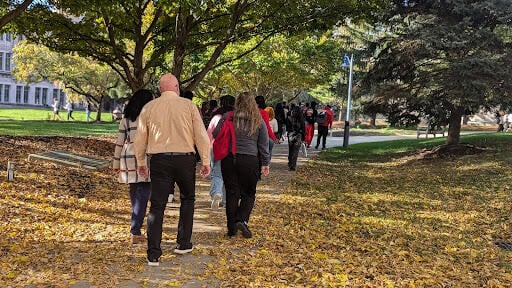
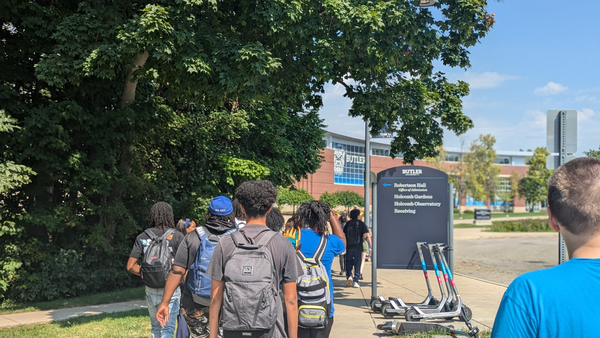
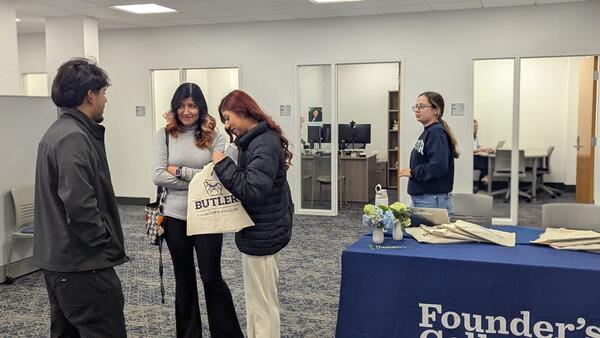
Butler University has placed itself in this conversation with uncommon clarity. At Founder’s College, students complete a two-year associate degree in six structured semesters, front-loading the critical skills usually acquired in a student’s junior and senior years—career motivation, professional identity and workforce readiness. This compressed pathway is not cut-rate—it is deliberately sequenced with degree programs tied to Classification of Instructional Programs codes and O*NET occupational standards synced to NACE competencies, ensuring that every credential reflects real career demand in Indiana and beyond.
A Workforce-Aligned, Equity-Driven Blueprint
The Indianapolis labor market, seeing a 3.1 percent GDP growth, underscores the need for this approach (Indiana University News, 2004). The monetary value of all that is produced in the state is outpacing state and national averages. At the same time, in-demand industries—especially health care, professional services, technology and advanced manufacturing—are confronting skill mismatches. Employers are offering jobs, yet Indiana’s college-going rate has slipped to historic lows, leaving pipelines partially empty (Indiana Business Research Center, 2024). The Indiana Department of Workforce Development reports wages are rising, up 4.1 percent in the metro area in 2025 according to InContext Indiana.
Institutions like Butler University are not blind to the demographic challenges either. A declining birth rate, an aging workforce, admissions redesigns and disruptive technologies such as AI intensify the demand for midlevel, adaptable credentials to reskill workers quickly.
Here is where Founder’s College shifts the ground. It builds wraparound supports—career coaching, social workers, family inclusion and embedded apprenticeships—into the core of its structure rather than leaving them at the margins. By lowering tuition costs to nearly debt-free levels for students and building in work-integrated experiences, Founder’s College creates a system where opportunity is the design, not the exception.
Global Research, Local Application
Butler’s experiment does not arise in a vacuum. It mirrors and operationalizes the findings of major policy reports:
A 2024 Organisation for Economic Co-operation and Development report recommends expanded investment in skills and high-quality education to combat slowing productivity growth coupled by aging, digitalization and climate changes. It stresses repeatedly that the U.S. is falling behind peer nations in connecting academic programs to workplace readiness, particularly in apprenticeships and microcredentials. The Founder’s College requirement that every student engage in structured, mentored, for-credit work experience directly addresses that gap.
The America AI Action Plan 2025 highlights the accelerating impact of artificial intelligence on the skills profile of jobs. Handshake reports increase in generative AI usage too. While OECD 2025 reminds us that there is a changing landscape requiring adaptability, complex interdisciplinary problem-solving and liberal arts and professional academic digital fluency are no longer optional. At Founder’s College, technical writing studios, digital credentialing, industry certification and technology integration prepare students to thrive in an AI-mediated workplace.
FutureEd research from 2023 emphasizes transparency in skills attainment and the use of short-term, stackable credentials as levers of equity. By awarding credentials midjourney and maximizing learning mobility, a call from the LEARN Commission—not just at degree completion—Founder’s College signals value to students, employers and families at every step.
Taken together, these frameworks make Founder’s College not just a local response to Indiana’s challenges, but a globally informed model tuned to the future of work.
Founder’s College directly widens the workforce pipeline—by lowering the cost barrier, embedding workforce credentials and signaling to families that college is not just accessible, but immediately useful.
A Case Study and a Challenge
Across the United States, demographic and migration patterns are reshaping where and how higher education demand will grow. The U.S. South, with its younger, more racially and ethnically diverse populations and steady in-migration, stands poised to lead the nation in enrollment growth through 2035. In contrast, much of the Midwest faces different headwinds: smaller cohorts of college-age students, declining K–12 enrollments and out-migration of young families.
Rather than a simple story of winners and losers, this shift underscores the divergent opportunities that regions face. In the South, higher education systems will need to expand capacity, affordability and culturally responsive pathways that meet the aspirations of new, more diverse learners. In the Midwest, the challenge is not only to stabilize enrollment but to re-engage adults with some college, no credential and to strengthen the link between education and regional economic renewal.
Nationally, forecasts for the next decade suggest that the future of higher education will depend on how well institutions adapt to a shrinking pool of traditional-age learners while expanding access for new groups, including working adults and first-generation students. Recruitment, funding models and program design will need to evolve accordingly.
Using the 2020 U.S. Census as a baseline, when 43 percent of Americans identified as people of color and more than half of minors identified as nonwhite, it’s clear that the next generation of university-bound students will be more multiracial and more globally connected than ever before. Their appetite for education will be shaped by digital fluency, early exposure to STEM and environmental learning, and a social consciousness steeped in sustainability, mental health and civic responsibility.
For Indiana, where college-going rates are at historic lows, this is more than institutional innovation. Founder’s College is therefore both a case study and a challenge.
To other universities: Reimagine the traditional degree in ways that speak to today’s students and employers.
To states: Invest in models that don’t just get more students in the door, but get them to good jobs, faster.
And to students themselves: Butler is showing you that higher education is within reach, aligned with your life and positions you for thriving success.
As Merisotis wrote, the future belongs to institutions that make degrees more valuable. Indiana may have just found its vanguard.
This audio is auto-generated. Please let us know if you have feedback.
Faculty groups and employee unions are urging universities to reject a proposed compact from the Trump administration that would trade control over their policies for preferential access to federal research funding.
Of the nine colleges that received the offer, at least two faculty senates — the University of Virginia and the University of Arizona — voted to oppose the deal and pushed their institution’s leadership to reject it. Other instructors and employee groups have also decried the compact.
Leaders at the colleges have thus far issued mostly noncommittal responses, with none publicly announcing they would decline the deal as of Wednesday afternoon.
Along with UVA and the University of Arizona, the Trump administration sent the compact to Brown University, Dartmouth College, the Massachusetts Institute of Technology, the University of Texas at Austin, the University of Pennsylvania, the University of Southern California and Vanderbilt University.It gave the institutions until Oct. 20 to respond with feedback and up to Nov. 21 to sign.
Faculty groups weigh in
At a Monday meeting, the University of Arizona’s faculty senate approved a resolution opposing the compact in a 40-8 vote, with one member abstaining.
The resolution called the compact a danger to “the independence, excellence, and integrity” of the institution and the constitutional rights of the campus community.
“Others wiser than I have called it recently a trap, a poisoned apple,” Faculty Chair Leila Hudson said before the vote. “Federal funds are not a drug that we need a quick fix of to be forever extortable.”
Hundreds of miles east, faculty at the University of Virginia similarly rebuked the Trump administration’s proposal.
The UVA faculty senate on Friday, in a 60-2 vote with 4 abstentions, approved a resolution whose preamble called the compact a danger to the university that runs antithetical to its mission and traditions. It also said the deal “likely violates state and federal law.”
At least one law firm, Ropes & Gray, has said the compact raises legal questions, adding that it “does not explain the statutory or other basis that authorizes the Administration to give preferential access to federal programs.”
The law firm also said the compact used vague and broad language and doesn’t explain key elements of the proposal. For instance, it threatens to strip federal funding from institutions that sign and then violate its terms — but it doesn’t explain which dollars could be revoked.
“Would all federal benefits — research dollars and beyond — be affected by an instance of non-compliance, or would only those additional or new federal benefits that have accrued as a result of the institution having signed onto this Compact (the scope of which is unclear as well) be affected?” it posited in a Wednesday analysis.
A second round of deals?
Two of the institutions that received the offer — Penn and Brown — have previously struck deals with the Trump administration.
Penn President J. Larry Jameson said Sunday that he would seek input on the compact from the campus community, including Penn’s trustees and faculty senate.
“The long-standing partnership with the federal government in both education and research has yielded tremendous benefits for our nation. Penn seeks no special consideration,” he said in a statement.
Jameson added that he would keep five factors front of mind: “freedom of inquiry and thought, free expression, non-discrimination, adherence to American laws and the Constitution of the United States, and our own governance.”
In March, the Trump administration suspended $175 million of Penn’s research funding over its prior policy permitting transgender women to compete in women’s sports.The U.S. Department of Education formally alleged in April that the university’s policies had violated Title IX, a law banning sex-based discrimination at federally funded institutions.
In July, Penn struck a deal with the Trump administration. The university agreed to follow the administration’s new interpretation of Title IX, revoke swimming titles and awards that had previously been won by transgender women, and write personalized apology letters to impacted cisgender athletes who were on the women’s swimming team.
Among other things, agreeing to this compact would restrict university employees from speaking out on political issues, limit the enrollment of foreign students, and once again require the university to essentially deny the existence of transgender students.
Steven Brown
Executive Director, American Civil Liberties Union of Rhode Island
Following Jameson’s response this week, a petition opposing the compact organized by two Penn employee unions garnered some 1,300 signatures as of Wednesday afternoon. The university’s American Association of University Professors chapter is also promoting an Oct. 17 campus rally to protest the compact.
Brown has thus far not issued a public statement on the proposed deal and did not respond to a request for comment Wednesday. But the American Civil Liberties Union of Rhode Island urged Brown President Christine Paxson to stand against the Trump administration.
“Among other things, agreeing to this compact would restrict university employees from speaking out on political issues, limit the enrollment of foreign students, and once again require the university to essentially deny the existence of transgender students,” Steven Brown, executive director of the group,said in an Oct. 3 letter. “The compact makes no serious attempt to hide its real intent.”
The civil rights organization drew parallels between the Trump administration’s latest proposal and Brown University’s settlement with the federal government in July. The university agreed to pay $50 million to state workforce development organizations and give the White House oversight of its admissionsin exchange for a restoration of federal funding frozen over claims related to antisemitism and other civil rights violations.
“We believe that your university’s previous capitulation has simply empowered and emboldened the Trump administration to demand more,” it said. “It is only by sending a clear, strong, and visible message that these attacks on the mission of higher education will not be tolerated that one can ever hope to stop them.”
‘A devil’s bargain’
Dartmouth President Sian Beilock issued a short statement about the compact on Oct. 3.
“I am deeply committed to Dartmouth’s academic mission and values and will always defend our fierce independence,” she said. “You have often heard me say that higher education is not perfect and that we can do better. At the same time, we will never compromise our academic freedom and our ability to govern ourselves.”
In a joint op-ed, two faculty members from Dartmouth and Vanderbilt called the compact “a devil’s bargain.”
“Any institution that yields to these broad and intrusive demands would give up its legal rights and would forever be subservient to the whims of the government,” wrote Vanderbilt professor Lisa Fazio and Dartmouth professor Brendan Nyhan. “If the Justice Department decides that a signatory violated the vague terms of the agreement, that university would be forced to return all federal money it received in that year — along with any private donations at donor request.”
Vanderbilt has not commented on the compact publicly, but President Daniel Diermeier told the student newspaper that the university is reviewing the offer.Diermeier has also previously aligned with some of the Trump administration’s higher education positions, such as supporting institutional neutrality.
An anti-compact petition organized by Vanderbilt Graduate Workers United had over 920 signatures, including from students, active and former employees, alumni and community members, as of Wednesday afternoon.
“This compact represents nothing other than a fascist takeover of higher education in the United States,” the petition said. “And we will not allow it to happen.”
The graduate workers union said it intends to deliver the petition in-person to the administration.
Recently published data from the educational consulting group EAB shows that first-year students at two-year colleges want help connecting with peers on campus; nearly half reported dissatisfaction with their social lives since starting college. The report outlines ways to create engagement and other priorities for community college students.
Community college in context: First- to second-year retention is the greatest predictor of completion for students enrolled in a two-year degree program, according to data from the National Student Clearinghouse Research Center.
Community colleges are among the most diverse higher ed institutions, with students more likely to be working adults, parents and first-generation learners compared to their four-year peers.
The EAB data identifies key trends in first-year community college students’ experiences and how institutions can improve their retention.
Methodology
EAB’s survey included responses from over 12,600 first-year college students, including 1,531 enrolled in community colleges. The survey was fielded in February and March 2024.
The data: When asked to name the most disappointing elements of their college experience so far, students indicated they felt disconnected from the campus community. Forty-two percent of respondents said their social life was a top disappointment, followed by not making friends or meeting new people. An additional 35 percent of students said they felt as though they didn’t belong.
This mirrors results from a 2025 survey conducted by Inside Higher Ed and Generation Lab, which found that only 20 percent of two-year students rated their sense of social belonging at college as above average or excellent, with the greatest share of respondents indicating they have an average sense of belonging (49 percent). By comparison, 29 percent of four-year students said they had an above average or excellent sense of belonging.
EAB’s report recommends that two-year colleges create small interventions to support students’ desire for community, including arranging drop-in events, hobby groups or peer mentorship programs. Making clubs easier to join through flexible meeting times or virtual meetings can also accommodate learners’ busy schedules, according to the report.
One-third of respondents to EAB’s survey said they were disappointed by classes and academics, and one in five students said faculty had disappointed them.
EAB’s community college survey also found that 32 percent of respondents had experienced bias or exclusion in some capacity since starting college, with the greatest share of respondents saying they faced criticism for their physical appearance or for the high school they attended. The results indicate a need for mechanisms for students to report harassment and connect with mental health supports, according to EAB’s report.
When asked what a “safe campus” means to them, the greatest share of community college respondents selected sufficient support for mental health and wellness (67 percent) and low or no property crime (67 percent). A similar number indicated that low incidence of sexual assault was key to creating a safe campus environment (66 percent).
Mental health concerns are one of the top reasons students of all backgrounds leave higher education, but community college students are even more vulnerable because they can be less financially secure or have fewer resources to address poor mental health.
However, community college counseling centers often have smaller staffs and serve only a fraction of their enrolled students; 2025 data from the Association for University and College Counseling Center Directors found that only 5 percent of all community college students receive support from their counseling center.
When asked what best represents the value of higher education, successful job placement after graduation was the top choice among community college students (44 percent), followed by availability of scholarships (42 percent). Internships, co-ops and active learning experiences (33 percent) were less important than generous financial aid awards (38 percent) and moderate tuition prices.