Tag: college

  • Higher education postcard: Grey College, Durham

    Higher education postcard: Grey College, Durham

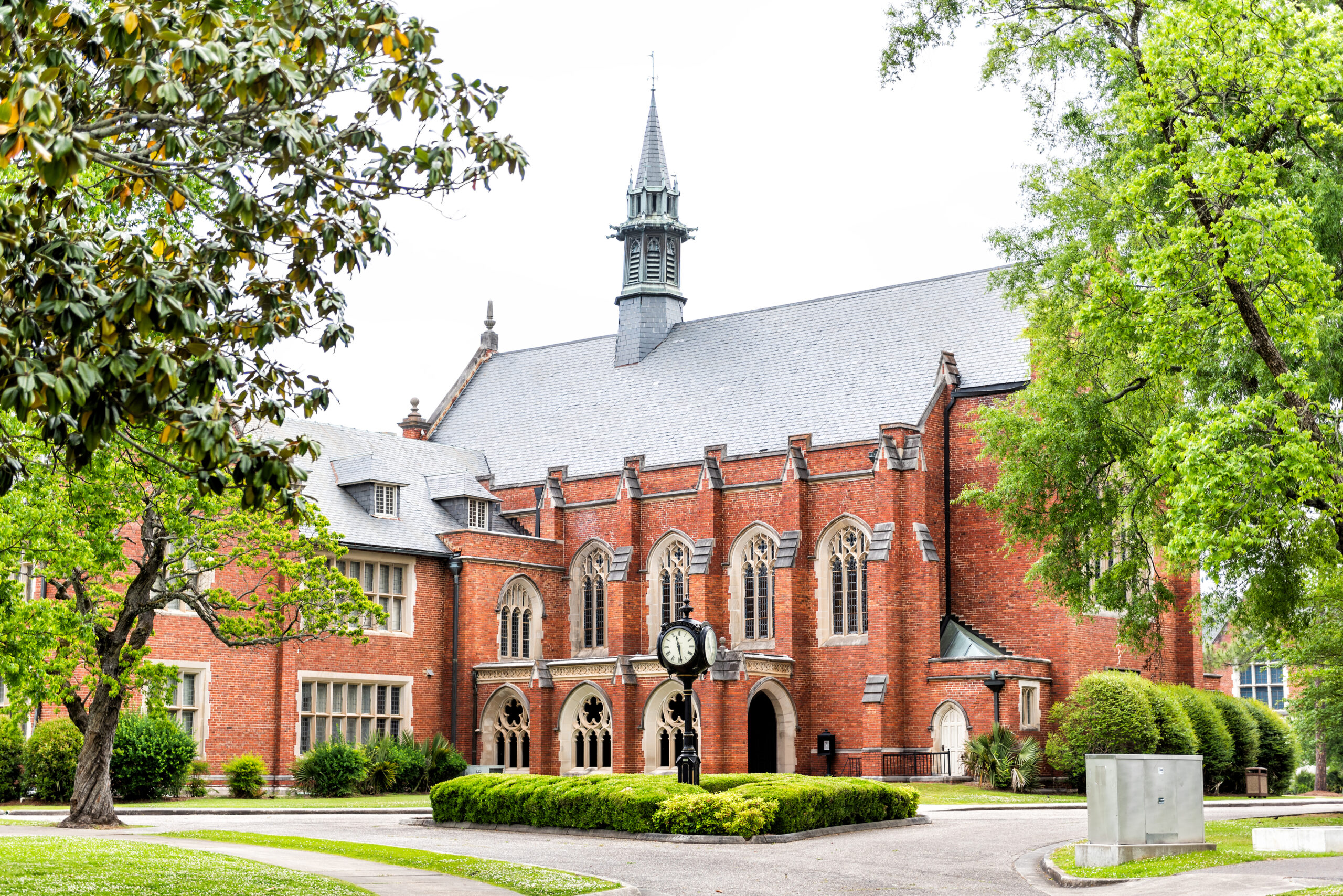
    It’s 1959, and Durham University is still a federal university, with colleges in Durham and Newcastle. And expansion in Durham was underway. Elvet Hill, just south of the River Wear, had already seen St Mary’s College move in 1952 from its old site; and now a new college was being built.

    The college was to be named Grey College, after Charles Grey, Prime Minister when the university was founded (Grey may also have been the earl who inspired the eponymous tea). The name was subject to some controversy: the alternative was Cromwell College, after regicide and Lord Protector Oliver Cromwell; Grey won by one vote.

    And then on 6 March, catastrophe. There’s lots of detail in the report in the Shields Evening News, but the long and short is that the building was burned out. Notwithstanding the reviving tea that the firefighters were able to get. It was due to admit its first students in the next academic year, just six months later. And it did!

    Clearly a get up and go spirit was needed, and that appears to be what happened. The college opened; the master paid from his own pocket for the hall to be panelled. Felix the Phoenix was adopted as a mascot.

    The college expanded rapidly – this is, of course, in line with the general growth in UK HE at that time. By 1964 it had over 350 students, all men – a sevenfold growth in five years. And in 1966 it became the base for the USSR football team during the world cup. Their group games were played at Ayresome Park in Middlesbrough and Roker Park in Sunderland, so staying in Durham made sense. This was the USSR’s most successful world cup: they made it to the semi-finals, where they lost to Germany. There’s a nice – if somewhat long – telling of the story here.

    Grey admitted its first women students in 1984. The title of its head changed from master to principal when Professor Sonia Virdee was appointed to the role in 2023. Heidi Alexander, at the time of writing Secretary of State for Transport, is an alumna; Nish Kumar, comedian, is also among its alumni.

    And here’s a jigsaw of the card for you.

    Source link

  • College Uncovered: The Missing Men

    College Uncovered: The Missing Men

    Something has been happening on college campuses that’s as surprising as it is dramatic: The number of women enrolled has overtaken the number of men.

    Women now outnumber men by about 60 percent to 40 percent, and that gaps keep getting wider. And men who do enroll are also more likely to drop out.

    There are a lot of reasons for this. Boys get lower grades than girls, on average, in elementary and middle schools. They’re more likely to be held back or face disciplinary actions. They’re less likely to graduate from high school. And more men than women go into the skilled trades, instead of getting college degrees.

    Among the results: Universities and colleges now tip the scales for men in admission to try to keep the genders even.

    But as things keep falling out of balance, there are impacts on the financial success for men and on economic growth for everybody.

    We’ll hear from men and women students about what that’s like right now, and from colleges about what they’re trying to do about it.

    Listen to the whole series

    TRANSCRIPT

    [Kirk] This is College Uncovered. I’m Kirk Carapezza …

    [Jon] …and I’m Jon Marcus.

    [sound of referee] Climbers ready? Contestants ready? One, two, go!

    [Jon] This is the sound of one of the most unusual extracurricular activities at the University of Montana: running up a fallen tree with careful footwork, and neatly sawing off the end of it.

    [sound of club member] So really what we’re trying to do is keep the tradition of antique logger sports alive by bringing in new generations to doing activities that they did hundreds of years ago. I mean, we’re using cross-cut saws that they used to cut down giant redwoods.

    [Jon] That might seem like a throwback, but the University of Montana Woodsmen team has an important new purpose. Promoting programs such as forestry has become part of the university’s new strategy to attract an increasingly important type of student.

    [Kelly Nolin] There are definitely some efforts that are happening at the institution to help men find their community and to find a space.

    [Jon] That’s Kelly Nolin. She’s director of admissions at the University of Montana.

    [Kelly Nolin] Our gender split is about 42 percent male, 56 percent female. So it’s definitely widening, and it’s clearly a concern for a variety of reasons. And so that’s why we decided to look into opportunities to recruit more male students.

    [Jon] What Nolan says she’s trying to solve is a really big problem that most people don’t know is even happening: The proportion of men who are going to college is falling way behind the proportion of women who are going.

    Nationwide, women now outnumber men by about 60 percent to 40 percent, and that gap keeps getting wider. Far more young women than young men who graduate from high school are going to college, and men who do enroll are also more likely to drop out.

    We’ll tell you how this might actually be creating an advantage for men in the admissions process, and even how it affects even the dating scene on campuses — which, let’s face it, is a big part of college to a lot of students.

    Take it from Amber Turner. She’s a freshman at Nova Southeastern University in South Florida, which is now more than 70 percent women.

    [Amber Turner] It’s a lot more women than men and the men usually have a lot more options, whereas the women have disgusting options because there aren’t many of them. I have a boyfriend, personally, but I saw with my friends that it’s kind of like nobody here for them.

    [Jon] But fewer men in college has really serious implications for not only colleges that need to fill seats — or, for that matter, students frustrated by the dating pool. It affects the prospects of financial success for men, and of economic growth for everybody.

    This is College Uncovered, from GBH News and The Hechinger Report — a podcast pulling back the ivy to reveal how colleges really work. I’m Jon Marcus of The Hechinger Report …

    [Kirk] … and I’m Kirk Carapezza with GBH. Colleges don’t want you to know how they operate, so GBH …

    [Jon] … in collaboration with The Hechinger Report, is here to show you.

    Today on the podcast: ‘The Missing Men.’

    [Kirk] This season, we’ve been talking about the demographic cliff. That’s the decline that’s starting in the number of 18-year-olds, and how it will affect colleges and the economy.

    Now here’s a related milestone you might not have heard about. The number of college-educated women in the workforce has for the first time overtaken the number college-educated men. That’s because more women than men have been going to college.

    There are a lot of reasons for this. Boys in elementary and middle school get lower grades than girls. They’re more likely to be held back or face disciplinary action. And they’re less likely to graduate from high school. Jon, you and I have talked to high school senior boys about all of this.

    [Jon] Right, Kirk, and a lot of them were worried that they don’t have the confidence to tackle college.

    [Abdukadir Abdullahi] I feel like there’s more distractions for guys to get, like, the best grades because every school, like, the guy is always the class clown, and stuff like that.

    [Jon] That’s Abdukadir Abdullahi. He’s the son of a single father and just didn’t see himself in college. Neither did Pedro Hidalgo, even though he actually wanted to go.

    [Pedro Hidalgo] College was something I always wanted to reach and I always wanted to be accepted to, but I never had that belief within myself that I could do it.

    [Jon] Men are more likely than women to go into the skilled trades, which is faster and cheaper than paying for what seems to them to be an endless and expensive stretch of time in college. That’s what Abdullahi was planning to do.

    [Kirk] Back when you thought college wasn’t for you, what was the alternative? You were planning to just go straight to work or join the military or did you have an alternative plan?

    [Abdukadir Abdullahi] I was going to, like, be a plumber or something like that, like where you could have to go to school, but you could make a decent amount of money.

    [Kirk] In the end, he and the rest of these guys did end up going to college. But a lot of other high school boys feel like they need to get jobs right away, especially if they come from families that need help with their finances.

    Here’s Hidalgo’s classmate, Debrin Adon. His parents immigrated to the United States from the Dominican Republic.

    [Debrin Adon] I’m not going to speak for every man, but at least for young men like my classmates and I, we’re more focused on like money, you know? Like, getting money — getting that paycheck.

    [Kirk] That’s right. So a lot of them get jobs right out of high school and then they buy a car and maybe get married and by that point, it’s almost certain that they’ll never go to college.

    This is Kellie Becker. She’s the college counselor at the school where Abdullahi went.

    [Kellie Becker] A lot of young men are working. They’re working for their families. Like, they’re the man of the house. They are providing their entire family with one paycheck and they get a little taste of that where they, some of them, have to do it or some of them want to do it because they’re getting that money.

    [Kirk] These are just a few of the reasons we’ve ended up here. Fifty years ago, the gender divide was exactly the reverse, and there were far more men than women in college. Since then, there’s been a lot of work to encourage women to get degrees. But much less of that kind of thing is targeted at men. Women also disproportionately work in fields that require degrees, such as social work and teaching. And we’ve already heard how boys don’t do as well as girls in lower grades, how young men feel responsible for helping their families right out of high school and how many of them go into the trades. The decline is even steeper for Black men. Their numbers went way down during the pandemic. Even at historically Black colleges, Black men now make up only about a quarter of the students.

    [Michael Sinclair] Money is one of the main factors. A lot of our young men are looking for opportunities to earn a living, but they need the money now.

    [Kirk] That’s Michael Sinclair. He’s an associate professor at Morgan State University, and he points out that this becomes a vicious cycle.

    [Michael Sinclair] There’s a statement that my father once told me: You can’t be what you can’t see. And if you’re not seeing Black men on college campuses, a lot of young people don’t think that that’s for them.

    [Kirk] This mismatch between men and women is starting to create an odd divide on many college campuses.

    [Jon] Exactly, Kirk. I visited another big university, the University of Vermont. It’s already 64 percent female. I went to the student union, where Melinda Wetzel told me what it was like to be a woman student there.

    [Melinda Wetzel] Oh, yeah, I do have one small class that there is only one guy. I do undergraduate research and when I’m in the medical building, I feel like I hardly ever see men. I feel I’m walking around and it’s just, like, a bunch of ladies.

    [Jon] This extends to areas on campus you might not expect.

    [Melinda Wetzel] I was at the gym the other day and, like, if you think about going to a gym, you think of, like, oh, no, like, there’s going to be a lot of scary guys there. I looked around and I actually pointed out to my friend, like, ‘Whoa, look at all the girls here. This is great.’

    [Jon] Now, some men on campus also think it’s great that there are more women.

    [Pete Azan] So in our class we have, like, 83 girls and like 30 guys. They told us that like the first day of school. So we were all shocked.

    [Jon] Pete Azan is studying dental medicine down at Nova Southeastern. More women than men are going into dentistry these days, too — not only there, but nationwide. He’s okay with that, though.

    [Pete Azan] I love it. I go to class every day the happiest man, because I get to be around beautiful women all day.

    [Jon] And however you might feel about that, there’s another potential advantage for men to this little-noticed trend:

    [Kirk] To keep the gender mix more evenly balanced, a lot of universities are making it easier for men to get in. That’s become especially important as they start to topple over that demographic cliff that’s coming, in the number of students of any gender.

    Sourav Guha used to work in university admissions. He saw how men got an edge so colleges could keep the genders balanced. Now Guha is executive director of the Consortium on Higher Achievement and Success. It supports students who are already enrolled in college.

    [Sourav Guha] I’d put it this way: There were a lot of high school girls who, in terms of credentials, looked as good as or better than some of the boys we admitted, but the girls ended up either wait-listed or rejected. It’s not that the students we were taking were not qualified or capable of being there, but certainly they had credentials, like, maybe a lower GPA, sort of different classes, different levels of high school achievement.

    [Kirk] So listen to what he’s saying there, Jon. At some schools, the odds that men will get in are now better than the odds that women will.

    [Jon] Right, Kirk. And it’s absolutely true. We looked it up. A lot of prestigious universities are accepting more of their male applicants than their female applicants. Boston University, Brown, Vanderbilt, the University of Chicago, the University of Miami, the University of Southern California — all of them took at least slightly more male than female applicants.

    [Kirk] Now, that might keep the genders balanced for a while at those selective colleges and universities, even if it is at the expense of women who apply to them. But the problem isn’t going away, and some experts are warning that the repercussions are significant.

    [Jon] Right, Kirk. Richard Reeves researched this phenomenon of men not going to college and became so alarmed about it that he founded an organization to study and address it, the American Institute for Boys and Men.

    [Richard Reeves] Now, there are lots of good organizations ringing the alarm bells when there are gaps facing women and girls, and that is great, and they do a great job of it. But it hasn’t really been anyone’s job to wake up every day and ring the alarm bell around declining male enrollment in colleges.

    [Jon] Reeves says this should matter to everyone.

    [Richard Reeves] We’re leaving too much male talent on the table as a result of the failure of our education system to serve men as well as women. And as a result, those men are not doing as well in the economy as they could. That’s bad for the economy. It’s also bad for the women that they will end up with. And so this is, in the end, bad for everybody.

    [Jon] Colleges are trying lots of things to appeal to men. The University of Vermont has started running an entrepreneurship competition for high school students. It’s open to anyone, but more boys than girls have entered. That’s what the university expected, based on focus groups that showed that men liked entrepreneurship programs. The grand prize is a full-tuition scholarship.

    Like a lot of schools, Vermont is also using its athletic programs to attract men.

    Now, you’d think more women getting college degrees would be translating into higher pay and more promotions. But while there may be more of them in college, the degrees they tend to get are often in lower-paying fields. Men still outnumber women in disciplines such as engineering and business, which have a bigger payoff.

    Sourav Guha explains.

    [Sourav Guha] If you look at the top two fields for women, it’s still nursing and teaching. You know, for men, it’s software development. So women are going to college and the economic returns they’re getting from college are not the same that men are getting.

    [Kirk] But Richard Reeves says men who don’t get degrees at all will generally be worse off.

    [Richard Reeves] One of the myths that is really important to nail here is the idea that, well, men don’t need college degrees because there are lots of jobs — well-paid, good jobs that men can go and do even if they don’t have higher educations. That is not true anymore.

    [Kirk] However they’re approaching it, and for whatever reasons, colleges are laser-focused on this issue. As we’ve been saying all this season, they need all the students they can get right now.

    [Jon] Yeah, Kirk, and Reeves is worried about a new reason men are finding to not go to college: politics.

    [Kirk] Right. As colleges continue to be targets in the culture wars, Reeves says some men consider them not only woke, but anti-male.

    [Richard Reeves] I’m worried that not only does higher education seem like it’s more female and coded a bit more female, but also coded left, progressive and maybe even somewhat intolerant toward men, and particularly perhaps conservative men from, say, rural areas, right? I think if you want to find someone who’s pretty skeptical about higher education, it may well be a conservative white guy living in a rural area. And turns out that is one of the groups that we’re really seeing a big decline in enrollment.

    [Jon] This concern isn’t lost on colleges. We already heard from University of Montana admissions director Kelly Nolin. Among the ways her university has tried to win back men is by inviting conservative speakers such as Turning Point USA founder Charlie Kirk.

    [Charlie Kirk] And I’m going to make a case, and I don’t know if it’ll be persuasive to do, why I think DEI is unbiblical. …

    [Kelly Nolin] And regardless of how you feel about his political views, it was an important moment for people in our state to see that as a liberal arts college, we were willing and able to bring a conservative person to campus, but also somebody who appeals to a lot of men. And so just sharing those different perspectives, trying to break some of the stereotypes of how people in our state or maybe outside of our state view us, that’s some of work that we’re doing right now.

    [Jon] That’s on top of pushing its forestry school and that Woodsmen Club and other things, based on what it learned from focus groups of male students.

    [Kelly Nolin] They really felt, in their experience, that we needed to focus more on the attractive nature of our location. So some of the activities that are available to students very easily — things like fly-fishing, hiking, skiing, hunting — those were important to these students. And they weren’t things that we were really highlighting in our brochures.

    [Jon] Kirk, you and I got to go to the University of Montana on assignment, and it is a really beautiful natural setting, although, as I recall, I beat you to the top of Mount Sentinel when we hiked it.

    [Kirk] I was taking in the scenery, Jon. But, yes, those are the kinds of things the university is now using to market itself to men.

    [Kelly Nolin] We sent an email with a link to our wild sustenance class, which is a class about hunting that really focuses on not just the mechanics of hunting, but the conservation purpose behind hunting that could appeal to a wide range of people from a wide variety of political affiliations.

    [Kirk] Yeah, Jon, and just as an aside, that email had an unexpected effect.

    [Kelly Nolin] I will tell you that somebody saw that ad and they came to visit. And when they were asked why they were looking at the University of Montana for college — they were from Virginia — they said they wanted to come someplace where they had rugged men.

    [Kirk] She’s laughing because that person was a woman.

    [Jon] Right. But colleges are taking this deadly seriously. As we’ll continue to discuss this season, they are facing down that demographic cliff and every student counts.

    This is College Uncovered. I’m Jon Marcus from The Hechinger Report.

    [Kirk] And I’m Kirk Carapezza from GBH. This episode was produced and written by Jon Marcus …

    [Jon] … and Kirk Carapezza.

    If you want to see whether a college accepts more male than female applicants, we’ve linked in the show notes to the federal government website where you can find that.

    [Kirk] We had help on this episode from Liam Elder-Connors of Vermont Public and reporter Yvonne Zum Tobel in South Florida. Our sound of the Woodsmen Club came from the University of Montana student newspaper.

    This episode was edited by Jonathan A. Davis. Our executive editor is Jennifer McKim. Our fact-checker is Ryan Alderman.

    [Jon] Mixing and sound design by David Goodman and Gary Mott. All of our music is by college bands. Our theme song and original music is by Left Roman out of MIT.

    Mei He is our project manager and head of GBH podcasts is Devin Maverick Robbins.

    [Kirk] College Uncovered is made possible by Lumina Foundation. It’s produced by GBH News and The Hechinger Report and distributed by PRX.

    Thanks so much for listening.

    More information about the topics covered in this episode:

    To see the acceptance rates of men vs. women applicants at any college or university, go here, enter the name of the institution, and click on ADMISSIONS.

    Universities and colleges search for ways to reverse the decline in the ranks of male students

    The Hechinger Report provides in-depth, fact-based, unbiased reporting on education that is free to all readers. But that doesn’t mean it’s free to produce. Our work keeps educators and the public informed about pressing issues at schools and on campuses throughout the country. We tell the whole story, even when the details are inconvenient. Help us keep doing that.

    Join us today.

    Source link

  • Students Lose Food Benefits Between High School and College

    Students Lose Food Benefits Between High School and College

    Fewer than half of low-income students retain their state food benefits in the transition from high school to college or the workforce, even though they might still be eligible, according to a new report from the California Policy Lab, a nonpartisan research group affiliated with the University of California, Berkeley, and UCLA.

    The report, released today, drew on data from 2010 to 2022 from five state agency partners: the California Departments of Education and Social Services, the California Student Aid Commission, the University of California Office of the President and the California Community Colleges Chancellor’s Office. It found that only 47 percent of high school seniors who participated in CalFresh were still enrolled in the state food assistance program two years after graduation.

    “That’s a significant drop-off, and our goal is to shed some light on the causes of that drop-off and if there are ways to address it,” co-author Jesse Rothstein, professor of public policy and economics at UC Berkeley and the faculty director of the California Policy Lab’s UC Berkeley site, said in a news release.

    Researchers estimated that 40 percent of those students were no longer eligible for CalFresh because of specific eligibility requirements for college students. But the remaining 60 percent were likely eligible.

    Researchers also found disparities in which students maintained their CalFresh benefits. Students who participated in CalFresh for longer in high school were more likely to continue to participate afterward. Students who attended University of California campuses were also more likely to continue participating in CalFresh than those attending community colleges. The report suggests this is because community college students are more likely to live at home with their parents, whose incomes are factored into the eligibility for CalFresh, which can prevent them from meeting the program’s income requirements.

    Some community college students, including Hispanic and Filipino students, were less likely than their peers to continue receiving food benefits. The report recommended targeted outreach to these students to help them stay enrolled in the program.

    Source link

  • Davidson College – Edu Alliance Journal

    Davidson College – Edu Alliance Journal

    April 21, 2025, by Dean Hoke:  With this profile of Davidson College, I complete the tenth and final entry in my series exploring small colleges across the United States. This journey has deepened my appreciation for the distinct contributions and lasting impact of these diverse institutions. Collectively, these colleges have further strengthened my belief in the diversity, resilience, and enduring importance of American higher education — and reaffirmed the vital role that small colleges continue to play in communities across the country.

    Background

    Founded in 1837 by Presbyterian leaders, Davidson College is a private liberal arts college located in Davidson, North Carolina, just north of Charlotte. Named after Revolutionary War hero General William Lee Davidson, the college embraces a strong tradition of academic excellence and service. Although it maintains historical ties to the Presbyterian Church (USA), Davidson welcomes students of all faiths and backgrounds. A hallmark of Davidson’s culture is its student-run Honor Code, fostering a climate of trust and integrity. With about 2,000 undergraduates, Davidson remains committed to developing “humane instincts and disciplined, creative minds” through a personalized liberal arts education steeped in tradition, yet responsive to the challenges of a changing world.

    Curricula

    Davidson College offers a broad and rigorous liberal arts education, exclusively focused on undergraduate learning. Students choose from 37 majors and 39 minors, ranging from traditional fields like English, History, and Biology to interdisciplinary studies like Data Science and Environmental Studies. Through the Center for Interdisciplinary Studies, students can even create personalized majors. All students must complete a comprehensive general education program, emphasizing writing, critical thinking, and exposure to diverse disciplines.

     Davidson has an 8:1 student-faculty ratio, which promotes mentorship and in-depth discussion. Faculty, all holding terminal degrees, foster an environment that encourages original research and creative work. Davidson emphasizes experiential learning, with over 70% of students studying abroad and many engaging in faculty-mentored research or community-based projects.  Signature programs include the Center for Civic Engagement and Humanities Seminars. The college’s academic culture, shaped by its Honor Code, blends classic liberal arts education with forward-looking innovation, producing graduates who are both intellectually agile and socially responsible.

    Strengths

    • Academic Achievements: Davidson students and alumni excel in prestigious awards. The college has produced 23 Rhodes Scholars (one of the highest totals per capita for an undergraduate institution) and is a top producer of Fulbright Scholars​. Students are also competitive for Goldwater, Watson, and Marshall scholarships, reflecting the quality of preparation.
    • Employment and graduate school placement rates: In the class of 2024, 92% were employed or enrolled in postgraduate education 6 months after graduation. This has been consistent for a number of years.
    • Selective Admissions: Admission to Davidson is highly competitive (“most selective” according to Princeton Review and U.S. News). For the Class of 2027 entering fall 2023, Davidson’s acceptance rate was ~14.5% (1,068 accepted out of 7,363 applicants) ​and has a yield rate of nearly 50%​. Davidson practices need-blind admissions for U.S. students and meets 100% of demonstrated financial need.
    • Notable Faculty and Resources: Davidson’s faculty are dedicated teachers and active scholars. Small class sizes and an emphasis on undergraduate research allow students to work closely with faculty on original research or creative works. The college has modern facilities for science and art. Davidson’s NCAA Division I athletics (unusual for a school of its size) also provides school spirit and national visibility, particularly the men’s basketball program.
    • Financial Strength and Aid: Davidson’s financial position is robust, with an endowment of approximately $1.3 billion as of 2023​. This substantial endowment (which has more than doubled in the past decade) underwrites the college’s Davidson Trust, a landmark financial aid program.

    Weaknesses

    • High Cost and Financial Accessibility:
      The high sticker price of attending Davidson—now over $80,000 annually and rising—remains a barrier for many middle-income families. Students without demonstrated financial need receive little or no merit aid, limiting socioeconomic diversity compared to peer institutions with larger endowments.
    • Student Diversity Challenges:
      Davidson College has made significant efforts to diversify its student body, but challenges remain. Black and Hispanic/Latino enrollment continues to lag behind national averages for selective liberal arts colleges. Although Davidson has invested in scholarships, outreach programs, and DEI initiatives, progress has been gradual. Some students and alumni express concern that the pace of change has not fully kept up with the college’s aspirations for a more inclusive campus community.
    • Faculty Retention Challenges Among Early-Career and Diverse Faculty:
      While Davidson College enjoys strong overall faculty stability, recent strategic plan updates and DEI committee reports acknowledge challenges in retaining early-career and underrepresented faculty members. Factors such as limited research resources, heavier service burdens for faculty of color, and opportunities at larger institutions have contributed to higher attrition rates within these groups.

    Economic Impact

    According to the Davidson College Economic Impact Report 2023, produced by Appleseed Inc. (an economic consulting firm specializing in higher education and nonprofit sectors), Davidson College generates nearly $500 million annually for the North Carolina economy, including $430 million for the Charlotte metro region. The college supports approximately 2,300 jobs statewide and contributes around $22 million in annual state tax revenue. Student and visitor spending adds another $18 million annually to local businesses. Beyond economics, Davidson students contribute over 73,000 hours of community service each year, benefiting local schools, nonprofits, and civic organizations. The town-gown relationship is exemplary, with Davidson serving as a cultural, social, and educational hub for the region. Davidson’s strategic proximity to Charlotte opens further opportunities for collaboration, internships, and regional engagement, ensuring that its impact extends well beyond its picturesque campus.

    Enrollment Trends

    According to the Davidson College FactFile, enrollment has remained steady with a gender balance and a national/international student body.

    The college student body represents all states and 57 nations. The domestic student of color population is 28%, and  53% of the students are women.

    Degrees Awarded by Major

    In the 2023–24 academic year, Davidson College conferred degrees to 504 graduates, of whom 108 had double majors.

    Alumni

    Davidson College’s alumni impact spans politics, literature, sports, and public service:

    • Dean Rusk (1931): U.S. Secretary of State under Presidents Kennedy and Johnson; Davidson’s international studies program honors his legacy.
    • Tony Snow (1977): Former White House Press Secretary and noted journalist; exemplified public communication skills rooted in his Davidson education.
    • Patricia Cornwell (1979:) Best-Selling crime novelist whose forensic thrillers have sold over 100 million copies worldwide.
    • Elizabeth Kiss (1983): Global educational leader and Warden of Rhodes House at Oxford University; a trailblazer in ethics and leadership education.
    • Anthony Foxx (1993): U.S. Secretary of Transportation and former Mayor of Charlotte; actively supports Davidson’s civic engagement initiatives.
    • Stephen Curry (2010, completed 2022): NBA MVP and four-time champion; his legendary NCAA tournament run put Davidson basketball on the national map, and he returned to complete his sociology degree.

    Endowment and Financial Standing

    Davidson’s endowment has grown significantly, reaching approximately $1.375 billion in 2023. This growth supports its generous need-blind, no-loan financial aid policies and academic initiatives.

    The college’s financial management has earned high marks. The 2023 Forbes Financial Grades give Davison a 3.9 GPA and an A letter grade.

    Return on Investment (ROI)

    According to Georgetown University’s Center on Education and the Workforce, Davidson’s 40-year ROI for bachelor’s degrees is $2,689,000—well above the national average of $1,744,000 for private institutions. This places Davidson in the top 75 private college institutions.

    Why is Davidson Important?

    • Davidson College embodies the best traditions of academic rigor, ethical leadership, and service.
    Founded in 1837, Davidson forged a powerful model of liberal arts education rooted in critical thinking, moral inquiry, and civic responsibility. The college’s honor code—one of the earliest in the South—still defines campus culture today, emphasizing personal integrity and a community of trust.

    • Davidson’s regional and national influence extends far beyond its campus.
    The college plays a growing role in the economic and civic life of the Charlotte metro area, leveraging partnerships that connect students to real-world opportunities in business, public service, and innovation. Nationally, Davidson alumni have made transformative contributions in government, global affairs, literature, education, and athletics, demonstrating that small colleges can have broad and lasting societal impact.

    • Davidson remains a vital force for leadership, diversity, and opportunity.
    Initiatives like the Davidson Trust, which eliminates student loans from financial aid packages, alongside robust global learning and community engagement programs, show Davidson’s commitment to access and excellence. The college continuously prepares students not only for professional success but for principled leadership in a rapidly changing world.

    Summary

    Davidson College remains one of America’s premier liberal arts institutions, blending historic tradition with forward-looking innovation. The college exemplifies the transformative power of the liberal arts, producing leaders of conscience and influence. It has long combined academic excellence with ethical leadership and a global perspective, demonstrating that a small college can have a profound national and international impact. Davidson’s commitment to trust, service, and innovation ensures that it continues to shape lives and society for the better.


    Dean Hoke is Managing Partner of Edu Alliance Group, a higher education consultancy, and a Senior Fellow with the Sagamore Institute. He formerly served as President/CEO of the American Association of University Administrators (AAUA). With decades of experience in higher education leadership, consulting, and institutional strategy, he brings a wealth of knowledge on small colleges’ challenges and opportunities. Dean, along with Kent Barnds, is a co-host for the podcast series Small College America. 

    Source link

  • College grads say they are confident about jobs but cautious about economy

    College grads say they are confident about jobs but cautious about economy

    This audio is auto-generated. Please let us know if you have feedback.

    As the current job market continues to shift, 2025 college graduates express both optimism and concern about their job prospects, according to Monster’s annual State of the Graduate Report.

    Most graduates (83%) said they were confident about landing a role soon after graduation, although 37% said the job hunt could take 4-6 months.

    “The job market is rapidly shifting, and today’s graduates are entering it with both confidence and conviction,” Scott Blumsack, CMO of CareerBuilder + Monster, said in the report.

    “The message is clear: today’s graduates are ambitious, intentional, and values-driven,” Blumsack said. “Employers who adapt to these priorities by offering flexibility, purpose, and pathways to growth will be best positioned to attract and retain the next generation of top talent.”

    In a poll of 1,000 new and upcoming college graduates, 75% said they’re worried their job prospects will be affected by the economy, up from 69% in 2024.

    In addition, 48% of graduates said they assume they won’t be able to find a job at the workplace they prefer, as compared with 52% in 2024.

    Due to current market conditions, 42% of graduates who don’t already have a full-time job said they’re now looking at more companies and industries, an increase from 34% in 2024.

    Graduates pointed to several red flags that would prevent them from applying for a job at a company, including a salary freeze, recent layoffs, lower than average earnings during the past year, a mandate for daily in-office work and fully remote work.

    At the same time, graduates reported mixed thoughts about the economy and how it may impact their starting salary. About 37% expect their starting salary to be higher as a result of the economy, while 27% expect their starting salary to be lower.

    Job security also appears to be a major priority, with 80% reporting concerns about job security in the current market, as compared with 77% in 2024. About 64% said it’ll be more difficult to find a job due to artificial intelligence filling roles previously held by humans, up from 62% in 2024.

    In December 2024, hiring, job openings and turnover decreased, with hiring reaching its lowest point in five years, according to a BambooHR report. Hiring declined across all industries, both in the U.S. and worldwide, the report found.

    For now, the labor market has cooled off, which could be good news for hiring managers, leading economists told HR Dive. Although top talent may be somewhat easier to find and retain, an aging workforce and changes to immigration will likely challenge recruiters throughout 2025, they said.

    Source link

  • As More High Schoolers Earn College Credit, Some Miss Out – The 74

    As More High Schoolers Earn College Credit, Some Miss Out – The 74


    Get stories like this delivered straight to your inbox. Sign up for The 74 Newsletter

    This story was originally published by CalMatters. Sign up for their newsletters.

    Students tap on their keyboards as a professor lectures at the front of the room. It looks like any other college course, except that it’s taking place at a high school. This year, more than 150,000 California teens are earning college credit in dual enrollment courses.

    Dual enrollment offers high schoolers the chance to attend community college, typically for free, often without having to leave their campuses. By helping students tackle the college academic experience, the programs increase the likelihood that students attend college after graduating high school.

    About 80% of California’s dual enrolled high school students go on to a community college or university, compared to 66% of California 12th grade students in general, the Public Policy Institute of California found. More than a third of California’s dual enrolled students go on to attend the same community college they attended while in high school after they graduate, according to the Community College Research Center.

    Many college and high school administrators have pushed to increase students’ college attainment rates, and the state has invested more than $700 million in dual enrollment, leading to a significant expansion. The number of students in these courses tripled between spring 2015 and spring 2024, according to state data. The Public Policy Institute of California found that about 30% of California’s high school graduating class of 2024 took at least one dual enrollment course.

    The growth of high schoolers is a bright spot in overall student totals at the state’s community colleges, which have struggled to fully rebound after enrollment tanked during the pandemic. However, some community college faculty have pushed back against widespread dual enrollment due to concerns about academic rigor and working conditions for educators.

    Furthermore, data shows that some of California’s rural students, as well as males and students of color, don’t enroll in and complete these courses at the same rate as others. Some experts and administrators say they’re not just missing out on a couple of college credits, they’re not getting the same opportunities to envision themselves as future college students.

    “When high schoolers complete these courses, they are able to fulfill requirements that help them access associate degrees and bachelor’s degrees,” said Daniel Payares-Montoya, a PPIC research associate. “The students benefit, but so do the community colleges, because it helps them enroll more students.”

    Rural schools and colleges face dual enrollment hurdles 

    In Siskiyou County, at the northern tip of California, the only community college serves a sprawling region that covers mountains, forests and rural towns. Although the county has a population of just 43,000, it is the fifth largest county in California by area, meaning that often the hardest part of supporting dual enrolled students isn’t the actual teaching — it’s having the right technology and transportation to reach them in the first place.

    “The personal interaction is a challenge, because we have high schools that are two hours away,” said Kim Peacemaker, a counselor and dual enrollment coordinator at College of the Siskiyous. The college currently has about 230 dual enrolled high school students and about 2,390 students total, based on state data.

    Peacemaker said the college has worked to make dual enrollment accessible by allowing professors to meet virtually with students in their high school classrooms. However, she added that some students don’t have reliable internet access at home for homework or tutoring. In Siskiyou County, 13.7% of households don’t have broadband internet.

    On a sunny day on a community college campus, students walk along a concrete path flanked by rows of light poles and between more buildings. Two students are wearing bright tie-dyed shirts and holding coffee cups as they walk.
    Students walk through one of the main walkways onto Bakersfield College on June 14, 2023. (Larry Valenzuela, CalMatters/CatchLight Local)

    California’s rural colleges generally lag behind urban colleges in dual enrollment. Kern Community College District in the southern Central Valley and the Compton Community College District near Los Angeles had the two highest percentages of high school students in 2024, at 41%  and 36%  respectively, based on state data. In comparison, 9.7% of students at College of the Siskiyous are dual enrolled high schoolers, and this drops to about 5% in some other parts of the state.

    Sonya Christian, the chancellor of the California Community College system, previously led the Kern Community College District, spearheading its expansion of dual enrollment. Now, dual enrollment in the district is “one of the most successful models in the state,” Christian said in an emailed statement to CalMatters.

    “I prioritized dual enrollment because I saw it as a potential pathway to increase college-going rates, accelerate degree completion and provide students — especially those in rural and low-income communities — with early exposure to college-level coursework,” Christian said in the statement.

    For many high school students in the small city of Blythe, which sits along California’s border with Arizona, the only people they know with bachelor’s degrees are their teachers. That’s why Clint Cowden, the vice president of instruction and student services at Palo Verde College, said the exposure to college that dual enrollment provides these students can be transformative.

    “It’s really a win-win for the community,” Cowden said.

    A recent alumnus of Palo Verde College’s dual enrollment program, Manuel Milke earned his high school diploma and his associate degree simultaneously, while juggling varsity soccer and football. Now Milke, who is 19, is set to graduate in the fall from San Diego State with a bachelor’s degree in kinesiology. Milke said he chose to attend San Diego State to stay close to his family in Blythe, and aspires to work as a physical therapist somewhere nearby.

    “Everyone should do dual enrollment,” said Milke. “It saved me time, it saved me money and it made me feel more prepared for college.”

    Student gaps remain in dual enrollment

    As a Latino male, Milke is in the minority for dual enrollment. Based on state data, Black and Latino students are both underrepresented in dual enrollment courses. In the spring 2024 semester, 41% of dual enrollment students were male, while 56% were female. According to Payares-Montoya, these gaps in access to dual enrollment can make it so Black, Latino and male students are less likely to see higher education as an option, compared to their dual enrolled peers.Range plot comparing dual enrollment students and high school students by gender (male, female) and race/ethnicity (Black, Latino, White). Male, Black and Latino students are underrepresented in dual enrollment.

    For Jesse Medrano, an 18-year-old senior at Daniel Pearl Magnet High School in the Los Angeles Unified School District, dual enrollment has provided “a good outline of what college is like.” His high school first placed him in dual enrollment in ninth grade, and since then he has taken five classes, covering topics including economics and political science.

    “I didn’t have the drive to seek these courses out, so the fact that they put me in them set this standard for me, and now I’m meeting it,” said Medrano, who is Latino and plans to study accounting at Cal State Northridge. “I didn’t have the motivation, but now I do, and I’m able to succeed.”

    At Compton College more than a third of the current students are still in high school, according to state data. Latino and Black students comprise 75% and 9% of dual enrollees, respectively, which are significantly higher than state averages. Keith Curry, the college’s president, said that when students of color complete dual enrollment courses, this gets them comfortable with college academics and leads to better representation at colleges and universities.

    Some faculty push back against expansion

    Some community college faculty have raised concerns about the process by which dual enrollment partnerships are established, the level of readiness of high school students for college courses, and who teaches these classes. In many districts across the state, some dual enrollment courses are not taught by community college faculty, but by existing high school teachers who hold the credentials required to teach at a college level. In the Kern Community College District, about 60% of dual enrollment courses held on high school campuses are taught by high school teachers who meet the college qualifications, according to district spokesperson Norma Rojas.

    Tim Maxwell, an English professor at College of San Mateo, is a “conscientious objector” to California’s expansion of dual enrollment. Maxwell said he is concerned about what he sees as a focus to get as many students to graduate and earn college credits as quickly as possible, sacrificing college-level rigor and evaluation.

    “Completion is important, but our primary responsibility is for students to learn something along the way,” said Maxwell, who has taught community college courses for about 30 years.

    Maxwell has taught creative writing courses on his college campus with several dual enrolled students, one as young as 15 years old, and he said these students are “phenomenal.” But, he added, there’s a difference between a handful of proactive high schoolers going to a community college campus and a high school classroom that “switches to a college class during fifth period.” He said he is concerned about poor working conditions for professors, primarily adjunct faculty, who have to travel to high schools and teach without the proper background or support.

    “We need to resist this, and we need lawmakers who understand something about education and not just spreadsheets,” Maxwell said.

    Wendy Brill-Wynkoop, the president of the Faculty Association of California Community Colleges, said dual enrollment is beneficial for students, but that she has “heard grumblings” about a need for faculty to have a more active role in setting standards and policies for dual enrollment.

    A person holding a skateboard walks by a white mission-style building surrounded by palm trees on a sunny and clear day.
    Students walk near Hepner Hall at San Diego State University in San Diego on Oct. 10, 2024. (Adriana Heldiz/CalMatters)

    While in high school in Blythe, Milke said his dual enrollment courses were generally easier than the courses he takes at San Diego State. But they still challenged him and prepared him for a college-level workload, he said.

    Lawmakers work to continue growth

    Several state laws have been enacted in the past decade to expand dual enrollment in California. In 2015, Assembly Bill 288 established the College and Career Access Pathways program, allowing community colleges and high schools to enter into dual enrollment partnerships. These institutions bring the courses to students, as opposed to those students having to seek them out. The state streamlined the pathways program with the passage of Assembly Bill 30 in 2019, allowing students to submit fewer forms to enroll. Assembly Bill 731, which is currently in committee, would, among other changes, increase the number of units that students in the program can take.

    Based on PPIC research, students in the College and Career Access Pathways program now account for about 37% of dual enrollees. This program has a higher percentage of underrepresented students compared to other dual enrollment programs, in part because it eliminates some of the restrictions that can make it hard for schools to offer broad and barrier-free dual enrollment.

    As dual enrollment continues to expand, it increases costs to California beyond the more than $700 million that the state has already invested. That’s because both community colleges and high school districts are typically both able to receive state funding for dual enrolled students, according to the Legislative Analyst’s Office.

    According to the statement from Christian, state leaders are working to increase dual enrollment access by expanding partnerships between high schools and colleges.

    “My vision is to make dual enrollment a standard opportunity for all California students, not just an option for a select few, increasing equitable access to higher education and workforce-aligned learning,” Christian said in the statement.

    Alana Althaus-Cressman, who runs the dual enrollment program at Golden Eagle Charter School, a K-12 school in Siskiyou County, markets the program to all students, not just those who already have a record of high achievement. She studied dual enrollment access for rural students for her graduate school dissertation at Sacramento State University, and started the early college high school program at Golden Eagle Charter in 2024. Students in the program take dual enrollment courses for part of the school day, and high school courses for the rest.

    Althaus-Cressman said that because dual enrollment offers students a glimpse of college, it’s important that the classes aren’t only filled with students who already plan to attend college. Some high schools require minimum grade point averages or have other barriers to entry for dual enrollment, which Althaus-Cressman said can perpetuate inequalities.

    The early college high school program enrolls about a third of Golden Eagle Charter’s ninth graders. Althaus-Cressman attributes this level of participation to extensive outreach, which included working with school staff to call the families of every incoming high school student to invite them to a dual enrollment orientation.

    “We don’t want students to think that they aren’t the type of student for this program,” Althaus-Cressman said. “It’s for everybody.”

    This article was originally published on CalMatters and was republished under the Creative Commons Attribution-NonCommercial-NoDerivatives license.


    Get stories like these delivered straight to your inbox. Sign up for The 74 Newsletter

    Source link

  • College Athletes Can Now Make Millions Off Sponsorship Deals – The 74

    College Athletes Can Now Make Millions Off Sponsorship Deals – The 74


    Get stories like this delivered straight to your inbox. Sign up for The 74 Newsletter

    $390,000 to Jaylon Tyson, a former basketball guard at UC Berkeley, from a group of private donors.

    $3,000 to Jordan Chiles, a UCLA gymnast and Olympic gold-medal winner, from Grammarly, an AI writing company. 

    $390 to Mekhi Mays, a former Cal State Long Beach sprinter, from a local barbecue joint. 

    These payments — derived from data that public universities provided to CalMatters — were part of “name, image and likeness deals” requiring students to create favorable posts on social media. 

    Such sponsorship deals were unheard of just four years ago. In 2021, California enacted a law allowing athletes to make these kinds of brand deals. It was the first state to pass such a law, prompting similar changes across the country. 

    This is the first-ever look at what many California athletes have actually made. University records show that money is flowing, but how much college athletes earn depends largely on the popularity of the sport, the gender and star power of its players and the fanbase of the university. While UCLA gymnasts earned over $2 million in the last three school years, university records show that players on the UCLA women’s water polo team earned just $152 during the same time frame, despite winning the national championship last year. 

    For companies, these name, image and likeness deals are akin to paying any other celebrity or professional athlete to promote a product. University alumni and sports fans can’t give money directly to a student athlete — at least not yet — but they are allowed to make name, image and likeness deals. Many universities have private donor groups, known as collectives or booster clubs, that offer athletes money, sometimes more than $400,000 in a single transaction, in exchange for an autograph or participation in a brief charity event. Often, those deals are a pretext to send money to top-tier players and discourage them from seeking better deals at other colleges.

    CalMatters reached out to every public and private university in the state with Division 1 teams, where the potential for profit is typically highest, and requested data that shows how much money each of its student athletes have made since 2021. State law requires all student athletes to report to their school any compensation they receive from their name, image and likeness, and public universities are required to disclose certain kinds of data upon request. Private universities, such as Stanford University and the University of Southern California, are not required to disclose any data about their students’ earnings. 

    All of the public Division 1 universities responded to CalMatters’ inquiry, though they did not all provide the same degree of transparency. San Jose State and Cal State Northridge said they had no records of any deals.

    There’s no consequence for students who fail to report what are known as NIL deals, so the data from public institutions may be incomplete. Still, certain trends emerge: 

    • College athletes at the state’s public universities received millions of dollars from collectives or booster clubs. At four University of California schools, around 70% or more of all compensation came from these collectives, according to university records. That’s just below national trends, according to a report by Opendorse, a tech company that tracks students’ deals. 
    • Male basketball players earned the most. While football is more popular and lucrative, nationally, many public Division 1 schools in California lack a football team. The football data may also be incomplete. For instance, all football players at UC Berkeley reported making a total of just over $113,000 since 2021 — less than what all San Diego State players made — even though Berkeley is in a more prominent conference. 
    • For high-profile football or basketball players in particular, it’s becoming more common for students to transfer multiple times, often in search of better name, image and likeness deals. Some California institutions, such as UC Davis and Cal Poly San Luis Obispo, have seen top athletes transfer colleges or threaten to transfer in order to attain better compensation elsewhere.
    • Except for a few star players, such as Chiles, most female college athletes made very little, according to the data provided to CalMatters. 
    • Collectively, athletes at UCLA and UC Berkeley earned more than double what those attending other UC and California State University campuses made. Some donors, such as those supporting Sacramento State and UC San Diego, have rapidly raised money to compete, while at other schools, athletic directors say they’ll never be able to guarantee such high-dollar deals. 

    Schools often removed any information that could identify an individual student. While UCLA generally did not provide the individual names of its athletes, the school was more transparent than most and shared the date of each transaction, the name of the brand or company, the amount of money it gave, and the sport. In February, a UCLA gymnast reported receiving $250,000 from the beverage company Bubbl’r. Since then, Chiles has promoted that brand, repeatedly. In May, a UCLA gymnast reported receiving $210,000 from the cosmetic brand Milani for “social media” — just a few months before Chiles posted a video on Instagram, promoting its makeup. One or more members of the UCLA gymnastics team have also reported deals with the food company Danone for $300,000 and with the health care company Sanofi for $285,000. 

    Fresno State shared less information. In the 2021-22 academic year, the Fresno State women’s basketball team raked in over $1.1 million from multiple name, image and likeness deals, but the university did not disclose which players were involved or how many were paid. After influencers and former basketball players Haley and Hanna Cavinder transferred to the University of Miami in April 2022, the number and dollar amount of deals for the Fresno team diminished. In the 2023-24 academic year, the team made just over $1,000 from 10 different deals.

    Money from boosters or collectives is the hardest to trace. In May, for example, a group of UCLA donors gave an undisclosed football player $450,000 for “social media.” 

    While private universities are not required to disclose students’ earnings, market estimates from On3, a media and technology company focused on college sports, say the highest-earning Stanford University athlete, basketball player Maxime Raynaud, could collect $1.5 million in the next 12 months. The top USC athlete, football player Jayden Maiava, could make $603,000 in the next year, according to the same estimates. These numbers are based on an algorithm that uses aggregate deals from college athletes across the country. Nationwide, the Opendorse report estimates that college athletes will earn $1.65 billion in the 2024-25 academic year. 

    Soon, college athletes may make even more. A high-profile class-action lawsuit will likely allow schools to pay athletes directly, while still classifying them as students, not employees. If the proposed settlement agreement goes into effect, students could see payouts as early as this fall. 

    If a school pays a student directly, the money should be divided roughly proportional to the number of male and female athletes, the Biden administration said in a U.S. Department of Education fact sheet issued in January. The page no longer exists

    In the last few months, attorneys have rescinded federal labor petitions asking that USC and Dartmouth College student athletes be reclassified as employees, but new cases are likely on the horizon, said Mit Winter, an attorney who specializes in name, image and likeness law: “I do think at some point — two years, five years, whatever it is — at least some college athletes will be employees.”

    A Times Square billboard reads: NIL has begun

    For decades, college sports have been a big business, though most of the money flowed to universities, not students. Nationally, Division 1 universities reported $17.5 billion in athletic revenue in 2022, according to the National Collegiate Athletic Association (NCAA). That’s more than the gross domestic product of 83 countries. For schools with top-performing football programs, such as UCLA and Berkeley, broadcast deals and other kinds of marketing represent over a third of total revenue. 

    Before California’s law went into effect, college athletes weren’t allowed to profit off their sport, though they frequently received scholarships equal to the cost of college tuition. On July 1, 2021 the new law took effect, and Haley and Hanna Cavinder were the first to benefit, signing deals with Boost Mobile, a cell phone company, and Sixstar, a nutrition company, just after the stroke of midnight. A Times Square billboard proclaimed they were the first such deals in the country. 

    Over the past four years, other California college athletes have signed advertising deals with clothing brands such as Crocs, Heelys and Aeropostale and food brands such as Liquid I.V. and Jack in the Box. FTX, the now-bankrupt cryptocurrency exchange, signed contracts with at least six players on the UCLA women’s basketball team in 2021. In 2022, the Biden campaign gave a UCLA gymnast $7,000, but public records did not disclose the purpose of the transaction. No other politicians appeared in any university’s data.

    Last year, Visit Fresno County, a nonprofit that promotes tourism, paid former Fresno State football players Dean Clark and Kosi Agina just under $10,000 to post Instagram videos about a local farmer’s market and a minor league baseball team, according to President and CEO Lisa Oliveira. She said the posts were so successful that she asked Agina to make another video, promoting a hiking trail in the Sierra National Forest

    But much of the money for students’ name, image and likeness doesn’t come from brands at all — it’s from private donors. Philanthropist and entertainment lawyer Mark Kalmansohn has given nearly $150,000 in 12 different transactions to athletes on UCLA’s volleyball, softball and women’s basketball teams since 2022, according to the data, which runs through May of last year. In an interview with CalMatters, Kalmansohn said he’s given more than $175,000 since May. “Women’s sports were almost always treated in a second-hand nature and given inferior resources,” he said, adding that his philanthropy is about “women’s rights.”

    In exchange for money, he asks each recipient to issue a free license of their name, image and likeness to a nonprofit organization that’s relevant to the athlete’s sport. But he said that’s not the norm. “In men’s football and men’s basketball, it’s pretty obvious that money is not for an ‘appearance’.” Instead, he explained that it’s a way to support the player and keep the team competitive. 

    Most donors give money to specific athletes through a collective, where the donors’ identities are largely hidden. At UCLA, public data through the 2023-24 academic year shows that a collective known as the Men of Westwood channeled nearly $2 million in private donations to the football, basketball and baseball teams. At Berkeley, collectives gave over $1.3 million to athletes since the 2022-23 academic year — the vast majority of which went to the men’s basketball team. 

    Supporting ‘elite talent’ at UC and Cal State

    For years, NCAA rules made it difficult for college athletes to transfer schools, but in 2021, right around the time that California started to allow name, image and likeness deals, the NCAA eased those rules. The number of students who transfer suddenly jumped in 2021 and has ticked up each year since, according to NCAA data. In practice, the new rules means that a well-endowed collective can lure athletes who want to make more money. 

    This year, over 11% of all Division 1 football players have tried to transfer colleges, an increase from the previous year, said Matt Kraemer, whose organization, The Portal Report, uses social media posts and tips from insiders to gauge college athletes’ transfer activity. Quarterbacks are even more likely to try to transfer, Kraemer said.

    For institutions like UC Davis, the threat of losing a top athlete can be costly. Late in the 2023-24 academic year, donors from other universities promised top athletes lucrative deals if they agreed to transfer, so UC Davis formed a collective, Aggie Edge, to make counter-offers, said Athletic Director Rocko DeLuca. “It’s a means to retain elite talent here at Davis.”

    DeLuca said the collective gave men’s basketball guard TY Johnson $50,000 and UC Davis running back Lan Larison $25,000. Those transactions were for “social media, appearances, autographs,” according to the university’s data. 

    So far, all other UC Davis athletes — more than 700 students over 25 sports — have reported just under $19,000 in deals since 2021. A few other athletes received products, such as a free cryotherapy session or a commission based on sales.

    In December, former UC Berkeley quarterback Fernando Mendoza transferred to Indiana University, where he later signed a name, image and likeness deal with a collective for an undisclosed amount. UC Berkeley then recruited former Ohio State quarterback Devin Brown the day after he won a national championship. It’s not clear if the Berkeley collective offered Brown a deal, since the university’s data doesn’t name Brown. 

    Justin DiTolla, Berkeley’s associate athletic director, said the university is “not affiliated with the collective” and that the university provides “equal support to all student athletes.” “We recognize that there is a difference in NIL support,” he said, “But it isn’t under our scope or umbrella.” The Berkeley collective, California Legends, declined to comment.

    At Cal Poly San Luis Obispo, some football players sought more money through a name, image and likeness deal by transferring to another school, but they didn’t all succeed, said Don Oberhelman, the university’s athletic director. “That’s the dirty little secret of all of this: the number of kids who blow an opportunity.”

    This fall, nine football players at Cal Poly San Luis Obispo announced their intention to transfer, he said. Six of them found a new university, he said, including University of Texas El Paso, San Diego State, Stanford, and Washington State — but three of them never received an offer from another school. 

    Oberhelman said that his football coach begins recruiting a replacement the moment a player announces his intention to transfer. If that student doesn’t end up transferring, he may lose his spot on the football team and the entirety of his athletic scholarship, which can be up to $30,000 a year. 

    “There’s raw emotion involved in these kinds of decisions,” he said. “I don’t think that’s how we would operate, but I can see a lot of people say, ‘You broke up with us.’” 

    Oberhelman said he doesn’t know what happened to the three players from the football team who failed to transfer. “For me, it would boil down to: Did we promise that money to someone else? Did we find another transfer or a high school person to replace you? If we did, that would put your future financial aid with us in jeopardy.”

    Small-town name, image and likeness deals 

    Outside of top football and men’s basketball programs, many of California’s college athletes vie for smaller name, image and likeness deals, often with local businesses, lesser-known clothing or athletic brands, or anything else they can find.

    Former Berkeley softball player Randi Roelling got $50 from one woman to give a pitching lesson to her daughter. In July 2023, chiropractor Lance Casazza started giving out free sessions to at least one Sacramento State football player in exchange for social media posts.

    Annika Shah, a basketball player at Cal Poly San Luis Obispo, got her first deal through a local restaurant, Jewel of India, which occasionally has a pop-up tent outside the college gym. “I just said, ‘Hey I can market you. Let’s think of a cool slogan to put out.’” Customers who ask to “swish with Shah” at the checkout counter get a discount on their meal, she said. Shah doesn’t get any money, she said, but she does get free food whenever she visits. 

    “It was just a cool relationship and connection that I made with this family and the owners of Jewel of India, where they just want to help me out and I want to help them.” 

    Walking around campus, friends jokingly refer to Shah as their own “Jewel of India” and she likes it. “It’s such a marketable slogan now, and it kind of identifies who I am.”

    Many Division 1 schools have their own websites where customers can buy gear with an athlete’s name on it, but last fall, no such platform existed at Cal Poly San Luis Obispo, said Shah, so she created her own. She partnered with a company, Cloud 9 Sports, and launched her own apparel brand. It’s brought in about $2,000 in sales so far, but after the university and Cloud 9 Sports take a cut, Shah said she’s left with about $800. 

    Shah said she was never told to report any of her monetary or in-kind contributions. After CalMatters asked, Oberhelman, the athletic director, said the school is now requiring it. “We haven’t done a great job following up because we’re just not going to have student athletes that are getting even five-figure deals,” he said. 

    Oberhelman said he only knew of eight deals, each for $2,000, all to the men’s football team from a group of private donors.

    Fresno State provided more data than Cal Poly San Luis Obispo, but it did not designate which deals came from its collective, known as Bulldog Bread. On its website the collective says it has raised more than $690,000 in corporate donations for Fresno State. At the top tier, that includes money from former Fresno State quarterbacks David and Derek Carr, property developer Lance Kashian, and construction company Tarlton and Son, Inc. The collective recently launched a vodka brand in partnership with a distillery, where a portion of all proceeds support students’ name, image and likeness deals.

    Athletes at UC Santa Barbara have reported $1,800 from their collective, Gold & Blue, but many other transactions reported by the school provide few details. According to the school’s data, an unnamed person or group made 15 deals with one or more members of the UC Santa Barbara men’s basketball team, totaling over $50,000 in “appearance fees” for an event last August associated with Heal the Ocean, a local environmental nonprofit. 

    The organization’s executive director, Hillary Hauser, said the nonprofit made no such contribution and had no events in August. University spokesperson Kiki Reyes said it’s “possible” that a collective made those payments, but she refused to respond to CalMatters’ questions regarding Hauser’s statement the event never occurred. 

    From August 2023 to August 2024, male basketball and baseball athletes at UC Santa Barbara reported roughly $500,000 in compensation for appearance fees related to various charities. Over the same time frame, all other athletes reported receiving free products, sales referrals, and cash payments totaling about $1,000.

    At UCLA, the CEO of the Men of Westwood collective, Ken Graiwer, is listed in university records as the “point of contact” for a $450,000 contribution, distributed over six transactions in the 2023-24 academic year, to the men’s basketball team for “public appearances.” For each of those transactions, the university’s data lists the Team First Foundation, a sports nonprofit, as the vendor. Neither UCLA nor the Team First Foundation responded to questions about who made the payment. 

    A few months before those transactions, the Men of Westwood posted a few photos on its Instagram account, showing UCLA men’s basketball players on the court with smiling children from the Team First Foundation programs. In the post, the Men of Westwood said it was “NIL outreach.” 

    California universities try to ‘stay competitive’

    Since becoming legal in 2021, the market for name, image and likeness compensation has exploded. Sports commentators, attorneys, and athletic directors say the landscape is a kind of “wild West” or “gold rush”: The money is pouring in, but the regulations are sparse or evolving.

    CalMatters has partial data from the 2024-25 academic year, but early indicators suggest that even more cash will soon flow to players. In September, a group of Sacramento State alumni, including some state lawmakers, said they raised over $35 million in one day for name, image and likeness deals. Cal State Bakersfield and UC San Diego recently formed their own collectives too.

    Last year, former Democratic Sen. Nancy Skinner of Berkeley — one of the co-authors of the watershed name, image and likeness law — proposed a new bill to gather more data about spending by collectives and its impact on women’s sports. Newsom vetoed the bill, saying “Further changes to this dynamic should be done nationally.” 

    Initially, the NCAA tried to prevent colleges from directly assisting athletes with deals, but the association has eased those regulations recently, blurring the lines between universities and the private collectives that support them. Many states have passed laws explicitly allowing universities to make deals directly with students. In October, Skinner and former Democratic Sen. Steven Bradford wrote a letter to California universities, encouraging them to do the same. 

    “I strongly urge California schools to make full use of (the watershed law) to stay competitive in college sports, especially now that other states are copying California and allowing their schools to make direct NIL deals with their student athletes,” said Skinner in a press release about the letter.

    This spring, California District Judge Claudia Wilken is expected to approve a settlement between athletes and the NCAA that would further expand the ways universities can pay their players. In the proposed settlement, a college could directly spend up to a combined $20.5 million per year on payments to all of its athletes. The spending limit would grow over time.

    Regardless of the settlement, athletic directors at many of California’s public institutions, such as Cal Poly San Luis Obispo and Cal State Bakersfield, said they don’t plan on giving any more money directly to students because their athletic programs lack the cash. “They’re already on full scholarship, so there aren’t any more existing dollars we can really offer that person,” said Oberhelman, with Cal Poly San Luis Obispo. Even if the university did have the money, he said he’s concerned about the legal implications of paying students directly. “Are they going to get a W-2 now? Are we paying workers comp? Nobody seems to have answered a lot of these questions.”

    DiTolla, at Berkeley, said the university will start paying its athletes once the settlement is finalized. UC San Diego joined Division 1 sports last year, and Athletic Director Earl Edwards said it is “seriously considering” paying its athletes too “if that’s what we need to do to be competitive.” UCLA refused to comment on the proposed settlement.

    USC Senior Associate Athletic Director Cody Worsham said the university will “invest the full permissible $20.5 million in 2025-26.” Stanford refused to answer any questions.

    While no Division 1 school in California has shared details about how it plans to pay its athletes, experts, such as attorney Mit Winter, say the proposed settlement is unlikely to change the current disparities in college sports, especially within the four most lucrative and dominant athletic conferences, known as the Power Four. Stanford, USC, UC Berkeley and UCLA are all in the Power Four. 

    For female rowers like Anaiya Singer, a freshman at UCLA, the disparities among men’s and women’s sports — and between football, basketball and everyone else — are no surprise. “Those big sports do bring in the most revenue, and they’re the most watched,” she said, while acknowledging that other athletes, such as fellow rowers, “deserve much more than we’re getting.” 

    Singer said she’s been working on building her social media brand and has nearly 3,000 followers on TikTok and just over 1,300 on Instagram. A few “very small companies” reached out to her through TikTok about promoting beauty products, but none of the brands felt like a good fit, she said. She has yet to agree to any deals or receive any funding from a collective.

    Neither have most of her peers. The UCLA women’s rowing team has reported less than $500 in name, image and likeness compensation since 2021.

    In the proposed settlement, each school will each be able to independently determine how to distribute their funds, but Winter said universities will likely follow their peers. “If you’re in UCLA, Berkeley….you’re in the Power Four and you’re going to have to stay competitive in recruiting,” he said. 

    “Most of the Power Four schools have all sort of landed on a similar way they’re going to pay that money out,” he added: 75% to the football team, 15% to the basketball team, around 5% to women’s basketball, and 5% to all other sports.

    This article was originally published on CalMatters and was republished under the Creative Commons Attribution-NonCommercial-NoDerivatives license.


    Get stories like these delivered straight to your inbox. Sign up for The 74 Newsletter


    Source link

  • Minnesota college leaders eye tuition hikes as costs rise and state funding flatlines

    Minnesota college leaders eye tuition hikes as costs rise and state funding flatlines

    This audio is auto-generated. Please let us know if you have feedback.

    Dive Brief:

    • Minnesota’s public colleges could institute substantial tuition spikes in the next academic year, after state officials have so far failed to meet funding requests. 
    • College officials’ latest projections estimate students could see price increases ranging from 4% to 9.9% to offset budget gaps, according to a presentation at a Minnesota State system board of trustees meeting this week. Most colleges and universities are modeling an increase of 8%. 
    • Those proposed increases come as analysis from the Minneapolis Federal Reserve showed enrollment in public Minnesota colleges increased substantially in the 2024-25 academic year — up 12% at two-year institutions and 4% at four-year institutions.

    Dive Insight:

    Leaders at public institutions in Minnesota are having to grapple with state funding that will likely remain flat while inflation continues lifting costs for college operations. 

    Minnesota State Board of Trustees, which oversees 33 institutions, requested $465 million in new funding in the state budget covering fiscal 2026 and 2027. 

    But so far, state executive and House budget proposals include no funding increases for the system, said Bill Maki, vice chancellor of finance and facilities for the Minnesota State system, during Tuesday’s presentation. He noted that the state Senate offered additional funding but only a fraction of what was asked for — $100 million.

    The muted proposals from the state — which is facing its own fiscal shortfalls — would leave colleges on their own in filling budget gaps created by increasing costs and financial needs, such as maintenance backlogs. 

    Modest tuition increases would still leave substantial structural deficits, Maki noted. A system-wide tuition increase of 3.5% would still leave a $65.1 million budget shortfall in fiscal 2026. Even a 9% tuition hike would mean a $23.8 million gap. 

    Regardless of what level of tuition increase may be approved by the board, every one of our colleges and universities is going to have to implement budget reallocations and reductions in order to cover inflationary costs,” Maki said. 

    Complicating things, as the chancellor pointed out, is that institutions have to set tuition rates before they fully know their costs for the year. 

    To date, the Minnesota State system has remained relatively strong financially. The system’s operating revenues increased in fiscal years 2024 and 2023, according to its latest financial statement. It ended fiscal 2024 with total revenues of $2.3 billion and a surplus of $108.9 million. 

    Helping the system’s finances is the support it has received from the state. In 2024-25, tuition accounted for about 30% of the Minnesota State system’s revenue, compared to 42% made up by state appropriations. 

    And the state’s public colleges have beaten the nationwide trend of declining enrollment, reporting student growth in recent years.

    Minnesota’s enrollment growth brought the state just short of its pre-pandemic levels in 2019, according to the Minneapolis Fed’s analysis. 

    The state’s enrollment upticks in 2024 and 2023 also break a decade of decline in Minnesota and many of its neighboring states.

    In explaining the state’s enrollment growth, the Fed’s analysis pointed in part to Minnesota’s recently implemented North Star Promise. The program offers free tuition to students whose families make under $80,000 — a boon to enrollment and educational access but not necessarily to colleges’ coffers.

    Source link

  • Five Ways to Use Group Work to Engage College Students (opinion)

    Five Ways to Use Group Work to Engage College Students (opinion)

    A few years ago, we hired an adjunct professor to teach a three-hour night class. After a few weeks, he came to us in frustration because he couldn’t get the students to discuss the material, and when he asked if there were any questions, they never responded.

    We probed more. Upon further discussion, we found that his course plan for each night was a three-hour lecture using PowerPoint slides; he didn’t take class planning beyond that. He felt overwhelmed by the responsibility for teaching the content of the course, but he didn’t know where to begin to get the students to contribute, ask questions and actively participate. We immediately put on our coaching hats, working to help him actively engage his class so that students had a deeper learning experience.

    We have heard about this frustration with getting students to participate actively in conversations with many other faculty members, in one-on-one coaching or during faculty development sessions. This often happens because faculty members are relying on lecture because that was the way their own professors taught and often the way they were trained to teach in their graduate programs.

    When moving into team projects, here are four key actions to take:

    1. Assign students to their teams in a way that is transparent and purposeful. Definitely don’t let students pick their own groups.
    2. Show students your grading rubric when you assign the project. We guarantee your students will be more successful when you do this.
    3. Train students on how to conduct peer evaluation, and include peer evaluations as part of the grade.
    4. Check in frequently with teams to see how they are progressing, and to answer any questions. Your students will appreciate this.

    In addition, the distractions that students face when preparing for class and during class time are increasing exponentially. Many are not doing the reading, some are on their phones, more than a few are shopping online during class and some just don’t have the bandwidth left to participate because of their very busy lives outside of school.

    How do we help these faculty members start to turn things around? In our experience as professors, group work is a great way to help instructors, new and experienced, to actively engage classes in discussions.

    The two of us have had extensive experience using in-class group work and executing in-depth team projects across many different disciplines. On most surveys, employers report that one of the top skills they want from college graduates is the ability to work in teams. Given what employers want, we’d of course like everyone to move away from lectures to engaging students with project-based teamwork. But not everyone is comfortable moving to a system that is so different from their current teaching methods.

    So how can we help our struggling adjunct faculty member, and other professors who want to more actively engage their students? Here are five quick and easy ideas to try.

    1. A think-pair-share exercise. This occurs when you pose a question, give students a brief time to reflect and think, and then ask them to turn to their neighbor and share their ideas. If you want them to develop their thoughts even more, you can ask them to turn to another pair and join them to discuss the issue (how many times you do this depends on the size of the class); you can even join up more dyads. Then ask the groups to report back with a few key points.
    2. Prepared discussion questions. Prepare a series of discussion questions based on the reading for that day or about a problem on which the class is working. Next, organize the class into four- or five-person groups. Give students a reasonable amount of time to work through the questions. While they are working, make sure to circulate through the groups, answer questions, make comments to illustrate some of the ideas and provide prompts to help them. At the conclusion of the discussion, have each group report on the highlights of their discussion and use the opportunity to give a series of mini-lectures on points they described and things they might have missed.
    3. Learning through discussion. Developed by William Fawcett Hill, this method is an even more structured approach to group work. We used this method in an upper-level theory course with excellent results. Learning through discussion puts considerable responsibility on a group leader, but if the groups rotate this leadership position across the group each week, it should even out the work (and as a bonus, it can help students develop team leadership skills). The leader synthesizes the material and initiates the discussion. The leader doesn’t teach the group but leads them through an eight-step process to identify major themes in the material and how it integrates with previous knowledge and application. Keeping students in the same groups helps them get used to working together and develop a sense of camaraderie. If you find you need to hold students accountable to help some less motivated ones prepare, you can collect their notes and have the group do quick peer evaluations.
    1. Each one, teach one. These sessions are a great way to have students cover a considerable amount of literature in what might be a psychologically safe environment for them. Divide your class into groups of four to five people. Then assign as many readings as you have members of the groups. Each person in the group completes one reading and then leads a group discussion about the article, partially teaching it to the other members of the group. You can have them accomplish all the outside readings during one week, or across multiple weeks, depending on your needs. Students learn from each other, and the one leading the discussion has to spend time learning to dissect one paper. 
    2. Team projects. Ad hoc group work as we’ve described in the first four ideas is a great way to help students to learn course material for the long haul and spark discussion. Team projects can do this even better. They do, however, take a little more work. Once you are comfortable with breaking the class into groups for ad hoc discussion, you can think about planning a team project. If you’ve never run one before, you may want to start with a small project, something short term (think three to five weeks). As you gain more experience and learn what works for you, your style, and your material, you can then move to bigger, longer projects.

    These are just a few of the ways that you can use groups, or even teams, to actively engage students in the material.

    Source link