Tag: Education

  • Graduate Enrollment Insights | Collegis Education

    Graduate Enrollment Insights | Collegis Education

    Inside the Minds of Grad Students: 5 Key Findings from Our Latest Study on Graduate Enrollment

    As a higher education leader, it’s no secret that you’re facing a fiercely competitive graduate enrollment landscape. You know as well as I do that understanding what prospective students want and how they behave isn’t just helpful – it’s crucial to your institution’s success. That’s why we teamed up with UPCEA to conduct a deep dive into today’s post-baccalaureate students, uncovering their unique needs, expectations, and wants.

    We’ve published those insights in our latest report to help colleges and universities fine-tune their graduate enrollment strategies and deliver real results. You can download the complete report here: Building a Better Pipeline: Enrollment Funnel Needs and Perspectives from Potential Post-Baccalaureate Students

    Our research focused on individuals who expressed at least some interest in pursuing advanced education, and this study sheds light on what matters most to potential graduate students—everything from program types and communication preferences to application expectations.

    As we dug into the data, some obvious themes emerged. Here are five key findings that can prepare your institution to stand out in this tight market and guide you in shaping strategies that resonate, engage, and deliver results.

    5 insights to sharpen your graduate enrollment strategy

    1. Graduate enrollment is a crowded market—and the stakes are high

    This is no surprise to those working in higher ed in recent years. Graduate enrollment is slowing, with just a 1.1% projected increase over the next five years. Adding to the challenge, 20% of institutions dominate 77% of the market. For everyone else, it’s a fierce battle for a shrinking pool of candidates. To win, you’ll need a sharp, focused approach.

    2. Online programs are the clear favorite

    Did you know that 71% of prospective students are “extremely” or “very” interested in fully online programs? Hybrid formats come in a close second, while traditional in-person options are struggling to keep pace. The data confirms that flexibility isn’t a trend—it’s a necessity.

    3. Program information is a make-or-break factor

    Here’s something we see far too often: quality programs losing prospective students simply because critical details—like tuition costs and course requirements—are buried or missing entirely from the school’s website. In fact, 62% of students indicated they would drop off early in their search for this exact reason.

    The fix? It’s simpler than you might think. By optimizing your program pages and doubling down on SEO, you can turn passive visitors into engaged prospects.

    4. Financial transparency builds trust

    Sticker shock is real. High application fees, vague cost information, and limited financial aid details are among the top reasons students abandon the application process late in the game. By addressing these concerns clearly and directly, you’re not just solving a problem, you’re building trust.

    5. Email is still king

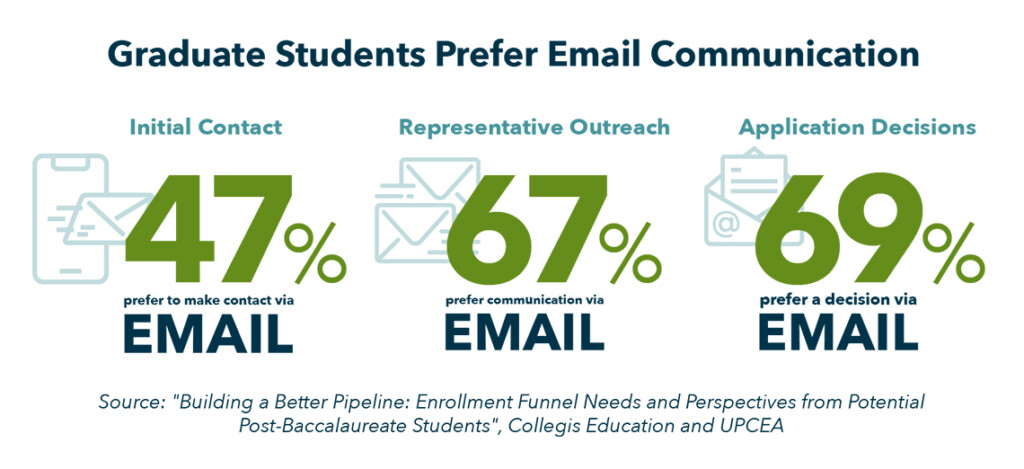
    When it comes to connecting with prospective graduate students, email reigns supreme. Whether it’s inquiring about programs (47%), application follow-ups (67%), or receiving application decisions (69%), email is the channel students trust the most.
    But here’s the catch: your emails have to be timely, personalized, and relevant in order to make an impact.

    The key to graduate enrollment success is just a click away

    The insights highlighted above are just the tip of the iceberg. Imagine what’s possible when you apply them to your graduate enrollment strategy.

    If you’re ready to refine your approach and stay ahead of the curve, we’ve got you covered. Our report dives deeper into the data and uncovers actionable insights, including:

    • Positioning your online and hybrid offerings to meet growing demand
    • Optimizing program pages to emphasize the information students value most
    • Communicating financial information proactively to convert candidates
    • Building email outreach strategies that build trust and keep students engaged

    Grab your complimentary copy of the report today, and let’s start building a better pipeline together!

    Your roadmap to winning in the competitive graduate market.

    Source link

  • Graduate Student Pipeline | Collegis Education

    Graduate Student Pipeline | Collegis Education

    Despite an increasingly competitive market, many colleges and universities still view graduate enrollment strategies as a key growth lever for their institutions. To win in the graduate enrollment space, you first need a deeper understanding of prospective graduate students’ preferences and behaviors.

    This infographic, “What Potential Graduate Students Expect in the Enrollment Funnel,” compiles some of the key data and insights from our recent collaboration with UPCEA that surveyed graduate students to uncover their needs and expectations, focusing on program preferences, delivery methods, and expectations during the inquiry and application processes.

    This infographic is only the tip of the iceberg. Learn more about how to tailor your graduate student recruitment strategies and position your programs for success and growth in our recent report, “Building a Better Pipeline: Enrollment Funnel Needs and Perspectives from Potential Post-Baccalaureate Students.”

    Source link

  • 2025 Higher Ed Disruptions | Collegis Education

    2025 Higher Ed Disruptions | Collegis Education

    As 2024 draws to a close, the holiday season inspires gratitude and reflection. Personally, I’m very grateful for the incredible partners and colleagues I’ve had the privilege to work with this year. Together, we accomplished so much.

    • We collaborated with our partners throughout the year to deliver great experiences for their students, alumni, and staff.
    • We collectively navigated some of higher education’s biggest challenges, driving partner growth and enabling impact.
    • We pushed the boundaries of innovation, embracing the power of data-enabled technologies.

    I’m so proud of the positive impact the Collegis team generated with our partners across the entire student lifecycle, from the moment prospective students first inquire about a program to the day they graduate.

    Let’s look back at some of 2024’s meaningful results

    Recruitment and Enrollment Growth

    We supported double-digit year-over-year (YoY) enrollment growth –– as high as 57% –– for many partner institutions in first-year, program-specific, transfer, and graduate populations. Engagement from our enrollment teams was instrumental in connecting students with the right programs and guiding them through the admissions process.

    IT Managed Services and Student Support

    Our IT team ensured seamless operations, providing reliable technology solutions that empower students and faculty. Some of my favorite examples from 2024 include:

    • Integrating systems to drive process improvement across enrollment, financial aid, academics, and career services.
    • Modernized campus infrastructures and networks to drive student engagement at a college’s main hall.
    • Significantly improved student experience by implementing a user-friendly, single sign-on (SSO) solution across student-facing systems.
    • Led an institution through a critical component of its digital transformation journey by migrating its on-premise, legacy ERP to a cloud-based, next-generation solution.

    Innovative Learning Experiences

    Our instructional design team enabled partners to grow their online course offerings on platforms such as Brightspace, Canvas, Coursera, and Blackboard Ultra, including course and online library development, course migrations, maintenance, faculty support, and term start/end deployment activities.

    We collaborated with the nursing program at one partner to revamp the entire library of online courses to meet new accreditation standards. Another partner was able to add 200 online courses to fill the needs of 13 online programs at three schools.

    Marketing Impact

    Our web team conducted a user survey and other research to refine a partner’s website, which increased clicks to inquire by 82%, the request for information (RFI) click rate to 71%, and clicks to apply by 7.5%.

    Another shining example was uncovering a way to target a healthcare provider’s employees who are eligible for a tuition discount. Because of healthcare regulations, the partner could not provide an audience list, so Collegis addressed this niche audience using in-platform targeting tools available on social media platforms. The return on ad spend (ROAS) is 2.2:1 overall in 2024 with plans to expand the program next year.

    Student Success

    Our student support team provided essential services to help students thrive and continue to pursue their academic goals.

    • At a public, four-year institution in Ohio, Collegis Student Success Coaches helped new students with the registration process, driving admit-to-enroll numbers and YOY growth of +66% in Fall 2024.
    • At a private, four-year institution in Texas, Fall retention was 97%, with a 90% retention rate since the partnership launched.
    • At a private, four-year institution in New York, term-over-term retention from Summer to Fall is 96%, with a 91% average retention rate since the partnership launched.
    • At a public, two-year institution in the Pacific Northwest, Collegis helped drive the sixth consecutive term of enrollment growth, with Fall enrollment trending toward +8%.

    Research and Portfolio Planning

    Because we are ingrained in every step of the student lifecycle, partners often ask us to assist with forward-looking strategies. For example, our team helped a partner understand the pros and cons of expanding their full-time Accelerated Bachelor of Science in Nursing (ABSN) with a part-time program. With our marketplace analysis, recommendations for how to offer courses, and a marketing launch plan, the institution is currently accepting applications for Summer 2025.

    Another institution asked for Collegis’s assistance to develop a multi-year strategic approach to graduate enrollments. The partner’s team lead noted that, “[Collegis] led productive brainstorming and strategic planning sessions with the team. Their deep knowledge of graduate enrollment trends, market analysis for graduate programs and expertise in leading our team from conceptualization to the delivery of specific recommendations on our next steps were invaluable.”

    Strategic Innovation and Workshop Design

    Our strategy and solutions team helped colleges and universities unpack complex problems and find innovative, human-centered solutions. We architected and facilitated numerous design thinking workshops, guiding leadership teams through critical strategic discussions about the future of their institutions. I’ll let some of the participants of the workshops explain the value they got out of the sessions:

    • “Collegis didn’t just help us evaluate our processes — they led us on a journey to uncover areas of improvement we hadn’t even considered. Their expert guidance illuminated the path forward, empowering us to create a more positive, streamlined, and truly enjoyable student experience.”
    • “My team and I were thoroughly impressed with your ability to take what essentially was a speck of an idea and collaboratively ideate possibilities for [the university] to offer new academic programs and training to underserved high school populations.”
    • “Collegis took the time to meet with leadership prior to the sessions and came prepared to tackle the challenges at the college. The activities were well thought-out and allowed individuals time to really think about the core issues. Thanks to Collegis, I am hopeful that our college can make key changes that will benefit our student experience and lighten our faculty/staff workload.”

    Looking Forward

    As you can see, 2024 has been a year of growth, innovation, and collaboration. We are grateful for the opportunity to work with our partners and look forward to even greater achievements in the years to come.

    I’d like to extend my sincere gratitude to my Collegis colleagues, who amaze me with their creativity, expertise, and dedication to delivering exceptional results. I can’t wait to see what you do in 2025 to continue inspiring each other and driving growth for our partners.

    Happy Holidays and best wishes for a prosperous New Year!

    — Kim Fahey, CEO Collegis Education

    Source link

  • 2024 Growth & Innovation | Collegis Education

    2024 Growth & Innovation | Collegis Education

    As 2024 draws to a close, the holiday season inspires gratitude and reflection. Personally, I’m very grateful for the incredible partners and colleagues I’ve had the privilege to work with this year. Together, we accomplished so much.

    • We collaborated with our partners throughout the year to deliver great experiences for their students, alumni, and staff.
    • We collectively navigated some of higher education’s biggest challenges, driving partner growth and enabling impact.
    • We pushed the boundaries of innovation, embracing the power of data-enabled technologies.

    I’m so proud of the positive impact the Collegis team generated with our partners across the entire student lifecycle, from the moment prospective students first inquire about a program to the day they graduate.

    Let’s look back at some of 2024’s meaningful results

    Recruitment and Enrollment Growth

    We supported double-digit year-over-year (YoY) enrollment growth –– as high as 57% –– for many partner institutions in first-year, program-specific, transfer, and graduate populations. Engagement from our enrollment teams was instrumental in connecting students with the right programs and guiding them through the admissions process.

    IT Managed Services and Student Support

    Our IT team ensured seamless operations, providing reliable technology solutions that empower students and faculty. Some of my favorite examples from 2024 include:

    • Integrating systems to drive process improvement across enrollment, financial aid, academics, and career services.
    • Modernized campus infrastructures and networks to drive student engagement at a college’s main hall.
    • Significantly improved student experience by implementing a user-friendly, single sign-on (SSO) solution across student-facing systems.
    • Led an institution through a critical component of its digital transformation journey by migrating its on-premise, legacy ERP to a cloud-based, next-generation solution.

    Innovative Learning Experiences

    Our instructional design team enabled partners to grow their online course offerings on platforms such as Brightspace, Canvas, Coursera, and Blackboard Ultra, including course and online library development, course migrations, maintenance, faculty support, and term start/end deployment activities.

    We collaborated with the nursing program at one partner to revamp the entire library of online courses to meet new accreditation standards. Another partner was able to add 200 online courses to fill the needs of 13 online programs at three schools.

    Marketing Impact

    Our web team conducted a user survey and other research to refine a partner’s website, which increased clicks to inquire by 82%, the request for information (RFI) click rate to 71%, and clicks to apply by 7.5%.

    Another shining example was uncovering a way to target a healthcare provider’s employees who are eligible for a tuition discount. Because of healthcare regulations, the partner could not provide an audience list, so Collegis addressed this niche audience using in-platform targeting tools available on social media platforms. The return on ad spend (ROAS) is 2.2:1 overall in 2024 with plans to expand the program next year.

    Student Success

    Our student support team provided essential services to help students thrive and continue to pursue their academic goals.

    • At a public, four-year institution in Ohio, Collegis Student Success Coaches helped new students with the registration process, driving admit-to-enroll numbers and YOY growth of +66% in Fall 2024.
    • At a private, four-year institution in Texas, Fall retention was 97%, with a 90% retention rate since the partnership launched.
    • At a private, four-year institution in New York, term-over-term retention from Summer to Fall is 96%, with a 91% average retention rate since the partnership launched.
    • At a public, two-year institution in the Pacific Northwest, Collegis helped drive the sixth consecutive term of enrollment growth, with Fall enrollment trending toward +8%.

    Research and Portfolio Planning

    Because we are ingrained in every step of the student lifecycle, partners often ask us to assist with forward-looking strategies. For example, our team helped a partner understand the pros and cons of expanding their full-time Accelerated Bachelor of Science in Nursing (ABSN) with a part-time program. With our marketplace analysis, recommendations for how to offer courses, and a marketing launch plan, the institution is currently accepting applications for Summer 2025.

    Another institution asked for Collegis’s assistance to develop a multi-year strategic approach to graduate enrollments. The partner’s team lead noted that, “[Collegis] led productive brainstorming and strategic planning sessions with the team. Their deep knowledge of graduate enrollment trends, market analysis for graduate programs and expertise in leading our team from conceptualization to the delivery of specific recommendations on our next steps were invaluable.”

    Strategic Innovation and Workshop Design

    Our strategy and solutions team helped colleges and universities unpack complex problems and find innovative, human-centered solutions. We architected and facilitated numerous design thinking workshops, guiding leadership teams through critical strategic discussions about the future of their institutions. I’ll let some of the participants of the workshops explain the value they got out of the sessions:

    • “Collegis didn’t just help us evaluate our processes — they led us on a journey to uncover areas of improvement we hadn’t even considered. Their expert guidance illuminated the path forward, empowering us to create a more positive, streamlined, and truly enjoyable student experience.”
    • “My team and I were thoroughly impressed with your ability to take what essentially was a speck of an idea and collaboratively ideate possibilities for [the university] to offer new academic programs and training to underserved high school populations.”
    • “Collegis took the time to meet with leadership prior to the sessions and came prepared to tackle the challenges at the college. The activities were well thought-out and allowed individuals time to really think about the core issues. Thanks to Collegis, I am hopeful that our college can make key changes that will benefit our student experience and lighten our faculty/staff workload.”

    Looking Forward

    As you can see, 2024 has been a year of growth, innovation, and collaboration. We are grateful for the opportunity to work with our partners and look forward to even greater achievements in the years to come.

    I’d like to extend my sincere gratitude to my Collegis colleagues, who amaze me with their creativity, expertise, and dedication to delivering exceptional results. I can’t wait to see what you do in 2025 to continue inspiring each other and driving growth for our partners.

    Happy Holidays and best wishes for a prosperous New Year!

    — Kim Fahey, CEO Collegis Education

    Source link

  • Higher education in England needs a special administration regime

    Higher education in England needs a special administration regime

    Extra government funding for the higher education sector in England means the debate about the prospect of an HE provider facing insolvency and a special administration regime has gone away, right?

    Unfortunately not. There is no additional government funding; in fact the additional financial support facilitated by the new Labour government so far is an increase to tuition fees for the next academic year for those students that universities can apply this to. It is estimated that the tuition cost per student is in excess of £14K per year, so the funding gap has not been closed. Add in increased National Insurance contributions and many HE providers will find themselves back where they are right now.

    It is a problem that there is no viable insolvency process for universities. But a special administration regime is not solely about “universities going bust.” In fact, such a regime, based on the existing FE special administration legislation, is much more about providing legal clarity for providers, stakeholders and students, than it is about an insolvency process for universities.

    Managing insolvency and market exit

    The vast majority of HE providers are not companies. This means that there is a lack of clarity as to whether current Companies and Insolvency legislation applies to those providers. For providers, that means that they cannot avail themselves of many insolvency processes that companies can, namely administration, company voluntary arrangements and voluntary liquidation. It is debatable whether they can propose a restructuring plan or be wound up by the court, but a fixed charge holder can appoint receivers over assets.

    Of these processes, the one most likely to assist a provider is administration, as it allows insolvency practitioners to trade an entity to maximise recoveries from creditors, usually through a business and asset sale.

    At best therefore, an HE provider might be able to be wound up by the court or have receivers appointed over its buildings. Neither of these two processes allows continued trading. Unlike administration, neither of these processes provides moratorium protection against creditor enforcement either. They are not therefore conducive to a distressed merger, teach out or transfer of students on an orderly basis.

    Whilst it is unlikely that special administration would enable survival of an institution, due to adverse PR in the market, it would provide a structure for a more orderly market exit, that does not currently exist for most providers.

    Protections for lenders

    In addition to there being no viable insolvency process for the majority of HE providers, there is also no viable enforcement route for secured lenders. That is a bad thing because if secured lenders have no route to recovering their money, then they are not going to be incentivised to lend more into the sector.

    If government funding is insufficient to plug funding gaps, providers will need alternative sources of finance. The most logical starting point is to ask their existing lenders. Yes, giving lenders more enforcement rights could lead to more enforcements, but those high street lenders in the sector are broadly supportive of the sector, and giving lenders the right to do something is empowering and does not necessarily mean that they will action this right.

    Lenders are not courting the negative press that would be generated by enforcing against a provider and most probably forcing a disorderly market exit. They are however looking for a clearer line to recovery, which, in turn, will hopefully result in a clearer line to funding for providers.

    Protections for students

    Students are obviously what HE providers are all about, but, if you are short of sleep and scour the Companies and Insolvency legislation, you will find no mention of them. If an HE provider gets into financial distress, then our advice is that the trustees should act in the best interest of all creditors. Students may well be creditors in respect of claims relating to potential termination of courses and/or having to move to another provider, potentially missing a year and waiting longer to enter the job market.

    However, the duty is to all creditors, not just some, and under the insolvency legislation, students have no better protection than any other creditor. Special administration would change that. The regime in the FE sector specifically provides for a predominant duty to act in the best interest of students and would enable the trustees to put students at the forefront of their minds in a time of financial distress.

    A special administration regime would therefore help trustees focus on the interest of students in a financially distressed situation, aligning them with the purposes of the OfS and charitable objects, where relevant.

    Protections for trustees

    Lastly, and probably most forcefully, a special administration regime would assist trustees of an HE provider in navigating a path for their institution in financial distress. As touched on above, it is not clear, for the vast majority of HE providers, whether the Companies and Insolvency legislation applies.

    It is possible that a university could be wound up by the court as an unregistered company. If it were, then the Companies and Insolvency legislation would apply. In those circumstances, the trustees could be personally liable if they fail to act in the best interest of creditors and/or do not have a reasonable belief that the HE provider could avoid an insolvency process.

    Joining a meeting of trustees to tell them that they could be personally liable, but it is not legally clear, is a very unsatisfactory experience; trust me, this is not a message they want to hear from their advisors.

    A special administration regime, applying the Companies and Insolvency legislation to all HE providers, regardless of their constitution or whether they are incorporated, would allow trustees to have a much clearer idea of the risks that they are taking and the approach that they should follow to protect stakeholders.

    In the event a special administration was to be brought in, we would hope it would not need to be applied to a market exit situation. Its real value, however, is in bringing greater legal clarity for lenders and trustees and more protection for students, in the current financial circumstances that HE providers find themselves in.

    Source link

  • Institutional constraints to higher education datafication: an English case study

    Institutional constraints to higher education datafication: an English case study

    by Rachel Brooks

    ‘Intractable’ datafication?

    Over recent years, both policymakers and university leaders have extolled the virtues of moving to a more metricised higher education sector: statistics about student satisfaction with their degree programme are held to improve the decision-making processes of prospective students, while data analytics are purported to help the shift to more personalised learning, for example. Moreover, academic studies have contended that datafication has become an ‘intractable’ part of higher education institutions (HEIs) across the world.

    Nevertheless, our research (conducted in ten English HEIs, funded by TASO) – of data use with respect to widening participation to undergraduate ‘sandwich’ courses (where students spend a year on a work placement, typically during the third year of a four-year degree programme) – indicates that, despite the strong claims about the advantages of making more and better use of data, in this particular area of activity at least, significant constraints operate, limiting the advantages that can accrue through datafication.

    Little evidence of widespread data use

    Our interviewees were those responsible for sandwich course provision in their HEI. While most thought that data could offer useful insights into the effectiveness of their area of activity, there was little evidence of ‘intractable’ data use. This was for three main reasons. First, in some cases, interviewees explained that no relevant data were collected – in relation to access to sandwich courses and/or the outcomes of such courses. Second, in some HEIs, relevant data were collected but not analysed. Such evidence tends to support the contention that ‘data lakes’ are emerging, as HEIs collect more and more data that often remain untapped. Third, in other cases, appropriate data were collected and analysed, but in a very limited manner. For example, one interviewee explained how data were collected and analysed in relation to the participation of students from under-represented ethnic groups, but not with respect to any other widening participation categories. This limited form of datafication, in which only some social characteristics were datafied, was not, therefore, able to inform any action with respect to the participation of widening participation students generally. Indeed, across all ten HEIs, there was only one example of where data were used in a systematic fashion to help analyse who was accessing sandwich courses within the institution, and the extent to which they were representative of the wider student population.

    Constraints on data use

    Lack of institutional capacity

    In explaining this absence of data use, the most commonly identified constraint was the lack of institutional capacity to collect and/or analyse appropriate data. For example, one interviewee commented that they did not have a very good data system for placements – ‘we are still quite Excel- based’. Excel spreadsheets were viewed as limited as they could not be easily shared or updated, and data were relatively hard to manipulate. This, according to the interviewee, made collection of appropriate data laborious, and systematic analysis of the data difficult. Interviewees also pointed to the limited time staff had available to analyse data that the institution had collected.

    Prioritisation of ‘externally-facing’ data

    Several interviewees described how ‘externally-facing data’ – i.e. that required by regulatory bodies and/or that fed into national and international league tables – was commonly prioritised, leaving little time for information officers to devote to generating and/or analysing data for internal purposes. One interviewee, for example, was unclear about what data, if any, were collected about equity gaps but believed that they were generally only pulled together for high-level reports ‘such as for the TEF’.

    Institutional cultures

    A further barrier to using data to analyse access to and outcomes of sandwich courses was perceived to be the wider culture of the institution, including its attitude to risk. An interviewee explained that the data collected in their institution was limited to two main variables – subject of study and fee status (home or international) – because of ‘ongoing cautiousness at the university about how some of that data is used and how it’s shared with different teams’.

    In addition, many participants outlined the struggles they had faced in gaining access to relevant data, and in influencing decisions about what should be collected and what analyses should be run. Several spoke of having to ‘request’ particular analyses to be run (which could be turned down), leading to a fairly ad hoc and inefficient way of proceeding, and illustrating the relative lack of agency accorded to staff – typically occupying mid-level organisational roles – in accessing and manipulating data.

    Reflections

    Examining a discrete set of activities within the UK higher education sector – those relating to sandwich courses – provides a useful lens to examine quotidian practices with respect to the availability and use of data. Despite the strong emphasis on data by government bodies and HEI senior management teams, as well as the claims made about the ‘intractability’ of HEI data use in the academic literature, our research suggests that datafication is perhaps not as widespread as some have claimed. Indeed, it indicates that some areas of activity – even those linked to high profile political and institutional priorities (in this case, employability and widening participation) – have remained largely untouched by ‘intractable’ datafication, with relevant data either not being collected or, where it is collected, not being made available to staff working in pertinent areas.

    As a consequence, the extent to which students from widening participation backgrounds were accessing sandwich courses – and then succeeding on them – relative to their peers typically remained invisible. While the majority of our interviewees were able to speculate on the extent of any under-representation and/or poor experience, this was typically on the basis of anecdotal evidence and their own ‘sense’ of how inequalities were played out in this area. Although reflecting on professional experience is obviously important, many inequalities may not be visible to staff (for example, if a student chooses not to talk about their neurodiversity or first-in-family status), even if they have regular contact with those eligible to take a sandwich course. Moreover, given the status often accorded to quantitative data within the senior management teams of universities, the lack of any statistical reporting about inequalities by social characteristic, as they pertain to sandwich courses, makes it highly likely that such issues will struggle to gain the attention of senior leaders. The barriers to the effective use of metrics highlighted above may thus have a direct impact on HEIs’ capacity to recognise and address inequalities.  

    The research on which this blog is based was carried out with Jill Timms (University of Surrey) and is discussed in more detail in this article Institutional constraints to higher education datafication: an English case study | Higher Education

    Rachel Brooks is Professor of Higher Education at the University of Oxford and current President of the British Sociological Association. She has conducted a wide range of research on the sociology of higher education; her most recent book is Constructing the Higher Education Student: perspectives from across Europe, published (open access) with Policy Press.

    Author: SRHE News Blog

    An international learned society, concerned with supporting research and researchers into Higher Education

    Source link

  • President-Elect Trump Nominates Lori Chavez-DeRemer for DOL Secretary and Linda McMahon for Education Secretary

    President-Elect Trump Nominates Lori Chavez-DeRemer for DOL Secretary and Linda McMahon for Education Secretary

    by CUPA-HR | December 10, 2024

    Over the past few weeks, President-elect Donald Trump has announced several nominations for leads at federal agencies. Of relevance to CUPA-HR members, Trump has nominated Rep. Lori Chavez-DeRemer (R-OR) to serve as secretary at the Department of Labor (DOL) and Linda McMahon to serve as the Department of Education (ED) secretary. The following analysis dives into how Chavez-DeRemer and McMahon may lead each agency’s regulatory action on a few of the most pressing policy issues.

    DOL Secretary

    FLSA

    Chavez-DeRemer was nominated to serve as labor secretary on November 22. Chavez-DeRemer was viewed as a surprising pick for many in the labor and employment policy space given her Congressional record and support from labor unions. Her nomination raises questions about the direction in which DOL will go under the Trump administration with respect to certain policies and regulations, such as the overtime regulations under the Fair Labor Standards Act (FLSA), joint employer regulations, and independent contractor regulations.

    As a reminder, the Biden administration’s overtime regulations were struck down in federal court on November 15. The ruling strikes down all components of the Biden administration’s rule, including the July 2024 and January 2025 salary thresholds and the triennial automatic updates. On November 26, however, the Biden administration filed a notice of appeal to the 5th U.S. Circuit Court of Appeals in hopes of reinstating the rule before their term ends.

    Chavez-DeRemer has not publicly supported or opposed the Biden administration’s overtime rule, but labor unions have supported the rule through regulatory comments and public statements. Many anticipated that a second Trump administration’s DOL would stop defending the Biden rule in court if the Biden administration chose to appeal. Given organized labor’s support of Chavez-DeRemer, there is a chance that DOL under her authority would continue to defend the rule in court. However, it appears unlikely that the rule in its entirety would be defended, and it is more likely that DOL would attempt to defend the July salary threshold only. As a reminder, the salary threshold increase that took effect on July 1, 2024, used the Trump administration’s 2019 overtime rule methodology to determine the level, which could lead to a possible reasoning for defending the July salary threshold level.

    Joint Employer and Independent Contractor Rules

    Similar to the overtime regulations, the future of other labor and employment regulations relevant to higher ed HR appears uncertain in the face of Chavez-DeRemer’s nomination. Two DOL regulations — the joint employer and independent contractor rules — seem certain to swing back in favor of policies like those implemented under the first Trump administration, but Chavez-DeRemer’s inconsistent record in Congress on both issues makes it unclear how DOL under Trump will regulate them.

    Notably, Chavez-DeRemer is one of three Republican cosponsors of the Protecting the Right to Organize Act, a Democrat-backed bill that would expand organized labor’s power over workers and employers. There are provisions in the PRO Act that a second Trump DOL is not anticipated to implement, including provisions to apply a controversial “ABC” test for worker classification under the National Labor Relations Act and to adopt a broader joint employer standard under the NLRA than the standard implemented by the Trump administration. Given her support for the PRO Act, Chavez-DeRemer could change direction from the anticipated actions expected from the Trump administration with respect to joint employment and independent contractor status, along with other labor policies.

    Education Secretary

    Linda McMahon was nominated to serve as ED secretary on November 19. McMahon’s nomination was also considered a surprise, but for reasons surrounding her previous experience. During Trump’s first term, McMahon served as the administrator of the U.S. Small Business Administration, and most recently, she served as co-chair of Trump’s transition team. She was previously an executive for World Wrestling Entertainment (WWE). With respect to education, McMahon served as a trustee for Sacred Heart University for over a decade, and she also briefly served on the Connecticut Board of Education.

    Title IX

    McMahon’s previous positions and experience do not provide much insight into her stance on higher education policy. That being said, we expect that McMahon will largely follow the education policy direction of President-elect Trump if she is confirmed. With respect to Title IX, it is expected that Trump will seek to reimplement his administration’s 2020 Title IX regulations nationwide, which we anticipate McMahon will follow. It remains to be seen if McMahon and the Trump administration’s ED will attempt to issue new Title IX regulations that may be more conservative than those issued in 2020 to address concerns regarding rights and protections for transgender students.

    Looking Ahead

    Both Chavez-DeRemer and McMahon will face Senate confirmation hearings by relevant oversight committees and votes by the full Senate. During confirmation hearings, more information about the nominees’ priorities at their respective agencies will be revealed. CUPA-HR will keep members apprised of any updates related to the confirmation process of Chavez-DeRemer and McMahon as well as regulatory updates from DOL and ED.


    Source link

  • The Importance of Teacher Training in Education Technology

    The Importance of Teacher Training in Education Technology

    education-technology-childhood-early-parents

    Technology is an essential aspect of teaching and learning, and the integration of technology into early childhood education classrooms is reshaping childcare. And while many of today’s early childhood teachers are comfortable with technology, many are nervous to learn something new or do things differently.

    That’s where teacher training can help. Let’s take a look at why your childcare center’s teachers must be trained to take advantage of education technology! 

    Enhancing communication with parents

    The average smartphone owner uses 10 apps per day and 30 apps each month, according to the app company Builtfire. That number is even higher for millennials, the largest group of today’s parents. Almost a quarter of this age group open an app more than 50 times a day!

    These parents expect real-time updates about what their child is doing in your daycare. Your teachers must be trained to send photos, videos, and notes throughout the day to keep families happy. Choose an app with family engagement capabilities that is easy to use and part of an all-in-one childcare software solution. Then sharing updates won’t require much training so your teachers can spend their time learning about other ways to use technology.

    Plus, this transparency creates a supportive learning environment!

    Access to a wealth of resources

    If your teachers are not trained to use education technology, they will miss out on access to educational content from around the world and children will not reap the benefits either. 

    A study by the American Academy of Pediatrics found there is “emerging evidence to suggest that interactive apps may be useful and accessible tools for supporting early academic development.” Your teachers must be trained to take advantage of these apps, while understanding that screen time must be limited.

    Online libraries, databases, and educational websites provide information on virtually any topic, allowing teachers to supplement their curriculum with up-to-date materials. This accessibility ensures that both teachers and young learners can expand their knowledge beyond traditional textbooks.

    Education technology saves time

    The 2024 Child Care Management Software Industry Trends Report from Procare Solutions found that about 30% of survey respondents said each teacher spends between three and five hours a week doing lesson planning, and a similar percentage noted their centers create their own curriculum.

    So, beyond direct instruction, technology can significantly reduce the time teachers spend on these types of tasks, and on assessments and other paperwork. Childcare management software can streamline time-intensive processes, giving teachers more time to focus on what truly matters — the children in their care. 

    A strong digital curriculum that’s easy to use supports your teachers by handling lesson planning that takes time away from children. When childcare centers equip teachers with state-of-the-art online curriculum at their fingertips, teachers and young learners reap the benefits of education technology.

    How to encourage your teachers to embrace education technology

    To maximize the benefits of technology, ongoing professional development is essential. Employee retention rates rise by 30-50% when companies prioritize staff learning!

    Workshops, webinars and websites that offer professional development and credentials can help teachers stay abreast of the latest technological advancements. 

    By investing in continuous training, your childcare center can ensure that teachers are confident and competent in integrating technology into their classrooms.


    To learn more, visit www.procaresolutions.com


    Source link

  • The Keys to Better Post-Pandemic Education

    The Keys to Better Post-Pandemic Education

    Home » Education Technology » Educating in a Post-Pandemic World. What Things Should We Take Away? And What Things Should Be Left in the Past?

    In 2020, the global pandemic shook the foundation of almost every aspect of our everyday lives, and education was no different. Educators needed to change how they taught and change it fast. It was a world of Zoom calls and Google Classroom assignments.

    But now that we’re almost five years out, what things actually stuck? Was this new way of learning successful and is it feasible for schools to implement these changes long term?

    Learning today

    The Association for Educational Communications and Technology (AECT) is a professional association of instructional designers, educators and professionals who provide leadership and advise policy makers to sustain a continuous effort to enrich teaching and learning. Members of AECT offer their perspectives of how learning today was impacted by the sudden shift and new uses of technology during the pandemic.

    Dr. Theodore J. Kopcha, a former secondary mathematics teacher and AECT board member whose current research explores the integration of innovative technologies into the classroom, has seen mixed responses. “There are some schools where the pandemic pushed teachers to create an online asynchronous learning experience that could complement in-classroom teaching but also function in the absence of the teacher… In the meantime, we’ve returned to in-person teaching, which, for some teachers, is only strengthened by this online repository of information.”

    Now, though, we’re seeing a bit of a rift between various groups of educators with some continuing to embrace the benefits of virtual learning and others who want nothing to do with the online space again.

    With these two opposing views, the educators who support online learning end up stepping up and becoming technology leaders in their buildings without stepping into a new leadership position.  “These teachers are often our best teachers, and is too often the case, we are asking our best teachers to do even more than they already are,” said Dr. Cecil R. Short, assistant professor and director of secondary education at Emporia State University and AECT’s Teacher Education Division board member. However, there are many ways for educators to use these new technology integrations. 

    Best practices

    Beth Willoughby, district librarian in Dunellen, NJ and active AECT member has observed that “teachers are more comfortable utilizing technology in their lessons… [and] are collaborating more both in their grade level or subject area and with other teachers.” She also notes that “students are more willing to email a question than talk to a teacher which is a great help for the extremely shy students.”

    As a parent, Dr. Kopcha has seen through his children that these new online systems create a bit of a ‘lost in cyberspace’ experience. Each teacher tends to organize materials in a different way. “As a parent and educational technologist, it became apparent that teachers and students would benefit from efforts to keep the online learning experience more standardized across classes and teachers.” This sort of standardization would take away some autonomy from the teachers, but the student experience would vastly improve.

    Final thoughts

    The impact of the pandemic on schools continues through today. As Dr. Kopcha said, “the pandemic was more of a ‘blip’ that came and went, and what was left was a vast amount of online resources that teachers created and continue to build upon to this day.” Dr. Short observed that “going into the pandemic, we knew from several research studies that teachers and schools were not prepared to support virtual teaching. Coming out of the pandemic, many more teachers, schools, and even states are now requiring educators to be prepared for teaching across various modalities — in-person, online, and blended as a combination of both.”

    Source link

  • Skilled for the Future: How China is Transforming Vocational Education with Gerard Postiglione

    Skilled for the Future: How China is Transforming Vocational Education with Gerard Postiglione

    If there’s one thing we know for sure about Confucian societies, it’s the value they place on scholarship.  Being a student doesn’t just connote future financial success; the very act of studying itself carries an important element of moral virtue.  It’s one of the things that has driven university participation rates to extraordinarily high levels in East Asia, and also among diaspora populations in countries around the world.  Here in Canada, 25 years ago, Statistics Canada polled parents across Canada on their expectations for their children’s education, and they literally could not fins a Chines parent whose ambitions for their children involved community college.

    But not everyone can go to university.  Well, they can, but it doesn’t leave you with the most balanced labour force.  So if you’re running a higher education system and you want to get people to focus on vocational skills, what do you do?  Well, if you’re China, one strategy might be to create vocational credentials but attach to them something a little bit more academic…like a degree?  Call it a “vocational university”

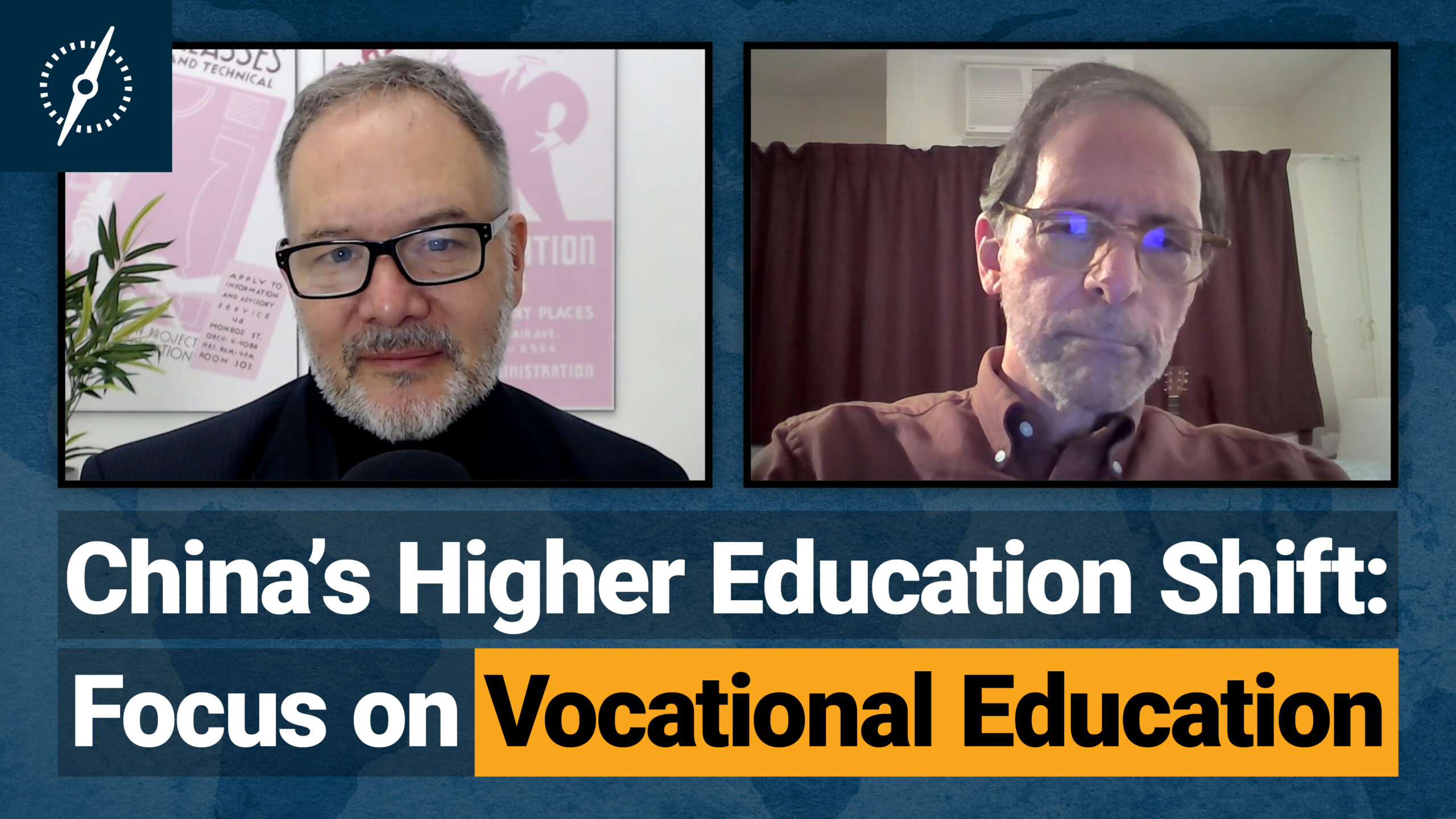
    With me once again today, this time to talk about Vocational higher education in China is Gerard Postiglione, professor of higher education at the University of Hong Kong.  We cover the origins of the Chinese government’s vocational education policy, it’s recent successes, and the development of a new type of institution called a vocational university.  It’s a good, quick tour through an underappreciated part of the global higher education system. 

    Let’s turn things over to Gerry.


    The World of Higher Education Podcast
    Episode 3.13 | Skilled for the Future: How China is Transforming Vocational Education with Gerard Postiglione

    Transcript

    Alex Usher (AU): Gerry, could you give us a sense of where vocational education traditionally fits within Chinese tertiary or post-secondary education? This is a Confucian society, and as places like Korea and Japan have shown, there’s a strong cultural preference for book learning. The connotations of being a scholar often include elements of moral virtue. So, where does vocational education fit into this?

    Gerard Postiglione (GP): Well, China has gone through tremendous transitions in the 20th century—from the Qing dynasty to the Republic, and then from the Republic to the People’s Republic of China in 1949. At that time, China was overwhelmingly poor, with about 80 to 85 percent of the population living in poverty. There was a lot to do. The first phase of change involved learning from the Soviet Union, which placed a strong emphasis on linking schools and factories, education, and labor.

    During this period, there was no issue of employment because jobs were assigned. But with the market reforms starting in 1978 and accelerating in the 1980s, everything changed. In 1985, there was a major Communist Party policy to universalize nine years of basic education. However, at the same time, access to universities remained extremely limited—only about 1 to 2 percent of the 18-to-22-year-old age group. At the senior secondary level, vocational and technical education accounted for about 50 percent of enrollment. That was a significant shift toward developing technical skills in senior secondary high school. That was a major change, and it was very difficult. Of course, there were costs and finances to handle, equipment to manage, and so on but that’s when China launched into its first phase of technical vocational education.

    AU: There’s always been kind of a view, and this isn’t restricted to China, of course, that vocational education is a “less than” choice. Earlier this year, there was a big stir about a student named Jiang Ping from a fashion vocational high school. She won a national math competition beating students from very prestigious institutions. She said she wanted to stay in vocational education, which caused quite a sensation. Though, of course, there was even more attention later when it turned out her teacher had helped her during the competition, which led to her disqualification. But it reflects this broader tension, doesn’t it? That vocational education is still seen as a distant second choice to a traditional academic university if you can get in. What do you think?

    GP: The Jiang Ping case was widely reported, and it was unfortunate. I can understand her teacher’s hope to see her student excel, especially in such a high-profile competition as the Alibaba Global Mathematics Competition. It was the first time contestants were allowed to use AI tools, which added a new dimension. But when it was discovered that her teacher had helped her during the competition, she was eliminated.

    As for the broader question, yes, that traditional Confucian view of education as primarily academic does still resonate, and you’re right—it’s not unique to China. In many countries, academic higher education is seen as more prestigious and valuable than vocational pathways. In China’s case, for students moving into senior secondary education, if they weren’t excelling academically, vocational technical education became the primary option for about 50 percent of students.

    It’s also worth noting that China’s higher education system includes both four-year bachelor’s degrees and three-year specialized colleges, similar to community colleges. So there’s always been a dual pathway. But roll ahead to the future, I think those attitudes are starting to shift, especially with the leadership taking strong steps to highlight the value and persuade people of the value of vocational and technical education in an age increasingly defined by high technology and specialized skills.

    AU: In 2019, the Chinese government introduced the National Vocational Education Reform Implementation Plan. What were its key elements? What were they trying to achieve?

    GP: That was a massive plan, introduced at a time when access to senior secondary education had reached about 50 percent, moving China past the stage of mass higher education and into universal higher education, with a postsecondary access rate of around 60 percent. The government’s approach was very strategic. They looked at their industrial development plans, identified key industries, and considered their long-term goals for funding science and technology, as well as for developing both high-level and mid-level skills.

    The aim was clear: to become the global leader in vocational education. This included strengthening the three-year diploma programs, which already make up nearly 50 percent of China’s higher education system and transforming many of the rapidly expanded provincial universities into application-oriented institutions offering bachelor’s degrees that are heavily vocational and technical in focus.

    I’ve seen this transformation firsthand through work with Asian Development Bank projects in provinces like Gansu and Yunnan. In Gansu, they built an entire city of vocational and technical education colleges, referred to as a “vocational technical city.” Yunnan, meanwhile, has become a model province for western China, pushing ahead with this initiative.

    This plan is not just about upgrading skills but also about providing jobs for graduates in a slowing economy, with GDP growth now at around 5 percent. It’s a highly ambitious and comprehensive effort to align education with the needs of both the labor market and the country’s economic development.

    AU: Let’s talk about vocational universities specifically. My understanding is that they come out of the same period or the same plan. How do they differ from traditional universities or vocational colleges? What makes their programming and curriculum unique?

    GP: Well, the first thing to note is that the entire system, including the top-tier universities, is now putting more emphasis on application-oriented skills. That said, the top universities—like the flagship and highly-ranked institutions—are focused on the rapid advancements in science, technology, and innovation, so there’s not as much of an issue there.

    But for the rest of the system, which is massive, the focus is aligning more closely with the labor market and economic needs. Vocational universities—now sometimes translated as Colleges of Applied Science or Universities of Applied Science—are distinct in their close relationship with industry. That’s the key element. They aim to bring industries much closer to the education system.

    This is challenging because many of the academics at these institutions were trained in traditional disciplines, often with PhDs, and they’re now being asked to collaborate with industry, which is more focused on production and profits. But that collaboration is crucial to the success of these institutions. At the upper levels, this is working quite well—for example, Huawei now employs a large number of PhD holders and is very application-oriented. But for the rest of the country, it’s more complex.

    State-owned enterprises are heavily encouraged to engage with these application-oriented universities. Meanwhile, the private sector, which is growing, also plays a significant role. Private vocational colleges or universities of applied science have a strong incentive to ensure their graduates get jobs—otherwise, they won’t attract students. This dynamic means there’s learning on both sides, with the public and private sectors influencing each other.

    Another distinct feature of these institutions is their emphasis on skills certification. Students earn credits for the skills they acquire, and a credit bank system is in place to support this. This allows students to build up credentials over time, aligning their education with workforce needs.

    AU: You raised something here that I think is kind of important because in India, they’re building what are called skills universities. I can’t quite figure out how they work or what they’re supposed to do, but there seems to be a big corporate aspect to them. For instance, they’re inviting industries directly to teach programs or design the curriculum. Is that also happening in Chinese vocational universities, whether public or private?

    GP: Well, I’ve only been to India a couple of times, so I wouldn’t claim to be an expert on the system there. But from what I’ve seen, they’re dealing with similar issues around skills training and apprenticeships for college students. That said, I think China is moving much faster in this respect.

    In China, there’s a real effort to bring industry into the universities. This involves recruiting members of companies to go into universities and teach, collaborate with academic staff, and form centers for training and experimentation. There are experimental vocational—or let’s call them colleges of applied science—being set up in cities all over the country. This is a very serious effort, and both the government and the Communist Party are strongly committed to making it work.

    China is also working on developing proper evaluation systems for this model, though that process is still underway. But the key is getting industry directly involved in the university, and that’s a central part of the plan. There’s also a focus on internationalization, with China being very open to learning from models around the world. For instance, I’ve been asked to introduce elements of the German model. I actually published a paper with a Chinese economist comparing the German model with China’s approach, and that’s been influential in shaping how this sector is developing.

    AU: Is this focus on vocationalization a reaction to high graduate unemployment from traditional universities? I recall that back in 2014, China planned to convert several universities into polytechnics. Is this part of the same trend?

    GP: Yes, I think the translations of the terms—whether you call them polytechnics, universities of applied science, or something else—don’t really matter too much. The key thing is that these are application-oriented bachelor’s degree programs. And the introduction of these degrees addresses a critical issue: families in China traditionally don’t want their children to go anywhere but academic higher education. But if a degree comes from a university, even if it’s vocationally oriented, that helps resolve concerns about the image of vocational education.

    Graduate unemployment is certainly a pressing issue. The economy is growing more slowly than before, and when you move from mass higher education to universal higher education—China’s access rate is now over 60%—it’s inevitable that this kind of challenge emerges. It’s partly a transitional phase, but it’s also something the government is addressing with both short-term measures and longer-term plans.

    I’ve seen this kind of thing before. For example, when I was a student in the United States during an economic downturn, graduate unemployment was a serious issue for several years. China is dealing with something similar now. It’s likely to take three, four, or even five years to turn things around, but the government is actively working on stimulus plans to address these short-term challenges.

    At the same time, they’re focusing on the longer-term development of a higher education system that aligns with the labor market and the country’s broader economic goals. It’s a significant concern, but I think they’re holding the line for now.

    AU: Sure. And so what’s student uptake like at these vocational universities? I mean, you said earlier that if their graduates don’t get jobs, then students won’t apply. So are students actually enrolling in these institutions? Do parents want their kids to attend? What’s the demand for this compared to traditional universities?

    GP: Well, the demand for education in China is still tremendous. It’s deeply rooted in Chinese civilization. Education is highly valued, and many of my own students, even in Hong Kong, have gone all the way through the system. If there were such a thing as a second or third doctorate, I’m sure they’d pursue that too. So yes, the demand is there, and the students are generally very good. There’s a heavy emphasis on education across the board.

    Now, when it comes to uptake, there’s a bit of a difference between the state-run system and the private sector. For public vocational universities, there’s no problem with enrollment because these are degree-granting programs. Degrees carry significant weight culturally, and parents and students see the value in them.

    The private sector is a different story. Private institutions don’t receive much government funding; they rely on student fees, investments, and donations. Some private vocational colleges are extremely successful and manage to compete well, but they need to deliver outcomes—mainly, good job placements—or they won’t attract students. What’s interesting is how the state system learns from the private sector. The private colleges have to be responsive to the labor market to survive, and their success in this area can influence public institutions.

    For the public system, though, uptake isn’t really an issue. Plus, there are opportunities for additional training. For example, if you have a bachelor’s degree and find that you need certain skills for the job market, you can take a “top-up” year to get the training you need. It’s a flexible system that adapts to labor market demands.

    AU: Right. Well, that’s very similar to our community colleges in Canada. Final question: as China continues to reform and expand its higher education system, what do you see as the future for vocational universities? Are they going to become a bigger part of the mix moving forward? And if so, will it be focused on certain fields, or do you see it expanding more broadly?

    GP: Vocational and technical higher education in China is already a major component of the higher education system, and it’s going to remain that way. One of the reasons for China’s productivity in areas like green skills, battery production for electric vehicles, and other technical aspects of the green economy is this strong foundation in vocational education.

    China has learned a lot from international experience—working with companies like Tesla, IBM, and John Deere—and it’s applying those lessons. The government’s plan is to go full throttle with higher vocational technical colleges, polytechnics, or colleges of applied science—whatever you want to call them. And they have a long-term strategy to ensure these institutions are central to their higher education system.

    I’d also expect that other countries in the region, particularly middle-income developing countries, will follow this path. China’s approach is setting an example for how to align higher education with economic development, especially in sectors that are crucial for the future.

    AU: Gerry, thanks so much for being with us today.

    GP: You’re very welcome.

    AU: And it just remains for me to thank our excellent producers, Tiffany MacLennan and Sam Pufek, and of course, you, our listener, for joining us. If you have any questions or suggestions for future episodes, please get in touch at [email protected]. Don’t forget to subscribe to our YouTube channel and join us next week for the final episode of the year, featuring Robert Kelchen from the University of Tennessee. He’ll share his top 10 stories in U.S. higher education. Bye for now.

    *This podcast transcript was generated using an AI transcription service with limited editing. Please forgive any errors made through this service.


    Source link