This audio is auto-generated. Please let us know if you have feedback.
Dive Brief:
School districts with strong budget management and the ability to raise revenue, in addition to state funding access, will be able to better weather the financial storm exacerbated by recent federal changes in education policy, according to a Moody’s Ratings’ report released last week.
A significant increase in state aid could stave off effects from shrinking federal support under the Trump administration. However, any states’ plans to bolster school funding may be scrapped to adapt to other federal policy changes such as reduced Medicaid or disaster recovery funding.
School districts in most states have an average ability to increase revenue. Districts in Arizona, Kansas, Michigan, New Mexico, Nevada and Oklahoma have more limited revenue-raising flexibility than other states, the report said.
Dive Insight:
Districts have faced financial turmoil in the past few months, as the Trump administration continues to change course on federal funding that was expected to be available for districts.
States with a greater dependence on federal funding “will translate into additional credit pressure if federal funding is reduced,” the report said. Arizona and Oklahoma, for example, rely on federal funding for more than 20% of their K-12 budgets.
Overall, the federal government provides 13.6% of total K-12 funding, according to the Education Data Initiative.
Additional changes on the federal level will impact school district budgets such as an expansion in school choice — with the nation’s first federal school voucher program available nationwide established through the “One Big, Beautiful Bill.” The major tax and spending package was narrowly passed by Congress and signed by President Donald Trump earlier this month.
“This shift could result in enrollment being redirected to alternatives outside traditional K-12 districts,” the Moody’s report says.
In another Moody’s report released in April, the financial outlook and research organization showed that states are unlikely to fill gaps left by the federal government changes, leaving districts with a “limited menu of options.”
“While many states have indeed increased their K-12 education funding, whether these efforts will fully offset the impact of reduced federal support remains uncertain,” said Gregory Sobel, senior analyst and vice president at Moody’s Ratings, in an email to K-12 Dive. Sobel said that “while state support is growing, it may not be sufficient to fully counterbalance the combined effects of reduced federal aid and heightened competition.”
Districts are already feeling the blowback from federal-level changes.
About 85% of superintendents said they have existing contracts previously paid with federal funds that are currently being withheld, forcing them to backfill with local dollars, according to a survey released Tuesday of nearly 630 district leaders across 43 states.
As a result of these spending changes, nearly three quarters of surveyed districts will have to scrap academic services for students, such as tutoring and before or after-school programming, according to the poll conducted by AASA, the School Superintendents Association. Half of superintendents said they will have to make labor cuts, including in special education.
“This isn’t a future problem; it’s happening now,” one superintendent said in the survey. “Our budget was set with these funds in mind. Their sudden withholding has thrown us into chaos, forcing drastic measures that will negatively impact every student, classroom, and school in our district.”
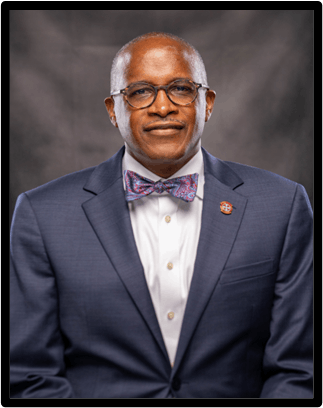
Dr. Walter M. KimbroughThe United Negro College Fund (UNCF) has appointed Dr. Walter M. Kimbrough, a seasoned higher education administrator known for his transformational leadership at historically Black colleges and universities, to serve as Executive Vice President of Research & Member Engagement, effective September 2, 2025.
The appointment represents a strategic move by UNCF to strengthen its support for member institutions through enhanced research capabilities and deeper engagement initiatives.
Kimbrough, who is an expert on Black fraternities and sororities, brings decades of presidential experience from multiple UNCF member institutions, positioning him uniquely to understand the challenges and opportunities facing HBCUs today.
“Dr. Kimbrough’s appointment is the culmination of our lengthy search for a transformational leader,” said Dr. Michael L. Lomax, UNCF President and CEO, in announcing the selection to UNCF staffers.
Kimbrough’s extensive presidential portfolio includes leadership roles at three UNCF member institutions: Dillard University in New Orleans, Philander Smith College (now University) in Arkansas, and most recently as interim president at Talladega College in Alabama. UNCF officials add that this breadth of experience across different regions and institutional contexts provides him with an insider’s perspective on the diverse needs of UNCF’s 37 member institutions.
In his new role, Kimbrough will report directly to the Office of the President, working alongside Dr. Lomax on strategic initiatives while collaborating with the Chief Operating Officer on operational priorities. His portfolio encompasses four major UNCF initiatives that span the educational pipeline from K-12 through higher education.
The Frederick D. Patterson Research Institute (FDPRI), one of the key components under his leadership, serves as UNCF’s research arm, producing critical data and analysis about HBCUs and their impact on American higher education. As chief research officer and principal editor of research publications, Kimbrough will guide the institute’s scholarly output while serving as a spokesperson for UNCF in media appearances and external engagements.
Kimbrough will also oversee the Institute for Capacity Building (ICB), positioning him as UNCF’s lead consultant for member institutions seeking to strengthen their operational and academic capabilities. This role leverages his presidential experience, allowing him to provide peer-to-peer guidance to current HBCU leaders navigating similar challenges he has faced throughout his career.
His responsibilities also extend to HBCUv® Digital Learning Solution, UNCF’s innovative technology platform designed to support online and hybrid learning at member institutions—a particularly relevant initiative in the post-pandemic educational landscape.
“I have had the great honor to serve four UNCF member institutions, three as president, and for over 20 years I benefited from the advocacy and support of UNCF,” Kimbrough told Diverse. “This position allows me to pour back into UNCF, its member institutions and students.”
Dr. Andrew J. SeligsohnHigher education in the United States has come under increasing scrutiny — but not always for the right reasons. Critics claim that colleges and universities award degrees with little economic value, limit ideological expression on campus, and operate primarily for their own financial interests, rather than as institutions of shared public value. While much in this narrative is false, it nonetheless affects the public’s attitude toward higher education and individuals’ decisions about pursuing a postsecondary degree, which may be detrimental to their economic interest.
When these critiques are made in bad faith, we should counter them with facts about the value of college attainment. It remains true for example, that a college degree is likely to yield a significant boost in earnings. Nonetheless, anyone who cares about higher education must also ask why these arguments resonate so deeply with the public. Where real frustrations are fueling legitimate skepticism, addressing those concerns can both improve higher education’s reputation and enhance its value for students, families, and society. Since the experiences that give rise to frustration and receptivity to attacks on higher education are personal experiences, it pays to drill down into the particulars to figure out what’s going on.
In that spirit, Public Agenda, in partnership with Sova and the Beyond Transfer Policy Advisory Board, set out to deepen our collective understanding of learner experiences with the credit transfer process. We knew from research on enrolled students that transfer was a source of pain for many learners. But we didn’t know how many people were affected, how much it mattered to them, and how it shaped their views of higher education more broadly. With support from ECMC Foundation, we fielded a national survey of adult Americans that interrogates transfer experience and outcomes.
Dr. Lara CouturierThe findings were striking, and they should serve as a call to action for institutions of higher education. Nearly 4 in 10 respondents reported that they had tried to transfer credit toward a college degree or credential. This included credits earned at a previous college or university, as well as credits earned from nontraditional sources. In fact, more than a third attempted to transfer credits earned from workplace training, military experience, industry certification, vocational or trade school, or other prior learning. With more households feeling the cost of inflation and needing to upskill to survive in this economy, and more higher education institutions facing enrollment declines, we should be finding ways to develop more on-ramps and clear the path to a college degree.
Unfortunately, the survey revealed that Americans who attempt to transfer encounter convoluted paths, often losing credit hours, money, and motivation along the way. One in five respondents reported having to repeat a class they had already taken because their credits didn’t transfer. Thirteen percent reported running out of financial aid as a result of having to repeat courses. And, most concerning, 16% reported that they gave up on pursuing a college degree or credential because the process of transferring was so difficult. It’s clear difficulties with transfer are not only inconveniences — they’re significant financial burdens and barriers to completion.
We also sought to understand how these direct experiences shape individuals’ broader attitudes toward higher education. We found it profoundly troubling that 74% of respondents who had tried to transfer credit agreed with the statement that two- and four-year higher education institutions care more about making money than about educating students. In fact, respondents who had tried to transfer credit were more likely to hold this jaded view than those who had attended college but had not transferred or those who had no prior experience with higher education. So while some of the current attacks on higher education may be in bad faith, it should not be surprising that they find a receptive audience among so many Americans who recall feeling personally misled.
We know, then, that credit transfer needs reform — but what exactly does that look like? Public Agenda also surveyed Americans about potential interventions, and the results are promising. First, when asked what should happen to a college with a track record of not accepting many credits for transfer, Americans felt public accountability would be more helpful than heavy-handed punitive approaches. Fifty-four percent of Democrats and 47% of Republicans agreed that institutions should have to make a plan to improve credit transfer rates. Conversely, just one-third of Republicans and Democrats thought colleges should lose their funding. But what might go into a plan for improvement? Our survey found broad support among Republicans, Democrats, and independents for a variety of policies intended to make it easier for students to transfer credits. Support is notably strong for requiring that students have free and easy access to their transcripts, credentials, and degrees; requiring institutions to create public databases with transfer information; and requiring that prospective transfer students are quickly told how many credits will be accepted.
The benefits of a better transfer process are clear and compelling. Students would face fewer obstacles to completing their degrees, leading to higher graduation rates, better individual economic outcomes, and broader prosperity. Just as importantly, higher education would rebuild trust with the public by showing that institutions are committed to serving students—not just collecting tuition dollars. And the benefits of this renewed trust extend beyond the higher education system. The perception that public institutions don’t care about ordinary Americans is a key element of the challenge our broader democracy is facing. Since the education system is a direct way many people interact with our government, restoring confidence that higher education works for all Americans can further inspire faith in public institutions.
If we ignore issues like the broken credit transfer system, skepticism about higher education will continue to fester. Worse, more students may give up on college altogether, missing out on opportunities for personal and professional growth—all of which ultimately erodes our democracy. Pushing back against misinformation isn’t the only way to defend higher education; we must acknowledge and address the real barriers students face. Credit transfer is an experience shared by many with cross-partisan support for reform—now is the time to act. Reforming the transfer process won’t solve every challenge facing higher education, but it’s a clear and necessary step toward improving the system for the good of both students and institutions themselves.
Dr. Andrew J. Seligsohn is president of Public Agenda, a national research-to-action organization. Dr. Lara Couturier is a partner at Sova, a higher ed advocacy organization.
As colleges across the country cut staff, implement hiring freezes and slash budgets, fewer people could see higher education as a long-term career path, according to Kevin McClure, a professor of higher education and chair of the Department of Educational Leadership at the University of North Carolina at Wilmington.
In a recent episode of The Key, Inside Higher Ed’s news and analysis podcast, McClure told IHE editor in chief Sara Custer that in the current environment, demoralization is high among faculty and staff. “It’s just really difficult to do good work. There’s a significant amount of uncertainty, there is stress, there is trauma that people are still living through from COVID and the great resignation … and there is no doubt that the workforce in higher education is struggling,” he said.
“It’s not the case that across the board every institution is in this scenario …but every single institution is being cautious right now, and there is enough uncertainty and enough question about multiple revenue streams coming into institutions that there are cascading effects for working conditions.”
McClure said he’s concerned institutions are not doing a good enough job of articulating their values. This, he said, is what colleges should “double down” on to combat the demoralization he’s observed in current employees and to show future talent “what they’re all about.”
“In the current environment, I think we have seen some backsliding, some backtracking, some revisions of our websites—all of these signposts suggesting to people who work here that the things we stand for are actually maybe flexible and can be modified as the political winds blow.”
New Jersey City Universityis set to become part of nearbyKean Universityafter the two public institutions signed a letter of intent Thursday to combine by June 2026. The merger would be subject to accreditor and regulatory approvals.
Under the plan, Kean would assume NJCU’s assets and liabilities and operate the institution as “Kean Jersey City,” the universities said.Executive oversight would fall to Kean’s president, who would appoint a chancellor to lead Kean Jersey City.NJCU will have some representation on Kean’s board of trustees, per the letter.
NJCU signaled in March that it planned to pursue a merger with Kean after past years of budgetary struggles and a directive from a state-appointed monitor to find a financial partner.
Dive Insight:
In Thursday’s release, Kean and NJCU said that their combination would “preserve NJCU’s mission of serving first-generation, adult and historically underserved students while advancing Kean’s role as the state’s urban research university and a newly designated R2 research university.”
Luke Visconti, chair of the NJCU’s trustee board, said Thursday’s letter of intent “provides an important framework for the detailed discussions that will follow.”
Still to come are full due diligence, a definitive agreementand a detailed outline for combining the two public universities. That process will be collaborative and “rooted in student and community engagement” so that the merger with Kean celebrates the two “distinct cultures” of the universities, NJCU Interim President Andrés Acebo said in a statement.
According to the institutions, an integration planning team with representatives from both universities will begin work immediately,coordinating with New Jersey’s state higher education office. The two universities will develop shared services agreements to streamline operations and boost student success, officials said.
Kean is the larger institution of the two, with 13,352 students in fall 2023,which was down by 5% from five years prior, according to federal data.NJCU, meanwhile, had 5,833 students in 2023,down 10.8% from the year beforeand 27% lower than 2018 levels.
NJCU’s enrollment declines have contributed to its recent financial turmoil. A little over three years ago, the university declared a full-blown financial crisis after heavy spending on real estate expansions, student services and scholarshipsfailed to reverse its enrollment slowdown and enlarged the university’s expenses.
In 2023, the state comptroller’s office issued a scathing report that accused administratorsof failing to fully inform NJCU’s board of the dire financial state, and which also suggested the university “likely” broke federal law by using emergency pandemic funding for an existing scholarship program.
Since then, Acebo has taken the reins, and the state has appointed a monitor to help ensure NJCU rights its finances and operations. State lawmakers also provided $17 million in critical stabilization funding to the institution.
In November, Fitch Ratings lifted the university’s outlook from negative to stable, citing “significant progress toward achieving fiscal balance despite continued pressure on student enrollment.”
Developmental education reform has made significant strides in the past two decades, however, if the goal is equity, completion and lasting change in gateway courses, the work to reform developmental education isn’t done—not even close. Nationally, states have passed laws and higher education systems have issued mandates requiring the use of specific high-impact practices and restricting the offering of standalone remedial courses.
Institutions have redesigned placement systems to incorporate multiple measures and, with growing popularity, have begun using self-directed placement. Corequisite models, where students receive concurrent support for a gateway math or English course, have received increased attention and expansion. Using just-in-time content support and devoting time to student success techniques, corequisite courses have proven to support students’ retention rates.
While we know which practices are impactful, it is still common for them to be used alongside traditional approaches, such as stand-alone developmental courses and high-stakes placement tests. That is, these practices are not the default means of how students interact with gateway courses; they are an option. There are many reasons for this lack of scale, with skepticism from faculty being a common refrain from those in academic leadership.
Recent research reinforces what many of us in the trenches already know: Corequisite support is a powerful tool, but it is not the only solution to gateway course reform; it was never going to be. Without scaled and nuanced implementations, corequisite models are not enough on their own. Too often, states and institutions have pursued top-down solutions without sufficient attention to the people who impact scaled implementation the most: faculty.
In fact, reformers and leaders in higher education spaces may have overlooked the hardest and arguably most important part: the classroom. If gateway course reform is the goal, we have to shift from a mainly structural reform emphasis (e.g., pathways, corequisites and placement) to incorporating classroom reforms that impact curriculum, instruction and assessment. These changes are some of the most difficult ones to make but are also the ones that have shown to matter the most. Structural reform is essential, but so is reform in the space where learning occurs.
Why Early Reforms Didn’t Get Higher Education to a New Normal of Scale
Early corequisite reform efforts found initial momentum by engaging supportive policymakers and system leaders and by using clear levers for change such as legislation or funding changes. However, even where reforms have been adopted, outcomes have been mixed. Completion rates have increased in some states but remain below expectations set in goal initiatives, such as Illinois’s 60 by 25 and Tennessee’s Drive to 55. Despite a broad commitment to increasing equity in higher education, equity gaps by race, income and age persist. In states with strong shared governance structures or influential faculty unions, the pace of reform has been slower and more complex.
The common thread I’ve come to realize is this: Significant faculty cooperation and intentional faculty involvement are key to successful reforms at scale. I’ve seen this firsthand during my career in Illinois as a tenured math professor for many years who was also a union member and went on strike in 2015. Faculty have an incredible impact on students’ learning experience and outcomes; as such, faculty should be involved in the decision making that impacts them directly. However, in faculty-driven systems, the reality is that change is harder and takes longer. That doesn’t mean it’s impossible.
My company, Almy Education, has worked with dozens of institutions across governance models and states. We have learned that scaled reform comes from meaningfully working with faculty. While that work may be more challenging than going around faculty, it will allow an institution to get the roots of what can hold back a scaled implementation. We’ve found when we intentionally integrate faculty as part of the institutional conversation, we can achieve the following:
Decide what courses and materials to remove or shift away from, not only add new ones.
Choose how many courses and sections of stand-alone developmental courses will be retained, even if that may mean someone’s position at the institution changes.
Determine how the class schedule needs to evolve to better support student needs and outcomes.
Adjust student intake practices to the institution that have the greatest impact on outcomes, even if it means a shift in human and financial resources.
Prioritize use and maintenance of data tools so that ongoing decision making is well informed.
Set the expectation that academic and student affairs will continually work together to improve gateway course success, not in silos or temporarily during an initiative.
To reach scale, administrators, staff and faculty have to work together in an ongoing fashion as well as compromise for the greater good of student outcomes. We all have to own our roles in contributing to the aforementioned bulleted barriers when it comes to higher education reform. While usually unintended, they are barriers nonetheless. Reducing and removing these barriers to change often requires having hard conversations. The conversations are not always comfortable, but the results for students are worth it.
More students complete gateway math and English courses and establish course momentum when developmental education reform is implemented at scale and improved upon over time. Scaled reform allows for more students to complete two-year degrees and certificates and/or transfer to complete a four-year degree. Increased student completion results in well-prepared adults in the workforce, the outcome nearly everyone in higher education is working toward.
How to Effectively Integrate Faculty Into Your Reform Initiatives to Achieve Success at Scale
So how do administrators, staff and faculty work together on scaling gateway course reform, especially when resistance occurs? Many faculty are not resistant to reform; they are resistant to being handed a one-size-fits-all solution from someone who doesn’t understand their students, classrooms or institutional realities. Research has shown that there isn’t one particular way to implement reforms like corequisites that work the best; finding the best solution is a process that must include faculty in deliberate ways.
Faculty are also exhausted. The post-pandemic classroom is more demanding than ever, with student engagement seeming to be at an all-time low. Asking faculty to make massive changes without the support to do so can bring a reaction of resistance. Similarly, student affairs staff are also stretched thin with insufficient staffing and higher demands from students. They, too, need resources to make adjustments at scale that impact gateway course outcomes.
To minimize resistance and thoughtfully add support where it can have the most impact, there are tangible ways to assist faculty and staff with scaling implementation of gateway course reform at the institutional and classroom levels. In our work across two-year and four-year institutions, we’ve observed what works:
Custom strategies tailored to each institution’s context, culture and capacity based on best practice and its own data.
Embedded professional learning that supports both pedagogy and content that’s ongoing, not one-and-done.
Support for using backward design strategies with gateway curriculum and instruction from the perspective of student needs, career pathways and transfer goals.
Staffing and funding so that corequisites are paired with intentional support, providing not just more time, but better use of time.
Deliberate use of corequisites where they make sense, alongside better-designed stand-alone options for a small number of students who may need them.
Pathways that provide clarity to connect math courses to students’ actual goals and are implemented purposefully, not as an option.
Focus on throughput, not just pass rates, and disaggregated outcomes that can support equity work.
This next phase of gateway course reform requires the higher education industry to go deeper. We will have to face the structural barriers and the pedagogical ones. We must be willing to say the quiet parts out loud and have difficult conversations. We must be brave enough to make decisions and ultimately changes that work for the good of the students. Those changes should have broad support, but they may not make each individual at an institution content 100 percent of the time. Doing this work is not simple or easy. But it is necessary if we want real reform at scale that lasts.
Kathleen Almy is the CEO and founder of Almy Education, specializing in gateway course reform at scale.
College athletics has fundamentally changed in the last two decades. With students earning thousands—sometimes millions—for their name, image and likeness and changing teams with greater ease via the transfer portal, athletics have transformed from amateur levels to something more akin to a professional sports league.
The imminent ruling on the $2.8 billion House settlement case stands to bring about even more change for the sector.
In the latest episode of The Key, Inside Higher Ed’s news and analysis podcast, Editor in Chief Sara Custer speaks with Karen Weaver, an adjunct assistant professor in the graduate school of education at the University of Pennsylvania, about what the new landscape means for everyone on college campuses, not just those in the athletic department.
“College athletics have played a critical role in higher education for over 100 years,” said Weaver. “The problem is that the money that has come into so much of college athletics at the highest level is just astronomical.”
With coaching salaries well into the millions and eight-figure investments into athletics facilities, the campus starts to look and feel differently, she said. “I think that has an impact on everybody.”
Meanwhile, ensuring athletes have academic success is further complicated when they can change institutions to pursue more lucrative deals, she said.
“The transfer portal has created an enormous burden on academic counselors and faculty when athletes are supposed to make normal progress toward a degree—all of that is very confusing now,” she said.
Weaver explained what policy shifts mean for the future of Olympic teams as well as Division II and III programs. In light of rumors that President Trump plans to sign an executive order to regulate payments for name, image and likeness, Weaver suggested collective bargaining would be a more comprehensive solution to the legal and financial complexities of the current state of affairs.
“I understand collective bargaining with students is tough, I get that, and it’s messy … but it’s still a legitimate outlet to try to address all of these issues and it needs to be talked about more.”
Inside Higher Ed journalists analyze the first 100 days of the Trump administration in this week’s episode of The Key, IHE’s news and analysis podcast.
Editor in chief Sara Custer, along with news editor Katherine Knott and reporters Johanna Alonso and Liam Knox, discuss the major events of the last three months and the impact they have had on universities and colleges.
The team summarizes the executive orders that will affect higher education, including one to shutter the Department of Education, another to overhaul accreditation and another to tackle alleged antisemitism.
The conversation also explores the new relationship the federal government has established between itself and higher education and how the administration is threatening federal research funding to set ultimatums and progress its agenda, in particular with Columbia and Harvard University.
The group updates listeners on the latest developments with international students’ Student Exchange and Visitor Information System status reinstatements. Alonso and Knox also talk about what they learned about the administration’s targeting of international students from speaking to students, their advisers and digging through dozens of lawsuits brought against the government.
While what comes next is anyone’s guess. The team discusses what they’ll be watching over the next 100 days, including what Congress will be working on, the fallout from the international student crackdown and how summer might shift the vibe on campus.
This blog post is based on research into the effectiveness of higher education policy, published in Policy Reviews in Higher Education. The article, ‘Effectiveness in higher education: What lessons can be learned after 40 years of neoliberal reform?’, takes a systemic perspective to consider a range of roles needed for HE to function effectively in the more accountable HE environment of today (Kenny, 2025).
It focusses on three key stakeholder groups arguably most pertinent to effectiveness: government policy makers, university corporate leaders and the academic profession, with a particular focus on the academic role, as this is typically overlooked in much of the research into higher education policy, yet we argue critical to the effectiveness of the system.
A systemic approach to HE policy assumes that reform in educational systems is complex and unpredictable. It also accepts that different stakeholders may experience change differently, there needs to be an understanding of the different roles played within the system and how they interact. Of particular concern in this article is how the academic role interacts with other stakeholders, especially the government regulators and university corporate leaders.
For over 40 years, a top-down ‘command and control’ approach to change has been adopted in HE. Typically, when this mind-set drives change, the inherent complexities of systemic change are disregarded, and it is assumed the outcomes of a reform can be pre-determined. It largely ignores the relationships, values and experiences of other stakeholder groups, which systems theory suggests is not appropriate for effective educational reform (Checkland, 2012; OECD, 2017).
By contrast, this article points to research into effective organisations that identified four ‘culture groups’ as present in any organisation: the Academic, the Corporate, the Bureaucratic and the Entrepreneurial. Each of these has a unique values perspective from which it approaches the decision-making process. These ‘competing values’ determine the organisational values, but with the values of the dominant group tending to prevail. The research linked organisational effectiveness (or performance) to a “strong culture” defined as one in which the practices and processes are in alignment with the espoused values position of the organisation (Smart & St John, 1996; Quinn & Rohrbaugh, 1981).
For academic institutions such as universities, HE policy specifically identifies both Corporate and Academic governance as the two most important (Gerber, 2010; MCU, 2020; TEQSA, 2019a; 2019b; 2023). It follows that, in an effective organisation, a “strong culture” would be based on both the corporate and academic values having a more equal influence over decision-making.
Many of the current problems have arisen because, under the neoliberal reform agenda, with government policymakers aligned with corporate values, a corporate culture has dominated for the last 40 years. This has led to a situation in universities where corporate leadership dominates and academic leadership has been diminished (Gerber, 2010; Magney, 2006; Yeatman & Costea (eds), 2018).
The intention of this work is not to demonise any culture group nor argue for a return to a ‘Golden Age’ where academics tended to dominate. It proposes that, in the more accountable HE environment of today, from a systemic perspective the unique nature and purposes of universities as trusted organisation means each of these roles is important. It argues that across the system the government, corporate leaders and Academia, each play an important, but distinct role in ensuring the system, and universities, function effectively. For the HE system and universities to be effective, as opposed to more efficient, we need better understanding of these distinctions and more clarity about the accountabilities that should apply to each group (Bovens, 2007; Kearns, 1998).
This work pays particular attention to understanding the academic role. It argues that, with the domination of a corporate mind-set, which values control, compliance, competitiveness and productivity, academics are seen as “mere employees” (Giroux, 2002; Harman 2003), whose autonomy and academic freedom need to be curtailed (Hanlon, 1999).
This paper argues this situation has been exacerbated by the failure of the academic profession to define their role in this more accountable HE environment. The paper points to research that aims to fill this gap by re-defining academic professionalism in the more accountable HE environment, but in a way that does not sacrifice its essential ethical and autonomous underpinnings.
It further argues these unique characteristics of academic work, which have compelling implications for the overall quality of university education, have come under sustained attack from the rise of political populism (Hiller et al, 2025), increased disinformation and misinformation on social media, and the growing use of Artificial Intelligence (AI).
An extensive review of national and international literature identified four ‘foundational principles’ (Kenny et al, 2025) which present a definition of the academic role involving a holistic combination of academic leadership, shared professional values, and independence in scholarship, underpinned by a “special” employment relationship. The historical, political, legislative, educational and cultural context of any particular HE system, however, requires these ‘foundational principles’ to be translated into a set of ‘enabling principles’ to suit that HE context (Freidson, 1999; Kenny & Cirkony, 2022).
To test this empirically, a set of ‘enabling principles’ were developed for the Australian HE context as a case study. Kenny et al (2024) described how, in the three phases of this action research study already completed, a set of ‘enabling principles’ has been developed and incorporated into a Professional Ethical Framework for Australian Academics (The Framework).
This case study aims to re-define the nature of academic work to re-emphasise its contribution to the effectiveness of HE, both in Australia and around the globe. The Framework represents our current re-definition of the academic profession in the more accountable Australian HE context. However, the universality of the foundational principles suggests this approach might be replicable by researchers in other HE contexts (Kenny et al, 2025).
This work addresses the compelling question of the sustainability of the academic profession by:
Providing greater alignment across the HE system between the broader social purpose of universities and the important role that academics play.
Unifying individual academics as professional scholars through a set of common professional values and a justification for their professional autonomy and academic freedom.
Contributing to the sustainability of the academic profession by enabling individual academics to better navigate the competing tensions within their institutions as they build their professional identity based-on transparent professional standards, adequate resourcing and accountability mechanisms that will minimise exploitative practices currently evident in the system (AUA, 2024).
Providing a common language that enables non-academic stakeholders, including governments, university management, industry, students, etc, to better understand the unique role academics play in ensuring the HE system and universities are effective in meeting their obligations to Society.
Providing foundational principles that can be adapted to other HE contexts and facilitate the creation of a global academic community of practice through which the profession can enhance is voice in shaping the future of HE around the globe.
This work should help to restore a balance of power between the academic and corporate leadership in the governance of universities by facilitating more purposefully designed governance structures and accountability mechanisms that enable academic staff to influence HE policy formation, decision-making and resource allocation, which is especially important against a backdrop of growing political and economic challenges to universities.
Feedback from our national and international academic colleagues is encouraged. Those wishing to find out more are directed to the website of the Australian Association of University Professors (AAUP) at https://professoriate.org, where more information can be found about this research and how you might participate in the further development of The Framework,which has been made available for consultation with and feedback from a broader national and international academic audience.
John Kenny has extensive experience as a teacher and teacher educator and leadership in academic professional issues. His growing concern over the long-standing systemic issues in higher education, loss of independence for universities and loss of prestige for the academic profession led him to take a more systemic perspective and initiate this research looking into the role of academia in the effectiveness of higher education.
The author may also be contacted directly by email ([email protected]).