Tag: math

  • Nation’s Report Card at risk, researchers say

    Nation’s Report Card at risk, researchers say

    This story was reported by and originally published by APM Reports in connection with its podcast Sold a Story: How Teach Kids to Read Went So Wrong.

    When voters elected Donald Trump in November, most people who worked at the U.S. Department of Education weren’t scared for their jobs. They had been through a Trump presidency before, and they hadn’t seen big changes in their department then. They saw their work as essential, mandated by law, nonpartisan and, as a result, insulated from politics.

    Then, in early February, the Department of Government Efficiency showed up. Led at the time by billionaire CEO Elon Musk, and known by the cheeky acronym DOGE, it gutted the Department of Education’s Institute of Education Sciences, posting on X that the effort would ferret out “waste, fraud and abuse.”

    A post from the Department of Government Efficiency.

    When it was done, DOGE had cut approximately $900 million in research contracts and more than 90 percent of the institute’s workforce had been laid off. (The current value of the contracts was closer to $820 million, data compiled by APM Reports shows, and the actual savings to the government was substantially less, because in some cases large amounts of money had been spent already.)

    Among staff cast aside were those who worked on the National Assessment of Educational Progress — also known as the Nation’s Report Card — which is one of the few federal education initiatives the Trump administration says it sees as valuable and wants to preserve.

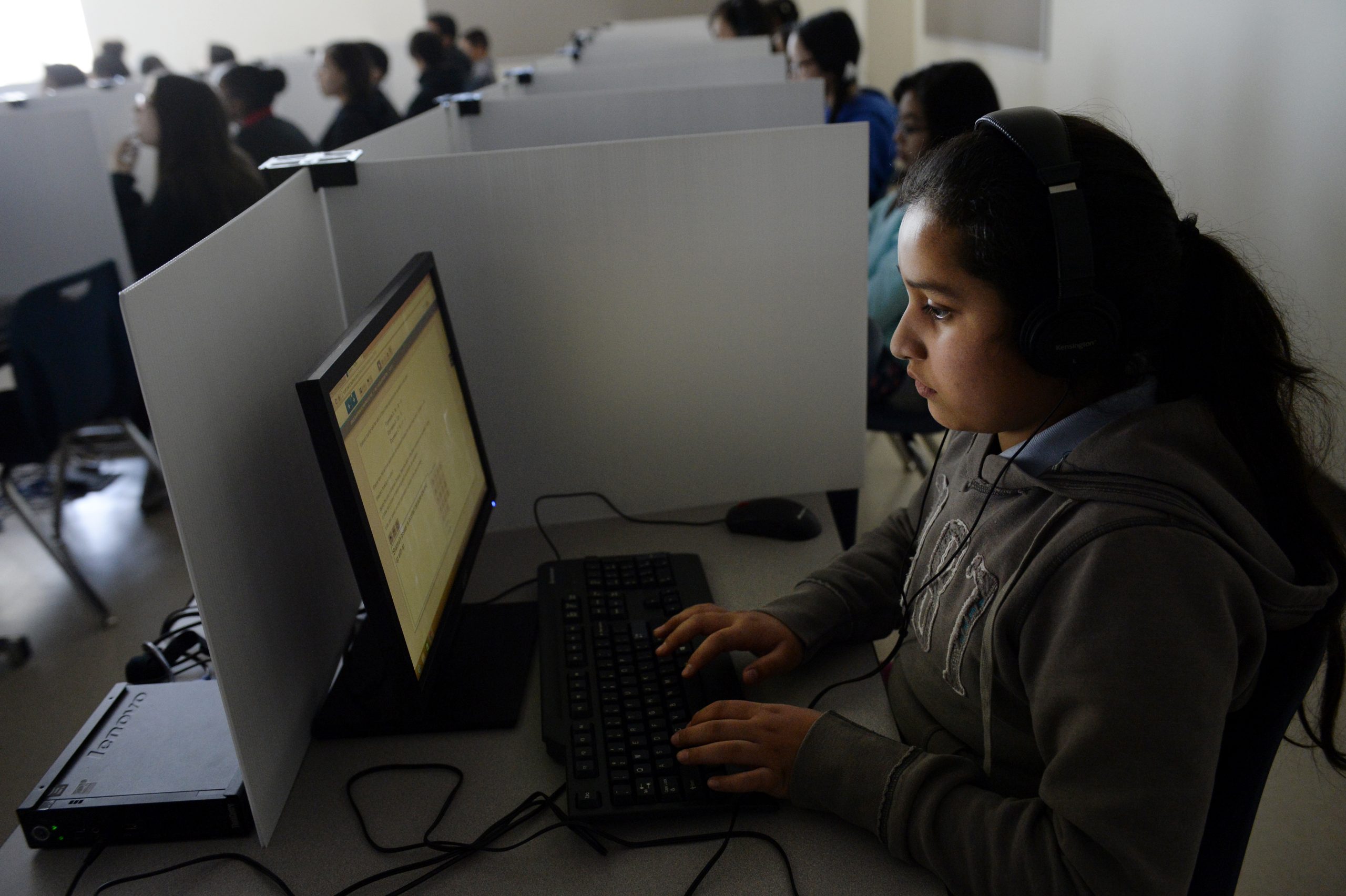
    The assessment is a series of tests administered nearly every year to a national sample of more than 10,000 students in grades 4, 8 and 12. The tests regularly measure what students across the country know in reading, math and other subjects. They allow the government to track how well America’s students are learning overall. Researchers can also combine the national data with the results of tests administered by states to draw comparisons between schools and districts in different states.

    The assessment is “something we absolutely need to keep,” Education Secretary Linda McMahon said at an education and technology summit in San Diego earlier this year. “If we don’t, states can be a little manipulative with their own results and their own testing. I think it’s a way that we keep everybody honest.”

    But researchers and former Department of Education employees say they worry that the test will become less and less reliable over time, because the deep cuts will cause its quality to slip — and some already see signs of trouble.

    “The main indication is that there just aren’t the staff,” said Sean Reardon, a Stanford University professor who uses the testing data to research gaps in learning between students of different income levels.

    All but one of the experts who make sure the questions in the assessment are fair and accurate — called psychometricians — have been laid off from the National Center for Education Statistics. These specialists play a key role in updating the test and making sure it accurately measures what students know.

    “These are extremely sophisticated test assessments that required a team of researchers to make them as good as they are,” said Mark Seidenberg, a researcher known for his significant contributions to the science of reading. Seidenberg added that “a half-baked” assessment would undermine public confidence in the results, which he described as “essentially another way of killing” the assessment.

    The Department of Education defended its management of the assessment in an email: “Every member of the team is working toward the same goal of maintaining NAEP’s gold-standard status,” it read in part.

    The National Assessment Governing Board, which sets policies for the national test, said in a statement that it had temporarily assigned “five staff members who have appropriate technical expertise (in psychometrics, assessment operations, and statistics) and federal contract management experience” to work at the National Center for Education Statistics. No one from DOGE responded to a request for comment.

    Harvard education professor Andrew Ho, a former member of the governing board, said the remaining staff are capable, but he’s concerned that there aren’t enough of them to prevent errors.

    “In order to put a good product up, you need a certain number of person-hours, and a certain amount of continuity and experience doing exactly this kind of job, and that’s what we lost,” Ho said.

    The Trump administration has already delayed the release of some testing data following the cutbacks. The Department of Education had previously planned to announce the results of the tests for 8th grade science, 12th grade math and 12th grade reading this summer; now that won’t happen until September. The board voted earlier this year to eliminate more than a dozen tests over the next seven years, including fourth grade science in 2028 and U.S. history for 12th graders in 2030. The governing board has also asked Congress to postpone the 2028 tests to 2029, citing a desire to avoid releasing test results in an election year. 

    “Today’s actions reflect what assessments the Governing Board believes are most valuable to stakeholders and can be best assessed by NAEP at this time, given the imperative for cost efficiencies,” board chair and former North Carolina Gov. Bev Perdue said earlier this year in a press release.

    The National Assessment Governing Board canceled more than a dozen tests when it revised the schedule for the National Assessment of Educational Progress in April. This annotated version of the previous schedule, adopted in 2023, shows which tests were canceled. Topics shown in all caps were scheduled for a potential overhaul; those annotated with a red star are no longer scheduled for such a revision.

    Recent estimates peg the annual cost to keep the national assessment running at about $190 million per year, a fraction of the department’s 2025 budget of approximately $195 billion.

    Adam Gamoran, president of the William T. Grant Foundation, said multiple contracts with private firms — overseen by Department of Education staff with “substantial expertise” — are the backbone of the national test.

    “You need a staff,” said Gamoran, who was nominated last year to lead the Institute of Education Sciences. He was never confirmed by the Senate. “The fact that NCES now only has three employees indicates that they can’t possibly implement NAEP at a high level of quality, because they lack the in-house expertise to oversee that work. So that is deeply troubling.”

    The cutbacks were widespread — and far outside of what most former employees had expected under the new administration.

    “I don’t think any of us imagined this in our worst nightmares,” said a former Education Department employee, who spoke on condition of anonymity for fear of retaliation by the Trump administration. “We weren’t concerned about the utter destruction of this national resource of data.”

    “At what point does it break?” the former employee asked.

    Related: Suddenly sacked

    Every state has its own test for reading, math and other subjects. But state tests vary in difficulty and content, which makes it tricky to compare results in Minnesota to Mississippi or Montana.

    “They’re totally different tests with different scales,” Reardon said. “So NAEP is the Rosetta stone that lets them all be connected.”

    Reardon and his team at Stanford used statistical techniques to combine the federal assessment results with state test scores and other data sets to create the Educational Opportunity Project. The project, first released in 2016 and updated periodically in the years that followed, shows which schools and districts are getting the best results — especially for kids from poor families. Since the project’s release, Reardon said, the data has been downloaded 50,000 times and is used by researchers, teachers, parents, school boards and state education leaders to inform their decisions.

    For instance, the U.S. military used the data to measure school quality when weighing base closures, and superintendents used it to find demographically similar but higher-performing districts to learn from, Reardon said.

    If the quality of the data slips, those comparisons will be more difficult to make.

    “My worry is we just have less-good information on which to base educational decisions at the district, state and school level,” Reardon said. “We would be in the position of trying to improve the education system with no information. Sort of like, ‘Well, let’s hope this works. We won’t know, but it sounds like a good idea.’”

    Seidenberg, the reading researcher, said the national assessment “provided extraordinarily important, reliable information about how we’re doing in terms of teaching kids to read and how literacy is faring in the culture at large.”

    Producing a test without keeping the quality up, Seidenberg said, “would be almost as bad as not collecting the data at all.”
    The Hechinger Report provides in-depth, fact-based, unbiased reporting on education that is free to all readers. But that doesn’t mean it’s free to produce. Our work keeps educators and the public informed about pressing issues at schools and on campuses throughout the country. We tell the whole story, even when the details are inconvenient. Help us keep doing that.

    Join us today.


    Source link

  • Math is Out, Cake is In: Introducing Students to Rubrics – Faculty Focus

    Math is Out, Cake is In: Introducing Students to Rubrics – Faculty Focus

    Source link

  • Fewer Young People See Math Skills as Very Important in Work

    Fewer Young People See Math Skills as Very Important in Work

    Higher education stakeholders have noted that math anxiety can hold students back from pursuing some disciplines or major programs, but a new analysis from Gallup finds that young Americans over all place less importance on math skills compared to the general population.

    While over half of all Americans rate math skills as “very important” in their work (55 percent) and personal (63 percent) lives, only 38 percent of young people (ages 18 to 24) said math skills are very important in their work life and 37 percent in their personal life, according to a December survey of 5,100 U.S. adults.

    The survey highlights generational divisions in how math skills are perceived, with adults older than 55 most likely to see math as very important compared to younger adults, and Gen Z least likely to attribute value to math skills.

    To Sheila Tabanli, a mathematics professor at Rutgers University, the low ratings point to a lack of perceived connection between math skills and career development, despite the clear correlation she sees.

    Tabanli said it can be hard to convince many Gen Z and Alpha students that math content is necessary for their daily lives, in part because access to information is so convenient and they can perform calculations on their phones or online.

    “We need to transition from focusing too much on the concept, the domain, the content—which we do love as math people, otherwise we wouldn’t be doing it for a living—but students don’t see that connection [to employable skills],” Tabanli said.

    When asked how important math skills were for the majority of the U.S. workforce, 40 percent of young adults rated having math skills as very important—the lowest rating of nine skills evaluated, including reading, language, technology and leadership, according to Gallup.

    Young people also rated the importance of math skills for the general workforce, as compared to their own lives, the lowest of all age cohorts. Adults ages 55 to 64 (71 percent) and 65 and older (68 percent) were most likely to say math is a very important skill for the general workforce.

    Most career competencies that colleges and universities teach, such as those by the National Association for Colleges and Employers, focus on broader skills—including critical thinking, leadership, communication and teamwork—as essential for workplace success. Math can teach students how to solve problems and engage with difficult content, which Tabanli argues are just as important for an early-career professional.

    One reason a young adult might not rate math skills highly is because many students face undue math anxiety or a skepticism about their own ability to do math, falling into the belief that they’re not “math people,” Tabanli said.

    In response, Tabanli believes professors should help students apply computational skills to their daily lives or link content to other classes to encourage students to invest in their math learning. While this may be an additional step for a faculty member to take, Tabanli considers it a disservice to neglect this connection.

    Professors can also strive to make themselves and the content more human and approachable by sharing information about their lives, their careers and why they’re passionate about the subject, Tabanli said.

    Source link

  • Racial bias affects early math education. Researchers are trying to stop that

    Racial bias affects early math education. Researchers are trying to stop that

    The early years are a critical time to teach the foundations of math. That’s when children learn to count, start identifying shapes and gain an early understanding of concepts like size and measurement. These years can also be a time when children are confronted with preconceived notions of their abilities in math, often based on their race, which can negatively affect their math success and contribute to long-standing racial gaps in scores. 

    These are some of the motivating factors behind the Racial Justice in Early Math project, a collaboration between the Erikson Institute, a private graduate school focused on child development, and the University of Illinois Chicago. The project aims to educate teachers and provide resources including books, teacher tips and classroom activities that help educators combat racial bias in math instruction.  

    I sat down with Danny Bernard Martin, professor of education and mathematics at the University of Illinois Chicago, project director Priscila Pereira and Jennifer McCray, a research professor at the Erikson Institute, to learn more about their work. This conversation has been edited for length and clarity.

    What are some of the key examples of racial injustice that you see in early math education?

    Martin: If I say to you, ‘Asians are good at math,’ that’s something that you’ve heard, we know that’s out there. When does that kind of belief start? Well, there’s something called ‘racial-mathematical socialization’ that we take seriously in this project, that we know happens in the home before children come to school. Parents and caregivers are generating messages around math that they transmit to children, and then those messages may get reinforced in schools.

    Even at the early math level, there are research projects beginning to construct Black children in particular ways, comparing Black children to white children as the norm. That is a racial justice issue, because that narrative about white children, Black children, Asian American children, Latinx children, then filters out. It becomes part of the accepted truth, and then it impacts what teachers do and what principals and school leaders believe about children.  

    What does this look like in schools?

    McCray: Perhaps the math curriculum doesn’t represent them or their experience. We all know that often schools for children of color are under-resourced. What often happens in under-resourced schools is that the curriculum and the teaching tends to focus on the basics. There might be an overemphasis on drilling or doing timed tests. We also have those situations where people are doing ability grouping in math. And we know what the research says about that, it’s basically ‘good education for you, and poor education for you.’ It’s almost impossible to do any of that without doing harm. 

    One line of research has been to watch teachers interact with children and videotape or study them. And in diverse classrooms with white teachers … often it is observed that children who are Black or Latina aren’t called on as often, or aren’t listened to as much, or don’t have the same kind of opportunity to be a leader in the classroom.  

    What should teacher prep programs, administrators and families do to address racial justice issues in early math? 

    McCray: Maybe the white teacher is reflecting on themselves, on their own biases … trying to connect with families or communities in some way that’s meaningful. We want teachers to have that balance of knowing that sometimes you do want to teach a procedure, but you never want to be shutting down ideas for creative ways to solve a math problem, or culturally distinct ways to solve a math problem that might come from your students.

    It might be something like, you’re working on sorting in an early childhood classroom. And what if a child is thinking about a special craft that their parent does that’s like the [papel picado], or papers that get cut in very elaborate designs in Mexico. … If the teacher doesn’t have space to listen, it could be a shutdown moment, instead of a moment of connection, where the child is actually bringing something … that is associated with their own identity.

    Pereira: I do feel that sometimes the conversations of racial justice really put the weight on teachers and teachers alone. Teaching is part of a larger structure. Maybe your school will not allow you to do the work that is needed. I’m thinking about [a teacher] who was required to follow a scripted curriculum that did not promote the positive math identity for Black children. It needs to be a whole community effort.

    How is your initiative changing this?

    Pereira: There are resources in terms of opportunities that we offer to teachers to engage with our content and ideas: webinars, a fellowship and an immersive learning experience in the summer of 2026. These spaces are moments in which educators, researchers and people that are engaged in the education of young learners, can come together … and disrupt mainstream notions of understanding what is racial justice and how one gets that in the classroom.  

    Right now, research and initiatives zeroing in on race are under scrutiny, especially at the college level. Do you foresee any additional challenges to this work?

    Pereira: There was a National Science Foundation grant program focused on racial equity in STEM and we had been planning to apply for funds to do something there. … It’s gone. … The only place we’re welcome is where there’s a governor who is willing to take on Trump. We just have to keep doing the work, because we know what’s right. But it is challenging, for sure.

    Contact staff writer Jackie Mader at 212-678-3562 or [email protected]

    This story about racial justice in math was produced by The Hechinger Report, a nonprofit, independent news organization focused on inequality and innovation in education. Sign up for the Early Childhood newsletter.

    The Hechinger Report provides in-depth, fact-based, unbiased reporting on education that is free to all readers. But that doesn’t mean it’s free to produce. Our work keeps educators and the public informed about pressing issues at schools and on campuses throughout the country. We tell the whole story, even when the details are inconvenient. Help us keep doing that.

    Join us today.

    Source link

  • Creative approaches to teaching math can help fill AI talent gap

    Creative approaches to teaching math can help fill AI talent gap

    Key points:

    Not surprisingly, jobs in AI are the fastest growing of any in the country, with a 59 percent increase in job postings between January 2024 and November 2024. Yet we continue to struggle with growing a workforce that is proficient in STEM. 

    To fill the AI talent pipeline, we need to interest kids in STEM early, particularly in math, which is critical to AI. But that’s proven difficult. One reason is that math is a stumbling block. Whether because of math anxiety, attitudes they’ve absorbed from the community, inadequate curricular materials, or traditional teaching methods, U.S. students either avoid or are not proficient in math.  

    A recent Gallup report on Math Matters reveals that the U.S. public greatly values math but also experiences significant gaps in learning and confidence, finding that: 

    • 95 percent of U.S. adults say that math is very or somewhat important in their work life 
    • 43 percent of U.S. adults wish they had learned more math skills in middle or high school. 
    •  24 percent of U.S. adults say that math makes them feel confused  

    Yet this need not be the case. Creative instruction in math can change the equation, and it is available now. The following three examples from respected researchers in STEM education demonstrate this fact. 

    The first is a recently published book by Susan Jo Russell and Deborah Schifter, Interweaving Equitable Participation and Deep Mathematics. The book provides practical tools and a fresh vision to help educators create math classrooms where all students can thrive. It tackles a critical challenge: How do teachers ensure that all students engage deeply with rigorous mathematics? The authors pose and successfully answer key questions: What does a mathematical community look like in an elementary classroom? How do teachers engage young mathematicians in deep and challenging mathematical content? How do we ensure that every student contributes their voice to this community? 

    Through classroom videos, teacher reflections, and clear instructional frameworks, Russell and Schifter bring readers inside real elementary classrooms where all students’ ideas and voices matter. They provide vivid examples, insightful commentary, and ready-to-use resources for teachers, coaches, and school leaders working to make math a subject where every student sees themselves as capable and connected. 

    Next is a set of projects devoted to early algebra. Significantly, research shows that how well students perform in Algebra 2 is a leading indicator of whether they’ll get into college, graduate from college, or become a top income earner. But introducing algebra in middle school, as is the common practice, is too late, according to researchers Maria Blanton and Angela Gardiner of TERC, a STEM education research nonprofit. Instead, learning algebra must begin in K-5, they believe. 

    Students would be introduced to algebraic concepts rather than algebra itself, becoming familiar with ways of thinking using pattern and structure. For example, when students understand that whenever they add two odd numbers together, they get an even number, they’re recognizing important mathematical relationships that are critical to algebra. 

    Blanton and Gardiner, along with colleagues at Tufts University, University of Wisconsin Madison, University of Texas at Austin, Merrimack College, and City College of New York, have already demonstrated the success of an early algebra approach through Project LEAP, the first early algebra curriculum of its kind for grades K–5, funded in part by the National Science Foundation.  

    If students haven’t been introduced to algebra early on, the ramp-up from arithmetic to algebra can be uniquely difficult. TERC researcher Jennifer Knudsen told me that elementary to middle school is an important time for students’ mathematical growth. 

    Knudsen’s project, MPACT, the third example of creative math teaching, engages middle school students in 3D making with everything from quick-dry clay and cardboard to digital tools for 3D modeling and printing. The project gets students involved in designing objects, helping them develop understanding of important mathematical topics in addition to spatial reasoning and computational thinking skills closely related to math. Students learn concepts and solve problems with real objects they can hold in their hands, not just with words and diagrams on paper.  

    So far, the evidence is encouraging: A two-year study shows that 4th–5th graders demonstrated significant learning gains on an assessment of math, computational thinking, and spatial reasoning. These creative design-and-making units are free and ready to download. 

    Math is critical for success in STEM and AI, yet too many kids either avoid or do not succeed in it. Well-researched interventions in grade school and middle school can go a long way toward teaching essential math skills. Curricula for creating a math community for deep learning, as well as projects for Early Algebra and MPACT, have shown success and are readily available for school systems to use.

    We owe it to our students to take creative approaches to math so they can prepare for future AI and STEM professions. We owe it to ourselves to help develop a skilled STEM and AI workforce, which the nation needs to stay competitive. 

    Latest posts by eSchool Media Contributors (see all)

    Source link

  • Texas Students Make Gains in Reading but Struggle with Math, STAAR Scores Show – The 74

    Texas Students Make Gains in Reading but Struggle with Math, STAAR Scores Show – The 74


    Get stories like this delivered straight to your inbox. Sign up for The 74 Newsletter

    Texas’ students saw some wins in reading but continued to struggle to bounce back from pandemic-related learning losses in math, state testing results released Tuesday showed.

    Elementary students who took the State of Texas Assessments of Academic Readiness exam this year made the biggest gains in reading across grade levels. Third graders saw a three percentage point increase in reading, a milestone because early literacy is a strong indicator of future academic success. Progress among middle students in the subject, meanwhile, slowed.

    “These results are encouraging and reflect the impact of the strategic supports we’ve implemented in recent years,” said Texas Education Agency Commissioner Mike Morath. “We are seeing meaningful signs of academic recovery and progress.”

    This year’s third grade test takers have benefited from state investments in early literacy in recent years. Teachers in their classrooms have completed state-led training in early literacy instruction, known as reading academies. The state also expanded pre-K access and enrollment in 2019.

    Morath did acknowledge students needed more help to make similar gains in math. Five years after pandemic-related school closures, students are still struggling to catch up in that subject, the results showed. About 43% of students met grade-level standards for math, a 2 percentage point increase from the previous year, but still shy of the 50% reached in 2019.

    Low performance in math can effectively shut students out of high-paying, in-demand STEM careers. Economic leaders have been sounding the alarm about the implications that weak math skills can have on the state’s future workforce pipeline.

    The STAAR exam tests all Texas public school students in third through eighth grade in math and reading. A science test is also administered for fifth and eighth graders, as well as a social studies test for eighth graders. Science performance improved among fifth and eighth grades by 3 and 4 percentage points respectively, but students in those grades are still below where they were before the pandemic.

    Students in special education also made small gains. English learners, meanwhile, saw drops in all subjects but one — a 4% decrease in reading, a 2% decrease in math, and a 2% decrease in social studies.

    The test scores give families a snapshot of how Texas students are learning. School accountability ratings — which the Texas Education Agency gives out to each district and campus on an A through F scale as a score for their performance — are also largely based on how students do on the standardized tests.

    The test often casts a shadow over classrooms at the end of the year, with teachers across the state saying they lose weeks of valuable instructional time preparing children to take the test. Some parents also don’t like the test because of its high-stakes nature. They have said their kids don’t want to go school because of the enormous pressure the hours-long, end-of-year test puts on them.

    A bill that would have scrapped the STAAR test died in the last days of the 2025 legislative session. Both Republican and Democratic legislators expressed a desire to overhaul STAAR, but in the end, the House and Senate could not align on what they wanted out of an alternative test.

    Legislators this session did approve a sweeping school finance package that included academic intervention for students who are struggling before they first take their STAAR test in third grade. The package also requires teachers get training in math instruction, mirroring existing literacy training mandates.

    Parents can look up their students’ test results here.

    Graphics by Edison Wu

    This article originally appeared in The Texas Tribune, a member-supported, nonpartisan newsroom informing and engaging Texans on state politics and policy. Learn more at texastribune.org.


    Get stories like these delivered straight to your inbox. Sign up for The 74 Newsletter

    Source link

  • Many students decide they’re not a ‘math person’ by the end of elementary school, new study shows

    Many students decide they’re not a ‘math person’ by the end of elementary school, new study shows

    This story was originally published by Chalkbeat. Sign up for their newsletters at ckbe.at/newsletters.

    Roughly half of middle and high schoolers report losing interest in math class at least half the time, and 1 in 10 lack interest nearly all the time during class, a new study shows.

    In addition, the students who felt the most disengaged in math class said they wanted fewer online activities and more real-world applications in their math classes.

    Those and other findings published Tuesday from the research corporation RAND highlight several ongoing challenges for instruction in math, where nationwide student achievement has yet to return to pre-pandemic levels and the gap between the highest and lowest-performing students in math has continued to grow.

    Feeling bored in math class from time to time is not an unusual experience, and feeling “math anxiety” is common. However, the RAND study notes that routine boredom is associated with lower school performance, reduced motivation, reduced effort, and increased rates of dropping out of school.

    Perhaps unsurprisingly, the study found that the students who are the most likely to maintain their interest in math comprehend math, feel supported in math, are confident in their ability to do well in math, enjoy math, believe in the need to learn math, and see themselves as a “math person.”

    Dr. Heather Schwartz, a RAND researcher and the primary investigator of the study, noted that the middle and high school years are when students end up on advanced or regular math tracks. Schwartz said that for young students determining their own sense of math ability, “Tracking programs can be a form of external messaging.”

    Nearly all the students who said they identified as a “math person” came to that conclusion before they reached high school, the RAND survey results show. A majority of those students identified that way as early as elementary school. In contrast, nearly a third of students surveyed said they never identified that way.

    “Math ability is malleable way past middle school,” Schwartz said. Yet, she noted that the survey indicates students’ perception of their own capabilities often remains static.

    The RAND study drew on data from their newly established American Youth Panel, a nationally representative survey of students ages 12-21. It used survey responses of 434 students in grades 5-12. Because this was the first survey sent to members of the panel, there is no comparable data on student math interest prior to the pandemic, so it doesn’t measure any change in student interest.

    The RAND study found that 26% percent of students in middle and high school reported losing interest during a majority of their math lessons. On the other end of the spectrum, a quarter of students said they never or almost never lost interest in math class.

    There weren’t major differences in the findings across key demographic groups: Students in middle and high school, boys and girls, and students of different races and ethnicities reported feeling bored during a majority of math class at similar rates.

    Dr. Janine Remillard, a professor at the University of Pennsylvania Graduate School of Education and expert in mathematics curriculum, said that in many math classes, “It’s usually four or five students answering all the questions, and then the kids who either don’t understand or are less interested or just take a little bit more time — they just zone out.”

    Over 50% of students who lost interest in almost all of their math classes asked for fewer online activities and more real-world problems, the RAND study shows. Schwartz hypothesizes that some online math programs represent a “modern worksheet” and emphasize solo work and repetition. Students who are bored in class instead crave face-to-face activities that focus on application, she said.

    During Remillard’s math teacher training classes, she puts students in her math teacher training class into groups to solve math problems. But she doesn’t tell them what strategy to use.

    The students are forced to work together in order to understand the process of finding an answer rather than simply repeating a given formula. All of her students typically say that if they had learned math this way, they would think of themselves as a math person, according to Remillard, who was not involved in the RAND study.

    Chalkbeat is a nonprofit news site covering educational change in public schools.

    For more news on STEM learning, visit eSN’s STEM & STEAM hub.

    Latest posts by eSchool Media Contributors (see all)

    Source link

  • 5 online resources to beat the summer slide

    5 online resources to beat the summer slide

    Key points:

    As the final school bells ring and students head into summer vacation, educators and parents alike are turning their attention to the phenomenon known as the summer slide–the learning loss that can occur when children take a long break from structured academic activity.

    NWEA research notes that students can lose up to two months of math skills over the summer, and reading abilities can also decline, particularly for students from underserved communities.

    But the summer slide isn’t inevitable. With the growing availability of engaging, high-quality online learning tools, students have more opportunities than ever to keep their skills sharp. These tools offer interactive lessons, personalized learning paths, and fun activities that reinforce what students learned during the school year–without making summer feel like school.

    Here are five standout online resources designed to help K-12 students stay on track over the summer months:

    1. Khan Academy: Khan Academy’s free online platform offers comprehensive lessons in math, science, history, and more. Its summer learning programs provide structured plans for students in grades K-12, including daily activities tailored by grade level. Each lesson includes short instructional videos, interactive quizzes, and mastery challenges. For students who want to get ahead or reinforce tricky concepts from the previous school year, Khan Academy is an ideal, self-paced resource.

    Khan Kids, a separate app for younger learners (ages 2-8), combines educational videos, stories, and games that focus on early literacy, math, and social-emotional development.

    2. PBS LearningMedia: PBS LearningMedia curates thousands of free videos, lesson plans, and interactive activities aligned to state and national standards. The content is engaging and age-appropriate, drawing from trusted PBS programs like Wild Kratts, NOVA, and Peg + Cat. During the summer, PBS typically offers special themed weeks–like “Summer of Reading” or “Science Week”–featuring playlists and activity bundles to help children stay curious and engaged.

    For younger children, PBS Kids also provides games and shows that reinforce foundational skills in reading, math, and critical thinking.

    3. ReadWorks: Reading skills are among the most vulnerable to decline during the summer, especially for students who do not have regular access to books or structured reading activities. ReadWorks is a nonprofit platform offering free, research-based reading comprehension materials for grades K-12. Teachers and parents can assign grade-level texts, paired with vocabulary lessons and comprehension questions. The platform also features an Article-A-Day challenge that encourages students to build background knowledge and reading stamina with just 10 minutes a day. ReadWorks is especially helpful for English Language Learners, offering audio versions and question supports to aid comprehension.

    4. Prodigy: For students who struggle to stay motivated during math practice, Prodigy turns learning into a role-playing adventure game. Students solve math problems to earn rewards and level up characters, making the experience both educational and fun. Aligned with state standards and suitable for grades 1-8, Prodigy adapts to each learner’s skill level, offering targeted practice without the pressure of grades or tests. Parents can access dashboards to track progress and set goals over the summer. Prodigy also offers a version for English Language Arts, expanding the platform’s reach beyond numbers.

    5. Smithsonian Learning Lab: For families looking to incorporate cross-curricular learning, the Smithsonian Learning Lab provides a treasure trove of multimedia collections that blend history, science, art, and culture. Students can explore virtual exhibits, complete inquiry-based lessons, and create their own digital portfolios. The platform is well-suited for middle and high school students, especially those interested in project-based learning and critical thinking. Whether studying the Civil Rights Movement or learning about ecosystems, students can explore real artifacts, images, and primary sources from the Smithsonian’s vast collection.

    Keeping minds active and curious

    Experts emphasize that summer learning doesn’t need to mirror the structure of the traditional classroom–keeping students intellectually engaged as they explore their personal interests reinforces academic skills in an low-stress environment.

    Families can also incorporate daily routines that promote learning–reading together before bed, practicing math while cooking, or exploring nature to spark scientific curiosity.

    As the digital learning landscape expands, there are more tools than ever to support students year-round. With just 20-30 minutes of meaningful academic engagement each day, students can maintain their momentum and return to the classroom in the fall ready to learn.

    Laura Ascione
    Latest posts by Laura Ascione (see all)

    Source link

  • A big reason why students with math anxiety underperform — they just don’t do enough math

    A big reason why students with math anxiety underperform — they just don’t do enough math

    Math anxiety isn’t just about feeling nervous before a math test. It’s been well-known for decades that students who are anxious about math tend to do worse on math tests and in math classes.

    But recently, some of us who research math anxiety have started to realize that we may have overlooked a simple yet important reason why students who are anxious about math underperform: They don’t like doing math, and as a result, they don’t do enough of it.

    We wanted to get a better idea of just what kind of impact math anxiety could have on academic choices and academic success throughout college. In one of our studies, we measured math anxiety levels right when students started their postsecondary education. We then followed them throughout their college career, tracking what classes they took and how well they did in them.

    We found that highly math-anxious students went on to perform worse not just in math classes, but also in STEM classes more broadly. This means that math anxiety is not something that only math teachers need to care about — science, technology and engineering educators need to have math anxiety on their radar, too.

    We also found that students who were anxious about math tended to avoid taking STEM classes altogether if they could. They would get their math and science general education credits out of the way early on in college and never look at another STEM class again. So not only is math anxiety affecting how well students do when they step into a STEM classroom, it makes it less likely that they’ll step into that classroom in the first place.

    Related: A lot goes on in classrooms from kindergarten to high school. Keep up with our free weekly newsletter on K-12 education.

    This means that math anxiety is causing many students to self-sort out of the STEM career pipeline early, closing off career paths that would likely be fulfilling (and lucrative).

    Our study’s third major finding was the most surprising. When it came to predicting how well students would do in STEM classes, math anxiety mattered even more than math ability. Our results showed that if you were a freshman in college and you wanted to do well in your STEM classes, you would likely be better off reducing your math anxiety than improving your math ability.

    We wondered: How could that be? How could math anxiety — how you feel about math — matter more for your academic performance than how good you are at it? Our best guess: avoidance.

    If something makes you anxious, you tend to avoid doing it if you can. Both in our research and in that of other researchers, there’s been a growing understanding that in addition to its other effects, math anxiety means that you’ll do your very best to engage with math as little as possible in situations where you can’t avoid it entirely.

    This might mean putting in less effort during a math test, paying less attention in math class and doing fewer practice problems while studying. In the case of adults, this kind of math avoidance might look like pulling out a calculator whenever the need to do math arises just to avoid doing it yourself.

    In some of our other work, we found that math-anxious students were less interested in doing everyday activities precisely to the degree that they thought those activities involved math. The more a math-anxious student thought an activity involved math, the less they wanted to do it.

    If math anxiety is causing students to consistently avoid spending time and effort on their classes that involve math, this would explain why their STEM grades suffer.

    What does all of this mean for educators? Teachers need to be aware that students who are anxious about math are less likely to engage with math during class, and they’re less likely to put in the effort to study effectively. All of this avoidance means missed opportunities for practice, and that may be the key reason why many math-anxious students struggle not only in math class, but also in science and engineering classes that require some math.

    Related: Experts share the latest research on how teachers can overcome math anxiety

    Math anxiety researchers are at the very beginning of our journey to understand ways to make students who are anxious about math stop avoiding it but have already made some promising suggestions for how teachers can help. One study showed that a direct focus on study skills could help math-anxious students.

    Giving students clear structure on how they should be studying (trying lots of practice problems) and how often they should be studying (spaced out over multiple days, not just the night before a test) was effective at helping students overcome their math anxiety and perform better.

    Especially heartening was the fact that the effects seen during the study persisted in semesters beyond the intervention; these students tended to make use of the new skills into the future.

    Math anxiety researchers will continue to explore new ways to help math-anxious students fight their math-avoidant proclivities. In the meantime, educators should do what they can to help their students struggling with math anxiety overcome this avoidance tendency — it could be one of the most powerful ways a math teacher can help shape their students’ futures.

    Rich Daker is a researcher and founder of Pinpoint Learning, an education company that makes research-backed tools to help educators identify why their students make mistakes. Ian Lyons is an associate professor in Georgetown University’s Department of Psychology and principal investigator for the Math Brain Lab.

    Contact the opinion editor at [email protected].

    This story about math anxiety was produced by The Hechinger Report, a nonprofit, independent news organization focused on inequality and innovation in education. Sign up for Hechinger’s weekly newsletter.

    The Hechinger Report provides in-depth, fact-based, unbiased reporting on education that is free to all readers. But that doesn’t mean it’s free to produce. Our work keeps educators and the public informed about pressing issues at schools and on campuses throughout the country. We tell the whole story, even when the details are inconvenient. Help us keep doing that.

    Join us today.

    Source link

  • How two districts are achieving math recovery

    How two districts are achieving math recovery

    DRESDEN, Tenn. — In early February, seventh grade math teacher Jamie Gallimore tried something new: She watched herself teach class. The idea had come from Ed Baker, district math coach at Tennessee’s Weakley County Schools. Baker set up an iPad on a cabinet in Gallimore’s classroom at Martin Middle School and hit record. 

    Gallimore watched the videos twice, and she and Baker ran through them together. They dissected the questions she asked during the lesson, looked at how much time she took to work through problems and analyzed how she’d moved around the room. As a veteran teacher, she did a lot right — but the meeting with Baker also made her change a few things.

    Instead of throwing out questions to the whole class, now Gallimore more often calls on individuals. When a student answers, she might turn to the other side of the room and ask, “What did they just say?” The tactics, she said, have helped keep her students engaged.

    Coaching is one strategy Weakley administrators and teachers credit with boosting middle school math scores after they crashed during the pandemic. Weakley’s third through eighth graders are more than half a grade ahead of where they were at the same time in 2022 and about a third of a grade ahead of 2019, according to a national study of academic recovery released in February. In three of the district’s four middle schools, the percentage of students meeting grade-level expectations on Tennessee’s standardized math test, including among economically disadvantaged students, rose in 2024 above pre-pandemic levels.

     Teacher Jamie Gallimore uses a few new tactics in her seventh grade math classroom at Martin Middle School after working with district math coach Ed Baker. Credit: Andrea Morales for The Hechinger Report

    Amid a grim landscape nationwide for middle school math, Tennessee fared better than most states. In two districts in the state that bucked the national trend — Weakley and the Putnam County School District — educators point to instructional coaches, a dramatic increase in class time devoted to math and teachers systematically using student performance data to inform their teaching and push students to improve.

    How students do in middle school can predict how they do in life. Higher achievement in eighth grade math is associated with a higher income, more education later and with declines in teen motherhood and incarceration and arrest rates, a 2022 study by Harvard’s Center for Education Policy Research found. In addition, middle school grades and attendance are the best indicators of how a student will do in high school and whether they’re ready for college at the end of high school, a 2014 study found. 

    Related: A lot goes on in classrooms from kindergarten to high school. Keep up with our free weekly newsletter on K-12 education.

    Nationally, the news coming in shows trouble ahead: In January, for example, the National Assessment of Educational Progress, known as the Nation’s Report Card, showed that average eighth grade scores in 2024 were below those of 2019 and didn’t budge from 2022, when scores were the lowest in more than 20 years. Worse, the gaps between high and low achievers widened

    Tennessee, though, was one of five jurisdictions where the percentage of eighth graders scoring proficient in math — meaning they were able to handle challenging tasks like calculating square roots, areas and volumes — increased from 2022 to 2024. That reflects a longer-term trend: Since 2011, Tennessee has climbed from the 45th-ranked state to the 19th for average eighth grade math scores.

    But researchers have struggled to determine which interventions were most effective in helping students recover. A June 2024 study that looked at different strategies came to no conclusion because the strategies weren’t comparable across districts, said Dan Goldhaber of the nonprofit American Institutes for Research. In March, the Trump administration eliminated nearly all staff at the Department of Education unit that runs the Nation’s Report Card, which educators and researchers worry could make it even harder to compare how students in different states and districts perform and draw lessons about what works.

    In the absence of systematic research, attention has turned to states like Tennessee and districts like Weakley and Putnam where kids have climbed out of an academic hole. At Martin Middle School, the percentage of students meeting grade level expectations on the state math exam cratered during the pandemic, falling from 40 percent in 2019 to 24 percent in 2022. But in 2024 that number jumped to 43 percent.

    Related: Data science under fire: What math do high schoolers really need?

    Weakley County sits in the state’s northwest corner, its flat farmland populated with small towns of mostly modest ranch homes. The county is poorer than most in the country, with a median household income under $50,000.

    When the first federal Covid relief money arrived in early 2020, the district had to choose what to prioritize. Weakley focused on hiring staff who could help kids recover lost learning — instructional coaches for each school to focus on teaching strategies, plus subject-area coaches like Baker, whose role the district created in 2021. “Bottom line, we decided people over things,” said school system Director Jeff Cupples.

    Research indicates that coaching can make a big difference in student outcomes. A 2018 study summarizing the results of 60 prior studies found that coaching accelerated student learning by the equivalent of four to six months, according to Brown University associate professor Matthew Kraft, who led the research team. In a survey of Tennessee school districts last year, 80 of 118 that responded said they employ math coaches.

     Two Tennessee school districts credit the systematic use of student achievement data for helping their middle schoolers rebound from the pandemic-era slide in middle-school math scores. Credit: Andrea Morales for The Hechinger Report

    In 2022, Martin Middle made another big change, nearly doubling the time kids spend in math class. In place of a single 50-minute class are two 45-minute periods that the school calls “core” and “encore,” with the encore session meant to solidify what students get in the first.

    On an overcast March day, Becky Mullins, a longtime math and science teacher who’s also assistant principal, helped sixth graders in her encore class calculate area and volume. On a screen at the front of the classroom, she pulled up problems many of them had trouble with in their core class taught by math teacher Drew Love. One asked them to calculate how many cubes of a certain volume would fit inside a larger prism. “What strategy have you learned from Mr. Love on how to solve this problem?” she asked.

    Related: One state tried algebra for all eighth graders. It hasn’t gone well

    When a student in the back named Charlie raised his hand and said he was stuck, Mullins pulled up a chair beside him. They worked through the procedure together, and after a few minutes he solved it. Mullins said helping students individually in class works far better than assigning them homework. “You don’t know what they’re dealing with at home,” she said.

    Martin Middle seventh grader Emma Rhodes, 12, said individual help in her sixth grade encore class last year helped her through fractions. Her encore teacher was “very hands on,” said Rhodes. “It helps me most when teachers are one on one.” 

    Yet studies of double-dose math show mixed results. One in 2013 found a double block of algebra substantially improved the math performance of ninth graders. Another a year later concluded that struggling sixth graders who received a double block of math had higher test scores in the short term but that those gains mostly disappeared when they returned to a single block.

    The share of Martin Middle School students meeting grade level expectations on the state math exam was higher in 2024 than before the pandemic. Credit: Andrea Morales for The Hechinger Report

    Weakley and Putnam County staff also credit the systematic use of student achievement data for helping their middle schoolers rebound. Tennessee was a pioneer in the use of academic data in the early 1990s, devising a system that compiles fine-grained details on individual student achievement and growth based on state test results. Both Weakley and Putnam teachers use that data to pinpoint which skills they need to review with which students and to keep kids motivated.

    Related: Inside the new middle school math crisis

    A four-hour drive east of Weakley in Putnam County on a day in early March, seventh grade math teacher Brooke Nunn was reviewing problems students had struggled with. Taped to the wall of her classroom was a printout of her students’ scores on each section of a recent test in preparation for the Tennessee state exam in April. One portion of that exam requires students to work without calculators. “This non-calculator portion killed them, so they’re doing it again,” Nunn said of the exercises they’re working on — adding and subtracting negatives and positives, decimals and fractions. 

    The data on her wall drove the lesson and the choice of which students to have in the room at Prescott South Middle School, where she teaches. Starting about 10 years ago, the district began requiring 90 minutes of math a day, split into two parts. In the second half, teachers pull out students in groups for instruction on specific skills based on where the data shows they need help.

    Teachers also share this data with students. In a classroom down the hall, after a review lesson, fellow seventh grade math teacher Sierra Smith has students fill out a colorful graphic showing which questions they got and which they missed on their most recent review ahead of the state test. Since Covid, apathy has been a challenge, district math coach Jessica Childers said. But having kids track their own data has helped. “Kids want to perform,” she said, and many thrive on trying to best their past performance.

    The district is laser focused on the state tests. It created Childers’ math coach role in 2019 with district funds and later other instructional coach jobs using federal pandemic relief money. Much of Childers’ job revolves around helping teachers closely align their instruction with the state middle school math standards, she said. “I know that sounds like teaching to the test, but the test tests the standards,” said Childers.

    Something in what the district is doing is working. It’s not well off: The share of its families in poverty is 4 percent higher than the national average. But at all six district middle schools, the percentage of students meeting expectations on the state math exam was higher in 2024 than in 2019, and at all six the percentage was above the state average.

    Goldhaber, the AIR researcher, speculated that the focus on testing might help explain the rebound in Tennessee. “States have very different orientations around standards, accountability and the degree to which we ought to be focused on test scores,” he said. “I do believe test scores matter.”

    The share of Martin Middle School students meeting grade level expectations on the state math exam was higher in 2024 than before the pandemic. Credit: Andrea Morales for The Hechinger Report

    If Trump administration layoffs hamstring the ability to compare performance across states, successful strategies like those in the two districts might not spread. Weakley and Putnam have taken steps to ensure the practices they’ve introduced persist regardless of what happens at the federal level. Most of the federal Covid relief dollars that paid for academic coaches in both districts stopped flowing in January, but both have rolled money for coaches into their budgets. They also say double blocks of math will continue. 

    Cupples, the Weakley superintendent, worries about the effect of any additional federal cuts — without federal funds, the district would lose 90 positions and 10 percent of its budget. It would be “chaos, doom, despair,” he said, laughing. “But one thing I’ve learned about educators — as one myself and working with them — we overcome daily,” he said.

    “It’s just what we do.”

    Contact editor Caroline Preston at 212-870-8965, via Signal at CarolineP.83 or on email at [email protected].

    This story about math recovery was produced by The Hechinger Report, a nonprofit, independent news organization focused on inequality and innovation in education. Sign up for the Hechinger newsletter.

    The Hechinger Report provides in-depth, fact-based, unbiased reporting on education that is free to all readers. But that doesn’t mean it’s free to produce. Our work keeps educators and the public informed about pressing issues at schools and on campuses throughout the country. We tell the whole story, even when the details are inconvenient. Help us keep doing that.

    Join us today.

    Source link