Tag: News

  • Beware Illusions of Campus Normalcy This Spring (opinion)

    Beware Illusions of Campus Normalcy This Spring (opinion)

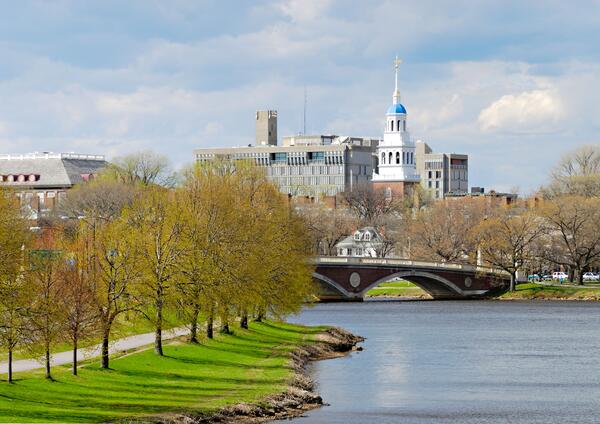
    It’s nearing the end of the academic year at Harvard University, where I teach in the Graduate School of Education. Students are preparing for final exams and finishing up capstone projects. Awards ceremonies are being held and celebrations, formal and informal, have begun. The weather has finally warmed up in Cambridge, and the outdoor tables at restaurants and coffee shops are crowded. The women’s tennis team clinched the Ivy League title.

    It all feels normal. Yet it all feels discordant, like a scene in a M. Night Shyamalan movie that infuses the quotidian with a barely detectable feeling of dread.

    This discordance is of course especially powerful at Harvard, the current epicenter of a ferocious and lawless attack on higher education that might make Viktor Orbán blush. But it is not unique to Harvard. At colleges and universities across the country, classes continue, clubs meet and Frisbees are being tossed even as the government sows fear and confusion by revoking, then restoring, then warning that it might again revoke the visa statuses of more than 1,800 international students.

    Lawyers continue to do what lawyers do, while large firms are essentially signing on to be instruments of the government, individuals are being targeted because the president of the United States holds a grudge, bigly, and court orders are being ignored.

    Doctors continue to treat patients while billions of dollars of funding for medical research and experimental trials are being withheld and the secretary of Health and Human Services is declaring that autism is preventable and the measles vaccine is maybe, sort of OK.

    We get in our cars or on our bicycles and go off to work while the government is pressing before the courts an argument that would allow it to send anyone, citizen or noncitizen, to a foreign prison without cause or legal recourse.

    When many of us think about authoritarian takeovers, we imagine military coups and declarations of martial law. But the truth is that the most powerful tool of the aspiring authoritarian is not shock, but normalcy. How bad can things be if we can still shop at Costco or take our families out for Italian food? How bad can they be if we can still download Maya Angelou onto our Kindles or watch Jimmy Kimmel Live!? How bad can they be if I can still publish a piece like this one, critical of the federal government?

    Look around not only at the campuses, but at the streets and bars and hardware stores in any city or town in America and it appears to be the same as it was last year and the year before. The NBA playoffs have begun and there’s a new film starring Michael B. Jordan. Normal.

    Except it is not, in ways of which we are vaguely aware but unable or unwilling to fully credit.

    For most people—the ones not scooped off the street by men in masks or ousted from their jobs with the federal government without cause or forced to stop their research because of the loss of National Institutes of Health funding—life feels more or less the way it did when we were a reasonably functional democracy. This is the way it works: Keep 99 percent of the lives of 99 percent of the people undisturbed for as long as possible so that they will remain unaware of or indifferent to what is happening at the margins. By the time they recognize that the edges of normalcy have drawn closer, it will be too late to do anything about it because the guardrails will have been destroyed.

    Begin with the least sympathetic targets. Who will shed tears for the fate of Venezuelan gang members (real or imagined)? Does anyone really like Big Law? Government employees are the problem, not the solution. Harvard, with its giant endowment and Ivy League arrogance, is rarely anyone’s idea of an underdog. Why should we concern ourselves with any of this on the way to McDonald’s or Starbucks? I work at Harvard and most of the time I find it difficult to take seriously the reality that the federal government is trying to destroy a private university simply to prove that it can and because its appetite for both control and chaos appears to have no limits.

    Be sure to cite rules and regulations that few people care to understand. What is 501(c)(3) status anyway? “Indirect costs” seem sort of like a scam. The “Alien Enemies Act” sounds like something pulled from the latest Marvel movie. Then cloak it all in the guise of causes to which it seems difficult to object—fighting antisemitism, because Donald Trump and the party of Marjorie Taylor Greene and the Proud Boys are the first things that come to mind when one thinks about protecting Jews. Or perhaps national security, given the threat to the republic posed by international students co-authoring op-eds for the campus newspaper.

    Above all, lie. Constantly, relentlessly, shamelessly lie. Since most people don’t spend a majority of their time lying about a majority of things, they appear to find it difficult to recognize when other people do. It’s hard to question a time-tested strategy.

    The fight against our current level of inertia is painfully difficult because the allure of the normal, the desire to believe that things are just fine, is so powerful. A tank in the street is hard to ignore. A steady eroding of legal and ethical norms just beyond the limits of our daily vision is easy to miss.

    Our greatest hope might be the tendency of authoritarians and those without any moral compass to overreach. If they can change life by 1 percent without much resistance, why not five or 10 or 20? If they can, through executive actions, free hundreds of convicted felons and strip away environmental protections, why not impose arbitrary and irrational tariffs? What made the reaction to tariffs different and what has, at least for the moment, slowed their progress is the fact that they tore a hole in the illusion of normalcy. Plummeting retirement accounts and worries about the cost of groceries will disrupt the normal in a way that canceling student visas or defunding Harvard will not. It was a mistake, and they will, out of arrogance and stupidity, make more.

    The set of demands sent to Harvard, for instance, which Harvard refused to comply with, resulting in headlines around the globe, was apparently sent in error. You could make that up, but no one would believe you.

    Meanwhile, I wonder whether we can afford to wait. Is it sufficient to hope that they will make things abnormal enough for a large enough group of people to provoke resistance, or do we have to do the difficult work of wrenching ourselves, somehow, out of the reassuring comforts of familiar routines? David Brooks, hardly a radical, has called for a “comprehensive national civic uprising” to counter the war being waged on our national civic fabric. Do people, organizations and institutions in the United States, so certain for so long about the permanence of its democracy, even have the energy or the will? Can that happen here or is it something that happens in Seoul or Istanbul and is shown on CNN?

    Meanwhile, I have laundry to do and a class to teach this week. Maybe I’ll catch something on Netflix. Pretty normal stuff.

    Brian Rosenberg is president emeritus of Macalester College, a visiting professor at Harvard Graduate School of Education and author of Whatever It Is, I’m Against It: Resistance to Change in Higher Education (Harvard Education Press, 2023).

    Source link

  • Colleges, Students Prefer Inclusive Access Models for Books

    Colleges, Students Prefer Inclusive Access Models for Books

    College affordability is one of the chief concerns of students, families, taxpayers and lawmakers in the U.S., and it extends beyond tuition prices.

    Costly course materials can impede student access and success in the classroom. Over half of college students say the high price of course materials has pushed them to enroll in fewer classes or opt out of a specific course, according to a 2023 survey.

    A new report from Tyton Partners, published today, finds that affordable-access programs that provide necessary materials can save students money and improve their outcomes. The report pulls data from surveys of students, administrators and faculty, as well as market research on the topic.

    The background: Affordable-access programs, also called inclusive-access programs, bill students directly for their textbooks as part of their tuition and fees. Through negotiations among publishers, institutions and campus bookstores, students pay a below-market rate for their course materials, which are often digital.

    This model ensures all students start the term with access to the required textbooks and course materials, allowing them to apply financial aid to textbook costs, which removes out-of-pocket expenses at the start of the term. A 2023 Student Voice survey by Inside Higher Ed found that over half of respondents have avoided buying or renting a book for class due to costs.

    The first federal regulations for affordable-access programs were set in 2015 to help cap course material costs and spur utilization of inclusive access on campuses. In 2024, the Biden administration sought to redefine inclusive access by making models opt-in to provide students with greater autonomy, but the plan was ultimately paused. Most colleges have an opt-out model of affordable-access programs, requiring students to elect to be removed, according to Tyton’s report.

    Critics of affordable-access programs argue that an across-the-board rate eliminates students’ ability to employ their own cost-saving methods, such as buying books secondhand or using open educational resources. Students often lose access to digital resources at the end of the term, limiting their ability to reuse or reference them.

    Findings from Tyton Partners’ research point to the value of day-one course materials for student success, which can be provided through opt-out inclusive-access models.

    The report: Affordable-access programs are tied to lower costs for participating students, according to the report. The average digital list price for course materials per class was $91, but the average price for course materials for students in an inclusive-access program was $58 per class. (A 2023 survey found the average student spent about $285 on course materials in the 2022–23 academic year, or roughly $33 per item.)

    Opt-out affordable-access models have also placed downward pricing pressure on the market; the compound annual growth rate of course materials declined from 6.1 percent to 0.3 percent since the 2015 ED regulations.

    A student survey by Tyton found that 61 percent of respondents favor affordable-access models compared to buying (13 percent), renting (11 percent) or borrowing (10 percent) course materials.

    Another Angle

    The Tyton Partners report identifies opt-out affordable access as one intervention that can ensure all students have access to course materials on day one, which is tied to better student outcomes.

    Open educational resources, which are not mentioned in the report, are another method of ensuring students have access to digital course materials at the start of the term at no additional cost to the student.

    Among students participating in inclusive access, 84 percent said they felt satisfied or neutral about their user experience, according to a survey by the National Association of College Stores. Students who had a positive view of inclusive access cited the convenience of not shopping for materials (80 percent), day-one access (78 percent) and knowing all their course materials are correct (71 percent) as the top benefits.

    Among colleges that do offer inclusive access, those with opt-out models see higher student participation than those with opt-in models (96 percent versus 36 percent, respectively). Administrators report that some students, especially first-year and first-generation students, are less likely to engage in opt-in models and may then struggle because they lack the required materials, which researchers argue enables gaps to persist in student outcomes.

    Researchers compared two community colleges and found that students who participated in an opt-out equitable-access program had higher course completion and lower withdrawal rates, compared to their peers who opted in. Learners from underrepresented minority backgrounds, including Black and multiracial students, saw greater gains as well.

    While a majority of students indicated a preference for inclusive-access models, it’s still paramount that institutions help students fully understand the benefits of participation and offer them seamless opportunities to opt out, according to Tyton’s report.

    After adopting inclusive access, institutions were likely to increase offerings and expand the number of courses within the model. A majority of surveyed faculty members (75 percent) said their institution should maintain or increase affordable-access model usage.

    Report authors noted a higher administrative burden in an opt-in model, because costs are applied and resources given to each individual student who opts in, rather than simply removing students who opt out. “Since no technology currently automates the opt-in process, most institutions would need to expand their academic affairs, faculty affairs and information technology teams to handle the increased workload under opt-in models,” according to the report.

    Get more content like this directly to your inbox. Subscribe here.

    Source link

  • Whole, Skim, or Soy? The Congressional Battle Over Milk in School Lunches – The 74

    Whole, Skim, or Soy? The Congressional Battle Over Milk in School Lunches – The 74


    Get stories like this delivered straight to your inbox. Sign up for The 74 Newsletter

    This story was originally published by Grist. Sign up for Grist’s weekly newsletter here.

    In 2010, United States lawmakers passed the Healthy, Hunger-Free Kids Act, which aimed to tackle both childhood obesity and hunger by making school meals more nutritious. Two years later, the Department of Agriculture updated its guidance for schools participating in the National School Lunch Program, or NSLP, in accordance with the law. Whereas schools could previously serve fat-free, 1 percent, 2 percent, or whole milk and be eligible for federal reimbursement, now they could only recoup meal costs if they ditched 2 percent and whole milk, which were thought to be too high in saturated fat for kids.

    Representative Glenn “G.T.” Thompson has been on a mission to change that. The Republican legislator representing Pennsylvania’s 15th congressional district believes the 2010 law sparked a decline in students drinking milk across the board. “We have lost a generation of milk drinkers since whole milk was demonized and removed from schools,” he told a local agribusiness group in 2021.

    Between 2019 and 2023, Thompson introduced the Whole Milk for Healthy Kids Act — a bill that would allow schools to serve whole milk again under the NSLP — three times without success.

    In January of this year, he reintroduced the bill once again — and inspired a group of animal welfare, environmental, and public health organizations to push for a vegan countermeasure. This month, a bipartisan group of legislators put forward the Freedom in School Cafeterias and Lunches, or FISCAL, Act, which would expand the definition of milk under the NSLP to include plant-based options. Currently, schools participating in the NSLP can offer milk substitutions to students with a note from a parent or doctor — but the FISCAL Act is promoting a world where vegan milks are offered freely, alongside cow’s milk.

    If students end up replacing their daily cow’s milk with a plant-based alternative, this has the potential to bring down food-related greenhouse gas emissions. But you won’t hear supporters of the FISCAL Act talking up the climate benefits of plant-based milk in the halls of Congress. Instead, they’re focusing on the health benefits of soy, oat, and other vegan drinks for students who can’t digest or simply don’t want cow’s milk.

    “Most of this nation’s children of color are lactose intolerant, and yet our school lunch program policy makes it difficult for these kids to access a nutritious fluid beverage that doesn’t make them sick,” said Senator Cory Booker, a Democratic co-sponsor of the bill. This focus on student health — and the absence of any environmental talking points — reflect the eternally tricky politics around milk in U.S. schools, which have become even more complicated in President Donald Trump’s second term.

    Milk has a relatively low carbon footprint compared to other animal proteins, like beef, pork, poultry, and cheese. But dairy production still comes with considerable climate impacts — mainly from the food grown to feed cows, as well as methane emitted via cow burps and manure. In 2020, researchers at Pennsylvania State University found that a dairy cow can release 350 pounds of methane every year through their burps — meaning, all told, dairy cows are responsible for 2.7 percent of the U.S.’s total greenhouse gases.

    Nondairy milks — fortified drinks like soy, almond, oat, and rice milk — have varying impacts on the environment and climate, but all of these plant-based alternatives use less land and water than cow’s milk to produce, and result in fewer emissions.

    Under the NSLP, schools cannot be reimbursed for the cost of meals unless they offer students milk. The Center for a Humane Economy, an animal welfare and environmental group backing the FISCAL Act, calls this America’s “milk mandate.” In 2023, student Marielle Williamson sued her Los Angeles high school for not allowing her to set up an informational table about plant-based milk unless she also promoted dairy. Subsidized school lunches have been described as “a guaranteed market” for farmers’ products; this is all but acknowledged when legislators like Thompson blame school lunch for the decline of the dairy industry. Indeed, in a recent Senate agricultural committee hearing over the whole milk bill, Senator Amy Klobuchar, a Democrat, said, “Not only do school meal programs reduce hunger and promote learning, they also support our local farmers and ranchers at a time when it’s probably the very worst time I’ve seen in decades” for farmers.

    The animal welfare groups backing the FISCAL Act argue schools need more flexibility to meet the needs of students with lactose intolerance. Consumption of milk has fallen consistently since the 1970s, according to the U.S. Department of Agriculture’s Economic Research Service. That change is thought to be the result of shifting diets, as well as perhaps a reflection of America’s growing racial and ethnic diversity. It is estimated that half of American adults have difficulty digesting lactose, the protein found in milk and many other dairy products. These rates are higher in Black, Asian American, Hispanic, Native American, and Jewish communities.

    “We’ve had so much marketing to tell us that the milk of a cow is, you know, nature’s perfect food, and it clearly is not,” said Wayne Pacelle, the head of Animal Wellness Action, an advocacy group that opposes animal cruelty and supports the FISCAL Act.

    Pacelle acknowledged the climate impact of the dairy industry: “It’s just a truth that cows are big contributors to greenhouse gas emissions.” But he noted that arguments related to the climate are unlikely to sway the debate over school lunch beverages. “The Republican Congress is not really so attuned to that,” he said.

    As a result, his group and the others pushing for the FISCAL Act aren’t talking much about the environmental considerations of drinking cow’s milk. This aligns with a shift happening in the broader food industry under the second Trump administration, as producers and manufacturers figure out which talking points are most appealing to leaders like Health and Human Services Secretary Robert F. Kennedy, Jr., who has called for schools to start offering whole milk again.

    The Republicans pushing for whole milk in schools are talking up the health and economic benefits of whole milk, an argument that came into sharp relief during a Senate agricultural committee hearing in early April. Senator Roger Marshall of Kansas, who drank from a tall glass of milk before addressing the committee, referenced the term “Make America Healthy Again,” or MAHA, when making his case. The movement, popularized by Robert F. Kennedy Jr., taps into wellness, environmental, and food safety concerns in the general public and offers solutions based in pseudoscience and conspiracy theories. Marshall, a co-sponsor of the whole milk bill in the Senate, said MAHA is “about whole foods, and I think we could categorize whole milk as part of” that framework.

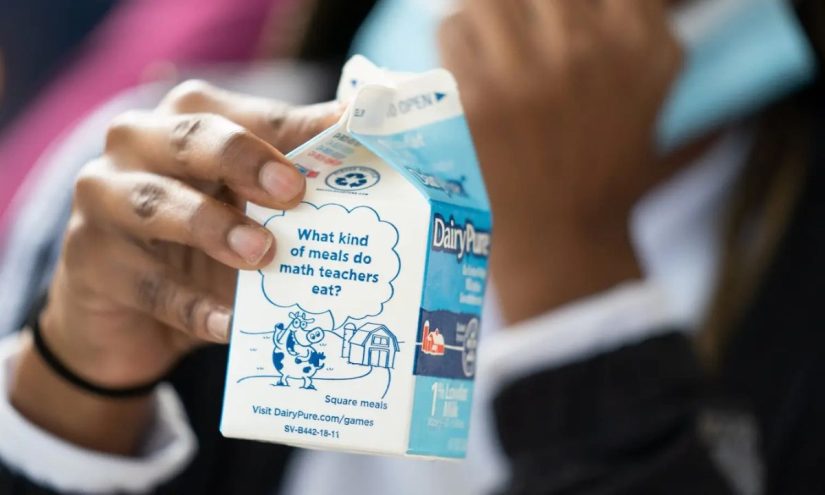
    While Republicans and Democrats alike may be sidestepping the dairy industry’s environmental impact and spending more time talking about student health, there is one environmental consideration that’s caught the attention of advocates of both whole milk and plant-based milk. That’s food waste, a leading source of greenhouse gas emissions. Forty-five percent of the milk cartons offered at breakfast in schools are thrown out annually because students don’t take them. When students do grab milk at breakfast, a fourth of those cartons still wind up unopened in the trash.

    Krista Byler, a food service director for the Union City Area School District in northwestern Pennsylvania, spoke at the Senate agricultural committee hearing and said serving whole milk in her schools helped milk consumption go up, ultimately reducing the amount of milk wasted.

    “I hated seeing such an exorbitant amount of milk wasted daily in our small district and was hearing stories of even bigger waste ratios in larger districts,” Byler said in her written testimony.

    A similar case has been made by Pacelle and other supporters of the FISCAL Act, who argue students will be more likely to drink — and finish — their beverage at school if they have the option to go plant-based.

    Recently, the Whole Milk for Healthy Kids bill passed a House agriculture committee vote. If it passes a full House vote, it could then move on to the Senate. Meanwhile, the FISCAL Act is still in committee in both houses of Congress.

    Pacelle said the best chance the FISCAL Act has of passing is if its provisions are included as an amendment to the whole milk bill — framing it not as a rival measure, but as a complementary effort to create more choice for students. “Moving it independently is unlikely because of the power of the dairy lobby,” said Pacelle, “and the G.T. Thompsons of the world.”

    This article originally appeared in Grist at https://grist.org/food-and-agriculture/milk-school-lunch-plant-based-vegan-whole-dairy-lobby-congress/. Grist is a nonprofit, independent media organization dedicated to telling stories of climate solutions and a just future. Learn more at Grist.org.


    Get stories like these delivered straight to your inbox. Sign up for The 74 Newsletter

    Source link

  • Landmark New Mexico Education Equity Case Heads Back to Court Next Week – The 74

    Landmark New Mexico Education Equity Case Heads Back to Court Next Week – The 74


    Get stories like this delivered straight to your inbox. Sign up for The 74 Newsletter

    The parties in the long-running Yazzie-Martinez lawsuit over educational equity in New Mexico will meet in court next week to discuss a motion alleging the state has not complied with previous court orders, along with the plaintiffs’ request for a “remedial plan.”

    The case, originally filed in 2014, led to a finding in 2018 by the late First Judicial District Court Judge Sarah Singleton, who found that the state was not providing equitable educational opportunities to Native students, English language learners, low-income students and students with disabilities. She ordered the state to take steps to address the needs of these at-risk students and ensure schools have the resources to provide them with the education they deserve.

    Attorneys representing Louise Martinez and Wilhelmina Yazzie filed a joint motion of non-compliance in September 2024, arguing that the state has not made significant progress in addressing the needs of at-risk students. Specifically, in their motion, plaintiffs point to ongoing poor student performance; high turnover within the New Mexico Public Education Department; high teacher vacancy rates; and a lack of targeted funding for at-risk students.

    Since Singleton’s decision, the state has increased funding for public education, but students are still being overlooked, Melissa Candelaria, education director for the NM Center on Law and Poverty, which represents the plaintiffs, told Source NM.

    The motion hearing is scheduled for 9 a.m. Tuesday, April 29.

    “We believe the court’s ruling should have been a wakeup call,” Candelaria said. “Our students can’t afford more bureaucratic churn and empty promises from PED. And we believe, the plaintiffs believe, the court must step in to enforce a real community-driven plan that reflects the urgency and the gravity to improve the overall state education system.”

    Candelaria noted that the joint motion was not opposed by New Mexico Attorney General Raúl Torrez, who represents the state in the case. Court documents state that Torrez “agrees” that there has been “insufficient compliance.” However, private counsel for the PED did oppose the motion, particularly the plaintiff’s proposed remedial plan.

    PED had not responded to a request from Source NM for comment prior to publication.

    That plan, as detailed in court documents, includes nine components or goals, including: establishing a multicultural and multilingual educational framework; building an education workforce; increasing access to technology; developing methods of accountability; and strengthening the capacity of the PED.

    “There’s no longer a debate that a statewide education plan is necessary. Now, the decision is who leads that development,” Candelaria said.

    Candelaria also told Source the plaintiffs propose the Legislative Education Study Committee take the lead in developing the remedial plan because the department’s staff have knowledge and expertise in the area of education and have access to data. The department also has a director and permanent staff, as opposed to the PED, which has had multiple cabinet secretaries lead the department in the nearly seven years since Singleton’s decision, she noted.

    “Without a plan, the efforts by the Legislature will still be piecemeal and scattershot and it’s not going to result in what we want to see in a transformed education system that’s equitable and that builds on the strengths and provides for the needs of the four student groups in the case,” Candelaria said.

    The PED opposes the motion on this point, according to court documents, and argues the education department should take the lead in developing the plan. The department also says more time is needed to create and then implement the plan. Plaintiffs suggest that the five-year plan should be developed within six months of this month’s hearing.

    Wilhelmina Yazzie, one of the original plaintiffs, told Source she feels “very optimistic” ahead of the motion hearing and that she hopes the judge agrees a plan is necessary. She added that the inequities in public education were emphasized during the COVID-19 pandemic.

    “Especially our tribal communities who are really deeply impacted by that, and they still continue to suffer to the present time right now and just by the state not taking the action that we need them to take,” Yazzie said.

    Yazzie’s son, Xavier Nez, 22, was in third grade when the lawsuit started. He is now in his third year studying at the University of New Mexico. Candelaria pointed out that since the 2018 court decision, multiple classes of students have made their way through the state’s educational system and failed to receive a comprehensive education. Yazzie’s youngest child, Kimimila Black Moon, is currently in third grade but attends private school.

    “She’s not in the public school because I still haven’t seen changes,” she said.

    Yazzie told Source that another goal of hers is to get out into communities throughout the state and speak with families because many parents are still unaware of the lawsuit and “they’re the ones that firsthand know what their children need, what they’re lacking, how they’re doing in school.”

    Source New Mexico is part of States Newsroom, a nonprofit news network supported by grants and a coalition of donors as a 501c(3) public charity. Source New Mexico maintains editorial independence. Contact Editor Julia Goldberg for questions: [email protected].


    Get stories like these delivered straight to your inbox. Sign up for The 74 Newsletter

    Source link

  • Lawyers in New Jersey School Segregation Case Want Appellate Court to Weigh in – The 74

    Lawyers in New Jersey School Segregation Case Want Appellate Court to Weigh in – The 74


    Get stories like this delivered straight to your inbox. Sign up for The 74 Newsletter

    Attorneys representing a group of New Jersey parents and activist groups are asking a state appellate court to weigh in on a case that could reshape the state’s public education system.

    At the center of the fight is whether New Jersey schools are unconstitutionally segregated by race and socioeconomic status. A lower court judge in October 2023 acknowledged the state’s public schools are segregated by race and that the state must act, but also found that the plaintiffs had failed to prove the entire system is segregated across all its districts.

    The parents’ attorneys filed a motion last week with the state’s appellate division asking it to hear the case.

    “It is imperative that no more students be deprived of these rights by the trial court’s avoidance of the straightforward conclusion compelled by the facts and the law in this case — that the state defendants, who are legally obligated to take action to desegregate public schools regardless of the reasons for that segregation, have acted unconstitutionally by failing to do so,” the attorneys wrote in the filing.

    Gov. Phil Murphy and the state Department of Education have until April 28 to respond to the plaintiffs’ new filing. A spokesman for the Murphy administration declined to comment.

    News of the new filing was first reported by Chalkbeat Newark.

    The case dates to 2018, when the Latino Action Network, the NAACP New Jersey State Conference, and several other families and groups sued the state alleging New Jersey failed to address de facto segregation in public schools. The plaintiffs cited data showing that nearly half of all Black and Latino students in New Jersey attend schools that are more than 90% non-white, in districts that are often just blocks from predominantly white districts.

    In New Jersey, students typically attend schools in the municipality where they live. Plaintiffs argued that long-standing housing policies that led to segregated residential neighborhoods led to segregated schools also. New Jersey is the seventh-most segregated state for Black and Latino students, the plaintiffs say.

    In October 2023, after Superior Court Judge Robert Lougy issued his ruling that acknowledged racial segregation in New Jersey schools but said it was not widespread, both sides entered mediation talks in hopes it would resolve more quickly than continued litigation.

    Attorneys for the parties said in February that it’s unlikely continuing the talks would “be constructive.”

    The plaintiffs’ attorneys say the lower court’s October ruling should be reversed. They want a judge to review what they say are six errors in the 2023 order, like the fact that Lougy did not identify a disputed fact.

    “Rather than reach the only logical conclusion that followed — that the state defendants violated plaintiffs’ constitutional rights — the trial court left the question of liability for another day,” the filing reads.

    If the appellate court denies the motion, the case would return to the trial court, or could be appealed to the state Supreme Court.

    New Jersey Monitor is part of States Newsroom, a nonprofit news network supported by grants and a coalition of donors as a 501c(3) public charity. New Jersey Monitor maintains editorial independence. Contact Editor Terrence T. McDonald for questions: [email protected].


    Get stories like these delivered straight to your inbox. Sign up for The 74 Newsletter

    Source link

  • Amazon Doc Probes Student Surveillance Harms – The 74

    Amazon Doc Probes Student Surveillance Harms – The 74

    School (in)Security is our biweekly briefing on the latest school safety news, vetted by Mark KeierleberSubscribe here.

    It all began when school officials mistook a blurry image of a Mike and Ike candy for pills. 

    Pennsylvania teenager Blake Robbins found himself at the center of a digital surveillance controversy that gave rise to student privacy debates amid schools’ growing reliance on ed tech. 

    Spy High, a four-part documentary series streaming now on Amazon Prime, puts the focus on a lawsuit filed in 2010 after Robbins’ affluent Pennsylvania school district accused him of dealing drugs — a conclusion officials reached after they surreptitiously snapped a photo of him at home with the chewy candy in hand. 

    Blake Robbins, then a high school student in Pennsylvania’s affluent Lower Merion School District, speaks to the press about his 2010 lawsuit alleging covert digital surveillance by educators. (Unrealistic Ideas)

    The moment had been captured on the webcam of his school-issued laptop — one of some 66,000 covert student images collected by the district, including one of Robbins asleep in his bed. 

    I caught up with Spy High Director Jody McVeigh-Schultz to discuss why the 15-year-old case offers cautionary lessons about student surveillance gone awry and how it informs contemporary student privacy debates. 

    How student surveillance plays out today: Meet the gatekeepers of students’ private lives. | The 74


    In the news

    Courts block DEI directive: Three federal courts ordered temporary halts on Thursday to Trump’s efforts to cancel student diversity initiatives — and demands for states to pledge allegiance to the administration’s interpretation of civil rights laws. | The 74

    President Donald Trump signed an executive order Wednesday that called for school discipline models “rooted in American values and traditional virtues,” taking aim at Obama- and Biden-era efforts to reduce racial disparities in suspensions and expulsions. | Politico

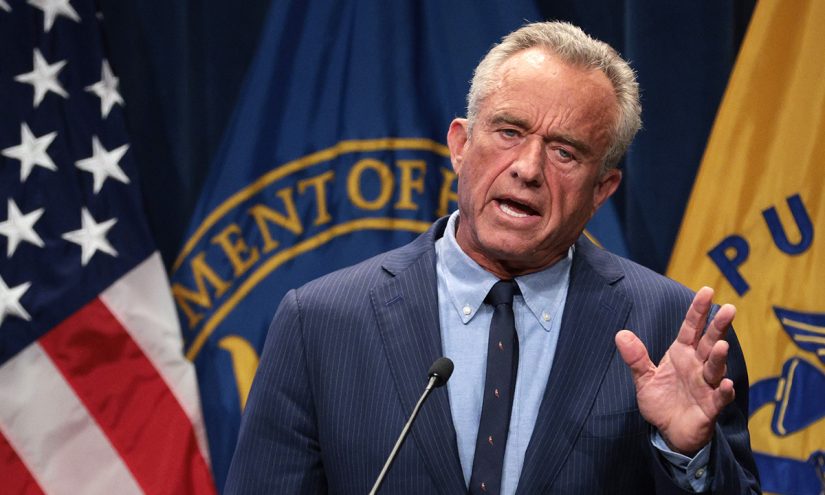
    U.S. Secretary of Health and Human Services Robert F. Kennedy Jr. speaks about a new autism study during a news conference on April 16, 2025. (Getty Images)

    ‘The history there is deeply, deeply disturbed’: Disability-rights advocates have decried plans at the National Institutes of Health to compile Amerians’ private medical records in a “disease registry” to track children and other people with autism. | The 74

    • Health and Human Services Secretary Robert F. Kennedy Jr., faced criticism for recent comments that many kids “were fully functional and regressed because of some environmental exposure into autism when they’re 2 years old.” | ABC News

    A new lawsuit filed by students at military-run schools accuses the Defense Department of harming their learning opportunities by banning books related to “gender ideology” or “divisive equity ideology,” including texts that refer to slavery and sexual harassment prevention. | Military Times

    Sign-up for the School (in)Security newsletter.

    Get the most critical news and information about students’ rights, safety and well-being delivered straight to your inbox.

    California lawmakers are demanding answers after Department of Homeland Security agents visited two Los Angeles elementary schools and asked to speak with five students who the federal agency said “arrived unaccompanied at the border.” | LAist

    ‘We all deserve reparations’: White House aide Stephen Miller said in an interview last week the country “used to have a functioning public school system” until it was destroyed by “open borders.” | The New Republic

    The Justice Department seized thousands of photos and videos in an investigation of a former University of Michigan assistant football coach who was indicted on allegations he hacked into student athletes’ private accounts to steal intimate images. | CBS Sports

    A 48-year-old mother was arrested and accused of bringing a gun to her daughter’s Indiana elementary school and threatening the girl’s teacher over a classroom assignment about flags. While discussing flags, the teacher reportedly referred to a rainbow flag in the classroom with the words “be kind.” | NBC News

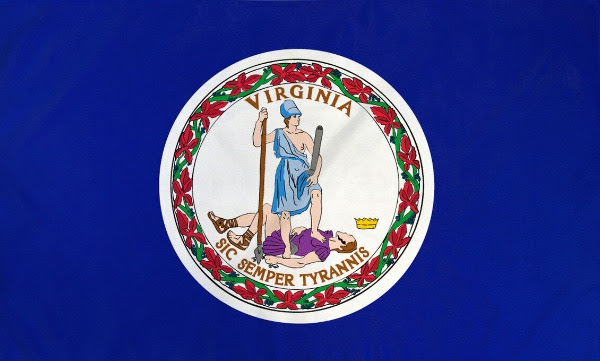
    Banning ‘frontal nudity’: A Texas school district has removed lessons on Virginia history from an online learning platform for elementary school students because the commonwealth’s flag depicts the Roman goddess Virtus with an exposed breast. | Axios

    The Supreme Court will hear oral arguments next month to weigh Trump’s executive order eliminating birthright citizenship, bringing into question a 127-year-old court precedent. | NPR

    A class-action lawsuit accuses tech giant Google of amassing “thousands of data points that span a child’s life” without the consent of students or their parents. | Bloomberg Law

    A Florida teacher is out of a job after she called a student by their preferred name, allegedly violating a 2023 Florida law that requires schools to receive parental permission to refer to students by anything other than their legal names. | Click Orlando

    The vice president of the Buffalo, New York, chapter of Bikers Against Child Abuse was arrested and accused of sex crimes against children. | WIVB


    ICYMI @The74

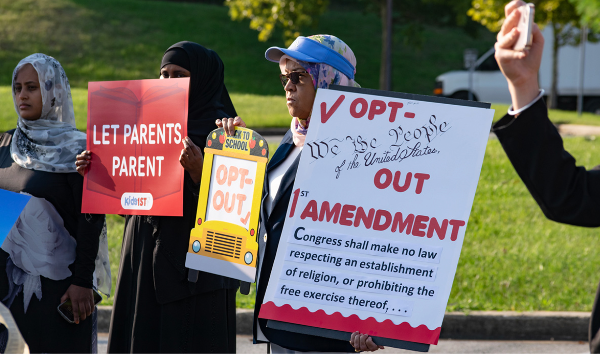
    Supreme Court Shows Support for Parents Who Want Opt-Outs from LGBTQ Storybooks

    ‘There Goes My Son’s Help:’ Wave of Washington Head Starts Shut Down as Chaos Engulfs Federal Program

    State Officials Sue Trump Administration for Halting COVID School Aid

    Protecting Children Online Takes Technology, Human Oversight and Accountability


    Emotional Support

    Don’t even think about touching Matilda’s cactus.


    Get stories like these delivered straight to your inbox. Sign up for The 74 Newsletter

    Source link

  • Higher Ed Wins a SEVIS Battle, Not the Visa War

    Higher Ed Wins a SEVIS Battle, Not the Visa War

    International students, colleges and advocates caught a break Friday after weeks of confusion and disruptions. After thousands of students had learned their Student and Exchange Visitor Program (SEVIS) status was revoked, they were relieved to hear that Immigrations and Customs Enforcement was restoring students’ statuses nationwide.

    “I was in class when the news broke, and there was a sense of relief,” said Chris. R Glass, a professor at Boston University’s Center for International Higher Education. “But it’s not the kind of relief that things are getting better, just that they’re not getting worse.”

    The Trump administration’s reversal was a key win in dozens of lawsuits across the country that argued that eliminating thousands of students’ SEVIS records without notice was unconstitutional. But threats against international students still loom large, experts say. The most pressing question: will this happen again?

    In its notice to a federal judge, the administration did not say that it was finished eliminating students’ SEVIS records, just that “ICE will not modify [a] record solely based on the NCIC [National Crime Information Center] finding that resulted in the recent SEVIS record termination,” according to the court filing. And ICE is working a policy framework for terminating SEVIS records.

    Reactivating students’ records doesn’t erase questions about the genesis of “this unlawful policy,” said Miriam Feldblum, co-founder, president and CEO of the Presidents’ Alliance on Higher Education and Immigration. “We need to understand why it happened and what is the policy structure.”

    The Presidents’ Alliance filed a lawsuit Thursday night, challenging the SEVIS record terminations, arguing that students “were stripped of valid status without warning, individualized explanation, and an opportunity to respond,” and that the government’s actions harmed member institutions’ ability to attract, retain and serve international students. The Presidents’ Alliance asks the court to enjoin DHS from future terminations affecting students at member institutions.

    “We are gratified to see this change of directions to restore records,” Feldblum said. “That does not erase the need for national, systemic litigation.”

    The Trump administration’s decision to reinstate student visas also does not negate the legal grounds for cases to continue, said Elora Mukherjee, Director of the Columbia Law School Immigrant Rights Center. Federal courts have the power to enjoin the executive branch on an issue that’s capable of repetition to stop the harm from occurring in the future, which in this case would be another sweeping removal of students’ legal standings, she added.

    The Presidents’ Alliance hopes to learn more about the administration’s intentions, policy structure and plans through its lawsuit, Feldblum said.

    Advocates for international students emphasized that while students may have regained legal standing to study and work in the U.S., the change in their status can have greater effects on their immigration status.

    The federal government said it would restore terminated SEVIS records, but some students had their visas revoked, said Fanta Aw, CEO and executive director of NAFSA, the association of international educators. Students will have to visit an embassy to receive their visa, facing long wait-times, and there’s no guarantee that they’ll be able to regain it.

    For those who didn’t lose their visas, terminations can have serious implications for students’ continuity of time in the U.S., Aw said. The stated reason for SEVIS termination and notation in their records can similarly have negative long-term consequences, Feldblum said.

    On campuses, administrators and students are still confused about what comes next, but there’s a clear feeling of relief, Feldblum and Aw said.

    As of Friday, Inside Higher Ed identified over 1,840 students and recent graduates from more than 280 colleges and universities who have reported SEVIS record shifts.

    Most institutions didn’t receive notification when students’ records changed initially, and they’re not getting notice when they’re reauthorized, Aw said. Just like with revocations, staff are checking SEVIS regularly to see if there’s been a status change.

    A few colleges—including Harvard University, Rice University, Stanford University, Tufts University, the University of Nebraska-Lincoln and the University of California, Berkeley—reported that some of their impacted students have had visas or SEVIS statuses restored. Some students still have terminated records.

    The slow restoration is possibly tied to the tedious nature of the work, Aw said, as federal workers have to manually restore each student’s status.

    NAFSA is starting to track visa restorations and will report numbers on Monday, Aw said, including the number of restorations and institution type.

    The Presidents’ Alliance will be in touch with member institutions to provide updated guidance on how to proceed, Feldblum said.

    This reversal doesn’t eliminate the harm the policy caused, experts noted. Students who left the country based on communication from the Trump administration or their own colleges and universities will possibly face challenges returning. Others were told to stop attending class, working or conducting research. With restored SEVIS records, students will be able to resume those activities, but it doesn’t fix everything.

    Over the past month, international students have experienced high levels of anxiety and stress and a lack of psychological safety, which can impact their personal well-being and retention in higher education.

    “You can’t get that time back, that lack of sleep back, that anxiety back,” Aw said. “Trust is broken for students that this is a system that is fair and consistent and transparent. I don’t have to tell you how hard it is to rebuild that.”

    Tonight, at least, some students can get a good night’s sleep, Aw said.

    Source link

  • How it Could Impact Schools Nationwide – The 74

    How it Could Impact Schools Nationwide – The 74


    Get stories like this delivered straight to your inbox. Sign up for The 74 Newsletter

    This story was originally reported by Nadra Nittle of The 19th.

    “A direct assault on the Texas public education system.”

    That’s how social justice groups like the Texas Freedom Network are describing the passage of a bill that would create a $1 billion school voucher program in the state. The Texas House passed Senate Bill 2 early Thursday, with support from Gov. Greg Abbott, who has championed school vouchers. These taxpayer-funded subsidies divert money away from public schools, allowing families to use them to cover their children’s tuition at private or religious schools.

    “This is part of a coordinated strategy to dismantle public education statewide and nationally, since Donald Trump literally called Republicans and told them that they had to vote yes on this voucher scheme,” said Emily Witt, spokesperson for the Texas Freedom Network, a grassroots organization of religious and community leaders. “Republicans have done a very coordinated job of framing this as something that it’s not. It’s certainly not ‘choice.’ It’s going to really devastate a lot of public schools and rural communities here in Texas.”

    The voucher bill’s passage has been characterized as a win for both Abbott and Trump. Abbott tried unsuccessfully to get voucher legislation passed in 2023. Trump, in January, issued an executive order directing the education secretary to explore ways to route federal funding to states and families interested in school choice initiatives, which give students the option to attend their preferred public, private, charter or religious school. Critics of vouchers, a controversial way to facilitate school choice, worry that they take away valuable resources from public schools. They also argue that private schools may exclude students with disabilities or who are LGBTQ+ or have LGBTQ+ parents. Students from low-income or rural areas may also struggle to access private school, as may those from certain ethnic groups or religious backgrounds. The voucher program does not guarantee students admission to private schools.

    The approval of a voucher program in the nation’s second most populous state could create a ripple effect across the United States, where the voucher movement has gained momentum in recent years in places like Arizona, Arkansas, Florida and Wisconsin — often with the help of billionaire backers. The Texas bill next goes to the state Senate, where lawmakers in each chamber are expected to work out the disparities in their voucher plans such as how much money participants should get and which participants should be prioritized.

    “It is absurd for Gov. Abbott and his pro-voucher allies to claim that a diversion of $1 billion in tax funds to private schools over the next budget cycle will not hurt our underfunded public schools, where the vast majority of our students will remain,” Ovidia Molina, president of education labor organization the Texas State Teachers Association, said in a statement. “That voucher drain will increase to $3 billion by 2028 and more than $4 billion by 2030 if this voucher bill becomes law, the Legislative Budget Board projects.”

    Texas Gov. Greg Abbott sits before President Donald Trump arrives to speak at an education event and executive order signing in the East Room of the White House in Washington, Thursday, March 20, 2025. (Ben Curtis/AP Photo)

    In Texas, most students attend public schools, with an estimated 6 percent enrolled in private schools. Rural communities overwhelmingly attend public schools because of the dearth of private schools in such areas. Accordingly, voters in the country have typically opposed school vouchers, perceived as vehicles to help families in cities send their kids to private school. Even with the school voucher program, experts do not expect private schools to be inundated with new students from public schools.

    “Most kids are still going to have to be served by public schools,” Witt said. “We do know that in other states where vouchers have passed, that most of the kids using those vouchers already were in private schools.”

    While vouchers have been promoted as a way to help low-income families choose a quality education for their children, the subsidies often aren’t large enough to cover the tuition and fees associated with a private school education. The school voucher program the Texas House just approved is generous, as it will give families who qualify up to about $10,000 per child. The average K-12 private school tuition in Texas is over $11,000, with tuition for schools that specialize in special education topping $19,000 and elite institutions reaching as high as $40,000. Parents would need to make up the difference for tuition costs that vouchers don’t cover, a move critics of the subsidies say is out of reach for disadvantaged families.

    “So it’s still going to benefit mostly wealthy families,” Witt said. “Let’s say that it does cover the cost of tuition. It’s not going to cover extracurriculars. It’s not going to cover transportation. Private schools are not required to offer free transportation to and from school like public schools are, and they also don’t have to accept every child.”

    Religious institutions, she said, could turn away students who don’t belong to the faith affiliated with the school. A private school could accept a student with a disability only to discharge them later if the school doesn’t have the resources to educate that child or is no longer interested in doing so.

    “They could essentially reject a child that they feel just doesn’t meet the culture of their school,” Witt continued. “That could be because a child comes from a low-income family. It could be because they’re not White. It could be because they’re LGBTQ or their parents are LGBTQ or not married.”

    Private schools also don’t have to use standardized tests, like the State of Texas Assessments of Academic Readiness (STAAR), used in public schools to track student progress. The GOP-run Texas House, she said, rejected an amendment that would have required private schools to use standardized testing to measure student outcomes just as public schools do.

    “I don’t know how we’ll see if this program works and how it benefits kids, especially kids with disabilities,” she said.

    House Republicans tabled 44 amendments to the legislation, including one that would have led to a referendum on school vouchers in November, effectively blocking voters from deciding the issue.

    The bill is an additional blow as public schools slash programs and raise class sizes under a budget crunch, Molina said in her statement.

    “Texas already spends more than $5,000 less per student than the national average, ranking Texas 46th among the states and the District of Columbia,” she said. “The school finance bill also approved by the House will not come close to ending the state’s financial neglect of public education. The House’s $395 increase in the basic allotment, which hasn’t been increased in six years, will provide only a third of what is needed to cover districts’ losses from inflation alone.”

    Supporters of the voucher program may not be happy with it a year from now, Witt predicts. In 2022, Arizona passed its universal school voucher program. It covers expenses related to private school tuition, homeschooling and related academic needs, but now the program faces a backlash as the costs associated with it have led to questions about oversight and funding for public schools.

    “Republicans have sold people a lie,” Witt said. “They’ve said repeatedly that it won’t harm public schools, and there’s just no way that it won’t. And I do think that’s their goal. I genuinely think that their goal is to eliminate public education, and this is the first step there. A year from now, people are going to see that the neighborhood schools in their communities are shuttering or having to cut resources for students, and they’re going to be really upset. And I think that there’s going to be hell to pay at the ballot box.”


    Get stories like these delivered straight to your inbox. Sign up for The 74 Newsletter

    Source link

  • UC Berkeley Faces Foreign Gifts Investigation

    UC Berkeley Faces Foreign Gifts Investigation

    The Education Department is investigating the University of California, Berkeley, regarding compliance with a federal law that requires colleges to disclose certain foreign gifts and contracts.

    It’s the first such review launched since President Trump signed an executive order Wednesday aimed at increasing transparency over the “foreign influence at American universities.”

    A notice of the investigation and corresponding records requests were sent to UC Berkeley on Friday morning after the department found that the university’s disclosures might be incomplete.

    “There have been widespread media reports over the last several years of Berkeley’s very substantial—in the hundreds of millions of dollars—receipt of money from foreign governments, in this case, particularly China,” a senior Education Department official said on a press call Friday. But while the development of “important technologies” has been shared with foreign nations, the funding that made it possible “has not been reported to the department, as it’s required by law,” in Section 117 of the Higher Education Act, the official added.

    Under Section 117, colleges and universities must report twice a year all grants and contracts with foreign entities that are worth more than $250,000. The department opened a similar review into Harvard last week.

    UC Berkeley administrators will have 30 days to respond with the requested records. From there, the Department of Education’s general counsel, in partnership with the Departments of Justice and Treasury, will “verify the degree to which UC Berkeley is or is not compliant.” (Unlike with Harvard, the Department of Education did not disclose the specific records it had requested from Berkeley.)

    “The Biden-Harris Administration turned a blind eye to colleges and universities’ legal obligations by deprioritizing oversight and allowing foreign gifts to pour onto American campuses,” Education Secretary Linda McMahon said in a news release. “I have great confidence in my Office of General Counsel to investigate these matters fully.”

    Trump and congressional Republicans have been trying to crack down on the enforcement of Section 117 since the first Trump administration. Already this year, House Republicans passed a bill, known as the DETERRENT Act, which would lower the general threshold required for reporting foreign donations from $250,000 to $50,000. Gifts from some countries, like China and Russia, would have to be reported no matter the value. The Senate has yet to move forward with the bill. 

    When asked how Trump’s executive order differentiates itself from the DETERRENT Act, the department official said the legislation would be “entirely consistent with the EO’s directives” and that the department is “very supportive” of congressional Republicans’ efforts.

    “The EO basically just says, enforce the law vigorously, return to enforcement of the law, stop the nonsense and work with other agencies to do it,” the official explained. “So whether the reporting requirement is for $250,000 or more per year or the lower threshold, our approach will be the same.”

    Inside Higher Ed asked the department if there would be more investigations but has not yet received a response.

    Source link

  • ICE Reverses Course on SEVIS Terminations

    ICE Reverses Course on SEVIS Terminations

    Photo illustration by Justin Morrison/Inside Higher Ed | aapsky/iStock/Getty Images | Chip Somodevilla/Getty Images

    Over the past three weeks, several thousand international students received notice that their status in the Student and Exchange Visitor Information System was changed, which threatened their legal ability to stay in the country and resulted in some students being detained or self-deporting. But as of late last night, the federal government is reversing course and reinstating students’ SEVIS records.

    Elora Mukherjee, director of the Columbia Law School Immigrant Rights Center, first heard Thursday evening that 50 percent of affected students had had their SEVIS records reinstated. At the time, immigration lawyers didn’t know if it would be a blanket reversal.

    But Friday morning, a lawyer for the government told a federal judge that Immigration and Customs Enforcement was restoring students’ SEVIS statuses nationwide while ICE develops a policy framework for record terminations. In the meantime, “ICE will not modify the record solely based on the NCIC [National Crime Information Center] finding that resulted in the recent SEVIS record termination,” according to the court filing.

    So far, both students who filed lawsuits and those who didn’t have seen records restored, Mukherjee said.

    Federal judges across the country have already ordered the government to restore some students’ records in SEVIS, a key database that tracks international students, after those students sued. The judges, for the most part, have expressed skepticism that the terminations were legal. Of the more than 100 lawsuits, judges have granted temporary restraining orders in at least 50 cases, Politico reported.

    The sudden terminations have led to widespread confusion and fear for international students. Lawyers said in court filings and interviews that students affected are afraid to leave their homes or have lost out on income because of the terminations, among other consequences.

    As of Friday morning, Inside Higher Ed has identified over 1,840 students and recent graduates from more than 280 colleges and universities who have reported SEVIS record shifts. Many institutions didn’t receive clear communication when student records were changed in the first place, making it likely that they won’t receive updates if and when records are restored.

    Two colleges have already seen the changes take place. At the University of California, Berkeley, 23 students had their SEVIS statuses changed since April 4, but overnight a dozen students regained their status without warning or explanation, the university’s student paper, The Daily Californian, reported. Stanford University said late on April 24 that one student whose visa was revoked had their record restored.

    This reversal doesn’t eliminate harm, Mukherjee noted. A few students elected to self-deport based on communication from the Trump administration or their own colleges and universities. Others were told to stop attending class or working. Among those who did continue their daily lives, a lapse in their SEVIS status could potentially cause them harm in the future, Mukherjee said.

    In the policy update shared Friday, government officials provided more clarity about what prompted the sweeping visa revocations: a search in the National Crime Information Center.

    Of students who had their SEVIS status changed, many were classified as “OTHER—Individual identified in criminal records check and/or has had their VISA revoked,” according to court filings. Students who did have criminal records were cited for a variety of reasons ranging from driving without a license and overfishing to underage drinking. Some students didn’t have a criminal record at all.

    Source link