Tag: News

  • Higher Ed After Trump’s First 100 Days: The Key Podcast

    Higher Ed After Trump’s First 100 Days: The Key Podcast

    Inside Higher Ed journalists analyze the first 100 days of the Trump administration in this week’s episode of The Key, IHE’s news and analysis podcast.  

    Editor in chief Sara Custer, along with news editor Katherine Knott and reporters Johanna Alonso and Liam Knox, discuss the major events of the last three months and the impact they have had on universities and colleges.

    The team summarizes the executive orders that will affect higher education, including one to shutter the Department of Education, another to overhaul accreditation and another to tackle alleged antisemitism. 

    The conversation also explores the new relationship the federal government has established between itself and higher education and how the administration is threatening federal research funding to set ultimatums and progress its agenda, in particular with Columbia and Harvard University.

    The group updates listeners on the latest developments with international students’ Student Exchange and Visitor Information System status reinstatements. Alonso and Knox also talk about what they learned about the administration’s targeting of international students from speaking to students, their advisers and digging through dozens of lawsuits brought against the government. 

    While what comes next is anyone’s guess. The team discusses what they’ll be watching over the next 100 days, including what Congress will be working on, the fallout from the international student crackdown and how summer might shift the vibe on campus. 

    Listen and download the episode here. 

    Source link

  • Don’t Overlook Alumni as Asset for Advocacy (opinion)

    Don’t Overlook Alumni as Asset for Advocacy (opinion)

    With research contracts, cost recovery and student financial aid totaling billions of dollars on the line, many universities have called upon powerhouse external lobbying firms to defend against federal funding cuts and make the case for the public good that flows from higher education. Engaging external government relations experts can bring important perspective and leverage in this critical period, but this approach may not be scalable or sustainable across the nearly 550 research universities in large and small communities across the country.

    Fortunately, campuses have their own powerful asset for advocacy: alumni. Graduates know firsthand the benefits of higher education in their lives, professions and communities, and they can also give valuable feedback as campuses work to meet the challenges of this moment and become even better. The National Survey of College Graduates estimates that 72 million individuals hold at least a bachelor’s degree. Engaged well, alumni can be a force multiplier.

    Alumni often get attention in their role as donors. They will receive, on average, more than 90 email messages from their alma mater this year, many asking them to reflect on the value of their college experience and pay it forward. The most generous donors will be celebrated at events or visited personally by campus leaders. Millions and sometimes billions of dollars will be raised to advance campus missions.

    As generous as alumni donors may be, the effectiveness of their philanthropic support is linked to the even greater investments states and the federal government make in higher education. University leaders in fundraising and beyond have an obligation to provide alumni with candid information about the potential impacts of looming generational policy and funding shifts, along with opportunities to support their campus as advocates.

    In a crisis, information and attention necessarily flow first to on-campus constituents. Crisis communications and management plans may initially overlook alumni or underestimate the compelling role that they can play with both external and internal stakeholders. While most alumni are not on the campus, they are of the campus in deep and meaningful ways. And, unlike the handful of ultrawealthy alumni who have weighed in to the detriment of their Ivy League campuses, a broad group of alumni can bring practical wisdom and a voice of reason to challenging issues.

    Campus leaders now preparing for a long period of disruption should assess alumni engagement as part of this planning and gather their teams to consider:

    • How might alumni and development staff work with strategic communications, government relations staff and academic leaders to shape university messaging and advocacy?
    • What facts about policy and funding challenges do alumni need to understand in a media environment filled with misinformation?
    • How might alumni perspectives inform campus discourse about challenges to the institution’s values and academic freedom?
    • How might existing alumni programming provide opportunities for information-sharing between campus leaders, academic leaders and alumni?
    • How are campuses acknowledging and supporting alumni who are directly affected by changes in the federal workforce and economic disruption?

    This is a critical time for campus leaders to build bridges. Alumni can be a huge asset in this work. As degree holders, donors, professionals and citizens, engaged alumni know the specific value of their alma mater and of higher education broadly. They have stakes, authenticity and social capital, and they deserve the opportunity to add their voices.

    Lisa Akchin, senior counsel at RW Jones Agency and founder of On Purpose LLC, previously served as associate vice president for engagement and chief marketing officer at University of Maryland Baltimore County.

    Source link

  • Why Academics Need to Slow Down (opinion)

    Why Academics Need to Slow Down (opinion)

    A 2023 global survey of more than 900 faculty members found that 33 percent are “often or always” physically exhausted, 38 percent are emotionally exhausted and 40 percent are just worn-out. The constant pressure to conduct research, secure grants and fellowships, attend conferences, and publish or perish is only part of the story. There is, additionally, the immense responsibility to teach and mentor students who are facing their own mental health crises.

    In the inescapable race to beat the tenure clock and, once tenured, move to the next rung of the ladder while staying relevant and recognizable in our fields, faculty members need to take a pause. We must slow down to strengthen our mental health, ensure student success and produce meaningful scholarship.

    Some might ask how slowing down will help us keep up. How will we survive in academia if we are slow to publish in high-impact journals, or present our research in international forums, or participate in faculty development opportunities, or mentor multiple students, or be on several significant boards and committees? We will, if we do not equate slowness with being lazy or unproductive and, instead, understand it as the pace and the process that allows us to function and create deliberately, contemplatively, while resisting exhaustion and burnout.

    In my international conflict management classroom at Kennesaw State University, I encourage my students—future peacemakers—to think about slow peace. In my research on feminist agency in violent peripheral geographies, I deliberate on how, in zones of ongoing conflict, active resistance must (and does) surface in response to direct and immediate violence. But this only addresses the symptoms; in the urgency of the moment, what is not—and cannot—be addressed is the structural violence that results from a lack of cultivating peace as a way of life. Only by slowing down to reflect on, and gradually dismantle, the tools that perpetuate cultures and structures of violence can we enable enduring peace, ensure the well-being of the communities in conflict and reduce the recurrence of everyday violence.

    As I move deeper into decolonial feminist peace in my scholarship, teaching and practice, I recognize the university depends on some of the same tools of violence and patriarchal control that are used to perpetuate the colonial and postcolonial conflicts that we study in my classroom. For example, the “fast-paced, metric-oriented neoliberal university” makes constant demands on faculty members’ time and effort, ensuring we are exhausted and preoccupied with “keeping up.” To meet its numerical expectations, we often sacrifice our “intellectual growth and personal freedom”; we rarely pause to reflect on the quality and real-world impact of our output or the toll it takes on us. Exhausted people rarely have the time or energy for community and rest, which are essential not only for individual well-being but also for collective resistance to slow violence.

    Similarly, colonial capitalists initiated my ancestors in Assam, in the peripheral northeast region of India, into the plantation (tea) and extraction (coal, oil) economies by weaponizing productivity and exhaustion. They denigrated our traditional lahe lahe way of life that was based on living gently, slowly and in organic harmony with the planet and its people. The nontribal people of Assam embraced capitalism and the culture of “hard work” and exhaustion. They also aligned with the colonizers to designate the tribal peasants who stayed connected with their ancestral lands and refused to work in the plantations as “lazy natives.”

    This process of ethnic fragmentation started by the colonizers was subsequently exploited by the post-/neocolonial Indian state to diffuse and dissipate resistance against itself as it continued to extract the communal resources of the ethnic people of Assam and its neighboring northeastern states while ignoring their customary laws and political rights and governing this peripheralized region through securitization and militarization. The historical, horizontal conflicts between the many communities of the Northeast undermined their necessary, vertical resistance against the Indian state. Meanwhile, on the Indian mainland, Assam is still derogatorily referred to as “the lahe lahe land” and people from the entire Northeast region are subjected to discrimination and racist violence.

    Building solidarities across marginalized entities alone can successfully challenge larger structures of oppression—whether racism, colonial violence or academic capitalism—that continue to thrive while we remain divided. In the conflict zone I call home, I advocate for addressing the slow and sustained violence that historically eroded indigenous ways of peaceful coexistence between communities. I propose ways of building peace by reintroducing customary nonviolent structures and cultures into everyday practices of communities, allowing community members to reconnect with each other and with nature and the environment.

    For example, traditional slow crafts like weaving organic cotton and silk fabrics involved the entire community while benefiting individual members and protecting the planet. Reviving these practices would slowly, but radically, disrupt the cycle and progression of violence and societal fragmentation.

    Within the academy, too, we can practice slow peace. My individual resistance began when I started questioning my sense of guilt and self-doubt about being unproductive or “slow.” Just as my precolonial ancestors did, I too realized that my self-worth is not tied to my productivity; I slowed down. This deepened my scholarship and made it more deliberate as I connected it to my embodied, intergenerational history. My approach to scholarship also grew more intentional as I re-examined its real-world impact.

    At the same time, I recalled that my lahe lahe culture valued rest and resting in community through finding connections with people, engaging in communal joy and being in nature. I moved away from commodified self-care products and apps and took more mindful breaths during my morning yoga. Now I am more energized in the classroom, where I practice laughter and joy with my students while encouraging them to build an empathetic and mutually caring classroom culture. They bring genuine engagement and produce strong work that they take ownership of. I have also added nature walks with emotional support coworkers, aka new friends, to my routine. Our conversations have led to research collaborations and several creative engagements with the local community.

    If, as Audre Lorde says, self-care is “warfare,” it is no less a war to attempt to build a community of care involving colleagues and students in institutions and settings that are engineered to facilitate isolation by emphasizing increasingly demanding personal achievements tied to hierarchies of power and privilege. As I continue to deliberately and strategically work on decolonizing my academic praxis, I am convinced that within the academy and outside—where our knowledge-making has consequences—the quicker we begin slowing down, the sooner we will reap the benefits of the lahe lahe life.

    Uddipana Goswami is author of Conflict and Reconciliation: The Politics of Ethnicity in Assam (Routledge 2014) and Gendering Peace in Violent Peripheries: Marginality, Masculinity and Feminist Agency (Routledge 2023). Gendering Peace earned an honorable mention in the International Studies Association’s Peace Section’s 2025 Best Global South Scholar Book Award. She teaches at the School of Conflict Management, Peacebuilding and Development at Kennesaw State University.

    Source link

  • How Housing Support Programs Can Measure Student Development

    How Housing Support Programs Can Measure Student Development

    A large number of college students experience housing insecurity or homelessness, and finding suitable accommodations can be a challenge, particularly for those who attend colleges and universities that do not provide on-campus housing.

    The fall 2024 Student Financial Wellness Survey by Trellis Strategies found that 43 percent of all respondents experienced housing insecurity and 14 percent were homeless during the prior 12 months. Among two-year college respondents, 46 percent were housing insecure and 16 percent experienced homelessness in the previous year.

    Community colleges often lack the resources to directly address housing insecurity, so they rely on outside partnerships or housing assistance programs to accommodate students. For example, LaGuardia Community College partners with Airbnb to offer vouchers for short-term housing support for students. Tacoma Community College and the Tacoma Housing Authority co-created the College Housing Assistance Program, which subsidized housing costs for students experiencing homelessness until 2022.

    These programs often come with red tape that can make it difficult for a student to enroll in the program; for example, GPA or credit requirements can push vulnerable students out if the institution doesn’t think they’re making adequate progress.

    Alena A. Hairston, a professor at Fresno City College and doctoral student at Alliant International University, conducted a qualitative research project that evaluated student experience and engagement with housing assistance programs. Hairston found that while many students did not meet benchmarks for student success in the classroom, the experience contributed to their improved self-actualization, which can be a meaningful metric in student development.

    The background: To ensure students are persisting and making progress toward a degree, college-led assistance programs often require learners to meet baseline educational checkpoints, including being enrolled, achieving a certain GPA or meeting regularly with a staff member. Community partners may institute their own requirements, including drug- and alcohol-free living or payment of a deposit.

    If students don’t meet these requirements, they’re dropped, often without another option to continue their housing, which can be detrimental to their health and well-being. While failing to meet requirements can be a sign of student disinterest or lack of appreciation for the offerings, Hairston views stable housing as a foundational piece in student achievement and tied to the mission of community colleges.

    “If a student shows up to attend [and] to be a part of the collegiate process, that says desire, right?” Hairston said. “And the only requirement for admission [at community colleges] is a desire to learn, so we need to go with that as our mandate [to serve students].”

    Hairston wanted to understand how students accessed resources and the impact it had on their psychosocial development.

    The study: Hairston interviewed nine students who participated in housing assistance programs, led either by the college or an off-campus entity, in 2021. Students were between the ages of 18 and 47 and represented a variety of racial, ethnic and gender categories. All learners were enrolled at least part-time at a community college.

    Most respondents said they learned about housing programs through specific contacts, such as academic counselors for special programs including Extended Opportunity Programs, TRIO and the Puente Project, while others used the internet or other partners.

    While students appreciated the services, they faced logistical challenges that made the experience frustrating, such as a lack of notification or timely communication from staff members. One was in an unsafe area and roomed with an individual who used methamphetamine.

    Students said program requirements to maintain academic standing or health conditions (such as sobriety) were perceived as helpful, but in practice sometimes harmful and led to loss of housing. “As soon as you drop [below] a 2.0 or you drop nine units, they literally evict you,” one student shared. “Then you have an eviction on your record as well.”

    A few students said they gained personal life skills or were motivated to continue working toward academic and career goals. Others felt their citizenship status or racial and ethnic backgrounds impeded their housing placements or ability to access resources.

    In addition to finding secure housing, most participants utilized other campus, public and private services to pay for additional resources, including furniture, phone bills, laptops, bikes and mental health support.

    The COVID-19 pandemic created additional challenges for participants, such as job losses, the decline of support networks, moves, educational disruption and relapses into substance use.

    In conversations, students commented on how housing assistance motivated them to stay enrolled and allowed them to prioritize other elements of their lives, including mental health care and caregiving responsibilities.

    “The program [helped me with] a lot of psychological things like digging into yourself and figuring out the root problems that keep causing me to drink,” a study participant shared. “So I got to unburden a lot of my little demons.”

    Lessons learned: Based on her conversations with students, Hairston recommends policymakers tie self-actualization and personal growth to efficacy metrics to understand the value of these programs and improve students’ self-reflection on their progress and achievement.

    One possibility would be to measure student success on a yearlong basis, rather than term by term. Some learners returning to higher education may need counseling or struggle with the rigor of their coursework, resulting in poor academic performance in their first term back.

    Instead of weighing GPA or credits completed as the most important factors for student eligibility, Hairston advocates for a greater emphasis on self-efficacy and personal growth, perhaps delivered through a self-diagnostic at the start and end of the term or a regular self-study to track learning and the challenging circumstances they encountered. This also creates opportunities for checking in on students during the term to ensure that they’re not falling behind without support, Hairston said.

    Program participants should also be paired with counselors who are trained in trauma-informed care and academic counseling, Hairston said. Ensuring a welcoming atmosphere for services, program information and resources can reduce barriers to access and promote thriving.

    If your student success program has a unique feature or twist, we’d like to know about it. Click here to submit.

    Source link

  • Modest Thoughts From a Minor Donor to Harvard (opinion)

    Modest Thoughts From a Minor Donor to Harvard (opinion)

    Responding to Harvard University’s defiance of the coercive and illegal demands from the Trump administration, some major donors have recently urged the university to make accommodations rather than fight. A few have withheld large gifts over the last year and a half.

    Holding degrees from two of Harvard’s least wealthy schools (Divinity and Education), I have made small annual donations to my relatively impecunious alma maters for 45 years, and I offer these considerations to weigh against those of the big donors who have generally graduated from Harvard’s wealthiest, so-called major schools.

    Harvard’s resistance to authoritarian overreach bolsters the entire system of U.S. higher education, which came to be regarded as the best in the world only in the 1970s, after a century of slow development. Harvard’s defiance of unlawful authoritarianism inspires universities throughout the world.

    This controversy is therefore not just about Harvard, but all of higher education everywhere. If Harvard caves, then no university will dare to defy governmental overreach. If Harvard resists, then others will be inspired to do so and shamed if they do not.

    The urging by major donors to strike a deal with the Trump administration may result from feeling that Harvard’s small and secretive governing board, the Corporation, has, in recent months, not listened to them and ignored “the rightward shift of the country” that prompted Trump’s demands. (Although Harvard’s “major” and wealthiest professional schools—business, law and medicine—still graduate leading financiers on Wall Street and conservative justices of the Supreme Court, notwithstanding claims about the university’s “sins” of left-wing radicalism.)

    In any case, the implied threat of major donors to withhold donations is transactional, just like the demands of the Trump administration. Thus, Harvard is caught between two transactional parties. Is the defiance of coercive and illegal overreach worth the possible loss in large gifts?

    And the loss could be considerable. Over the last century, the rule in higher education fundraising is that 90 percent of gifts come from the top 10 percent of donors. Big donors count. Little ones scarcely, it seems.

    But there are financial counterpoints.

    By adjusting the spending rule for its endowment income and by floating bonds and loans, Harvard does have the resources to supplant lost federal income until its legal challenges are litigated, notwithstanding the prospect of further demands by the Trump administration.

    Indeed, the annual investment income of large endowments vastly exceeds annual fundraising. As a result, wealthy universities were already shifting their focus from “gifts to growth” of investment yield by the beginning of the 21st century. Fundraising became less important than investing endowment.

    Furthermore, major alumni donors, who might fear alienating the Trump administration by donating to Harvard, could easily make donations anonymously, which has long been a tradition in higher education.

    Finally, and most importantly, Harvard’s defiance has already inspired support from many alumni who may now do more, counterbalancing the support of transactional big donors who withdraw.

    I know that some little donors, like me, have not included Harvard in their estate plans precisely because Harvard has seemed so rich and invulnerable. As former president Drew Gilpin Faust once observed, Harvard’s commitment to its endowment could make the university “as close to immortal as any earthly institution might be.”

    Now we see that Harvard needs the support of all of its alumni in these perilous times, not only for the sake of alma mater, but all of higher education.

    Bruce A. Kimball, emeritus professor at the Ohio State University, is a former Guggenheim Fellow and co-author with Sarah M. Iler of Wealth, Price and Cost in American Higher Education: A Brief History (Johns Hopkins, 2023) and co-author with Daniel R. Coquillette of the two-volume history of Harvard Law School (Harvard 2015, 2020).

    Source link

  • Arizona Autism Charter School Founder Tapped as DOE Special Education Chief – The 74

    Arizona Autism Charter School Founder Tapped as DOE Special Education Chief – The 74

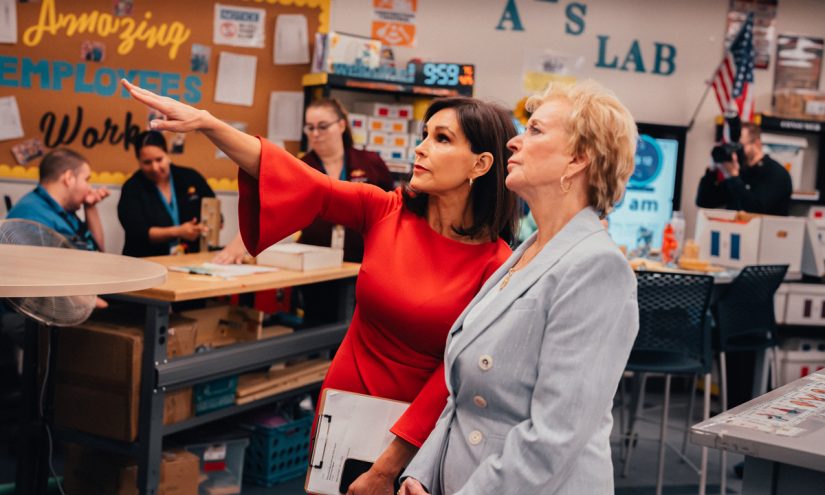
    The founder and executive director of a network of Arizona charter schools serving autistic children has been named the U.S. Education Department’s deputy assistant secretary for special education and rehabilitative services. Education Secretary Linda McMahon made the announcement while touring the Arizona Autism Charter Schools’ Phoenix location.

    Diana Diaz-Harrison, whose son is autistic, said that in her new job she hopes to continue her efforts to help others launch autism charter schools throughout the country. Her schools, she said in remarks captured on video by AZ Central, are a testament to what happens “when parents like me are empowered to create solutions.”

    “My vision is to expand school choice for special needs families — whether through charter schools, private options, voucher programs, or other parent-empowered models,” she said in a statement to The 74. .

    The five-school network uses a controversial intervention that attempts to train children to appear and behave like their neurotypical peers. Created by the researcher behind LGBTQ conversion therapy, applied behavior analysis, or ABA, is widely depicted as the gold standard despite scant independent evidence of its effectiveness and mounting research documenting its harms. 

    Diaz-Harrison opened the network’s first school in 2014 as a free, public alternative to private schools for autistic children, which are popular in Arizona but typically charge tens of thousands of dollars a year in tuition. Her Arizona charter schools are a 501(c)3 nonprofit financed by state and federal per-pupil funds. ABA is specifically endorsed by Arizona education officials as a strategy to use with autistic students.

    In the time since those charters opened, ABA has grown to be a national, multi-billion-dollar industry, with for-profit companies tapping public and private insurance to pay for as much as 40 hours a week of one-on-one therapy. The intervention uses repeated, rapid-fire commands that bring rewards and punishments to change a child’s behavior and communication style.

    A 74 investigation last year showed that most data supporting ABA’s effectiveness is drawn from research conducted by industry practitioners. Independent analyses, including a years-long U.S. Department of Defense review, found little evidence the intervention works. Former patients who underwent the therapy as children reported severe, lasting mental health effects, including PTSD.

    Diaz-Harrison told The 74 the therapy is both valuable and sought-after. “For the autism community, specifically, many families seek schools that integrate positive behavioral strategies,” she says. “The evidence supporting behavioral therapy is extensive and well-established. It has been endorsed by the U.S. surgeon general and the American Academy of Pediatrics as an effective, research-backed approach for individuals with autism.”

    During her visit, McMahon told students and staff she was eager to tell President Donald Trump about the schools. “He doesn’t believe any child, whether they have neuro-difficulties or any other problems, should be trapped in a school and not have the facilities that they need,” she said. 

    Since Trump’s second inauguration, he has issued numerous orders that have alarmed disability advocates and the autistic community. Though both edicts contradict longstanding federal laws, in March he ordered the closure of the Education Department and said responsibility for special education will be transferred to the U.S. Department of Health and Human Services.

    About half of the Education Department’s staff has been fired, including most of the people responsible for investigating what had been a backlog of some 6,000 disability discrimination complaints. Though it’s unclear whether Trump and McMahon may legally disregard special education funding laws and allow states to spend federal dollars as they see fit, both have said they favor giving local officials as much decision-making power as possible.

    Meanwhile, HHS Secretary Robert F. Kennedy Jr. has stoked fear in the autistic community by announcing a new effort to tie autism to vaccines or other “environmental toxins” — a hypothesis discredited by dozens of studies. The man he appointed to head the study has been cited for practicing medicine without a license and prescribing dangerous drugs to autistic children. 

    Last week, the new head of the National Institutes of Health announced that an unprecedented compilation of medical, pharmaceutical and insurance records would be used to create an autism “disease registry” — a kind of list historically used to sterilize, institutionalize and even “euthanize” autistic people. HHS later walked back the statement, saying the database under construction would have privacy guardrails.

    Among other responsibilities, the offices Diaz-Harrison will head identify strategies for improving instruction for children with disabilities and ensure that as they grow up, they are able to be as independent as possible. The disability community has raised concerns that the administration is retreating from these goals.   

    Advocates have said they fear the changes pave the way for a return to the practice of separating students with disabilities in dedicated special ed classrooms rather than having them attend class with typically developing peers. The Individuals with Disabilities in Education Act guarantees special education students the right to instruction in the “least restrictive environment” possible.          

    Families’ preferences vary widely, with some parents of autistic children refusing any form of behavior therapy, while others want their kids in settings with children who share their needs. Many insist on grade-level instruction in general education classrooms 

    Diaz-Harrison has a master’s degree in education and worked as a bilingual teacher in California early in her career. From the late 1990s until she began supporting her son full time, she worked as a public relations strategist and a reporter and anchor for the Spanish-language broadcast network Univision. 

    In 2014, frustrated with her son’s school options, she organized a group of parents and ABA providers who applied for permission to open what was then a single K-5 school serving 90 children. The network now has about 1,000 students in all grades and features an online program. 

    At the end of the 2023-24 academic year, 9% of the network’s students scored proficient or highly proficient on Arizona’s annual reading exam, while 4% passed the math assessments.      

    In December 2022, the network won a $1 million Yass Prize, an award created by Jeff and Janine Yass. The billionaire investors have a long track record of donating to Republican political candidates and organizations that support school choice. 

    One of the award’s creators, Jeanne Allen, is CEO of the Center for Education Reform. The center nominated Diaz-Harrison for the federal role. 

    Yass award winners were featured at the 2023 meeting of the American Legislative Exchange Council, or ALEC, a conservative forum where state lawmakers are given model bills on education and other policies to introduce in their respective statehouses. 

    Diaz-Harrison has partnered with a Florida autism school to create a national charter school accelerator program to help people start schools like hers throughout the country. She told The 74 the effort has so far supported teams of hopeful school founders from Louisiana, Texas, Florida, Alabama and Nevada. 

    Parents of young autistic children and autistic adults often disagree about ABA. Told by their pediatrician or the person who diagnosed their child as autistic that they have a narrow window in which to intervene, families fight to get the therapy. Adults who have experienced it, however, report lasting trauma and have lobbied for research — much of it now at risk of being defunded by Kennedy — into more effective and humane alternatives.


    Get stories like these delivered straight to your inbox. Sign up for The 74 Newsletter

    Source link

  • What Online College Students Need

    What Online College Students Need

    It’s been five years since colleges moved their teaching and learning online in response to the COVID pandemic, and Inside Higher Ed’s 2025 Survey of Campus Chief Technology/Information Officers, released today, shows that while online learning may still be adjusting to a new post-pandemic normal, it’s not going anywhere.

    Half of surveyed CTOs indicate that student demand for online and/or hybrid course options has increased substantially year over year at their institution. Nearly the same share say their college has added a substantial number of new online or hybrid course options over the same period. Meanwhile, the most recent Changing Landscape of Online Education Project report found something similar: Nearly half of chief online learning officers surveyed said that enrollment in online degree programs at their institution is now higher than that of on-campus programs—and even more said their college had undergone a strategic shift in response to such demand.

    And even while identifying increased student interest in on-site learning for certain activities, the 2025 Students and Technology Report from Educause also reveals general student appreciation of flexible learning formats and an outright preference for online courses among older learners.

    Amid this growing demand for online and hybrid courses, we surveyed students studying in different modalities to understand how their needs and interests might differ.

    Our annual Student Voice survey of 5,025 two- and four-year learners with Generation Lab polled learners about their study experiences relative to their peers taking all their courses online and those taking a mix of both in-person and online courses, as of spring 2024. We looked for gaps in responses and key overlaps between those groups, along with potentially counterintuitive responses from online-only learners. (The survey asked all students about academic success, health and wellness, involvement in college life, career readiness, and more.)

    Experts say the findings, listed below, have big implications for institutions looking to better serve online learners. One clear takeaway, up front? Online-only students’ sense of belonging—a student success factor linked to academic performance, persistence and mental health—lags that of peers studying in person. But promoting belonging among online learners may look different than it does in other classroom settings.

    “In general, if we want to foster belonging among online learners, we need to stop importing in-person solutions into digital environments,” said Omid Fotuhi, director of learning innovation at WGU Labs and a research associate at the University of Pittsburgh who studies online learners, belonging, motivation and performance. “Belonging online isn’t a watered-down version of the campus quad—it’s a different ecology altogether. And that ecology requires deliberate psychological attunement to the lived realities of today’s increasingly diverse, time-strapped, digitally distributed students.”

    Stephanie L. Moore, associate professor of organization, information and learning sciences at the University of New Mexico and editor in chief of the Journal of Computing in Higher Education, who also reviewed the data for Inside Higher Ed, had a similar take: that it’s a “good impetus for higher education leaders and planners to think about what belonging means beyond extracurricular activities.”

    But first—and to Fotuhi’s point about diversity—who are online learners? Across the U.S., they tend to be older and more likely to be working already than their in-person peers. And the 854 online-only Student Voice respondents are significantly more likely than the 4,000-plus other respondents to be working full-time: Some 45 percent are working 30 or more hours per week, versus 22 percent of the group as a whole.

    Most are first-generation college students, as well, at 59 percent, compared to 33 percent of in-person students and 48 percent of those taking a mix of in-person and online courses.

    Perhaps related to their working status, online-only students are less likely than the group over all to be taking a full-time course load, at 48 percent versus 68 percent. But they’re roughly as likely as the group over all to report a learning disability or difference (14 percent), a physical disability or condition (14 percent), or a mental health condition or illness (35 percent).

    Whatever their characteristics, Moore said online students want to feel that “they are truly part of the university,” viewed by an institution as “our students” versus “those students.” That’s a helpful lens through which to interpret the following findings.

    What We Found

    1. Online-only students rate their sense of academic fit and educational quality highly. Their sense of belonging? Not so much. 

    Online-only students’ perceptions of quality are somewhat lower than those of respondents studying exclusively in person, but a majority of each group still rate their educational quality good or excellent: 67 percent of online students versus 76 percent of in-person learners. Students taking a mix of online and in-person courses split the difference, at 71 percent. And while online-only students’ sense of academic fit at their college approaches that of the group over all, the gap widens on sense of social belonging. Just 31 percent of online-only students rate their sense of belonging as good or excellent, compared to 48 percent of in-person students. Those taking a mix of online and in-person courses again split the difference.

    The responses suggest that colleges and universities over all have work to do on belonging, regardless of modality. But the especially low ratings among online-only students merit particular attention, given that online learners have elsewhere been shown to complete at lower rates. It’s not immediately clear from this survey to what online-only students attribute this lower sense of belonging, as they’re less likely than the group over all to say that professors getting to know them better, study groups and peer learning, and more opportunities for social connection—all factors associated with belonging—would help boost their success. They’re also less likely than in-person-only peers to attribute what’s been called the mental health crisis to increased loneliness, when presented with a list of possible drivers (21 percent versus 33 percent, respectively).

    However, online-only students are significantly less likely to have participated in extracurriculars than other peers: 64 percent say they haven’t participated in any such activities, compared to 35 percent of the group over all. Similarly, 57 percent of online-only learners have attended no events at their college, compared to 26 percent of the group over all. (More on that later.)

    1. Online-only students, like their other peers, want more affordable tuition and fewer high-stakes exams.

    Across the board, students say fewer exams and lower tuition will improve their chances of success. The No. 1 non-classroom-based thing all students—including online-only students—say would boost their academic success, when presented from a list of possibilities, is making tuition more affordable so they can better balance academics with finances and other work. And the No. 1 classroom-based action online students and their other peers say would help is encouraging faculty members to limit high-stakes exams, such as those counting for more than 40 percent of a course grade.

    1. Online-only students tend to prefer online, asynchronous courses.

    Would online students prefer to be studying in person? Many Student Voice respondents studying online say no, supporting other data suggesting that online learners value the modality for its flexibility and convenience. Asked about their preferred modality, the largest share of online-only students, 54 percent, choose online, asynchronous courses. Still, the second-most-popular option for this group—if by a wide margin—is in person, selecting up to two options.

    In-person students, meanwhile, overwhelmingly prefer in-person learning, at 74 percent. Many students taking a mix of in-person and online courses also tend to prefer the in-person setting, with 52 percent choosing this.

    As for their preferred class formats and teaching practices, beyond modality, online-only students and students over all are most likely to prefer interactive lectures, in which the professor delivers a short lecture but punctuates the class with active learning strategies. About a quarter of online students also prefer case studies, which connect course concepts to real-world problems. That’s when selecting up to two options from a longer list.

    One bonus finding: Online-only students are slightly less likely than the group over all to say they consider themselves customers of their institution in some capacity (58 percent versus 65 percent, respectively).

    1. Many online-only students, like their other peers, report that stress is impeding their academic success.

    Online-only students report experiencing chronic academic stress (distinct from acute academic stress) at half the rate of in-person students: 13 percent versus 26 percent. This could be related to the fact that relatively fewer online students are taking a full-time course load. But online-only students are more likely to cite balancing academics with personal, family or financial responsibilities as a top stressor (52 percent versus 44 percent of in-person students). And they are about as likely as the group over all to say that stress impacts their ability to focus, learn and do well academically “a great deal,” at 42 percent. This overall finding on stress was one of the most significant of this Student Voice survey cycle, and online-only students’ responses mean that institutions trying to tackle student stress should keep these learners in mind.

    To that point: The top thing all students say their institution could do to boost their overall well-being is rethinking exam schedules and/or encouraging faculty members to limit high-stakes exams: 42 percent of online-only students say this would be a big help, as do 46 percent of respondents over all (when presented with a list of options, selecting up to three).

    1. Most online-only students don’t participate in extracurriculars, and some say they could benefit from more virtual participation options.

    Two in three online-only students say they haven’t participated in any extracurricular activities, much more than the group over all. Online-only students are also less likely than the group over all to believe that participation in extracurriculars and events is important to their overall well-being and success: Just 21 percent of online-only students say this is very important to their success as a college student, while 23 percent say this is true for success after graduation.

    As for what would increase online students’ involvement, the top two factors from a longer list of options are if they lived on or near campus and if there were more virtual attendance options (34 percent each). These numbers don’t necessarily amount to a ringing endorsement of virtual participation options, but they do signal that colleges could be doing more in this area. And beyond virtual participation, while many online learners do not live close to their institutions, many do live within an hour’s drive, according to existing data. This means that institutions might also benefit from including local or semi-local online students in their campus involvement initiatives.

    1. Only-online students are confident in their futures but highlight career support needs.

    Online-only students indicate they’ve interacted with their college career center at comparable rates to their peers. Their perceptions of career-readiness efforts across different dimensions are also comparable to their peers’. For example, 21 percent of online-only students describe their career center as having sufficient online resources, compared to 20 percent of the group over all—a sign that these resources may be lacking across the board. Many online students, like students generally, also say they want more help from their institutions connecting with internships and job opportunities, when presented with a list of career-readiness priorities.

    At the same time, 74 percent of online students are very or somewhat confident that their education and college experiences are preparing them for success postgraduation, however they define it, as are 80 percent of in-person students.

    What Faculty and Institutions Can Do

    Fotuhi, of WGU Labs, said the findings resonate with national trends he and colleagues track in their College Innovation Network research—notably, “the tension between the appeal of flexibility and the risks of isolation” for online learners.

    Fotuhi described what’s been called “the efficiency-belonging dilemma” as when online learning “meets students’ logistical needs, but often falls short on the emotional and relational dimensions of engagement.” Yet if online students (like those in our survey) aren’t demanding engagement in the form of study groups or professor familiarity, what do they want instead—or at least more acutely?

    Fotuhi’s answer: “From our work, we see strong signals that online learners benefit from institutionally scaffolded structures of connection.” These include:

    • Proactive nudges from advisers and coaches, especially those personalized to milestones or struggles
    • Peer mentorship or cohort-based models that operate virtually
    • Role clarity about where (and to whom) to go for academic, emotional and professional support

    Interventions to support students’ digital confidence may also be a “powerful, indirect lever for fostering belonging,” Fotuhi said. Same for virtual participation options for involvement as well as services “that mirror the convenience of their academic experience.” Think asynchronous orientation materials, online student organizations and virtual mentoring.

    Tony Bates, a now-retired online learning expert based in Canada, also highlighted the role of the classroom in promoting belonging in online learning, where there remains much variation in teaching methods: Course activities “are more likely to be the only way online students can bond with other students,” and the “online course environment needs to be designed to encourage such interactivity.”

    Moore, of the University of New Mexico, added that in online learning, students “look for and experience belonging through increased interactions with their fellow learners and their instructors, through seeing themselves represented in examples, cases and readings, and through access to support services and resources.”

    Similar to Fotuhi’s framework for an “ecology” of supports, Moore encouraged institutions to take an “ecosystems” approach to supporting online learners, beyond offering them mere access to courses. This can include health and wellness offerings, librarians who “make support feel more personal,” and career services that are “proactive.”

    When it comes to students’ attitudes toward high-stakes exams, Moore said the Student Voice data point to “continued overreliance on testing, especially high-stakes testing, as a primary assessment method.”

    Adult learners, in particular—many of whom are online learners—“are looking for learning that is relevant to their careers and futures,” she said. And in the realm of assessment, this “is facilitated by different instructional and assessment strategies than tests.”

    Bates argued that online learning “lends itself to continuous assessment,” or frequent, formative assessment, as it’s “much easier to track individual students’ progress through an online course,” where all their learning activities can be monitored and recorded.

    Moore said that shifting assessment away from high-stakes testing has some “added bonuses of increasing learner motivation, decreasing their stress—specifically the kind that might motivate some to cheat—and increasing their learning outcomes.”

    This report benefited from support from the Education Writers Association’s Diving Into Data program. We’re also gearing up for our 2025 Student Voice survey cycle. What would you like to know about student success, from a student’s perspective? Drop us a line here.


    Source link

  • Limestone University Announces Closure

    Limestone University Announces Closure

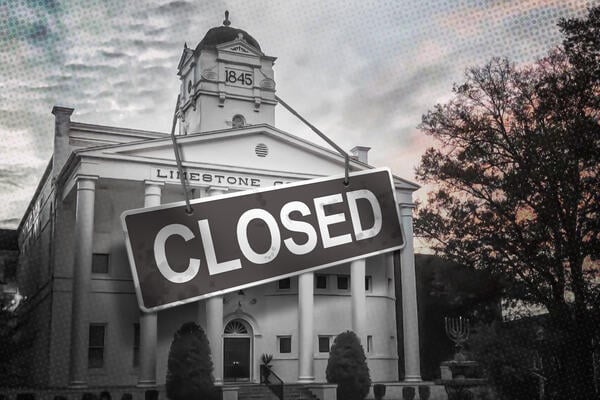
    Limestone University survived the Civil War and the Great Depression, but protracted financial struggles have proven harder to overcome: After nearly 180 years, Limestone will cease operations next week.

    Officials announced the closure Tuesday night.

    “Words cannot fully express the sorrow we feel in having to share this news,” Limestone president Nathan Copeland said in a statement. “Our students, alumni, faculty, staff, and supporters fought tirelessly to save this historic institution. While the outcome is not what we hoped for, we are forever grateful for the passion, loyalty, and prayers of our Saints family.”

    The move follows a tumultuous period for the university. After years of financial challenges, the Board of Trustees was set to decide last week on whether to shift to online-only operations or close altogether. At the last minute it decided to hold off on the decision because a “possible funding source” had emerged.

    Limestone was seeking a $6 million infusion to help facilitate the shift to a fully online model. Though the university was able to secure $2.1 million in pledged commitments from almost 200 donors, according to the closure announcement, it ultimately fell well short of the goal, prompting the board to close the private institution in South Carolina.

    Now 478 employees will lose their jobs.

    The closure comes on the heels of significant enrollment and financial losses. The university enrolled 3,214 students in fall 2014, according to federal data; Limestone recently noted enrollment at around 1,600.

    It has also operated for years with substantial budget deficits. The latest audit for the university noted “significant doubt” about Limestone’s ability to remain open, given that it had “suffered recurring significant negative changes in net assets and cash flows from operations” and had “a net deficiency in [unrestricted] net assets.”

    Limestone’s board also borrowed heavily from the university’s meager endowment in recent years.

    In 2023, the South Carolina attorney general agreed to lift restrictions on Limestone’s endowment to allow the board to increase spending from those funds. As a result, the endowment collapsed in value, falling from $31.5 million at the beginning of fiscal year 2022 to $12.6 million at the end of FY23. Auditors noted that “all endowment funds are underwater” as of last June.

    Auditors also expressed skepticism that Limestone would be able to pay off mounting debts.

    The university had more than $30 million in outstanding debt in the last fiscal year, including $27.2 million owed to the U.S. Department of Agriculture. Limestone’s latest audit shows the university listed its buildings and land as collateral for both the U.S. Department of Agriculture and another bank loan.

    Auditors also found that Limestone’s “internal controls over financial reporting are informal and lack formal documentation,” and that the university’s accounting department was understaffed.

    Despite the abrupt nature of the closure, Limestone officials wrote in Tuesday’s announcement that the university “will proceed with an orderly wind-down process” and help students transfer to other institutions and support faculty and staff with more information to come on those efforts.

    Limestone will hold its final commencement on Saturday.

    “Our Limestone spirit will endure through the lives of our students and alumni who carry it forward into the world,” Limestone board chair Randall Richardson said in the closure announcement. “Though our doors may close, the impact of Limestone University will live on.”

    The closure announcement comes less than a week after St. Andrews University, a private institution in North Carolina, made a similar decision to cease operations due to fiscal issues.

    Source link

  • Adjusting to Generative AI in Education Means Getting to the Roots

    Adjusting to Generative AI in Education Means Getting to the Roots

    To help folks think through what we should be considering regarding the impact on education of generative AI tools like large language models, I want to try a thought experiment.

    Imagine if, in November 2022, OpenAI introduced ChatGPT to the world by letting the monster out of the lab for a six-week stroll, long enough to demonstrate its capacities—plausible automated text generation on any subject you can think of—and its shortfalls—making stuff up—and then coaxing the monster back inside before the villagers came after it with their pitchforks.

    Periodically, as new models were developed that showed sufficient shifts in capabilities, the AI companies (OpenAI having been joined by others), would release public demonstrations, audited and certified by independent expert observers who would release reports testifying to the current state of generative AI technology.

    What would be different? What could be different?

    First, to extend the fantasy part of the thought experiment, we have to assume we would actually do stuff to prepare for the eventual full release of the technology, rather than assuming we could stick our heads in the sand until the actual day of its arrival.

    So, imagine you were told, “In three years there will be a device that can create a product/output that will pass muster when graded against your assignment criteria.” What would you do?

    A first impulse might be to “proof” the assignment, to make it so the homework machine could not actually complete it. You would discover fairly quickly that while there are certainly adjustments that can be made to make the work less vulnerable to the machine, given the nature of the student artifacts that we believe are a good way to assess learning—aka writing—it is very difficult to make an invulnerable assignment.

    Or maybe you engaged in a strategic retreat, working out how students can do work in the absence of the machine, perhaps by making everything in class, or adopting some tool (or tools) that track the students’ work.

    Maybe you were convinced these tools are the future and your job was to figure out how they can be productively integrated into every aspect of your and your students’ work.

    Or maybe, being of a certain age and station in life, you saw the writing on the wall and decided it was time to exit stage left.

    Given this time to prepare, let’s now imagine that the generative AI kraken is finally unleashed not in November 2022, but November 2024, meaning at this moment it’s been present for a little under six months, not two and a half years.

    What would be different, as compared to today?

    In my view, if you took any of the above routes, and these seem to be the most common choice, the answer is: not much.

    The reason not much would be different is because each of those approaches—including the decision to skedaddle—accepts that the pre–generative AI status quo was something we should be trying to preserve. Either we’re here to guard against the encroachment of the technology on the status quo, or, in the case of the full embrace, to employ this technology as a tool in maintaining the status quo.

    My hope is that today, given our two and a half years of experience, we recognize that because of the presence of this technology it is, in fact, impossible to preserve the pre–generative AI status quo. At the same time, we have more than info information to question whether or not there is significant utility for this technology when it comes to student learning.

    This recognition was easier to come by for folks like me who were troubled by the status quo already. I’ve been ready to make some radical changes for years (see Why They Can’t Write: Killing the Five-Paragraph Essay and Other Necessities), but I very much understood the caution of those who found continuing value in a status quo that seemed to be mostly stable.

    I don’t think anyone can believe that the status quo is still stable, but this doesn’t mean we should be hopeless. The experiences of the last two and a half years make it clear that some measure of rethinking and reconceiving is necessary. I go back to Marc Watkins’s formulation: “AI is unavoidable, not inevitable.”

    But its unavoidability does not mean we should run wholeheartedly into its embrace. The technology is entirely unproven, and the implications of what is important about the experiences of learning are still being mapped out. The status quo being shaken does not mean that all aspects upon which that status quo was built have been rendered null.

    One thing that is clear to me, something that is central to the message of More Than Words: How to Think About Writing in the Age of AI: Our energies must be focused on creating experiences of learning in order to give students work worth doing.

    This requires us to step back and ask ourselves what we actually value when it comes to learning in our disciplines. There are two key questions which can help us:

    What do I want students to know?

    What do I want students to be able to do?

    For me, for writing, these things are covered by the writer’s practice (the skills, knowledge, attitudes and habits of mind of writers). The root of a writer’s practice is not particularly affected by large language models. A good practice must work in the absence of the tool. Millions of people have developed sound, flexible writing practices in the absence of this technology. We should understand what those practices are before we abandon them to the nonthinking, nonfeeling, unable-to-communicate-with-intention automated syntax generator.

    When the tool is added, it must be purposeful and mindful. When the goal of the experience is to develop one’s practice—where the experience and process matter more than the outcome—my belief is that large language models have very limited, if any, utility.

    We may have occasion to need an automatic syntax generator, but probably not when the goal is learning to write.

    We have another summer in front of us to think through and get at the root of this challenge. You might find it useful to join with a community of other practitioners as part of the Perusall Engage Book Event, featuring More Than Words, now open for registration.

    I’ll be part of the community exploring those questions about what students should know and be able to do.

    Join us!

    Source link

  • ICE Reveals How It Targeted International Students

    ICE Reveals How It Targeted International Students

    Federal immigration officials targeted student visa holders by running their names through a federal database of criminal histories, according to court testimony given by Department of Homeland Security officials on Tuesday and reported by Politico.

    As part of the Student Criminal Alien Initiative, as officials dubbed the effort, 20 ICE agents and several federal contractors ran the names of 1.3 million potential student visa holders through the database, searching for those that were both still enrolled in programs and had had some brush with the criminal justice system. Many of those students had only minor criminal infractions on their record like traffic violations, and they often had never been charged. ICE used that information to terminate students’ SEVIS records.

    Officials testified that ICE ultimately flagged around 6,400 Student Exchange and Visitor Information System records for termination and used the data to revoke more than 3,000 student visas—far more than the 1,800 that Inside Higher Ed tracked over the past month. 

    The officials’ testimony came in a hearing for one of many lawsuits filed by international students and immigration attorneys challenging the sudden and unexplained visa terminations; dozens of the cases have been successful so far. Last week the agency restored international students’ visas amid the flurry of court losses and said it would release an updated policy in the near future. 

    On Monday, the Trump administration released a draft of that policy, which vastly expands the prior one and makes visa revocation legal grounds for a student’s legal residency to be terminated as well.

    Source link