Tag: News

  • Indiana Budget Bill Contains Sweeping Higher Ed Changes

    Indiana Budget Bill Contains Sweeping Higher Ed Changes

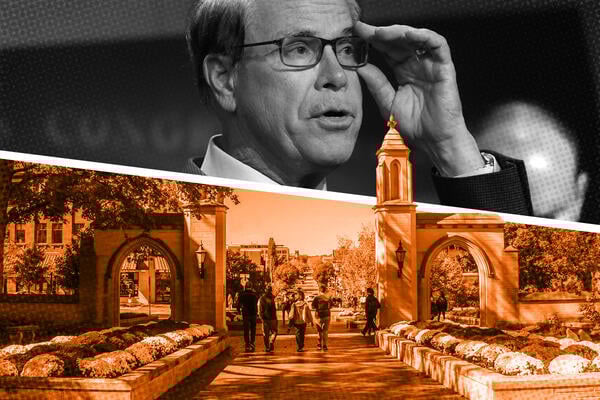
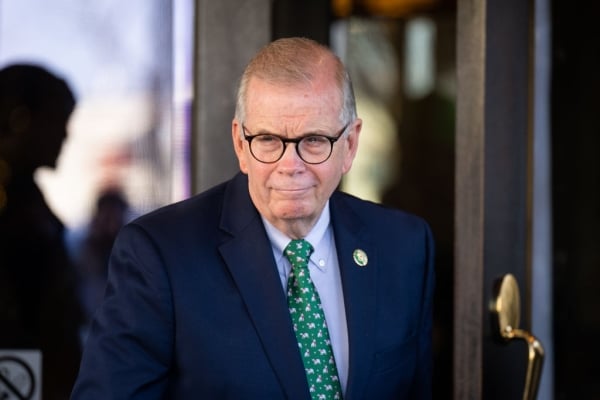
    Indiana state lawmakers have sent their governor a state budget bill that goes beyond setting funding levels. If Republican governor Mike Braun signs it into law, House Enrolled Act 1001 will require faculty at public colleges and universities to post their syllabi online and undergo “productivity” reviews.

    The bill would also—among other things—prohibit faculty emeriti from voting in faculty governance organizations, place low-enrolled degree programs at risk of elimination by the Indiana Commission for Higher Education and end alumni elections for three Indiana University Board of Trustees seats by filling them with gubernatorial appointees. In addition, it has a provision that would let Braun remove the currently elected board members before their terms expire.

    “I think overreach doesn’t begin to describe the actions of the Legislature,” said Russ Skiba, a professor emeritus of education at IU Bloomington. “This is really a sweeping takeover of higher education in Indiana.”

    The Republican-controlled Indiana General Assembly passed the legislation—which runs more than 200 pages—less than two days after revealing it Wednesday, April 23. The state House approved it around 12:45 a.m. Friday, followed by the Senate’s agreement at about 1:20 a.m.

    “I know a lot of legislators … simply didn’t have enough time to fully read it,” Skiba said. “There was no opportunity whatsoever for any sort of public input.”

    Matt Pierce, a Democratic Indiana House member who’s a senior lecturer at IU Bloomington, said the conference committee report revealing the budget bill wasn’t even released until Wednesday evening.

    “As people began to kind of go through it, they discovered all these higher education provisions that had never been discussed anywhere,” Pierce said. To have “provisions of this magnitude” pass in the budget bill “with no hearing or public input, that was pretty shocking,” he said.

    The budget bill’s higher education provisions echo those passed, or at least proposed, in other red states. But Indiana’s General Assembly continues to be in the vanguard among even GOP-controlled legislatures in its fervor for regulating public higher education. Last year, state lawmakers passed, and the former governor signed, a law threatening the jobs of nontenured and tenured faculty who don’t sufficiently foster “intellectual diversity,” as defined by campus boards of trustees.

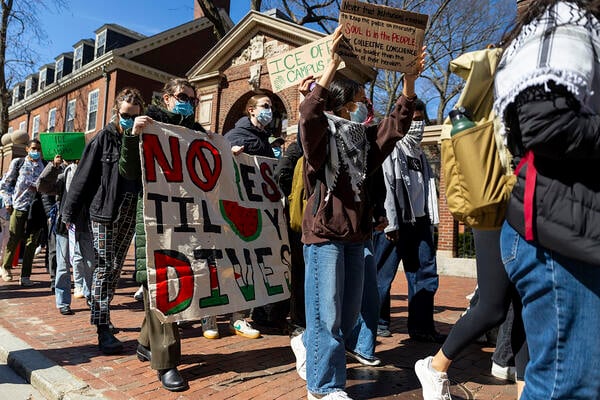
    These bills follow pro-Palestine protests at IU Bloomington and tensions between faculty and university president Pamela Whitten. And with a further reduction of tenure protections looming in the new bill, a tenured professor at IU Bloomington says he’s under investigation for allegedly violating a policy the university wrote to uphold last year’s intellectual diversity law.

    Ben Robinson, an associate professor of Germanic studies and a prominent pro-Palestine campus protester, told Inside Higher Ed that an anonymous student filed a complaint against him in October. The unnamed student, according to a copy of the complaint Robinson provided, wrote that Robinson “talks negatively about the state of Israel and describes the war in untrue and unfair ways” and has discussed being arrested at a pro-Palestine rally “on numerous occasions.” The student also complained that Robinson had spoken “against Indiana University on several occasions” and used class time to say the university was restricting free speech.

    This complaint was filed in IU’s bias incident reporting system, which wouldn’t have involved potential discipline, Robinson said, but university administrators appeared to refile it as an intellectual diversity–related complaint under the policy passed after the General Assembly’s intellectual diversity law. He said he thinks administrators “want to overcomply on particularly this ideological issue, because that’s what they’re being told they have to enforce” by the federal government.

    “How can a professor know what’s going to be called bias?” Robinson said. He also said IU Bloomington is “a campus in which the witch hunts are alive and well, and I, along with many others, have been an open target of them.”

    IU spokesperson Mark Bode, in response to Inside Higher Ed’s requests for an interview and written questions about Robinson’s situation, wrote in an email simply that “IU does not comment on personnel matters.”

    Accusations of IU Involvement

    Multiple critics have accused IU leaders of backing one or more of the 11th-hour budget bill’s higher education changes. When asked about this, Bode provided a written statement that didn’t say whether IU was specifically involved.

    “Throughout the session, Indiana University engaged with state lawmakers to shape meaningful conversations about the university’s commitments to making higher education accessible to Hoosiers and driving the state’s economy through life-changing research and innovation,” the statement said. IU “will be working over the coming weeks to understand the full impact of state legislation and ensure compliance.”

    Before the bill passed, Pierce said, he texted an IU lobbyist asking the university’s position on it. The lobbyist replied that the institution didn’t have a position because it was still carefully reviewing the legislation, Pierce said.

    “And right then and there I knew that IU was behind it,” Pierce said. He also questioned how lawmakers would have the “pretty esoteric” knowledge that emeritus faculty serve in some faculty governance organizations.

    “You now have a convergence of the Republican attacks on higher education and the actual administration of Indiana University, and that’s a pretty shocking development,” he said.

    The IU Board of Trustees currently has six gubernatorial appointees—including a student with a two-year term—plus three members elected by alumni. If Braun signs the budget bill, he and future governors will be able to appoint all nine members, the student member’s term will drop to one year and there will be no more alumni-elected members.

    Braun has expressed support for this change, according to the Indiana Capital Chronicle.

    “I think it’s being done because the current process [has] not maybe yielded the proper results on the entirety of how you want that important part of our state to be run—from curriculum to cost to the whole way one of our flagship universities has been operating,” Braun said, according to the Capital Chronicle. “I want to get a board there that is going to be a little more rounded, that’s going to produce better results.”

    Vivian Winston, one of the elected board members, who previously announced she’s not seeking re-election, said she voted against IU president Whitten’s contract extension and the university’s post-encampment protest restrictions. But she said she doesn’t know whether her votes were related to the board change part of the legislation—which, like the other higher ed provisions in the bill, caught her “unaware.”

    “I found out through the media,” Winston said of the changes in the bill.

    Rodric Bray, a Republican and Indiana’s Senate president pro tem, provided Inside Higher Ed a rationale for the part of the bill ending alumni elections.

    “A very small fraction of the IU alumni have been participating in the election for the alumni seats on the IU Board of Trustees,” Bray said in an emailed statement. “Of the approximately 790,000 alumni around the world, only about 2.5% of alumni voted in the most recent election for trustee. Because the number is so small, it is not a fair representation.”

    But some opponents of the provision don’t see it that way. Skiba, the IU Bloomington emeritus faculty member, said, “This is clearly payback for opposition of policies favored by the president of the university and the Legislature.” He said the change would “take those voices of opposition off the Board of Trustees and essentially give complete control of the Board of Trustees over to the governor.”

    Over all, Skiba said, “this Legislature is following the Trump lead—wishing to put an airtight lid on free expression. And if you’re wishing to do that, universities are an obvious place to start.”

    Source link

  • Mellon Foundation Gives Humanities Councils Emergency Funds

    Mellon Foundation Gives Humanities Councils Emergency Funds

    The Mellon Foundation is giving $15 million in emergency funding to state humanities councils after the National Endowment for the Humanities eliminated $65 million in support for the councils, amid sweeping cuts to its grants and workforce, the foundation announced Tuesday.

    These councils, established by Congress in 1971, are nonprofits that support educational programming for the public, such as literacy initiatives, lectures, book fairs and cultural programs. The support will go toward all 56 state and jurisdictional humanities councils across the country in hopes of staving off possible deep cuts and closures. The foundation plans to allocate $2.8 million to challenge grants of up to $50,000 for each council, to be matched by other funders. And each council will received $200,000 in immediate operational support, The New York Times reported.

    Elizabeth Alexander, president of the Mellon Foundation, said in the announcement that while the emergency funds can’t cover the full extent of cuts, it’s a show of support.

    “At stake are both the operational integrity of organizations like museums, libraries, historical societies in every single state, as well as the mechanisms to participate in the cultural dynamism and exchange that is a fundamental part of American civic life,” Alexander said.

    Phoebe Stein, president of the Federation of State Humanities Councils, called the foundation funding a “lifeline.”

    “Mellon’s support allows us to not only preserve this vital network—it helps ensure that everyday Americans can thrive through lifelong learning, connection, and understanding of one another,” she said in the announcement.

    Source link

  • Student Loan Overhaul Clears House Committee

    Student Loan Overhaul Clears House Committee

    Over strong objections from Democrats, House Republicans on the Education and the Workforce Committee advanced legislation Tuesday that would make dramatic changes to the federal student aid system.

    For a full Inside Higher Ed analysis of what provisions are included in the reconciliation bill, read here.

    The sweeping 103-page bill, known as the Student Success and Taxpayer Savings Plan, passed on a party-line vote after more than five hours of debate. The legislation would cap the amount of federal loans a student can take out, cut off the Pell Grant for students who attend less than half time, consolidate income-driven repayment plans and introduce a risk-sharing program where colleges are partially responsible for unpaid student loans. The bill, which would also reverse multiple Biden-era student borrower protection regulations, could save more than $330 billion in federal funding over 10 years, committee Republicans say.

    It’s just one section of a larger budget bill that lawmakers are planning to use to fund some of President Donald Trump’s top priorities, like lofty tax cuts for the wealthy and a major crackdown on immigration. But House Republicans said the changes were more than just a means to fund his MAGA agenda.

    “If there is any consensus when it comes to student loans, it’s that the current system is effectively broken and littered with incentives that push tuition prices upward,” Rep. Tim Walberg, a Michigan Republican and committee chair, said in his opening statement. Higher education is “on a fiscally unsustainable path, so we must deliver on the promise of economic mobility to our students and families. Taken together, the provisions in this package will do just that.”

    Democrats on the committee argued the legislation is nothing more than a means to fund tax cuts for the wealthy that will force low-income and racial minority students to take on more debt and penalize the community colleges, regional universities and minority-serving institutions that educate those students. All in all, the bill will put the cost of a college degree out of reach for many, they said.

    “I appreciate that my colleagues acknowledge that the cost of college is too high, and that Congress should reform the system. But the committee print before us today … seriously misses the mark of making college more affordable,” said Rep. Bobby Scott, a Virginia Democrat and ranking member on the committee. “Put bluntly, this Republican proposal will limit how much money middle- and low-income students can borrow from the federal government.”

    Scott and other Democrats proposed 33 amendments—all of which Republicans voted down. They ranged from requests to prove the bill wouldn’t disproportionately affect certain institutions and increase costs for students to defending the Pell eligibility of part-time students and some consumer-protection regulations. Democrats also proposed replacing the income-driven repayment plan in the legislation with a more generous Biden-era alternative and striking the bill entirely. Other amendments touched on other issues unrelated to this section of the legislation, such as proposed cuts to Medicaid and the Department of Government Efficiency’s access to sensitive data.

    Republicans countered that Democrats’ allegations that the bill would make college less affordable were, as Rep. Burgess Owens of Utah said, “nothing further from the truth.” The proposed changes to the federal aid system will lead to better loan terms and repayment options that are also fair to taxpayers and avoid wasteful spending, they argued.

    The bill will now head to the House Budget Committee, where it will be folded into a complex omnibus bill before it is sent to the floor for a full House vote.

    But even if it clears the House, the legislation still has a long way to go. The House and the Senate have differing ideas about how much federal spending they wish to cut and what programs they are willing to slash. The Senate is aiming to make at least $1 billion in education cuts, which is less than 1 percent of the House committee’s $330 billion reduction.

    This reconciliation bill only needs a simple majority vote, or 51 yeas, to pass the upper chamber, but that will require almost all Republicans in the Senate to agree, which experts don’t think is a foregone conclusion.

    Risk Sharing

    One of the more contentious proposals in the bill is the risk-sharing provision, which would require colleges to repay the government a portion of students’ unpaid loans.

    Republicans on the committee described the risk-sharing proposal as critical, adding that it would penalize colleges for forcing their students into unmanageable debt and would incentivize them to lower their cost of attendance.

    “The best way for us to do that is not to loan [students] more money, but to reduce the cost so that they don’t need the loans,” said Rep. Randy Fine of Florida, who has been active in higher ed in the Sunshine State. “That’s what this bill does over and over and over again.”

    But Democrats said it is misleading to say the bill and provisions like risk-sharing would reduce costs and increase graduation rates, arguing it would actually incentivize colleges to accept fewer low-income students and increase tuition or cut critical student-support programs in order to foot the bill of new penalties.

    Rep. Alma Adams, a Democrat of North Carolina, called risk-sharing “a dire threat” especially to historically Black colleges and universities, which would have to pay an average of $1.7 million per year to account for the debt of their graduates.

    The students at these institutions “started behind but are determined to get ahead,” Adams said, adding that they don’t default because they are failing; they default because they are “carrying the burden of generations of inequity.”

    “This bill will tell colleges to take only the best students and leave the rest behind,” she added.

    Multiple student advocacy and higher education groups opposed risk-sharing and other proposals in letters to the committee and fact sheets.

    Third Way, a left-of-center think tank, noted in a memo Monday that the concept of risk-sharing “has a lot of intuitive appeal,” but the proposal “misses the mark for meaningful accountability.” Other provisions like loan limits and changes to the Pell Grant program will also “drive students into the private loan market,” the memo added.

    And the Association of Public and Land-grant Universities told the committee that, if passed, risk-sharing would amount to a “staggering level of federal overreach” that penalizes colleges and universities for “decisions beyond their control.”

    “The gravity of these changes would have a far reaching impact to current and future students,” APLU wrote. “There is a better way.”

    If Republicans “truly believed” the bill would not raise the cost of college and the burden of debt for students, then they would have no problem passing proposed amendments that certify its impact on students and institutions, said Adams, the North Carolina Democrat.

    “Let’s be clear about what this really means: This bill punishes students for being poor. It punishes students for needing to work. It punishes students for living in the real world,” she said. It transforms financial aid “from a bridge into a barricade.”

    Source link

  • Three Laws for Curriculum Design in an AI Age (opinion)

    Three Laws for Curriculum Design in an AI Age (opinion)

    Almost a third of students report that they don’t know how or when to use generative AI to help with coursework. On our campus, students tell us that they worry if they don’t learn how to use AI, they will be left behind in the workforce. At the same time, many students worry that technology undermines their learning.

    Here’s Gabby, an undergraduate on our campus: “It turned my writing into something I didn’t say. It makes it harder for me to think of my ideas and makes everything I think go away. It replaces it with what is official. It is correct, and I have a hard time not agreeing with it once ChatGPT says it. It overrides me.”

    Students experience additional anxiety around accusations of unauthorized use of AI tools—even when they are not using them. Here’s another student: “If I write like myself, I get points off for not following the rubric. If I fix my grammar and follow the template, my teacher will look at me and assume I used ChatGPT because brown people can’t write good enough.”

    Faculty guidance in the classroom is critical to addressing these concerns, especially as campuses increasingly provide students with access to enterprise GPTs. Our own campus system, California State University, recently rolled out an AI strategy that includes a “landmark” partnership with companies such as OpenAI, and a free subscription to Chat GPT Edu for all students, faculty and staff.

    Perhaps unsurprisingly, students are not the only ones who feel confused and worried about AI in this fast-moving environment. Faculty also express confusion about whether and under what circumstances it is OK for their students to use AI technology. In our roles at San Francisco State University’s Center for Equity and Excellence in Teaching and Learning (CEETL), we are often asked about the need for campuswide policies and the importance of tools like Turnitin to ensure academic integrity.

    As Kyle Jensen noted at a recent American Association of Colleges and Universities event on AI and pedagogy, higher ed workers are experiencing a perceived lack of coherent leadership around AI, and an uneven delivery of information about it, in the face of the many demands on faculty and administrative time. Paradoxically, faculty are both keenly interested in the positive potential of AI technologies and insistent on the need for some sort of accountability system that punishes students for unauthorized use of AI tools.

    The need for faculty to clarify the role of AI in the curriculum is pressing. To address this at CEETL, we have developed what we are calling “Three Laws of Curriculum in the Age of AI,” a play on Isaac Asimov’s “Three Laws of Robotics,” written to ensure that humans remained in control of technology. Our three laws are not laws, per se; they are a framework for thinking about how to address AI technology in the curriculum at all levels, from the individual classroom to degree-level road maps, from general education through graduate courses. The framework is designed to support faculty as they work their way through the challenges and promises of AI technologies. The framework lightens the cognitive load for faculty by connecting AI technology to familiar ways of designing and revising curriculum.

    The first law concerns what students need to know about AI, including how the tools work as well as their social, cultural, environmental and labor impacts; potential biases; tendencies toward hallucinations and misinformation; and propensity to center Western European ways of knowing, reasoning and writing. Here we lean on critical AI to help students apply their critical information literacy skills to AI technologies. Thinking about how to teach students about AI aligns with core equity values at our university, and it harnesses faculty’s natural skepticism toward these tools. This first law—teaching students about AI—offers a bridge between AI enthusiasts and skeptics by grounding our approach to AI in the classroom with familiar and widely agreed-upon equity values and critical approaches.

    The second part of our three laws framework asks what students need to know in order to work with AI ethically and equitably. How should students work with these tools as they become increasingly embedded in the platforms and programs they already use, and as they are integrated into the jobs and careers our students hope to enter? As Kathleen Landy recently asked, “What do we want the students in our academic program[s] to know and be able to do with (or without) generative AI?”

    The “with” part of our framework supports faculty as they begin the work of revising learning outcomes, assignments and assessment materials to include AI use.

    Finally, and perhaps most crucially (and related to the “without” in Landy’s question), what skills and practices do students need to develop without AI, in order to protect their learning, to prevent deskilling and to center their own culturally diverse ways of knowing? Here is a quote from Washington University’s Center for Teaching and Learning:

    “Sometimes students must first learn the basics of a field in order to achieve long-term success, even if they might later use shortcuts when working on more advanced material. We still teach basic mathematics to children, for example, even though as adults we all have access to a calculator on our smartphones. GenAI can also produce false results (aka ‘hallucinations’) and often only a user who understands the fundamental concepts at play can recognize this when it happens.”

    Bots sound authoritative, and because they sound so good, students can feel convinced by them, leading to situations where bots override or displace students’ own thinking; thus, their use may curtail opportunities for students to develop and practice the kinds of thinking that undergird many learning goals. Protecting student learning from AI helps faculty situate their concerns about academic integrity in terms of the curriculum, rather than in terms of detection or policing of student behaviors. It invites faculty to think about how they might redesign assignments to provide spaces for students to do their own thinking.

    Providing and protecting such spaces undoubtedly poses increased challenges for faculty, given the ubiquity of AI tools available to students. But we also know that protecting student learning from easy shortcuts is at the heart of formal education. Consider the planning that goes into determining whether an assessment should be open-book or open-note, take-home or in-class. These decisions are rooted in the third law: What would most protect student learning from the use of shortcuts (e.g., textbooks, access to help) that undermine their learning?

    University websites are awash in resource guides for faculty grappling with new technology. It can be overwhelming for faculty, to say the least, especially given high teaching loads and constraints on faculty time. Our three laws framework provides a scaffold for faculty as they sift through resources on AI and begin the work of redesigning assignments, activities and assessments to address AI. You can see our three laws in action here, in field notes from Jennifer’s efforts to redesign her first-year writing class to address the challenges and potential of AI technology.

    In the spirit of connecting the new with the familiar, we’ll close by reminding readers that while AI technology poses new challenges, these challenges are in some ways not so different from the work of curriculum and assessment design that we regularly undertake when we build our courses. Indeed, faculty have long grappled with the questions raised by our current moment. We’ll leave you with this quote, from a 1991 (!) article by Gail E. Hawisher and Cynthia L. Selfe on the rise of word-processing technology and writing studies:

    “We do not advocate abandoning the use of technology and relying primarily on script and print for our teaching without the aid of word processing and other computer applications such as communication software; nor do we suggest eliminating our descriptions of the positive learning environments that technology can help us to create. Instead, we must try to use our awareness of the discrepancies we have noted as a basis for constructing a more complete image of how technology can be used positively and negatively. We must plan carefully and develop the necessary critical perspectives to help us avoid using computers to advance or promote mediocrity in writing instruction. A balanced and increasingly critical perspective is a starting point: by viewing our classes as sites of both paradox and promise we can construct a mature view of how the use of electronic technology can abet our teaching.”

    Anoshua Chaudhuri is the senior director of the Center for Equity and Excellence in Teaching and Learning and professor of economics at San Francisco State University.

    Jennifer Trainor is a faculty director at the Center for Equity and Excellence in Teaching and Learning and professor of English at San Francisco State University.

    Source link

  • Addressing Nursing Student Shortages with Precollege Support

    Addressing Nursing Student Shortages with Precollege Support

    The U.S. is expected to experience a shortage of nurses by 2030, which will only grow as older generations age and health-care needs increase, according to the American Association of Colleges of Nursing.

    One of the contributing factors to this shortfall is a disconnect between the number of students enrolling in nursing school and the projected demand for nursing services. Another is high levels of work-related stress, leading to burnout.

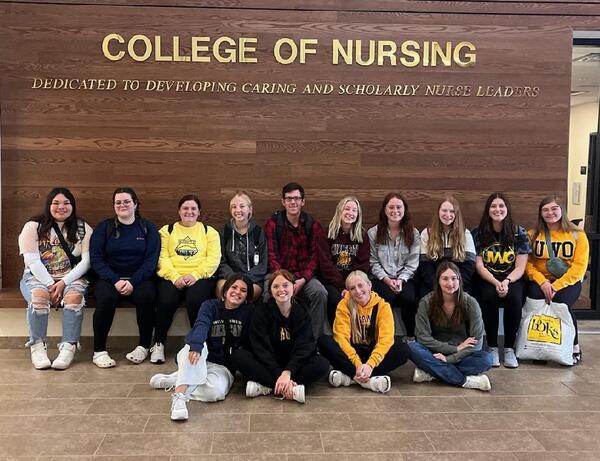
    In August 2023, the University of Wisconsin–Oshkosh launched the Pre-Nursing Pathway, a weeklong intensive precollege program that helps students prepare for the academic rigor of the nursing program and connects them with resources. In the pathway, students engage in peer interactions, mentorship and additional time with faculty and staff, allowing them to build emotional resiliency and a network of support.

    What’s the need: Staff at UW-Oshkosh noticed a decrease in qualified applicants to the nursing program and an overall decline in the matriculation of pre-nursing students, said Jessica Spanbauer, director of the center for academic resources.

    Students had large gaps in their foundational science and math concepts as well as a lack of time management and organizational skills, which could be tied in part to remote instruction due to the COVID-19 pandemic, Spanbauer said.

    The university decided to implement a pre-nursing program, in part to boost enrollment of students, but also to ensure students who do attend are successful on their career journey.

    How it works: The program is organized by the Center for Academic Resources and the College of Nursing, but is supported by admissions, the Undergraduate Advising Resource Center, the counseling center, the biology and chemistry departments, residence life, and recreation and wellness.

    Both admitted and deposited students are eligible to apply to the program, with special priority given to first-generation students.

    Selected program participants move onto campus a week before classes start for an intensive orientation experience. All students live in one wing of a residence hall together, mentored by two current nursing students, building a sense of community and peer support.

    During their week on campus, students participate in biology and chemistry labs led by professors; attend workshop presentations by advisers, counselors and academic support staff; and explore campus, familiarizing themselves with support resources. The goal is to proactively address knowledge gaps among students early on, enhancing their success and preparing them for the future demands of their profession.

    “By focusing on crucial and relevant concepts, we could ensure that students are well-equipped to excel in their nursing education,” Spanbauer said. “We could help build students’ confidence and encourage students to actively engage in shaping their academic trajectory.”

    Program participants are also offered tours of local hospitals, a Q&A session with nursing students and recent alumni, professional development workshops, and support from financial aid, dining, residence life and the Office of Accessibility.

    “We were fortunate that we had colleagues ready to enhance collaboration across units to further promote a student-focused supportive learning environment where students can thrive,” said Seon Yoon Chung, dean of the college of nursing.

    The impact: The program launched in August 2023 with 15 participants. Ninety percent of those students retained to fall 2024, and they earned an average GPA of 3.1. Eighty percent of the fall 2023 cohort are still in the pre-nursing major or accepted into the nursing program.

    An additional 12 students participated in August 2024 (100 percent of whom retained to spring 2025), and the staff hope to double participation rates this upcoming fall, Spanbauer said.

    Staff collect qualitative data about participants by using surveys and focus groups, as well as insights from faculty and other staff. In the future, longitudinal career-progression data and alumni surveys will help assess the program’s long-term impact, Spanbauer said.

    Campus leaders are also considering ways to enhance recruitment efforts and increase capacity for students through various resources, online modules and flexible scheduling to accommodate more interested students.

    Do you have an academic intervention that might help others improve student success? Tell us about it.

    This article has been updated to correct attribution of a quote to Seon Yoon Chung.

    Source link

  • Harvard Eyes Changes to Address Antisemitism, Anti-Muslim Bias

    Harvard Eyes Changes to Address Antisemitism, Anti-Muslim Bias

    Harvard University is introducing changes to its admissions, curriculum and orientation and other aspects of campus life as recommended by two internal task force reports on discrimination and harassment released Tuesday. The goal is to support civil discourse and address concerns raised by the two task forces, which were convened more than a year ago to review antisemitism and anti-Muslim bias at the university.

    The university also plans to initiate a research project on antisemitism and provide support for a “comprehensive historical analysis of Muslims, Arabs, and Palestinians at Harvard,” officials announced Tuesday. Harvard will also invest in Jewish studies and organize events featuring experts on the Israel-Palestine conflict. Deans will work with faculty to ensure students are treated fairly regardless of political and religious beliefs and prevent professors from taking political positions in class that create feelings of exclusion, according to the task force reports.

    A review of disciplinary policies and procedures is also planned.

    The announcement comes as the nation’s wealthiest university is locked in a standoff with the Trump administration over how officials handled pro-Palestinian campus protests last spring, which has prompted the federal government to freeze billions in research funding for Harvard and led the university to fire back with a lawsuit. Now, amid withering federal scrutiny and an ongoing Title VI investigation, Harvard has released more than 500 pages detailing the recent concerns of Jewish, Muslim, Arab and Palestinian students along with recommended improvements.

    Of the two task forces, one focused on combating antisemitism and anti-Israeli bias while the other took on anti-Muslim, anti-Arab and anti-Palestinian bias. Those task forces, launched in January 2024, were asked to examine Harvard’s recent history, identify root causes of bias, evaluate evidence on the frequency of such behaviors and recommend steps to combat bias.

    That work is now done. And the end result finds Harvard lacking—but aiming for improvement.

    Harvard president Alan Garber noted that the report “revealed aspects of a charged period in our recent history” that required addressing. While the university has already made various changes since he became president last January, he noted the work is far from finished.

    He also expressed concerns about the findings.

    “Especially disturbing is the reported willingness of some students to treat each other with disdain rather than sympathy, eager to criticize and ostracize, particularly when afforded the anonymity and distance that social media provides. Some students reported being pushed by their peers to the periphery of campus life because of who they are or what they believe, eroding our shared sense of community in the process,” Garber wrote in a Tuesday statement.

    The Findings

    The dual task force reports show a campus sharply divided in the aftermath of the deadly Hamas attack on Israel on Oct. 7, 2023, which prompted a brutal counteroffensive in Gaza and the deaths of tens of thousands of civilians, children among them. The antisemitism task force report makes clear that tensions had been building on campus since the mid-2010s as the Israel-Palestine conflict became more divisive. The report found that after Oct. 7, “our Harvard community fell apart.”

    Authors of that report noted that since the 2010s, pro-Israeli events and guests were targeted, and some Jewish students with pro-Israel views found themselves excluded socially. They also found that Jewish students and others on campus faced instances of bullying, intimidation and harassment and were shunned for expressing pro-Israel or moderate views. Students also alleged that university programming skewed in favor of Palestinian views. But then after Oct. 7, some Jewish students noticed a shift in the campus climate.

    “My experience has been different before and after October 7th,” one student wrote to the task forces. “Before October 7th, being Jewish was largely irrelevant. It was not a barrier. I was proud to be Jewish. When it came up, it was positive. After October 7th, I experienced the following in this order: first there was pressure, then there was chaos, then hostility, and in certain spaces, the normalization of subtle discrimination like, ‘We’ll welcome you in this space if you align in a certain way. If not, you can’t come here.’ This has to do with the enforcement of rules.”

    Jewish students also expressed concerns about speaking up.

    “I do not feel mentally safe on campus. Though I am not Israeli, I have openly expressed sympathy for October 7th survivors and attended events for Holocaust survivors. I have faced many social consequences for not thinking in ways my classmates would deem progressive, which I find unreasonable,” one student wrote in response to a survey by the two task forces.

    The task force exploring anti-Muslim, anti-Arab and anti-Palestinian bias yielded similar findings, with students and employees alike reporting threats and concerns related to their identities.

    “The feeling over and over again for Palestinians is that their lives don’t matter as much,” one student said. “Sometimes it’s explicit. It’s really hard when it’s your family that matters less.”

    Others expressed free speech concerns.

    “It would be close to impossible to express views at Harvard sympathizing with Palestinians,” one Harvard faculty member said, as quoted in the report. “The idea of ‘antisemitism’ has been expanded so much that anything that even remotely expresses concern about the calamity that’s facing Palestinians is prohibited at Harvard. I’m not Arab/Muslim and have no ethnic or religious affiliations with Palestinians other than having a connection as a fellow human being.”

    Both reports also expressed safety concerns regarding doxxing trucks and related online campaigns as well as about the role those outside the Harvard community had in amplifying campus divisions.

    Respondents to task force surveys also saw Harvard as complicit in failing to address concerns.

    “I’ve had positive interactions with the administration. They just don’t know what to do,” one graduate student wrote in a response. “They didn’t expect this level of anti-Zionism. [My school] didn’t expect having to draw a line between free speech and harassment. Anti-Zionism is considered an intellectual exercise and not as discrimination by some in the administration.”

    The Next Steps

    In his statement, Garber noted the university has already “made necessary changes and essential progress on many fronts” including campus protest rules and various other areas.

    But more changes are coming as a result of the task force’s recommendations. On admissions, Harvard has committed to reviewing its processes to emphasize candidates who “engage constructively with different perspectives, show empathy, and participate in civil discourse.”

    The university will also offer additional training for Office for Community Conduct staff on antisemitism and hire a staffer to oversee all antisemitism and shared-ancestry complaints. Mental health professionals at Harvard have already received cultural competency training on anti-Muslim bias and antisemitism to give them a better understanding of student needs.

    Harvard has also committed to partnering with an Israeli university.

    Additionally, deans will work with faculty “to define shared expectations for teaching excellence,” a process intended to ensure “appropriate focus on course subject matter” and to ensure “that students are treated fairly regardless of their identity or political/religious beliefs.” That effort also aims to promote “intellectual openness and respectful dialogue among students” and urges faculty members to refrain “from endorsing or advocating political positions in a manner that may cause students to feel pressure to demonstrate allegiance.” The stated aim of a related curriculum review is to uphold “standards of academic excellence and intellectual rigor.”

    The university will also host a series of events on the Israeli-Palestinian conflict.

    Harvard is further investing in Jewish studies, including hiring additional personnel. The university will make similar investments in Arabic language and cultures and Islamic and Palestinian studies.

    Harvard is also “exploring the creation of a major initiative to promote viewpoint diversity.”

    Source link

  • At Least 15 Florida Institutions Have ICE Agreements

    At Least 15 Florida Institutions Have ICE Agreements

    At least three members of the Florida College System have signed agreements with the U.S. Immigration and Customs Enforcement to allow their campus police departments to enforce immigration law, bringing the total to 15 institutions across the state.

    Florida SouthWestern State College, Northwest Florida State College and Tallahassee State College have all signed 287(g) agreements with ICE, which allows the agency to delegate immigration enforcement powers to other law enforcement agencies, such as campus police. Those three agreements have been approved by ICE, according to a federal database. Others approved as participating agencies are the police at Florida A&M University, New College of Florida, the University of Central Florida, the University of Florida and the University of West Florida.

    None of the three latest colleges responded to requests for comment from Inside Higher Ed.

    Santa Fe College also has a draft agreement in place that has not yet been signed, a spokesperson said, noting the earliest that would be done is at a May 20 board meeting. A spokesperson for Pensacola State College said its campus police are considering an application to partner with ICE.

    Other institutions that have already signed agreements with ICE are:

    • Florida A&M University
    • Florida Atlantic University
    • Florida Gulf Coast University
    • Florida International University
    • Florida Polytechnic University
    • Florida State University
    • New College of Florida
    • University of Central Florida
    • University of Florida
    • University of North Florida
    • University of South Florida
    • University of West Florida

    While all 12 institutions in the State University System have signed on with ICE, Florida SouthWestern State, Northwest Florida State and Tallahassee State appear to be the first of the 28 members in the Florida College System to enter such arrangements.

    Not all of the state colleges have campus police departments. But of those that do have campus police departments, signing on with ICE isn’t a given. For instance, Florida State College of Jacksonville and Polk State College told Inside Higher Ed that neither have a memorandum of agreement with ICE.

    Leaders Defend Agreements

    The agreements with ICE come amid an immigration crackdown driven by Gov. Ron DeSantis and Florida’s Republican-controlled Legislature. In February, DeSantis directed state law enforcement agencies to sign agreements with ICE “to execute functions of immigration enforcement within the state” to make deportations more efficient, according to a news release.

    Florida colleges and universities soon followed by signing memorandums of understanding with ICE that will deputize campus police officers to carry out immigration duties on campus. Institutions have largely declined to speak publicly about the arrangements. However, a recent Faculty Senate meeting at Florida International University with FIU chief of police Alexander Casas yielded insights into why agreements were signed but left many lingering questions.

    Casas argued at the April 18 meeting that it would be better for university police to carry out immigration enforcement duties on campus than outside agencies.

    “I can’t control what ICE does. I can’t control what a state agency does that has jurisdiction. But if I don’t enter the agreement, I don’t even have the opportunity to say, ‘Call us first, let us deal with our community.’ That’s not even an option,” Casas said. He added he wanted to be “in the driver’s seat” but “without the agreement, I’m not even in the car.”

    FIU interim president Jeanette Nuñez, the former lieutenant governor under DeSantis, also defended the deal, telling the Faculty Senate the ICE agreement follows similar arrangements “at almost all of the state universities and many other universities across the country.”

    Immigration experts have told Inside Higher Ed they are unfamiliar with such agreements at universities in other states. Only Florida institutions appear in an ICE database that tracks active and pending 287(g) agreements. (FIU did not respond to questions about Nuñez’s claims.)

    FIU Faculty Senate members, however, did not seem swayed by Casas or Nuñez. Several professors spoke about their distrust for ICE—some clearly emotional—and referenced recent questionable actions by ICE, such as the widely publicized arrest of Juan Carlos Lopez-Gomez, an American citizen who was detained earlier this month and falsely accused of illegally entering Florida as an “unauthorized alien.” Federal officials later blamed Lopez-Gomez for his arrest.

    Ultimately, the Faculty Senate approved a resolution calling for the university to withdraw from the ICE agreement, which members argued ran counter to the values of the institution.

    Statewide Concerns

    Concerns about such agreements have also emerged at universities across the state.

    Students and faculty have protested such agreements at FIU, FAU and elsewhere. United Faculty of Florida, a union that represents professors across the state, condemned the agreements with ICE as a betrayal of the core values of higher education in a recent statement.

    “Our campuses must be institutions of learning, critical inquiry, and inclusion—not instruments of surveillance and state-sponsored oppression,” United Faculty of Florida officials said in a statement last week. “The presence and involvement of ICE on our campuses sows fear among students, staff, and faculty, particularly those from immigrant, undocumented, or international communities. It undermines the very mission of our higher education system: to foster open dialogue, intellectual freedom, and the free exchange of ideas across borders and identities.”

    The agreements also prompted pushback from the Florida Advisory Council of Faculty Senates, which issued a resolution that urged universities to withdraw from existing agreements with ICE.

    “To effectively protect our universities, campus police cultivate a unique relationship with campus communities,” council members wrote in a recent resolution. “They come to know our students, our educational spaces, and our communities. They are present at peaceful protests, in classrooms, and at student events. Repurposing this unique trust for federal immigration enforcement makes our campuses less safe, puts our officers in an untenable position, and chills students’ access to the support services they critically need to succeed.”

    That resolution has already been endorsed by some faculty senates, including at FAU.

    Source link

  • AAUP Report Backs Tenured Pro-Palestine Prof. Who Was Fired

    AAUP Report Backs Tenured Pro-Palestine Prof. Who Was Fired

    A new American Association of University Professors investigative report concludes that Muhlenberg College violated the academic freedom of a tenured associate professor who said the institution fired her for pro-Palestinian speech.

    Maura Finkelstein’s situation made headlines last year as the first instance that major academic freedom advocacy groups had heard about of a tenured faculty member being fired for pro-Palestine or pro-Israel statements. Complaints against Finkelstein also became the subject of a U.S. Education Department Office for Civil Rights investigation.

    Finkelstein previously said she was fighting her May 2024 termination and was continuing to be paid during the appeals. But a college spokesperson told Inside Higher Ed this week that Finkelstein has now “resigned from the college to pursue other scholarship opportunities.” Finkelstein didn’t respond to Inside Higher Ed’s requests for comment.

    Finkelstein, who is Jewish, had said a panel of faculty and staff recommended axing her over her Instagram repost that told readers not to “normalize Zionists taking up space” and called Zionists “genocide-loving fascists” who shouldn’t be welcome “in your spaces.”

    Members of the college’s Faculty Personnel and Policies Committee later unanimously concluded that Finkelstein shouldn’t be fired, according to the AAUP report released Tuesday. The report is from a Committee of Inquiry composed of three faculty from other higher education institutions, and it’s been approved by the AAUP’s Committee A on Academic Freedom and Tenure.

    The report concludes, among other things, that “by initially dismissing Professor Finkelstein from the faculty solely because of one anti-Zionist repost on Instagram and without demonstrating—in fact, without ever seeking to demonstrate” that she was professionally unfit, “the Muhlenberg administration violated Professor Finkelstein’s academic freedom of extramural speech.” The report says the firing has “severely impaired the climate for academic freedom” at the college.

    A college spokesperson said the institution “has not been afforded the opportunity to review the amended report,” but pointed to the administration’s response to an earlier AAUP draft. That response, included in the final AAUP report, says Finkelstein “was afforded a fair and equitable process” and that “the cumulative effect of Professor Finkelstein’s conduct and post that called for the shaming of Zionists and to ‘not welcome them into your spaces,’ violated College policy.”

    Source link

  • Ex-NIH Director Says Trump Silenced Him, Others

    Ex-NIH Director Says Trump Silenced Him, Others

    A former director of the National Institutes of Health—who resigned in February—told CBS’s 60 Minutes that working at the agency became “untenable” after President Donald Trump started his second term Jan. 20. 

    Like “every other scientist, I was not allowed to speak in any kind of scientific meeting or public setting,” Francis Collins, a geneticist who had worked for the biomedical research agency since the 1990s, said during an episode that aired Sunday. He believed staying at the agency wouldn’t have helped. “I would have been pretty much in the circumstance of not being able to speak about it.”

    Over the past few months, the Trump administration has announced sweeping budget cuts and ideologically driven policy changes at numerous agencies across the federal government, including at the $47 billion NIH. The NIH is the largest funder of biomedical research in the world, sending about 80 percent of its budget to universities, medical colleges and other institutes in the form of extramural grants that support research on fatal diseases, such as cancer, Alzheimer’s and diabetes. 

    But scientists and medical research advocates say the work of the NIH—and the millions of patients it supports—is in jeopardy. 

    In late January, the NIH temporarily froze spending and communication and halted most reviews of grant applications; so far in 2025 it’s awarded about $2.8 billion less than usual at this point over the past five years. It’s also announced a plan to cap indirect research cost rates, which universities say would create gaping budget holes and slow the pace of medical breakthroughs. (A federal judge has since blocked the guidance.)

    The agency has also fired some 1,300 employees and terminated roughly $2 billion in grants—many focused on the health of women, LGBTQ+ people and racial minorities—that no longer effectuate “agency priorities.” (Researchers have since sued over the grant terminations). And earlier this month, The Washington Post reported that an internal White House budget proposal outlined plans to cut $20 billion from NIH’s annual budget and consolidate the NIH’s 27 institutes and centers into eight.

    Although research advocates have protested the cuts, the drastic changes have created an environment of fear and anxiety for both university scientists and the remaining NIH employees who support them and conduct their own medical research. 

    “I’ve never seen the morale of an institution change so abruptly to where we feel fear,” said an NIH researcher who spoke to 60 Minutes on the condition of anonymity. “You can’t run an organization as complicated as NIH without a support system … That has now been decimated … This doesn’t feel like a strategic plan to make the NIH better and more efficient. It feels like a wrecking ball.”

    Source link

  • Beware Illusions of Campus Normalcy This Spring (opinion)

    Beware Illusions of Campus Normalcy This Spring (opinion)

    It’s nearing the end of the academic year at Harvard University, where I teach in the Graduate School of Education. Students are preparing for final exams and finishing up capstone projects. Awards ceremonies are being held and celebrations, formal and informal, have begun. The weather has finally warmed up in Cambridge, and the outdoor tables at restaurants and coffee shops are crowded. The women’s tennis team clinched the Ivy League title.

    It all feels normal. Yet it all feels discordant, like a scene in a M. Night Shyamalan movie that infuses the quotidian with a barely detectable feeling of dread.

    This discordance is of course especially powerful at Harvard, the current epicenter of a ferocious and lawless attack on higher education that might make Viktor Orbán blush. But it is not unique to Harvard. At colleges and universities across the country, classes continue, clubs meet and Frisbees are being tossed even as the government sows fear and confusion by revoking, then restoring, then warning that it might again revoke the visa statuses of more than 1,800 international students.

    Lawyers continue to do what lawyers do, while large firms are essentially signing on to be instruments of the government, individuals are being targeted because the president of the United States holds a grudge, bigly, and court orders are being ignored.

    Doctors continue to treat patients while billions of dollars of funding for medical research and experimental trials are being withheld and the secretary of Health and Human Services is declaring that autism is preventable and the measles vaccine is maybe, sort of OK.

    We get in our cars or on our bicycles and go off to work while the government is pressing before the courts an argument that would allow it to send anyone, citizen or noncitizen, to a foreign prison without cause or legal recourse.

    When many of us think about authoritarian takeovers, we imagine military coups and declarations of martial law. But the truth is that the most powerful tool of the aspiring authoritarian is not shock, but normalcy. How bad can things be if we can still shop at Costco or take our families out for Italian food? How bad can they be if we can still download Maya Angelou onto our Kindles or watch Jimmy Kimmel Live!? How bad can they be if I can still publish a piece like this one, critical of the federal government?

    Look around not only at the campuses, but at the streets and bars and hardware stores in any city or town in America and it appears to be the same as it was last year and the year before. The NBA playoffs have begun and there’s a new film starring Michael B. Jordan. Normal.

    Except it is not, in ways of which we are vaguely aware but unable or unwilling to fully credit.

    For most people—the ones not scooped off the street by men in masks or ousted from their jobs with the federal government without cause or forced to stop their research because of the loss of National Institutes of Health funding—life feels more or less the way it did when we were a reasonably functional democracy. This is the way it works: Keep 99 percent of the lives of 99 percent of the people undisturbed for as long as possible so that they will remain unaware of or indifferent to what is happening at the margins. By the time they recognize that the edges of normalcy have drawn closer, it will be too late to do anything about it because the guardrails will have been destroyed.

    Begin with the least sympathetic targets. Who will shed tears for the fate of Venezuelan gang members (real or imagined)? Does anyone really like Big Law? Government employees are the problem, not the solution. Harvard, with its giant endowment and Ivy League arrogance, is rarely anyone’s idea of an underdog. Why should we concern ourselves with any of this on the way to McDonald’s or Starbucks? I work at Harvard and most of the time I find it difficult to take seriously the reality that the federal government is trying to destroy a private university simply to prove that it can and because its appetite for both control and chaos appears to have no limits.

    Be sure to cite rules and regulations that few people care to understand. What is 501(c)(3) status anyway? “Indirect costs” seem sort of like a scam. The “Alien Enemies Act” sounds like something pulled from the latest Marvel movie. Then cloak it all in the guise of causes to which it seems difficult to object—fighting antisemitism, because Donald Trump and the party of Marjorie Taylor Greene and the Proud Boys are the first things that come to mind when one thinks about protecting Jews. Or perhaps national security, given the threat to the republic posed by international students co-authoring op-eds for the campus newspaper.

    Above all, lie. Constantly, relentlessly, shamelessly lie. Since most people don’t spend a majority of their time lying about a majority of things, they appear to find it difficult to recognize when other people do. It’s hard to question a time-tested strategy.

    The fight against our current level of inertia is painfully difficult because the allure of the normal, the desire to believe that things are just fine, is so powerful. A tank in the street is hard to ignore. A steady eroding of legal and ethical norms just beyond the limits of our daily vision is easy to miss.

    Our greatest hope might be the tendency of authoritarians and those without any moral compass to overreach. If they can change life by 1 percent without much resistance, why not five or 10 or 20? If they can, through executive actions, free hundreds of convicted felons and strip away environmental protections, why not impose arbitrary and irrational tariffs? What made the reaction to tariffs different and what has, at least for the moment, slowed their progress is the fact that they tore a hole in the illusion of normalcy. Plummeting retirement accounts and worries about the cost of groceries will disrupt the normal in a way that canceling student visas or defunding Harvard will not. It was a mistake, and they will, out of arrogance and stupidity, make more.

    The set of demands sent to Harvard, for instance, which Harvard refused to comply with, resulting in headlines around the globe, was apparently sent in error. You could make that up, but no one would believe you.

    Meanwhile, I wonder whether we can afford to wait. Is it sufficient to hope that they will make things abnormal enough for a large enough group of people to provoke resistance, or do we have to do the difficult work of wrenching ourselves, somehow, out of the reassuring comforts of familiar routines? David Brooks, hardly a radical, has called for a “comprehensive national civic uprising” to counter the war being waged on our national civic fabric. Do people, organizations and institutions in the United States, so certain for so long about the permanence of its democracy, even have the energy or the will? Can that happen here or is it something that happens in Seoul or Istanbul and is shown on CNN?

    Meanwhile, I have laundry to do and a class to teach this week. Maybe I’ll catch something on Netflix. Pretty normal stuff.

    Brian Rosenberg is president emeritus of Macalester College, a visiting professor at Harvard Graduate School of Education and author of Whatever It Is, I’m Against It: Resistance to Change in Higher Education (Harvard Education Press, 2023).

    Source link