Immigration and Customs Enforcement is detaining a Harvard Medical School research associate who’s a Russian native. One of Kseniia Petrova’s lawyers says the government is trying to deport her to Russia, where she faces possible arrest due to her “prior political activism and outspoken opposition to Russia’s invasion of Ukraine.”
Gregory Romanovsky, the lawyer, said in a statement that Petrova was trying to re-enter the U.S. on Feb. 16 at Boston’s Logan International Airport when a Customs and Border Protection officer discovered she “had not completed the required customs paperwork for a non-hazardous scientific sample she was bringing from an affiliated laboratory in France.”
“CBP was authorized to seize the item and issue a fine,” Romanovsky wrote. “Instead, they chose to cancel Ms. Petrova’s visa and detain her.”
Petrova remains in ICE custody in Louisiana. The Boston Globereported earlier on her detention.
Romanovsky wrote that “CBP improperly invoked their extensive immigration authority to impose a punishment grossly disproportionate to the situation. This overreach reflects broader concerns about the treatment of international scholars by U.S. immigration authorities.”
A spokesperson for the Department of Homeland Security, which includes ICE, told Inside Higher Ed in an email that Petrova was “detained after lying to federal officers about carrying biological substances into the country. A subsequent K9 inspection uncovered undeclared petri dishes, containers of unknown substances, and loose vials of embryonic frog cells, all without proper permits. Messages found on her phone revealed she planned to smuggle the materials through customs without declaring them. She knowingly broke the law and took deliberate steps to evade it.”
Harvard spokespeople didn’t provide an interview Friday about the situation or answer multiple emailed questions. In a brief email, the medical school’s media relations arm said, “We are monitoring this situation.”
Romanovsky has sued to restore Petrova’s visa.
“Ms. Petrova’s 1.5-month-long detention has caused significant disruption to both her professional and personal life,” Romanovsky said in his statement. “As a dedicated and highly respected researcher, her work is critical to scientific progress. We strongly urge ICE to release Ms. Petrova while her legal proceedings are ongoing.”
English/language arts and science teachers were almost twice as likely to say they use AI tools compared to math teachers or elementary teachers of all subjects, according to a February 2025 survey from the RAND Corporation that delves into uneven AI adoption in schools.
“As AI tools and products for educational purposes become more prevalent, studies should track their use among educators. Researchers could identify the particular needs AI is addressing in schools and–potentially–guide the development of AI products that better meet those needs. In addition, data on educator use of AI could help policymakers and practitioners consider disparities in that use and implications for equitable, high-quality instruction across the United States,” note authors Julia H. Kaufman, Ashley Woo, Joshua Eagan, Sabrina Lee, and Emma B. Kassan.
One-quarter of ELA, math, and science teachers used AI tools for instructional planning or teaching in the 2023–2024 school year. Nearly 60 percent of surveyed principals also reported using AI tools for their work in 2023-2024.
Among the one-quarter of teachers nationally who reported using AI tools, 64 percent said that they used them for instructional planning only, whether for their ELA, math, or science instruction; only 11 percent said that they introduced them to students but did not do instructional planning with them; and 25 percent said that they did both.
Although one-quarter of teachers overall reported using AI tools, the report’s authors observed differences in AI use by subject taught and some school characteristics. For instance, close to 40 percent of ELA or science teachers said they use AI, compared to 20 percent of general elementary education or math teachers. Teachers and principals in higher-poverty schools were less likely to report using AI tools relative to those in lower-poverty schools.
Eighteen percent of principals reported that their schools or districts provided guidance on the use of AI by staff, teachers, or students. Yet, principals in the highest-poverty schools were about half as likely as principals in the lowest-poverty schools to report that guidance was provided (13 percent and 25 percent, respectively).
Principals cited a lack of professional development for using AI tools or products (72 percent), concerns about data privacy (70 percent) and uncertainty about how AI can be used for their jobs (70 percent) as factors having a major or minor influence on their AI use.
The report also offers recommendations for education stakeholders:
1. All districts and schools should craft intentional strategies to support teachers’ AI use in ways that will most improve the quality of instruction and student learning.
2. AI developers and decision-makers should consider what useful AI applications have the greatest potential to improve teaching and learning and how to make those applications available in high-poverty contexts.
3. Researchers should work hand-in-hand with AI developers to study use cases and develop a body of evidence on effective AI applications for school leadership, teaching, and learning.
Laura Ascione is the Editorial Director at eSchool Media. She is a graduate of the University of Maryland’s prestigious Philip Merrill College of Journalism.
Immigration and Customs Enforcement has detained a University of Alabama doctoral student and Iranian native. A spokesperson told Inside Higher Ed in an email that the student “posed significant national security concerns” but didn’t clarify what those concerns were.
The Crimson White student newspaper and other media previously identified the student as Alireza Doroudi. As of Thursday evening, the ICE website listed Doroudi as in ICE custody but didn’t note where he was.
“ICE HSI [Homeland Security Investigations] made this arrest in accordance with the State Department’s revocation of Doroudi’s student visa,” a Department of Homeland Security spokesperson said in an email to Inside Higher Ed Thursday. The department, which includes ICE, didn’t provide an interview.
It’s unclear whether the detention is part of the Trump administration’s targeting of international students for alleged participation in pro-Palestinian protests, with immigration officers raiding their dorm rooms and revoking their visas.
The Crimson White said Doroudi was “reportedly arrested by ICE officers” at his home around 5 a.m. Tuesday. A statement from the university said the student, whom the university didn’t name, was detained off campus. The Crimson White also reported that—according to a message in a group chat including Iranian students—Doroudi’s visa was revoked six months after he came to the U.S., but the university’s International Student and Scholar Services arm said he could stay in the country as long as he maintained his student status.
The university didn’t provide Inside Higher Ed an interview Thursday or answer multiple written questions. Its emailed statement said, “Federal privacy laws limit what can be shared about an individual student.”
“International students studying at the University are valued members of the campus community, and International Student and Scholar Services is available to assist international students who have questions,” the statement said. “UA has and will continue to follow all immigration laws and cooperate with federal authorities.”
After months of uncertainty about the future of federally funded research, the National Institutes of Health this month started canceling grants it deemed “nonscientific.”
So far, that includes research into preventing HIV/AIDS; managing depressive symptoms in transgender, nonbinary and gender-diverse patients; intimate partner violence during pregnancy; and how cancer affects impoverished Americans.
In letters canceling the grants, the NIH said those and other research projects “no longer [effectuate] agency priorities.”
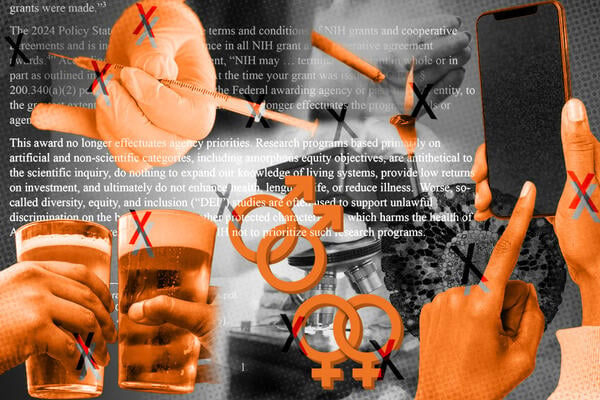
But the world’s largest funder of biomedical research didn’t stop there. The agency went on to tell researchers that “research programs based primarily on artificial and nonscientific categories, including amorphous equity objectives, are antithetical to the scientific inquiry, do nothing to expand our knowledge of living systems, provide low returns on investment, and ultimately do not enhance health, lengthen life, or reduce illness,” according to a March 18 letter sent to the University of Nebraska at Lincoln.
Katie Bogen, a Ph.D. student in the clinical psychology program at UNL, found out via the letter that NIH was canceling the $171,000 grant supporting her dissertation research. She was planning to explore the links between bisexual women’s disclosure of past sexual violence experience to a current romantic partner and subsequent symptoms, including traumatic stress, alcohol use and risk for violence revictimization within their current relationship. She started work on the project last May and was set to start data collection at the end of this month.
The NIH told Bogen and other researchers that “so-called diversity, equity, and inclusion studies are often used to support unlawful discrimination on the basis of race and other protected characteristics, which harms the health of Americans,” and that NIH policy moving forward won’t support such research programs.
“No corrective action is possible” for Bogen’s project, because “the premise of this award is incompatible with agency priorities, and no modification of the project could align the project with agency priorities.”
Last week, Bogen, who told Inside Higher Ed that she was inspired to pursue this topic because she herself is a bisexual woman with a trauma history, posted on TikTok about the termination letter.
Man this is actually very sad. Thinking about all the scientists today who are being told their scholarship isn’t important. It is. Your work matters. Let’s figure out how to move forward as a community of inquiry together.
She received thousands of comments and messages lamenting the loss of her work, with some characterizing the letter’s language as “appalling” and “horrifying.” Another commenter, who identified “as a bi femme who has survived the specific harm you’ve been studying,” told Bogen their “heart is broken” for her and other researchers “and all the folks who could be helped by the studies being defunded.”
Inside Higher Ed interviewed Bogen for more insight into her research and what the NIH’s abrupt cancellation of her and other projects means for public health and the future of scientific discovery.
(This interview has been edited for clarity and style.)
Q: What got you interested in researching intimate partner violence prevention for bisexual women? Why do you believe it’s an important line of scientific inquiry?
A: We know that bisexual women are at an elevated risk of experiencing intimate partner violence and sexual harm. We also know they have higher rates of post-traumatic stress disorder after these experiences compared to other people, and that they have greater and more problematic high-risk alcohol use afterwards. A key part of the process of meaning-making after the experience of violence is disclosure because of ambient bi-negativity. Bisexual people’s disclosure processes are often burdened by anti-bisexual prejudice.
For example, if you’re a bisexual woman who’s experienced violence at the hands of a woman partner, and you disclose that to a man partner that you’re seeing now, that man partner might say, “How much did she really hurt you?” If you’re a bisexual woman who’s now with a woman and you disclose violence perpetrated by a man, your woman partner might say something like, “This is what you get for dating men. We all know better than to date men.”
Katie Bogen is a fifth-year clinical psychology Ph.D. student at the University of Nebraska at Lincoln
So much of the disclosure research on sexual violence victims has been done with formal support providers like police or campus security or therapists, and then informal support providers like friends or parents or siblings. But very little research has documented the exposure process with intimate partners, which seems like a gap, given that intimate partners can then choose to sort of wield that insight or knowledge for good—or for harm.
I want to study how to intervene so that they don’t develop severe post-traumatic stress and problematic drinking. And this is particularly important because problem drinking is a risk factor for revictimization, and so bisexual women have all of these factors working against them that contribute to the cycle of revictimization and chronic victimization over their life span.
Q: Can you describe the process of applying for this NIH grant?
A: In 2022, I had just finished my second year of graduate school when a colleague of mine sent me a funding opportunity from the National Institute on Alcohol Abuse and Alcoholism that had a notice of special interest on the health of bisexual and bisexual-plus people.
We haven’t even been able to recruit our participants and I have none of the data.”
I worked very hard for a year on my application. It was the first grant I wrote as a [principal investigator]. I submitted to NIH, and a kind of miracle happened—I scored a 20 on this grant, which means my very first grant being written up as a PI got funded on the first round of peer review, which is almost unheard-of.
Q: How much of the project had you finished before receiving the termination notice?
A: I started work last May. I’ve hired and trained an entire lab of undergrads.
I’ve already done the literature reviews with the help of my undergraduate team and put together and tested the Qualtrics surveys. We set up backup safety measures in case the online surveys were infiltrated by bots or false respondents. The amount of literature I’ve read and the foundational conference presentations and analysis that I’ve run using other available data sets has been an immense labor.
It has been a productive 10 months. The things that this research has made possible for me—not only as a student and trainee, but as a scientist and as now a mentor helping to train the next generation of scholars—cannot be understated.
But we haven’t even been able to recruit our participants and I have none of the data. We were slated to begin data collection on March 31, and it’s a shame that will no longer happen.
Q: The NIH’s termination letter said your project is “antithetical to scientific inquiry” and “harms the health of Americans.” What was your reaction to that characterization of your work?
A: It hurts to hear that your work isn’t scientific. But it almost made me laugh because it’s so revelatory of the ignorance of folks in positions of power to claim that the work that I’m doing—that my colleagues are doing, that my mentors have taught me to do, that other folks in a field of doing—is ascientific and itself violence.
To me, the language in the letter is an example of DARVO, which is a rhetorical abuse tactic that stands for deny, attack, reverse victim and offender. They’re saying that what I’m doing isn’t scientific, and that they’re actually trying to uphold the standards of science, and by me focusing on these marginalized groups, I’m harming, quote unquote, real or regular Americans.
[The termination letter] almost made me laugh because it’s so revelatory of the ignorance of folks in positions of power to claim that the work that I’m doing … is ascientific and itself violence.”
Q: How does your work benefit society broadly?
A: Even if we take queerness out of the equation in this model, we are still garnering insight and understanding of the mechanism of post-traumatic stress, alcohol use and intimate partner violence for people in general. We’re getting a deeper understanding of how discussing sexual violence with a partner fundamentally changes that relationship, what is perceived as potentially acceptable in that relationship, norms of conflict within that relationship and sexual norms within that relationship.
Being able to investigate questions like this and enact scholarship like this could be a balm to some of the self-blame and shame that survivors are experiencing. And when research like this is able to reach health-care providers, public health improves, people become safer and we’re better able to protect folks from things like intimate partner violence, revictimization and sexual revictimization, which is endemic in our society.
Q: Given that this research grant was a central piece of your plan to complete your dissertation, how does its abrupt cancellation complicate your path toward degree completion?
A: I now have to work with my mentors to generate a new dissertation proposal and send it to my committee and get it reapproved, which means I have to access data sets at my institution that have either already been collected or that are safe from future rounds of cuts like this.
I believe I’m being intimidated [by the NIH] into taking the data that are already available, rather than collecting data with more specificity, which means the accurate data answering these research questions is tampered. I don’t necessarily want to go to a data set that was collected on, for example, masculinity and violence perpetration, and try and string together a similar enough model to pass the proxy of what I wanted. That’s poor scholarship.
It’s something a lot of scholars who are dealing with this crisis are facing now. How does that further marginalize the populations we’re aiming to serve if we’re trying to presume or assume that data on different populations? It creates this ethical and academic quandary.
Q: How might this termination affect your career in the long term?
A: I have a demonstrated record of receiving grant funding on my own, which is a difficult thing to demonstrate when you’re still a trainee or you’re still a student. It makes folks more competitive for postdocs, research-oriented internships or research jobs at bigger research institutions down the line. If I wanted to work at an academic hospital, it shows that I’ll be able to bring in grant funding.
But now I have this really sad line on my CV. I had to write several asterisks that the grant closed early, and I just have to hope that people who are reviewing my CV later know what that means—that the grant closed early, not because of my failure to complete the research, but because we have the infiltration of antiscientific thought in the federal government that forced a number of grants to close early.
It doesn’t stop at political science, psychology or even economics. It has legs and encroaches and creeps into biophysiological sciences and neuropsychology. It leaves no science safe.”
Q: How does your situation speak to any concerns you might have about the broader environment for science in this country right now?
A: We’re in this identity war moment, and it’s not based on anything but people’s own prejudice and bias and a sense of being victimized because they no longer have access to the power they used to. This is an attempt to recollect and to narrow who has that power, which has frightening implications across the board.
It doesn’t stop at political science, psychology or even economics. It has legs and encroaches and creeps into biophysiological sciences and neuropsychology. It leaves no science safe.
The Tufts student, Rumesya Ozturk, was abducted by plainclothes ICE agents on the street. At a press conference Thursday, U.S. secretary of state Marco Rubio said that any international student whose visa was revoked could be forcefully deported in such a manner.
“Once you’ve lost your visa, you’re no longer legally in the United States,” he said. “If you come to the U.S. as a visitor and create a ruckus for us, we don’t want it.”
Axios also reported that the administration has discussed using a small arm of the Immigration and Customs Enforcement office to strip colleges they deem to be “pro-Hamas” of their ability to enroll international students.
“You can have so many bad apples in one place that it leads to decertification of the school,” an unnamed White House official told Axios. “I don’t think we’re at that point yet. But it is not an empty threat.”
The Student and Exchange Visitor Program normally investigates student visa fraud and international student recruiting practices, sometimes withdrawing colleges’ certification to enroll foreign students if there’s evidence that students are primarily enrolling as a pretext to reside and work in the U.S. instead of earn a degree.
Now, the SEVP may be tasked with a very different mandate: punishing colleges that have been the site of large pro-Palestine protests.
“What you’re going to see in the not-too-distant future is the universities … not doing anything to stop these demonstrations in support of Hamas … we can stop approving student visas for them,” a senior Justice Department official told Axios. “That’s one of their biggest cash cows, foreign students. That’s a meaningful source of revenue.”
Duke University is unhappy with The White Lotus, the hit HBO television show, for using its logo repeatedly in its third season—particularly in a scene where one character is on the verge of suicide, holding a gun to his head, all while wearing a Duke T-shirt.
A spokesperson for institution told Bloombergand other media outlets this week that Duke hadn’t approved of the use of its logo on the show. “The White Lotus not only uses our brand without permission, but in our view uses it on imagery that is troubling, does not reflect our values or who we are, and simply goes too far,” the spokesperson said.
A copyright attorney told Bloomberg that the show’s use of the logo is most likely protected by the First Amendment.
The City University of New York’s Hunter College reposted a job listing for Palestinian studies scholars earlier this week, one month after New York governor Kathy Hochul ordered the system to remove an earlier listing that she called antisemitic.
The new job description does not include some of the phrases that initially angered pro-Israel activist groups who lobbied for the original posting’s removal.
The old posting said Hunter sought “a historically grounded scholar who takes a critical lens to issues pertaining to Palestine including but not limited to: settler colonialism, genocide, human rights, apartheid, migration, climate and infrastructure devastation, health, race, gender, and sexuality.” The revised version excised that entire list of issues.
Free speech advocates and Hunter staff told Inside Higher Ed last month that CUNY’s decision to pull the initial job posting and revise it in response to the governor’s order was an unprecedented breach of the institution’s academic autonomy in faculty hiring, an area normally sequestered from political influence.
Correction: an earlier version of this story reported that the posting had removed a description of Hunter as a “vibrant and dynamic community within a highly diverse urban setting.” That language is still in the revised post.
Universities should look to recruit researchers fleeing the U.S. amid dramatic funding cuts by the Trump administration because it could help protect vital scientific expertise from being lost, according to the rector of a leading Belgian university.
Vrije Universiteit Brussel (VUB) has announced a host of new postdoctoral positions for international academics, stating that the institution “particularly welcomes excellent researchers currently working in the U.S. which see their line of research threatened.”
VUB and its sister university Université Libre de Bruxelles are offering a total of 36 grants to researchers with a maximum of eight years of postdoctoral experience, funded by the European Union’s Marie Skłodowska-Curie Actions. The positions are not exclusively designed for U.S.-based researchers, VUB rector Jan Danckaert stressed, but are “open to all incoming researchers, whatever their nationality or their working place at the moment outside of Belgium.”
VUB chose to advertise the positions to scholars in the U.S., Danckaert explained, in the wake of drastic funding cuts by the Trump administration, with research fields under particular threat including climate, public health and any areas considered to be related to diversity.
“We also hear from colleagues in the United States that they are applying a kind of self-censorship in order to stay under the radar,” he said. “We believe that freedom of investigation is now under threat in the U.S.”
“It’s not so much about trying to attract the best US researchers to Brussels but trying to prevent fruitful lines of research from being abruptly cut off,” Danckaert said. While recruiting talent “would benefit our society,” he said, “it’s important that these lines of research can be continued without interruption, for the benefit of the scientific community as a whole and, in the end, for humanity.”
VUB has already lost U.S. funding for two research projects, one concerning youth and disinformation and the other addressing the “transatlantic dialogue,” Danckaert said. The grants, amounting to 50,000 euros ($53,800) each, were withdrawn because “they were no longer in line with policy priorities,” the rector said. “Now, we have some costs that will have to be covered, but that’s nothing in comparison to the millions that are being cut in the United States.”
European efforts to recruit U.S.-based researchers have faced some criticism, with the KU Leuven rector Luc Sels arguing that “almost half of the world population lives in countries where academic freedom is much more restricted,” while “the first and most important victims of Trump’s decisions”—such as the cancellation of USAID funding—“live and work in the Global South.”
“Should we not prioritise supporting the scientists most at risk?” Sels writes in a recent Times Higher Education comment piece, adding that “drawing [the U.S.’s] talented scientists away will not help them.”
Asked about these concerns, Danckaert said, “It’s true, of course, that the U.S. by no means has a monopoly on putting scientists under threat,” noting that VUB, alongside other Belgian universities, participates in academic sanctuary programs such as Scholars at Risk. “We try to provide a safe haven for scholars who are being persecuted in their countries, and this work doesn’t stop.”
As for fears of a potential brain drain from the U.S., the VUB rector said he was “by nature optimistic.” Recruiting U.S.-based researchers “is hopefully only a temporary measure to avoid some lines of research being abruptly cut,” Danckaert said.
“I believe this is a temporary difficult period for a number of scientists,” he continued. “We’ve always looked with high esteem to the quality of science done in the United States, and I’m confident that the climate in which science was prospering will come back.”
The third month of the second Trump administration is coming to a close, and the White House has shown no signs of slowing down on the number of actions it’s taking that directly impact the higher education sector.
In the latest episode of The Key, Inside Higher Ed’s news and analysis podcast, Editor in Chief Sara Custer checks in on the latest developments with news editor Katherine Knott and federal policy reporter Jessica Blake.
They discuss the huge staff cuts at the Department of Education, an executive order to shutter the agency, arrests and intimidation of international students and scholars, and a $400 million ultimatum to Columbia University. They share what IHE has learned from the people at the center of these stories.
They also consider what legal and policy experts have said about the potential for these actions to be challenged in courts or through Congress.
Listen to the latest episode here and find more episodes of The Key here.
The University of Michigan announced Thursday that it will essentially eliminate all diversity, equity and inclusion efforts on its campus. That includes shuttering two diversity offices, the Office of Diversity, Equity and Inclusion and the Office for Health Equity and Inclusion, and ending its DEI 2.0 Strategic Plan.
The changes come in response to federal anti-DEI actions, including executive orders and the Feb. 14 Dear Colleague letter, which declared all race-based programs in higher education illegal. Michigan’s decision was made in consultation with “various stakeholders regarding our DEI programs,” according to the announcement.
The university said it plans to increase investments in student-facing programs, including financial aid, a scholarship program for former foster children and student success resources.
The university has long been a champion of DEI efforts, funneling nearly $240 million into such programs over the past nine years, according to The Chronicle of Higher Education, though some have critiqued the efforts for appearing to have little impact despite the big price tag.