Tag: News

  • The Struggling Sanctuary Campus Movement

    The Struggling Sanctuary Campus Movement

    American University’s student government recently passed a referendum calling on the university to designate itself a sanctuary campus and limit its cooperation with federal immigration enforcement. Student protests broke out at the University of North Carolina Asheville, the University of Texas at Austin and elsewhere to push those campuses to embrace sanctuary status. A petition with the same demand from Colorado State University’s chapter of the Young Democratic Socialists of America garnered more than 3,000 signatures.

    “It is of the utmost importance that students, staff, and community members see CSU committing to protect the most threatened students in this community,” read the student petition to Colorado State administrators.

    The petitions and protests have also been fueled by student frustrations with universities’ compliance with other federal immigration actions. The Council on American-Islamic Relations and other groups sued Columbia University on behalf of students after federal immigration agents arrested Mahmoud Khalil, a green card–holding recent Columbia graduate, at his university-owned apartment because of his involvement in pro-Palestinian protests. Shortly afterwards, Department of Homeland Security agents searched two Columbia dorms, though no arrests were made. The CAIR lawsuit, which also targets the House of Representatives’ Committee on Education and the Workforce, led to an injunction that stopped the university from sharing more student records with lawmakers.

    “While I await legal decisions that hold the futures of my wife and child in the balance, those who enabled my targeting remain comfortably at Columbia University,” Khalil said in a statement from an ICE detention center in Louisiana. “Columbia surrendered to federal pressure by disclosing student records to Congress and yielding to the Trump administration’s latest threats.”

    The renewed push for sanctuary campuses harks back to President Donald Trump’s first term, when students at dozens of campuses petitioned their colleges to follow the lead of sanctuary cities and create boundaries for their cooperation with federal immigration officials. At the time, a handful of higher ed institutions agreed to designate themselves sanctuary campuses and protect undocumented students to the fullest extent the law allows. Many more made public declarations of support for undocumented students without actually embracing the title.

    This time around, while some college and university leaders have promised they’ll support students in every way legally possible, few are eager to comment publicly on Trump’s immigration actions or use the sanctuary title, for fear of overpromising the protections they can offer or attracting unwanted attention to their campuses, potentially putting students or federal funds at risk.

    The Trump administration has already gone after sanctuary cities, with Chicago among the first targeted for immigration raids. One of Trump’s early executive orders asserted that “sanctuary jurisdictions” shouldn’t receive federal funding. The Trump administration also sued the city of Chicago, the state of Illinois and New York State over their immigration policies last month. And recently, Republican lawmakers lambasted the mayors of Boston, Chicago, Denver and New York City for their sanctuary statuses at a contentious hearing before the House Committee on Oversight and Government Reform.

    Some college leaders are clearly worried that using the term “sanctuary” could make them a target as well. Even the few colleges and universities that previously designated themselves sanctuary campuses seem hesitant to use, or discuss, the term. Inside Higher Ed reached out to eight higher ed institutions that have called themselves sanctuary campuses in the past. Three institutions declined interviews, and four didn’t respond to email requests for comment.

    A spokesperson for a community college in the Southwest confirmed in an email that the institution “remains committed to serving and supporting all students” but no longer actively uses the term “sanctuary.”

    “Because our top priority is student safety, we prefer not to comment further,” the spokesperson wrote.

    ‘Meaningful,’ ‘Risky’ or Both?

    Current debates over the term “sanctuary” likely reflect some of the ways this political moment differs from Trump’s first term.

    Notably, fears that federal immigration officials could venture onto campuses became a reality after Khalil’s recent arrest, heightening the risks of taking a public stand. Other federal immigration actions affecting students and scholars followed, including the arrest of Badar Khan Suri, an Indian postdoctoral fellow at Georgetown University.

    A professor at an institution that previously declared itself a sanctuary campus emphasized that Khalil’s case made those working with undocumented students “even more alarmed.” During Trump’s first term, campuses ultimately weren’t a target of federal immigration actions, but the events of the past month at Columbia show that may no longer be true, said the professor, who spoke with Inside Higher Ed on condition of anonymity.

    Another key difference between Trump’s first and second terms is that most of today’s undocumented students can’t participate in the Deferred Action for Childhood Arrivals program, which protects those brought to the U.S. as children before 2007 from deportation and allows them to work legally. That means many undocumented students are arguably more vulnerable than they were during Trump’s first term, the professor said. At the same time, campuses have far more infrastructure, resources and legal training to support undocumented students than in the past, they added.

    The professor believes it’s still worthwhile for colleges to call themselves sanctuary campuses—or at least offer undocumented students some kind of public support—because it means a lot to affected students and the faculty and staff supporting them. It helps them feel “braver.”

    “I think it’s both meaningful and risky,” they said. “In fact, I think it might be more meaningful now because it’s so risky.” But “I don’t necessarily think that using the word ‘sanctuary’ is the key. I think the key is saying something.”

    College leaders likely believe “not speaking out is going to give them a layer of safety, because we’re not waving a flag, like, ‘Look over here,’” the professor added. “I get that, but I’m just not sure that it’s right.” They noted that even though Columbia cracked down on pro-Palestinian protesters, the Trump administration has shown no signs of letting up on the institution, vowing to strip it of hundreds of millions of federal dollars.

    Even some college leaders who have long supported undocumented students have always had issues with the sanctuary designation, said Miriam Feldblum, executive director of the Presidents’ Alliance on Higher Education and Immigration. Her organization doesn’t encourage the term because she worries it’s amorphous and sends a confusing message to undocumented students.

    To her, the label evokes the idea of “civil disobedience,” reminiscent of the way churches housed and shielded Central American refugees in the 1980s sanctuary movement. But campuses are still responsible for “complying with the law,” she said. If students interpret the term “sanctuary” to mean otherwise, she fears they might misunderstand what protections they do and don’t have.

    “It’s actually not communicating clearly and transparently what the campus is going to do,” she said.

    Feldblum believes students’ outrage toward Columbia over its handling of federal immigration actions reflects how easy it is to misunderstand campuses’ legal options. From her perspective, Columbia followed best practices by developing policies delineating private and public space on campus—where ICE can and cannot enter without a judicial warrant—and making sure immigration officials had the correct warrants when they came knocking. Feldblum argued a sanctuary campus would have done the same.

    She emphasized that just because campus leaders take extra care with their language doesn’t mean they’re doing any less to support undocumented students. She said many campuses are furiously updating their protocols on how to handle ICE officials on campus and ramping up services and supports for undocumented students without a sanctuary label.

    “The commitment to support students, to use the tools in our toolbox to make sure that we’re protecting students’ right to free speech, that we’re supporting our campuses so they are places for safe and supportive learning is very much at top of mind for campus leaders,” Feldblum said.

    Maryam Ahranjani, professor of law at the University of New Mexico, expressed similar discomfort with the term “sanctuary”; she argued it “may not have the same meaning to everyone” and as a result can be “counterproductive.”

    “There may be people who would actually support the goals of people in favor of a designation, but maybe they just don’t like the term,” Ahranjani said.

    Instead of making a big national push for sanctuary, advocates of undocumented student should “think about how to get the support of highest-level leaders, presidents, provosts” on a set of specific goals informed by the needs and concerns of undocumented students’ on individual campuses, she added.

    Colleges need plans in place for how they’d respond to ICE raids, but undocumented students could also be facing other problems that go unnoticed, like bullying or “how the current climate affects [their] ability to learn,” she said. “I think it’s important to talk to them about what their exact individual needs are.” But some advocates for sanctuary campuses insist the designation is needed now more than ever, with both undocumented populations and campus free speech squarely in the administration’s crosshairs.

    Michelle Ming, political director at United We Dream, an immigrant youth advocacy organization, empathizes with campus leaders who fear for their federal funding but argues that colleges that don’t embrace sanctuary campus status deny undocumented students a sense of security, thus depriving them of the full benefits of the college experience.

    “What is the point of having a school if it’s not going to be safe?” she said. To Ming, sanctuary means students “feel safe to go to class. They feel safe to go and do what they came to do—and paid to do—which is learn, further their education, discover what the next step in life is and form communities that really resonate with who they are and who they want to be. And that includes exercising free speech.”


    Source link

  • Try Reading Job Descriptions With a Growth Mindset (Opinion)

    Try Reading Job Descriptions With a Growth Mindset (Opinion)

    In a résumé workshop with a group of Ph.D. students, I shared a job description for a position for which they were qualified. The students had participated in an advanced pedagogy program at my university’s Center for Teaching and Learning, and the position was an instructional technologist at a small liberal arts college. Immediately, the students searched the job description for qualities and experiences they lacked and reasons why they were unqualified. Many were so turned off by the job title that they likely would not have continued reading had they come across this position on their own.

    Then I encouraged the students to approach the position description with a bias toward “I’m qualified.” In other words, instead of starting with the assumption that they were not qualified for the role, do the opposite. Once they changed their mindset and believed that they were qualified, they were able to see many connections between their skills and experiences and what they read in the job description.

    In my work as a graduate student career adviser, I have found that this tendency for Ph.D. students to approach descriptions for jobs outside their academic field from a deficit perspective is quite common. Graduate students who have trained for years with an eye toward an academic position in their field often see themselves as utterly unqualified when they begin to search for jobs in other sectors. This can even be the case for those who have spent considerable amounts of time on career exploration and self-reflection and feel committed to a career in a field other than academia. Once they get to the job search process, they get hung up on the job descriptions themselves.

    When I told another career adviser about my “bias toward ‘I’m qualified’” approach, she said that this reminded her of the growth mindset concept. Psychologist Carol Dweck came up with the concept of the growth mindset nearly 20 years ago, and it has since been applied to everything from business to professional sports to early childhood education. In short, a growth mindset is, to cite Dweck’s definition, “based on the belief that your basic qualities are things you can cultivate through your efforts, your strategies, and help from others.” In other words, you can change and improve many aspects of yourself through hard work and help from others. This is in contrast to a fixed mindset, which is the belief that your qualities are “carved in stone” and cannot be changed.

    This concept has many applications in work and life, and when we are stressed about a job search it is easy to let a fixed mindset take over. However, adopting a growth mindset in just one context—reading job descriptions—can help you be more positive and open-minded in your job search. Of course, not everyone can do every job, but a growth mindset will help you see and articulate both your qualifications and your potential in a new career field.

    Consider the following ways in which reading job descriptions with a growth mindset can create more opportunities in your career exploration and job search.

    • See and articulate your transferable skills and experiences.

    Talk to a career adviser for five minutes, and they are likely to discuss the importance of transferable skills. Yet it can be tough to conceive of your skills, know which skills are most important, see how they might come in handy in other contexts and then articulate those skills in a way that is appealing to other audiences. Here is an example from my own career about how reading a job description with a growth mindset helped me identify and articulate a skill set I didn’t know I had.

    Shortly after finishing my Ph.D., I came across a job posting for a school relations manager at a nonprofit organization, liaising between high school teachers and the organization. The job fit my interests, but at first glance it didn’t seem to match my skill set. In particular, the job description asked for relationship-building skills, which I had never thought about as a skill set, let alone one that I possessed. As I reflected on my experience throughout my time in graduate school, I thought about a short-term, part-time position I had meeting once a month with high school history teachers to help them design lesson plans. I enjoyed this work and was good at it and, though I had never thought about it before, realized that I could frame this experience as relationship building. In my application materials and job interviews, I emphasized this skill set and expressed confidence in continuing to grow in this area, and I got the job.

    • Open up new career fields.

    Several years ago, I worked with a Ph.D. student in art history who was interested in a career in user experience research. Although she was still two years away from graduation, she started looking at job descriptions to get a better sense of the responsibilities and qualifications for the kinds of roles she desired. In her research, she noticed that many positions asked for evidence of user experience projects, and some even asked for a portfolio. While some students would have seen this as an insurmountable barrier (a fixed mindset), she instead let her growth mindset kick in and got to work building her portfolio through project-based online courses, independent projects and on-campus jobs, and continued to network with practitioners in the field. Her hard work and help from others paid off, and she was able to move into the field after she graduated.

    • Compete for jobs for which you may be somewhat underqualified.

    Students often let the perception of being underqualified for a job prevent them from applying. This is a well-documented tendency among women and underrepresented groups, and, for graduate students, the impostor phenomenon often contributes to reduced confidence in relation to career possibilities. Most graduate students know about this tendency and the advice to apply if you meet 60 to 75 percent of the qualifications, Yet, many still have difficulty getting over the hump to apply when they don’t meet 100 percent of the qualifications in the job description. Or, if they do apply, they undersell their qualifications in their application materials.

    When you approach a position description for a job that interests you but feels like a reach, start with the job responsibilities and imagine yourself performing the tasks listed. If there are things on the list you haven’t done before, imagine how you could build on the skills and capacities you have in a new setting and then improve over time. Next, go through each qualification and look for some connection, however tenuous, to something you have done before and write it down. If you have trouble doing this on your own, work with a career adviser who can help. Usually this process helps you see capacities and qualifications you didn’t know you had and will give you confidence that you can grow into a role that feels like a stretch.

    • Apply for jobs for which you may feel overqualified.

    This next piece of advice addresses the other end of the spectrum—jobs for which you feel overqualified. Ph.D. students who are entering a field other than academia are making a career transition, which often requires spending some time in a role that might feel beneath your qualifications. This is especially true in certain industries like publishing, journalism, marketing and communications, and others. It can feel demoralizing for doctoral students to apply for jobs that only require a bachelor’s degree.

    In this case, use a growth mindset to imagine how you could advance within the organization or how this first position could be a stepping-stone to another opportunity in a couple of years. Keep in mind that people with advanced degrees tend to get promoted to a higher level and more quickly than those with just a bachelor’s. You won’t be stuck in this first role forever, and it will give you a chance to demonstrate your skills in your new field.

    Underlying these tips is a nudge to get online and read some job descriptions, even if you aren’t yet ready to apply. Just make sure that when you do, you suit up with your growth mindset first.

    Rachel Bernard is the GSAS Compass Consultant at Columbia University’s Graduate School of Arts and Sciences, where she focuses on career development for master’s and doctoral students. She is a member of the Graduate Career Consortium—an organization providing a national voice for graduate-level career and professional development leaders.

    Source link

  • Arkansas Passes Higher Ed “Reform” Bill

    Arkansas Passes Higher Ed “Reform” Bill

    Arkansas governor Sarah Huckabee Sanders signed a wide-ranging bill last Tuesday, upending the state’s higher education budget and clamping down on DEI and student protests, according to The Arkansas Democrat-Gazette.

    The Arkansas ACCESS Law includes a number of measures prioritizing funding for trade schools and short-term credential programs, including using the lottery system to fund school scholarships and eliminating support for Advanced Placement accelerated learning tracks in an effort to encourage career readiness over traditional college prep.

    The law also doubles funding for the state’s Academic Challenge Scholarship and expands eligibility to trade school applicants; prohibits colleges from spending on diversity, equity and inclusion initiatives or participating in any external DEI programs; and amends the state’s excused absence policies to prevent students from participating in protests.

    Source link

  • Former Kansas City School Police Officer Fights for Student Safety Via Nonprofit – The 74

    Former Kansas City School Police Officer Fights for Student Safety Via Nonprofit – The 74

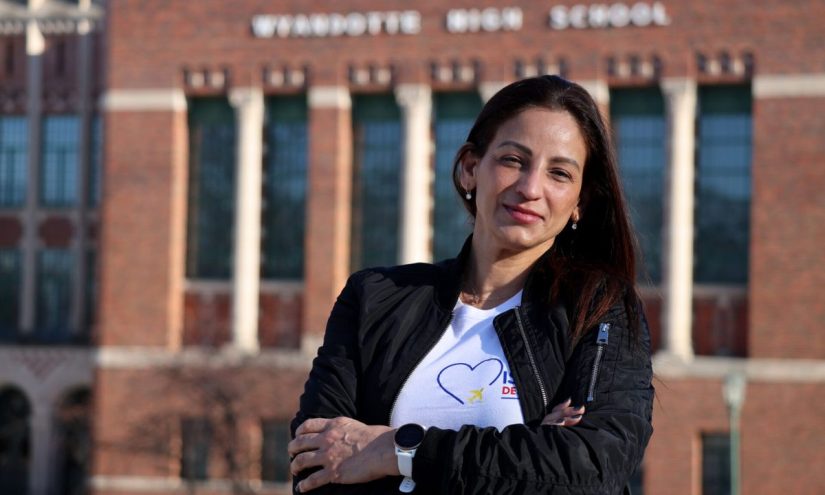
    KANSAS CITY, Kan. — Marialexa Sanoja publicly quit her job as a Kansas City, Kansas, Public Schools police officer over concerns with the district’s handling of student safety needs and founded a nonprofit to help kids escape the challenges in Wyandotte County.

    In the three-and-a-half months Sanoja was stationed at Wyandotte High School, the district’s largest school with 1900 students, Sanoja said she filed 140 incident reports and that in most instances the district failed to take action. The district, through its YouTube channel, disputed her figures and asserted it handled concerns responsibly.

    “It didn’t take long for me to find out that the students were not in the best interest of anybody,” Sanoja said. “When the police officer becomes a safe space for students, there is something wrong with that.”

    After her resignation in December 2023, Sanoja founded Missión Despegue, translated to “mission takeoff,” a nonprofit that helps parents and students document their grievances with the school district to hold the district accountable for its handling of safety issues.

    Sanoja saw the district’s response to a sexual assault case and its communication as inadequate, and experts echo her concerns. Now, Sanoja works with current and former students to get their GED certificates, drivers licenses, mental health care and prevent substance abuse.

    Sanoja’s concerns

    Sanoja said much of the Latino community, which makes up 72% of Wyandotte High School, is afraid to complain or make a scene because many of them are new to the country. She aims to empower them, and help them achieve the “American dream.”

    One reason Sanoja resigned — and a former student dropped out — was because of the district’s response to the former student’s experience of being sexually assaulted at school. Kansas Reflector doesn’t identify minors who have been sexually assaulted.

    According to an incident report filed by Sanoja, the former student was a freshman and alone in the Wyandotte High School stairwell when a group of older boys groped her and made sexual remarks. She began recording the boys with her phone, which prompted them to leave, the report said.

    Sanoja was off duty that day. The former student asked the on-duty officer to file a report, which Sanoja says she never saw. The day after, Sanoja and the former student said they filed an incident, criminal, and Title IX report. The former student wanted to press charges.

    “After that, I just stopped going to school, because I didn’t feel safe,” the former student said in an interview with Kansas Reflector.

    Sanoja said security camera footage and the former student’s video showed the boys’ faces. The former student said the district told her that because the boys never returned to school, it could not suspend them. However, the former student said she continued to see the boys on campus.

    “Ultimately, the district didn’t do anything about it. We were asking, at least, for suspension. That didn’t happen,” Sanoja said.

    A spokesperson from the district told Kansas Reflector it was unable to provide comment on the former student’s case, or the district’s responsibility to handle reports of sexual assault.

    Sanoja publicly resigned with a letter that accused the district of failing to communicate with parents. She wrote that she was worried about instances where students brought guns to school property and all parents weren’t notified.

    In a response video to Sanoja’s resignation, district superintendent Anna Stubblefield said “those incidents are not always relayed to all families. Not because we’re hiding anything, but because the impact is low and to protect the privacy of our students.”

    A district spokesperson told Kansas Reflector the “administration is required to contact parents regarding student issues — such as absences, drug-related concerns, or fights — in accordance with the Student Code of Conduct.”

    Expert opinions

    Ken Trump, an expert in school safety communications who is not related to the president, said parental anxiety over school safety is rising nationwide.

    “It’s very easy to get caught up if you’ve got a couple thousand kids in a school, dealing with incidents and other things. But you need to take a tactical pause in this, and go back to looking at the communications,” Trump said. “You can’t go back to the old-school mindset of if someone finds out about it we’ll talk. That doesn’t work anymore.”

    Sanoja said that after a student overdosed at school and she contacted the parents directly, the high school principal told Sanoja to route all communication with parents through administration.

    Sanoja said that she continues to receive videos of physical fights in the schools, totaling in the hundreds, since her resignation.

    Michael Dorn, a school safety expert who assists schools after major acts of violence, said  Sanoja’s allegations were concerning. He said he would have responded to her concerns differently than the school district did.

    “I was a school district police chief for 10 years,” Dorn said. “If an officer in my department wrote that kind of resignation letter, I would request a state police investigation. I would ask for a polygraph test, and I would ask that she be polygraphed. I wouldn’t do anything like that, but if someone alleged that I did and I didn’t do it, I would request that to clear my name.”

    Sanoja worked as a police officer in Lenexa before transitioning to the school district and said Wyandotte High School presented the most significant challenges she’s seen. She believes the problems are “within the culture” of the school.

    “Everybody’s tired of the way the district is handling things,” Sanoja said. “They’ve been failing these kids for years.”

    Fixing root causes

    Through her nonprofit, Sanoja helps students who leave the district, like the former student who was sexually assaulted, earn their GED certificate.

    When they’re out of the school environment, Sanoja said, they thrive.

    Sanoja said most of the families she works with are immigrants, and the parents do not speak English.

    “We face the daunting task of ending the stigma, shame and judgement that come with our culture,” Sanoja said.

    Missión Despegue seeks to fix the root causes of the problems seen in school — like substance abuse, violence, bullying, and mental health issues. Sanoja said she sees these problems reflected in things like the graduation rate of the district. For the 2023-2024 school year it was 78.1%, which is 11.4 percentage points lower than the state average.

    Through donations, Sanoja covers the cost of mental health appointments, DMV license and GED class registrations, and laptop purchases for students pursuing their GED certificate without one. In February, she began converting first-time offenders’ court fees, in hopes of reducing recidivism.

    With the help of more than 100 volunteers, Sanoja has hosted events where she provides Narcan and educates parents about the dangers of substance abuse. She also guides volunteers to further training, like drug prevention and compassion fatigue workshops.

    Sanoja said she doesn’t get paid for her work with Missión Despegue. She said she needs an assistant, because she has “a long list of people that need help.”

    “I see something in them. I know they’re going to be successful,” Sanoja said. “I want that opportunity for every kid I have.”

    Kansas Reflector is part of States Newsroom, a nonprofit news network supported by grants and a coalition of donors as a 501c(3) public charity. Kansas Reflector maintains editorial independence. Contact Editor Sherman Smith for questions: [email protected].


    Get stories like these delivered straight to your inbox. Sign up for The 74 Newsletter

    Source link

  • 5 Years After Reopening, South Carolina Agriculture School is Beyond Capacity – The 74

    5 Years After Reopening, South Carolina Agriculture School is Beyond Capacity – The 74


    Get stories like this delivered straight to your inbox. Sign up for The 74 Newsletter

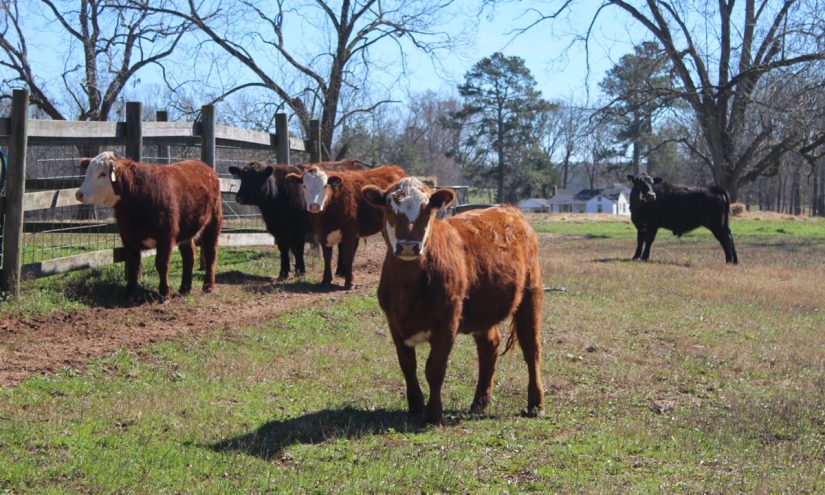
    McCORMICK — Cows compose the greeting committee at the Governor’s School for Agriculture, flocking to the fence just past the entrance to watch visitors drive past.

    Established in 1797 as a farming school for poor and orphaned children, the campus known for centuries as John de la Howe has changed missions several times. The latest turned it into the nation’s only residential public high school providing an agricultural education.

    Pastures of horses, sheep and cows dot the 1,310-acre property tucked off a rural road in McCormick County inside a national forest.

    The campus’ dozen residential halls are full, and for the first time since the new mission began, officials are having to turn away prospective students because of a lack of space, said Tim Keown, the school’s president.

    Cows graze in a pasture behind a staff house at the Governor’s School for Agriculture on Feb. 21. (Photo by Skylar Laird/SC Daily Gazette)

    Two more halls sit mostly empty as they await decorations from the school’s alumni committee and, next year, a new batch of students to fill them.

    After a rocky start, including findings of ethical and financial mismanagement during the school’s first year after the change, things are looking up, Keown said.

    Last year, the school regained the accreditation it lost in 2016. And for the first time in 25 years, auditors last year found no problems, a rare accomplishment for a state agency, he said.

    Driving through the expansive campus, where classrooms abut greenhouses and open pastures, Keown described a vision for the school’s future, including continuing to expand its capacity and offering more classes to cover the full spectrum of agriculture.

    His ideas have gotten support from the House of Representatives’ budget writers.

    That chamber’s state spending plan for 2025-26, passed last week, includes $2 million for continuing renovations and $4 million for a new meat processing plant.

    “We don’t expect (students) to all go back and be full-time farmers,” Keown said. “But there are hundreds of thousands of jobs across South Carolina that need young people to enter those jobs.”

    Becoming a school for agriculture

    The mission adopted in 2020 is a return to the school’s roots.

    Dr. John de la Howe, a French doctor who immigrated to Charleston in 1764, wrote in his will that he wanted the farm he had purchased to be an agricultural seminary for “12 poor boys and 12 poor girls,” giving preference to orphans, Keown said.

    John de la Howe’s grave at the Governor’s School for Agriculture. (Photo by Skylar Laird/SC Daily Gazette)

    For years, that was what the school was.

    During World War I, John de la Howe became a state agency and a home for orphaned children, which it remained until the 1980s. Then, as orphanages waned in use, its purpose adjusted again to become a public residential school for sixth- through 10-graders with serious behavior problems.

    That, too, fell out of favor over the years, as more counties established programs that kept troubled teens closer to home.

    Attendance dropped, and costs per students skyrocketed.

    In 2003, then-Gov. Mark Sanford recommended, without success, closing the school and sending its students to a military-like public school in West Columbia for at-risk teens. In 2014, Gov. Nikki Haley recommended putting the Department of Juvenile Justice in charge.

    In March 2016, with the school’s accreditation on probation, House budget writers recommended temporarily transferring oversight to Clemson University.

    Weeks later, the state Department of Education made a final decision to yank the school’s accreditation. Deficiencies cited by inspectors included classes taught by uncertified teachers, the school not meeting the needs of students with disabilities, and the lack of online access.

    That forced the Legislature to make a decision.

    Legislators eventually settled on creating a third residential high school offering a specific education. The agriculture school joined existing governor’s schools for the arts and for science and math.

    The year the school was supposed to open its doors to its first new class of students, the COVID-19 pandemic began. Distancing restrictions meant students could no longer share rooms, so the school halved its capacity and began its first year with 33 students.

    The next year, the school’s population doubled.

    At the start of the 2024 school year, 81 students were enrolled, and another 81 had graduated. Once renovations in three dorms are complete, the capacity will increase to 124, plus day students, Keown said.

    “It’s been like putting together a huge puzzle with many missing pieces over the last couple of years,” Keown said. “But we’re finally finding all those pieces, and it’s all making more sense.”

    The new mission

    Blake Arias knew he wanted to study plants. Other than that, he had little interest in agriculture when he applied for the governor’s school.

    “If you looked at my application, it was very obvious that I didn’t have a background and that I didn’t know much,” Arias said.

    When he first arrived at the school nearly three hours from his home in Summerton, he wasn’t particularly interested in handling animals. And he really, really didn’t want to learn to weld.

    Three years later, Arias, who graduates this spring, still focuses primarily on plants.

    However, he also spends hours every day after class helping a rabbit, Chunky, lose some weight before he takes her to shows. He’s working on earning a beekeeping certification. And he even learned how to weld.

    A sheep looks over a fence at the Governor’s School for Agriculture on Feb. 21. (Photo by Skylar Laird/SC Daily Gazette)

    “Am I the best welder? Absolutely not,” Arias said. “But I really enjoyed it, and it taught me something new because they gave me the opportunity.”

    Arias is part of about half of the school’s population that comes in with little background in agriculture, Keown said. Applicants must have at least a 2.7 GPA. The goal is to take all kinds of students, whether they grew up on a farm or in a city and show them all sorts of opportunities in agriculture.

    That’s not limited to farming.

    The school offers four designated pathways: agricultural mechanics, horticulture, plant and animal systems, and environmental and natural resources. Students choose a focus, but they’re introduced to a sampler platter of what’s out there, Keown said.

    “It really shows you all the possibilities that there are in each field,” said Emily White, a senior from McCormick.

    Day to day

    The days typically begin long before students report to the cafeteria at 7:45 a.m.

    Like on any farm, horses, pigs and rabbits need feeding and cleaning, and plants need tending.

    Students take a blend of core classes, such as English, math and social studies, and classes focused on agriculture, Keown said.

    Even the core classes, which are all honors-level courses, typically use agriculture as a touch point for students, said Lyle Fulmer, a recent graduate.

    Math problems, for instance, might use real-life examples of balancing a budget on a farm. For students interested in agriculture, that adds excitement to what might usually be their hum-drum classes, he said.

    “Even if it was frustrating and I didn’t know how to solve the problem, I would work through it and I would know that this was something that I very well could be doing someday,” said Fulmer, who is now a freshman at Clemson University.

    Once classes are over, students have the rest of the afternoon to do as they please.

    The inside of a residence hall at the Governor’s School for Agriculture on Feb. 21. (Photo by Skylar Laird/SC Daily Gazette)

    White said she typically goes to the pig barn to clean, feed and work with Hank the Tank, a pig she’s planning to show.

    Other students might practice rodeo riding or clay shooting, two of the sports the school offers. Some gather at the saw mill to help process trees salvaged when Tropical Storm Helene swept through campus last September.

    By 6:15 p.m., students are expected to return to their residence halls or other communal areas for an hour of study time. Like college students, they have the run of their residence halls under the watchful eye of a residential advisor.

    Along with accumulating credits to get ahead in college courses, the freedom Fulmer had as a high school student helped prepare him for living in the dorms and all the challenges that accompany that. He already knew how to keep his space tidy and handle disagreements with roommates, which many incoming freshmen don’t, he said.

    “It really did prepare me a lot for college,” Fulmer said.

    What the future holds

    Standing on the front lawn of the president’s mansion, glimpses of the dining hall visible across an expansive open lawn, Keown described his vision of the school’s future.

    In the next couple of years, the school will start offering classes in culinary arts and hospitality management, which will help students who want to go into the growing industry of agritourism that creates attractions out of farms.

    “Our ag kids learn to grow (the food), our culinary students prepare it, our tourism hospitality students manage the banquets,” Keown said of his vision.

    Also in the near future is the meat processing plant, which Keown hopes to have finished in the next three years. That will give students skills to land high-paying jobs straight out of high school and fill a gap in the agricultural industry, Keown said.

    Timothy Keown, president of the Governor’s School for Agriculture, stands in front of the president’s house on Feb. 21, 2025. (Photo by Skylar Laird/SC Daily Gazette)

    A decade from now, Keown hopes to see 300 students roaming the grounds. He also wants them to grow about half of what they eat, compared with 20% now.

    In Keown’s mind, the school presents a bright spot for the future of agriculture. While the number of farmers under the age of 35 has grown slightly in recent years, the average age of farmers is 58, according to the U.S Department of Agriculture.

    Photos of recent alumni hung from flagpoles on campus. Driving under them, Keown named each graduate and where they went to school. Many go to Clemson, though some went to schools in other states.

    Most are still pursuing degrees in agriculture.

    “They are making us really proud,” Keown said.

    SC Daily Gazette is part of States Newsroom, a nonprofit news network supported by grants and a coalition of donors as a 501c(3) public charity. SC Daily Gazette maintains editorial independence. Contact Editor Seanna Adcox for questions: [email protected].


    Get stories like these delivered straight to your inbox. Sign up for The 74 Newsletter

    Source link

  • Texas Bill Would Limit Uncertified Teachers in Schools – The 74

    Texas Bill Would Limit Uncertified Teachers in Schools – The 74


    Get stories like this delivered straight to your inbox. Sign up for The 74 Newsletter

    Lawmakers want to turn the tide on the growing number of unprepared and uncertified teachers by restricting who can lead Texas classrooms. But school leaders worry those limits will leave them with fewer options to refill their teacher ranks.

    Tucked inside the Texas House’s $7.6 billion school finance package is a provision that would ban uncertified teachers from instructing core classes in public schools. House Bill 2 gives districts until fall 2026 to certify their K-5 math and reading teachers and until fall 2027 to certify teachers in other academic classes.

    Texas would help uncertified teachers pay for the cost of getting credentialed. Under HB 2, those who participate in an in-school training and mentoring program would receive a one-time $10,000 payment and those who go through a traditional university or alternative certification program would get $3,000. Special education and emergent bilingual teachers would get their certification fees waived. Educator training experts say it could be the biggest financial investment Texas made in teacher preparation. Rep. Brad Buckley, the Salado Republican who authored the bill, has signaled the House Public Education Committee will vote on HB 2 on Tuesday.

    District leaders, once reluctant to hire uncertified teachers, now rely on them often to respond to the state’s growing teacher shortage. And while they agree with the spirit of the legislation, some worry the bill would ask too much too soon of districts and doesn’t offer a meaningful solution to replace uncertified teachers who leave the profession.

    “What’s going to happen when we’re no longer able to hire uncertified teachers? Class sizes have to go up, programs have to disappear…. We won’t have a choice,” said David Vroonland, the former superintendent of the Mesquite school district near Dallas and the Frenship school district near Lubbock. “There will be negative consequences if we don’t put in place serious recruitment efforts.”

    A floodgate of uncertified teachers

    Nowadays, superintendents often go to job fairs to recruit teachers and come out empty-handed. There are not as many Texans who want to be teachers as there used to be.

    The salary in Texas is about $9,000 less than the national average, so people choose better-paying careers. Teachers say they are overworked, sometimes navigating unwieldy class sizes and using weekends to catch up on grading.

    Heath Morrison started to see the pool of teacher applicants shrink years ago when he was at the helm of Montgomery ISD. Many teachers left the job during the COVID-19 pandemic, which accelerated the problem.

    “This teacher shortage is getting more and more pronounced,” said Morrison, who is now the CEO of Teachers of Tomorrow, a popular alternative teacher certification program. “The reality of most school districts across the country is you’re not making a whole lot more money 10 years into your job than you were when you first entered … And so that becomes a deterrent.”

    As the pool of certified teachers shrunk, districts found a stopgap solution: bringing on uncertified teachers. Uncertified teachers accounted for roughly 38% of newly hired instructors last year, with many concentrated in rural districts.

    The Texas Legislature facilitated the flood of uncertified teachers. A 2015 law lets public schools get exemptions from requirements like teacher certification, school start dates and class sizes — the same exemptions allowed for open enrollment charter schools.

    Usually, to teach in Texas classrooms, candidates must obtain a certification by earning a bachelor’s degree from an accredited college or university, completing an educator preparation program and passing teacher certification exams.

    Teacher preparation experts say certifications give teachers the tools to lead a high quality classroom. To pass certification tests, teaching candidates learn how to plan for lessons and manage discipline in a classroom.

    But the 2015 law allowed districts to hire uncertified teachers by presenting a so-called “district of innovation plan” to show they were struggling to meet credential requirements because of a teacher shortage. By 2018, more than 600 rural and urban districts had gotten teacher certification exemptions.

    “Now, what we’ve seen is everyone can demonstrate a shortage,” said Jacob Kirksey, a researcher at Texas Tech University. “Almost every district in Texas is a district of innovation. That is what has allowed for the influx of uncertified teachers. Everybody is getting that waiver for certification requirements.”

    This session, House lawmakers are steadfast on undoing the loophole they created after new research from Kirksey sounded the alarm on the impacts of unprepared teachers on student learning. Students with new uncertified teachers lost about four months of learning in reading and three months in math, his analysis found. They missed class more than students with certified teachers, a signal of disengagement.

    Uncertified teachers are also less likely to stick with the job long-term, disrupting school stability.

    “The state should act urgently on how to address the number of uncertified teachers in classrooms,” said Kate Greer, a policy director at Commit Partnership. The bill “rights a wrong that we’ve had in the state for a long time.”

    The price of getting certified

    Rep. Jeff Leach, a Plano Republican who sits on the House Public Education Committee, said his wife has worked as an uncertified art teacher at Allen ISD. She started a program to get certified this winter and had to pay $5,000 out of pocket.

    That cost may be “not only a hurdle but an impediment for someone who wants to teach and is called and equipped to teach,” Leach said earlier this month during a committee hearing on HB 2.

    House lawmakers are proposing to lower the financial barriers that keep Texans who want to become teachers from getting certified.

    “Quality preparation takes longer, is harder and it’s more expensive. In the past, we’ve given [uncertified candidates] an opportunity just to walk into the classroom,” said Jean Streepey, the chair of the State Board for Educator Certification. “How do we help teachers at the beginning of their journey to choose something that’s longer, harder and more expensive?”

    Streepey sat on the teacher vacancy task force that Gov. Greg Abbott established in 2022 to recommend fixes to retention and recruitment challenges at Texas schools. The task force’s recommendations, such as prioritizing raises and improving training, have fingerprints all over the Texas House’s school finance package.

    Under HB 2, districts would see money flow in when they put uncertified teachers on the path to certification. And those financial rewards would be higher depending on the quality of the certification program.

    Schools with instructors who complete yearlong teacher residencies — which include classroom training and are widely seen as the gold standard for preparing teacher candidates — would receive bigger financial rewards than those with teachers who finish traditional university or alternative certification programs.

    Even with the financial help, lawmakers are making a tall order. In two years, the more than 35,000 uncertified teachers in the state would have to get their credential or be replaced with new, certified teachers.

    “The shortages have grown to be so great that I think none of us have a really firm handle on the measures that it’s going to take to turn things around.” said Michael Marder, the executive director of UTeach, a UT-Austin teacher preparatory program. “There is financial support in HB 2 to try to move us back towards the previous situation. However, I just don’t know whether the amounts that are laid out there are sufficient.”

    Restrictions like “handcuffs”

    Only one in five uncertified teachers from 2017 to 2020 went on to get a credential within their first three years of teaching. Texas can expect a jump in uncertified teachers going through teacher preparatory programs because of the financial resources and pressure on schools through HB 2, Marder said.

    But for every teacher who does not get credentialed, school leaders will have to go out and find new teachers. And they will have to look from a smaller pool.

    The restrictions on uncertified teachers “handcuffs us,”said Gilbert Trevino, the superintendent at Floydada Collegiate ISD, which sits in a rural farming town in West Texas. In recent years, recruiters with his district have gone out to job fairs and hired uncertified teachers with a college degree and field experience in the subjects they want to teach in.

    Rural schools across the state have acutely experienced the challenges of the teacher shortage — and have leaned on uncertified teachers more heavily than their urban peers.

    “We have to recruit locally and grow our own or hire people who have connections or roots in the community,” Trevino said. “If we hire a teacher straight out of Texas Tech University, we may have them for a year. … And then they may get on at Lubbock ISD or Plainview ISD, where there’s more of a social life.”

    Floydada Collegiate ISD recruits local high school students who are working toward their associate’s degree through what is known as a Grown Your Own Teacher program. But Trevino says HB 2 does not give him the time to use this program to replace uncertified teachers. From recruitment to graduation, it takes at least three years before students can lead a classroom on their own, he said.

    School leaders fear if they can’t fill all their vacancies, they’ll be pushed to increase class sizes or ask their teachers to prepare lessons for multiple subjects.

    “Our smaller districts are already doing that, where teachers have multiple preps,” Trevino said. “Things are already hard on our teachers. So if you add more to their plate, how likely are they to remain in the profession or remain in this district?”

    At Wylie ISD in Taylor County, it’s been difficult to find teachers to keep up with student growth. Uncertified teachers in recent years have made up a large number of teacher applicants, according to Cameron Wiley, a school board trustee.

    Wiley said restrictions on uncertified teachers is a “good end goal” but would compound the district’s struggles.

    “It limits the pot of people that’s already small to a smaller pot. That’s just going to make it more difficult to recruit,” Wiley said. “And if we have a hard time finding people to come in, or we’re not allowed to hire certain people to take some of that pressure off, those class sizes are just going to get bigger.”

    Learning suffers when class sizes get too big because students are not able to get the attention they need.

    “This bill, it’s just another obstacle that we as districts are having to maneuver around and hurl over,” Wiley said. “We’re not addressing the root cause [recruitment]. We’re just putting a Band-Aid on it right now.”

    This article originally appeared in The Texas Tribune at https://www.texastribune.org/2025/03/15/texas-school-funding-uncertified-teachers-shortage/.

    The Texas Tribune is a member-supported, nonpartisan newsroom informing and engaging Texans on state politics and policy. Learn more at texastribune.org.


    Get stories like these delivered straight to your inbox. Sign up for The 74 Newsletter

    Source link

  • In Bid to Close Education Department, President Trump Looks to Rehouse Student Loans, Special Education Programs – The 74

    In Bid to Close Education Department, President Trump Looks to Rehouse Student Loans, Special Education Programs – The 74

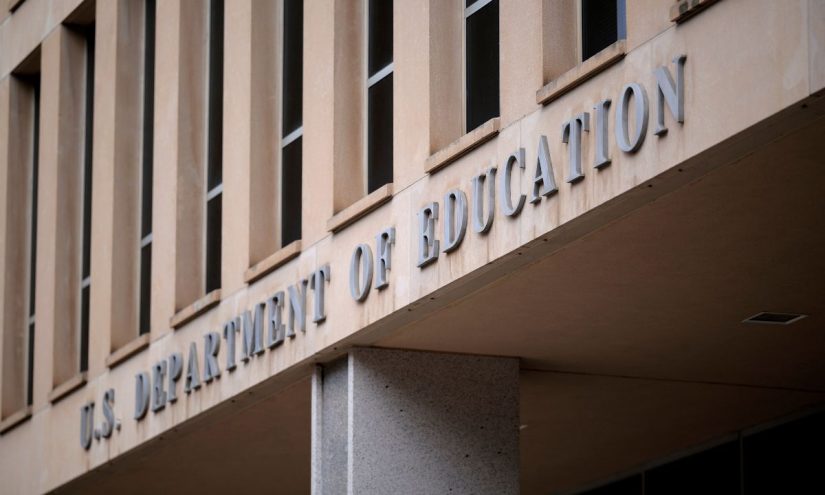
    President Donald Trump said Friday that the U.S. Small Business Administration would handle the student loan portfolio for the slated-for-elimination Education Department, and that the Department of Health and Human Services would handle special education services and nutrition programs.

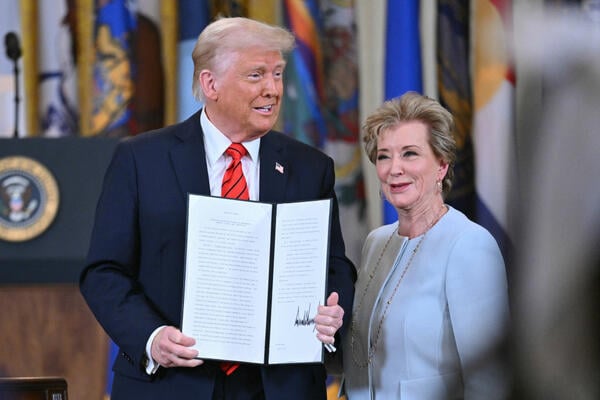
    The announcement — which raises myriad questions over the logistics to carry out these transfers of authority — came a day after Trump signed a sweeping executive order that directs Education Secretary Linda McMahon to “take all necessary steps to facilitate the closure” of the department to the extent she is permitted to by law.

    “I do want to say that I’ve decided that the SBA, the Small Business Administration, headed by Kelly Loeffler — terrific person — will handle all of the student loan portfolio,” Trump said Friday morning.

    The White House did not provide advance notice of the announcement, which Trump made at the opening of an Oval Office appearance with Defense Secretary Pete Hegseth.

    The Education Department manages student loans for millions of Americans, with a portfolio of more than $1.6 trillion, according to the White House.

    In his executive order, Trump said the federal student aid program is “roughly the size of one of the Nation’s largest banks, Wells Fargo,” adding that “although Wells Fargo has more than 200,000 employees, the Department of Education has fewer than 1,500 in its Office of Federal Student Aid.”

    ‘Everything else’ to HHS

    Meanwhile, Trump also said that the Department of Health and Human Services “will be handling special needs and all of the nutrition programs and everything else.”

    It is unclear what nutrition programs Trump was referencing, as the U.S. Department of Agriculture manages school meal and other major nutrition programs.

    One of the Education Department’s core functions includes supporting students with special needs. The department is also tasked with carrying out the federal guarantee of a free public education for children with disabilities Congress approved in the Individuals with Disabilities Education Act, or IDEA.

    Trump added that the transfers will “work out very well.”

    “Those two elements will be taken out of the Department of Education,” he said Friday. “And then all we have to do is get the students to get guidance from the people that love them and cherish them, including their parents, by the way, who will be totally involved in their education, along with the boards and the governors and the states.”

    Trump’s Thursday order also directs McMahon to “return authority over education to the States and local communities while ensuring the effective and uninterrupted delivery of services, programs, and benefits on which Americans rely.”

    SBA, HHS heads welcome extra programs

    Asked for clarification on the announcement, a White House spokesperson on Friday referred States Newsroom to comments from White House press secretary Karoline Leavitt and heads of the Small Business Administration and Health and Human Services Department.

    Leavitt noted the move was consistent with Trump’s promise to return education policy decisions to states.

    “President Trump is doing everything within his executive authority to dismantle the Department of Education and return education back to the states while safeguarding critical functions for students and families such as student loans, special needs programs, and nutrition programs,” Leavitt said. “The President has always said Congress has a role to play in this effort, and we expect them to help the President deliver.”

    Loeffler and HHS Secretary Robert F. Kennedy Jr. said their agencies were prepared to take on the Education Department programs.

    “As the government’s largest guarantor of business loans, the SBA stands ready to deploy its resources and expertise on behalf of America’s taxpayers and students,” Loeffler said.

    Kennedy, on the social media platform X, said his department was “fully prepared to take on the responsibility of supporting individuals with special needs and overseeing nutrition programs that were run by @usedgov.”

    The Education Department directed States Newsroom to McMahon’s remarks on Fox News on Friday, where she said the department was discussing with other federal agencies where its programs may end up, noting she had a “good conversation” with Loeffler and that the two are “going to work on the strategic plan together.” 

    Maine Morning Star is part of States Newsroom, a nonprofit news network supported by grants and a coalition of donors as a 501c(3) public charity. Maine Morning Star maintains editorial independence. Contact Editor Lauren McCauley for questions: [email protected].


    Get stories like these delivered straight to your inbox. Sign up for The 74 Newsletter

    Source link

  • Small Business Administration to Take Over Student Loans

    Small Business Administration to Take Over Student Loans

    A day after White House officials said the Education Department would administer the student loan program, President Donald Trump announced that the Small Business Administration would be taking over the $1.7 trillion portfolio.

    He told White House reporters that the move would happen “immediately,” though he didn’t say how that process would work. Currently, federal law requires the Education Department to manage student loans, so the president doesn’t have the authority for the move, several experts and advocates said Friday.

    Neither the White House nor the Small Business Administration responded to requests for more information or details about the plan.

    In response to questions about how moving loans to SBA would work, the Education Department referred Inside Higher Ed to an interview that Education Secretary Linda McMahon did Friday with Fox News. McMahon said she’s working with the SBA on a strategic plan.

    The announcement follows Trump’s executive order, signed Thursday, directing McMahon to close her department “to the maximum extent of the law.” McMahon and others have said a smaller version of the department would focus on core functions, which many experts presumed to include the student loan program. (Trump also said Friday that the Department of Health and Human Services would take over programs that support students with disabilities.)

    Kelly Loeffler, who leads the SBA, wrote on social media that her agency “stands ready to take the lead on restoring accountability and integrity to America’s student loan portfolio.” Whether the department has the capacity to take on the program is an open question; Loeffler is planning to cut 43 percent of the staff, Politico and other news outlets have reported. The SBA runs several programs to support small businesses, including providing loans and helping with disaster recovery.

    The Education Department issues about $100 billion in student loans each year and disburses $30 billion in Pell Grants. That funding is crucial to students who rely on the government to help pay for college.

    But borrowers have struggled over the years to navigate the cumbersome student loan system and often have faced difficulty in repaying their loans. Meanwhile, the federal government’s growing loan portfolio has become a key issue for lawmakers on both sides of the political aisle. Former president Joe Biden’s fix was in part to make student loan forgiveness more accessible and make loan payments more affordable.

    Trump said Friday that the loan system “will be serviced much better than it has in the past,” adding, “it’s been a mess.”

    Agency Blindsided

    It wasn’t clear Friday afternoon whether SBA would also take over the Pell Grant program and the Free Application for Federal Student Aid—a form that millions of students rely on to access federal, student and institutional aid. Currently, the Office of Federal Student Aid, which is part of the Education Department, administers those programs. That office was hit hard by recent mass layoffs at the department, and experts have questioned whether it will be able to fulfill its many responsibilities, which also include overseeing colleges and rooting out fraud in the federal student aid system.

    Trump’s executive order pointed out that the Education Department manages a portfolio the size of Wells Fargo but with significantly fewer employees. “The Department of Education is not a bank, and it must return bank functions to an entity equipped to serve America’s students,” the order said.

    An official high up at Federal Student Aid said Friday that the office was blindsided by the announcement. Just a day before, the official said, the plan was to move the loans to the Treasury Department. Agency officials have yet to receive any plans or communication about handing over the reins to SBA or what that would entail, the official said.

    ‘Clear Violation’

    The federal statute that created FSA specifically gives that office authority to administer student financial assistance programs. Additionally, laws dictating how federal funding is allocated explicitly send money to the Education Department for the student aid programs. A former department staffer told Inside Higher Ed that the administration is “clearly circumventing the spirit and intent of the law if you were to move to functions.”

    Sen. Patty Murray, a Democrat from Washington State, agreed, writing on social media that the announcement “is a clear violation of education [and] appropriations law.”

    Beth Maglione, interim president of the National Association of Student Financial Aid Administrators, added in a statement that only Congress can move the student loan portfolio to a different agency; if the legislative branch agreed, doing so would take time.

    “The administration would first need to articulate a definitive strategy outlining how the work of administering student aid programs would be allocated within the SBA, determine the necessary staffing and resources, and build the requisite infrastructure to facilitate the transition of these programs to another federal agency,” she said. “In the absence of any comprehensive plan, a serious concern remains: how will this restructuring be executed without disruption to students and institutions?”

    Not a ‘Crazy Idea’

    Some conservative policy experts who support shutting down the department cheered the move. Lindsey Burke, director for the Center for Education Policy at the Heritage Foundation, wrote on social media that “without student loans at ED, there will be little left at the agency. Just a few programs—certainly not enough to justify a cabinet-level agency.”

    Beth Akers, a senior fellow at the American Enterprise Institute, like the Heritage Foundation a conservative think tank, acknowledged in an email to Inside Higher Ed that there are a lot of open questions about how the SBA move would work. But she said the announcement shows that the Trump administration understands that the recent staffing cuts “will likely make it too difficult to keep these programs properly administered otherwise,” she wrote.

    Akers noted that since SBA currently manages its own loans, “it isn’t a crazy idea that they could pull this off.”

    “Frankly, the department has handled student loan administration poorly, so the bar is pretty low on what would constitute an improvement,” she added. “I expect that the existing student loan infrastructure (and remaining staff) will likely move over to SBA, and there won’t be immediate changes in how these programs are run. That’s my hope. Because if things change too quickly, I expect that students will see disruptions that could affect their enrollments and personal finances.”

    Liam Knox contributed to this report.

    Source link

  • Columbia Agrees to Trump’s Demands

    Columbia Agrees to Trump’s Demands

    Acquiescing to demands from the Trump administration to address alleged antisemitism on campus, Columbia University has agreed to overhaul disciplinary processes, ban masks at protests, add 36 officers with the authority to make arrests and appoint a new senior vice provost to oversee academic programs focused on the Middle East, among other changes.

    The decision, announced Friday afternoon, is the latest move in Columbia’s ongoing face-off with the federal government over last year’s pro-Palestinian protests, which spawned the nationwide encampment movement. Columbia yielded despite concerns about the legality of the demands, as well as of an associated effort by the Trump administration to strip the university of $400 million in research funding.

    “We have worked hard to address the legitimate concerns raised both from within and without our Columbia community, including by our regulators, with respect to the discrimination, harassment, and antisemitic acts our Jewish community has faced in the wake of October 7, 2023,” university officials said in a Friday statement.

    The acknowledgment is a rare admission of antisemitism on campus, despite the fact that a Title VI investigation by the Department of Education has not yet been completed.

    Columbia announced additional efforts that the Trump administration didn’t request, including advancing the university’s Tel Aviv Center (though initial details are sparse) and creating a K-12 curriculum “focused on topics such as how to have difficult conversations, create classrooms that foster open inquiry, dialogue across difference and topics related to antisemitism.” That curriculum will be free for schools.

    Columbia did not place the Middle East, South Asian and African Studies Department into “academic receivership” for a minimum of five years, as the Trump administration demanded, but the parties appeared to reach a compromise. A new senior vice provost will review a broader range of programs, expanding beyond the department targeted by Trump to include “the Center for Palestine Studies; the Institute for Israel and Jewish Studies; Middle Eastern, South Asian, and African Studies; the Middle East Institute; the Tel Aviv and Amman global hubs; [and] the School of International and Public Affairs Middle East Policy major,” according to the university.

    The new senior provost, who has not yet been named, will review programs “to ensure the educational offerings are comprehensive and balanced” and evaluate “all aspects of leadership and curriculum” among other changes, which may include academic restructuring.

    The full list of changes can be found here.

    Interim president Katrina Armstrong announced the move in a statement titled “Sharing Progress on Our Priorities,” calling it “a privilege to share our progress and plans” after a difficult year of protests and scrutiny.

    “At all times, we are guided by our values, putting academic freedom, free expression, open inquiry, and respect for all at the fore of every decision we make,” Armstrong wrote in the message posted Friday afternoon, which she signed, “Standing together for Columbia.”

    Critics, however, have argued that yielding to the Trump administration undermines academic freedom and urged Columbia to fight the demands.

    Legal scholars at Columbia and in conservative circles have noted that the Trump administration’s demands were likely unlawful. However, it seemed the university had no desire for a protracted legal fight.

    After the news broke—first reported by The Wall Street Journal—many critics panned the move.

    In a Friday press call, American Association of University Professors President Todd Wolfson blasted Columbia for failing to stand up to Trump.

    “This is not the outcome we wanted to see we wanted to see Columbia stand up for their rights for academic freedom and freedom of speech on their campus and we did not expect for them to not only capitulate to the demands of the federal government but actually go beyond the initial demands as far as we can tell,” Wolfson said.

    “This is an unprecedented intervention into academic freedom—never before in Columbia’s 250+ years has the federal government tried to exert control over a department before. And Trump et al. are only getting started,” Columbia history professor Karl Jacoby wrote on Bluesky.

    Outside experts pointed to the likelihood that more universities will give in to Trump’s threats now that Columbia has yielded.

    “Trump gets exactly what he wants from Columbia. Next up: most of the big-name institutions in American higher education. This is a turning point in the history of our industry,” Robert Kelchen, a professor of education and head of the Department of Educational Leadership and Policy Studies at the University of Tennessee at Knoxville, wrote in a Bluesky post.

    (Ryan Quinn contributed to this report.)

    Source link

  • Humans in an AI world

    Humans in an AI world

    Key points:

    Like it or not, AI is evolving, and it is cementing its place in education. And the CoSN 2025 Conference is preparing attendees to meet the AI challenge head-on, focusing this year’s conference theme on human leadership in an AI world.

    Register here to attend this year’s conference in Seattle.

    Ken Shelton, an independent consultant, speaker, advisor, and strategist, opens the conference on Monday, March 31 with his keynote, Reimagining Learning with AI: A Path to Empowerment. Shelton will explore the promises and perils of leveraging AI in education and will delve into strategies for maximizing AI’s benefits while addressing its risks, ensuring that AI becomes a tool for true empowerment in education.

    On Tuesday, April 1, panelists Lindsay E. Jones, CEO of CAST, Lindsay Kruse, CEO of All Means All, and Rachell Johnson, director of assistant technology at SCATP, will participate in a general session, Leadership, Not Bystanders, moderated by Sarah Radcliffe, director of Future Ready Learning in the School District of Altoona. Panelists will discuss how can to ensure that no student is overlooked as AI continues to reshape education.

    The closing keynote on Wednesday, April 2, Beyond the Algorithm–Building Trust, Access, and Purpose in AI-Enhanced Education, features Richard Culatta of ISTE + ASCD, Victor Lee of the Graduate School of Education at Stanford University, Pati Ruiz, EdD, of Digital Promise, and Kris J. Hagel of the Peninsula School District. The discussion will focus on ensuring AI enhances, rather than diminishes, human potential in education.

    Workshops include:

    • Student data privacy
    • Generative AI implementation
    • Education leadership in the digital age
    • AI and leadership
    • Organizational change management for digital transformation

    Spotlight sessions cover cybersecurity and physical security, tackling cell phones in classrooms, top edtech trends in 2025, edtech and AI quality indicators, and FERPA.

    Wondering what the CoSN conference has for you?

    Chief Technology Officers 

    • Learn proven strategies for getting the dollars you need to build the infrastructure for today and tomorrow
    • Connect with your peers and build your community of practice
    • Discover how to stretch scarce resources to make the greatest impact on teaching and learning Instructional Technology Directors

    Instructional Technology Directors 

    • Hear about new tools and models for engaging students and personalizing instruction
    • Strategize about how to bridge the gap between the technical and instructional silos
    • Improve your leadership skills and how to scale technology beyond islands of innovation

    Superintendents, District Teams, and Education Service Agencies 

    • Hear from thought leaders on how to create a vision for digital conversion and continuously improving innovative culture in your district
    • Learn tips for breaking down the silos and leveraging technology to enable a 21stcentury school system
    • Share creative and strategic solutions about how to create robust learning environments at school and at home 

    Industry, Government, and Nonprofit Representatives 

    • Understand what is keeping school system technology leaders up at night 
    • Share information on emerging tools and services for learning
    • Learn about better strategies and models for implementing, maintaining, and evaluating technology for learning
    Laura Ascione
    Latest posts by Laura Ascione (see all)

    Source link