Tag: OfS

  • OfS consults on a condition of registration for subcontracted provision

    OfS consults on a condition of registration for subcontracted provision

    Cast your mind back to the end of January this year.

    The Department for Education proposed that all providers delivering a course via a franchise model to more than 300 students should register with the Office for Students.

    The rationale was straightforward. An increasingly large number of students were studying at, effectively, unregulated providers – with the connection to the lead provider achieved via an office in the registry and subject to varying (shall we say) levels of oversight in terms of quality, standards, and – frankly – probity (as we and others have extensively reported).

    That consultation concluded in April, and we have heard very little about these plans since. So when, just before summer recess, the Office for Students announced its own consultation on regulating franchise provision one could be forgiven for assuming that the two approaches would somehow link together.

    Information requirement

    What OfS has suggested addresses the other end of the issue – while DfE wants to register delivery providers, OfS wants to put a new condition of registration (E8) onto institutions with more than 100 students taught via subcontractual arrangements. The condition is not an arduous one – it basically suggests that a lead provider should have adequate governance and oversight of risks concerning subcontractual provision, and be prepared to share key information about these arrangements (a so-called “Comprehensive source of information”, or CSol). In return OfS can demand more information (“monitoring”) and make “directions” for the lead provider to start or stop doing stuff. All this would, consultation pending, come into force in January 2026.

    Now, it would be fair to wonder whether this kind of effective governance in the public interest is already covered in conditions E1 and E2, and the information end of things feels a little bit F3. It is neither unreasonable nor arduous to expect providers to have adequate governance or to publish information – though it is questionable (given the applicability of these existing registration conditions) that this will have any meaningful impact on provider activity.

    In other words, if you don’t have effective arrangements in place regarding subcontractual provision, you are already in breach of condition E2 and will face consequences. Just ask Leeds Trinity University, now £115,000 poorer as a result – and, as the consultation suggests, just the tip of a very large iceberg of provision where OfS has been regulating quietly behind the scenes.

    Rationale

    So why the need for E8? If providers are already required to be transparent around governance arrangements and oversight, why do we need another condition to do the same thing for subcontractual relationships? And if there are additional informational needs, or a need to limit what a particular provider can do, why not do a specific condition of registration relating to subcontractual activity? Or why not wait a few weeks to see whether DfE brings the people doing the actual course delivery into its regulatory ambit? OfS says:

    We consider that implementing a general ongoing condition of registration sends a clearer signal to the sector about our expectations for managing subcontractual partnerships now and in the future. Including our requirements in the regulatory framework in this way provides greater transparency for all providers and for other stakeholders.

    We are, once again, in the realms of vibes-based regulation: the purpose of this requirement is to make it look like OfS is finally doing something to address the problems with subcontractual provision that have been visible to the media since at least 2014.

    In the weeds

    You’ll look in vain within the consultation for any mention of OfS’ own long-promised publication of definitive data on the size and shape of franchised provision – now possibly coming in the last quarter of 2025 (following a very small pilot release last year). Where this gets interesting is the methodology for calculating where or not you are over the threshold (a total of 100 – headcount – students studying via subcontractual arrangements at relevant providers) as calculated by the OfS’ own student number methodology and that would be returned via HESES. While OfS has not yet been confident enough in this data to release it in full, it is somehow content to rely on it for regulation.

    The 100 isn’t an exact cut off: if you generally recruit more than 100 subcontractual students but happen not to one year, you are still in scope – likewise if you make changes to your plans so that you will recruit more than 100 (or are “materially likely” to do so) you are in scope already. Or if OfS decides you are in scope, you are in scope.

    To be clear, this isn’t all such arrangements. The use of the term “relevant” excludes by definition any provision in a state-funded school, FEC, sixth form, designated institution (FHEA 1992 section 28), provider of NHS services, local authority, or police and crimes commissioner. Also exempt in your calculation are students subcontracted to any provider with degree awarding powers authorised by or under an Act of Parliament or a Royal Charter (so all taught or research DAPs, basically).

    Back end

    For clarity, the traditional way in which subcontractual arrangements are regulated is via the registering provider – and these OfS proposals are an attempt to bring some of what should be going on already out a bit further into the open. The existing transparency conditions of registration (F1, which operationalises section 9 of HERA) don’t cover governing (or academic quality and standards) documentation. Indeed, OfS has been historically light on governance transparency – which is why it isn’t always easy to figure out what is going on inside a given provider.

    It’s not so long ago that OfS was lambasting providers for “gold plating” internal quality assurance processes in a long-sustained campaign to flush out those in the sector who cleave to the much older doctrines of the UK Quality Code. You know, nonsense like:

    Providers and their partners agree proportionate arrangements for effective governance to secure the academic standards and enhance the quality of programmes and modules that are delivered in partnership with others. Organisations involved in partnership arrangements agree and communicate the mutual and specific responsibilities in relation to delivering, monitoring, evaluating, assuring and enhancing the learning experience.

    A big chunk of the documentation that OfS is asking for here (in the comprehensive source of information) is basically documentary proof that a provider is compliant with principle 8 of the UK Quality code (including the QAA’s recent guidance), not that you will be thanked by the regulator for pointing this out. Perhaps some of that “gold-plating” was important after all.

    But there is one place where OfS goes further: it asks for a “strategic” rationale for entering into each subcontractual arrangement. We don’t get any guidance on what a suitable rationale would be, just that it must fit with a provider’s vision and strategic intent. Case law here is going to be fascinating.

    Front end

    From a student protection perspective OfS would gain powers to compel those franchising out provision to make changes to the terms of these agreements or the governance or process involved in running them – in extremis the regulator could require that an arrangement ends immediately, students have their fees refunded, and the registering provider steps in to teach out the remaining student. It can also tell you to stop recruiting students onto subcontracted out courses, or limit the number of students that can be recruited.

    This is a large improvement on current arrangements, which have largely been predicated on a provider having an up-to-date student protection plan and being able to deliver on it. The fee refund requirement, in particular, should make anyone that is knowingly partnering with someone offering students a sub-par experience sit up and pay attention.

    It’s not perfect, however: the January DfE proposal on franchising and partnerships was interesting precisely because it broke with established practice on subcontractual arrangements – those delivering teaching would be regulated, whether or not they were awarding the degrees in question. If OfS could intervene directly with a delivery provider, surely that would be quicker than going via the registration provider – the measures in this consultation would then be usable for purely punitive reasons (and, as above, duplicate other conditions of registration)

    OfS has followed the DfE lead in excluding most publicly funded provision from these regulations – it made sense to exclude schools, colleges, and the NHS from active regulation as they are already regulated elsewhere. If the purpose of these OfS proposals is to ensure that the universities that are subcontracting out do so with a level of strategic intent, it seems unlikely that someone is incapable of making a strategically poor or under-resourced commitment to work with an FEC or sixth form: surely these arrangements also deserve a level of scrutiny?

    And – frankly – why shouldn’t providers involved in subcontracting be required to publish information about it (rather than hold it until OfS asks for it)? The current concerns with this style of provision have developed precisely because agreements and fee-splitting agreements can remain obscure – a bit of public accountability for these kinds of decisions would do a lot to separate out the good and valuable subcontractual arrangements from the more questionable partnerships.

    Source link

  • Blurred lines: Has OfS misunderstood freedom of speech?

    Blurred lines: Has OfS misunderstood freedom of speech?

    Academic year 2013-14 was an interesting one.

    I’d started work at UEA’s students’ union – and in the slipstream of national work on harassment and sexual misconduct and “lad culture”, I’d attracted considerable opprobrium from some working in the campus venue because I’d resolved that we wouldn’t be playing Pharrell Williams and Robin Thicke’s “Blurred Lines”.

    This apparent PC-gone-mad crackdown on our DJs’ “freedom of expression” (described as “whining” by Spiked!) was difficult to stomach in an SU that had historically often opposed NUS’ “No Platform” policies – but having seen with my own eyes what happened in the LCR when it came on, I thought I was justified regardless of whether there had been a referendum on the issue.

    I’ve often mused on whether these days, someone would be able to use the Higher Education (Freedom of Speech) Act to block that sort of ban – or at least get a complaint into the Office for Students (OfS) over it.

    Just before Easter that year I took a few days off to get away to Denmark – where I watched Austria win the Eurovision Song Contest in a former shipyard in Copenhagen. Little did I know that the fallout from that win would end up being central to a brewing controversy over freedom of speech regulation in England some 11 years later.

    The winner that year was Conchita Wurst (the drag persona of Thomas Neuwirth) with the song “Rise Like a Phoenix” – a result that was controversial in some Eastern European countries given her “bearded” gender-nonconforming appearance.

    A few days after the contest, two members of the Armenian Jury gave a press conference, explaining that they had given Conchita the fewest points because “of their internal revulsion” at her appearance. They specifically stated:

    …like the mental patient causes repulsion, so does this phenomena.

    Participants at the press conference called out the judges on their discriminatory and offensive remarks – but the following day, Armenian newspaper Iravunk piled on by publishing an article titled:

    They serve the interests of international homosexual lobbying: The blacklist of enemies of state and nation.

    The article included a list of 60 activists and supporters of LGBTI rights, encouraging readers, employers, and public bodies to discriminate against them.

    Neighbors say we’re trouble

    Having first attempted to resolve the issue informally – only to have the paper double down – a group of them tried the Armenian courts, which dismissed the activists’ claims, ruling that the articles did not aim to insult them but simply contained:

    ….an element of exaggeration and provocation, in the exercise of the journalist’s right to free speech.

    And so they filed their case with the European Court of Human Rights – which handed down its judgement in January of this year.

    Armenia’s courts had viewed the newspaper’s tirade as lawful – robust, if unpleasant, political commentary – and so protected by Article 10(1):

    A10(1): Everyone has the right to freedom of expression. This right shall include freedom to hold opinions and to receive and impart information and ideas without interference by public authority and regardless of frontiers. This Article shall not prevent States from requiring the licensing of broadcasting, television or cinema enterprises.

    But Strasbourg said that when deciding whether expression is “within the law”, you can’t just stop at a domestic statute book’s explicit offences.

    You also have to factor in the built-in brakes of Article 10(2) – which insist that speech rights are limited by respect for the rights and freedoms of others and by what is necessary in a democratic society:

    A10(2): The exercise of these freedoms, since it carries with it duties and responsibilities, may be subject to such formalities, conditions, restrictions or penalties as are prescribed by law and are necessary in a democratic society, in the interests of national security, territorial integrity or public safety, for the prevention of disorder or crime, for the protection of health or morals, for the protection of the reputation or rights of others, for preventing the disclosure of information received in confidence, or for maintaining the authority and impartiality of the judiciary.

    In other words, once you’ve worked out if there’s an explicit law that restricts some speech, 10(2) then causes you to think about whether speech tramples on someone’s Article 8 dignity, or discriminates under Article 14, or engages any other of the rights in the Convention.

    If otherwise legal speech stirs up hostility or encourages discrimination, depending on the context, it slides towards a zone where Article 10 protection shrinks – or even disappears under Article 17’s “abuse of rights” clause.

    The Court ruled in favour of the activists, finding that Armenia had violated their rights. It held that the newspaper articles went beyond legitimate political discourse and constituted hate speech that could incite violence and discrimination.

    Acknowledging the importance of press freedom, Strasbourg emphasised that the articles’ call for readers, employers, and public bodies to discriminate against named individuals crossed the line from protected speech into harm. And the Armenian courts’ failure to provide any protection against this targeting represented a breach of the state’s positive obligations under the Convention.

    The competing rights – in the Armenia case of speech on the one hand, and privacy and equality on the other – do still have to be seen through the lens of necessity and proportionality. But it’s the two stage process taken together that sets out what is “within the law”.

    Walking over glass

    This all matters because when the Higher Education (Freedom of Speech) Bill was being debated in the Lords, this question of the meaning of “freedom of speech within the law” came up. Lord Hope of Craighead wanted to know what it meant:

    I should explain that the way the Bill expresses the idea of freedom of speech is to encompass it as freedom of speech within the law. It seemed to me that the words “within the law” beg the question of what exactly that expression means.

    He initially proposed an amendment defining freedom of speech directly by reference to Article 10(1), but Lord Moylan worried that omitting Article 10(2) would create confusion.

    The government eventually proposed a compromise, defining freedom of speech as referring to Article 10(1) “as it has effect for the purposes of the Human Rights Act 1998.”

    Lord Hope ultimately accepted that formulation, noting that the phrase “as it has effect” implicitly imports the whole balancing test from the Human Rights Act – including Article 10(2)’s limitations.

    But it’s not immediately clear that the Office for Students (OfS) noticed.

    Go about your business

    In its consultation on Regulatory advice 24: Guidance related to freedom of speech, restrictions on freedom of speech are treated as binary (lawful/unlawful) rather than explaining that Article 10 requires a nuanced balancing exercise.

    It listed specific legal restrictions (harassment, discrimination, anti-terrorism laws) but doesn’t frame these within the broader Article 10(2) framework that Parliament apparently intended to incorporate.

    The Armenia case shows why this matters – speech that doesn’t violate domestic criminal law can still lose Article 10 protection if it unnecessarily tramples on others’ rights.

    In their response to the consultation, Naomi Waltham-Smith, Julius Grower, and James Murray argued that advice could mislead providers and SUs because insufficient consideration was given – in either the guidance or the worked examples – to the balancing acts that would need to be undertaken in difficult cases.

    They also specifically criticised OfS for failing to explain how Article 10(2) operates, noting that:

    …while Article 10(2) is quoted in the guidance, its operation is neither explained nor applied in either the guidance or the examples.

    That omission, they warned, risked universities thinking they only needed to check whether speech violated explicit legal provisions, rather than conducting the fuller proportionality assessment that both the European Convention and Parliament’s incorporation of it into the Higher Education (Freedom of Speech) Act required.

    So they proposed a four step test:

    Step 1: Is the speech completely beyond the pale? (Article 17 ECHR)

    Does the speech abuse human rights to destroy human rights themselves – like promoting terrorism or calling for genocide? Article 17 of the ECHR says such extreme speech gets no protection at all. If yes, the university’s duty under the HEFoSA doesn’t apply. If no, move to step 2.

    Step 2: Does the speech break UK law?

    Is what they’re saying illegal under any UK statute or common law (like hate speech, harassment, inciting violence, or defamation)? If yes, the university’s duty doesn’t apply. If no, move to step 3.

    Step 3: Can the university restrict this speech? (Article 10(2) ECHR)

    Article 10(2) of the ECHR allows some limits on free speech for things like national security, public safety, or protecting others’ reputation. BUT – in academic contexts this is extremely hard to justify because academic freedom is so important. If the university can show a restriction is necessary under Article 10(2), their duty doesn’t apply or is satisfied. If not, move to step 4.

    In this step, there’s a proportionality test:

    1. Is the objective important enough? – The reason for restricting speech must be sufficiently weighty to justify limiting a fundamental right.
    2. Is the restriction rationally connected? – The measure must actually help achieve the objective, not just be vaguely related to it.
    3. Is this the least restrictive option? – Could you achieve the same goal with less impact on free speech? If yes, you must use the less intrusive approach.
    4. Does the benefit outweigh the harm? – Even if the first three tests are met, you must still balance the severity of restricting speech against how much the restriction actually helps achieve your objective. The restriction fails if the damage to free expression outweighs the benefit gained.

    Step 4: Has the university taken “reasonably practicable steps”?

    Has the university done what’s realistically possible to enable the speech (like providing security, booking suitable venues, managing protests)? If yes, they’ve discharged their duty. If no, they’ve breached it.

    The London Universities Council for Academic Freedom (LUCAF) disagreed with that approach. They argued that the European Convention on Human Rights sets the minimum level of free speech protection – but that UK law can (and does) give you more protection than the minimum.

    They argued that Article 10(2) lists when speech can be limited (like for public safety), but it doesn’t require limits. And given the legislation says universities must protect speech unless it’s actually illegal or violates someone’s human rights, in their view Article 10(2) doesn’t add any new reasons to restrict speech beyond what’s already in UK law.

    For them, the guidance extensively discussed protecting people from discrimination and harassment, didn’t force universities to allow “vicious, sustained and personal attacks”, and that universities could still have rules about behaviour – as long as they applied equally regardless of viewpoint.

    For them, all the draft did was ensure that universities can’t use vague concerns about “harm” to shut down legitimate debate and academic discussion.

    Act as if you’re free

    In the final version of the guidance, OfS adopts a three-stage process that then runs underneath its examples:

    Step 1 asks simply whether speech is “within the law” – defined as speech not prohibited by primary legislation, legal precedent, or secondary legislation. Crucially, university regulations and contracts don’t count as “law” here. If not, don’t allow it. If it is, move to Step 2.

    Step 2 considers whether there are “reasonably practicable steps” to enable the speech. Universities should consider factors like legal requirements (including any formal duties), maintaining essential functions, and physical safety – but explicitly cannot consider the viewpoint expressed, whether it’s controversial, or reputational impact. If steps can be taken, take them. If not, move to Step 3.

    Step 3 – only reached if no reasonably practicable steps exist – then asks whether any restrictions are “prescribed by law” and proportionate under the European Convention. This involves checking if there’s a specific legal rule authorising the restriction, and runs through that same four-part proportionality test weighing the importance of the objective against the severity of limiting the right.

    In other words, OfS has gone with AFAF’s interpretation – which is a key architectural difference.

    OfS’ process treats Article 10(2) considerations as a final backstop – something you only reach after exhausting practical options. But the Armenia case suggests these considerations should infuse the entire analysis from the start.

    When Strasbourg said speech must be “within the law,” it meant not just checking against explicit prohibitions, but understanding that Article 10 protection can shrink or disappear when speech unnecessarily tramples on others’ dignity or encourages discrimination.

    That matters because universities following the OfS guidance might think they’re obliged to host speakers who, while not technically breaking actual laws, are using their platform to create hit lists of activists or stir up discrimination – “permissive environments”.

    The guidance’s linear process could lead institutions to conclude they must exhaust all “reasonably practicable steps” before even considering whether the speech itself has already lost its Article 10 protection by targeting individuals for harassment.

    That’s not just a theoretical concern – it’s precisely what happened in Armenia, where domestic courts protected speech that Strasbourg found had crossed the line from legitimate discourse into unprotected speech.

    And for Waltham-Smith, Grower, and Murray, this leaves universities in an impossible position.

    No one could have witnessed

    They argue that the final OfS guidance seems to be confused about Article 17 (the “abuse of rights” clause). While it mentions Holocaust denial as an example, it then suggests universities still have duties to take “reasonably practicable steps” even for Article 17 speech.

    For Waltham-Smith, Grower, and Murray, this makes no sense – Parliament explicitly defined “freedom of speech” by reference to the Convention standard, which includes Article 17. You can’t cherry-pick which bits of the Convention apply.

    They note that OfS seems to have ignored the idea raised during the Lords debate that incorporating Article 10(2) was “axiomatically required” by the statutory definition. They suggest OfS has misunderstood that Article 10(2) isn’t just about defining what’s “within the law” – it’s baked into the very definition of “freedom of speech” that Parliament adopted.

    Their key criticism is that the guidance requires universities to exhaust all “reasonably practicable steps” before even considering proportionality and competing rights like Article 8 (privacy/dignity) or property rights. But for them, that gets the analysis backwards – you need to consider whether speech tramples on others’ Article 8 rights from the start, not as an afterthought.

    Crucially, in Minasyan v Armenia, Strasbourg struck down Armenia’s approach precisely because it over-privileged Article 10 without properly balancing Article 8 rights. OfS’ guidance arguably puts universities in exactly the same position – following an analytical framework that’s already been ruled non-Convention compliant.

    Put another way, universities following OfS guidance could find themselves breaching the Human Rights Act 1998 by using an approach that Strasbourg has explicitly rejected – OfS’ linear, checkbox approach misses the fundamental point that human rights require holistic balancing from the outset, not sequential consideration.

    And that takes us back where the see-saw all started – holocaust denial.

    Cause you wouldn’t know me today

    Back in 2021 on the day that the then universities minister Michelle Donelan appeared on PM, the exchange with presenter Evan Davies went as follows:

    Michelle: What this Bill is designed to do is ensure that we protect and we promote free speech that is lawful so any free speech that is lawful…

    Evan: It is lawful, Holocaust denial is in this country lawful isn’t it? So Holocaust denial is okay, you would defend a holocaust denier being invited to campus because that is part of the free speech argument?

    Michelle: Obviously it would depend on exactly what they were saying, whether they were straying into racism, whether they were straying into hate crimes, but a lot of these things that we would be standing up for would be hugely offensive and would be hugely hurtful…

    Less than 24 hours later, both her boss Gavin Williamson and PM Boris Johnson had flat out contradicted her – Donelan herself issued a panicky 10.15pm tweet thread making clear her view that antisemitism is abhorrent “and will not be tolerated at our universities”, and met with Charlotte Nicholls MP to:

    …confirm that she had misspoken and it was not the intention of the government that the new bill be used to defend Holocaust denial.

    Presumably to assuage critics, the final guidance simply declares that OfS “will not protect Holocaust denial” – full stop. But it doesn’t really say why – all the consultation response does is try to justify this by saying it’s because Holocaust denial would:

    …likely amount to incitement to racial hatred and harassment.

    That suggests a fundamental confusion about why Holocaust denial isn’t protected. In European human rights jurisprudence, Holocaust denial is the paradigmatic example of Article 17 speech – speech that abuses rights to destroy rights and therefore gets no protection whatsoever. You don’t need to prove it amounts to incitement or harassment – it’s simply outside the scope of protected speech from the start.

    By trying to shoehorn Holocaust denial into UK criminal law categories (incitement) or civil wrongs (harassment), OfS decides that it’s not properly engaging with the Convention framework that Parliament explicitly incorporated. It’s treating it as just another form of potentially illegal speech – rather than recognising it as categorically unprotected under Article 17.

    And that opens the door to all sorts of chaos.

    • We might imagine a speaker or campus group publishing lists of “woke professors undermining British values” or “Marxist students infiltrating the university” with names, photos, and course details. While not explicitly illegal, that would mirror the Armenian newspaper’s tactics and could encourage targeting and harassment.
    • A speaker systematically and deliberately misgenders trans students or staff, encouraging audiences to do the same. While potentially not reaching the threshold for harassment (which requires a “course of conduct”), it could violate dignity rights under Article 8.
    • A rugby club hosting a speaker to give a talk on “team bonding traditions” that promotes hazing rituals targeting women – like “sharking”, “seal clubbing”, or scoring systems for sexual conquests. While not directly instructing assault, it creates a culture where such behaviour is normalised and encouraged.
    • Student societies booking speakers who promote “player culture” – teaching tactics like getting women drunk to “lower resistance,” how to “neg” women to undermine confidence, or running “bootcamps” on manipulating “7s into thinking they’re 4s.” Carefully avoiding anything that could be construed as inciting assault while creating predatory environments.
    • SU comedy events featuring performers whose acts revolve around rape jokes, domestic violence “humor,” and audience participation segments where female students are singled out for sexual humiliation. Defended as “edgy comedy” but designed to normalize violence against women.
    • Student societies hosting speakers who argue that rape statistics are “feminist propaganda,” that most accusations are false, and encouraging male students to “protect themselves” by recording all sexual encounters or avoiding being alone with women. Creating an atmosphere where victims are pre-emptively discredited.
    • Academic presentations arguing certain racial groups are genetically less intelligent, complete with “scientific” graphs and data. While framed as academic discourse and not explicitly inciting violence, such content could encourage discrimination and lose Article 10 protection.
    • A speaker singling out specific LGBTQ+ students by name as “abominations” who will “burn in hell,” while stopping just short of calling for action against them. The speech might not meet the threshold for incitement but could constitute degrading treatment.
    • Presentations warning that specific ethnic groups are “replacing” the native population, using university demographic data to identify departments or residences with high numbers of international students. Technically discussing statistics but designed to stir hostility.
    • A staff member argues that disabled students are a “drain on university resources” and promoting selective admission policies based on genetic screening. Not explicitly calling for discrimination but creating an environment where it’s encouraged.
    • A society running workshops teaching young men that women are “inherently inferior,” should be “controlled,” and are “property” once in relationships might use pseudo-evolutionary psychology to argue women “want to be dominated” and teach tactics for emotional manipulation. While carefully avoiding explicit incitement to violence, the content systematically degrades women’s dignity.
    • A student club encouraging male students to publicly rate and shame female students based on their sexual history, creating websites or social media campaigns to track and expose women’s private lives. Not quite reaching the legal threshold for harassment but creating a fairly hostile environment.
    • Alumni speakers at formal dinners celebrating historical drinking society chants about “consensual non-consent” or sharing “conquest walls” where women’s photos were displayed as trophies. Framed as “preserving tradition” but perpetuating degrading treatment.
    • Presentations arguing women in higher education are “destroying society,” that female students should be “preparing for motherhood not careers,” and encouraging male students to “put women in their place.” Framed as cultural commentary, but intimidating women from participating in university life.

    Under the OfS framework, universities might think they need to find “reasonably practicable steps” to allow all of that – perhaps with security, protests managed at a distance, etc. But following the Armenia logic, all of the above could already lack Article 10 protection because it:

    • Systematically undermines other HRA rights
    • Encourages discrimination based on a protected characteristic
    • Creates an environment hostile to equal participation in education
    • Goes beyond legitimate discourse into targeted degradation

    The real danger is that content is specifically designed to stay just within legal boundaries while maximising harm – exactly the kind of speech that requires the full Article 10 balancing act from the start, not as an afterthought.

    Which is why, I suspect, that while OfS consistently says that it won’t protect holocaust denial, it can never quite bring itself to say that it would be OK to ban holocaust deniers.  

    Universities now face an impossible choice – follow OfS guidance and risk breaching the Human Rights Act, or properly apply Article 10 and risk regulatory action.

    What started as an attempt to protect academic freedom has morphed into a framework that could protect the worst forms of “permissive environments” to promote or condone stuff they’ve been making progress on tackling for years.

    The solution isn’t complex – OfS simply needs to align its guidance with the Convention framework that Parliament explicitly incorporated. Until then, every controversial speaker booking, every protest, every difficult decision will be made in the shadow of guidance that looks like it misunderstands what “freedom of speech within the law” actually means.

    And it’s students – particularly those with protected characteristics who that activity so often targets – who will pay the price.


    Source link

  • OfS continues to sound the alarm on the financial sustainability of English higher education

    OfS continues to sound the alarm on the financial sustainability of English higher education

    For the third year in a row, the English higher education sector’s collective financial performance is in decline.

    That is the conclusion of the latest annual assessment of the sector’s financial sustainability from the Office for Students (OfS), based on finance returns for 2023-24.

    Overall, after stiff warnings this time last year about the risks of system-wide provider deficits if projected student number growth failed to materialise, OfS says that many providers are taking steps to manage their finances, by reducing costs and downgrading recruitment growth projections. It remains unlikely, says OfS, that a large provider will become insolvent in the coming financial year.

    But 43 per cent of providers are forecasting a deficit for the current financial year 2024–25, and there is an overall decline in overall surplus and liquidity – albeit with the expectation of growth in the years ahead. While larger teaching-intensive and medium sized providers were more likely to report a deficit, there is also quite a lot of variation between providers in different groups – meaning that institution type is not a reliable guide to financial circumstances.

    Recruitment woes

    Student recruitment is the most material driver of financial pressure, specifically, a home and international student market that appears insufficient to fill the number of places institutions aspire to offer. The broad trend of institutions forecasting student number growth in hopes of offsetting rising costs – including national insurance and pension contributions – makes it unlikely that all will achieve their ambitions. There’s evidence that the sector has scaled back its expectations, with aggregate forecast growth until 2027–28 lower than previous forecasts. But OfS warns that the aggregate estimate of an increase of 26 per cent in UK entrants and 19.5 per cent in non-UK entrants between 2023–24 and 2027–28 remains too optimistic.

    Questioned further on this phenomenon, OfS Director of Regulation Philippa Pickford noted that there is significant variation in forecasts between different providers, and that given the wider volatility in student recruitment it can be really quite difficult to project future numbers. The important thing, she stressed, is that providers plan for a range of possible scenarios, and have a mitigation plan in place if projections are not achieved. She added that OfS is considering whether it might give more information to providers upfront about the range of scenarios it expects to see evidence of having been considered.

    Storing up trouble

    While the focus of the financial sustainability is always going to be on the institutional failure scenario, arguably an equally significant concern is the accumulation of underlying structural weaknesses caused by year-on-year financial pressures. OfS identifies risks around deferral of estates maintenance, suspension of planned physical or digital infrastructure investments, and a significant increase in subcontractual (franchising) arrangements that require robust governance.

    All this is manifesting in some low-key emergency finance measures such as relying on lending to support operating cashflow where there is low liquidity at points in the year, selling assets, renegotiation of terms of covenants with lenders, or seeking injections of cash from donors, benefactors or principal shareholders. Generally, and understandably, the finance lending terms available to the sector are much more limited than they have been in the past and the cost of borrowing has risen. The general increases in uncertainty are manifest in the increased work auditors are doing to be able to confirm that institutions remain a “going concern.” Such measures can address short-term financial challenges but in most cases they are not a viable long term strategy for sustainability.

    OfS reiterates the message that providers are obligated to be financially sustainable while delivering a high quality student learning experience and following through on all commitments made to students – but it’s clear that frontline services are in the frame for cuts and/or that there is a limit to the ability to reduce day-to-day spending or close courses even when they are loss-making if there is likely to be an impact on institutional mission and reputation. Discussions between OfS and directors of finance point to a range of wider challenges around increased need for student support, the difficulty of recruiting and retaining staff, the increasing costs of conducting research, and shifts in the student accommodation rental market. Some even pointed to the cost of investment in AI-detection software.

    The future is murky

    The bigger picture points to long term (albeit unpredictable) shifts in the underlying financial model for HE. Philippa Pickford’s view is that institutions may need to shift from taking a short-term view of financial risks to a longer-term horizon, and will need to grapple with what a sustainable long term future for the institution looks like if the market looks different from what they have been used to. Deferral of capital investment, for example, may keep things going for a year or two but it can’t be put off indefinitely. There’s a hint in the report that some institutions may need to invest in greater skills, expertise and capacity to understand and navigate this complicated financial territory – and OfS is taking an increased interest in multi-year trends in financial performance, estates data and capital investment horizons in its discussions with providers.

    The situation remains, however, that OfS is primarily empowered to monitor, discuss, convene and, if necessary, issue directives relating to student protection. Activity of this nature has ramped up considerably in the past year, but financial sustainability remains, at base, individual providers’ responsibility – and system-level intervention on things like changing patterns of provision, or management of the wider impact of institutional insolvency, nobody in particular’s. Government is, of course, aware of the problem but has not yet given a steer on whether its upcoming HE reform measures, expected to be published in the summer after the spending review, will grasp the nettle in delivering the support for transformation the sector hopes to see.

    OfS has now said that it is talking to government to put forward the view that there should be a special administration regime for higher education. This signals that while the immediate risks of institutional closure or “disorderly market exit” are low, the pressures on a small number of institutions remain considerable. On the assumption of little or very modest changes in the funding model in the upcoming spending review, and ongoing competitive pressures, there will almost inevitably be losers.

    Source link

  • Communicate, repeat and compensate – OfS issues principles over industrial action

    Communicate, repeat and compensate – OfS issues principles over industrial action

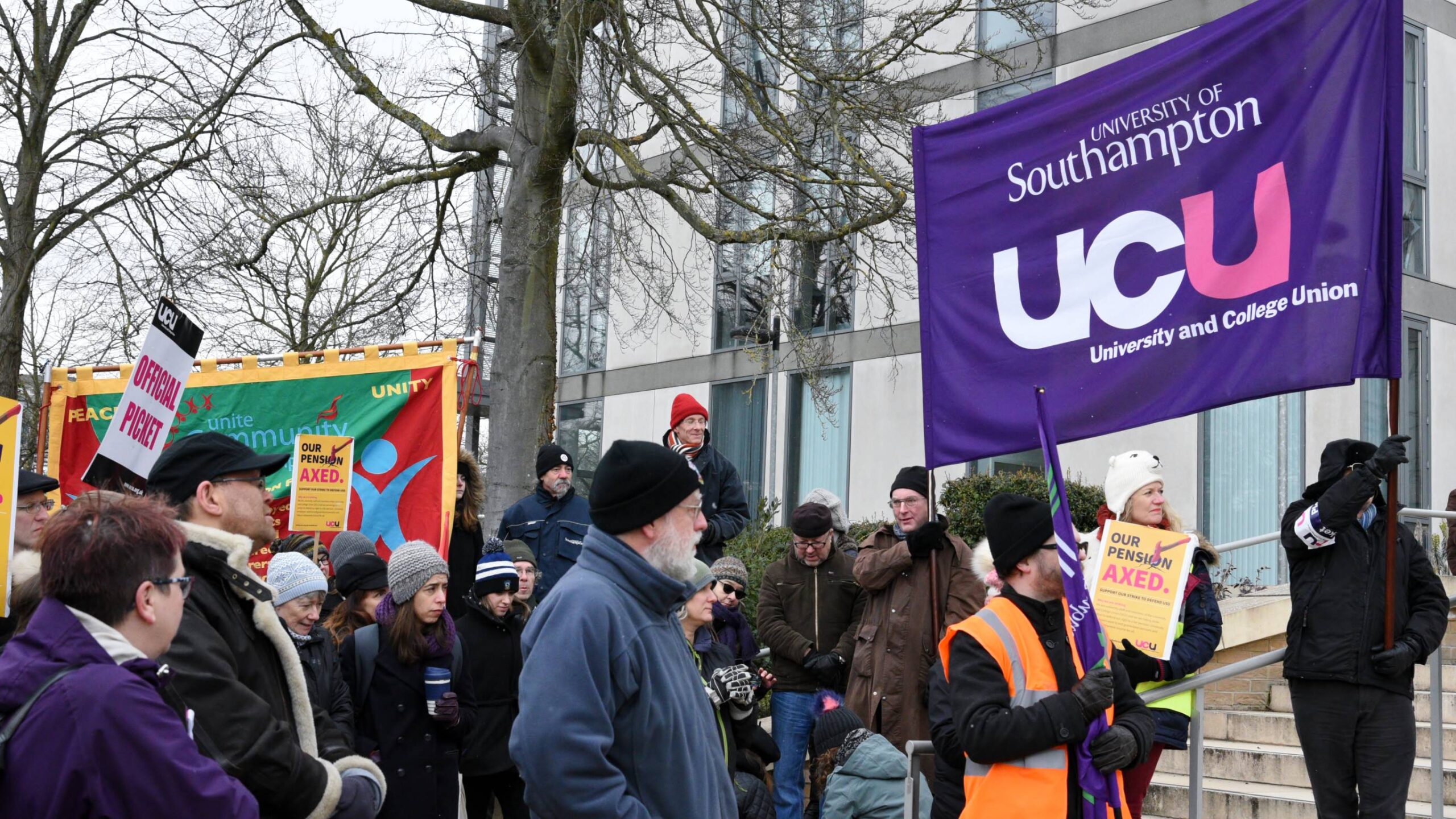
    University and College Union (UCU) staged a national marking and assessment boycott (MAB) – delaying graduations, job starts, and transitions to postgraduate study.

    UCU members took the action to tackle disputes including headline pay, gender and minority ethnic pay gaps, staff workload and the casualisation across the sector.

    Whenever there’s industrial action, the hope in Carlow St is that students will see the bigger picture – but this time around, at least for some students in some universities, the impact was significant. At the time, UCU estimated that 30,000 students were unable to graduate on time or were affected in some other way.

    In the aftermath, the Commons Education Committee held a mini inquiry to investigate the impact – it wrote to the then Conservative government to raise concerns about the lack of data, the role of the Office for Students (OfS) and the lack of clarity over students’ rights, and the eventual (post election) reply was predictably weak.

    Now, two years on, OfS has published research that was commissioned to develop an understanding of what the impacts were from a student perspective – along with guidance for institutions on protecting the interests of students during industrial action, and a webinar event planned for mid-May on the regulator’s expectations on how providers should support students before, during and after industrial action.

    OfS first ran a text-based focus group via YouGov in July 2024 that discussed short- and long-term impacts, what information they got from their institutions, and how those institutions handled the situation. A quantitative survey followed that gathered 763 responses (279 undergrads, 284 postgrads, and 200 graduates) that had been studying at impacted institutions during the boycott. You’d not be diving into demographic splits on that sample size.

    The polling drilled into how the industrial action affected their academic lives – immediately and over time – along with the comms they received from their universities, and how they viewed their rights as students.

    On the top line

    In a “topline” results report and associated student insights brief, we learn that the industrial action caused delayed or unmarked coursework (53 per cent) and exams (46 per cent), reduced lecture time (68 per cent), and decreased contact with staff.

    Most impacted students reported negative effects on academic work quality (49 per cent) and grades (42 per cent). The MAB’s psychological impact was significant – with 41 per cent reporting increased stress, 32 per cent experiencing poorer mental health, and 15-18 per cent noting negative effects on their social lives.

    One student is quoted as follows:

    I was waiting for the result of a resit that the progression of my masters’ depended upon but it was delayed so much I had to pay for the next module and would not get the results until halfway through.

    International students faced particular challenges, with visa uncertainties arising from delayed results and qualifications. Some students couldn’t attend graduation ceremonies because their results came too late:

    I didn’t manage to get graduation tickets in time due to how late results were, so I didn’t have a graduation ceremony.

    Communication varied considerably across institutions – with most updates coming through emails (65 per cent) rather than during lectures (22 per cent). Students rated information from individual lecturers (78 per cent satisfaction) more highly than university-wide communications (64 per cent satisfaction).

    Many students in the focus group:

    …were not told which of their modules would be affected, or when they would get their marks and feedback.

    OfS says that the institutional response was inconsistent across the higher education sector. Students directly affected by the MAB expressed significantly higher dissatisfaction (54 per cent) with their university’s handling of the situation compared to unaffected students (18 per cent). Just 46 per cent of affected students received alternatives or compensation, primarily through “no detriment” policies adapted from those developed during the Covid era (26 per cent).

    Financial compensation and rights awareness was low – with only 30 per cent knowing they could request it, and a mere 9 per cent successfully receiving any. The boycott also negatively impacted perceptions of education quality (38 per cent reporting a decrease) and value for money (41 per cent reporting a decrease), with one student noting:

    I ended up with a [postgraduate diploma] instead of my MSc, and I came out with a merit instead of a distinction.

    The brief does note that universities employed various mitigation strategies, including awarding interim degree classifications, guaranteeing minimum classifications, improving mental health support, reallocating marking responsibilities, and engaging with employers to request flexibility for affected graduates.

    Were they OK? Some students felt their institutions responded well, others reported that the experience contributed to decisions not to pursue further studies or work in higher education, with 42 per cent reporting decreased trust in their universities.

    Behind the screams

    Much of that won’t come as a surprise – although the sheer scale of the suggested impacts, as well as their depth and breadth on individual students (esp rer mental health and international students) ought to invigorate debates about the morality of the tactic, and how universities handled it to limit legal or financial exposure.

    Arguably of more interest is the letter and “regulatory statement” that accompanies the publication from John Blake, Director for Fair Access and Participation.

    Re-stressing that it’s not OfS’ role to intervene in labour disputes, Blake expresses concern about how strikes and the MAB disrupted students’ academic experiences, notes inconsistencies in institutional responses, sets out an aim to establish clearer expectations for fair treatment for all students in any similar future scenarios.

    And there’s a fascinating section on compensation:

    We want to be clear that we don’t see compensation as a substitute for the holistic experience of intellectual, professional and personal development that a student should expect from their higher education. Institutions should continue to focus their efforts during industrial action on delivering the education that students expect. The inclusion of an expectation in relation to compensation does, though, reflect the rights students have under the Consumer Rights Act 2015.

    Given that many students got neither, the clear implication is that a large number of students should have received both.

    Six principles

    The core of the guidance letter then manifests in six principles:

    1. Providers must remove contractual terms that inappropriately limit liability to students during staff industrial action or other circumstances within the provider’s control, as these breach consumer protection law.
    2. Effective contingency plans must be developed to minimise disruption to students during industrial action, ensuring plans are actionable, timely, and protect qualification integrity.
    3. When implementing contingency plans, providers should prioritise education delivery by: first avoiding impacts on students; if not possible, making minimal changes; and if necessary, providing timely repeat performance of missed teaching or assessment.
    4. Fair compensation must be paid when contingency plans fail to deliver promised aspects of student experience, particularly for missed teaching without timely replacement, delayed assessment marking, or delayed progression decisions affecting jobs or visa status.
    5. Clear communication with students is essential, including transparent information about rescheduled activities or compensation, with proactive identification of eligible students rather than requiring them to submit claims.
    6. Providers must submit reportable events about industrial action to the Office for Students (OfS) in accordance with established regulatory requirements.

    It’s an interesting list. The first one on the inclusion of industrial action in so-called “force majeure” clauses in student contracts – which limit liability for events that are outside of the predictability or control of of providers – is a long-running passive-aggressive row between the Competition and Markets Authority (CMA) and OfS on one side, and providers on the other.

    OfS has previously published a referral to National Trading Standards involving the University of Manchester’s contract – but my spreadsheet suggests that there’s a large number of providers that either haven’t seen that, or are digging in for a battle over it.

    That may be partly because those sorts of clauses – and CMA’s advice on them (which OfS requires providers to pay “due regard to”) – are a key point of dispute in the ongoing Student Group Claim, the UCL portion of which won’t get to court until early 2026.

    From a student point of view, if those clauses shouldn’t exist, the snail’s pace of enforcement on this is as baffling as it is frustrating.

    There won’t be many providers that weren’t developing contingency plans, notwithstanding that they can always be improved – and the one-two-three-four punch of avoid, adjust, repeat or compensate reflects (and translates) the position under consumer law.

    Of course some will argue that a legal duty to undertake any/all of those steps under consumer law depends on those force majeure clauses not existing or being unlawful – and as it stands there’s a major silent standoff that’s unhelpful.

    Even if you just look at compensation, the survey fails to differentiate between compensation paid for breach of contract, and “goodwill” payments where no such breach has been accepted by providers. As far as I’m aware, the former was vanishingly rare.

    The other issue, of course, is with punch three of four – where university managements satisfy themselves that once a dispute is over, teaching or support is rescheduled “because we told them to”, despite the fact that most heads of department find it hard to actually implement those instructions with UCU members.

    The “proactive identification of eligible students” for “repeat performance” or compensation is interesting too – especially over the latter, providers have long relied on students having to make complaints in order to get redress. This not only depends on the breach of contract or not issue being resolved, it also raises questions for universities’ legal advisors and insurers about the relative risks of doing as John Blake says, or waiting for students to raise concerns.

    But as well as all of that, there’s three things we ought to be surprised not to see.

    What’s missing?

    For a set of documents seeped in the translation of consumer protection to a higher education setting, there’s nothing on the extent to which any alternative arrangements in a MAB – especially alternative arrangements over marking – should still be carried out with reasonable skill and care. Academic judgement can’t be challenged, but only if that judgement has been carried out in the way we might expect it to be by people who know their onions. That was a major issue in the dispute for plenty of students, even if it wasn’t a big issue in the polling.

    The second is the lack of answer to the questions raised both in the polling and by the Commons Education Committee – which concern students’ understanding of what their rights are. If OfS thinks that it can vaguely pressure providers into proactively identifying students entitled to wads of cash, it’s misunderstanding the countervailing pressures on providers in similar ways to those identified by Mills and Reeve over provider collapse. And as I often say on the site, good regulatory design considers how individuals come to understand (or access information) on their rights should they need to use them without having to access a regulator or complaints adjudicator – there’s nothing on any of that here.

    But the third is the lack of a clear link to the regulatory framework, and the lack of any enforcement carried out over what must amount to failings. If the guidance is grounded in OfS’ rules, students might well say “well what action have you taken given that the problems were widespread?”

    If it’s not grounded in OfS’ powers, providers might well say “well notwithstanding that we like to look nice, why would we magnify the efficacy of an industrial action tactic if we don’t really have to”.

    It’s all very well for OfS to be “give them guidance” mode, but over this set of issues the financial impacts of compliance with something that sounds contested, and partly voluntary, could be huge both in an individual dispute and in the long-term. That all (still) needs bringing to a head.

    Source link

  • OfS free-speech absolutism allows abuse, harassment, and bullying

    OfS free-speech absolutism allows abuse, harassment, and bullying

    • By Professor Sasha Roseneil FAcSS PFHEA, Vice-Chancellor and President of the University of Sussex.

    On 26 March 2025, after a three-and-a-half-year long, deeply flawed, investigation into freedom of speech and academic freedom at the University of Sussex, the Office for Students issued the unprecedently high fine of £585,000, and decreed a form of free-speech absolutism as the new golden rule for universities.  Henceforth, it would appear that universities can only control a very narrowly defined version of unlawful speech that ignores our broader legal and ethical obligations to students and staff. It is an unworkable and highly detrimental decision for the whole higher education sector.

    The investigation was initiated in October 2021 in the context of protests against gender-critical philosopher Professor Kathleen Stock, around the time that she decided to resign from her position at Sussex. Much of the media and public reaction to the OfS’s decision has seen it as vindication of Kathleen Stock, and indeed the OfS itself gives as a reason for publishing the decision, that it would be ‘likely to make Professor Stock feel vindicated and may also vindicate her in public perception’. Indeed, the only person interviewed in the investigation was Kathleen Stock. This is despite the OfS acknowledging that it did not have the power to act on behalf of any individual, and that it has not investigated the circumstances relating to Kathleen Stock.

    Many commentators also regard the outcome as vindication of the gender-critical beliefs that Kathleen Stock professed during her time at Sussex and since. But again, the investigation was not a judgement in the toxic disputes about sex and gender, and the identities and rights associated with each. It is not the OfS’s role to make such judgements – in its own words it is ‘viewpoint neutral’ – just as it not the role of a university, or a Vice-Chancellor, to do so.

    Universities are arenas in which the most controversial ideas of the day are contested – and recent years have seen waves of protest and unrest on campuses across the world about a number of fiercely disputed issues. It is the job of university leaders to facilitate and contain that contestation so that it serves to advance the purpose of universities – the education and development of students and the advancement of knowledge and understanding. Continual efforts to promote and protect overlapping but not identical liberties – freedom of speech and academic freedom – are vital in this. So too are actions to ensure the absence of intimidation and bullying, and to create inclusive, supportive, and respectful learning and working environments, in which people of diverse backgrounds, beliefs and identities can succeed as individuals and come together in productive dialogue, however vehemently they might disagree. Indeed, the exercise of academic freedom and freedom of speech depends on this. Freedom of speech cannot mean the ability to shout the loudest or to abuse and frighten less powerful opponents into silence.

    The OfS’s has just made this work of universities infinitely harder, if not impossible. The single short offending document identified by the OfS, on which the weight of its findings rest, was designed to protect the welfare of trans and non-binary staff and students, a student group the OfS itself identifies as at particular risk in relation to access to and participation in higher education. When adopted at Sussex in 2018 – around the same time as at many other universities across the country – thinking about how best to support trans and non-binary people within universities was just beginning, and gender-critical beliefs had not yet been recognised as ‘protected philosophical beliefs’ under the 2010 Equality Act.   

    If the OfS is ‘viewpoint neutral’, its findings about a policy statement seeking to support trans and non-binary staff and students must be understood to apply to all staff and students – whatever their beliefs and identities. A thought experiment helps make the point: replace the trans and non-binary people with whose protection the offending document is concerned with members of other minoritised and marginalised groups – Jewish, Black, Muslim or Gypsy, Roma and Traveller people, disabled people, or lesbians and gay men, for instance.

    The implications of the OfS decision are wide ranging and highly corrosive of attempts to create diverse, inclusive, and equal working and learning environments, and threaten university autonomy. Under the OfS’s ruling, it would seem that universities cannot seek to prevent our curricula from relying on or reinforcing stereotypical assumptions about (for example) Jews or Black people, because to do otherwise could limit lawful speech. Universities cannot, from now on, remove antisemitic or racist propaganda from campus unless what it says is unlawful – again, extremely narrowly defined. And universities should not discipline anyone who engages in abuse, harassment or bullying unless that abuse, harassment or bullying meets the legal definition of harassment or hate speech – even if it breaches a range of other duties and obligations.

    In effect, the decision implies that universities cannot have policies that aim to reduce abuse, bullying and harassment – whether motivated by transphobia, antisemitism, homophobia, Islamophobia, racism, or sexism – beyond simply reproducing existing restrictions in law (which restrictions the OfS appears not to understand – for example, it does not appreciate that abuse, bullying and harassment are restricted by the Public Order Act 1986).

    It is, I fear, a charter that risks giving free rein to antisemitic, anti-Muslim, homophobic, racist, sexist, and anti-trans speech and expression in universities, as long as it stays just on the right side of the law.

    Moreover, the decision could be significantly at odds both with the wider legal obligations of universities in relation to equalities, and with the OfS’s own regulatory expectations regarding equality of opportunity for students, the quality and standards of the academic experience, and the soon to be introduced requirement to take steps to protect students from harassment and sexual misconduct.

    The OfS’s regressive and dangerous decision threatens the cohesion and governability of each of England’s diverse and vibrant universities, and it must be set aside. Today Sussex is publishing our pre-action protocol letter, which sets out the grounds of our legal challenge. I invite the OfS to respond positively, and to become a regulator that seeks collaboration and open dialogue with universities rather than punishment.

    Source link

  • OfS insight on institutional closure lacks a firm statutory foundation

    OfS insight on institutional closure lacks a firm statutory foundation

    The Office for Students’ (OfS) insight briefing “Protecting the interests of students when universities and colleges close” is as much a timely reminder of where the law falls short when providers are at risk of closure as it is a briefing on how to protect the student interest under the current policy framework.

    As we set out in our Connect more report which explored, among other things, the legal framework for institutional insolvency, market exit and/or merger, the role of OfS in any institution at risk situation is already unhelpfully ambiguous. Its concern may be the student interest, but it is not empowered to prevent institutional closure (even if, as is often likely to be the case, the student interest would be best served by completing the course they registered for at the institution they enrolled in) – or even to impose order on a disorderly market exit.

    In the absence of express powers or an insolvency or special administration regime for higher education, OfS’ role becomes one of a point person, facilitating conversations with other agencies and stakeholders, but with no powers itself to prevent a disorderly closure. The tone of the briefing is collaborative and collegiate but, in a world where students are no better protected than any other unsecured creditor if a provider becomes insolvent, it’s doubtful that, under the law as it currently stands, the interests of students will be protected to the degree to which OfS desires.

    While OfS may be primarily concerned with protecting students’ interests, the trustees of those providers that are constituted as charities have a statutory duty to act in the best interests of the charity and to pursue their charity’s purposes. This duty will, of course, encompass the needs of present students but will also encompass past students, future students, research activities and much more besides. While no one would disagree with the general sentiment that “throughout the process [of institutional closure] the interests of students, and their options for continued study, must be kept in mind” – and the briefing does offer lots of useful ideas for how to ensure sufficient attention is given to the many types of students who will be affected – the elevation of student interest to a pre-eminent concern is not what the law generally, nor what OfS’ statutory duties currently require.

    University executive teams and boards may wish, therefore, to read OfS guidance in light of these realities, and be aware of the limits of what is realistically possible or likely to occur in giving consideration to the sort of scenario planning and preparation OfS advocates in the briefing.

    A herd of elephants

    OfS’ recommendations about the need to have suitably durable and maintained student records and to have entered into binding contracts with validating and subcontracting partners that contain clauses that deal realistically with the end of the relationship and contain adequate data sharing agreements clauses are all well made.

    But once things actually start to get tricky in real life there is a level of reliance on transparency, for example, in sharing information both with OfS but also with other organisations such as funding or regulatory bodies, or government departments, or even other institutions who might be prevailed upon to welcome displaced students. In the absence of a systematised notification process, any ambiguity about whose role it is to liaise with the various potentially affected stakeholders or the timing of any such communication has high potential to create problems. There are obvious issues raised by disclosing or revealing another institution’s “at risk” status, some of which may have the effect of accelerating the very process everyone is seeking to avoid.

    If OfS considers a registered institution is at risk of closure, it can impose a student protection direction under condition C4 of the conditions of registration. The briefing provides a helpful reminder of what a student protection direction might include and encourages regular thought about these issues to avoid the need for a provider to “improvise at speed and under stress if an institutional closure becomes possible.” That sounds very laudable at first glance, but it confuses the regulatory obligation with the real-world outcome. A provider at risk of closure may well come under pressure from OfS to produce a market exit plan and to map courses at a time when university teams have the least bandwidth to undertake such tasks. In any case, it is highly doubtful whether an insolvency practitioner would be bound by such planning in the event that a provider goes into an insolvency process.

    In scenario planning, OfS moots the idea that higher education providers might consider setting up “agreements in principle” with other institutions “to take on relevant students if one or the other closes” or even “possibly multiple agreements, for different courses and subjects.” It is surprising not to see competition law mentioned in this context. The higher education sector contains a broad range of institution types, with varied teaching and delivery methods, attracting students with different needs and expectations as regards learning and study.

    This means that in practice the providers that pair up to take on one another’s students in the event of institutional failure will need to be similar types of provider – precisely those that are in competition for students in the first place. As Kate Newman has argued in an article on the impact of competition law on higher education collaboration, it would be helpful if OfS and the Competition and Markets Authority could jointly consider these kinds of circumstances for the sector as a whole rather than providers having to navigate this complex legal territory on an individual basis.

    We’re also concerned that any such “agreement in principle” will not be legally binding and will have been reached at a single point in time, when conditions may be quite different to the time when the institutions seek to rely on them. There is a very real risk that unless these agreements are refreshed annually (a time consuming and potentially collusive activity) they will turn out to be like the original student protection plans in being not terribly helpful.

    A sector like no other

    In issuing its briefing OfS argues that “this sort of risk and contingency planning is normal in other regulated sectors,” citing the examples of customer supply contingency plans for energy suppliers and the need for banks to have recovery and resolution plans. However, both of these sectors have highly developed insolvency regimes. Drafting recovery and resolution plans is much easier to achieve when there is a viable insolvency process in place. Both the energy and banking sectors have special administration processes in place and there has been much recent press coverage on the water sector special administration process, in light of Thames Water’s difficulties.

    OfS encourages institutions to undertake extensive course mapping. However, given the scale of the financial pressures facing the sector, it’s doubtful how valuable such course mapping is likely to be where potential recipient institutions are perhaps equally likely to be at risk of closure. To be fair to OfS, the briefing stresses that mapping is particularly relevant for those institutions that offer specialist provision.

    And here, of course, lies the essential problem. As OfS states: “We have drawn on our experience of managing two relevant cases at small and specialist higher education providers during the past year, and of instances where there was a serious risk of a closure which did not materialise.” The counterfactual – closure of a large and generalist provider which does materialise – remains the biggest elephant in the room. While OfS’ openness in sharing its insights is to be welcomed, it does nothing to diminish the need for urgent structural change.

    Source link

  • DfE and OfS are running out of road on regulating a “free market” effectively

    DfE and OfS are running out of road on regulating a “free market” effectively

    On The Wonkhe Show, Public First’s Jonathan Simons offers up a critique of the way the higher education sector has been organised in recent years.

    He says that despite being more pro-market than most, he’s increasingly come to the view that the sector needs greater stewardship.

    He says that the theory of change embedded in the Higher Education and Research Act 2017 – that we should have more providers, and that greater choice and contestability and composition will raise standards – has worked in some instances.

    But he adds that it is now “reasonably clear” that the deleterious side effects of it, particularly at a time of fiscal stringency, are “now not worth a candle”:

    If we as a sector don’t start to take action on this, then the risk is that somebody who is less informed, just makes a judgment? And at the stroke of a ministerial pen, we have no franchising, or we have a profit cap, or we have student number controls. Like that is a really, really bad outcome here, but that is also the outcome we are hurtling towards, because at some point government is going to say we don’t like this and we’re just going to stop it overnight.

    Some critiques of marketisation are really just critiques of massification – and some assume that we don’t have to worry about whether students actually want to study something at all. I don’t think those are helpful.

    But it does seem to be true that the dominant civil service mindset defaults to regulated markets with light stewardship as the only way to organise things.

    Civil servants often assume that new regulatory mechanisms and contractual models can be fine-tuned to deliver better outcomes over time. But the constant tweaking of market structures leads to instability and policy churn – and bad actors nip around the complexity.

    Much of Simons’ critique was about the Sunday Times and the franchising scandal. But meanwhile, across the sector, something else is happening.

    Another one

    Underneath daily announcements on redundancies, senior managers and governing bodies are increasingly turning to data analytics firms to inform their academic portfolios.

    The advice is relatively consistent – close courses with low market share and poor demand projections, maintain and grow those showing high share or significant growth potential.

    But when every university independently follows that supposedly rational strategy, there’s a risk of stumbling into a classic economic trap – a prisoner’s dilemma where individual optimisation leads to collective failure.

    The prisoner’s dilemma, a staple of economic game theory, runs like this. Two prisoners, unable to communicate, have to decide whether to cooperate with each other or defect. Each makes the decision that seems best for their individual circumstance – but the outcome is worse for both than if they had cooperated.

    I witnessed it unfold a couple of weeks ago. On a Zoom call, I watched four SU officers (under the Chatham House rule, obvs) from the same region simultaneously share that their university was planning to expand their computer science provision while quietly admitting they were “reviewing the viability” of their modern languages departments.

    It did sound like, on probing, that their universities were all responding to the same market intelligence, provided by the same consultancies, using the same metrics.

    Each university, acting independently and rationally to maximise its own market position, makes decisions that seem optimal when viewed in isolation. Close the underperforming philosophy department. Expand the business school. Withdraw from modern languages. Double down on computer science.

    But when every university follows the same market-share playbook, the collective result risks the sector becoming a monoculture, with some subjects vanishing from entire regions or parts of the tariff tables – despite their broader societal value.

    The implications of coordination failure aren’t just theoretical – they are reshaping the physical and intellectual geography of education in real time.

    Let’s imagine three post-92 universities in the North East and Yorkshire each offered degrees in East Asian languages, all with modest enrolment. Each institution, following market share analysis, determines that the subject falls below their viability threshold of 40 students per cohort. Acting independently, all three close their departments, creating a subject desert that now forces students in the region to relocate hundreds of miles to pursue their interest.

    The spatial mismatch of Hotelling’s Location Model means students having to travel further or relocate entirely – disproportionately affecting those from lower-income backgrounds.

    And once a subject disappears from a region, bringing it back becomes extraordinarily difficult. Unlike a coffee shop that can quickly return to a high street when demand reappears, universities face significant barriers to re-entry. The sunk costs of hiring specialist staff, establishing facilities, securing accreditation, and rebuilding reputation create path dependencies that lock in those decisions for generations.

    The Matthew effect and blind spots

    Market-driven restructuring doesn’t affect all providers equally. Higher education in the UK operates as a form of monopolistic competition, with stratified tiers of universities differentiated by reputation, research intensity, and selectivity.

    The Matthew effect – where advantages accumulate to those already advantaged – means that elite universities with strong brands and secure finances can maintain niche subjects even with smaller cohorts.

    Meanwhile universities lower in the prestige hierarchy – often serving more diverse and less privileged student populations – find themselves disproportionately pressured to cut anything deemed financially marginal.

    Elite concentration means higher-ranking universities are likely to become regional monopolists in certain subjects – reducing accessibility for students who can’t meet their entry requirements.

    Are we really comfortable with a system where studying philosophy becomes the preserve of those with the highest A-level results, while those with more modest prior attainment are funnelled exclusively toward subjects deemed to have immediate market value?

    Markets are remarkable mechanisms for allocating resources efficiently in many contexts. But higher education generates significant positive externalities – benefits that extend beyond the individual student to society at large. Knowledge spillovers, regional economic development, civic engagement, and cultural enrichment represent value that market signals alone fail to capture.

    Market failure is especially acute for subjects with high social utility but lower immediate market demand. Philosophy develops critical thinking capabilities essential for a functioning democracy. Modern languages facilitate international cooperation. Area studies provide crucial cultural competence for diplomacy and global business. And so on.

    When market share becomes a dominant decision criterion, broader societal benefits remain invisible on the balance sheet. The market doesn’t price in what we collectively lose when the last medieval history department in a region closes, or when the study of non-European languages becomes accessible only to those in London and Oxbridge.

    And market analysis often assumes static demand curves – failing to account for latent demand – students who might have applied had a subject remained available in their region.

    Demand for higher education isn’t exogenous – it’s endogenously shaped by availability itself. You can’t desire what you don’t know exists. Hence the huge growth in franchised Business Degrees pushed by domestic agents.

    Collective irrationality

    What’s rational for an individual university becomes irrational for the system as a whole. Demand and share advice makes perfect sense for a single institution seeking to optimise its portfolio. But when universally applied, it creates what economists call aggregate coordination failure – local optimisations generating system-wide inefficiencies.

    The long-term consequences extend beyond subject availability. Regional labour markets may face skill shortages in key areas. Cultural and intellectual diversity diminishes. Social mobility narrows as subject access becomes increasingly determined by prior academic advantage. The public good function of universities – to serve society broadly, not just commercially viable market segments – erodes.

    But the consequences of market-driven strategies extend beyond immediate subject availability. If we look at long-term societal impacts, we end up with a diminished talent pool in crucial but less popular fields – from rare languages to theoretical physics – creating intellectual gaps that can take generations to refill.

    An innovative economy – which thrives on unexpected connections between diverse knowledge domains – suffers when some disciplines disappear from regions or become accessible only to the most privileged students.

    Imagine your small but vibrant Slavic studies department closes following the kind of market share analysis I’ve explained – you lose not just courses but cross-disciplinary collaborations that generate innovative research projects. Your political science colleagues suddenly lacked crucial language expertise during the Ukraine crisis. Your business school’s Eastern European initiatives withered. A national “Languages and Security” project will boot you out as a partner.

    Universities don’t compete on price but on quality, reputation, and differentiation. It creates a market structure where elite institutions can maintain prestige by offering subjects regardless of immediate profitability, while less prestigious universities face intense pressure to focus only on high-demand areas.

    In the past decade, some cross-subsidy and assumptions that the Russell Group wouldn’t expand disproportionately helped. But efficiency has done what efficiency always does.

    Both of the assumptions are now gone – the RG returning to the sort of home student numbers it was forced to take when the mutant algorithm inflated A-Levels in 2020.

    Efficiency in market terms – optimising resources to meet measurable demand – conflicts directly with EDI and A&P goals like fair access and diverse provision. A system that efficiently “produces” large numbers of business graduates in large urban areas while eliminating classics, philosophy, and modern languages might satisfy immediate market metrics while failing dramatically at broader social missions.

    And that’s all made harder when, to save money, providers are reducing elective and pathway choice rather than enhancing it.

    Choice and voice

    When we visited Maynooth University last year we found structures that allow students to “combine subjects across arts and sciences to meet the challenges of tomorrow.” It responds to what we know about Gen Z demands for interdisciplinary opportunities and application – and allows research-active academics to exist where demands for full, “headline” degrees in their field are low.

    In Latvia recently, the minister demanded, and will now create the conditions to require, that all students be able to accrue some credit in different subjects in different institutions – partly facilitated by a kind of domestic Erasmus (responding in part to a concern about the emigration caused by actual Erasmus).

    Over in Denmark, one university structures its degrees around broad disciplinary areas rather than narrowly defined subjects. Roskilde maintains intellectual diversity while achieving operational efficiency – interdisciplinary foundation years, project-based learning that integrates multiple disciplines, and a streamlined portfolio of just five undergraduate degrees.

    As one student said when we were there:

    The professors teaching the classes at other universities feel a need to make their little modules this or that, practical or applied as well as grounded in theory. Here they don’t have that pressure.

    And if it’s true that we’re trapped in a reductive binary between lumbering, statist public services on the one hand, and lean, mean private innovative operators on the other, the false dichotomy paralyses our ability to imagine alternative approaches.

    As I note here, in the Netherlands there’s an alternative via its “(semi)public sector” framework, which integrates public interest accountability with institutional autonomy. Dutch universities operate with clear governance standards that empower stakeholders, mandate transparency, enforce quality improvement, and cap senior staff pay – all while receiving substantial public investment. It recognises that universities are neither purely market actors nor government departments, but entities with distinct public service obligations.

    When Belgian student services operate through distinct governance routes with direct student engagement, or when Norwegian student welfare is delivered through regional cooperative organisations, we see alternatives to both market competition and centralised planning.

    They suggest that universities could maintain subject diversity and geographical access not through either unfettered market choice or central planning mandates, but through governance structures that systematically integrate the voices of students, staff, and regional stakeholders into portfolio decisions. The prisoner’s dilemma is solved not by altering individual incentives alone, but by fundamentally reimagining how decisions are made.

    Other alternatives include better-targeted funding initiatives for strategically important subjects regardless of market demand, proper cross-institutional collaboration where universities collectively maintain subject breadth, regulatory frameworks that actually incentivise (rather than just warn against extremes in removing) geographical distribution of specialist provision, new metrics for university performance beyond enrolment and immediate graduate employment and better information for prospective students about long-term career pathways and societal value when multiple subject areas are on the degree transcript.

    Another game to play

    Game theory suggests that communication, coordination, and changing the incentive structure can transform the outcome.

    First, we need policy interventions that incentivise the public good nature of higher education, rather than just demand minimums in it. Strategic funding for subjects – and crucially, minor pathways or modules – that are deemed nationally important, regardless of their current market demand, can maintain intellectual infrastructure. Incentives for regional subject provision might ensure geographical diversity.

    Universities will need to stop using CMA as an excuse, and develop cooperative rather than competitive strategies. Regional consortia planning, subject-sharing agreements, and collaborative provision models are in the public interest, and will maintain breadth while allowing individual institutions to develop distinctive strengths.

    Flexible pathways, shared core skills, interdisciplinary integration – all may prove more resilient against market pressures than narrowly defined single-subject degrees. They allow universities to maintain intellectual diversity while achieving operational efficiency. And they’re what Gen Z say they want. Some countries’ equivalents of QAA subject benchmarking statements have 10, or 15, with no less choice of pathways across and within them. In the UK we somehow maintain 59.

    At the sector level, collaborative governance structures that overcome the coordination failure means resource-sharing for smaller subjects, and student mobility within and between regions even for those we might consider as “commuter students”.

    OfS’ regulatory framework could be reformed to incentivise and reward collaboration rather than focusing primarily on institutional competition and financial sustainability. Funding could reintroduce targeted support for strategically important subjects, informed by decent mapping of subject (at module level) deserts and cold spots.

    Most importantly, universities’ governing instruments should be reformed to explicitly recognise their status as “(semi)public sector bodies” with obligations beyond institutional self-interest – redefining success not as market share growth but as contributing to an accessible, diverse, and high-quality higher education system that serves both individual aspirations and collective needs.

    Almost every scandal other than free speech – from VC pay to gifts inducements, from franchising fraud to campus closures, from grade inflation to international agents – is arguably one of the Simons’ deleterious side effects, which are collectively rapidly starting to look overwhelming. Even free speech is said by those who think there’s a problem to be caused by “pandering” to student consumers.

    Universities survive because they serve purposes beyond market demands. They preserve and transmit knowledge across generations, challenge orthodoxies, generate unanticipated innovations, and prepare citizens for futures we can’t yet imagine.

    If they respond solely to market signals, the is risk losing what makes them distinctive and valuable. That requires bravery – seeing beyond the apparent rationality of individual market optimisation to recognise the collective value of a diverse, accessible, and geographically distributed higher education sector.

    It doesn’t mean running provision that students don’t want to study – but it does mean actively promoting valuable subjects to them if they matter, the government intervening to signal that quality can (and does) exist outside of the Russell Group, and it means structuring degrees such that some subjects and specialisms can be studied as components if not the title on the transcript.

    It also very much requires civil servants and their ministers to wean themselves off the dominant orthodoxy of regulated markets as being the best or only way to do stuff.

    Source link

  • Collaboration in Action: The Third Sector Forum and the OfS Equality Agenda

    Collaboration in Action: The Third Sector Forum and the OfS Equality Agenda

    Last month, the Office for Students (OfS) confirmed the successful bids for their £2 million Equality of Opportunity Innovation Fund, launched to ‘support institutions to undertake new and innovative collaborative work or projects that will reduce risks to equality of opportunity’. 

    It is the culmination of three years of collaboration, beginning in February 2022 when Impetus hosted John Blake in his first external speaking event as the OfS’s Director for Fair Access and Participation.

    This seminal event gave rise to the Third Sector Forum – a quarterly dialogue between the Office for Students and third sector organisations working to support young people into higher education.   

    As an impact funder supporting the best attainment, engagement, and employment interventions for young people from disadvantaged backgrounds, we recognise the invaluable role of the third sector in addressing deep-seated barriers. We wanted to support this knowledge-sharing in the widening participation space.  

    Three years on, I spoke to some of the CEOs of Third Sector Forum organisations on what’s made the forum a success.

    Trust and openness  

    I was struck by the number of CEOs who cited the forum’s format as key to its success. While we fund widening participation organisations, Impetus itself is not a direct delivery organisation, meaning we can provide an independent middle ground. As a result, many emphasised the forum’s open and trusting nature and the uniqueness of this set-up. Anna Searle, CEO of The Access Project, reflected on how ‘you don’t often have the [governmental regulatory body] being as open with their constituent group’.  

    Another key factor in the success of the forum was the genuine engagement from the Office for Students, and particularly John Blake. Jayne Taylor, CEO of The Elephant Group, emphasised how John ‘genuinely listens to the voices around the table’, while Anna was quick to note how he went beyond discussing challenges for the OfS and what was next and provided his genuine views and reflections.  

    Collaborating and knowledge sharing

    Sam Holmes, CEO of Causeway Education, mentioned how participating in the sessions enabled him to form partnerships with other organisations in the space. Sitting next to Jayne when the Innovation Fund was announced, he says they were ‘immediately having conversations about […] potential collaboration’. 

    For organisations such as Causeway, which occupy a different space to programmatic organisations, it was also valuable to hear from colleagues across the sector. Forum members were able to share updates which, for Sam, demonstrated the wealth of collective knowledge and painted a picture of the higher education landscape.

    Shifting the narrative

    Action Tutoring is another member of the forum who wouldn’t ordinarily describe itself as a widening participation organisation. Susannah Hardyman, then-CEO, initially wondered if it was the right place for Action Tutoring, whose tutoring stops at age 16.  Organisations focusing on Level 2 outcomes have not always been seen as part of the widening participation space, but John Blake’s conscious decision to widen the focus of the equality of opportunity agenda brought them within scope. Over time, Susannah began to feel Action Tutoring had a place, helping to shift the narrative of what ‘widening participation’ means.

    At Impetus, we know that each step up the qualification ladder halves your chances of being NEET. We also know that early intervention is critical – before the barriers that young people face become acute – making the case for the importance of Level 2 pathways in achieving equality of opportunity. For Susannah, both the dialogue and John Blake’s emphasis on GCSE attainment, ‘[genuinely] did change the narrative of how we understand widening participation’. The implications of this reverberated beyond the four walls of the forum, opening up opportunities for organisations like Action Tutoring, which was later funded by the University of Brighton to work with two secondary schools on GCSE attainment.

    What next? 

    Policy professionals will know how rare it is to attribute policy change to their work. So, while Third Sector Forum members should undoubtedly shout about the fact that their expertise and dedication have helped to bring about £2 million of funding and a change to regulatory guidance, the work doesn’t end there. 

    Last year, the widening participation gap grew to 20.8 percentage points – its highest recorded level. The number is staggering, and even more bleak when coupled with a higher education sector on its knees and a ‘fiscal blackhole’ with seemingly no money to plug it up. It is clear that fighting to achieve equality of opportunity is more important than ever, but how?

    That a key pillar of the updated regulatory guidance is collaboration with the third sector is a testament to the success of the forum, but we can and must go further. 

    For Jayne Taylor, this looks like working groups or direct-action areas to facilitate collaboration, leveraging the collective knowledge and resources of the sector. With further investment, the forum could even evolve into an ecosystem, with opportunities for publishing research, bidding and running events together. 

    Collaboration also looks like an ever-evolving partnership between third sector organisations and the regulator. Anna Searle suggested implementing mechanisms for feedback loops, such as regular newsletters, to continue to foster a transmission of knowledge between forum members and the Office for Students. 

    For some, it feels like public policy is waiting for a return to pre-pandemic conditions. They believe that to truly move forward, we need to adapt to the present socio-economic landscape. One CEO pointed out the need for realistic conversations about the economic realities of the sector. With 40% of higher education institutions thought to be in deficit in 2023/24, providers and organisations are operating in an unprecedented funding landscape. For Sam Holmes, clearer messaging for charities that have relied on university contracts is increasingly necessary. He suggests there may even be benefits to involving funders in these discussions, alongside considering alternative partnerships, funding models and strategies.

    For others, such as Susannah Hardyman, we must continue to reevaluate our understanding of ‘equality of opportunity’.  With a record 56% of students now working part-time while studying, foodbank usage doubling since 2022, and 60% stating that money concerns affected their university choice, the landscape has undoubtedly changed. Where two decades ago the focus was relatively narrow – focused mostly around supporting high-achievers from deprived areas into high tariff institutions – this understanding has moved on. For Susannah, this needs to be taken into account, not to quash ambition but to broaden the definition of opportunity to reach as wide a group as possible. 

    When we hosted the Director for Fair Access and Participation three years ago, he said,

    ‘We are not short on people who will give up days, weeks, years of their time to pour into projects supporting the vulnerable and disadvantaged. We are not short on good suggestions, possible solutions, and rough ideas how things could be better. No, what we lack, still, is enough commitment for all those dedicated people to work together…’ 

    While the past few years have demonstrated the commitment that may have been missing previously, if we are to give every young person equal opportunity to succeed, our work is far from over. 

    Source link

  • Podcast: OfS chair, employment, skills

    Podcast: OfS chair, employment, skills

    This week on the podcast Nottingham Trent VC Edward Peck has been confirmed as the government’s candidate for Chair of OfS. But what does his focus on “quality improvement” and engagement with governing bodies mean for the regulator’s approach—and how will his skepticism of government bailouts impact struggling institutions?

    Meanwhile, as the Employment Rights Bill sees significant amendments, we unpack what proposed changes to zero-hours contracts and industrial action rules could mean for universities and students. And with the policy spotlight shifting from “knowledge” to “skills,” we’re asking—where do universities fit into the UK’s economic vision?

    With Brooke Storer-Church, CEO at GuildHE, Neil Mackenzie, CEO at Leeds Beckett Students’ Union, David Kernohan, Deputy Editor at Wonkhe and hosted by Jim Dickinson, Associate Editor at Wonkhe.

    Read more

    Edward Peck’s performance at the Education Committee

    How R&D creates new skills and can jump start the economy

    Policy change can help manage the demand for graduate knowledge and skills

    Source link

  • OfS is starting to better understand the student interest

    OfS is starting to better understand the student interest

    Part of the point of having a regulator focused on students, rather than – say – a funding council or a department, was always about acting in “the student interest” rather than, say, the “provider” interest.

    But ever since HEFCE started talking about “the student interest” back when it made the Quality Assurance Agency bid to become its quality assurance agency, there’s always been a vague sense that “the student interest” is only ever really definable by reference to what it isn’t, rather than what it is.

    Can you define “a seminar”? Maybe not. Is 150 people in a room “a seminar?” Nope. And so on.

    In theory, once you know what “the student interest” actually is, you can then embed it into regulatory priority setting, regulatory design and regulatory activity.

    It’s a laudable principle, but as the idea hit reality it turned out that the sheer diversity and complementarity of student interests are not easily understood or quickly realised.

    As the Office for Students (OfS) has dealt with “monster of the week” framings of freedom of speech and grammar in assessment, a common criticism has been that student interest has been “ventriloquised” to back (sometimes questionable) ministerial priorities.

    And in areas where the body it has been using to define the student interest has gone against the views of ministers – for example on decolonisation and inclusive curricula – there appears to have been a concerning tendency to silence competing voices.

    Have students historically been able to trust OfS to advocate for their interests? It’s not entirely clear. The publication of new research into student priorities is therefore supposed to centre aspects of the authentic student voice within regulation and policy.

    Research findings

    OfS has worked with polling companies and conducted its own surveys and focus groups to gather information. Sources include:

    • Polling conducted by Savanta (1,761 students and graduates)
    • Two online focus groups conducted by YouGov
    • A YouGov online survey (750 responses) with prospective students, current students and graduates
    • An online focus group with students from small and specialist providers, arranged with the support of GuildHE
    • The Office for Students Student Panel

    Though this is a fair amount of evidence, OfS is clear that what is presented is a snapshot – the interests and priorities of students will evolve in future. The outputs from this exercise have helped to shape the recent OfS strategy – future strategic thinking would need to be shaped by more recent examples of this kind of engagement.

    The research is presented in four themes, covering student experiences and expectations, the idea of students as consumers, student interests in the long and short term, and the relationship between the student interest and the public interest.

    As presented, each section offers headline findings and key results from polling followed by a range of illustrative quotes from individual students.

    Students expect a high quality education that “reflects their financial investment and the promise that was made to them” – this includes opportunities to engage in social and extra-curricular activities. Academic and personal needs should be supported, and students also expect opportunities that will help their future careers.

    Yougov polling found that 79 per cent of undergraduates believed that university had either met or exceeded their expectations – 91 per cent felt they would end up with a credible qualification, 90 per cent felt they would leave with credible knowledge of their subject area.

    In contrast students do not feel they have received sufficient one-on-one support from staff, and have experienced disruption from the Covid-19 restrictions on activity and industrial action. More widely, the cost of living has had an impact on studies (60 per cent of students polled by Savanta agreed) – students were clear there is insufficient financial support available. And there is a persistent feeling that tuition fees are too high – 60 per cent felt their degree represented value for money.

    Specific issues have included difficulties in finding suitable and affordable accommodation, and a lack of mental health support for those who need it. Savanta polling suggested that 28 per cent of undergraduates felt contact hours had been insufficient to support their learning, 32 per cent of undergraduates had issues with the way their course has been taught, and 40 per cent said that one of the three biggest influences on their success was financial support.

    I was promised x amount of hours in person and I wasn’t able to due to strikes/Covid. Online lectures/seminars were not fruitful at all. (Male, 23, graduate, YouGov focus group)

    You can’t do anything without your health and with the stress that can come with the intense study and financial restraints of university life it is particularly important that the university supports students so they can maintain good wellbeing. (Male, 20, higher education student, YouGov focus group)

    Lots of different things can influence student interests. Cultural differences can mean some students might need varying levels of support to properly enjoy university life. Socioeconomic backgrounds for example can require that students will have an interest in needing either more financial support or the ability to balance part time work with studies.’ (Female, 23, higher education student, YouGov focus group)

    As signalled over the summer, students as a whole do not like the term “consumer”, feeling that the term implied education could be bought rather than acquired through personal effort. That said, there was an identification with the idea of “student rights” – both in terms of promises being met and access to refunds.

    And the idea of students as “investors” in their education was not viewed favourably either – students don’t consider their financial contribution as a choice, preferring to think about how they invest their time and effort.

    Students are not really given consumers rights, as seen by Covid year students who want money back. If you are given a false promise … there should be a way to complain … but [there] is not really. (Female, 18, further education student, YouGov focus group)

    It is much more difficult to complain, and essentially impossible to claim a refund. (Female, 20, higher education student, YouGov focus group)

    I have a right to get what I was expecting when I signed up for the degree… This means having teaching provision in line with what was advertised. (Female, 20, higher education student, YouGov focus group)

    There is a slight preference (60 to 40 per cent) for a provider focus on long-term rather than short-term student interests.

    By “short term”, students mean their day-to-day experiences – so stuff like academic support, progression and success, costs of living, and mental well being. “Long term” interests extend beyond graduation, revolving around career preparation and progression, skills for employment, and networking.

    I think in the short-term, academic and pastoral support with exams and coursework deadlines is most important, as well as general support with aspects of student life such as managing finances, finding accommodation etc. (Female, 20, higher education student, YouGov focus group)

    For me long-term encompasses the whole of the time I spend at university and then the years after where my degree affects my career progression etc. (Female, 23, higher education student, YouGov focus group)

    You’ll have spotted that there’s less information in these sections as we go on – the last one gives another inconclusive split – according to students, providers should focus on delivering student benefits (66 per cent) rather than public benefits (36 per cent).

    There were “a number of perceived conflicts” between student and public interest – these were “related” to tuition fees and accommodation, but we are not told what they are precisely.

    From the focus group quotes we can deduce that there is a public interest in developing graduates. The public interest may be to minimise student debt, while individual students might benefit by not paying off loans – the public might not like student accommodation blocks in city centres, while students do.

    That these hang off a mere handful of focus group quotes is frustrating and limits the usefulness of the insights. That “provider interest” is missing is also frustrating – plenty of students will argue with themselves and each other about the extent to which their personal interests can conflict with those of “the university”.

    I think a long-term interest of developing inquisitive, interested graduates who want to continue to learn about and critically analyse the world around them is an incredibly important part of a robust society. (Female, 33, higher education student, YouGov focus group)

    Student debt is a clear conflict of interest between students and the public interest. It is in the public interest to minimise student debt as a lot of it is not paid off by the students, however an individual student is benefiting by not paying off their student loans. (Female, 20, higher education student, YouGov focus group)

    Student accommodation is another example. Generally, members of the public don’t like having large student accommodation blocks built in city centres, however many students would like to live close to university and of course, in a cheaper accommodation. (Female, 20, higher education student, YouGov focus group)

    Also frustrating is the extent to which the findings seem to assume that students can’t or won’t consider their community or collective interests – understanding the extent to which, for example, student A is prepared to cross-subsidise student B’s mental health support or more expensive teaching probably matters much more than knowing who’s thinking short-term or longer-term, when surely pretty much everyone has both rattling around in their head.

    So what?

    For anyone who works with students, or has met students, none of these findings will come as a huge surprise. There are many formal and informal surveys of students and graduates, and this new research largely acts as a way of reinforcing what is already known.

    For critics, not being able to see the underpinning polling data raises all sorts of questions – like what was asked, who was asked, when were they asked it, what the differences were by characteristic or provider type, and how the results were weighted – partly because one way for a regulator to prioritise is by focussing in on those most at risk, or most unhappy, and so on.

    It’s also possible to raise an eyebrow at some of the conclusions that OfS Director for Fair Access and Participation John Blake draws from the research. When he says, for example, that he has “discovered” that students have two categories of expectation – one relating to their experiences of higher education (what studying feels like) and the other relating to what it gets them in the future – you are left thinking “well what else would they have expectations about” if not “good job the whole of your quality improvement medals scheme, a review of which involved a shed ton of research with students, also framed things in terms of experience and outcomes”.

    It’s possible to have expectations that are too high given OfS’ form, legal remit and the realities of day to day expectations. Jim often notes that while students’ unions will carry out plenty of research into “the student interest”, they’re still going to run a freshers fair, a course rep system and elect some full-time sabbatical officers in March – just as for all the research that providers do on their strategies, they pretty much all still vow to deliver excellent teaching, groundbreaking research, something something knowledge exchange and civic, and something something buildings HR and finance. For all the high blown rhetoric about change on inception, OfS is still a cruise ship not a speedboat.

    One thing that does still feel missing is not so much the recognition that diverse students have different priorities and interests – that does come out vividly in Blake’s blog – but that when you have a fixed remit and limited resources, you do have to prioritise. Add in that sometimes diverse interests are opposed, and you then have to set out how and who makes the calls, and then demonstrate that that has impacted what you do and how you do it. You do get the sense that there are passionate people in there who recognise that – but that there’s still a way to go in delivering the old “whole provider strategy” thing inside OfS.

    There’s also the partner question. Perhaps the newly souped-up interest board will get to do some of this, but if you take that two-thirds/one-thirds split on student v public interest, the point about student as partner is that they are seen both as capable of holding both thoughts in their head at once, and capable of contributing to a discussion about how you find a way through what can feel like a contradiction. It’s true on freedom of speech v freedom from harm , it’s true on “high academic standards” v “supporting students to succeed”, and true on the often contested balance between student feedback and academic authority. Education is always co-produced, even if one side is young and paying for it and the other “provides” it.

    Nevertheless, while eight years in is a bit late to be properly considering how the “student interest” is defined strategically, this is a good start. Over the coming year it says it will share further student insight based on polls and engagement that it has done – that might be on a topic with direct links back into its regulation, or something of regulatory interest to OfS but where it’s not yet planning direct regulation, or unable to act directly. The theory of change is that that sort of information can suggest areas of focus for providers (and while it doesn’t say so, for ministers) and support informed choice by students.

    If nothing else, it should allow students and their representatives to test whether the issues they’ve spoken on – on accommodation, on support, on their rights, and on value for money – will be acted on meaningfully by a regulator that is starting to realise just how important keeping promises to students is.

    Source link